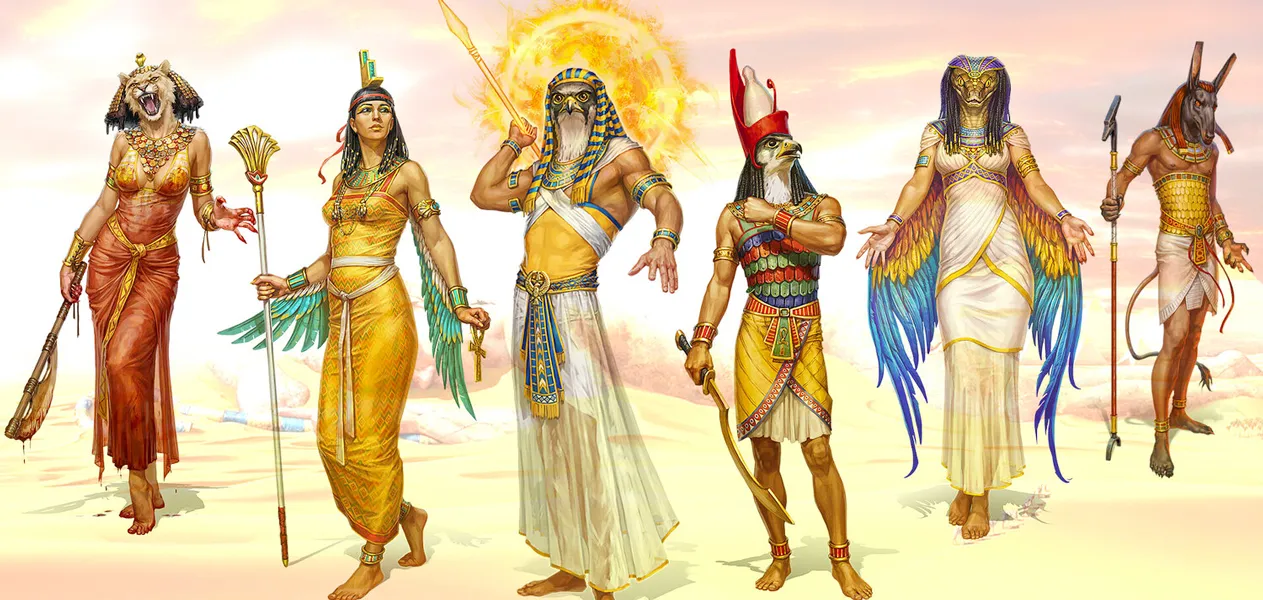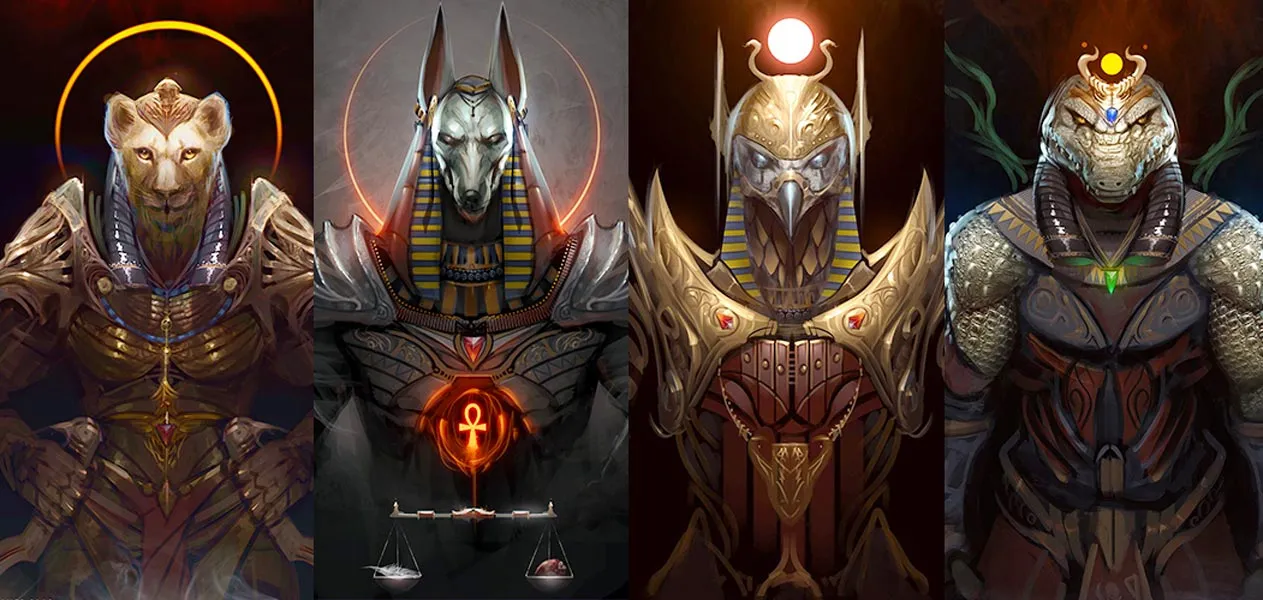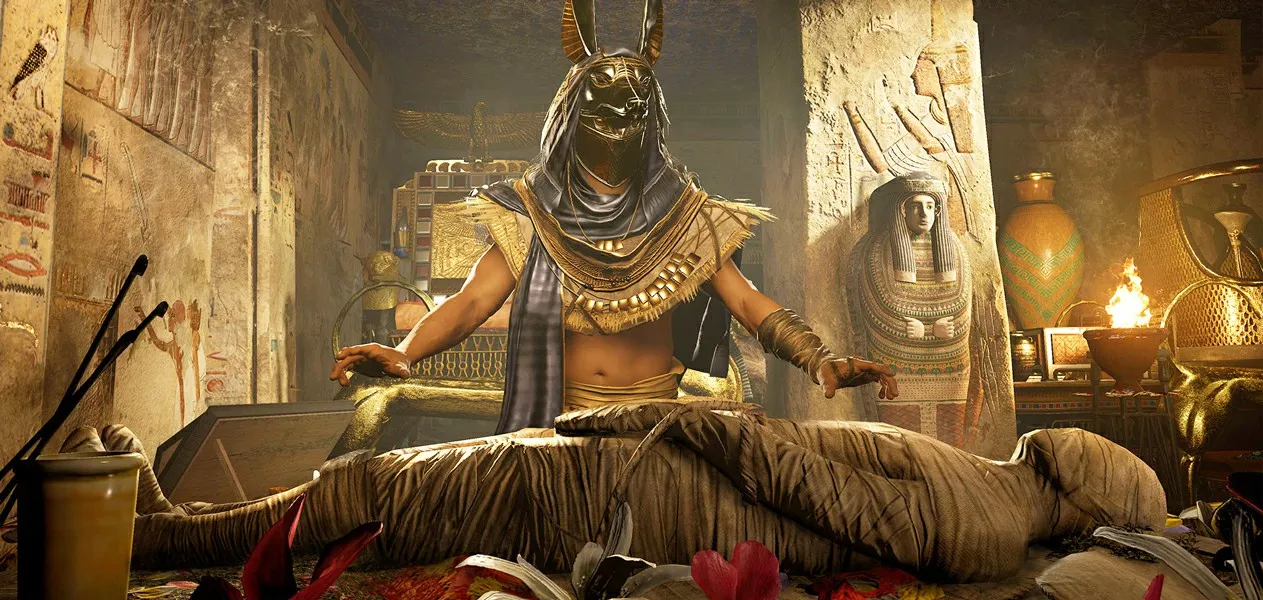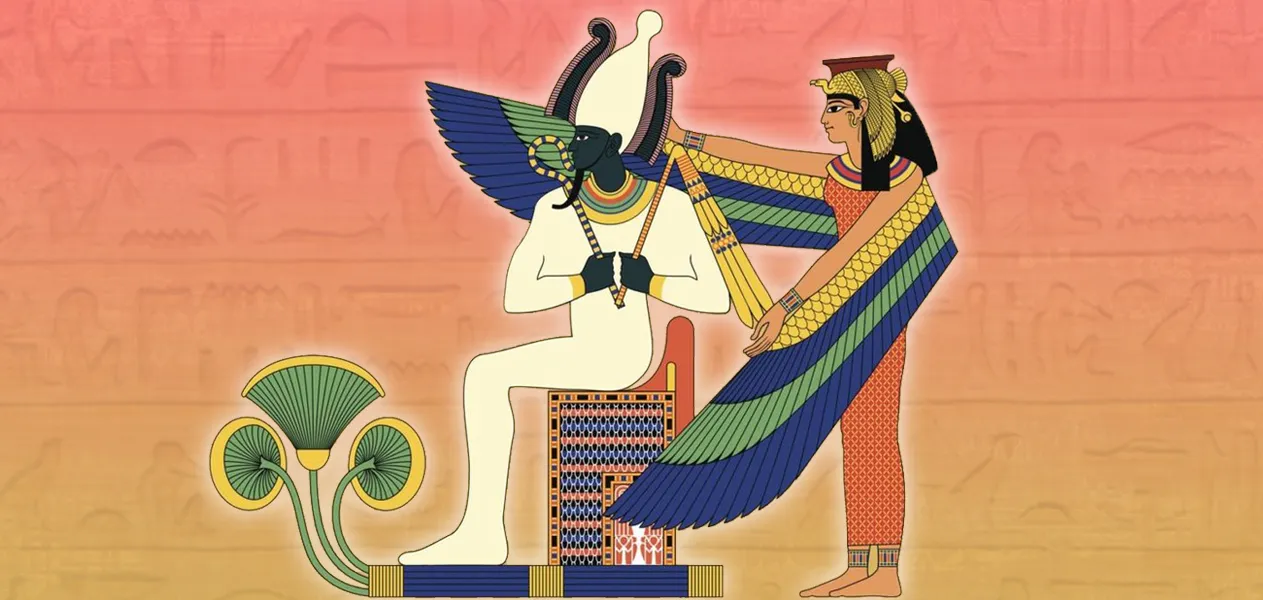




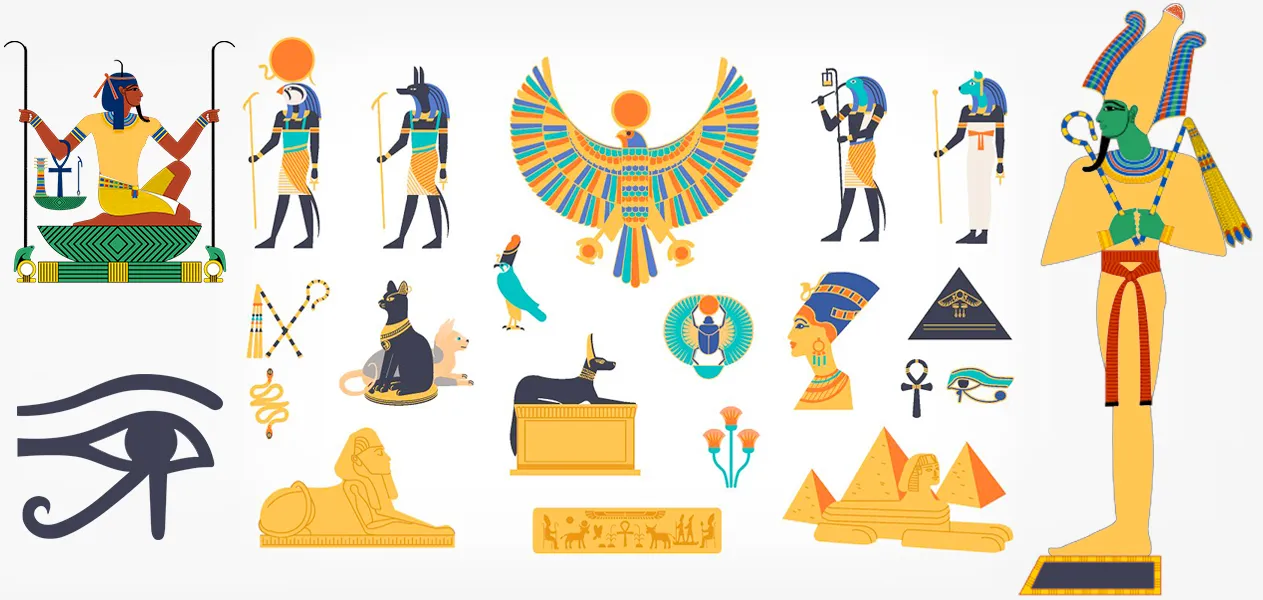
From the ankh in a god's hand to the eye painted on a boat, ancient Egyptian symbols were never just decoration. Each one carried a meaning, a prayer or a promise of protection, and many were also hieroglyphs that could be written and read. This guide explains 22 famous ancient Egyptian symbols and their meanings, the most powerful symbol, how Egyptians used them, and where you can see them today.

What Are Ancient Egyptian Symbols?
Ancient Egyptian symbols are sacred signs that stood for ideas such as life, stability, power, protection and rebirth. Religion shaped every part of life in ancient Egypt, and people believed the gods watched over them from birth to the afterlife. Symbols were a way to call on that divine help every day. They are sometimes called Kemetic symbols, from Kemet, the "black land," the Egyptians' own name for their country.
Many of these signs were also part of the hieroglyphic script, so a single picture could be both a word and a blessing. They appear on temple walls, jewelry, amulets, coffins, furniture and royal regalia. Knowing them helps you read the stories told by the ancient Egyptian gods and goddesses on every monument.
Ancient Egyptian Symbols at a Glance
|
Symbol |
Meaning |
Linked With |
|
Ankh |
Life |
All gods, the king |
|
Djed |
Stability |
Osiris, Ptah |
|
Was scepter |
Power, dominion |
Ra, Anubis, Ptah |
|
Scarab |
Rebirth, the rising sun |
Khepri |
|
Tyet |
Protection |
Isis |
|
Eye of Horus |
Healing, protection |
Horus |
|
Crook and flail |
Kingship |
Osiris, the pharaoh |
|
Shen ring |
Eternity |
Horus, Nekhbet |
|
Lotus |
Creation, rebirth |
The sun god, Nefertem |
|
Ouroboros |
Endless cycles |
The sun's night journey |
|
Uraeus |
Royal protection |
Wadjet |
|
Eye of Ra |
The sun's fierce power |
Sekhmet, Hathor |
|
Feather of Ma'at |
Truth, justice |
Ma'at |
|
Ka |
Life force |
Every person |
|
Ba |
Personality, soul |
Every person |
|
Winged sun disc |
Divine protection |
Horus of Behdet |
|
Cartouche |
The royal name |
The pharaoh |
|
Sistrum |
Joy, music |
Hathor, Bastet |
|
Sema-tawy |
Unity of Egypt |
The pharaoh |
|
Pyramid |
The path to the sun |
Ra, the king |
|
Obelisk |
The sun's rays |
Ra |
|
Cat |
Protection, home |
Bastet |
22 Ancient Egyptian Symbols and Their Meanings
Some of these symbols were used by everyone, from farmers to pharaohs, while others belonged only to gods and kings.
1. Ankh: The Symbol of Life
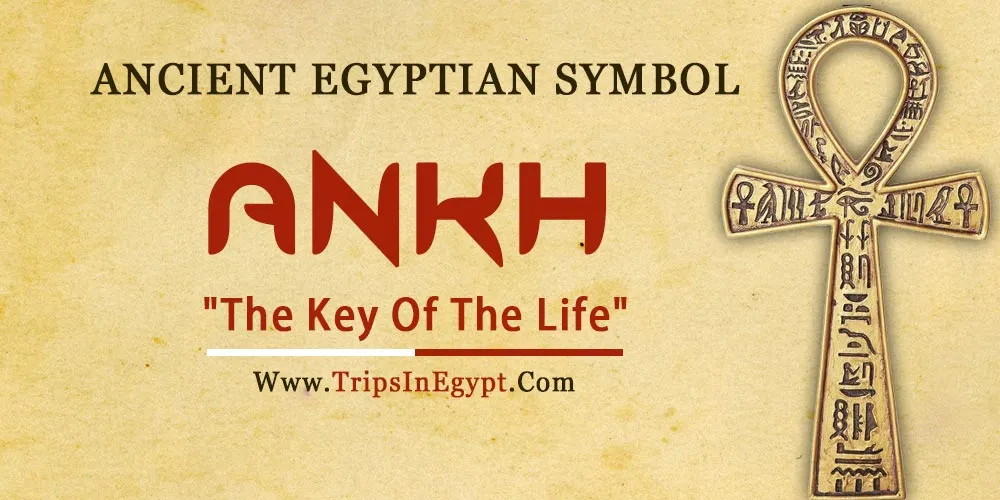
The ankh is the most famous ancient Egyptian symbol. It is the hieroglyph for the word ankh, meaning "life," and it is shaped like a cross with a loop at the top. Its origin is debated, with theories ranging from a sandal strap to a knotted belt.
In temple scenes, gods hold the ankh to the king's nose to give him the "breath of life." It is often called the key of life, and it was so powerful an image that early Egyptian Christians later adopted it as a form of the cross, known as the crux ansata.
2. Djed: The Backbone of Osiris
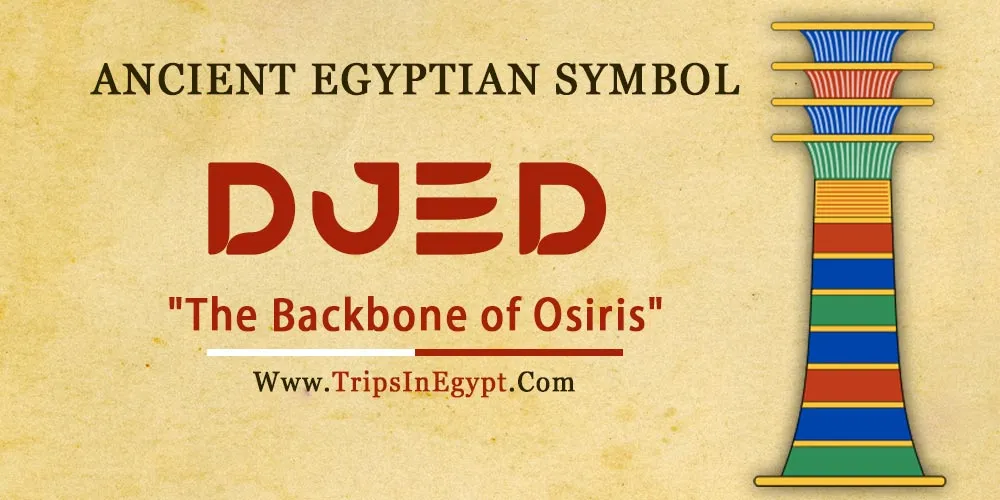
The djed pillar stands for stability and endurance. It looks like a column with four horizontal bars at the top and was linked first with Ptah, the creator god of Memphis, and later with Osiris, as a symbol of his backbone.
During a ceremony called the Raising of the Djed, the king and priests pulled a djed pillar upright to celebrate Osiris's victory over death. Djed amulets were placed on mummies to help the dead stand firm in the afterlife.
3. Was Scepter: Power and Dominion
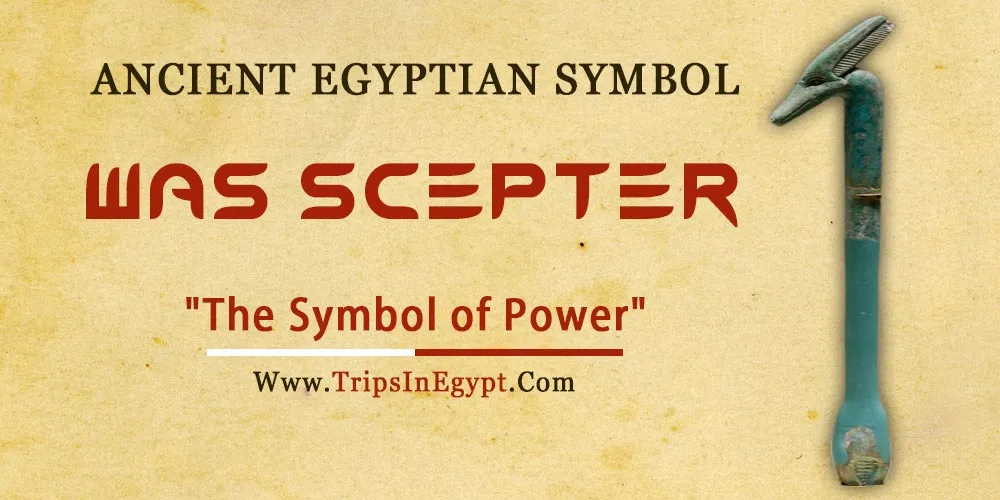
The was scepter is a long staff with a forked base and the head of an animal, often thought to be the god Set. It symbolizes power and dominion, and gods such as Ra, Anubis and Ptah hold it in temple scenes.
The scepter even gave its name to a city. The ancient name of Thebes, modern Luxor, was Waset, the "city of the was scepter." Combined with the ankh and the djed, it formed a powerful wish for life, stability and dominion.
4. Scarab: Rebirth and the Rising Sun
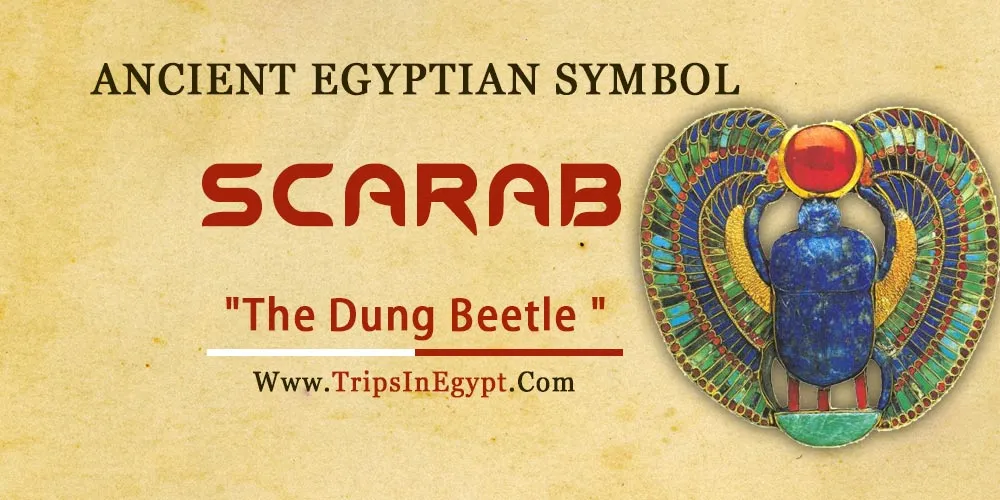
The scarab beetle rolls balls of dung across the ground and lays its eggs inside them. Egyptians compared this to the god Khepri rolling the sun across the sky each morning, so the scarab became a symbol of the rising sun, renewal and rebirth.
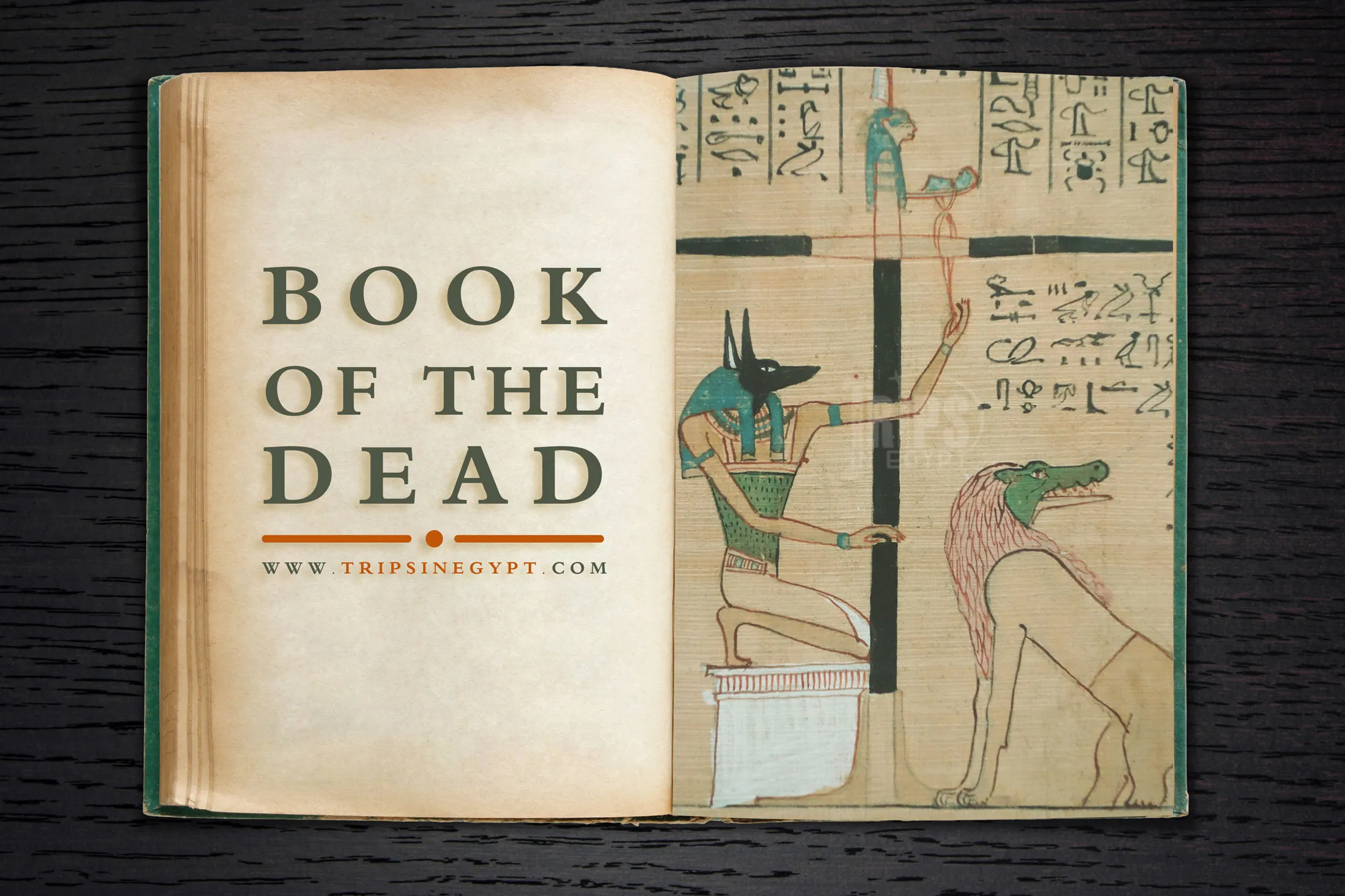
Scarab amulets were among the most common charms in Egypt. A large heart scarab, often inscribed with Spell 30B of the Book of the Dead, was placed over the heart of the mummy to keep it from speaking against its owner at judgment.
5. Tyet: The Knot of Isis
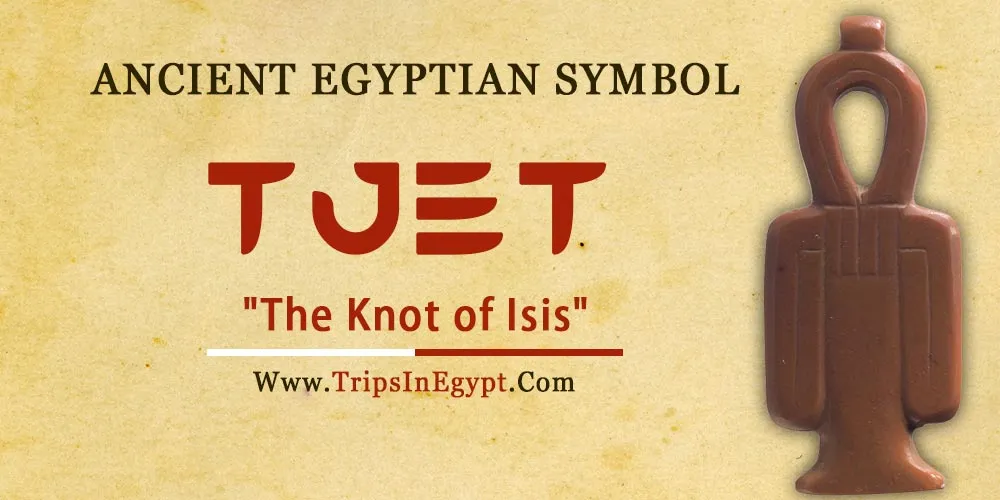
The tyet, also written tiet or tjet, looks like an ankh with its arms folded down. It is known as the Knot of Isis and may represent a knotted cloth or sash.
It was linked with the goddess Isis and her power to protect and heal. Spell 156 of the Book of the Dead says the tyet amulet should be made of red jasper, the color of the goddess's blood, and placed on the neck of the dead.
6. Eye of Horus: Protection and Healing
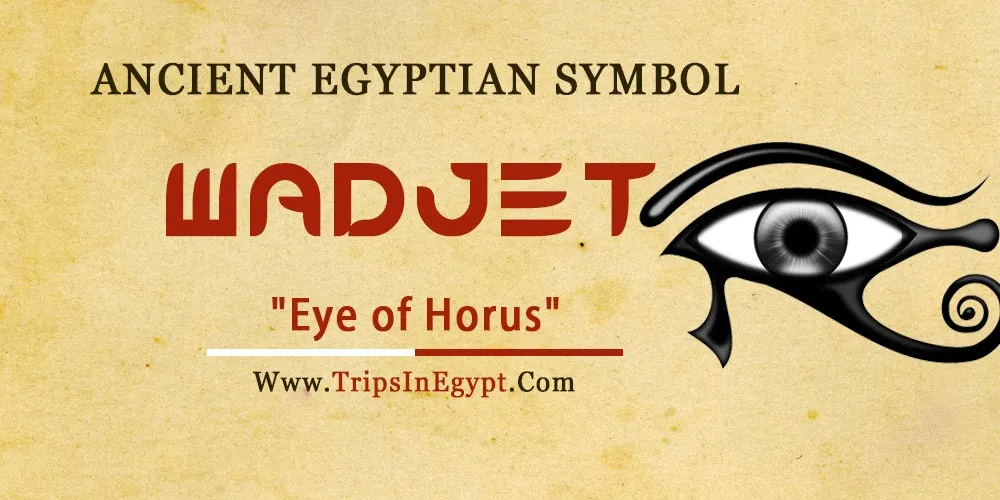
What is the symbol 𓂀? It is the Eye of Horus, also called the wedjat, meaning "the sound one." In myth, Horus lost his left eye fighting his uncle Set, and it was later healed by the god Thoth. The restored eye became a symbol of healing, protection and wholeness.
Egyptians wore Eye of Horus amulets, painted it on coffins and placed it on the bows of boats. You can read the full myth in our guide to the Eye of Horus.
7. Crook and Flail: Royal Authority
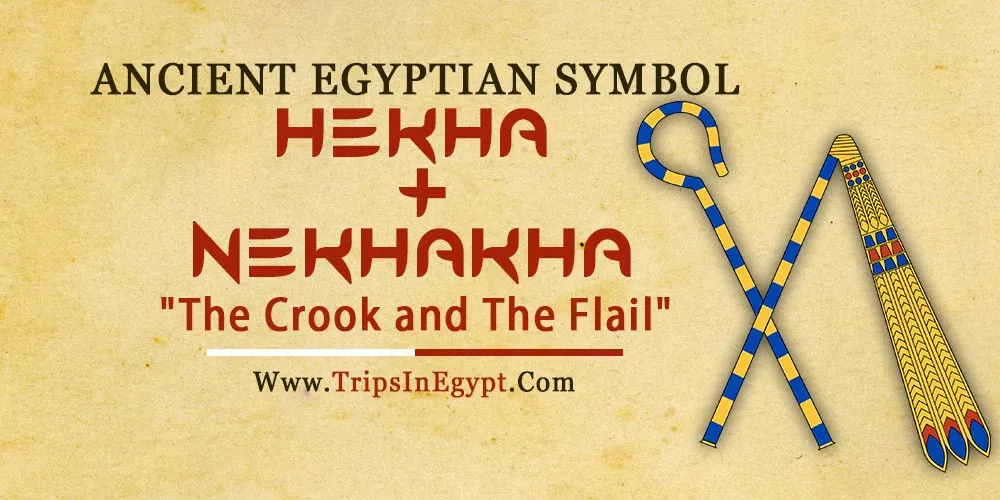
The crook (heqa) and flail (nekhakha) were the symbols of kingship. The crook, a shepherd's staff, showed the king as the guardian of his people, and the word heqa also meant "ruler." The flail, which may come from a tool for threshing grain or a fly whisk, stood for the king's power to provide and to punish.
Both were held by Osiris and by pharaohs, crossed over the chest. A real gold and blue glass crook and flail were found in the tomb of King Tutankhamun.
8. Shen Ring: Eternity and Protection
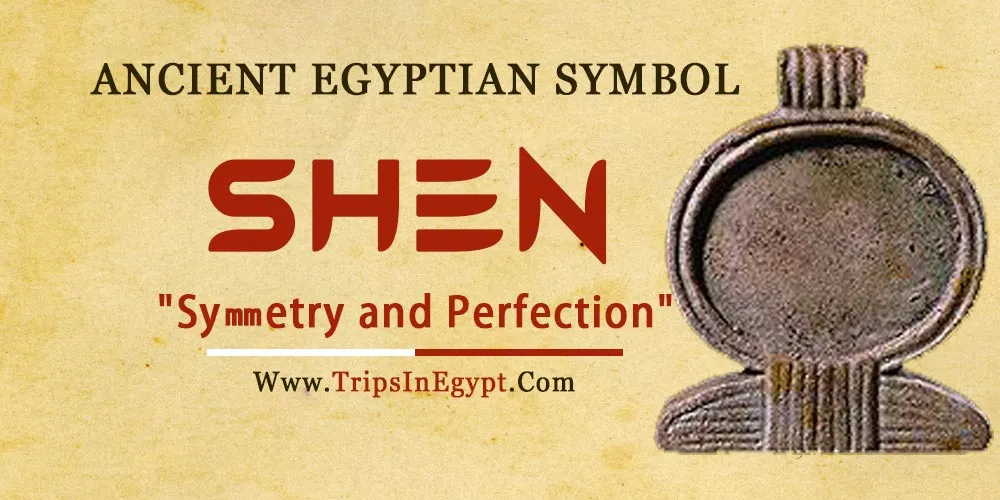
The word shen comes from shenu, "to encircle." The symbol is a loop of rope with no beginning or end, tied at the bottom, and it stands for eternity and protection.
The falcon god Horus and the vulture goddess Nekhbet are often shown holding the shen ring in their claws above the king. Stretched into an oval, the shen became the cartouche that surrounded royal names.
9. Lotus: Creation and Rebirth
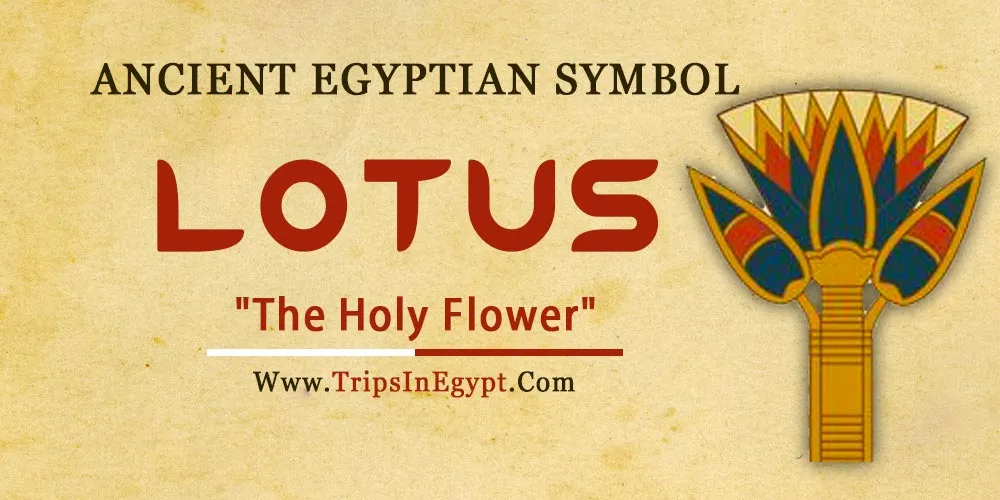
The blue lotus, a water lily, closes at night and opens again at dawn. Egyptians linked it with the sun, creation and rebirth, and they believed the young sun god rose from a lotus at the beginning of time.
The lotus was also the emblem of Upper Egypt, while the papyrus stood for Lower Egypt. It decorates temple columns, jewelry and banquet scenes, where guests are shown smelling lotus flowers.
10. Ouroboros: The Serpent of Eternity
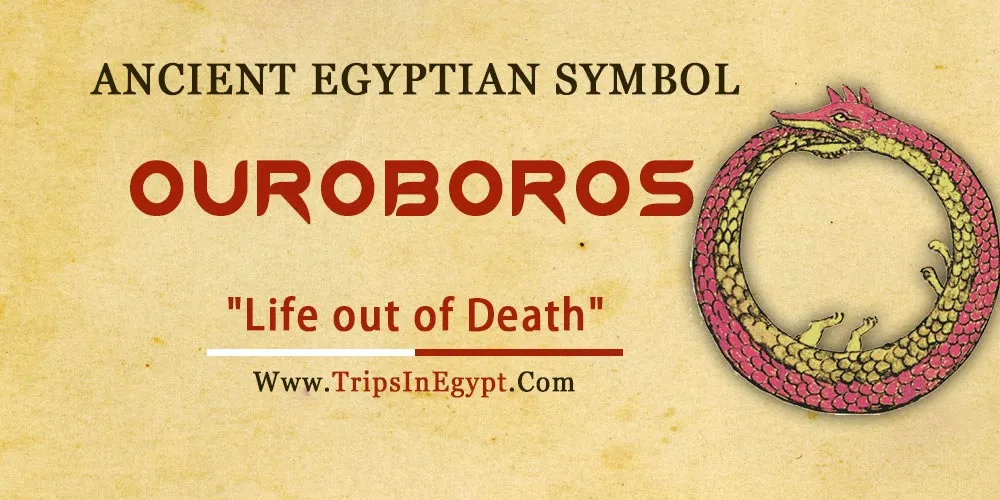
The ouroboros is a serpent biting its own tail, a symbol of endless cycles and renewal. One of the earliest known examples appears on a gilded shrine from the tomb of Tutankhamun, in a text called the Enigmatic Book of the Netherworld. There, two serpents encircle a mysterious figure.
The name ouroboros is Greek, and the image later became popular in Greek, Gnostic and alchemical traditions. In Egypt, it reflected the daily journey of the sun through the underworld and its rebirth each morning.
11. Uraeus: The Royal Cobra
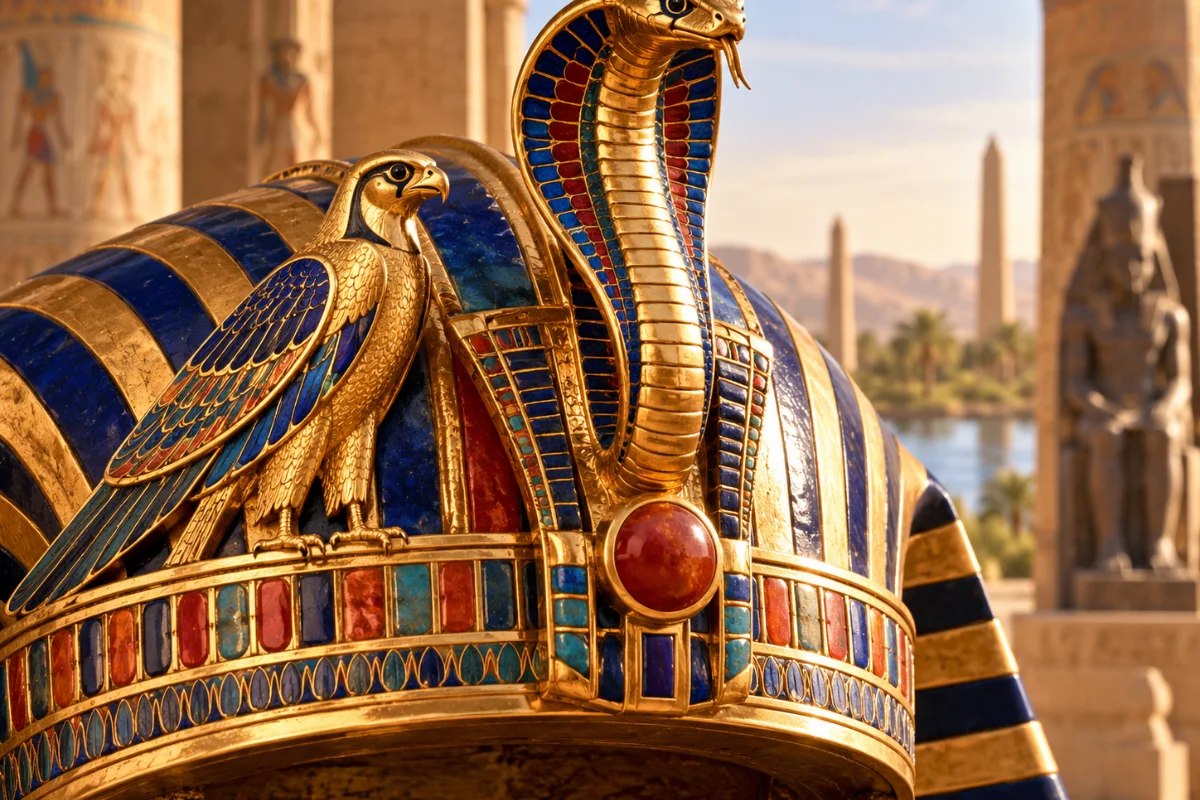
The uraeus is a rearing cobra worn on the front of the royal crown. It represents Wadjet, the cobra goddess of Lower Egypt, who was believed to spit fire at the king's enemies.
The uraeus was often paired with the vulture of Nekhbet, goddess of Upper Egypt, to show that the king ruled both lands. You can see both on the golden mask of Tutankhamun.
12. Eye of Ra: The Fierce Sun Eye
The Eye of Ra is often confused with the Eye of Horus. It represents the sun's power and was imagined as a fierce goddess, such as Sekhmet or Hathor, who could protect Ra or punish his enemies.
The Eye of Ra is usually shown as a sun disc with a cobra. While the Eye of Horus heals and restores, the Eye of Ra burns and defends.
13. Feather of Ma'at: Truth and Justice
The single ostrich feather of the goddess Ma'at stood for truth, balance and justice. In the afterlife, the heart of the dead was weighed against this feather. Our article on the Judgement of the Dead explains this famous scene.
14. Ka: The Life Force
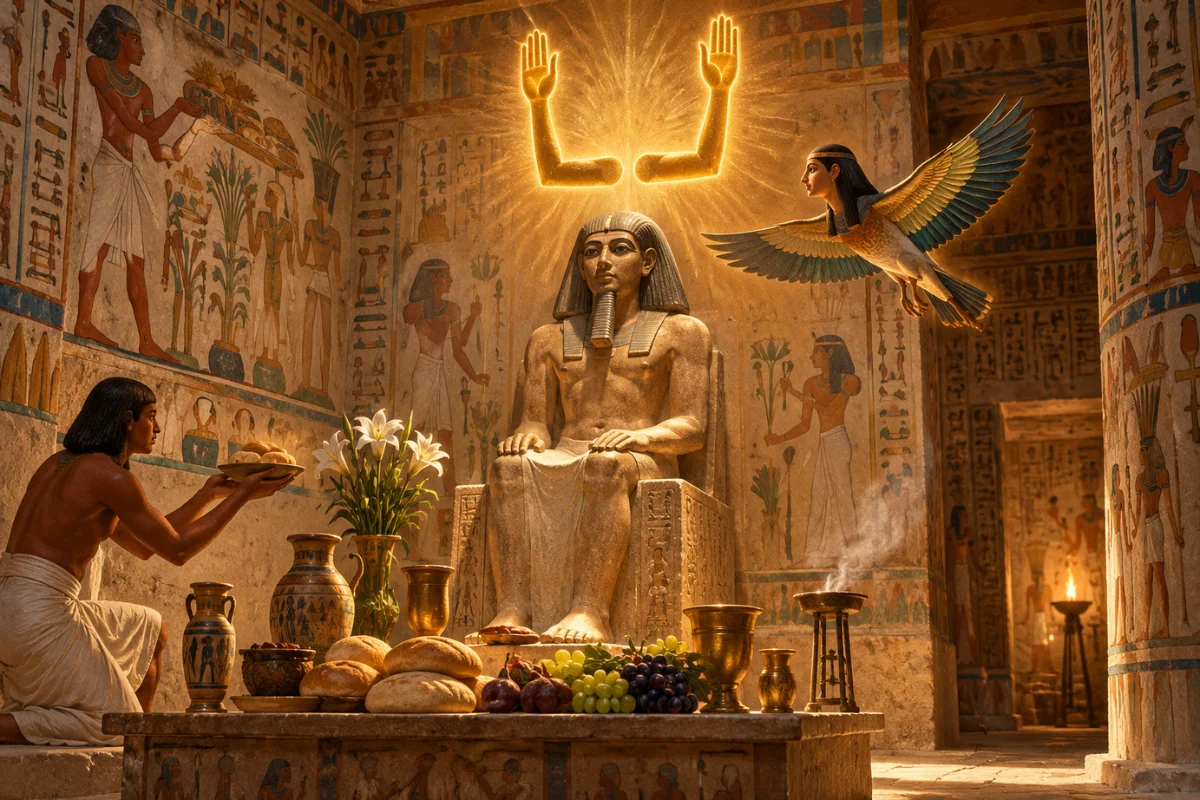
The ka is shown as two raised arms. It represented a person's life force, created at birth and living on after death. Food and drink were left in tombs so the ka could be nourished, and statues gave it a body to return to.
15. Ba: The Soul Bird
The ba is shown as a bird with a human head. It was the part of the soul that held a person's personality and could fly out of the tomb by day and return at night. Our guide to ancient Egyptian afterlife beliefs explains how the ka and ba worked together.
16. Winged Sun Disc: Divine Protection
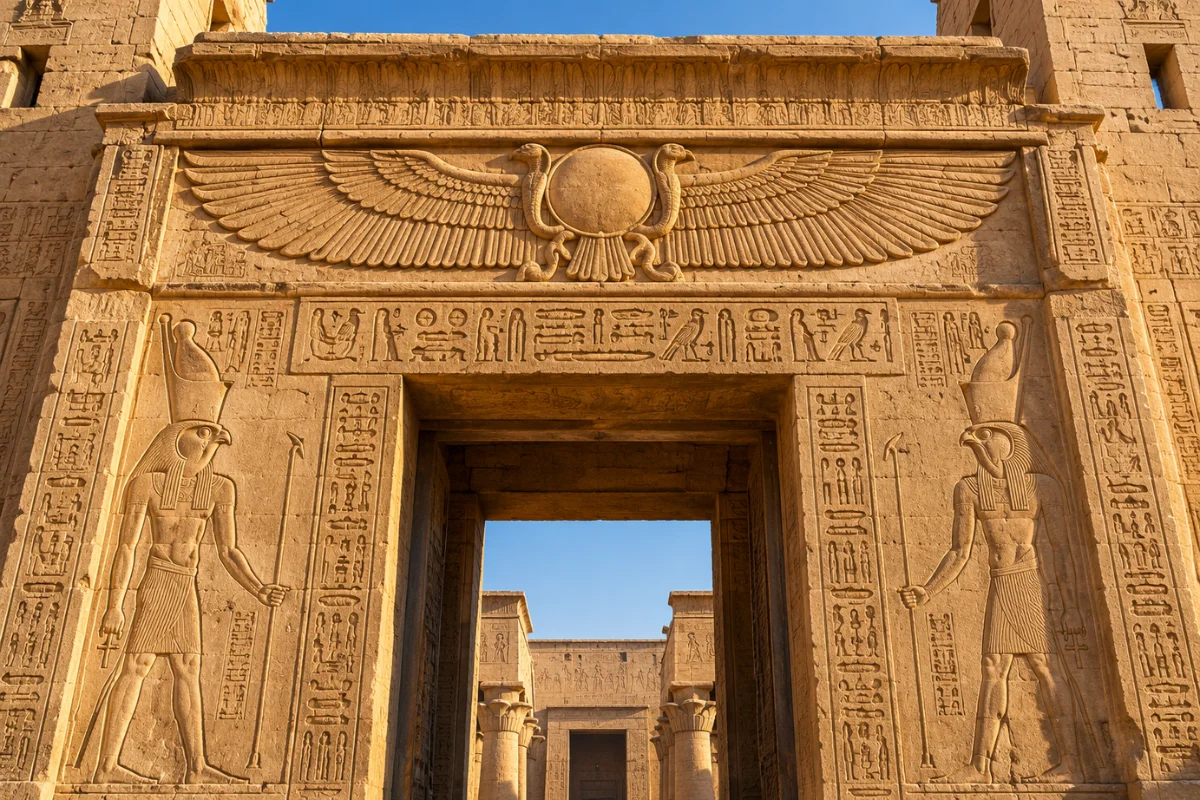
The winged sun disc, a sun with outstretched falcon wings, represents Horus of Behdet. It was carved above temple doorways and gates to protect the sacred space within. Some of the finest examples crown the gateways of the Edfu Temple.
17. Cartouche: The Royal Name
A cartouche is an oval ring around a king's or queen's name, developed from the shen ring. It protected the name and showed that the person inside ruled everything the sun encircled.
Cartouches were also the key to reading hieroglyphs again. The names of Ptolemy and Cleopatra inside cartouches helped Jean-François Champollion decipher the script in 1822, using the Rosetta Stone and other inscriptions.
18. Sistrum: The Sacred Rattle
The sistrum is a musical rattle with metal rods that jingle when shaken. It was sacred to Hathor and later Bastet, and priestesses played it in temple rituals to drive away evil and please the gods.
19. Sema-Tawy: The Union of the Two Lands
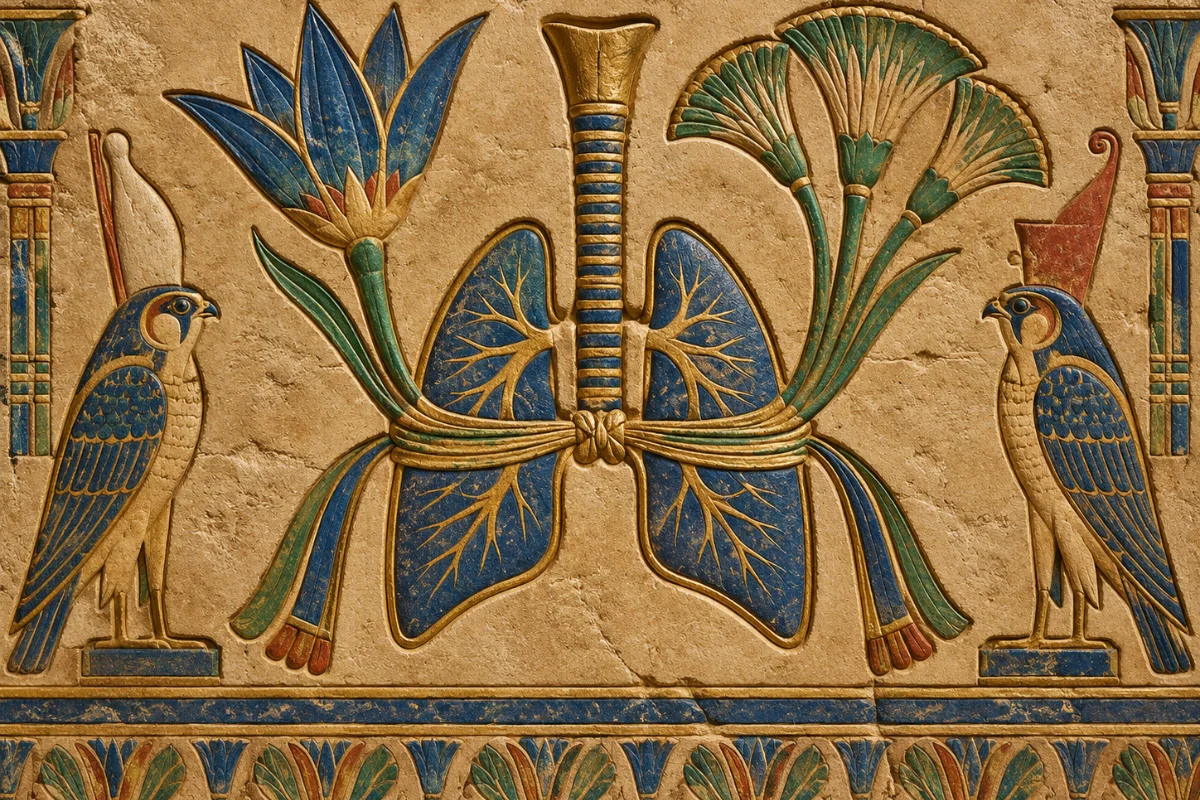
The sema-tawy shows a windpipe and lungs tied together with the lotus of Upper Egypt and the papyrus of Lower Egypt. It symbolizes the unification of Egypt and often appears carved on the sides of royal thrones.
20. Pyramid: The Path to the Sun
The pyramid shape echoed the benben, the mound that rose from the waters at creation, and the slanting rays of the sun. Building a pyramid helped the king's spirit climb to the sky. Learn more in our guide to the Egyptian pyramids.
21. Obelisk: The Sun's Ray in Stone
An obelisk is a tall, four-sided stone pillar with a small pyramid-shaped tip that once caught the first light of day. Obelisks were raised in pairs at temple entrances. The standing obelisk of Hatshepsut at Karnak Temple is nearly 30 meters tall.
22. Cat: The Sacred Animal of Bastet
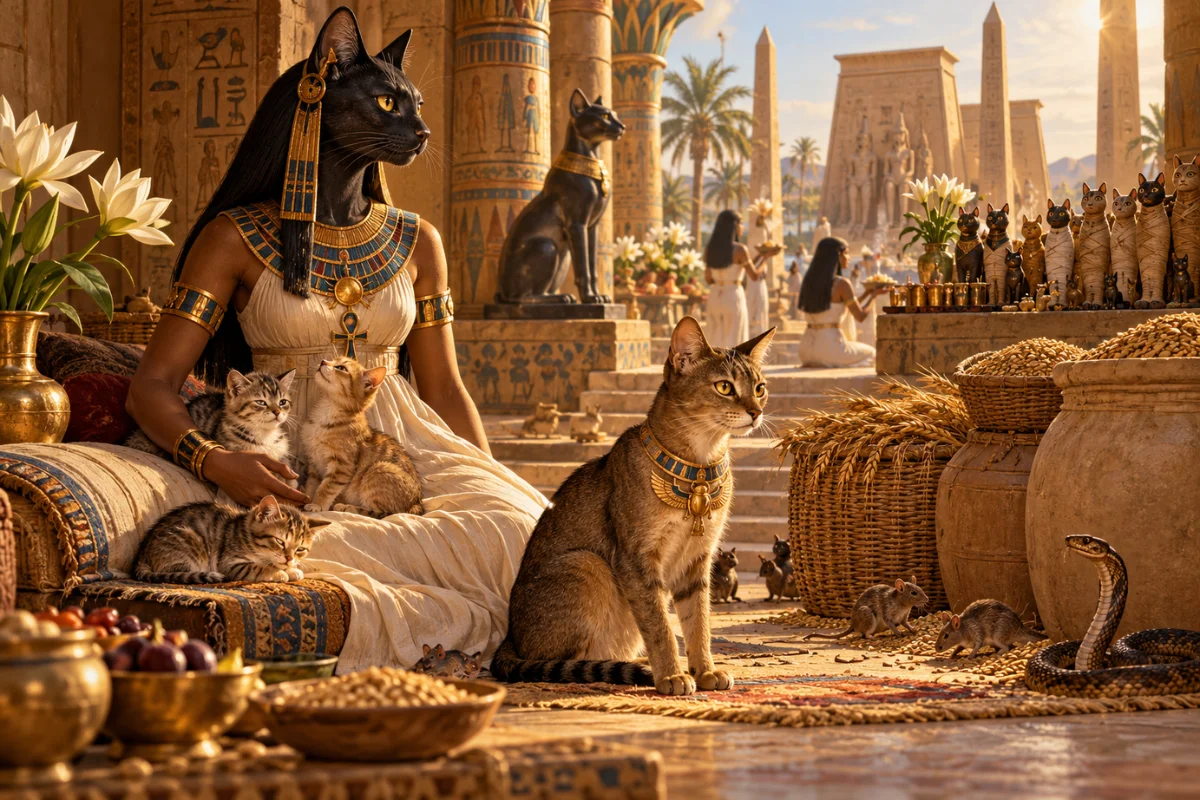
The cat was a symbol of protection, the home and motherhood, and it was sacred to the goddess Bastet, who was shown as a woman with a cat's head. Cats guarded grain stores from mice and snakes, which made them precious in every household.
Was killing a cat punishable by death in Egypt? According to the Greek historian Diodorus Siculus, who visited Egypt in the 1st century BC, killing a cat, even by accident, could cost a person their life, and he described a crowd attacking a Roman who had done so. Millions of cats were later mummified as offerings at temples such as Bubastis and Saqqara.
What Is the Most Powerful Egyptian Symbol?
Most people consider the ankh the most powerful Egyptian symbol, because it stood for life itself and was given only by the gods. For protection, however, the Eye of Horus was the most popular amulet, worn by the living and placed with the dead.
Many objects combine several symbols for extra power. A single amulet or wall scene can show the ankh, djed and was together, wishing the owner life, stability and dominion all at once.
How Ancient Egyptians Used Symbols
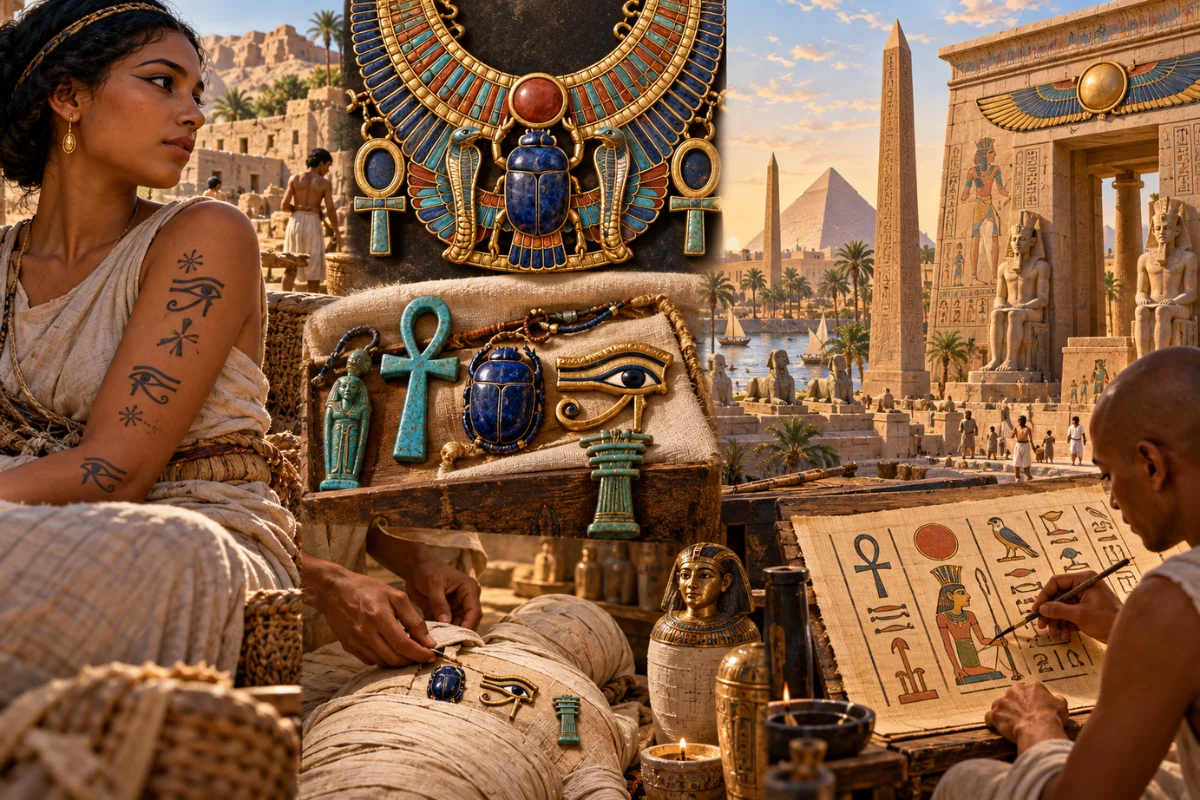
Symbols were part of everyday life, not only temple art. Egyptians wore them, wrote them and were buried with them, and each use gave the symbol a slightly different purpose.
-
Amulets: small charms of faience, stone or gold, shaped like the ankh, scarab, djed or Eye of Horus, worn for protection by the living and wrapped inside mummy bandages for the dead.
-
Jewelry: royal pectorals combined several symbols at once, such as a scarab holding a sun disc, flanked by cobras and shen rings.
-
Writing: many symbols were also hieroglyphs. The ankh could be read as the word "life," and the sun disc as "Ra" or "day."
-
Architecture: obelisks, pyramids and winged sun discs turned symbols into stone, so that whole buildings carried a meaning.
-
The body: tattoos of protective symbols were found on a woman from Deir el-Medina who lived around 1300 to 1070 BC, including several Eye of Horus designs.
Our article on daily life in ancient Egypt shows how deeply religion and symbols shaped the routines of ordinary people.
Where to See Ancient Egyptian Symbols Today
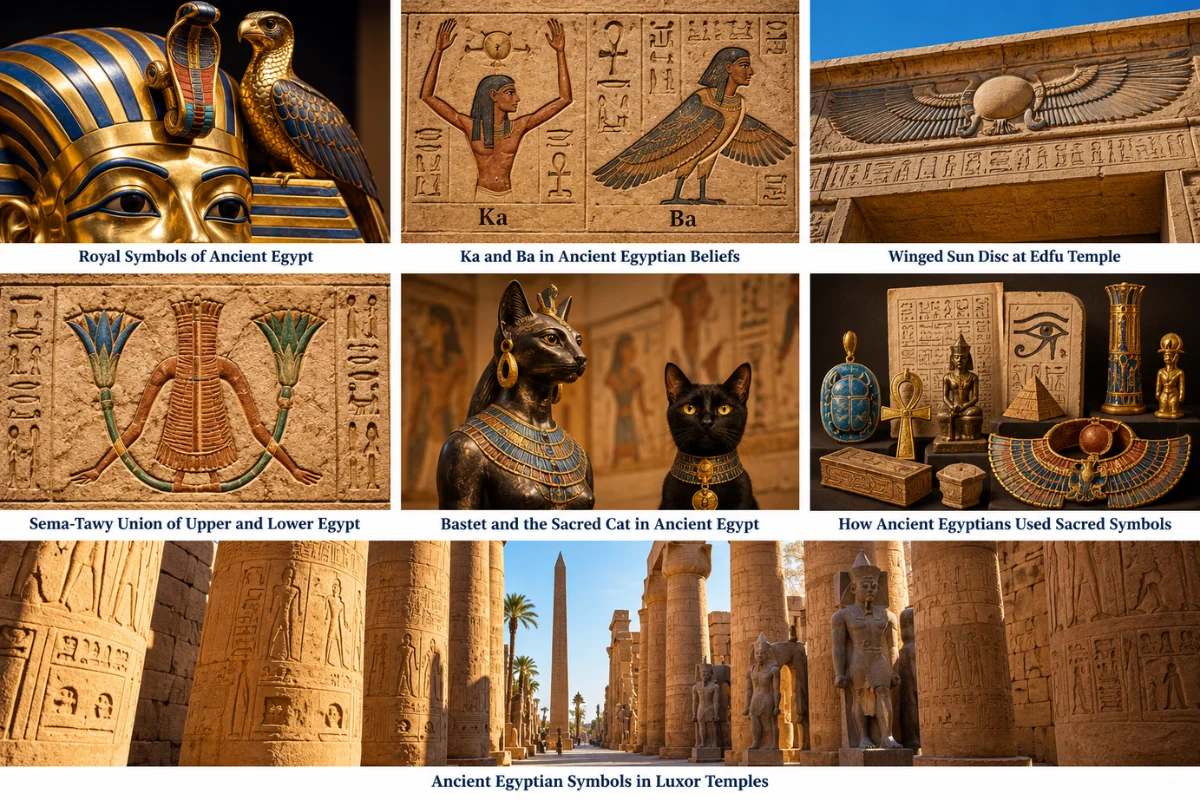
You can see these symbols on almost every ancient monument in Egypt. They are carved on the columns of the temples of Egypt, painted in royal tombs and worked into gold jewelry.
-
The Grand Egyptian Museum, Giza: Tutankhamun's treasures, including scarab pectorals, the crook and flail, and amulets of every kind.
-
The Valley of the Kings, Luxor: tomb walls covered with ankhs, djed pillars, scarabs and the journey of the sun.
-
Karnak and Luxor temples: obelisks, cartouches, was scepters and sema-tawy scenes.
-
Edfu and Dendera temples: winged sun discs, Hathor columns and sistrum motifs.
To plan your museum visit, see our guide to the Grand Egyptian Museum.
In Luxor, the easiest way to see symbols in their original setting is a guided day tour. Our Full Day Tour to Luxor West Bank visits the Valley of the Kings, Hatshepsut Temple and the Colossi of Memnon, From $60 per person.
Experience Egypt and Visit the Immortal Attractions
Seeing an ankh carved by hand more than 3,000 years ago is very different from seeing it in a book. Our Egypt tour packages take you from the museums of Cairo to the temples of Luxor and Aswan.
For a slower journey, travel by river. Sailing between Luxor and Aswan on one of our Nile cruise holidays lets you visit Edfu and Kom Ombo along the way.
Conclusion
Ancient Egyptian symbols turned faith into images anyone could understand. The ankh promised life, the djed stability, the scarab rebirth and the Eye of Horus protection, while cartouches and crowns spoke of royal power. Once you know their meanings, every temple wall and golden amulet begins to speak. Stand before them in Luxor or the Grand Egyptian Museum, and their eternal messages still feel remarkably alive and personal even today.

5 Days Cairo And Hurghada Trip
Amazing 4 Nights Cairo and Hurghada Trip Itinerary 5 Days Cairo and Hurghada trip wil...
- Duration 5 Days / 4 Nights
- Location Cairo & Hurghada
- Type Historical & Recreational Tour
From$690/per person
View Tour
6 Days Cairo, Alexandria & Faiyum Tour
Unforgettable Cairo, Alexandria & Faiyum Adventure in Six Days 6 Days Cairo, Alex...
- Duration 6 Days / 5 Nights
- Location Cairo - Alexandria - Fayum
- Type Historical Tour
From$720/per person
View Tour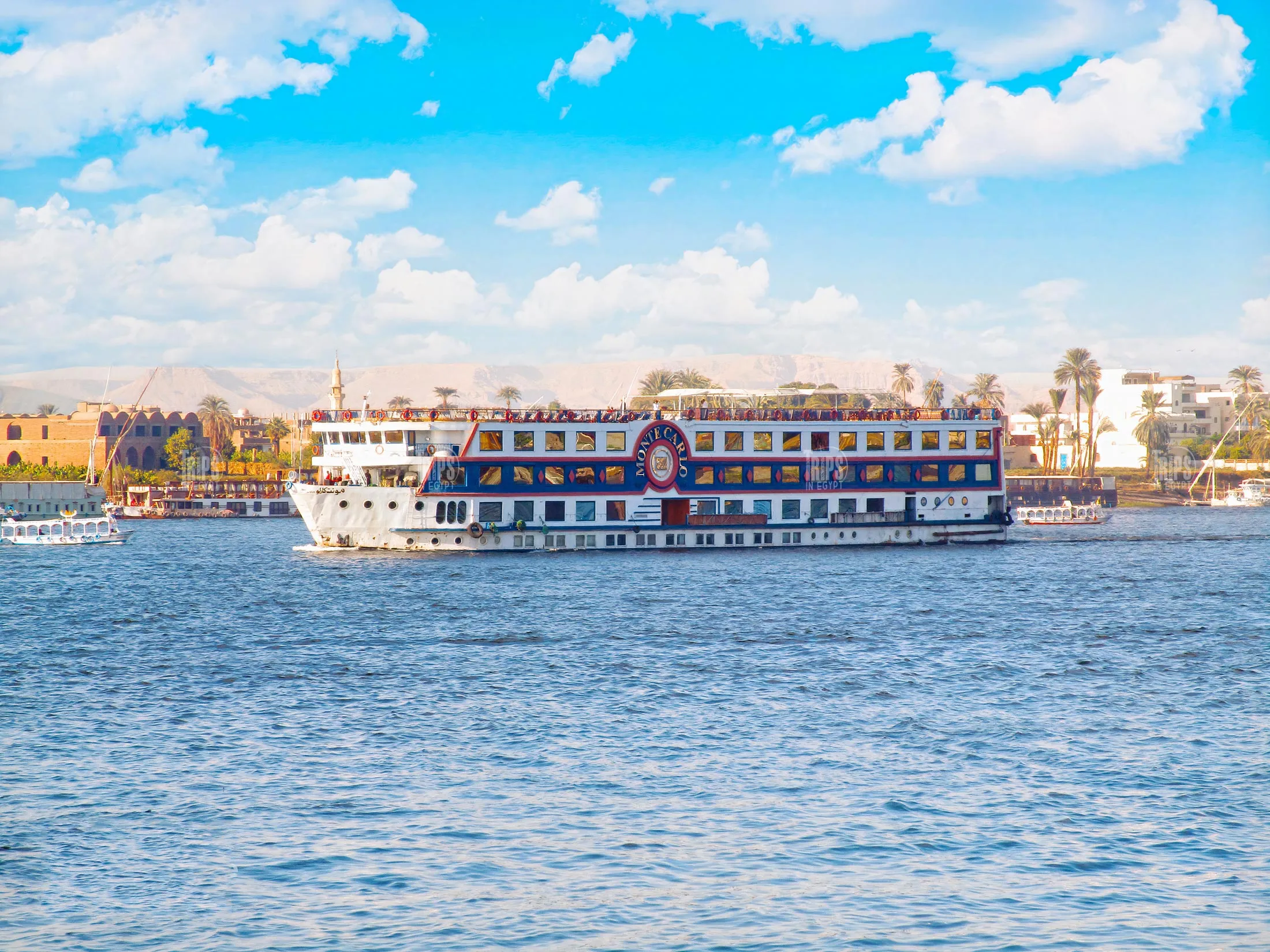
10 Days Cairo, Faiyum & Nile Cruise Holiday
Breathtaking 10 Days Journey of A Lifetime in Egypt 10 Days Cairo, Faiyum & Nile...
- Duration 10 Days / 9 Nights
- Location Cairo, Luxor, Aswan & Faiyum
- Type Classic Tour
From$1350/per person
View Tour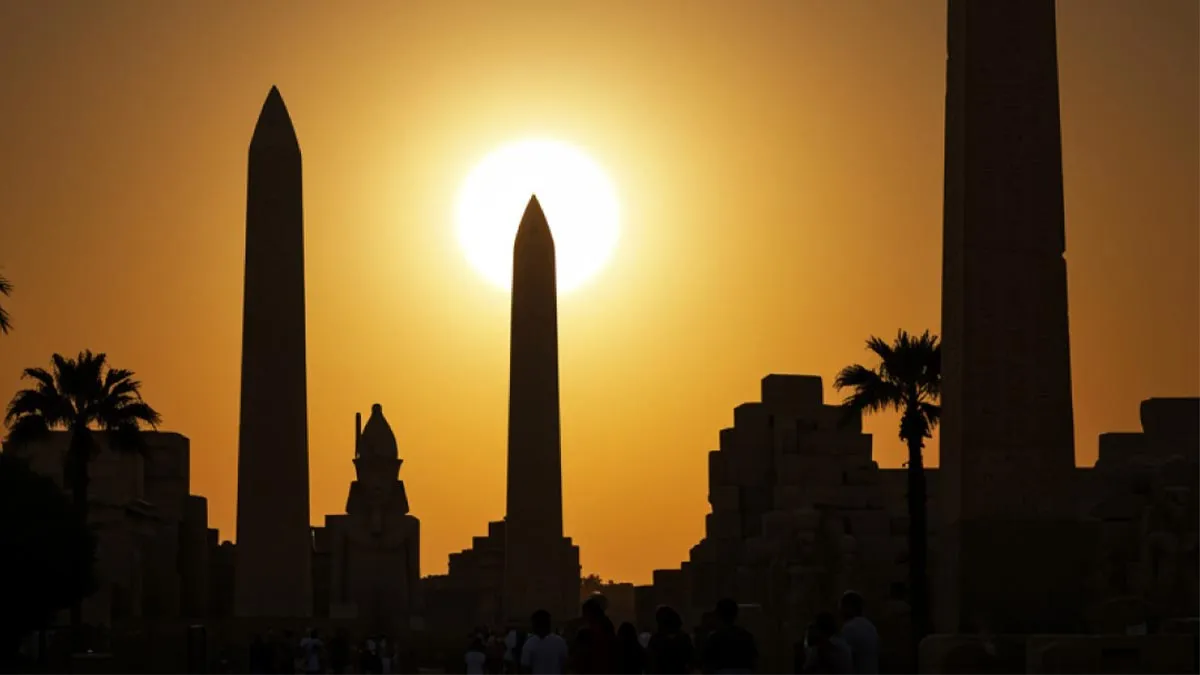 SOLD OUT
Ultimate 7-Day Egypt Solar Eclipse Experience with Hurghada 2027
Enjoy a 7-Day Egypt Solar Eclipse Tour with Hurghada 2027 6 Nights Egypt Solar Ecli...
- Duration 7 Days / 6 Nights
- Location Cairo / Giza / Luxor / Hurghada
- Type Astronomical Tour
Sold Out
View Details