



Menkaure, also written Menkaura and known to the Greeks as Mycerinus, was the 4th Dynasty pharaoh who built the third and smallest of the great pyramids of Giza. The son of Khafre and grandson of Khufu, he is famous for his pyramid’s granite casing and for some of the finest statues ever carved in Egypt. Here you will learn who he was, his family, his monuments and his most interesting facts.

Who Was King Menkaure?
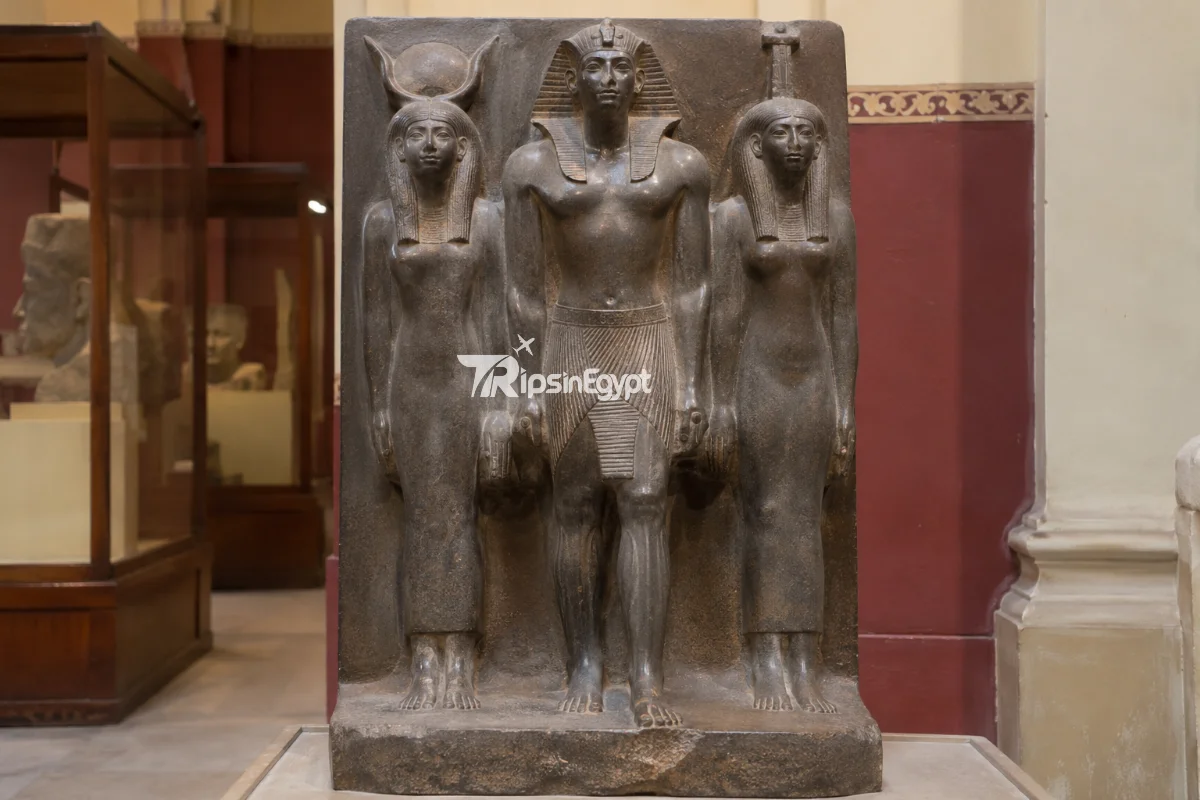
Menkaure was an ancient Egyptian king of the 4th Dynasty, during the Old Kingdom, who ruled in the late 26th century BC. He is usually counted as the fifth or sixth king of his dynasty, depending on how scholars count short reigns. He succeeded his father, Khafre, ruled for perhaps 18 to 28 years from the royal capital at Memphis, and was buried at Giza. His reign marks the last great pyramid on the plateau and the high point of Old Kingdom sculpture.
His name, Men-kau-Ra, means “eternal are the kas of Ra”, the ka being the life force, or soul, of the sun god. It is pronounced roughly “men-KOW-ray”. The Greek historian Herodotus called him Mykerinos, which became Mycerinus in Latin, and the priest Manetho wrote Menkheres. Today, his name is spelled in many ways, including Menkaura and Menkure, but they all refer to the same king. Like the other Egyptian pharaohs of the pyramid age, he was seen as a living god who linked the people with the gods.
King Menkaure Family
Menkaure was the son of King Khafre, builder of the second pyramid of Giza, and Queen Khamerernebty I. His mother is generally thought to have been a daughter of Khufu, which made Khufu both his paternal grandfather and probably his maternal grandfather too. If so, Khamerernebty I’s own paternal grandfather was Sneferu, the founder of the dynasty. Menkaure had several brothers, including Nebemakhet, Nikaure, Iunmin and Sekhemkare, some of whom served as viziers. As a son of Khafre, Prince Iunmin’s paternal grandfather was also Khufu.
How many wives did Menkaure have? Two queens are known. The best known is Khamerernebty II, probably his sister, a daughter of Khafre and Khamerernebty I, who is often identified as the queen in his famous pair statue. The second, Rekhetre, was a “king’s daughter” of Khafre and is thought to have been another wife, making her probably his half-sister. Royal marriages within the family were common in the 4th Dynasty, as a way to keep the throne and its divine status within one bloodline. Like other kings, he may also have had lesser wives who are not recorded.
His eldest son, Prince Khuenre, appears in a tomb south of the pyramids, but he seems to have died before his father, because the throne passed to Shepseskaf, probably another son. Shepseskaf completed his father’s temples and chose to be buried in a large stone tomb at South Saqqara, not in a pyramid. Some scholars think that Khentkaus I, a powerful queen mother of the early 5th Dynasty, may also have been Menkaure’s daughter, but her parentage is debated. Through his children and grandchildren, Menkaure’s family linked the great pyramid builders with the sun-worshipping kings who followed.
King Menkaure Pyramid
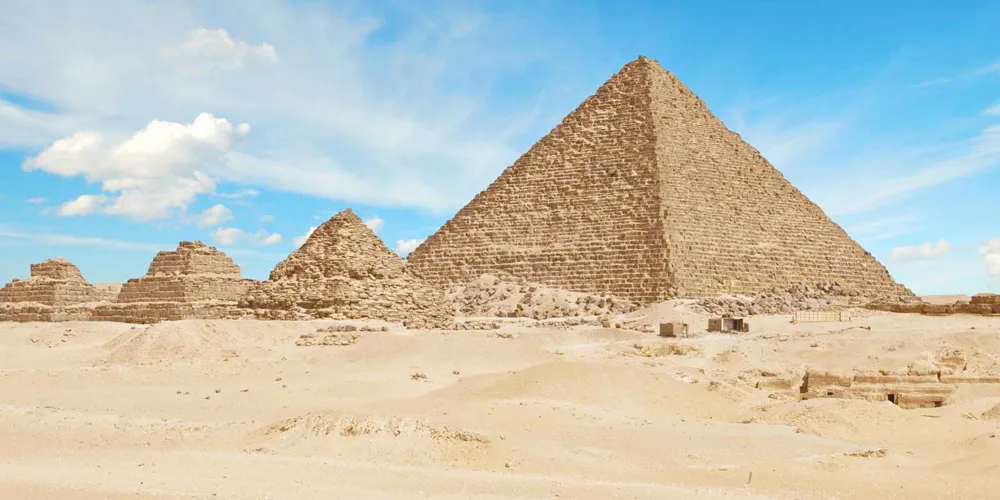
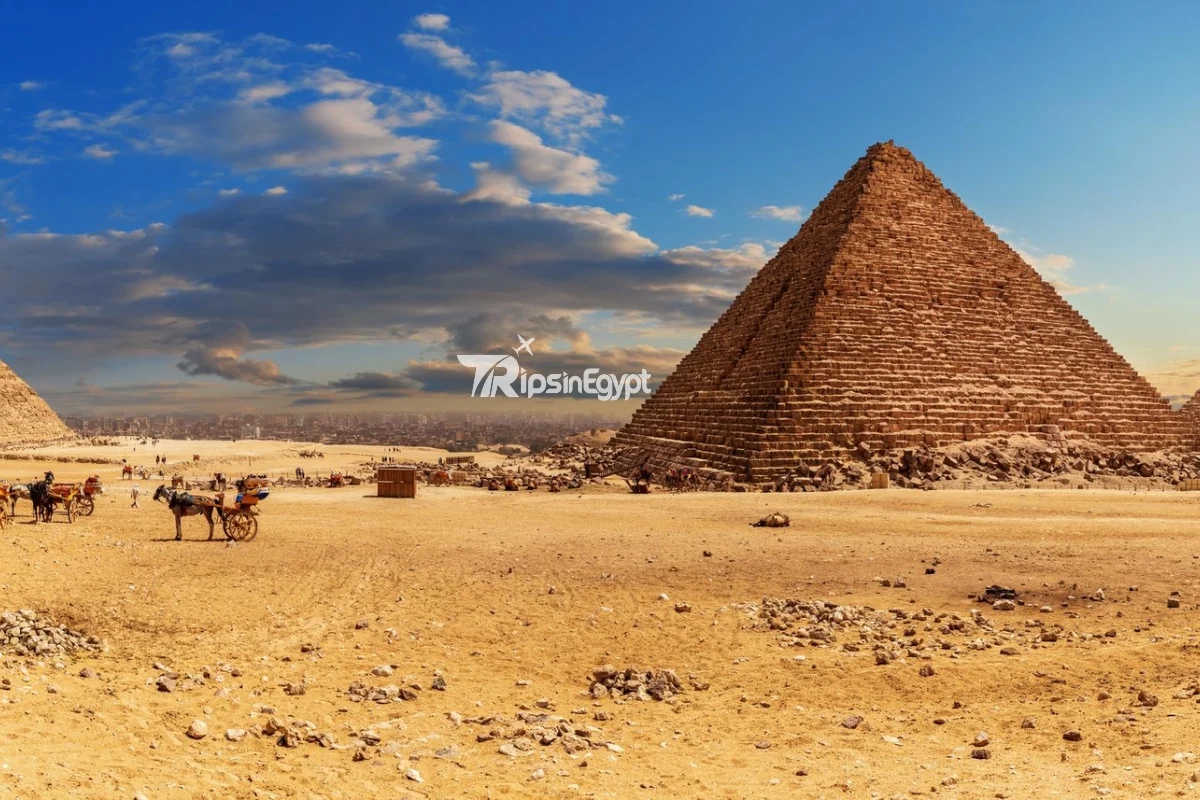
The Pyramid of Menkaure, known in ancient times as Netjer-er-Menkaure, “Menkaure is divine”, is the third and smallest of the great pyramids of Giza. It originally stood about 65.5 m high and is about 61 m today, on a base of about 102.2 by 104.6 m. Its lowest 16 courses were cased in red granite from Aswan, many left unfinished when the king died. Our full guide to the Menkaure Pyramid covers its size, interior and lost sarcophagus in detail.
To the south of the main pyramid stand three smaller queens’ pyramids, known as G3-a, G3-b and G3-c. The largest, G3-a, was cased partly in granite and may have served as a cult pyramid or as the tomb of a leading queen, possibly Khamerernebty II. The other two were left with stepped profiles, unfinished. Inside the main pyramid, explorers found a basalt sarcophagus in 1837, but it was lost at sea when the ship Beatrice sank in 1838 on its way to England. Today, the pyramid stands at the southwestern edge of the Giza Pyramids Complex.
The Temple of King Menkaure
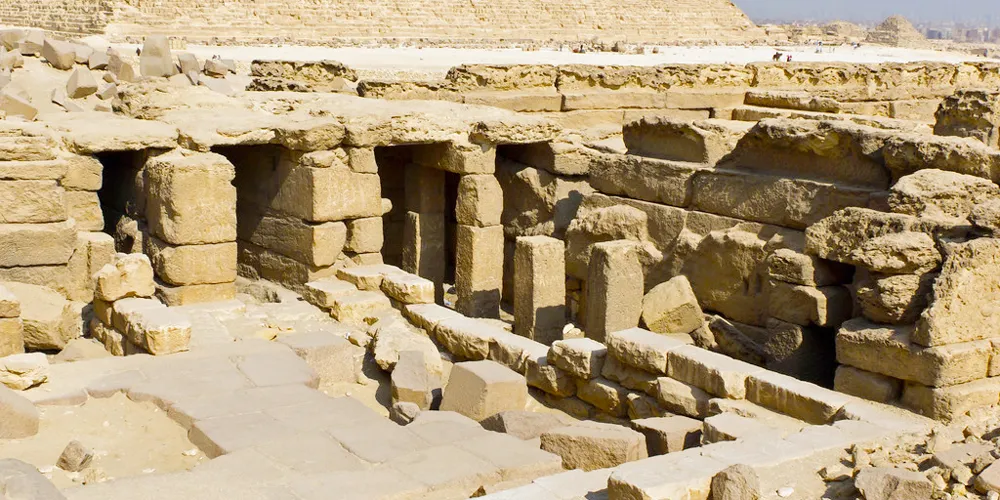
Like other pyramid kings, Menkaure planned two temples: a mortuary temple against the east face of his pyramid, where priests made daily offerings, and a valley temple near the edge of the cultivation, linked to it by a causeway. Work began in stone, with huge local limestone blocks, some weighing well over 100 tons, and plans for granite floors and wall facings. When Menkaure died before the work was finished, his successor Shepseskaf completed both temples quickly in mud brick and left an inscription recording that he had finished them for his father.
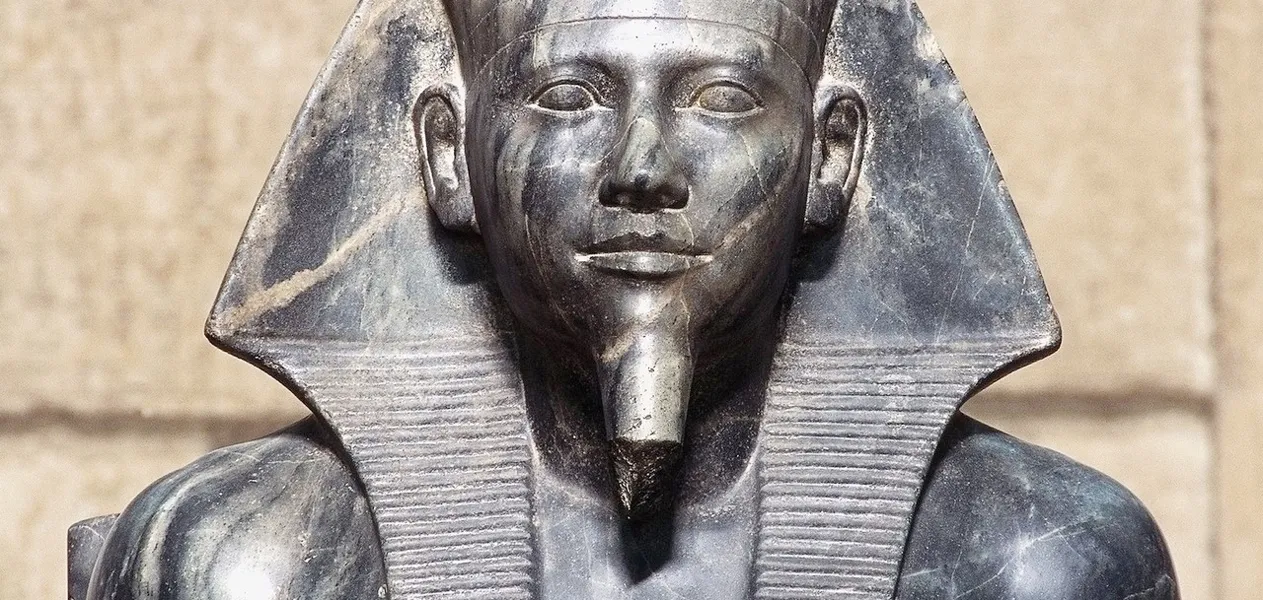
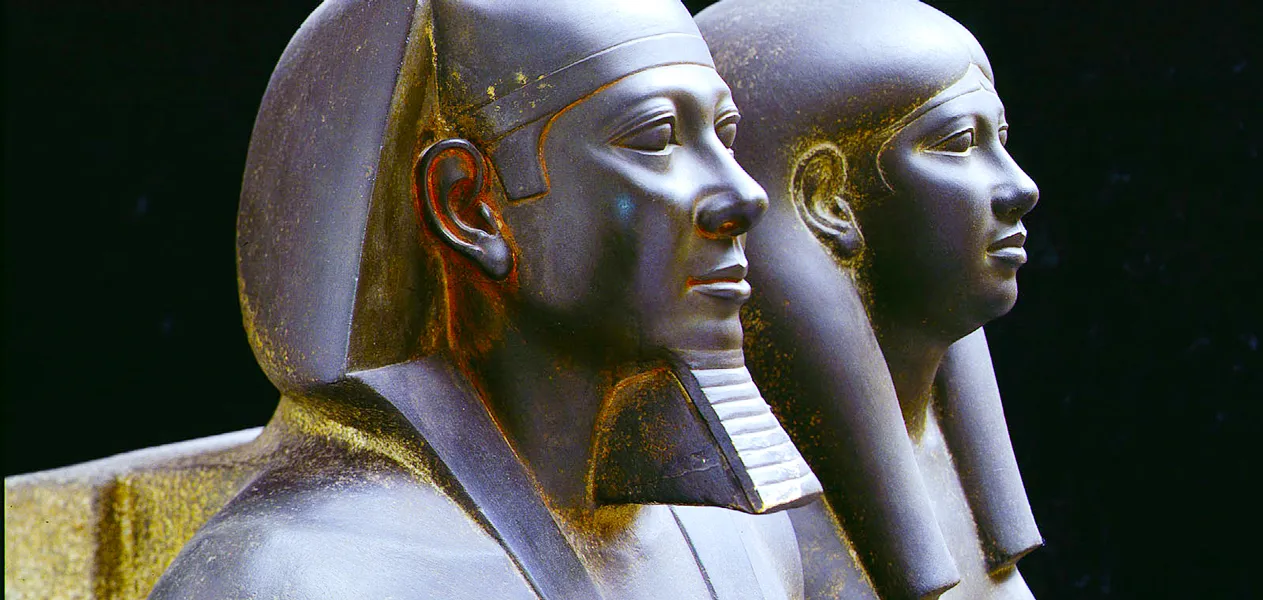
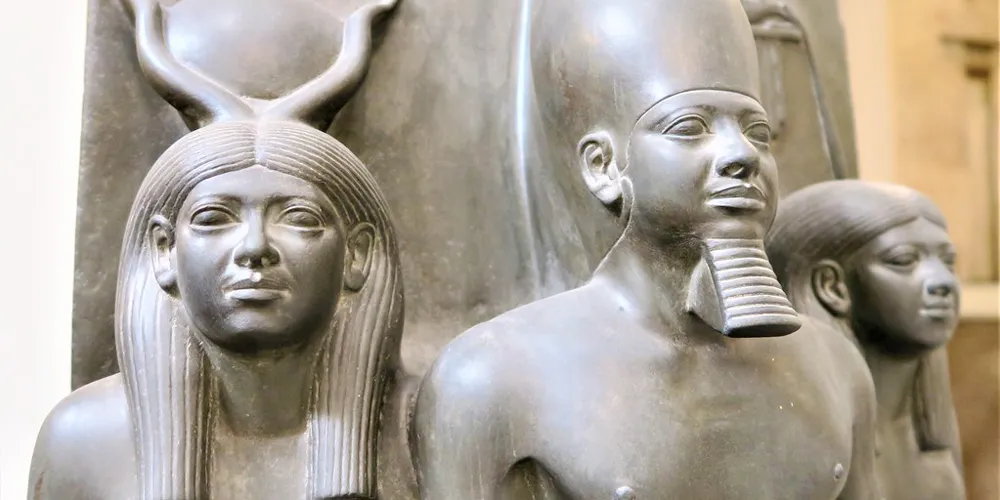
Between 1906 and 1910, the American archaeologist George Reisner excavated both temples for Harvard University and the Museum of Fine Arts, Boston. In the valley temple, he found some of the most important sculptures of ancient Egypt: several triads showing Menkaure with the goddess Hathor and a regional god, and the famous pair statue of the king and a queen. These statues are carved from greywacke, a hard, dark stone from the Eastern Desert. Some of the triads are now displayed in the Egyptian Museum in Cairo, and others are in Boston.
King Menkaure and Queen Statue
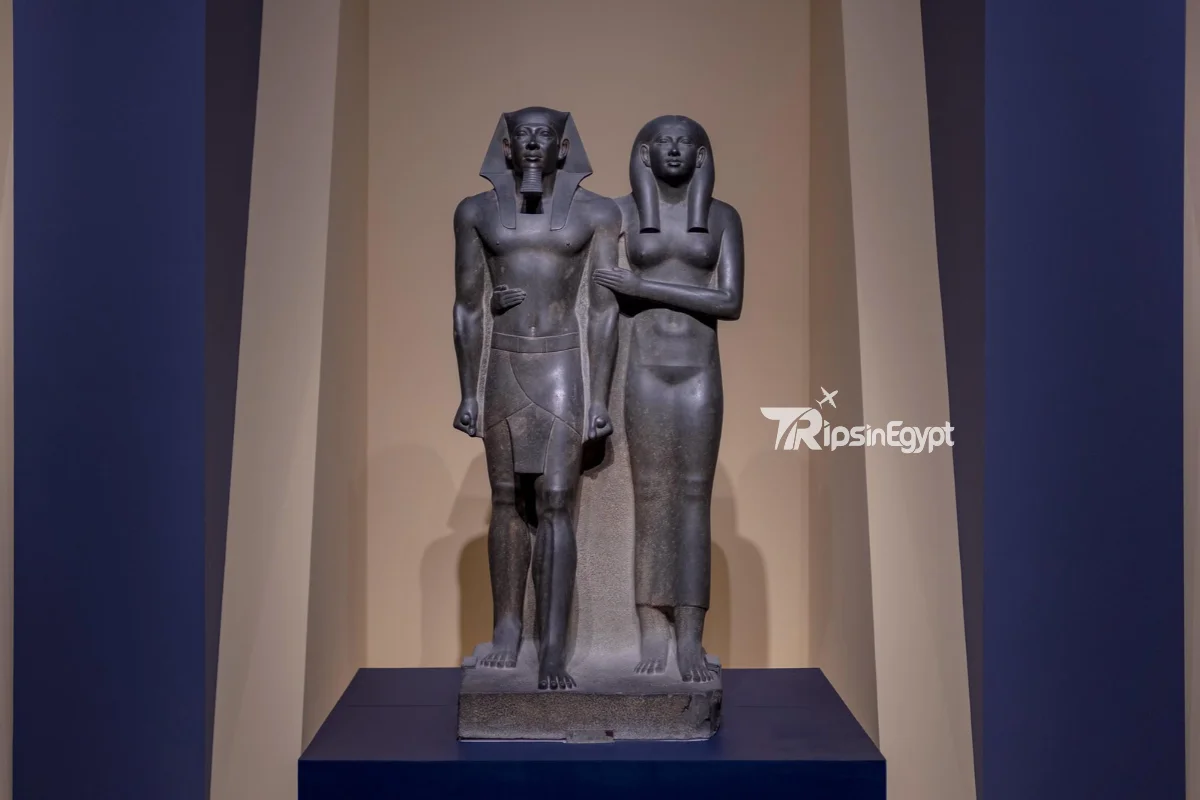
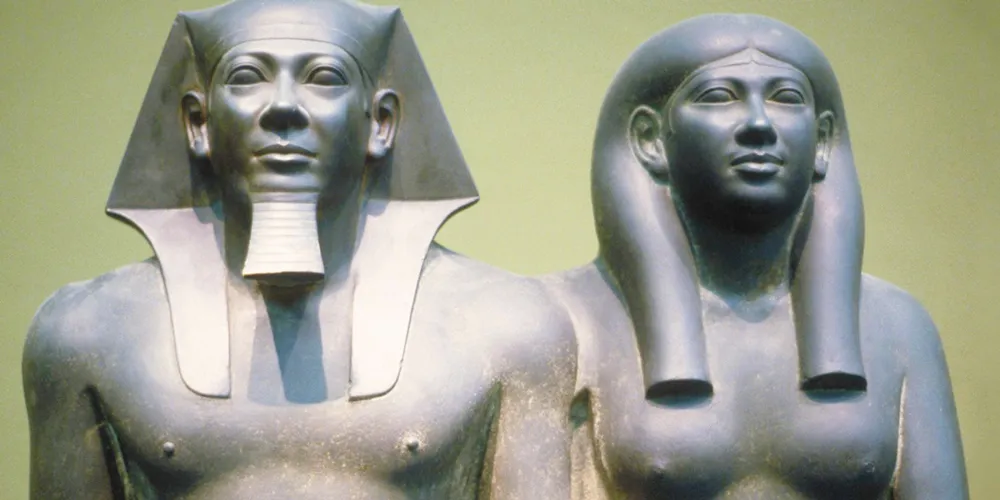
The statue of King Menkaure and his queen is one of the masterpieces of Egyptian art. Carved from greywacke around 2490–2472 BC, it stands about 142 cm high, nearly life-size. The king strides forward with his left foot, while the queen embraces him with one arm around his waist and a hand on his arm, a gesture of support and unity. Reisner’s team found it in the valley temple on 10 January 1910, and it is now in the Museum of Fine Arts, Boston. It was never fully finished, and it has no inscription.
Because there is no inscription, the queen’s identity is not certain. Many scholars identify her as Khamerernebty II, his principal wife, although some suggest she may be his mother, Khamerernebty I. Some people also ask whether King Menkaure was black. The dark color of the statue comes from the greywacke stone, not from the king’s skin. Egyptian artists usually painted men in a reddish-brown tone, and traces of paint show that this statue was once colored. Like his neighbor, the Great Sphinx, it shows the ideal royal image of the 4th Dynasty.
What Did King Menkaure Do?
What did King Menkaure do? His main achievement was building the third pyramid of Giza and its temples, completing the royal cemetery begun by his grandfather Khufu. He also sponsored a remarkable program of royal sculpture, including the greywacke triads and the pair statue, which set new standards for Egyptian art. Inscriptions from his reign show expeditions to quarries and mines, and the court officials who served him were buried in fine tombs around his pyramid. His reign seems to have been stable and prosperous, ending the age of giant pyramids.
Herodotus, writing about 2,000 years later, gives a legendary portrait of Mycerinus as the kindest pharaoh. He says the king reopened the temples that Khufu and Khafre had closed and judged his people more fairly than any king before him. In the same story, an oracle told him he had only six years to live, so he lit lamps and enjoyed every night as if it were day, to double his remaining time. How did Menkaure really die? No ancient record says. He died before his pyramid and temples were finished, but the cause of his death is unknown.
King Menkaure Facts
These fun facts about Menkaure show why he is remembered as one of the great pyramid builders, even though his pyramid is the smallest of the three. His monuments reveal a king who preferred quality to sheer size, with costly granite casing and sculptures of extraordinary skill. They also show the end of an era, because the kings who followed him built smaller pyramids and turned their energy to sun temples. Later Egyptians still honored him, and his burial was renewed with a new wooden coffin in the 26th Dynasty, almost 2,000 years after his death. Here are five facts worth remembering:
-
His name means “eternal are the kas of Ra”, and the Greeks called him Mycerinus.
-
His pyramid was cased in red granite brought from Aswan, more than 800 km to the south.
-
His pair statue with his queen is one of the most famous works in the Museum of Fine Arts, Boston.
-
His basalt sarcophagus was lost at sea when the ship Beatrice sank in 1838.
-
Herodotus remembered him as a just and kind king, in contrast to the harsh image he gave Khufu and Khafre.
See King Menkaure’s Legacy at Giza and in Cairo
You can still follow Menkaure’s story in Egypt today. At Giza, stand before his granite-cased pyramid and the queens’ pyramids beside it, then visit the panorama point, where all three pyramids line up on the horizon. In Cairo, the Egyptian Museum displays some of his triads, carved with astonishing skill more than 4,500 years ago. These sites fit easily into our Egypt vacation packages, which combine the pyramids with Luxor, Aswan, the Red Sea or a Nile cruise.
Enjoy a Half Day Pyramids Tour from Cairo: A guided morning at the Giza Pyramids Complex, including the three pyramids, the Great Sphinx and the Valley Temple, with lunch overlooking the pyramids. It is a short, easy way to see Menkaure’s pyramid. From $50.
Day Tour from Cairo to Pyramids, Saqqara, and Dahshour: A full day with the Giza Pyramids and Sphinx, the Step Pyramid at Saqqara and the pyramids of Dahshur. It follows the whole story of pyramid building, from Djoser to Menkaure. From $75.
4 Days in Cairo Tour Package: Four days with the Giza Pyramids, the Grand Egyptian Museum and Saqqara, then the Egyptian Museum, where Menkaure’s triads are displayed, and Islamic Cairo. It covers Cairo’s ancient sites at a relaxed pace. From $390.
Menkaure built the smallest of the three great pyramids at Giza, yet his granite casing and statues show a king who valued beauty over size. His story lives on in his pyramid, his temples and the statue of the king and his queen. See his monuments for yourself at Giza and in Cairo, and then continue your journey south between the temples of Upper Egypt on one of our Egypt Nile cruises.

5 Days Cairo And Hurghada Trip
Amazing 4 Nights Cairo and Hurghada Trip Itinerary 5 Days Cairo and Hurghada trip wil...
- Duration 5 Days / 4 Nights
- Location Cairo & Hurghada
- Type Historical & Recreational Tour
From$690/per person
View Tour
6 Days Cairo, Alexandria & Faiyum Tour
Unforgettable Cairo, Alexandria & Faiyum Adventure in Six Days 6 Days Cairo, Alex...
- Duration 6 Days / 5 Nights
- Location Cairo - Alexandria - Fayum
- Type Historical Tour
From$720/per person
View Tour
10 Days Cairo, Faiyum & Nile Cruise Holiday
Breathtaking 10 Days Journey of A Lifetime in Egypt 10 Days Cairo, Faiyum & Nile...
- Duration 10 Days / 9 Nights
- Location Cairo, Luxor, Aswan & Faiyum
- Type Classic Tour
From$1350/per person
View Tour SOLD OUT
Ultimate 7-Day Egypt Solar Eclipse Experience with Hurghada 2027
Enjoy a 7-Day Egypt Solar Eclipse Tour with Hurghada 2027 6 Nights Egypt Solar Ecli...
- Duration 7 Days / 6 Nights
- Location Cairo / Giza / Luxor / Hurghada
- Type Astronomical Tour
Sold Out
View Details