



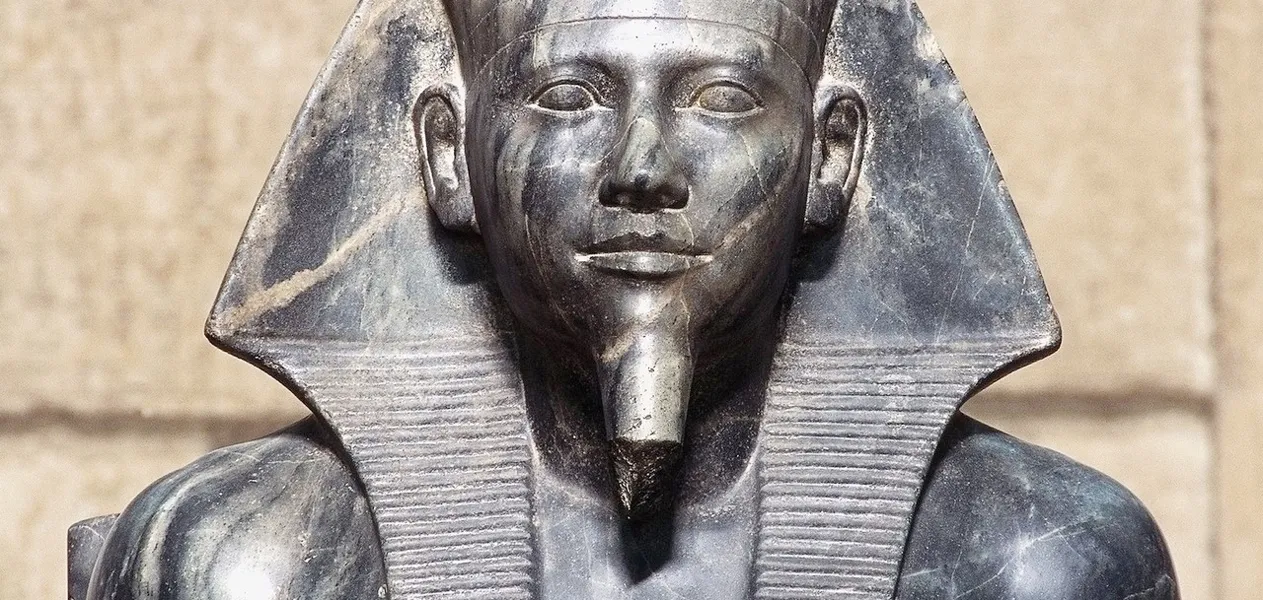
Who is Khafre? The pharaoh Khafre was the fourth king of ancient Egypt's Fourth Dynasty, ruling from about 2558 to 2532 BC. A son of the great pharaoh Khufu, he built the second pyramid of Giza, and his complex includes the Great Sphinx, whose face most Egyptologists believe is his.
Known to the Greeks as Chephren, Khafre ruled at the height of the Old Kingdom's pyramid age. This guide covers his family, his reign, the most important facts about him, his pyramid, the Sphinx, his valley temple and his famous statue, and how you can visit his monuments today.

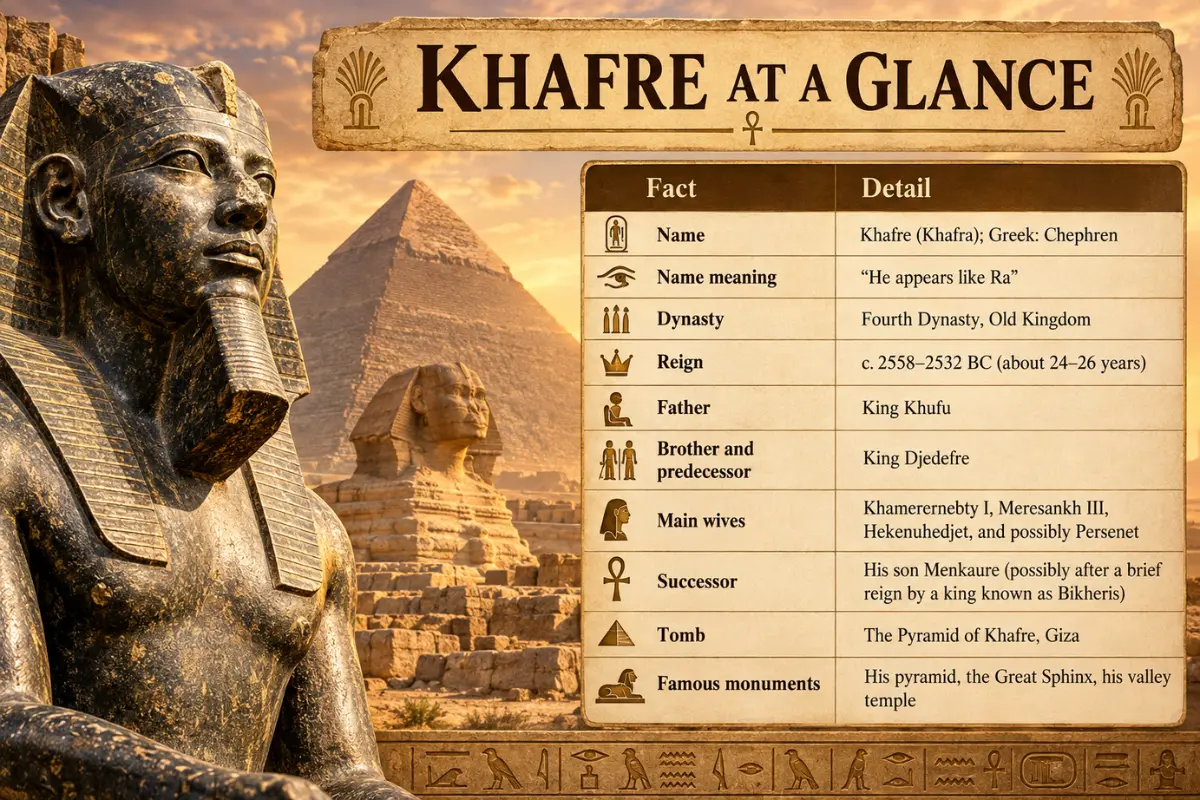
Khafre at a Glance
|
Fact |
Detail |
|
Name |
Khafre (Khafra); Greek: Chephren |
|
Name meaning |
"He appears like Ra" |
|
Dynasty |
Fourth Dynasty, Old Kingdom |
|
Reign |
c. 2558–2532 BC (about 24–26 years) |
|
Father |
King Khufu |
|
Brother and predecessor |
King Djedefre |
|
Main wives |
Khamerernebty I, Meresankh III, Hekenuhedjet, and possibly Persenet |
|
Successor |
His son Menkaure (possibly after a brief reign by a king known as Bikheris) |
|
Tomb |
The Pyramid of Khafre, Giza |
|
Famous monuments |
His pyramid, the Great Sphinx, his valley temple |
Khafre, Khafra, Chephren or Kefren? His Names Explained
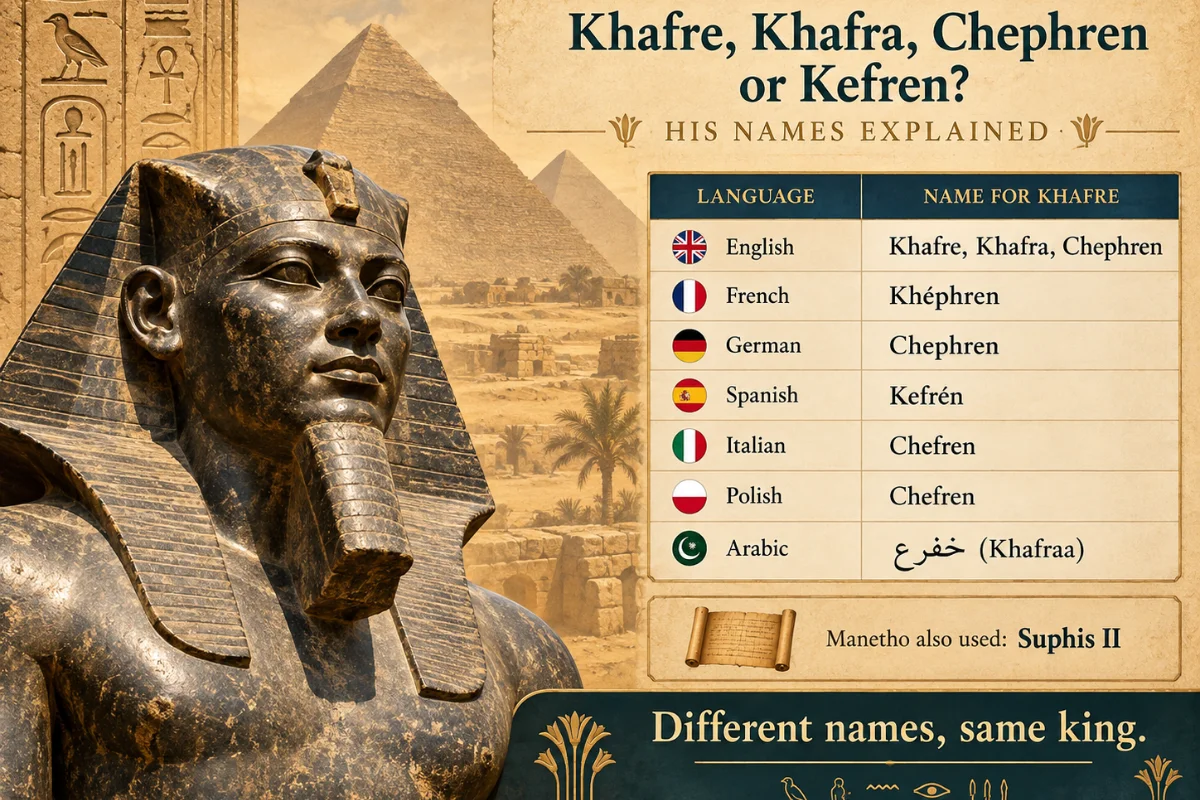
The pharaoh's Egyptian name, Ḫꜥ.f-Rꜥ, is usually written Khafre or Khafra in English. The Greek historian Herodotus called him Chephren, and that form passed into many European languages.
|
Language |
Name |
|
English |
Khafre, Khafra, Chephren |
|
French |
Khéphren |
|
German |
Chephren |
|
Spanish |
Kefrén |
|
Italian |
Chefren |
|
Polish |
Chefren |
|
Arabic |
خفرع (Khafraa) |
The Egyptian priest Manetho gave yet another version, Suphis II. All these names refer to the same king.
King Khafre Family Tree
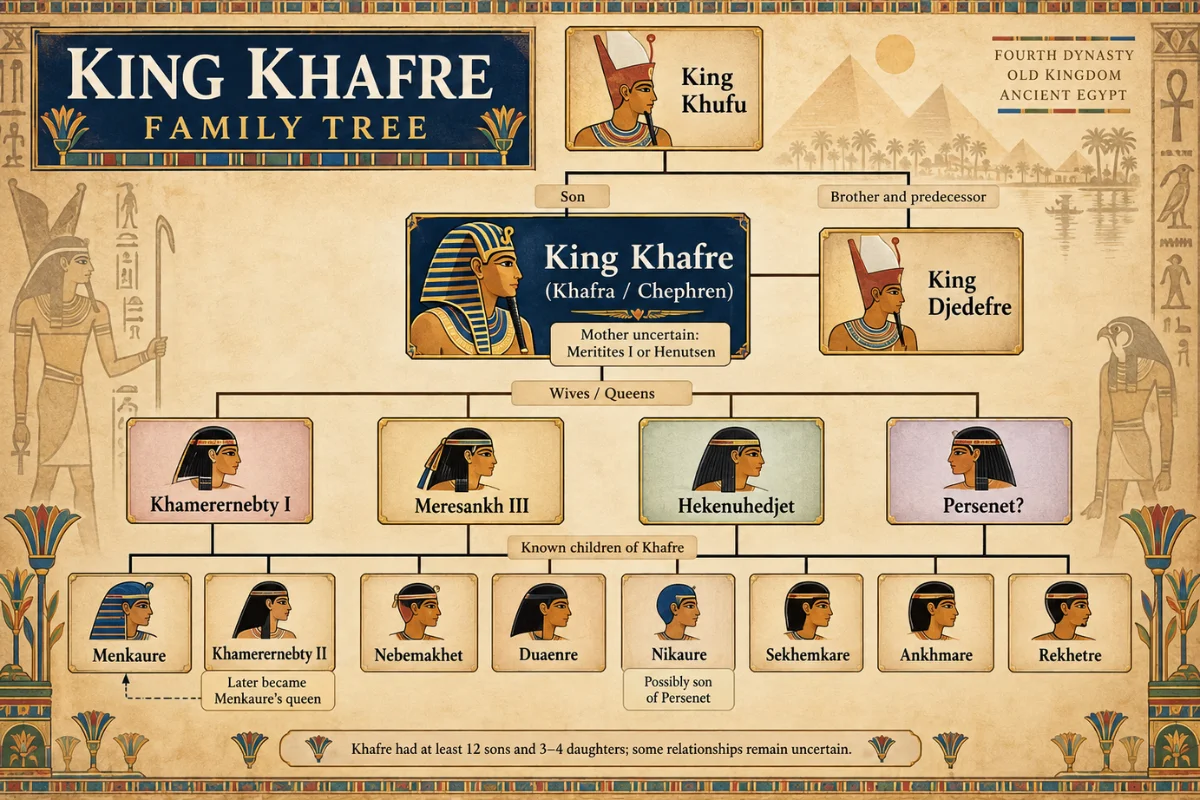
Khafre was a son of King Khufu, builder of the Great Pyramid. His mother is uncertain: she may have been Queen Meritites I or Queen Henutsen, but the evidence is disputed. He succeeded his brother Djedefre, who built his own pyramid at Abu Rawash, about 8 km north of Giza.
Khafre had several wives. Khamerernebty I was the mother of his successor, Menkaure, and of the princess Khamerernebty II, who became Menkaure's queen. Meresankh III was his niece, the daughter of his elder brother Kawab and Queen Hetepheres II; her beautifully painted tomb at Giza is one of the finest of the period. Hekenuhedjet was another queen, and Persenet may have been the mother of his son Nikaure.
Khafre had at least 12 sons and three or four daughters. Known children include Menkaure, Nebemakhet, Duaenre, Nikaure, Sekhemkare, Ankhmare, Khamerernebty II and Rekhetre. Several of his sons served as high officials and were buried in tombs around his pyramid.
King Khafre Reign
Most Egyptologists date Khafre's reign to about 2558–2532 BC, giving him a reign of roughly 24 to 26 years. Later Greek writers gave much longer figures: Herodotus and Diodorus said 56 years, and Manetho 66. Modern evidence does not support these.
Khafre ruled from Memphis, the capital of Egypt since the start of the dynastic period. Like his father, he governed through powerful family members, including his half-brother Ankhhaf, a vizier and overseer of royal works, whose famous painted limestone bust is now in the Museum of Fine Arts, Boston.
Few records of political events survive from his reign. His monuments speak for him: the pyramid complex at Giza shows a wealthy, highly organized state able to command thousands of workers, quarry stone across Egypt, and bring hard stones from as far as the Nubian desert. Read more about this era in our guide to Egypt during the Old Kingdom.
King Khafre Facts
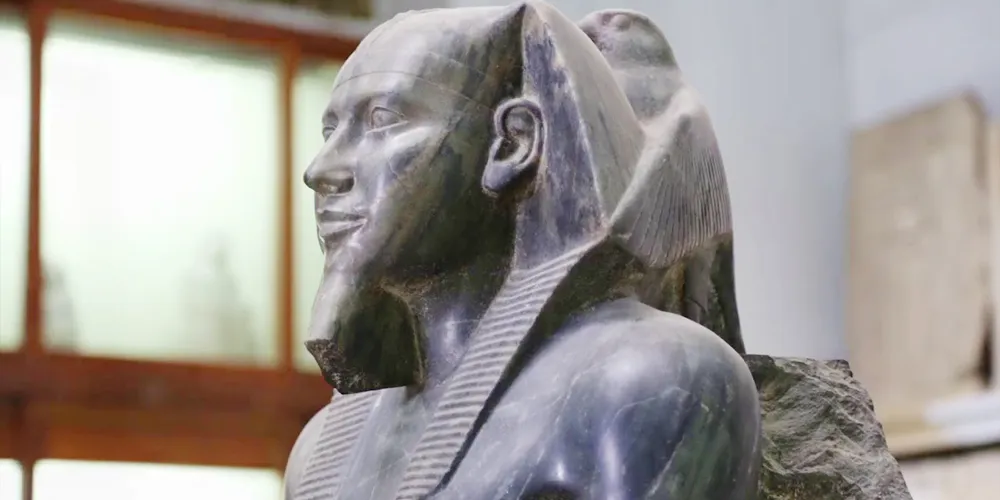
Here are 10 facts about Khafre, including a few fun facts about Khafre that most visitors to Giza never hear.
-
He was the fourth king of the Fourth Dynasty. He followed Sneferu, Khufu and Djedefre.
-
His name means "He appears like Ra". It reflects the rising importance of the sun god, and Khafre was among the first kings to use the title "Son of Ra".
-
He built the second pyramid of Giza. It is the second-largest pyramid at Giza, after his father's Great Pyramid.
-
His pyramid looks taller than Khufu's, but is not. It was originally 143.5 m tall, about 3 m shorter than the Great Pyramid, but it stands on bedrock about 10 m higher.
-
It still has its original casing near the top. Khafre's pyramid is the only Giza pyramid that keeps a large area of its smooth Tura limestone casing near the summit, visible on its upper third.
-
The Great Sphinx is usually attributed to him. It lies beside his causeway and valley temple, and its face resembles his statues.
-
His valley temple held 23 statues. Sockets in the floor show where 23 seated statues of the king once stood.
-
His most famous statue is carved from a rare stone. It is made of anorthosite gneiss, quarried more than 1,000 km to the south in the Nubian desert.
-
Greek writers called him a tyrant. Herodotus claimed that Khafre and Khufu oppressed the Egyptians and closed the temples, but no Egyptian evidence supports this.
-
His burial chamber was found empty. When the explorer Giovanni Belzoni entered it in 1818, the granite sarcophagus was open and its lid broken.
King Khafre Pyramid
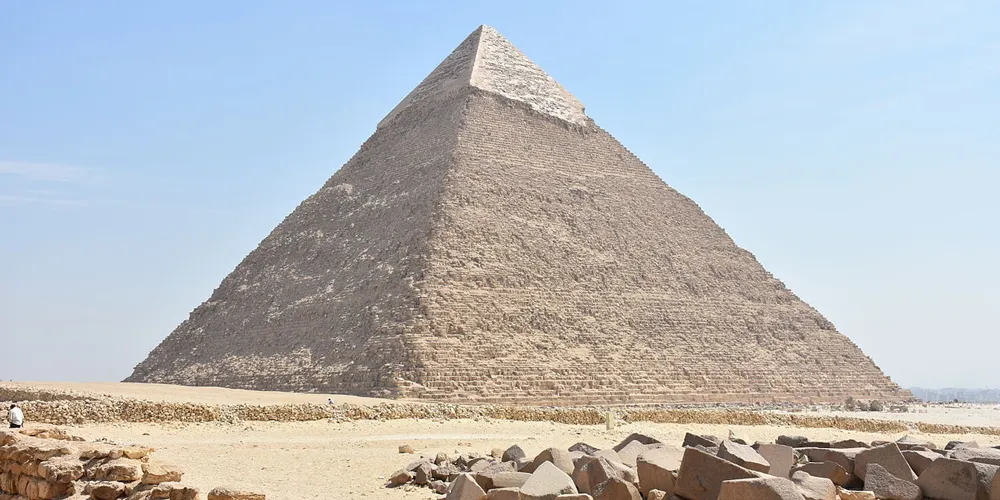
The Pyramid of Khafre, called in ancient times Wer-Khafre, "Khafre is Great", is the second pyramid of the Giza pyramids complex. It was built as the king's tomb and stands at the center of a funerary complex that includes a mortuary temple, a 494.6 m causeway, a valley temple and a small satellite pyramid.
|
Feature |
Measurement |
|
Original height |
143.5 m |
|
Current height |
136.4 m |
|
Base length |
About 215.3 m |
|
Slope |
About 53° |
|
Lowest casing course |
Pink granite from Aswan |
|
Upper casing |
Tura limestone, still preserved on the top third |
The pyramid has two entrances on the north side: one about 11.5 m up the face and one at ground level. Both passages lead to a burial chamber cut into the bedrock and roofed with gabled limestone beams. Inside lies the king's granite sarcophagus, sunk into the floor.
On 2 March 1818, the Italian explorer Giovanni Belzoni became the first modern visitor to reach the chamber. He painted his name on the wall, where it can still be seen. In the 1960s, the physicist Luis Alvarez scanned part of the pyramid with cosmic-ray muons to search for hidden chambers, and found none.
Compare it with the Great Pyramid of Giza built by his father, the largest of all Egypt's pyramids.
The Sphinx of King Khafre
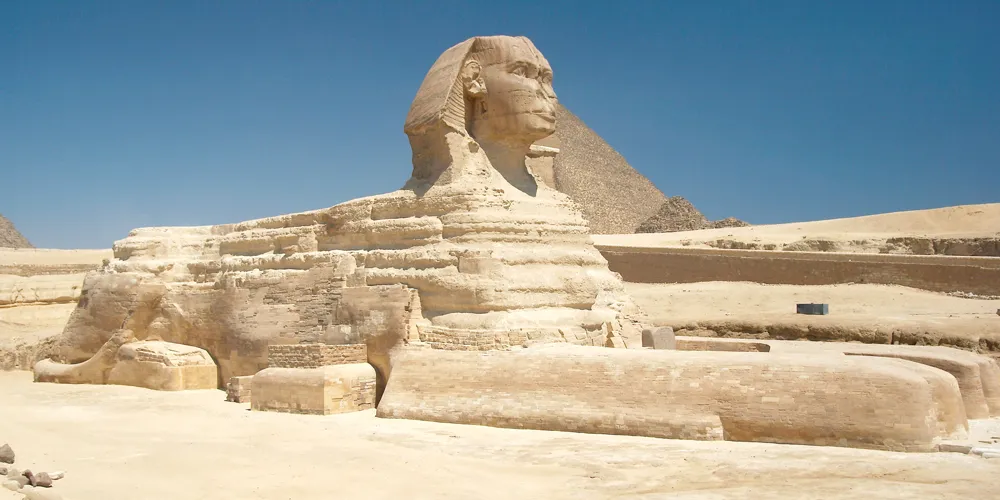
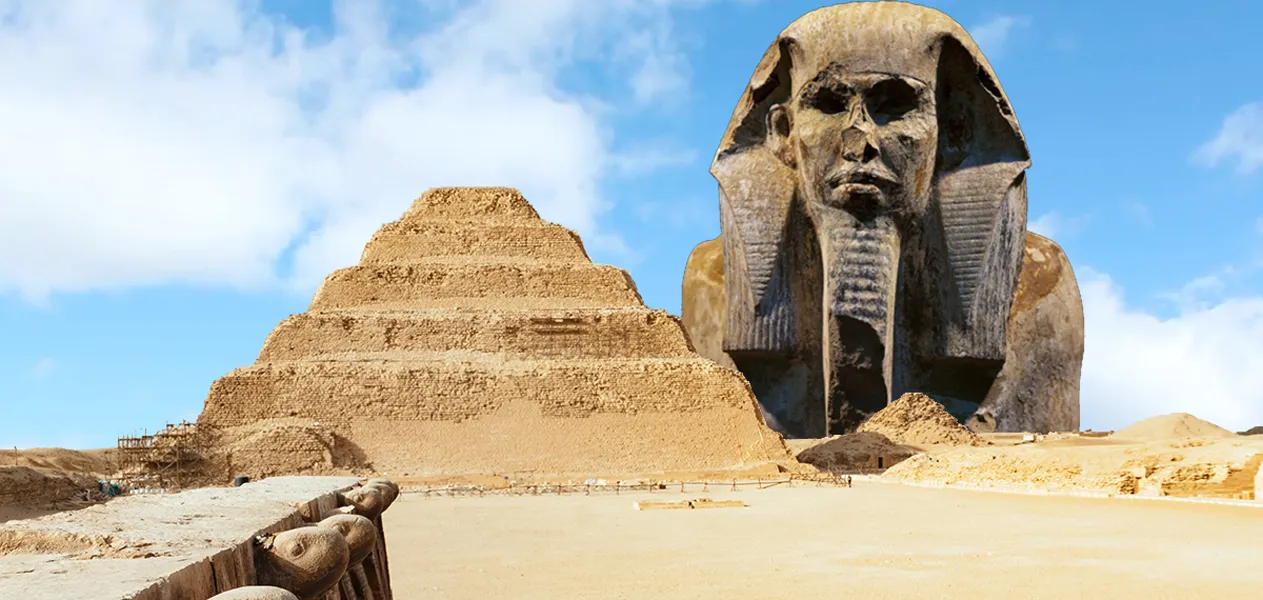
The Great Sphinx is a colossal statue with the body of a lion and the head of a king wearing the royal nemes headcloth. About 73 m long and 20 m high, it was carved directly from the limestone bedrock beside Khafre's causeway. Most Egyptologists attribute it to Khafre because of its location and its resemblance to his statues, though this cannot be proven.
Unlike the winged sphinx of Greek legend, the Egyptian sphinx symbolized royal power and protection. In the New Kingdom, the Sphinx was worshipped as Horemakhet, "Horus in the Horizon". Around 1400 BC, King Thutmose IV placed the Dream Stele between its paws, recording a dream in which the Sphinx promised him the throne if he cleared away the sand.
Napoleon's soldiers did not shoot off the nose. The medieval historian al-Maqrizi wrote that a Sufi named Muhammad Sa'im al-Dahr deliberately damaged the face in 1378 AD.
The Valley Temple of King Khafre
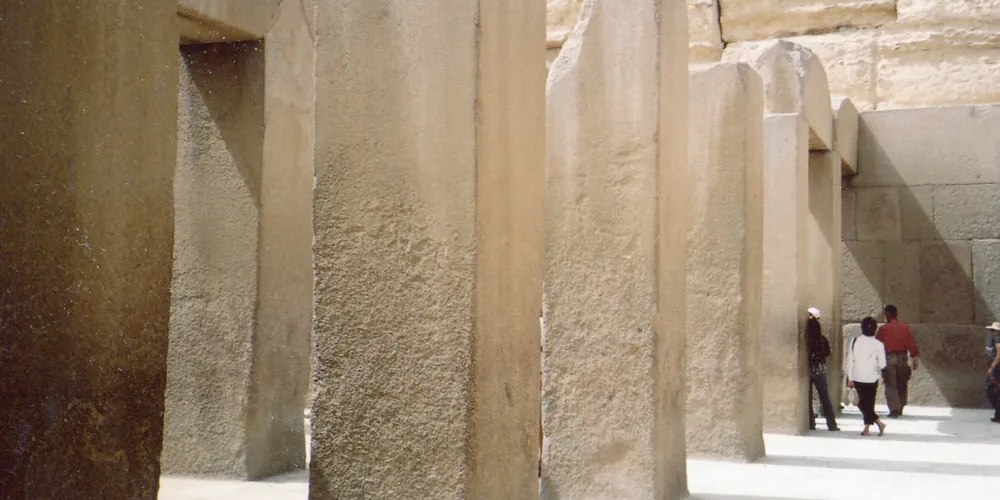
Khafre's valley temple stands at the edge of the desert, beside the Sphinx, where the causeway to his pyramid begins. It is one of the best-preserved Old Kingdom temples in Egypt, built of massive limestone blocks faced inside with polished red granite, and floored with white calcite.
Its T-shaped hall is supported by monolithic granite pillars, and sockets in the floor once held 23 seated statues of the king. The temple is believed to have been used for purification rituals during the royal funeral, and perhaps for embalming, though scholars still debate its exact role. It was uncovered by the French archaeologist Auguste Mariette in the 1850s and 1860s.
The Famous Statue of Khafre
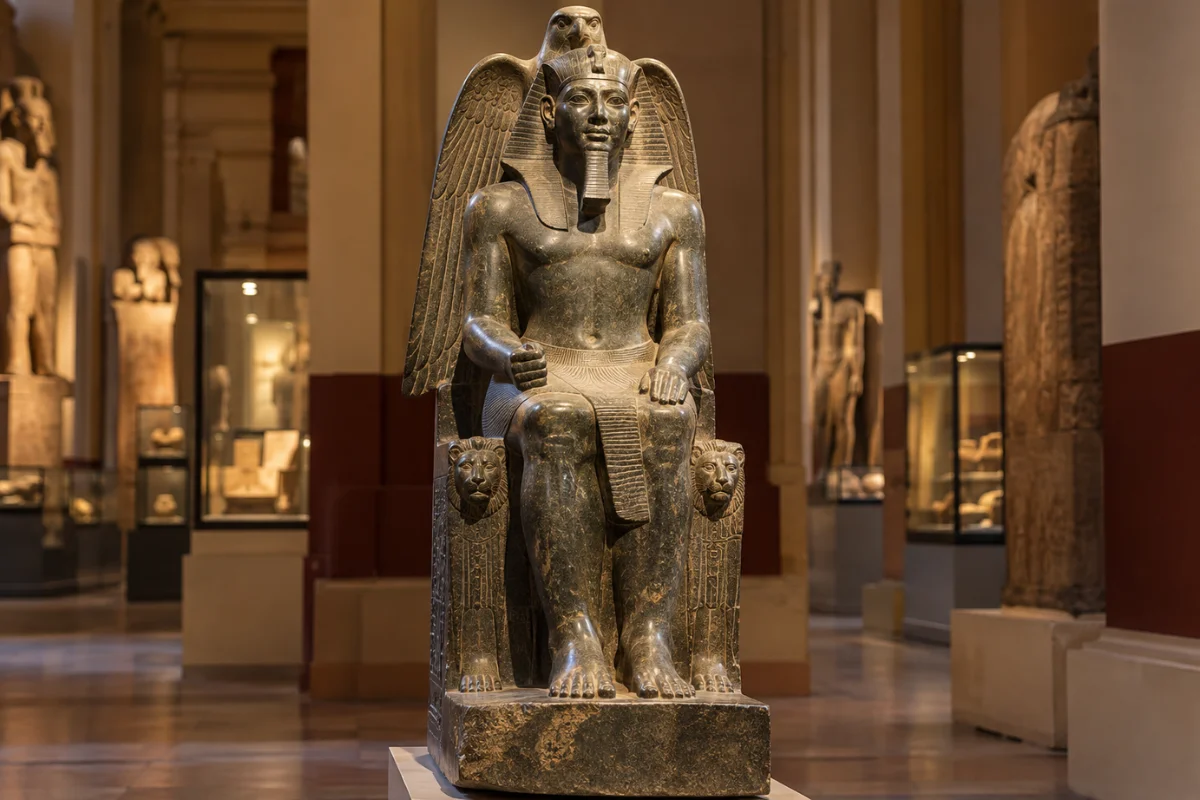
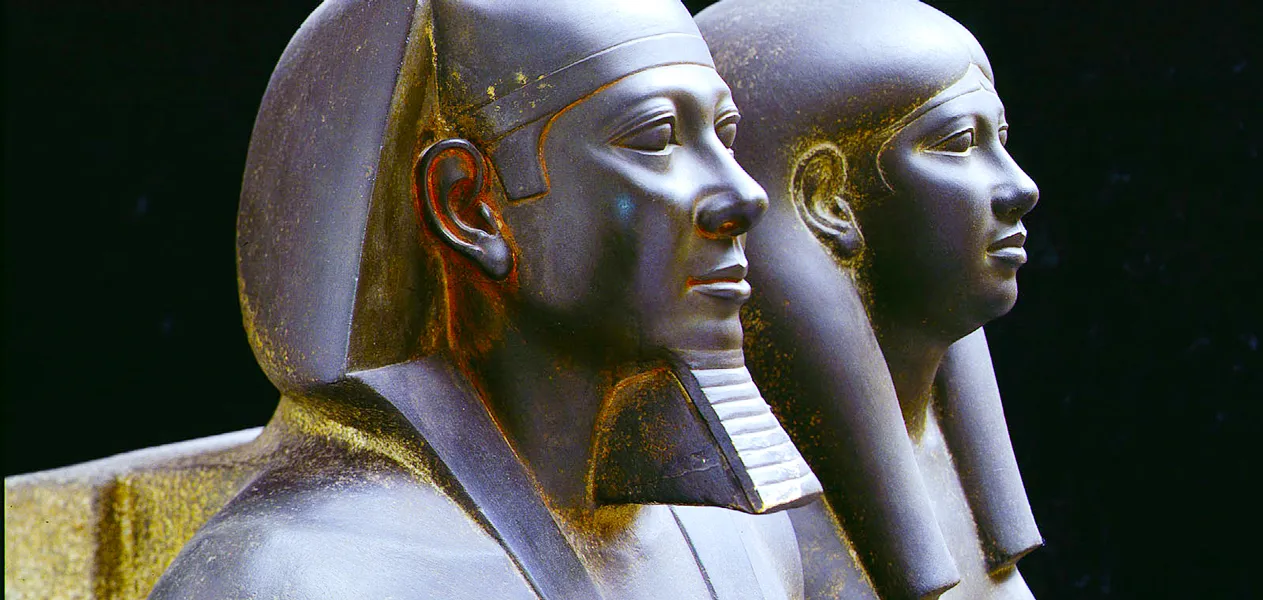
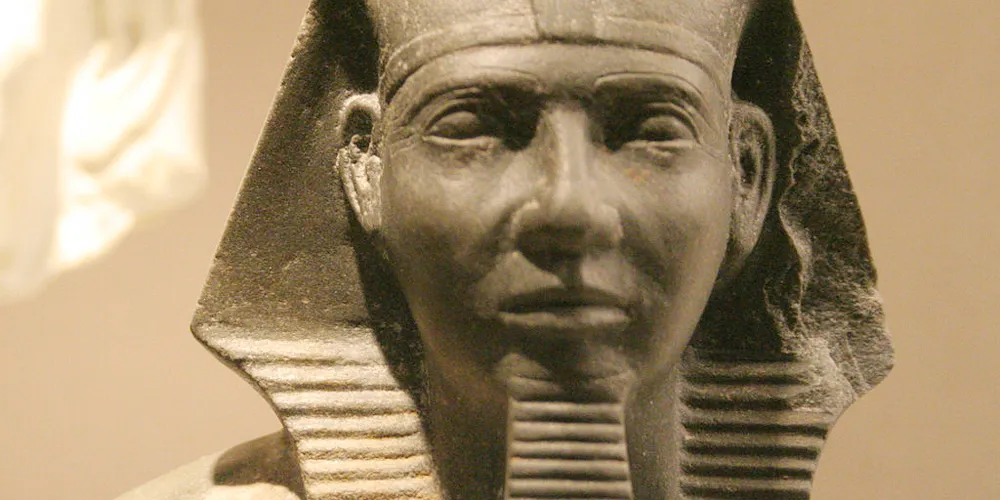
In 1860, Mariette found one of the masterpieces of Egyptian art in a pit in the valley temple: the statue known as Khafre Enthroned. The king sits on a lion-legged throne, while the falcon god Horus spreads his wings protectively behind his head, a symbol of the king's divine protection.
The statue is 1.68 m tall and carved from anorthosite gneiss, a rare, dark stone quarried at Gebel el-Asr in the Nubian desert. It is displayed in the Egyptian Museum in Cairo (catalog number CG 14).
Visiting Khafre's Pyramid Today
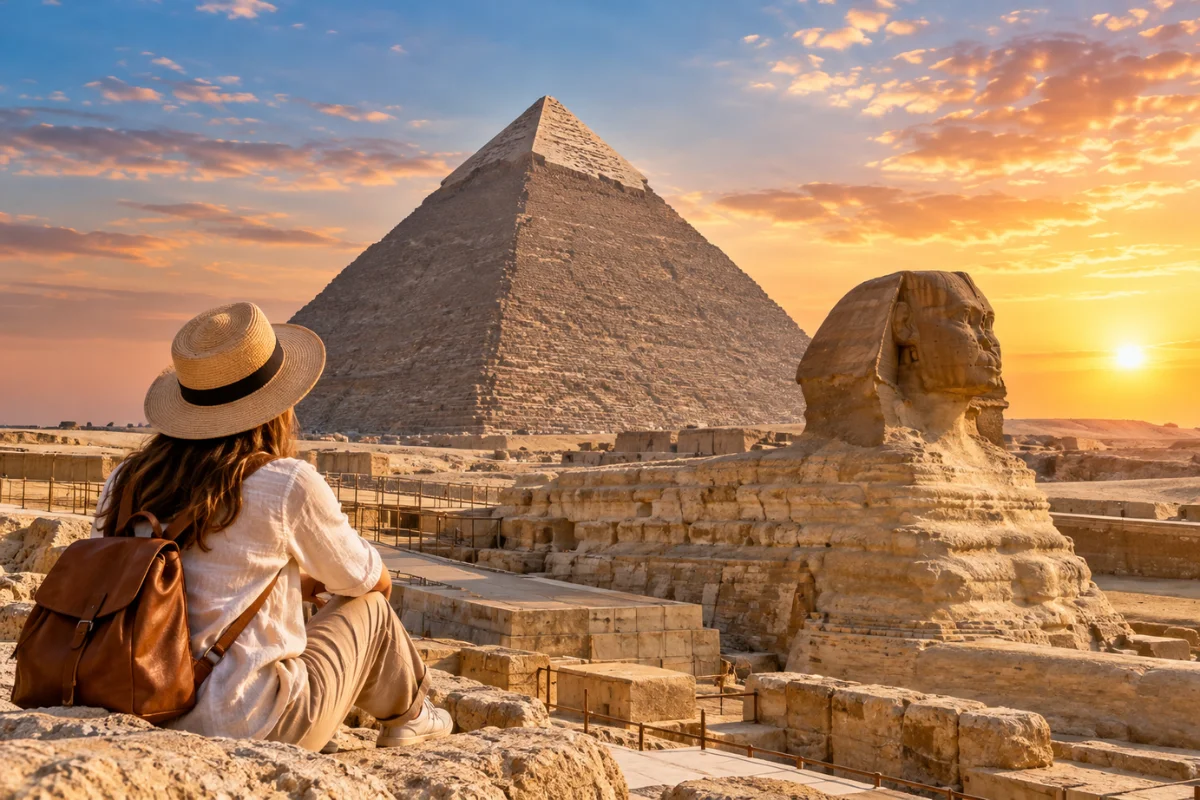
Pharaoh Khafre's pyramid is part of the Giza Plateau, on the western edge of Greater Cairo. The best view of the pyramids is from the Panorama Point to the southwest, where all three stand in a line. Visitors can usually enter Khafre's pyramid with a separate ticket, and the interior is often less crowded than the Great Pyramid.
The Pyramids, Museum and Khan El Khalili Trip (From $95) combines Khafre's pyramid, the Sphinx and his valley temple with a museum visit and the historic bazaar of Cairo.
Conclusion
Khafre lived in the shadow of his father's Great Pyramid, yet he left Giza some of its most unforgettable monuments: a pyramid that still wears its gleaming cap, a temple of granite, and a sphinx whose gaze has greeted the rising sun ever since.
Stand at the foot of the Sphinx at dawn, and you look into the face of a king who ruled Egypt more than 4,500 years ago.
Ready to stand before Khafre's pyramid and the Great Sphinx? Explore Giza and the rest of Egypt's wonders on one of our Egypt tour packages, guided by expert Egyptologists.

5 Days Cairo And Hurghada Trip
Amazing 4 Nights Cairo and Hurghada Trip Itinerary 5 Days Cairo and Hurghada trip wil...
- Duration 5 Days / 4 Nights
- Location Cairo & Hurghada
- Type Historical & Recreational Tour
From$690/per person
View Tour
6 Days Cairo, Alexandria & Faiyum Tour
Unforgettable Cairo, Alexandria & Faiyum Adventure in Six Days 6 Days Cairo, Alex...
- Duration 6 Days / 5 Nights
- Location Cairo - Alexandria - Fayum
- Type Historical Tour
From$720/per person
View Tour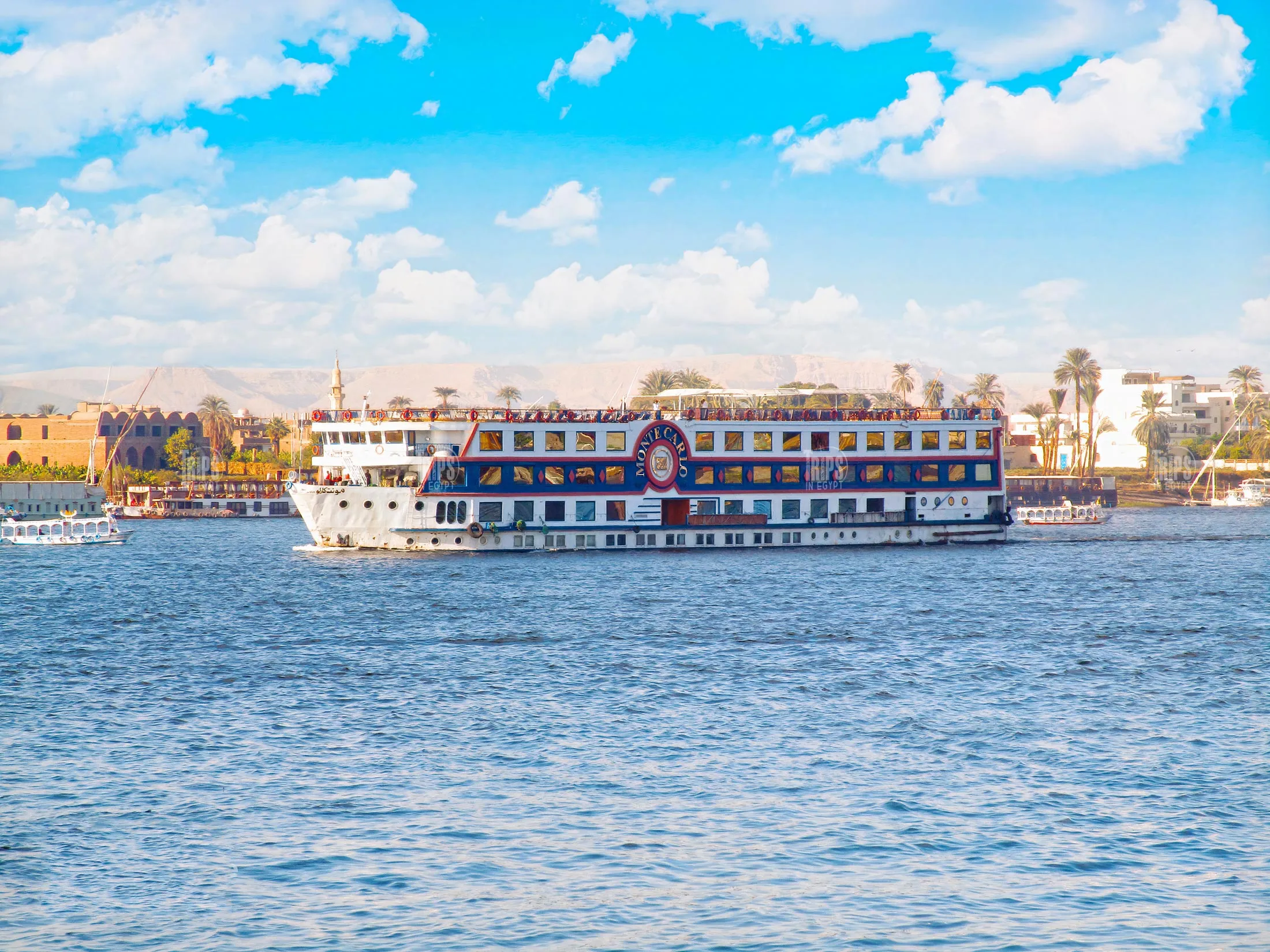
10 Days Cairo, Faiyum & Nile Cruise Holiday
Breathtaking 10 Days Journey of A Lifetime in Egypt 10 Days Cairo, Faiyum & Nile...
- Duration 10 Days / 9 Nights
- Location Cairo, Luxor, Aswan & Faiyum
- Type Classic Tour
From$1350/per person
View Tour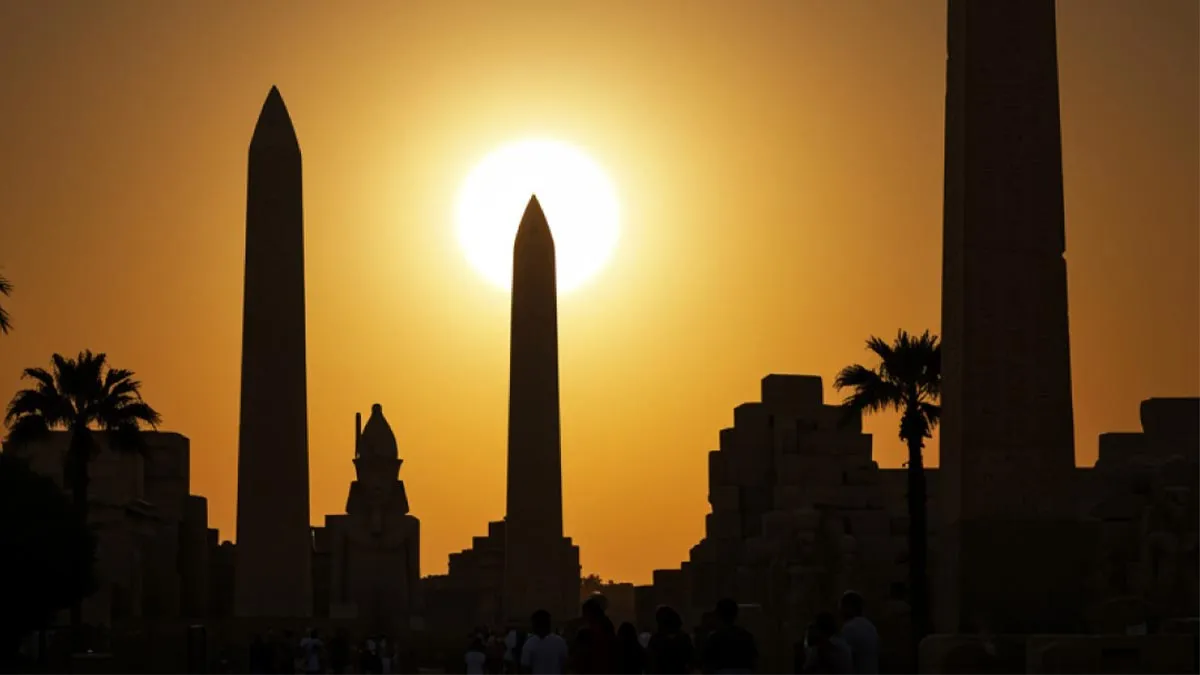 SOLD OUT
Ultimate 7-Day Egypt Solar Eclipse Experience with Hurghada 2027
Enjoy a 7-Day Egypt Solar Eclipse Tour with Hurghada 2027 6 Nights Egypt Solar Ecli...
- Duration 7 Days / 6 Nights
- Location Cairo / Giza / Luxor / Hurghada
- Type Astronomical Tour
Sold Out
View Details