



The Great Pyramid of Giza is the tomb of King Khufu, built around 2560 BC and the last of the Seven Wonders of the Ancient World still standing. For about 3,800 years, nothing built by human hands stood taller. This guide explains who built it and why, how it was built, what lies hidden inside its chambers, the most interesting facts about it, and how you can visit it today.

The History of the Great Pyramid of Giza
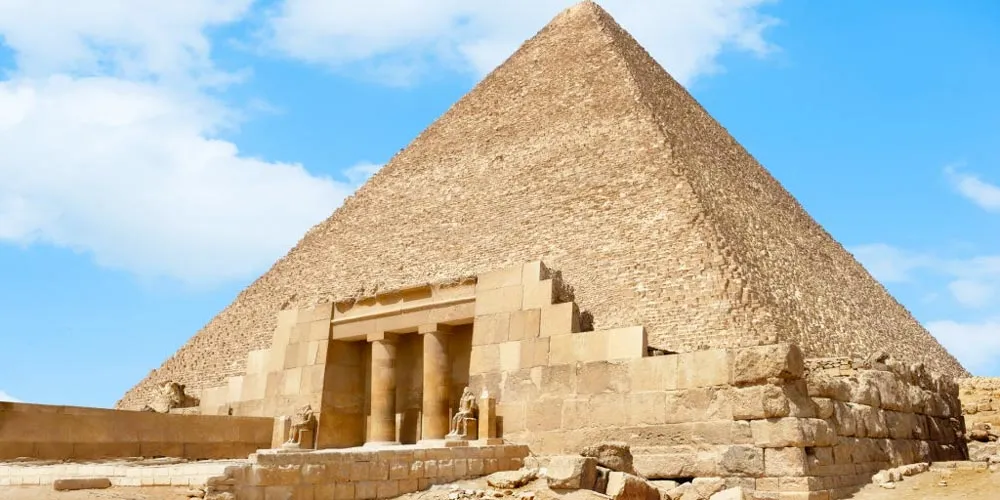
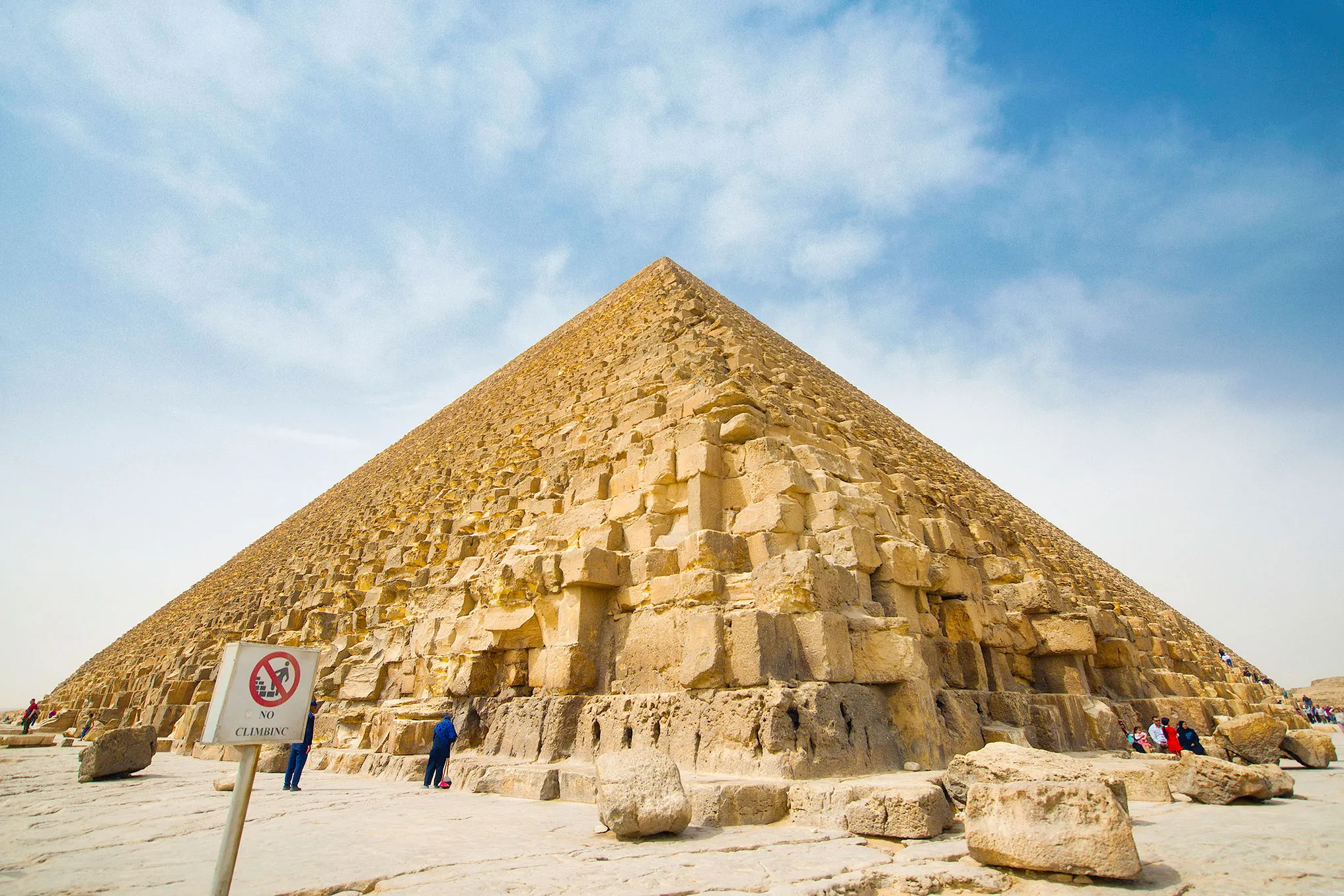
The Great Pyramid is the oldest and largest of the three pyramids in the Giza Pyramids Complex, on the desert plateau west of the Nile. It was built for Khufu, also known by his Greek name Cheops, the second king of the Fourth Dynasty.
For more than 3,800 years it was the tallest man-made structure on Earth, and it remains the defining symbol of Egypt. Its ancient name was Akhet Khufu, meaning "Horizon of Khufu."
The Great Pyramid of Giza at a Glance
| Detail | Fact |
|---|---|
| Built for | King Khufu (Cheops), Fourth Dynasty, Old Kingdom |
| Date | About 2580 to 2560 BC |
| Construction time | About 20 years |
| Original height | About 146.6 meters (481 feet) |
| Height today | About 138.5 meters (454 feet) |
| Base | About 230.3 meters (755 feet) per side, covering about 5.3 hectares (13 acres) |
| Blocks | About 2.3 million |
| Ancient name | Akhet Khufu, "Horizon of Khufu" |
| Location | Giza Plateau, about 15 km southwest of central Cairo |
| Coordinates | 29°58′45″N, 31°08′03″E |
| Status | Last surviving Wonder of the Ancient World; part of the UNESCO site "Memphis and its Necropolis" since 1979 |
When Was the Great Pyramid of Giza Built?
The Great Pyramid was built during Khufu's reign, which most Egyptologists place at about 2589 to 2566 BC, in the Egypt Old Kingdom. Work probably began early in his reign and was completed around 2560 BC, making the pyramid about 4,500 years old.
The Greek historian Herodotus, who visited Egypt in the fifth century BC, wrote that construction took 20 years. That estimate fits reasonably with the length of Khufu's reign, while radiocarbon dates from organic material in the pyramid's mortar also place the monument within the Old Kingdom.
How Tall Is the Great Pyramid of Giza?
When completed, the Great Pyramid stood about 146.6 meters (481 feet) high.
It remained the world's tallest human-made structure for roughly 3,800 years, until the medieval spire of Lincoln Cathedral in England exceeded its height around AD 1311.
Today, the Great Pyramid stands about 138.5 meters (454 feet) high. Its capstone is gone, most of its smooth outer casing was removed over the centuries, and some of the upper core masonry has also disappeared.
One of the Seven Wonders of the Ancient World
Greek writers of the second century BC, including Antipater of Sidon, listed the Great Pyramid among the Seven Wonders of the Ancient World.
The pyramid was already more than 2,000 years old when those lists were written.
It is the oldest of the Seven Wonders and the only one still standing. The Hanging Gardens of Babylon, the Colossus of Rhodes, the Temple of Artemis and the Lighthouse of Alexandria have all disappeared.
How the Great Pyramid of Giza Was Built
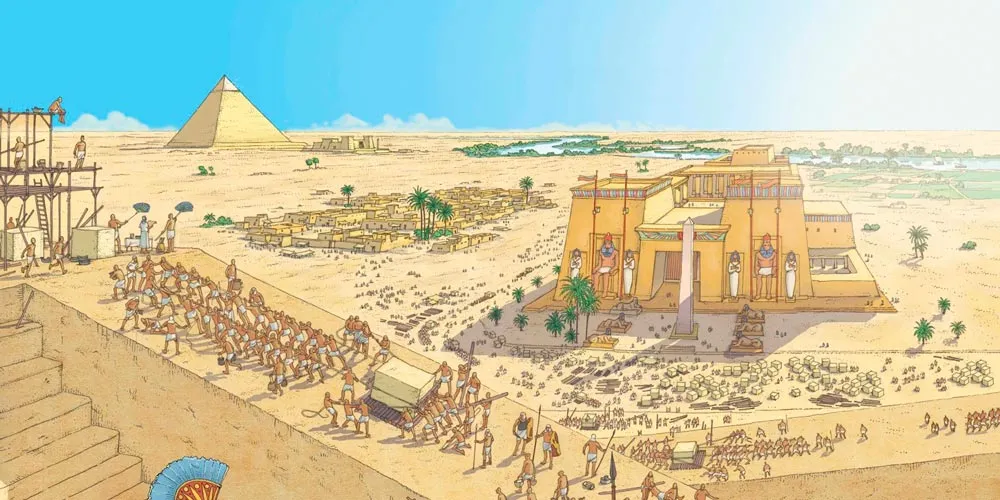
Building a mountain of stone without modern machinery, iron tools, pulleys or powered cranes required extraordinary organization as much as engineering. Archaeological discoveries made since the twentieth century have answered many questions about the people, materials and transport systems involved, although exactly how the pyramid's highest courses were raised remains debated.
Who Built the Great Pyramid and Why?
Khufu ordered the Great Pyramid as his royal tomb and as part of a funerary complex intended to secure his place in the afterlife.
Ancient Egyptian kings were closely connected with the gods, and Khufu's pyramid formed the centerpiece of a ritual landscape designed to maintain his royal cult after death.
The project is traditionally associated with Khufu's vizier and relative Hemiunu, whose enormous mastaba tomb stands west of the Great Pyramid. He is often credited with supervising the construction project.
You can learn more about the ruler behind the monument in our guide to King Khufu.
Skilled Workers, Not Slaves
Herodotus claimed that 100,000 people worked on the Great Pyramid in rotating shifts, and later popular culture often described them as slaves.
Modern archaeological evidence presents a very different picture.
In 1990, archaeologists discovered tombs belonging to pyramid workers near the Giza Plateau. Excavations at the workers' settlement known as Heit el-Ghurab also revealed bakeries, food remains, housing and administrative areas.
Current estimates vary, but the workforce may have included around 20,000 to 30,000 people at different stages of the project, including permanent specialists and rotating labor crews.
Evidence shows that workers received food including bread, beer, meat and fish, and some were buried in tombs close to the royal pyramid complex.
Materials Used in the Construction of Khufu Pyramid
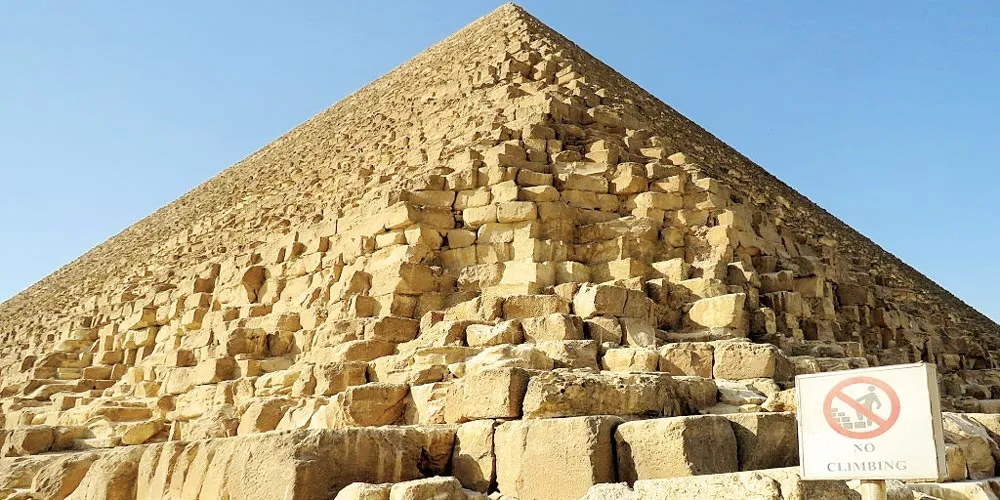
The Great Pyramid contains roughly 2.3 million stone blocks, with an average weight commonly estimated at around 2.5 tonnes.
Most of the core masonry was cut from local limestone quarried directly from the Giza Plateau.
The exterior was originally covered with fine white limestone from Tura, on the eastern side of the Nile near modern Cairo. These carefully finished casing stones gave the pyramid a smooth, bright surface.
Many casing blocks were later removed and reused in buildings around Cairo, although some still remain around the base.
The King's Chamber and several structural elements above it were made from red granite transported hundreds of kilometers from Aswan.
Some of the largest granite beams above the King's Chamber are estimated to weigh between about 25 and 80 tonnes.
The Diary of Merer: How the Stone Reached Giza
One of the most important discoveries connected with the Great Pyramid was made in 2013 at Wadi al-Jarf, an ancient harbor on the Red Sea coast.
Archaeologists found papyri that included the diary of a middle-ranking official named Merer.
Merer supervised a crew of about 40 men during the reign of Khufu. His log records journeys transporting fine limestone from Tura by boat through waterways toward Akhet Khufu, the Great Pyramid complex.
The diary dates to around Khufu's 27th regnal year and provides rare contemporary evidence for the logistics behind the pyramid project.
Construction Theories: Ramps and Levers
No surviving ancient Egyptian document explains exactly how every block was raised into its final position.
Most modern theories involve some combination of ramps, wooden sledges, ropes and levers.
Proposed ramp systems include a long straight ramp, zigzagging ramps running along one side and ramps that may have wrapped around sections of the pyramid as it grew.
In 2018, archaeologists working at the ancient alabaster quarry of Hatnub found a steep ramp system with stairways and post holes dating to the Old Kingdom. The discovery showed that Egyptians of Khufu's period had techniques for hauling heavy stone up steep slopes.
Our guide to how the pyramids were built explores the leading construction theories in more detail.
The Chambers of the Great Pyramid of Giza
The Great Pyramid contains three principal chambers at very different levels. Two were constructed high within the pyramid's masonry, while another chamber was cut deep into the natural bedrock below.
The King's Chamber
The King's Chamber is generally identified as Khufu's burial chamber.
It measures approximately 10.47 meters east to west, 5.23 meters north to south and around 5.97 meters high. Its walls, floor and ceiling are constructed from red granite transported from Aswan.
At the western end of the chamber stands a large, lidless granite sarcophagus.
The sarcophagus is slightly too large to have passed through some of the narrow interior passages, suggesting it was placed in the chamber while construction was still underway.
Above the King's Chamber are five low spaces generally called the relieving chambers.
The lowest was discovered by Nathaniel Davison in 1765, while the upper four were opened by Howard Vyse in 1837.
Painted quarry and builders' marks inside these chambers include Khufu's royal name and references to work gangs, providing important evidence that the pyramid was constructed for him.
The Queen's Chamber
The so-called Queen's Chamber lies closer to the pyramid's central axis.
It measures approximately 5.75 by 5.23 meters and has a distinctive pointed, gabled ceiling.
Its traditional name is misleading because there is no evidence that a queen was buried here.
One theory suggests the room may once have held a statue or ritual representation of Khufu, but its original purpose remains uncertain.
Two narrow shafts extend from the chamber's northern and southern walls.
In 1993, German engineer Rudolf Gantenbrink sent the small robot Upuaut 2 along the southern shaft and discovered a small blocking stone fitted with two copper pins.
Later robotic investigations in 2002 and 2011 revealed additional features, including another blocking stone and red painted marks.
The Subterranean Chamber
The third major room lies below the pyramid.
The Subterranean Chamber was excavated directly into the bedrock around 30 meters below the pyramid's base.
Its rough floor and unfinished appearance have led many Egyptologists to believe that the original construction plan changed and that the intended burial chamber was later moved higher into the monument.
Is Anyone Buried in the Great Pyramid of Giza?
No human remains have ever been found inside the Great Pyramid.
However, archaeological context strongly supports the conclusion that it was built as the tomb of King Khufu.
The granite sarcophagus remains inside the King's Chamber, but Khufu's mummy and original burial equipment disappeared long ago.
The pyramid was probably robbed in antiquity.
When workers associated with the Abbasid caliph al-Ma'mun forced a tunnel into the pyramid around AD 820, later accounts say they found the interior already empty.
Khufu's mummy has never been identified elsewhere.
What You Can Find Inside the Great Pyramid of Giza
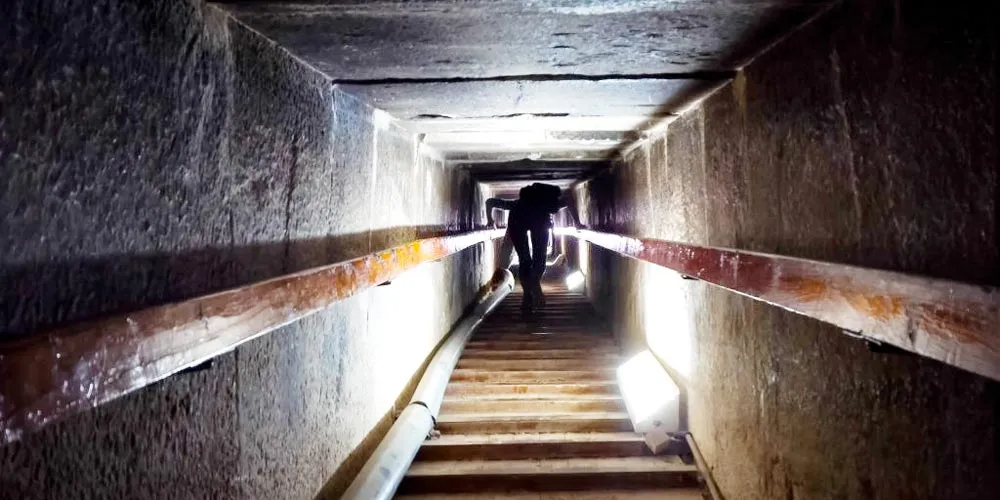
Inside the Great Pyramid is a network of steep, narrow passages connecting its chambers and internal spaces. Unlike most Egyptian pyramids, parts of its passage system rise high into the pyramid's masonry as well as descend beneath the ground.
The Entrances
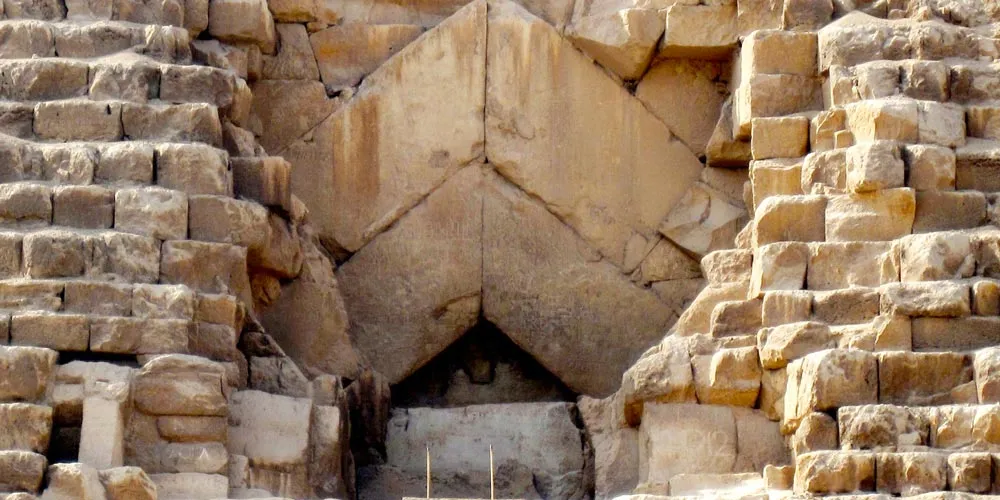
The original entrance is located on the pyramid's north face, approximately 17 meters above ground level.
Large gabled limestone blocks protect the area above it.
Modern visitors normally enter through a lower opening traditionally associated with al-Ma'mun's tunnel, which joins the ancient passage system farther inside.
The Descending and Ascending Passages
From the original entrance, the Descending Passage slopes downward for roughly 105 meters toward the Subterranean Chamber.
It is only about 1.05 meters wide and roughly 1.2 meters high, forcing anyone using it to stoop.
The Ascending Passage branches upward from the descending route and is around 39 meters long.
Three granite plugs still block its original lower entrance, so the tunnel traditionally attributed to al-Ma'mun bypasses these stones.
The Grand Gallery
The Ascending Passage opens dramatically into the Grand Gallery, one of the most remarkable spaces inside the pyramid.
It measures about 46.68 meters long and approximately 8.6 meters high.
Its walls are corbelled, stepping inward toward the ceiling. At floor level the gallery is roughly 2.06 meters wide, narrowing to about 1.04 meters near the top.
Raised stone benches run along both sides of the floor and contain 27 pairs of slots, 54 in total.
Their exact purpose remains uncertain. Some theories connect them with wooden equipment used during construction or with the movement of granite blocking stones.
At the upper end of the Grand Gallery is a horizontal passage leading through an antechamber equipped with granite portcullis slots before reaching the King's Chamber.
Another passage beginning near the bottom of the Grand Gallery leads to the Queen's Chamber.
The Hidden Voids Found by ScanPyramids
Modern technology has shown that the Great Pyramid still contains spaces that have not been physically explored.
In 2017, the ScanPyramids project used cosmic-ray muon imaging to identify a large previously unknown void above the Grand Gallery.
The space appears to be at least 30 meters long, although its exact shape and purpose remain uncertain.
Researchers have suggested several possibilities, including a construction space or structural feature, but there is currently no evidence that it contains a hidden burial chamber.
In 2023, researchers also revealed and filmed a previously inaccessible corridor behind the gabled masonry above the original north entrance.
The corridor is approximately nine meters long.
Its purpose is also uncertain, and investigations of the pyramid continue.
Can You Go Inside the Great Pyramid of Giza?
Yes. Visitors can normally enter the Great Pyramid with a separate ticket in addition to the Giza Plateau admission.
The visitor route passes through the modern entrance, continues up the Ascending Passage and Grand Gallery, and eventually reaches the King's Chamber.
The experience can be physically demanding.
The passages are steep, narrow and sometimes low, while the interior can feel warm and humid. Visitors who experience claustrophobia or have mobility, heart or serious back problems should consider this before entering.
The Queen's Chamber and Subterranean Chamber are not normally part of the standard visitor route.
Interesting Facts About the Great Pyramid of Giza
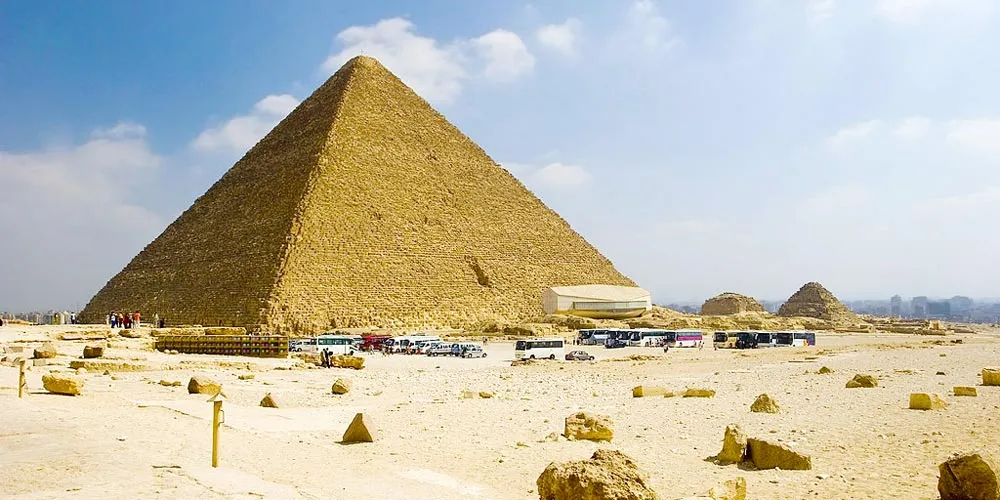
The Great Pyramid still holds achievements that no other surviving ancient structure can match. Its age, engineering accuracy, enormous scale and long history of exploration have made it one of the most studied monuments on Earth.
5 Interesting Facts About the Great Pyramid of Giza
-
It was the tallest human-made structure on Earth for about 3,800 years, from around 2560 BC until the medieval period.
-
It is aligned extremely closely with true north, with only a tiny deviation.
-
Its enormous base is remarkably level, despite covering more than five hectares.
-
It is the only surviving member of the Seven Wonders of the Ancient World.
-
Archaeological evidence shows its workforce consisted of organized labor crews and skilled specialists rather than the slave armies often shown in popular films.
More Pyramid of Khufu Facts
-
Its four faces are very slightly concave. Each side has a subtle indentation along its center line that is easiest to notice under certain lighting conditions or from aerial views.
-
There are no funerary religious texts carved inside its chambers. Unlike later pyramids such as the Pyramid of Unas, the main chambers are largely undecorated. However, builders' painted marks survive in the relieving chambers above the King's Chamber.
-
It was the first of the three great pyramids built at Giza. Khufu's successors Khafre and Menkaure later constructed their pyramids nearby.
-
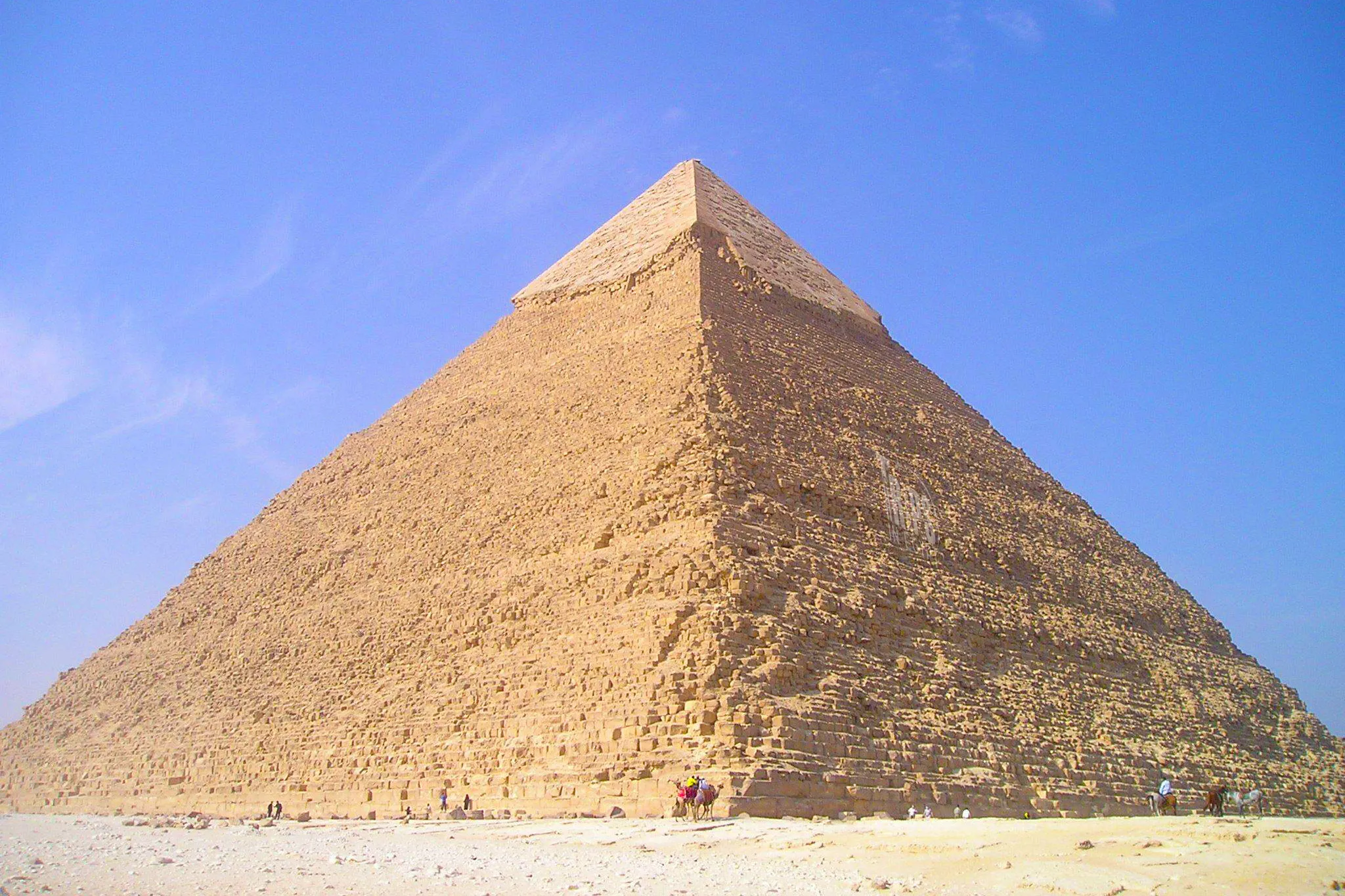
It is the largest pyramid on the Giza Plateau. Khafre's pyramid can sometimes appear taller because it stands on slightly higher ground.
-
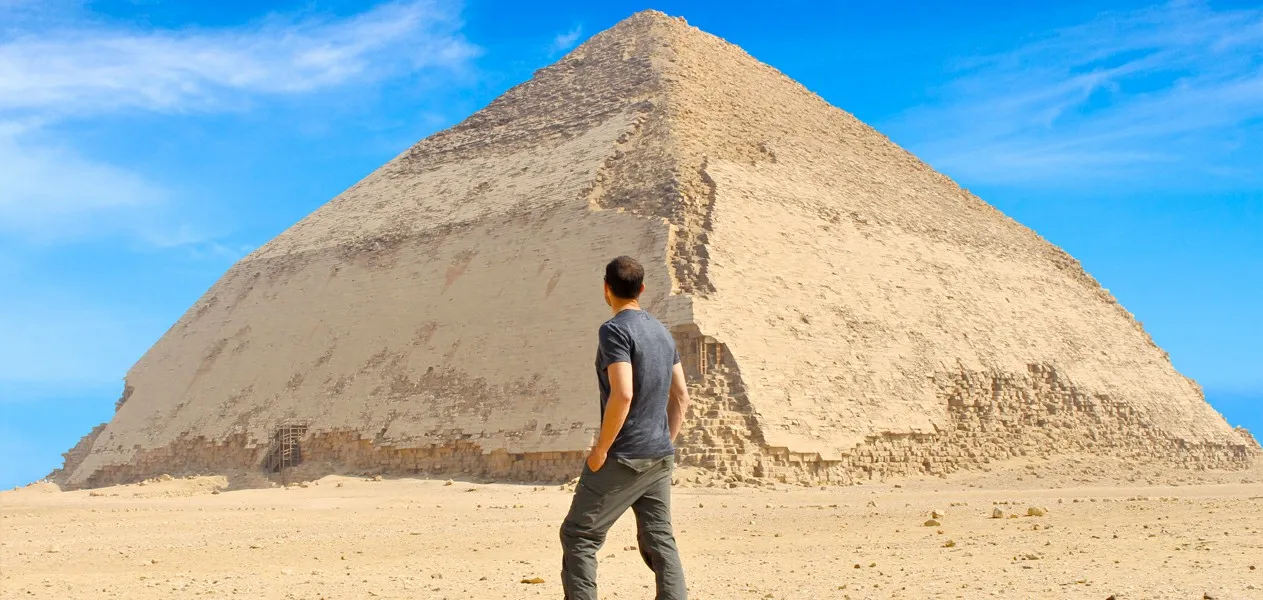
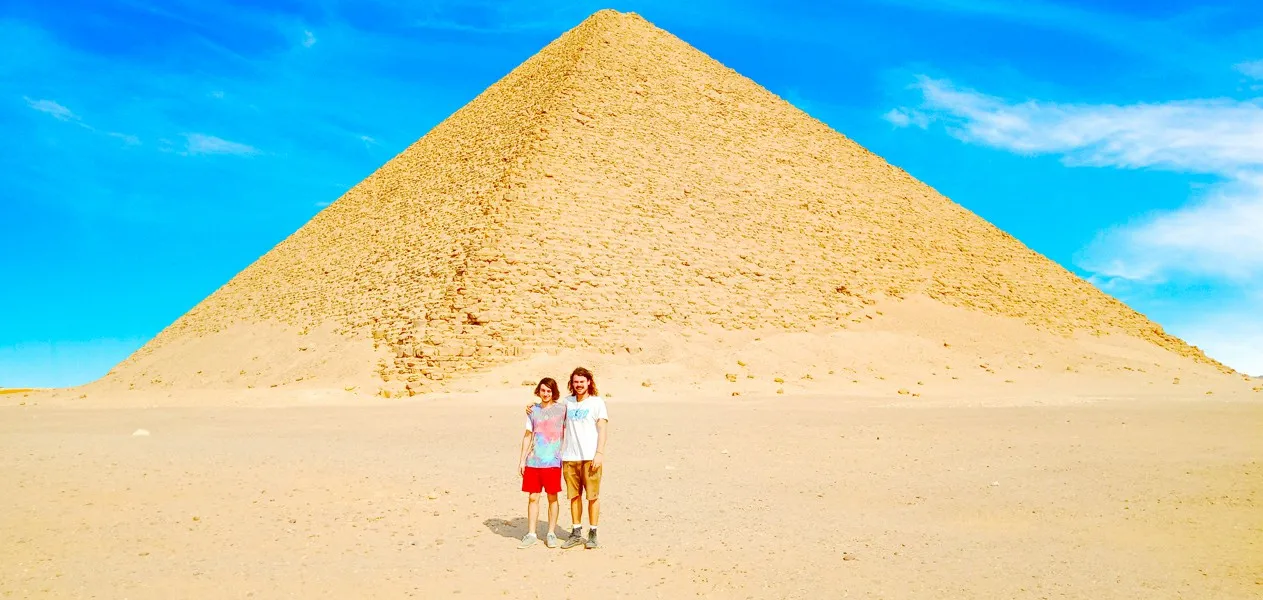
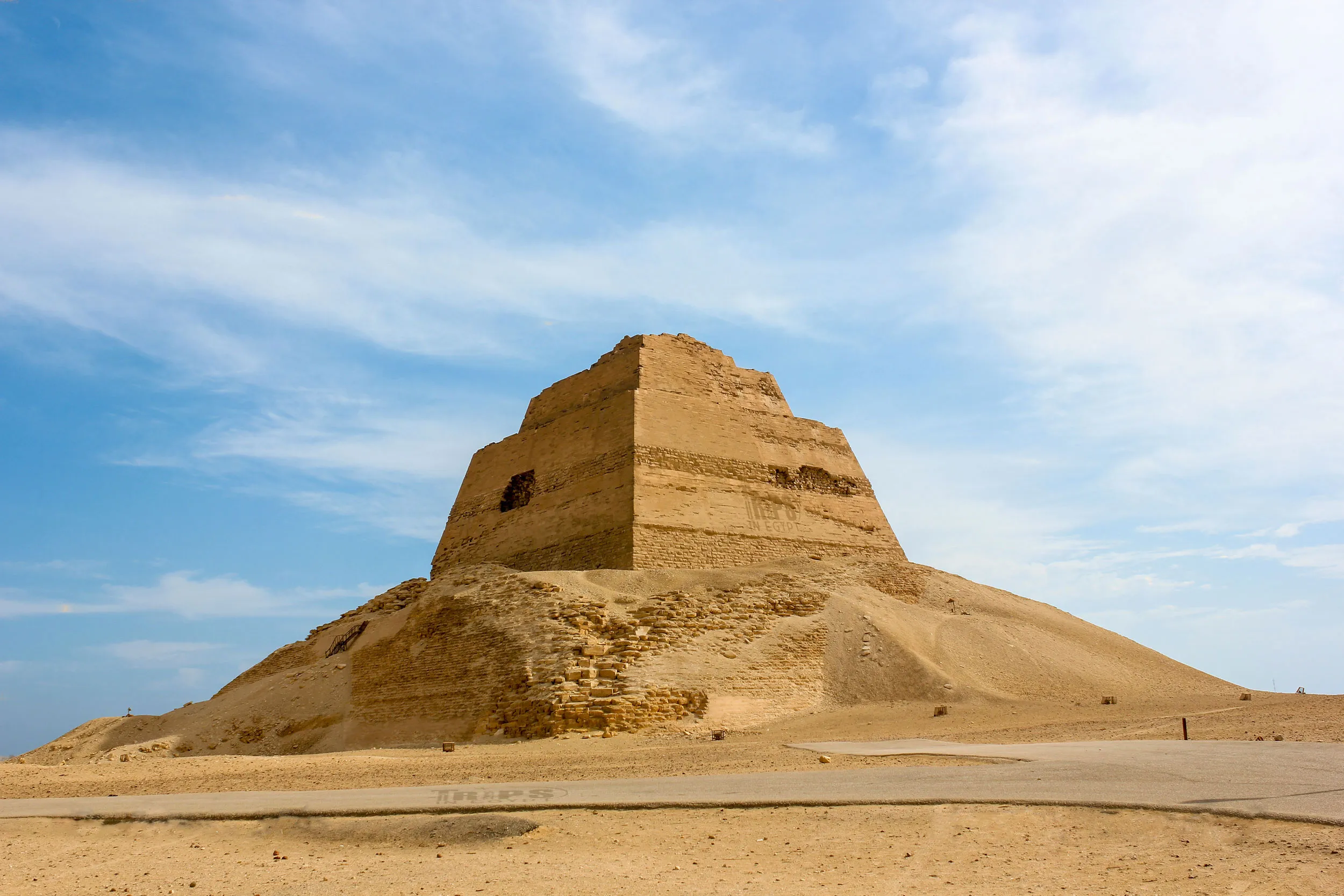
Its engineering followed decades of experimentation. Khufu's father, Sneferu, was associated with major pyramid projects at Dahshur, including the Bent Pyramid and Red Pyramid.
-
A huge cedar ship was buried beside it. The approximately 43.6-meter Khufu boat was discovered dismantled inside a sealed pit south of the pyramid in 1954.
-
The pyramid has been measured for centuries. Napoleon's scholars documented the monument around the beginning of the nineteenth century, while Flinders Petrie conducted an exceptionally precise survey in the 1880s.
Does the Bible Mention the Pyramids of Giza?
No. The Bible does not explicitly mention the pyramids of Giza.
The Great Pyramid had already stood for many centuries before the periods in which most biblical narratives set in Egypt are traditionally placed.
A later medieval tradition sometimes described the Egyptian pyramids as the Granaries of Joseph, suggesting they were used to store grain during the seven years of famine described in Genesis.
The interpretation appears in medieval Christian art, including mosaics in St Mark's Basilica in Venice, but it has no archaeological basis. The Great Pyramid is a massive royal funerary monument, not a grain store.
Some modern writers have also attempted to connect Isaiah 19:19, which mentions an altar or monument in Egypt, with the Great Pyramid. This is not the standard interpretation among biblical scholars.
The Greatness Awaits Within the Embrace of Egypt
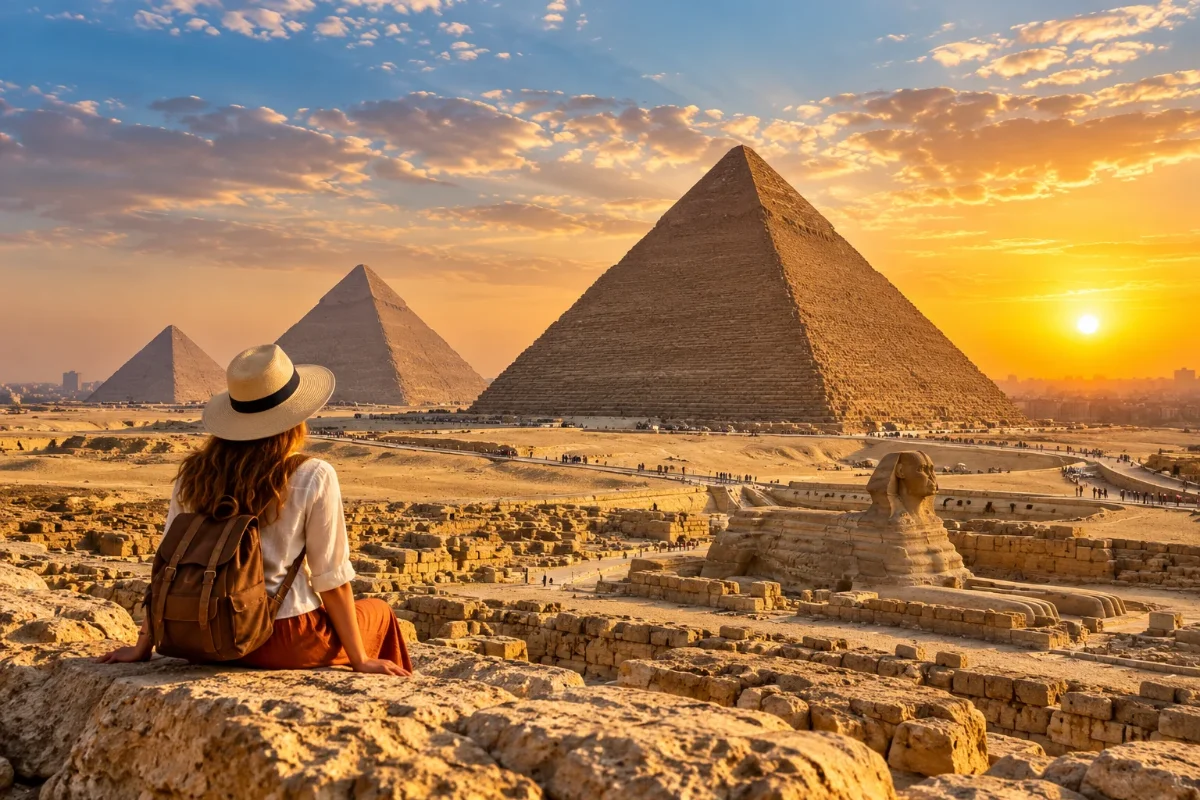
Standing beside the Great Pyramid is one of the oldest travel experiences in the world, and it remains just as powerful today. A visit can combine the pyramid itself with the surrounding royal complex, panoramic viewpoints, the Great Sphinx and nearby museums.
Visiting the Great Pyramid Today
The Giza Plateau normally opens in the morning and remains open through the afternoon, though schedules can change.
The coolest and often most comfortable time to visit is soon after opening, particularly from October through April.
Admission to the Giza Plateau and entry inside the Great Pyramid are sold separately, and ticket prices can change, so check official rates close to your visit.
Many travelers combine Cairo and Giza with one of our Nile cruises between Luxor and Aswan.
For the classic view showing all three main Giza pyramids, visit Panorama Point on the desert ridge southwest of the complex.
Our Pyramids Photo Session Day Tour, From $50, includes a professional photographer for travelers who want high-quality photographs around the plateau.
What Else Surrounds the Great Pyramid?
Khufu's pyramid was not an isolated monument.
It formed the center of a much larger royal funerary complex that included a mortuary temple, a causeway, a valley temple, queens' pyramids, boat pits, mastaba tombs and a satellite pyramid.
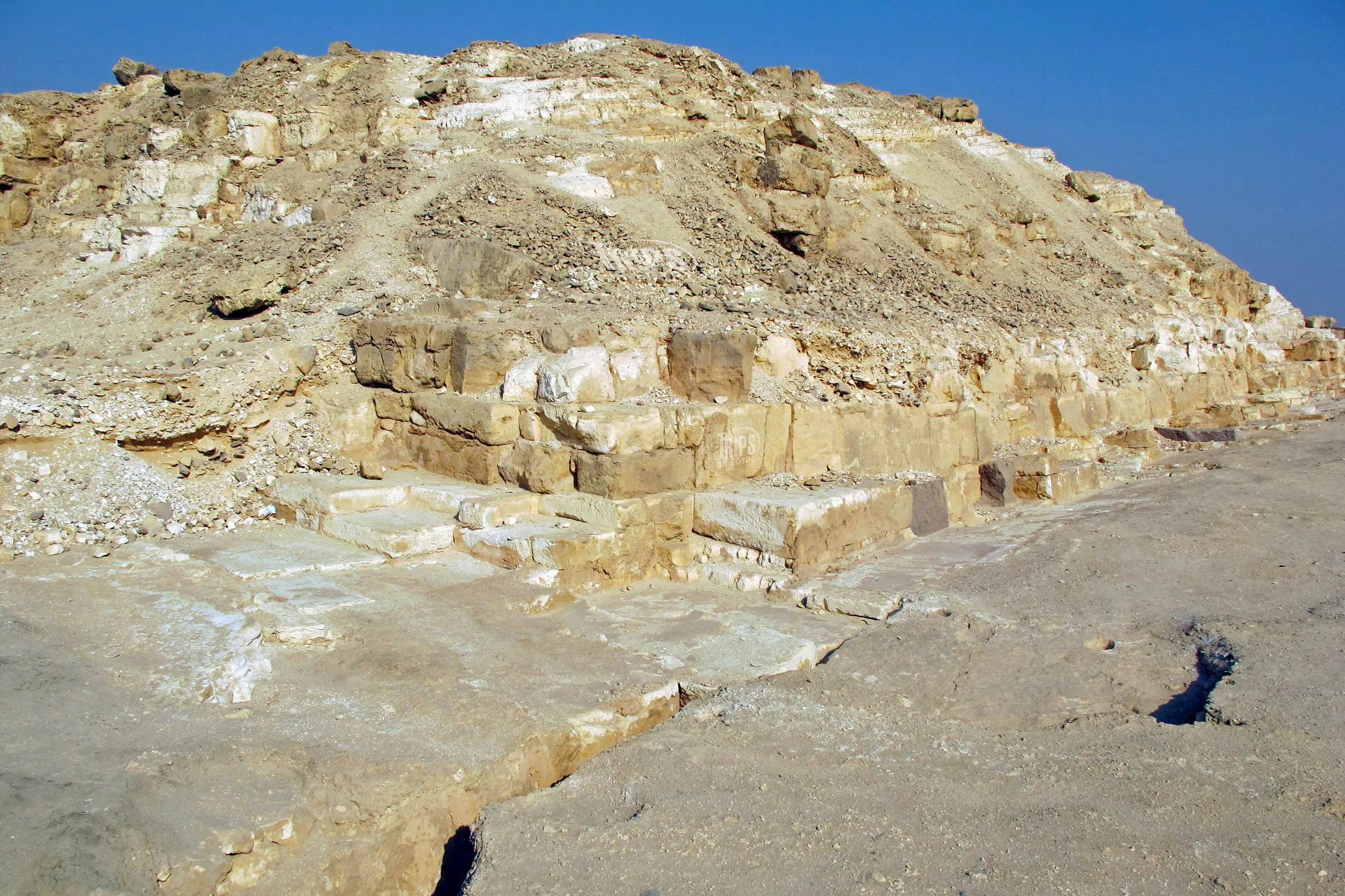
Three small queens' pyramids stand east of the Great Pyramid.
A smaller satellite pyramid was discovered nearby in 1991, while several boat pits were built around the main pyramid.
The eastern and western cemeteries contain rows of mastaba tombs belonging to members of the royal family and important officials.
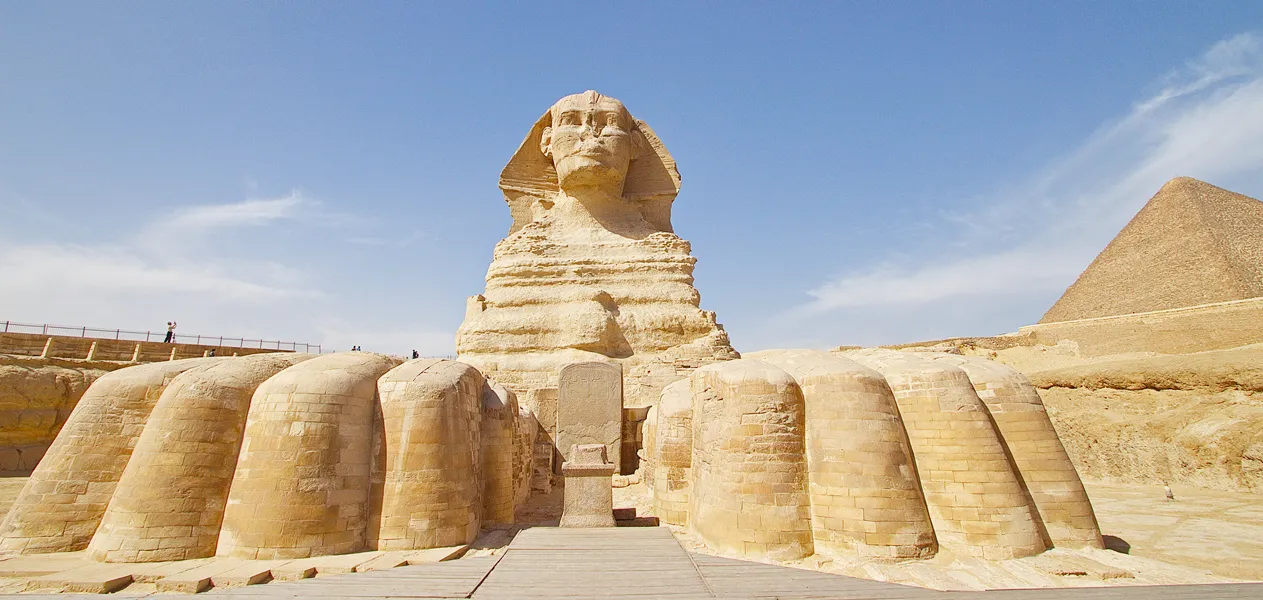
A short distance away stands the Great Sphinx of Giza, generally associated with Khafre's pyramid complex.
The famous Khufu ship was once displayed in a small museum beside the Great Pyramid. It was transferred from the plateau in 2021 and is now displayed at the Grand Egyptian Museum.
Tours That Include the Great Pyramid of Giza
The Great Pyramid is included in many of our Egypt tour packages, from single-day Cairo excursions to longer journeys combining the Nile Valley and Red Sea:
-
Day Tour from Cairo to Pyramids, Museum & Khan El Khalili (From $95): Visit the Giza Pyramids and Sphinx before continuing to the Egyptian Museum and Cairo's historic bazaar.
-
5 Days Cairo and Hurghada Trip (From $690): Combine Cairo's ancient attractions with relaxing days beside the Red Sea over five days and four nights.
-
6 Days Cairo, Alexandria & Faiyum Tour (From $720): Explore Cairo, Alexandria, and the scenic Faiyum Oasis over six days and five nights.
-
10 Days Cairo, Faiyum & Nile Cruise Holiday (From $1,350): Pair Cairo and Faiyum with an unforgettable Nile cruise between Luxor and Aswan over ten days and nine nights.
The Great Pyramid of Giza is far more than a giant pile of ancient stones. It is the tomb of King Khufu, a record of how thousands of skilled workers organized themselves 4,500 years ago, and a building whose hidden spaces are still being explored today. Walk up through its towering Grand Gallery, stand in the granite King's Chamber, and watch the sun set behind the eternal Horizon of Khufu.

5 Days Cairo And Hurghada Trip
Amazing 4 Nights Cairo and Hurghada Trip Itinerary 5 Days Cairo and Hurghada trip wil...
- Duration 5 Days / 4 Nights
- Location Cairo & Hurghada
- Type Historical & Recreational Tour
From$690/per person
View Tour
6 Days Cairo, Alexandria & Faiyum Tour
Unforgettable Cairo, Alexandria & Faiyum Adventure in Six Days 6 Days Cairo, Alex...
- Duration 6 Days / 5 Nights
- Location Cairo - Alexandria - Fayum
- Type Historical Tour
From$720/per person
View Tour
10 Days Cairo, Faiyum & Nile Cruise Holiday
Breathtaking 10 Days Journey of A Lifetime in Egypt 10 Days Cairo, Faiyum & Nile...
- Duration 10 Days / 9 Nights
- Location Cairo, Luxor, Aswan & Faiyum
- Type Classic Tour
From$1350/per person
View Tour SOLD OUT
Ultimate 7-Day Egypt Solar Eclipse Experience with Hurghada 2027
Enjoy a 7-Day Egypt Solar Eclipse Tour with Hurghada 2027 6 Nights Egypt Solar Ecli...
- Duration 7 Days / 6 Nights
- Location Cairo / Giza / Luxor / Hurghada
- Type Astronomical Tour
Sold Out
View Details