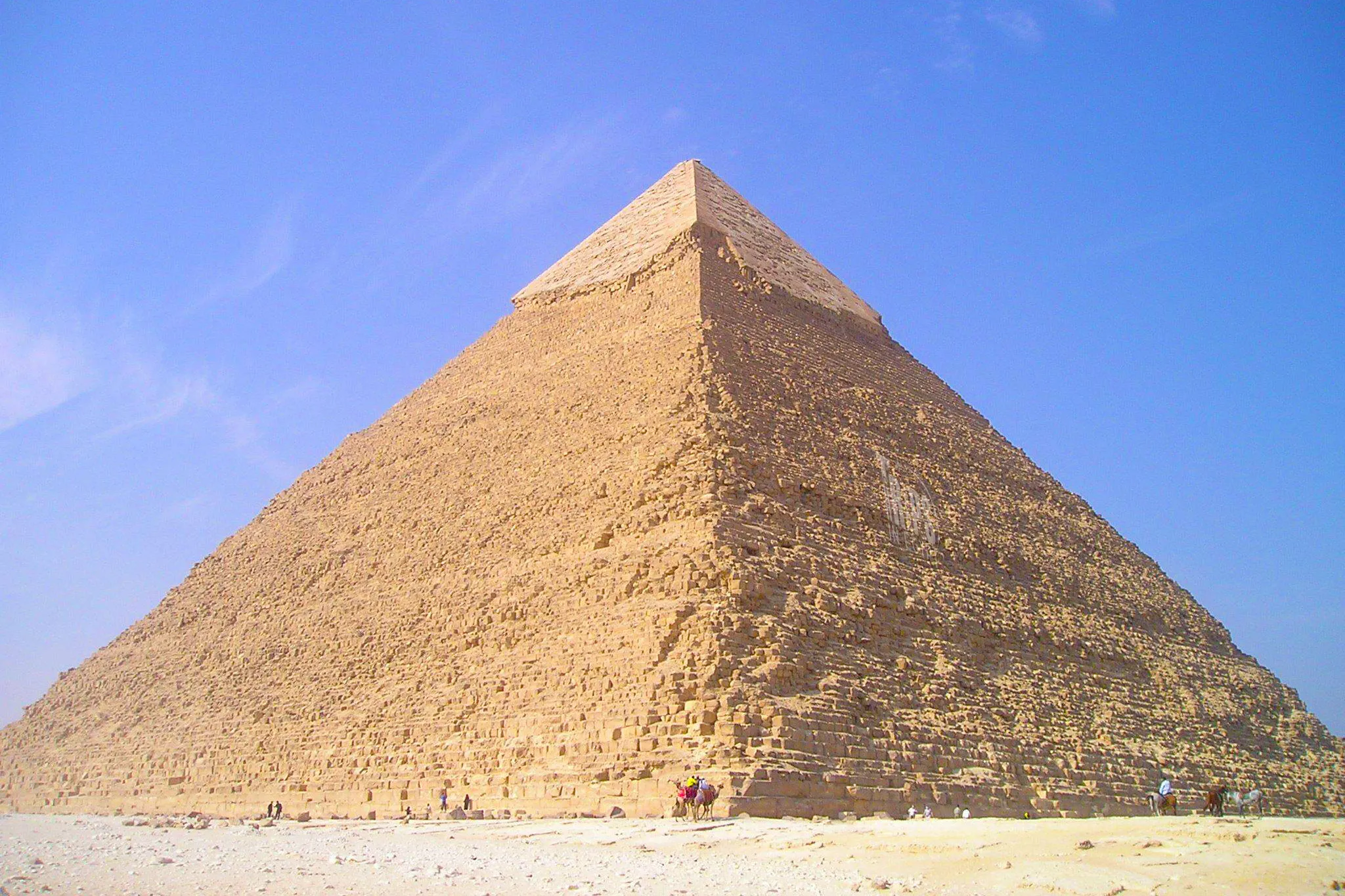




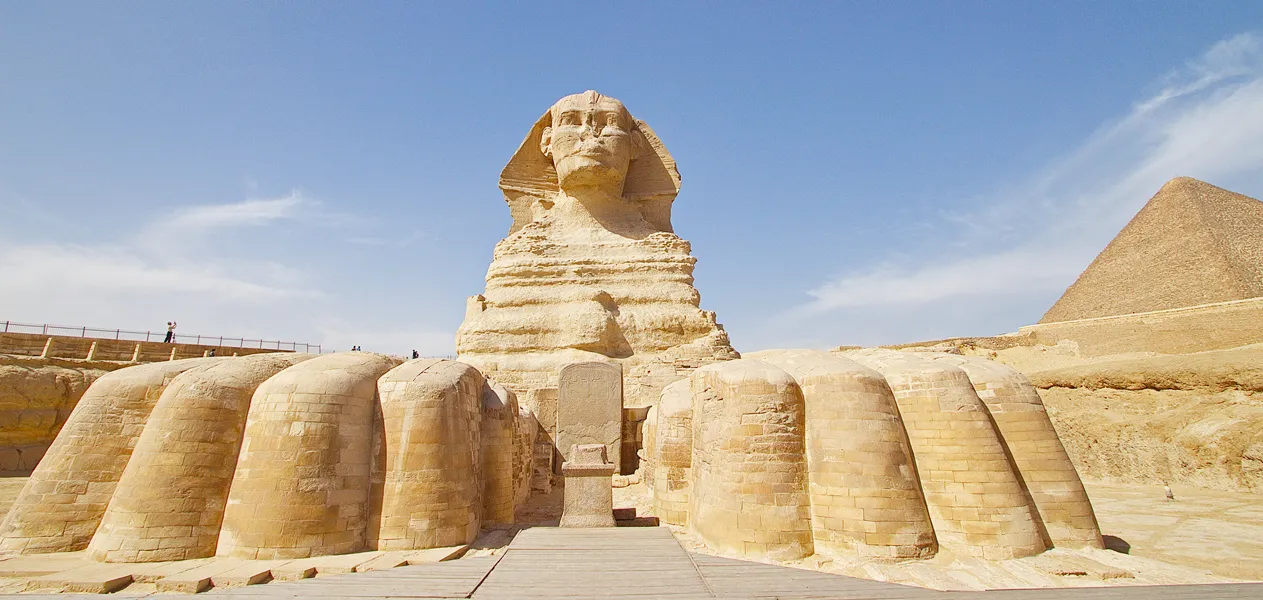
Carved from the living rock of the Giza Plateau, the Great Sphinx has guarded the pyramids for about 4,500 years, its gaze fixed on the rising sun. Yet this face still keeps many secrets. This guide covers the best facts about the Sphinx: who built it and why, how old it is, what it represents, what happened to its nose, what lies beneath it and how to see it.

What Is the Great Sphinx of Giza?
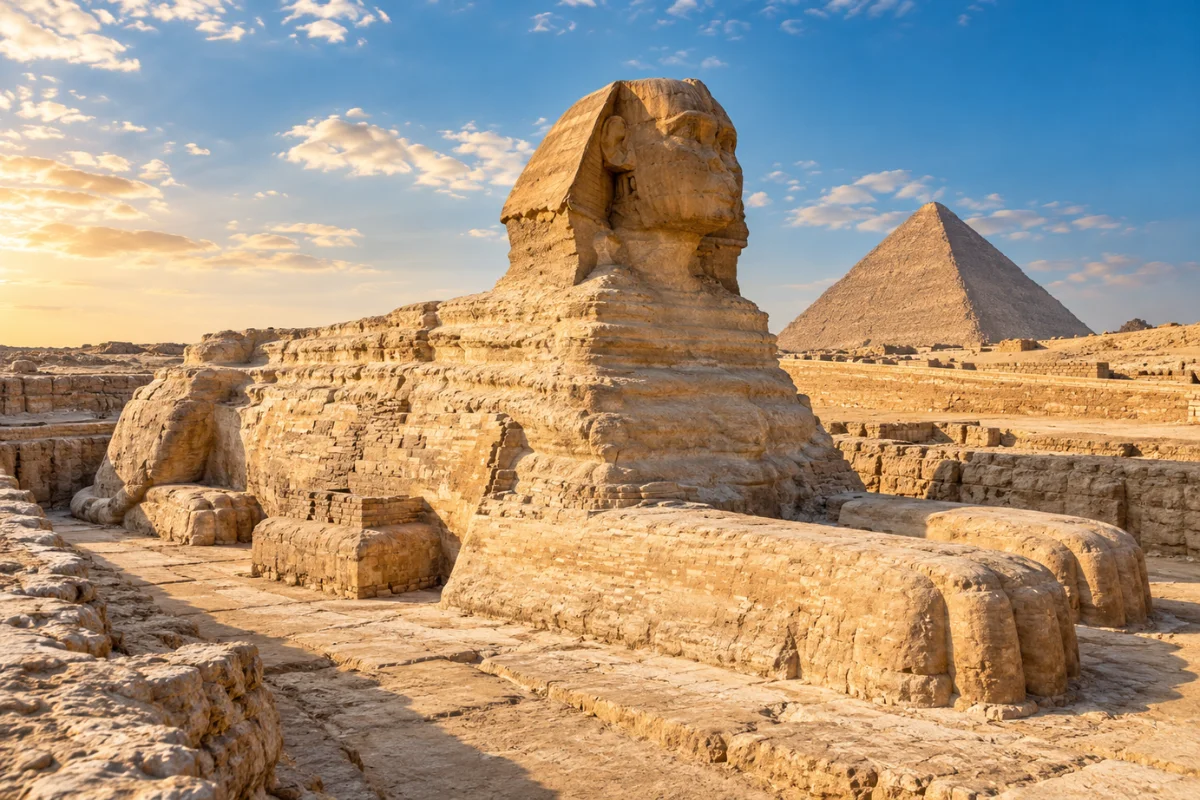
The Great Sphinx of Giza is a giant limestone statue with the body of a lion and the head of a king, carved directly out of the bedrock on the Giza Plateau. It lies just southeast of the pyramids, beside the causeway of the second pyramid, on the west bank of the Nile.
Most Egyptologists believe it was made for King Khafre of the Fourth Dynasty, around 2550 BC, and that its face is his. It is the oldest known monumental sculpture in Egypt and one of the largest statues ever carved from a single mass of rock.
What Is So Special About the Great Sphinx of Giza?
The Sphinx is special because of its size, its age and its mystery. It is about 73 meters long and 20 meters high, and it was carved about 4,500 years ago without iron tools. For many centuries it was half-buried in sand, which helped protect it and added to its legend.
It also combines two powerful symbols: the strength of the lion and the wisdom of the king. For travelers today, it is the one monument at Giza that gives the pyramids a face.
The Great Sphinx at a Glance
|
Detail |
Fact |
|
Location |
Giza Plateau, west bank of the Nile, near Cairo |
|
Built for |
King Khafre, Fourth Dynasty (most accepted view) |
|
Date |
About 2558 to 2532 BC |
|
Age |
About 4,500 years |
|
Length |
About 73 meters (240 feet) |
|
Height |
About 20 meters (66 feet) |
|
Face width |
About 4 meters |
|
Material |
Limestone bedrock of the plateau |
|
Faces |
East, toward the sunrise |
|
Ancient name |
Hor-em-akhet, "Horus in the Horizon" |
|
Arabic name |
Abu al-Hol, "Father of Terror" |
|
Pronunciation |
sfinks |
Interesting Facts About the Great Sphinx
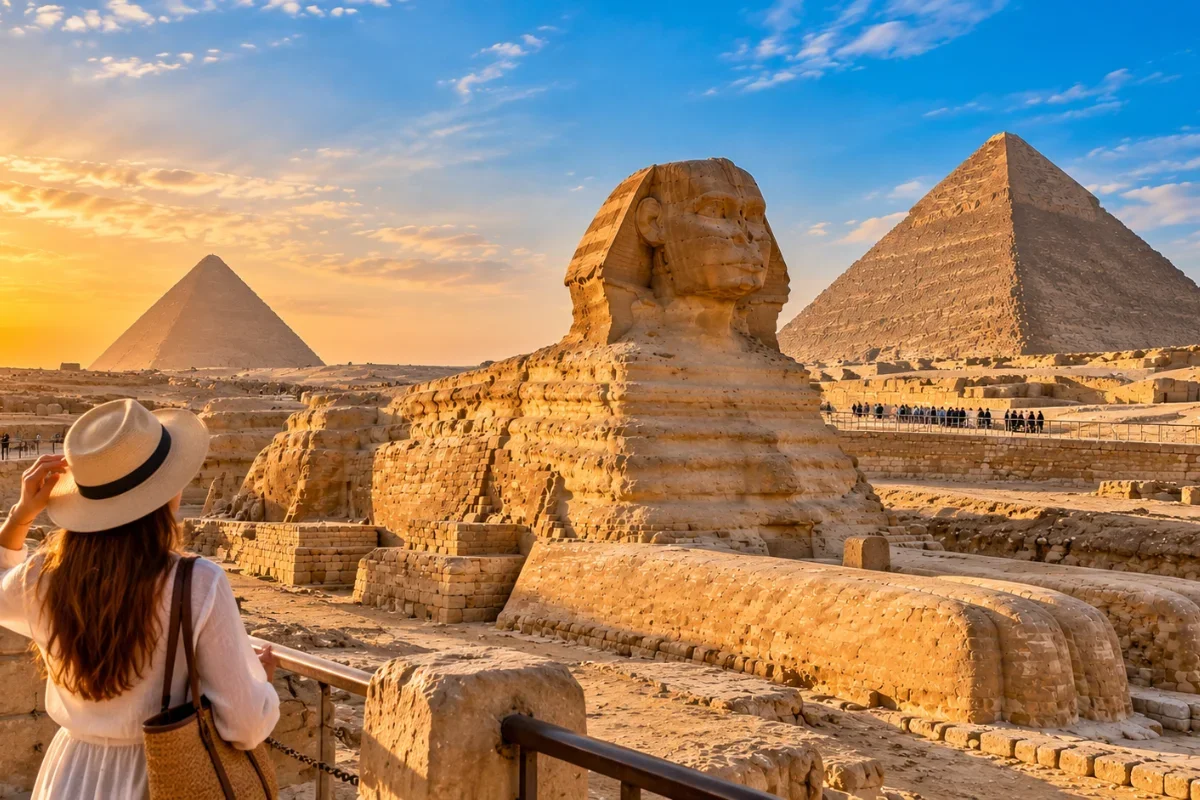
The Great Sphinx has fascinated travelers since ancient times, from Greek historians to Napoleon's scholars. These 20 facts gather the most interesting and fun facts about the Sphinx in one place.
-
It was carved, not built. The Sphinx was shaped from a ridge of bedrock left behind by quarrying, rather than assembled from blocks.
-
It is about 73 meters long and 20 meters high, roughly the length of three tennis courts placed end to end.
-
Its face is about 4 meters wide, and each ear is about 1.4 meters tall.
-
It faces due east, toward the sunrise, which suited its role as a sun guardian.
-
It is about 4,500 years old, dating to the reign of Khafre in the 26th century BC.
-
About 100 workers may have carved it in about three years, according to an estimate by archaeologist Mark Lehner, using stone hammers and copper chisels.
-
It was once painted. Traces of red pigment survive on the face, and some scholars believe the body was painted in yellow and other colors.
-
Its nose is about 1 meter wide where it broke off, and chisel marks show it was pried away on purpose.
-
Napoleon did not shoot off its nose. A drawing by the Danish traveler Frederic Norden, made in 1737, already shows the Sphinx without it.
-
It once had a beard. Pieces of a stone beard, probably added later, were found in front of the chest in 1817, and one is now in the British Museum in London.
-
It once wore a royal cobra. A carved uraeus probably decorated its forehead, and a fragment of it survives.
-
It wears the royal nemes headdress, the striped cloth worn by pharaohs.
-
It spent much of its history buried. Desert sand often covered it up to its shoulders, and it was fully cleared only in the 1920s and 1930s.
-
A king dreamed about it. The Dream Stela of Thutmose IV, set up between its paws around 1401 BC, says the Sphinx promised him the throne if he cleared the sand away.
-
It was worshipped as a god. In the New Kingdom, people treated it as Hor-em-akhet, "Horus in the Horizon," and left stelae and offerings to it.
-
Its head was carved from harder rock than its body, which is why the face is far better preserved than the eroded chest and sides.
-
Romans repaired it. Many of the small limestone blocks covering its paws and body come from repairs in Roman times and later restorations.
-
It has its own temple. The Sphinx Temple in front of it was built from blocks quarried out of the Sphinx's own enclosure.
-
It is not the only Egyptian sphinx. Thousands of smaller sphinxes were made later, including the Avenue of Sphinxes linking Karnak Temple and Luxor Temple.
-
It is part of a UNESCO World Heritage Site, listed in 1979 with Memphis and the pyramid fields from Giza to Dahshur.
Who Built the Sphinx?
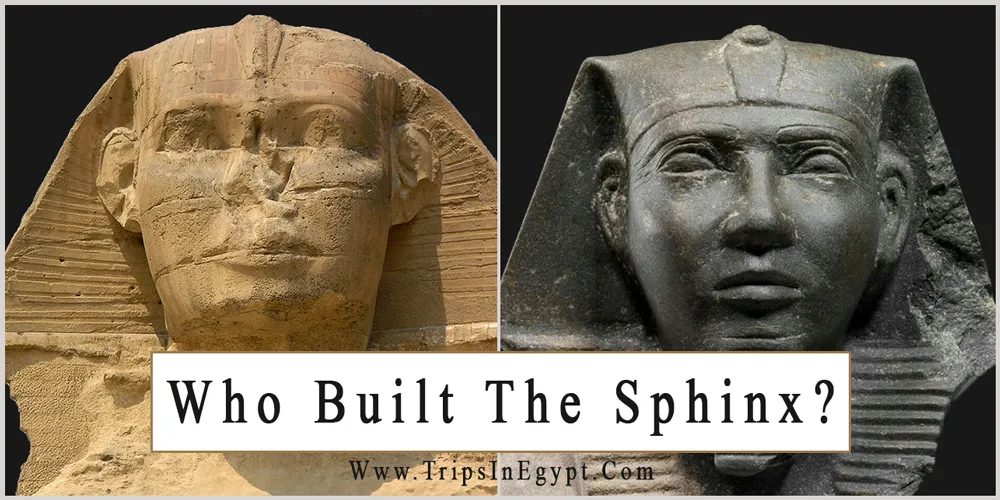
Most Egyptologists believe the Sphinx was built for King Khafre, who ruled around 2558 to 2532 BC. Several clues point to him. The Sphinx sits beside his causeway and valley temple, its enclosure lines up with his pyramid complex, and the stone of the Sphinx Temple was cut from the same quarry as the statue itself.
Its face also resembles known statues of Khafre, such as his famous diorite statue in Cairo. The Dream Stela of Thutmose IV, carved more than 1,100 years later, mentions a damaged name beginning with "Khaf," which many read as Khafre.
Some scholars have offered other ideas. A few suggest Khafre's father, Pharaoh Khufu, began the work, while the French Egyptologist Vassil Dobrev argued for Khafre's half-brother Djedefre. These theories have supporters, but the Khafre view remains the most widely accepted.
Who Built the Sphinx in Egypt, and Why?
The actual carving was done by skilled Egyptian workers, not slaves. They lived in a workers' town south of the Sphinx, now called Heit el-Ghurab, where archaeologists found bakeries, breweries and evidence of a well-fed workforce. Their town has taught archaeologists a great deal about how the pyramids were built.
As for why, the Sphinx most likely served as a guardian of Khafre's tomb complex and a symbol of the king's power. Placing the king's head on a lion's body showed him as a protector with the strength of the most powerful animal the Egyptians knew. It also linked him to the sun god, whose daily rise the Sphinx faced every morning.
When Was the Great Sphinx of Giza Built?
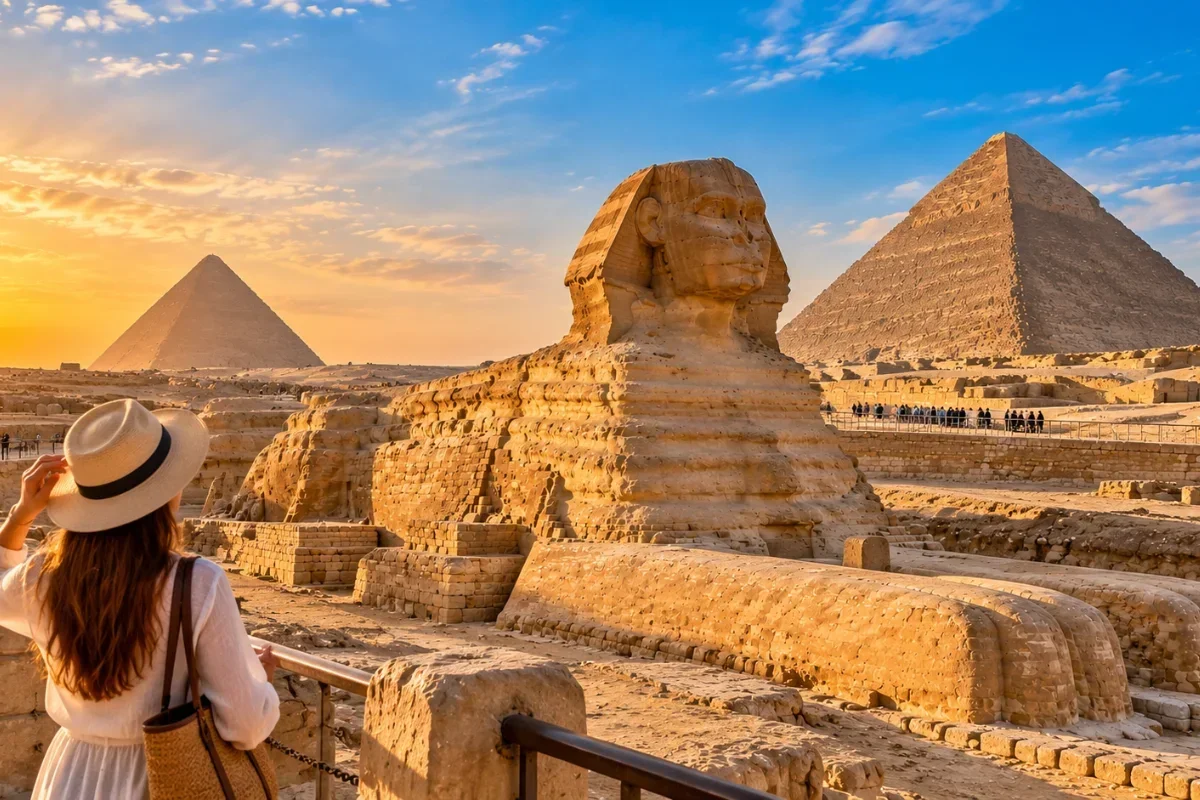
The Great Sphinx of Giza was built during the reign of Khafre, in the Fourth Dynasty of the Old Kingdom of Egypt, around 2550 BC. That places it in the same generation as the second pyramid of Giza, and only a few decades after the Great Pyramid of Khufu.
How Old Is the Great Sphinx of Giza?
The Great Sphinx is about 4,500 years old. A few writers have claimed it is much older, pointing to deep weathering marks on its enclosure walls that they link to heavy rainfall thousands of years earlier.
Most geologists and Egyptologists reject this idea. The weathering can be explained by the soft layers of limestone, salt crystals and wind, and the archaeological context around the Sphinx dates it to Khafre's time.
The Construction of the Sphinx
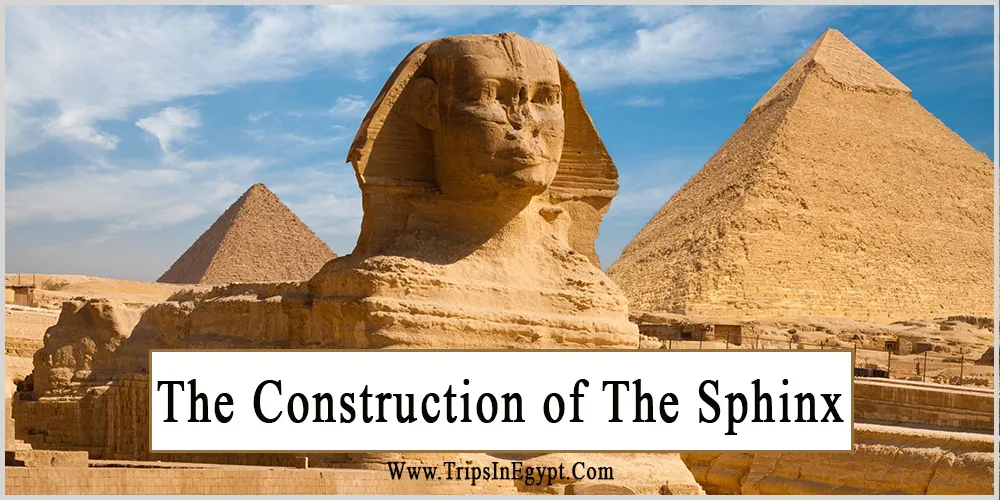
The Sphinx was carved from a ridge of bedrock left standing after builders quarried stone for the nearby Egyptian pyramids and temples. Workers cut a deep trench around it, shaping the body from the rock and removing huge blocks, which they used to build the Sphinx Temple in front.
The plateau is made of layers of limestone of different quality. The base of the Sphinx sits on a hard layer, the body was carved from softer, crumbly layers, and the head comes from a harder layer at the top. This is why the head has survived so well, while the body shows deep, uneven erosion.
Some damaged parts were later covered with small limestone blocks, especially on the paws and lower body. Restorers added more in modern times to protect the soft rock beneath. The original statue was also painted, with red on the face and other colors that have faded over the centuries.
What Does the Great Sphinx of Giza Represent?
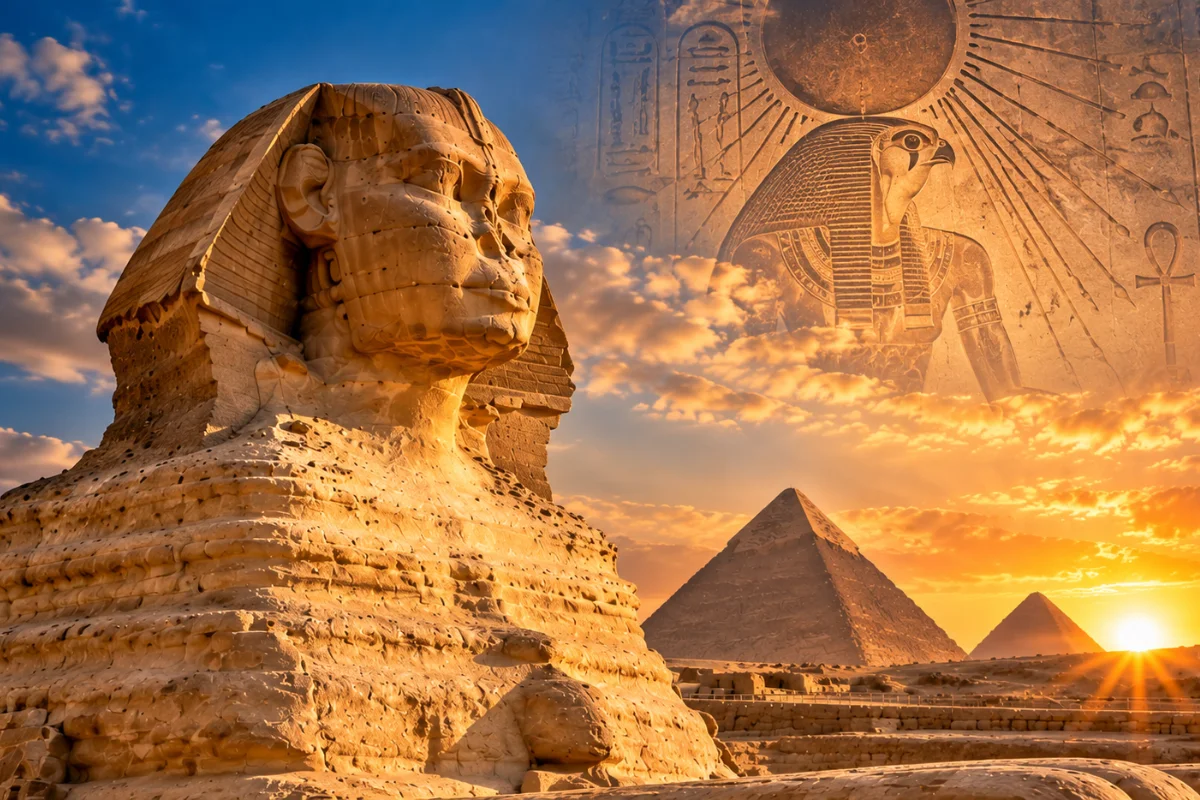
The Great Sphinx of Giza represents the king as a powerful guardian. The lion's body stood for strength and protection, while the human head showed the wisdom and authority of the pharaoh.
Over time its meaning grew. In the New Kingdom, about a thousand years after it was carved, Egyptians worshipped it as Hor-em-akhet, a form of the sun god Horus rising on the horizon. You can learn more about these deities in our guide to the ancient Egyptian gods and goddesses.
What Happened to the Sphinx's Nose?
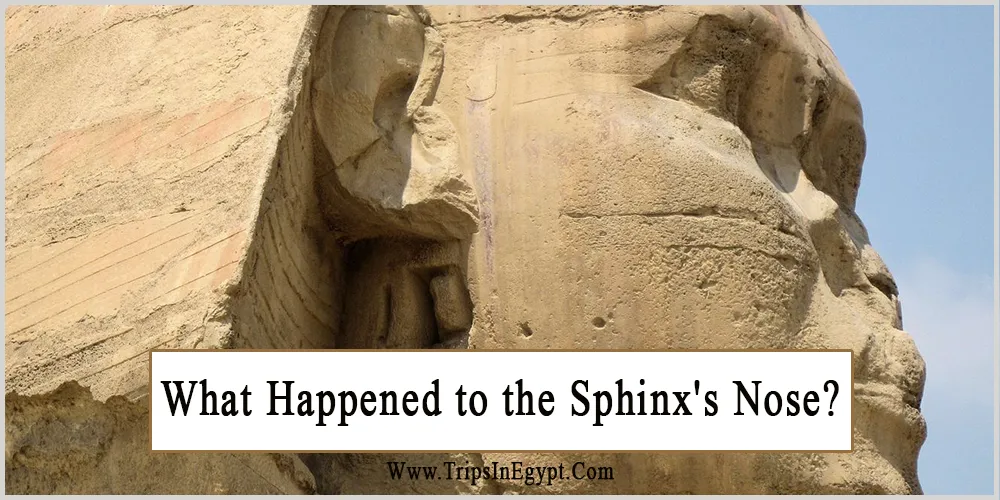
Many legends tell how the Sphinx lost its nose. The most popular blames Napoleon's soldiers, who were said to have used it for target practice in 1798. This story is false, because drawings made by Frederic Norden in 1737, decades before the French arrived, already show the Sphinx without its nose.
The Egyptian historian al-Maqrizi, writing in the 15th century, recorded a more likely cause. He said a Sufi named Muhammad Sa'im al-Dahr, angered that local farmers were making offerings to the Sphinx for good harvests, damaged its face in 1378. According to al-Maqrizi, he was later executed for vandalism.
Close study supports deliberate damage. Long chisel or rod marks on the face show that the nose was pried off on purpose, rather than worn away by wind or sand.
What Happened to the Sphinx's Beard?
The Sphinx probably did not have a beard when it was first carved. A long, braided divine beard seems to have been added in the New Kingdom.
Fragments of it were found in the sand between the paws by the Italian explorer Giovanni Battista Caviglia in 1817. Some pieces went to the British Museum and others to the Egyptian Museum in Cairo.
Astonishing Secrets of the Sphinx
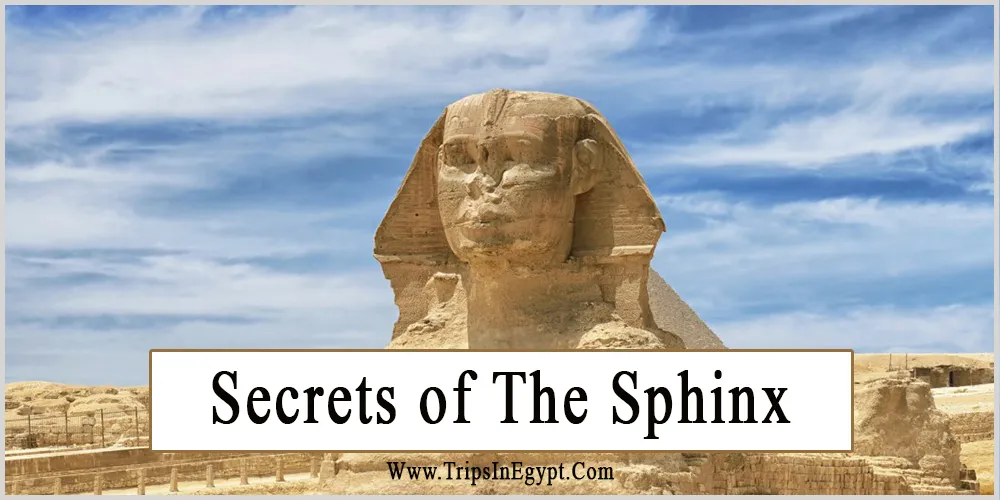
The word "sphinx" comes from ancient Greek, but the creature itself began in Egypt. Some scholars think the Greek word may echo the Egyptian phrase shesep ankh, "living image," a term used for royal statues.
The Greek sphinx was quite different. In Greek myth she was a female monster with a woman's head, a lion's body and wings, sent to terrorize the city of Thebes in Greece. She asked travelers a riddle: "What walks on four legs in the morning, two at noon and three in the evening?" The hero Oedipus answered correctly: a human being, who crawls as a baby, walks as an adult and uses a stick in old age.
Sphinxes also appear in Minoan and Mycenaean art from the beginning of the 2nd millennium BC, and later across the Near East. The Egyptian sphinx, however, is almost always male, wingless and calm, a royal guardian rather than a monster.
What's Hidden Under the Sphinx?
Rumors of secret chambers beneath the Sphinx have circulated for a long time. The best-known is the "Hall of Records," a library said to hide the lost knowledge of a forgotten civilization. No evidence has ever been found for it.
What does exist is small and well documented: a short tunnel in the rump, a shaft behind the head and a narrow passage on the north side, all explored and recorded in the 19th and 20th centuries. Seismic and radar surveys in the 1990s detected some natural cavities in the rock, but no hidden rooms.
Why Can't You Go Inside the Sphinx?
You cannot go inside the Sphinx because it has no visitor-accessible interior. It is essentially a solid statue carved from bedrock, rather than a monument built around internal chambers like a pyramid.
Access to the enclosure around its body is also restricted to protect the fragile limestone. Visitors view it from a terrace beside Khafre's Valley Temple and the Sphinx Temple, which gives the classic front view of the face and paws.
The Sphinx Had Many Different Names
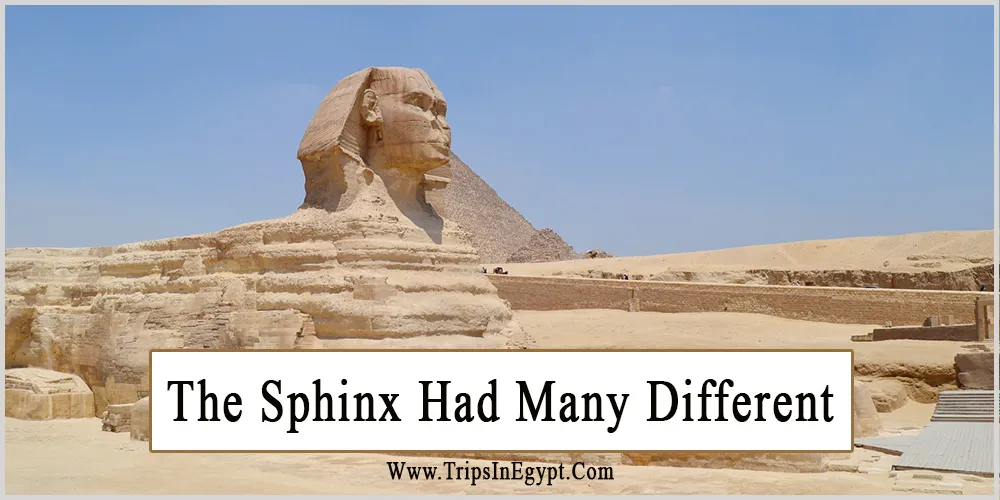
The ancient Egyptians did not call it the "Great Sphinx." In the New Kingdom it was known as Hor-em-akhet, "Horus in the Horizon," and it was also linked with the sun gods Khepri, Ra and Atum. Some texts describe it as an image of "Khepri-Ra-Atum."
Medieval Arab writers recorded local names such as Balhib and Bilhaw. Today Egyptians call it Abu al-Hol, "Father of Terror." In English, the word is pronounced sfinks, and "Great Sphinx of Giza" sets it apart from the thousands of smaller sphinxes made across Egypt.
How Was the Sphinx Buried in the Sand?
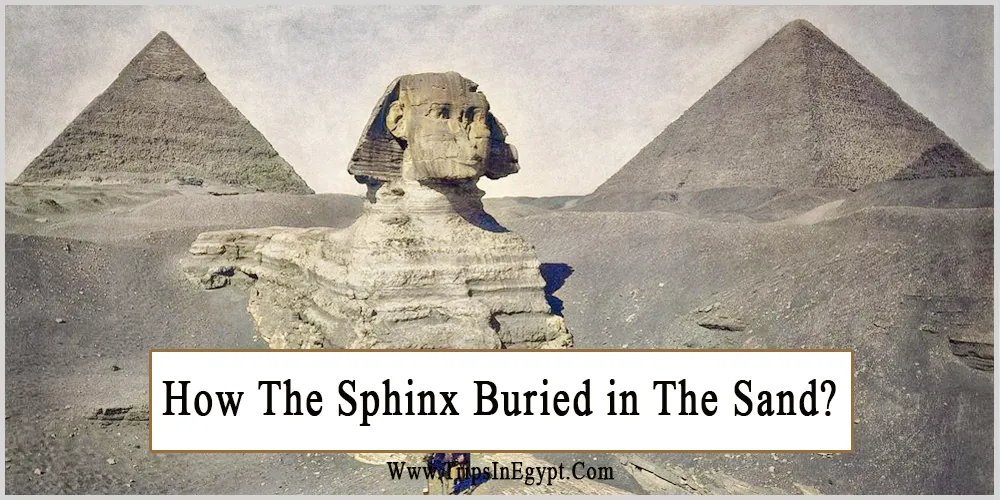
The Sphinx stands in a hollow carved into the plateau, so desert winds have filled it with sand again and again. For much of its history, only the head and shoulders were visible.
It has been dug out many times. Thutmose IV cleared it around 1401 BC and recorded his famous dream on the Dream Stela. A king whose royal family came from Thebes, he believed the Sphinx had chosen him as king.
Later clearings followed in Roman times, by Caviglia in 1817 and by Auguste Mariette in the 1850s. The Sphinx was finally freed down to its base by the French engineer Émile Baraize between 1925 and 1936, and by the Egyptian archaeologist Selim Hassan soon after.
That is why "before and after" photos of the Sphinx look so different. Nineteenth-century photographs show a head rising from the sand, while modern views show the full body, paws and temples. Major restoration work in the late 20th century replaced crumbling repair stones and strengthened the base.
Visiting the Great Sphinx Today
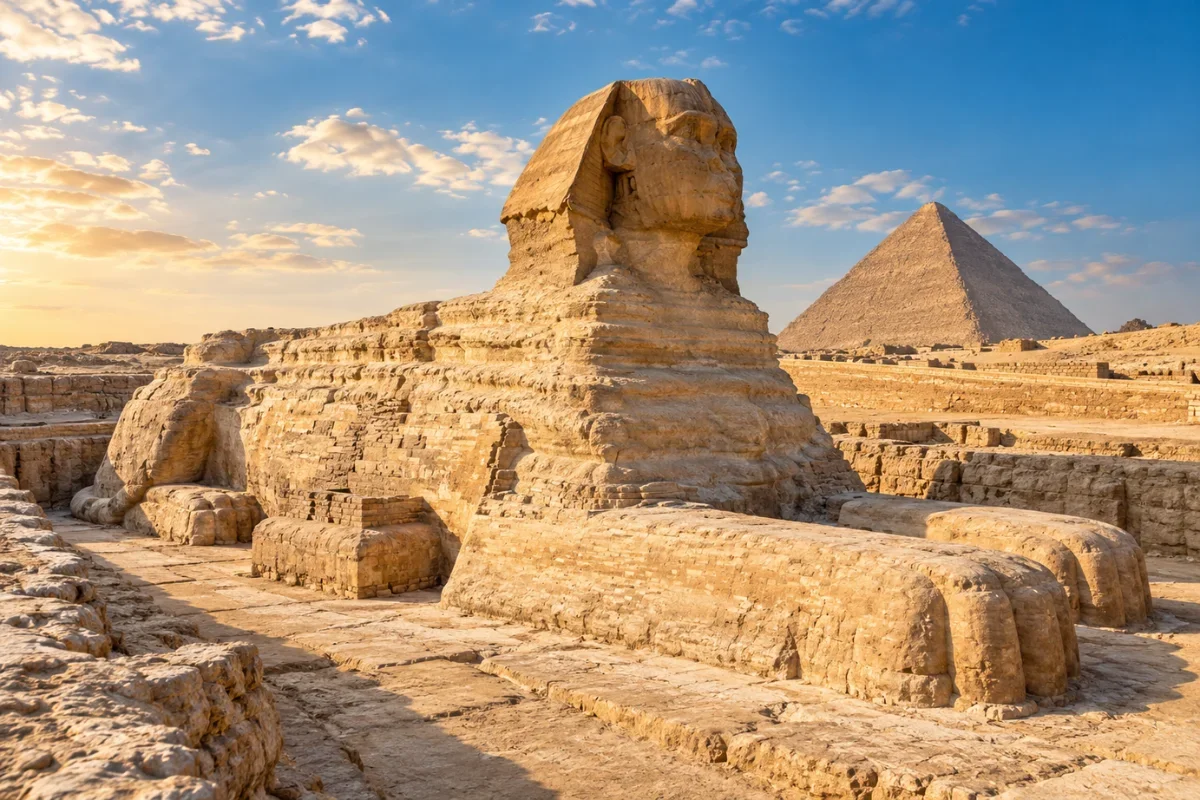
The Sphinx is part of the Giza Plateau, and entry is included in the general Giza ticket. The site usually opens in the early morning and closes around 5 PM, although operating hours can change.
The Pyramids Photo Session Day Tour, From $50, includes a professional shoot with the Great Pyramid and the Sphinx as backdrops.
For a full day, the Day Tour from Cairo to Pyramids, Museum & Khan EL Khalili, From $95, combines the Sphinx with the pyramids, a museum visit and Cairo's great bazaar.
While you are at Giza, do not miss the Great Pyramid of Giza, the last surviving wonder of the ancient world, just a short walk away.
If you have more time in Cairo, there is plenty more to see. You can find half-day and full-day options among our Cairo day tours.
Uncover All the Ancient Wonders with "Trips in Egypt"
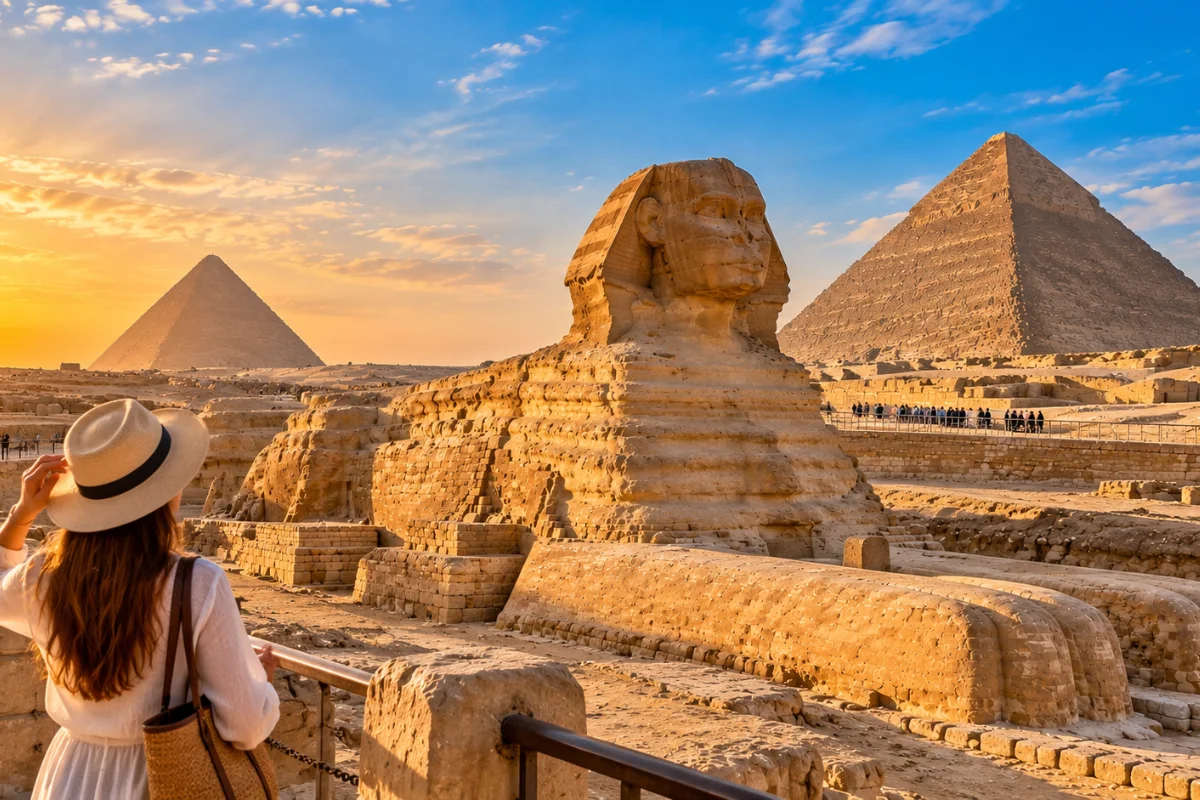
The Sphinx is only the beginning of Egypt's ancient story. Our Egypt tours combine Giza with Luxor, Aswan and the Red Sea, with Egyptologist guides throughout.
To see the great temples of Upper Egypt in comfort, sail between Luxor and Aswan on one of our Nile river cruises, with daily guided visits from the ship.
The Great Sphinx of Giza is more than a famous face. Carved for Khafre about 4,500 years ago, it has survived burial in sand, the loss of its nose and countless legends. Its true story, told through stone, stelae and careful study, is even more remarkable than the myths. Stand before it at sunrise, and you will understand why this timeless guardian still captures the imagination of the world.

5 Days Cairo And Hurghada Trip
Amazing 4 Nights Cairo and Hurghada Trip Itinerary 5 Days Cairo and Hurghada trip wil...
- Duration 5 Days / 4 Nights
- Location Cairo & Hurghada
- Type Historical & Recreational Tour
From$690/per person
View Tour
6 Days Cairo, Alexandria & Faiyum Tour
Unforgettable Cairo, Alexandria & Faiyum Adventure in Six Days 6 Days Cairo, Alex...
- Duration 6 Days / 5 Nights
- Location Cairo - Alexandria - Fayum
- Type Historical Tour
From$720/per person
View Tour
10 Days Cairo, Faiyum & Nile Cruise Holiday
Breathtaking 10 Days Journey of A Lifetime in Egypt 10 Days Cairo, Faiyum & Nile...
- Duration 10 Days / 9 Nights
- Location Cairo, Luxor, Aswan & Faiyum
- Type Classic Tour
From$1350/per person
View Tour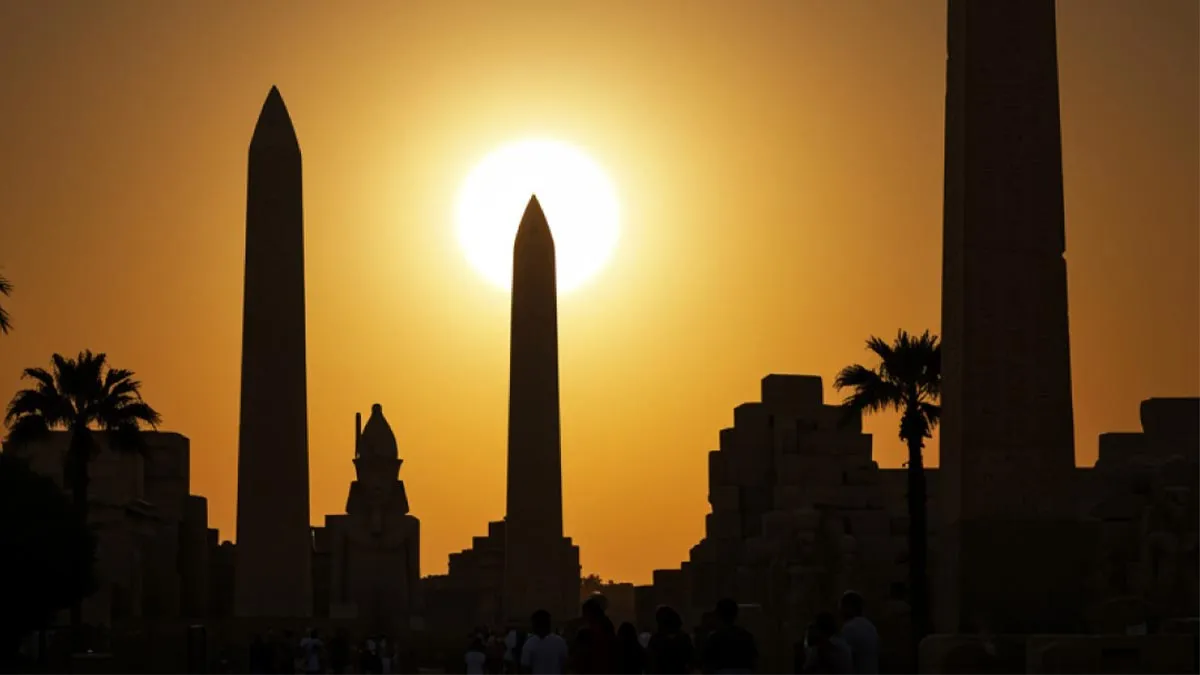 SOLD OUT
Ultimate 7-Day Egypt Solar Eclipse Experience with Hurghada 2027
Enjoy a 7-Day Egypt Solar Eclipse Tour with Hurghada 2027 6 Nights Egypt Solar Ecli...
- Duration 7 Days / 6 Nights
- Location Cairo / Giza / Luxor / Hurghada
- Type Astronomical Tour
Sold Out
View Details