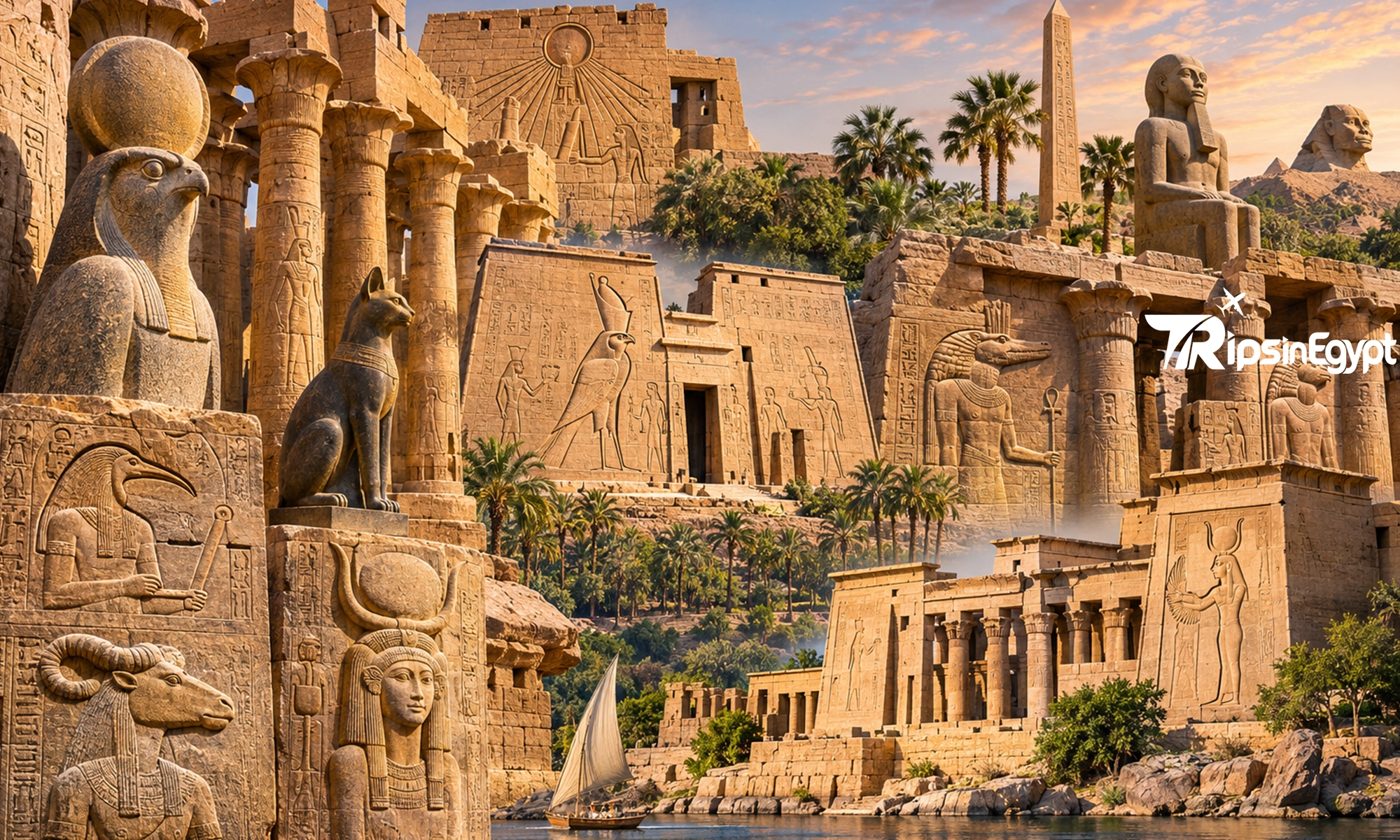




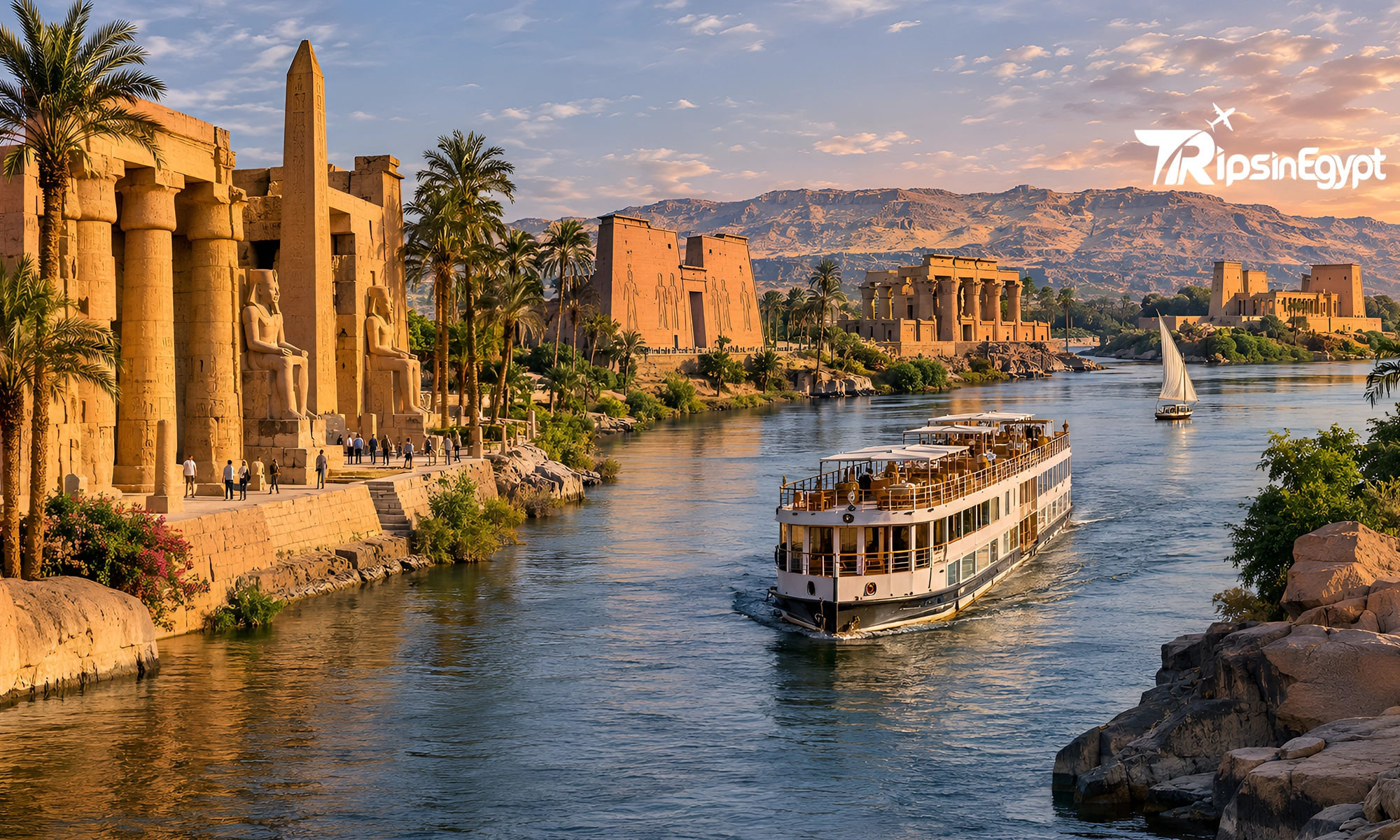
Between Luxor and Aswan, the Nile runs through a narrow green valley guarded by desert cliffs, and along its banks stand some of the greatest temples ever built. For thousands of years, pharaohs, Ptolemies and Roman emperors raised sanctuaries here, and many of them are still so complete that you can trace the paint on their ceilings.
This guide follows the Egyptian temples along the Nile from Luxor to Aswan in the order you meet them, from Karnak and the West Bank to Esna, Edfu, Kom Ombo and Philae. You will also find a distance table, lesser-known temples, the best times to visit and the best ways to travel the route. Here are all things you need to know about the temples between Luxor and Aswan:

Planning the Route: Distances and the Order of the Temples
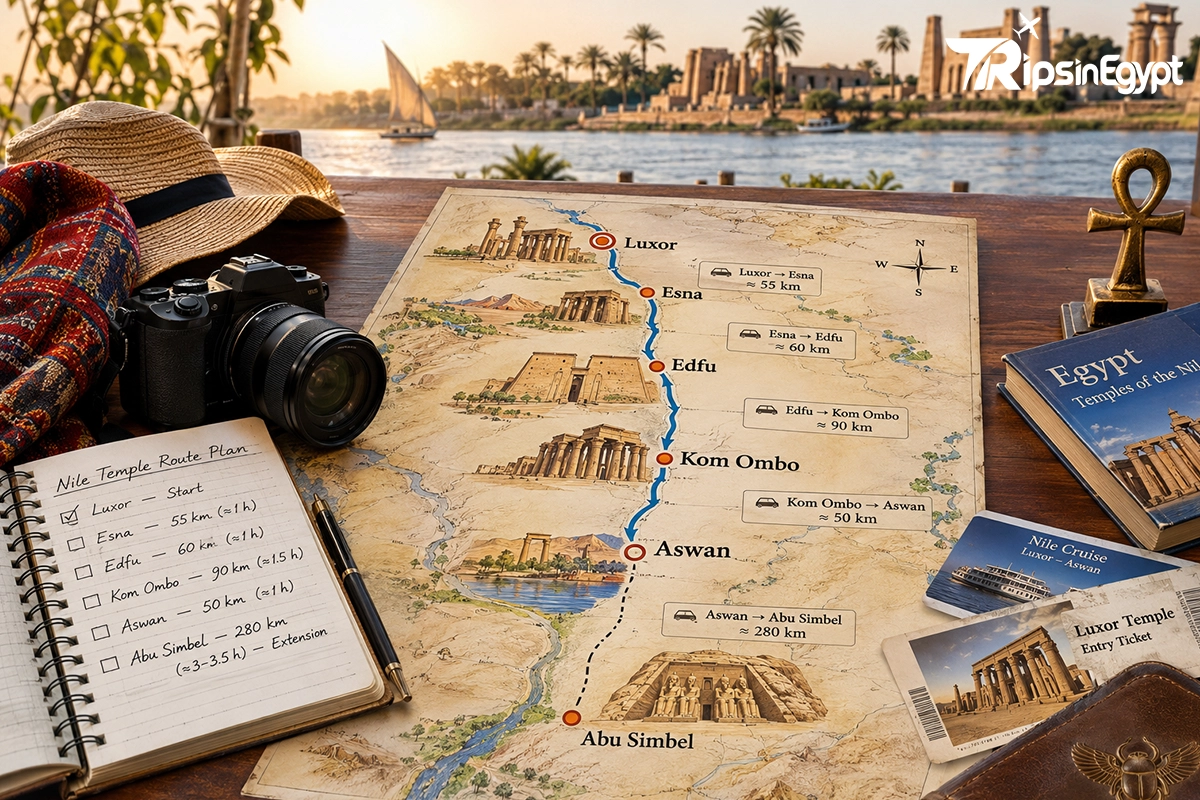
The journey from Luxor to Aswan covers about 220 km by road and a little more by river. Most temples sit right on the riverbank, which is why the route has been the heart of Egyptian travel since the first steamers of the 19th century.
| Stop | Distance from Luxor | Main temple | God honored | Era |
|---|---|---|---|---|
| Luxor East Bank | 0 km | Karnak and Luxor Temple | Amun-Ra | Middle and New Kingdom |
| Luxor West Bank | Across the river | Hatshepsut, Medinet Habu | Amun, the deified kings | New Kingdom |
| Esna | About 55 km | Temple of Khnum | Khnum | Roman |
| Edfu | About 110 km | Temple of Horus | Horus | Ptolemaic |
| Gebel el-Silsila | About 145 km | Rock shrines and quarries | Several gods | New Kingdom |
| Kom Ombo | About 175 km | Double temple | Sobek and Haroeris | Ptolemaic |
| Aswan | About 220 km | Philae Temple | Isis | Ptolemaic and Roman |
A helpful way to understand the route is by age. The temples of Luxor were built during the New Kingdom, roughly 1550 to 1070 BC, when Thebes was the religious capital. The temples further south are much younger, built by the Greek Ptolemies and the Romans between the 3rd century BC and the 2nd century AD, yet in the same pharaonic style. For background on how they were designed, read our guide to ancient Egyptian temples.
Luxor: Karnak, Luxor Temple and the West Bank
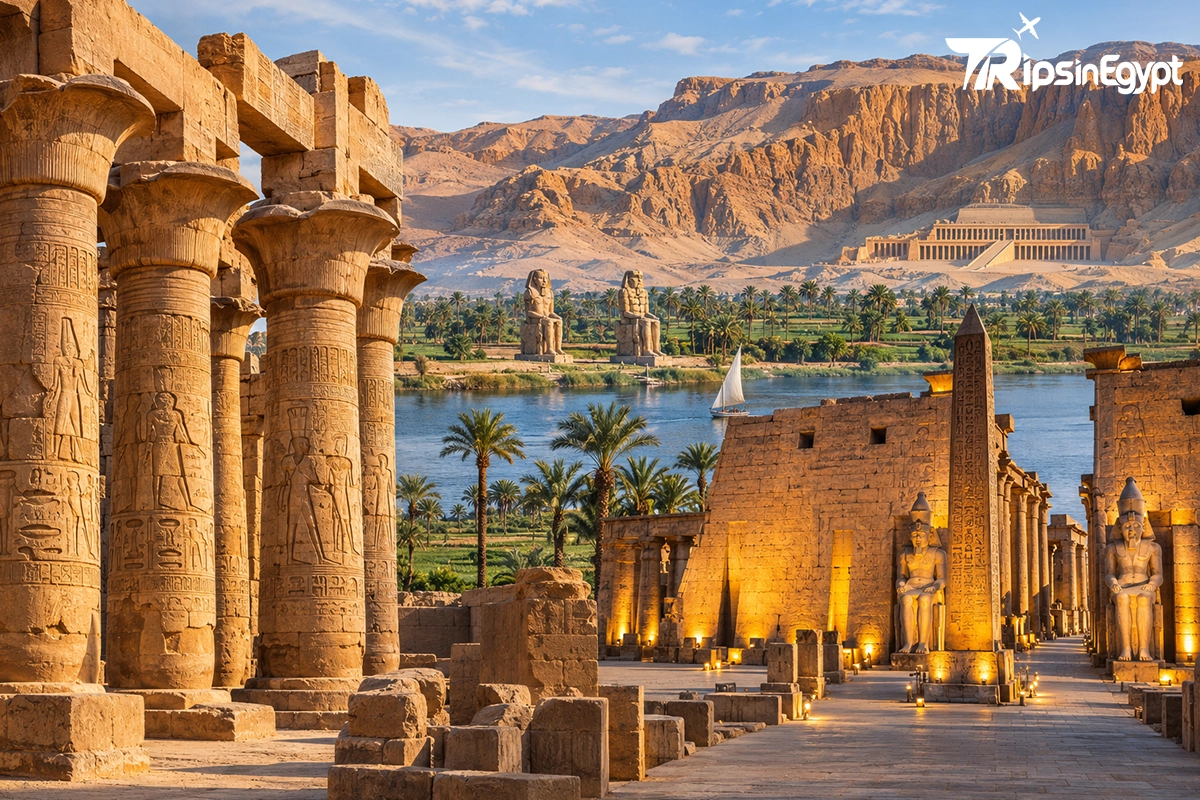
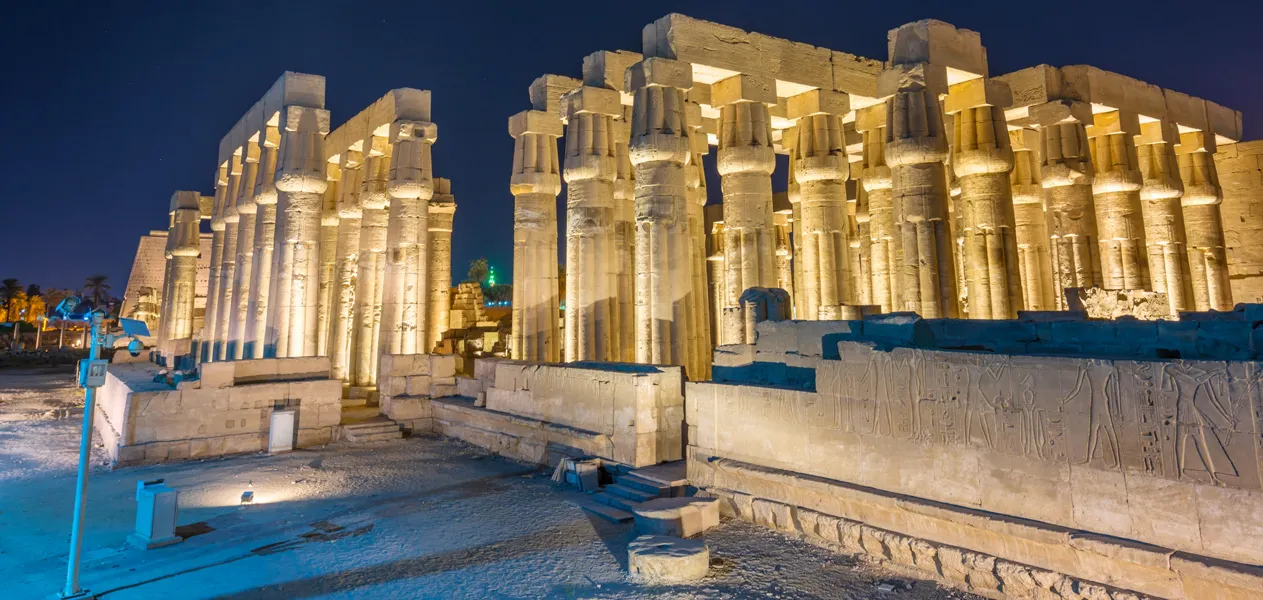
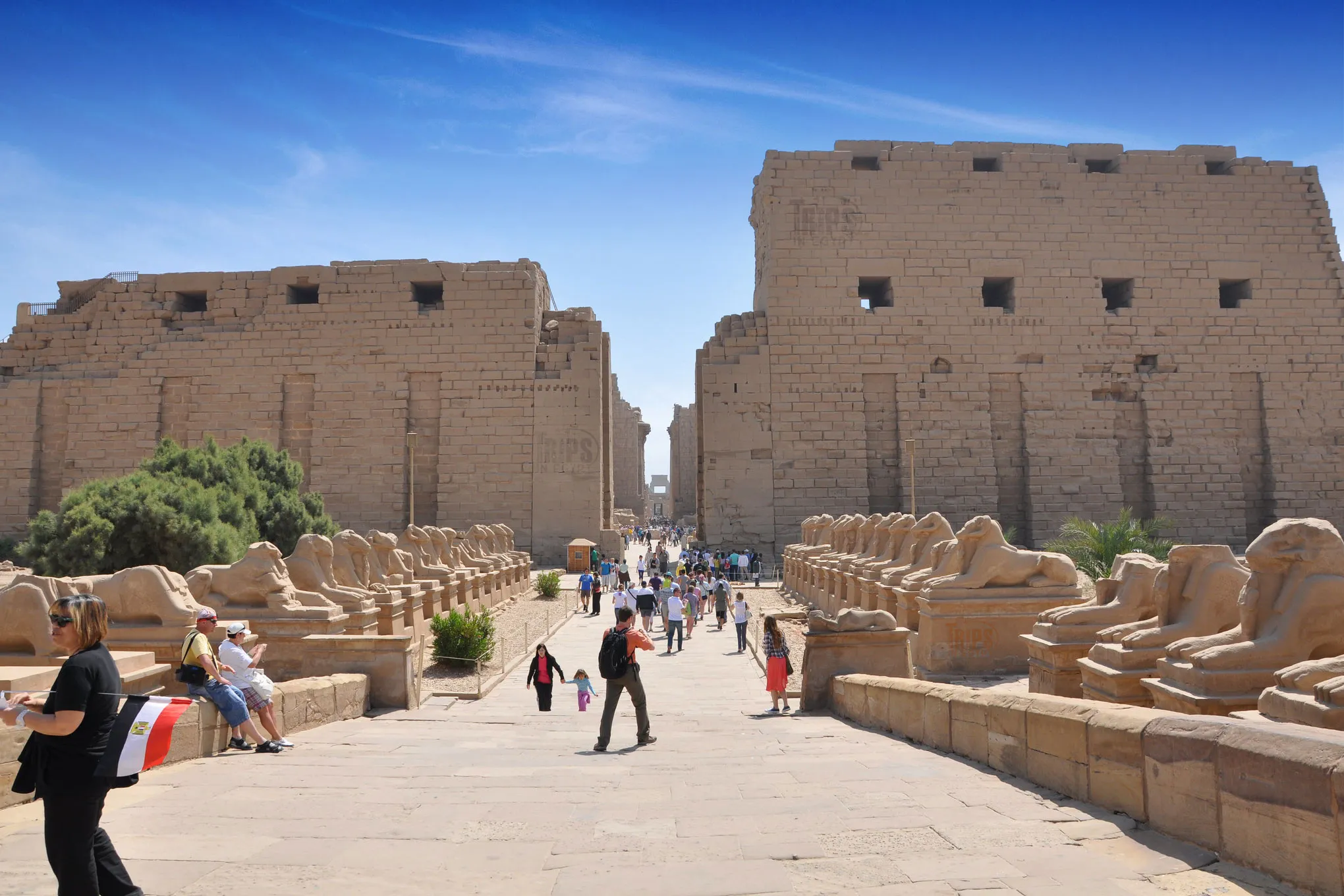
Every journey begins in Luxor, ancient Thebes, often called the world's greatest open-air museum. Karnak Temple is the largest religious complex of ancient Egypt, built and rebuilt over about 2,000 years by around 30 pharaohs. Its Great Hypostyle Hall holds 134 sandstone columns, and the obelisk of Queen Hatshepsut, about 29.5 meters tall, still rises nearby. Arrive at opening time, around 6:00 am, to see the hall in soft morning light before the tour groups.
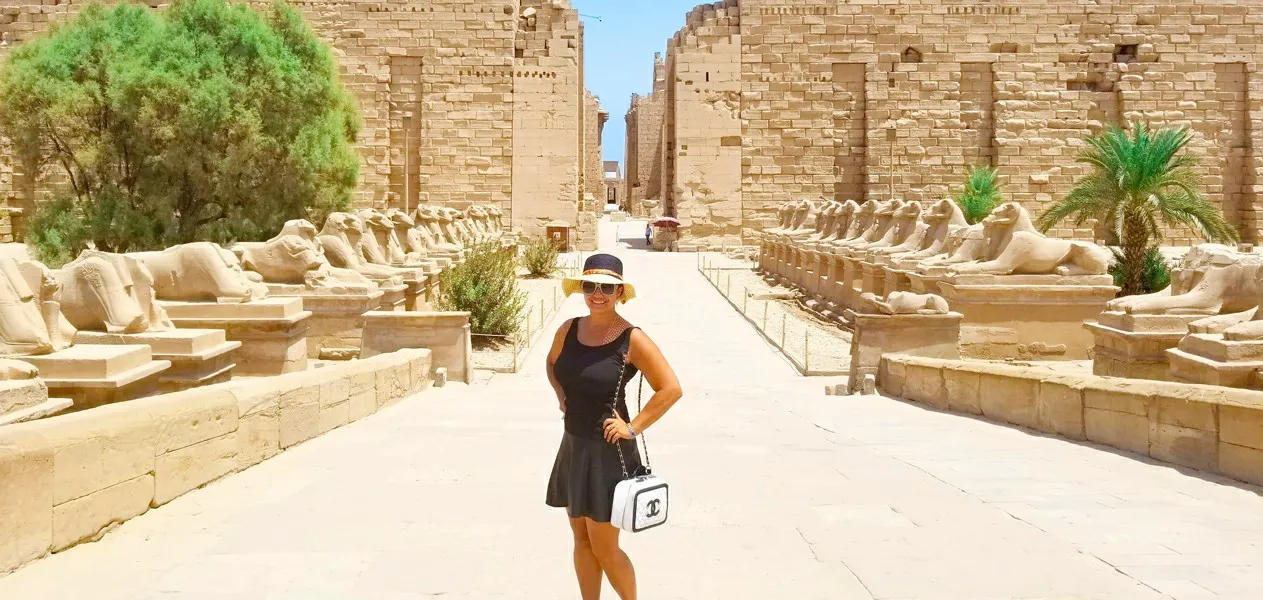
Luxor Temple, built mainly by Amenhotep III and Ramesses II, is best seen at dusk, when floodlights turn its colossal statues gold. Its single remaining obelisk once had a twin, which now stands in the Place de la Concorde in Paris. The 2.7 km Avenue of Sphinxes, reopened in 2021, links the two temples, and our Luxor East Bank day trip covers both with a guide.
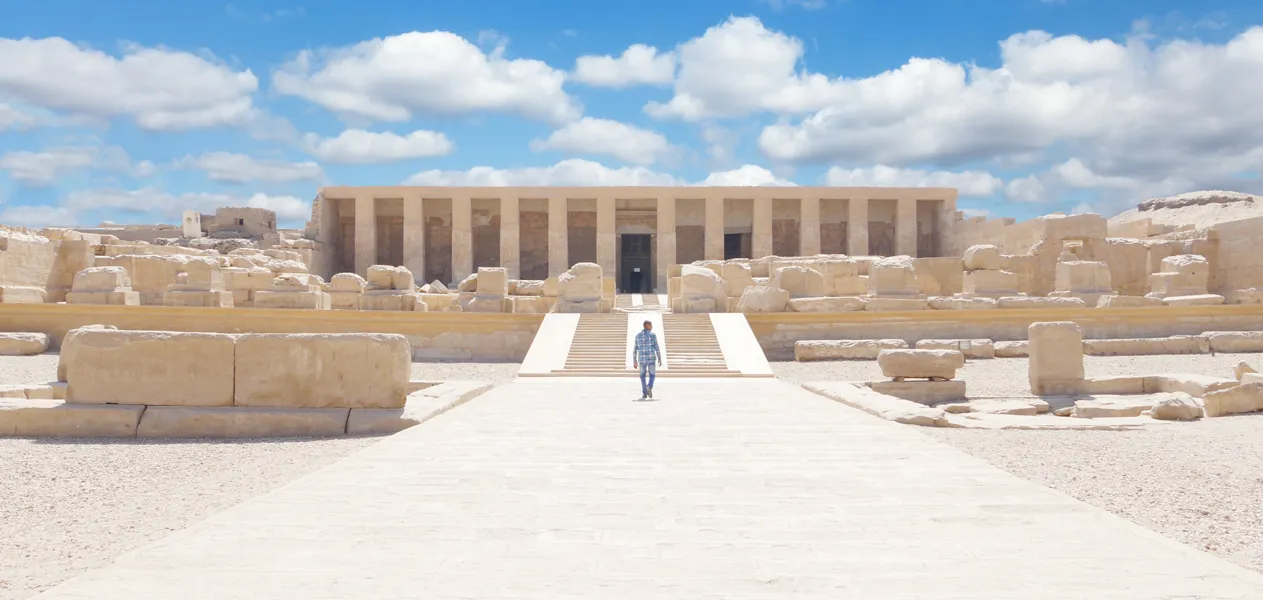
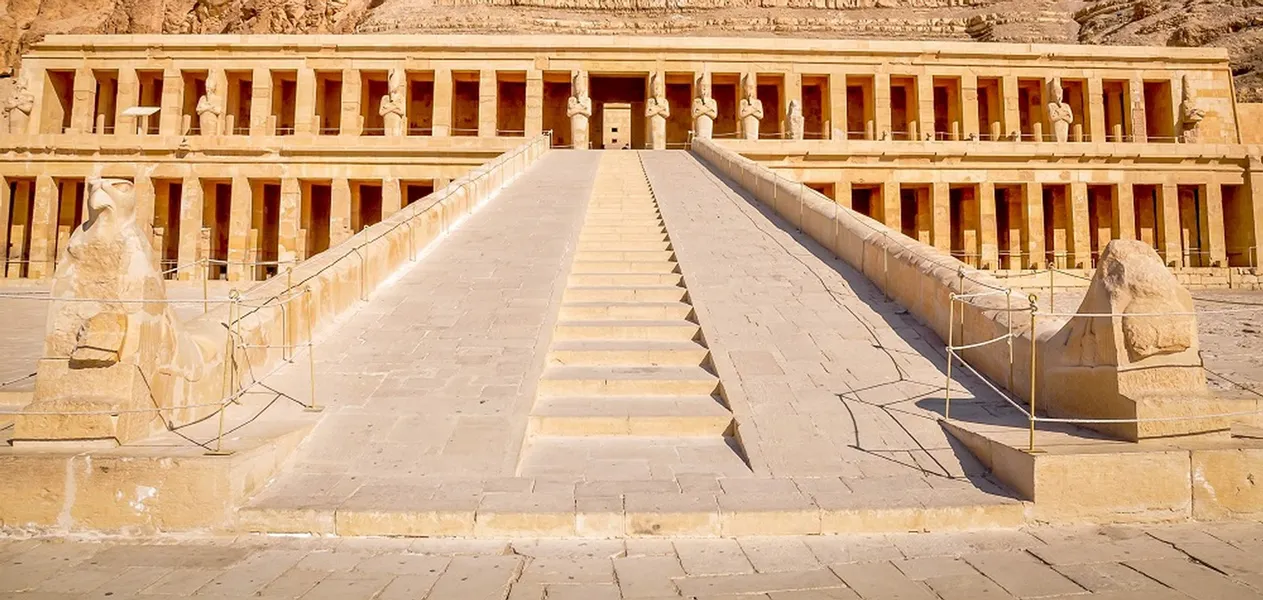
Across the river, the West Bank was the land of the dead. The terraced Temple of Hatshepsut at Deir el-Bahari is carved into the cliffs, while Medinet Habu, the mortuary temple of Ramesses III, has some of the best-preserved colored reliefs in Luxor and far fewer visitors. On the way, you pass the two giant Colossi of Memnon, and the royal tombs of the Valley of the Kings lie in the hills behind. A full-day Luxor West Bank tour is the easiest way to combine them.
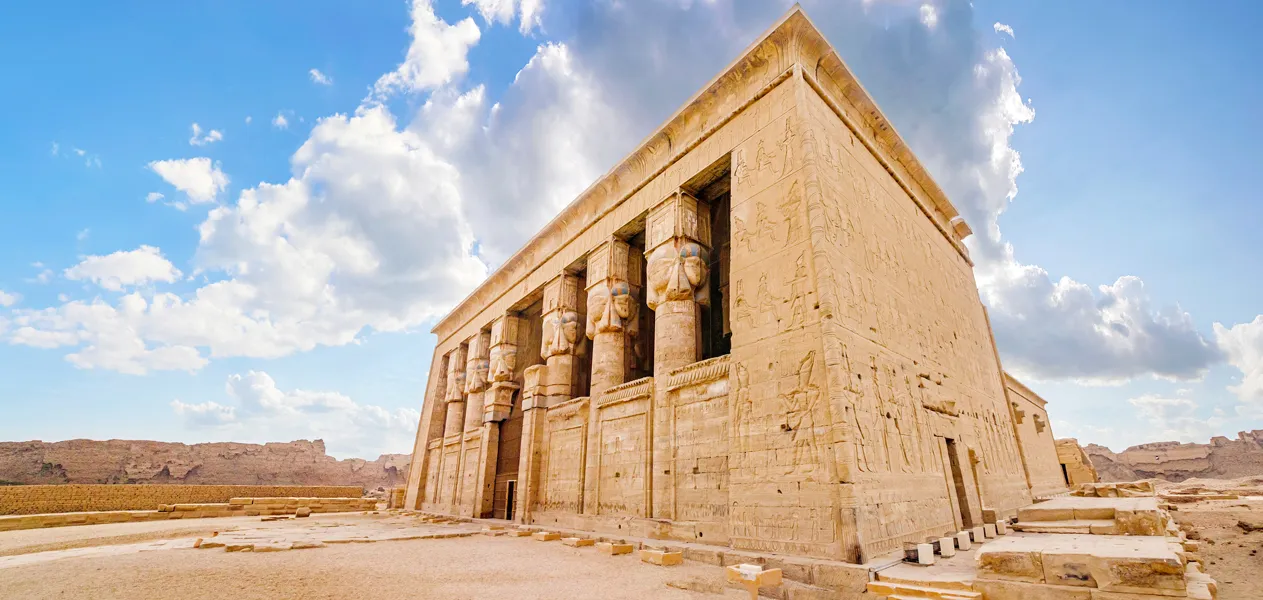
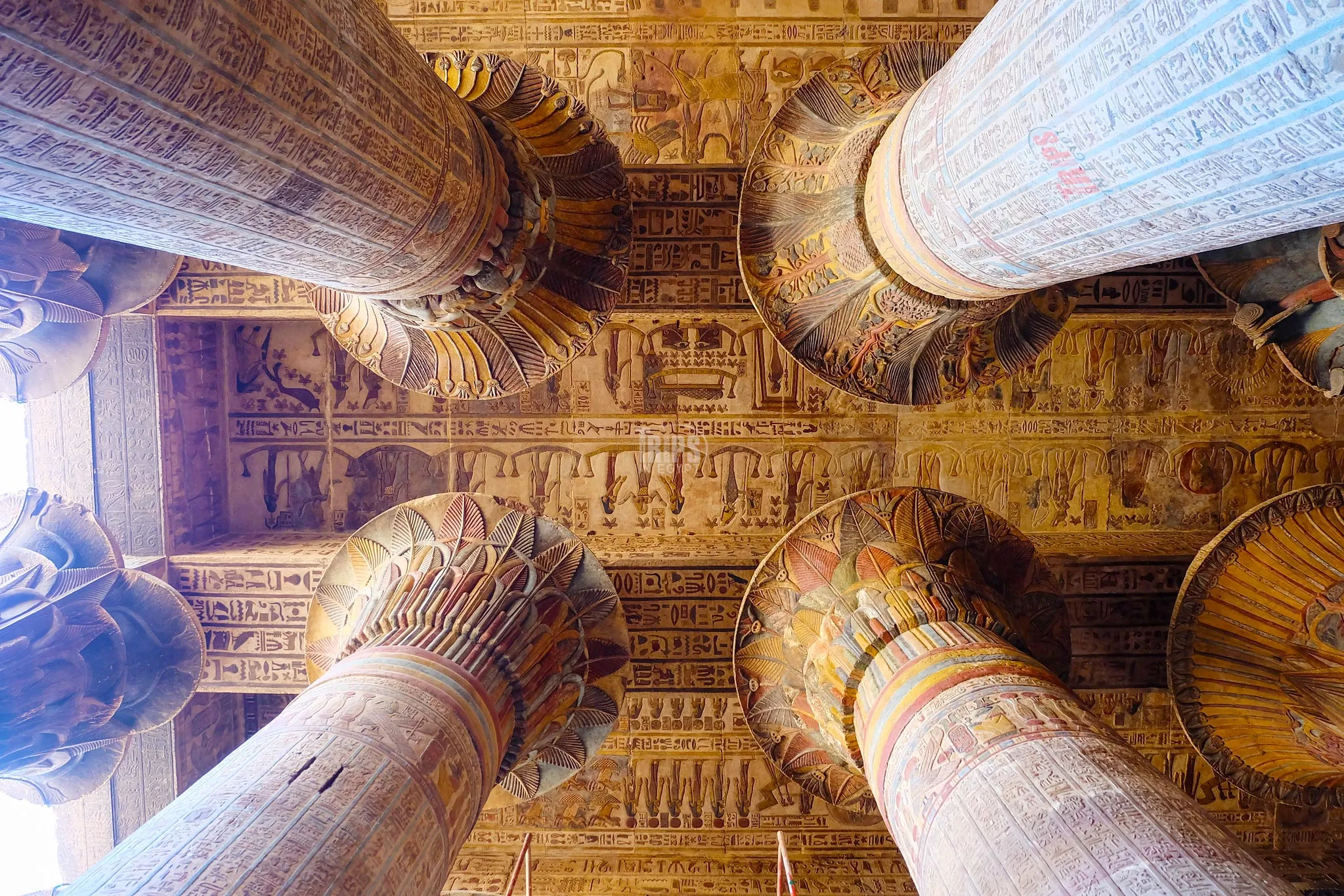
Before leaving the area, consider a short trip north to Dendera, about 60 km from Luxor, where the Temple of Hathor has some of the brightest ceiling colors in Egypt.
Esna and Edfu: The Temples of Khnum and Horus
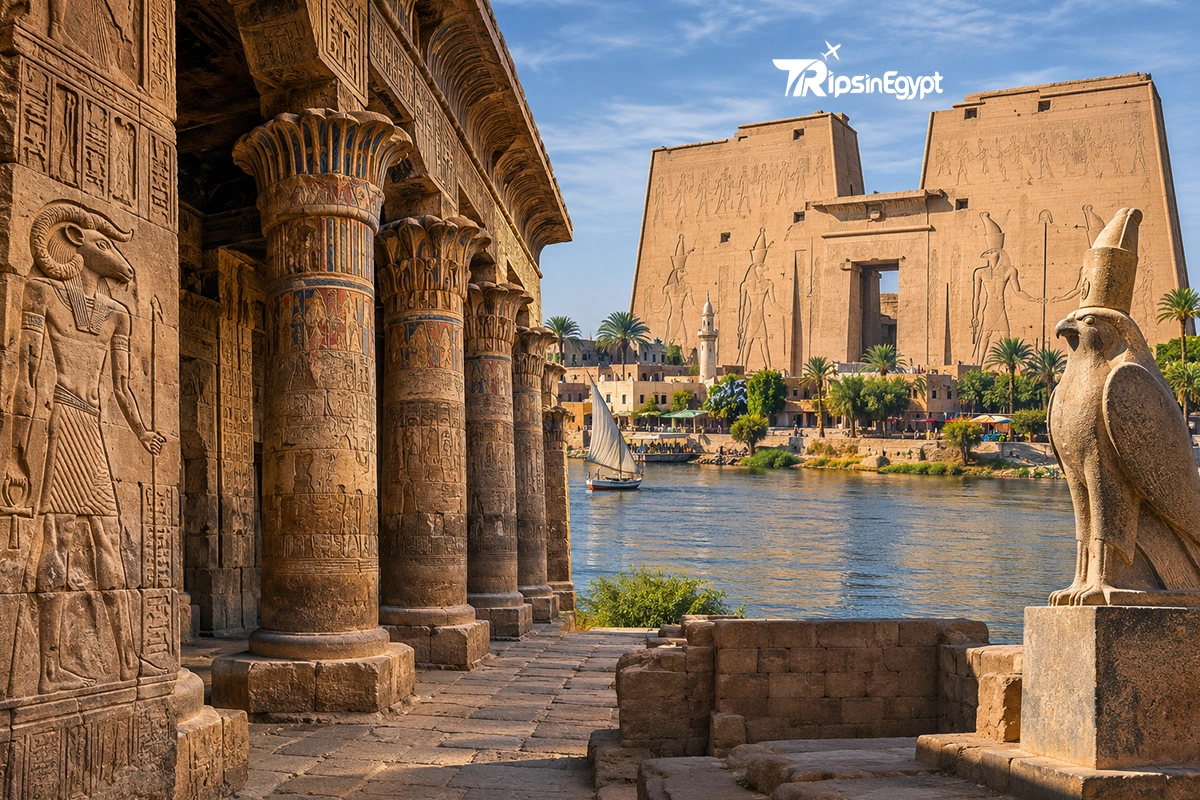
About 55 km south of Luxor, the town of Esna hides a temple that sits roughly 9 meters below the modern streets, revealing how much the ground has risen over the centuries. The Temple of Esna was dedicated to Khnum, the ram-headed god who shaped humans on a potter's wheel. Only its Roman hypostyle hall survives, with 24 columns crowned by richly carved capitals. Recent restoration has removed centuries of soot, revealing brilliant original blues, reds and yellows on the ceiling. Many cruise ships pass Esna only for the river lock, so a separate Esna Temple tour from Luxor is often the best way to see it.
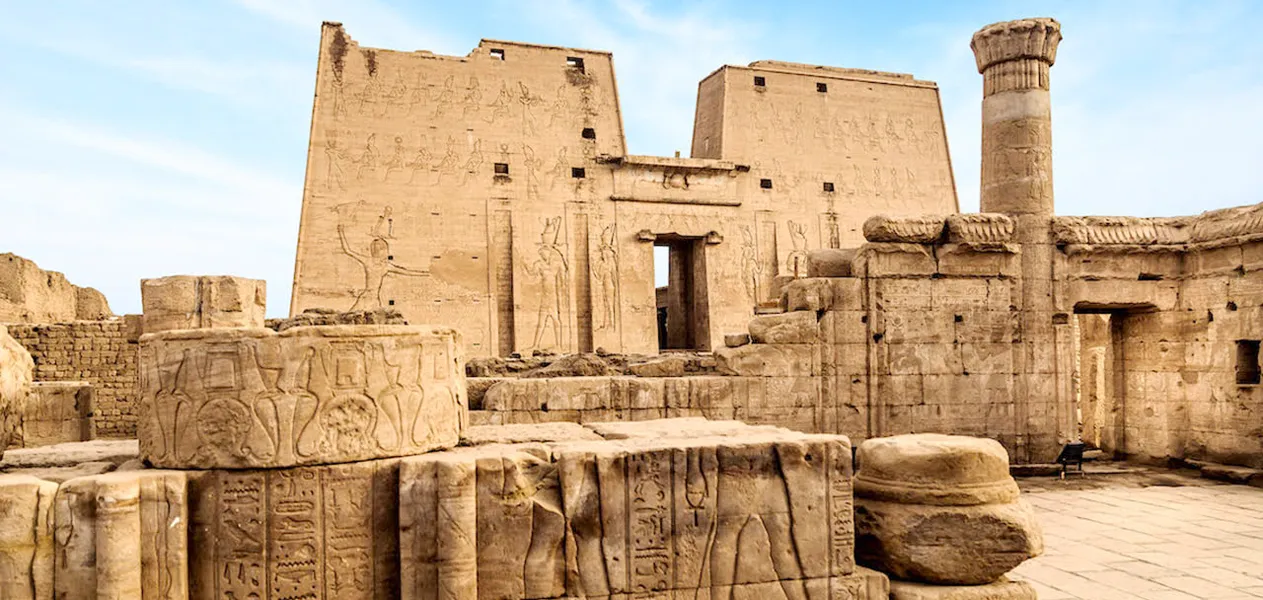
Another 55 km upstream, Edfu Temple is the best-preserved temple in Egypt. Built between 237 and 57 BC for Horus, the falcon god, it was buried under sand and houses until the 1860s, which protected it from damage. Its pylon is about 36 meters high, two granite falcons guard the entrance, and the walls tell the story of Horus defeating Seth. Cruise passengers usually reach the temple by horse-drawn carriage from the riverbank, and early morning visits are the quietest.
Between Edfu and Kom Ombo, the river narrows at Gebel el-Silsila, the great sandstone quarry that supplied stone for many of Egypt's temples. Its rock-cut chapels, including a shrine of King Horemheb, are a favorite stop for smaller boats and dahabiyas.
Kom Ombo: The Double Temple on the River
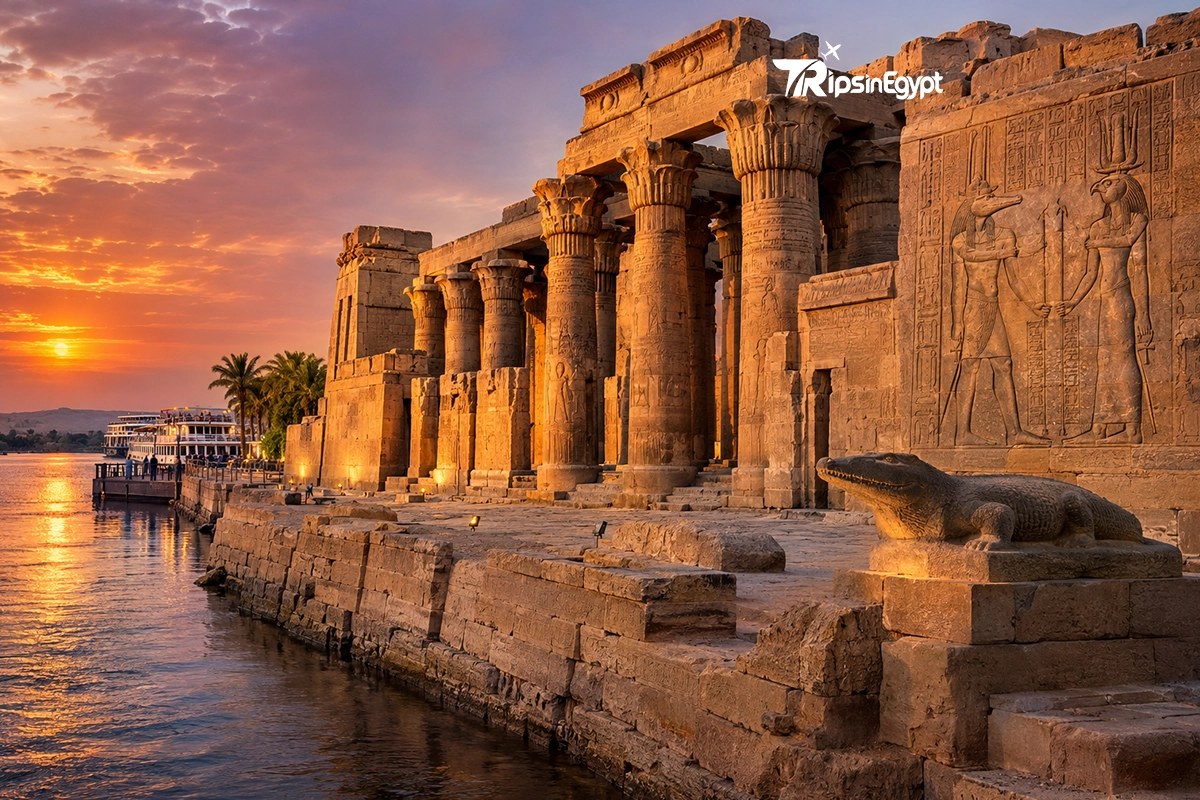
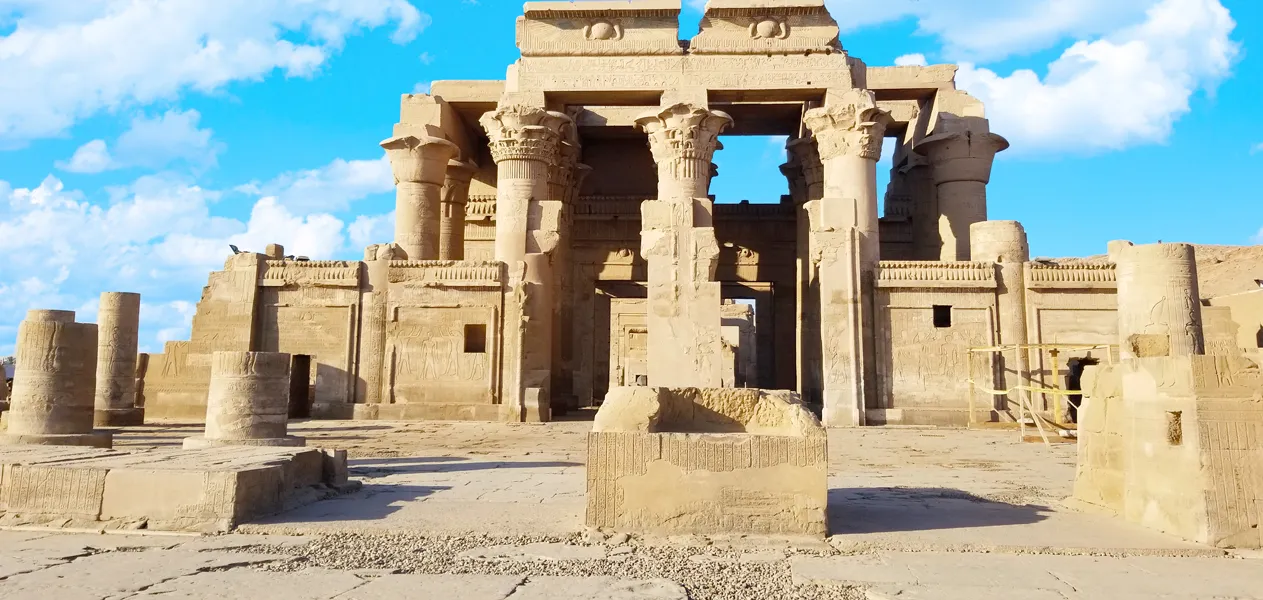
About 45 km north of Aswan, Kom Ombo Temple stands on a bend of the Nile, and few temples in Egypt have a more dramatic setting. Begun under Ptolemy VI in the 2nd century BC, it is a perfect double temple, with two entrances, two halls and two sanctuaries side by side.
The southern half honored Sobek, the crocodile god of fertility and the Nile, and the northern half Haroeris, or Horus the Elder. Look for the famous relief showing what many believe are surgical instruments, and for the temple calendar carved on the walls. Next door, the small Crocodile Museum displays mummified crocodiles found in a nearby cemetery.
Kom Ombo stays open after dark and is beautifully lit, so many cruise ships stop here in the late afternoon. If you are traveling by road, our Esna, Edfu and Kom Ombo tour from Luxor visits all three temples in a single day on the way to Aswan.
Aswan: Philae, Kalabsha and the Road to Abu Simbel
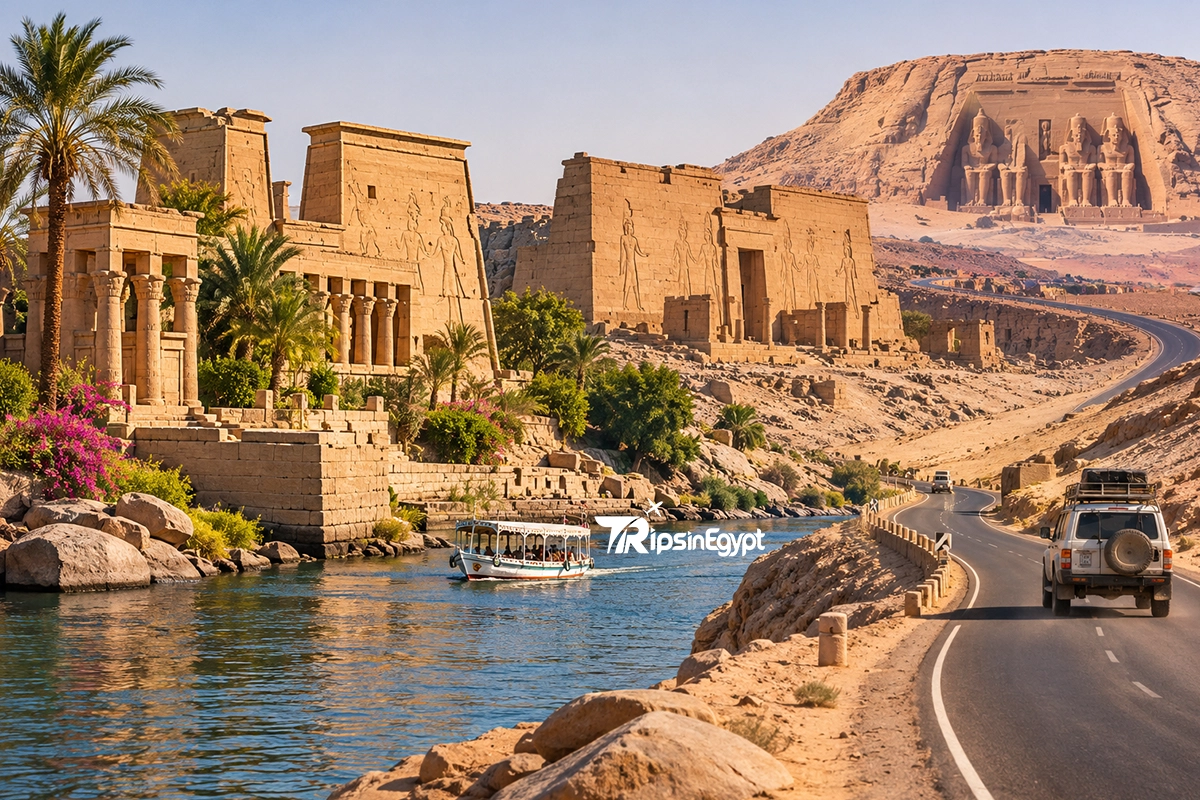
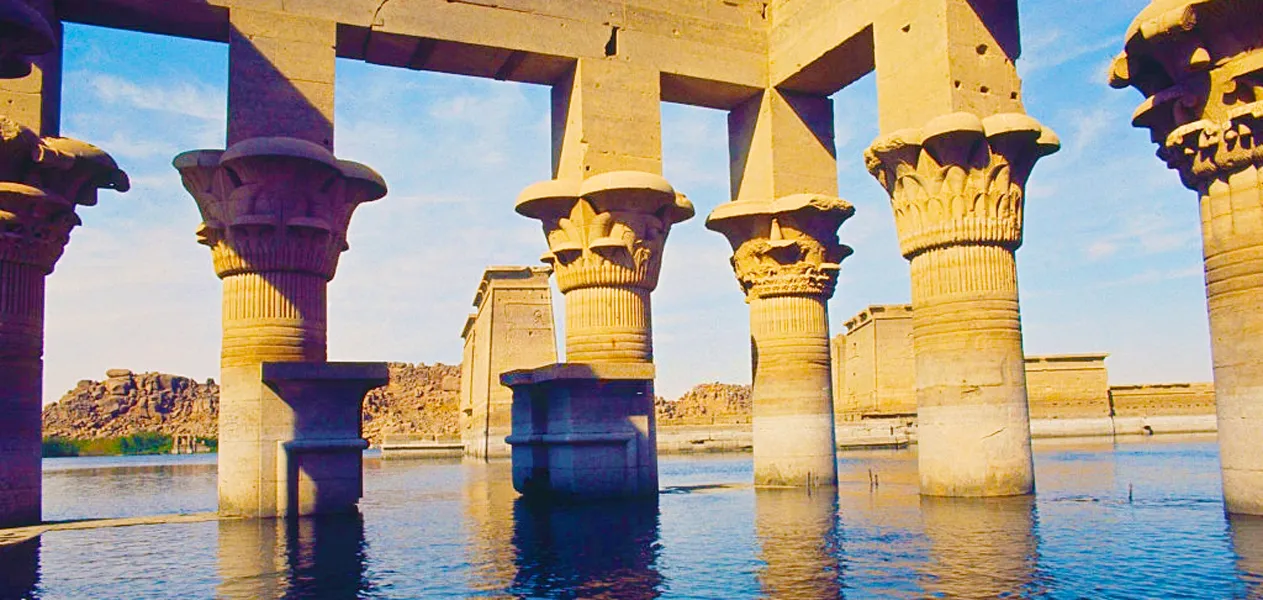
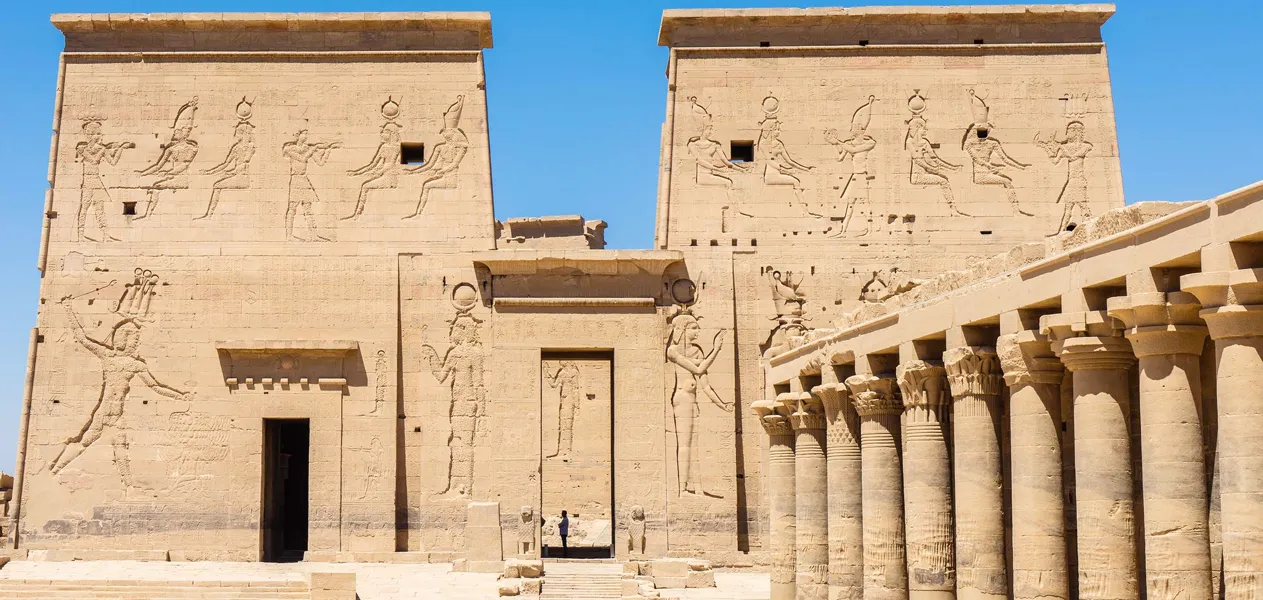
Aswan, on the old southern frontier of Egypt, ends the journey with a temple set on an island. Philae Temple, the sanctuary of Isis, is reached only by a short motorboat ride. Its colonnades, birth house and the elegant Kiosk of Trajan make it one of the most beautiful temples in Egypt. The last known hieroglyphic inscription was carved here in AD 394. Between 1977 and 1980, a UNESCO campaign moved the entire temple to Agilkia Island to save it from the rising waters, a story told in our guide to the Philae Temple relocation.
Near the High Dam, Kalabsha Temple, built in the Roman era for the Nubian god Mandulis, was also rescued and rebuilt on a new site. It is one of the quietest temples in Egypt and can be combined with the Nubian Museum on our Kalabsha Temple and Nubian Museum tour. On Elephantine Island, the ruins of the temples of Khnum and Satet sit beside an ancient Nilometer, and in the granite quarries, the Unfinished Obelisk of Aswan shows how temple stone was cut.
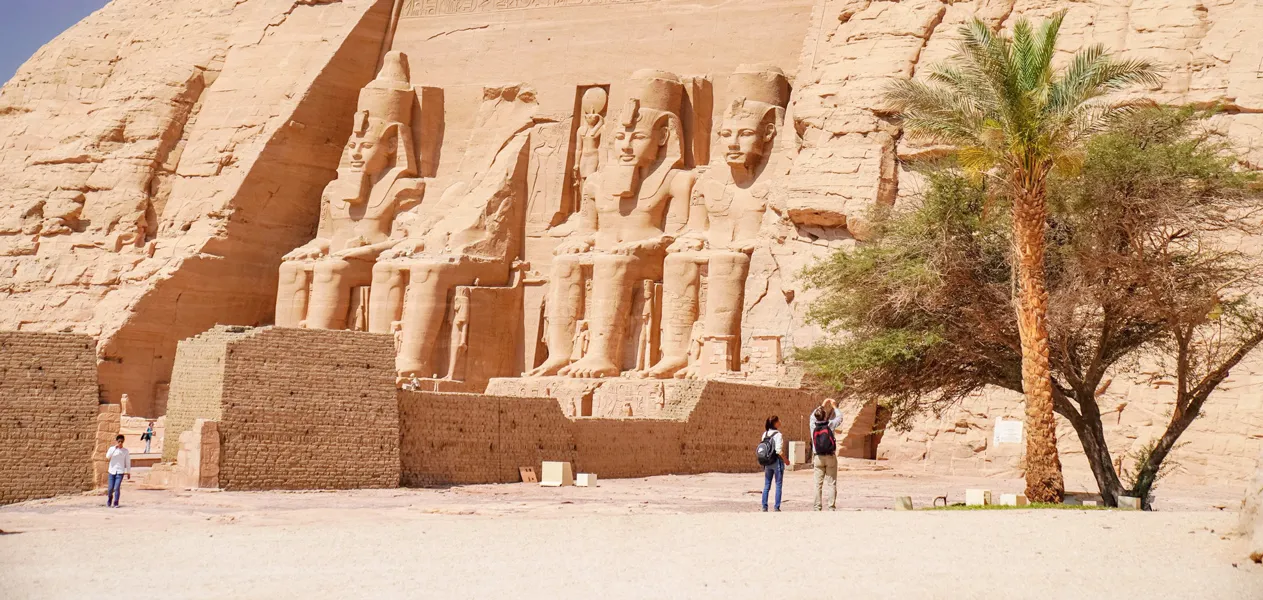
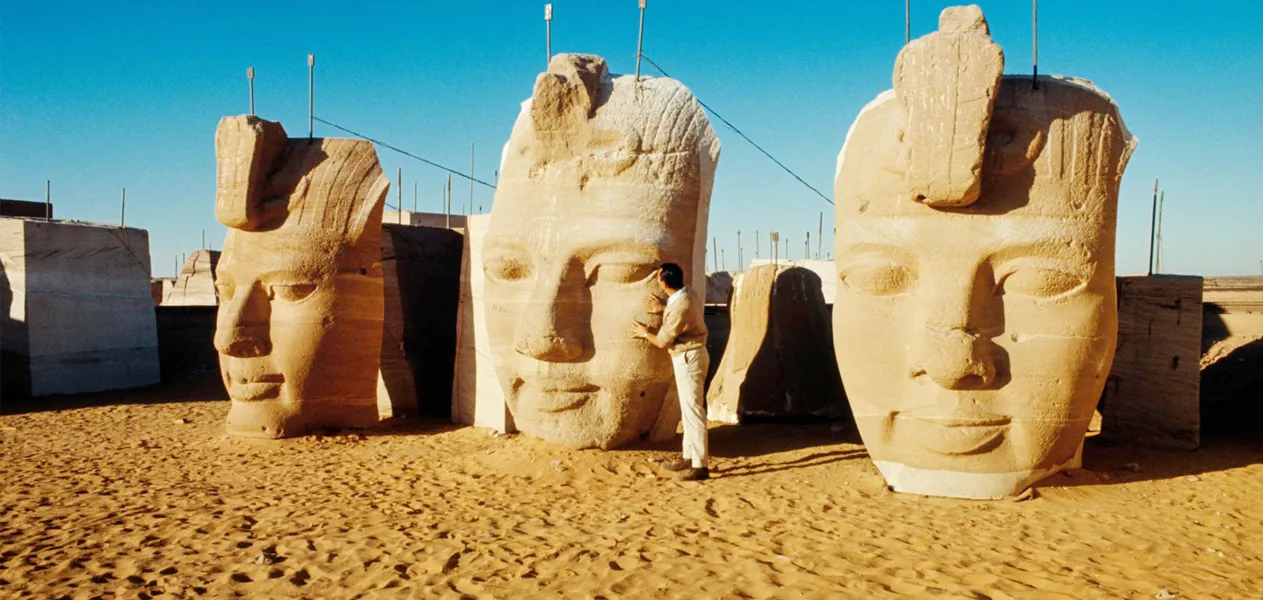
Most travelers end with a trip to the two temples of Abu Simbel, about 280 km south of Aswan on Lake Nasser. Built by Ramesses II around 1260 BC, the Great Temple has four seated statues of the king, each about 20 meters tall, and was moved to higher ground in the 1960s.
How to Visit the Temples Between Luxor and Aswan
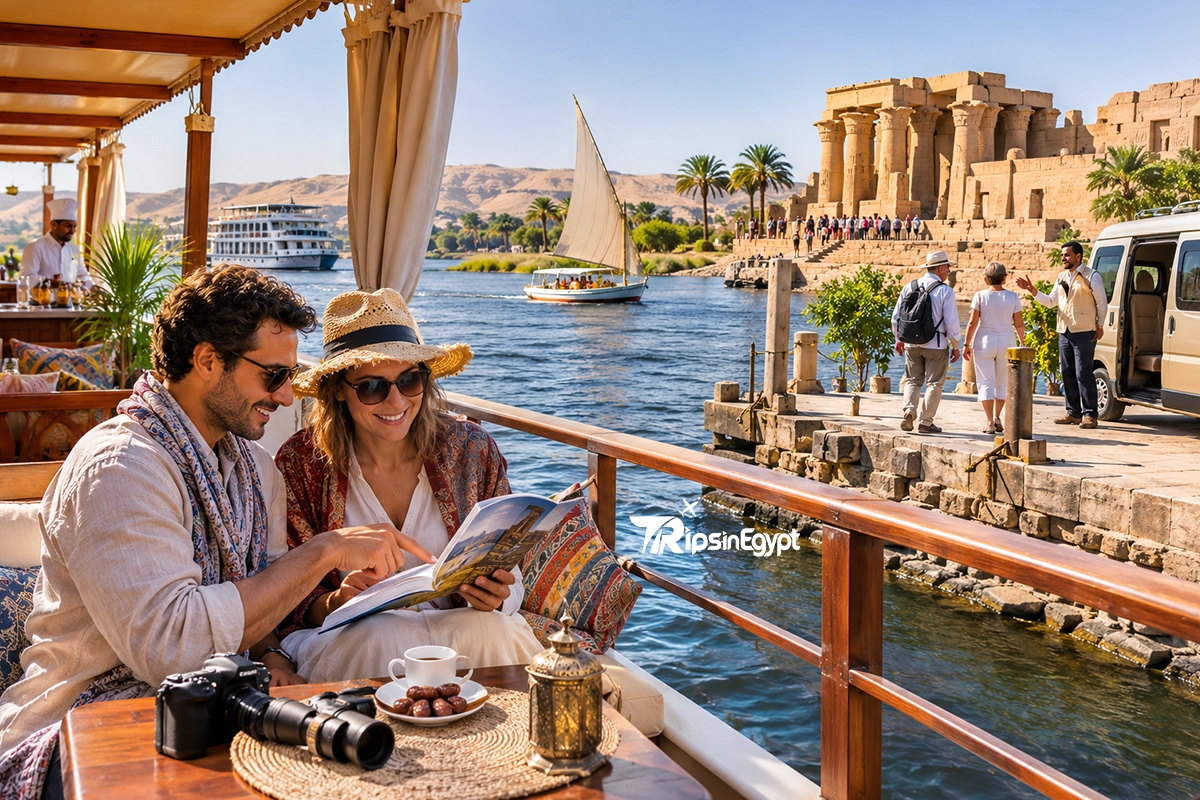
By Nile cruise. The classic way is a 3 to 4 night Nile river cruise, stopping at Edfu and Kom Ombo between Luxor and Aswan, with guided tours of Karnak, the West Bank and Philae. Our 5-day Nile cruise from Luxor to Aswan follows this route from $450.
By dahabiya. A dahabiya Nile cruise uses small sailing boats that can moor at sites large ships skip, such as Esna, El Kab and Gebel el-Silsila. It takes four to six nights and feels far more peaceful.
By road. If you are short on time, the drive from Luxor to Aswan takes about four hours without stops, and you can visit Esna, Edfu and Kom Ombo along the way in one long day.
Practical tips:
- Timing. Most temples open around 6:00 am and close around 5:00 or 6:00 pm, while Luxor Temple and Kom Ombo stay open into the evening.
- Tickets. Each temple has its own ticket, and many sites now accept card payment only, so carry a bank card. Nile cruise packages usually include entry fees for the main temples.
- Season. October to April is the most comfortable time. Our guide to the best time for a Nile river cruise explains how prices and heat change through the year.
- Gear. Wear comfortable shoes, a hat and sunscreen, and bring a small flashlight for dark sanctuaries.
Sail Among the Temples With Trips In Egypt
The Nile between Luxor and Aswan is a timeless corridor of stone and light, where every bend of the river reveals another sanctuary built for the gods. Whether you travel on a cruise ship, a dahabiya or by road, these temples will stay with you long after the journey ends. Learn more about the ancient Egyptian gods and goddesses honored along the river and book one of our Egypt travel packages, or let us design a tailor-made tour along the Nile.

5 Days Cairo And Hurghada Trip
Amazing 4 Nights Cairo and Hurghada Trip Itinerary 5 Days Cairo and Hurghada trip wil...
- Duration 5 Days / 4 Nights
- Location Cairo & Hurghada
- Type Historical & Recreational Tour
From$690/per person
View Tour
6 Days Cairo, Alexandria & Faiyum Tour
Unforgettable Cairo, Alexandria & Faiyum Adventure in Six Days 6 Days Cairo, Alex...
- Duration 6 Days / 5 Nights
- Location Cairo - Alexandria - Fayum
- Type Historical Tour
From$720/per person
View Tour
10 Days Cairo, Faiyum & Nile Cruise Holiday
Breathtaking 10 Days Journey of A Lifetime in Egypt 10 Days Cairo, Faiyum & Nile...
- Duration 10 Days / 9 Nights
- Location Cairo, Luxor, Aswan & Faiyum
- Type Classic Tour
From$1350/per person
View Tour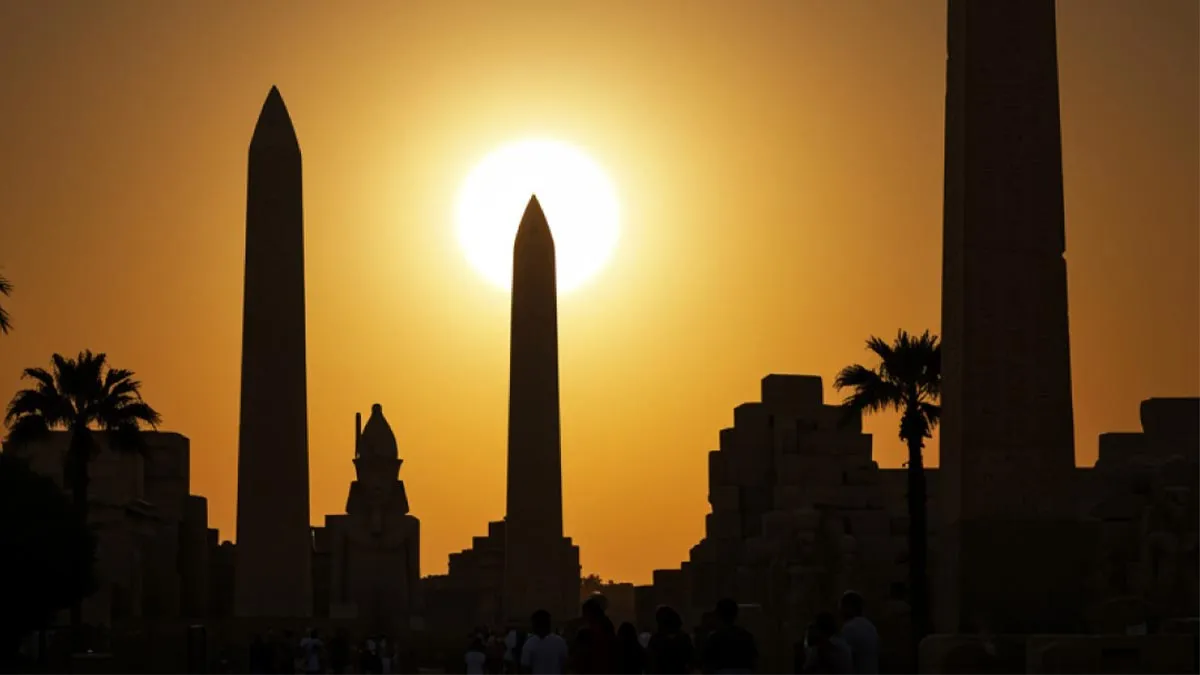 SOLD OUT
Ultimate 7-Day Egypt Solar Eclipse Experience with Hurghada 2027
Enjoy a 7-Day Egypt Solar Eclipse Tour with Hurghada 2027 6 Nights Egypt Solar Ecli...
- Duration 7 Days / 6 Nights
- Location Cairo / Giza / Luxor / Hurghada
- Type Astronomical Tour
Sold Out
View Details