



Karnak Temple is the largest temple complex of ancient Egypt, a city of sanctuaries that pharaohs expanded for some 2,000 years. Its forest of stone columns, soaring obelisks and avenues of sphinxes still rise on the east bank of Luxor. The Egyptians called it Ipet-isut, “the most select of places”. In this guide, you will find the key facts, who built Karnak and when, and how to plan your visit.

What Is Karnak Temple?
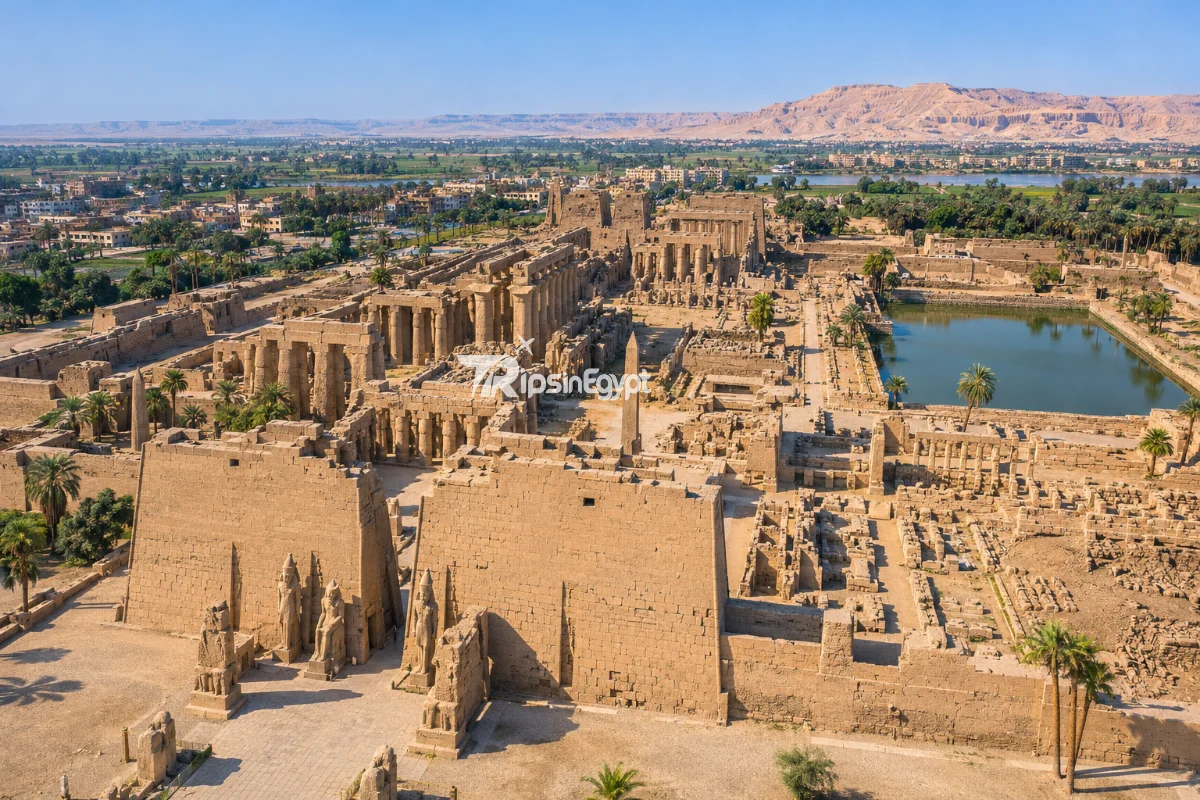
Karnak was the most important religious center of ancient Egypt, a huge complex of temples, chapels, pylons and obelisks built for the gods of Thebes. It stands on the east bank of the Nile in Luxor, about 2.5 km north of the town center, at the village of El-Karnak, which gave the site its modern name. The ancient name, Ipet-isut, means “the most select of places”. It was the home of the Theban Triad: Amun-Re, king of the gods, his consort Mut, and their son Khonsu, the moon god. Montu, the old war god of Thebes, also had his own precinct here.
Karnak is famous for three reasons. First is its scale, since no other ancient Egyptian temple comes close in size. Second is its long history, because almost every major pharaoh from the Middle Kingdom of Egypt to the Ptolemies added a gate, a hall or an obelisk, so the walls read like a history book in stone. Third is its role in Egypt’s greatest festivals, which made it a place of pilgrimage for centuries. Together with Luxor Temple and the West Bank, it forms part of the UNESCO World Heritage Site of Ancient Thebes with its Necropolis, listed in 1979, and it is believed to be Egypt’s second most-visited historic site after Giza.
Interesting Facts about Karnak Temple
Karnak is so large that facts are the easiest way to grasp it. The fifteen below cover its size, builders, gods and treasures. Each one is drawn from the Ministry of Tourism and Antiquities, excavation reports and well-established Egyptological sources, with uncertain figures marked as approximate. If you want to explore the main Amun precinct in more depth, our guide to the Temple of Amun covers its pylons, courts and sanctuary one by one, while the list here gives you the whole complex at a glance before your visit.
-
It is the largest ancient temple complex in Egypt. The Amun precinct alone covers about 25 hectares (61 acres), and the whole site is often described as about 200 acres.
-
It took about 2,000 years to build. Work began under Senusret I, about 1971–1926 BC, and continued until the Ptolemaic period.
-
About thirty pharaohs added to it. They include Hatshepsut, Thutmose III, Amenhotep III, Seti I, Ramses II and Ramesses III.
-
Its ancient name was Ipet-isut. It means “the most select of places”, a sign of how sacred the Egyptians held it.
-
It has four main precincts. These are Amun-Re, Mut, Montu, and the ruined temple of Amenhotep IV to the east.
-
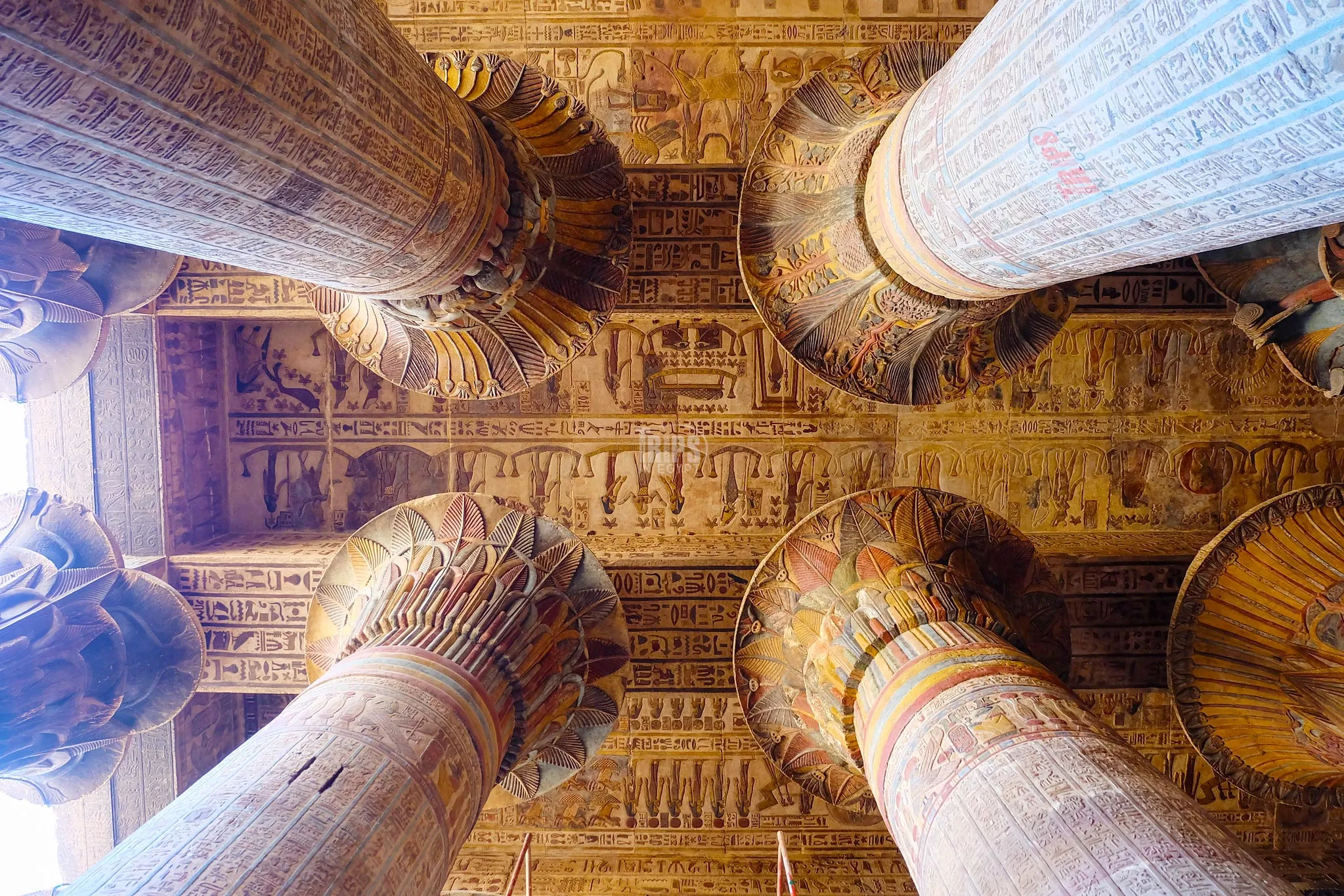
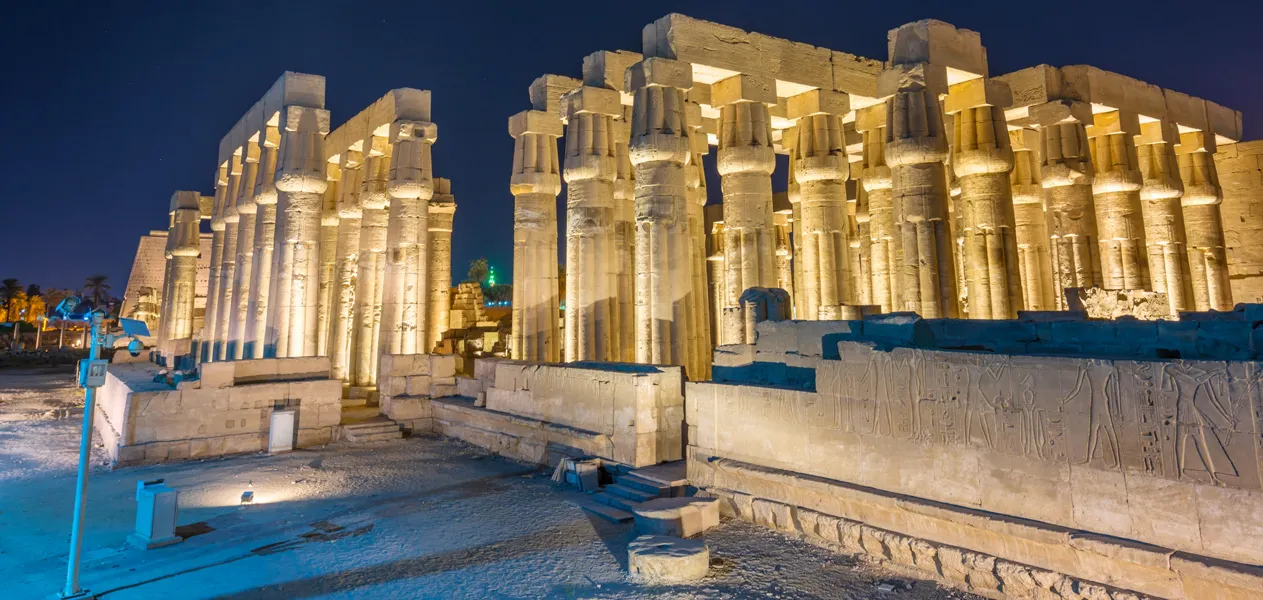
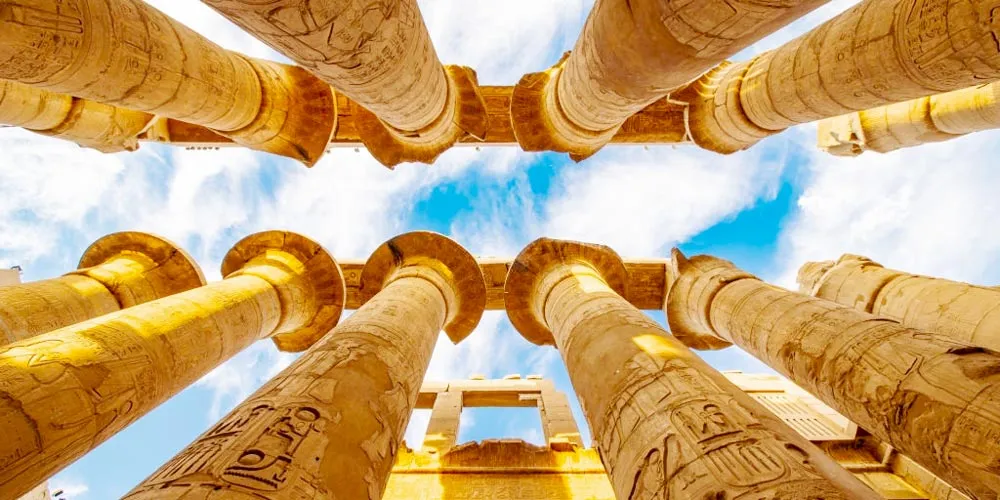
The Great Hypostyle Hall has 134 columns. They stand in 16 rows over about 5,000 m², and the 12 central columns reach about 21 m.
-
Hatshepsut’s obelisk is the tallest still standing in Egypt. Raised by Queen Hatshepsut, it rises about 29.6 m and weighs over 300 tonnes.
-
Karnak’s tallest obelisk now stands in Rome. The Lateran Obelisk, about 32 m high, was taken from Karnak in the 4th century AD.
-
It has ten pylons. The first pylon, the largest, is about 113 m wide and 43 m high, and was never finished.
-
It has a sacred lake. Priests purified themselves in its water before rituals, and sacred geese lived beside it.
-
A giant stone scarab stands by the lake. It was dedicated by Amenhotep III to the sun god as Khepri.
-
A hidden cache held thousands of statues. In 1903–1904, Georges Legrain found more than 700 stone statues and some 17,000 bronzes buried in the Cachette Court.
-
The Mut precinct held hundreds of lion goddesses. Amenhotep III set up hundreds of granite statues of Sekhmet there.
-
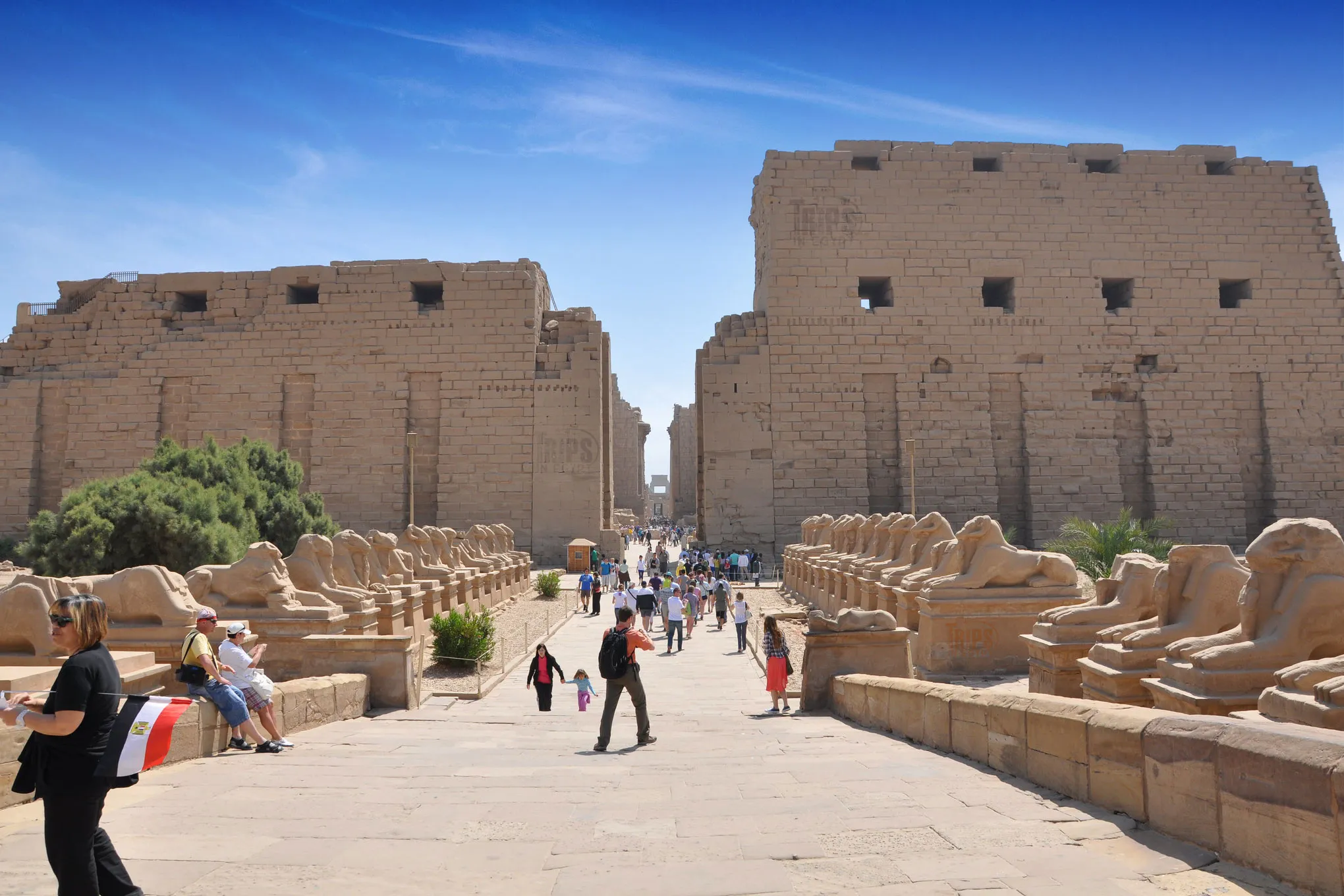
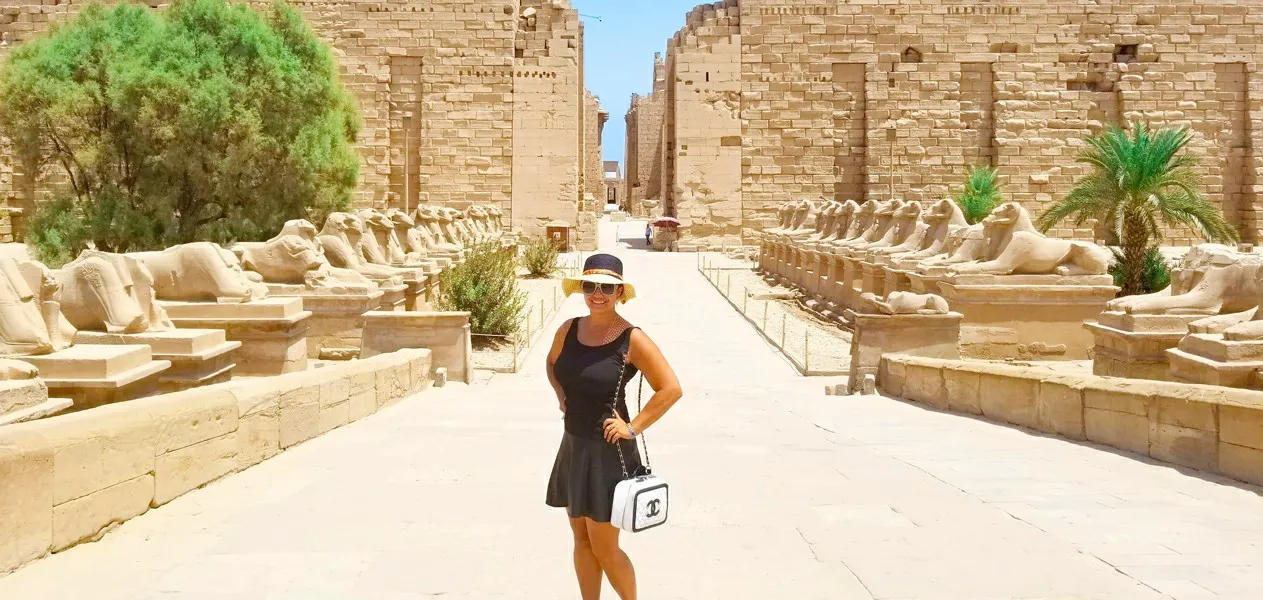
An avenue of sphinxes links it to Luxor Temple. The 2.7 km processional road reopened to visitors in 2021.
-
It held a copy of the world’s oldest known peace treaty. The Egyptian-Hittite treaty of Ramses II is carved on a wall near the Hypostyle Hall.
The History of Karnak Temple: When It Was Built and by Whom
Karnak’s story is tied to the rise of Thebes. The city grew powerful in the Eleventh Dynasty, when Mentuhotep II reunited Egypt and made it his capital, and an eight-sided sandstone column of King Intef II suggests a small shrine of Amun stood here even earlier. The first large temple was built by Senusret I of the Middle Kingdom, around 1971–1926 BC. His fine limestone White Chapel, later dismantled and found inside a pylon, was rebuilt in the Open Air Museum. So the short answer to “when was Karnak built” is: from about 1970 BC onward, over many centuries.
The great expansion came in the New Kingdom of Egypt, when Thebes was the capital of an empire and Amun its supreme god. Thutmose I added the fourth and fifth pylons, Thutmose III built his Festival Hall, the Akh-menu, and recorded his campaigns on the walls, and Amenhotep III raised the third pylon and expanded the Mut precinct. Seti I and his son Ramses II completed the Great Hypostyle Hall, the most famous room at Karnak. Later, Merneptah carved his victory over the Libyans and their Sea Peoples allies on a wall beside the Cachette Court.
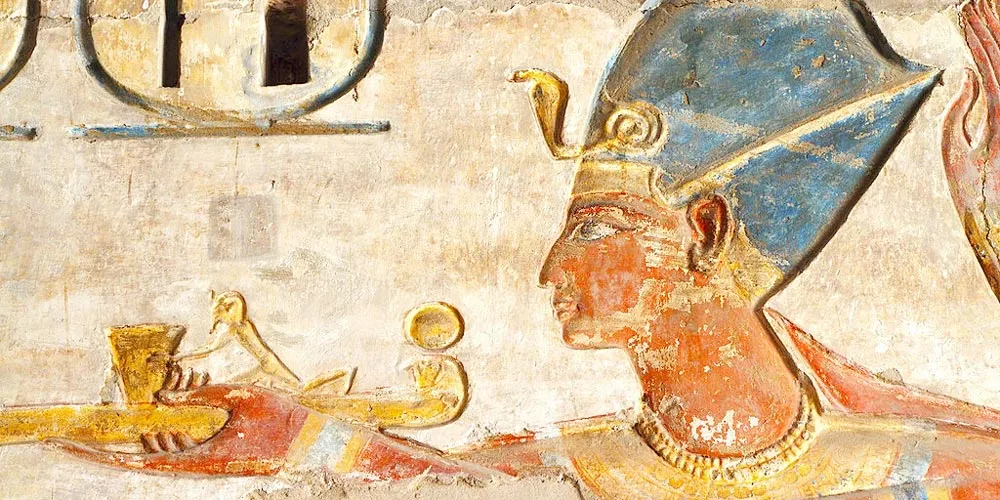
Queen Hatshepsut left some of Karnak’s finest monuments. She raised pairs of granite obelisks, built the eighth pylon and the Red Chapel, a quartzite shrine for Amun’s sacred boat. One of her obelisks still stands between the fourth and fifth pylons, while its twin fell and broke. A third giant obelisk may have been planned for her too, and it is often linked with the Unfinished Obelisk, which cracked in the quarry at Aswan and still lies there. Her successor, Thutmose III, later walled in her standing obelisks, which, by chance, protected them from weathering.
Building continued long after the New Kingdom. Ramesses III, who defeated the Sea Peoples at the Battle of Djahy, built a temple in the Great Court and the temple of Khonsu. The Kushite king Taharqa added a tall kiosk, and Nectanebo I of the Thirtieth Dynasty built the massive first pylon and the mudbrick enclosure walls. The Ptolemies added gates and chapels in Egyptian style. Worship slowly faded under Roman rule, and in 356 AD the Roman emperor Constantius II ordered pagan temples closed. Sand and silt then covered much of Karnak until European travelers and, later, Egyptian and foreign archaeologists brought it back to light.
The Opet Festival in Karnak Temple
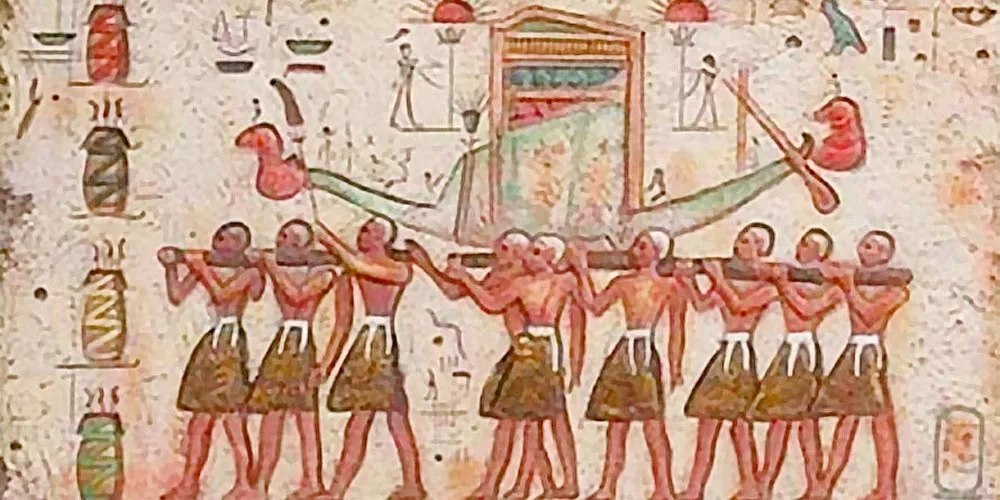
The Opet Festival was the greatest celebration of the Theban year. It took place during the flood season, when the Nile covered the fields, and it renewed the bond between the king and Amun. Priests dressed the god’s statue in fine linen and jewelry, placed it in a shrine on a gilded sacred boat, and carried it on their shoulders out of Karnak. Statues of Mut and Khonsu followed in their own boats. The procession traveled to Luxor Temple, either along the Avenue of Sphinxes or by river on great barges, while crowds lined the route.
The festival grew over time, from about 11 days under Thutmose III to 27 days under Ramesses III. Records from the reign of Ramesses III list some 11,000 loaves of bread and 385 jars of beer for the festival, so the celebration was also a great feast for the people of Thebes. Ordinary Egyptians, who could not enter the inner temples, got a rare chance to see the god’s shrine pass by and to ask oracle questions, which priests answered through the movement of the sacred boat. At Luxor Temple, the king’s divine power was renewed before the gods returned to Karnak.
Discover the Best Sites Inside Karnak Temple
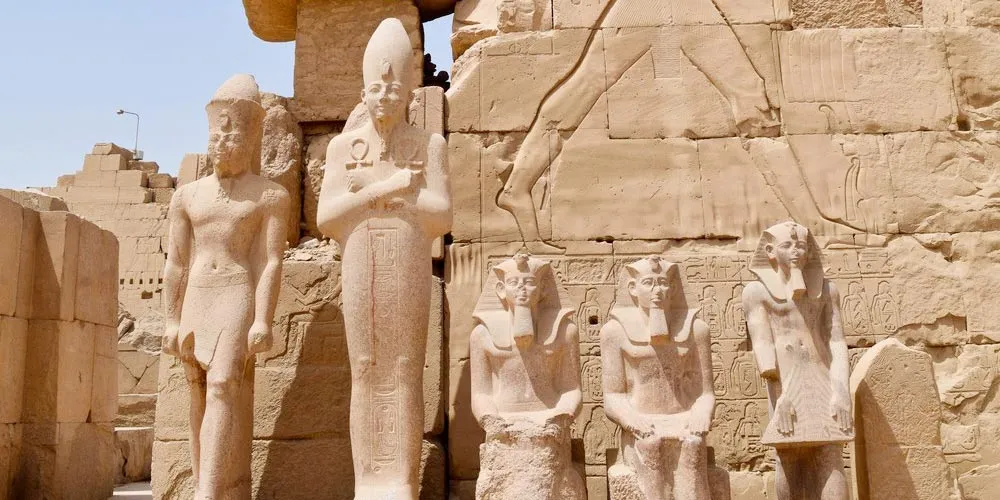
Karnak is divided into four precincts, each surrounded by its own mudbrick wall. Most visitors spend their time in the Precinct of Amun-Re, the only one fully open on the standard ticket, but the others add depth to the story and are worth knowing before you go. The descriptions below follow the site from the main temple outward, so you can match them to what you see on the ground. If you plan to visit Mut, buy its separate ticket at the main entrance.
Precinct of Amun-Re
The largest precinct, dedicated to Amun-Re, holds most of Karnak’s famous monuments: the first pylon, the Great Court with Taharqa’s column, the temple of Ramesses III and the Great Hypostyle Hall. Beyond the hall stand the obelisks of Thutmose I and Hatshepsut, the granite sanctuary of the sacred boat, the Middle Kingdom court and the Akh-menu of Thutmose III. To the south lie the Sacred Lake, the giant scarab and the Cachette Court, while the Open Air Museum near the entrance displays reconstructed chapels such as the White Chapel of Senusret I and the Red Chapel of Hatshepsut.
Precinct of Mut
A few hundred metres south of the Amun precinct, linked to it by an avenue of ram-headed sphinxes, is the Precinct of Mut, the mother goddess of Thebes. Its temple is surrounded on three sides by a crescent-shaped sacred lake, called the Isheru. Amenhotep III filled its courts with hundreds of black granite statues of Sekhmet, the lion-headed goddess linked with Mut. After many years of excavation by an American mission, the precinct is open to visitors with a separate ticket. It is quiet, green and much less crowded than the main temple, which makes it a lovely place to end a visit.
Precinct of Montu
North of the Amun precinct lies the smaller Precinct of Montu, dedicated to the falcon-headed war god who was Thebes’ main god before Amun rose to power. Amenhotep III built its main temple, and later rulers, including the Kushite kings of the Twenty-fifth Dynasty, added a colonnaded court. In the Late Period the precinct received new walls, and the Ptolemies added its tall northern gateway. The area is mostly ruined and normally closed to the public, but you can see its gate and walls from the northern edge of the Amun precinct. It reminds visitors that Thebes had its own gods long before Amun became king of the gods.
Temple of Amenhotep IV
East of the Amun precinct, outside its walls, Amenhotep IV built a temple to the sun disc, the Aten, early in his reign, before he changed his name to Akhenaten and moved his capital to Amarna. The temple, known as Gempaaten, “the Aten is found”, was famous for its colossal statues of the king in the unusual Amarna style. After his death, it was dismantled and thousands of its small sandstone blocks, called talatat, were reused inside later pylons. Little remains on the ground today, but several of the colossal statues are displayed in Egyptian museums.
Karnak Temple Map: How the Complex Is Laid Out
Karnak’s plan makes sense once you know it follows two main axes. The east-west axis starts at the quay and the avenue of ram-headed sphinxes by the main entrance, then runs through the first pylon, the Great Court, the second pylon, the Hypostyle Hall, the obelisks and the sanctuary to the Akh-menu at the back. The north-south axis branches off from the Hypostyle Hall area and runs through the Cachette Court and the seventh to tenth pylons toward the Precinct of Mut and the Avenue of Sphinxes to Luxor Temple. The temple of Khonsu sits in the southwest corner of the Amun precinct.
Most visitors walk the east-west axis first, which takes about an hour with a guide, then turn south past the Sacred Lake and the scarab. A useful tip is to photograph the site plan at the entrance or pick up a simple printed map, as signs inside are limited. Allow two to three hours for the Amun precinct and the Open Air Museum, and add 45 minutes if you visit Mut. Many guides explain the ancient Egyptian gods and goddesses on the walls as you go, which turns the layout into a clear story of who was worshipped where.
Karnak Temple Photos: The Best Shots
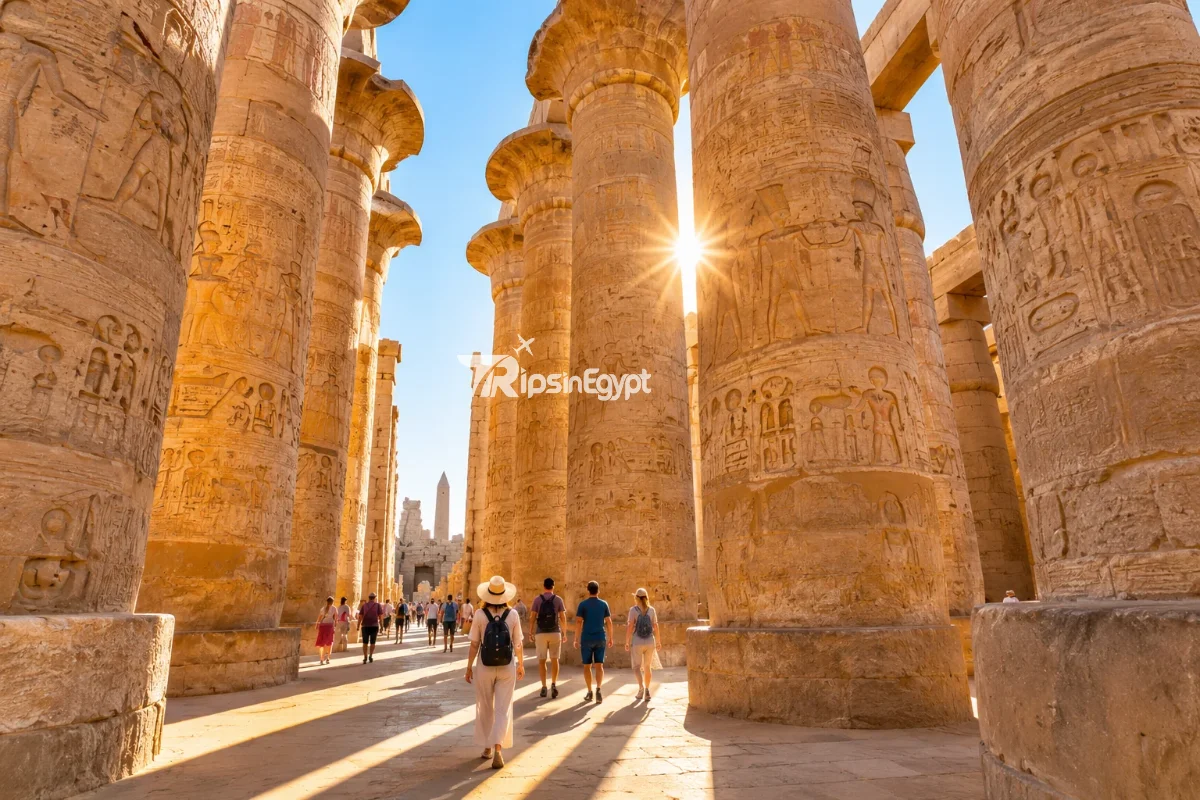
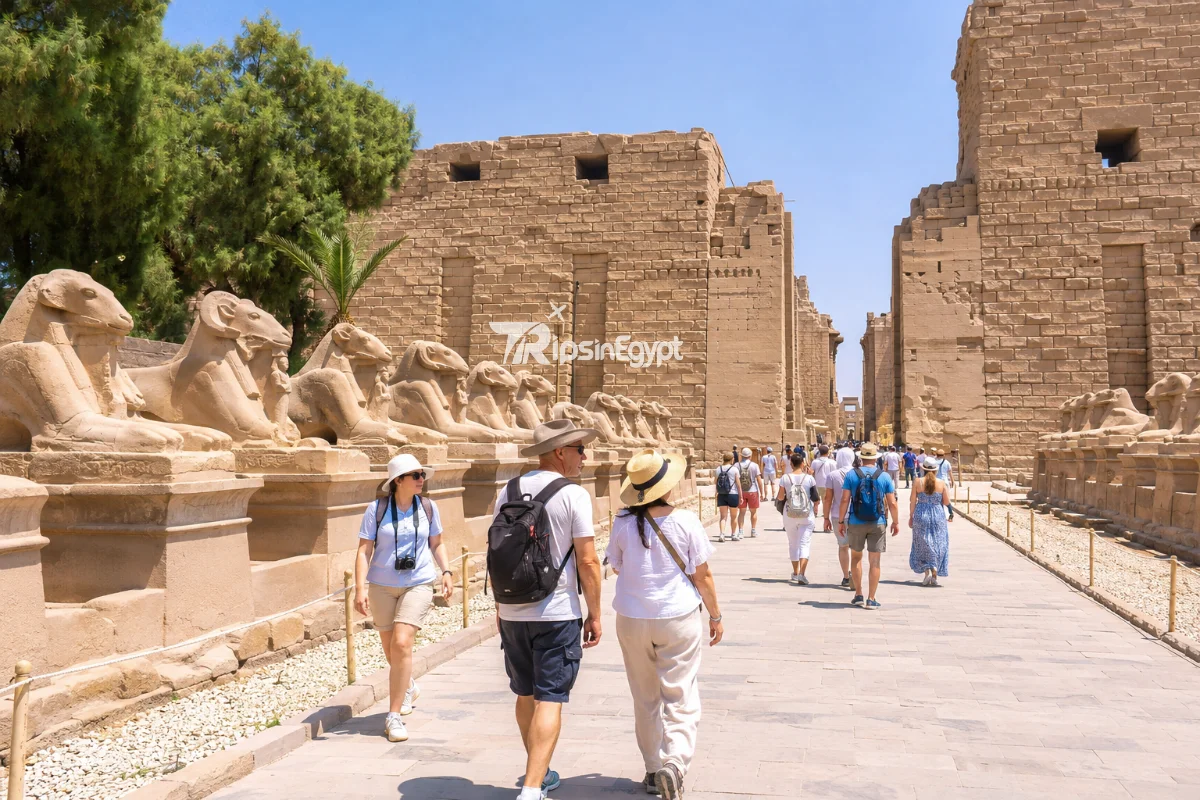
Karnak is one of the most photogenic places in Egypt. The classic image is the Great Hypostyle Hall, where shafts of sunlight fall between the giant columns, best in the first two hours after opening. Other favorite shots are the avenue of ram-headed sphinxes at the entrance, Hatshepsut’s obelisk framed by a doorway, the colored reliefs on the column tops, the Sacred Lake with the pylons reflected in it, and the giant scarab. For a view across the whole complex, look back toward the first pylon from the far end of the Great Court, where the scale of the site really shows.
Personal photography with phones and cameras is allowed across the site, while tripods and professional equipment may need a permit. Mornings bring softer light and fewer people, and the late afternoon turns the sandstone gold before closing time. The evening sound and light show gives a completely different look, with lit columns and the lake at night, and it is one of the best things to do in Luxor at night. Be respectful of other visitors and do not climb on walls or statues for a picture. Your guide will know quiet corners where you can capture Karnak almost to yourself.
Visiting Karnak Temple: Tickets, Hours and Dress Code
According to the Ministry of Tourism and Antiquities, the Karnak ticket costs 600 EGP for foreign adults and 300 EGP for students, and it includes the Open Air Museum. The Precinct of Mut needs a separate ticket of 200 EGP for adults and 100 EGP for students. The site is open daily from 6:00 AM to 5:00 PM. The sound and light show runs in the evening, in several languages on a rotating schedule, with its own ticket. Prices can change, so check at the gate or with your guide before you go. On a longer 12-day Egypt itinerary, Luxor days usually include Karnak in the ticket bundle.
There is no official dress code for Karnak, since it is an archaeological site, not a place of worship today. Light, breathable clothes that cover the shoulders are comfortable and respectful, and good walking shoes are a must on the uneven stone floors. Bring a hat, sunglasses, sunscreen and water, as there is little shade in the courts. The cooler months from October to April are the most pleasant, and our guide to the best time to visit Luxor explains the seasons. Karnak is calm, well-organized and comfortable for international visitors, with toilets, a café and a visitor center at the entrance.
Explore the Majestic Visions of Egypt
Karnak is the heart of any Luxor trip, and the best way to understand it is with a licensed Egyptologist guide who can read the walls with you. Our Luxor day tours combine it with Luxor Temple and the West Bank, while our Egypt tours and Nile cruises include it on longer journeys from Cairo or the Red Sea. Choose the trip that fits your time below.
Day Trip to Luxor East Bank: A relaxed day on Luxor’s East Bank with Luxor Temple and Karnak Temple, plus lunch at a local restaurant and hotel transfers. It is ideal if you want time to explore Karnak’s halls and precincts without rushing. From $120.
Full Day Tour to Luxor East & West Bank: The Valley of the Kings, Hatshepsut’s temple and the Colossi of Memnon in the morning, then Karnak and Luxor Temple in the afternoon. It is the best value way to see Luxor’s highlights in one day. From $115.
Karnak Temple Sound & Light Show Tour: An evening tour with hotel or cruise pickup to Karnak’s sound and light show, where the lit pylons, columns and Sacred Lake tell the temple’s story. It is a perfect second visit after seeing Karnak by day. From $55.
Private Luxor Day Trip from Hurghada: A full day from the Red Sea to the Valley of the Kings, Hatshepsut’s temple, the Colossi of Memnon and Karnak Temple, with a private car and guide. It is the easiest way to add Luxor to a beach holiday. From $120.
5 Days Nile Cruise Itinerary from Luxor: A classic cruise from Luxor to Aswan that starts with Karnak Temple, then visits the West Bank, Edfu, Kom Ombo and Aswan. It is a comfortable way to see Upper Egypt’s temples while the Nile does the travelling. From $460.
10 Days Cairo, Faiyum & Nile Cruise Holiday: Ten days that start with Cairo’s pyramids, add the Faiyum oasis and end on a Nile cruise between Luxor and Aswan with a visit to Karnak. It suits travelers who want Egypt’s highlights in one trip. From $1,350.
Karnak is a temple that never stopped growing, and it never stops amazing. For 2,000 years, pharaohs added halls, obelisks and gates to honor Amun, leaving a stone history that still overwhelms every visitor. Walk through the Hypostyle Hall at sunrise, stand beside Hatshepsut’s obelisk and follow the sphinxes toward Luxor Temple. Then sail on and continue south to Edfu, Kom Ombo and Aswan on one of our Nile cruise packages.

5 Days Cairo And Hurghada Trip
Amazing 4 Nights Cairo and Hurghada Trip Itinerary 5 Days Cairo and Hurghada trip wil...
- Duration 5 Days / 4 Nights
- Location Cairo & Hurghada
- Type Historical & Recreational Tour
From$690/per person
View Tour
6 Days Cairo, Alexandria & Faiyum Tour
Unforgettable Cairo, Alexandria & Faiyum Adventure in Six Days 6 Days Cairo, Alex...
- Duration 6 Days / 5 Nights
- Location Cairo - Alexandria - Fayum
- Type Historical Tour
From$720/per person
View Tour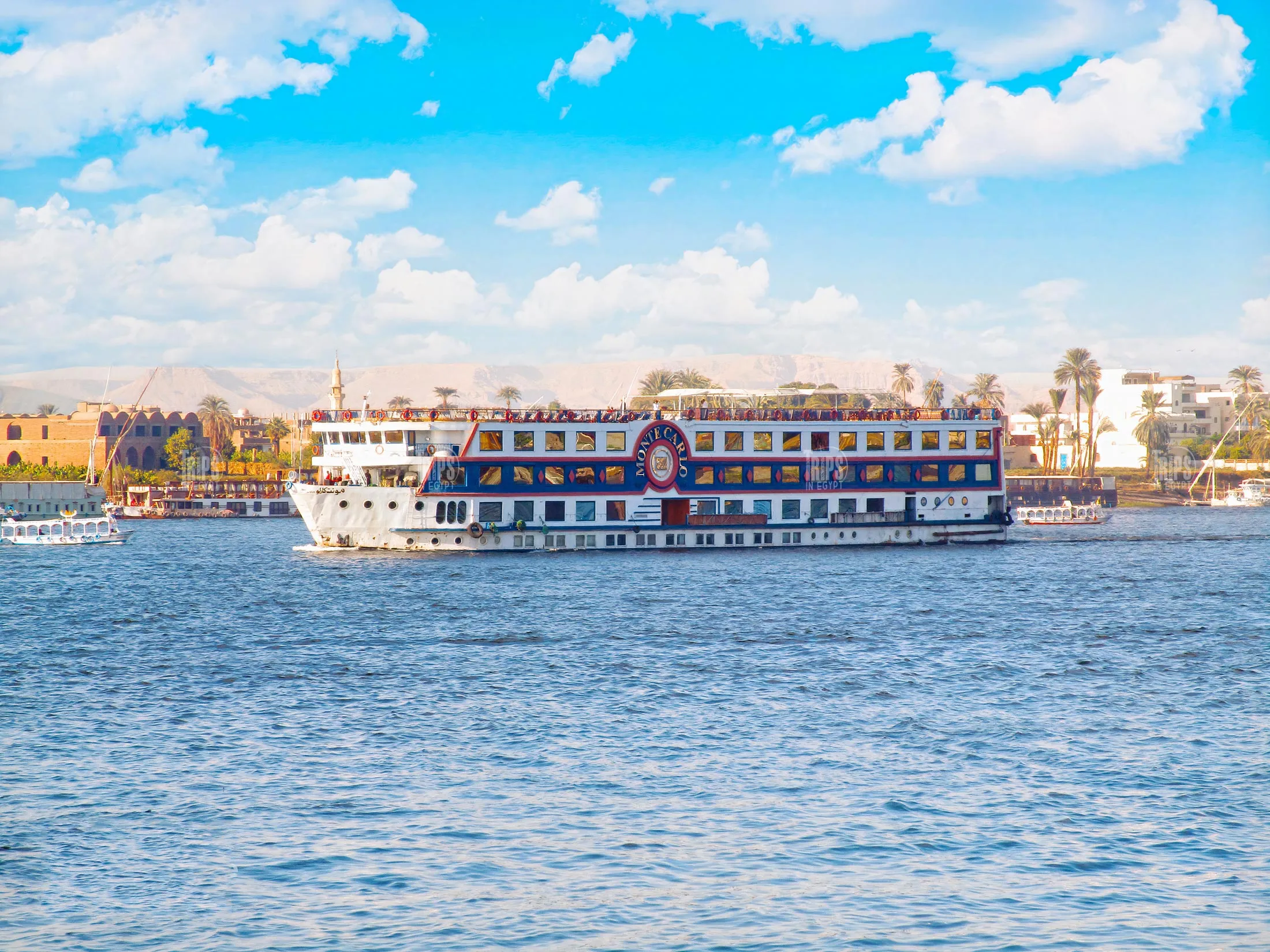
10 Days Cairo, Faiyum & Nile Cruise Holiday
Breathtaking 10 Days Journey of A Lifetime in Egypt 10 Days Cairo, Faiyum & Nile...
- Duration 10 Days / 9 Nights
- Location Cairo, Luxor, Aswan & Faiyum
- Type Classic Tour
From$1350/per person
View Tour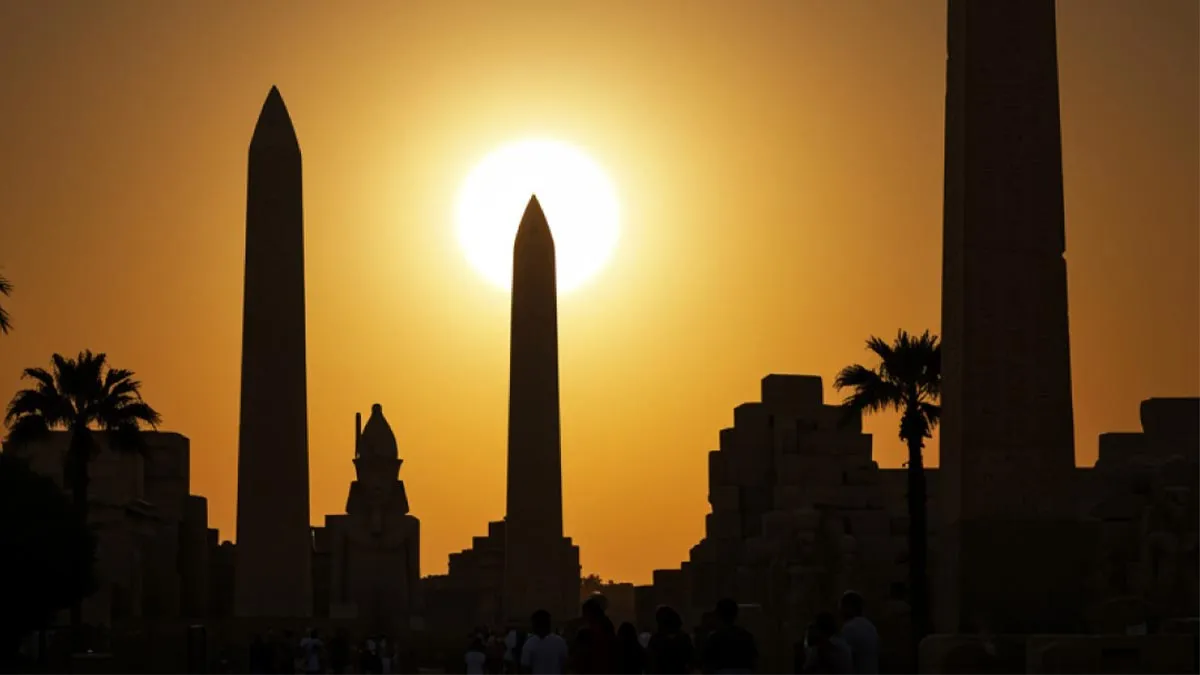 SOLD OUT
Ultimate 7-Day Egypt Solar Eclipse Experience with Hurghada 2027
Enjoy a 7-Day Egypt Solar Eclipse Tour with Hurghada 2027 6 Nights Egypt Solar Ecli...
- Duration 7 Days / 6 Nights
- Location Cairo / Giza / Luxor / Hurghada
- Type Astronomical Tour
Sold Out
View Details