



Daughter of a king, wife of a king and finally a king herself, Queen Hatshepsut rewrote the rules of power in ancient Egypt. For about 20 years she ruled one of the richest kingdoms, sent ships to distant Punt and built a temple that still glows beneath the Theban cliffs. This guide covers her family tree, key facts, achievements, death, mummy, tomb and why later kings tried to erase her.

Who Is Queen Hatshepsut?
Hatshepsut was the fifth ruler of the 18th Dynasty of the New Kingdom of Egypt. She ruled from about 1479 to 1458 BC, first as regent for her young stepson Thutmose III and then, from around 1473 BC, as a full pharaoh with all the titles of a king.
Her name means "Foremost of Noble Women," and it is pronounced hat-SHEP-soot. As king she also took the throne name Maatkare, "Truth is the soul of Ra." Many Egyptologists regard her as one of the most successful rulers of ancient Egypt, male or female.
Queen Hatshepsut at a Glance
|
Fact |
Details |
|
Name meaning |
"Foremost of Noble Women" |
|
Throne name |
Maatkare |
|
Born |
Around 1507 BC (uncertain) |
|
Reign |
About 1479 to 1458 BC |
|
Dynasty |
18th Dynasty, New Kingdom |
|
Father |
Thutmose I |
|
Mother |
Queen Ahmose |
|
Husband |
Thutmose II, her half-brother |
|
Daughter |
Neferure |
|
Stepson and successor |
Thutmose III |
|
Temple |
Djeser-Djeseru, Deir el-Bahari |
|
Tomb |
KV20, Valley of the Kings |
|
Mummy |
Identified in 2007 from tomb KV60 |
Queen Hatshepsut Family Tree
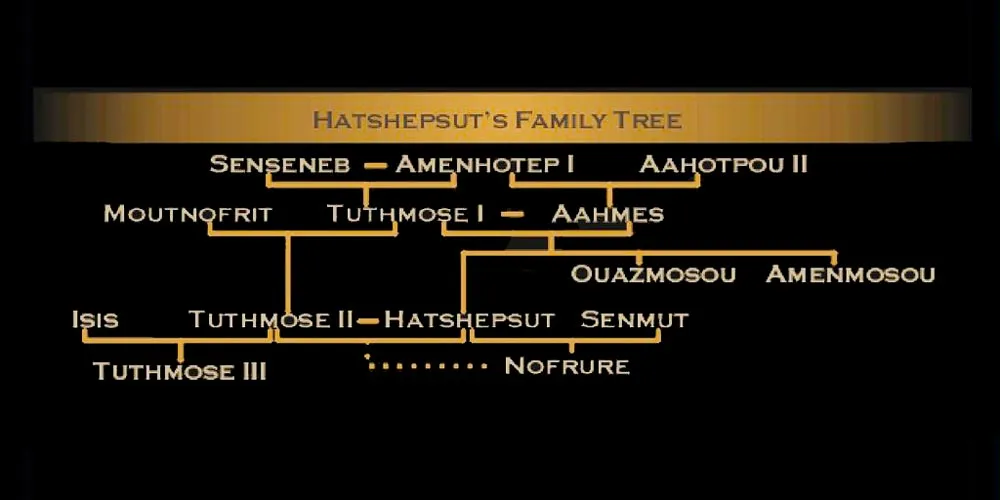
Hatshepsut was born into the royal family of the early 18th Dynasty, a line that had only recently driven the Hyksos out of Egypt. Her family tree explains both her right to rule and the rivalry that followed her death.
|
Generation |
Family Member |
Relationship to Hatshepsut |
|
Parents |
Thutmose I |
Father, third king of the 18th Dynasty |
|
Parents |
Queen Ahmose |
Mother, Great Royal Wife of Thutmose I |
|
Parents' generation |
Mutnofret |
Secondary wife of Thutmose I, mother of Thutmose II |
|
Siblings |
Neferubity |
Full sister, who died young |
|
Siblings |
Amenmose and Wadjmose |
Brothers or half-brothers, who died before their father |
|
Spouse |
Thutmose II |
Half-brother and husband, fourth king of the dynasty |
|
Children |
Neferure |
Daughter, God's Wife of Amun |
|
Stepchildren |
Thutmose III |
Stepson and nephew, son of Thutmose II and Iset |
|
Next generation |
Amenhotep II |
Son of Thutmose III and heir to the next generation |
Her Parents: Thutmose I and Queen Ahmose
Hatshepsut was the daughter of Thutmose I and his principal wife, Queen Ahmose. Thutmose I was a powerful warrior king who pushed Egypt's borders deep into Nubia and as far as the Euphrates. In her temple, Hatshepsut later claimed that her father had chosen her as his heir, although this was probably political propaganda.
Her Husband: Thutmose II
To keep the royal bloodline strong, Hatshepsut married her half-brother Thutmose II, the son of Thutmose I and a secondary wife named Mutnofret. Royal marriages between half-siblings were common in this period. As his Great Royal Wife, Hatshepsut also held the powerful priestly title God's Wife of Amun.
Her Daughter Neferure and Stepson Thutmose III
Hatshepsut and Thutmose II had one known daughter, Neferure. She was raised by the royal steward Senenmut and took her mother's title of God's Wife of Amun. Her fate is unclear, and the theory that she married Thutmose III cannot be proven.
Thutmose II had a son, Thutmose III, with a minor wife named Iset. When Thutmose II died, the boy was too young to rule, so Hatshepsut became his regent. This made Thutmose III her stepson and nephew at the same time.
Queen Hatshepsut Reign
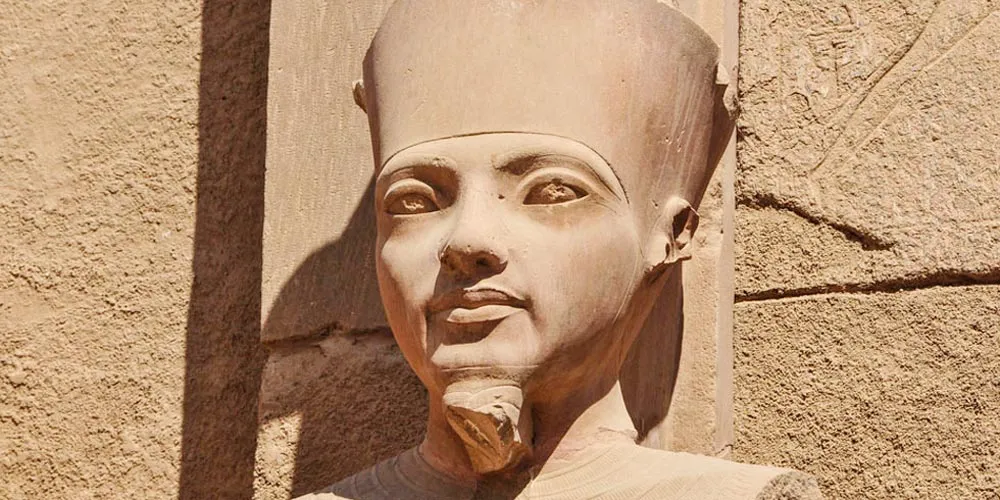
Hatshepsut ruled during the early New Kingdom, which began around 1550 BC after Ahmose I completed the expulsion of the foreign Hyksos from Egypt. It was a time of growing wealth, and the god Amun of Thebes was rising to become the most important god in Egypt.
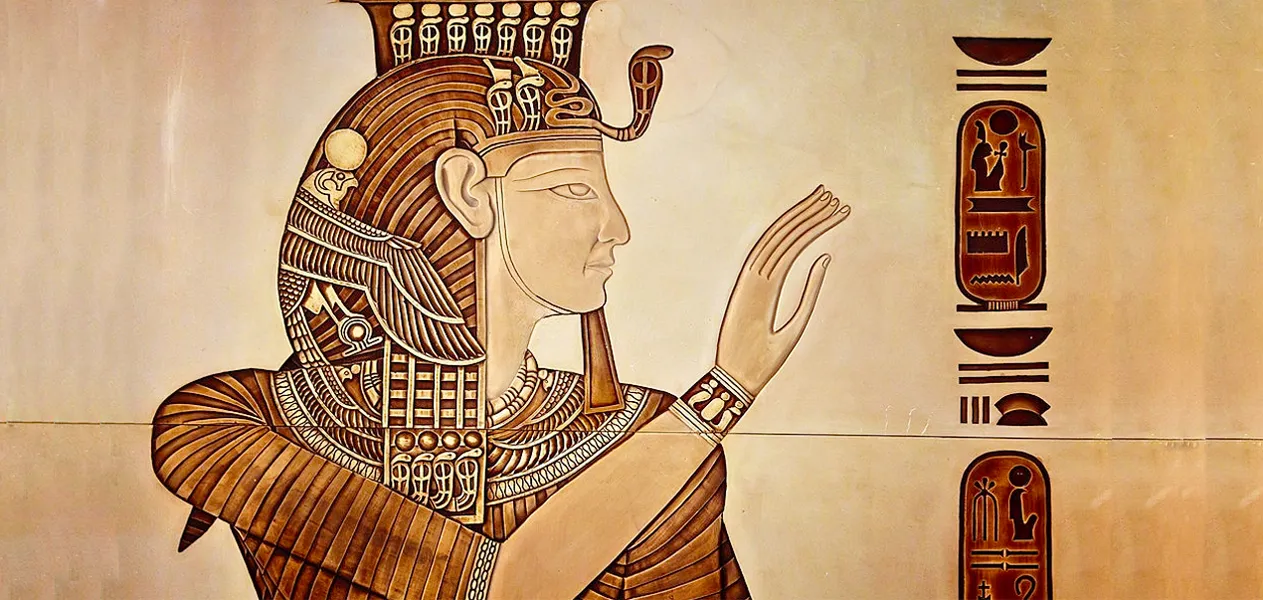
Around her seventh year as regent, Hatshepsut had herself crowned king. She did not remove Thutmose III. Instead, they ruled together, with Hatshepsut as the senior partner. In art she was increasingly shown with a king's kilt, crown and false beard.
Was Hatshepsut the First Female Pharaoh?
No. Earlier women had held power, including Sobekneferu, who ruled as king at the end of the 12th Dynasty about 300 years before her. Hatshepsut was not the first female pharaoh, but she ruled longer and more successfully than any woman before her.
Was Hatshepsut a Good Pharaoh?
By most measures, yes. Her reign was largely peaceful and prosperous, with only limited military campaigns, mainly in Nubia. She reopened trade routes, restored temples and launched one of the greatest building programs of the New Kingdom, all while keeping the country stable for about two decades.
Queen Hatshepsut Facts
-
She was born around 1507 BC, although her exact birth date is unknown.
-
Her name, Hatshepsut, means "Foremost of Noble Women."
-
She ruled for about 21 years, counting her years as regent.
-
She was often shown as a man, with a false beard and a king's kilt.
-
She claimed that the god Amun was her true father.
-
She sent a famous trade expedition to the Land of Punt.
-
Her mortuary temple at Deir el-Bahari is one of the most admired buildings of ancient Egypt.
-
One of her obelisks at Karnak still stands about 30 meters tall.
-
Her name was removed from the official king lists after her death.
-
Her mummy was only identified in 2007, more than 3,400 years after she died.
Queen Hatshepsut Achievements
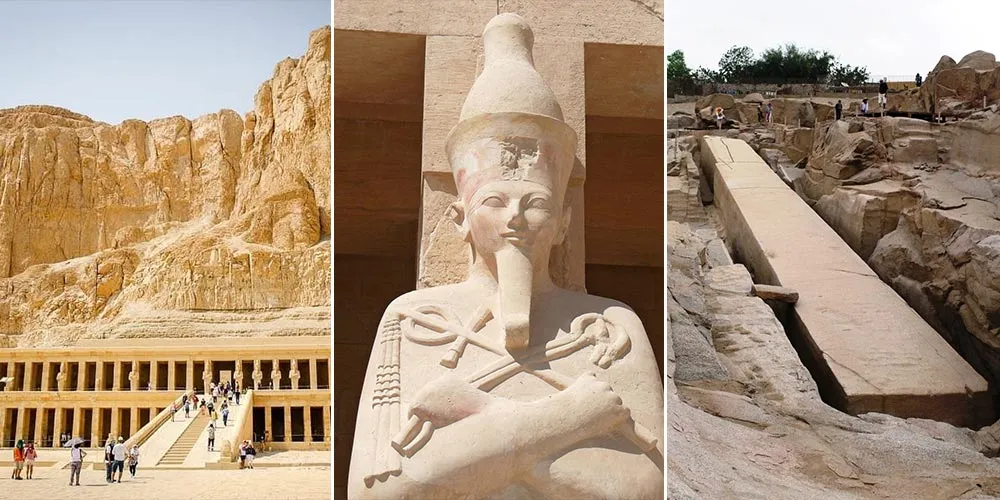
What is Queen Hatshepsut known for? Above all, for a reign of peace, trade and building that filled Egypt with some of its finest monuments.
Djeser-Djeseru, Her Temple at Deir el-Bahari
Her greatest achievement is her mortuary temple at Deir el-Bahari, on the West Bank of Luxor. Its ancient name, Djeser-Djeseru, means "Holy of Holies," and its three terraces were designed by her steward Senenmut. Our full guide to the Queen Hatshepsut Temple explains its history and architecture.
Obelisks and the Red Chapel at Karnak
Hatshepsut raised four great obelisks at Karnak, two of which were set up between the fourth and fifth pylons of the temple of Amun. One still stands at about 30 meters, among the tallest ancient obelisks in Egypt.
She also built the Red Chapel, a shrine of red quartzite and black granite for Amun's sacred boat, which has been rebuilt from its scattered blocks at Karnak Temple.
A third, even larger obelisk was never finished. The Unfinished Obelisk in Aswan cracked in the quarry and was left in place, and it is often linked to her building projects.
Rebuilding and Restoring Temples
At Speos Artemidos, a rock-cut temple near Beni Hasan, Hatshepsut left an inscription boasting that she had restored temples damaged during the Hyksos period. She also added to the temples of Amun and Mut at Thebes and built across Egypt and Nubia.
Hatshepsut Accomplishments in Trade
Trade was one of her most important accomplishments. Her officials ran mines in Sinai and traded with the Levant, bringing in timber, copper and turquoise, while the Punt expedition brought back luxuries never seen in such quantity before.
Queen Hatshepsut and Her Voyage to Punt
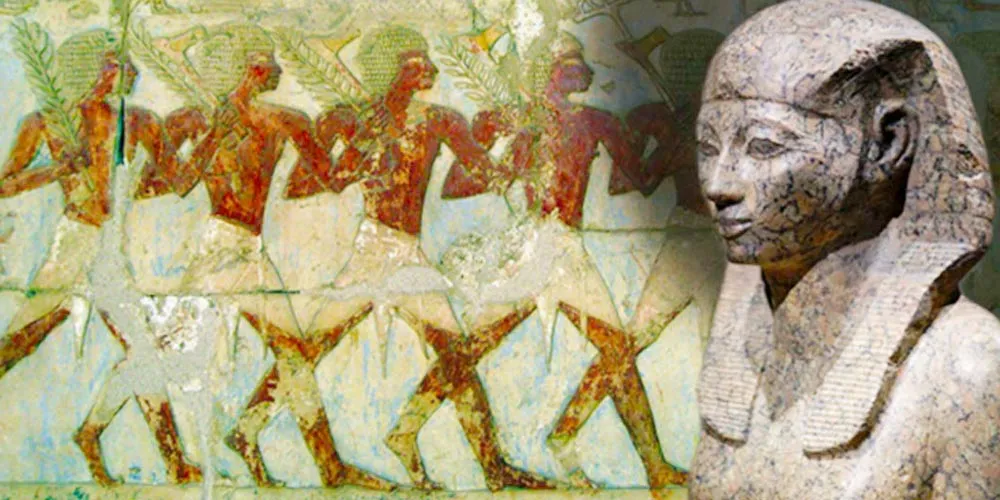
In the ninth year of her reign, Hatshepsut sent a fleet of five ships to the Land of Punt, a distant trading partner probably located on the African coast of the southern Red Sea. The journey is recorded in detailed reliefs on the middle terrace of her temple at Deir el-Bahari.
The ships returned loaded with myrrh and frankincense, ebony, ivory, gold, exotic animals such as baboons, and living myrrh trees, which were planted in front of her temple. The reliefs even show the ruler of Punt and his wife, along with houses built on stilts.
Queen Hatshepsut Death
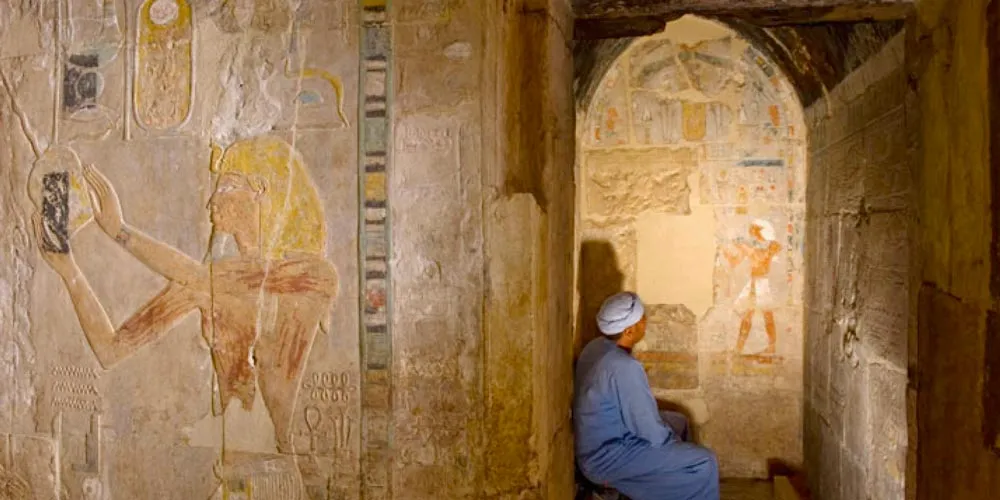
Hatshepsut died around 1458 BC, in about the 22nd year of her reign, probably in her 50s. What caused the death of Queen Hatshepsut is still debated.
The 2007 study of her mummy suggested she was overweight, had diabetes, arthritis and bad teeth, and may have had bone cancer. In 2011, researchers in Bonn found a carcinogenic substance in a flask of skin lotion bearing her name and suggested it might have harmed her, but this theory is unproven.
Most likely, she died of natural causes linked to illness and age.
Queen Hatshepsut Mummy
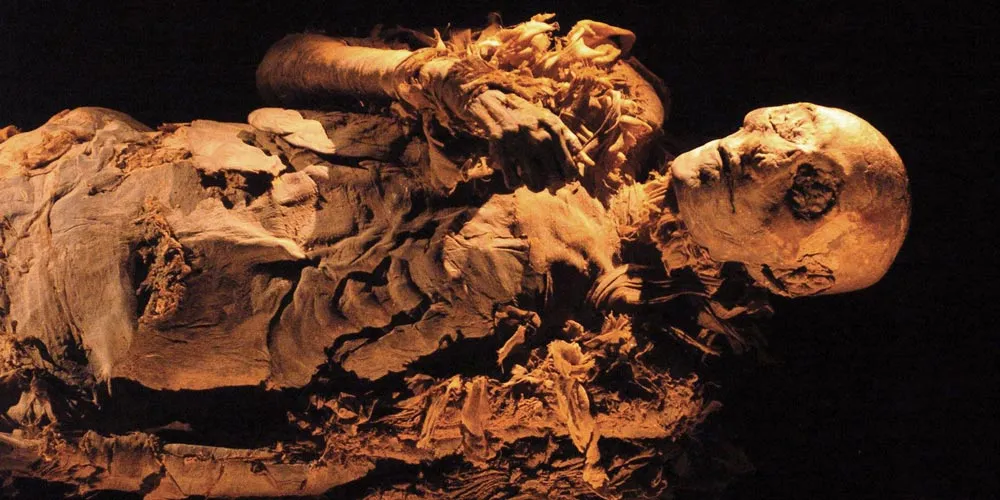
For many years, no one knew where Hatshepsut's body lay. In 1903, Howard Carter found a small tomb in the Valley of the Kings, known as KV60, containing two female mummies. One of them, an older woman lying with her left arm bent across her chest in a royal pose, was left in the tomb.
In 2007, a team led by Zahi Hawass moved that mummy to Cairo and announced that it was Hatshepsut. The key evidence was a wooden box inscribed with her name, which held a loose molar that fitted a gap in the mummy's jaw. Some scholars still want further proof, but the identification is widely accepted.
Today, her mummy rests in the Royal Mummies Hall of the National Museum of Egyptian Civilization in Cairo. It was moved there in 2021 during the Pharaohs' Golden Parade.
Queen Hatshepsut Tomb
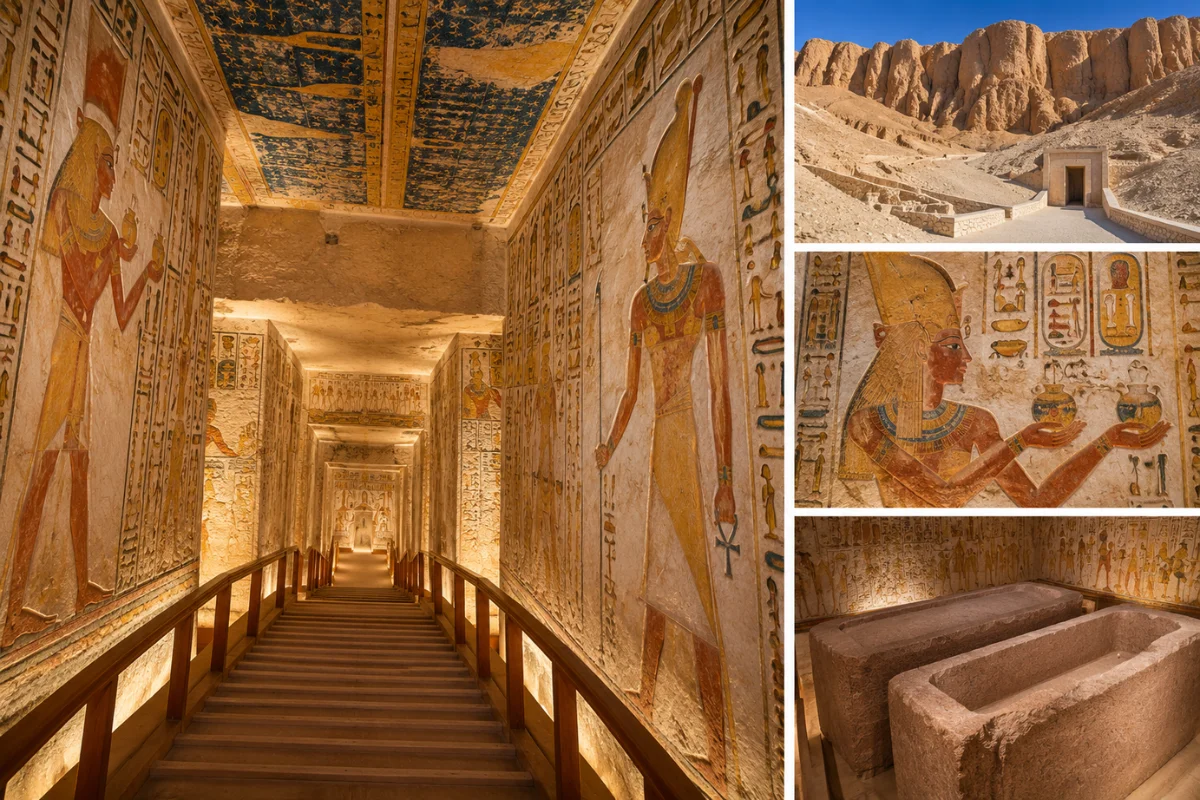
As queen, Hatshepsut first prepared a hidden cliff tomb in a remote valley west of Thebes, where an unused quartzite sarcophagus was found by Howard Carter in 1916. When she became king, she ordered a royal tomb in the Valley of the Kings.
Her royal tomb, KV20, is one of the longest and deepest in the valley, curving more than 200 meters into the rock. Hatshepsut had it extended so that her father, Thutmose I, could be reburied beside her.
Two quartzite sarcophagi were found inside, but her body was later moved, which is why her mummy ended up in KV60.
Queen Hatshepsut Real Face
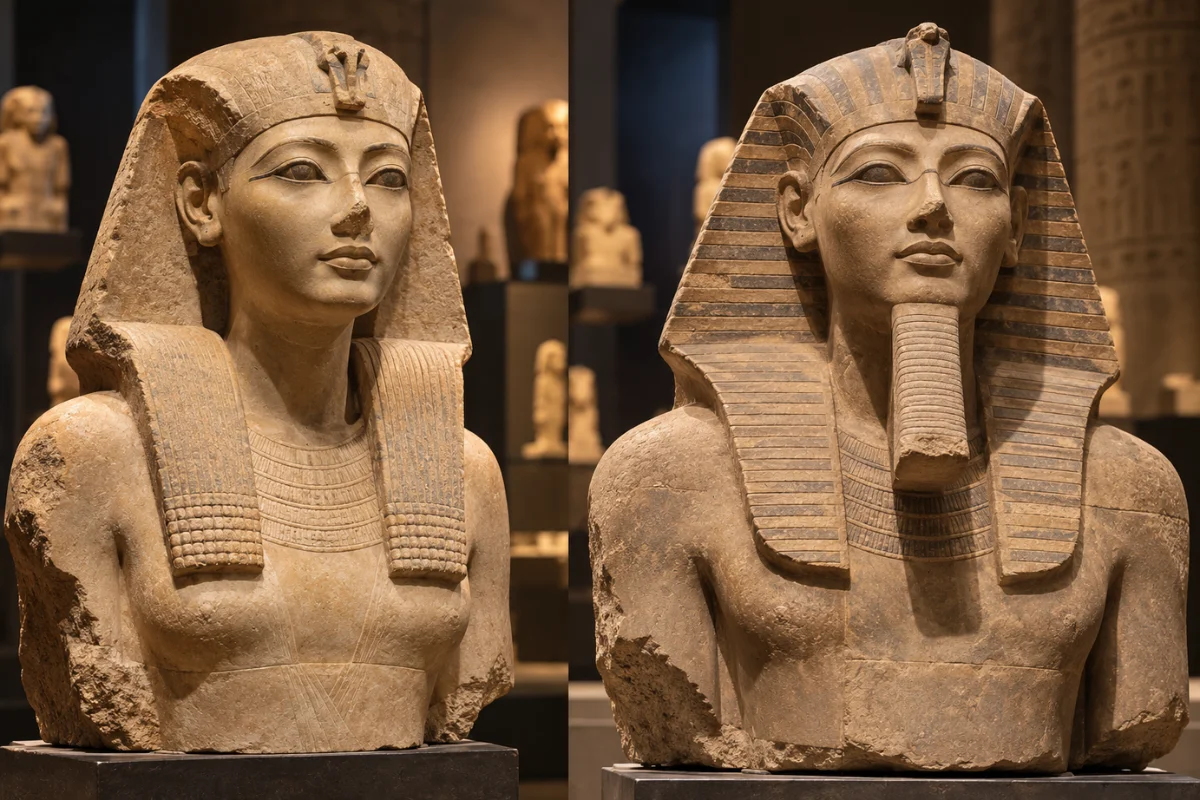
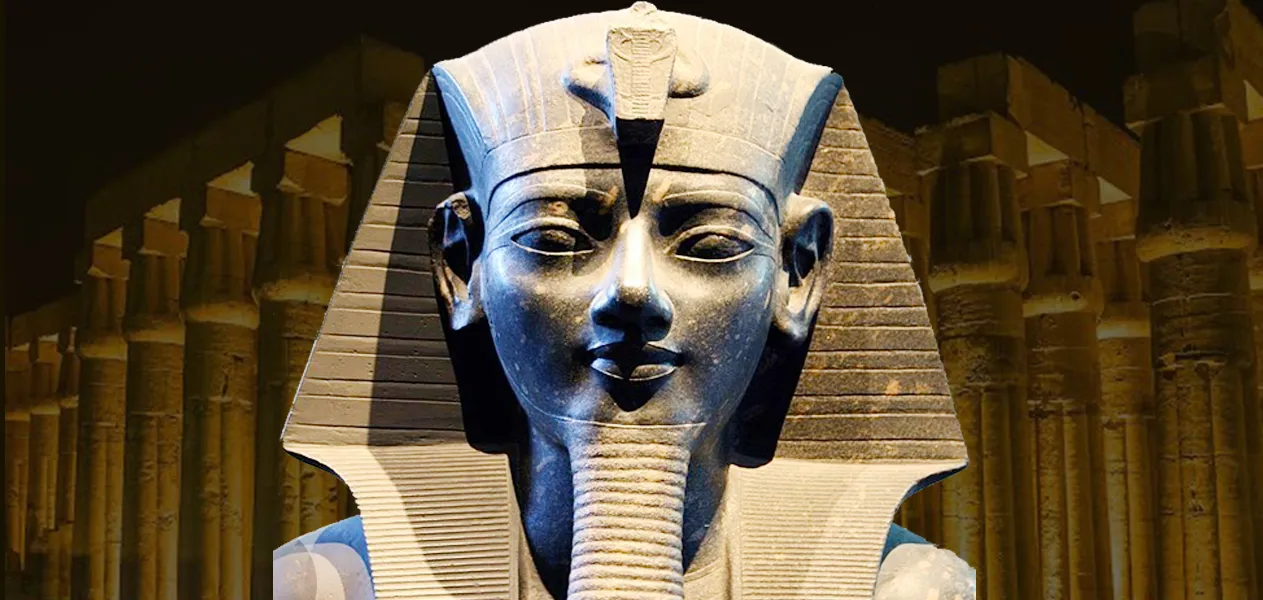
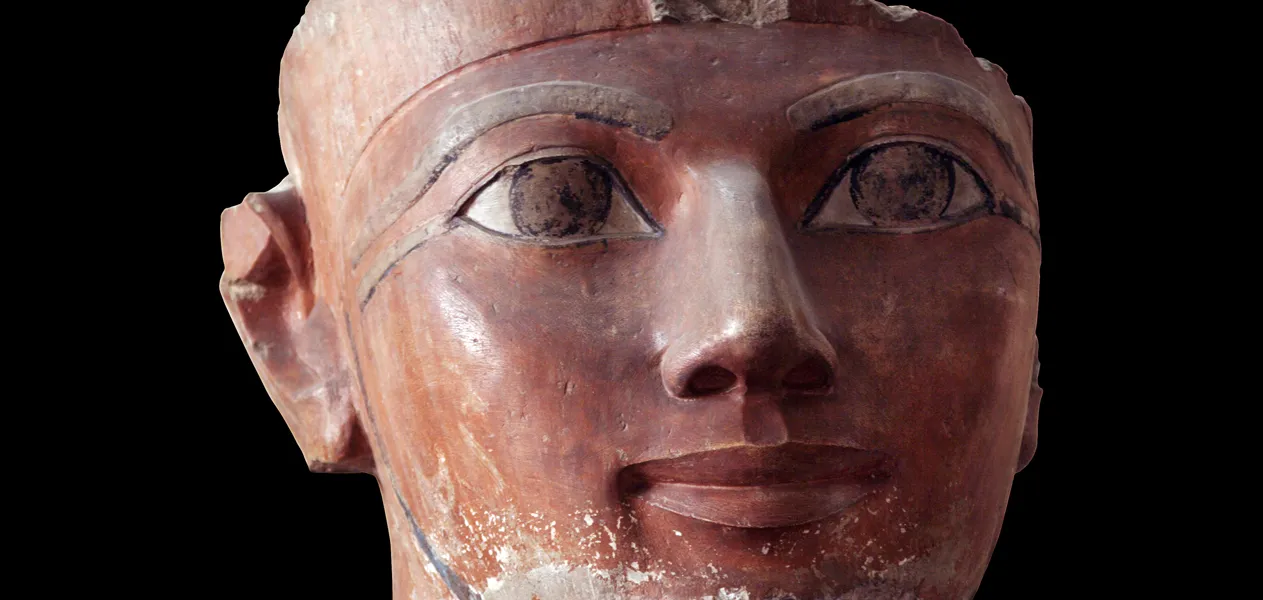
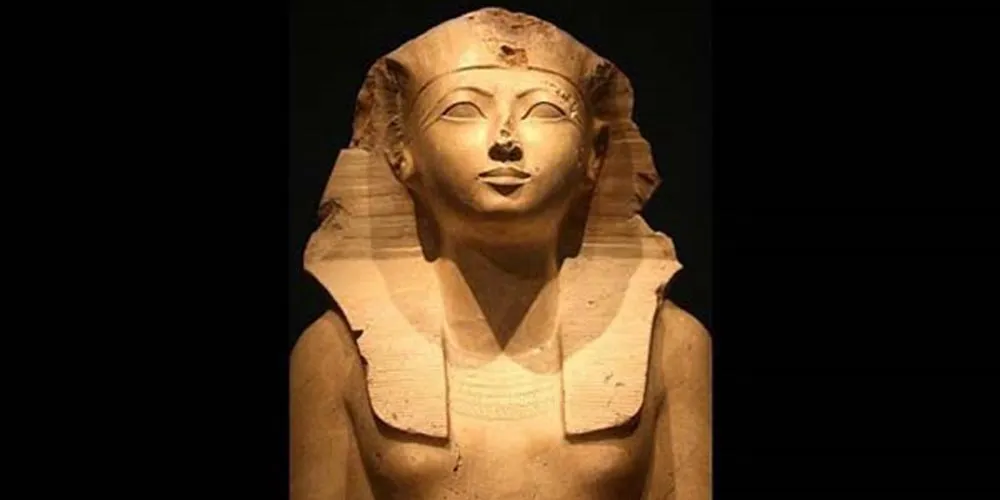
No photograph-like portrait of Hatshepsut survives, but her statues show how she wished to be seen. Early statues present her as a slender woman with a delicate face. Later ones show her with a king's body, a false beard and the royal nemes headdress.
Some of the finest statues, rebuilt from fragments found near her temple, are in the Metropolitan Museum of Art in New York and in Cairo. Comparing them shows how her image changed from queen to king.
Why Was Hatshepsut Removed from History?
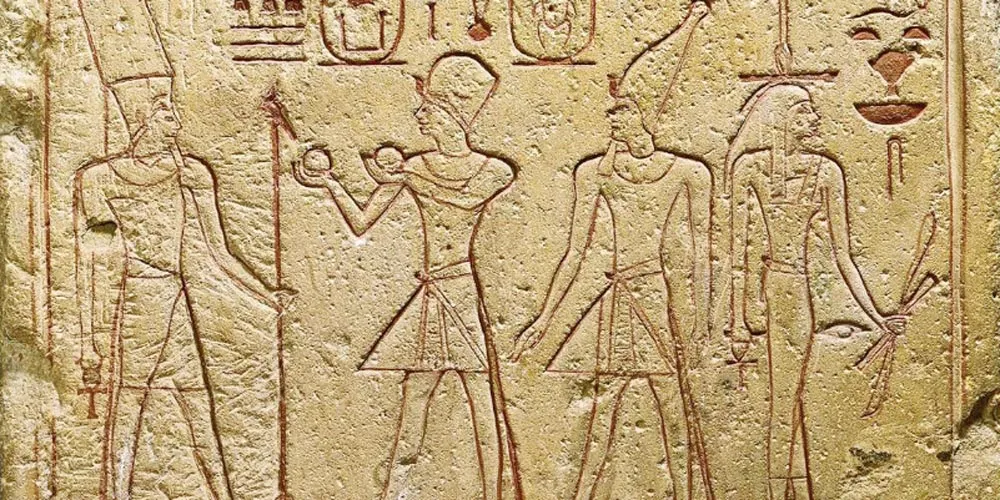
Around 20 years after her death, late in the reign of Thutmose III, her images and names were chiseled off monuments. Her statues were smashed and thrown into pits near her temple, and her obelisks at Karnak were walled in. Later king lists, such as the one at Abydos, left her out completely.
For a long time, historians assumed Thutmose III acted out of hatred. Because the destruction came so late, many now think he wanted to secure the throne for his son, Amenhotep II, and remove any doubt about his own line.
A female king may also have been seen as a break with the proper order of the world, or Ma'at.
Her memory survived anyway. When early Egyptologists read the walls of Deir el-Bahari in the 19th century, they rediscovered the woman who had ruled as king. Her story also helps explain the role of women in ancient Egypt, where queens could wield real power.
Who Was the Most Powerful Queen of Egypt?
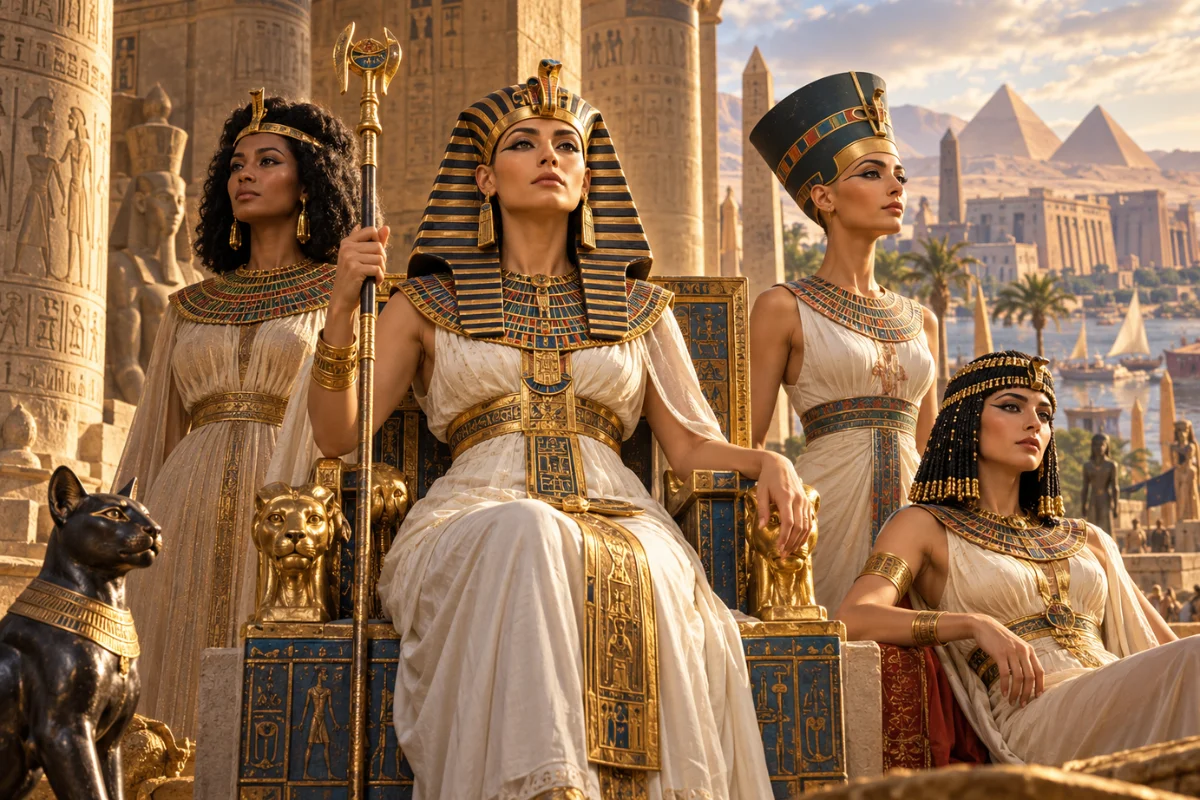
Hatshepsut is often called the most powerful queen of Egypt because she ruled as a full king for about two decades.
Other strong candidates include Queen Tiye, the influential wife of Amenhotep III, Nefertiti, who may have ruled after Akhenaten, and Cleopatra VII, the last active ruler of Ptolemaic Egypt, who reigned from 51 to 30 BC.
Discover All the Marvelous Destinations With "Trips in Egypt"
The best way to understand Hatshepsut is to stand in front of her temple. Our Full Day Tour to Luxor West Bank visits Hatshepsut Temple, the Valley of the Kings and the Colossi of Memnon, From $60 per person.
Her story continues across the whole country. Our Egypt tour packages combine Cairo, Luxor, Aswan and the Red Sea.
For a slower pace, travel by river. Sailing between Luxor and Aswan on one of our Nile cruises lets you add Karnak, Edfu and the Unfinished Obelisk to your trip.
Conclusion
Queen Hatshepsut was a daughter, wife and regent who became one of Egypt's most successful kings. She kept the country at peace, sent ships to Punt, raised giant obelisks and built a temple that still amazes visitors. A later king tried to erase her, yet her family tree, her mummy and her monuments have brought her back. Walk through Luxor today, and her name stands proudly in stone once again.

5 Days Cairo And Hurghada Trip
Amazing 4 Nights Cairo and Hurghada Trip Itinerary 5 Days Cairo and Hurghada trip wil...
- Duration 5 Days / 4 Nights
- Location Cairo & Hurghada
- Type Historical & Recreational Tour
From$690/per person
View Tour
6 Days Cairo, Alexandria & Faiyum Tour
Unforgettable Cairo, Alexandria & Faiyum Adventure in Six Days 6 Days Cairo, Alex...
- Duration 6 Days / 5 Nights
- Location Cairo - Alexandria - Fayum
- Type Historical Tour
From$720/per person
View Tour
10 Days Cairo, Faiyum & Nile Cruise Holiday
Breathtaking 10 Days Journey of A Lifetime in Egypt 10 Days Cairo, Faiyum & Nile...
- Duration 10 Days / 9 Nights
- Location Cairo, Luxor, Aswan & Faiyum
- Type Classic Tour
From$1350/per person
View Tour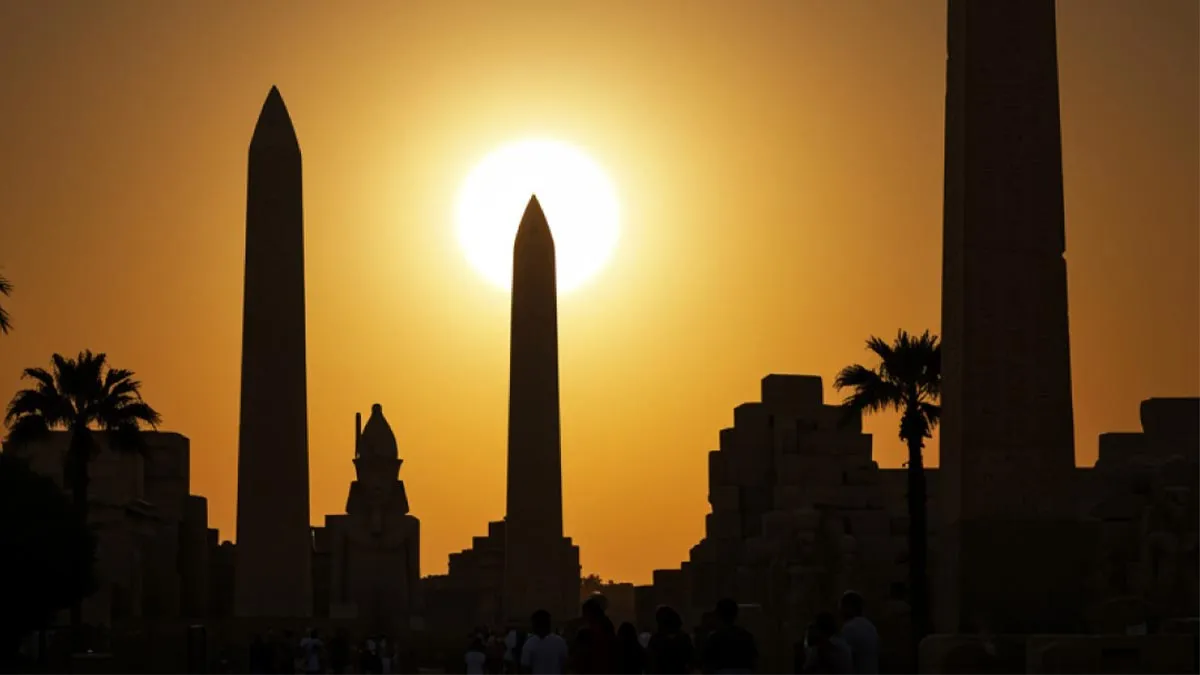 SOLD OUT
Ultimate 7-Day Egypt Solar Eclipse Experience with Hurghada 2027
Enjoy a 7-Day Egypt Solar Eclipse Tour with Hurghada 2027 6 Nights Egypt Solar Ecli...
- Duration 7 Days / 6 Nights
- Location Cairo / Giza / Luxor / Hurghada
- Type Astronomical Tour
Sold Out
View Details