




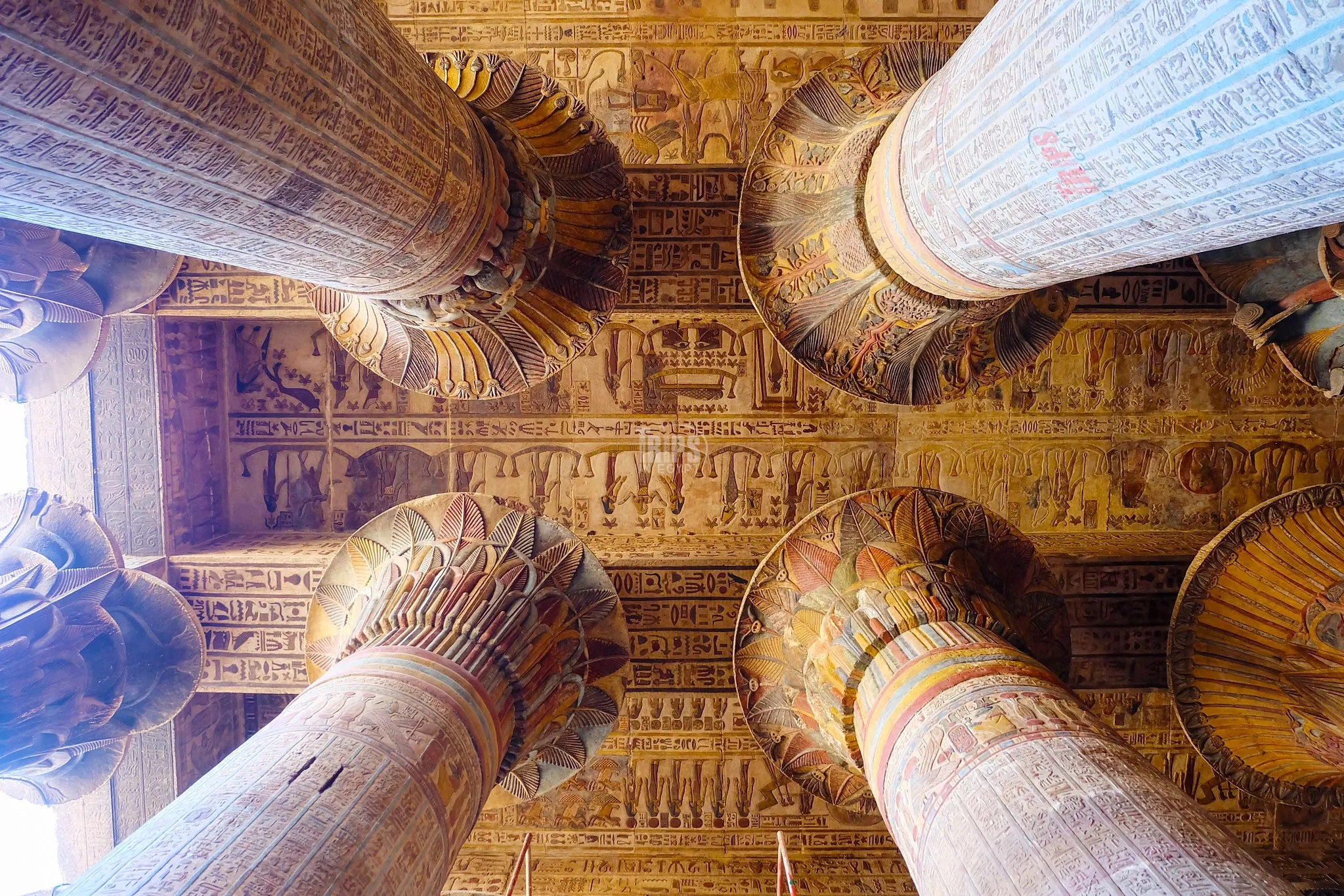
Welcome to the magnificent temple of Esna! This massive structure was built over 3,000 years ago and still stands to this day. The temple is dedicated to the god Khnum, the god of creation and the source of the Nile River. One of the features of the Holy attraction is that many of the artifacts are s related to the worship of the God and Goddess. This temple is particularly unbelievable due to its several carved hieroglyphs and sculptures.
The exterior of the temple is also breathtaking, with its massive pylon gate, which was built to the standard of Ancient Egyptian architecture in this era. Once you explore Esna Temple, you will undoubtedly feel a deep connection to the pride and history of the Ancient Egyptian civilization. The temple of Esna still stands as a testament to the resilience of the Egyptian spirit and the power of faith and beliefs of the ancient Egyptians.
Today, you will know more about the amazing attraction "The Temple of Esna", its location, the history of the city, the massive construction, and why they built such a temple in ancient Egypt.
Where Is the Temple of Khnum?
The temple of Esna is located in Luxor, about 485 miles from modern Cairo, about 50 kilometers south of Luxor city, as the town of the city sits on the west bank of the Nile River, and 150 Kilometers to the north of Aswan. Esna was called "Senat" in the language of ancient Egyptian, and later it was called "Esna" by the Greeks, which means "The city of the Fish", as the fish was a symbol of the divine, where is now the temple of Esna.
The History of Esna City
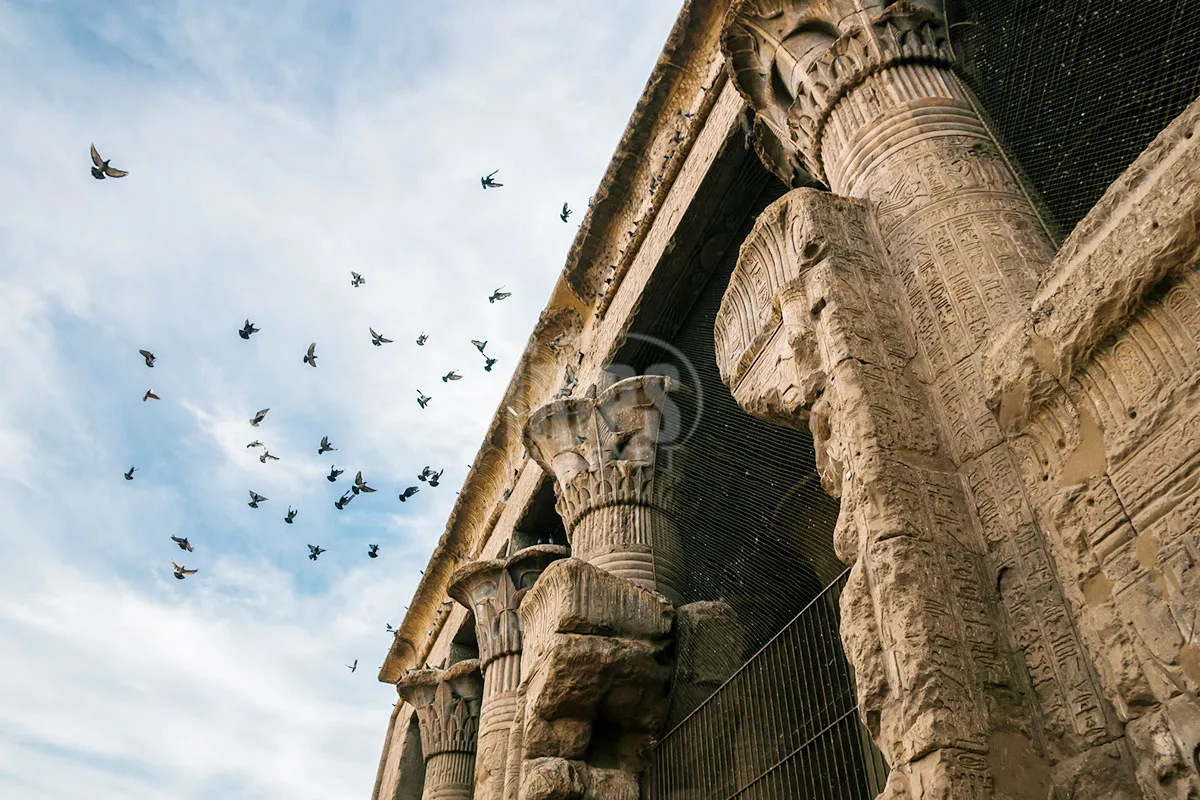
During the early eras of Egypt, Esna was an important religious attraction for the worship of the god Khnum. In the Middle Kingdom of Egypt, it became an important political center, and in the New Kingdom of Egypt, it was a major trading site. Esna was the site of a major temple complex dedicated to God Khnum, a ram-headed deity responsible for the flooding of the Nile River.
The temple of Esna was built as King Tuthmosis III put the foundations of Esna Temple in the eighteenth Dynasty, then The Roman Emperors completed it later around 40 to 250 AD, and decorated it with a variety of scenes that depicted the Gods, Goodness, and kings of Egypt and a sacred lake. The temple was destroyed during the Ptolemaic era and its ruins remain today.
Esna city was also an important site of industry, producing earthenware and cloth. During the Roman era, it was a major trading center, as it was located on several major trade routes. Remains of Romani temples and other structures have been discovered in the area. The city was abandoned in the 7th century CE, and its features are an important part of the modern town of Esna today.
The Importance of Building the Temple of Esna
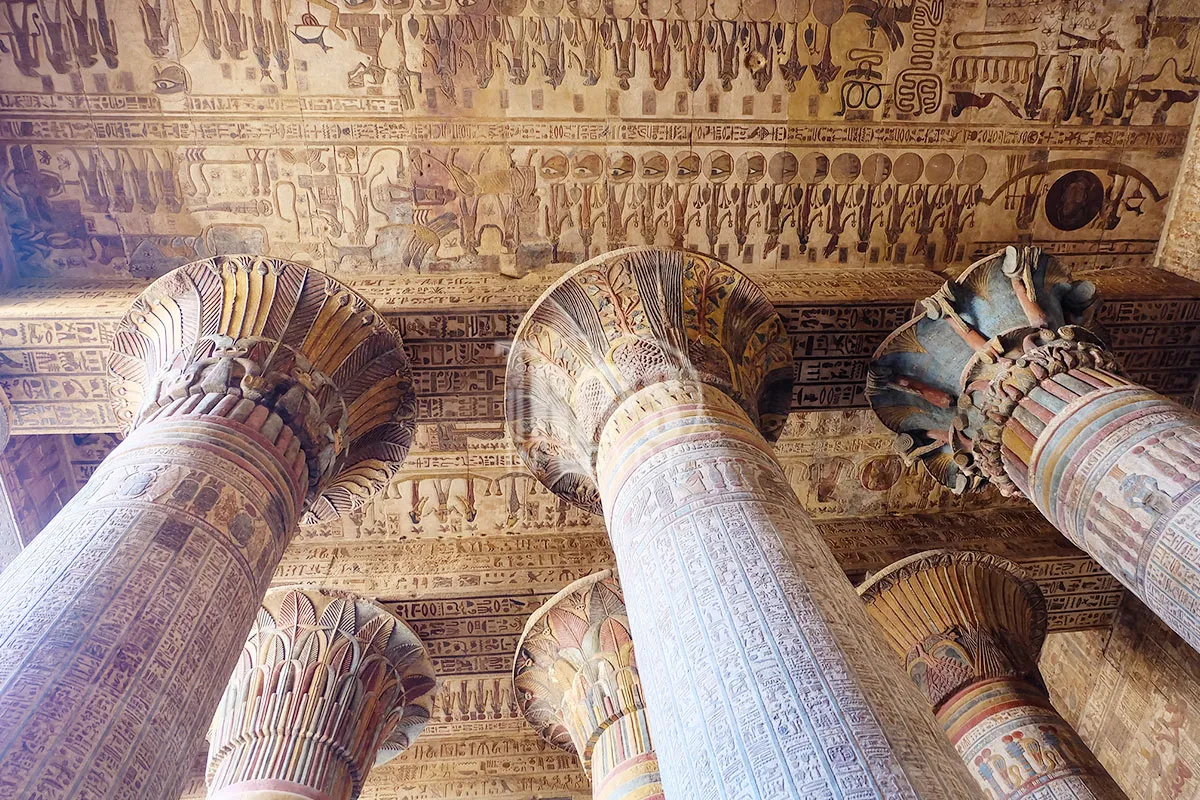
The Temple of Esna was built in the honor of the God Khnum, who was a creator God associated with the Nile and prosperity. The temple was built as a place for ancient Egyptian to congregate to honor God Khnum and to also worship other ancient Egyptian Gods and Goddesses associated with the Nile River, such as God Horus and God Isis.
The temple was also an important center for trade, as it was located at the junction of two major roads that connected Egypt to the rest of the world so, it has a strategic importance in ancient Egypt. The temple included gardens, public spaces, and other features, which made it a bustling place of various activities.
In addition, the temple also housed a library and a school to educate the local ancient Egyptians. Through the centuries, the Temple of Esna has remained an amazing tourist attraction, due to its impressive size, and its location near the banks of the Nile River.
What Are the Unique Features of The Temple Of Esna?
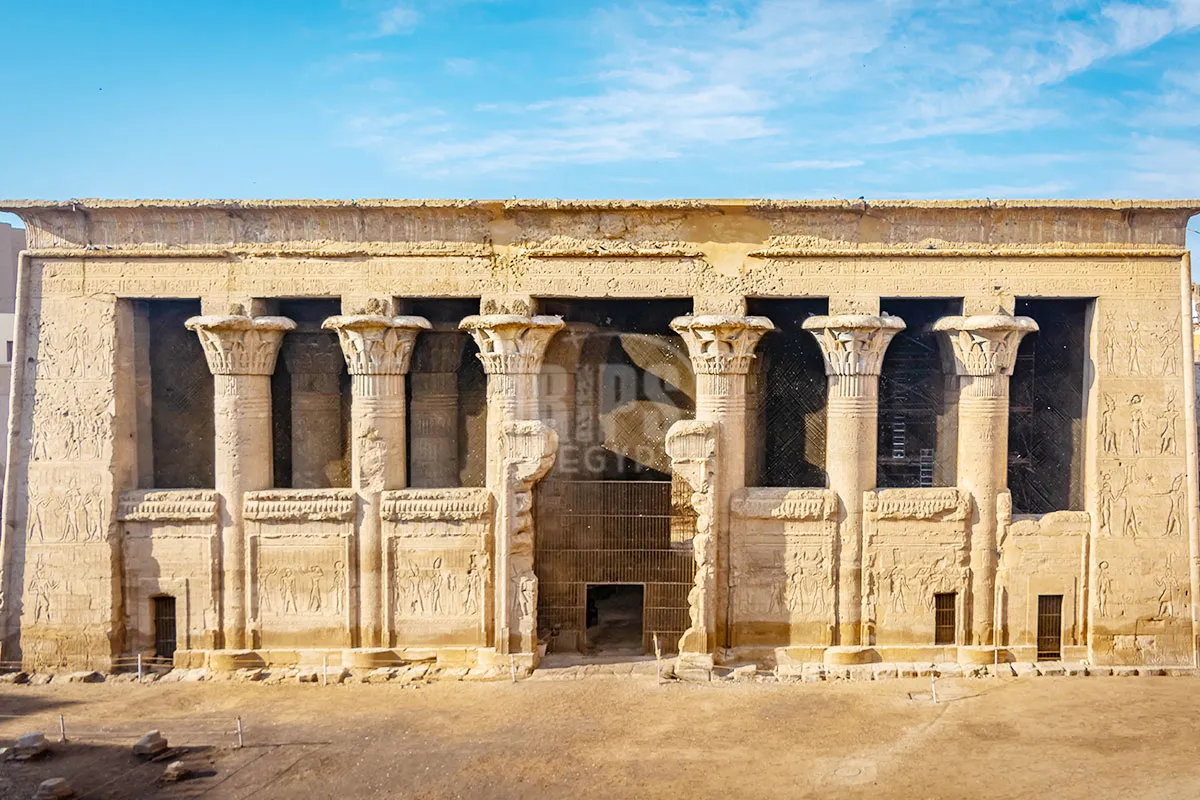
The temple of Esna is a unique example of ancient Egyptian architecture as it has a unique design that is breathtaking the travelers from all over the world as it consists of the following:
- The temple consists of a large open court and twenty-four hypostyle halls.
- The walls of the aisles are decorated with scenes of offerings to the gods and images of Ptolemy VI.
- The temple was built from sandstone.
- On the inner walls, you can find more stunning and amazing reliefs depicting paintings of worship.
- The design is quite similar to Dendera and Abydos temples.
- The temple has two smaller doors on each side, two doors on the front, and two on the back.
- The sanctuary is surrounded by five chapels, each of which contains a statue of a god or goddess.
- The columns employ the lotus and papyrus design.
- The walls are covered with reliefs showing Ptolemaic and Roman emperors offering sacrifices to the God Khnum.
- At a height of fourteen meters, they found several .patterns and colors above the entrance of the temple.
- The paintings describe the symmetric beauty which represents forty-six eagles in two rows, with twenty-two eagles with a head of the cobra. This amazing scene depicts the goodness of ancient Egypt as a protector of lower Egypt.
- Interestingly, these incredible widgets have not appeared in any other paintings or images before.
- On the western wall of the Temple, you will see God Khnum and the God Horus "God of Victory" dragging a net full of fish from the Nile River.
What Are the Instructions for Entering the Temple of Esna?
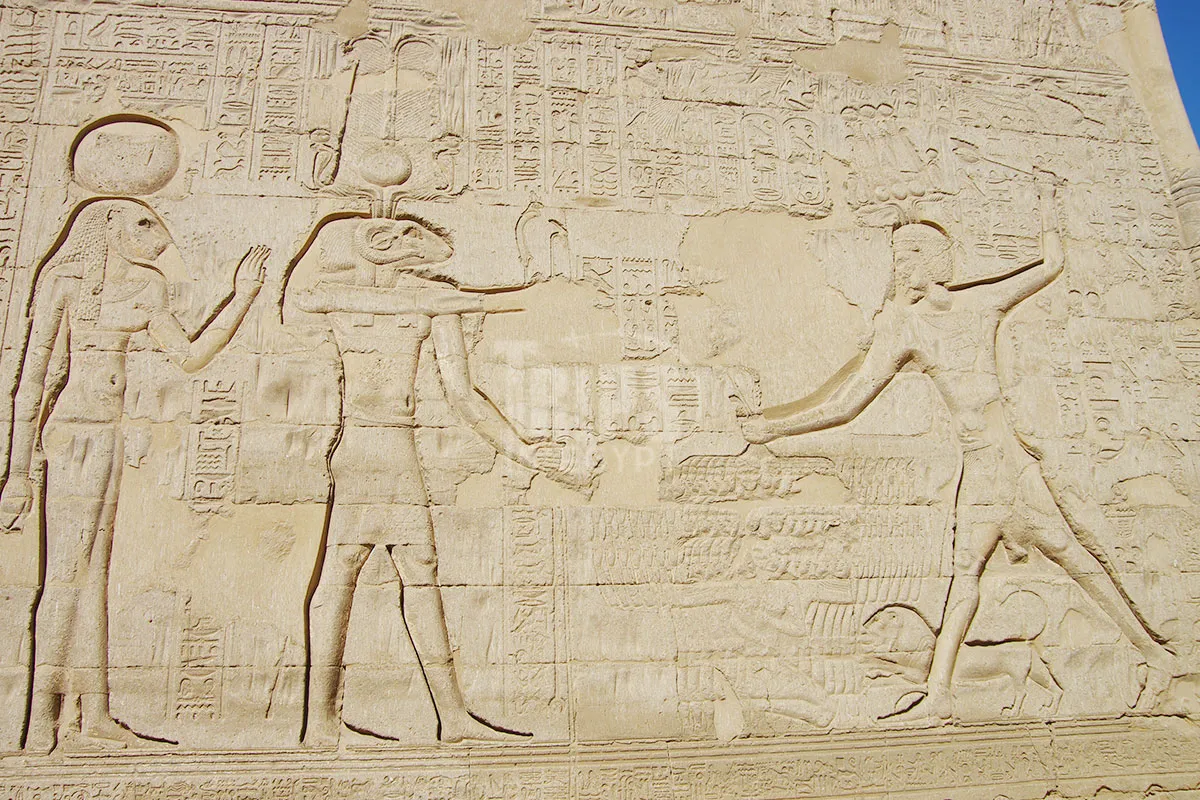
Other inscriptions found on the temple walls that one must follow these instructions to enter this holy place such as:
- You must cut fingernails and toenails.
- Remove body hair.
- Purify their hands with natron.
- Have no intercourse for many days.
- To be dressed in linen.
The temple of Esna is a perfect example of the architecture of the ancient Egyptian and the greatness of the Ptolemaic era, and it is an important archaeological attraction in Egypt.
What is the Best Way to Visit the Esna Temple?
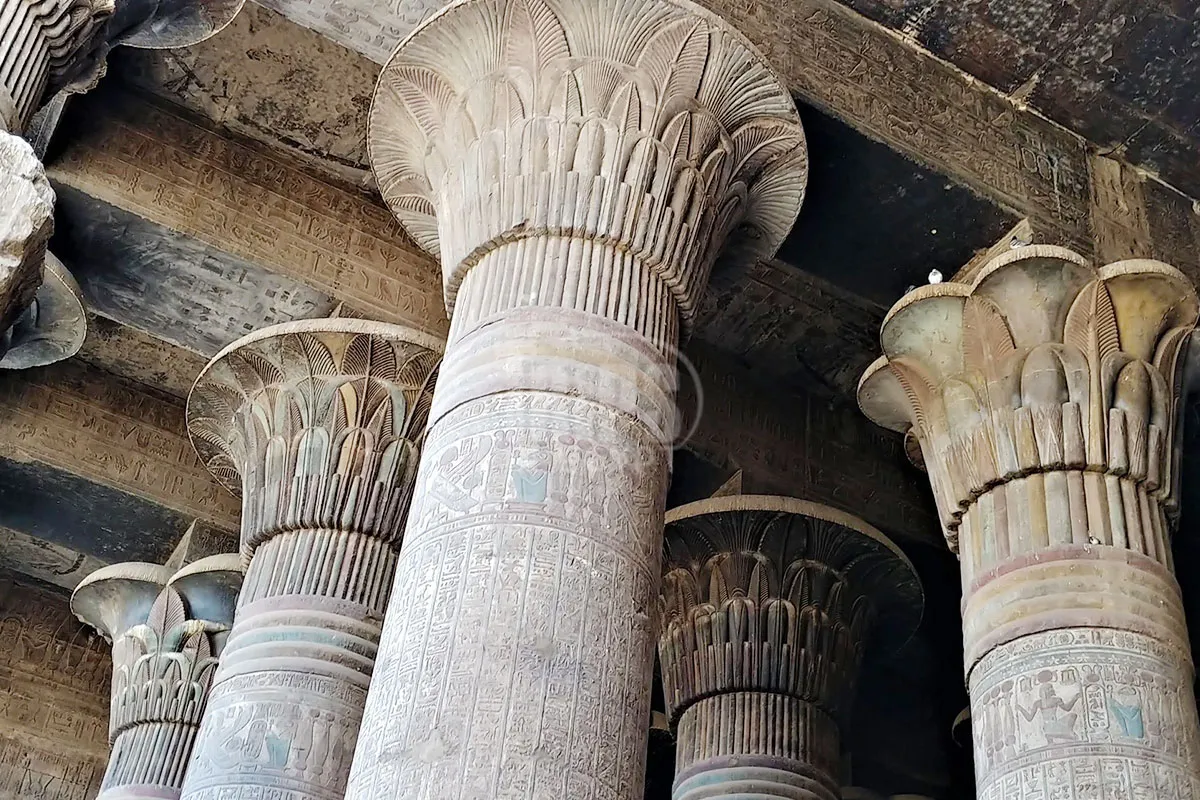
Esna temple is a stopover between Luxor and Aswan, you can visit it via car from Luxor which could be around 50 kilometers. We highly recommend visiting this magnificent temple on a Nile River cruise, as the Nile Cruise has a special way to explore the beauty of Upper Egypt. By taking a Nile Cruise, you will be able to visit one of the most important monuments of the world, as Luxor city only has two-thirds of the monuments of the world. Plus, you will visit Aswan with its important attractions. check our article to know more about how to enjoy a Nile cruise in Egypt.
In essence, the temple of Esna in Egypt is a perfect example of ancient Egyptian creativity. Its unique construction, its unusual design, and its excellent state of preservation make it a must-see attraction for travelers from all over the world. The temple of Esna has been used for worship for thousands of years, so it is a very important part of the Egyptian culture, civilization, and history of the region. The temple of Esna is a remarkable example of the beauty and power of Ancient Egyptian, and its existence today is a great testament to the creativity and dedication of the skilled workers who built and cared for its small details.
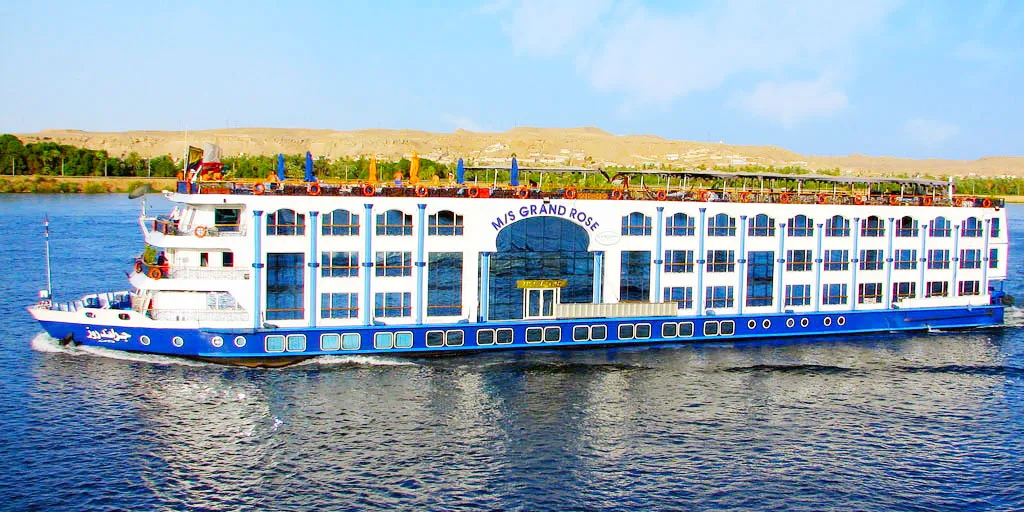
4 Day Nile Cruise Itinerary From Aswan
Breathtaking 4 Days Nile Cruise Aswan to Luxor Itinerary 4 Day Nile cruise itinerary...
- Duration 4 Days / 3 Nights
- Location Luxor & Aswan
- Type Historical Tour
From$390/per person
View Cruise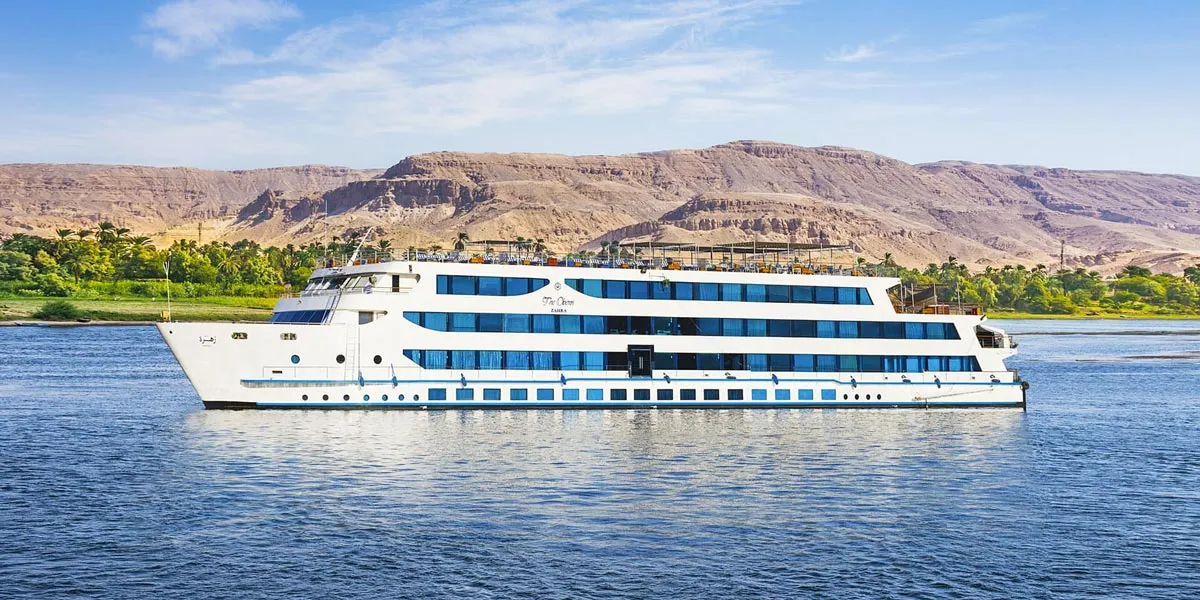
5 Days Nile Cruise Itinerary from Luxor
Fancy 5 Days Nile Cruise Luxor to Aswan This 5-day Nile cruise itinerary from Luxor o...
- Duration 5 Days / 4 Nights
- Location Luxor & Aswan
- Type Historical Tour
From$450/per person
View Cruise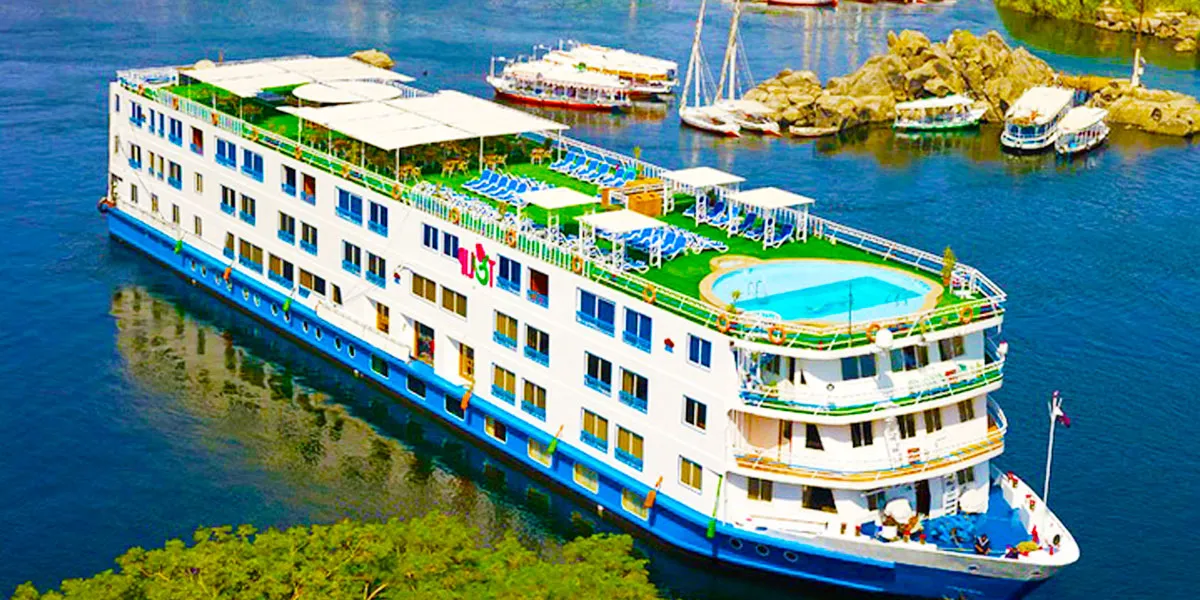
8 Days Nile Cruise Itinerary from Aswan
Wonderful 7-Night Nile Cruise Itinerary Aswan to Luxor 8 Days Nile cruise itinerary f...
- Duration 8 Days / 7 Nights
- Location Luxor & Aswan
- Type Historical Tour
From$705/per person
View Cruise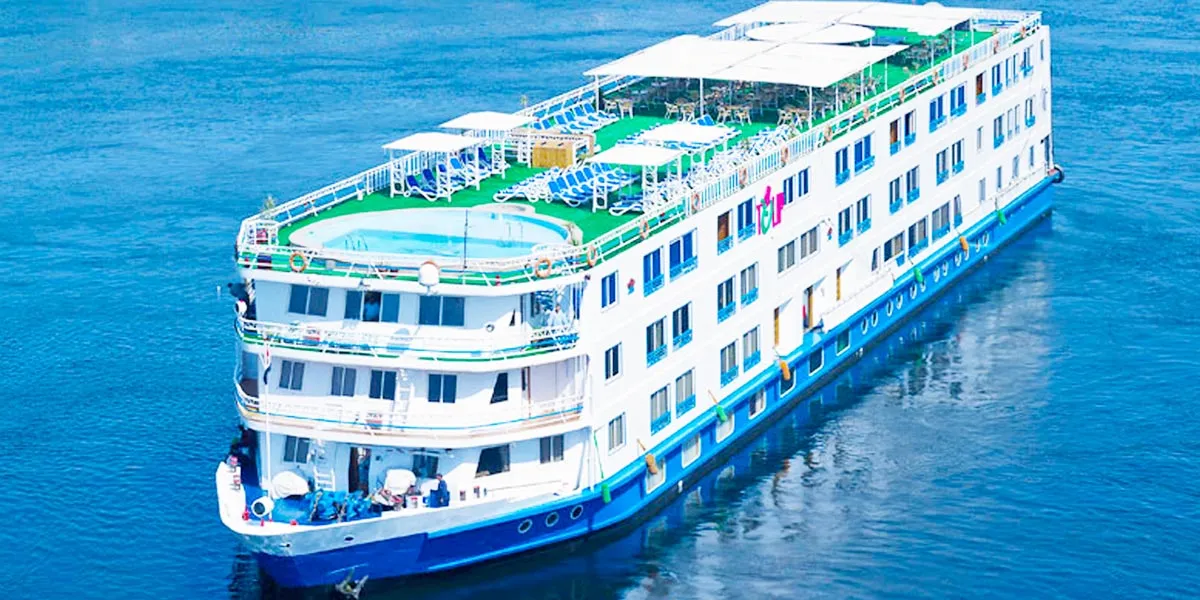
8 Days / 7 Nights Round-Trip Nile Cruise from Luxor
Wonderful 7 Night Nile Cruise from Luxor to Aswan 8 Days Nile cruise itinerary from L...
- Duration 8 Days / 7 Nights
- Location Luxor & Aswan
- Type Historical Tour
From$705/per person
View Cruise