



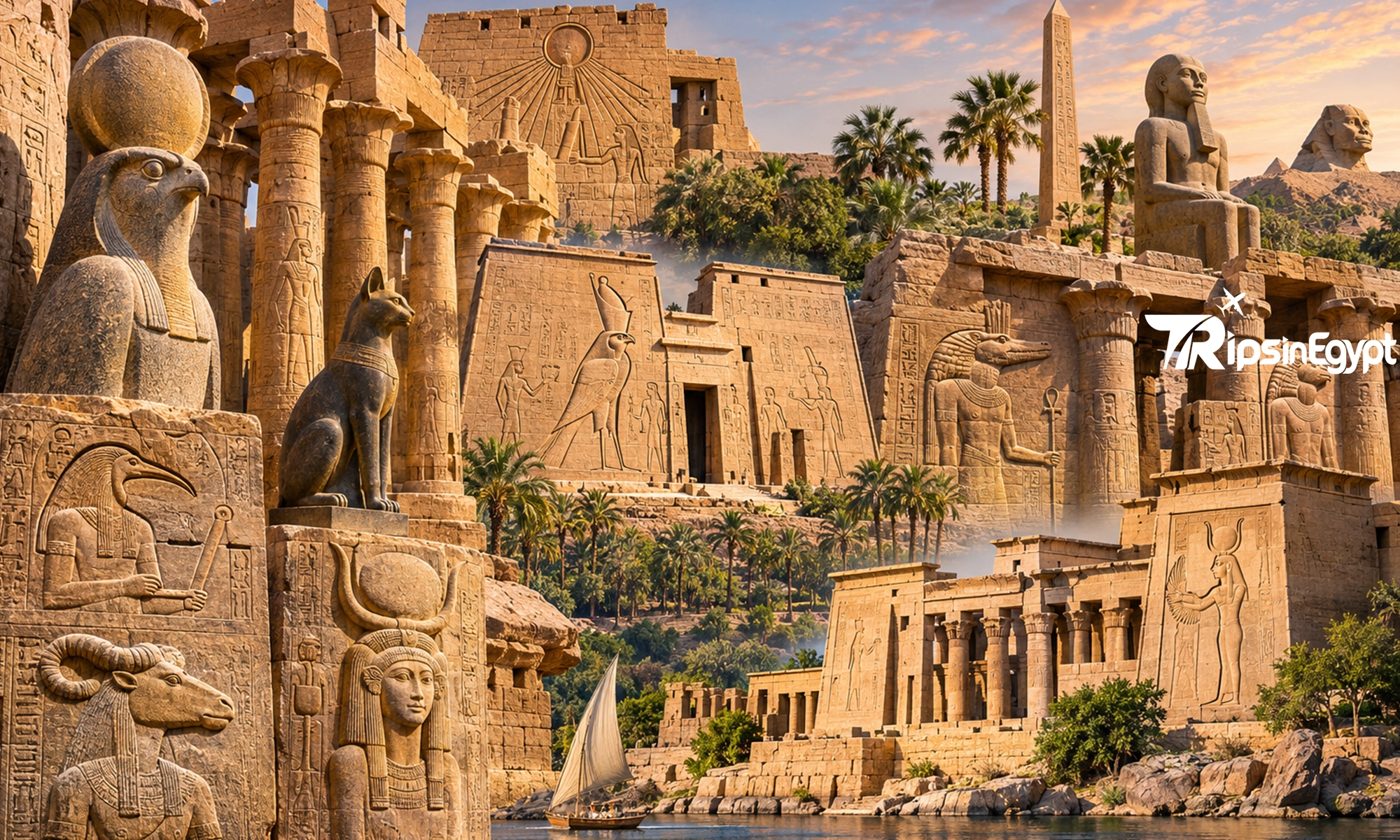
Divinity and Architecture have merged and emerged across the landscapes of Egypt for more than 3,000 years. The people of Egypt built houses of stone for their gods, and many of them still stand along the Nile, their walls carved with the same faces that priests once greeted at dawn. To walk into one of these temples is to step into a god's private home.
All our history and mythology lovers will get to learn all they can about where each of the main ancient Egyptian gods and goddesses was worshipped, starting with how temples worked and a quick reference table. It then follows the Nile from north to south, from Ra's sun city near Cairo to the temples of Luxor, Aswan, and Abu Simbel. Here are all things you need to know about Egyptian gods and their temples:

How Egyptian Gods Were Worshipped: Cult Centers, Triads and Temple Life
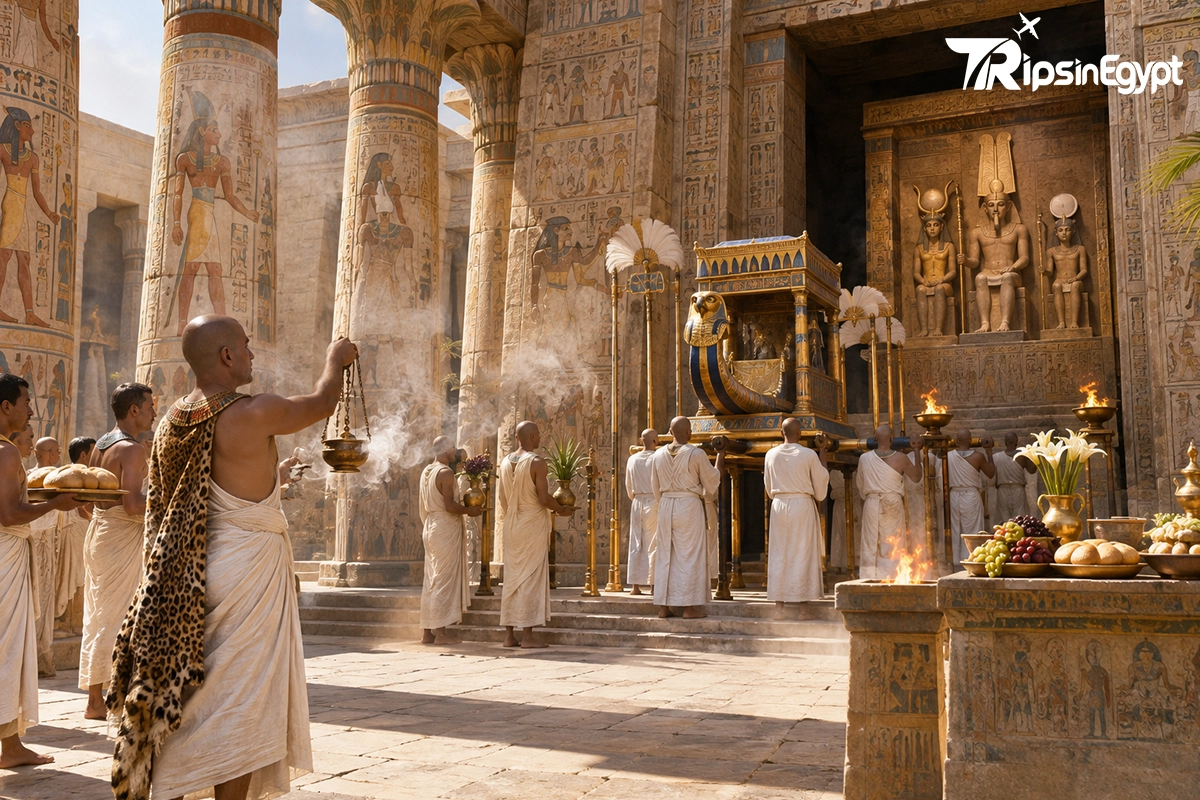
Egyptians did not think of their gods as living far away. Each important god had a cult center, a city where its main temple stood and where its statue was believed to house the god's spirit. Local gods grew powerful when their city did: when Thebes became the capital, its god Amun rose to become the king of the gods.
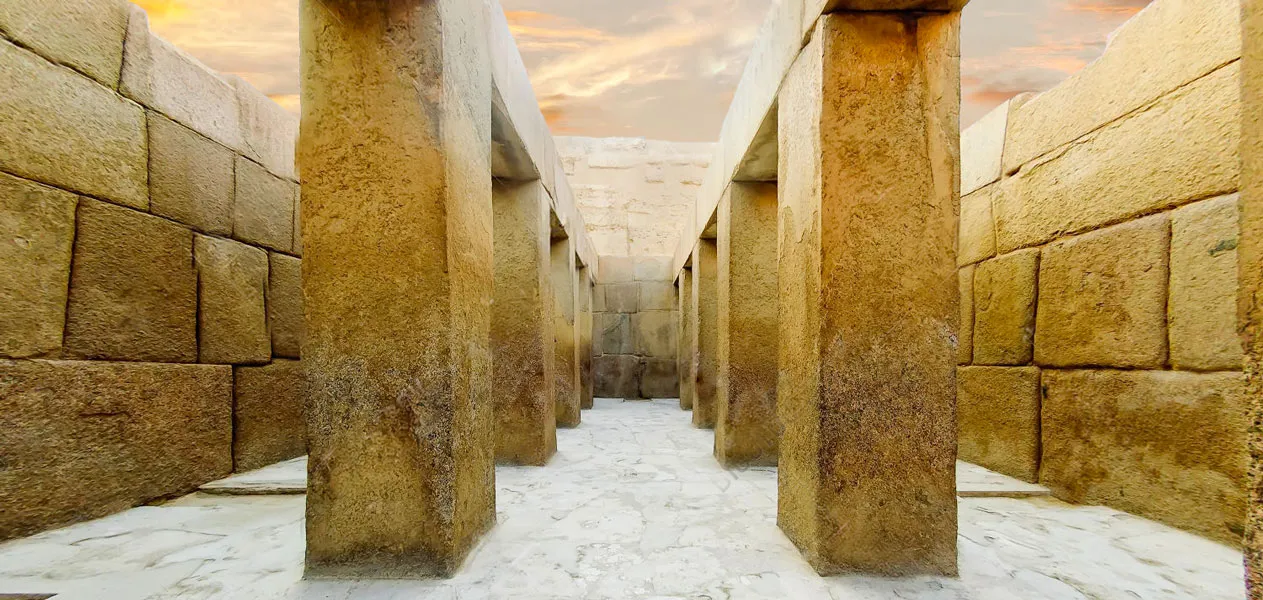
Egyptian temples were not places for public prayer. Ordinary people stayed in the outer courts, while only priests and the king entered the dark inner sanctuary. Every morning, priests opened the shrine, washed and dressed the god's statue, and offered food, incense and music. The temple design moved from bright open courts to columned halls to a small, dim sanctuary, imitating the first mound of creation rising from the waters of chaos, as told in ancient Egyptian mythology.
Many temples honored a triad, a divine family of father, mother and child. The best known are Amun, Mut and Khonsu at Thebes, and Ptah, Sekhmet and Nefertum at Memphis. This is why you will often find several gods carved together on the same temple wall.
| God | Role | Main cult center | Temple to visit today |
|---|---|---|---|
| Ra and Atum | Sun and creation | Heliopolis (Cairo) | Obelisk of Senusret I, Al-Matariya |
| Ptah | Creator, craftsmen | Memphis | Open-air museum at Mit Rahina |
| Bastet | Protection, the home | Bubastis (Tell Basta) | Temple ruins at Zagazig |
| Thoth | Writing, wisdom, the moon | Hermopolis | Baboon statues at El Ashmunein |
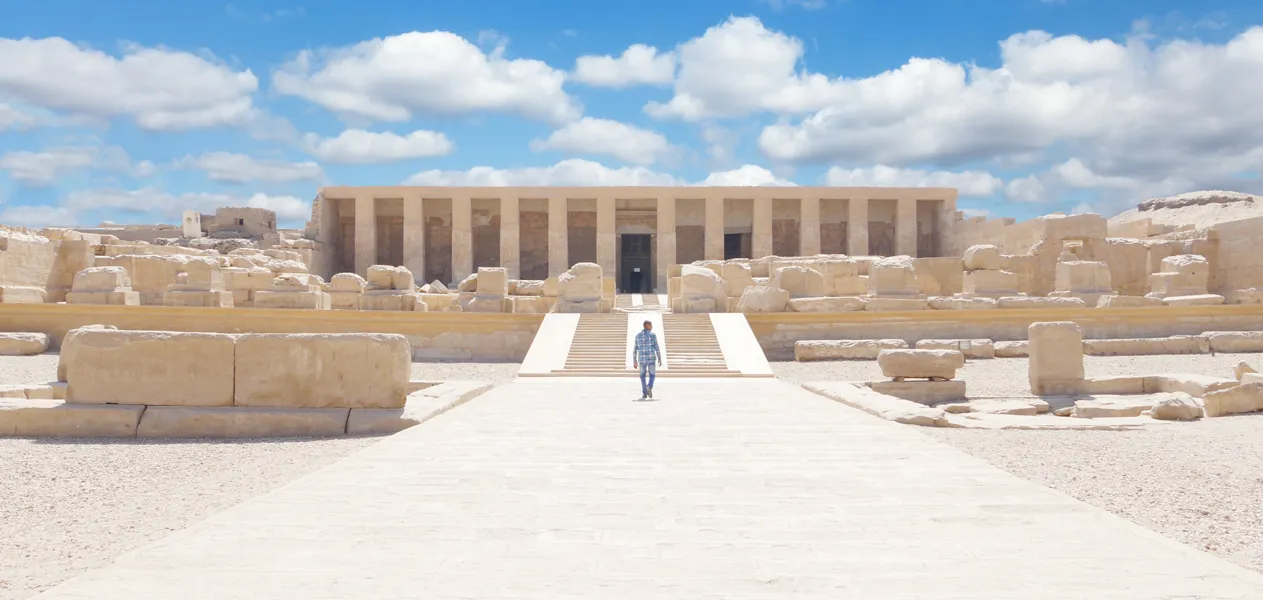
| Osiris | Afterlife, resurrection | Abydos | Temple of Seti I |
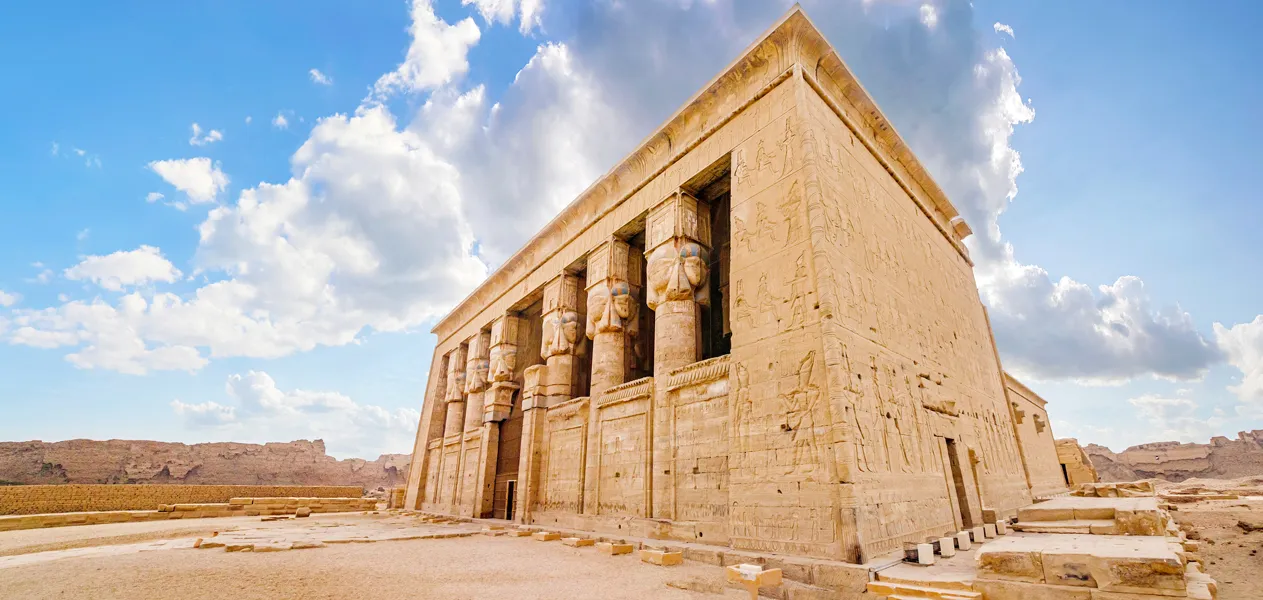
| Hathor | Love, music, joy | Dendera | Dendera Temple |
| Amun, Mut and Khonsu | King of gods and family | Thebes (Luxor) | Karnak and Luxor Temple |
| Khnum | Creator, the Nile source | Esna and Elephantine | Temple of Esna |
| Horus | Kingship, the sky | Edfu | Temple of Horus |
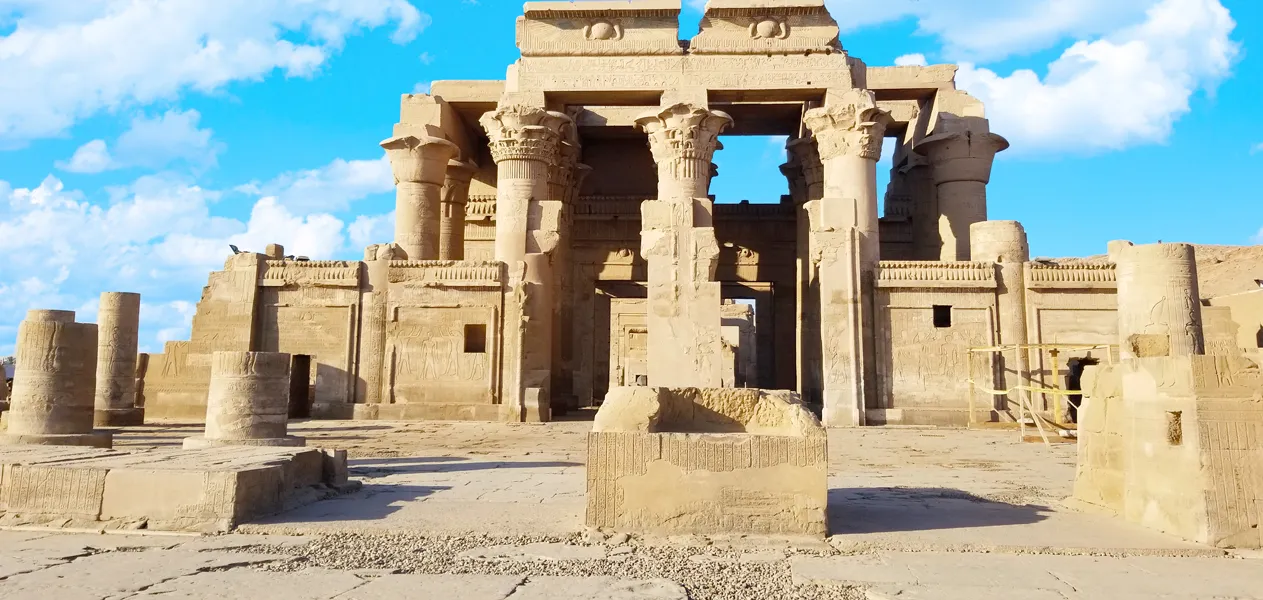
| Sobek and Haroeris | Crocodile god and Horus the Elder | Kom Ombo | Kom Ombo Temple |
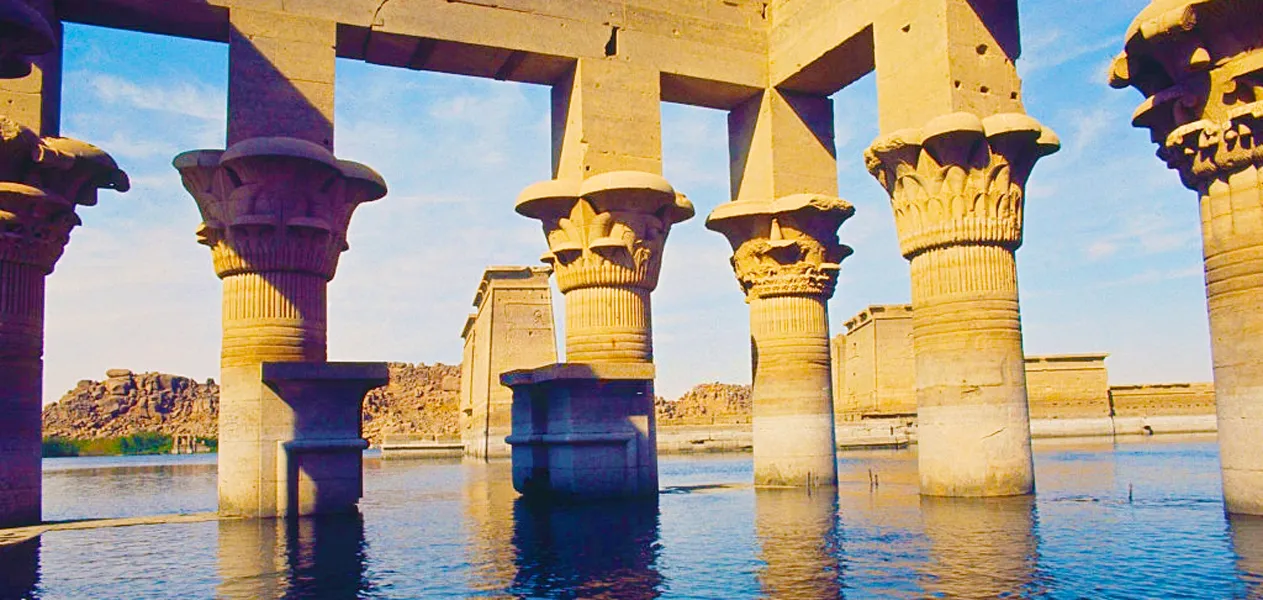
| Isis | Magic, motherhood | Philae | Philae Temple |
Cairo, Memphis and the Delta: Ra, Ptah and Bastet
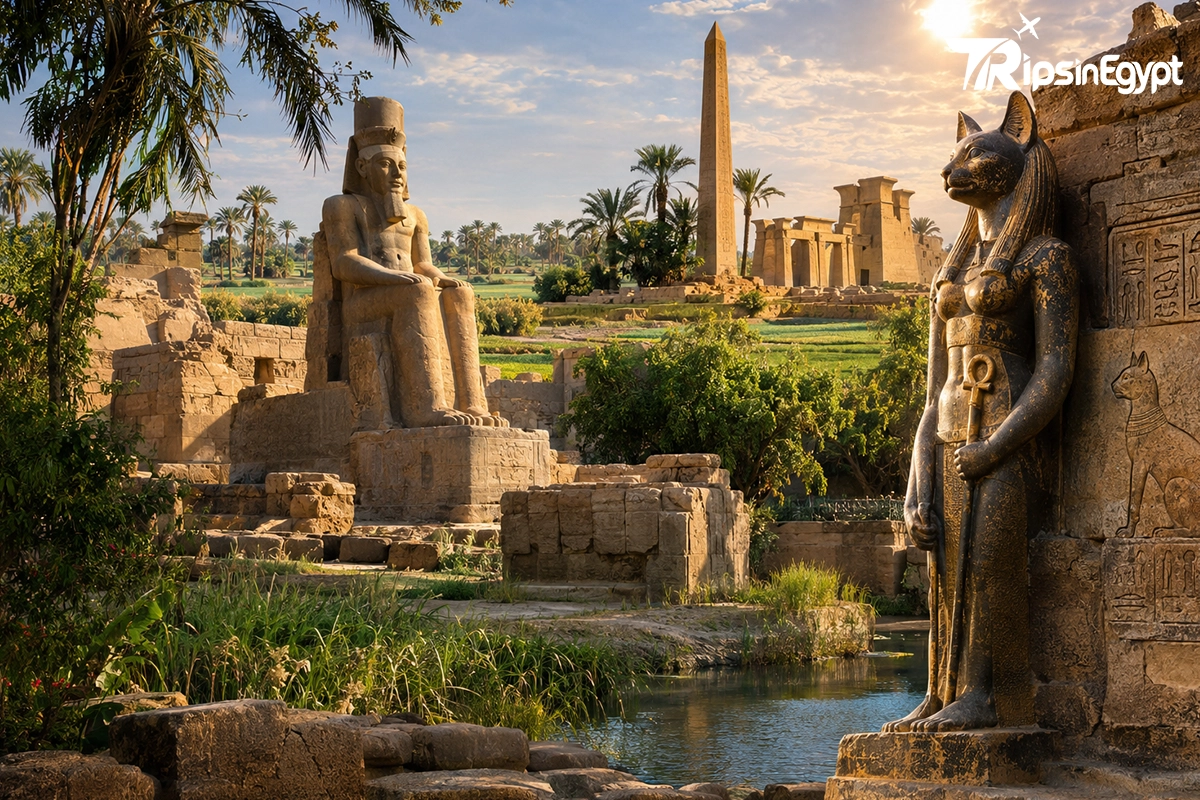
The oldest religious centers of Egypt lie in the north, close to modern Cairo. Ra, the sun god, and Atum, the creator, were worshipped at Heliopolis, known to the Egyptians as Iunu. Its priests taught that Atum created the first gods of the Ennead, a family of nine including Shu, Tefnut, Geb, Nut, Osiris, Isis, Seth and Nephthys. Almost nothing of the great sun temple survives, but in the Cairo district of Al-Matariya you can still see the obelisk of Senusret I, about 20 meters tall and the oldest obelisk still standing in its original place.
A few kilometers south of the Giza plateau, Memphis was the first capital of united Egypt and the city of Ptah, the creator who made the world by thought and word, and patron of craftsmen and builders. His consort was Sekhmet, the lioness goddess of war and healing. At Mit Rahina, an open-air museum displays a colossal statue of Ramesses II and an alabaster sphinx from Ptah's temple. Ptah's living symbol, the Apis bull, was buried in the huge underground galleries of the Serapeum at nearby Saqqara.
In the eastern Delta, Bubastis, near the modern city of Zagazig, was the home of Bastet, the cat goddess of protection. The Greek historian Herodotus described her festival as one of the largest in Egypt, and the ruins of her temple and a cemetery of mummified cats still lie at Tell Basta.
Much later, the Ptolemies created Serapis, a god combining Osiris and Apis, whose great temple stood in Alexandria on the hill where Pompey's Pillar stands today.
Middle Egypt: Thoth, Osiris and Hathor
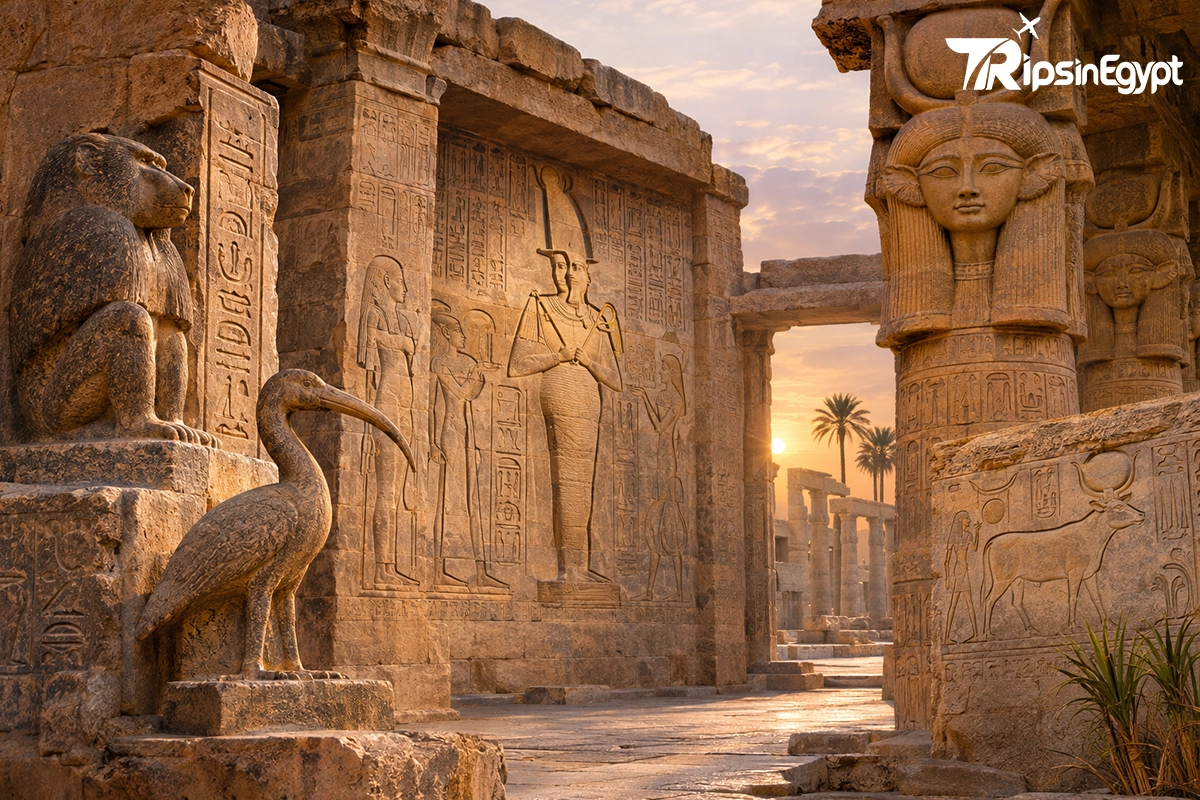
Thoth, the ibis-headed god of writing and wisdom, was worshipped at Hermopolis, today El Ashmunein in Minya. Two giant quartzite baboons, Thoth's other sacred animal, still stand among the ruins, and the nearby necropolis of Tuna el-Gebel holds underground galleries filled with mummified ibises and baboons. Not far away, at Tell el-Amarna, Akhenaten built a city for a single god, the sun disk Aten, as told in Akhenaten and the Hymn to the Aten.
Osiris, king of the dead, had his holiest site at Abydos, where Egyptians believed his head was buried. Pilgrims traveled here for thousands of years, and many wished to be buried nearby. The finest monument is the Temple of Seti I at Abydos, built around 1290 BC, with seven chapels for seven gods: Osiris, Isis, Horus, Amun-Ra, Ra-Horakhty, Ptah and the deified Seti himself. Behind it lies the mysterious Osireion, a symbolic tomb of Osiris. The myth behind it all is told in the story of Osiris and Isis.
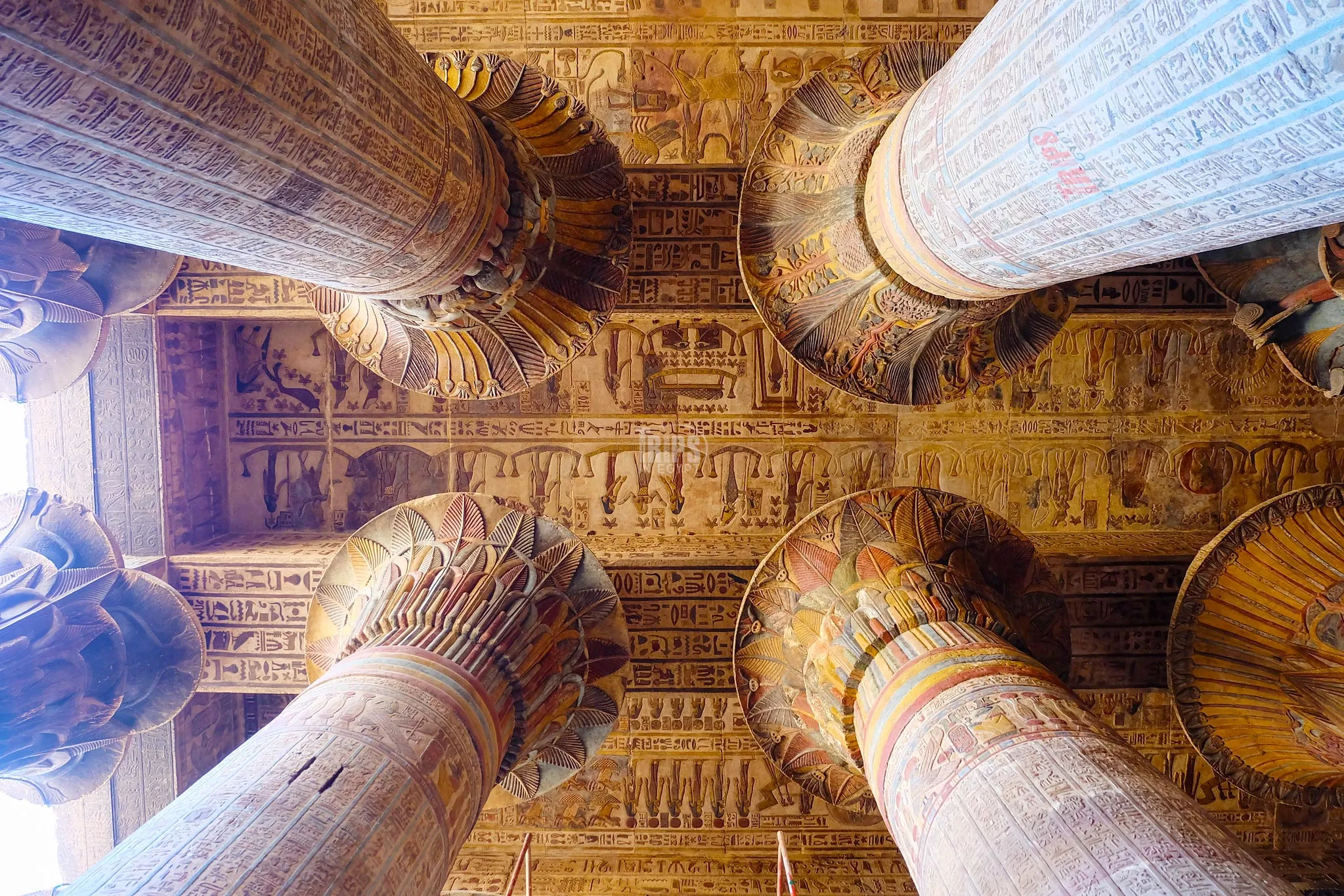
North of Luxor, Dendera Temple belonged to Hathor, the cow goddess of love, music and joy. Its columns are topped with Hathor's face, and its ceilings still show bright blue sky goddesses and a famous zodiac, whose original is now in the Louvre. Each year, Hathor's statue sailed south to Edfu to meet her husband Horus in a festival called the Beautiful Reunion.
Luxor: Amun, Mut, Khonsu and the Temples of Thebes
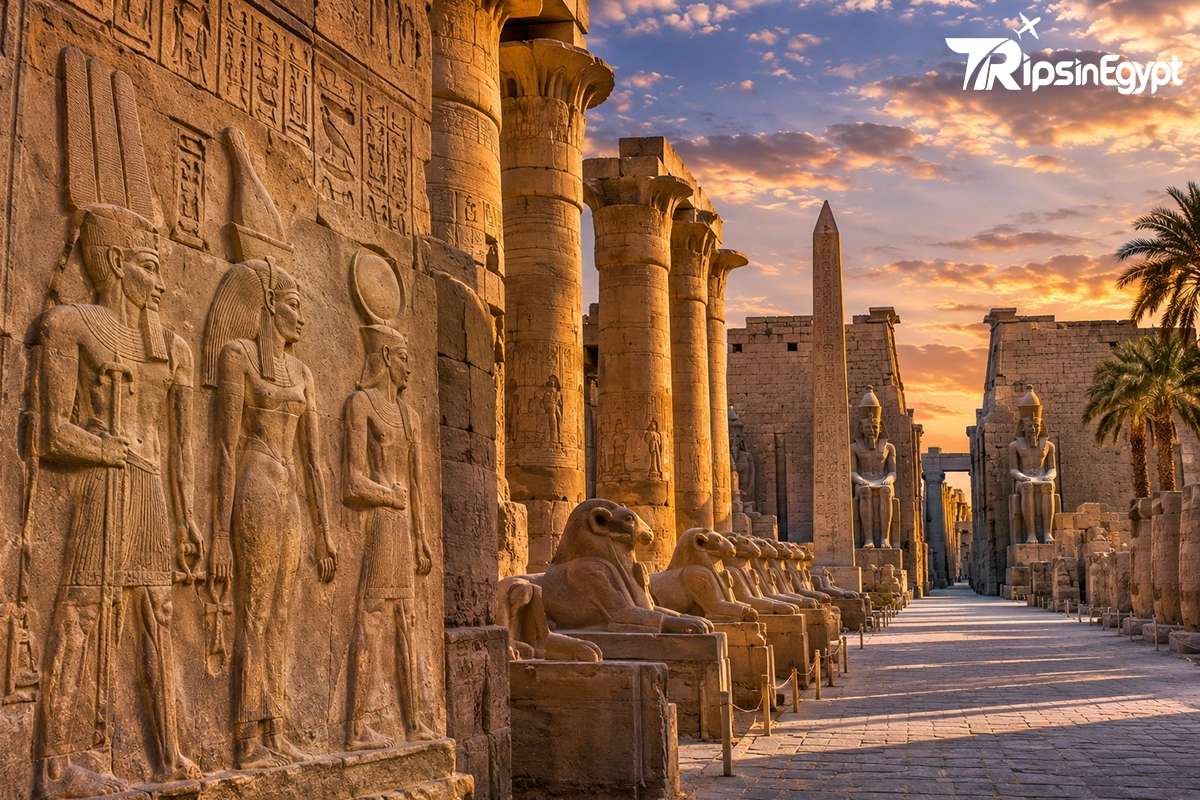
Luxor, ancient Thebes, was the religious capital of Egypt during the New Kingdom, and its god Amun became Amun-Ra, king of the gods, when he was merged with the sun god.
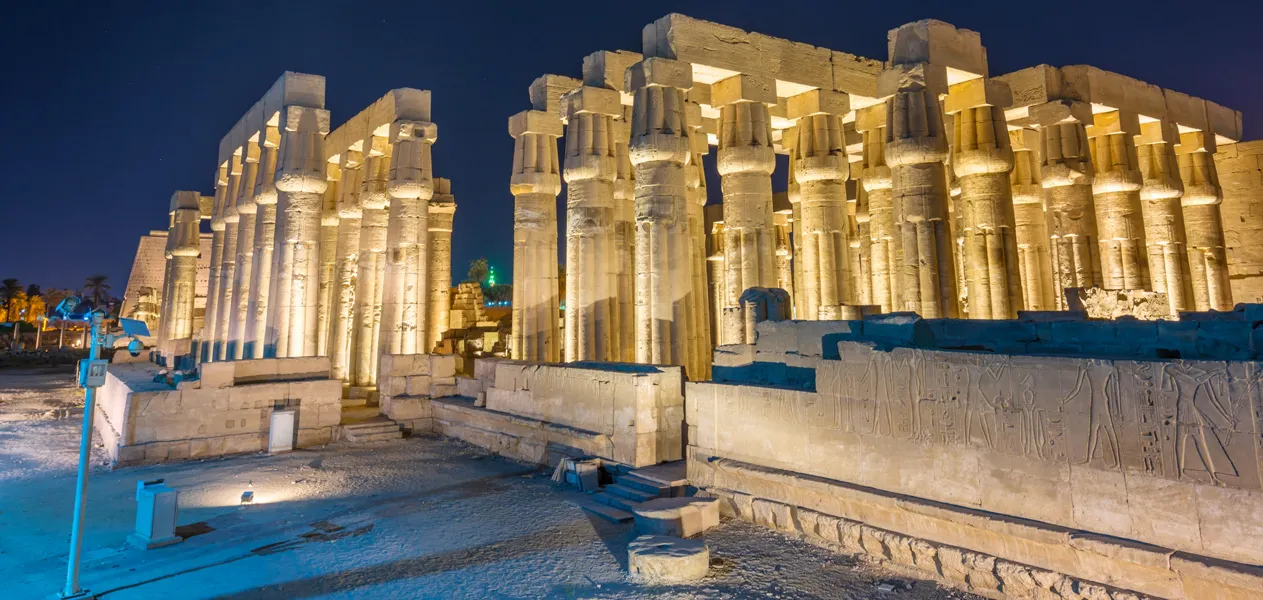
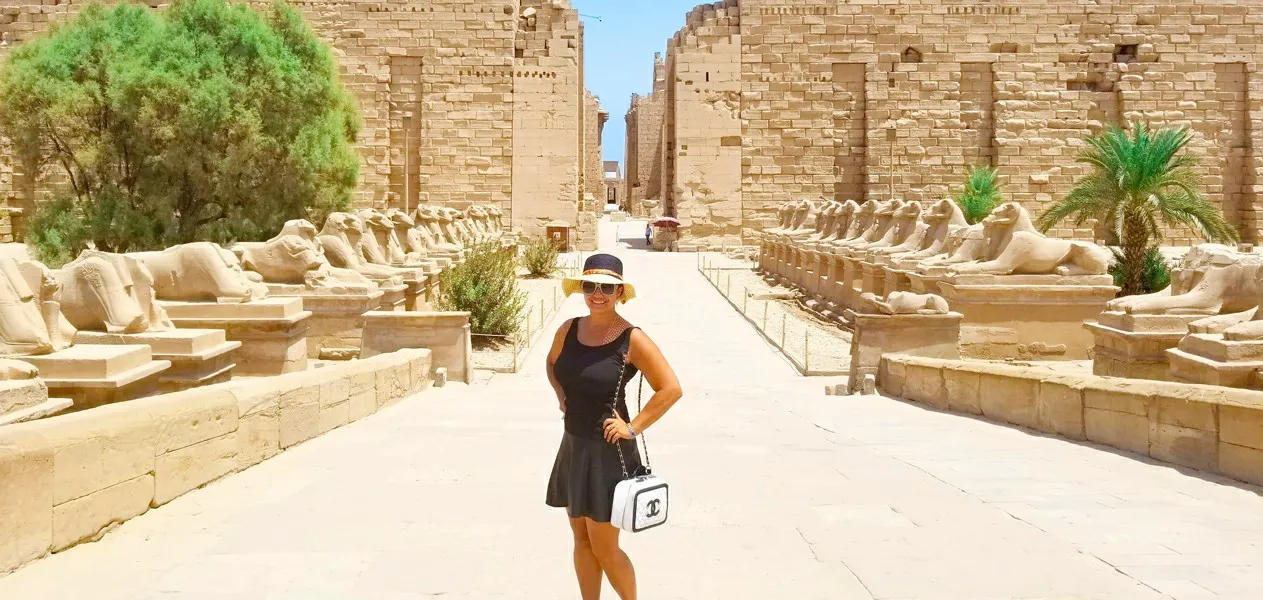
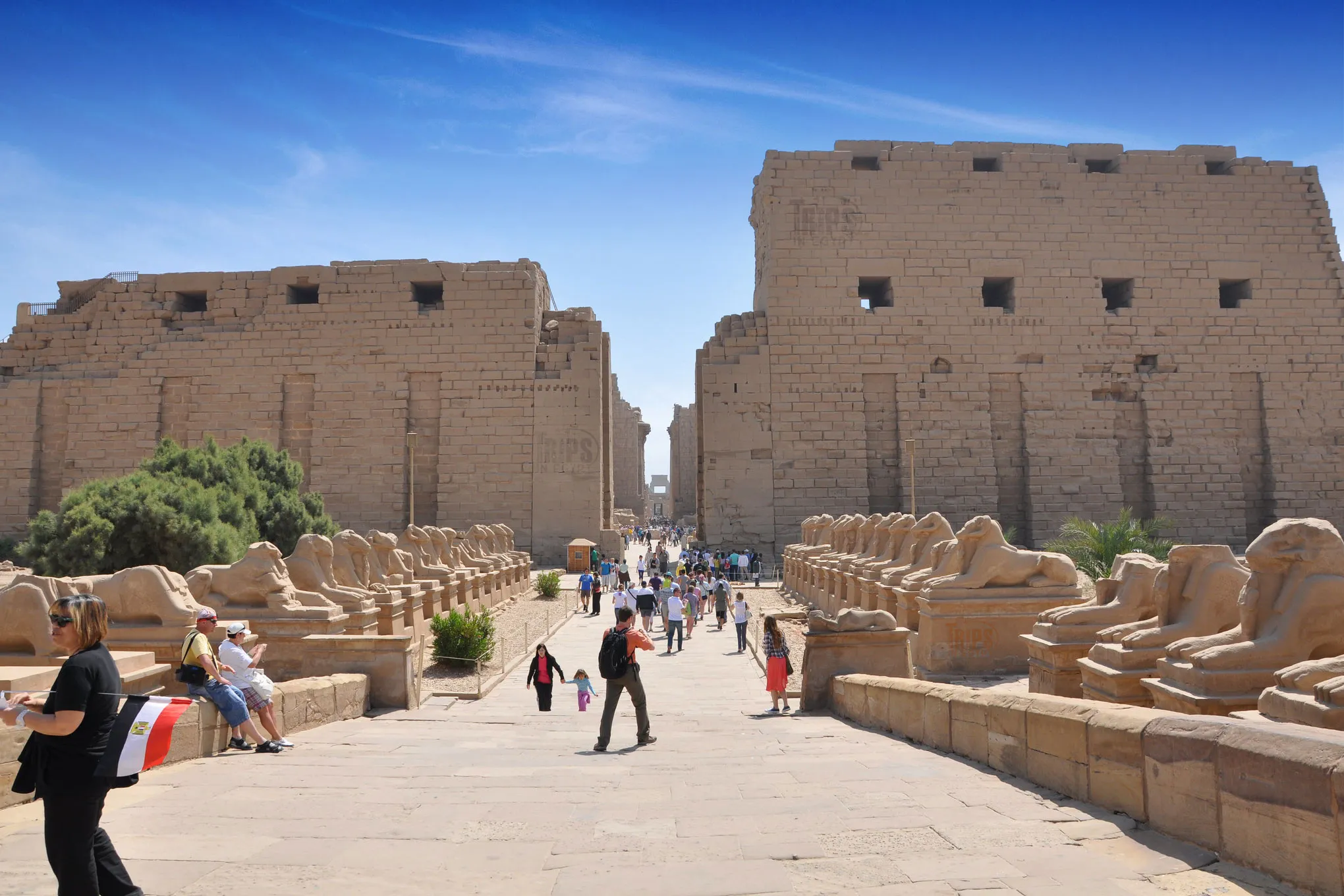
Karnak Temple was his home and one of the largest religious complexes ever built. Pharaohs added to it for about 2,000 years, creating three walled precincts: the Precinct of Amun-Ra at the center, the Precinct of Mut, his wife, to the south, and the Precinct of Montu, the falcon war god of Thebes, to the north. Their son Khonsu, the moon god, had his own temple inside Amun's precinct, begun by Ramesses III. The Great Hypostyle Hall alone holds 134 giant columns.
About 3 km to the south, Luxor Temple was built mainly by Amenhotep III and Ramesses II for a special form of Amun. Once a year, during the Opet Festival, the statues of Amun, Mut and Khonsu were carried in sacred boats along the Avenue of Sphinxes from Karnak to Luxor Temple, a celebration described in our guide to ancient Egyptian festivals.
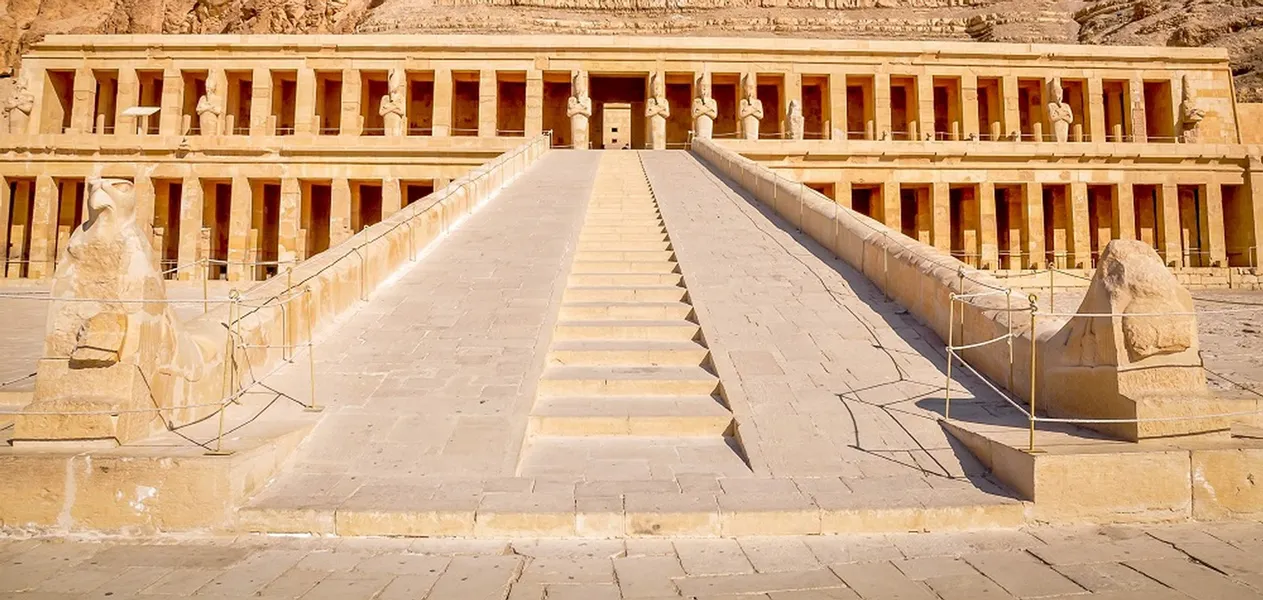
On the West Bank, the Temple of Hatshepsut at Deir el-Bahari honored Amun, but it also has chapels for Hathor and Anubis, the jackal god of embalming. Anubis and Thoth also appear in many tomb scenes of the weighing of the heart, explained in our guide to the judgement of the dead in ancient Egypt.
Esna, Edfu and Kom Ombo: Khnum, Horus and Sobek
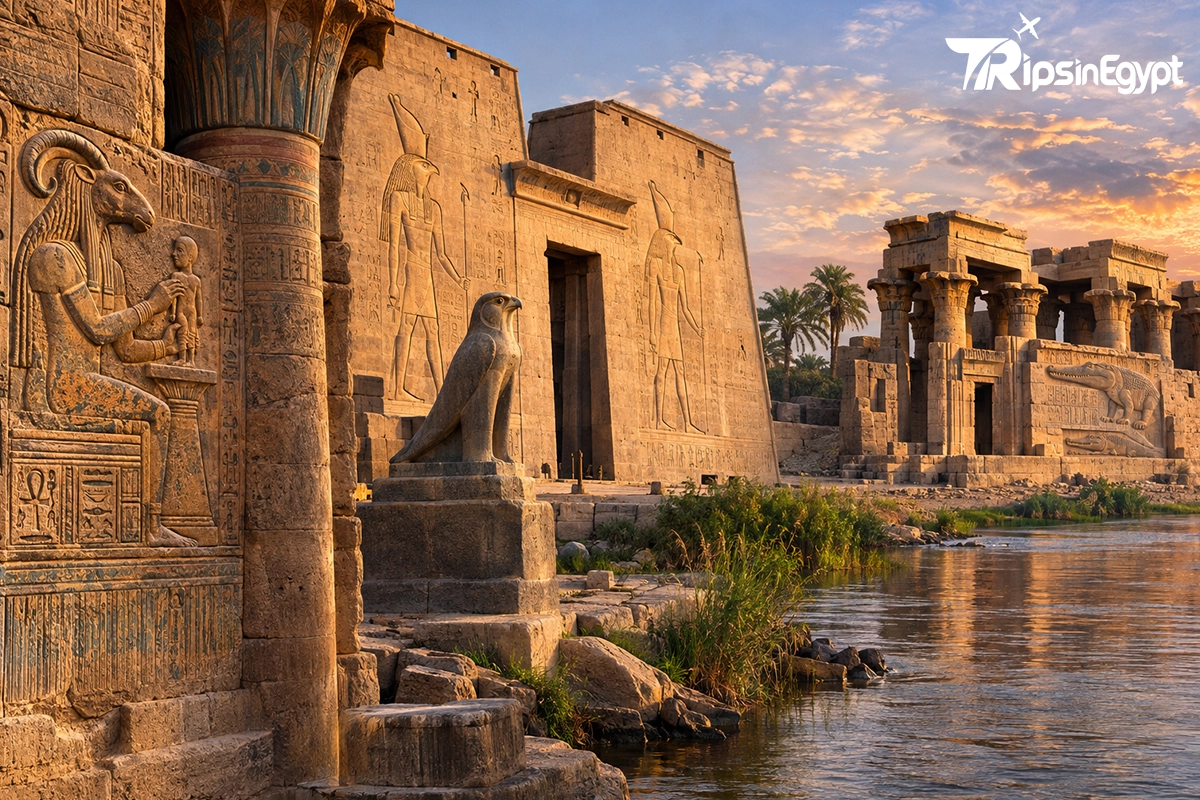
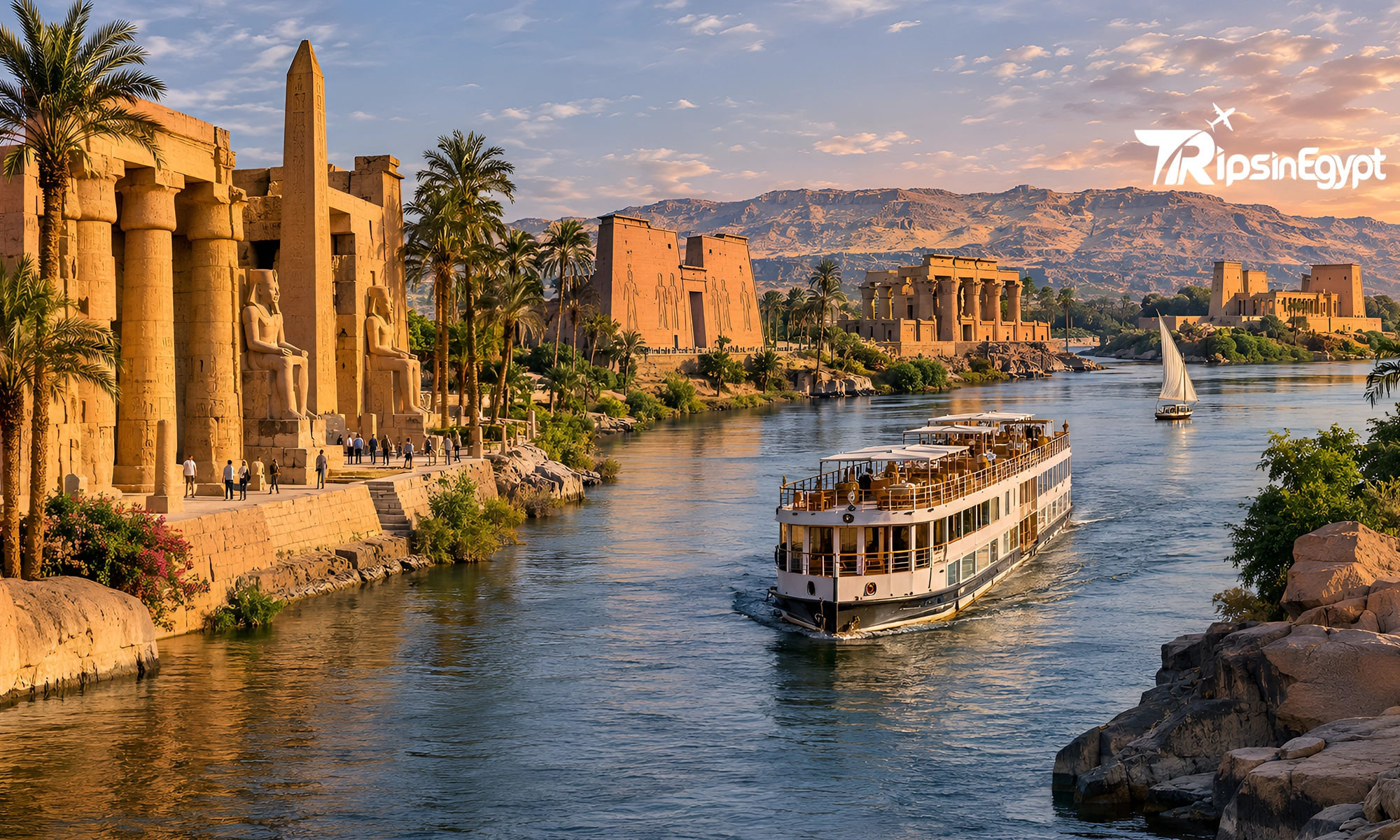
Between Luxor and Aswan, three Ptolemaic and Roman temples stand on the route of every Nile river cruise. The Temple of Esna honored Khnum, the ram-headed god believed to shape people on a potter's wheel. Only its Roman-era hypostyle hall survives, but recent restoration has uncovered brilliant original colors on its ceilings and columns.
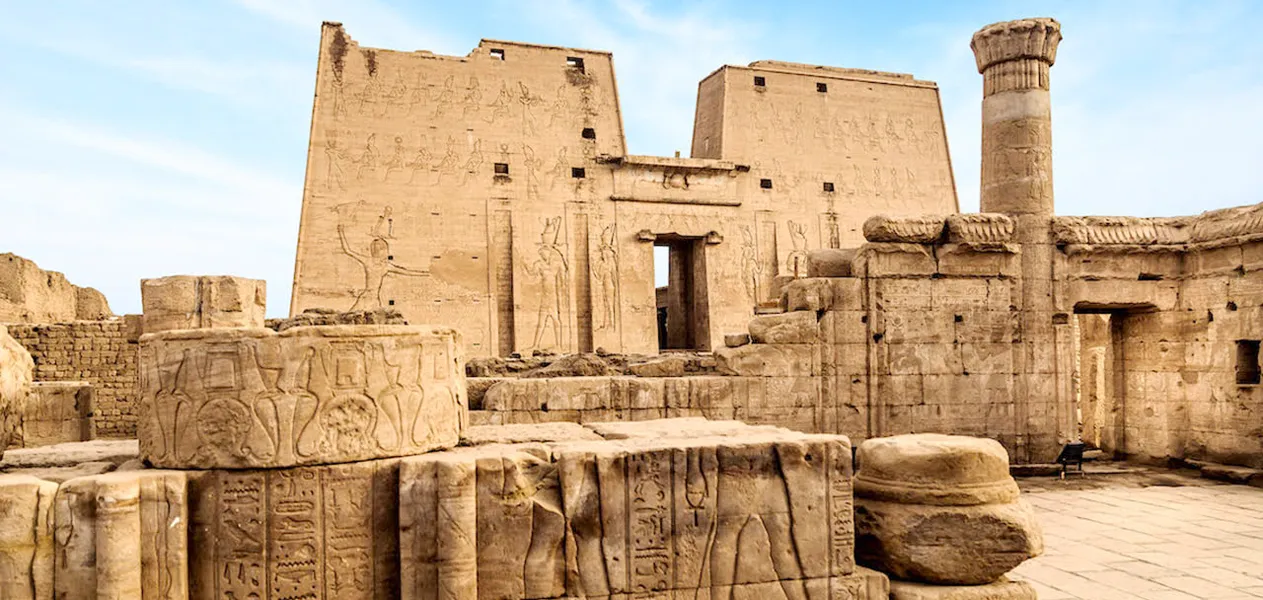
Edfu Temple was the home of Horus, the falcon god of kingship. Built between 237 and 57 BC, it is the best-preserved temple in Egypt, and its walls tell the story of Horus defeating Seth to avenge his father Osiris. Two granite falcon statues guard its entrance, and its symbol, the Eye of Horus, became one of the most famous amulets of ancient Egypt.
Kom Ombo Temple is unique because it is a double temple, perfectly symmetrical, with two entrances and two sanctuaries. The southern half belonged to Sobek, the crocodile god of the Nile and fertility, and the northern half to Haroeris, or Horus the Elder. A small museum beside the temple displays mummified crocodiles found nearby.
Aswan and Abu Simbel: Isis, Khnum and the Gods of Ramesses II
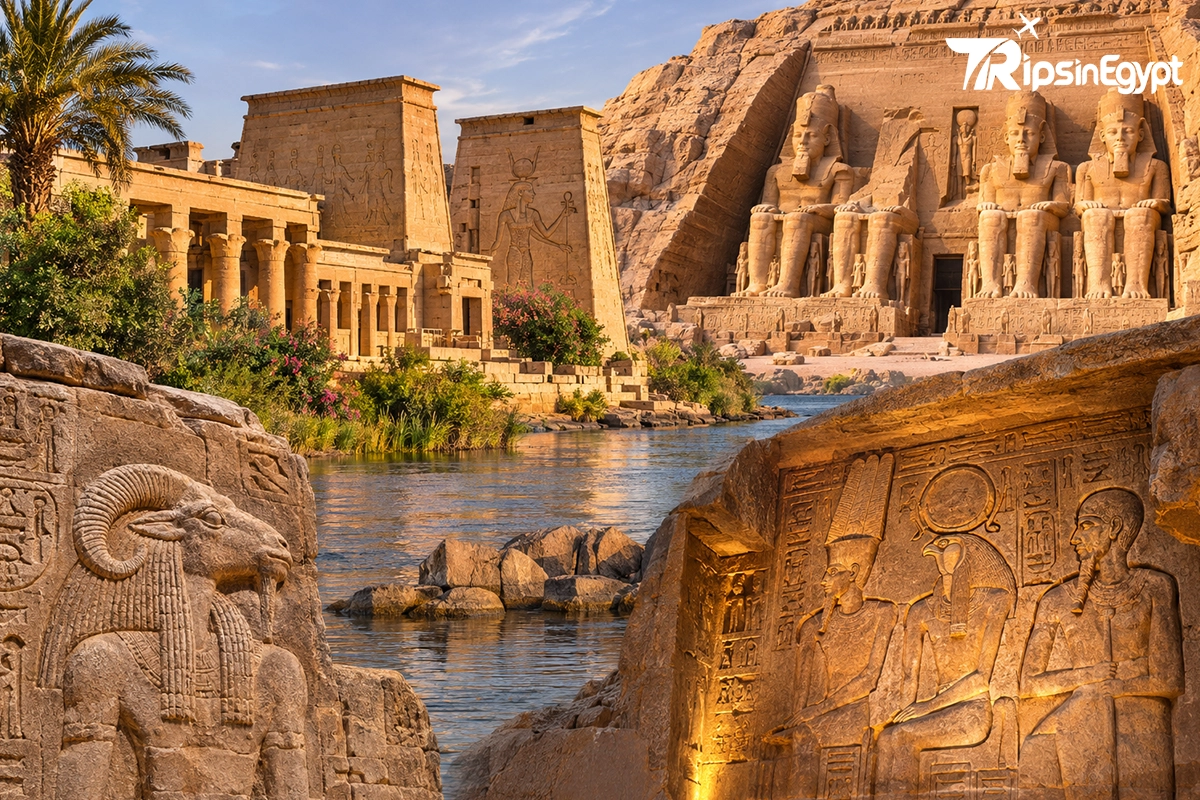
At the southern border of ancient Egypt, Aswan was believed to be the source of the Nile flood. On Elephantine Island, the Egyptians worshipped Khnum together with Satet and Anuket, the goddesses of the flood and the cataract.
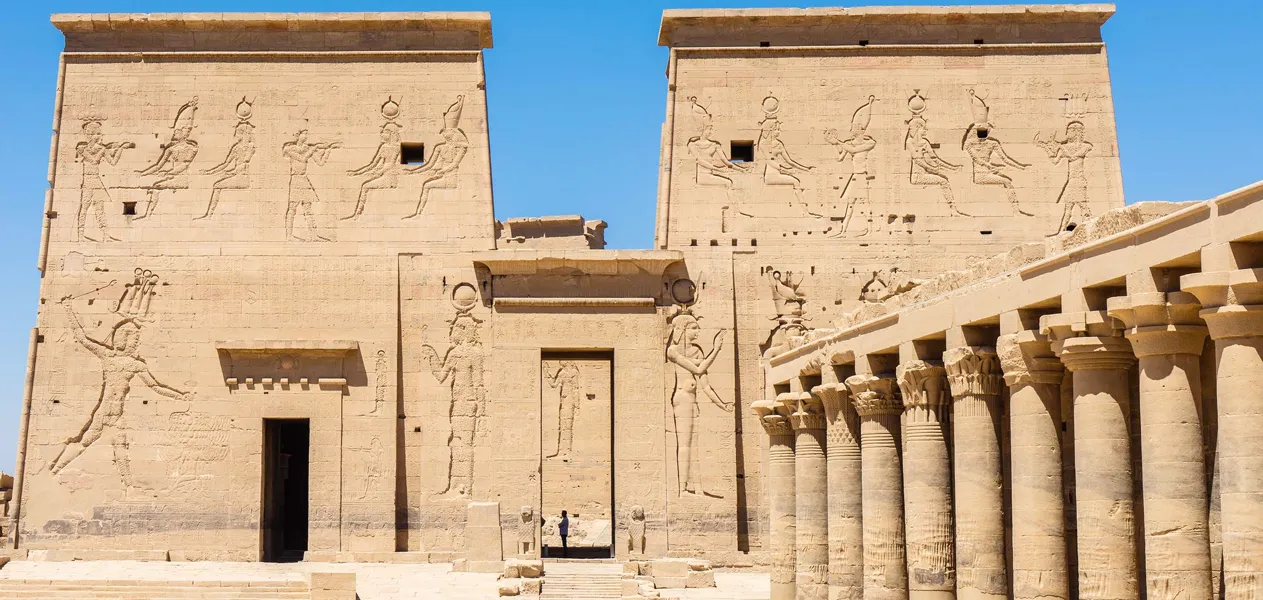
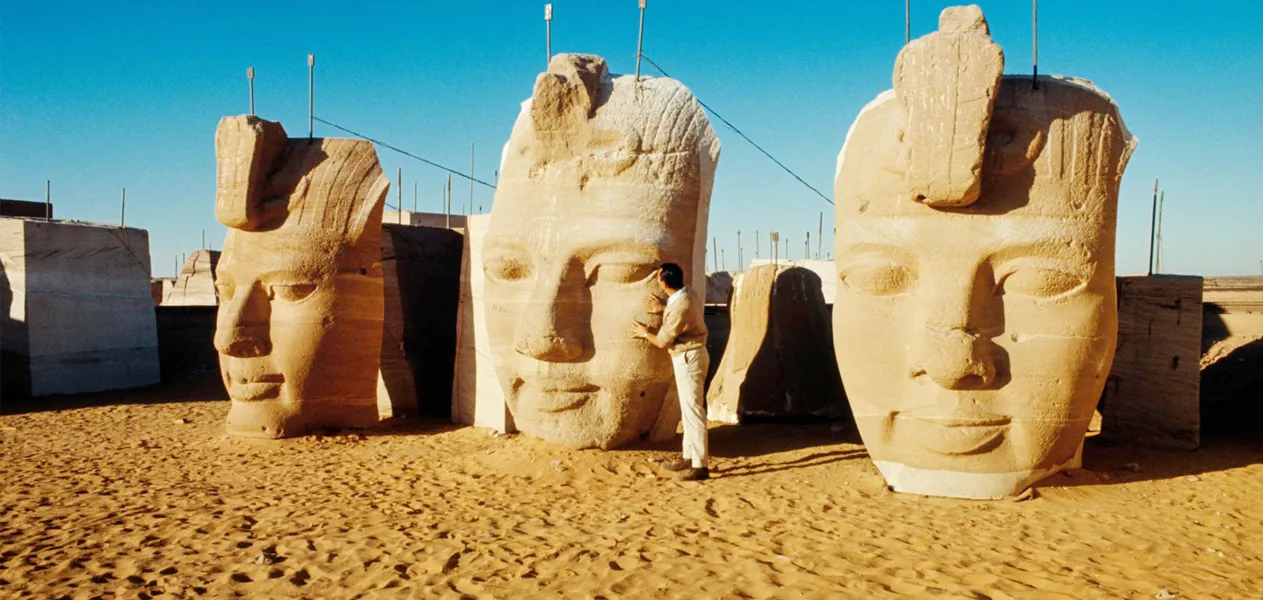
Philae Temple was the great sanctuary of Isis, the goddess of magic and motherhood who brought Osiris back to life. Her cult lasted longer than any other: the last known hieroglyphic inscription in Egypt was carved at Philae in AD 394, and the temple is traditionally said to have closed only in the 6th century. When the Aswan High Dam threatened to drown it, the whole temple was moved, stone by stone, to nearby Agilkia Island.
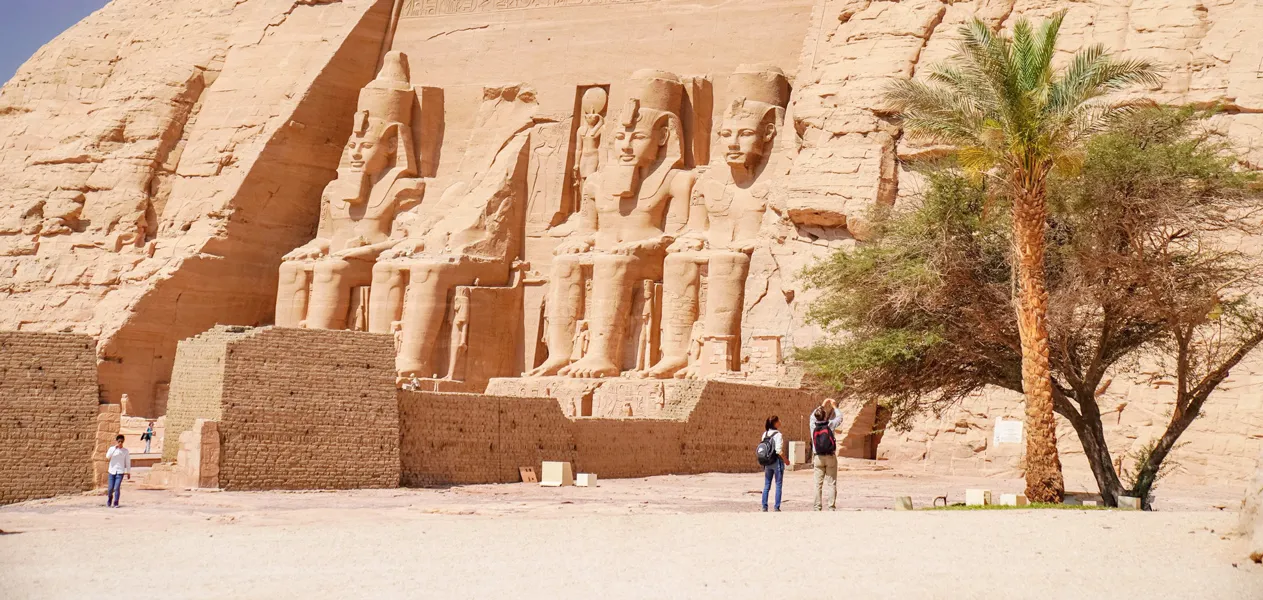
Further south, the two temples of Abu Simbel show how a king could join the gods. The Great Temple was dedicated to Amun-Ra, Ra-Horakhty and Ptah, the gods of Egypt's three great cities, and to Ramesses II himself. In the sanctuary, the four seated statues are lit by the rising sun twice a year, around 22 February and 22 October, while Ptah, a god linked with the underworld, stays in shadow. You can witness it at the Abu Simbel Sun Festival. The Small Temple next door honors Hathor and Queen Nefertari.
Walk Among the Gods With Trips In Egypt
The gods of Egypt still live in their timeless stone houses, waiting in painted halls and silent sanctuaries for visitors to come and greet them once more. Following them from temple to temple is the best way to understand how the ancient Egyptians saw their world. Discover all our Egypt travel packages, or let us build a tailor-made tour that follows your favorite gods along the Nile. Book us as soon as possible or contact our operation department today.

5 Days Cairo And Hurghada Trip
Amazing 4 Nights Cairo and Hurghada Trip Itinerary 5 Days Cairo and Hurghada trip wil...
- Duration 5 Days / 4 Nights
- Location Cairo & Hurghada
- Type Historical & Recreational Tour
From$690/per person
View Tour
6 Days Cairo, Alexandria & Faiyum Tour
Unforgettable Cairo, Alexandria & Faiyum Adventure in Six Days 6 Days Cairo, Alex...
- Duration 6 Days / 5 Nights
- Location Cairo - Alexandria - Fayum
- Type Historical Tour
From$720/per person
View Tour
10 Days Cairo, Faiyum & Nile Cruise Holiday
Breathtaking 10 Days Journey of A Lifetime in Egypt 10 Days Cairo, Faiyum & Nile...
- Duration 10 Days / 9 Nights
- Location Cairo, Luxor, Aswan & Faiyum
- Type Classic Tour
From$1350/per person
View Tour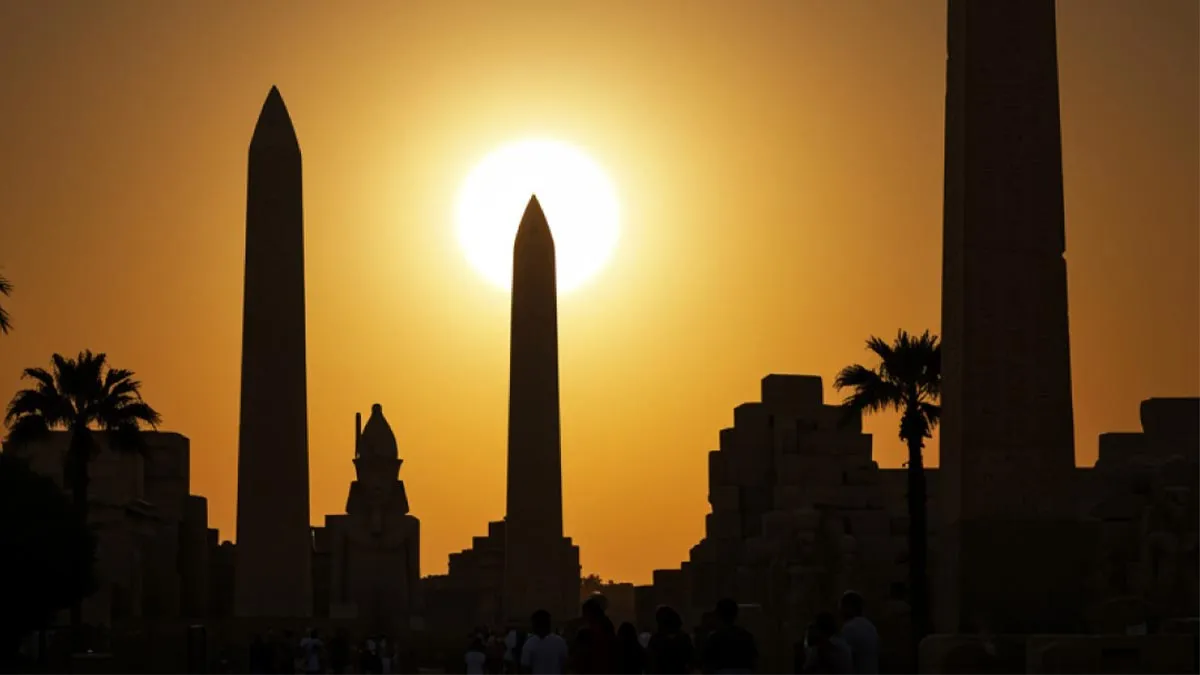 SOLD OUT
Ultimate 7-Day Egypt Solar Eclipse Experience with Hurghada 2027
Enjoy a 7-Day Egypt Solar Eclipse Tour with Hurghada 2027 6 Nights Egypt Solar Ecli...
- Duration 7 Days / 6 Nights
- Location Cairo / Giza / Luxor / Hurghada
- Type Astronomical Tour
Sold Out
View Details