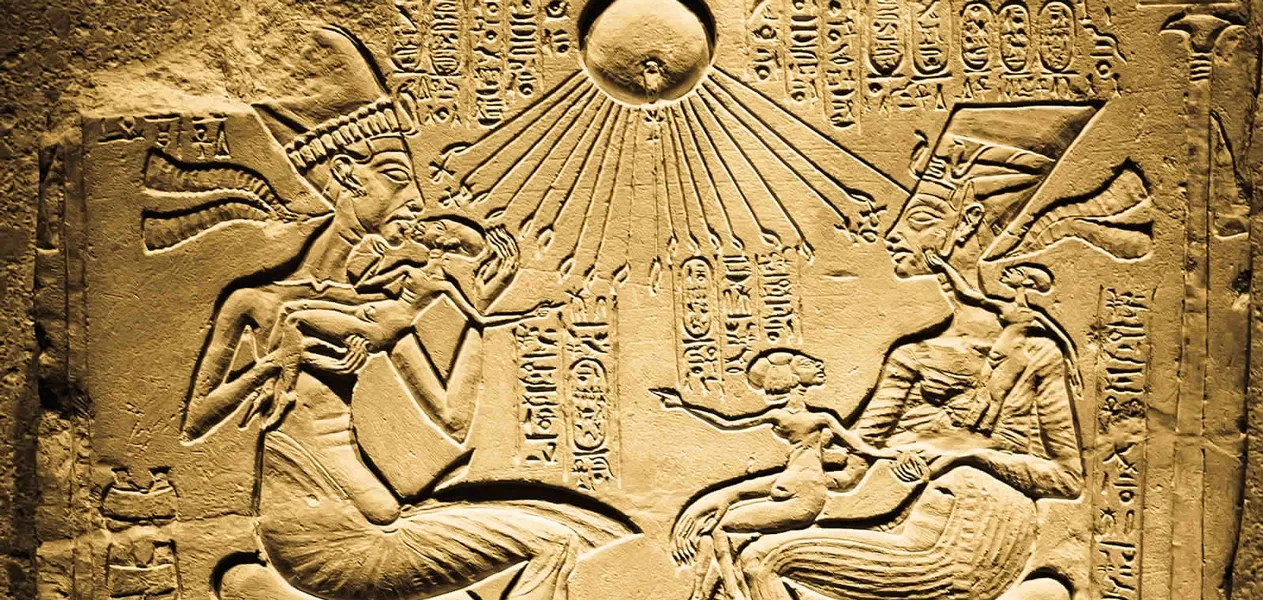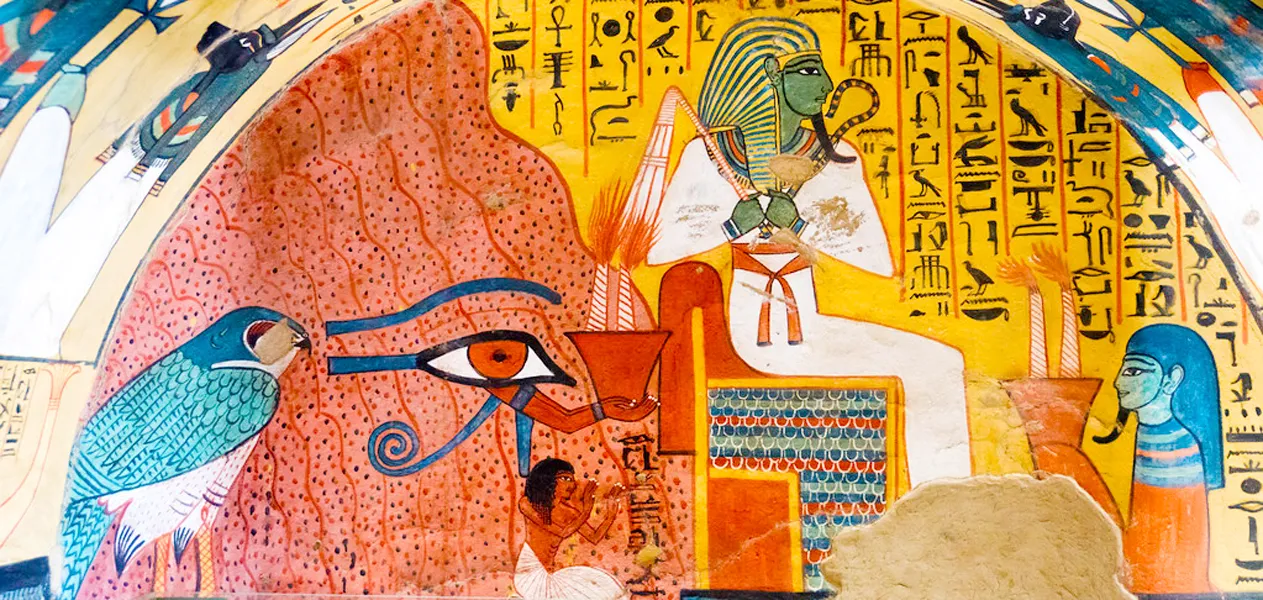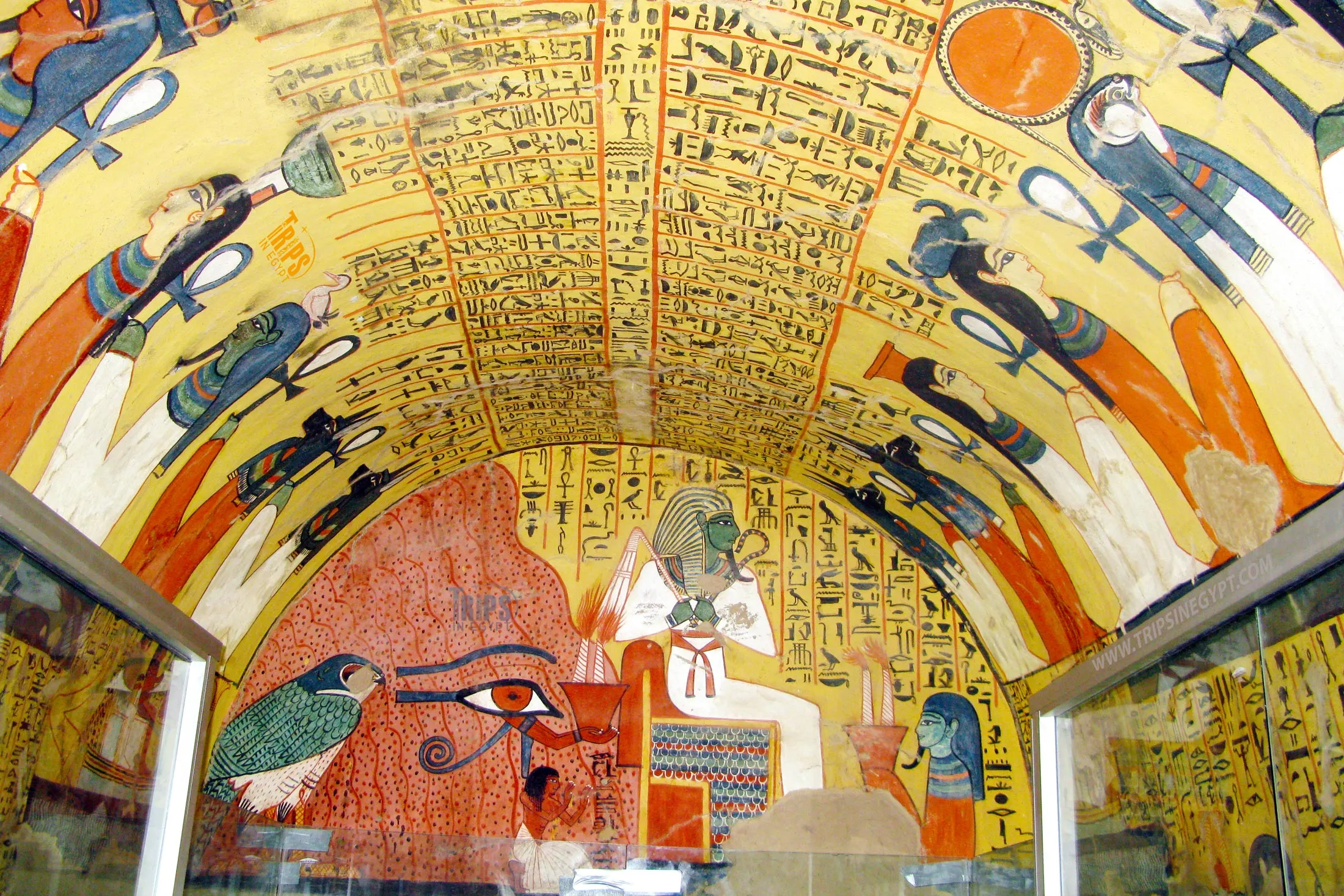




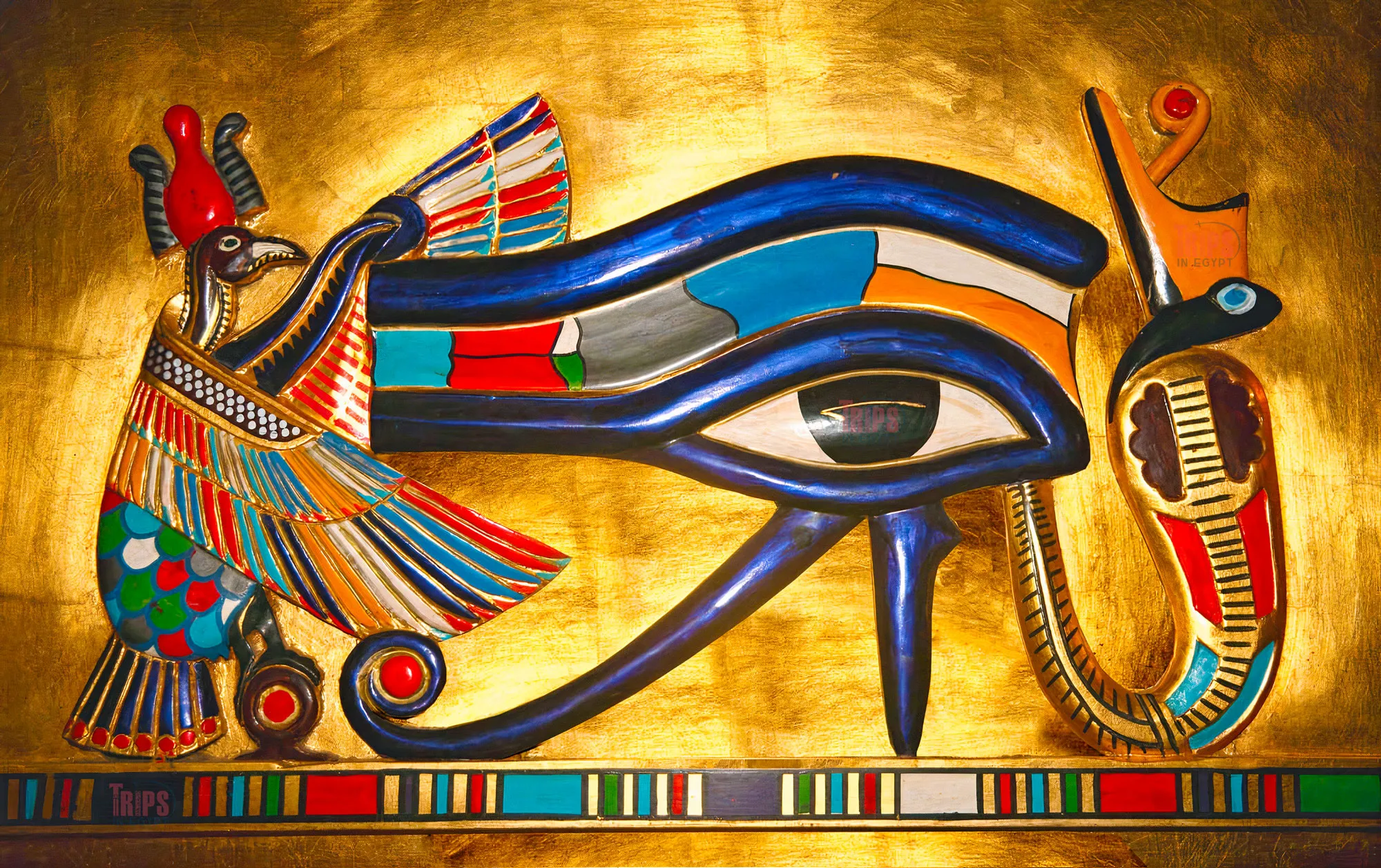
The Eye of Horus is an ancient Egyptian symbol of protection, healing and restoration. Known to the Egyptians as the wedjat (also written udjat), meaning "the sound one" or "the whole one", it represents the eye of the falcon god Horus, which was injured in battle and made whole again.
For more than 3,000 years, Egyptians wore it as an amulet, painted it on coffins and carved it on temple walls, trusting it to keep them safe in this life and the next. This guide explains the Eye of Horus meaning, the myth behind it, its six parts, how it differs from the Eye of Ra, and where you can still see it in Egypt today.

What Does the Eye of Horus Mean?
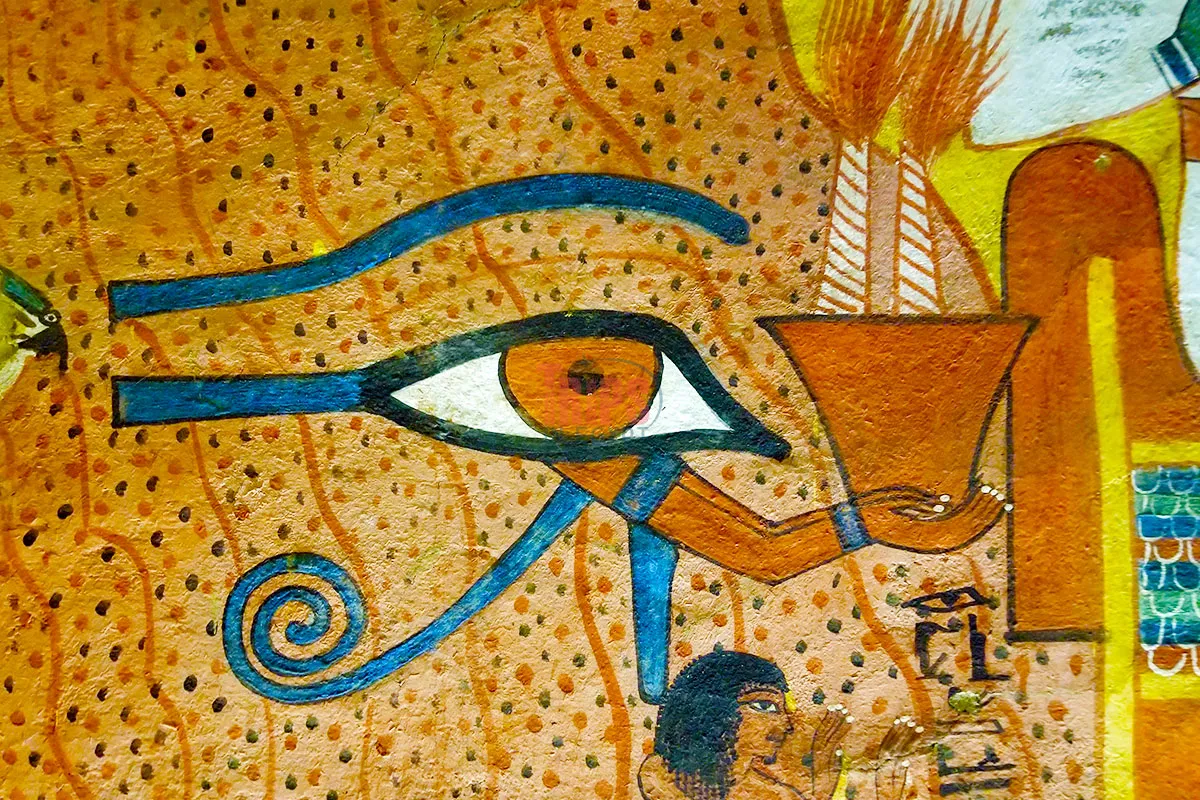
The Eye of Horus meaning, in one phrase, is protection, healing and wholeness. Because the god's injured eye was restored, the symbol came to stand for anything damaged being made complete again, whether a body, a life or the order of the world.
The Egyptians used it in three main ways:
-
Protection: As an amulet, it guarded the wearer against harm, illness and evil.
-
Healing and restoration: It was linked to recovery and good health, among both the living and the dead.
-
Royal power: As the eye of Horus, god of kingship, it was also a symbol of the pharaoh's legitimate rule.
The symbol shows a stylized human eye and eyebrow with markings below it inspired by the face of a falcon, Horus's sacred bird. In hieroglyphs it is the sign known as D10, and it even has its own Unicode character today: 𓂀.
The Myth of Horus and Seth
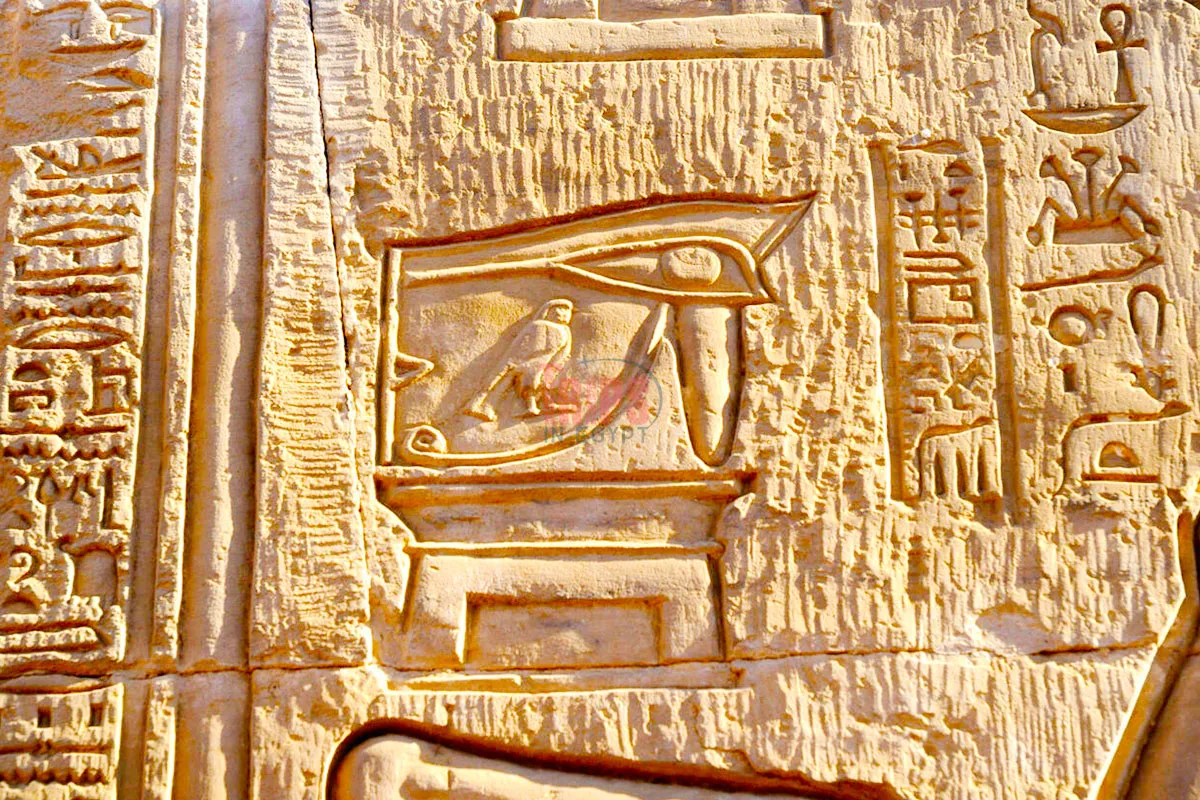
The story behind the symbol is one of the great dramas of Egyptian mythology. The god Osiris, king of Egypt, was murdered by his jealous brother Seth. Osiris's wife Isis brought him back to life long enough to conceive a son, Horus, who grew up to challenge Seth for the throne.
During their long struggle, Seth tore out or damaged Horus's eye. In the most common version, the god of wisdom Thoth restored it. In the story known as The Contendings of Horus and Seth, the goddess Hathor heals it with gazelle's milk.
Horus then offered his restored eye to his dead father, Osiris, giving him new life in the underworld. Horus became king of the living and Osiris ruler of the dead. The restored eye became the ultimate symbol of healing, sacrifice and the triumph of order over chaos.
Ancient Egyptian Eye Symbols: Horus, Ra and More
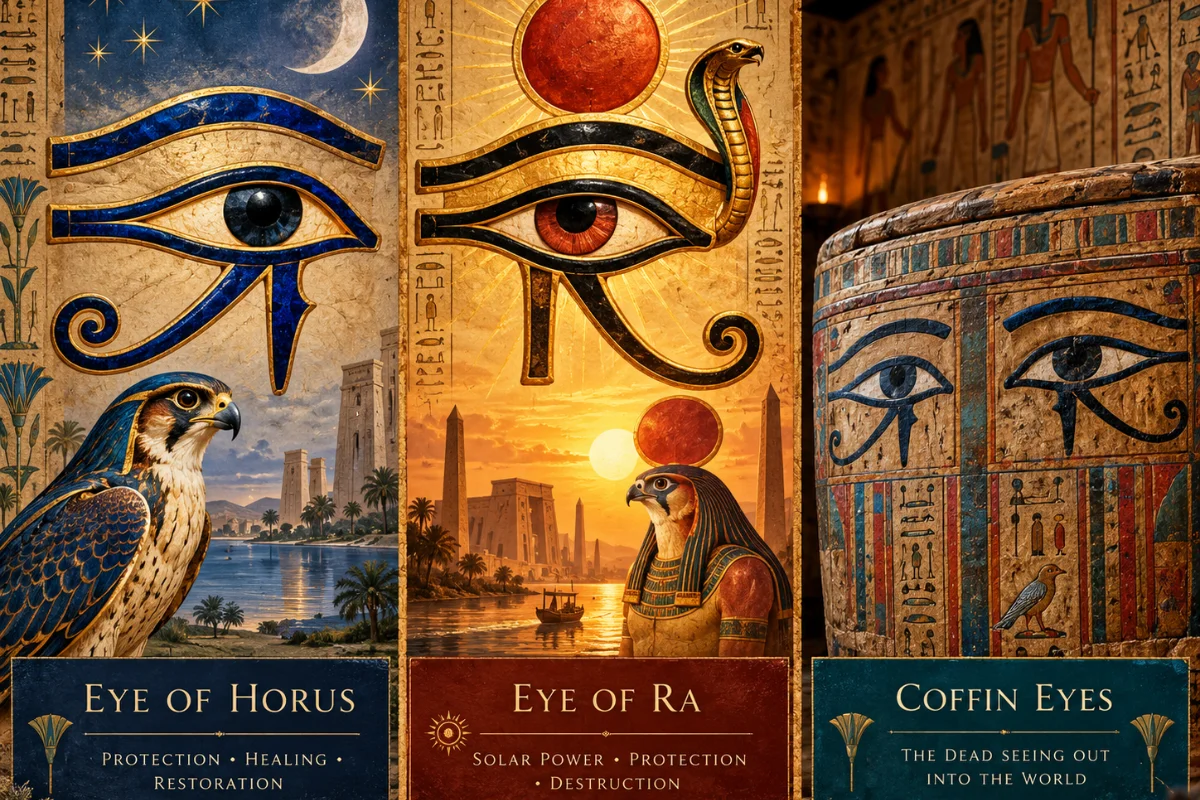
When people search for the "ancient Egypt eye", they usually mean the Eye of Horus. But the Egyptian eye meaning depends on which eye you are looking at, because the Egyptians used several eye symbols.
|
Symbol |
Linked to |
Meaning |
|
Eye of Horus (wedjat) |
The left eye; the moon; Horus |
Protection, healing and restoration |
|
Eye of Ra |
The right eye; the sun; Ra |
The sun's fierce power, which can protect or destroy |
|
Coffin eyes |
A pair of wedjat eyes painted on coffins |
Allowing the dead to "see" out of the coffin |
The Eye of Ra was often personified as a goddess such as Sekhmet, Hathor or Bastet, and was sometimes shown as the uraeus cobra on the king's brow. In myth, Ra sent his eye as Sekhmet to punish humanity, and she was calmed only when she drank beer dyed red to look like blood. Over time the two eyes were often blended, and many objects simply show a wedjat eye without saying which god it belongs to. Learn about these and other gods to the ancient Egyptians in our full guide.
Left Eye or Right Eye?
Strictly, the Eye of Horus is the left eye, associated with the moon, while the right eye is the Eye of Ra, associated with the sun. The Egyptians explained the moon's monthly waning and waxing as Horus's eye being damaged and restored again and again. In practice, artists drew both versions, and amulets were made facing either direction.
The Six Parts of the Eye of Horus
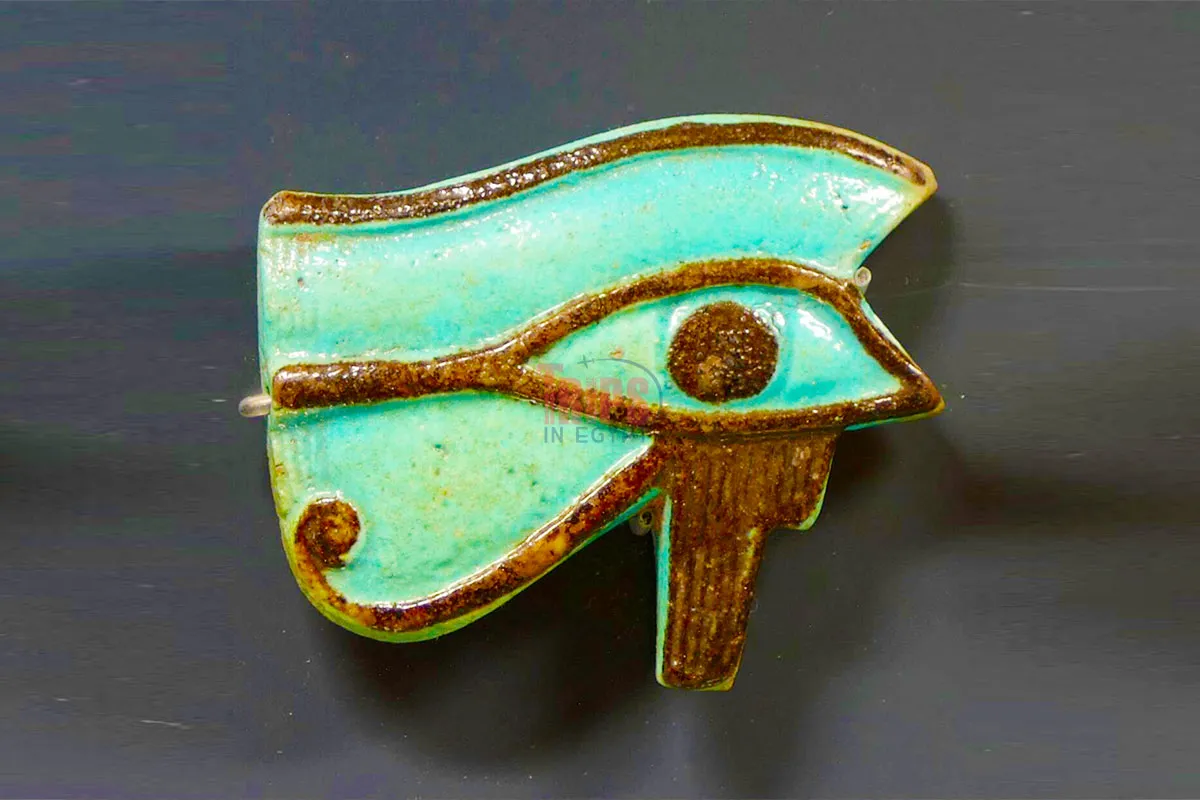
A well-known tradition divides the Eye of Horus into six parts. Each part is linked to one of the senses and to a fraction used in measuring grain.
|
Part of the eye |
Sense |
Fraction |
|
Inner corner (nearest the nose) |
Smell |
1/2 |
|
Pupil |
Sight |
1/4 |
|
Eyebrow |
Thought |
1/8 |
|
Outer corner (toward the ear) |
Hearing |
1/16 |
|
Curled tail |
Taste |
1/32 |
|
Vertical "teardrop" line |
Touch |
1/64 |
Added together, the fractions make 63/64, not a whole. A popular explanation says the missing 1/64 was supplied by Thoth's magic when he restored the eye.
It is important to know that this "Horus-eye fraction" system comes from 19th- and 20th-century interpretations of how scribes wrote fractions of the hekat, a measure of grain. Some Egyptologists now argue the fraction signs developed separately and were linked to the eye only later. The six-senses idea is a modern interpretation rather than something the Egyptians wrote down.
How the Eye of Horus Was Used in Ancient Egypt
Amulets and Jewelry
Wedjat amulets were among the most common amulets in ancient Egypt, found from the late Old Kingdom through the Roman period. They were made of blue-green faience, carnelian, lapis lazuli, silver and gold, worn by the living, and placed among the wrappings of mummies to protect them in the afterlife.
Coffins and Tombs
From the Middle Kingdom onward, many coffins were painted with a pair of wedjat eyes on the side. The mummy was laid on its left side facing east, so the eyes allowed the dead person to "look out" at the rising sun and the world of the living.
Funerary Texts
The eye appears in the Pyramid Texts and in the Book of the Dead, where offerings to the dead were described as "the Eye of Horus", a symbol of restored life.
Boats and Everyday Life
Painted eyes on the prows of boats were meant to help them "see" their way safely. Fishing boats around the Mediterranean, such as the colorful luzzu of Malta, still carry painted eyes today, a tradition often linked to ancient Egypt.
Famous Artifacts Featuring the Eye of Horus
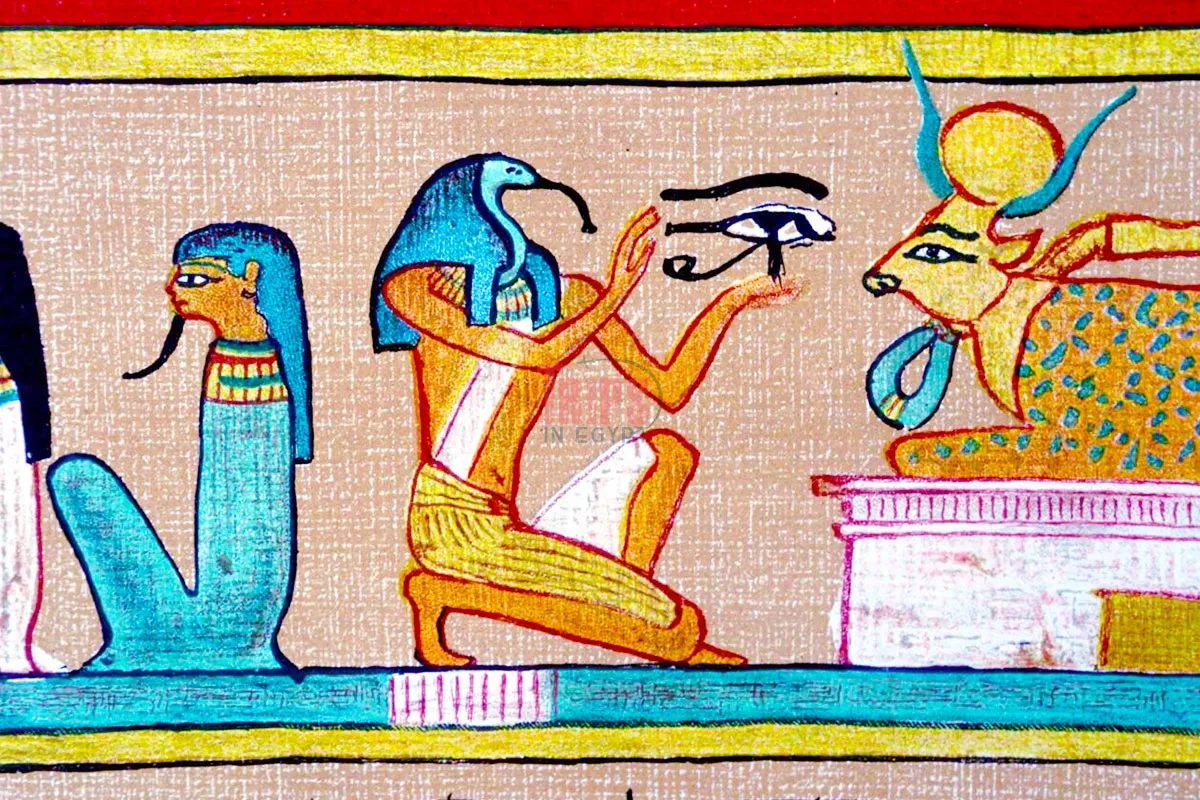
You can see the wedjat eye on many of Egypt's greatest treasures:
-
Tutankhamun's pectoral jewelry: Among the treasures of Tutankhamun is a gold pectoral inlaid with precious stones, showing a large wedjat eye protected by the cobra goddess Wadjet and the vulture goddess Nekhbet.
-
The Papyrus of Ani: This richly illustrated copy of the Book of the Dead, from about 1250 BC (19th Dynasty), includes the eye in its vignettes. It is now in the British Museum.
-
Middle Kingdom coffins: Painted wooden coffins with wedjat eyes on their sides are displayed in the Egyptian Museum in Cairo and in museums worldwide.
-
Wedjat amulets: Thousands of faience and gemstone wedjat amulets survive, some combining several eyes or adding protective animals.
-
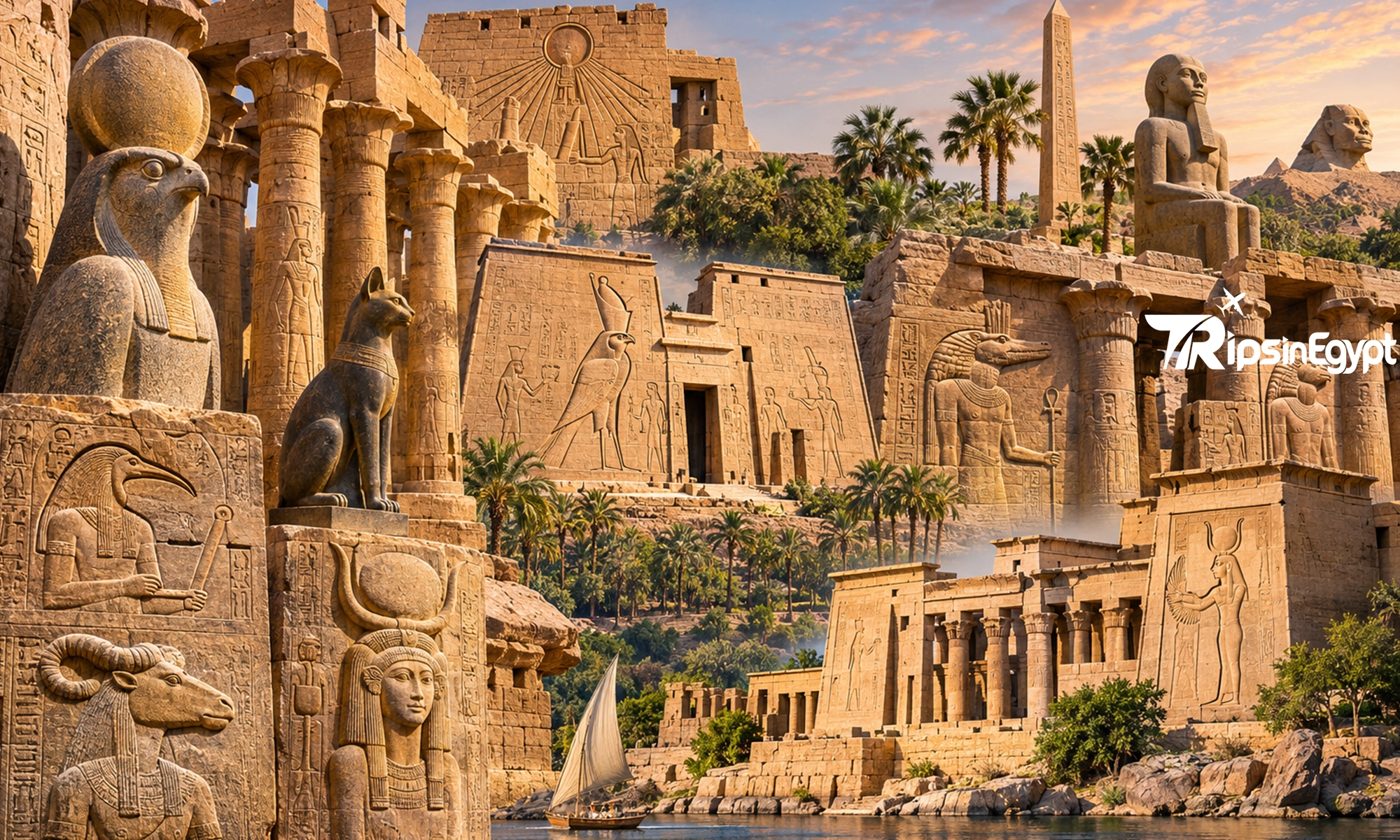
Temple reliefs: The eye appears in temple carvings, especially in temples dedicated to Horus, such as the Temple of Edfu, one of the best-preserved temples in Egypt.
The Eye of Horus in Modern Culture
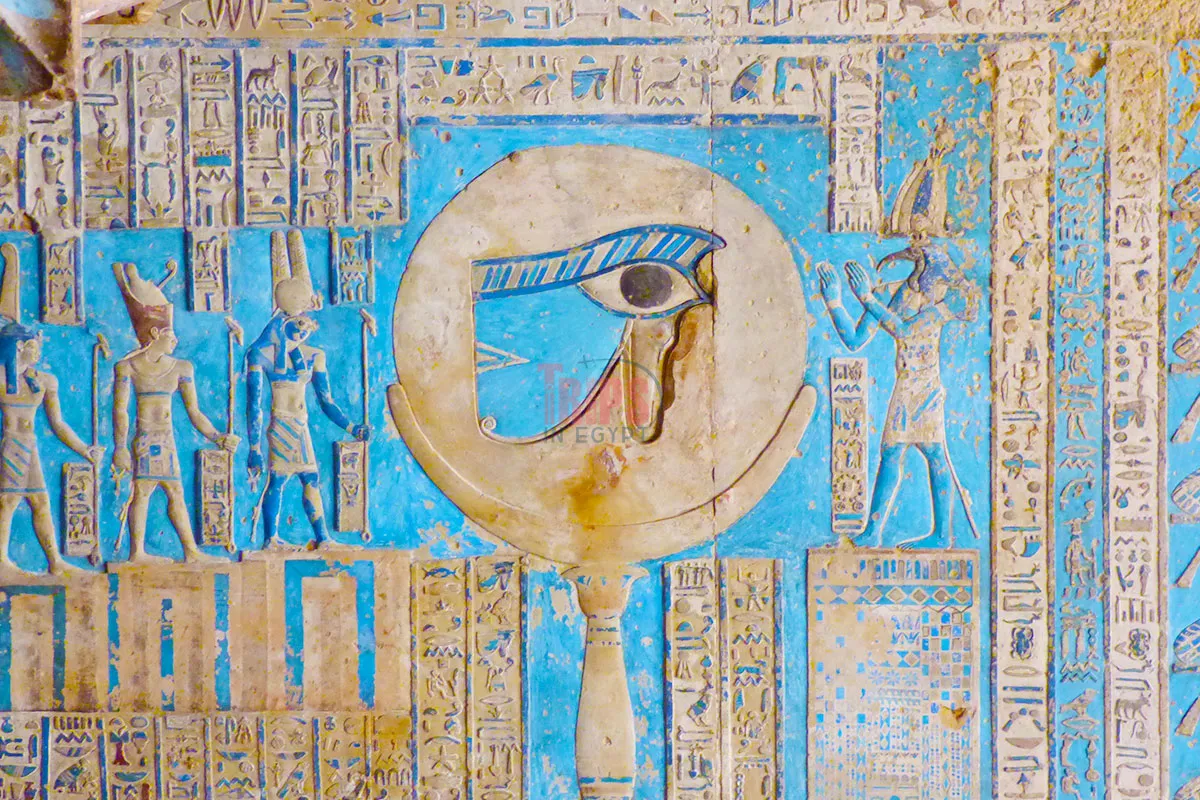
Today, the Eye of Horus is one of the most recognizable ancient symbols in the world. It appears on jewelry, tattoos, clothing and home décor, often as a charm for protection and good luck. It also features in films, television and video games set in ancient Egypt.
The Eye of Horus is often confused with the Eye of Providence, the eye inside a triangle on the US one-dollar bill. The two are not related: the Eye of Providence comes from Christian art of the Renaissance period. The Egyptian eye also differs from the Mediterranean nazar "evil eye" charm, although both share the same protective purpose.
In Egypt itself, Eye of Horus pendants and papyrus paintings are among the most popular souvenirs. You will find them in Cairo's famous Khan El Khalili bazaar.
Where to See the Eye of Horus in Egypt
The best way to understand the Eye of Horus is to see it on the objects and temples where it first appeared. Egypt's museums hold thousands of wedjat amulets, coffins and jewels, while its temples show Horus himself carved in stone. These Trips in Egypt tours take you to the places where the symbol comes to life:
|
Tour |
What you will see |
Price |
|
Tutankhamun's treasures, including his wedjat jewelry |
From $75 |
|
|
Giza, Egyptian antiquities, and Eye of Horus souvenirs in the bazaar |
From $95 |
|
|
The Temple of Horus at Edfu and the double temple of Kom Ombo |
From $80 |
|
|
Three Ptolemaic temples, including Horus's great temple at Edfu |
From $90 |
|
|
Amulets and funerary objects used to protect the dead |
From $65 |
A Nile cruise between Luxor and Aswan is another easy way to visit Edfu and Kom Ombo, since both temples are standard stops. Browse our 4-day Nile cruise from Aswan to Luxor to plan the journey.
Conclusion
The Eye of Horus began as a story of injury and healing, and became one of history's most enduring symbols of protection. It watched over pharaohs, guarded mummies and sailed on the prows of boats, and today it still hangs around the necks of travelers from every corner of the world.
To stand in the great Temple of Horus at Edfu is to meet the falcon god face to face, as the Egyptians did more than 2,000 years ago.
Ready to see the Eye of Horus for yourself? Explore our Egypt tour packages, which combine the treasures of Cairo's museums with the temples of Luxor, Edfu and Aswan, guided by expert Egyptologists.

5 Days Cairo And Hurghada Trip
Amazing 4 Nights Cairo and Hurghada Trip Itinerary 5 Days Cairo and Hurghada trip wil...
- Duration 5 Days / 4 Nights
- Location Cairo & Hurghada
- Type Historical & Recreational Tour
From$690/per person
View Tour
6 Days Cairo, Alexandria & Faiyum Tour
Unforgettable Cairo, Alexandria & Faiyum Adventure in Six Days 6 Days Cairo, Alex...
- Duration 6 Days / 5 Nights
- Location Cairo - Alexandria - Fayum
- Type Historical Tour
From$720/per person
View Tour
10 Days Cairo, Faiyum & Nile Cruise Holiday
Breathtaking 10 Days Journey of A Lifetime in Egypt 10 Days Cairo, Faiyum & Nile...
- Duration 10 Days / 9 Nights
- Location Cairo, Luxor, Aswan & Faiyum
- Type Classic Tour
From$1350/per person
View Tour SOLD OUT
Ultimate 7-Day Egypt Solar Eclipse Experience with Hurghada 2027
Enjoy a 7-Day Egypt Solar Eclipse Tour with Hurghada 2027 6 Nights Egypt Solar Ecli...
- Duration 7 Days / 6 Nights
- Location Cairo / Giza / Luxor / Hurghada
- Type Astronomical Tour
Sold Out
View Details