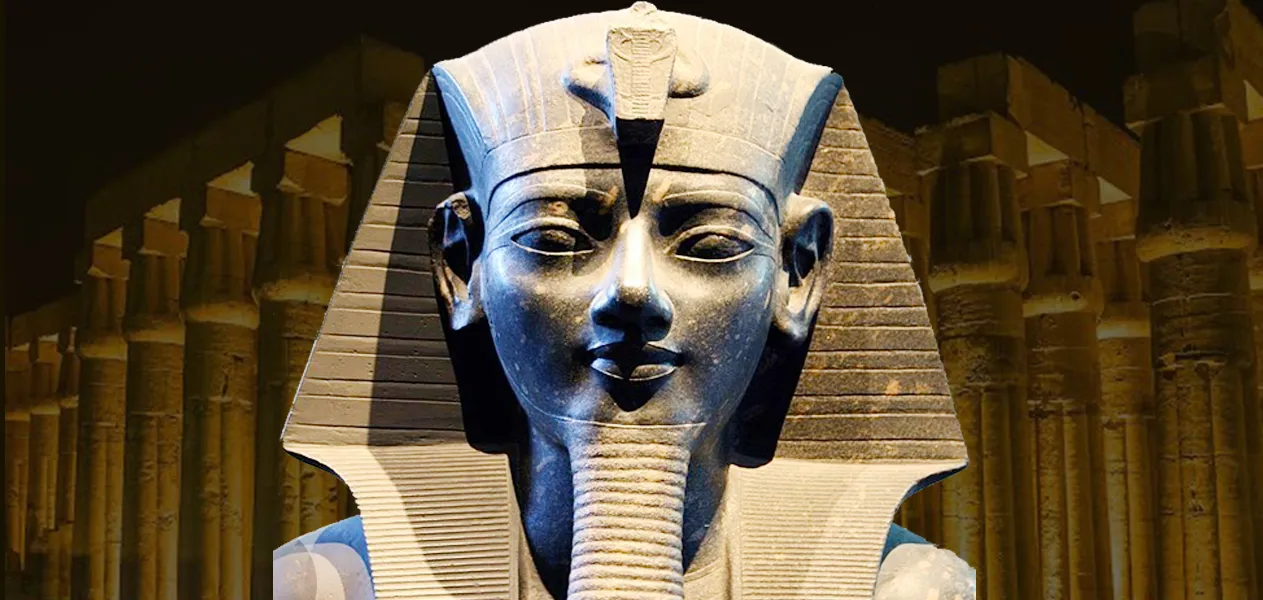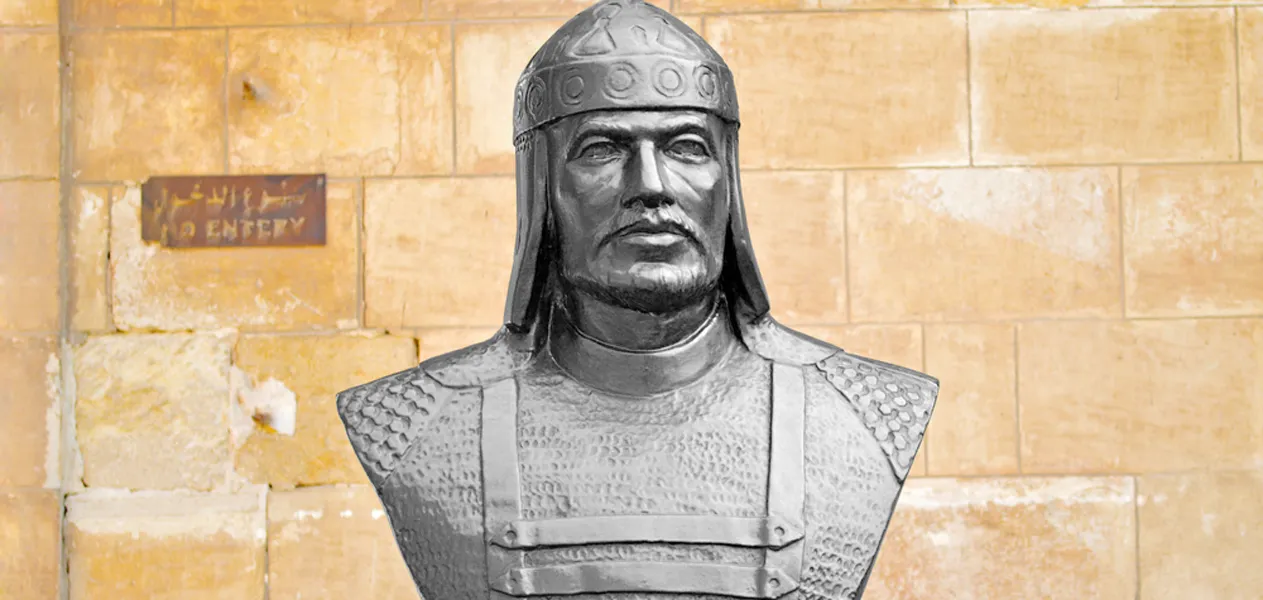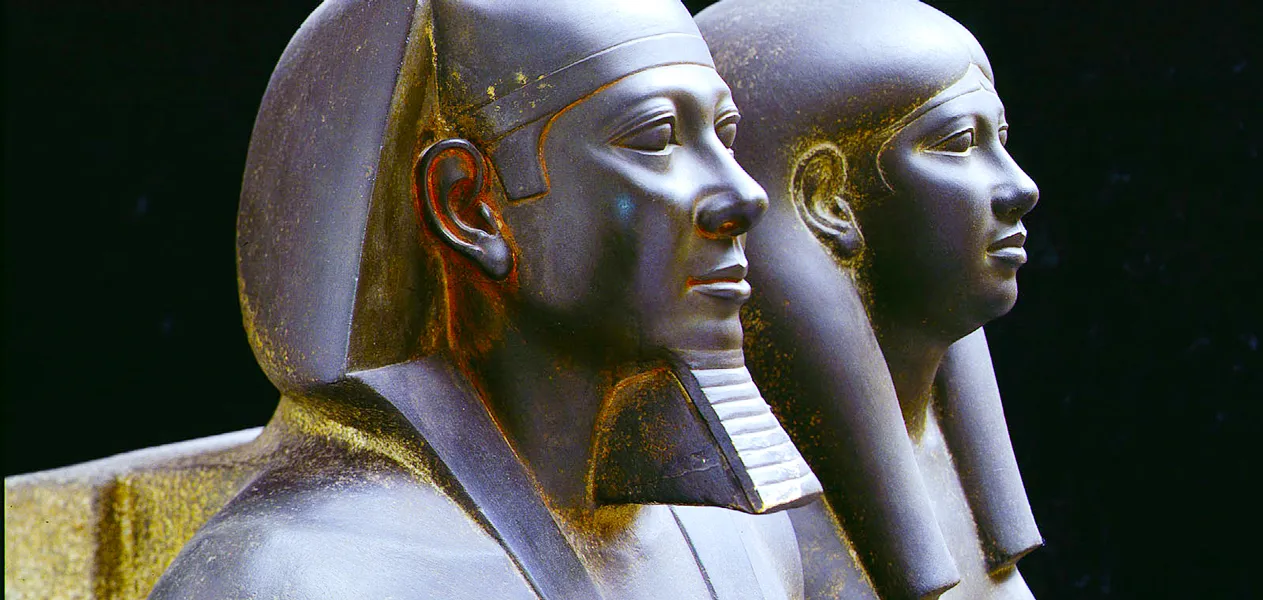




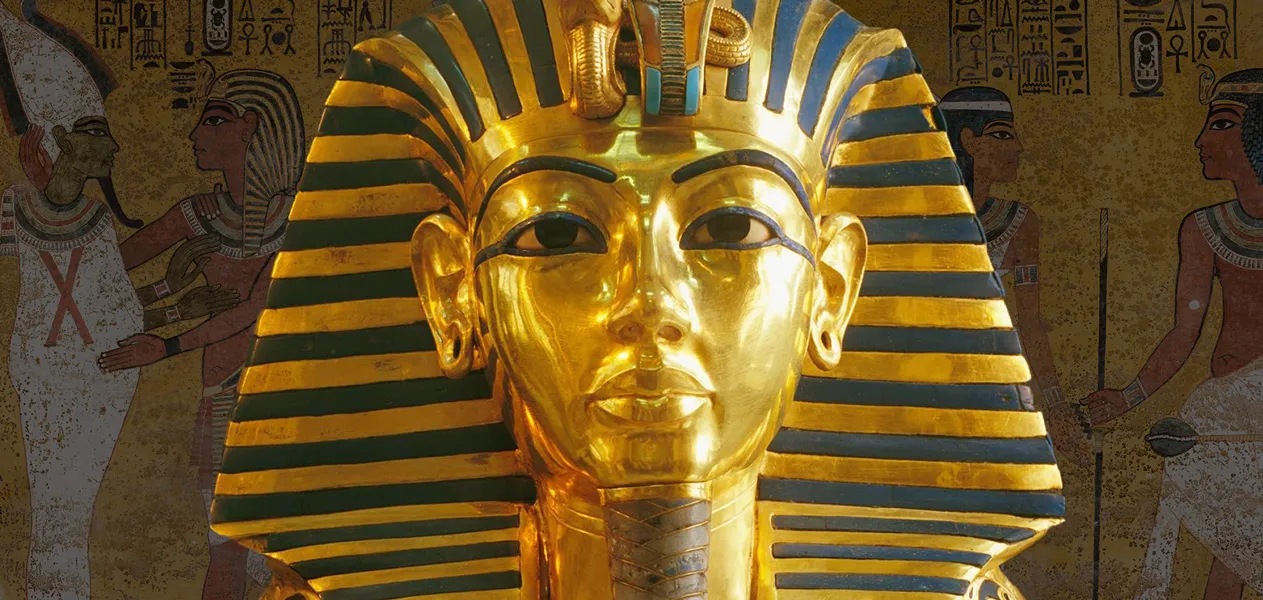
King Tutankhamun, the boy pharaoh of Egypt's 18th Dynasty, ruled for about ten years, from around 1332 to 1323 BC, and died at about 19. His reign helped restore Egypt's traditional gods after Akhenaten's religious revolution, while the discovery of his nearly intact tomb transformed him into the world's most famous Egyptian king. This guide explores his birth, life, accomplishments, appearance, death, tomb, treasures and most important facts.

King Tutankhamun Life
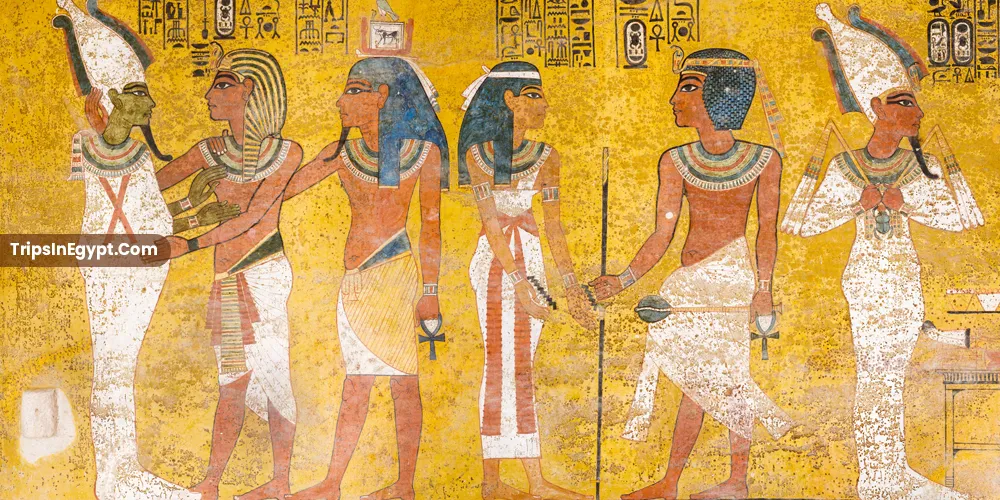
Tutankhamun grew up in a royal court that had turned away from centuries of Egyptian tradition. His father had moved the capital to a new city in Middle Egypt and placed the sun disk, the Aten, at the center of state religion. When that experiment collapsed, a child of about eight or nine became king, and within only a few years he changed his name, left the new capital and restored Egypt's traditional temples and gods.
Who Was Tutankhamun
Tutankhamun was a pharaoh of the 18th Dynasty of the New Kingdom, the same royal family as Hatshepsut, Thutmose III and Amenhotep III. He was born Tutankhaten, meaning "Living Image of the Aten", and changed his name to Tutankhamun, commonly translated as "Living Image of Amun", during the early years of his reign.
The change reflected the restoration of Amun, the great god of Thebes, after Akhenaten's religious reforms. DNA tests published in 2010 by an Egyptian research team identified the mummy from tomb KV55 as Tutankhamun's father, and most scholars identify that mummy as Akhenaten, although questions concerning parts of the royal family tree continue to be discussed.
When Was King Tut Born
King Tut was born around 1341 BC, although no surviving record provides an exact birth date. Historians estimate the year by working backward from his accession around 1332 BC, when he appears to have been about eight or nine years old, and from examinations of his mummy indicating that he died at approximately 18 or 19.
This is why different books may give dates between about 1343 and 1341 BC. Ancient Egyptians dated events according to the regnal year of each pharaoh rather than using the modern fixed-year system, and the chronology of the late 18th Dynasty still contains uncertainties.
Where Was King Tut Born
Tutankhamun was most likely born at Akhetaten, the capital founded by his father at the site now known as Tell el-Amarna, approximately 300 kilometers south of Cairo. Akhetaten was the royal residence during the period in which Tutankhamun was born, and early evidence bearing his birth name comes from the city.
Some scholars have proposed Thebes or Memphis instead, so his exact birthplace cannot be considered completely certain. His father was King Akhenaten, who had begun his reign under the name Amenhotep IV.
Tutankhamun's Mother, Wife and Children
The 2010 DNA study indicated that Tutankhamun's mother was a daughter of Amenhotep III and Queen Tiye and therefore a full sister of Akhenaten. Her identity remains unknown, and the mummy discovered in KV35 is commonly called the Younger Lady.
Tutankhamun married Ankhesenpaaten, later renamed Ankhesenamun, a daughter of Akhenaten and Queen Nefertiti. The couple had no known surviving children, although two tiny mummified babies found inside Tutankhamun's tomb were both girls who were either stillborn or died shortly after birth. A woman named Maia served as Tutankhamun's nurse, and her tomb was discovered at Saqqara in 1997.
King Tutankhamun's Titles
Like other Egyptian pharaohs, Tutankhamun held a traditional group of royal names and titles. His Horus name was Kanakht Tutmesut, often translated as "Strong Bull, Fitting of Created Forms", while his throne name was Nebkheperure, meaning approximately "Lord of the Forms of Re". His personal royal name was Tutankhamun Hekaiunushema, "Living Image of Amun, Ruler of Upper Heliopolis".
In English, Tutankhamun is commonly pronounced toot-ahn-KAH-moon. Spellings such as Tutankhamen and Tutankhamon also appear because the ancient Egyptian writing system generally omitted vowels, while the shorter name King Tut became especially popular in newspapers and popular culture after the discovery of his tomb.
King Tutankhamun Accomplishments
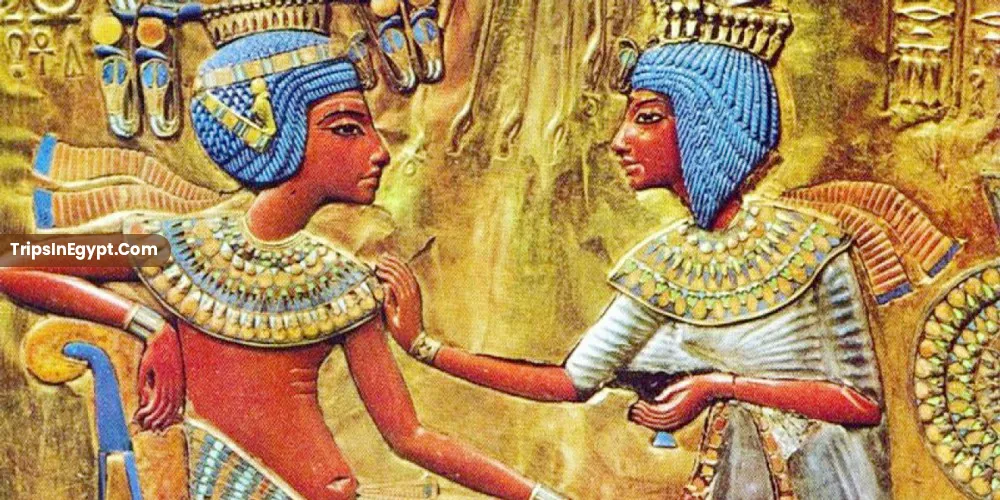
King Tut's accomplishments are sometimes overshadowed by the fame of his tomb, yet his short reign changed the direction of Egyptian history. Because he became king as a child, powerful officials such as Ay and the general Horemheb played major roles in government, but every official act was issued in the king's name. These included restoring traditional religion, returning the court to Egypt's historic centers and renewing construction at major temples.
Restoring the Old Gods
Tutankhamun's most important accomplishment was reversing the religious revolution begun by his father. Akhenaten had elevated the Aten above the traditional gods and disrupted many established temple cults, but Tutankhamun's government restored Amun and the other ancient Egyptian gods to their former prominence.
Tutankhamun's Restoration Stela, discovered at Karnak, describes temples falling into neglect and records the king's efforts to restore statues, priests, offerings and temple wealth. Akhenaten's reforms and solar theology are explained in our guide to Akhenaten and the Hymn to the Aten.
Moving the Court From Amarna
Early in Tutankhamun's reign, the royal court abandoned Akhetaten. Government administration returned to Memphis, while Thebes once again became the religious center associated with Amun, effectively ending the Amarna Period and allowing officials, priests and craftsmen to return to institutions disrupted under Akhenaten.
Akhetaten was gradually abandoned, and later rulers reused stone blocks from many of its temples. Learn more about the southern religious capital in our guide to Thebes city.
Building at Karnak and Luxor Temple
Tutankhamun sponsored construction and restoration at Egypt's major Theban temples. At Karnak Temple, statues connected with Amun and Mut were created with the features of the young king, while ram-headed sphinxes were installed around parts of the complex.
At Luxor Temple, decoration of the great colonnade begun under Amenhotep III included scenes of the Opet Festival, during which divine statues traveled ceremonially between Karnak and Luxor. Horemheb later replaced Tutankhamun's name on several monuments with his own, making the young king's original building activity more difficult to recognize.
Diplomacy and Military Campaigns
Egypt's international influence had weakened during the Amarna Period, and Tutankhamun's government attempted to strengthen relationships abroad. The tomb of Huy, viceroy of Kush, depicts Nubian representatives bringing gold, animals and valuable goods to Egypt, while reliefs dating to Tutankhamun's reign depict campaigns against Nubians and enemies in western Asia.
These military actions were probably led by Horemheb rather than the young king personally. A painted chest from Tutankhamun's tomb famously shows the pharaoh driving a chariot and defeating enemies, although such scenes expressed royal power and should not automatically be read as literal records of individual battles. Temples were also constructed or decorated in Tutankhamun's name at Kawa and Faras in Nubia.
King Tut's Major Accomplishments at a Glance
Although Tutankhamun ruled for only about a decade, his government reversed one of the most dramatic religious changes in Egyptian history and restored institutions that had existed for centuries.
| Accomplishment | What it meant |
|---|---|
| Ended Aten worship | Restored Amun and Egypt's traditional gods |
| Restoration Stela | Recorded the repair and renewed funding of temples |
| Moved the court | Returned government to Memphis and religious authority to Thebes |
| Building works | Sponsored statues, sphinxes and temple decoration at Karnak and Luxor |
| Foreign policy | Renewed relations, tribute and campaigns in Nubia and western Asia |
| Royal legacy | His burial preserved more than 5,000 objects from the late 18th Dynasty |
What Did King Tutankhamun Look Like
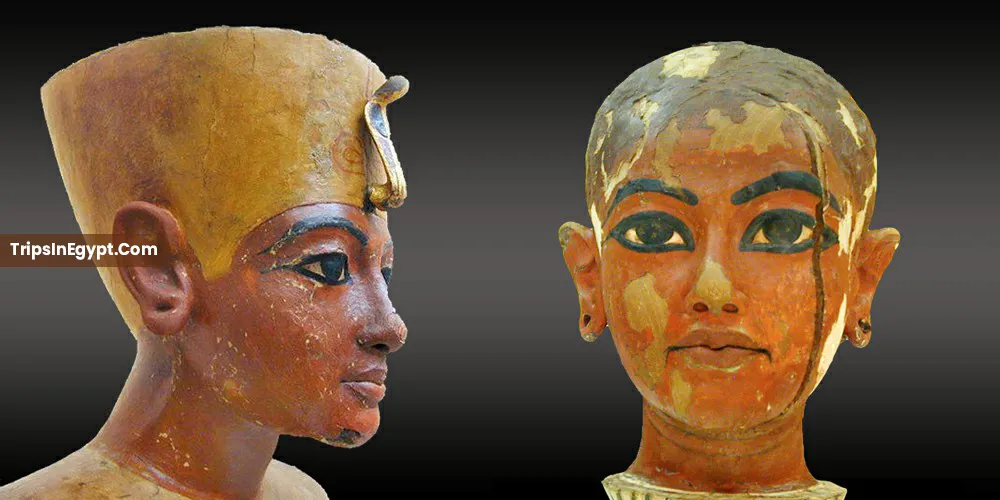
CT scans of Tutankhamun's mummy indicate that he was a relatively slight young man approximately 1.67 meters, or about 5 feet 6 inches, tall. He had an overbite and prominent front teeth similar to other members of his royal family, together with a slightly elongated skull.
His left foot showed abnormalities and evidence of bone necrosis that may have made walking painful, which may help explain the approximately 130 walking sticks discovered in his tomb. Earlier claims that Tutankhamun suffered from conditions such as severe spinal deformity or a major cleft palate are now questioned by many researchers.
King Tutankhamun Real Face
There is no photograph or completely naturalistic portrait of Tutankhamun, so his true appearance can only be reconstructed from his skull, mummy and ancient images. In 2005, teams from Egypt, France and the United States created independent facial reconstructions based on CT scans, producing broadly similar faces with features such as a narrow chin and relatively full lips.
Tutankhamun's famous golden mask and statues present an idealized royal image rather than an exact portrait. A widely circulated 2014 reconstruction showing pronounced physical abnormalities was criticized by specialists for exaggerating some medical interpretations.
King Tutankhamun Mummy
Tutankhamun's mummy suffered considerable damage after the discovery of his tomb because ancient embalmers had poured large amounts of resin into the coffin, causing the body to adhere to the interior. In 1925, members of the excavation team separated parts of the mummy to remove jewelry and funerary equipment, while later examinations revealed missing portions of the chest and ribs.
Since 2007, the mummy has been displayed in a climate-controlled glass case inside KV62 in the Valley of the Kings. Tutankhamun is therefore one of the relatively few Egyptian pharaohs whose mummy remains in the original royal tomb. Learn more about the preservation of royal bodies in our guide to ancient Egyptian mummification.
King Tutankhamun Death
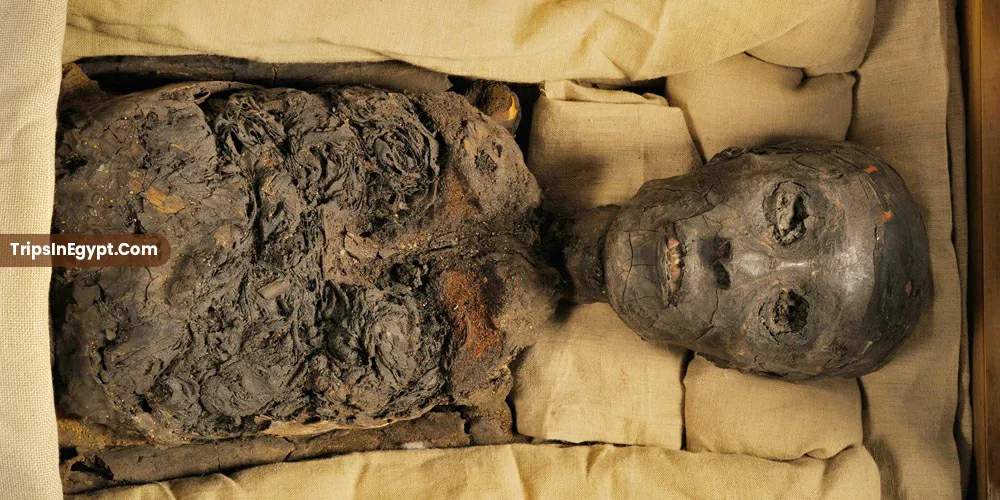
The death of King Tutankhamun at approximately 18 or 19 remains one of the greatest unanswered questions surrounding his life. No ancient document records exactly how the young pharaoh died, so every explanation depends on scientific examinations of his mummy. Researchers have proposed murder, accidents, infection and inherited illness, but modern CT and DNA studies have made some explanations more plausible than others.
What Did King Tut Die Of
The leading theory is that Tutankhamun died after suffering from malaria combined with a serious fracture of his left leg. DNA testing published in 2010 detected genetic material associated with the parasite responsible for severe malaria, while CT scans revealed a fracture of the left leg above the knee that showed no signs of healing and may have occurred shortly before death.
The injury could have become infected, and his other health problems may have reduced his ability to recover. Older theories suggesting that Tutankhamun was murdered by a blow to the head are now generally rejected because damage in the skull is more likely related to the embalming process.
Who Ruled After Tutankhamun
Tutankhamun died without a surviving heir, and his elderly advisor Ay became pharaoh soon afterward. A ring bearing the names of Ay and Ankhesenamun has been interpreted as evidence that Ay may have married Tutankhamun's widow, although that conclusion remains debated.
A famous diplomatic letter from an Egyptian queen asking the Hittite ruler to send one of his sons as a husband may also have been written by Ankhesenamun, but the identity of the queen is uncertain. Ay ruled for only a few years before the throne passed to the general Horemheb, who attempted to erase much of the memory of the Amarna royal family.
King Tutankhamun Tomb
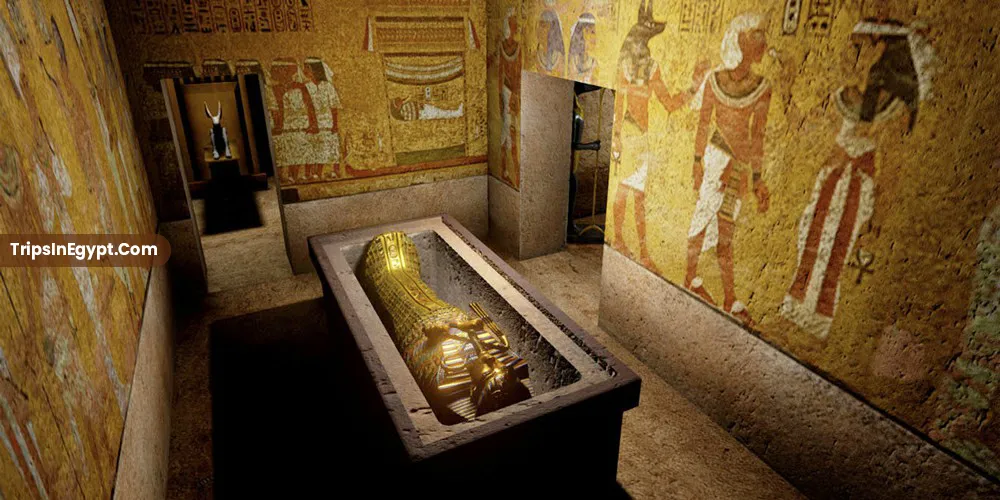
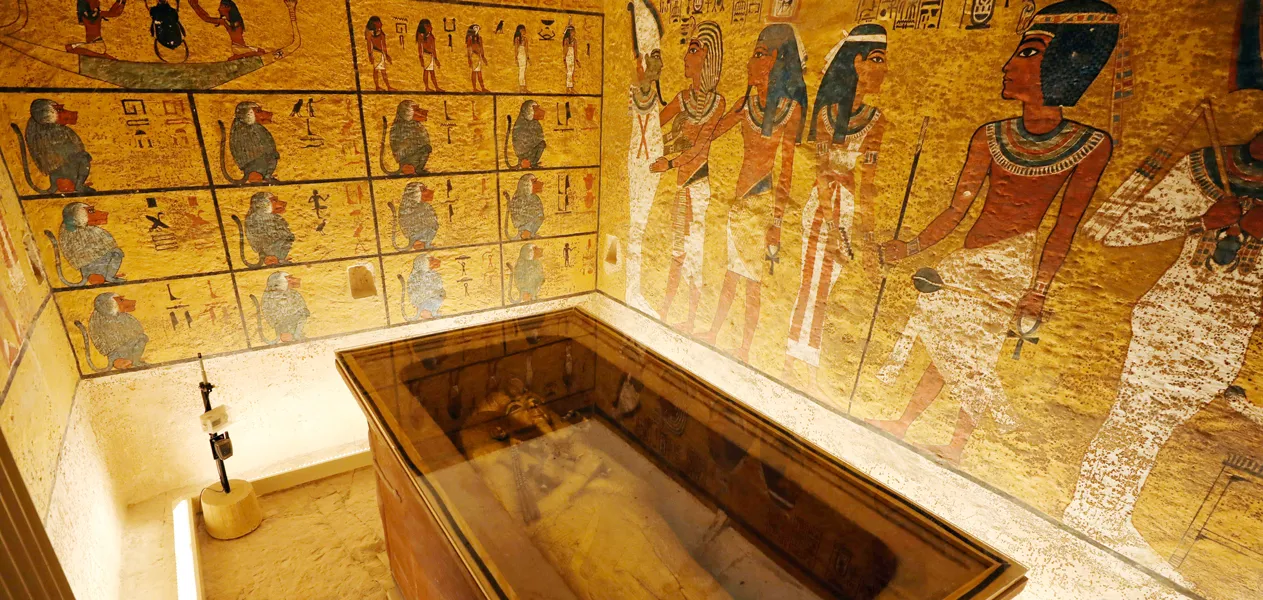
King Tutankhamun's tomb, known as KV62, lies in the Valley of the Kings on Luxor's West Bank. The tomb is unusually small for a pharaoh and contains only a few main rooms, leading researchers to suggest that it may originally have been intended for a non-royal individual and was adapted after Tutankhamun's unexpected death.
The tomb was entered by robbers at least twice in antiquity, but it was resealed and eventually buried beneath debris. That accidental concealment allowed much of its extraordinary contents to survive for more than 3,000 years.
Tutankhamun Tomb Discovery
British archaeologist Howard Carter, supported financially by Lord Carnarvon, discovered the first step leading to KV62 on 4 November 1922. On 26 November, Carter made a small opening in a sealed doorway and saw the objects beyond by candlelight, reportedly describing what he saw as "wonderful things."
The burial chamber was officially opened on 16 February 1923, after which Carter and his team spent approximately ten years documenting and removing more than 5,000 objects from the tomb. The full archaeological story is covered in our guide to the Tutankhamun tomb discovery.
King Tut's Death Mask
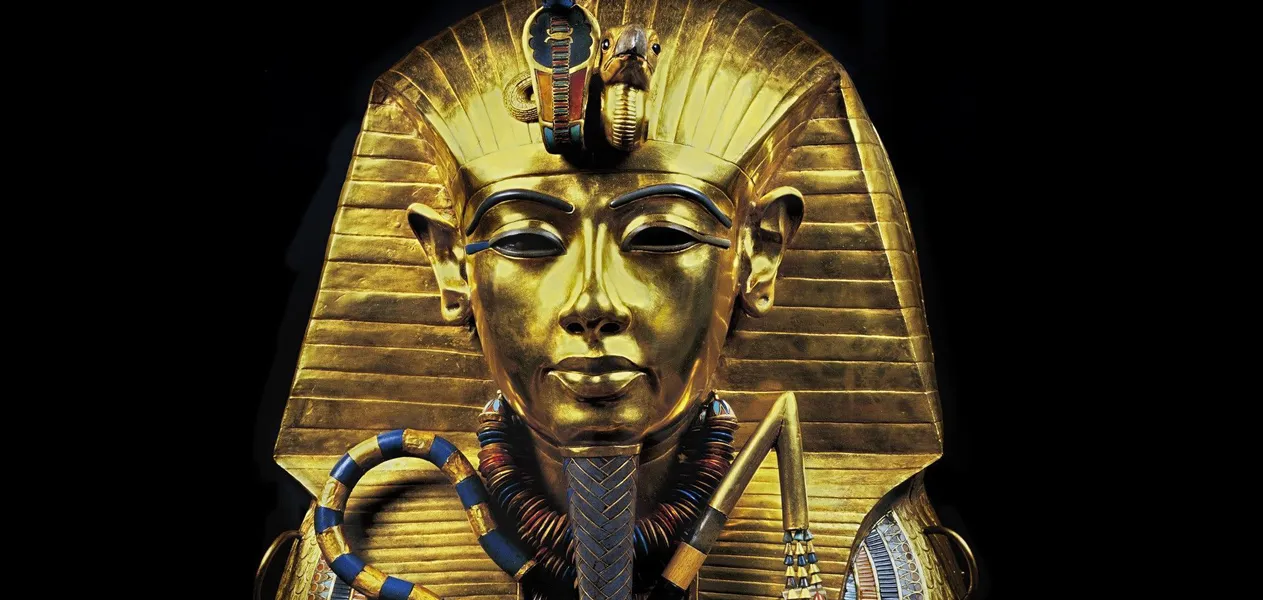
Tutankhamun's golden funerary mask is the most famous object recovered from the tomb. Made primarily from gold, it weighs roughly 10 kilograms and stands about 54 centimeters high, with decoration including lapis lazuli, carnelian, quartz, obsidian and colored glass.
The mask covered the head and shoulders of the mummy inside the innermost coffin, which itself was made from approximately 110 kilograms of solid gold. In 2014, the mask's braided beard was accidentally detached during maintenance and was initially reattached with epoxy adhesive before a German-Egyptian conservation team corrected the repair. The mask spent decades at the Egyptian Museum in Tahrir Square before the Tutankhamun collection moved to the Grand Egyptian Museum.
King Tutankhamun Dagger
Two daggers were discovered with Tutankhamun's mummy, one with a gold blade and another with a remarkably preserved iron blade. The iron dagger is approximately 34 centimeters long and has a decorated gold handle with a rock-crystal pommel.
Scientific analysis published in 2016 found unusually high concentrations of nickel and cobalt in the blade, supporting the conclusion that the metal came from a meteorite. Because iron production was still uncommon in Egypt during Tutankhamun's lifetime, meteoritic iron was an exceptionally rare and valuable material, and some researchers have proposed that the dagger may originally have reached Egypt as a diplomatic gift.
The Curse of King Tutankhamun
The legend of Tutankhamun's curse developed after Lord Carnarvon died in Cairo in April 1923 following complications from an infected mosquito bite. Newspapers quickly connected his death to the opening of the tomb, and over the following years the deaths of several other individuals were also attributed to an alleged pharaoh's curse.
Ideas involving poisonous mold or bacteria inside the tomb have been suggested, but no convincing evidence demonstrates that such substances caused the deaths. A study published in the British Medical Journal in 2002 found no significant reduction in lifespan among people present around the opening of the tomb, while Howard Carter himself lived until 1939 and died at the age of 64. Our detailed guide to the pharaohs' curse explains how the legend developed.
Visiting King Tut's Tomb Today
KV62 can still be visited inside the Valley of the Kings in Luxor, with a separate ticket required in addition to the standard Valley admission. At the time of the supplied update, the general Valley ticket for foreign visitors was listed as EGP 750 for adults and EGP 375 for students, with opening hours from approximately 6:00 am to 5:00 pm.
Because archaeological site prices can change, visitors should confirm the latest amount before traveling. Inside KV62, you can see the painted burial chamber, stone sarcophagus and Tutankhamun's mummy displayed in a climate-controlled case. A convenient guided option is the Full Day Tour to Luxor West Bank From $60.
Enjoy Adventure Tours to Egypt
Following Tutankhamun's story takes travelers from Cairo, where his treasures are displayed, to Luxor, where his mummy remains in KV62. Browse our Egypt tour packages to combine both destinations or connect Cairo and Upper Egypt through a longer Nile journey.
Day Tour from Cairo to Pyramids, Museum & Khan El Khalili includes the Giza Pyramids, the Grand Egyptian Museum and Khan El Khalili. From $95.
5 Days Cairo And Hurghada Trip combines Cairo's historical highlights with a Red Sea stay in Hurghada. From $690.
6 Days Cairo, Alexandria & Faiyum Tour combines Cairo, Mediterranean Alexandria and the Faiyum Oasis. From $720.
10 Days Cairo, Faiyum & Nile Cruise Holiday combines Cairo and Faiyum with a Nile cruise through Upper Egypt. From $1,350.
Interesting Facts About King Tutankhamun
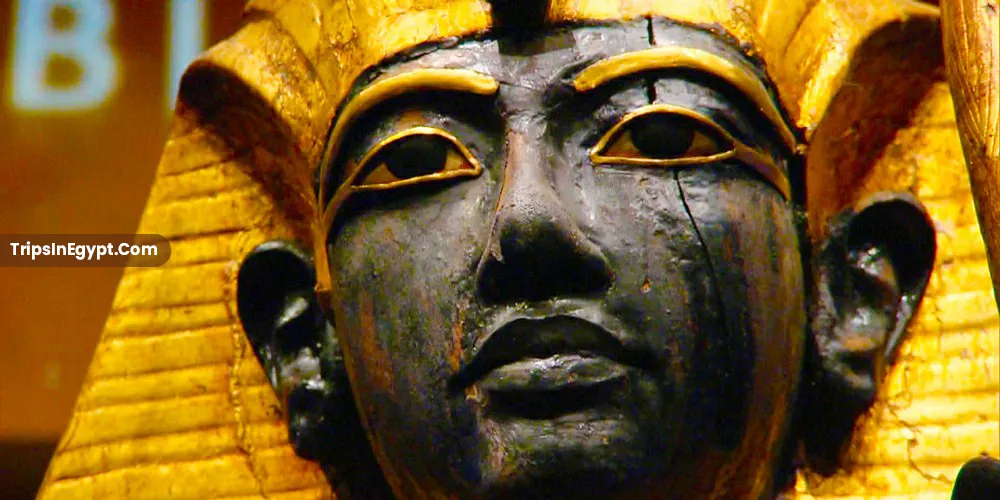
Beyond the familiar golden mask, King Tutankhamun's story contains remarkable facts about his family, health, religion and extraordinary modern fame. He was not considered one of Egypt's greatest rulers during his lifetime and was later excluded from official king lists because of his connection with the Amarna Period, yet the survival of his tomb made him more famous today than many pharaohs who ruled for decades.
Quick Facts About King Tut
-
Birth name: Tutankhaten, later changed to Tutankhamun
-
Born: Around 1341 BC, probably at Akhetaten
-
Reign: Approximately 1332 to 1323 BC
-
Age at accession: About eight or nine
-
Age at death: About 18 or 19
-
Father: Probably Akhenaten according to DNA testing
-
Wife: Ankhesenamun
-
Tomb: KV62 in the Valley of the Kings
-
Tomb discovery: 1922
-
Treasures: More than 5,000 objects
-
Famous objects: Golden mask, nested coffins and meteorite iron dagger
How Did King Tutankhamun Become Famous
Tutankhamun became famous primarily because his tomb survived with most of its burial equipment still inside. The discovery in 1922 became an international media sensation, while stories about a supposed curse attracted even more attention and transformed the young pharaoh into one of archaeology's most recognizable figures.
His fame expanded further through major touring exhibitions. The Treasures of Tutankhamun exhibition traveled to London in 1972 and later toured the United States from 1976 to 1979, attracting millions of visitors, while later international exhibitions introduced his treasures to additional generations.
Where to See King Tut's Treasures
For decades, many of Tutankhamun's treasures were displayed at the Egyptian Museum in Tahrir Square. They are now associated with the Grand Egyptian Museum near the Giza Pyramids, where thousands of objects from KV62 allow visitors to understand the scale and richness of the burial in a way that was never previously possible in one exhibition setting.
Tutankhamun's mummy, however, remains inside KV62 in Luxor. Travelers who want to see both the royal treasures and the king himself therefore need to visit Cairo and the Valley of the Kings.
Tutankhamun or Cleopatra Who Came First
Tutankhamun lived approximately 1,300 years before Cleopatra VII. Tutankhamun died around 1323 BC, while Queen Cleopatra lived from 69 to 30 BC and belonged to the Ptolemaic Dynasty, a Greek-speaking royal family that ruled Egypt after Alexander the Great.
By Cleopatra's lifetime, Tutankhamun's tomb had already been hidden beneath debris for more than a thousand years. The enormous chronological gap between the two rulers demonstrates just how long ancient Egyptian civilization lasted.
King Tutankhamun ruled for only about ten years, yet his reign helped restore Egypt's traditional religion and political centers, while his tomb preserved an extraordinary record of royal life. From his childhood during the Amarna Period to his mysterious early death and famous golden mask, his story still fascinates millions. See his treasures in Cairo, then travel to Luxor, where the boy king's mummy still rests inside KV62.

5 Days Cairo And Hurghada Trip
Amazing 4 Nights Cairo and Hurghada Trip Itinerary 5 Days Cairo and Hurghada trip wil...
- Duration 5 Days / 4 Nights
- Location Cairo & Hurghada
- Type Historical & Recreational Tour
From$690/per person
View Tour
6 Days Cairo, Alexandria & Faiyum Tour
Unforgettable Cairo, Alexandria & Faiyum Adventure in Six Days 6 Days Cairo, Alex...
- Duration 6 Days / 5 Nights
- Location Cairo - Alexandria - Fayum
- Type Historical Tour
From$720/per person
View Tour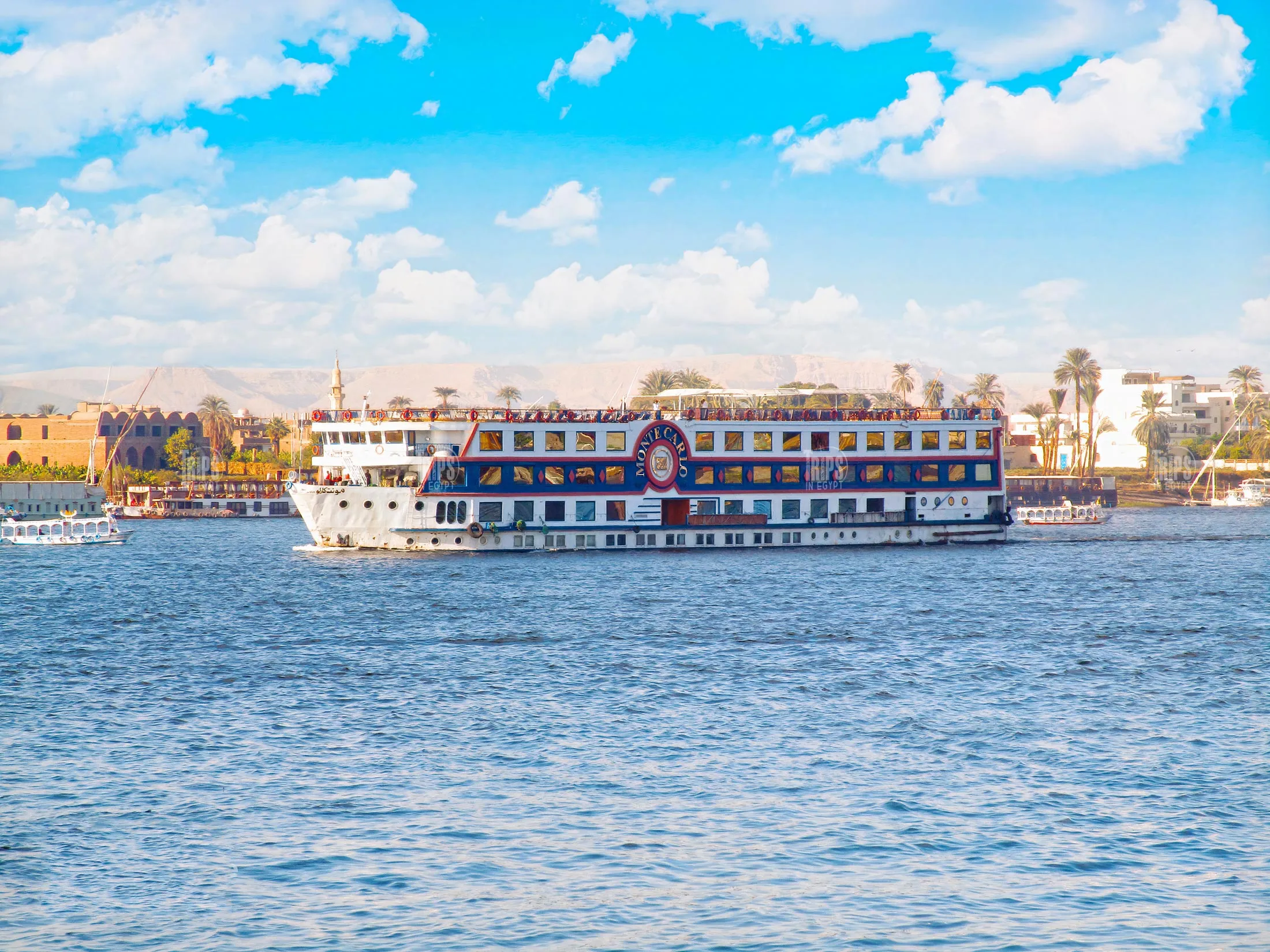
10 Days Cairo, Faiyum & Nile Cruise Holiday
Breathtaking 10 Days Journey of A Lifetime in Egypt 10 Days Cairo, Faiyum & Nile...
- Duration 10 Days / 9 Nights
- Location Cairo, Luxor, Aswan & Faiyum
- Type Classic Tour
From$1350/per person
View Tour SOLD OUT
Ultimate 7-Day Egypt Solar Eclipse Experience with Hurghada 2027
Enjoy a 7-Day Egypt Solar Eclipse Tour with Hurghada 2027 6 Nights Egypt Solar Ecli...
- Duration 7 Days / 6 Nights
- Location Cairo / Giza / Luxor / Hurghada
- Type Astronomical Tour
Sold Out
View Details