



Amenhotep III was the ninth pharaoh of the 18th Dynasty, ruling Egypt for about 38 years at the height of its wealth and power. He died around 1353 BC, aged roughly 40 to 50, after years of painful dental abscesses, arthritis and obesity. Known as Amenhotep the Magnificent, he built Luxor Temple and the Colossi of Memnon. This guide covers his life, family, achievements, death, tomb and royal mummy today.
The Life of King Amenhotep III
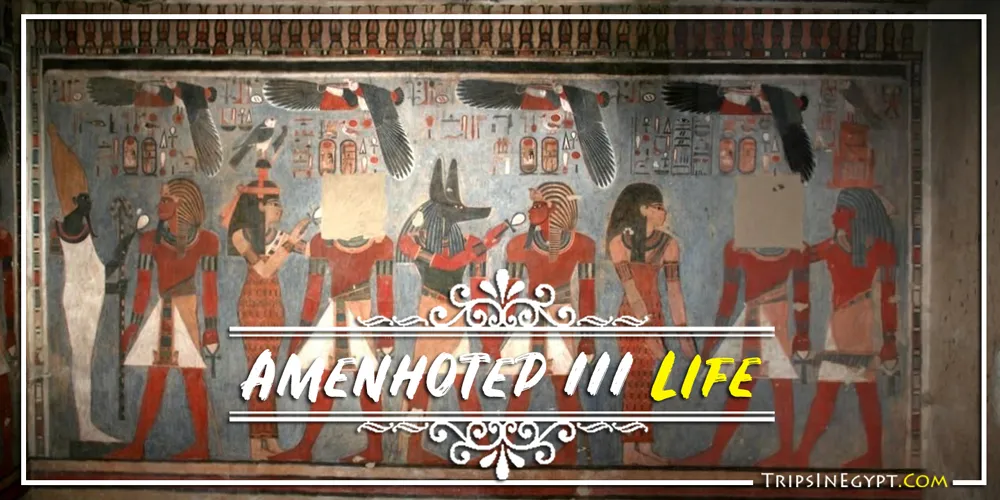
Amenhotep III, also called Amenophis III and known by his throne name Nebmaatre, was the son of Thutmose IV and a minor queen named Mutemwiya. His personal name means "Amun is satisfied", tying him to the chief god of Thebes. He is distinguished by having more surviving statues than any other pharaoh, with more than 250 identified so far, and his long, peaceful reign is often seen as the golden age of the New Kingdom.
When Was Amenhotep III Born and How Did He Become Pharaoh
Amenhotep III was probably born around 1401 BC, although the exact year is unknown. He became pharaoh when his father Thutmose IV died young after a short reign of about ten years, and he was most likely a boy of between 6 and 12 at his coronation.
As the eldest surviving son, he inherited the throne by right, and later inscriptions claimed that the god Amun himself had fathered him in the form of Thutmose IV, a story that strengthened his divine right to rule.
What Did Amenhotep III Look Like
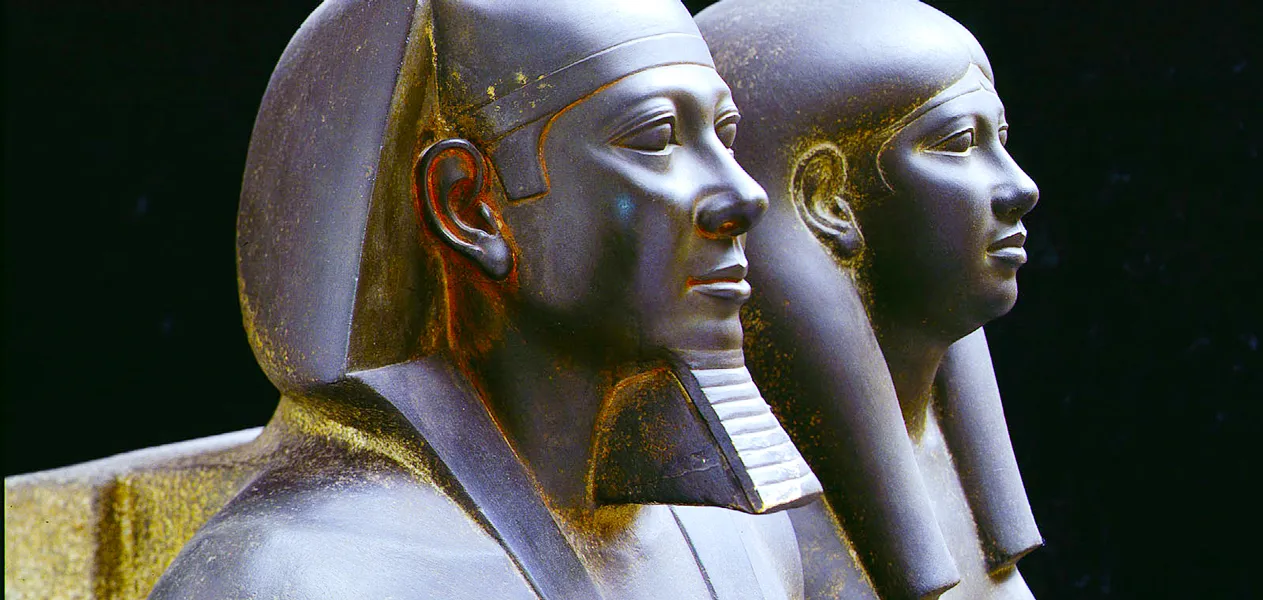
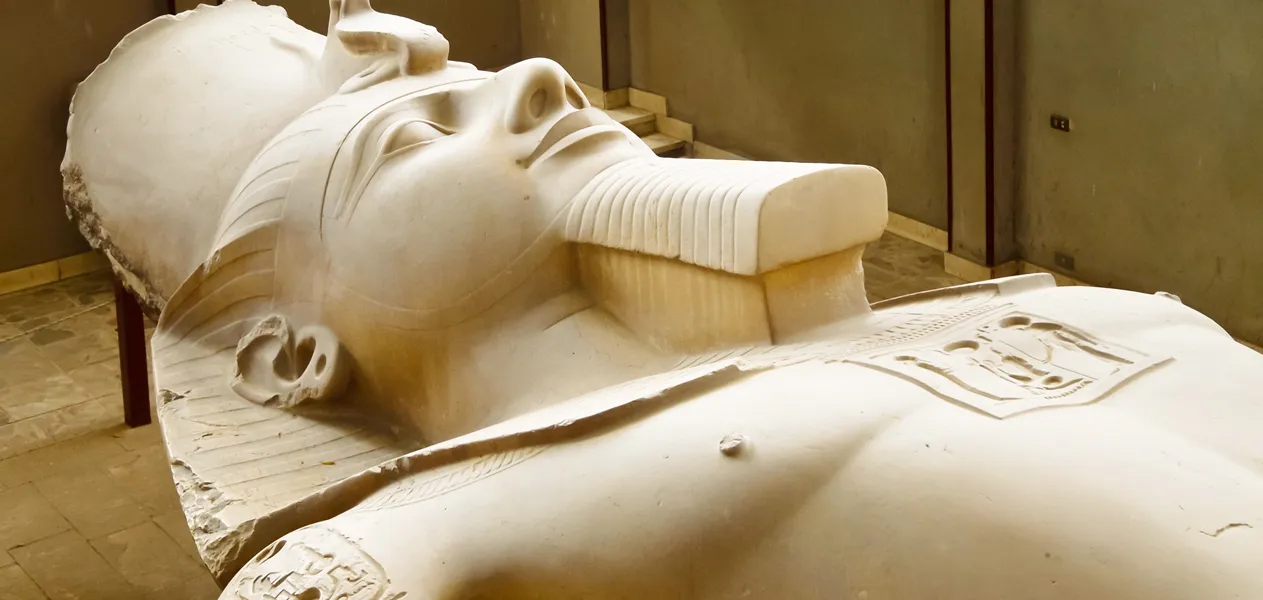
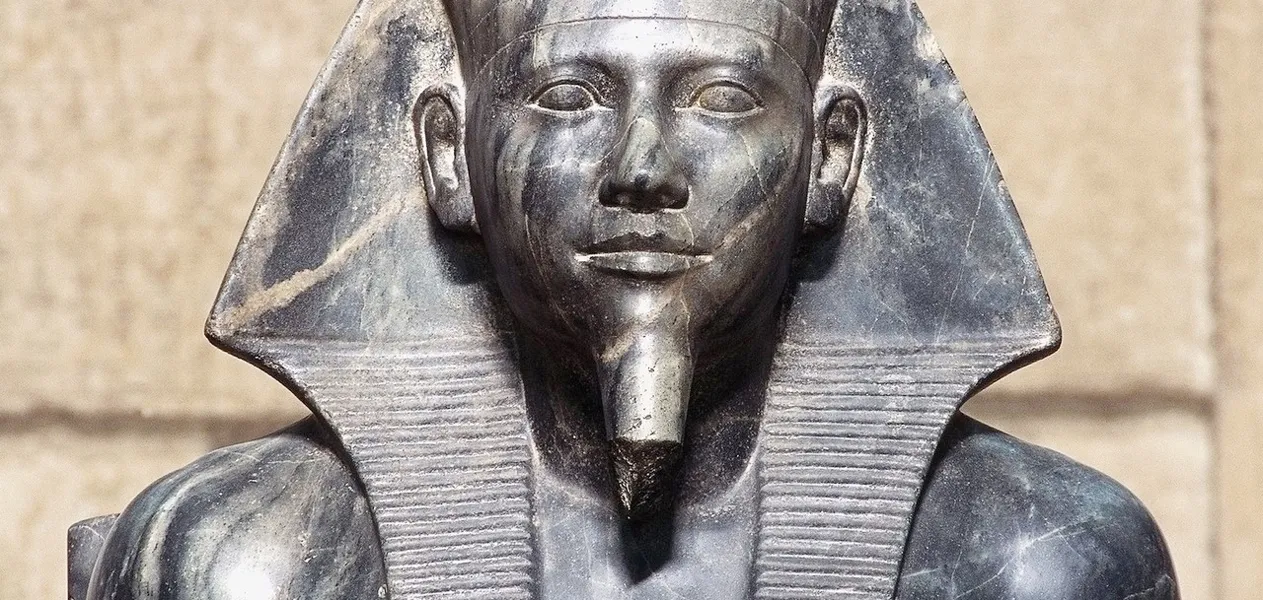
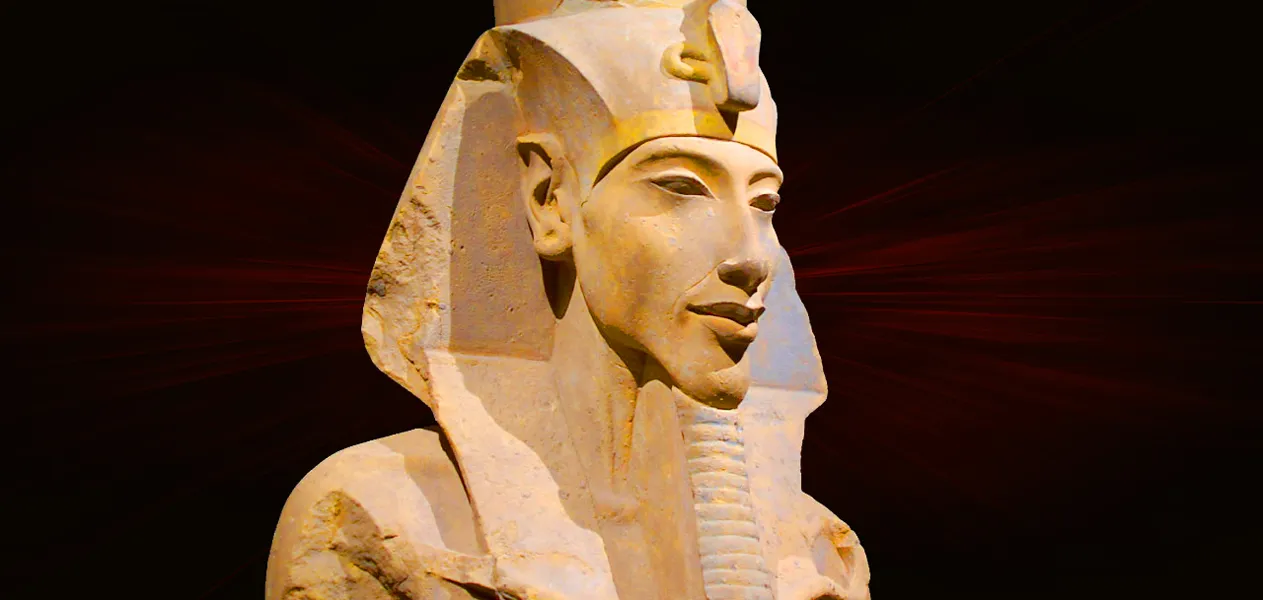
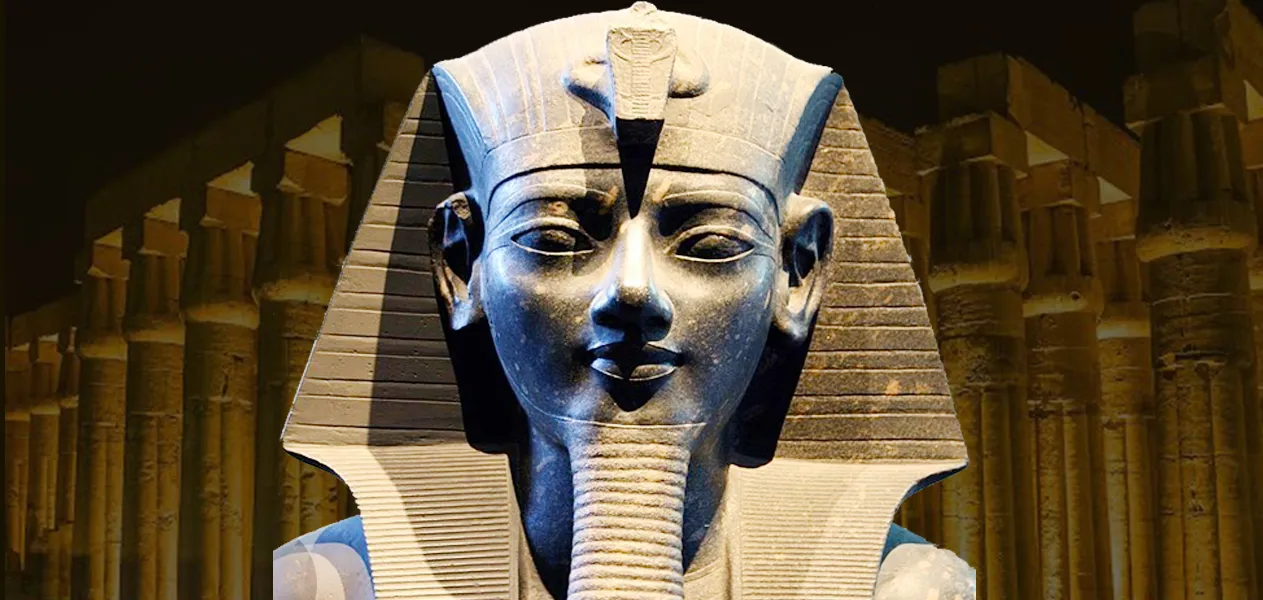
His many statues show a young, round-faced king with almond-shaped eyes and full lips, an idealized image that changed little throughout much of his reign. In his final years, artists began portraying him with a fuller face and heavier body.
His mummy, which was heavily packed beneath the skin by later priests during restoration, also indicates that he suffered from arthritis and severe dental problems later in life.
Interesting Facts about Amenhotep III
|
Fact |
Detail |
|
Dynasty |
9th pharaoh of the 18th Dynasty, New Kingdom |
|
Reign |
About 1391 to 1353 BC, roughly 38 years |
|
Parents |
Thutmose IV and Queen Mutemwiya |
|
Great Royal Wife |
Queen Tiye |
|
Famous son |
Amenhotep IV, later Akhenaten |
|
Grandson |
Tutankhamun, confirmed by DNA in 2010 |
|
Tomb |
WV22 in the West Valley of the Kings |
|
Mummy |
National Museum of Egyptian Civilization, Cairo |
Amenhotep III was so successful that he is often called Amenhotep the Magnificent, and he is the grandfather of King Tutankhamun, a relationship supported by DNA analysis of the royal mummies in 2010. His reign saw only one recorded military campaign, a short expedition against a revolt in Nubia during his fifth year.
He was also worshipped as a living god in parts of Nubia and celebrated three Sed festivals, an achievement possible only for pharaohs whose reigns lasted several decades. He was eventually buried in the West Valley of the Kings, although priests later moved his mummy to a hidden royal cache for protection from tomb robbers.

Amenhotep III Ruling Period
Amenhotep III ruled from about 1391 to 1353 BC, although some chronologies place his reign about two to three years later. His father left him an empire near the height of its power, extending from Nubia in the south into parts of the Near East.
Instead of relying primarily on military expansion, Amenhotep III used Egypt's wealth for diplomacy, religious festivals and monumental construction. His reign became one of the most prosperous periods of the 18th Dynasty.
How Was Egypt During The Reign of Amenhotep III
Egypt experienced extraordinary wealth and artistic achievement during Amenhotep III's reign. Gold from Nubia and tribute from territories and allies in Syria and the Levant helped support a powerful royal court and an enormous construction program.
Workshops produced exceptional sculpture, jewelry, glass and decorative arts, while the artistic style of the period developed a distinctive elegance and refinement. Apart from his military action in Nubia during year five, the reign was largely peaceful.
Diplomacy and the Amarna Letters
The Amarna Letters, written mainly in Akkadian cuneiform on clay tablets, preserve correspondence between the Egyptian royal court and rulers of Babylon, Mitanni, Assyria, Hatti and other kingdoms.
Foreign rulers addressed Amenhotep III as a royal "brother" and frequently requested Egyptian gold. Diplomatic marriages also played an important role in maintaining alliances, although Amenhotep III refused to send an Egyptian princess abroad when the Babylonian king requested one.
Lion Hunts and Commemorative Scarabs
Amenhotep III publicized major royal events through large commemorative scarabs, examples of which have been found across Egypt and the wider eastern Mediterranean world.
The famous lion-hunt scarabs record that Amenhotep III killed 102 lions during the first ten years of his reign. Other scarabs commemorate his marriage to Tiye, a royal wild-bull hunt, the creation of a lake for the queen and the arrival of the Mitanni princess Gilukhepa with a large retinue.
Amenhotep III Religion
Amenhotep III continued to honor Amun at Karnak while also giving greater prominence to solar religion and the Aten, the sun disk.
He commissioned large numbers of statues of the lioness goddess Sekhmet, possibly connected with ritual protection and healing. Some historians believe he also attempted to balance the influence of Amun's priesthood, although his son Akhenaten later transformed Egyptian religion far more radically.
Sed Festival Stela of Amenhotep III
The Sed Festival was an ancient royal jubilee associated with renewing the king's strength and authority. Its traditions reached back to the Old Kingdom of Egypt and even earlier periods.
Amenhotep III celebrated three Sed festivals during his 30th, 34th and 37th regnal years. They were held around his palace complex at Malkata and became among the best-documented royal jubilees of the New Kingdom.
The Family of Amenhotep III
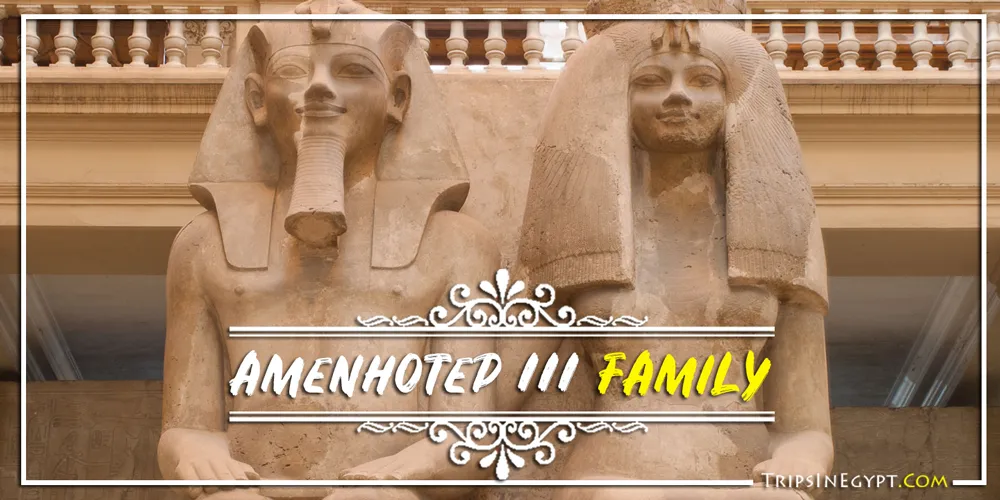
Amenhotep III belonged to a powerful royal dynasty as the son of Thutmose IV and grandson of Amenhotep II. His family would shape one of the most dramatic chapters of Egyptian history because his son became Akhenaten and his grandson was Tutankhamun.
Marriage also played an important diplomatic role at his court. Alongside Queen Tiye and his Egyptian family, Amenhotep III married several foreign princesses to reinforce alliances with powerful neighboring kingdoms.
Queen Tiye, the Great Royal Wife
Amenhotep III married Queen Tiye early in his reign. Unlike many royal wives, Tiye was not born into the immediate royal family; she was the daughter of Yuya and Thuya, an influential couple associated with Akhmim.
Tiye became one of the most prominent royal women of the 18th Dynasty. She appeared beside the king on monuments, participated in diplomatic affairs and remained influential after Amenhotep III's death during the reign of her son Akhenaten.
Amenhotep III Children
Amenhotep III and Tiye had at least two sons and several daughters. Their eldest known son, Crown Prince Thutmose, died before his father, leaving the younger Amenhotep IV to inherit the throne.
Amenhotep IV later became Akhenaten. Their known daughters included Sitamun, Henuttaneb, Iset, Nebetah and Beketaten. Some scholars have proposed additional children, but those identifications remain uncertain.
Did Amenhotep III Marry His Daughter
Yes. Amenhotep III married at least two of his daughters, Sitamun and Iset, during the later years of his reign. Sitamun eventually received the title of Great Royal Wife.
Royal marriages within the family occurred in several Egyptian dynasties and could have political, religious or ceremonial purposes. Scholars continue to debate the exact nature of these marriages, particularly because Queen Tiye remained Amenhotep III's principal queen.
The Foreign Wives of Amenhotep III
Amenhotep III strengthened diplomatic relationships through marriages to foreign princesses. Among the best known were Gilukhepa, daughter of Shuttarna II of Mitanni, and Tadukhepa, daughter of the Mitannian king Tushratta.
His royal household also included princesses connected with Babylon, Arzawa and other Near Eastern kingdoms. These marriages reflected Egypt's international prestige, while Egyptian princesses were generally not sent abroad to marry foreign rulers.
Amenhotep III's Monumental Constructions
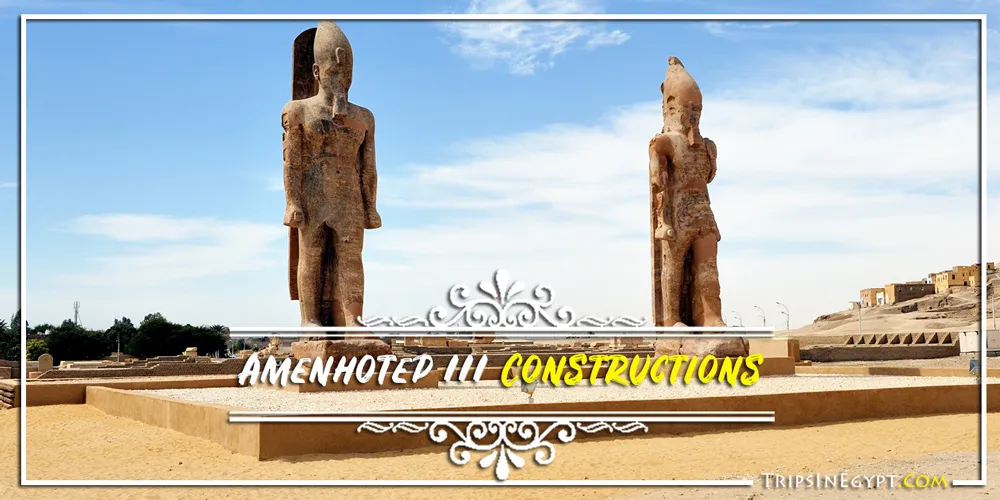
The greatest achievements of Amenhotep III were his monumental building projects, which transformed Thebes and extended far into Nubia. Temples, palaces, colossal statues and ceremonial structures were constructed on an enormous scale during his reign.
His architects and officials, including the celebrated Amenhotep son of Hapu, helped create monuments that remain among the defining landmarks of Luxor more than three thousand years later.
Luxor Temple and Karnak
Amenhotep III built much of the monumental core of Luxor Temple, including major courts and architectural elements later incorporated into the expanded temple complex.
At Karnak, he commissioned major construction projects including the Third Pylon and work associated with additional gateways and temples. His projects helped transform the ceremonial landscape used during the Opet Festival between Karnak and Luxor Temple.
Malkata Palace and Queen Tiye's Lake
On the western bank of Thebes, Amenhotep III constructed the enormous royal palace complex known today as Malkata. It contained royal apartments, administrative areas, ceremonial halls, kitchens and religious buildings.
Nearby stood the vast artificial harbor now called Birket Habu. A commemorative scarab from the king's 11th year also records the construction of a lake for Queen Tiye and the launching of the royal barge Aten-tjehen, or "the Dazzling Aten."
Soleb Temple in Nubia
Far south in Nubia, in present-day Sudan, Amenhotep III constructed the temple of Soleb, where the king himself was worshipped alongside Amun.
The site preserves important reliefs connected with royal ritual and jubilee celebrations. At nearby Sedeinga, Amenhotep III also commissioned a temple dedicated to Queen Tiye, where she was associated with the goddess Hathor.
The Mortuary Temple of Amenhotep III
Amenhotep III's mortuary temple on Luxor's west bank, known today as Kom el-Hettan, was the largest temple complex in Thebes during its time, covering roughly 350,000 square meters.
It faced east toward the Nile and rising sun and contained enormous statues of the king, courtyards, sphinxes and numerous figures of Sekhmet. Its location close to the Nile exposed the site to repeated flooding, while earthquakes and later stone reuse caused further destruction.
The Colossi of Memnon
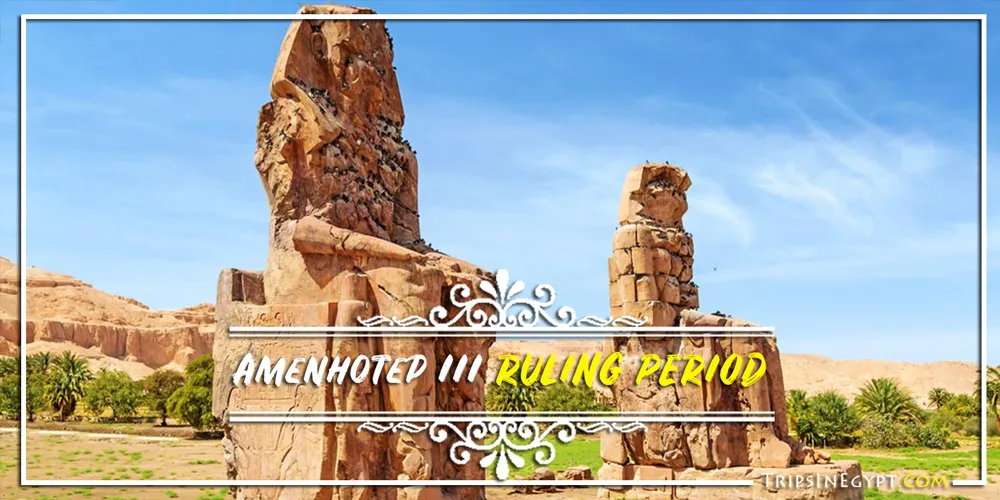
The two monumental statues that once guarded the temple entrance survive today as the Colossi of Memnon.
Each rises about 18 meters or 59 feet and depicts Amenhotep III seated on his throne, with smaller figures associated with members of his royal family. After an earthquake in 27 BC damaged the northern statue, ancient visitors reported that it sometimes produced a sound around sunrise, giving rise to the famous story of the "singing" Memnon.
How Did Amenhotep III Die
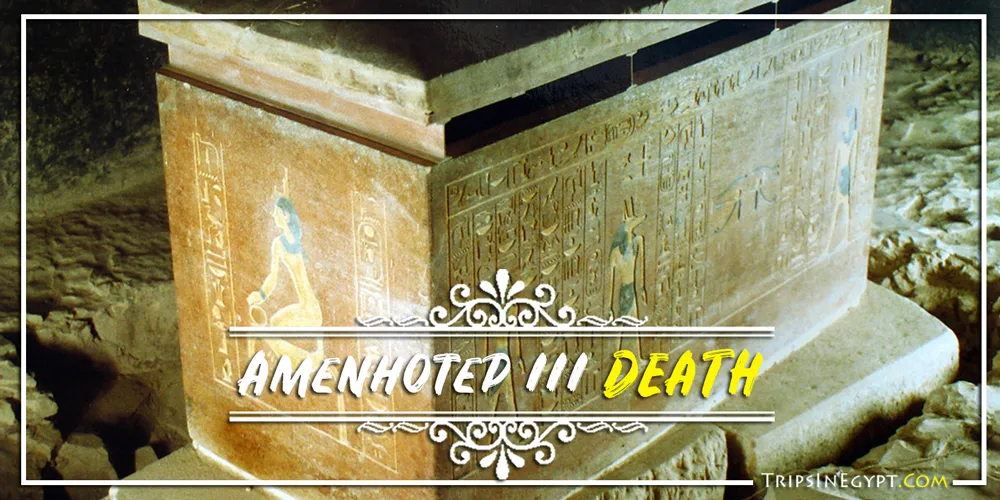
Amenhotep III most likely died of natural causes following years of declining health, around 1353 BC during the 38th or early 39th year of his reign. Examination of his mummy revealed severe dental disease, including badly worn teeth and abscesses, together with evidence associated with arthritis and obesity.
During his final years, a statue of the goddess Ishtar of Nineveh was sent from Mitanni to Egypt. This has sometimes been interpreted as connected to the king's health, although the exact reason remains debated.
When Did Amenhotep III Die and How Old Was He
Amenhotep III died around 1353 BC, although some chronologies place his death around 1351 BC. Estimates based on his mummy suggest that he was approximately 40 to 50 years old when he died.
His last known dated evidence comes from his late reign. He was succeeded by his son Amenhotep IV, later Akhenaten, although historians continue to debate whether father and son briefly ruled together.
Amenhotep III Tomb
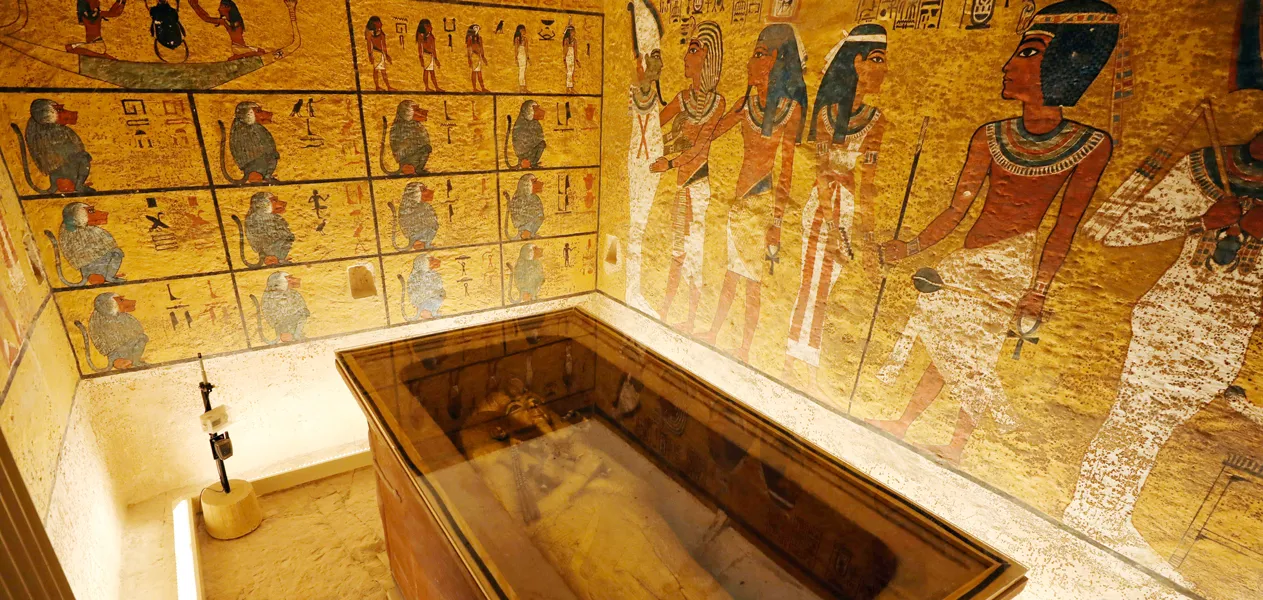
Amenhotep III was originally buried in WV22, an extensive royal tomb located in the West Valley of the Valley of the Kings.
The tomb was recorded by members of Napoleon's expedition in 1799 and contains side chambers that may have been intended for members of the royal family. Like many royal tombs, it was robbed in antiquity, and later conservation projects have worked to stabilize and preserve surviving decoration.
Amenhotep III Mummy, Has He Been Found
Yes. The mummy of Amenhotep III has been found. Ancient priests moved his body from WV22 to the royal cache inside KV35, the tomb of Amenhotep II, to protect it from robbery.
French archaeologist Victor Loret discovered the KV35 cache in 1898. In April 2021, Amenhotep III's mummy was transferred to the National Museum of Egyptian Civilization during the Pharaohs' Golden Parade.
Explore the Mysterious Places of Amenhotep III in Egypt
The best way to understand Amenhotep III is to see the monuments connected with his reign, from the Colossi of Memnon and Luxor Temple to the royal collections preserved in museums.
With Trips in Egypt, travelers can explore the temples and tombs of Luxor, Cairo's museums and other major archaeological destinations with private Egyptologist guides. The tours below range from focused Luxor excursions to longer journeys through Egypt.
Luxor Day Tours to Amenhotep III's Monuments
Full Day Tour to Luxor West Bank — explore the Valley of the Kings, Hatshepsut Temple and the Colossi of Memnon with a private Egyptologist guide and transportation. From $60.
Full Day Tour to Luxor East and West Bank — combine the Valley of the Kings, Hatshepsut Temple and the Colossi of Memnon with Karnak and Luxor Temple in a full-day private tour. From $115.
Luxor Museum and Mummification Museum Tour — visit two important museums on the Luxor Corniche with a private Egyptologist guide, local lunch and hotel transfers. From $65.
Day Trips from Cairo
Charming Luxor Day Trip from Cairo by Plane — fly from Cairo to Luxor for the Valley of the Kings, Hatshepsut Temple, the Colossi of Memnon and Karnak with a private guide. From $475.
Tel Amarna and Tuna El Gebel Tour from Cairo — explore Tell el-Amarna, the city founded by Amenhotep III's son Akhenaten, together with the necropolis of Tuna el-Gebel. From $85.
Egypt Holidays and Nile Cruises
Travelers who want to see Amenhotep III's monuments as part of a wider journey can explore our Egypt travel packages, combining Cairo, Luxor, Aswan and other destinations with private sightseeing and accommodation.
A river journey is another convenient way to explore Upper Egypt. Our Egypt Nile cruises connect Luxor and Aswan while including major temples and archaeological sites along the Nile.
5 Days Nile Cruise from Luxor — sail for four nights from Luxor to Aswan while visiting Karnak, Luxor Temple, the west bank, Edfu, Kom Ombo and Aswan. From $460.
4 Days Cairo and Luxor Holiday Package — combine the Giza Pyramids and Cairo museums with Luxor's Karnak Temple, Valley of the Kings, Hatshepsut Temple and Colossi of Memnon. From $780.
5 Days Cairo and Hurghada Trip — combine Cairo's ancient monuments with several relaxing days on the Red Sea coast in Hurghada. From $690.
6 Days Cairo, Alexandria and Faiyum Tour — discover Cairo, Alexandria and Faiyum during a six-day historical journey through northern Egypt. From $720.
10 Days Cairo, Faiyum and Nile Cruise Holiday — explore Cairo and Faiyum before sailing between Luxor and Aswan and visiting the monuments of Upper Egypt. From $1,350.
Amenhotep III ruled Egypt in one of its most splendid ages, leaving a legacy of peace, diplomacy and monuments that still dominate the landscape of Luxor. His family shaped the next chapter of history, from Akhenaten's religious revolution to Tutankhamun's short reign. Standing before the Colossi of Memnon at sunrise reveals the scale of a king whose monumental vision has watched over ancient Thebes for more than three thousand years.

5 Days Cairo And Hurghada Trip
Amazing 4 Nights Cairo and Hurghada Trip Itinerary 5 Days Cairo and Hurghada trip wil...
- Duration 5 Days / 4 Nights
- Location Cairo & Hurghada
- Type Historical & Recreational Tour
From$690/per person
View Tour
6 Days Cairo, Alexandria & Faiyum Tour
Unforgettable Cairo, Alexandria & Faiyum Adventure in Six Days 6 Days Cairo, Alex...
- Duration 6 Days / 5 Nights
- Location Cairo - Alexandria - Fayum
- Type Historical Tour
From$720/per person
View Tour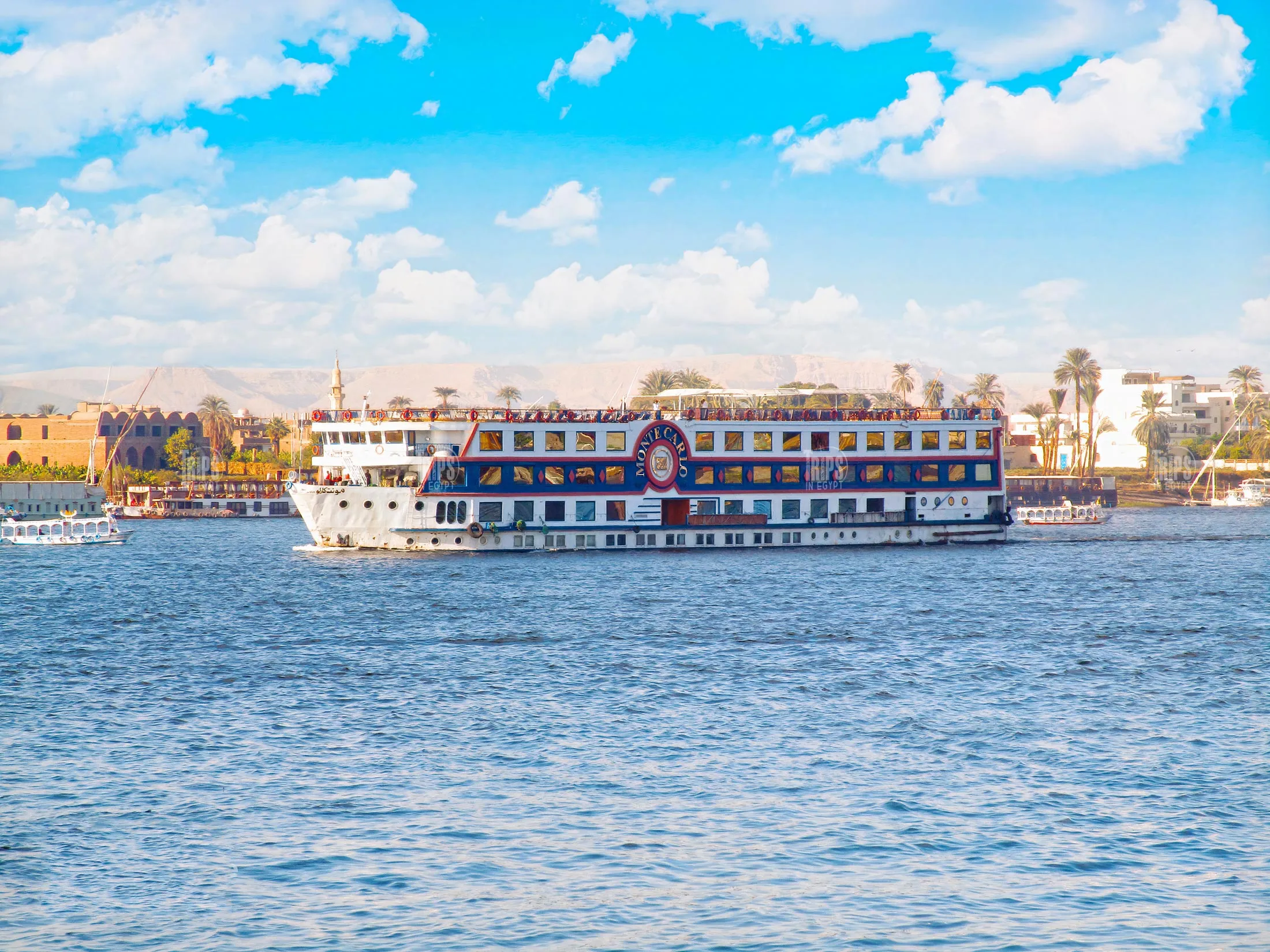
10 Days Cairo, Faiyum & Nile Cruise Holiday
Breathtaking 10 Days Journey of A Lifetime in Egypt 10 Days Cairo, Faiyum & Nile...
- Duration 10 Days / 9 Nights
- Location Cairo, Luxor, Aswan & Faiyum
- Type Classic Tour
From$1350/per person
View Tour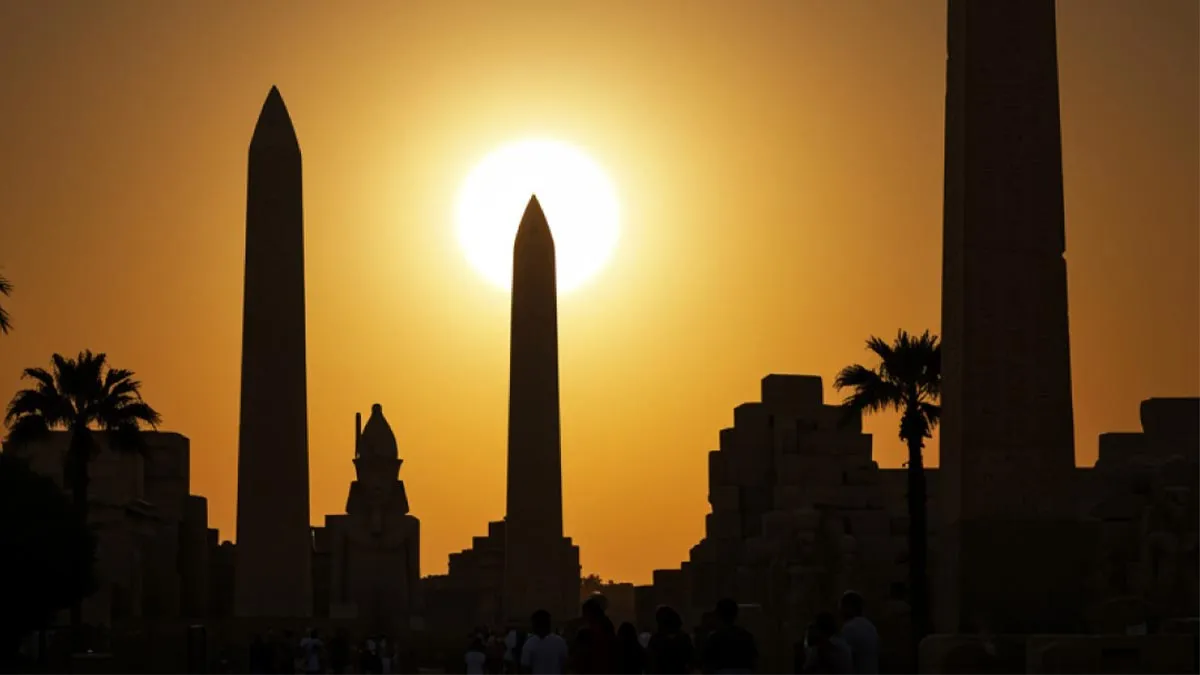 SOLD OUT
Ultimate 7-Day Egypt Solar Eclipse Experience with Hurghada 2027
Enjoy a 7-Day Egypt Solar Eclipse Tour with Hurghada 2027 6 Nights Egypt Solar Ecli...
- Duration 7 Days / 6 Nights
- Location Cairo / Giza / Luxor / Hurghada
- Type Astronomical Tour
Sold Out
View Details