



Imagine your heart placed on a golden scale, balanced against a single feather. In ancient Egypt, that was the judgement of the dead. In the Hall of Two Truths, Anubis weighed the heart against the feather of Maat, Thoth recorded the verdict, and Osiris passed sentence. A light heart earned eternal life in the Field of Reeds. A heavy one fed Ammit. Here is exactly how that ancient trial worked.

The Judgement of the Dead in Ancient Egypt
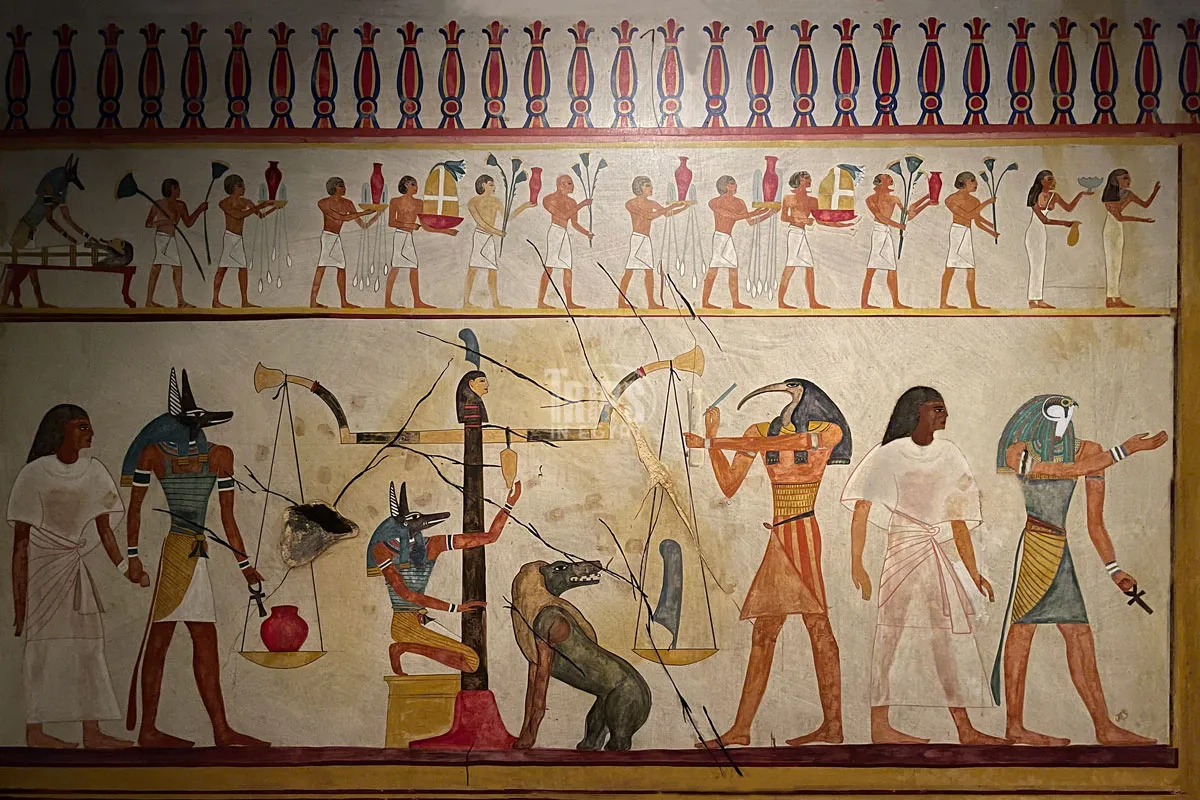
Egyptians believed that death was a passage, not an end. Their ideas about the afterlife promised a second life that could last forever, but only for those who passed a final trial. That trial was the judgement of the dead.
The idea grew over many centuries. In the Old Kingdom, eternal life was mainly the privilege of the king. By the Middle Kingdom and the New Kingdom, any Egyptian who could afford the right burial and texts hoped to face the judges and be declared worthy.
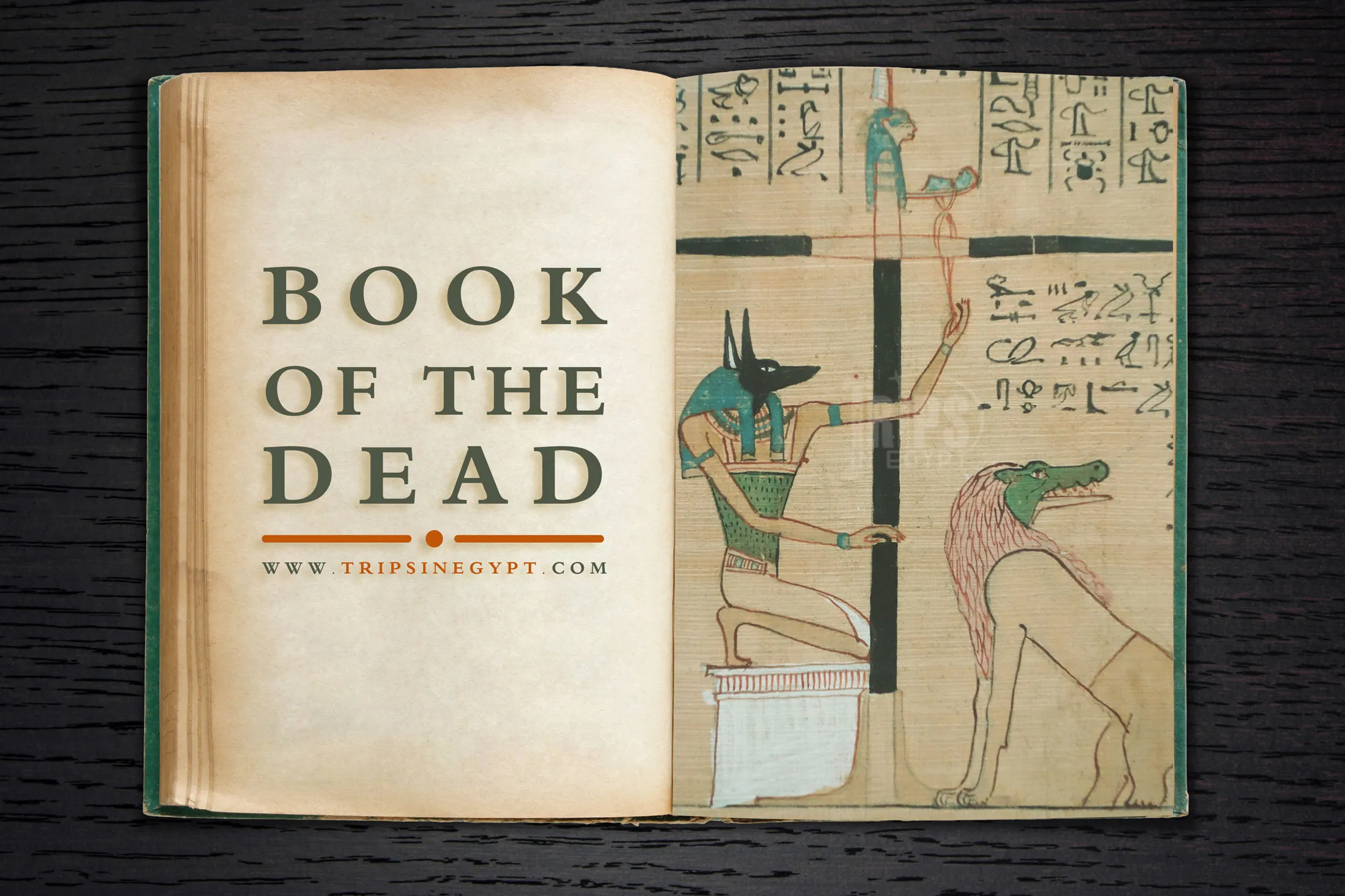
The judgement is best known from the Book of the Dead, especially Spell 125, which describes the hall, the judges and the words the dead had to speak. Its illustrations of the weighing of the heart are among the most famous images in Egyptian art.
Judgement of the Dead at a Glance
|
Element |
Details |
|
Where it happened |
The Hall of Two Truths, also called the Hall of Maati, in the underworld or Duat |
|
Presiding judge |
Osiris, king of the dead |
|
Who weighed the heart |
Anubis, the jackal-headed god of embalming |
|
Who recorded the verdict |
Thoth, the ibis-headed god of writing |
|
The standard of truth |
The feather of Maat |
|
The jury |
42 divine assessors |
|
Key text |
Book of the Dead, Spell 125 |
|
Reward |
Eternal life in the Field of Reeds, or Aaru |
|
Punishment |
The heart eaten by Ammit, ending the soul's existence |
The Parts of the Soul
To understand the judgement, it helps to know how Egyptians saw a person. They believed each human was made of several parts. The ka was the life force, which needed food offerings after death. The ba, shown as a bird with a human head, could travel between the tomb and the world of the living.
The akh was the "transformed" spirit that a person became after passing judgement. The ren, or name, and shut, or shadow, also had to survive. Most important of all was the ib, the heart, which Egyptians saw as the seat of thought, memory and conscience.
That belief explains a detail of ancient Egyptian mummification. Embalmers removed the brain and most internal organs, but they usually left the heart in the body. The deceased would need it in the judgement hall.
The Hall of Judgement: The Hall of Two Truths
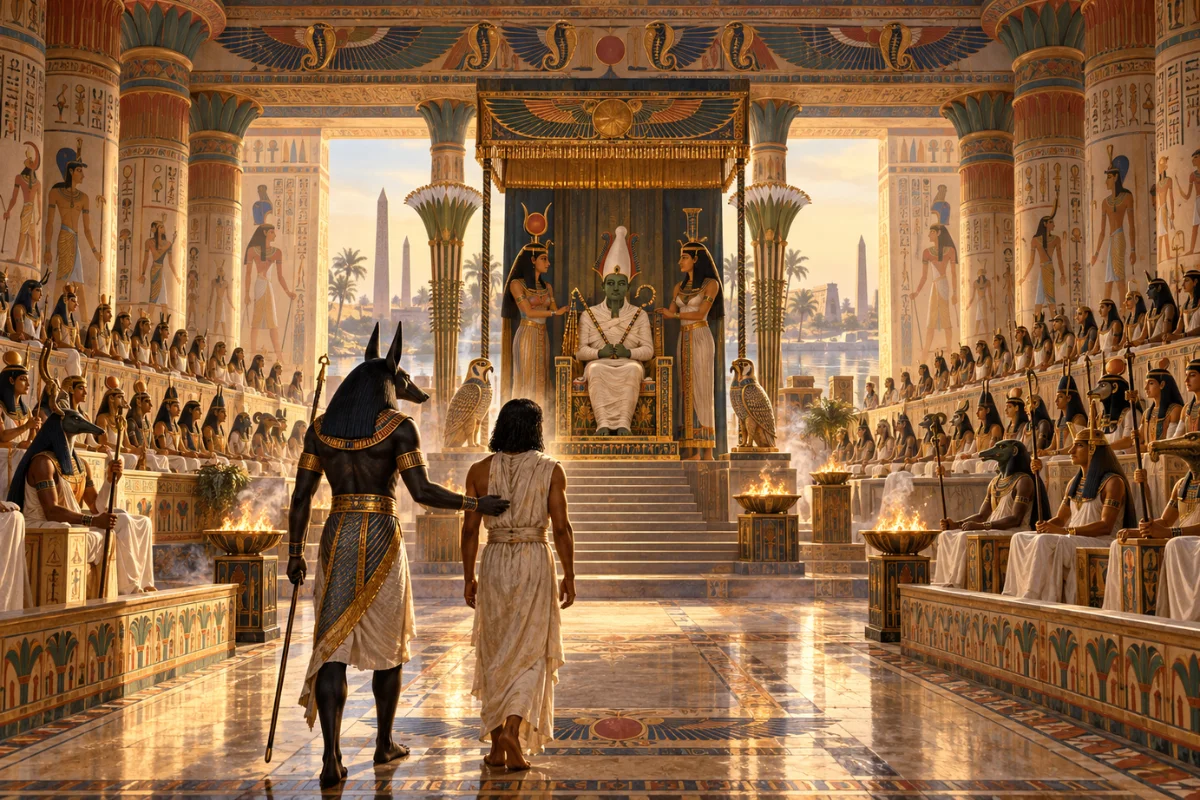
The judgement hall of ancient Egypt was known as the Hall of Two Truths. The name probably refers to Maat in a doubled form, as truth and justice both stood watch over the trial. In Book of the Dead papyri, the hall is drawn as a columned chamber, often with a frieze of feathers and cobras along the top.
The dead arrived at the hall after a dangerous journey through the Duat. Spells protected them from serpents, fire and hostile gates along the way. Anubis, as guide of souls, led the deceased by the hand into the hall of judgement.
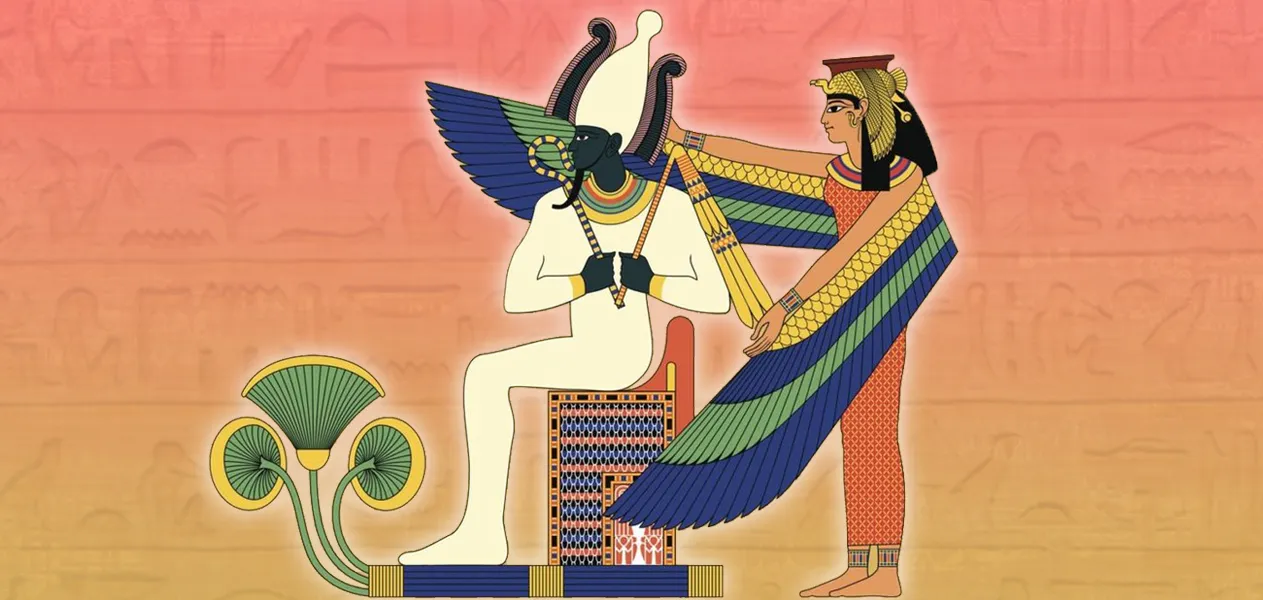
Osiris sat on a throne at one end, beneath a canopy, wrapped as a mummy and holding the crook and flail. His sisters Isis and Nephthys usually stand behind him. The 42 assessors sit in rows along the walls, ready to question the newcomer.
Which Egyptian God Judged the Dead?
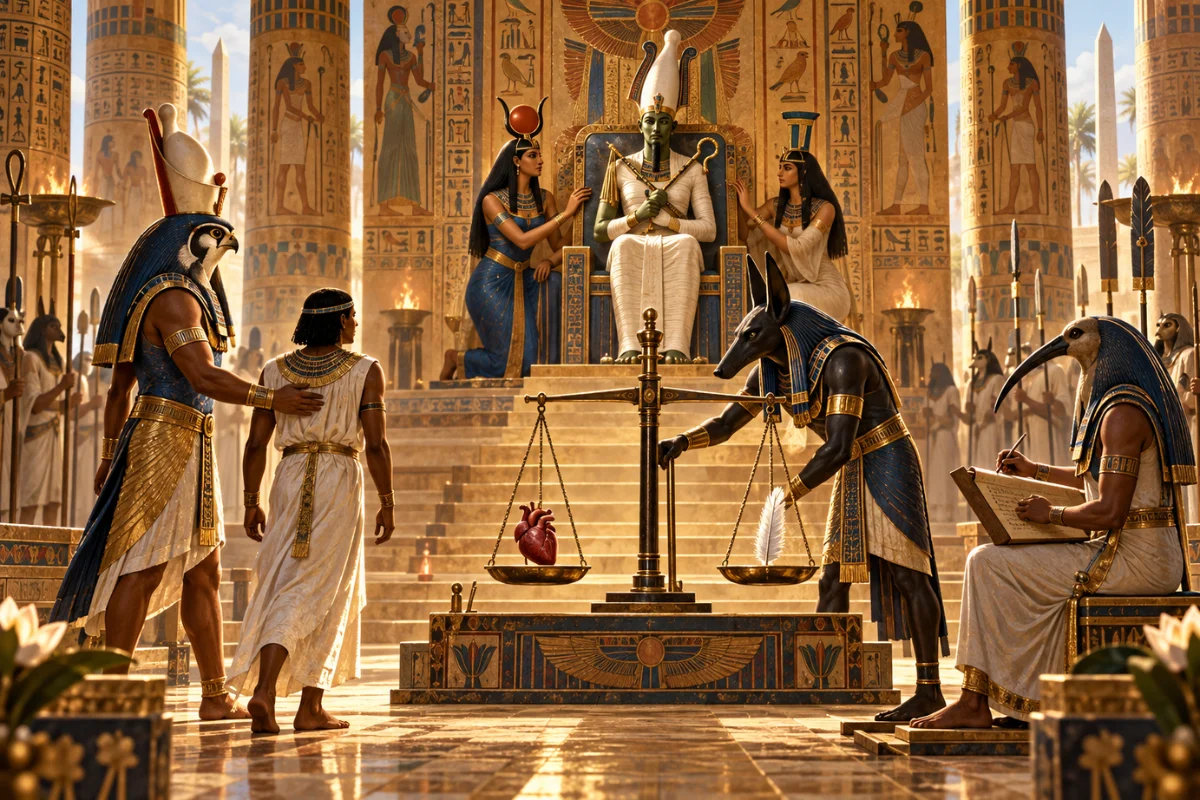
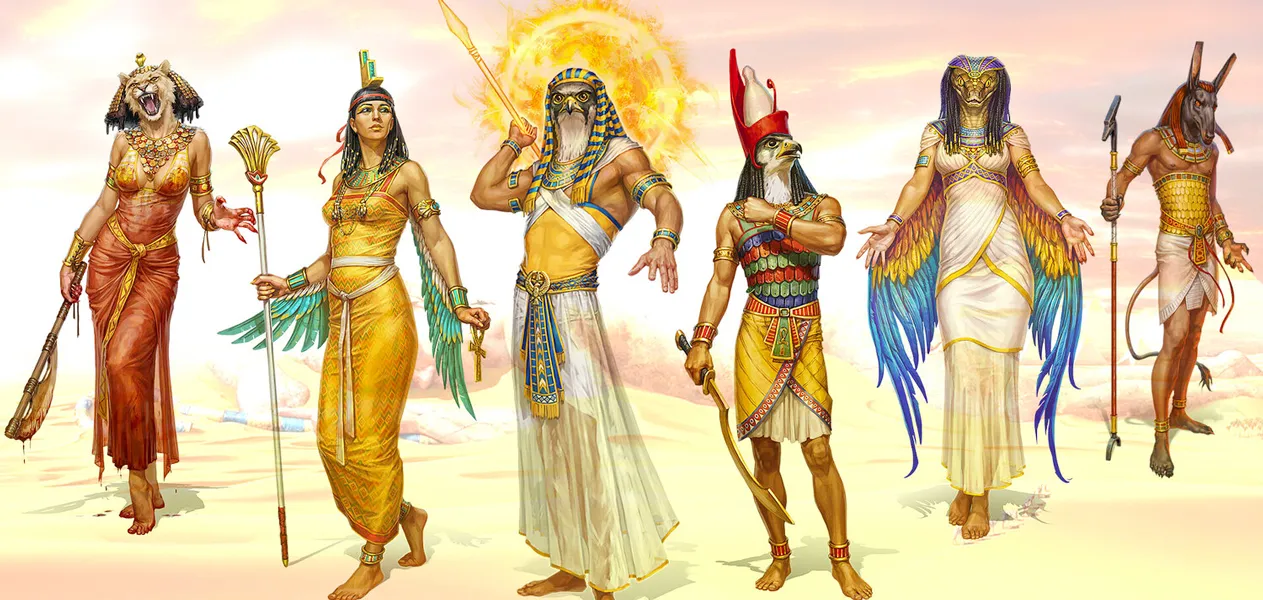
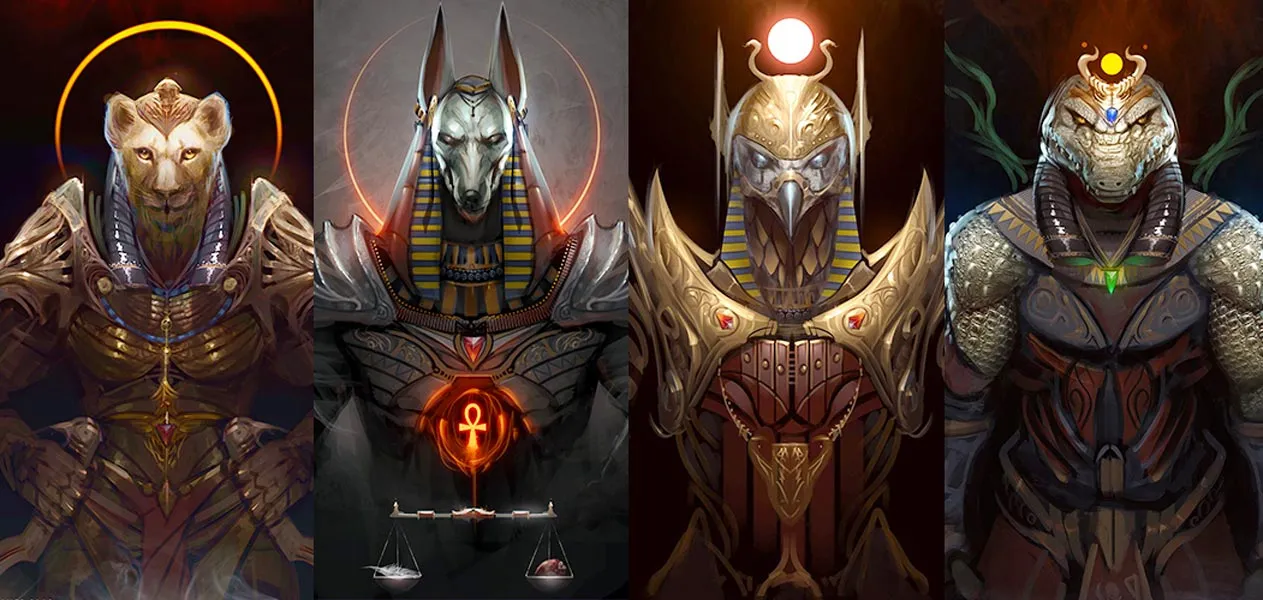
The short answer is that Osiris was the judge of the dead, but the judgement was a shared task. Each god in the hall had a defined role, and together they formed a divine court.
Osiris, the Presiding Judge
Osiris was the god of the dead and of rebirth. According to myth, he was murdered by his brother Seth and restored to life by Isis, which made him the model for every Egyptian's hope of resurrection. As ruler of the underworld, he gave the final verdict. A person who passed was said to "become an Osiris".
Anubis, Keeper of the Scales
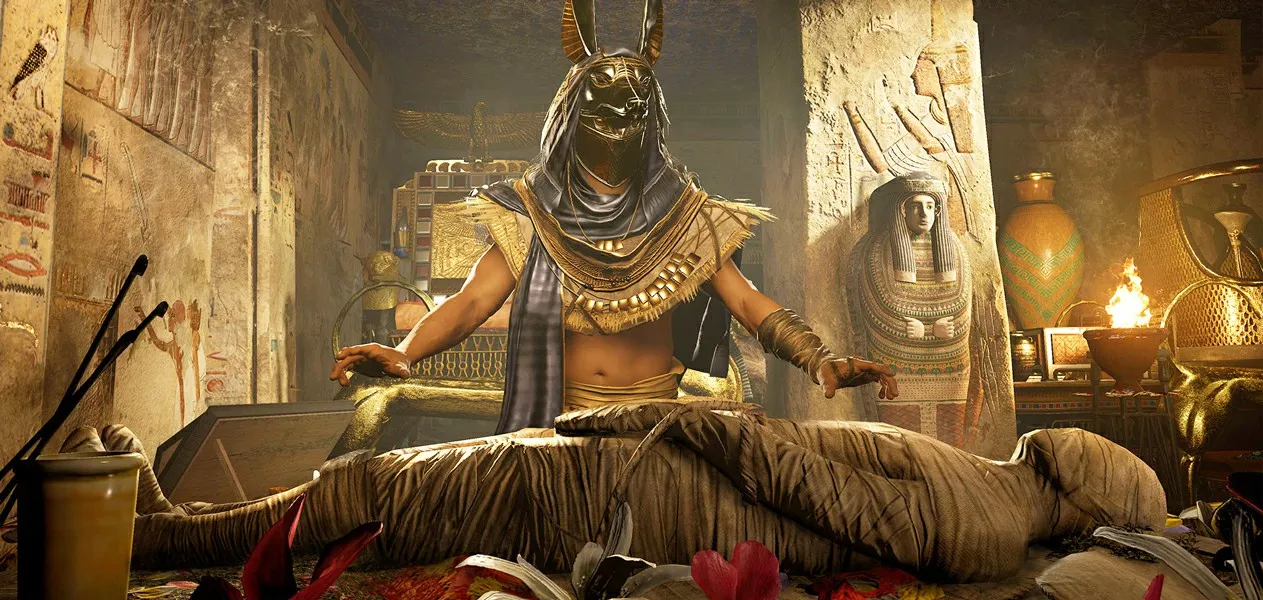
Anubis, shown with the head of a black jackal, was the older god of the dead. Before Osiris rose to prominence, Anubis held that role alone, and he kept titles such as "Lord of the Sacred Land". In the judgement scene, Anubis checks the plumb line of the balance to make sure the weighing is fair. This is why searches for "Anubis judgement" usually lead to this scene.
Thoth, the Divine Scribe
Thoth, with the head of an ibis, was the god of writing and wisdom. He stands beside the scales with a palette and pen and records the result. Sometimes a baboon, another form of Thoth, sits on top of the balance.
Maat, the Goddess of Truth
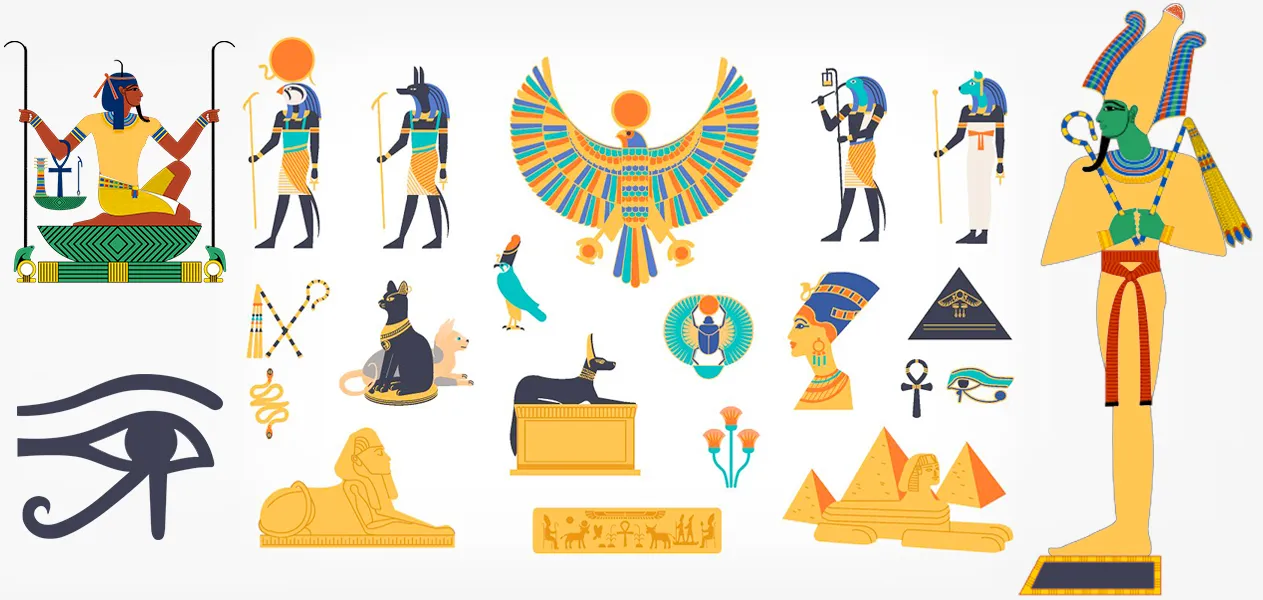
Maat represented truth, justice and cosmic order. Her symbol, a single ostrich feather, sat in one pan of the scales. Living in harmony with Maat was the duty of every Egyptian, from farmer to pharaoh, and the idea shaped earthly law too, as our guide to crime and punishment in ancient Egypt explains.
Horus, Isis and Nephthys
In many versions of the scene, Horus, the falcon-headed son of Osiris, leads the justified soul to his father's throne. Isis and Nephthys, the mourning sisters, support Osiris from behind. You can meet the wider family of ancient Egyptian gods in our full guide.
The 42 Judges and the Negative Confession
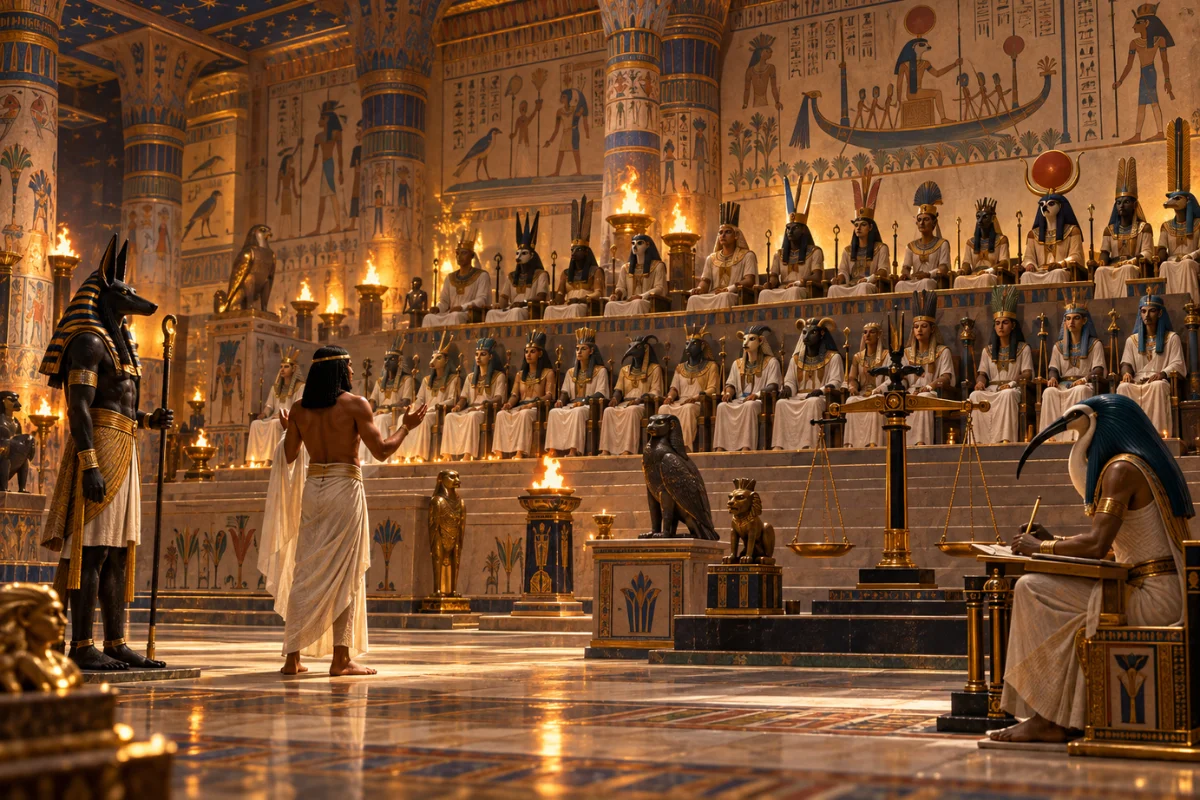
Before the weighing, the dead had to address the 42 assessors one by one. Each judge had a fearsome name, such as "Bone-Breaker" or "Eater of Shadows", and many are linked to particular places in Egypt. Knowing their names was itself a form of power over them.
To each judge, the deceased declared one sin they had not committed. This list of 42 declarations is known today as the Negative Confession, or the Declaration of Innocence. Examples include "I have not stolen", "I have not killed", "I have not told lies" and "I have not taken milk from the mouths of children".
The Negative Confession shows what Egyptians valued: honesty, fairness in trade, respect for the gods and care for the weak. Spell 125 also includes a second declaration addressed to the gods as a group. Only after both was the heart placed on the scales.
The Weighing of The Heart Ceremony
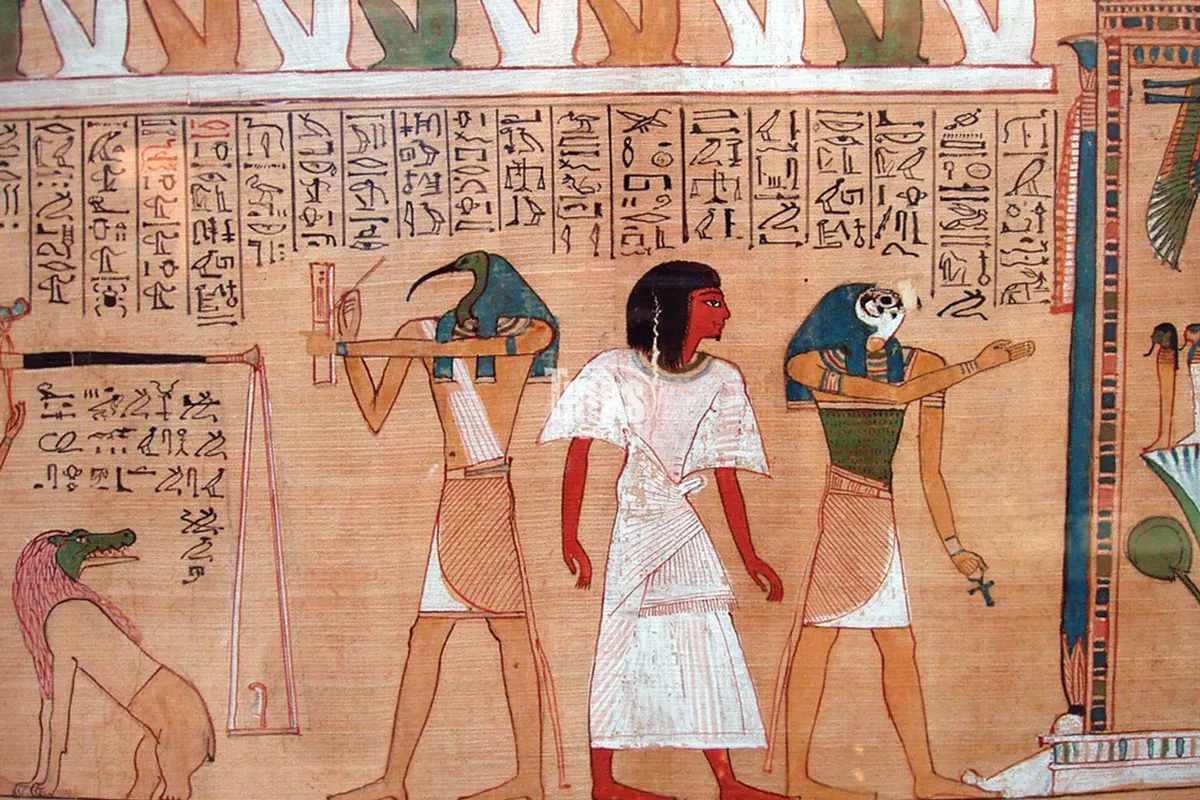
The weighing of the heart was the climax of the judgement. The heart of the deceased was placed in one pan of a large balance, and the feather of Maat in the other. If the heart was as light as the feather, the person had lived a truthful life.
The Egyptian Scales of Judgement
The Egyptian scales of judgement are drawn as a tall balance with a central upright and a crossbar holding two pans. A plumb line hangs from the crossbar, and Anubis kneels to check that it is perfectly vertical. A level beam meant the heart and the feather were in balance, which meant the person was "true of voice".
Thoth then announced the result, and the gods accepted it. The phrase maa-kheru, "true of voice" or "justified", was added after the names of the dead on coffins and stelae. It was the ancient Egyptian way of saying that someone had passed the judgement.
The Heart Scarab
Egyptians knew the heart might testify against them. To prevent this, mummies were often given a heart scarab, a stone amulet in the shape of a dung beetle placed on the chest. Its underside carried Spell 30B of the Book of the Dead.
The spell begins "O my heart which I had from my mother" and asks the heart not to stand up as a witness against its owner. Heart scarabs were often carved from green or dark stone, and many survive in museum collections today.
After the Verdict: The Field of Reeds or Ammit
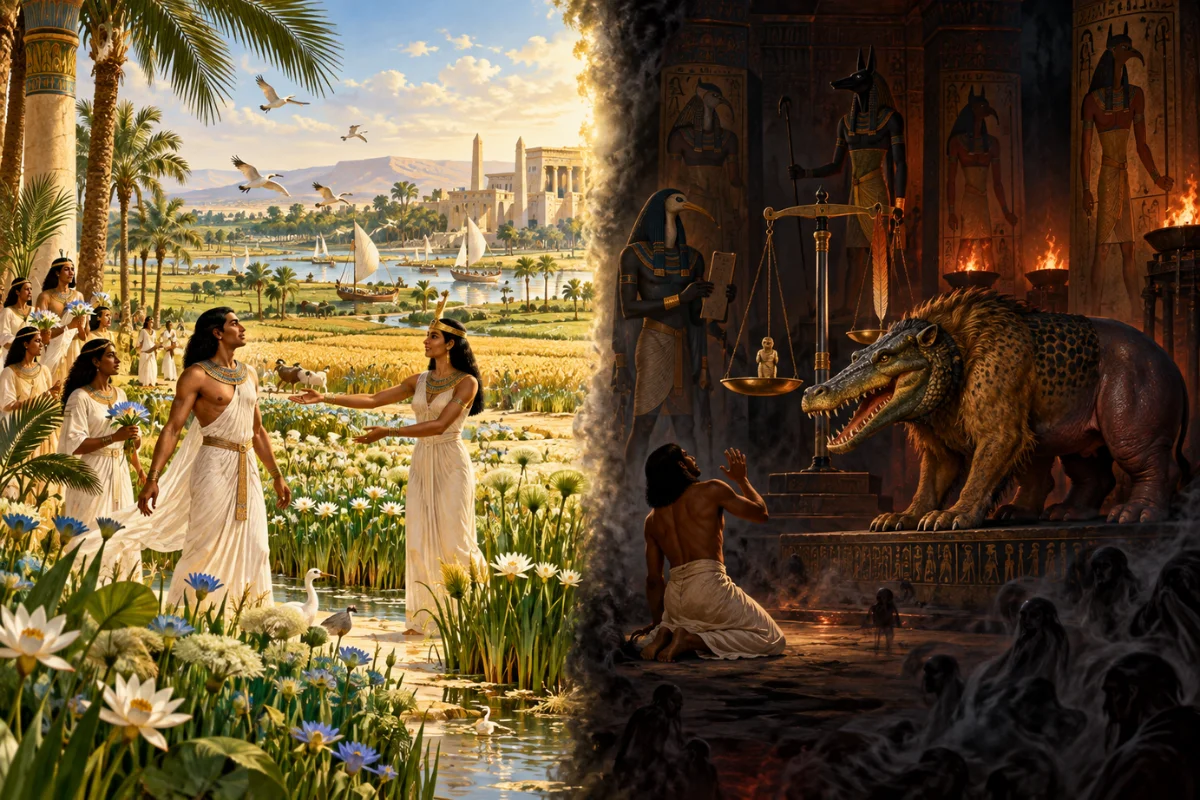
A person who passed the judgement was led to Osiris and welcomed into the Field of Reeds, called Aaru. Egyptians pictured it as an ideal version of the Nile Valley, with rich fields, flowing canals and endless harvests. There, the justified dead lived forever, farming, feasting and joining the gods.
A person who failed met Ammit, the Devourer of the Dead, who waited beside the scales. Ammit had the head of a crocodile, the front body of a lion and the back of a hippopotamus, the three most dangerous animals Egyptians knew. She ate the heart, and the soul ceased to exist forever. This "second death" was the outcome Egyptians feared most.
Notably, Book of the Dead papyri almost always show the heart passing. The spells were meant to guarantee a good result, so the owner of each papyrus is shown as justified and safe.
Anubis and the Book of the Dead
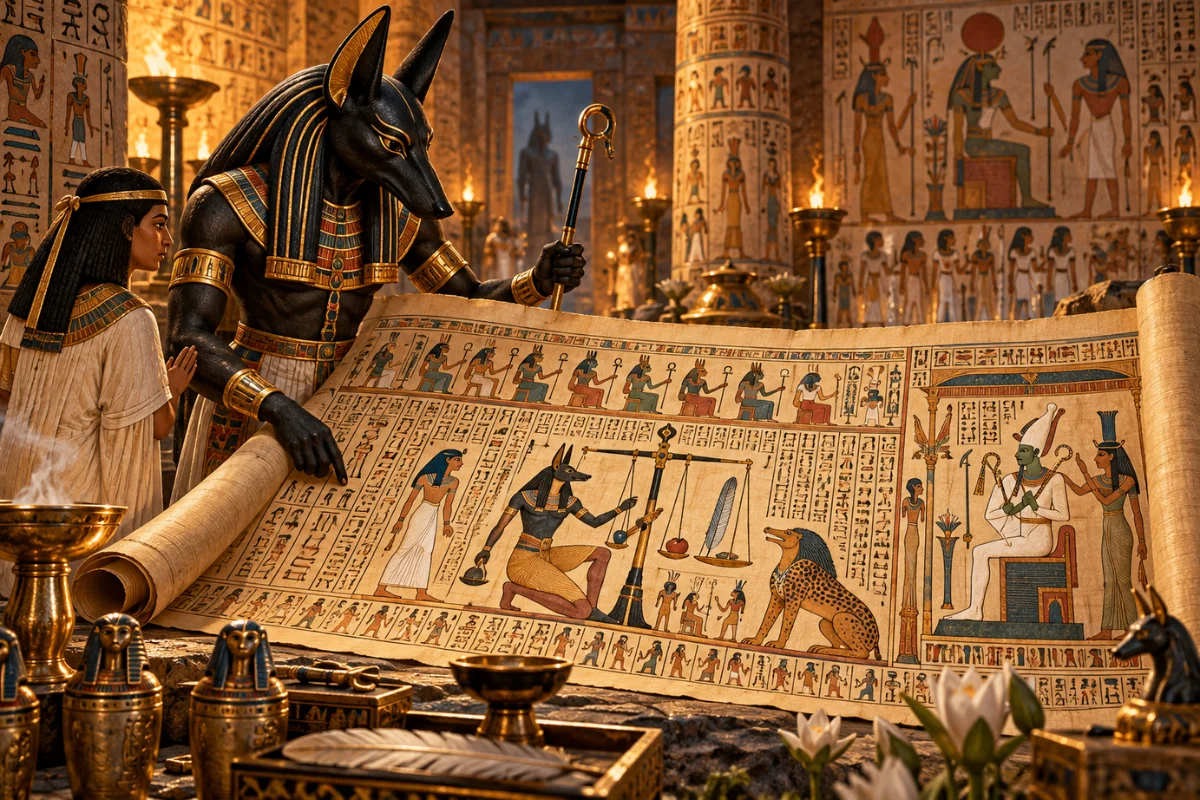
Many travelers first meet Anubis through the Book of the Dead, which Egyptians called the "Book of Coming Forth by Day". It was a collection of around 200 spells, written on papyrus and placed in the tomb from the start of the New Kingdom, around 1550 BC. It grew out of the older Coffin Texts and Pyramid Texts.
Anubis appears throughout these scrolls as the Egyptian god of the dead who protects the body and guides the soul. Our guide to the Egyptian Book of the Dead covers its spells, art and history in more depth.
Two papyri hold the best-known judgement scenes. The Papyrus of Ani, made around 1250 BC and about 24 metres long, shows the scribe Ani and his wife watching his heart being weighed. The Papyrus of Hunefer, from around 1275 BC, shows Anubis leading Hunefer to the scales and Horus presenting him to Osiris. Both are now in the British Museum in London.
Where to See the Judgement of the Dead in Egypt
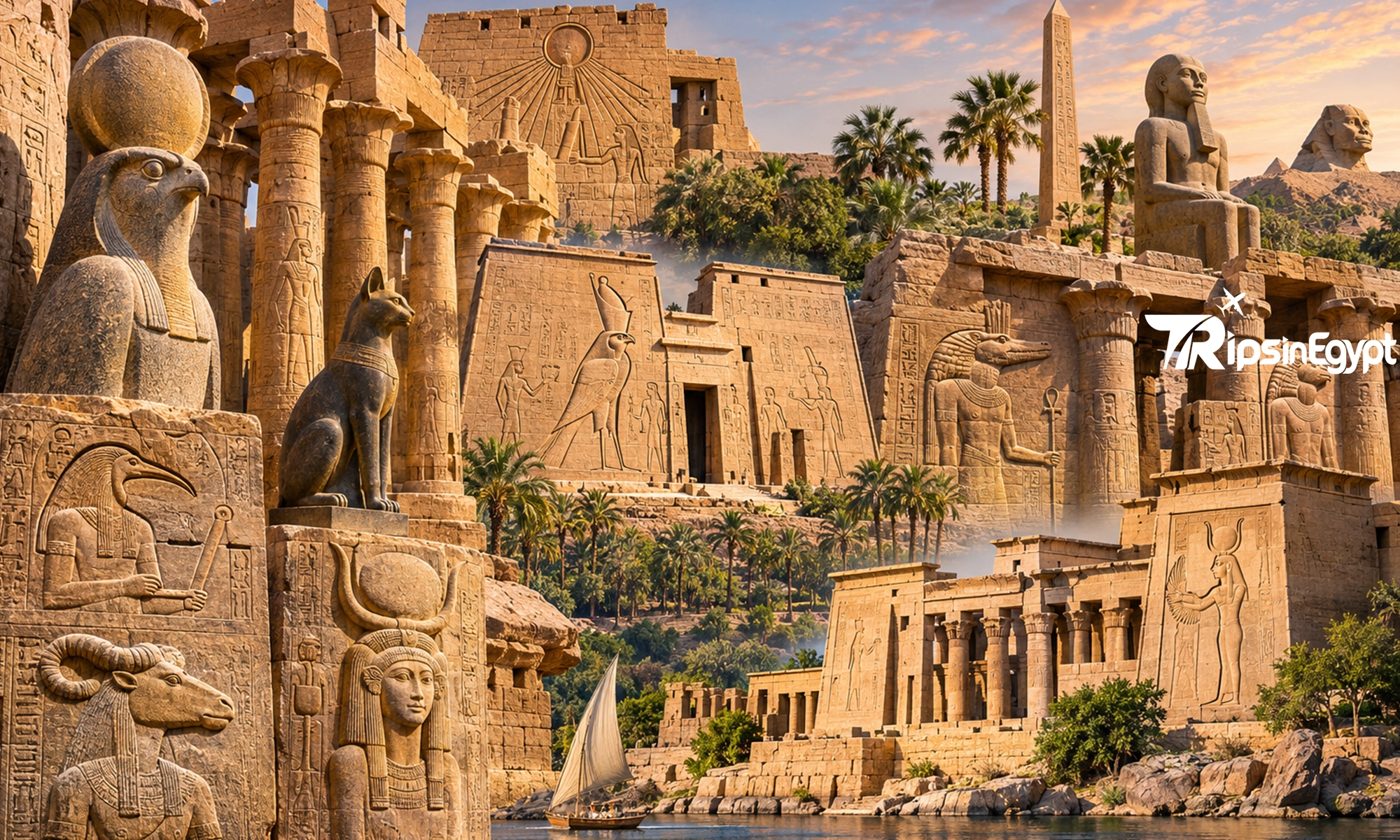
The judgement of the dead is not only a story in books. In Egypt, you can still stand in front of the walls and objects that tell it.
-
The Valley of the Kings, Luxor: royal tombs are painted with underworld books such as the Book of Gates, which includes the judgement hall of Osiris. Our guide to the Valley of the Kings explains which tombs to visit.
-
Deir el-Medina, Luxor: the small Ptolemaic temple of Hathor in the workers' village has a carved scene of the judgement of the dead in one of its chapels, a rare example on a temple wall.
-
The Grand Egyptian Museum, Giza: its galleries display coffins, amulets and other funerary objects linked to the journey to the afterlife. Plan your visit with our guide to the Grand Egyptian Museum.
-
Saqqara: the pyramid of Unas contains the oldest Pyramid Texts, carved around 2350 BC, the ancestors of the Book of the Dead.
The easiest way to see the Luxor sites is on one of our Luxor day tours, which cover the West Bank. A guide can point out Osiris, Anubis and the scales on the tomb walls as you go.
If you prefer to travel by river, many Nile cruises between Luxor and Aswan include the Valley of the Kings. The ships stop at Luxor long enough for a full day on the West Bank.
Whichever way you travel, the stories of Osiris, Anubis and Maat become far more vivid on the tomb walls themselves. To combine Luxor, Cairo and Giza in one trip, explore our Egypt tour packages.
Conclusion
The judgement of the dead turned Egyptian beliefs about right and wrong into a single unforgettable image: a heart on the scales, a feather of truth, and gods waiting for the verdict. Osiris judged, Anubis weighed, Thoth wrote, and Ammit waited nearby. For thousands of years, Egyptians lived hoping to be found true of voice. Their painted tombs and temples still keep that timeless hope alive along the Nile today.

5 Days Cairo And Hurghada Trip
Amazing 4 Nights Cairo and Hurghada Trip Itinerary 5 Days Cairo and Hurghada trip wil...
- Duration 5 Days / 4 Nights
- Location Cairo & Hurghada
- Type Historical & Recreational Tour
From$690/per person
View Tour
6 Days Cairo, Alexandria & Faiyum Tour
Unforgettable Cairo, Alexandria & Faiyum Adventure in Six Days 6 Days Cairo, Alex...
- Duration 6 Days / 5 Nights
- Location Cairo - Alexandria - Fayum
- Type Historical Tour
From$720/per person
View Tour
10 Days Cairo, Faiyum & Nile Cruise Holiday
Breathtaking 10 Days Journey of A Lifetime in Egypt 10 Days Cairo, Faiyum & Nile...
- Duration 10 Days / 9 Nights
- Location Cairo, Luxor, Aswan & Faiyum
- Type Classic Tour
From$1350/per person
View Tour SOLD OUT
Ultimate 7-Day Egypt Solar Eclipse Experience with Hurghada 2027
Enjoy a 7-Day Egypt Solar Eclipse Tour with Hurghada 2027 6 Nights Egypt Solar Ecli...
- Duration 7 Days / 6 Nights
- Location Cairo / Giza / Luxor / Hurghada
- Type Astronomical Tour
Sold Out
View Details