



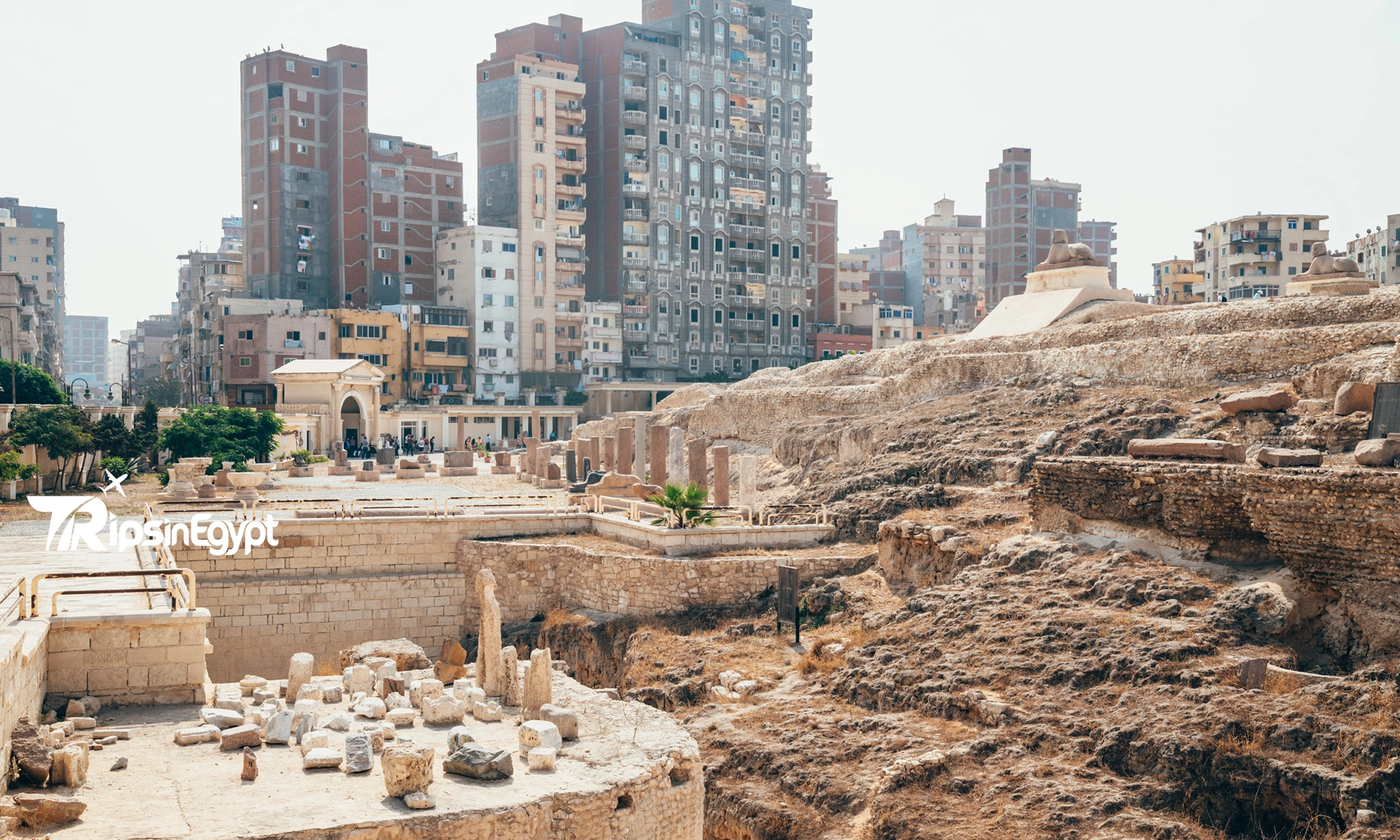
The Serapeum of Alexandria was the greatest temple of ancient Alexandria and one of the most famous religious buildings of the Greek and Roman world. Set on a hill in the old Egyptian quarter, it was dedicated to Serapis, a new god invented by the Ptolemies to unite Greeks and Egyptians, and it held a daughter library of the city's legendary Great Library. Climbing its marble stairs toward the shining statue of the god must have felt like entering the heart of the ancient world.
Today, a single granite column, two sphinxes, and a maze of underground galleries are all that remain. This guide explains who Serapis was, how the Serapeum was built and destroyed, what you can see of its ruins today, and how to visit them. Here are all the things you need to know about the Serapeum of Alexandria:

Who Was Serapis the God Behind the Temple
When Alexander the Great died in 323 BC, his general Ptolemy I Soter took control of Egypt. He ruled a country with two very different peoples: native Egyptians, with thousands of years of religious tradition, and Greek settlers, who worshipped the gods of Olympus.
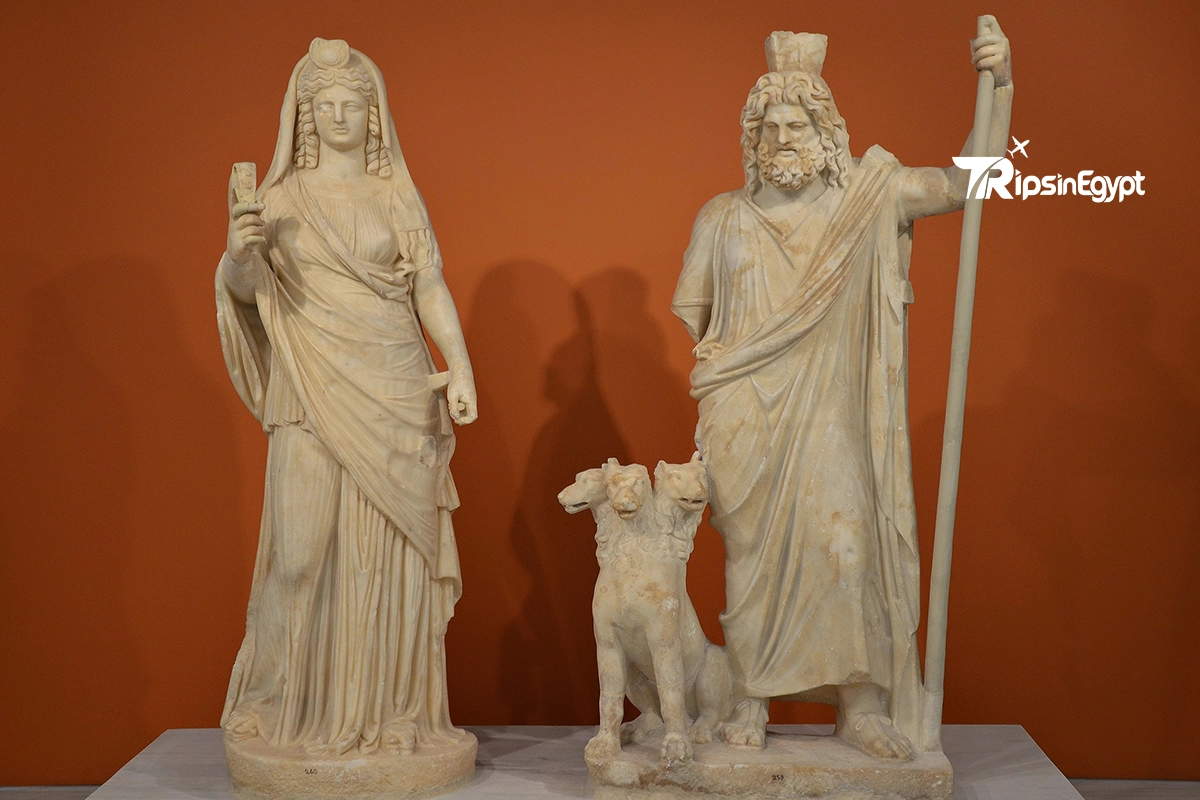
To bring them together, Ptolemy I promoted a new god, Serapis. According to ancient accounts, he was shaped with the help of the Egyptian priest and historian Manetho of Sebennytos and the Greek priest Timotheus of Eleusis. His name and nature came from Osiris-Apis, the dead Apis bull of Memphis united with Osiris, god of the afterlife. His appearance, however, was entirely Greek.
Serapis was shown as a bearded, mature man like Zeus, seated on a throne, with a grain basket called a modius on his head as a symbol of fertility and plenty. He was a god of healing, the underworld and abundance, and he was worshipped alongside Isis and the child god Harpocrates. His cult spread far beyond Egypt, across the Roman Empire, as you can read in our guide to the ancient Egyptian gods and goddesses.
The original Serapeum was in Memphis, near the burial galleries of the Apis bulls at Saqqara. Alexandria's temple became the new center of the cult.
The Grand History of the Serapeum of Alexandria
The Serapeum stood on a rocky plateau in Rhakotis, the old Egyptian quarter in the southwest of the city, with views to the sea in the north and Lake Mariout in the south. It was the largest temple in the city, and its position on high ground made it visible from far away.
A smaller shrine to Serapis may have existed here under Ptolemy I or Ptolemy II, but the great temple was built by Ptolemy III Euergetes, who ruled from 246 to 222 BC. In 1944, excavations near the column uncovered two sets of foundation plaques of gold, silver, bronze, faience, and Nile mud, with inscriptions in Greek and Egyptian stating that Ptolemy III built the Serapeum. They also name its probable architect, Parmeniskos. Under Ptolemy IV, a temple to Harpocrates was added inside the enclosure.
After Rome took Egypt in 30 BC, following the death of Queen Cleopatra, the Serapeum kept its importance. It was damaged during the Jewish revolt of AD 115 to 117 and probably restored under Emperor Hadrian, from whose reign comes a fine black statue of Serapis as the Apis bull, found on the site in 1895. Between about AD 181 and 217, the Romans rebuilt the temple on a grander scale, with huge granite columns.
Ancient sources describe a rectangular sanctuary surrounded by colonnades, courtyards, gardens and smaller shrines. Some accounts mention about 400 columns in the enclosure. Beneath it ran a network of underground passages, probably used for the secret rites and mysteries of Serapis.
Inside the Temple: The Statue of Serapis and the Daughter Library
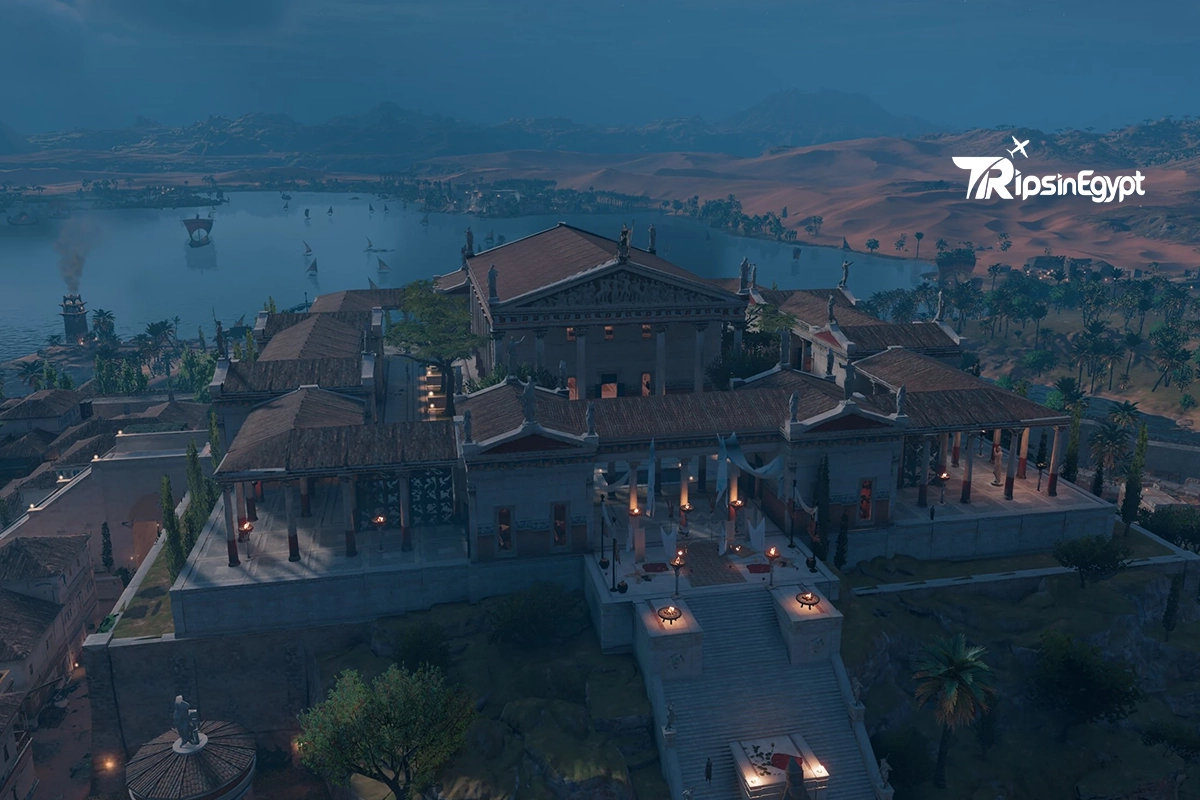
Visitors reached the temple by a great flight of stairs, said to have over 100 steps. At the top, they entered a sanctuary that ancient writers described as one of the most beautiful buildings in the world.
The statue of Serapis. At the heart of the temple stood a colossal statue of the god, attributed to the Greek sculptor Bryaxis. It was made of wood covered with gold, silver and precious stones, with a face of ivory, and showed Serapis seated with a scepter, the three-headed dog Cerberus at his feet. According to one story, a small window was placed so that a ray of sunlight fell on the god's lips at a certain moment, as if the sun were kissing him.
Healing and dreams. Like other healing temples, the Serapeum practiced incubation: sick pilgrims slept in the temple, hoping the god would appear in a dream and cure them or tell them how to be cured. Some devotees lived permanently within the sacred enclosure.
The daughter library. The Serapeum also housed a branch of the Great Library of Alexandria, often called the daughter library. Ancient sources say it held about 42,000 scrolls, a smaller collection than the main library in the royal quarter. Unlike the main Library of Alexandria, it is often described as being open to scholars and the public. It may have survived the fires that damaged the main library, which makes its later loss even more painful for historians.
The Unfortunate Destruction of the Serapeum in AD 391
By the late 4th century, Christianity had become the dominant religion of the Roman Empire, and the Emperor Theodosius I issued a series of laws banning pagan sacrifices and closing temples.
In Alexandria, tensions between Christians and pagans exploded around AD 391. According to the church historian Rufinus, the trouble began when Bishop Theophilus of Alexandria converted an old temple into a church and paraded objects from the pagan cult through the streets. Pagans rioted, and their supporters barricaded themselves inside the Serapeum.
When an imperial letter arrived ordering the temples to be destroyed, Christians and Roman soldiers stormed the Serapeum. A soldier struck the statue of Serapis with an axe, and the statue was broken up and burned. The temple was then torn down, and its treasures and remaining books were lost.
The destruction of the Serapeum became a symbol of the end of the ancient religion in Egypt. On the site, the Christians built a monastery and a church dedicated to Saint John the Baptist, which survived for several centuries before falling into ruin. The story of the Christian communities that followed is told in our guide to Coptic sites in Egypt, while the Temple of Philae in Aswan, where the cult of Isis lasted until the 6th century, shows how long the old faith survived elsewhere.
The Serapeum Ruins Today: Pompey's Pillar, Sphinxes and Galleries
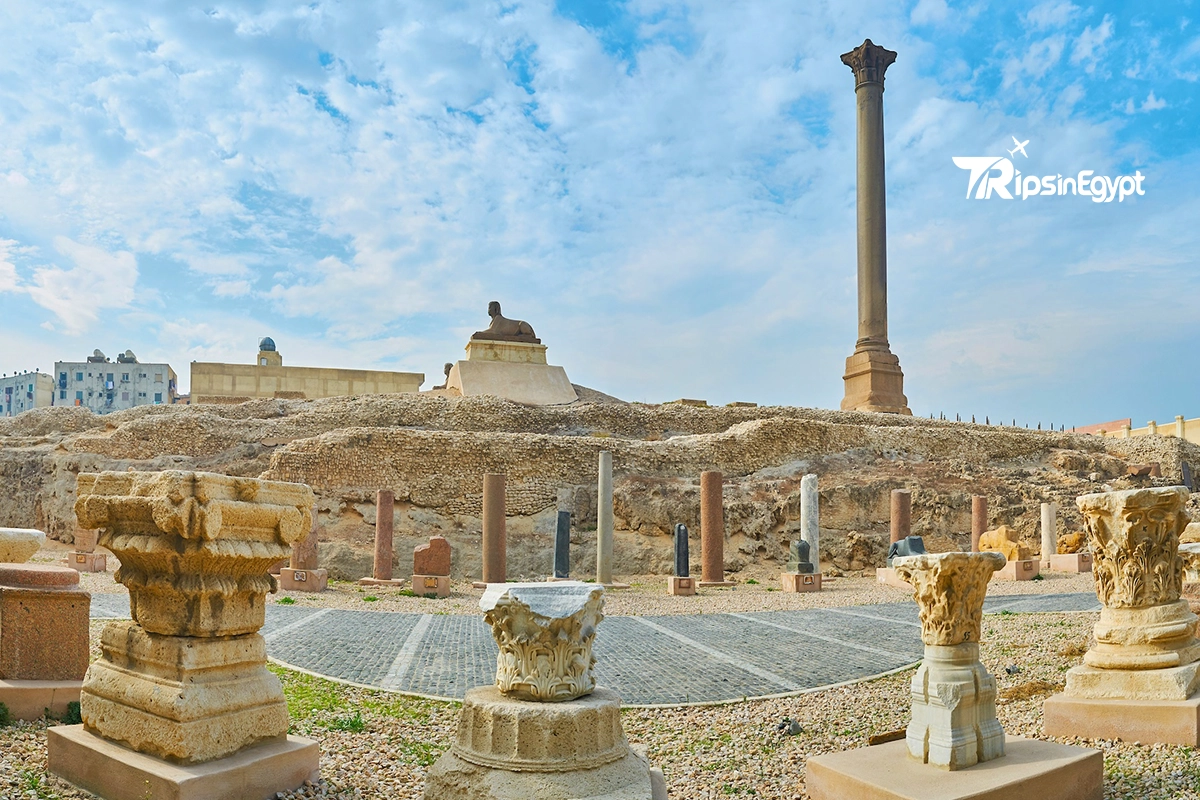
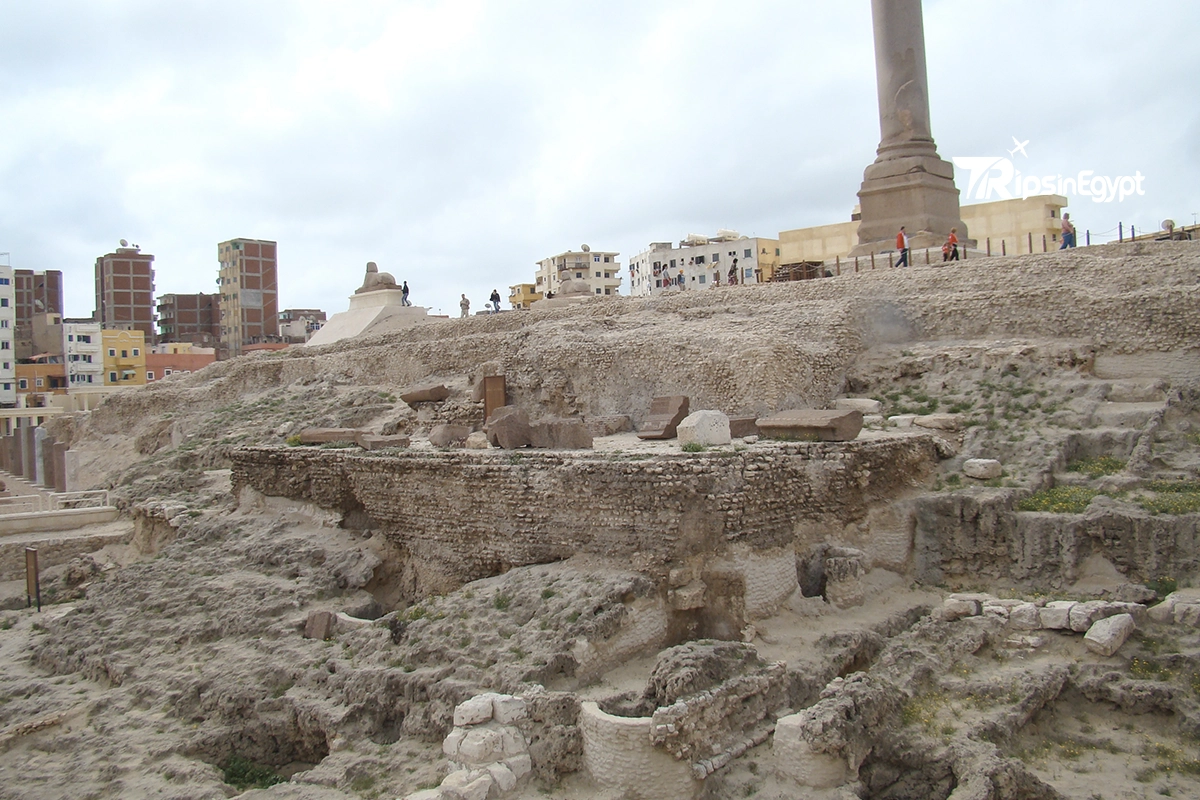
Nothing of the temple stands today, but the site is one of the most important archaeological areas in Alexandria. It is known locally as Amud el-Sawari, the "column of the masts", after its famous column.
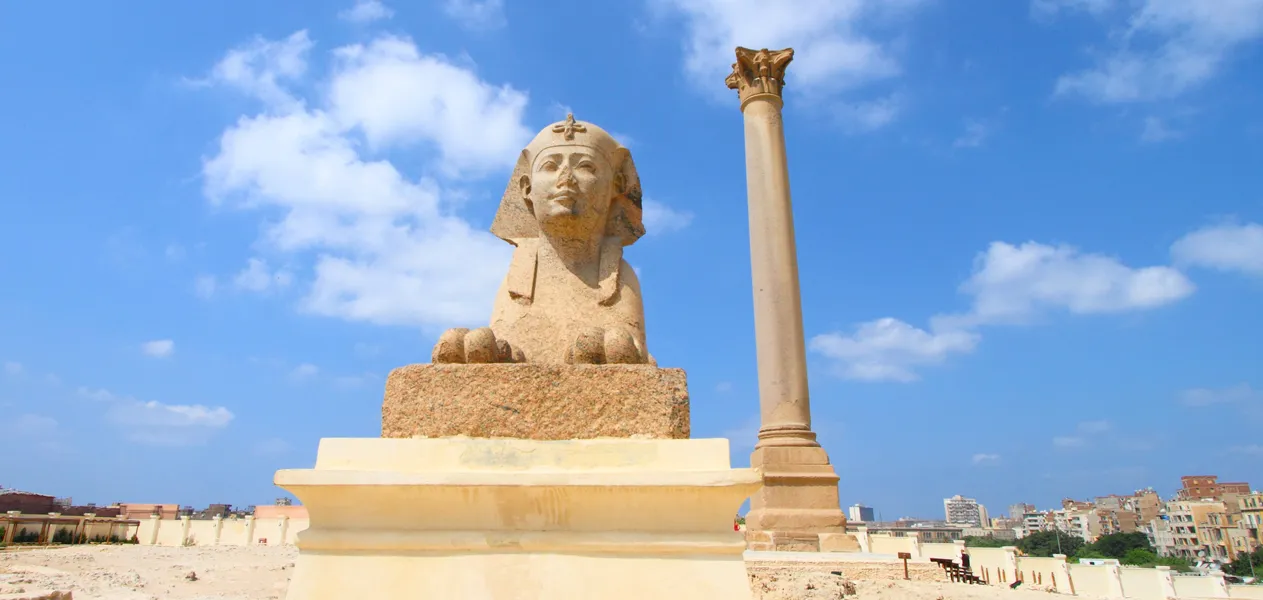
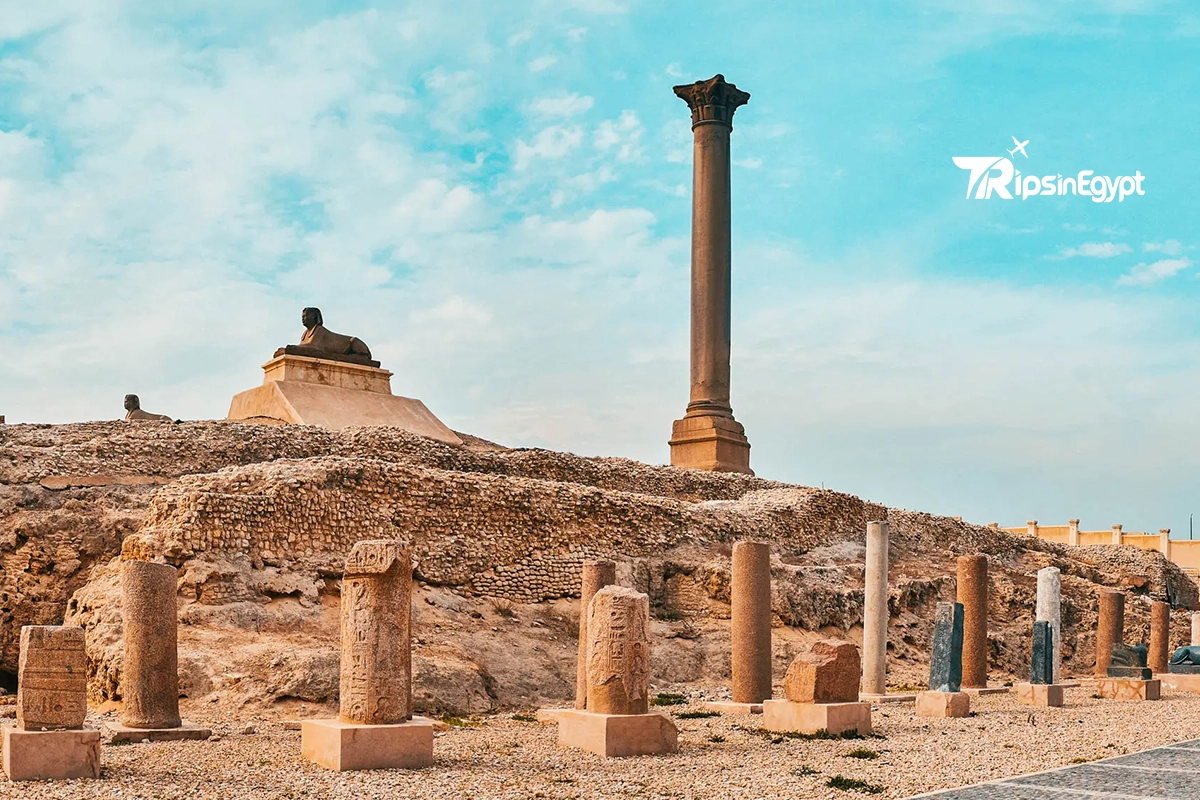
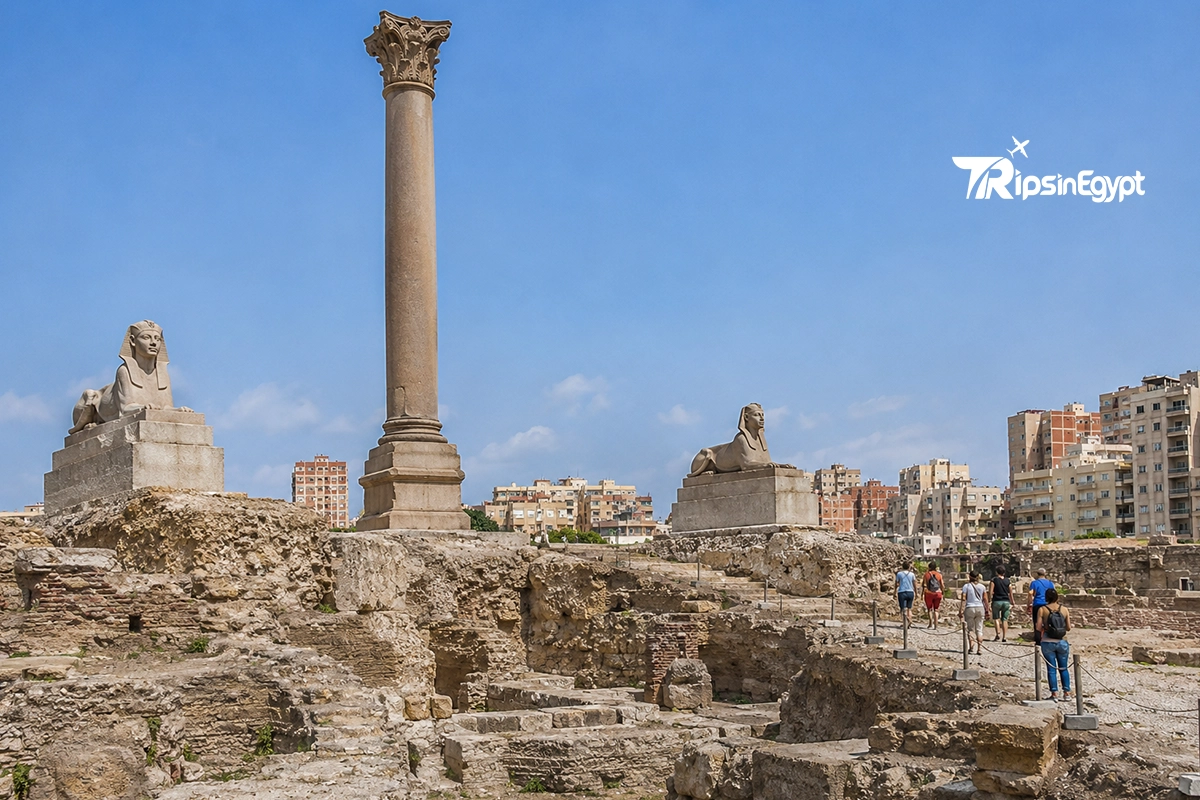
Pompey's Pillar. The main landmark is Pompey's Pillar, a single column of red Aswan granite about 27 m tall, standing on the hill where the temple once rose. It was raised around AD 298 in honor of the Emperor Diocletian, and an inscription on its base names the Roman prefect Postumus. Medieval travelers wrongly believed it marked the tomb of the Roman general Pompey, and the name stuck.
The sphinxes. Two pink granite sphinxes from the Ptolemaic period stand near the column, along with fragments of statues and columns scattered across the site.
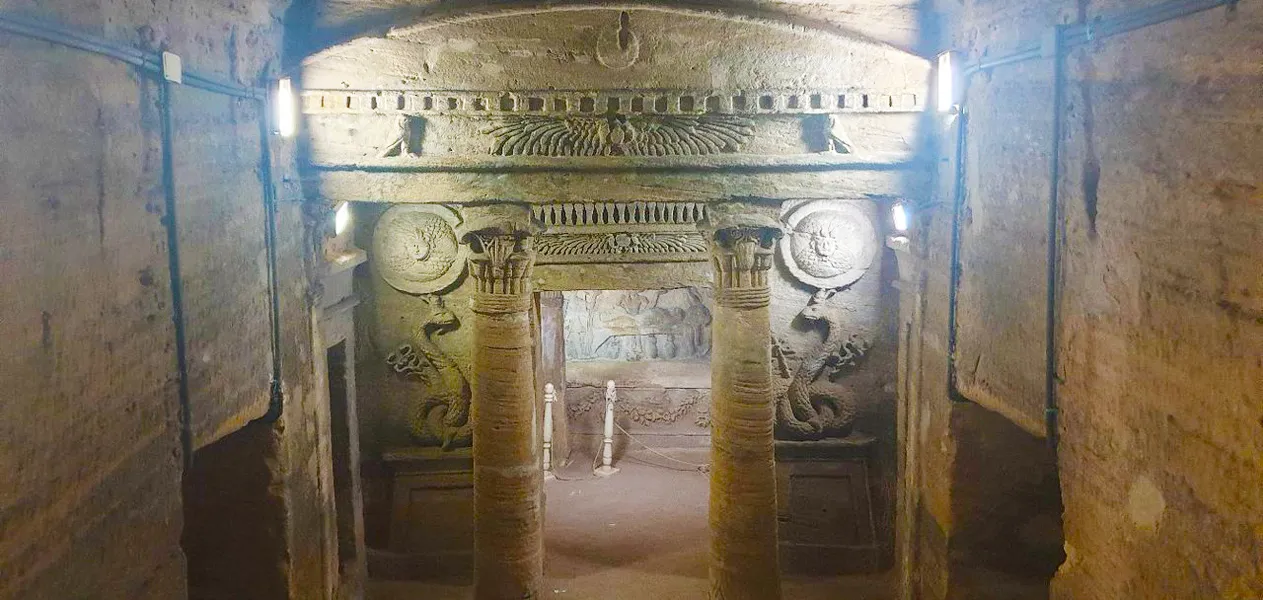
The underground galleries. Visitors can walk down into the rock-cut galleries beneath the temple. These long, narrow passages, lined with niches, are thought by some to have stored scrolls of the daughter library, while others believe they held the burials of sacred animals or served the mysteries of Serapis.
The Apis statue. The black statue of Serapis as the Apis bull found in 1895 is displayed in Alexandria's Graeco-Roman Museum. More treasures from the city's classical past appear in our guide to the museums of Egypt.
Archaeologists have explored the site since the late 19th century, including the Italian scholar Giuseppe Botti in the 1890s and the British Egyptologist Alan Rowe in the 1940s.
Visiting the Serapeum of Alexandria
The Serapeum site is in the Karmouz district, about 2 km south of downtown Alexandria, and is usually visited together with nearby sights.
| Fact | Detail |
|---|---|
| Location | Karmouz district, about 2 km south of downtown |
| Main sights | Pompey's Pillar, sphinxes, underground galleries |
| Opening hours | Usually 9 am to 4 pm or 5 pm |
| Time needed | 30 to 60 minutes |
| Nearby | Catacombs of Kom el-Shoqafa, a few minutes away |
Tickets. Entry is by a modest ticket in Egyptian pounds, with reduced prices for students. Prices change often, so check before you go.
Getting there. The easiest way is by taxi or a ride-hailing app from downtown or the Corniche. The streets around the site are busy and narrow, so most organized tours include it with a private car.
Combine your visit. The Catacombs of Kom el-Shoqafa, a few minutes away, make a perfect pair with the Serapeum, as both show the mix of Egyptian, Greek and Roman beliefs in the city. Add the Bibliotheca Alexandrina and the Citadel of Qaitbay for a full day, or see our list of Alexandria tourist attractions and the best things to do in Alexandria.
Tips. Wear comfortable shoes for the uneven ground and the steps into the galleries, and bring a hat and water, as there is little shade. Morning is the best time for photos of the column. Our Alexandria travel guide covers the rest of your stay.
Walk Where Serapis Once Reigned With Trips In Egypt
The golden statue of Serapis is long gone, but standing beneath the great granite column on the hill of Rhakotis, you can still feel the ambition of the city that tried to join two worlds under one god. Our Egyptologist guides bring the Serapeum and its neighboring catacombs to life. Join our day tour to Alexandria from Cairo, our Alexandria city tour from Alexandria Port or our 4-day Cairo and Alexandria holiday, pick your favorite one of our Egypt holiday packages or design your own route with our tailor-made tours.

5 Days Cairo And Hurghada Trip
Amazing 4 Nights Cairo and Hurghada Trip Itinerary 5 Days Cairo and Hurghada trip wil...
- Duration 5 Days / 4 Nights
- Location Cairo & Hurghada
- Type Historical & Recreational Tour
From$690/per person
View Tour
6 Days Cairo, Alexandria & Faiyum Tour
Unforgettable Cairo, Alexandria & Faiyum Adventure in Six Days 6 Days Cairo, Alex...
- Duration 6 Days / 5 Nights
- Location Cairo - Alexandria - Fayum
- Type Historical Tour
From$720/per person
View Tour
10 Days Cairo, Faiyum & Nile Cruise Holiday
Breathtaking 10 Days Journey of A Lifetime in Egypt 10 Days Cairo, Faiyum & Nile...
- Duration 10 Days / 9 Nights
- Location Cairo, Luxor, Aswan & Faiyum
- Type Classic Tour
From$1350/per person
View Tour SOLD OUT
Ultimate 7-Day Egypt Solar Eclipse Experience with Hurghada 2027
Enjoy a 7-Day Egypt Solar Eclipse Tour with Hurghada 2027 6 Nights Egypt Solar Ecli...
- Duration 7 Days / 6 Nights
- Location Cairo / Giza / Luxor / Hurghada
- Type Astronomical Tour
Sold Out
View Details