



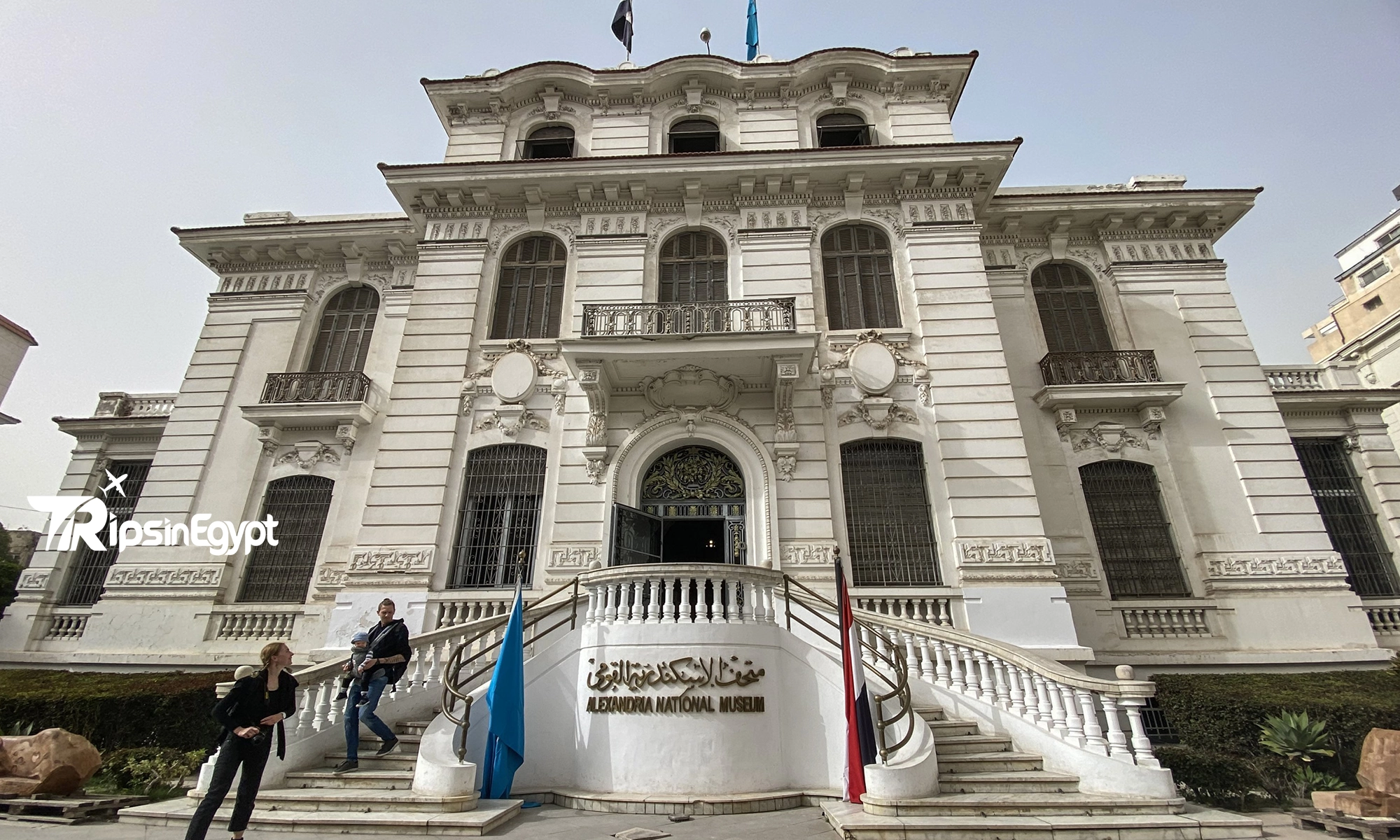
The Alexandria National Museum is the best place to understand the whole story of Alexandria in a single visit. Set in an elegant white palace on Horreya Road, it holds about 1,800 objects arranged by period, from Pharaonic statues and mummies to Greek and Roman sculpture, Coptic textiles, Islamic coins and the jewels of Egypt's last royal family. Walking down to the basement and back up through its floors feels like moving through the centuries, one staircase at a time.
Smaller and calmer than the great museums of Cairo, it is easy to see in a morning. This guide covers the history of the building, a floor-by-floor tour, the highlights, the sunken treasures and everything you need to plan your visit. Here are all things you need to know about the Alexandria National Museum:

The Grand History of the Alexandria National Museum
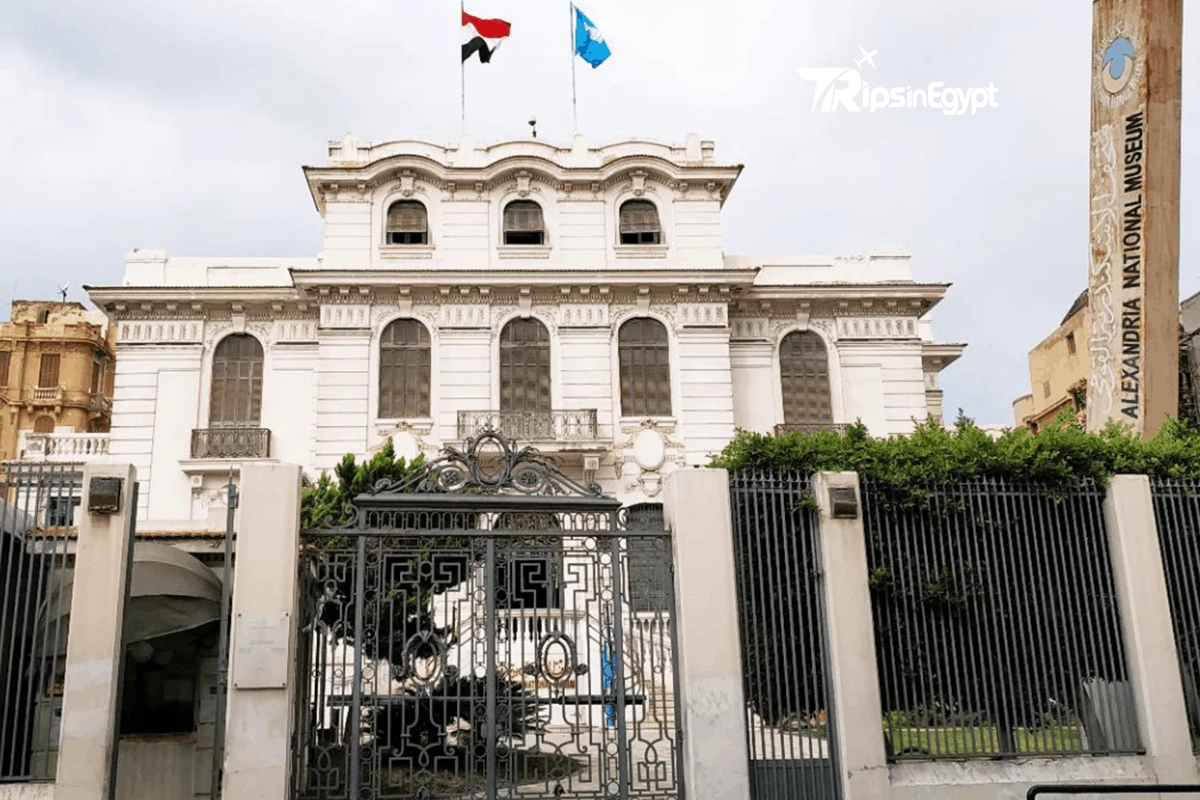
The museum building began life as a private palace. It was built around 1926 for Al-Saad Bassili Pasha, a wealthy timber merchant, on Fouad Street, the old main avenue of the city, now called Horreya Road. It is a three-storey Italianate mansion of white stone, with marble floors, tall French windows and a garden, on a plot of about 3,480 square meters.
In 1960, the palace was sold to the United States, which used it as its consulate in Alexandria for several decades. In the 1990s, the Egyptian state bought the building back. The official Ministry of Tourism and Antiquities site gives 1996 as the year the Supreme Council of Antiquities acquired it, while some accounts give 1997 and a price of about EGP 12 million.
The conversion into a museum took several years. The museum opened to the public in 2003, inaugurated by President Hosni Mubarak in December that year. Its collection was gathered from other museums and storerooms in Egypt, including the Egyptian Museum in Cairo, the Graeco-Roman Museum in Alexandria and the finds of underwater excavations off the coast.
The idea was simple: to tell the story of Alexandria and its region across every period, in one building. Each floor is painted in its own color, dark blue for the Pharaonic period, light blue for the Greek and Roman era and green for the Coptic and Islamic periods, so you always know where you are in time.
A Floor-by-Floor Tour of the Collection
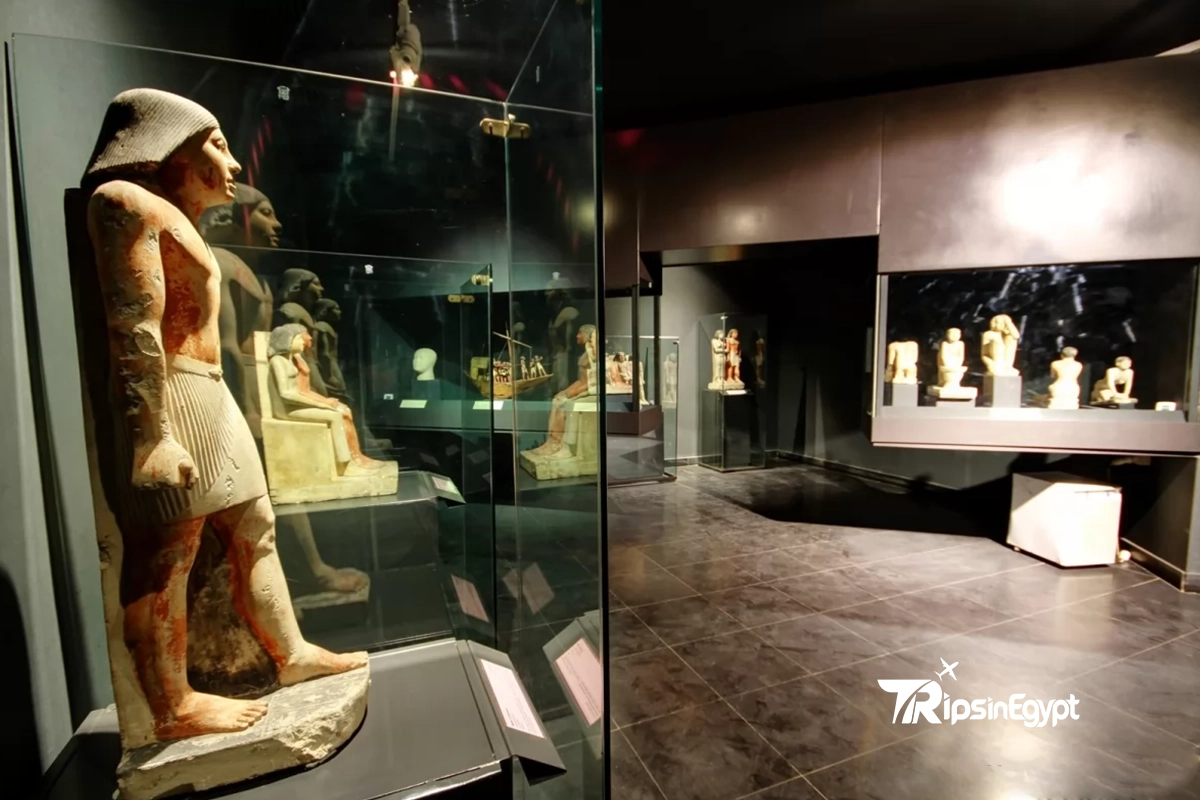
The museum is arranged chronologically over three exhibition floors. Most visitors start in the basement and work their way up.
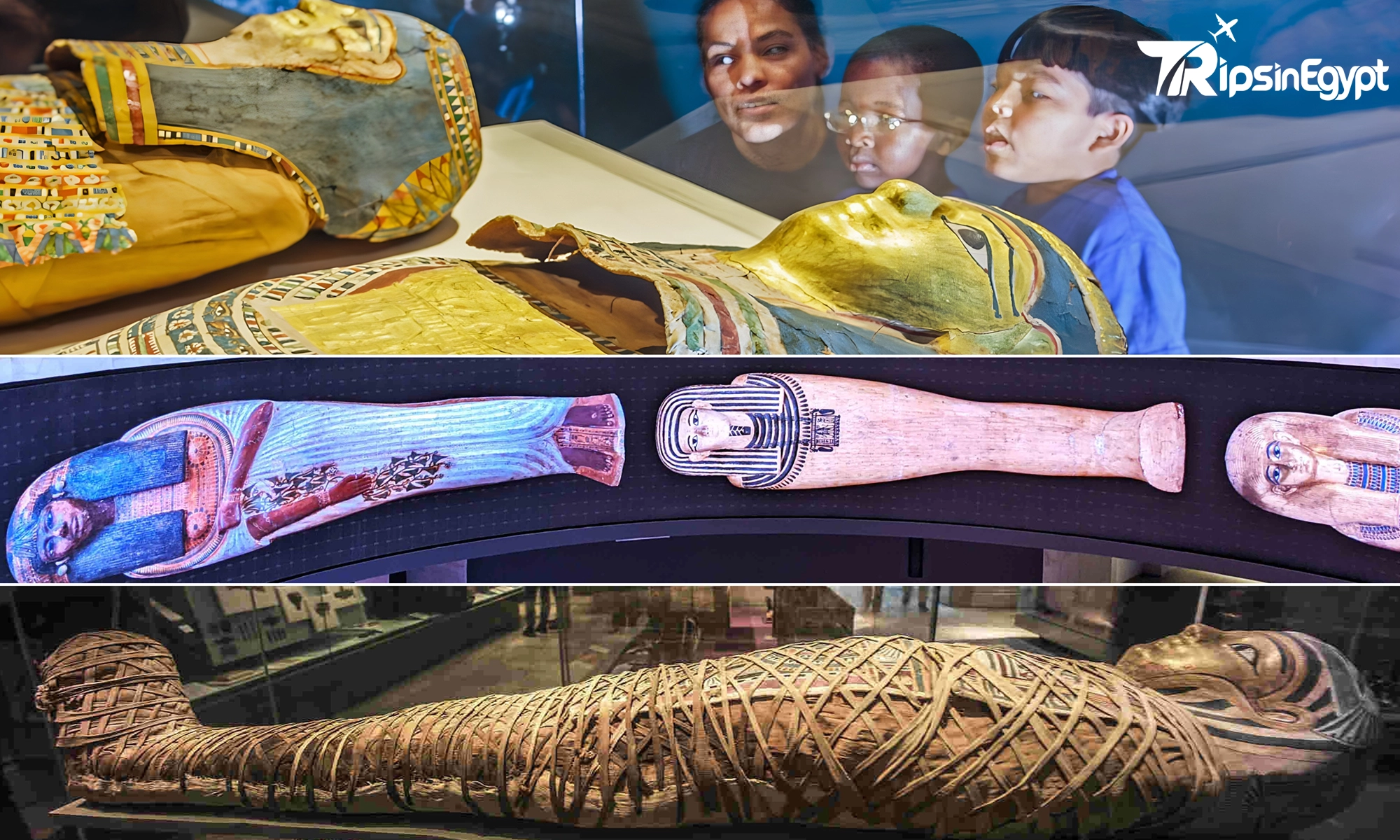
Basement: Prehistoric and Pharaonic Egypt. The lower floor covers the Old, Middle and New Kingdoms, with statues, stelae, tools, pottery and funerary objects. A reconstructed tomb, in the style of the tombs of the Valley of the Kings, displays a mummy with its coffin and funerary equipment, a clear introduction to ancient Egyptian mummification. Look for the statues of scribes and servants, which show daily life in the age of the pharaohs.
Ground floor: Greek and Roman Alexandria. This floor tells the story of the city founded by Alexander the Great in 331 BC and ruled by the Ptolemies until the death of Queen Cleopatra in 30 BC, and then by Rome. It holds marble busts of emperors such as Hadrian, painted terracotta Tanagra figurines of elegant women, glassware, pottery and many of the finds raised from the sea.
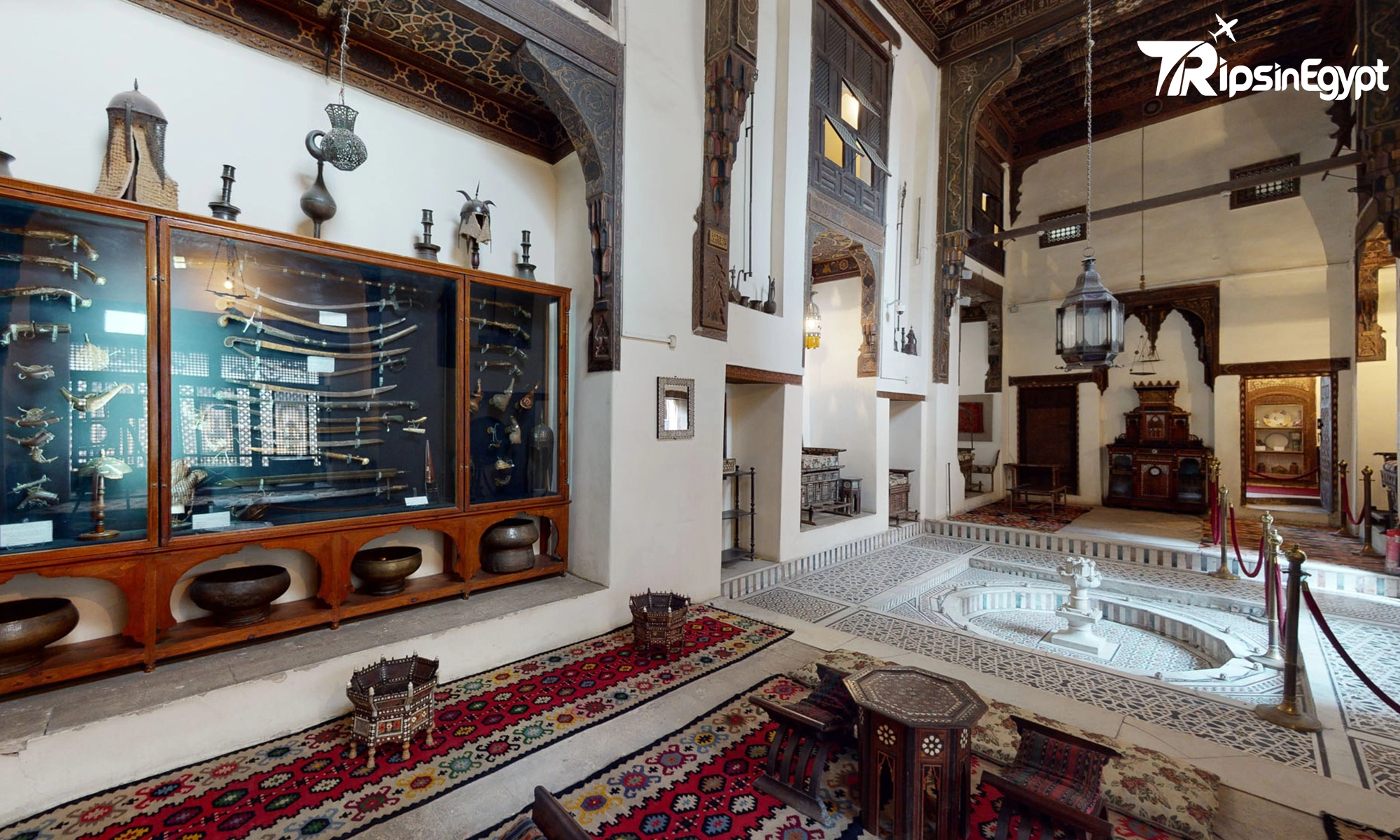
Upper floor: Coptic, Islamic and Modern Egypt. The top floor moves from Christian Egypt to the Islamic era and the 19th century. You will find Coptic textiles, icons and carved stone, then Islamic ceramics, metalwork, glass and weapons, and a hall of coins. The visit ends with the treasures of the Muhammad Ali dynasty: gold and silver objects, jewelry, watches and crystal from the palaces of the family that ruled Egypt until 1952.
If you want to learn more before or after your visit, our guides to Coptic sites in Egypt and Islamic sites in Egypt put these collections in context.
Highlights of the Alexandria National Museum Not to Miss
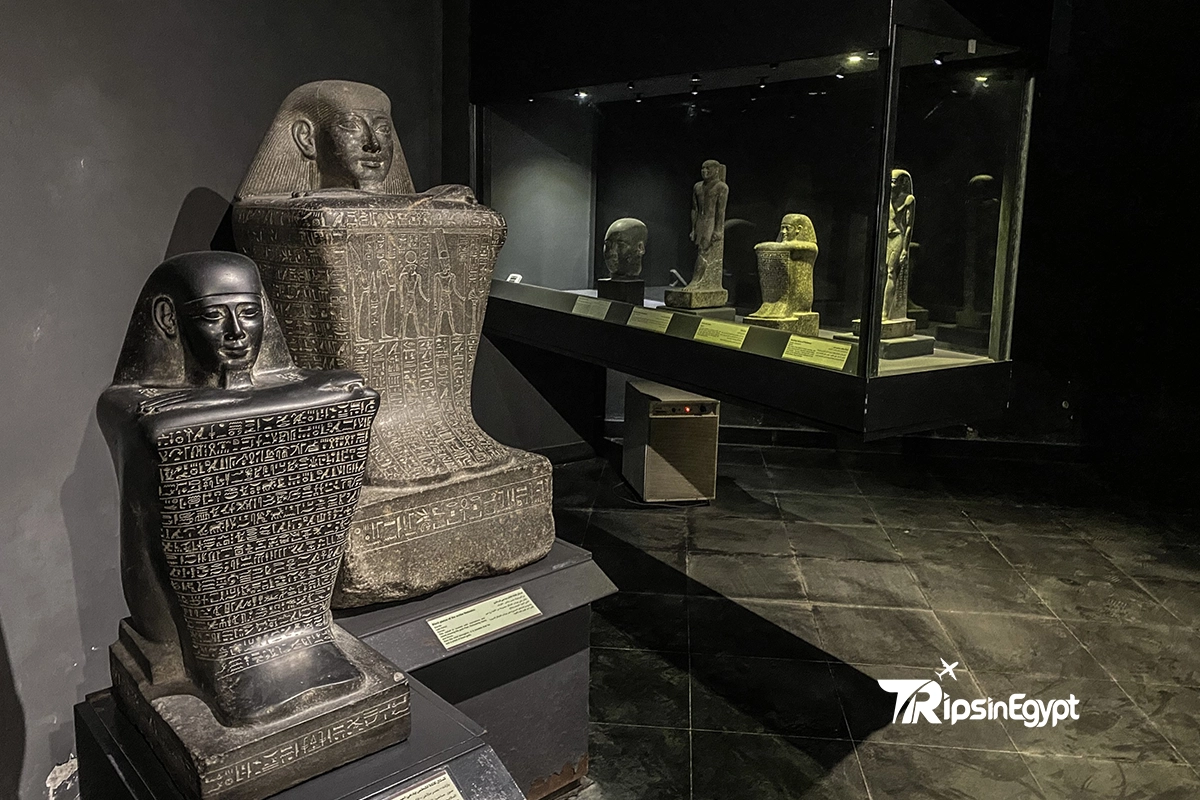
With about 1,800 objects, it helps to know what to look for. These are the pieces most worth your time.
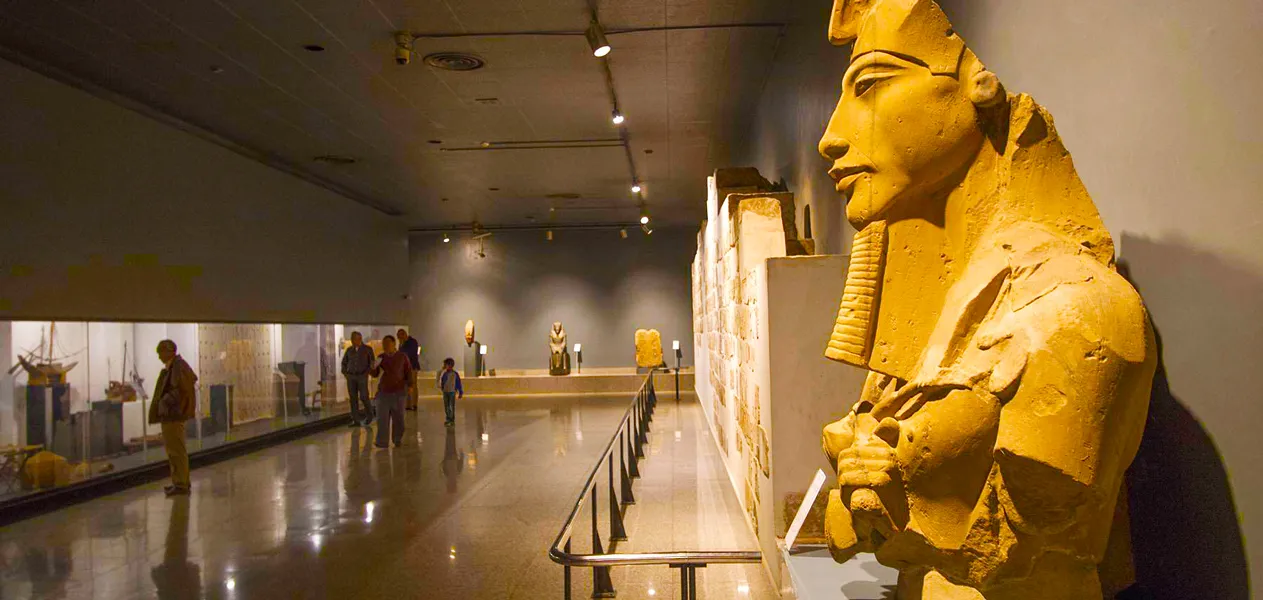
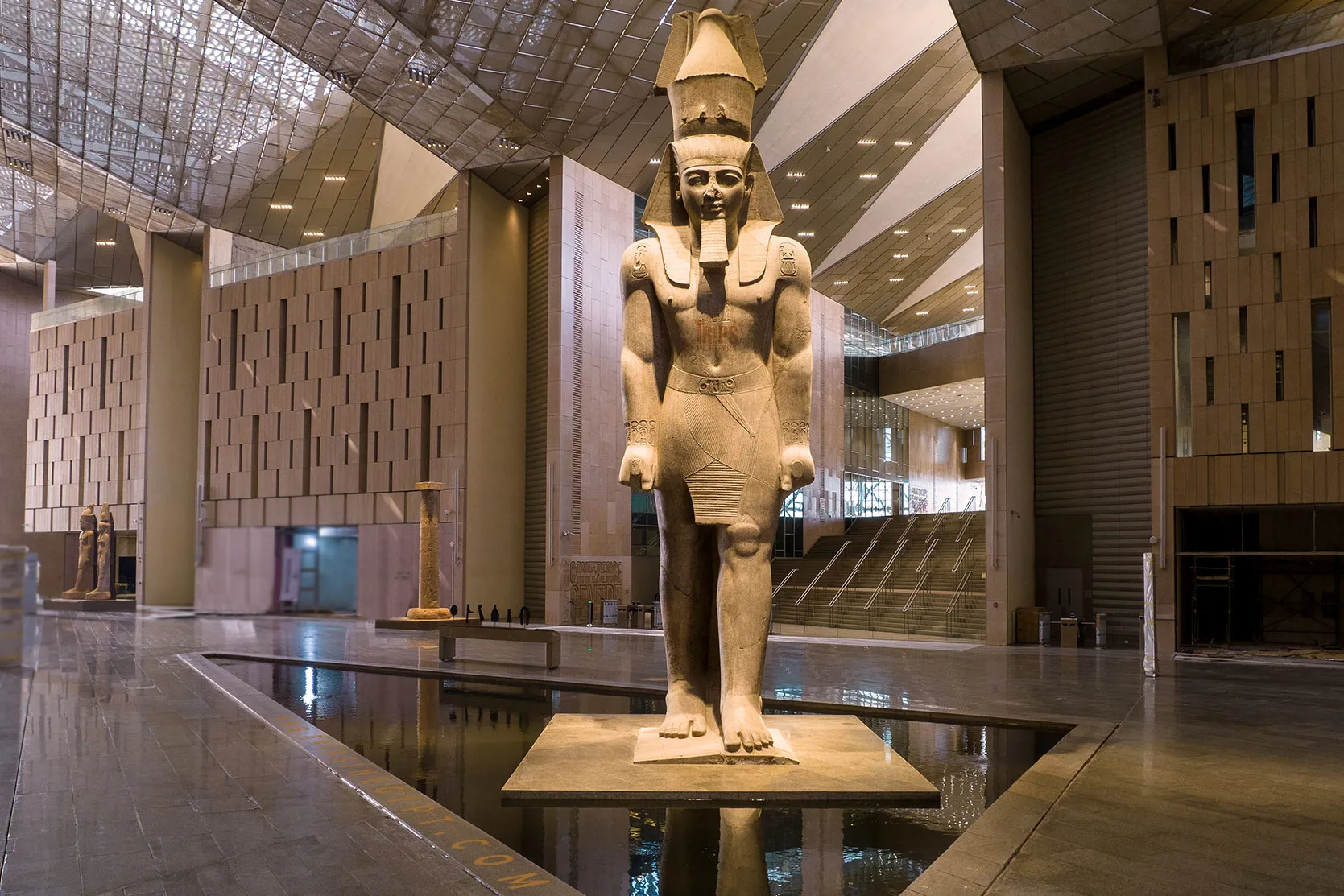
Royal heads and statues. The Pharaonic floor includes a statue attributed to King Menkaure, builder of the third pyramid of Giza, and heads of the famous rulers Akhenaten and Queen Hatshepsut.
The statue of Caracalla. A powerful red granite statue of the Roman emperor Caracalla, carved in the style of a pharaoh, shows how Roman rulers presented themselves to Egyptians.
Tanagra figurines. These small painted clay statues of women in flowing robes were popular in the Greek world and give a lively picture of fashion in Ptolemaic Alexandria.
The coin collection. The museum displays 162 gold and silver coins minted in Alexandria, spanning centuries of Greek, Roman and Islamic rule. Our guide to ancient Egyptian coins tells the story of money in Egypt.
Royal jewelry. On the top floor, the jewels, gold-plated bags and crystal of the Muhammad Ali family are a reminder that Alexandria was the summer capital of the kings.
The Sunken Treasures of Abu Qir Bay and the Eastern Harbour
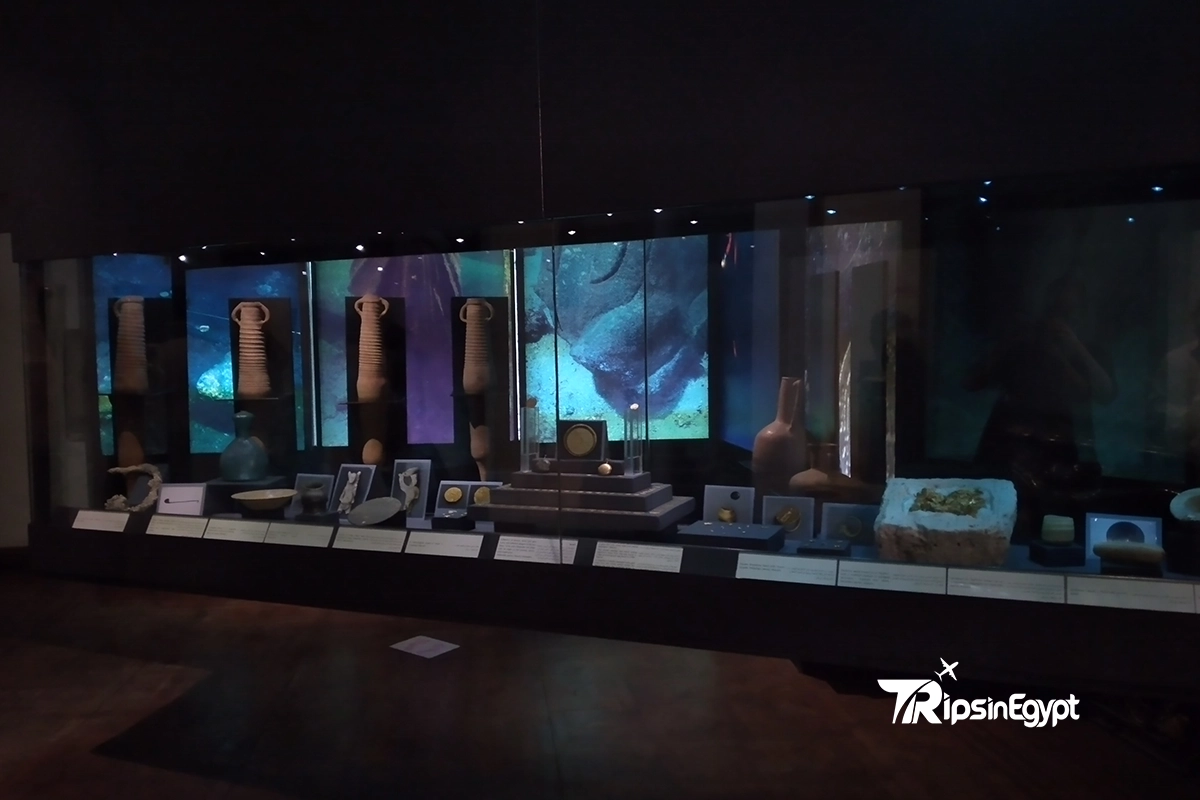
For many visitors, the most exciting part of the museum is the collection raised from the sea. Earthquakes, floods and rising water sank parts of ancient Alexandria and the nearby cities of Heracleion and Canopus over many centuries. Since the 1990s, underwater archaeologists have explored the Eastern Harbour, where the royal quarter of the Ptolemies once stood, and Abu Qir Bay, about 20 km northeast of the city, where Heracleion lies under several meters of water.
Some of their finds are now in the National Museum. Among them are a black basalt statue of a high priest raised in 1998, a granite statue of the goddess Isis about 2.2 m tall, and a granite stela of King Nakhtnebef (Nectanebo I) from Heracleion. These pieces bring the legends of the lost cities close enough to touch. The statue of Isis is a fine link to the myths of the goddess and her husband, told in our guide to the story of Osiris and Isis.
Visitor Guide: Tickets, Hours and Museum Rules
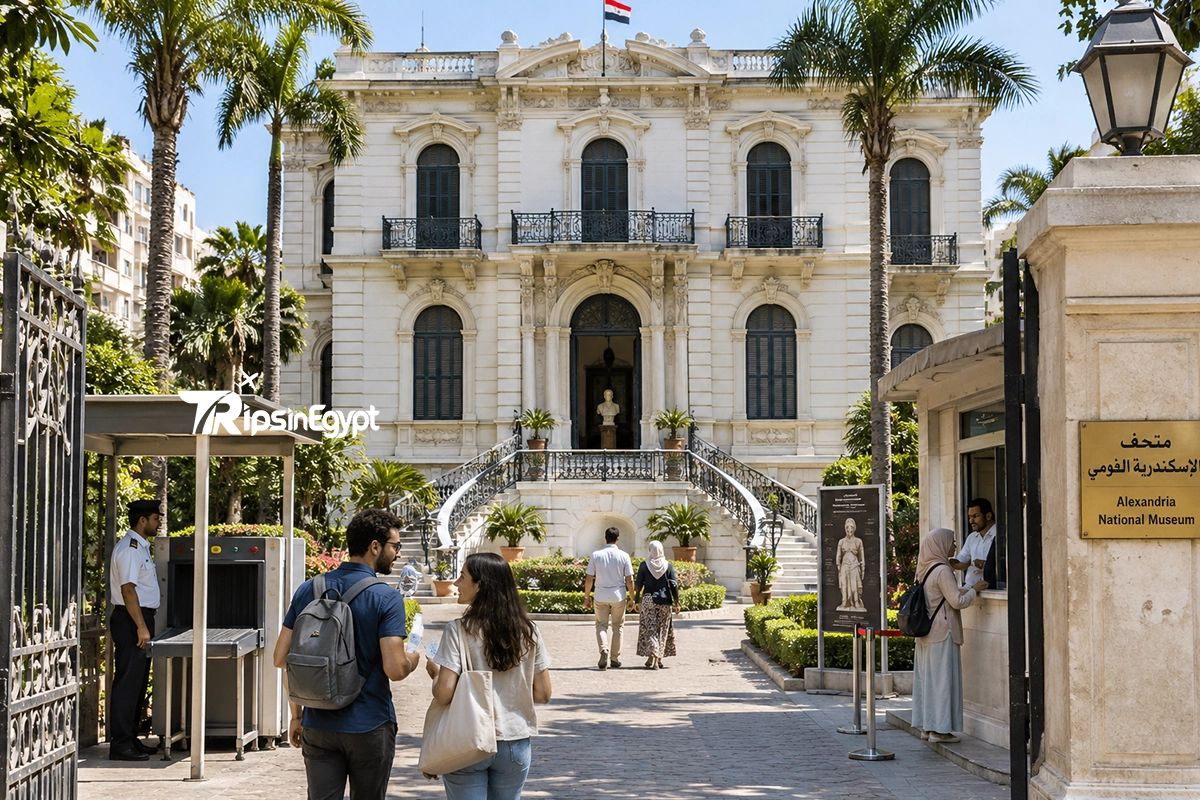
The museum is easy to visit and rarely crowded. The table below gives the official ticket prices.
| Ticket | Price (EGP) |
|---|---|
| Foreign adult | 220 |
| Foreign student (with valid ID) | 110 |
| Egyptian adult | 20 |
| Egyptian student | 5 |
| Audio guide | 20 |
Address. 110 Horreya Road (formerly Fouad Street), downtown Alexandria, about 1 km south of Raml Station.
Opening hours. Daily from 9 am to 5 pm, with the ticket office closing at 4 pm. During Ramadan, the museum opens from 9 am to 3 pm, with the last ticket at 2 pm. Hours and prices can change, so check before you go.
Time needed. Allow 1.5 to 2 hours to see all three floors at a relaxed pace, or about an hour for the highlights.
Photography. Photos with a mobile phone are free. Flash, tripods and monopods are not allowed, and video inside the galleries requires a separate fee.
Other rules. Food and drink are not allowed, except small bottles of water, and large bags must be left at the cloakroom. The museum has an elevator, a ramped entrance, toilets, a gift shop and parking, which makes it one of the more accessible museums in the city.
Nearby Sights and How to Plan Your Visit
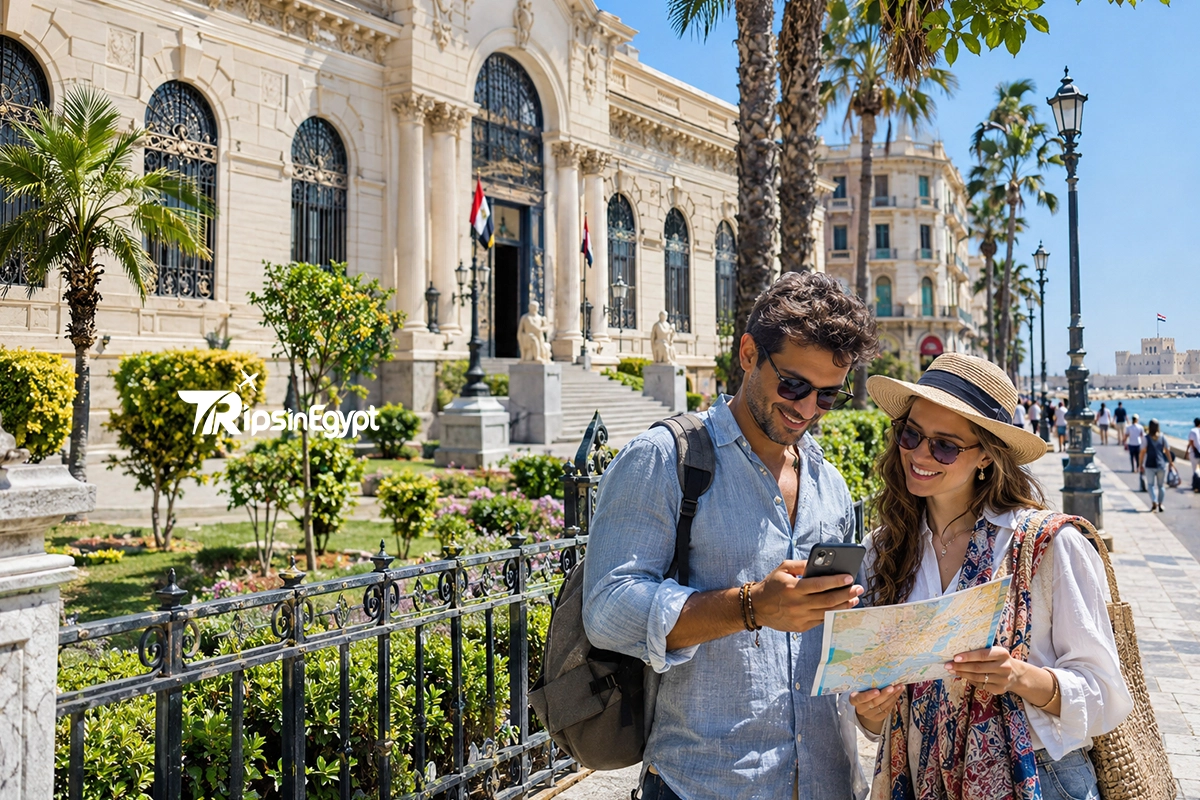
The museum stands in the heart of downtown, so it combines easily with other sights. A short walk away is Kom el-Dikka, with the only Roman theater in Egypt, and the Graeco-Roman Museum, which complements the National Museum's classical collection.
A short taxi ride brings you to Pompey's Pillar and the Catacombs of Kom el-Shoqafa to the south, and to the Bibliotheca Alexandrina and the Citadel of Qaitbay on the seafront. A good day starts at the National Museum at 9 am, then moves to the ancient sites, and ends with lunch and the sunset on the Corniche.
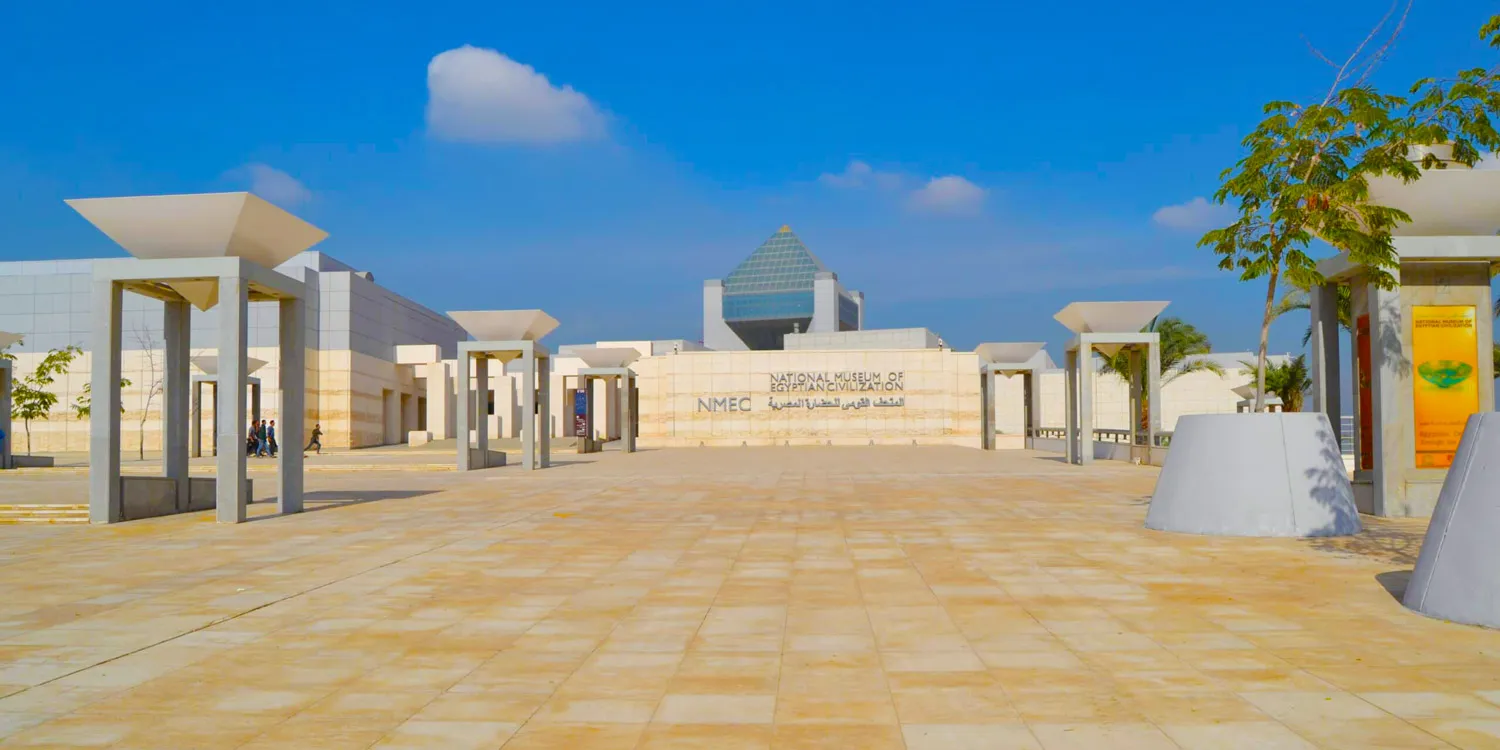
For a bigger picture, see our lists of Alexandria tourist attractions and the museums of Egypt. In Cairo, the Grand Egyptian Museum and the National Museum of Egyptian Civilization continue the story on a much larger scale, and our guide to ancient Egyptian civilization ties it all together.
Discover the Alexandria National Museum With Trips In Egypt
In a city where so much of the past lies underground or under the sea, this quiet palace gathers the treasures of 5,000 years into a few golden hours. Our Egyptologist guides bring each floor to life and fit the museum into a smooth day across the city. Join our day tour to Alexandria from Cairo or our Alexandria and Royal Jewelry Museum tour, Book one of our Egypt trip packages or design your own route with our tailor-made tours.

5 Days Cairo And Hurghada Trip
Amazing 4 Nights Cairo and Hurghada Trip Itinerary 5 Days Cairo and Hurghada trip wil...
- Duration 5 Days / 4 Nights
- Location Cairo & Hurghada
- Type Historical & Recreational Tour
From$690/per person
View Tour
6 Days Cairo, Alexandria & Faiyum Tour
Unforgettable Cairo, Alexandria & Faiyum Adventure in Six Days 6 Days Cairo, Alex...
- Duration 6 Days / 5 Nights
- Location Cairo - Alexandria - Fayum
- Type Historical Tour
From$720/per person
View Tour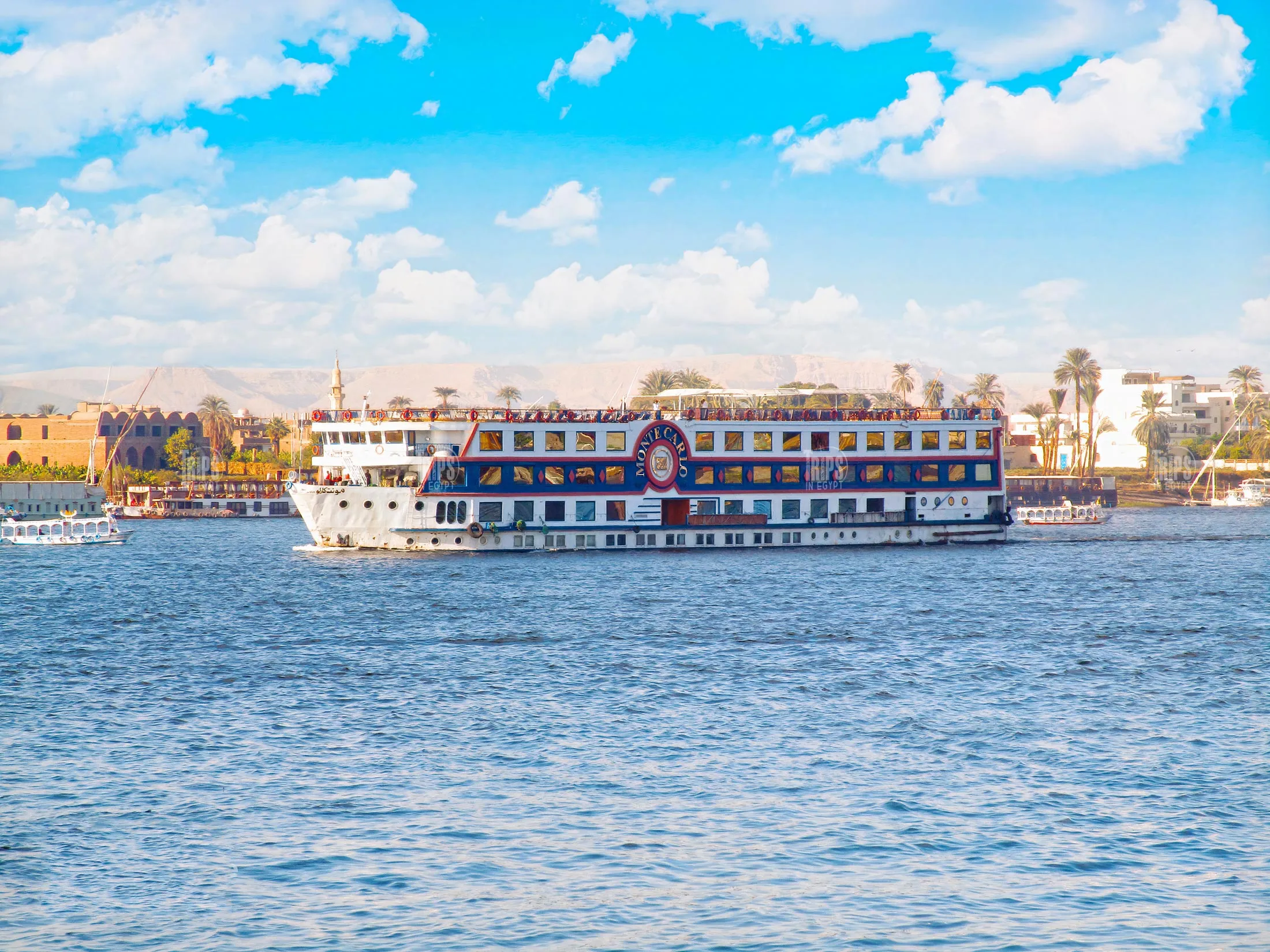
10 Days Cairo, Faiyum & Nile Cruise Holiday
Breathtaking 10 Days Journey of A Lifetime in Egypt 10 Days Cairo, Faiyum & Nile...
- Duration 10 Days / 9 Nights
- Location Cairo, Luxor, Aswan & Faiyum
- Type Classic Tour
From$1350/per person
View Tour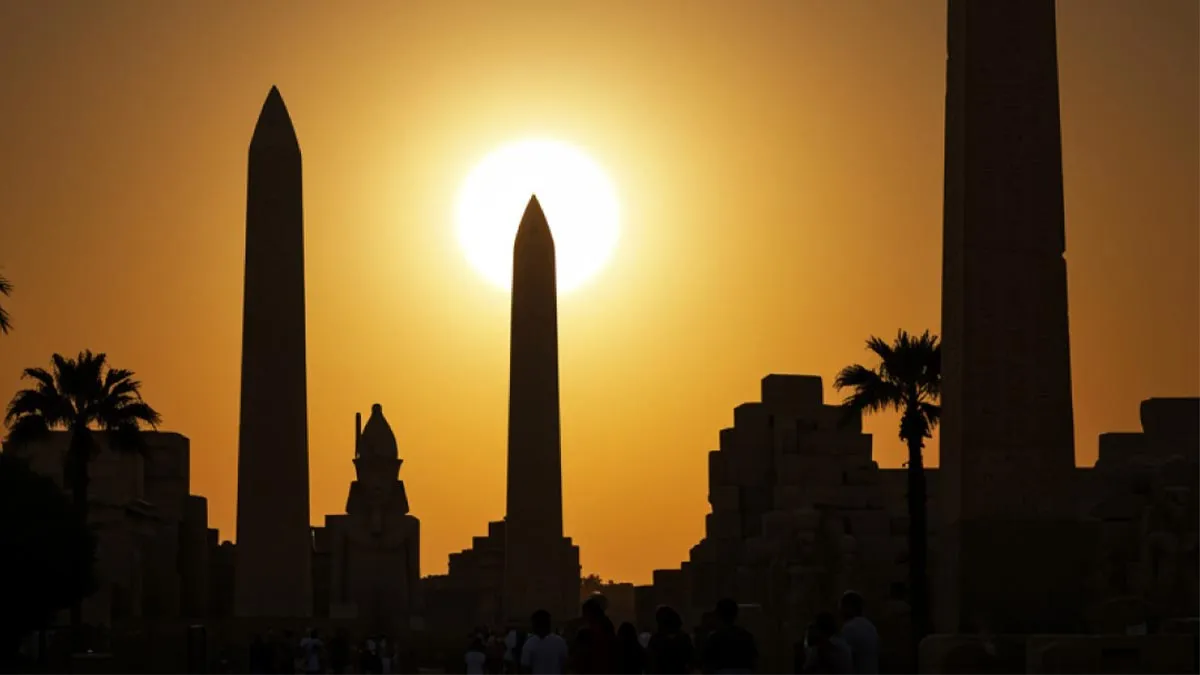 SOLD OUT
Ultimate 7-Day Egypt Solar Eclipse Experience with Hurghada 2027
Enjoy a 7-Day Egypt Solar Eclipse Tour with Hurghada 2027 6 Nights Egypt Solar Ecli...
- Duration 7 Days / 6 Nights
- Location Cairo / Giza / Luxor / Hurghada
- Type Astronomical Tour
Sold Out
View Details