



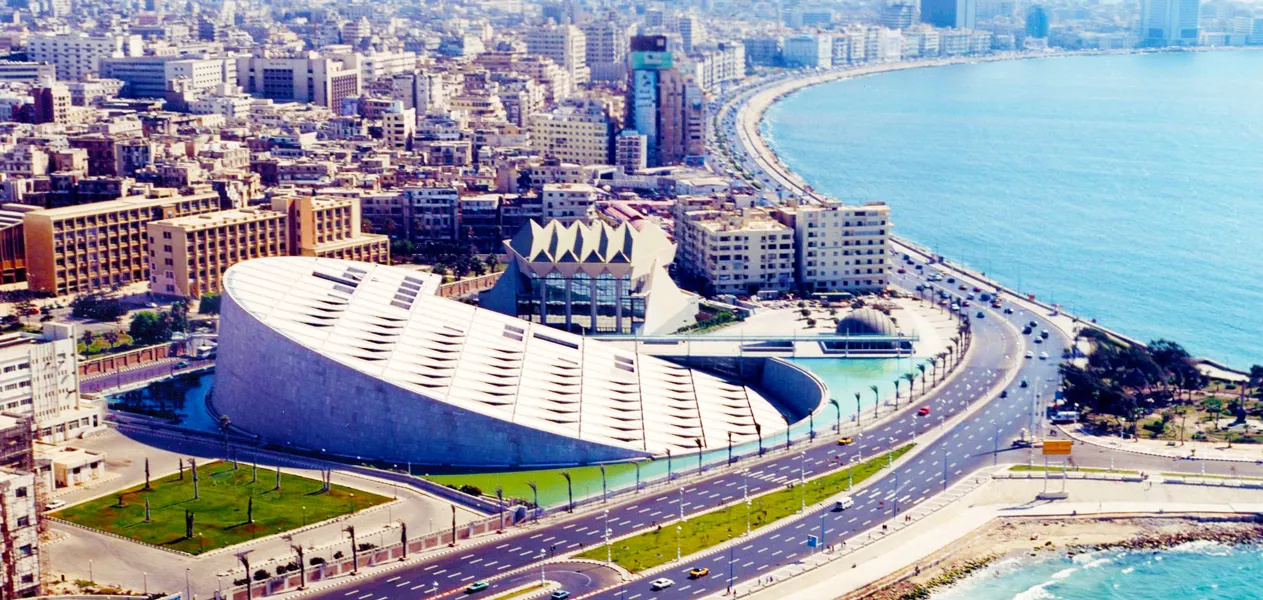
The Library of Alexandria was the greatest center of learning in the ancient world, founded by the Ptolemies around 300 BC and slowly lost over the following centuries. Today its spirit lives on in the Bibliotheca Alexandrina, one of Egypt's most striking modern buildings. This guide explains who built the ancient library, what really happened to it, what survives, and how to visit the modern Alexandria Library in Egypt today.

Who Built Alexandria Library?
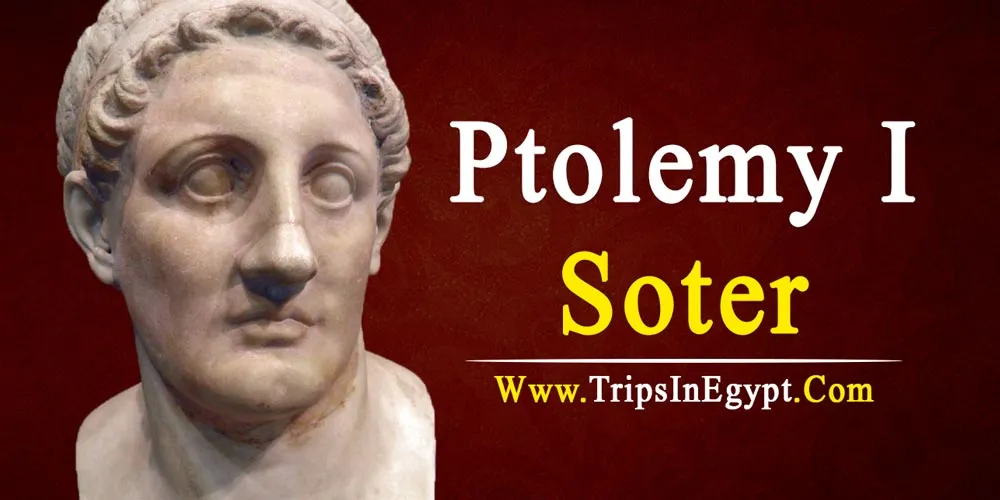
The ancient Library of Alexandria was created by Ptolemy I Soter, the Macedonian general who took control of Egypt after the death of Alexander the Great in 323 BC and ruled as king from 305 to 282 BC. Ancient sources say he was advised by Demetrius of Phalerum, an Athenian statesman trained in the school of Aristotle, who proposed gathering the books of different nations in one place. Most historians believe the project began late in Ptolemy I's reign and was completed and enlarged by his son, Ptolemy II Philadelphus (285–246 BC), who is also closely associated with the library's establishment.
The library did not stand alone. It formed part of the Mouseion, or "Shrine of the Muses," a royal research institution where scholars could live, dine together and work with royal support. The Greek geographer Strabo, who visited Alexandria around 25–20 BC, described the complex with a covered walkway, seating area and communal hall. In that sense, the Library of Alexandria was not a public lending library like a modern city library, but part of a state-supported scholarly institution that helped make Alexandria the intellectual capital of the Mediterranean.
The Ancient Library of Alexandria at a Glance
| Detail | Fact |
|---|---|
| Founded | Around 300 BC, under Ptolemy I Soter and developed under Ptolemy II |
| Part of | The Mouseion, a royal research institute |
| Location | The Brucheion, the royal quarter near Alexandria's eastern harbor |
| Daughter library | Traditionally associated with the Serapeum |
| Collection | Papyrus scrolls; ancient estimates range from tens of thousands to several hundred thousand |
| First known librarian | Zenodotus of Ephesus |
| Famous scholars | Callimachus, Eratosthenes, Aristarchus, Euclid, Herophilus |
| Decline | Gradual, beginning in the Ptolemaic period and continuing through Roman-era upheavals |
| Modern successor | The Bibliotheca Alexandrina, inaugurated in 2002 |
Where Was the Library of Alexandria Located?
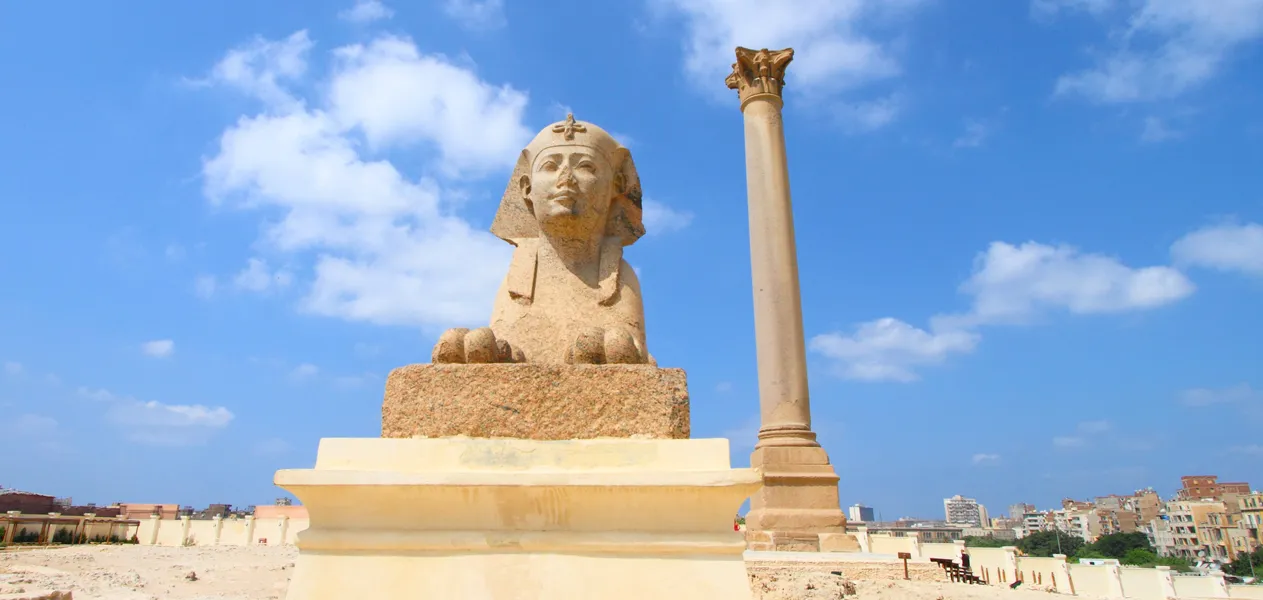
The ancient library stood in the Brucheion, the royal palace district in northeastern ancient Alexandria, near the eastern harbor and the Ptolemaic palaces. Its precise location has never been conclusively identified because much of the ancient city lies beneath modern Alexandria, while sections of the old royal quarter were affected by earthquakes, subsidence and changes along the shoreline. A secondary collection was traditionally associated with the Serapeum, the great temple of Serapis in the southwestern part of the city, where Pompey's Pillar still dominates the archaeological site today.
The modern Bibliotheca Alexandrina was intentionally constructed along the Corniche beside Alexandria's eastern harbor, relatively close to the area where scholars believe the ancient royal quarter once stood. It is not a reconstruction of the original building, and no archaeologist can point to a surviving foundation and say with certainty, "This was the ancient library." Its modern location instead acts as a symbolic bridge between today's city and the intellectual world created by the Ptolemies more than two millennia ago.
How the Library Collected Its Books
The Ptolemies pursued manuscripts with extraordinary ambition. According to the physician Galen, ships entering Alexandria's harbor could be searched for books and scrolls. Texts found aboard were taken for copying, with copies supposedly returned to their owners while the originals entered the royal collection and became known as the "books from the ships." Galen also recounts a famous story in which Ptolemy III borrowed official Athenian copies of the plays of Aeschylus, Sophocles and Euripides, left an enormous deposit as security, and then chose to forfeit the money rather than return the originals.
Royal agents also purchased manuscripts across the Greek-speaking world, while Alexandria's position between Egypt, the Mediterranean and Near East exposed its scholars to texts and traditions from many cultures. The true size of the collection remains unknown. Ancient and later writers give figures ranging from roughly 40,000 to 700,000 scrolls, but these numbers were recorded at different times and are not equally reliable. A single long literary work could occupy several physical scrolls, so ancient estimates cannot simply be translated into the number of modern books on a shelf.
The poet and scholar Callimachus created the Pinakes, an enormous bibliographical catalogue traditionally said to have filled 120 scrolls. It organized authors and works by subject and is often described as one of the earliest great library catalogues. This effort shows that Alexandria's challenge was not simply acquiring texts; librarians also had to classify, compare and organize them so that generations of scholars could actually use the collection.
The Great Scholars of Alexandria
The library's greatest legacy came from its scholars. Zenodotus, traditionally regarded as its first librarian, produced an influential critical edition of Homer. Later scholars including Aristophanes of Byzantium and Aristarchus of Samothrace compared different manuscripts of the Iliad and Odyssey, helping shape versions of Homeric poetry that influenced the texts read today. The library therefore acted not only as a storage center but also as a place where scholars edited, corrected and preserved major works of Greek literature.
Eratosthenes, who became chief librarian in the third century BC, famously estimated the circumference of the Earth by comparing the angle of the sun at Alexandria and Syene, modern Aswan. His result was remarkably close considering the tools available to him. Alexandria also became associated with Euclid, whose Elements shaped mathematics for centuries, and physicians such as Herophilus and Erasistratus, who advanced anatomical study. A later text called the Letter of Aristeas links Ptolemy II with the Greek translation of the Hebrew Torah known as the Septuagint, although historians treat parts of that narrative cautiously.
The History of Burning the Old Alexandria Library
The burning of the Library of Alexandria is one of history's most famous stories and one of its most misunderstood. Popular versions often imagine one enormous fire destroying the world's knowledge in a single night. The surviving evidence points instead to a much longer decline in which political purges, changing royal support, warfare and damage to different parts of Alexandria all played roles. Julius Caesar, Roman emperors, Christian destruction of the Serapeum and the Arab conquest have each been blamed, but historians do not give all of these stories equal weight.
What Happened to the Library of Alexandria?
The Library of Alexandria probably did not disappear in one catastrophic event. Its decline unfolded over several centuries. One early blow came around 145 BC, when Ptolemy VIII's political struggles led to the expulsion of intellectuals from Alexandria, including the scholar Aristarchus. Such events weakened the community that had made the Mouseion exceptional. Alexandria later became part of the Roman world, and although scholarship continued, the institution no longer enjoyed the same position it had under the early Ptolemies.
The most serious physical destruction of the royal quarter may have occurred during warfare in the AD 270s, when Emperor Aurelian fought to recover Alexandria from the forces of the Palmyrene ruler Zenobia. Ancient descriptions suggest that the Brucheion suffered severe damage. By the fourth century, writers described areas of the old royal district as abandoned. Rather than one dramatic ending, the evidence therefore points toward an institution losing scholars, resources, buildings and collections over generations until the original library ceased to exist.
Julius Caesar and the Fire of 48 BC
In 48 BC, Julius Caesar became trapped in Alexandria during the struggle between Queen Cleopatra and her brother Ptolemy XIII. Caesar ordered ships in the harbor burned to prevent them from being used against him, and the flames spread into parts of the waterfront. Ancient accounts disagree sharply about the consequences. Plutarch later wrote that the "great library" was destroyed, while Seneca, citing the lost work of Livy, reported that around 40,000 scrolls burned. Cassius Dio described warehouses near the docks containing grain and books that were consumed by fire.
Many modern historians therefore distinguish between damage to stored books and the total destruction of the main Mouseion library. Scrolls may have been kept near the harbor while awaiting transfer, copying or shipment. One important reason for caution is that Strabo later worked in Alexandria's scholarly environment only a few decades after Caesar. Plutarch also reports the famous claim that Mark Antony gave Cleopatra 200,000 books from Pergamon to replace losses, but even he presents the story as an accusation circulated by Antony's opponents rather than an unquestioned fact.
Later Blows: The Serapeum and the Arab Conquest Legend
The Serapeum, a monumental temple complex dedicated to Serapis, survived long after the early Ptolemaic period and was traditionally associated with a secondary or "daughter" library. In AD 391, after imperial policies against pagan worship, the Serapeum was destroyed during conflict involving Alexandrian Christians led by Patriarch Theophilus. However, surviving descriptions of the event do not clearly prove that a substantial library collection still remained inside the temple at that date. It is therefore inaccurate to describe AD 391 confidently as the destruction of the entire Library of Alexandria.
The philosopher Hypatia, murdered by a Christian mob in AD 415, is also frequently associated with the library's destruction in modern popular culture, but she lived centuries after the institution's golden age. Another famous story places the final destruction after the Arab conquest of Alexandria in AD 642, claiming that General Amr ibn al-As burned the books on orders from Caliph Umar. The account appears in written sources only about five centuries later. Earlier Christian and Muslim accounts of the conquest do not mention such an event, so most modern historians regard the story as a later legend.
Does Anything Still Exist from the Library of Alexandria?
No manuscript can currently be identified with certainty as a surviving scroll from the ancient Library of Alexandria, and archaeologists have not located the actual building of the main library. Yet its influence survived through texts that were copied, edited and circulated elsewhere. Works by Homer, Euclid and Greek dramatists continued to be transmitted partly because Alexandrian scholars produced authoritative editions and scholarly traditions that later readers inherited. What vanished was therefore not necessarily every text the library had ever owned, but the institution and the many works that were never copied often enough to survive.
Physical traces of Alexandria's scholarly landscape remain elsewhere in the city. At the Serapeum, underground galleries cut into the rock have sometimes been connected with book storage, although their exact function is debated. At Kom el-Dikka, Polish-Egyptian excavations uncovered a group of late Roman lecture halls belonging to a much later academic complex. These buildings do not belong to the original Ptolemaic library, but they demonstrate that Alexandria remained a major center of education centuries after the famous royal institution had faded.
Ancient Library of Alexandria Facts
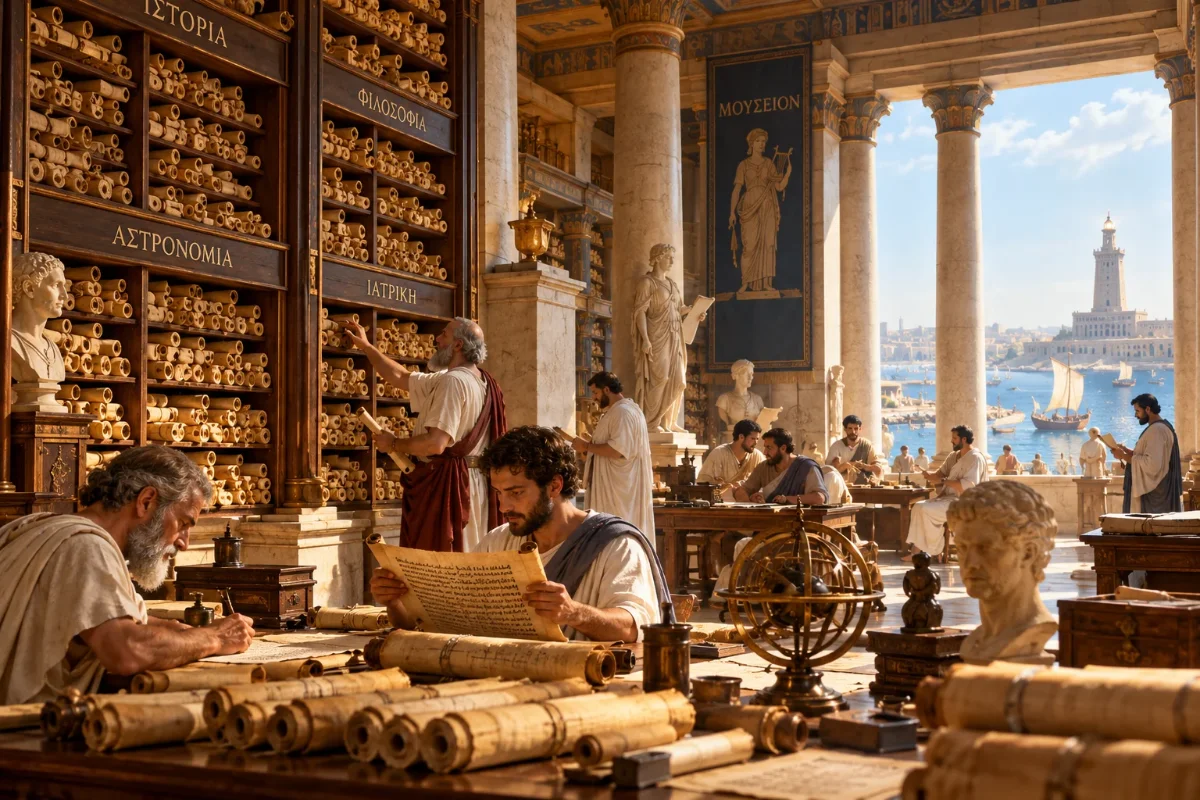
The ancient Library of Alexandria left no securely identified building to visit, yet its name is better remembered than those of many monuments that still stand. These facts bring together what ancient writers, archaeology and modern historians can reasonably say while separating evidence from the legends that grew around the institution. They also explain why the Library of Alexandria became a universal symbol of knowledge and why arguments about its destruction remain so powerful more than two thousand years later.
-
It was part of a research institution. The library belonged to the Mouseion, whose scholars worked with royal support rather than operating as a modern public lending library.
-
Its books were papyrus scrolls. Bound books in the modern sense did not yet dominate Mediterranean libraries.
-
It had a secondary collection. Ancient traditions associate a daughter library with the Serapeum.
-
Callimachus created an enormous catalogue. His Pinakes reportedly filled around 120 scrolls.
-
One of its librarians measured the Earth. Eratosthenes estimated Earth's circumference using shadows observed at Alexandria and Syene.
-
Its scholars transformed the study of Homer. Alexandrian editors compared manuscript traditions of the Iliad and Odyssey.
-
Nobody knows its exact size. Ancient estimates range from tens of thousands to several hundred thousand scrolls.
-
Its decline was gradual. Political disruption, lost patronage and warfare damaged Alexandria's scholarly world over centuries.
-
Caesar's fire remains debated. Books certainly burned in 48 BC, but whether the main library building was destroyed then is uncertain.
-
The Arab-conquest burning story is very late. It appears centuries after the conquest and is rejected by most modern historians as reliable evidence.
What Would Happen If We Still Had the Library of Alexandria?
No historian can calculate exactly what would be different if the Library of Alexandria had survived intact. We would almost certainly possess many more works of ancient literature, history, philosophy and science that are now known only from titles, quotations or fragments. Only seven plays by Aeschylus survive from a much larger body of work, and just seven complete tragedies by Sophocles remain from more than one hundred attributed to him. Similar losses affect Greek lyric poetry, historical writing and ancient scientific texts.
It is tempting to imagine that preserving the library would have accelerated human progress by centuries, but that goes beyond the evidence. Libraries survive only when societies continue copying, studying and financing their collections. Much ancient knowledge was preserved elsewhere through Byzantine copyists, Syriac scholars, Islamic intellectual centers and later European manuscripts. The Library of Alexandria's survival could have transformed our understanding of antiquity, but the broader development of science, technology and society depended on far more than one collection of scrolls.
The Modern Alexandria Library
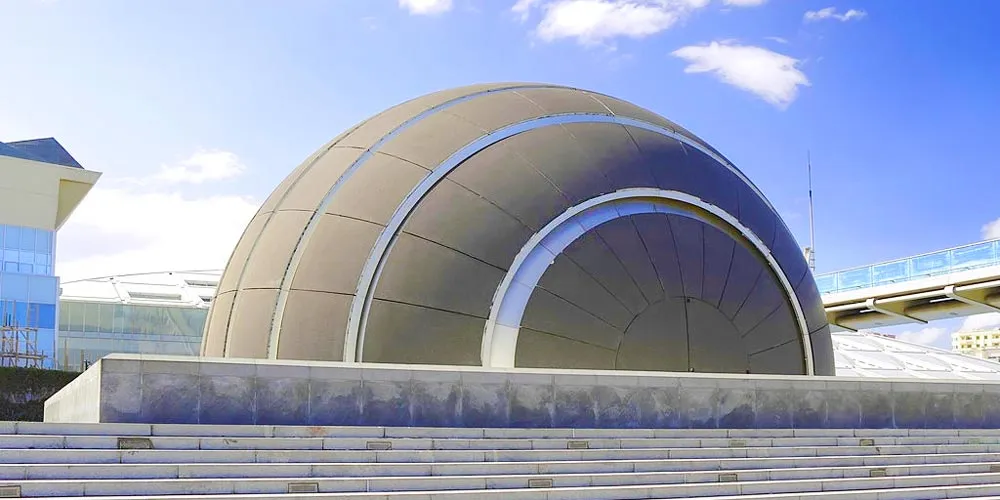
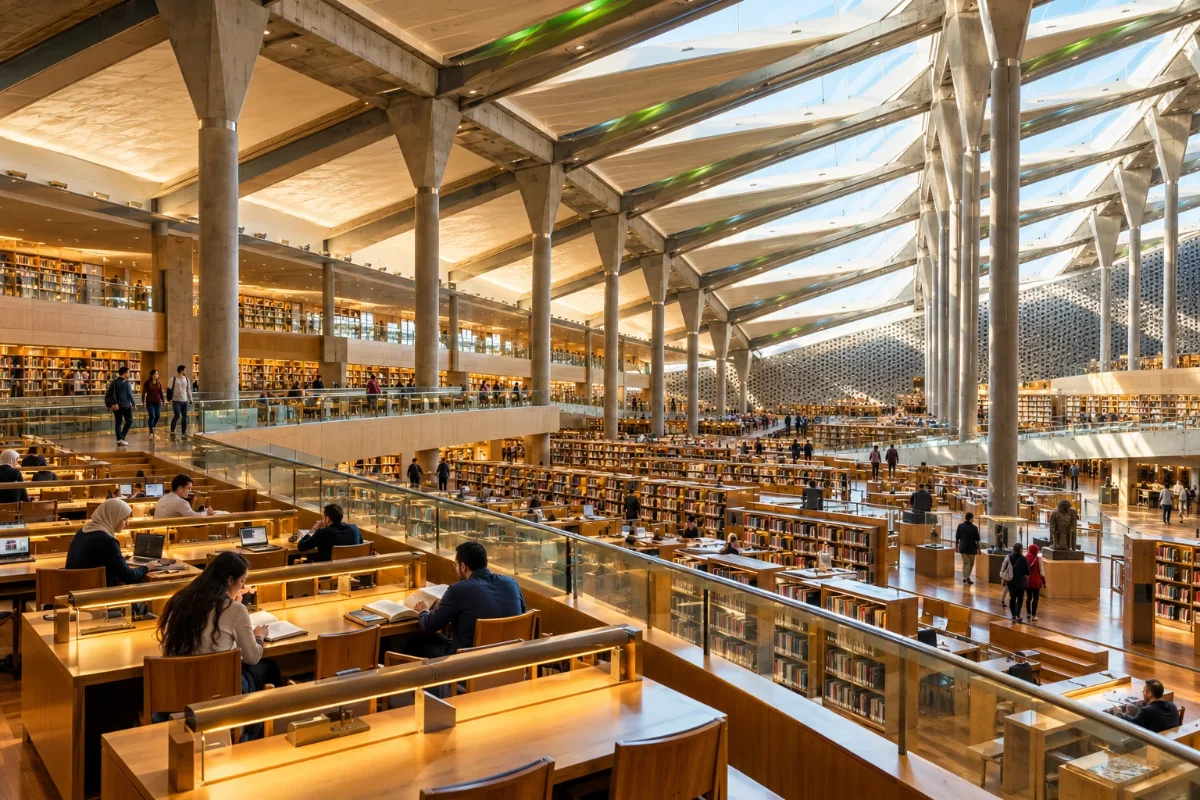
The modern Alexandria Library, officially the Bibliotheca Alexandrina, was created to revive the intellectual spirit associated with the ancient institution rather than reconstruct its lost building. Today it operates as a major library, research center, museum complex, cultural venue and architectural landmark on the Mediterranean coast. Its location beside Alexandria's eastern harbor deliberately reconnects modern Alexandria city with the scholarly reputation that made the Ptolemaic city famous across the ancient world.
Can You Still Visit the Library of Alexandria?
You cannot visit the original ancient Library of Alexandria because no surviving building has been identified, but you can visit the modern Bibliotheca Alexandrina near the presumed area of the ancient royal quarter. The contemporary library welcomes visitors, offers guided tours and contains museums, exhibitions, reading areas and cultural spaces. Travelers interested in the ancient institution can also explore other archaeological sites around Alexandria that preserve parts of the city's later scholarly and religious history.
The Serapeum around Pompey's Pillar is traditionally connected with the ancient library's secondary collection, while the lecture halls at Kom el-Dikka reveal Alexandria's continuing role as a center of higher education during the Roman and Byzantine periods. Together, these sites cannot recreate the vanished Ptolemaic library, but they provide the clearest physical context for understanding the city in which scholars once collected and studied texts from across the Mediterranean world.
Building the Bibliotheca Alexandrina
The idea of reviving the Library of Alexandria emerged from Alexandria University in 1974. The project later gained Egyptian government and UNESCO support, and an international architectural competition was launched in 1988. More than 500 proposals were submitted, with the winning design coming from the Norwegian architectural practice Snøhetta, then still a relatively young firm. Construction began during the 1990s, supported by Egypt and international donors, with the project widely reported to have cost around US$220 million.
The Bibliotheca Alexandrina was officially inaugurated on 16 October 2002. Rather than recreating an ancient Greek building whose appearance is unknown, the architects created a deliberately modern institution shaped around ideas of knowledge, sunlight and the Mediterranean. The project quickly became one of Alexandria's most recognizable contemporary landmarks and has since served as a library, exhibition venue, conference center and hub for educational and scientific programs.
The Design of the Modern Alexandria Library
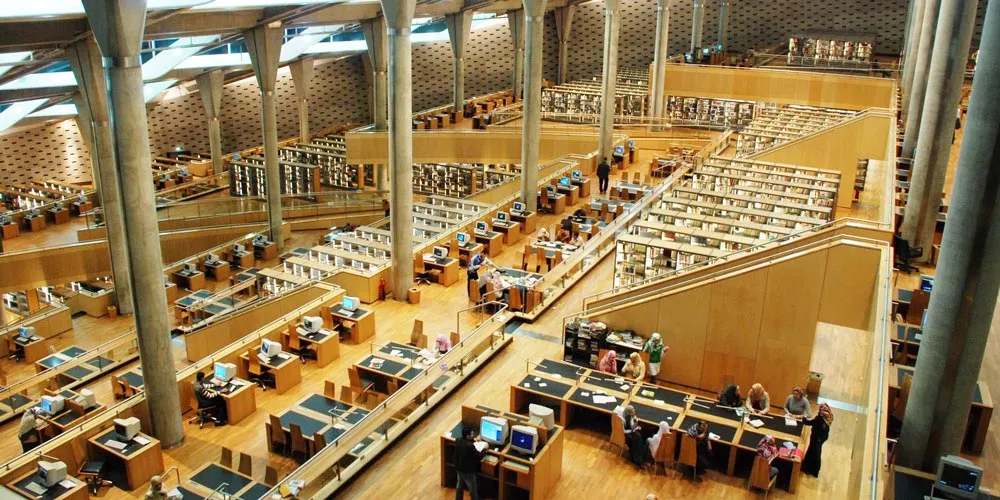
The building is dominated by an enormous tilted circular roof roughly 160 meters across, descending toward the Mediterranean like a disc emerging from the horizon. Glass and aluminum panels control natural light entering the interior, while much of the complex extends below ground level. Beneath the roof is a vast reading room of about 20,000 square meters, arranged across eleven cascading terraces. The descending levels allow readers to see across much of the interior while natural northern light reaches deep into the building.
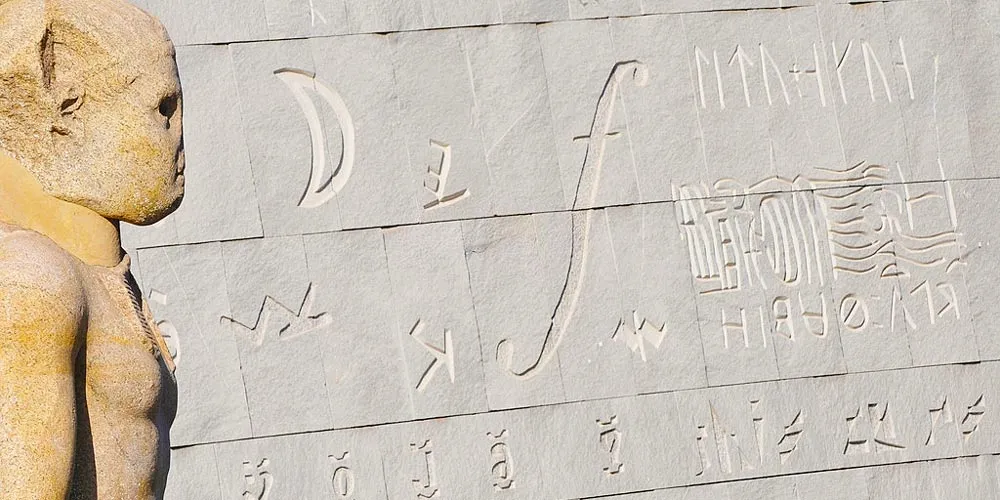
Outside, the curved granite wall facing the city is carved with thousands of characters representing around 120 writing systems, symbolizing the diversity of human language rather than literally displaying 120 languages. The granite was sourced from Aswan, creating a material link between modern Alexandria and ancient Egypt. Nearby structures include the spherical Planetarium Science Center, while elevated walkways connect the complex with surrounding educational buildings. The architecture received the Aga Khan Award for Architecture in 2004.
The Collections Today
The Bibliotheca Alexandrina was designed with shelf capacity for up to eight million books, but this figure describes potential storage rather than the number of volumes actually held. Its collections have expanded through purchases, donations and international partnerships. One major addition came in 2010, when the Bibliothèque nationale de France donated around 500,000 French-language books, greatly strengthening the institution's Francophone holdings and giving Alexandria one of the largest French-language library collections outside France.
The institution also participates in large-scale digital preservation projects and hosts material connected with the Internet Archive, while specialized departments work with Arabic books, manuscripts and digitization. In this sense, its mission is broader than shelving printed volumes. The modern library acts as a research, preservation and cultural center serving Egypt, the Arab world and the Mediterranean, carrying forward the ancient institution's association with collecting and sharing knowledge without pretending to be the same library that existed under the Ptolemies.
Areas and Exhibits in Alexandria Library
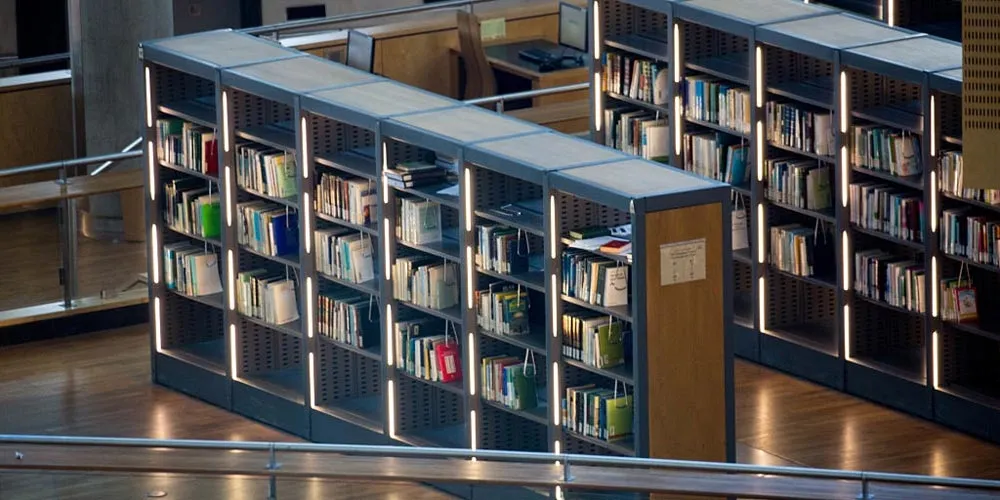
Beyond the main reading room, the Bibliotheca Alexandrina includes specialized libraries, museums, exhibition spaces, research centers and science attractions. A visitor interested only in the architecture can experience the complex relatively quickly, but travelers who want to explore its museums and exhibitions should allow several hours. Some spaces are primarily designed for students and researchers, while others are visitor attractions included with admission or available through additional tickets. The complex therefore works simultaneously as a functioning research institution and one of Alexandria's major cultural sights.
The Specialized Libraries
The Bibliotheca Alexandrina maintains several specialist collections serving different audiences. The Taha Hussein Library, named after one of modern Egypt's most influential writers and intellectuals, provides resources and assistive technologies for blind and visually impaired readers. Separate libraries serve children and young people, while researchers can use collections devoted to arts and multimedia, maps, microforms, rare books and special collections. The Francophone Library houses the extensive French-language collection strengthened by the major donation from France.
These specialist spaces demonstrate that the modern Alexandria Library was designed as more than a tourist attraction. It serves university students, scholars, children, readers with disabilities and researchers working with rare or specialized materials. Access rules and hours vary between departments, so visitors who need a specific research collection should check directly with the Bibliotheca Alexandrina rather than relying only on general tourist-opening information.
Museums Inside Alexandria Library
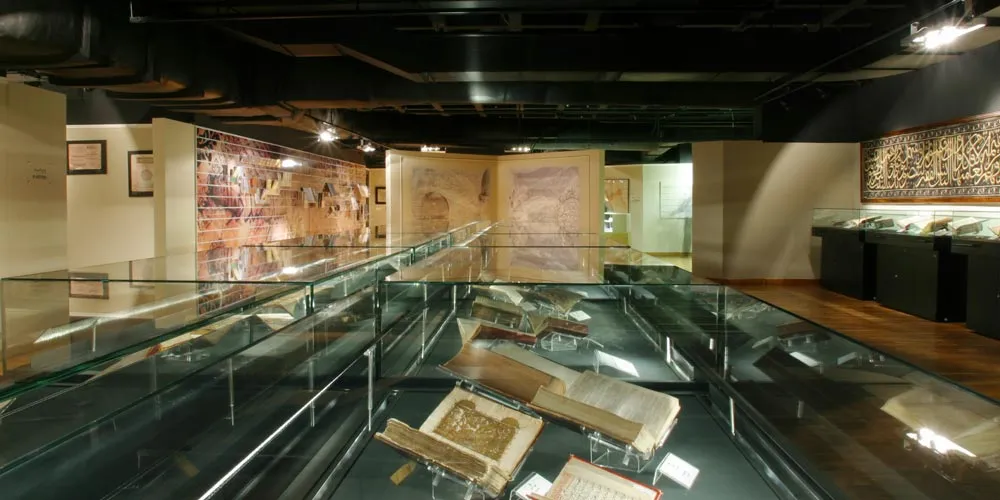
Antiquities Museum: The archaeological museum follows Egyptian history from the pharaonic era through the Greek, Roman, Coptic and Islamic periods. Some of its most interesting objects were uncovered directly on the Bibliotheca Alexandrina construction site, placing artifacts from the ancient city inside the modern institution built above it. Finds connected with Alexandria's submerged eastern harbor also help visitors imagine the royal and urban landscape that once surrounded the ancient Library of Alexandria.
Manuscripts Museum: This museum focuses on rare manuscripts, early printed works, historical documents and the preservation of written heritage. Its displays demonstrate the technologies used to conserve, photograph and digitize manuscripts while presenting examples from Arabic, Islamic and Mediterranean intellectual traditions. The connection with manuscript preservation makes the museum particularly appropriate within an institution deliberately inspired by the ancient world's most famous library.
Sadat Museum: Dedicated to Egyptian President Anwar el-Sadat, the museum preserves personal belongings, photographs, documents and objects linked with his political career. Exhibits include material connected with the 1973 October War, the Egyptian-Israeli peace process and the Nobel Peace Prize awarded to Sadat in 1978. Among its most striking objects is the bloodstained military uniform he was wearing when he was assassinated during a military parade on 6 October 1981.
Other attractions around the Bibliotheca Alexandrina include Culturama, a panoramic multimedia presentation of Egyptian heritage, and the Planetarium Science Center, which provides science activities and programs for families. Permanent and temporary exhibitions cover art, calligraphy, history and culture throughout the year. Because particular exhibitions and some museum areas can temporarily close for maintenance or new installations, visitors interested in a specific collection should confirm its current status before arriving.
Tours That Include the Alexandria Library
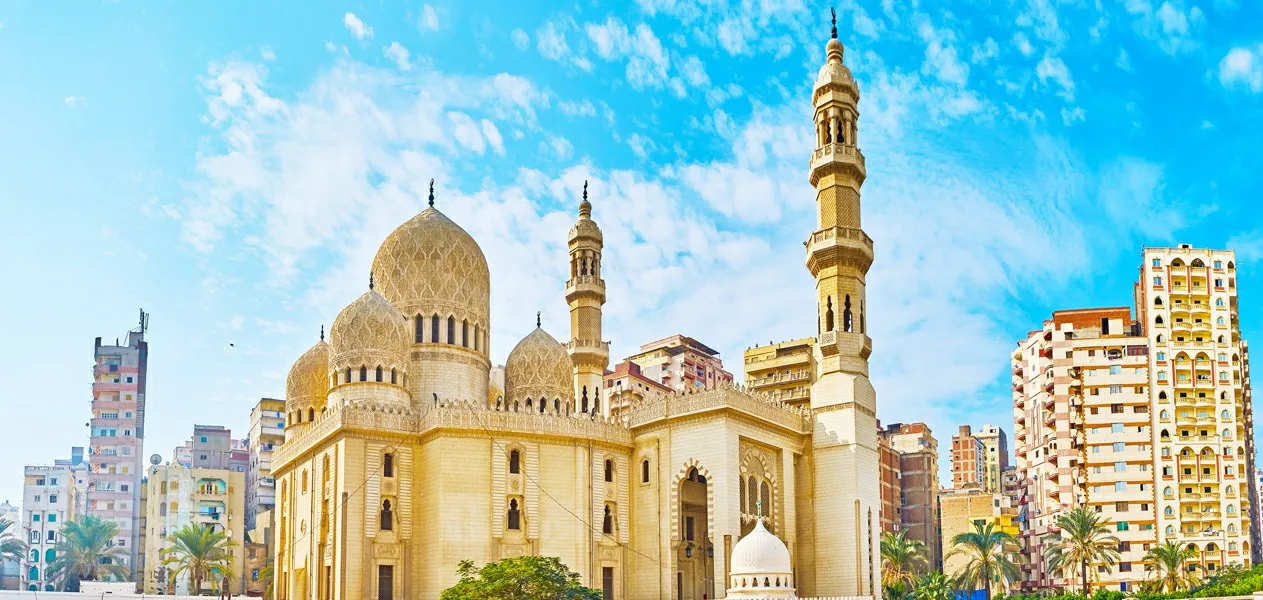
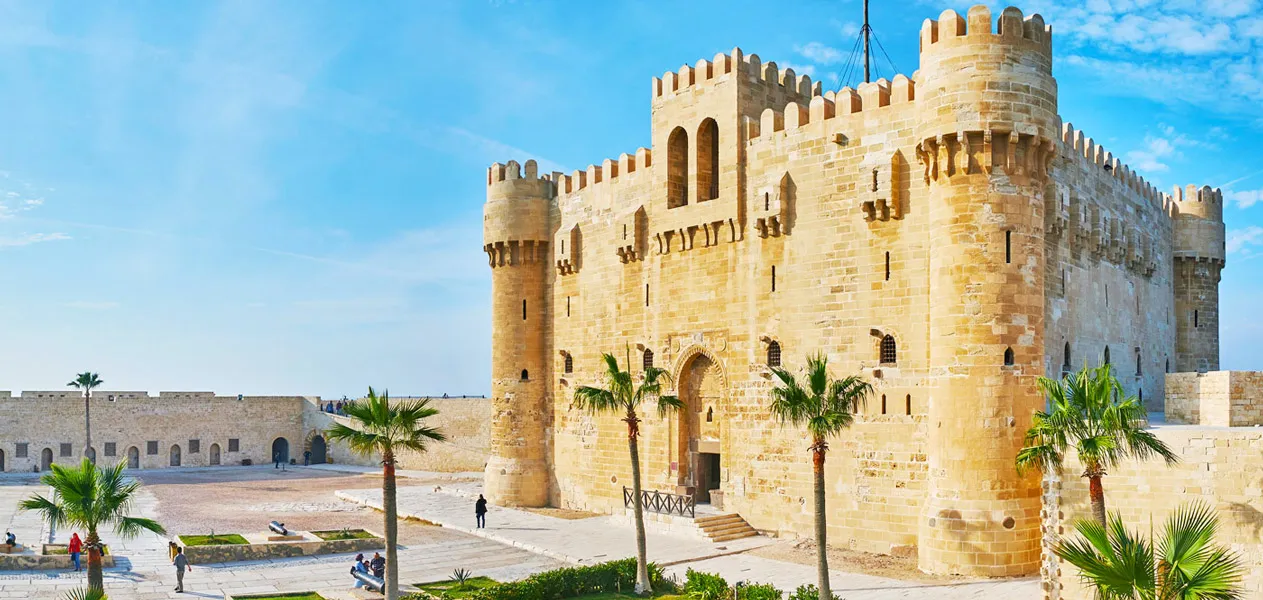
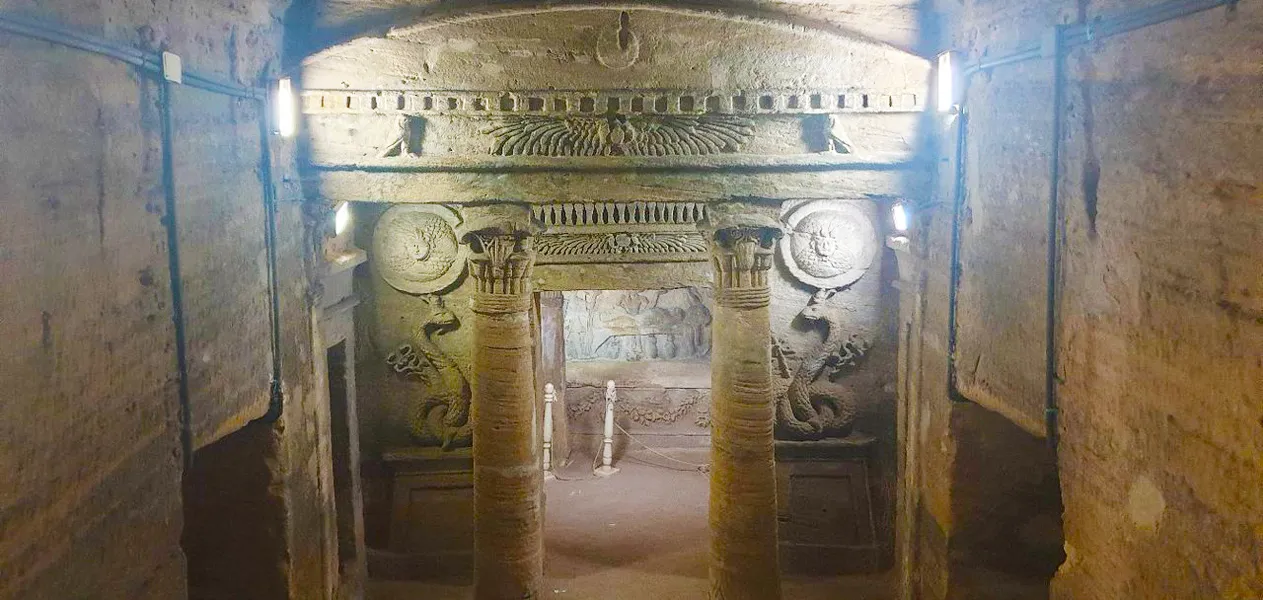
The Alexandria Library features in several of our Egypt tour packages, usually as part of a full day in Alexandria with the catacombs, Pompey's Pillar and the Qaitbay Citadel. Visiting with a guide is the easiest way to see the city, because the main sites are spread across several districts and traffic can be slow. A guide also brings the ancient library's story to life at sites such as the Serapeum, where there is little on-site explanation.
Alexandria pairs naturally with the rest of Egypt. Many travelers spend two or three days in Cairo and Alexandria and then fly south to join one of our Nile river cruises between Luxor and Aswan, following the story of Egypt from the pharaohs to the Ptolemies. The tours below include the library, and the last two are popular alternatives for travelers who prefer the beach or the Nile.
6 Days Cairo, Alexandria & Faiyum Tour: 6 days and 5 nights in Cairo, Alexandria and the Faiyum oasis, with a full day in Alexandria that ends at the library. From $720.
10 Days Cairo, Luxor, Aswan & Alexandria Tour: 10 days that combine the Nile Valley with a day in Alexandria, including the library. From $1,345.
Alexandria City Tour From Alexandria Port: a shore excursion for cruise passengers covering the catacombs, Pompey's Pillar, the Qaitbay Citadel and the library, with lunch at a fish restaurant. From $145.
5 Days Cairo And Hurghada Trip: 5 days and 4 nights pairing Cairo's history with the Red Sea beaches of Hurghada. From $690.
10 Days Cairo, Faiyum & Nile Cruise Holiday: 10 days and 9 nights covering Cairo, the Faiyum and a Nile cruise between Luxor and Aswan. From $1,350.
The Library of Alexandria was born from a royal dream of gathering human knowledge in one city. It faded slowly through political upheaval, fires and wars, leaving no identifiable building but an enduring legacy in the works its scholars studied and preserved. Today, the Bibliotheca Alexandrina carries that dream forward beside the same harbor, inviting travelers to explore its museums, enter its remarkable reading room and rediscover Alexandria's extraordinary intellectual heritage.

5 Days Cairo And Hurghada Trip
Amazing 4 Nights Cairo and Hurghada Trip Itinerary 5 Days Cairo and Hurghada trip wil...
- Duration 5 Days / 4 Nights
- Location Cairo & Hurghada
- Type Historical & Recreational Tour
From$690/per person
View Tour
6 Days Cairo, Alexandria & Faiyum Tour
Unforgettable Cairo, Alexandria & Faiyum Adventure in Six Days 6 Days Cairo, Alex...
- Duration 6 Days / 5 Nights
- Location Cairo - Alexandria - Fayum
- Type Historical Tour
From$720/per person
View Tour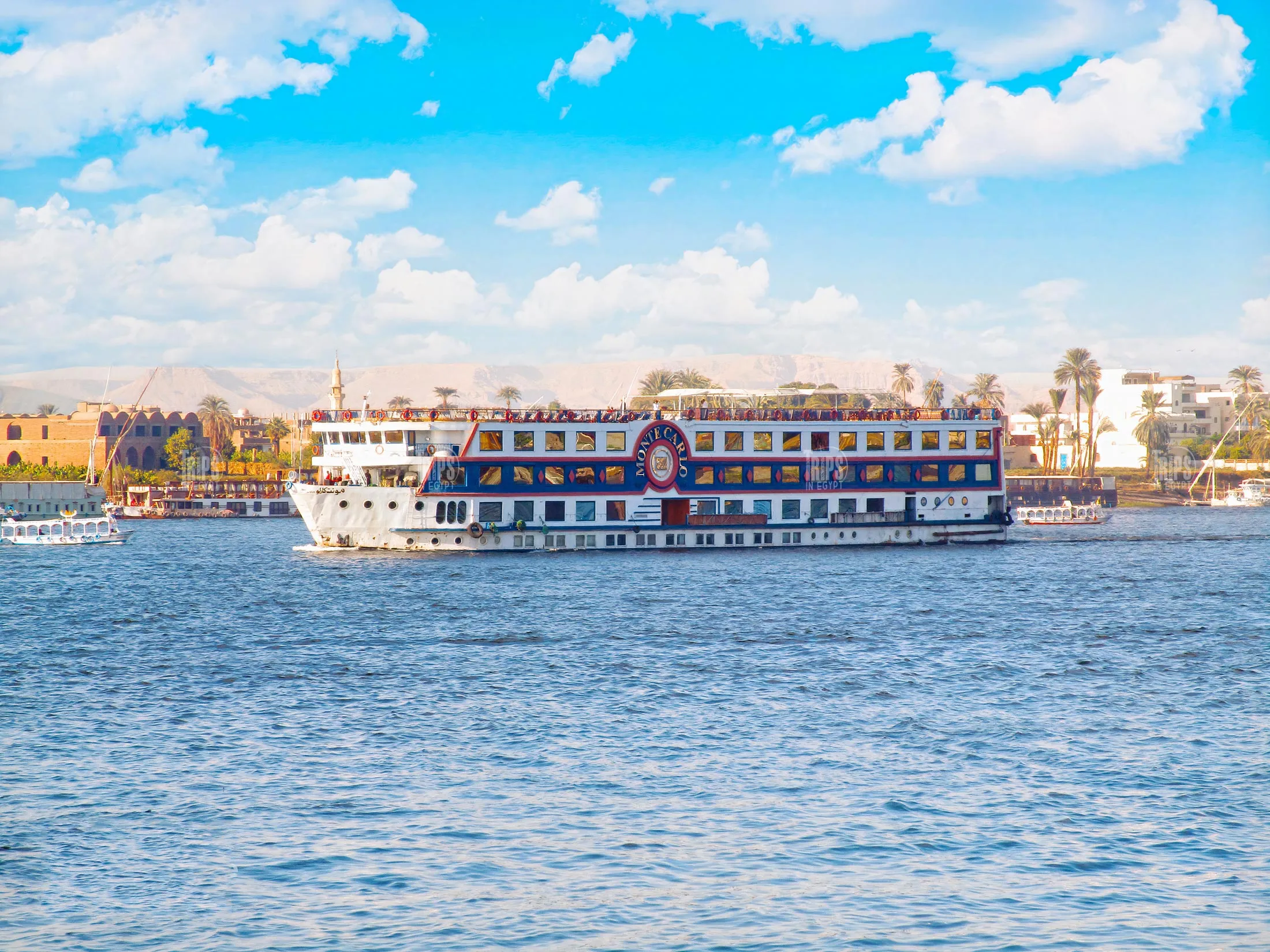
10 Days Cairo, Faiyum & Nile Cruise Holiday
Breathtaking 10 Days Journey of A Lifetime in Egypt 10 Days Cairo, Faiyum & Nile...
- Duration 10 Days / 9 Nights
- Location Cairo, Luxor, Aswan & Faiyum
- Type Classic Tour
From$1350/per person
View Tour SOLD OUT
Ultimate 7-Day Egypt Solar Eclipse Experience with Hurghada 2027
Enjoy a 7-Day Egypt Solar Eclipse Tour with Hurghada 2027 6 Nights Egypt Solar Ecli...
- Duration 7 Days / 6 Nights
- Location Cairo / Giza / Luxor / Hurghada
- Type Astronomical Tour
Sold Out
View Details