



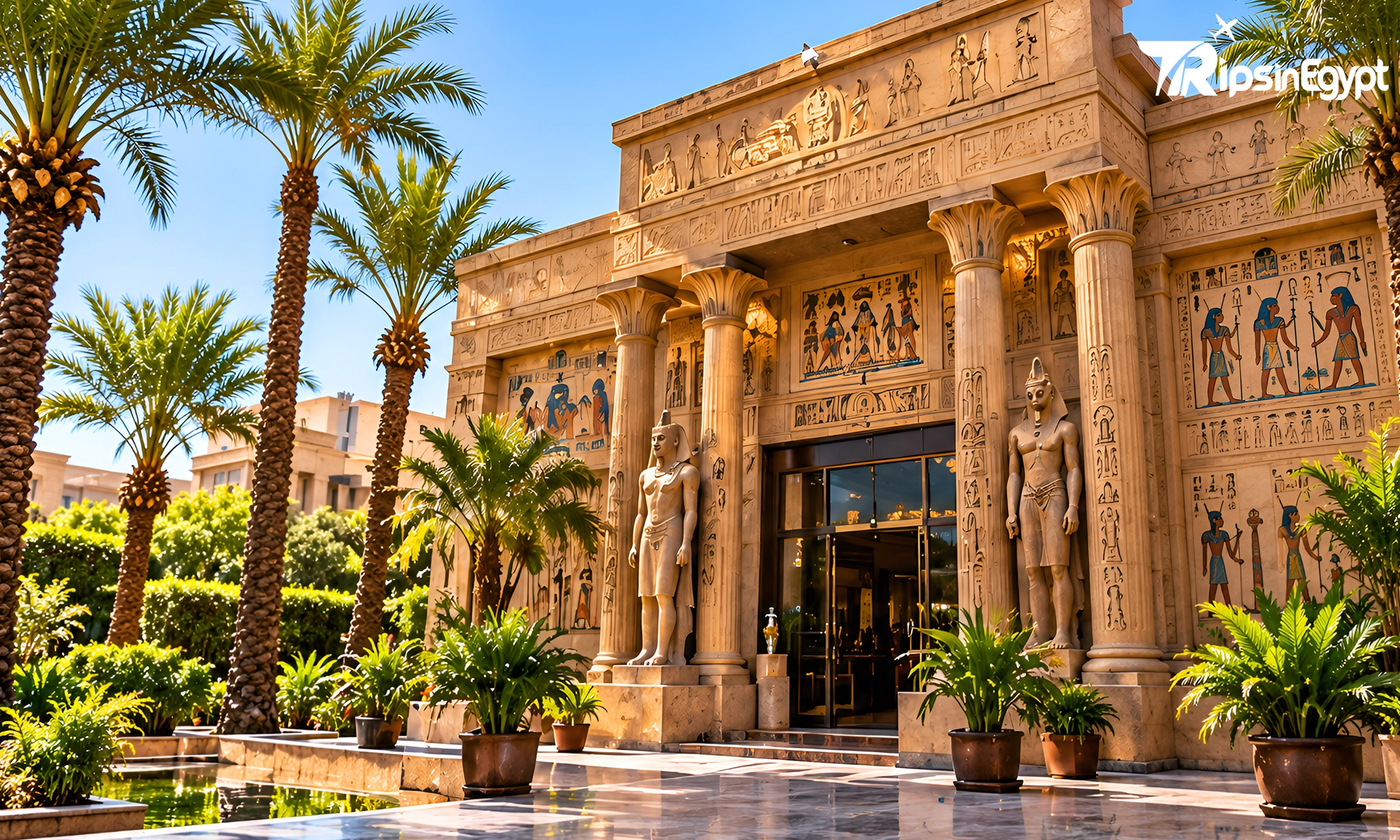
Long before paper, books or printing, the ancient Egyptians wrote their laws, prayers, and stories on a reed that grew along the Nile. Papyrus carried hieroglyphs for more than 3,000 years, and it gave the English language the word "paper". Today, a visit to a papyrus museum in Cairo is one of the easiest ways to see that ancient craft brought back to life, often a short drive from the Giza Pyramids.
Watching a green stalk turn into a smooth, golden sheet in a few minutes feels a little like magic. This guide explains what Cairo's papyrus museums really are, the history of papyrus and its modern revival, what you will see inside, where to find genuine ancient papyri, how to visit, and how to buy without being fooled. Here are all the things you need to know about the Papyrus Museum in Cairo:

Discover What Makes the Papyrus Museum in Cairo Special
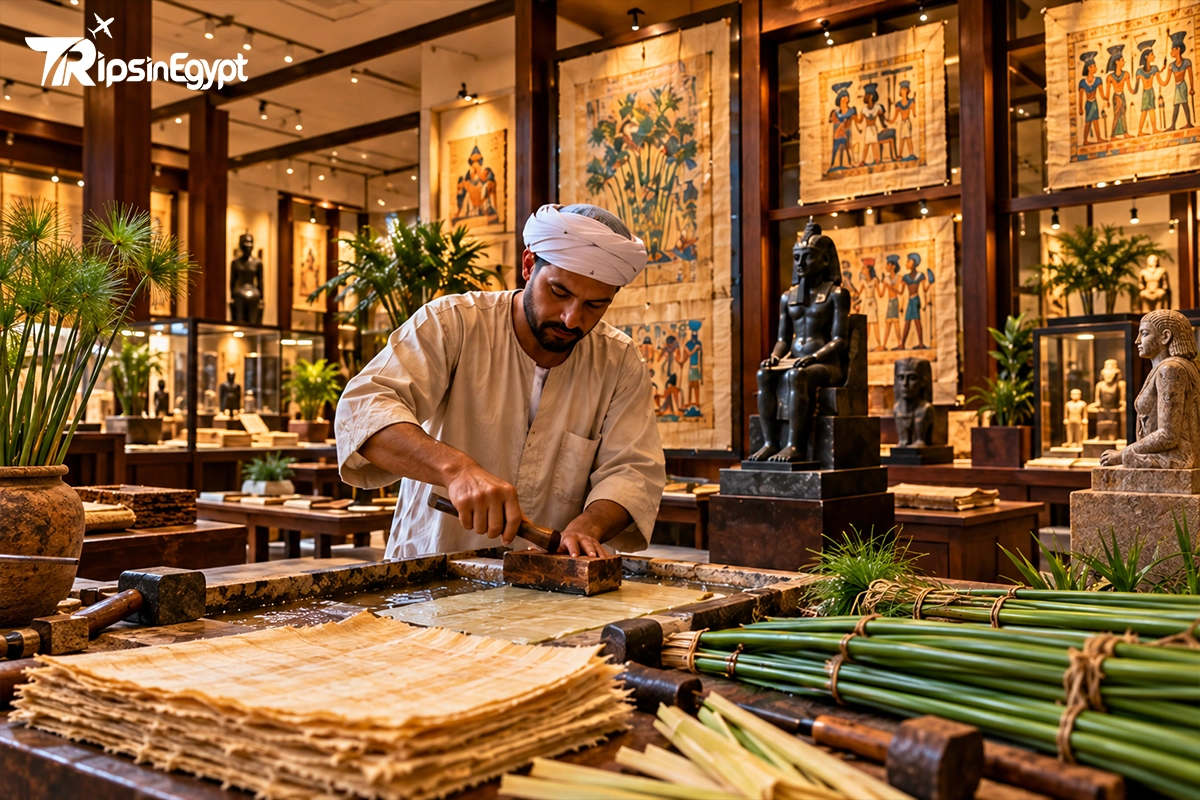
There is no single state museum called the Papyrus Museum. When guides and tour companies use the name, they usually mean a papyrus institute: a private workshop and gallery, most often on or near Pyramids Road in Giza, where staff demonstrate papyrus-making and sell paintings on papyrus. Entry is free, and the visit usually lasts 30 to 45 minutes.
These institutes are pleasant, air-conditioned and genuinely educational, but they are also shops. Many organized tours stop at one between the Pyramids and lunch, and guides often receive a commission on sales. That is not a reason to skip them, only a reason to know what to expect. You are free to watch the demonstration and leave without buying.
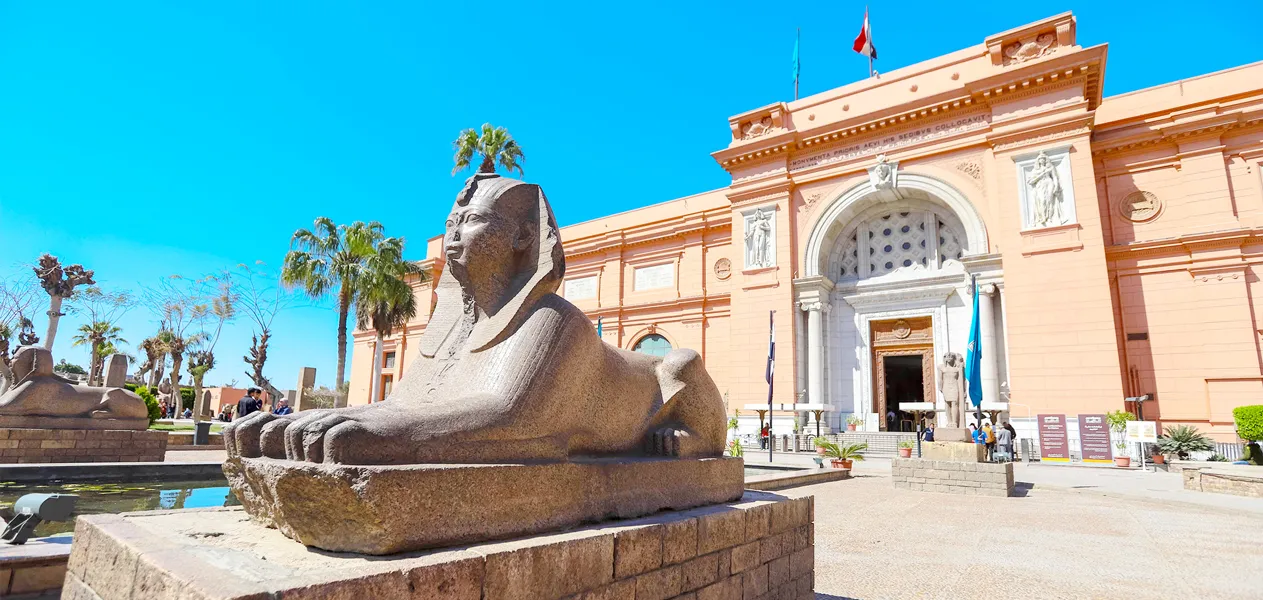
The other places where papyrus is the star are museums in the true sense. The Egyptian Museum in Tahrir, the Grand Egyptian Museum and the Coptic Museum hold real papyri thousands of years old, while the Pharaonic Village on the Nile shows the plant growing in its natural setting. This guide covers all of them, and our overview of Egypt's museums lists the rest.
A Short History of Papyrus and Its Modern Revival
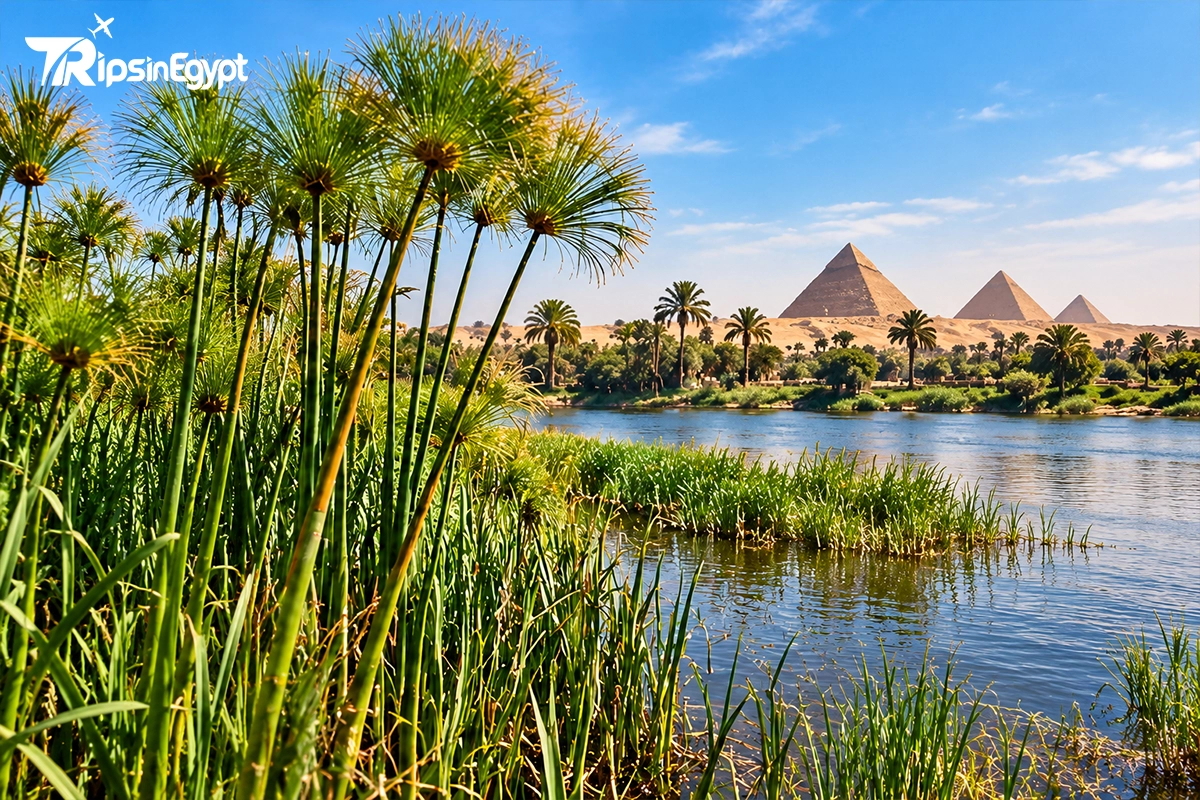
Cyperus papyrus is a tall, triangular-stemmed reed that once covered the marshes of the Nile Delta, growing up to about 4 meters high. The ancient Egyptians used it for boats, ropes, sandals, mats and baskets, and it became the symbol of Lower Egypt. Its stems and flower heads inspired the shapes of temple columns, as in the giant open-papyrus columns of Karnak Temple.
Papyrus as a writing material appears around 3000 BC. The oldest inscribed papyri found so far were discovered in 2013 at Wadi al-Jarf on the Red Sea coast. Among them is the Diary of Merer, the logbook of an official who shipped limestone blocks for the Great Pyramid of Giza in the reign of Khufu, about 4,500 years ago.
For thousands of years, Egypt supplied papyrus to the whole Mediterranean, including the scrolls of the ancient Library of Alexandria. Parchment and then Arab paper slowly replaced it, and by around the 11th century papyrus-making had faded away. The plant itself almost vanished from Egypt.
The revival came from an unlikely man. Dr. Hassan Ragab (1911 to 2004), an engineer, army general, and former ambassador to China and Italy, began experimenting in 1962. He brought papyrus plants from Sudan, where they still grew wild, and produced his first sheet in July 1966. In 1967, he opened the Papyrus Institute on a houseboat on the Nile, and he later founded the Pharaonic Village on Jacob Island. Almost every papyrus painting sold in Egypt today traces back to his work.
Today, much of the country's papyrus is grown and processed by farmers in the Sharqia Governorate in the Delta, who supply the shops of Cairo, Luxor and Aswan.
What You Will See Inside: From Reed to Painting
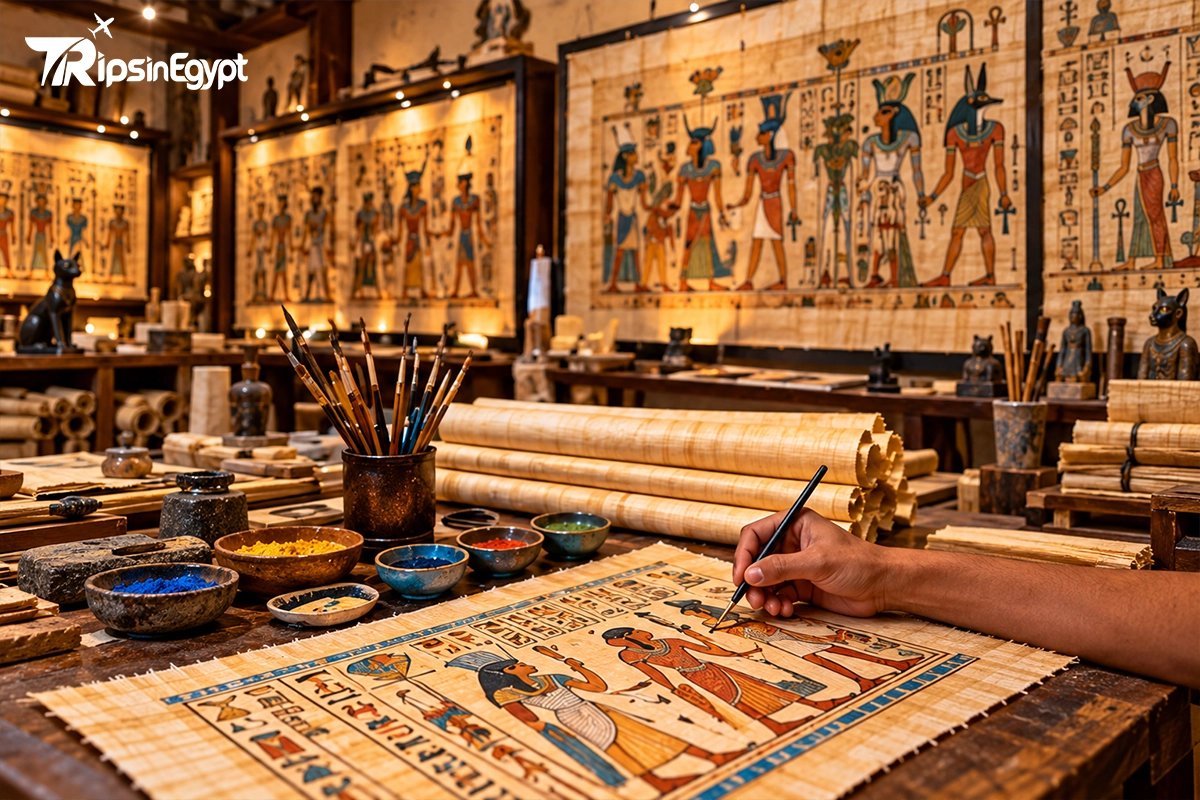
A visit begins with a demonstration at a work table, usually with fresh stalks in a bucket of water. The steps take only a few minutes to show, though the real process takes days:
- Cutting. A green stalk is cut into sections about 30 to 40 cm long.
- Peeling. The tough outer rind is stripped away, leaving the white inner pith.
- Slicing. The pith is cut lengthwise into thin strips.
- Soaking. The strips soak in water for several days, which softens them and removes sugar that would darken the sheet.
- Rolling. Each strip is rolled flat to squeeze out water and air.
- Weaving. Strips are laid side by side, then a second layer is placed across them at a right angle.
- Pressing. The sheet is pressed between cloth and boards for several days. The plant's own sap glues the layers together, so no adhesive is needed.
The longer a sheet soaks, the darker its color, which is why papyrus comes in shades from cream to honey brown. Staff usually hold a finished sheet to the light to show the crossed strips, and some let you try a few steps yourself.
The gallery that follows displays hand-painted copies of famous ancient scenes. Common subjects include:
- The weighing of the heart from the papyrus of Ani, a scene explained in our guide to the judgement of the dead.
- Tutankhamun and his queen, copied from the back of his golden throne.
- Nefertari playing senet, from her tomb in the Valley of the Queens.
- The Eye of Horus, the zodiac of Dendera and scenes of the gods.
Many institutes will also write your name in hieroglyphs inside a cartouche on a small sheet, a popular souvenir. You can learn more about these images in our guides to ancient Egyptian art and the Egyptian Book of the Dead.
Where to See Real Ancient Papyri in Cairo
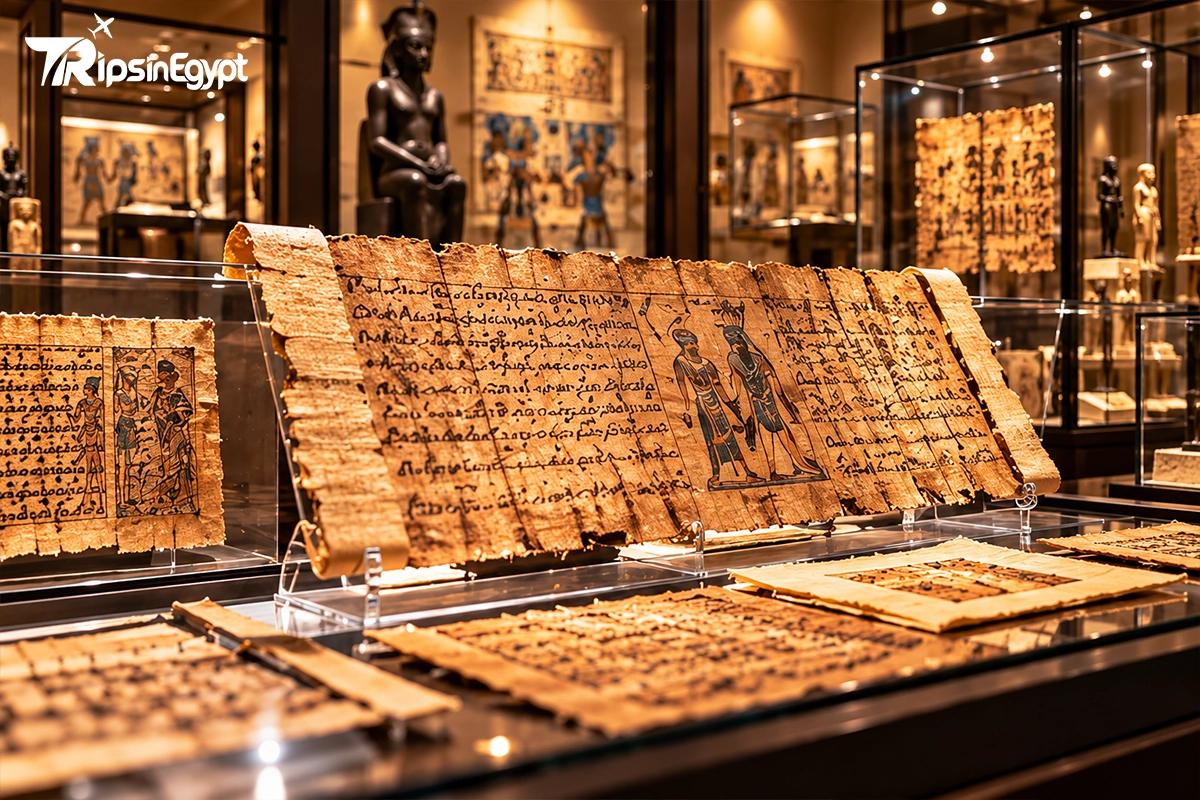
The papyrus institutes show copies. To see the real thing, head to Cairo's museums:
| Museum | What to look for |
|---|---|
| Egyptian Museum, Tahrir | Book of the Dead papyri, administrative documents and scribe statues, mostly on the upper floor |
| Grand Egyptian Museum, Giza | Selected papyri and scribal objects in the main galleries, which change as new displays open |
| Coptic Museum, Old Cairo | The Nag Hammadi codices, 4th-century books bound in leather |
| Pharaonic Village, Jacob Island | Living papyrus beds and a reconstruction of ancient papyrus-making |
Some of the most famous papyri ever found are not in Egypt at all. The papyrus of Ani is in the British Museum in London, the medical Ebers Papyrus is in Leipzig, and the Edwin Smith Papyrus, the oldest known surgical text, is in New York. Seeing their copies in Cairo is the closest most visitors will come.
For a deeper look at the world these documents come from, our pages on ancient Egyptian civilization and the history of the Nile are good places to start.
How to Visit a Papyrus Museum in Cairo and Prices
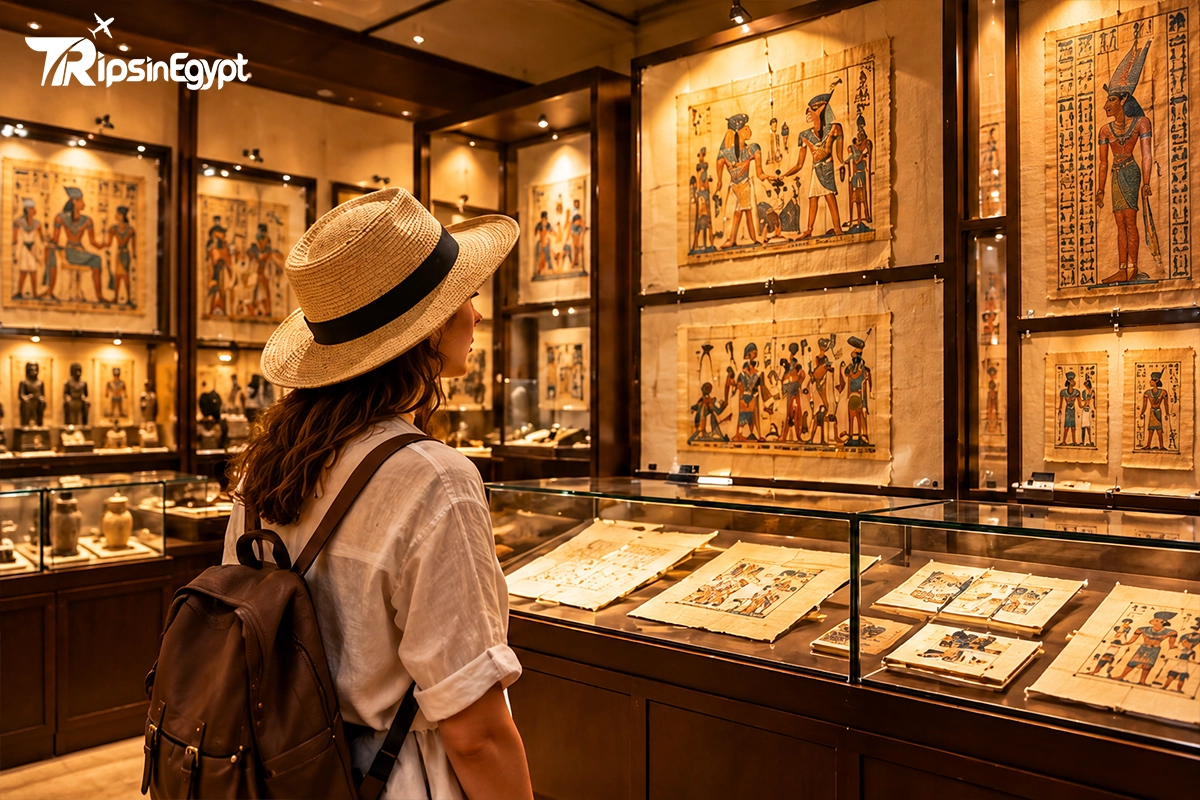
Location: Most papyrus institutes stand on Pyramids Road or the roads leading to Saqqara, a few minutes from the Pyramids. Others are in central Cairo and near Khan El Khalili. Ask your hotel or guide for a recommended one rather than following a street tout.
Cost and hours: Entry to the institutes is free. Most open daily from morning until early evening, though hours vary by shop.
When to go: Combine a visit with the Pyramids or with a trip to Memphis and Saqqara. Our Half Day Pyramids Tour from Cairo from USD 45 and our Half-Day Tour to Memphis, Saqqara and Dahshur from USD 65 can include a papyrus stop on request, as can the Pyramids, Museum and Khan El Khalili Trip from USD 95. You can also see the plant growing on our Half-Day Tour to Pharaonic Village from Cairo from USD 40.
Tips:
- Say clearly at the start if you only want the demonstration, and you will not be pressed to buy.
- Photos of the demonstration are almost always allowed.
- Tipping the demonstrator a small amount is a kind gesture, as our guide to tipping in Egypt explains.
How to Tell Real Papyrus From Fake and What to Pay
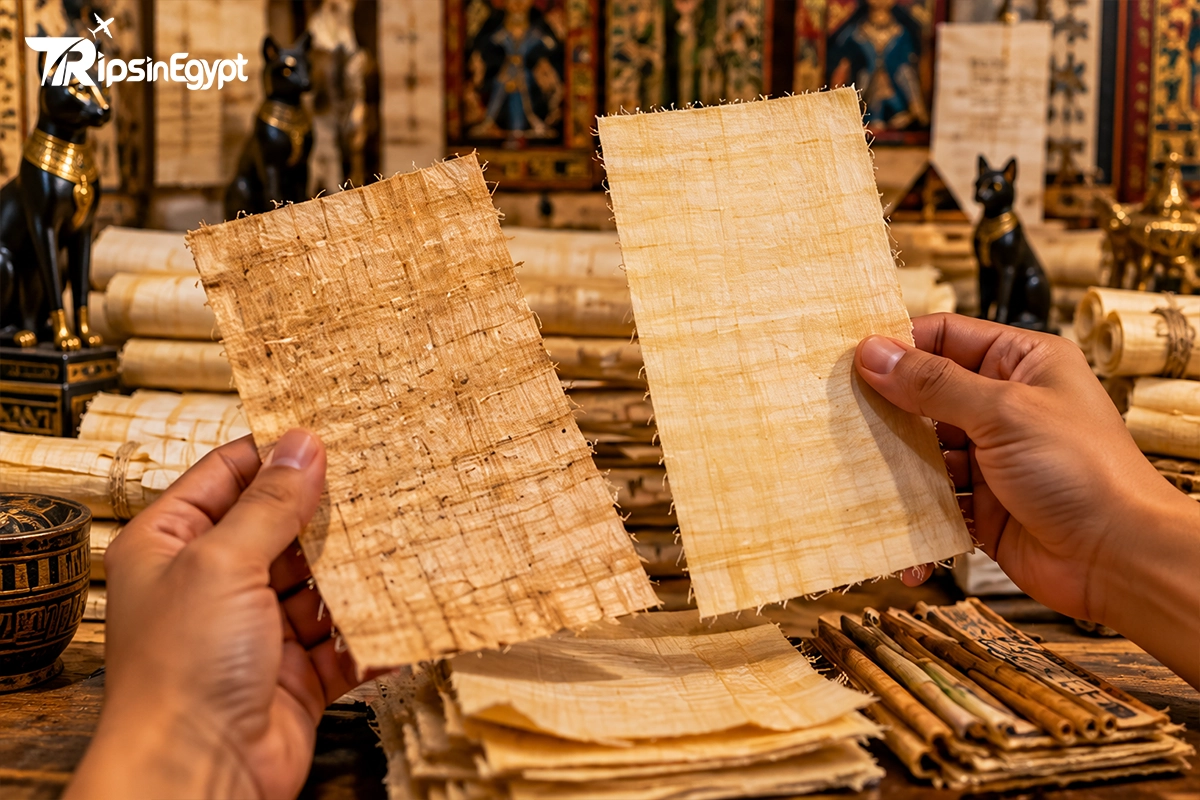
Most of the cheap "papyrus" sold by street vendors around the Pyramids, in Luxor and on cruise stops is made from banana leaf and printed rather than painted. It looks similar at first, but a few simple checks reveal the difference:
| Test | Real papyrus | Banana-leaf fake |
|---|---|---|
| Hold it to the light | Thick and thin strips crossing in a grid | Thin, even sheet with fine parallel veins |
| Roll or flex it | Rolls smoothly without cracking | Stiff and brittle, may crack |
| Feel the surface | Slightly rough, with visible fibers | Smooth and papery |
| Look at the paint | Brush strokes, slight texture | Flat, printed colors |
Prices vary with size, painting and shop, but as a rough guide, small hand-painted sheets start at about USD 5 to 10. Medium paintings cost about USD 20 to 50, and large, detailed works can reach USD 150 or more. Prices in the institutes are usually fixed, though asking for a discount on several pieces is normal. Our Cairo travel tips cover bargaining in the markets, and our list of things to do in Cairo suggests other souvenirs and stops.
Keep your papyrus rolled loosely or flat in a cardboard tube, away from water and direct sun, and it will last for decades.
Discover the Story of Papyrus With Trips In Egypt
A sheet of papyrus is a small thing to carry home, yet it holds the same craft that recorded the building of the pyramids and the prayers of the pharaohs. Watch it being made in Cairo, then see the ancient originals in the museums, and the story of Egypt's writing will stay with you.
Browse our Egypt tour packages to find trips that include Giza and Cairo's museums, or let us plan a tailor-made tour with the stops you choose. Book us now or contact our operation department today.

5 Days Cairo And Hurghada Trip
Amazing 4 Nights Cairo and Hurghada Trip Itinerary 5 Days Cairo and Hurghada trip wil...
- Duration 5 Days / 4 Nights
- Location Cairo & Hurghada
- Type Historical & Recreational Tour
From$690/per person
View Tour
6 Days Cairo, Alexandria & Faiyum Tour
Unforgettable Cairo, Alexandria & Faiyum Adventure in Six Days 6 Days Cairo, Alex...
- Duration 6 Days / 5 Nights
- Location Cairo - Alexandria - Fayum
- Type Historical Tour
From$720/per person
View Tour
10 Days Cairo, Faiyum & Nile Cruise Holiday
Breathtaking 10 Days Journey of A Lifetime in Egypt 10 Days Cairo, Faiyum & Nile...
- Duration 10 Days / 9 Nights
- Location Cairo, Luxor, Aswan & Faiyum
- Type Classic Tour
From$1350/per person
View Tour SOLD OUT
Ultimate 7-Day Egypt Solar Eclipse Experience with Hurghada 2027
Enjoy a 7-Day Egypt Solar Eclipse Tour with Hurghada 2027 6 Nights Egypt Solar Ecli...
- Duration 7 Days / 6 Nights
- Location Cairo / Giza / Luxor / Hurghada
- Type Astronomical Tour
Sold Out
View Details