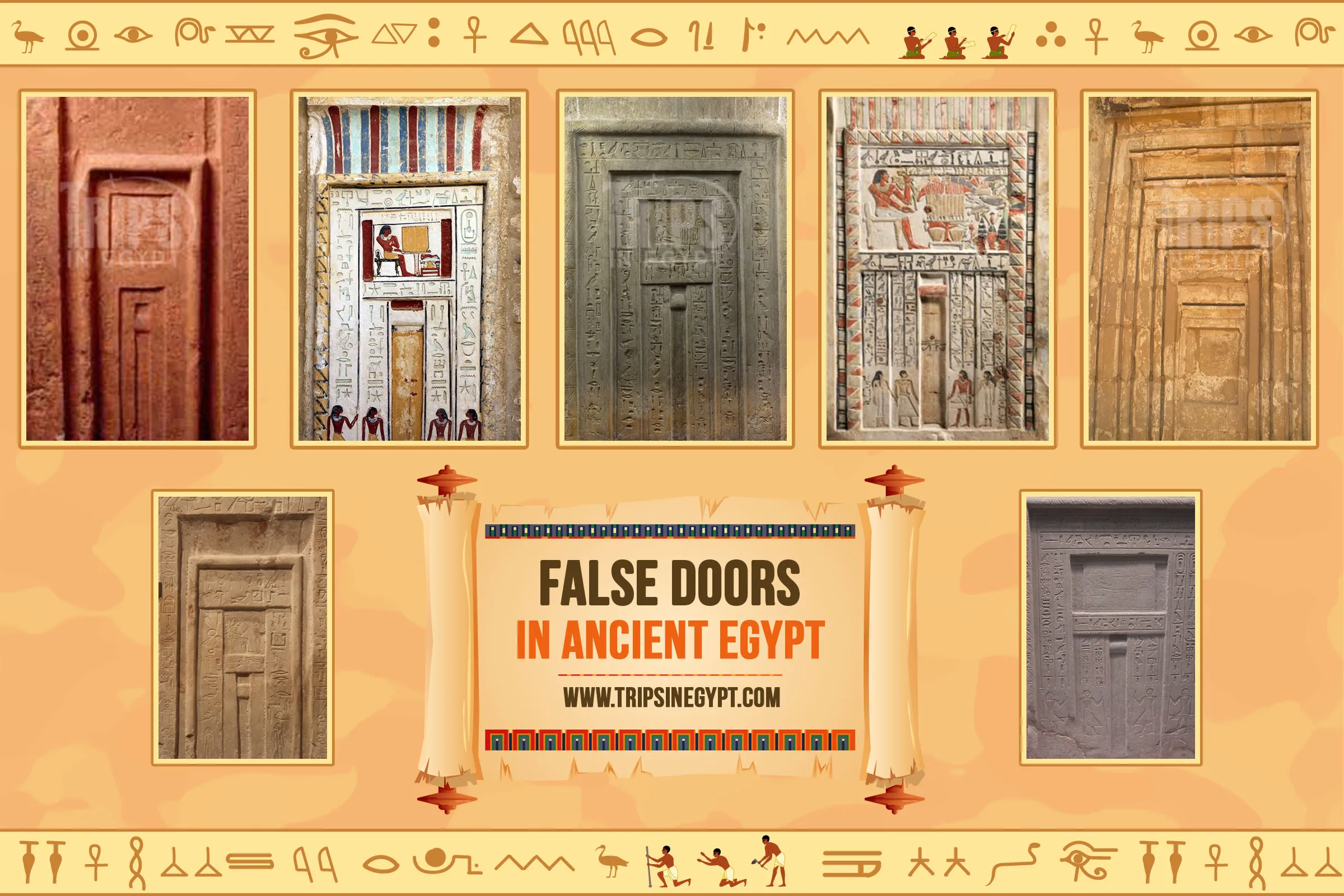




Ancient Egyptian art is the painting, sculpture, relief carving and crafts produced along the Nile for more than 3,000 years, from about 3100 BC to the Roman period. Made mainly for temples and tombs, it followed strict rules that kept its style recognizable for millennia. Rooted in the beliefs of ancient Egyptian civilization, it still feels timeless. This guide covers its history, style, symbols, colors and most famous works.
What Is Ancient Egyptian Art
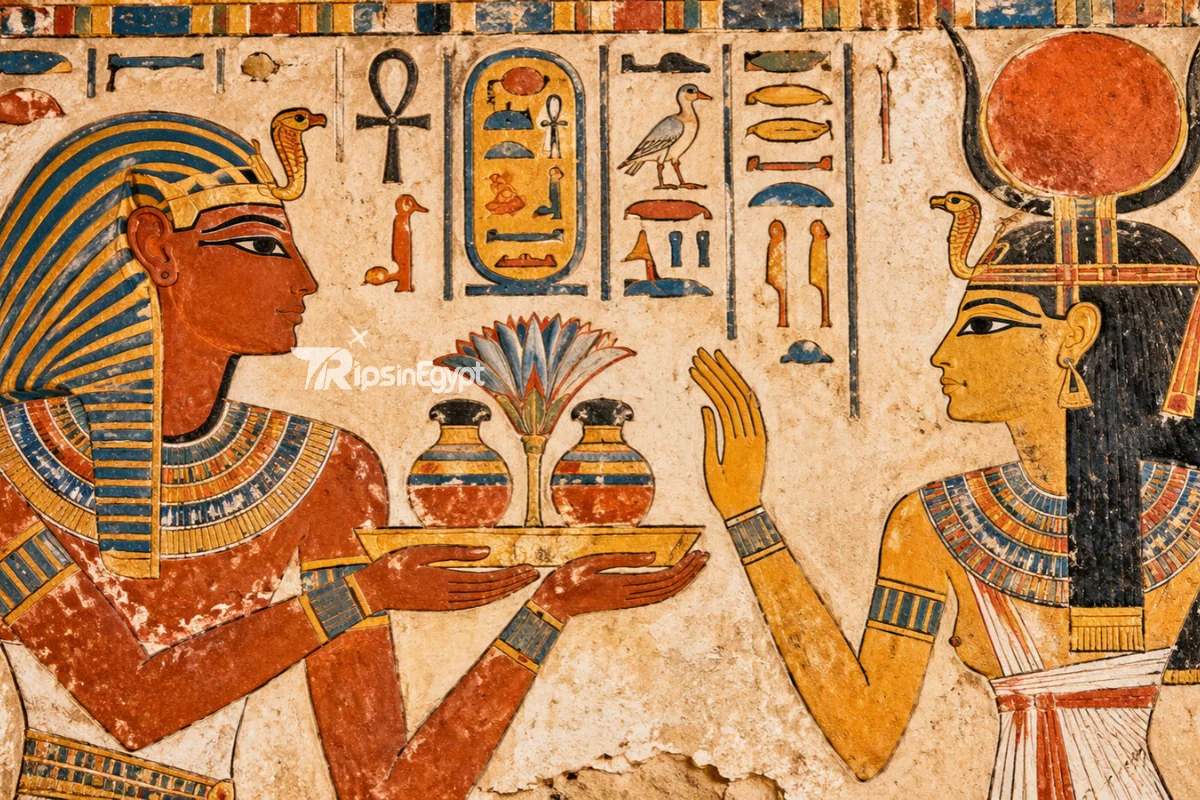
Ancient Egyptian art was not created simply to decorate a room or please a collector. It had a practical religious purpose. A statue could provide a home for the spirit of the dead, a tomb painting could supply food and servants for eternity, and temple reliefs helped maintain the relationship between the gods, the king and the cosmic order.
Because art performed these functions, Egyptian artists followed carefully established rules of proportion, pose, color and composition. Much of the greatest art of ancient Egypt was therefore placed inside temples, tombs and sacred spaces rather than created for public display.
Characteristics of the Ancient Egyptian Art Style
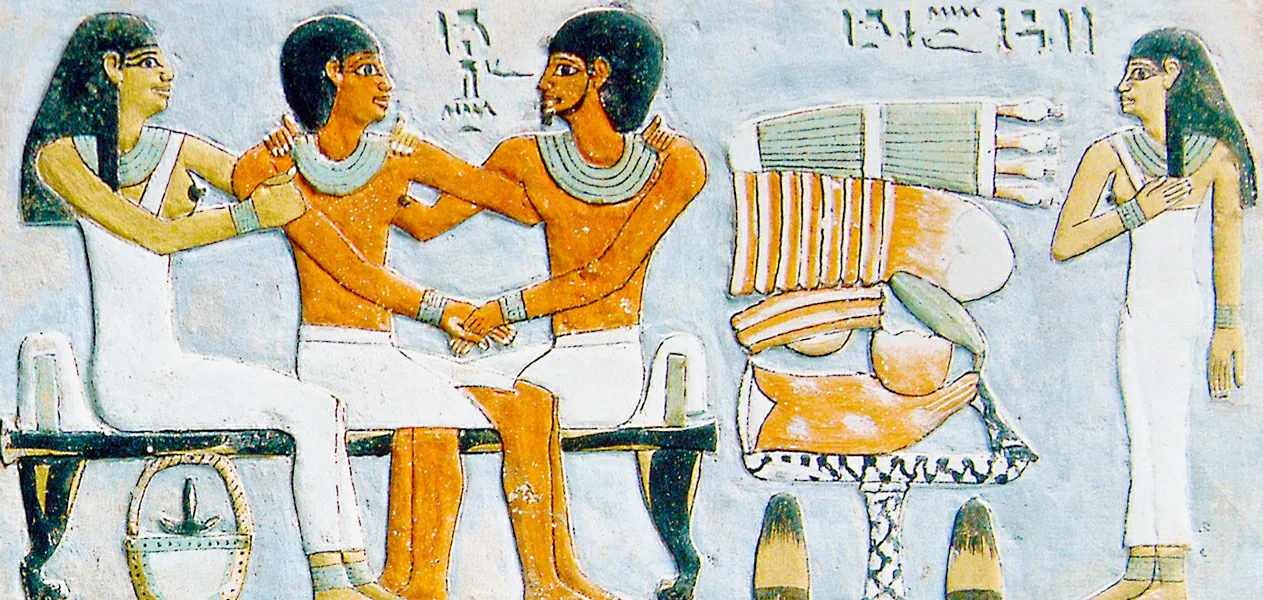
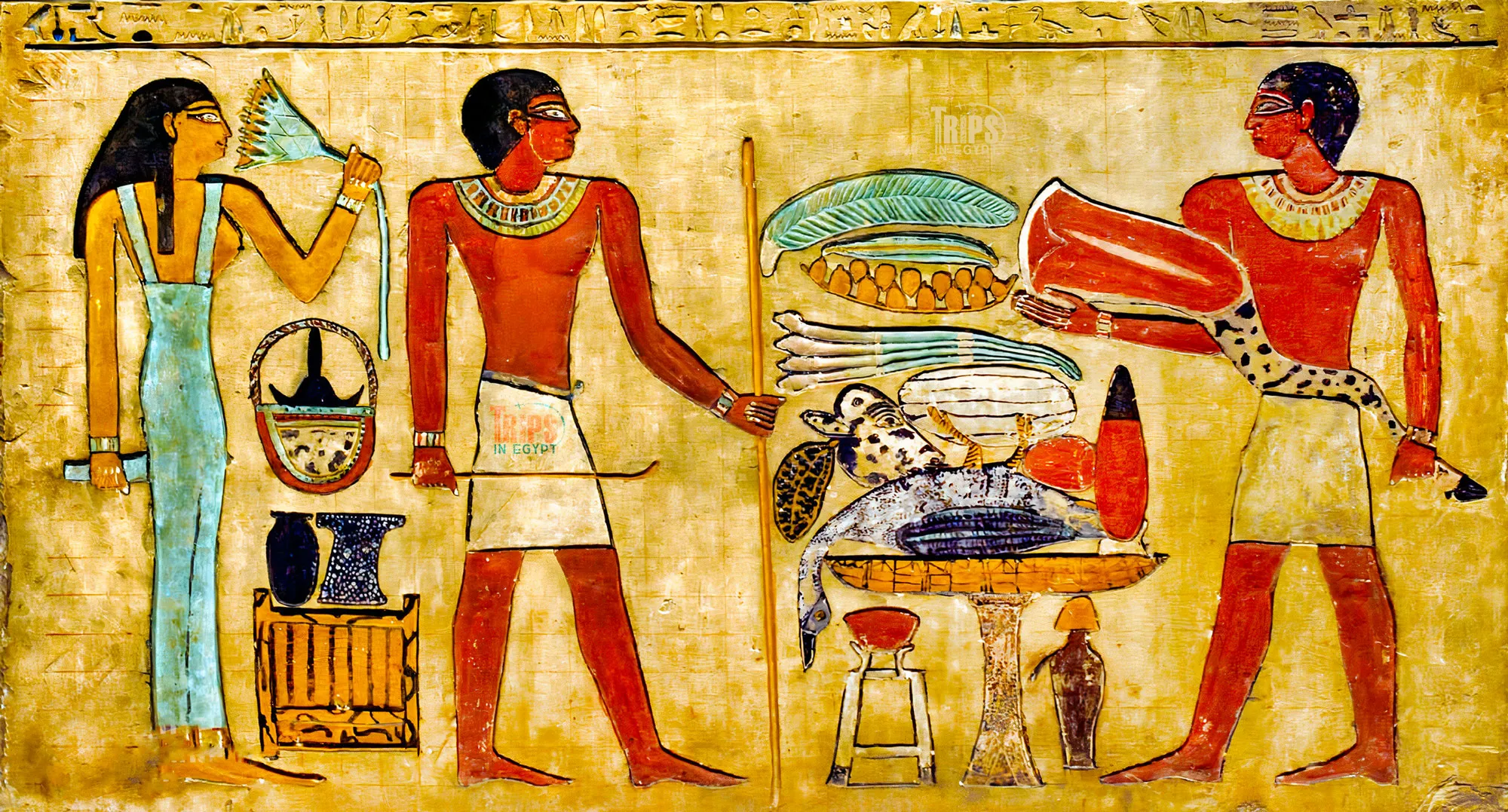
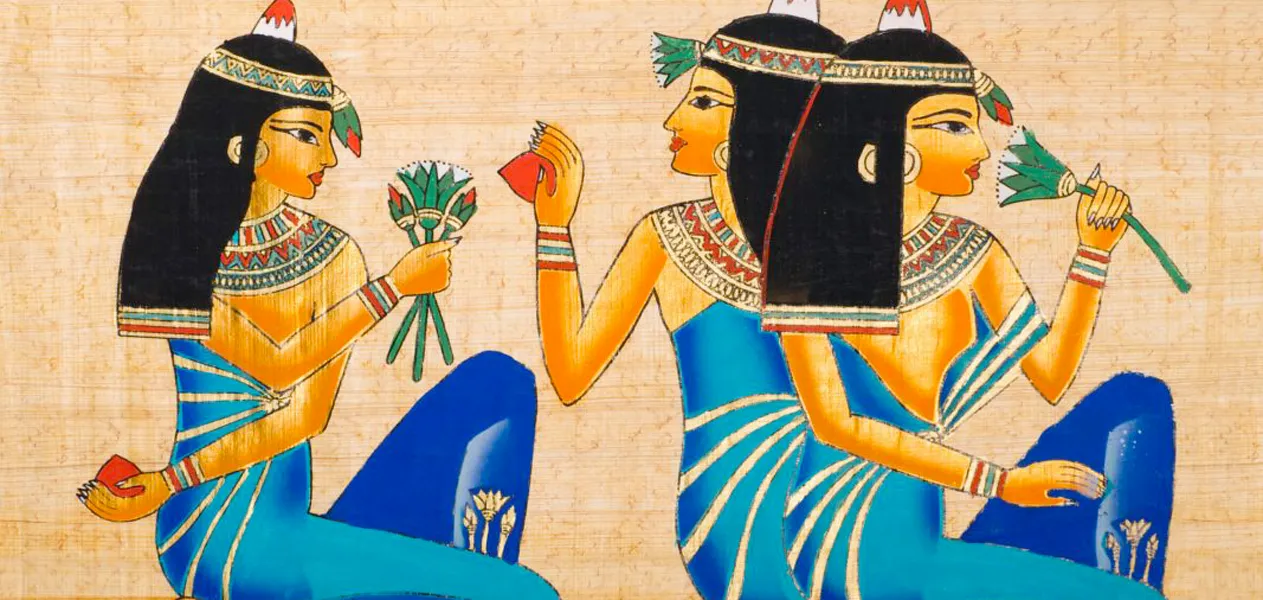
One of the most recognizable characteristics of Egyptian art is the composite view. The head and legs are usually shown in profile, while the eye and shoulders face forward, allowing each part of the body to appear in what artists considered its clearest form.
Figures were arranged in horizontal bands called registers, while size represented status rather than physical distance. Pharaohs and gods therefore appear larger than servants, enemies and ordinary people.
Egyptian art also favored balanced compositions, idealized faces and clearly defined outlines. Perspective was rarely used in the modern sense. Instead, artists showed objects and people according to what was important and recognizable.
What Is the Ancient Egyptian Art Style Called
There is no single ancient Egyptian name for the artistic style. Modern historians often describe its system as the canon of proportions, composite representation or aspective representation.
Artists used grids to control the proportions of the human figure. In the classical system, a standing figure measured 18 squares from the soles of the feet to the hairline. During later periods, artists adopted a grid of 21 squares.
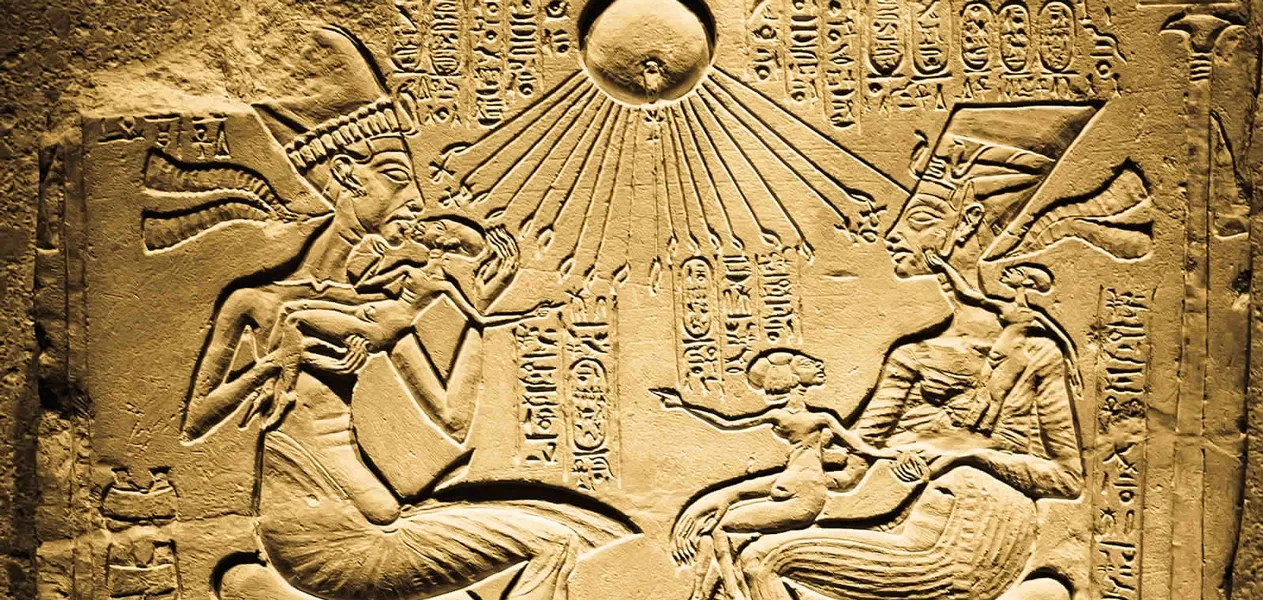
The most famous break from these traditional rules occurred during the Amarna Period, when Akhenaten's artists portrayed the royal family with elongated faces, curved bodies and unusually intimate poses.
Ancient Egyptian Art Facts
Ancient Egyptian art maintained its basic visual language for around three thousand years, making it one of the longest-lasting artistic traditions in history. Artists normally worked as teams of draftsmen, sculptors and painters, and very few signed their work.
Men were conventionally painted with reddish-brown skin and women with lighter yellow tones. These colors were artistic conventions rather than literal representations of skin color.
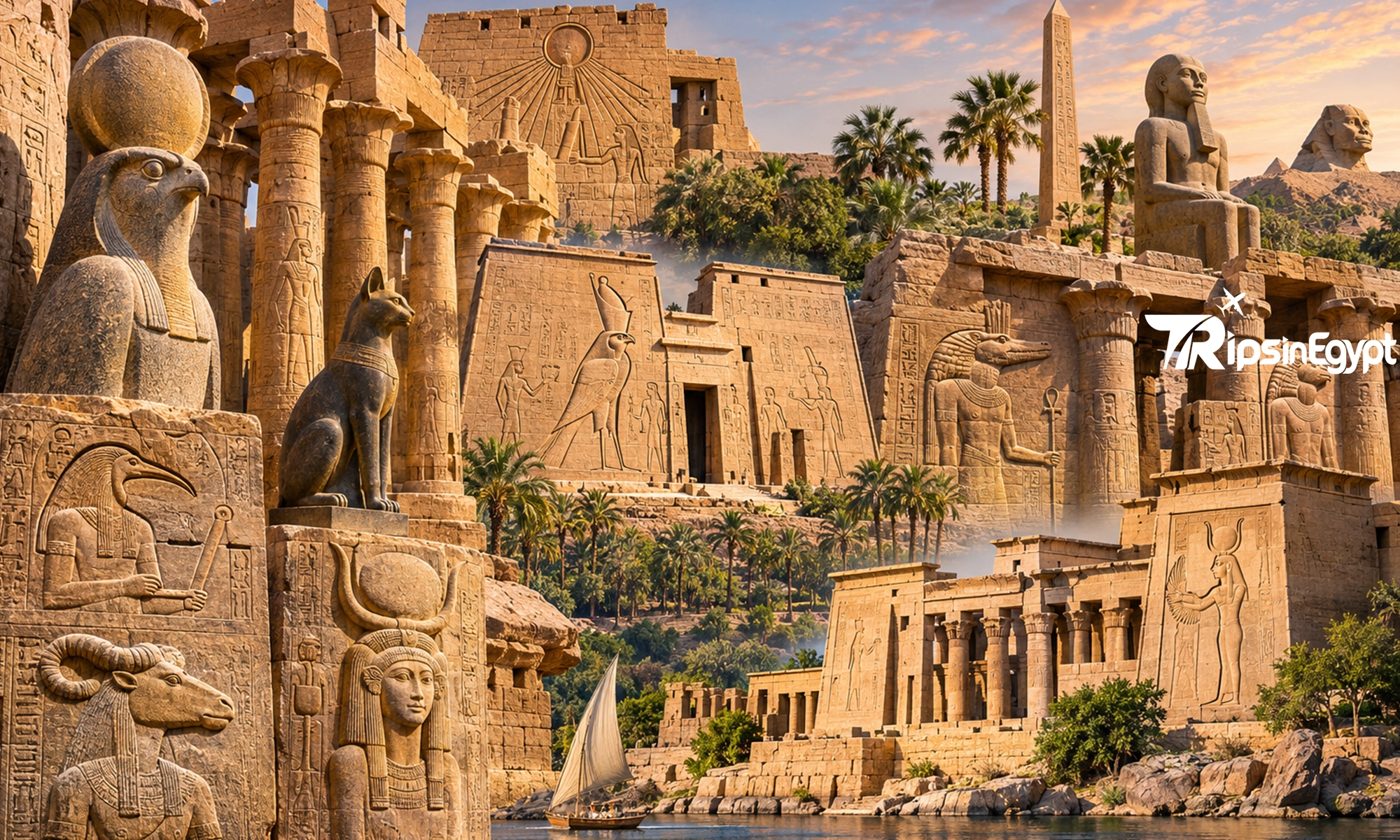
Images of ancient Egyptian deities also followed recognizable visual rules. Horus could appear with the head of a falcon, Anubis with the head of a jackal and Thoth with the head of an ibis.

The History Timeline of Ancient Egyptian Art
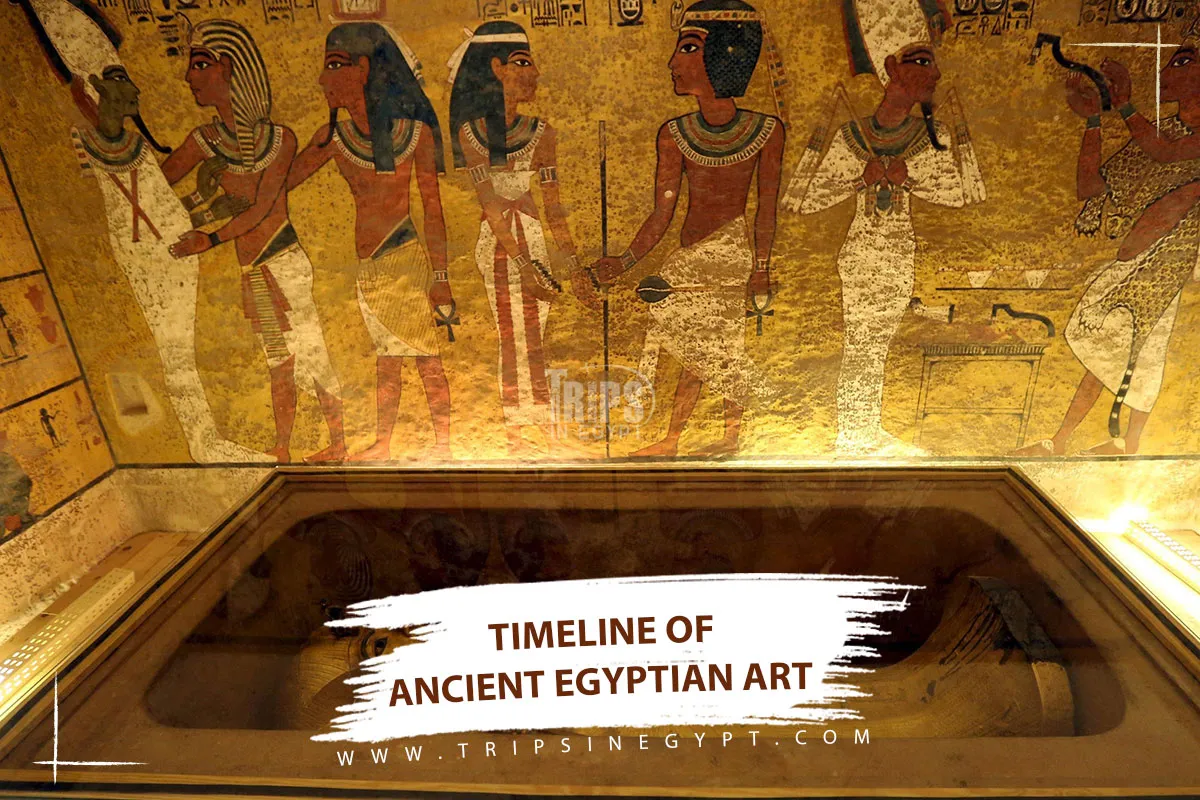
The history of ancient Egyptian art stretches from painted pottery of the late Predynastic Period before 3100 BC to the mummy portraits created under Roman rule in the first centuries AD.
Across this enormous span, Egyptian artists produced sculpture, wall paintings, pottery, jewelry, furniture, reliefs and illustrated papyri. Many of the visual rules that became characteristic of Egyptian art appeared during the Early Dynastic Period and reached major creative peaks during the Old, Middle and New Kingdoms.
Early Dynastic Art and the Narmer Palette
The Narmer Palette, carved around 3100 BC, is one of the earliest masterpieces of Egyptian art. The shield-shaped siltstone object, approximately 64 cm tall, depicts King Narmer wearing the crowns associated with Upper and Lower Egypt and striking an enemy.
The composition already displays many features that would define Egyptian art for thousands of years, including registers, hierarchical scale and composite figures. The palette was discovered at Hierakonpolis in 1898 and is preserved in the Egyptian Museum in Cairo.
The Art History in the Old Kingdom of Egypt 2686–2181 BC
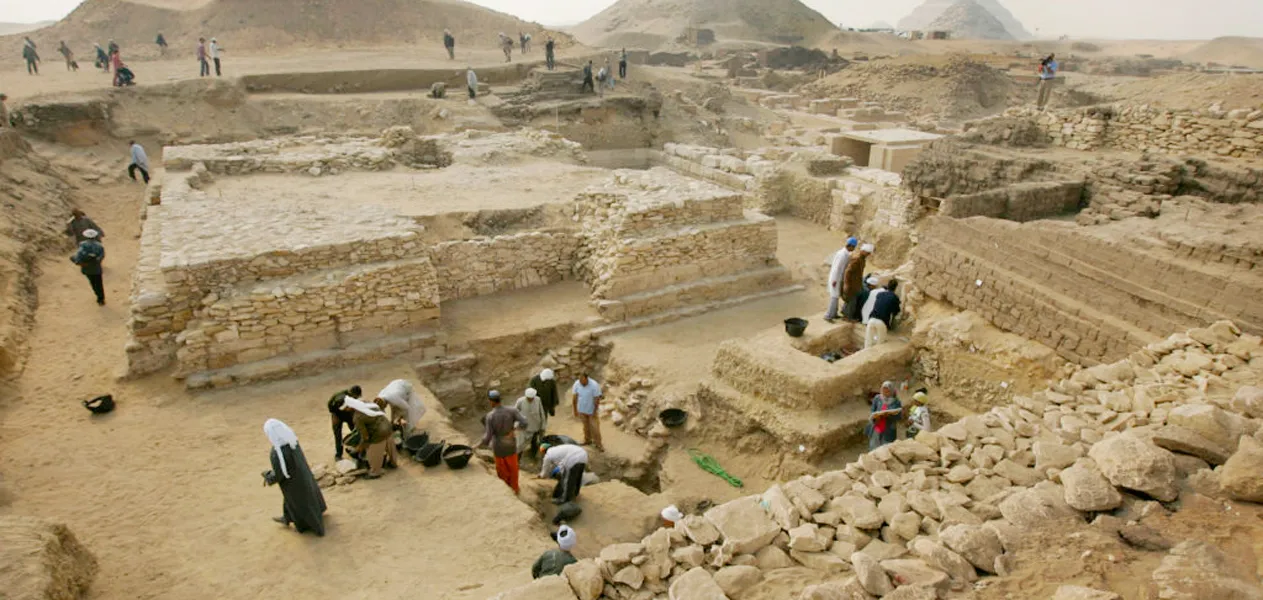
The Old Kingdom became famous as the Age of the Pyramids. King Djoser's architect Imhotep created the Pyramid of Djoser at Saqqara, one of the earliest monumental stone complexes in Egypt.
Royal statues established the frontal, balanced style associated with Egyptian kingship, while nearby mastaba tombs were decorated with scenes of agriculture, fishing, hunting, boat building, music and offerings intended to sustain the deceased in the afterlife.
King Sneferu pushed pyramid construction toward the form that would dominate the 4th Dynasty. His Bent Pyramid at Dahshur changes angle partway up, while his later pyramid achieved the smooth-sided form associated with the great royal pyramids.
Sculpture also became increasingly sophisticated during this period. Famous examples include the painted statues of Prince Rahotep and his wife Nofret, whose inlaid eyes give the figures an unusually lifelike appearance.
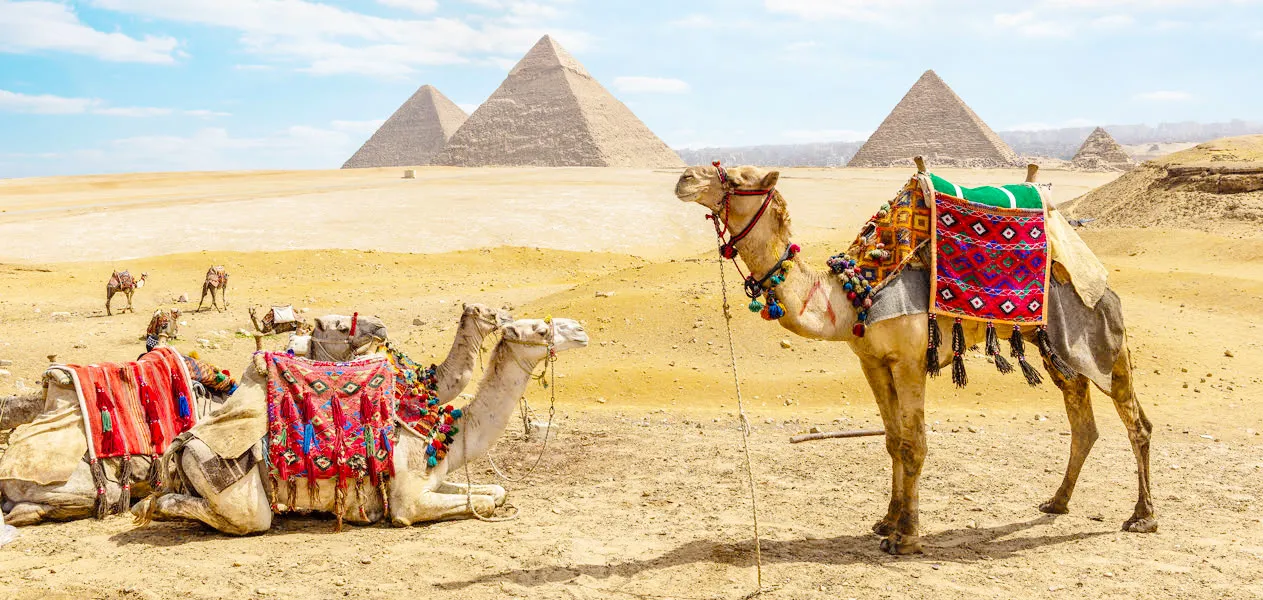
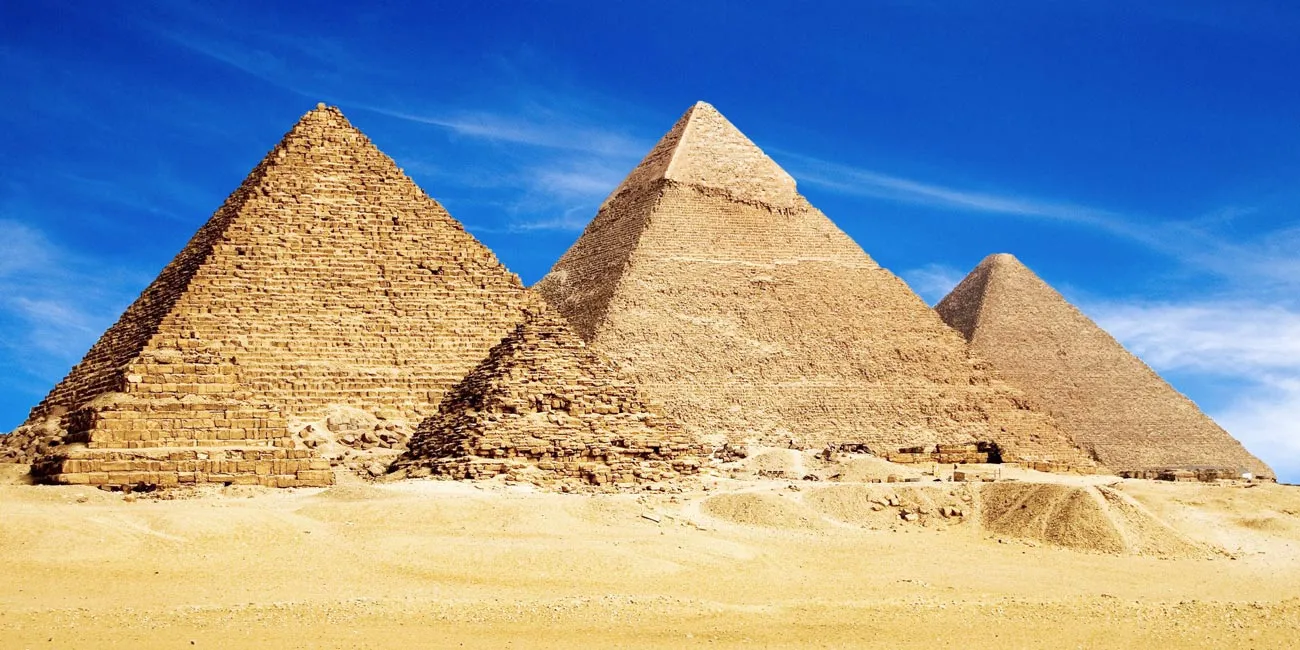
The artistic peak of the Old Kingdom came with the Giza Pyramids of Khufu, Khafre and Menkaure and the statues made for their temples.
Private sculpture also flourished. The famous Seated Scribe, now in the Louvre, demonstrates how artists could depart from ideal royal imagery when portraying officials and members of the elite.
The Art History in the Middle Kingdom of Egypt 2055–1650 BC
After a period of political division, Mentuhotep II reunited Egypt around 2055 BC from his base at Thebes, leading to a revival of royal workshops and monumental art.
Artists of the 12th Dynasty returned to the refined traditions of earlier periods while developing new forms. Important works include Osiride statues of Senusret I, painted coffins and detailed wooden tomb models showing boats, workshops, granaries and everyday activities.
The Middle Kingdom also introduced more expressive royal portraiture. Statues of Senusret III and Amenemhat III show heavy eyelids, lines in the face and serious expressions that contrast with the eternally youthful images of earlier rulers.
Small animal sculptures also became popular. One of the most famous is the blue faience hippopotamus known as William, now in the Metropolitan Museum of Art.
The Art History in the New Kingdom of Egypt 1550–1069 BC
The New Kingdom is often considered one of the greatest periods of Egyptian art. Wealth from the empire funded enormous temples, richly decorated tombs and luxurious royal objects.
Among the most famous examples are the treasures from the tomb of Tutankhamun, discovered in 1922. His golden funerary mask combines gold with materials such as lapis lazuli, quartz and colored glass.
Royal tombs in the Valley of the Kings were covered with painted religious scenes designed to guide the king through the afterlife.
During the Amarna Period, Akhenaten introduced a dramatic artistic departure. Royal family scenes became more intimate and naturalistic, and bodies were portrayed with long faces and curved forms.
The famous limestone bust of Nefertiti, created around 1345 BC and discovered at Amarna in 1912, became one of the most recognizable works of ancient Egyptian sculpture.
After Amarna, artists returned to more traditional conventions. Ramses II filled Egypt and Nubia with statues and reliefs, including the colossal figures at the Abu Simbel temples.
During the Late and Ptolemaic periods, artists frequently revived earlier styles. Under Roman rule, painters in Faiyum produced highly realistic wooden portraits that were placed over the faces of mummies.
Symbolism in Ancient Egyptian Art
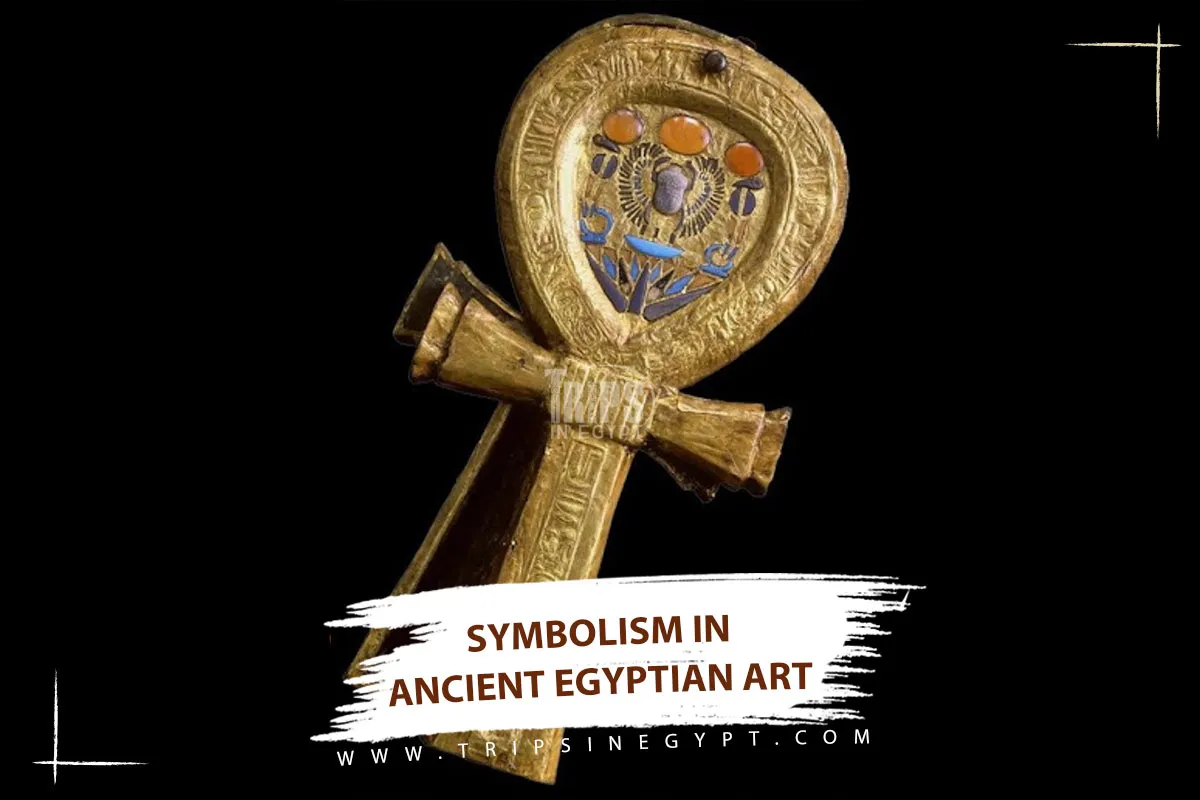
Almost every object and image in Egyptian art carried meaning. Many visual symbols were also hieroglyphs that could be read as part of written language.
A pharaoh holding an ankh, a falcon spreading its wings or a scarab associated with the rising sun communicated ideas about life, kingship, protection and rebirth. Understanding ancient Egyptian symbols makes temple reliefs, tomb paintings and funerary objects far easier to interpret.
Symbols of Life and Protection
The ankh, shaped like a cross with a loop at the top, represented life. Gods are often depicted holding it toward a king's nose as if giving him the breath of life.
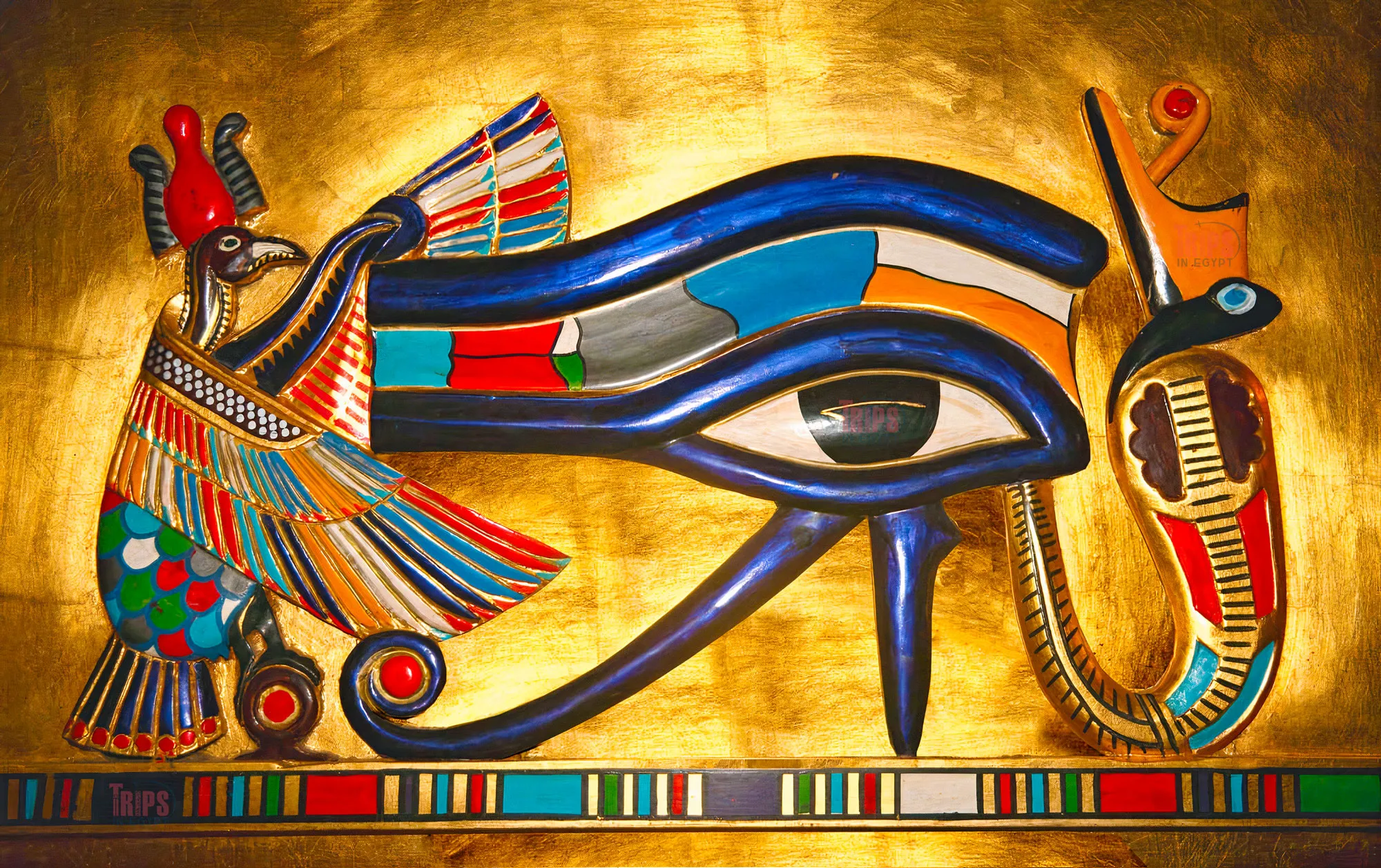
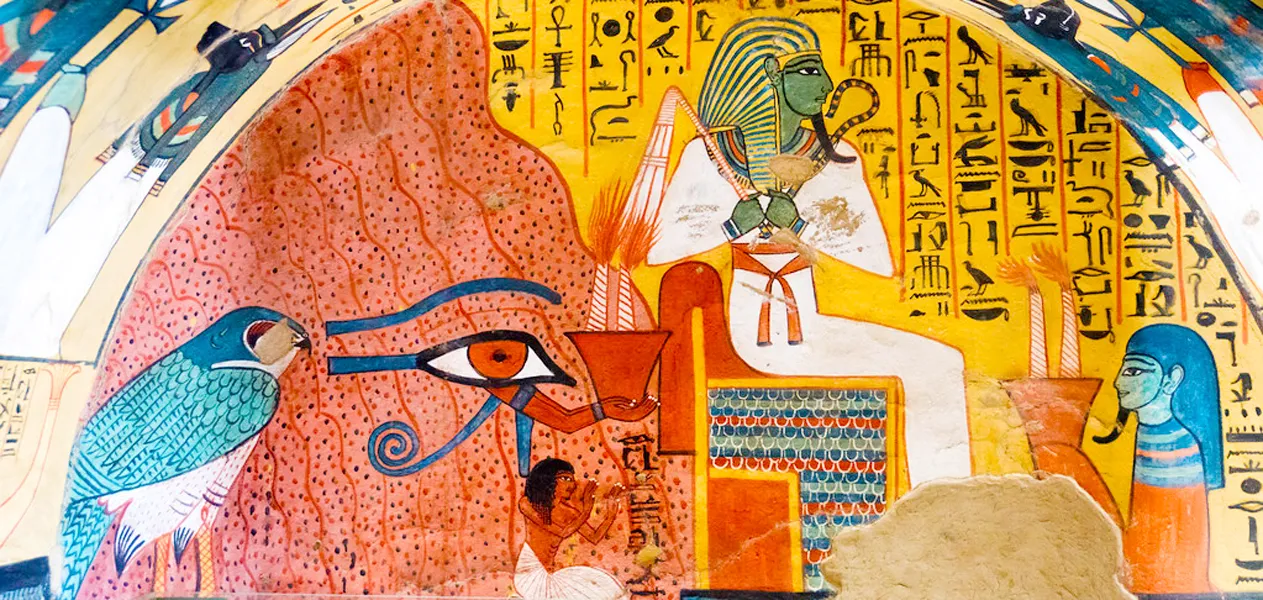
The tyet, or Knot of Isis, symbolized the protective power of Isis, while the Wadjet Eye, commonly called the Eye of Horus, represented healing, restoration and protection.
The ouroboros, a serpent swallowing its own tail, appears on a gilded shrine from the tomb of Tutankhamun and symbolizes cyclical renewal and eternity.
Symbols of Kingship
The cartouche was an oval enclosure surrounding a royal name. Protecting the name was essential because the Egyptians believed that continued remembrance helped preserve a person's existence.
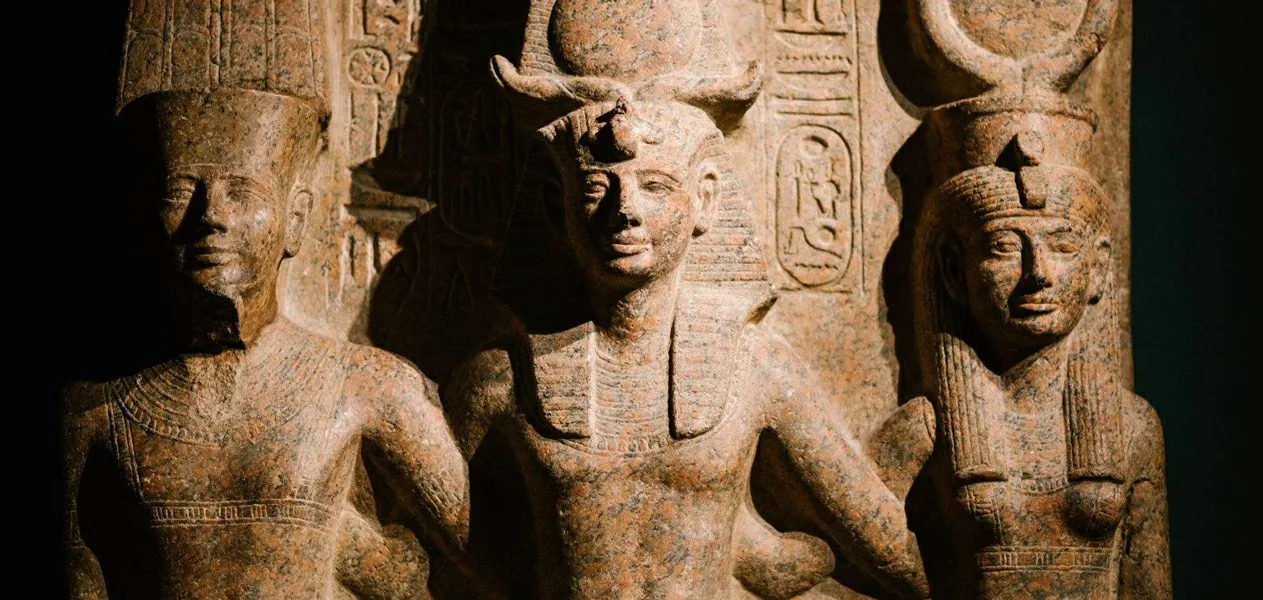
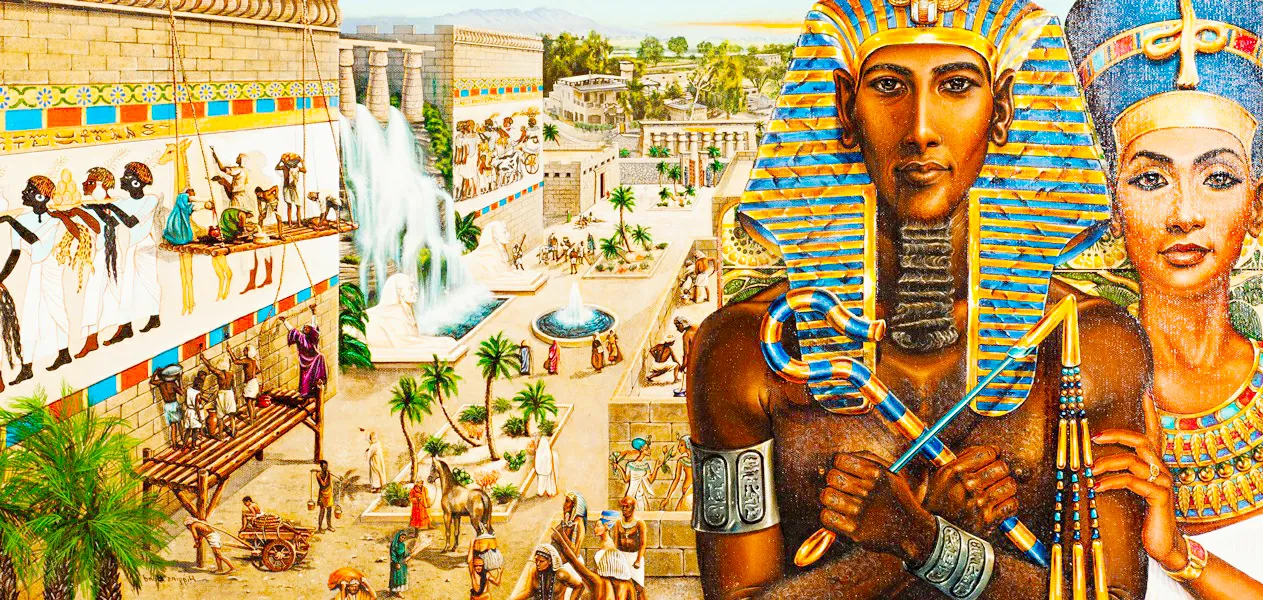
The striped nemes headdress, royal cobra, crook and flail and the crowns of Upper and Lower Egypt immediately identified the pharaoh and communicated his authority.
These symbols allowed viewers to recognize kingship even when individual rulers were portrayed according to highly idealized artistic conventions.
Symbols of the Soul and the Afterlife
Ancient Egyptians believed that a person consisted of several physical and spiritual elements. The ka, often represented by two raised arms, was a vital life force that required offerings.
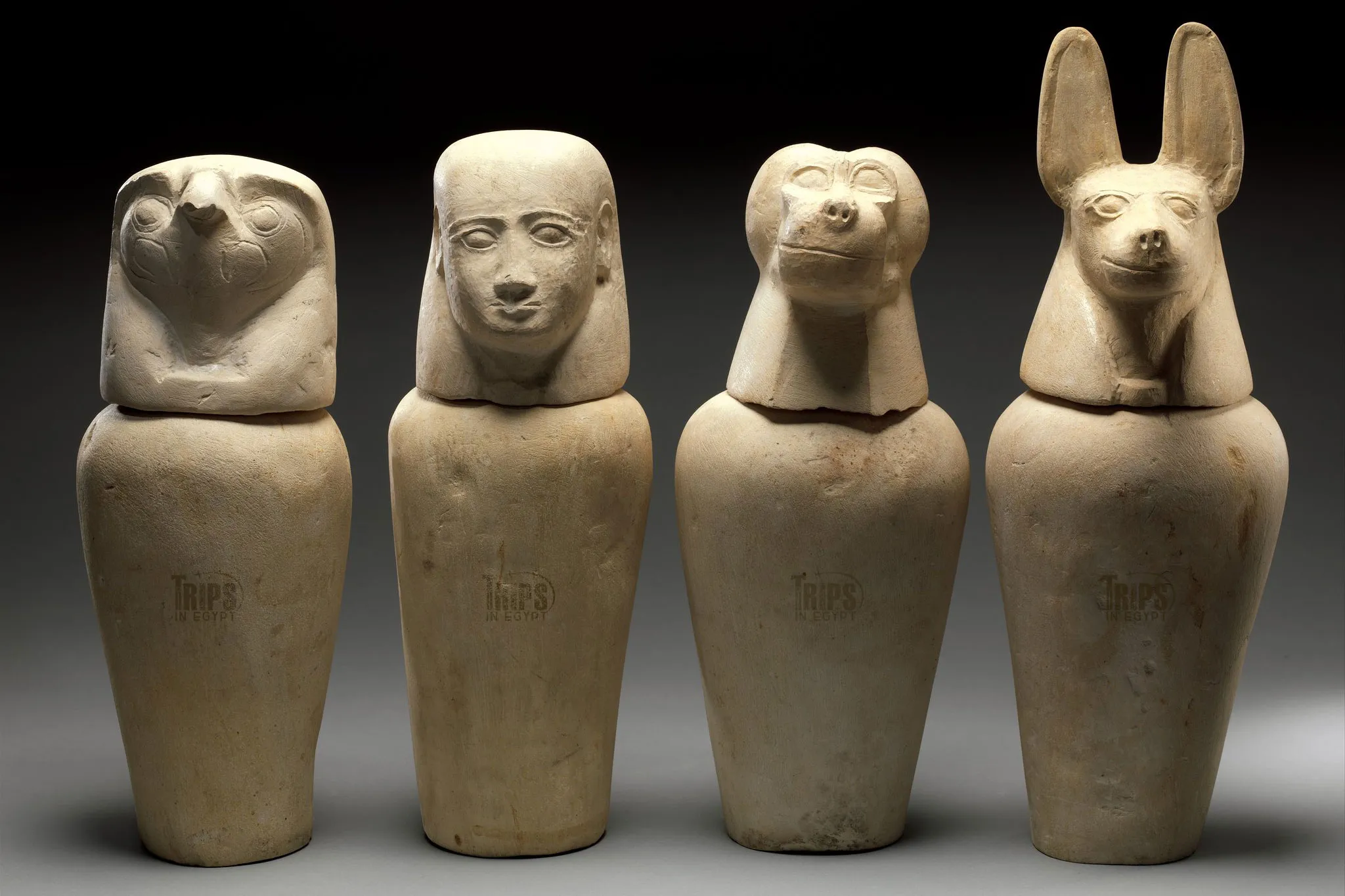
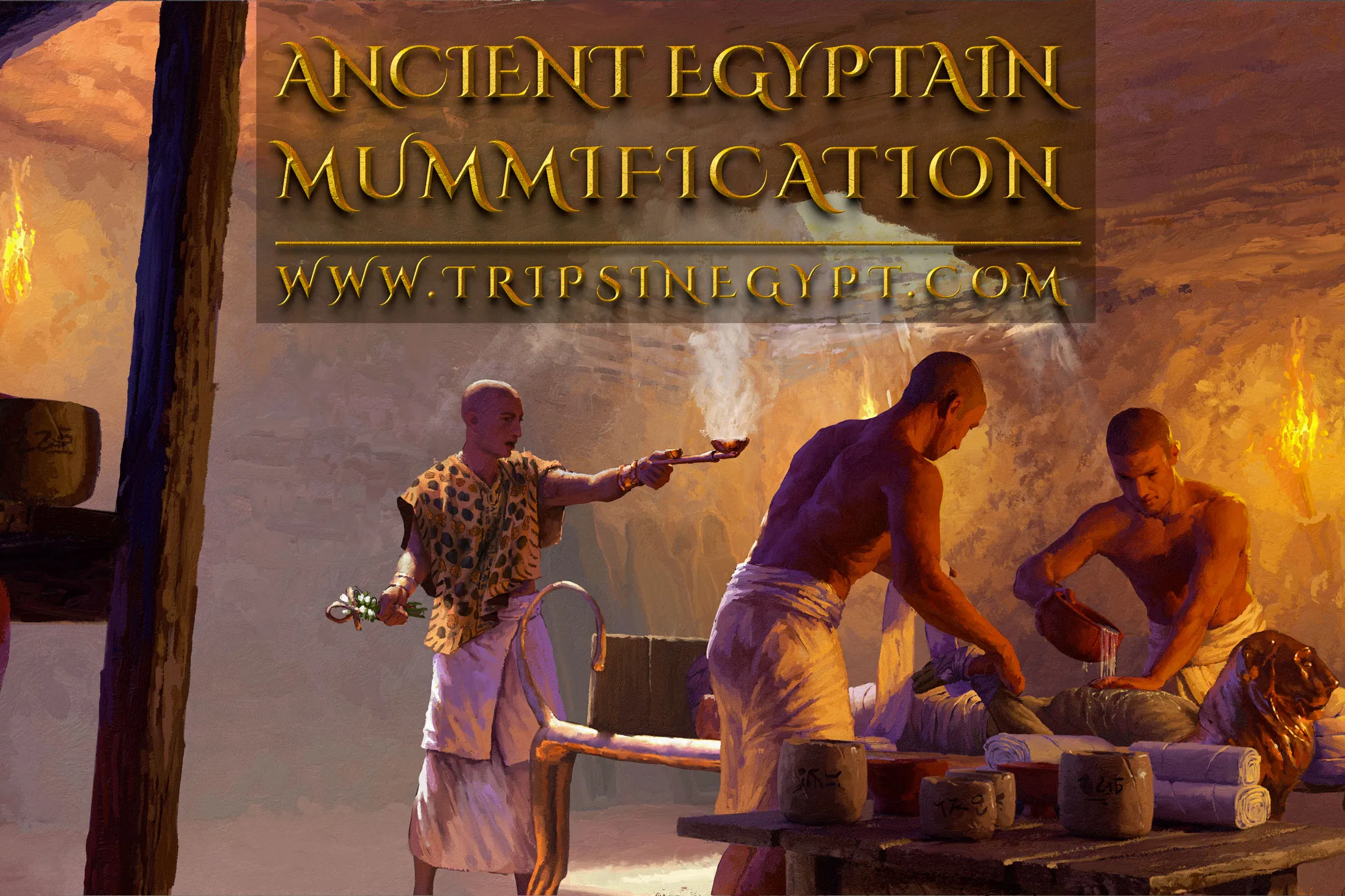
The physical body had to be preserved so that the deceased could continue existing in the afterlife. Canopic jars protected organs removed during mummification, while star imagery connected the dead with the eternal night sky.
Many of these concepts appear repeatedly in ancient Egyptian tombs, where art and writing worked together to protect the deceased.
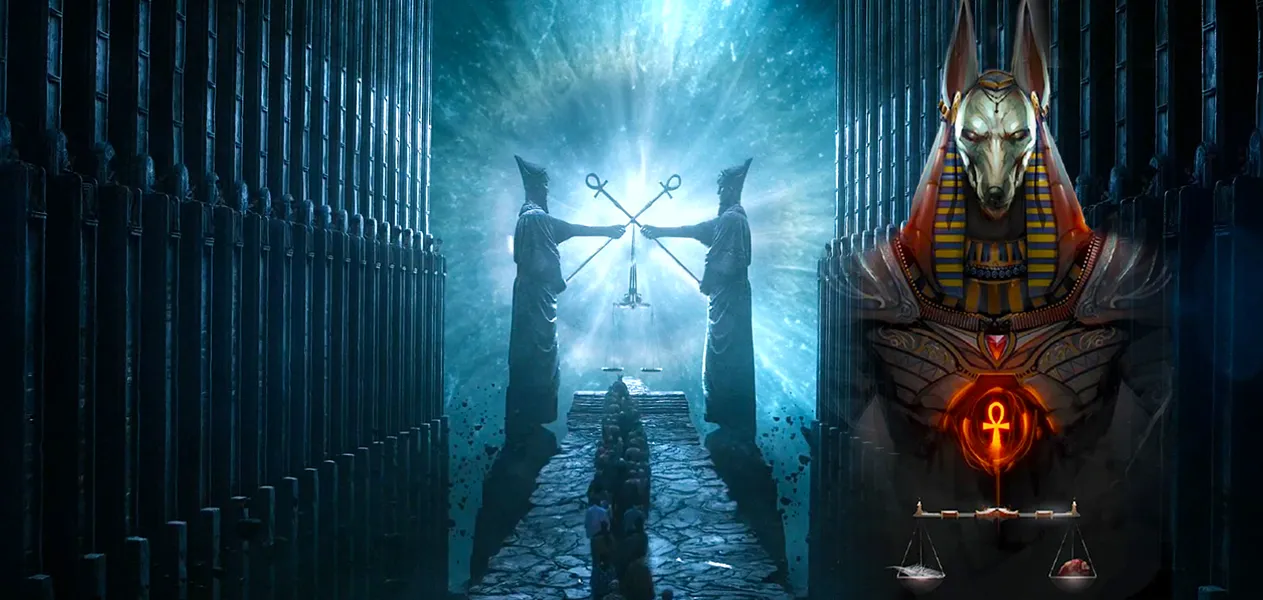
The feather of Maat represented truth, justice and cosmic balance. In scenes showing the judgment of the dead, the deceased's heart was weighed against the feather.
If the heart passed the test, the soul could continue into the afterlife. This judgment scene became one of the most recognizable images associated with Egyptian funerary art and the Book of the Dead.
Sculpture Art in Ancient Egypt
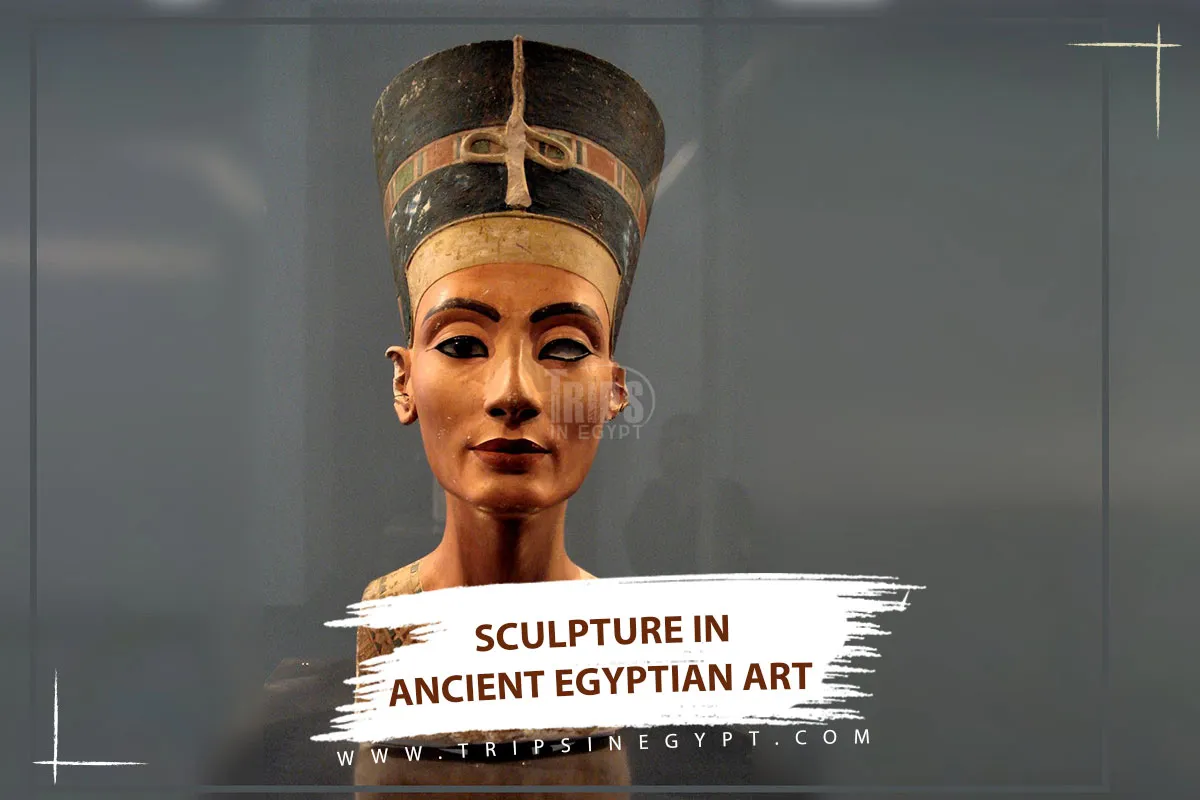
Sculpture played an essential role in Egyptian religion because a statue could serve as a physical dwelling for the ka of a god, king or deceased person.
Statues were placed inside temples to receive ritual attention and inside tombs to provide an alternative body for the deceased. Iconic examples range from the Great Sphinx of Giza to enormous royal colossi and small private figures.
Materials and Techniques of Egyptian Sculpture
Egyptian sculptors worked with limestone, sandstone, granite, quartzite and other stones ranging from relatively soft to extremely hard.
Hard stones were shaped using pounding stones, copper tools and abrasive sand, then polished to create smooth surfaces. Many statues were also painted.
Wood was widely used for private sculpture, while metals such as copper, bronze, gold and silver were more common in smaller figures and ritual objects. Bronze statuettes became particularly popular during later periods.
Famous Statues of Ancient Egypt
The statue of Khafre, carved from dark anorthosite gneiss, is one of the finest surviving examples of Old Kingdom royal sculpture.
The king sits on a throne while the falcon god Horus spreads its wings protectively behind his head. The statue was discovered by Auguste Mariette in Khafre's valley temple at Giza in 1860.
In contrast, the only complete statue securely identified as Khufu is an ivory figure only about 7.5 cm tall.
Flinders Petrie's team discovered the figure at Abydos in 1903. Its tiny size provides a striking contrast with the enormous pyramid built for the same ruler.
The famous triads of Menkaure were discovered by George Reisner in the king's valley temple at Giza in 1908.
They depict Menkaure beside Hathor and personifications of Egyptian provinces. Their smooth surfaces and idealized bodies exemplify the controlled elegance of Old Kingdom royal sculpture.
Centuries later, Ramses II used sculpture on a colossal scale.
An approximately 11-meter granite statue of Ramses II weighing around 83 tons now welcomes visitors inside the Grand Egyptian Museum, while another enormous limestone colossus remains at the open-air museum in Memphis.
Statues and Models for the Afterlife
Private statues often showed their owners as strong, prosperous adults rather than recording every physical detail accurately.
Tombs also contained models representing servants, boats, animals, houses, workshops and food production. These objects were intended to provide the deceased with everything required in the next world.
Later, small figures called shabtis became common. They were expected to perform labor on behalf of the deceased in the afterlife.
Painting & Drawing Art in Ancient Egypt
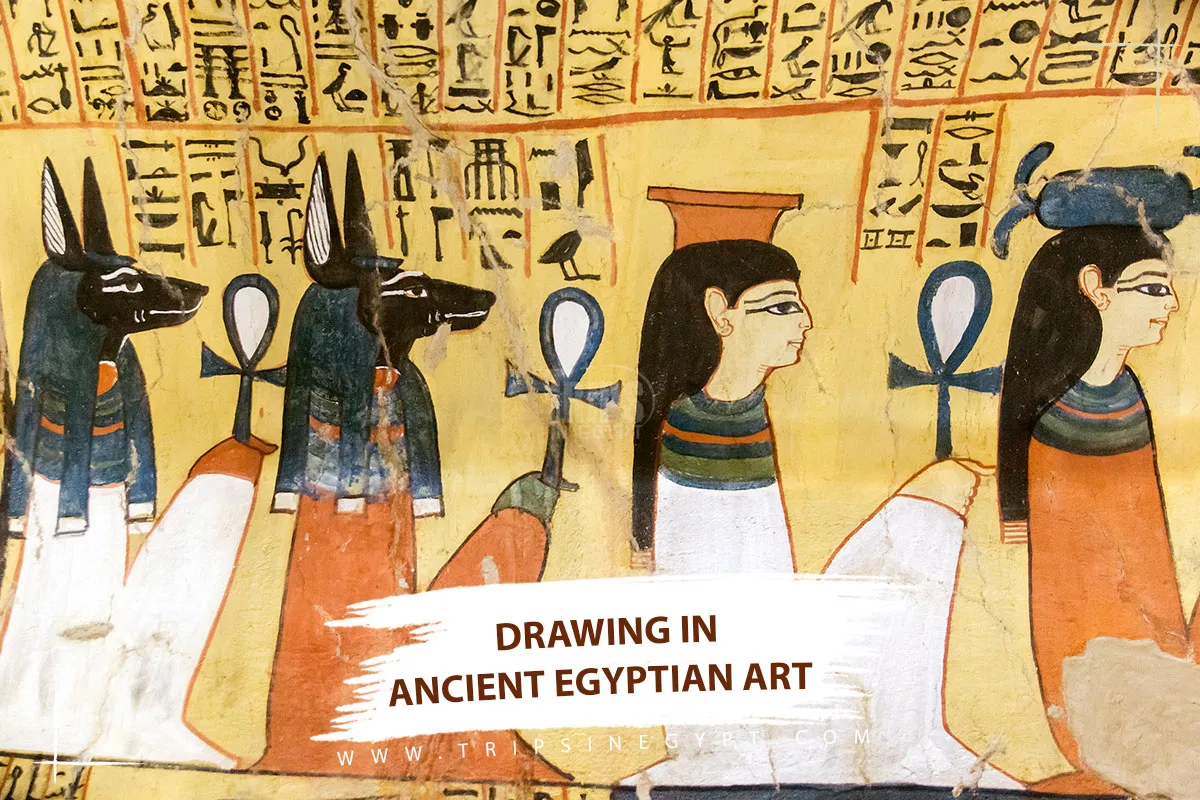
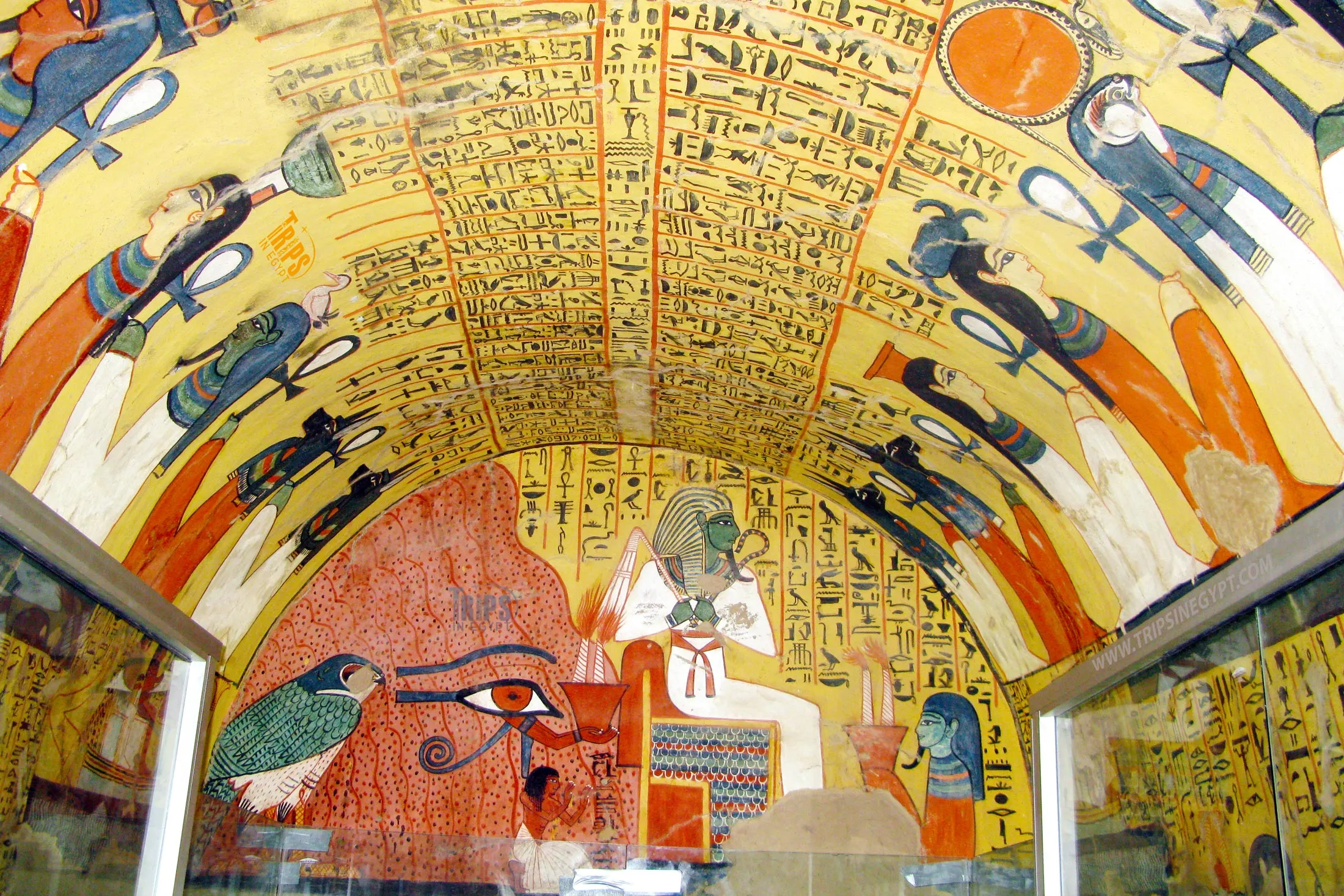
Painting decorated tombs, temples, palaces and private buildings. In funerary contexts, paintings were not simply decorative; the Egyptians believed that the scenes could become effective for the deceased in the afterlife.
Some walls were carved in relief and then painted, while others were coated with plaster and decorated directly. The exceptionally dry climate of Upper Egypt preserved many tomb paintings whose colors remain vivid after thousands of years.
How Ancient Egyptian Painters Worked
Artists usually prepared walls with mud plaster followed by a thin layer of gypsum-based white coating.
Draftsmen marked proportion grids and sketched figures in red ochre. Senior artists corrected the drawings in black before painters applied mineral pigments using brushes made from reeds and plant fibers.
Paint was commonly applied to dry plaster in a technique known as fresco secco. Some New Kingdom tombs also preserve evidence of varnish applied selectively over painted surfaces.
Drawing formed the foundation of every finished work. Thousands of preliminary sketches survive on ostraca, inexpensive flakes of limestone and broken pottery used as drawing surfaces and writing material.
The workmen's village of Deir el-Medina produced enormous numbers of these objects. They include religious sketches, animals acting like humans, scenes of daily life and informal drawings that reveal a more playful side of Egyptian art.
Animals and Colors Art in Ancient Egypt
The Egyptian language used six major color terms for black, white, green, red, blue and yellow. Each color carried symbolic meaning.
Black was associated with the fertile Nile soil and rebirth. Green represented vegetation, freshness and regeneration. Red could express vitality and power but was also connected with the desert and chaos.
Blue was associated with the sky, water and divine qualities, while yellow and gold were connected with sunlight, eternity and the flesh of the gods.
Artists produced these colors from mineral and manufactured pigments. Black came from carbon, white from gypsum or chalk and red and yellow from iron-rich ochres.
Green could be produced from malachite. Blue was frequently created using Egyptian blue, a manufactured calcium copper silicate often described as one of the world's earliest synthetic pigments.
Animals were equally important in Egyptian art. Cattle, birds, fish, cats and desert animals appear in tomb scenes, while gods could combine human and animal forms.
One famous example is the Meidum Geese, painted during the reign of Sneferu, builder of the Red Pyramid. The marsh scenes from the tomb chapel of Nebamun provide another celebrated example of Egyptian artists closely observing animals and nature.
Famous Ancient Egyptian Paintings
Some of the most remarkable ancient Egyptian paintings survive inside Queen Nefertari's tomb in the Valley of the Queens.
The queen appears in richly colored scenes interacting with gods and moving through the afterlife. The precision of the drawing and preservation of the colors make the tomb one of the greatest achievements of New Kingdom painting.
Other masterpieces include the banquet and marsh scenes from the tomb chapel of Nebamun, the astronomical ceiling of Seti I and the decorated burial chamber of Ramses VI.
Hieroglyph Art in Ancient Egypt
The word hieroglyph comes from Greek and means sacred carving. Egyptian writing was also a visual art because every sign had to be carefully drawn or carved.
Classical Egyptian used around 750 signs, arranged in rows or columns and written from different directions. The direction can be identified by looking at which way human and animal figures face.
Hieroglyphic texts recorded royal decrees, hymns, prayers, religious texts, battles, administrative information and literature.
The script eventually became unreadable until the discovery of the Rosetta Stone in 1799 provided an important key. Its decree from 196 BC was written in hieroglyphic, Demotic and Greek scripts.
In 1822, Jean-François Champollion used this evidence to make the breakthrough that allowed scholars to decipher ancient Egyptian hieroglyphs.
Where to See Real Ancient Egyptian Art
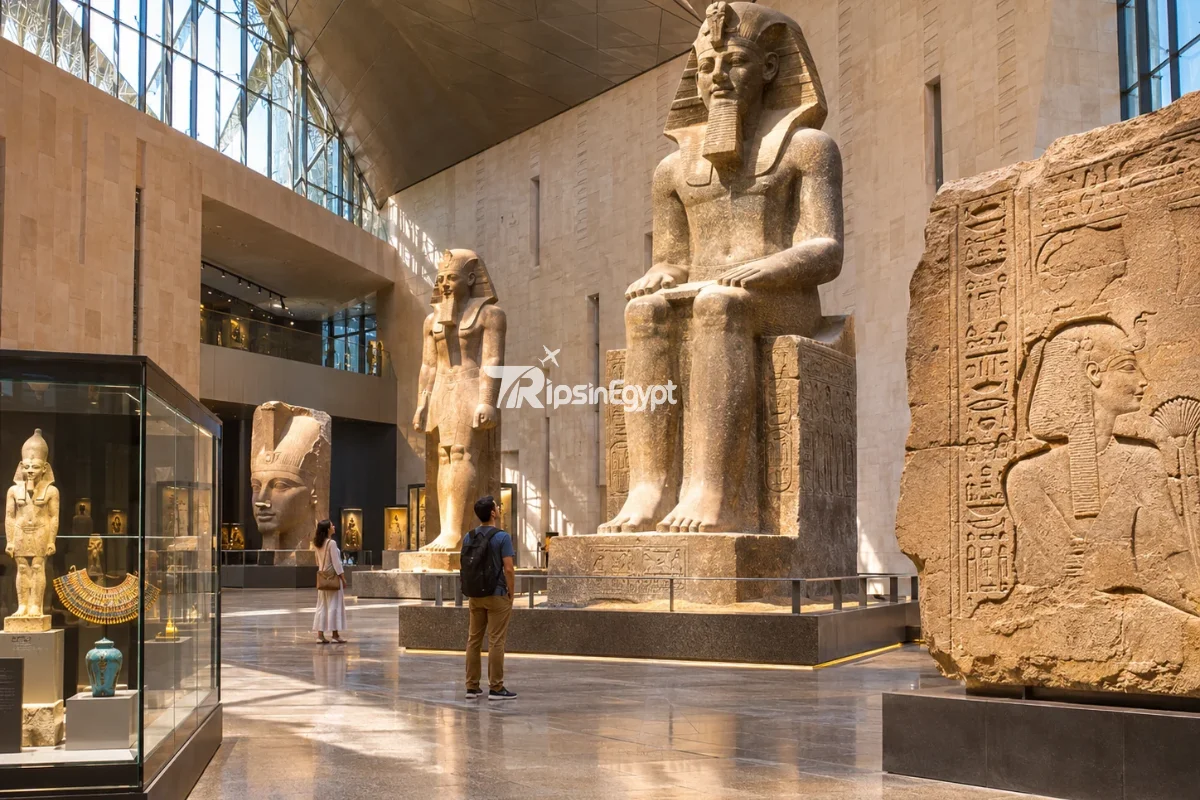
The best way to understand real ancient Egyptian art is to see the original statues, paintings and reliefs in Egypt. Cairo and Giza preserve enormous museum collections, while Luxor contains painted royal tombs and monumental temples still standing in their original landscape.
Our guide to the museums of Egypt covers the country's major collections, while the tours below provide direct access to many of its most important artistic sites.
Museums in Cairo and Giza
The Grand Egyptian Museum near the Giza Pyramids displays Tutankhamun's treasures, the colossal statue of Ramses II and thousands of objects from across Egyptian history.
Our Grand Egyptian Museum guide explains the major collections and highlights.
The Egyptian Museum in central Cairo continues to preserve important works including the Narmer Palette, royal sculpture and major objects from different periods of Egyptian art.
Half-Day Tour to the Grand Egyptian Museum — explore the museum's major collections with a private Egyptologist guide, transportation and lunch. From $75.
Half-Day Tour to Memphis, Saqqara and Dahshur from Cairo — discover the Step Pyramid, Old Kingdom tombs, the colossal Ramses II statue at Memphis and the Bent and Red Pyramids. From $100.
Painted Tombs and Temples in Luxor
Luxor preserves some of Egypt's finest paintings and reliefs in their original archaeological settings.
The Valley of the Kings contains richly decorated royal tombs, while the Valley of the Queens and Deir el-Medina preserve exceptional paintings belonging to queens, officials and tomb workers.
Karnak and Luxor Temple preserve monumental relief sculpture, while the Luxor Museum contains major works discovered around ancient Thebes.
Out of Ordinary Luxor West Day Tour — visit the Valley of the Queens, Deir el-Medina, Medinet Habu and the Ramesseum, with the option to add Nefertari's tomb separately. From $60.
Luxor Museum and Mummification Museum Tour — explore sculpture, jewelry and funerary objects from the New Kingdom with a private Egyptologist guide. From $65.
Egypt Holidays for Art Lovers
Travelers who want to follow Egyptian art through several historical periods can combine the museums of Cairo with the painted tombs and temples of Upper Egypt.
Our Egypt holiday packages combine archaeological sites, museums, private Egyptologist guides, accommodation and domestic transportation in complete itineraries.
A Nile journey provides another way to explore temples and monumental art. Our Nile River cruise packages connect Luxor and Aswan while visiting Karnak, Luxor Temple, Edfu, Kom Ombo and Philae.
10 Days Cairo, Faiyum and Nile Cruise Holiday — combine Cairo's museums and pyramids, Faiyum and a Nile cruise through the major monuments of Upper Egypt. From $1,350.
6 Days Cairo, Alexandria and Faiyum Tour — explore the pyramids, Alexandria and Faiyum, a region strongly connected with Egypt's Roman-era mummy portraits. From $720.
5 Days Cairo and Hurghada Trip — combine Cairo's ancient monuments and museums with several relaxing days beside the Red Sea. From $690.
Ancient Egyptian art was created for eternity, and in many ways it achieved its purpose. Its strict proportions, vivid colors and powerful symbols carried religious beliefs across more than three thousand years, from the Narmer Palette to the portraits of Roman Faiyum. Standing inside a painted tomb in Luxor today still reveals the remarkable confidence of artists who believed their images could preserve life, memory and divine order forever.

5 Days Cairo And Hurghada Trip
Amazing 4 Nights Cairo and Hurghada Trip Itinerary 5 Days Cairo and Hurghada trip wil...
- Duration 5 Days / 4 Nights
- Location Cairo & Hurghada
- Type Historical & Recreational Tour
From$690/per person
View Tour
6 Days Cairo, Alexandria & Faiyum Tour
Unforgettable Cairo, Alexandria & Faiyum Adventure in Six Days 6 Days Cairo, Alex...
- Duration 6 Days / 5 Nights
- Location Cairo - Alexandria - Fayum
- Type Historical Tour
From$720/per person
View Tour
10 Days Cairo, Faiyum & Nile Cruise Holiday
Breathtaking 10 Days Journey of A Lifetime in Egypt 10 Days Cairo, Faiyum & Nile...
- Duration 10 Days / 9 Nights
- Location Cairo, Luxor, Aswan & Faiyum
- Type Classic Tour
From$1350/per person
View Tour SOLD OUT
Ultimate 7-Day Egypt Solar Eclipse Experience with Hurghada 2027
Enjoy a 7-Day Egypt Solar Eclipse Tour with Hurghada 2027 6 Nights Egypt Solar Ecli...
- Duration 7 Days / 6 Nights
- Location Cairo / Giza / Luxor / Hurghada
- Type Astronomical Tour
Sold Out
View Details