



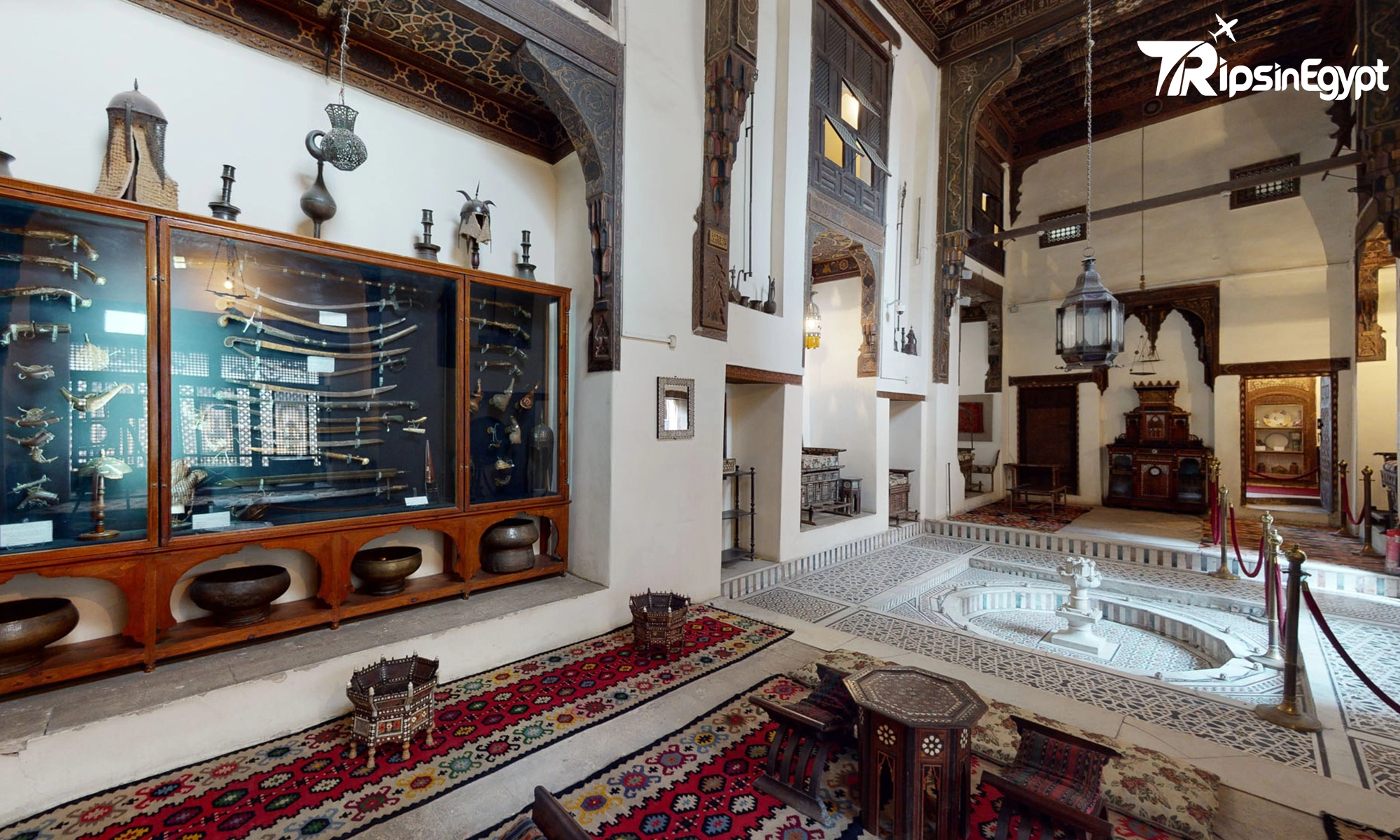
Pressed against the outer wall of one of the oldest mosques in Cairo are two old houses that feel like a step inside a story. The Gayer-Anderson Museum, also called Bayt al-Kritliyya, joins a home built in 1540 to another built in 1632. In the 1930s, a British army doctor named Robert Gayer-Anderson restored them and filled every room with treasures from across the East.
Climb its narrow staircases, and you will find carved wooden screens, Persian carpets, Pharaonic bronzes and a well said to reflect the face of your true love. This guide covers the man behind the museum, the history of the two houses, a room-by-room tour, the legends, practical information and how to combine the visit with the monuments nearby. Here are all things you need to know about the Gayer-Anderson Museum in Cairo:

Discover Who Was Gayer-Anderson
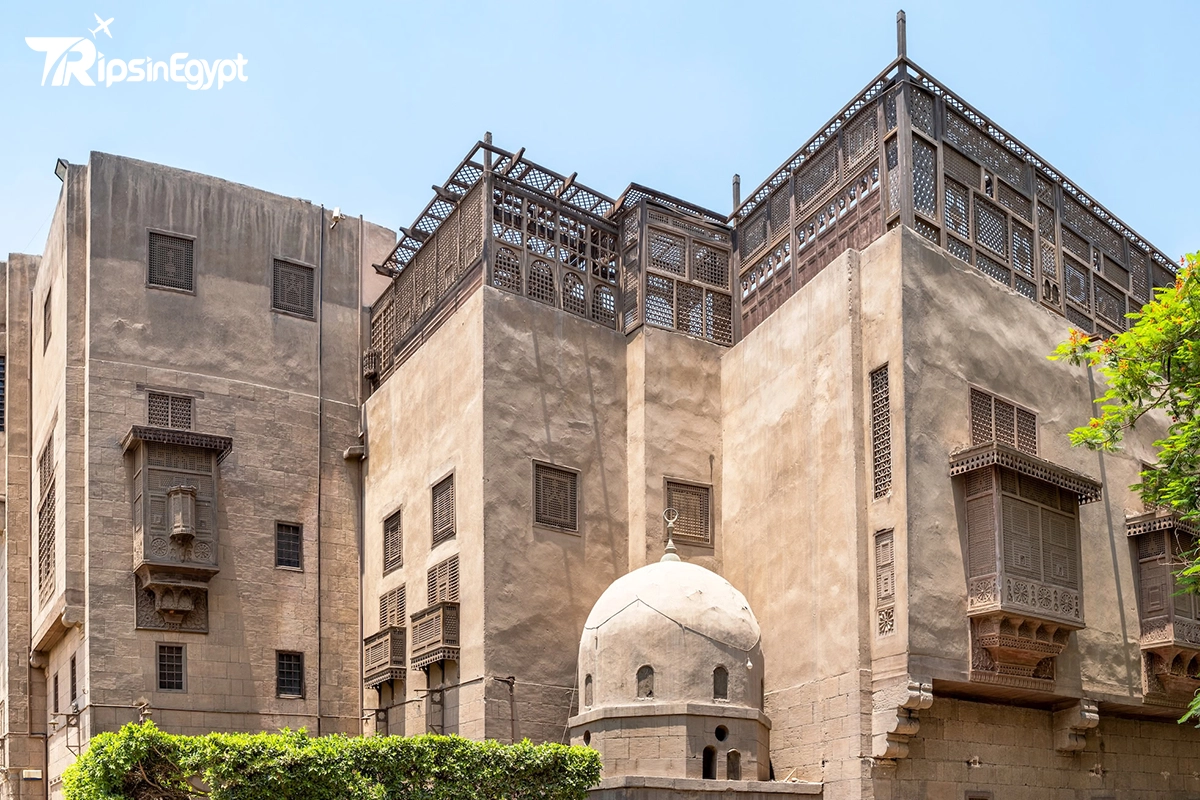
Robert Grenville Gayer-Anderson was born in England in 1881 and trained as a doctor. He joined the Royal Army Medical Corps in 1904 and moved to the Egyptian Army in 1907, serving in Sudan and Egypt and rising to the rank of major. After the First World War, he worked in Egypt's Ministry of the Interior and at the British Residency in Cairo.
He retired in 1924 to spend his time on Egyptology and collecting, and he became a well-known figure among Cairo's dealers and scholars. In 1935, he asked the Egyptian government for permission to live in the two old houses beside Ibn Tulun, on the condition that he restore them and leave the house and its contents to the nation.
Gayer-Anderson lived there until 1942, when ill health forced him to return to England. King Farouk gave him the title of pasha for his gift, and he died in 1945. His most famous object is not in Cairo at all: the Gayer-Anderson Cat, a bronze statue of the cat goddess Bastet, which he and his twin brother gave to the British Museum in London. You can read more about the cat goddess and her family in our guide to ancient Egyptian gods and goddesses.
Two Houses, One Museum: The History of Bayt al-Kritliyya
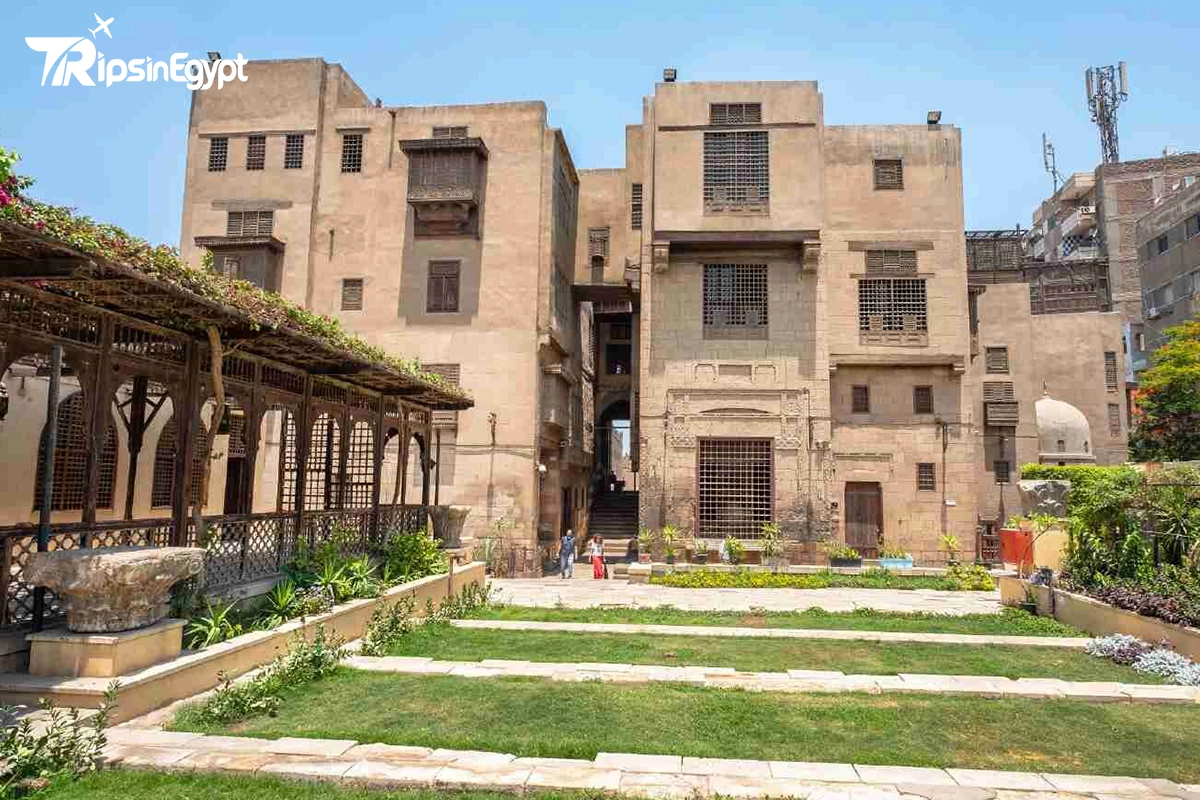
The museum is really two houses joined by a bridge at the upper floor:
| House | Built | Builder | Today |
|---|---|---|---|
| Bayt Amna bint Salim | 1540 | Abd al-Qadir al-Haddad | The smaller house, named after its last owner |
| Bayt al-Kritliyya | 1632 | Hajj Muhammad ibn al-Hajj Salim ibn Galman al-Gazzar | The larger house, named after a later owner from Crete |
Both houses date from the Ottoman period, although they follow building traditions that began under the Mamluks. They lean against the outer wall of the Mosque of Ibn Tulun, finished in 879 and one of the oldest mosques in Egypt still in its original form. In the late 1920s, the government planned to clear houses away from the mosque walls, but the Committee for the Conservation of Arab Monuments saved these two because of their fine interiors.
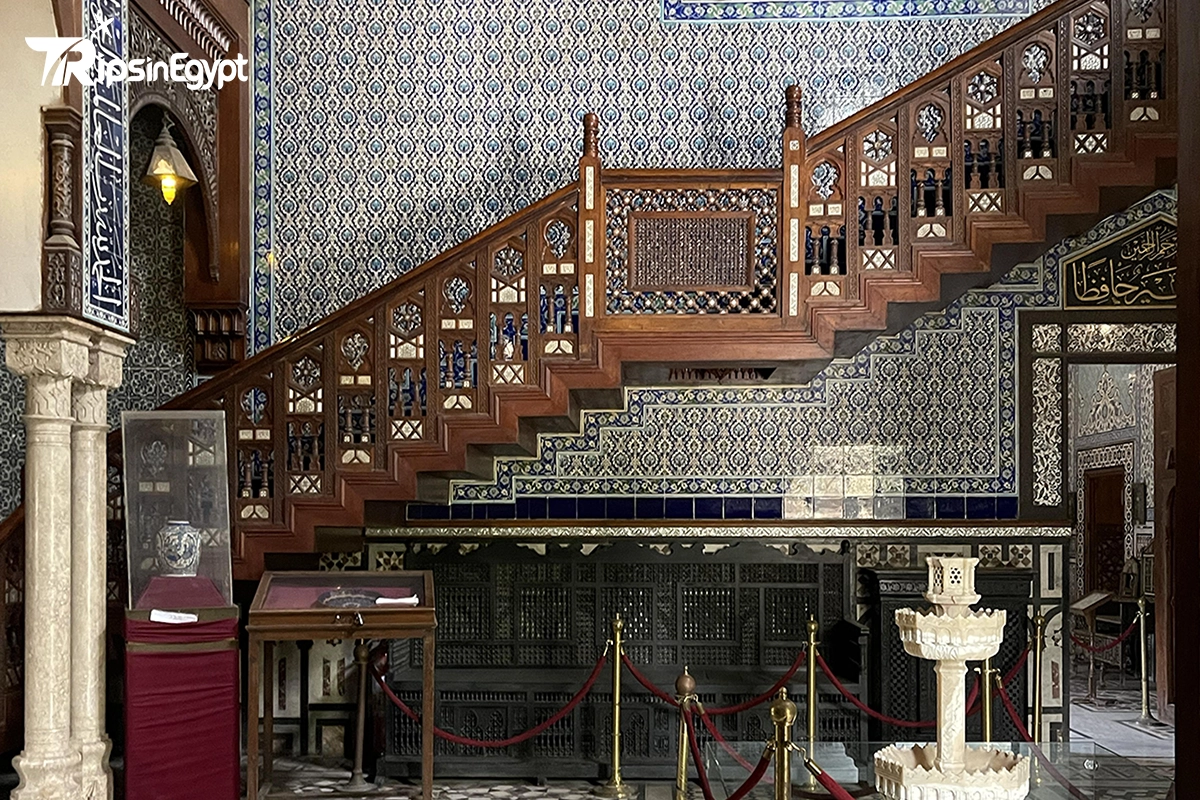
Like most wealthy Cairo homes of the time, each house is split into two parts. The salamlik was for men and guests, while the haramlik was the private family area, where women could watch the reception rooms through mashrabiya screens without being seen. That layout, with its courtyards, hidden galleries and roof terraces, is the real treasure of the museum. Our page on Islamic sites in Egypt covers other buildings from the same centuries.
A Room-by-Room Tour of the Gayer-Anderson Museum
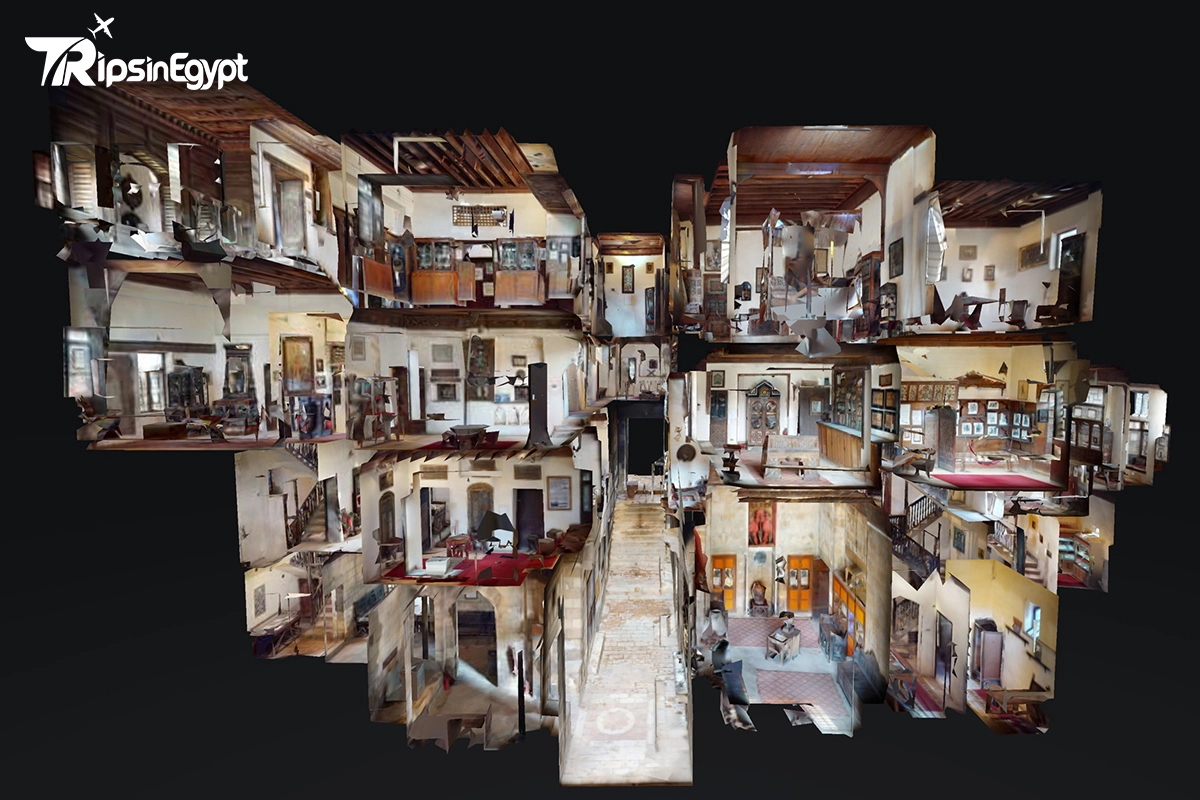
The museum has dozens of rooms on several levels, each themed by Gayer-Anderson after a country or a period. A typical route looks like this:
- The courtyard. A marble-paved court with a fountain and the Bats' Well, about 15 meters deep, at the heart of the house's legends.
- The maq'ad. An open loggia overlooking the courtyard, where men received guests in the evening breeze.
- The qa'a. The grand reception hall, with a high ceiling, a marble fountain and fine carpets, overlooked by a screened gallery.
- The harem. The women's main room, built on four columns, with Persian cupboards holding porcelain and silverware.
- The makhba. A small hidden chamber above the well, reached by a concealed staircase.
- The Persian room. Tiles, ceramics and miniatures from Iran.
- The Damascus room. A 17th-century wooden room brought from Syria, painted in deep reds and greens with a poem around the ceiling.
- The Muhammad Ali room. A 19th-century Ottoman-style apartment with Rococo furniture and a mechanical singing bird.
- The Byzantine room. Set in the bridge between the two houses, with Christian objects and icons.
- The Pharaonic room. Ancient Egyptian statues, amulets and a bronze cat with gold earrings, a smaller cousin of the cat in London. A replica of the bust of Queen Nefertiti adds a modern touch.
- The roof garden. Wooden mashrabiya screens frame views of the minaret of Ibn Tulun and the domes of old Cairo.
Look closely at the smaller pieces, too. A sketch of the Sphinx with Gayer-Anderson's own face, Chinese paintings on rice paper and a musical instrument shaped like a crocodile show the humor of the man who lived here. For the ancient pieces, our guide to ancient Egyptian art explains the styles you will see, and the Egyptian Museum holds far larger examples.
The Legends of Bayt al-Kritliyya and the James Bond Connection
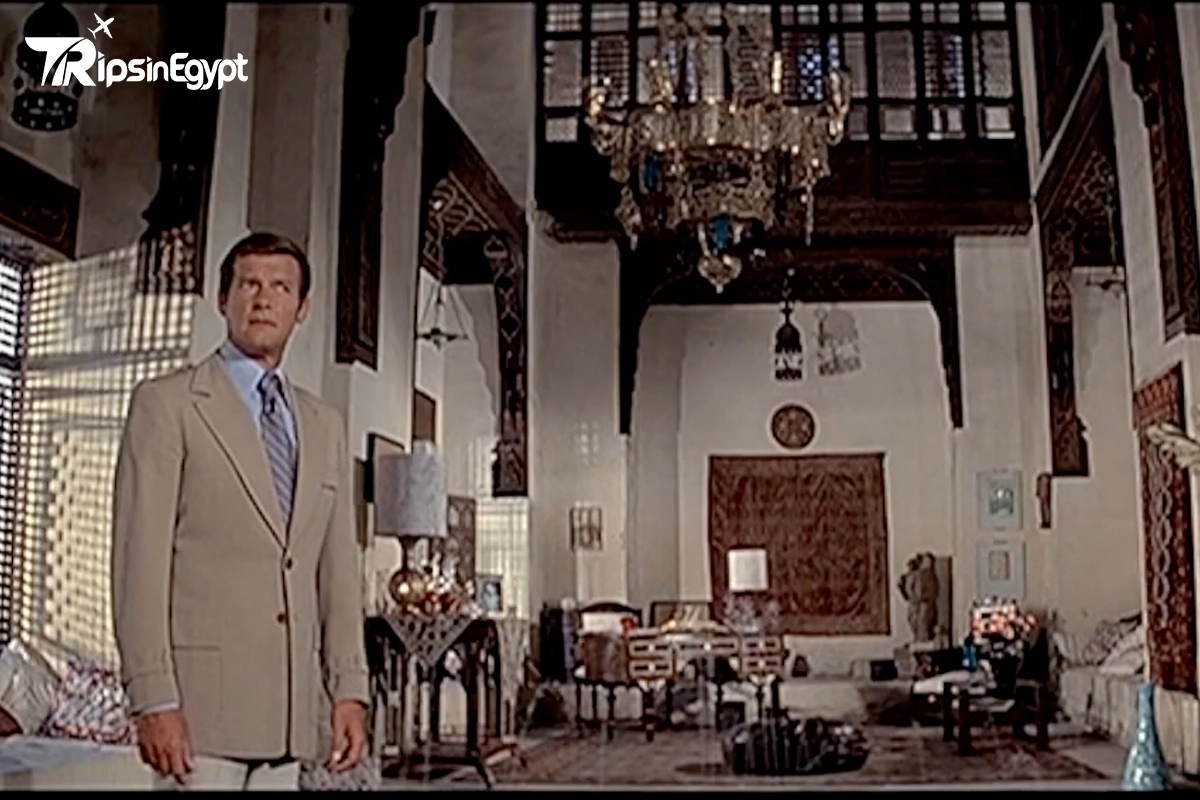
Few houses in Cairo have as many stories. Gayer-Anderson collected them from Sheikh Sulayman al-Kretli, the house's elderly caretaker, and they were published after his death as Legends of the Bait al-Kretliya. Some of the best known are:
- Gebel Yashkur. The houses stand on the rocky hill of Yashkur, the "hill of thanksgiving", where local tradition says Noah's Ark came to rest after the flood.
- The flood well. The last waters of the flood are said to have drained away through the Bats' Well in the courtyard.
- The well of reflections. A lover who looks into the water at the right moment is said to see the face of their beloved instead of their own.
- The sleeping sheikh. A holy man is said to be buried beneath the house, protecting it and everyone who lives there.
- The bats. The well takes its name from the colony of bats that once lived inside it, said to guard a treasure at the bottom.
The house has a modern legend as well. In 1977, scenes of the James Bond film The Spy Who Loved Me, starring Roger Moore, were shot in Egypt, and the museum's rooftop and rooms are widely reported to be among the locations, alongside the Giza Pyramids and Karnak Temple. Many of these tales echo far older beliefs found in ancient Egyptian mythology and in Egypt's culture and traditions. Fans of Egyptian cinema will also recognize the courtyard from several local films and television series.
Gayer-Anderson Museum Tickets, Opening Hours and Getting There
These are the official prices from Egypt's Ministry of Tourism and Antiquities:
| Ticket | Price |
|---|---|
| Foreign adult | EGP 100 |
| Foreign student with valid ID | EGP 50 |
| Egyptian and Arab adult | EGP 10 |
| Egyptian and Arab student | EGP 5 |
| Children under 6 | Free |
Opening hours: The museum opens daily from 9 am to 5 pm, and the last ticket is sold at 4 pm. During Ramadan, it opens from 9 am to 3 pm, with the last ticket at 2 pm.
Location: The museum stands in the Sayyida Zeinab district, right beside the Mosque of Ibn Tulun. A single visit can easily include both.
Getting there: The nearest metro station is Sayeda Zeinab on Line 1, about a 20-minute walk away. Most visitors take a taxi or Uber and ask for "Gamaa Ibn Tulun", since some drivers do not know the museum by name. From Downtown, the ride takes about 15 to 20 minutes.
Tips:
- Plan on 60 to 90 minutes, plus another 30 minutes for Ibn Tulun.
- Phone photos without flash are allowed, but professional cameras need a permit.
- The house has no air conditioning, so visit in the morning during summer.
- The stairs are steep and narrow, and there is no elevator.
Our Cairo travel tips explain how to get around the old city and what to wear.
A Half-Day Around the Museum: Ibn Tulun, Sultan Hassan and the Citadel
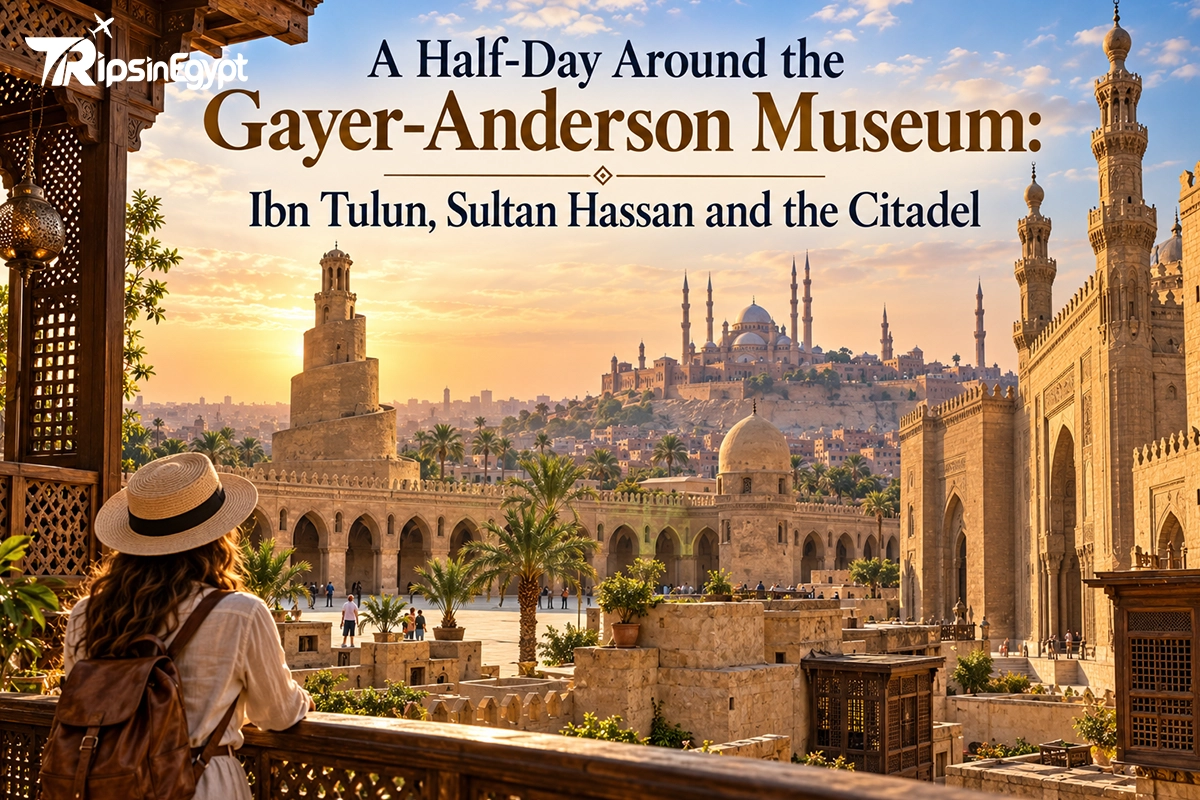
The museum sits at the start of one of the finest short walks in Islamic Cairo. Begin at 9 am with the house, then cross into the Mosque of Ibn Tulun and climb its spiral minaret for views across the city.
From there, walk about 1 km east along Saliba Street, past Mamluk sabils and the Sheikhu complex, to the Sultan Hassan Mosque and the Al-Rifai Mosque, which face each other across a narrow street. Above them rises the Salah El Din Citadel, crowned by the Muhammad Ali Mosque.
In the afternoon, take a short taxi ride north to the Tentmakers' Street near Bab Zuweila, or continue to Khan El Khalili for shopping and tea. If you stay into the evening, the Tanoura dance show at Wekalet El Ghoury from USD 35 is a short ride away. Otherwise, end with sunset at Al Azhar Park, which looks across the whole of Islamic Cairo.
For a guided day, our Cairo City Tour to the Egyptian Museum, Citadel and Old Cairo from USD 50 covers the Citadel area, and a guide can add the Gayer-Anderson Museum on request. Our Al Muizz and Khan El Khalili Day Tour from USD 45 covers the northern half of Islamic Cairo. Browse more options among our Cairo day tours, our list of Cairo tourist attractions our overview of Egypt's museums and our Cairo travel guide.
Visit the Gayer-Anderson Museum With Trips In Egypt
The Gayer-Anderson Museum is a house first and a museum second, and that is its charm: a home where old Cairo still seems to be living, full of whispered legends and quiet courtyards. Pair it with Ibn Tulun and the Citadel, and you will see Islamic Cairo at its finest.
Explore our Egypt tour packages to find trips that include Islamic Cairo, or let us plan a tailor-made tour around the hidden corners you want to discover. Book us now or contact our operation department today.

5 Days Cairo And Hurghada Trip
Amazing 4 Nights Cairo and Hurghada Trip Itinerary 5 Days Cairo and Hurghada trip wil...
- Duration 5 Days / 4 Nights
- Location Cairo & Hurghada
- Type Historical & Recreational Tour
From$690/per person
View Tour
6 Days Cairo, Alexandria & Faiyum Tour
Unforgettable Cairo, Alexandria & Faiyum Adventure in Six Days 6 Days Cairo, Alex...
- Duration 6 Days / 5 Nights
- Location Cairo - Alexandria - Fayum
- Type Historical Tour
From$720/per person
View Tour
10 Days Cairo, Faiyum & Nile Cruise Holiday
Breathtaking 10 Days Journey of A Lifetime in Egypt 10 Days Cairo, Faiyum & Nile...
- Duration 10 Days / 9 Nights
- Location Cairo, Luxor, Aswan & Faiyum
- Type Classic Tour
From$1350/per person
View Tour SOLD OUT
Ultimate 7-Day Egypt Solar Eclipse Experience with Hurghada 2027
Enjoy a 7-Day Egypt Solar Eclipse Tour with Hurghada 2027 6 Nights Egypt Solar Ecli...
- Duration 7 Days / 6 Nights
- Location Cairo / Giza / Luxor / Hurghada
- Type Astronomical Tour
Sold Out
View Details