



The Lighthouse of Alexandria, known in ancient times as the Pharos, was the only one of the Seven Wonders of the Ancient World with a practical job. For about 1,600 years it stood at the entrance of the harbor of Alexandria, a tower of pale stone over 100 m tall, with a fire burning at its top at night. To sailors crossing the Mediterranean, its light was the first sign of Egypt, and its name still lives on in the word for lighthouse in several languages.
Today, its stones lie scattered on the seabed and inside the walls of a Mamluk fortress. This guide explains why the lighthouse was built, the key facts about its design, what destroyed it, where its ruins lie, what you can see today and how drawings and models bring it back to life. Here are all things you need to know about the Lighthouse of Alexandria:

Explore the History Behind the Lighthouse of Alexandria
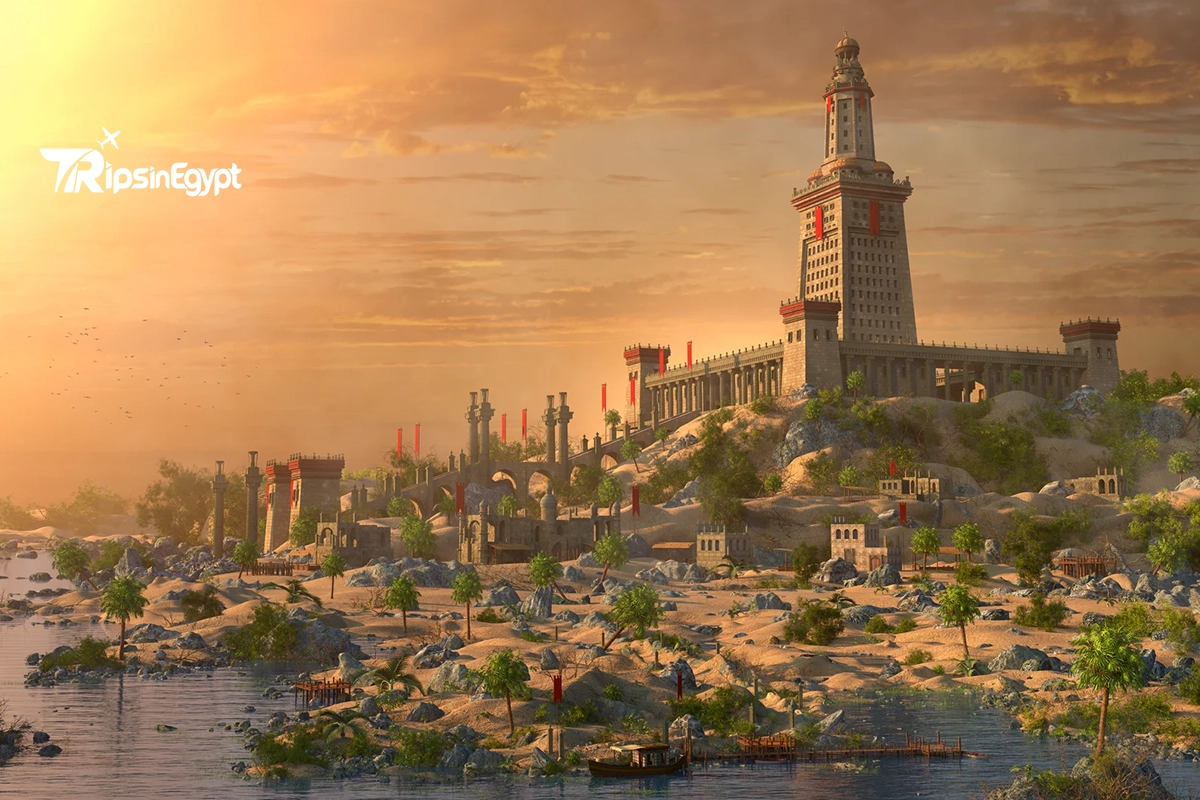
When Alexander the Great founded Alexandria in 332 BC, he chose a site with two natural harbors, sheltered by the small island of Pharos just offshore. A causeway, the Heptastadion, soon linked the island to what became one of the great cities of the ancient world.
The harbor was excellent, but the approach was dangerous. The coast of the Nile Delta is low and flat, with no hills or landmarks to guide ships, and the entrance to the harbor was full of shoals and reefs. Ships arriving from Greece and the eastern Mediterranean could easily run aground, especially at night.
After Alexander's death, his general Ptolemy I Soter became ruler of Egypt and made Alexandria his capital. He ordered a great tower on the eastern tip of Pharos to guide ships into port, and work began around 284 BC. The lighthouse was finished under his son, Ptolemy II Philadelphus, around 246 BC, after about 12 years of work.
The lighthouse was also a statement of power. Like the Library of Alexandria, it showed the world that the new Greek dynasty of Egypt could build on the scale of the pharaohs, whose Great Pyramid of Giza was one of the very few buildings taller than it.
Lighthouse of Alexandria Facts: Design, Height and Light
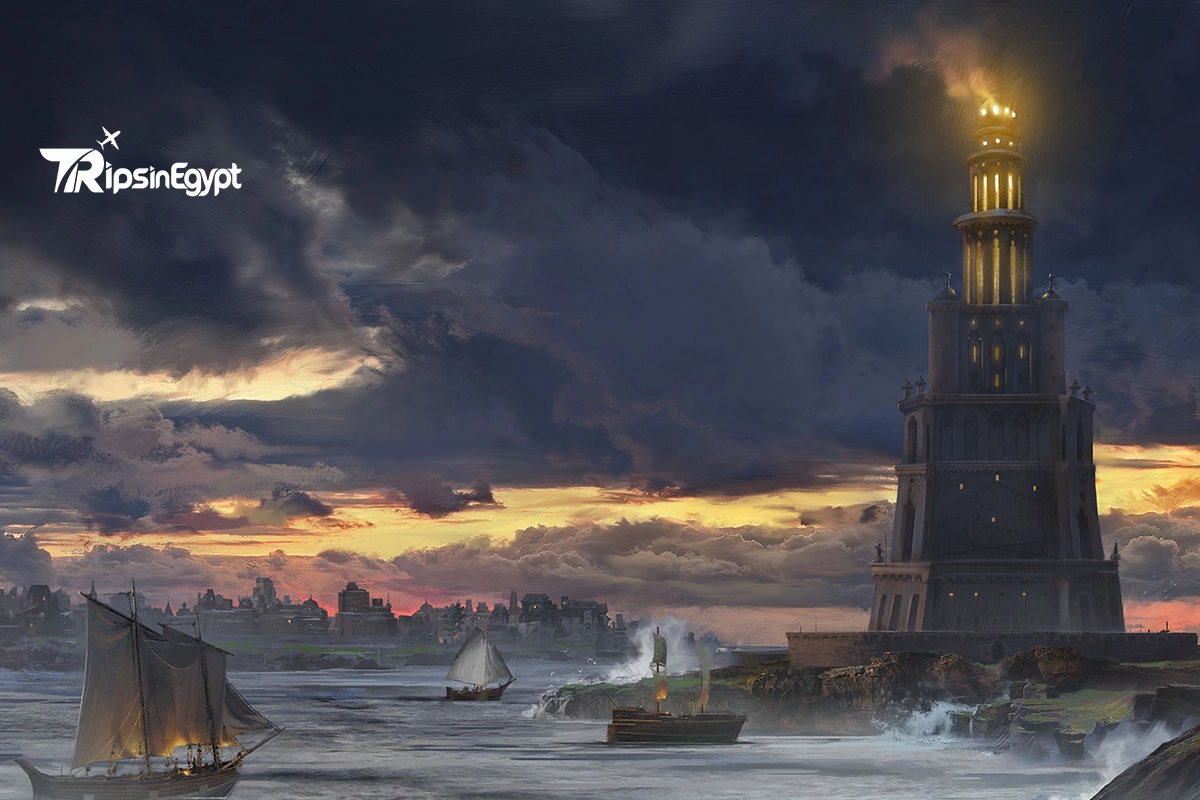
Ancient writers and medieval Arab travelers left enough descriptions for historians to reconstruct the lighthouse with some confidence. The table below sums up the main Lighthouse of Alexandria facts.
| Fact | Detail |
|---|---|
| Built | About 284 to 246 BC |
| Commissioned by | Ptolemy I, completed under Ptolemy II |
| Architect | Sostratus of Cnidus (as usually credited) |
| Cost | 800 talents of silver |
| Height | About 100 to 120 m |
| Base | About 30 by 30 m |
| Shape | Three tiers: square, octagonal, round |
| Light | Fire at night, mirror by day |
| Range | Said to be visible up to about 50 km out to sea |
| Fate | Toppled by earthquakes, 10th to 14th centuries |
The builder. The Greek geographer Strabo wrote that Sostratus of Cnidus dedicated the tower "to the Saviour Gods", for the safety of sailors. The writer Lucian later told a story that Sostratus carved his own name in the stone, then covered it with plaster bearing the king's name, so that his name would appear when the plaster wore away.
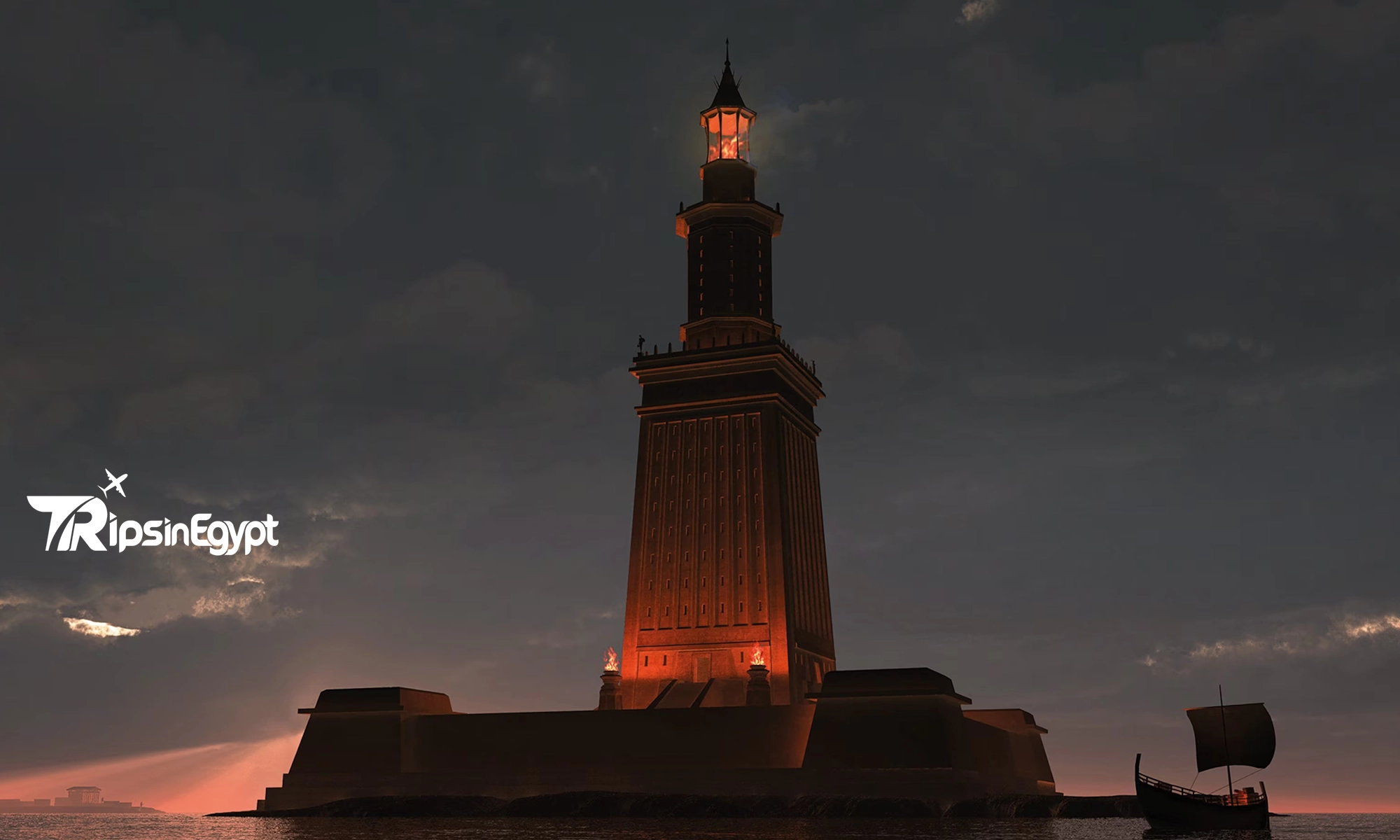
The three tiers. The lowest tier was a massive square tower with a central core and many rooms, probably used for storage and for the keepers. Above it rose an octagonal tier, and above that a round tier holding the lantern. A wide ramp inside the lower tiers allowed fuel to be carried up, perhaps by animals.
Materials. The tower was built of large blocks of light-colored limestone and granite, with molten lead poured into the joints of the base to bind the blocks together. Some of the stone may have come from as far as Wadi Hammamat in the Eastern Desert.
The light and the statue. At night, a fire of wood or oil burned at the top, and by day a large polished mirror is said to have reflected the sun. Roman coins struck in Alexandria show statues of Triton at the four corners of the lower tier and a statue of Zeus or Poseidon crowning the summit.
How tall was it? Estimates vary. Most modern historians put the tower at about 100 to 120 m, which made it one of the tallest buildings in the world for many centuries. The Arab geographer al-Idrisi, who saw it in 1154, gave a figure of about 162 m, probably too high. Its engineering is a fine example of the skills described in our guide to ancient Egyptian inventions.
The Inevitable Fate of the Lighthouse of Alexandria
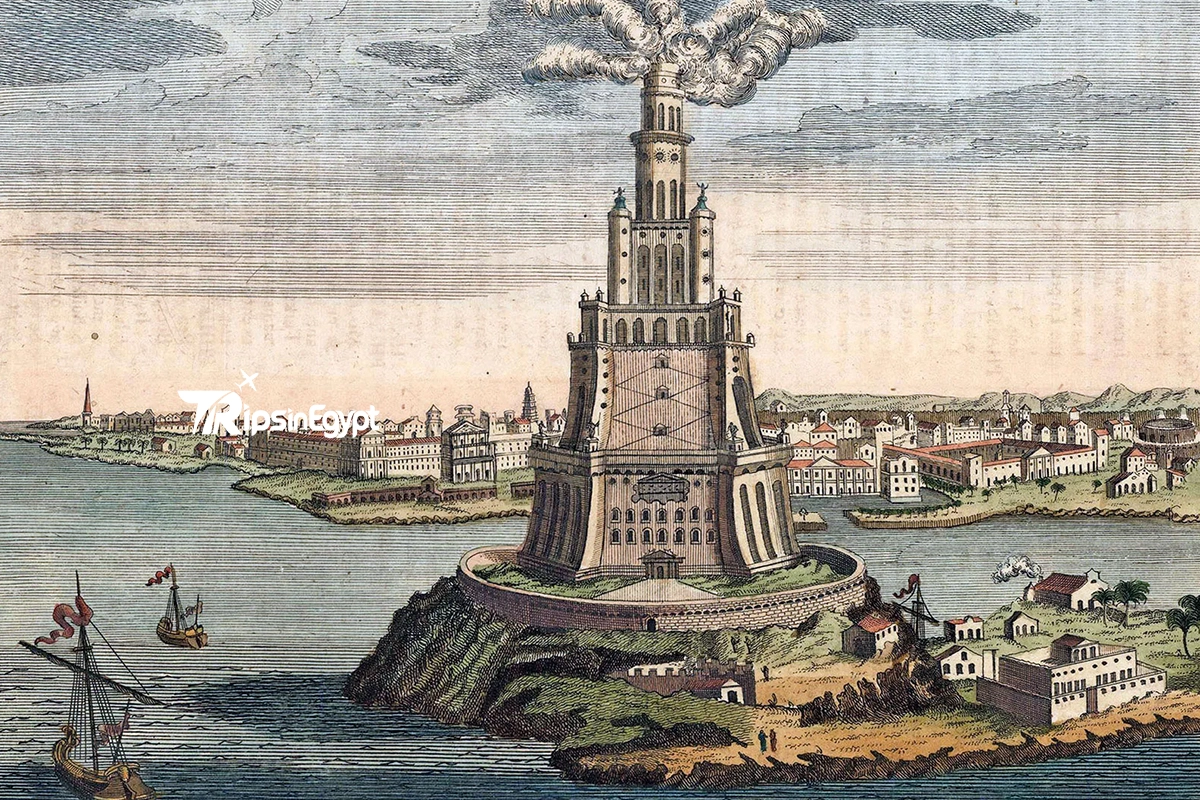
The lighthouse outlived the Ptolemies, the Romans and the Byzantines. It was still working when Queen Cleopatra ruled Egypt and still standing, much repaired, when the Arabs arrived in the 7th century.
Arab visitors described it in detail. The traveler Abu al-Haggag al-Balawi, who visited in 1166, climbed its internal ramp and measured its tiers. When the famous Moroccan traveler Ibn Battuta visited in 1326, he found it still standing, though badly damaged. When he returned in 1349, it was so ruined that he could not enter at all.
What Destroyed the Lighthouse of Alexandria?
The lighthouse was destroyed by earthquakes, not by war. The eastern Mediterranean sits on an active fault zone, and a series of strong earthquakes damaged the tower over several centuries:
- 796: an earthquake cracked the structure.
- 956: the top section, about 20 m, collapsed. It was later replaced by a small Islamic-style dome.
- 1303: a powerful earthquake centered near Crete caused the worst damage and brought down much of the tower.
- 1323: a further earthquake, reported by several sources, left little more than a ruined stump.
The Mamluk sultan an-Nasir Muhammad planned to build a new lighthouse, but he died in 1341 before work began. Around 1477, Sultan al-Ashraf Qaitbay built a fortress on the site, reusing some of the fallen stones in its walls. By 1480, the last remains of the ancient tower had disappeared.
Location and Ruins of the Lighthouse of Alexandria
The lighthouse stood on the eastern tip of Pharos Island, at the entrance to the Eastern Harbour. Over the centuries, silt built up around the Heptastadion and joined the island to the mainland, so the site is no longer an island but the tip of a peninsula in the Anfushi district.
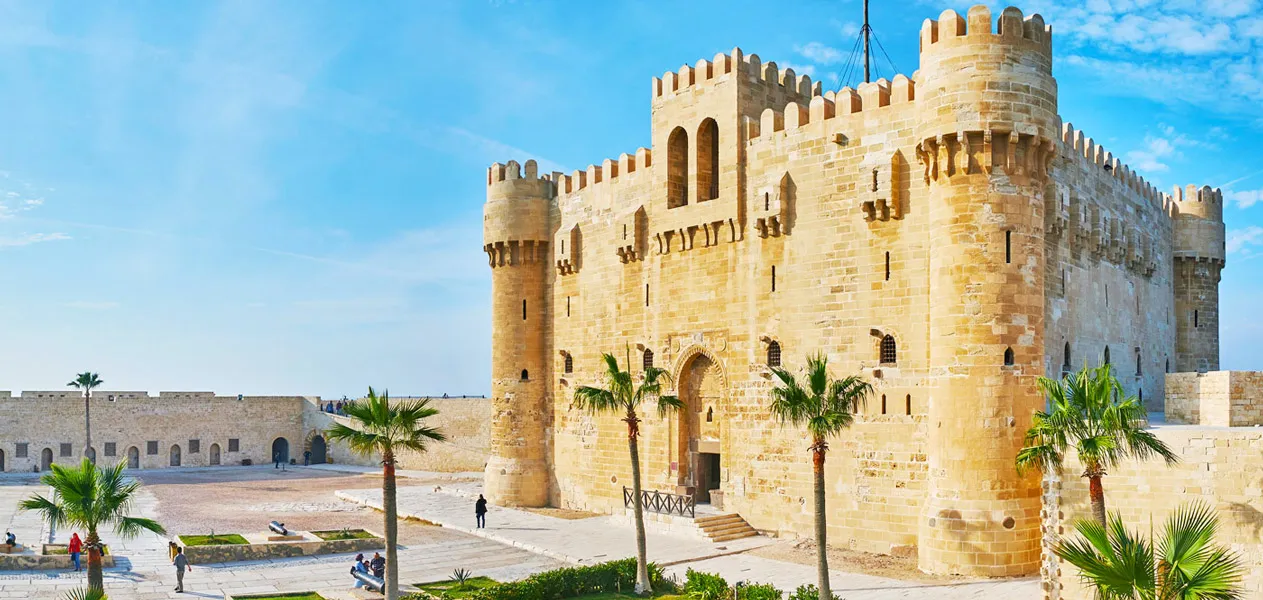
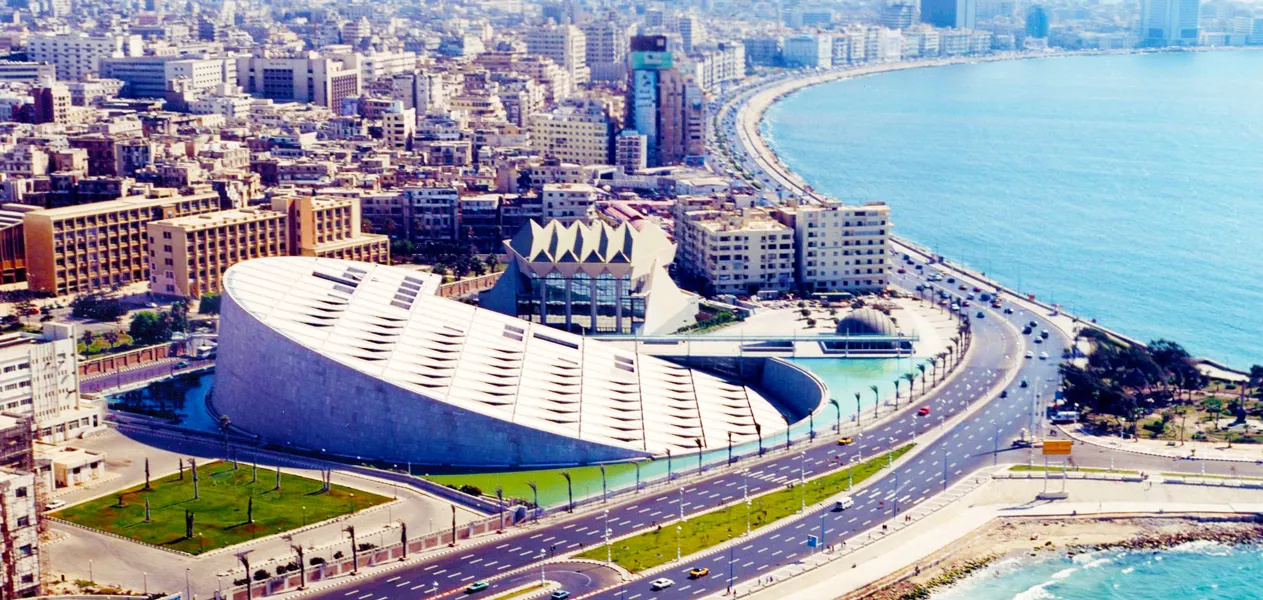
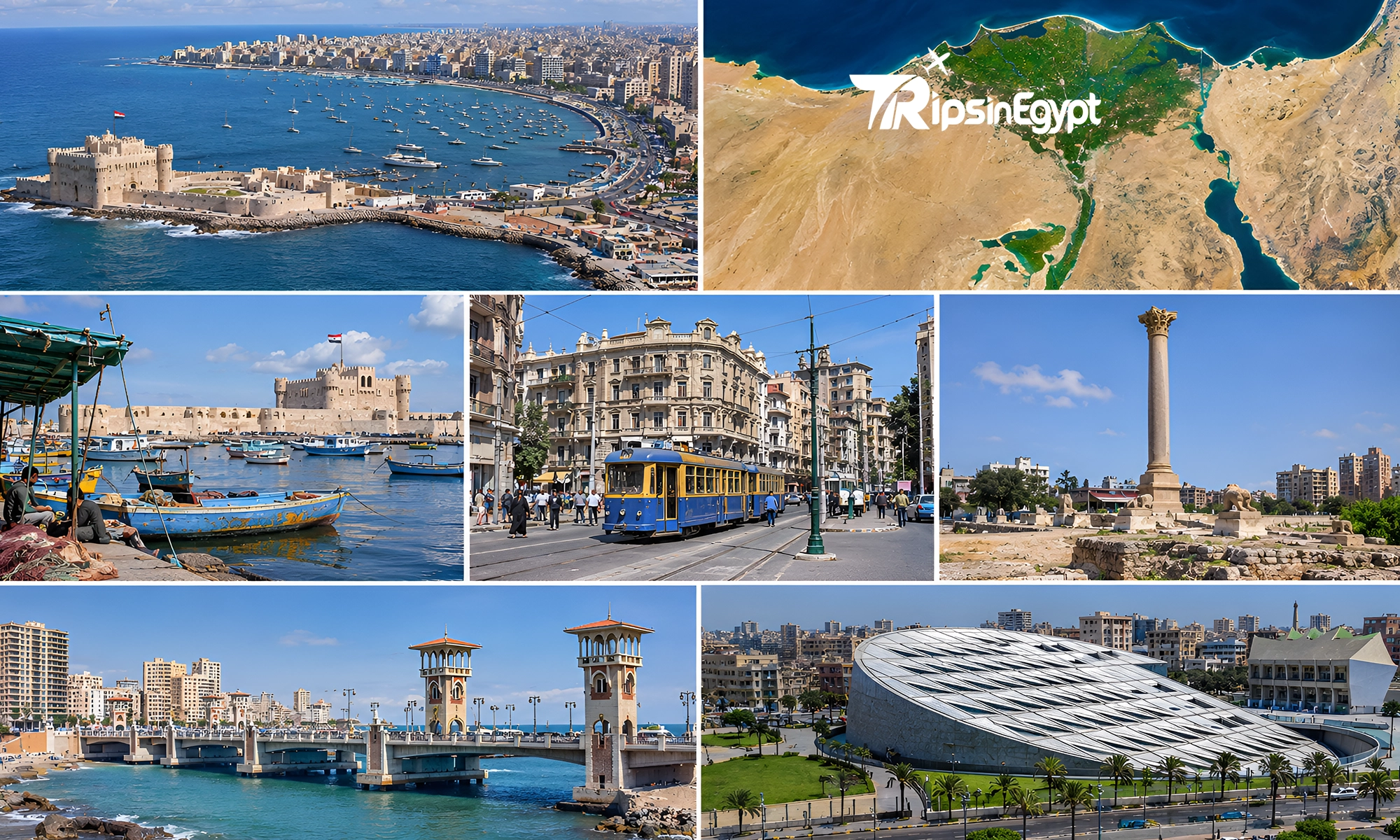
Today, the exact spot is occupied by the Citadel of Qaitbay, about 2 km northwest of downtown Alexandria. The original tip of the island has been worn away by the sea, so part of the lighthouse's footprint now lies underwater.
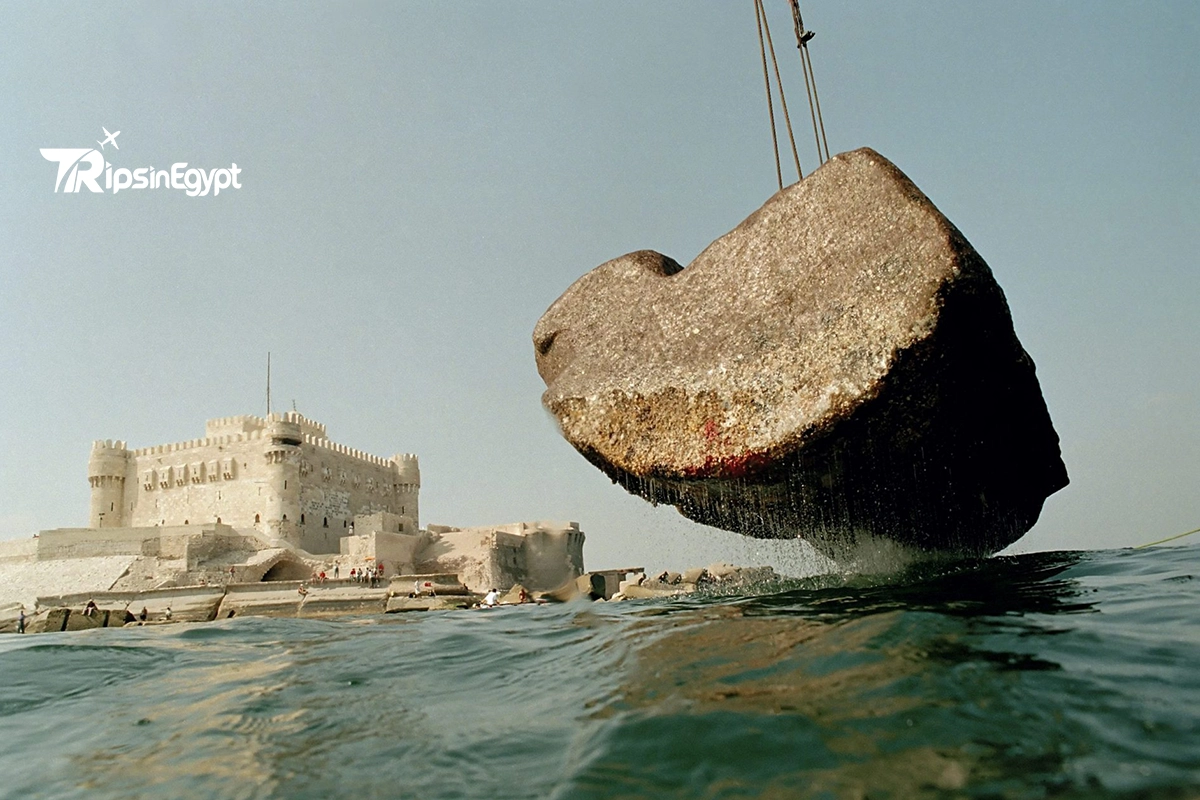
The ruins themselves lie on the seabed just east of the citadel, in shallow water. UNESCO-sponsored divers confirmed them in 1968, but serious study began only in 1994, when the French archaeologist Jean-Yves Empereur led a team in the harbor. They found huge granite blocks weighing 49 to 60 tonnes, many of them broken as if they had fallen from a great height, along with about 30 sphinxes, 5 obelisks and columns carved with the name of Ramesses II, brought from older temples. By the end of 1995, more than 3,300 pieces had been recorded.
About 36 restored pieces are now displayed in the city's museums, among the treasures listed in our guide to the museums of Egypt. On the other side of the harbor, the underwater archaeologist Franck Goddio mapped the sunken royal quarter of the Ptolemies, where Cleopatra's palaces once stood.
The Lighthouse of Alexandria Today
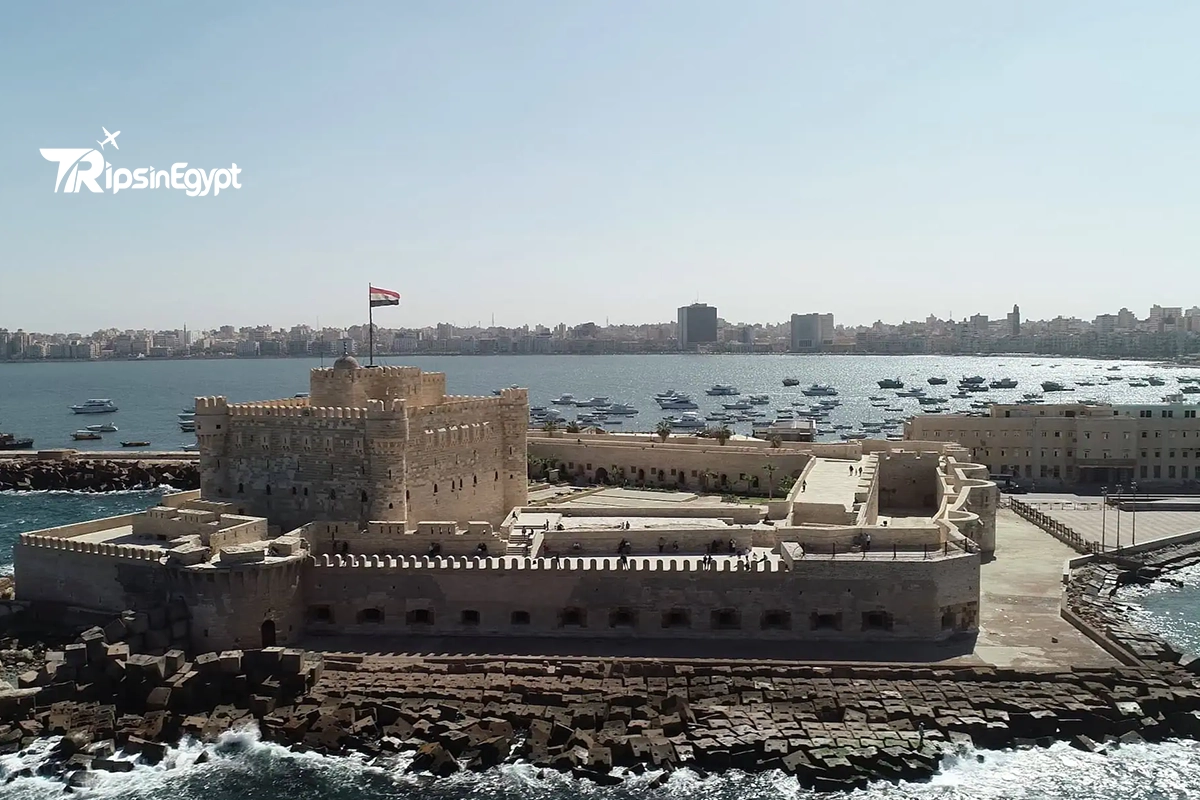
There is no lighthouse to see today, but you can stand on the very spot where it rose. The Citadel of Qaitbay is open daily, with a ticket of EGP 200 for foreign adults and EGP 100 for students. From its walls you look out over the water that covers the ruins, and some of the large stone blocks in the fortress walls are thought to come from the lighthouse.
Divers can explore the underwater site with local dive centers, swimming among the fallen blocks, columns and sphinxes of the Eastern Harbour. Visibility is often limited, so the dive is more about history than scenery.
The ruins remain at the center of plans and debates. Since the late 1970s, there have been proposals to build a modern reconstruction of the lighthouse, and in 2016 Egypt announced plans for an underwater museum in the bay. More recently, some foundation stones were raised and scanned to support a digital reconstruction of the tower.
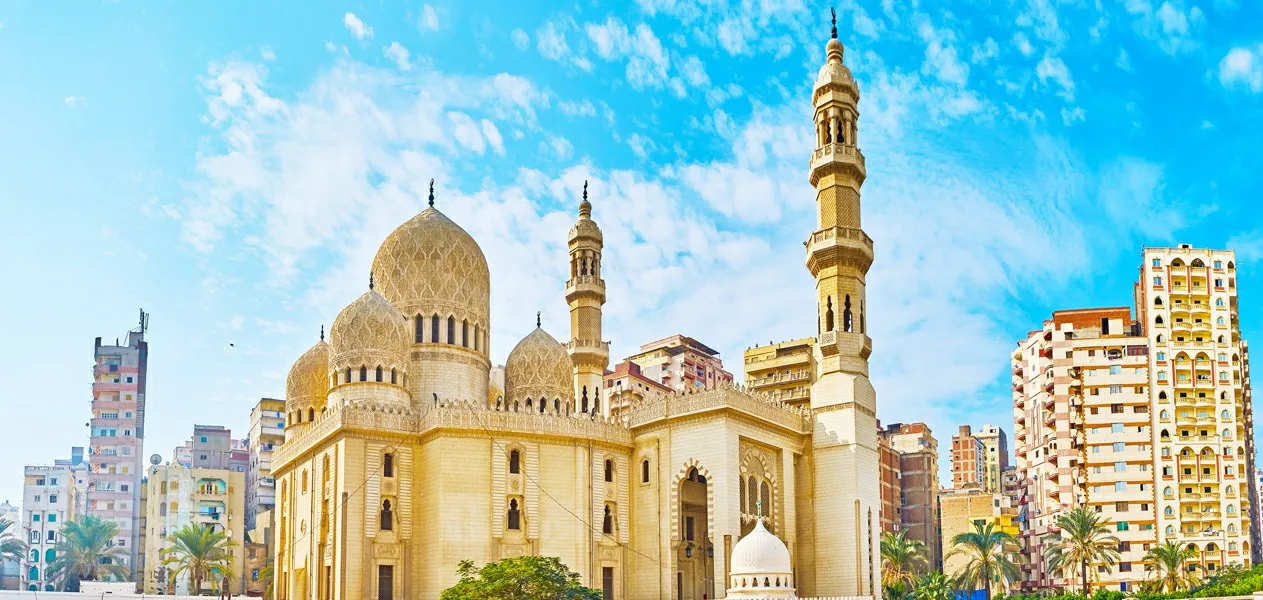
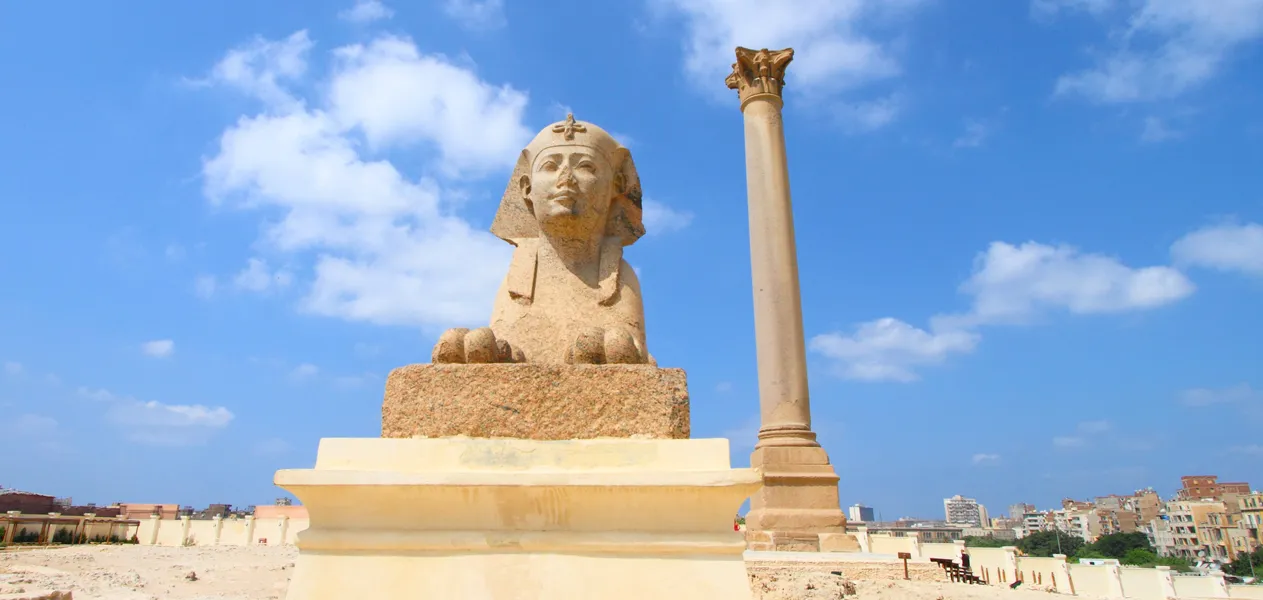
Combine the site with Pompey's Pillar in the south of the city, the Mosque of Abu al-Abbas al-Mursi nearby, a walk along the Corniche and our list of Alexandria tourist attractions. Our guide to the best things to do in Alexandria and our Alexandria travel guide help you plan the rest of your stay.
Drawings and Models of the Lighthouse of Alexandria
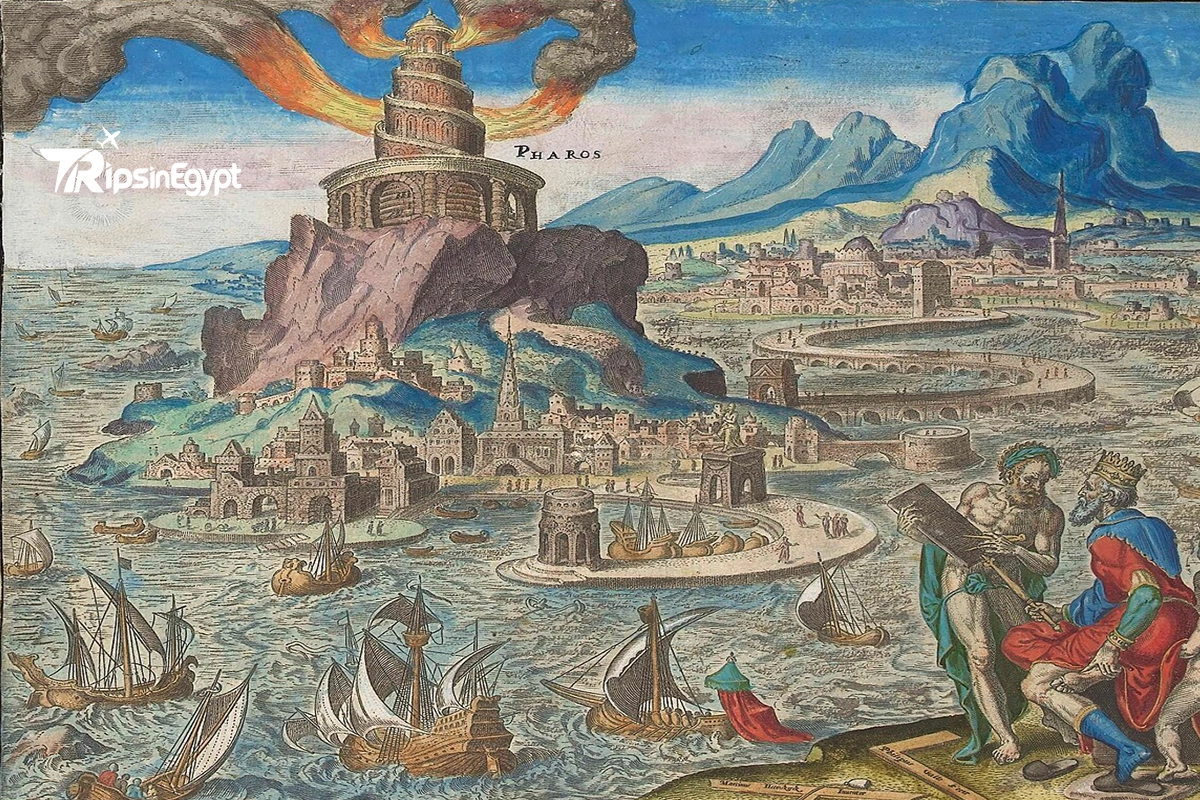
No complete picture of the lighthouse survives from antiquity, so every image we have is a reconstruction. Three sources help historians draw it.
Ancient coins. Coins minted in Alexandria under the Roman emperors, such as Antoninus Pius and Commodus in the 2nd century AD, show the tower with its tiers, its corner statues and the figure on top. They are the closest thing we have to a photograph.
The tower at Abusir. At Abusir, near Borg El Arab, about 45 km west of Alexandria, stands a funerary tower about 20 m tall from the time of Ptolemy II. It has the same three tiers, square, octagonal and round, and is believed to be a small-scale copy of the Pharos. It is the best surviving Lighthouse of Alexandria model from the ancient world.
Hermann Thiersch's drawing. In 1909, the German archaeologist Hermann Thiersch published a detailed study of the lighthouse, based on coins, ancient texts and Arab descriptions. His drawing became the classic image of the Pharos and is still the basis of most modern illustrations, models and digital reconstructions.
Modern models, from museum displays to computer animations, follow Thiersch's design. The tower's influence also lives on in architecture: some historians believe the tiered form of early minarets in Egypt and North Africa echoes the Pharos, a link you can explore in our guide to Islamic sites in Egypt.
Stand Where the Pharos Once Rose With Trips In Egypt
The fire of the Pharos went out centuries ago, but on a clear evening at Qaitbay, with the sea breaking on the stones below and the lights of the harbor coming on, it is easy to imagine its golden glow over the water. Our Egyptologist guides bring its story to life on the very spot where it stood. Join our day tour to Alexandria from Cairo, our Alexandria city tour from Alexandria Port or our 4-day Cairo and Alexandria holiday, Pick one of our Egypt tour packages or design your own route with our tailor-made tours.

5 Days Cairo And Hurghada Trip
Amazing 4 Nights Cairo and Hurghada Trip Itinerary 5 Days Cairo and Hurghada trip wil...
- Duration 5 Days / 4 Nights
- Location Cairo & Hurghada
- Type Historical & Recreational Tour
From$690/per person
View Tour
6 Days Cairo, Alexandria & Faiyum Tour
Unforgettable Cairo, Alexandria & Faiyum Adventure in Six Days 6 Days Cairo, Alex...
- Duration 6 Days / 5 Nights
- Location Cairo - Alexandria - Fayum
- Type Historical Tour
From$720/per person
View Tour
10 Days Cairo, Faiyum & Nile Cruise Holiday
Breathtaking 10 Days Journey of A Lifetime in Egypt 10 Days Cairo, Faiyum & Nile...
- Duration 10 Days / 9 Nights
- Location Cairo, Luxor, Aswan & Faiyum
- Type Classic Tour
From$1350/per person
View Tour SOLD OUT
Ultimate 7-Day Egypt Solar Eclipse Experience with Hurghada 2027
Enjoy a 7-Day Egypt Solar Eclipse Tour with Hurghada 2027 6 Nights Egypt Solar Ecli...
- Duration 7 Days / 6 Nights
- Location Cairo / Giza / Luxor / Hurghada
- Type Astronomical Tour
Sold Out
View Details