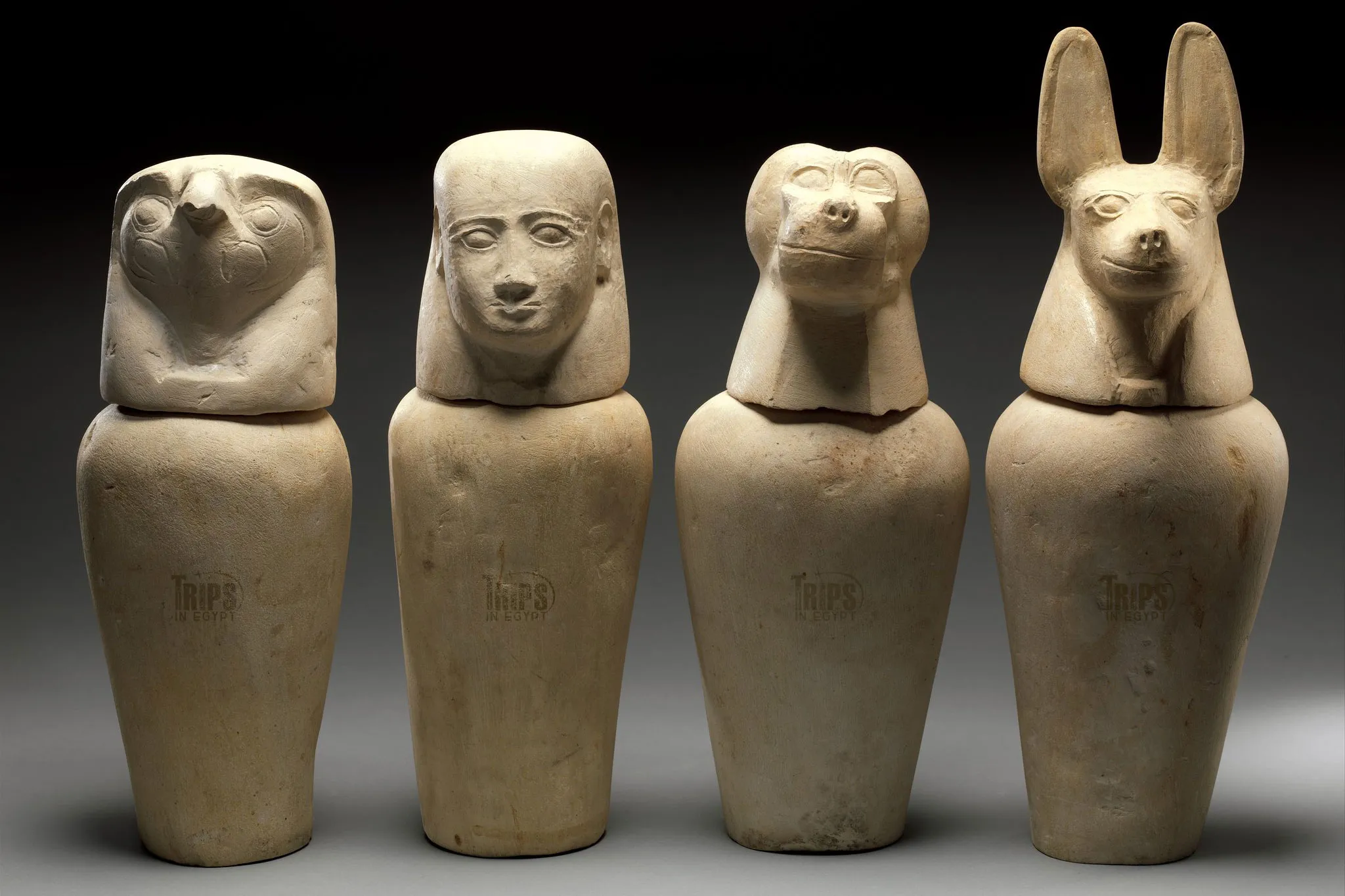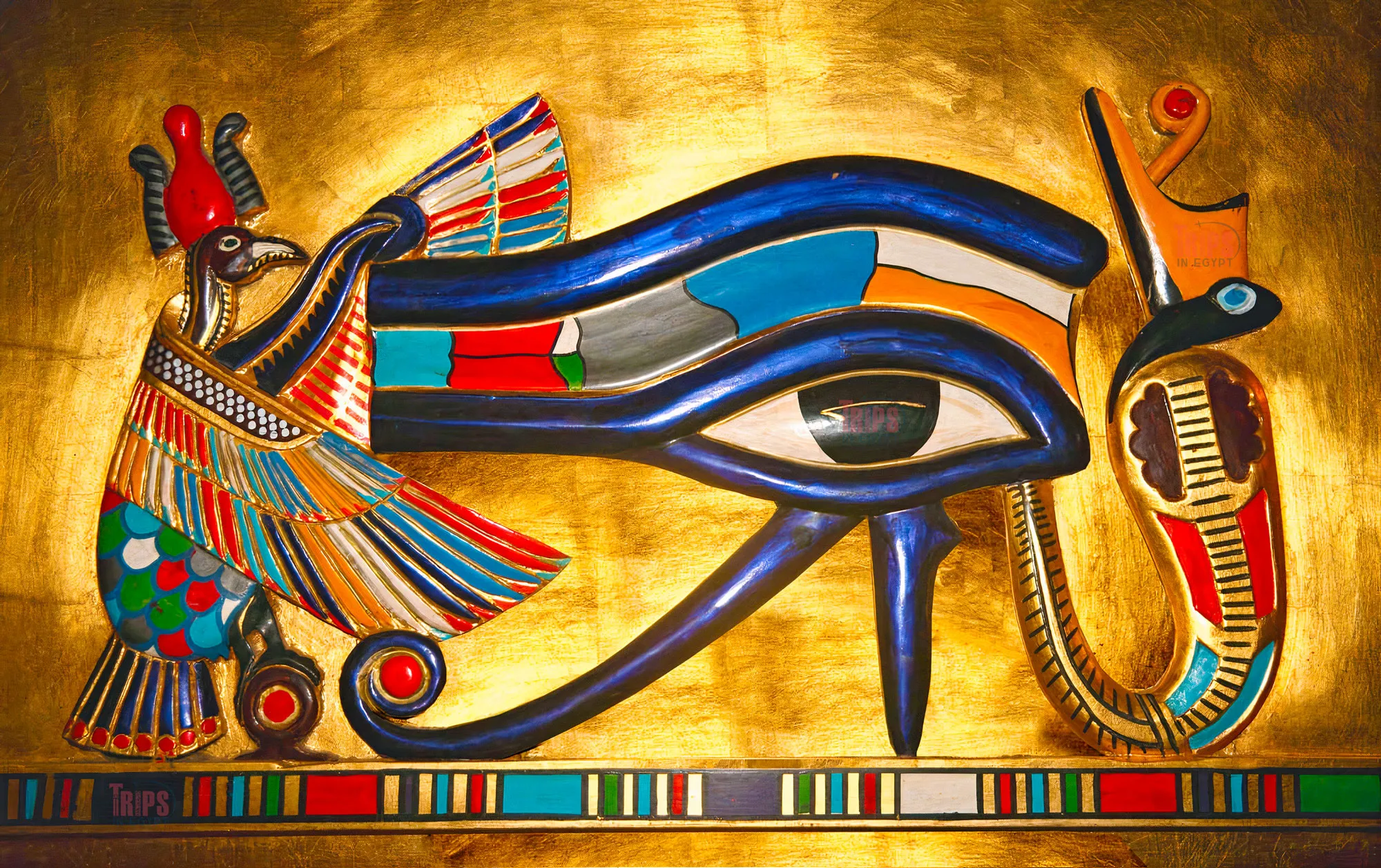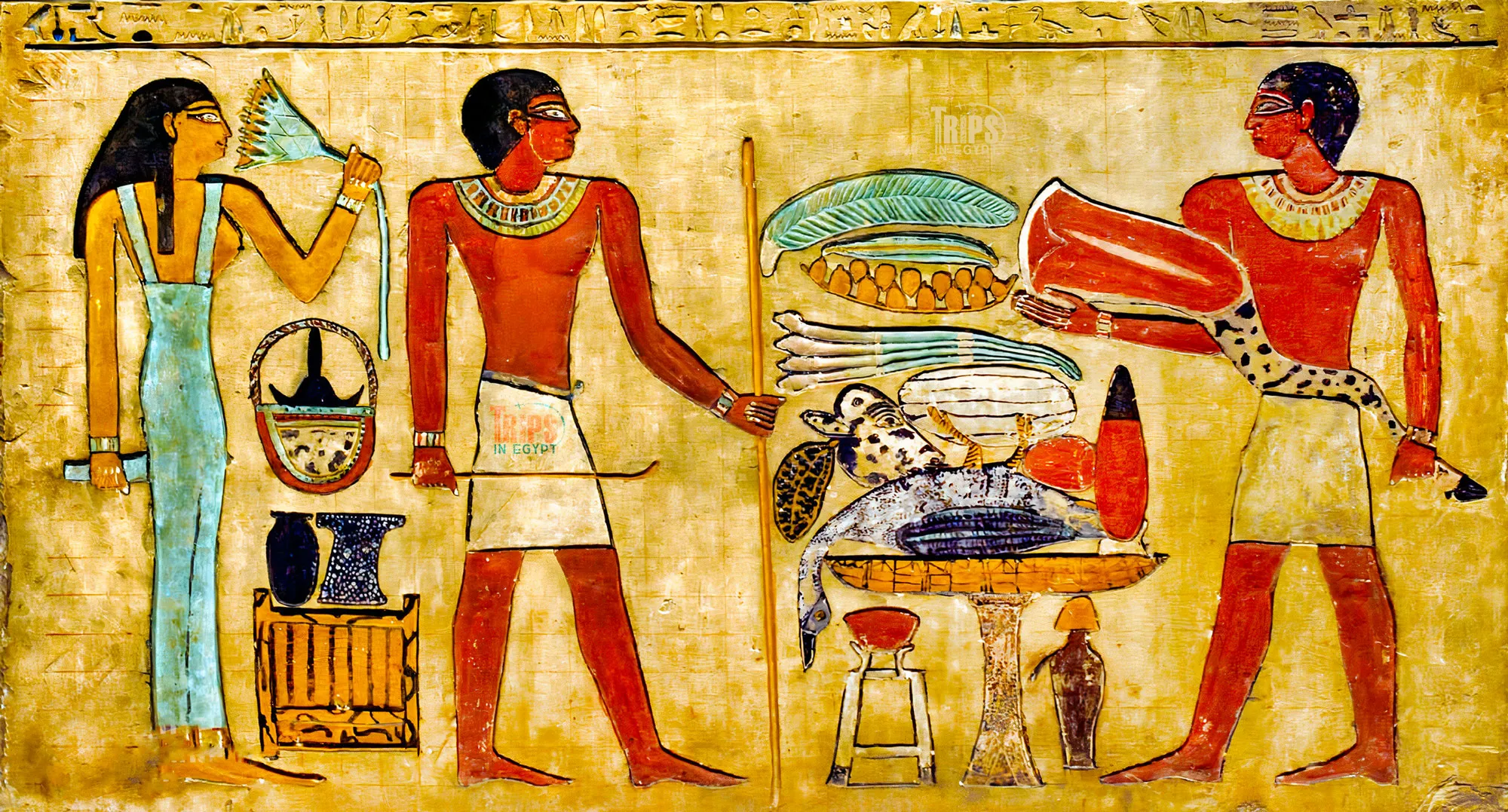




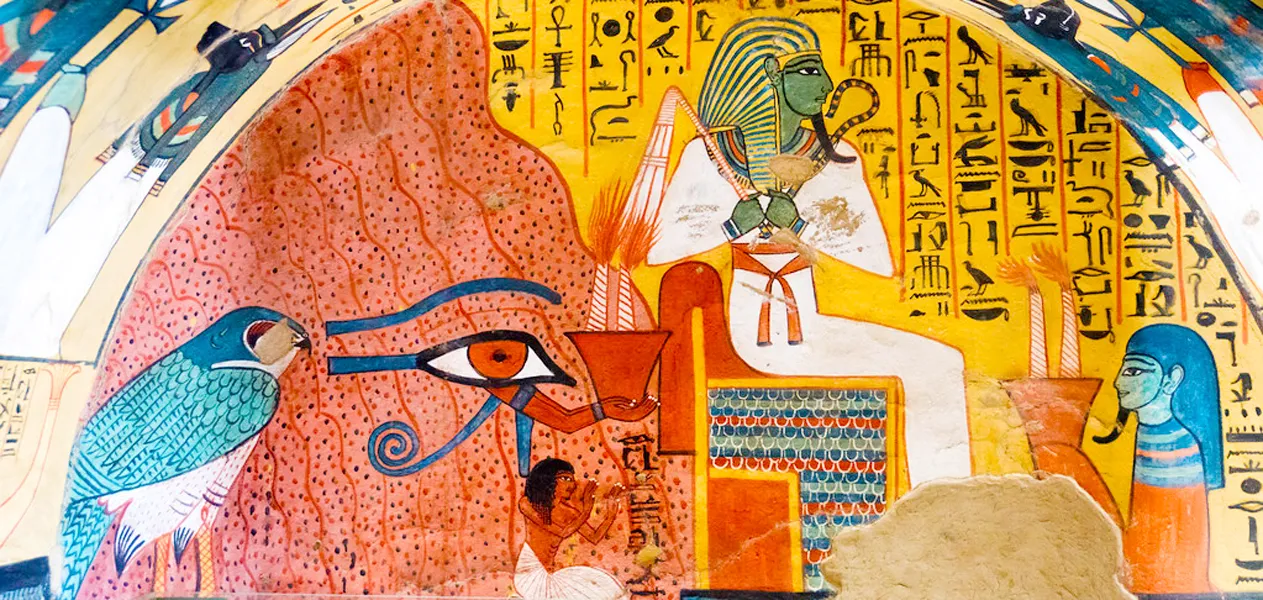
Ancient Egyptian inventions shaped daily life for more than 3,000 years, and many still shape ours. From hieroglyphs, papyrus and ink to the 365-day calendar, surgery, ships with sails and glass, Egyptians turned careful observation of the Nile and the sky into practical technology. This guide lists their most famous inventions, explains how each one worked, separates real firsts from myths, and shows where you can see them today.

What Did the Ancient Egyptians Invent?
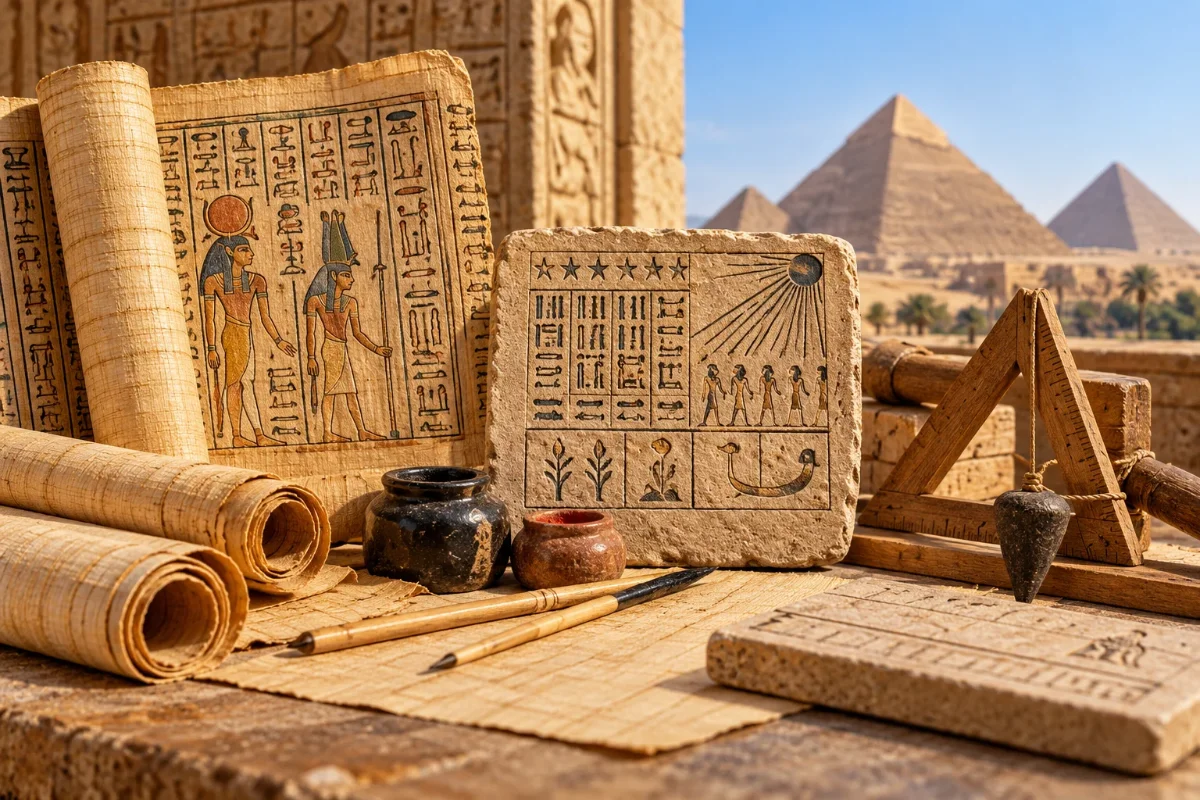
The ancient Egyptians invented or greatly developed writing on papyrus, ink, the 365-day calendar, monumental stone architecture, early surgery and medical texts, wooden ships with sails, the ox-drawn plough with basin irrigation, faience and glass, and cosmetics such as kohl. Some of these were true world firsts, while others, like the potter's wheel or bronze, arrived from neighbors and were refined in Egypt. The quick list below answers the questions people ask most before the detailed sections on each field of ancient Egyptian civilization.
10 Famous Ancient Egyptian Inventions
|
Invention |
When It Appears |
Why It Matters |
|
|
1 |
Hieroglyphic writing |
About 3200 BC |
One of the two oldest writing systems in the world |
|
2 |
Papyrus paper |
About 2900 BC |
A light, rolled writing surface used for thousands of years |
|
3 |
Black and red ink |
About 3000 BC |
Carbon and ochre inks used with reed pens |
|
4 |
The 365-day calendar |
Early 3rd millennium BC |
An ancestor of the Julian and modern calendars |
|
5 |
Monumental stone architecture |
About 2670 BC |
The Step Pyramid introduced large-scale stone building |
|
6 |
Medical and surgical texts |
About 1600 BC copies |
Case-by-case diagnosis of wounds and fractures |
|
7 |
Sailing ships |
About 3200 BC |
Some of the earliest known sails used on the Nile |
|
8 |
The shaduf and basin irrigation |
3rd–2nd millennium BC |
Water lifting and flood control for agriculture |
|
9 |
Faience and core-formed glass |
About 3500 BC / 1500 BC |
Bright glazed ware and early glass vessels |
|
10 |
Kohl eye makeup |
About 4000 BC |
Cosmetic use with practical protection from sun and flies |
For a shorter answer, the six inventions most commonly cited are hieroglyphs, papyrus, ink, the calendar, the ox-drawn plough and eye makeup. Younger readers can explore the topic further in our facts about Egypt for kids.
Ancient Egyptian Inventions Still Used Today
Several ancient Egyptian inventions or innovations remain part of everyday life, even though their modern forms have changed dramatically. The 365-day year passed from Egyptian calendrical traditions into the Roman world and influenced the Julian calendar, from which the modern Gregorian calendar developed. Egyptian timekeeping also divided day and night into 12 parts using shadow clocks, water clocks and groups of stars.
The word "paper" ultimately derives from papyrus, while many modern alphabetic letters descend indirectly from signs adapted from Egyptian hieroglyphs through Proto-Sinaitic, Phoenician and Greek scripts. Eye makeup, wigs, breath fresheners, toothpaste recipes, door bolts and board games also have ancient Egyptian predecessors, and traditional shadufs can still be seen in parts of the Nile Valley.
7 Great Achievements of Ancient Egypt
Achievements are broader than inventions, and seven stand out. First, the Egyptians constructed the pyramids, including the Great Pyramid of Khufu, which remained the tallest human-made structure on Earth for roughly 3,800 years. Second, they developed one of the world's earliest writing systems. Third, they organized a 365-day civil calendar based on careful observation of the seasons and sky.
Fourth, they produced some of the oldest surviving medical texts. Fifth, they managed the Nile through basin irrigation and nilometers. Sixth, they organized long-distance expeditions to places such as Punt. Seventh, they maintained a unified state, despite periods of fragmentation, from around 3100 BC until the Roman conquest in 30 BC.
Ancient Egyptian Inventions in Language & Literature
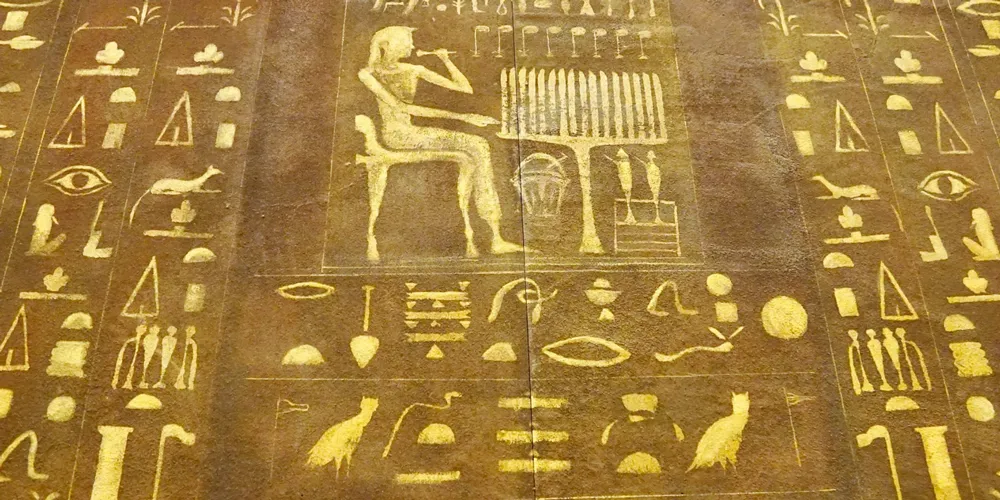
Writing is perhaps one of ancient Egypt's most important contributions to world history. It transformed speech into records, laws, letters, religious texts and stories, allowing the Egyptians to preserve knowledge across generations. Without writing, much of what is known today about Egyptian science, government, medicine and belief would have disappeared. The sections below explain how hieroglyphs developed, how papyrus and ink changed written communication, and how Egyptian thinkers recorded philosophy and history.
Hieroglyphs and the Egyptian Language
Egyptian writing began with pictures. Some of the earliest known examples are small bone and ivory labels from tomb U-j at Abydos, dating to around 3200 BC, placing early Egyptian writing alongside the oldest scripts of Mesopotamia. Hieroglyphic writing mixed signs representing complete words with phonetic signs, including around 24 signs representing single consonants.
Those 24 signs are sometimes described as an Egyptian "alphabet", but Egyptians never used them as a standalone alphabet. Around the second millennium BC, workers in Sinai adapted Egyptian signs into the Proto-Sinaitic script, which influenced Phoenician, Greek and eventually Latin writing.
The Egyptian language itself passed through several stages, including Old Egyptian, Middle Egyptian, Late Egyptian and Demotic before developing into Coptic, which remains in liturgical use in the Coptic Church.
Knowledge of hieroglyphic writing disappeared after antiquity. The last known dated hieroglyphic inscription was carved at Philae in 394 AD. Understanding returned after the discovery of the Rosetta Stone in 1799, whose text appeared in hieroglyphs, Demotic and Greek. Jean-François Champollion announced his breakthrough in deciphering the script in 1822. Many signs also carried religious and symbolic meanings, which you can explore in our guide to ancient Egyptian symbols.
Papyrus, Ink and the First Books
Papyrus was made from the stems of the papyrus plant, which grew abundantly in the marshes of the Nile Delta. Thin strips were placed in overlapping layers at right angles, pressed and dried, then joined into long rolls. The oldest known blank papyrus roll was discovered in the tomb of the official Hemaka at Saqqara and dates to around 2900 BC.
Among the oldest surviving written papyri are the journals of an official named Merer, found at Wadi al-Jarf and dating to the reign of Khufu. They record the transport of limestone used in the Great Pyramid project around 2560 BC. Egyptian scribes wrote with reed pens using carbon-based black ink, while red ochre ink was used for headings and important terms, a practice connected with the later word "rubric".
Egyptian literature included some of the world's earliest religious and literary texts. The Pyramid Texts appeared inside royal pyramids beginning with Unas around 2350 BC, followed by the Coffin Texts and later the Book of the Dead. Egyptians also composed stories, hymns, love poetry and letters, including the Tale of Sinuhe, one of the best-known works of ancient Egyptian literature.
Philosophy and History
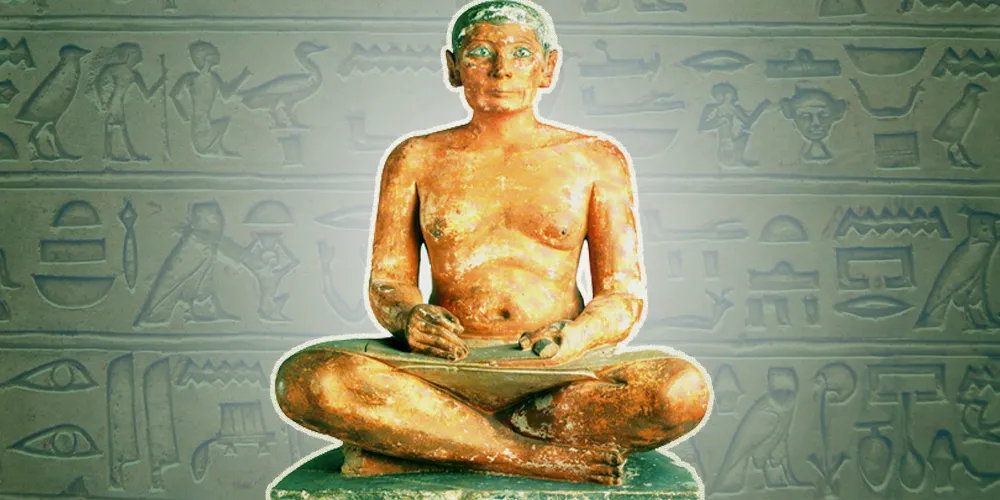
Ancient Egyptians were among the earliest peoples to preserve moral instruction in writing. The Instruction of Ptahhotep, traditionally attributed to the vizier Ptahhotep during the reign of Djedkare Isesi in the 5th Dynasty, advises readers to behave honestly, patiently, modestly and fairly. Its surviving copy, preserved in the Prisse Papyrus, dates from the Middle Kingdom.
The work belongs to a larger Egyptian tradition of wisdom literature. Central to Egyptian ethical thought was Maat, the idea of truth, justice, balance and cosmic order, which influenced government, law, kingship and beliefs about the afterlife.
Egyptians also created some of the earliest extensive historical records. The Palermo Stone preserves royal annals and Nile flood heights from early dynasties, while the Turin King List records rulers spanning many centuries. Temple walls documented military campaigns, religious festivals and royal expeditions.
Letters carried by official couriers linked Egyptian cities and foreign courts. The diplomatic Amarna Letters of the 14th century BC are one surviving example of this organized communication system.
Ancient Egyptian Inventions in Mathematics & Architecture
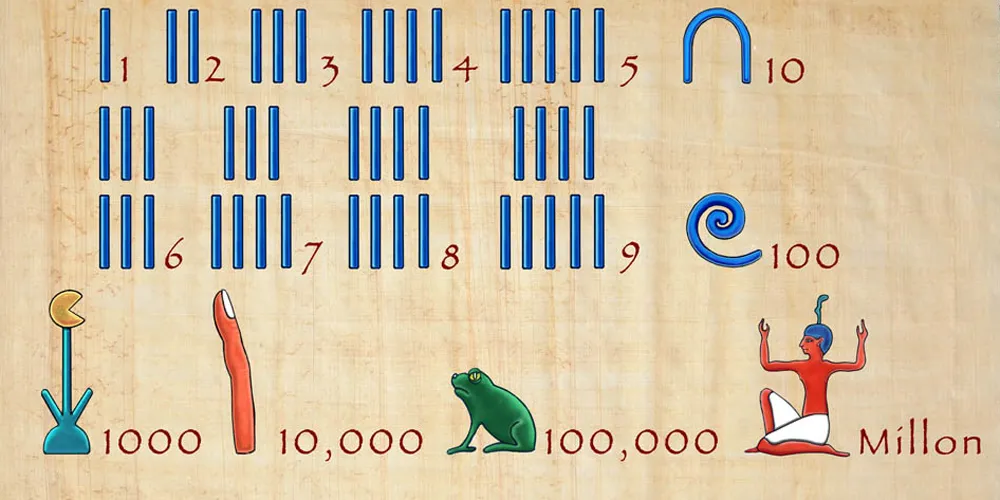
Egyptian mathematics was primarily practical. It helped survey fields after the annual Nile flood, divide food and grain, calculate workers' rations and determine the dimensions and slopes of large buildings. The same mathematical knowledge contributed to architecture ranging from mud-brick homes to vast stone temples and pyramids. Surviving papyri allow modern readers to follow Egyptian calculations directly, while monuments reveal the extraordinary precision achieved using relatively simple tools.
Numbers, Fractions and Geometry
Egyptians used a decimal number system with individual signs for 1, 10, 100, 1,000 and progressively larger values. Such numerals appeared on monuments by around 3000 BC. Multiplication could be performed using repeated doubling, while fractions were usually expressed as sums of unit fractions.
Much of the surviving mathematical evidence comes from two famous documents. The Rhind Mathematical Papyrus, copied by the scribe Ahmes around 1550 BC from an older source, contains 84 mathematical problems involving arithmetic, areas, volumes and distribution.
The Moscow Mathematical Papyrus, dating to around 1850 BC, includes a method for calculating the volume of a truncated pyramid, showing the sophistication of Middle Kingdom geometry.
The Calendar and Telling Time
The Egyptian civil calendar contained 365 days, divided into 12 months of 30 days plus five extra days at the end of the year. The months were grouped into seasons associated with the Nile flood, planting and harvest. The calendar was established by the early 3rd millennium BC and became connected with observation of Sirius, whose rising occurred near the time of the Nile inundation.
Egyptians divided night into 12 parts by observing star groups known as decans, while daytime could be divided using shadow clocks. One of the oldest surviving water clocks was discovered at Karnak Temple and dates to the reign of Amenhotep III around 1400 BC.
Building the Pyramids and Temples
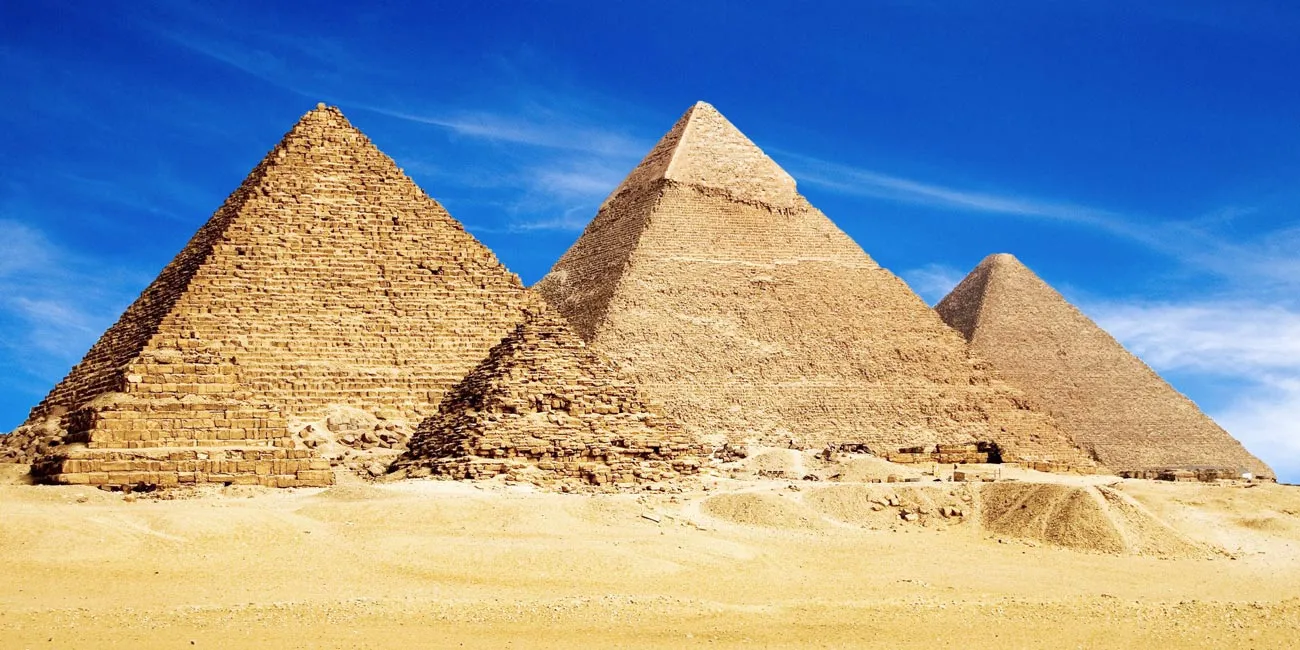
Egyptian builders used sun-dried mud brick for everyday structures, but monumental royal architecture transformed dramatically during the Old Kingdom. Around 2670 BC, Imhotep designed the Step Pyramid complex for King Djoser at Saqqara, one of the earliest monumental complexes constructed largely from dressed stone.
Roughly a century later, the Great Pyramid rose to an original height of about 146.6 meters and contained approximately 2.3 million stone blocks. Egyptian builders used gypsum mortar, copper tools, stone pounders, sledges, ramps and levers rather than modern cement or machinery.
The pyramid temple of Sahure at Abusir included a drainage system incorporating copper pipes, among the earliest known examples of metal plumbing.
New Kingdom builders continued this tradition on an enormous scale. Karnak's Great Hypostyle Hall contains 134 columns, while monumental granite obelisks were quarried at Aswan and transported north by river.
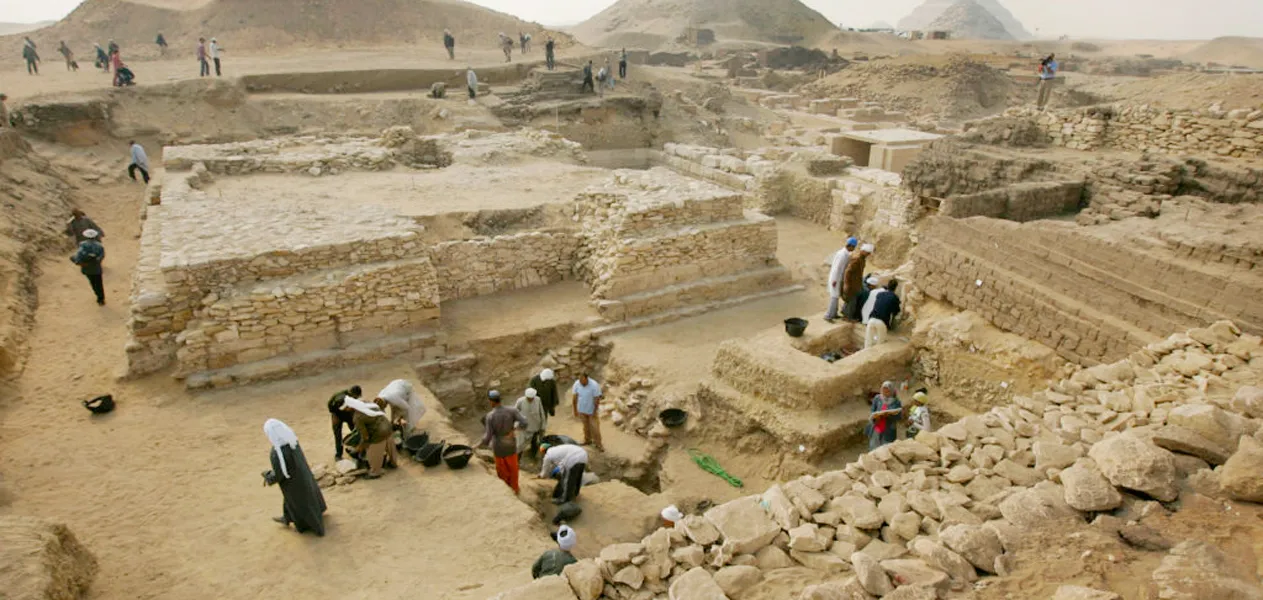
The Giza Pyramids Complex preserves quarries, workers' tombs and settlement remains that reveal how pyramid labor was organized. Archaeological discoveries south of the Sphinx include bakeries, food-production areas and workers' housing, supporting the view that pyramid construction depended on organized labor teams rather than enslaved populations.
Ancient Egyptian Inventions in Medicine
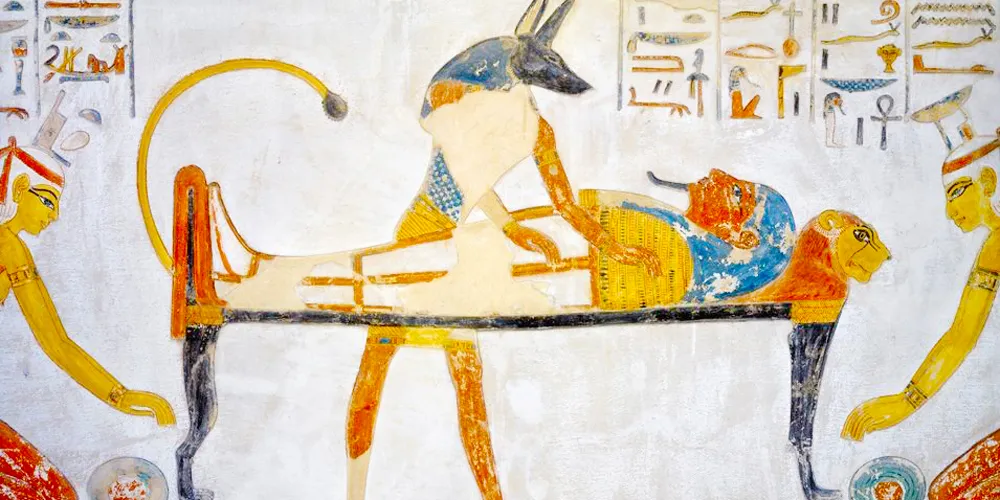
Egyptian physicians became famous throughout the ancient Mediterranean and Near East. Later Greek writers described Egyptian doctors as specialists who often focused on particular parts of the body. Egyptian medicine still included prayers and magical practices, but surviving papyri reveal careful observation, diagnosis and practical treatment. Medical texts recorded injuries, illnesses and remedies, while archaeological evidence shows wound stitching, splints, prosthetics and specialized approaches to dental problems.
The Oldest Medical Texts
The Edwin Smith Papyrus, copied around 1600 BC from earlier sources, contains 48 cases involving wounds, fractures and other injuries. The cases proceed systematically from the head downward, giving an examination, diagnosis, treatment and judgment about whether the patient could be successfully treated.
The papyrus also contains one of the earliest known written descriptions of the brain and recognizes connections between head injuries and changes in bodily function.
The Ebers Papyrus, dating to around 1550 BC, contains hundreds of remedies and medical prescriptions dealing with ailments involving the stomach, heart, eyes, skin and other parts of the body. It also describes the heart as the center of a network of vessels.
Surgery, Dentistry and Prosthetics
Egyptian doctors stitched wounds, supported broken bones with splints and used substances such as honey in wound treatment. Ptolemaic-period reliefs at Kom Ombo show collections of instruments that resemble knives, forceps and hooks, though the interpretation of individual objects remains debated.
Hesy-Ra, an official from the 3rd Dynasty around 2650 BC, held a title commonly associated with dentistry and is frequently described as one of the earliest named dental practitioners. Evidence from mummies also shows dental wear, abscesses and attempts to manage oral problems.
One remarkable prosthetic example is the Cairo toe, a wooden artificial big toe fitted to a woman named Tabaketenmut around 950–710 BC. Wear patterns suggest it was designed to function while walking.
Remedies and Everyday Health
Egyptian medical texts recorded hundreds of ingredients, including garlic, onions, honey, castor oil, aloe and frankincense. The use of opium or opium-related substances for pain has been proposed, although the evidence remains debated.
One ancient pregnancy test instructed women to pour urine over barley and emmer seeds. If the seeds germinated, pregnancy was indicated. Modern testing of comparable methods found that pregnancy-related hormonal changes can sometimes influence germination, though such a method is obviously not a reliable substitute for modern testing.
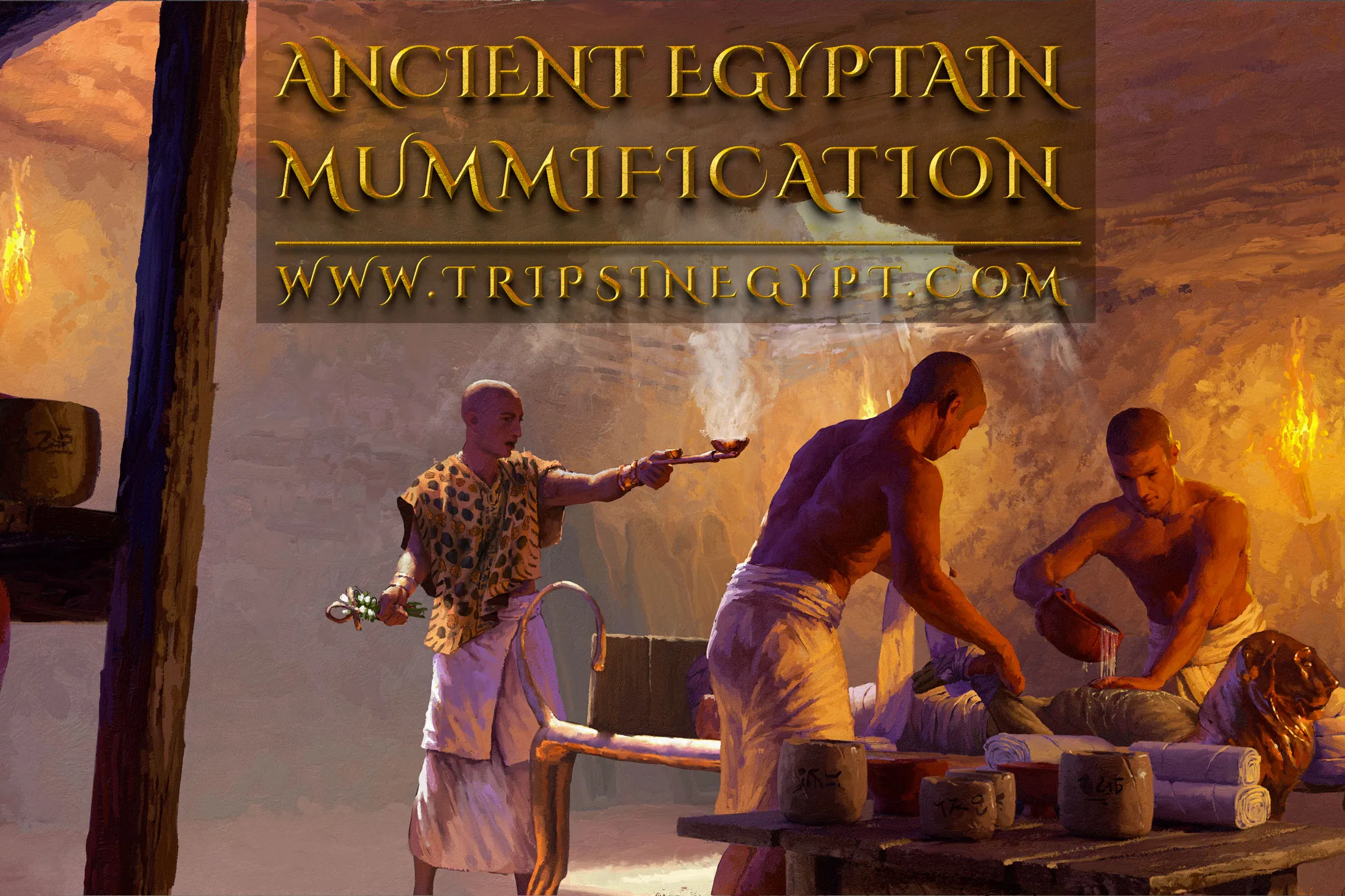
A later Egyptian toothpaste recipe included ingredients such as salt, mint, pepper and iris flower, while chew sticks were used to clean teeth. Knowledge of internal anatomy was also influenced by ancient Egyptian mummification, which required embalmers to remove and preserve organs.
Ancient Egyptian Inventions in Craftsmanship, Art, and Entertainment
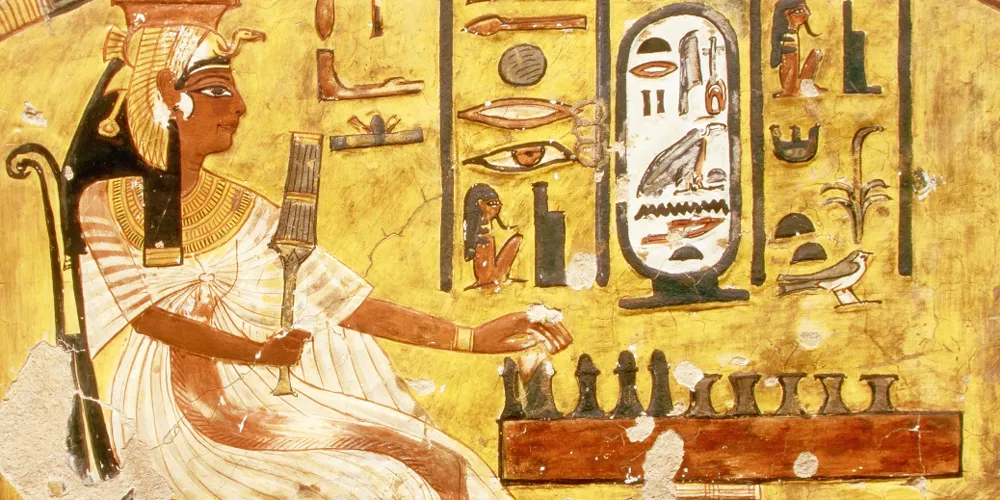
Egyptian craftspeople transformed clay, minerals, metal, sand, stone and plant fibers into objects that combined beauty with practical use. Workshops produced jewelry, furniture, pottery, glass, cosmetics and games that circulated through trade networks across the ancient Mediterranean and Near East. Some technologies developed independently in Egypt, while others were adopted from neighboring cultures and improved locally. Tomb paintings and surviving artifacts provide an unusually detailed record of Egyptian craftsmanship, clothing, leisure and entertainment.
Metal, Faience and Glass
Egyptians worked copper before 3500 BC, initially strengthening some copper alloys with arsenic. True bronze, made primarily from copper and tin, became more common from around the Middle Kingdom.
Goldsmiths developed highly sophisticated techniques such as inlay and cloisonné, with the jewelry of Tutankhamun providing some of the most famous surviving examples.
Faience, a glazed material made largely from crushed quartz, appeared by around 3500 BC and produced the distinctive blue-green amulets, tiles and vessels associated with Egypt. True glass vessels shaped around cores of clay and sand became common by around 1500 BC during the reign of Thutmose III.
The potter's wheel was not an Egyptian invention; it developed earlier in Mesopotamia and was later adopted in Egypt. Many surviving examples of Egyptian craftsmanship can be seen at the Egyptian Museum in Cairo.
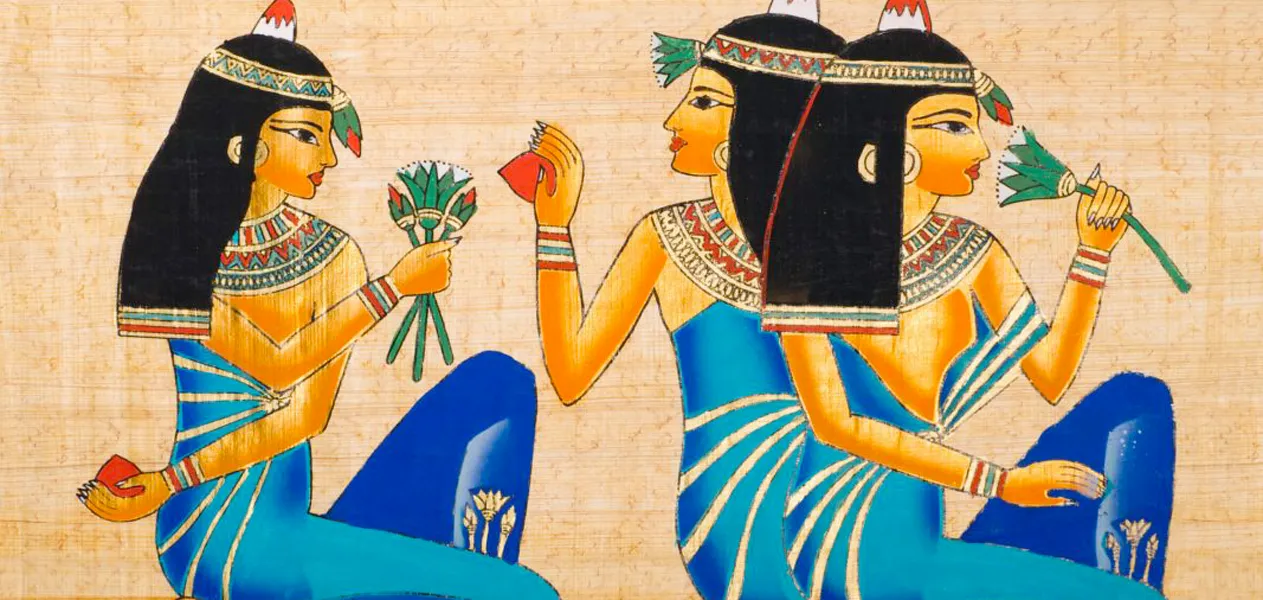
Cosmetics, Wigs and Fashion
Egyptian men and women used kohl eye makeup made from minerals such as galena, while green malachite was also used cosmetically. Eye makeup provided visual appeal but also reduced glare and helped protect against dust and insects. Some studies suggest particular lead compounds used in Egyptian cosmetics may also have produced antibacterial effects under certain conditions.
Wigs made from human hair and plant fibers were popular, while some people shaved their heads for comfort and hygiene. Perfumed oils, henna and skin creams were widely used.
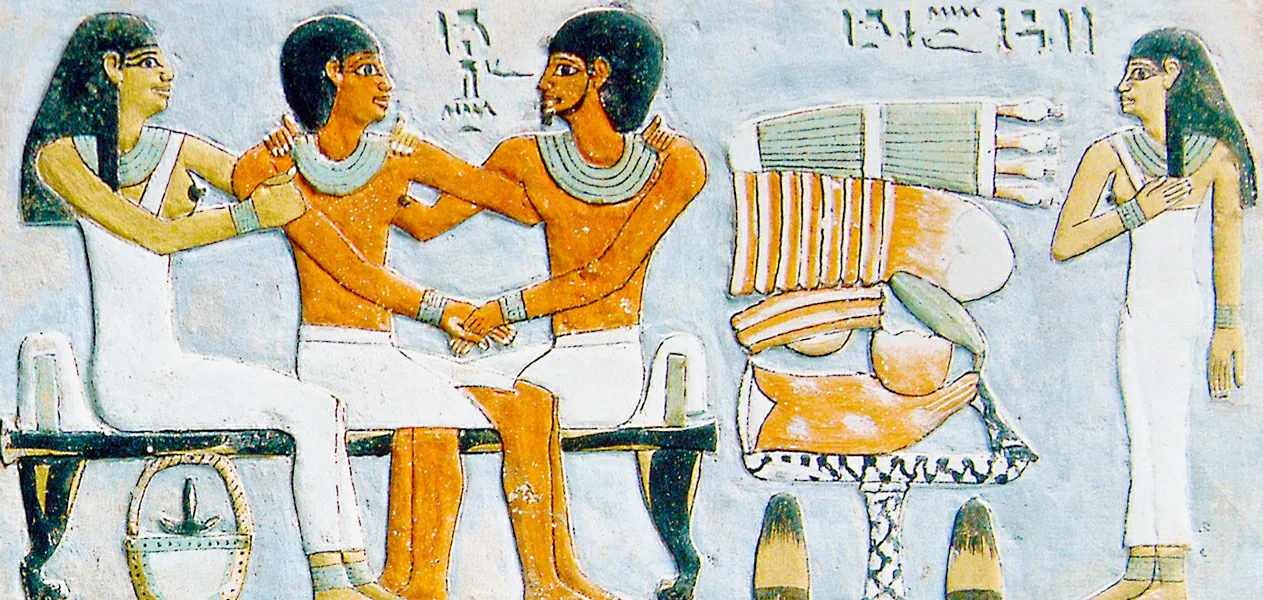
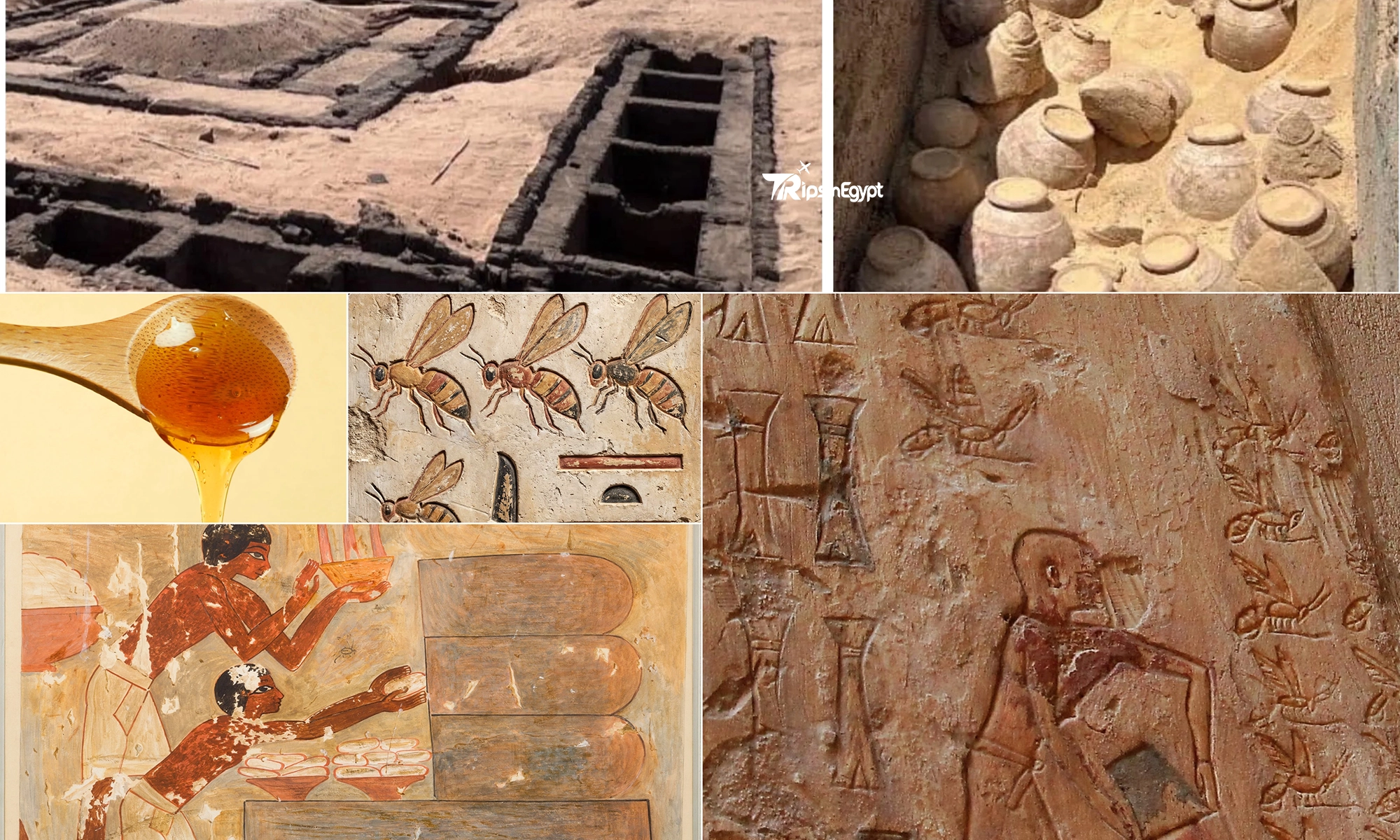
Fine linen was the dominant fabric and could be woven so thinly that some garments appear almost transparent in surviving representations. Recipes also survive for breath-freshening mixtures made from aromatic substances and honey. Many such details appear in depictions of daily life in ancient Egypt.
Board Games and Entertainment
Senet is one of the oldest known board games, with evidence dating back to around 3100 BC. It was played on a board containing 30 squares and later acquired religious associations with the journey into the afterlife.
Tutankhamun's tomb contained multiple gaming boards, including examples made with expensive materials. Egyptians also played Mehen, a game using a board shaped like a coiled snake.
Children owned balls, dolls, spinning tops and toy animals, while musicians performed with harps, flutes, lutes, sistrums and drums. Tomb paintings also depict acrobatics, dancing, wrestling and stick fighting, showing that entertainment formed an important part of both elite and ordinary Egyptian life.
Ancient Egyptian Inventions in Ships, Trade & Farming
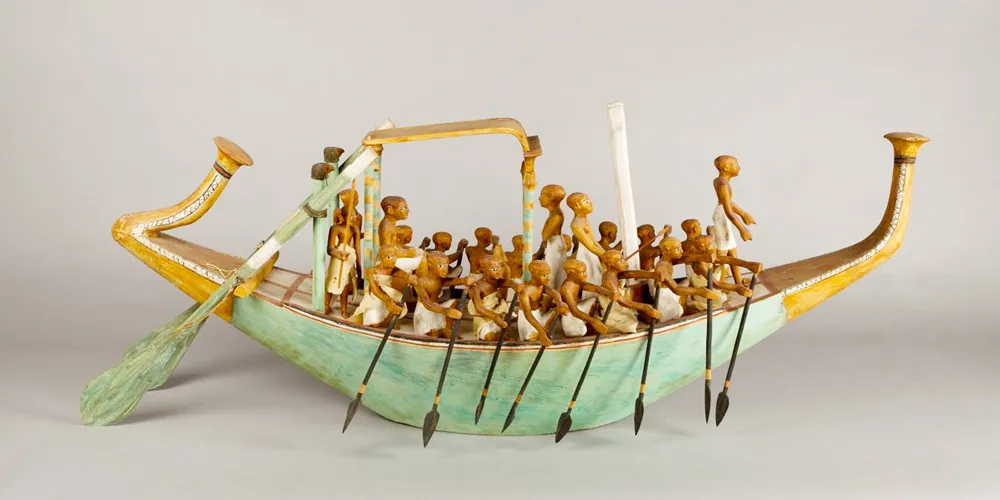
Ancient Egyptian technology developed around the Nile. Boats carried people, grain and stone, irrigation systems supplied agricultural land, and trade connected Egypt with neighboring regions that provided timber, metals, incense and luxury goods. These technologies were usually simple in their individual parts but extraordinarily effective when combined with organization and skilled labor. This section covers Egyptian ships, farming, tools and the engineering methods behind the monuments, as well as the popular claim that ancient Egyptians possessed electricity.
Ships, Sails and Sea Trade
The Nile flows north while prevailing winds commonly blow south, allowing Egyptian boats to drift or row downstream and sail upstream. Predynastic pottery from around 3200 BC already shows boats equipped with sails, placing Egypt among the earliest civilizations known to use sail-powered vessels.
Ships were constructed from wooden planks joined and lashed together using sophisticated woodworking techniques. The famous Khufu ship, buried beside the Great Pyramid around 2500 BC, measures roughly 43.6 meters and was built largely from Lebanese cedar.
At Wadi al-Jarf on the Red Sea, archaeologists discovered one of the world's oldest known harbor complexes, used during Khufu's reign to support expeditions toward Sinai.
During the New Kingdom, Queen Hatshepsut sent a celebrated expedition to Punt, bringing back incense trees, ebony, gold and exotic animals.
Egypt maintained trade links with Nubia, Byblos, Crete, Cyprus, parts of Mesopotamia and later Greece. Egyptian exports included gold, grain, linen and papyrus, while imports included timber, silver, oil and precious stones.
The Turin Papyrus Map, produced around 1150 BC during the reign of Ramesses IV, depicts quarrying regions in the Eastern Desert and is often described as the world's oldest surviving geological map.
Farming and Irrigation
Egyptian agriculture followed the cycle of the Nile River. Farmers constructed earth banks and canals that divided agricultural land into basins. Floodwater could remain in these basins long enough to deposit fertile silt before being drained.
Nilometers measured flood levels and helped officials estimate agricultural production and taxation. The ox-drawn plough was used from the Old Kingdom, while wooden sickles fitted with sharp flint blades harvested grain.
By the New Kingdom, the shaduf, consisting of a long pole, counterweight and bucket, helped farmers lift water from lower levels into fields and gardens. Variations of this simple technology continued to be used in Egyptian agriculture for thousands of years.
Tools and Technology Behind the Monuments
Ancient Egyptian technology relied on relatively simple tools combined with enormous organizational skill. Workers shaped limestone using copper chisels and saws, while harder stones such as granite were worked using stone pounders and abrasive sand.
Builders checked levels with water-filled trenches and simple leveling tools, while cubit rods, roughly 52.4 centimeters long, standardized measurement. Plumb lines and astronomical observations helped builders align monuments with remarkable precision.
Heavy blocks were transported on wooden sledges, sometimes across wetted sand to reduce friction, as shown in the famous tomb scene from Deir el-Bersha. Ramps and levers likely played major roles in raising stones.
The diary of Merer demonstrates that pyramid construction involved organized teams, schedules and supply systems. Our guide on how the pyramids were built covers the leading construction theories in greater depth.
Did the Ancient Egyptians Have Electricity?
No credible archaeological evidence shows that ancient Egyptians possessed or generated electricity.
The claim usually comes from reliefs in the crypts of Dendera Temple, dating to the Ptolemaic period. Some modern fringe interpretations describe these images as giant electrical light bulbs. Egyptologists instead interpret the scene as religious imagery involving a serpent emerging from a lotus flower, supported by a djed pillar, within a creation myth.
The surrounding hieroglyphic inscriptions support the religious interpretation. No ancient wires, batteries, generators, light bulbs or electrical distribution systems have ever been found in Egypt.
Tombs and temples were illuminated with oil lamps, natural daylight and, in some areas, reflected light. You can explore the famous relief yourself in our guide to Dendera Temple.
See Ancient Egyptian Inventions on a Tour
The best way to understand ancient Egyptian inventions and technology is to see the evidence in its original setting: pyramid quarries at Giza, the water clock and monumental columns at Karnak, and papyri, tools, cosmetics and games preserved in museums.
An Egyptologist can explain not only what an artifact is, but how it functioned within everyday Egyptian life. The Egypt tour packages below combine many of these archaeological sites at different travel paces.
5 Days Cairo and Hurghada Trip: Five days and four nights combining Cairo's pyramids and museums with relaxing time on the Red Sea. From $690.
6 Days Cairo, Alexandria & Faiyum Tour: Six days and five nights exploring Cairo, Alexandria and the agricultural landscapes of Faiyum. From $720.
10 Days Cairo, Faiyum & Nile Cruise Holiday: Ten days and nine nights combining Cairo and Faiyum with a Nile cruise between Luxor and Aswan. From $1,350.
Ancient Egyptian inventions grew from practical needs: recording the harvest, measuring the flood, healing wounds and honoring the gods. Writing, papyrus, the calendar, surgery, sails and glass all show a civilization that observed carefully and built to last. Many of their ideas still live on in our modern calendars, alphabets and medical care. Standing before the pyramids or a papyrus in Cairo, you can still feel their timeless genius today.

5 Days Cairo And Hurghada Trip
Amazing 4 Nights Cairo and Hurghada Trip Itinerary 5 Days Cairo and Hurghada trip wil...
- Duration 5 Days / 4 Nights
- Location Cairo & Hurghada
- Type Historical & Recreational Tour
From$690/per person
View Tour
6 Days Cairo, Alexandria & Faiyum Tour
Unforgettable Cairo, Alexandria & Faiyum Adventure in Six Days 6 Days Cairo, Alex...
- Duration 6 Days / 5 Nights
- Location Cairo - Alexandria - Fayum
- Type Historical Tour
From$720/per person
View Tour
10 Days Cairo, Faiyum & Nile Cruise Holiday
Breathtaking 10 Days Journey of A Lifetime in Egypt 10 Days Cairo, Faiyum & Nile...
- Duration 10 Days / 9 Nights
- Location Cairo, Luxor, Aswan & Faiyum
- Type Classic Tour
From$1350/per person
View Tour SOLD OUT
Ultimate 7-Day Egypt Solar Eclipse Experience with Hurghada 2027
Enjoy a 7-Day Egypt Solar Eclipse Tour with Hurghada 2027 6 Nights Egypt Solar Ecli...
- Duration 7 Days / 6 Nights
- Location Cairo / Giza / Luxor / Hurghada
- Type Astronomical Tour
Sold Out
View Details