



Ancient Egyptian cities rose along a ribbon of green, where the Nile turned desert into farmland and farmland into kingdoms. From Memphis and Thebes to Amarna and Alexandria, each served a purpose: royal capital, sacred center, trading port or frontier fortress. This guide explains the main cities of ancient Egypt, their original names, what life inside them looked like, which was the biggest, and where to walk among their ruins.

What Were the Main Cities of Ancient Egypt?
The main cities of ancient Egypt were Memphis, the first capital, and Thebes, the religious heart of the New Kingdom. They were joined by Abydos, the holy city of Osiris, Heliopolis, the city of the sun god, and Alexandria, the Greek capital on the Mediterranean.
Other important cities included Elephantine on the southern border, Amarna, Akhenaten's short-lived capital, and Tanis in the Nile Delta.
Almost all of them stood on or near the Nile River, which provided water, food and the main highway of the country. The table below lists the ancient Egyptian cities from north to south, so it also works as a simple map of where each one stood.
|
City (Greek Name) |
Ancient Egyptian Name |
Modern Location |
Known For |
|
Alexandria |
Rhakotis |
Alexandria |
Greek and Roman capital, lighthouse, library |
|
Sais |
Sau |
Sa el-Hagar, western Delta |
Capital of the Twenty-sixth Dynasty |
|
Tanis |
Djanet |
San el-Hagar, eastern Delta |
Capital and royal tombs of the 21st and 22nd Dynasties |
|
Pi-Ramesses and Avaris |
Per-Ramesses, Hut-waret |
Qantir and Tell el-Dab'a, eastern Delta |
Ramesses II's capital; Hyksos capital |
|
Heliopolis |
Iunu |
Matariya, northeast Cairo |
Sun god Ra and the oldest standing obelisk |
|
Memphis |
Inbu-hedj, later Men-nefer |
Mit Rahina, south of Cairo |
First capital, god Ptah, pyramid fields |
|
Crocodilopolis |
Shedet |
Medinet el-Fayoum |
Crocodile god Sobek |
|
Hermopolis |
Khmun |
El-Ashmunein, Minya |
God Thoth |
|
Amarna |
Akhetaten |
Tell el-Amarna, Minya |
Akhenaten's capital of the Aten |
|
Abydos |
Abdju |
Near El-Balyana, Sohag |
Osiris and the earliest royal tombs |
|
Thebes |
Waset |
Luxor |
New Kingdom capital, Karnak, Valley of the Kings |
|
Hierakonpolis |
Nekhen |
Kom el-Ahmar, near Edfu |
One of Egypt's earliest towns |
|
Elephantine |
Abu |
Island at Aswan |
Southern border, Nile trade, granite |
What Did Ancient Egyptian Cities Look Like?
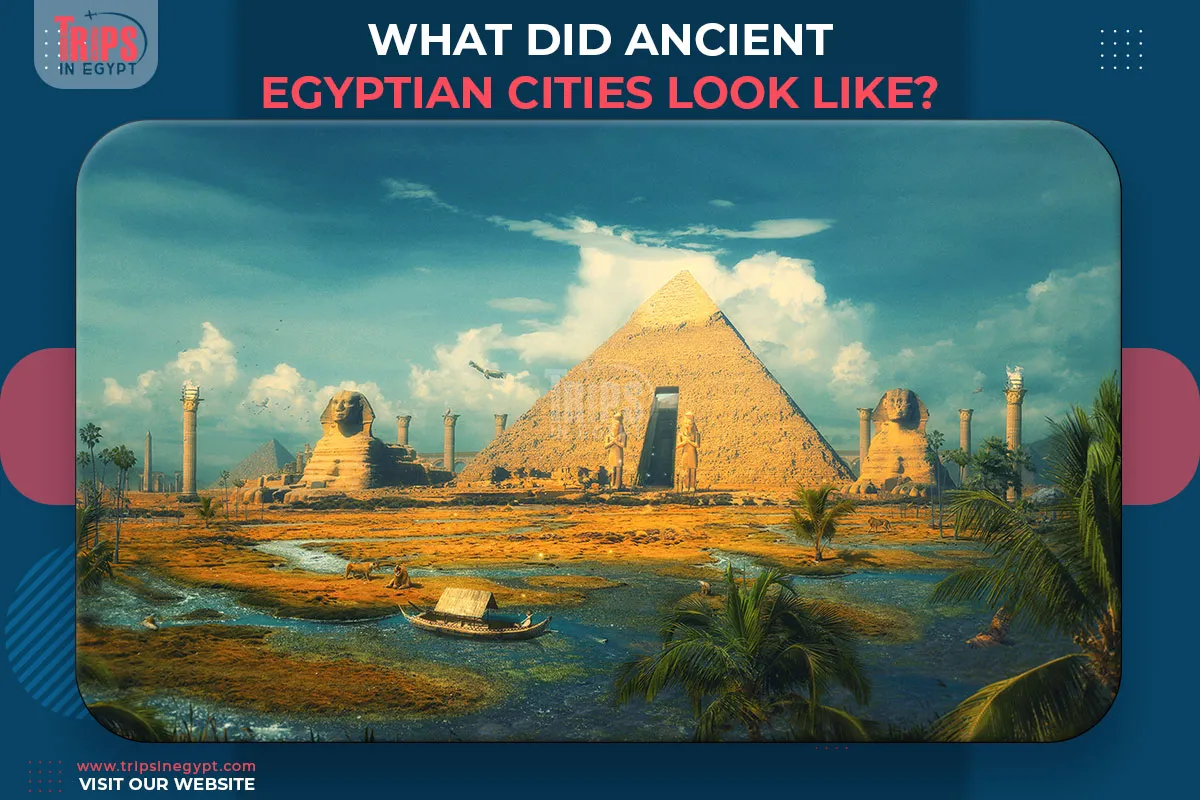
Ancient Egyptian cities were built to impress and to protect. Many were ringed by thick walls, and Memphis took its earliest name, Inbu-hedj, or "White Walls," from the whitewashed walls around it. Inside, a great temple usually stood at the center, surrounded by palaces, workshops, granaries and crowded houses.
Farming villages appeared along the Nile from about 5000 BC, long before the first kings. Houses were built of sun-dried mudbrick, a cheap, cool material made from Nile mud and straw. When a house fell down, people simply built a new one on top, so many town sites rose slowly into mounds known today as tells or koms.
Stone was kept for the gods and the dead. Temples, tombs and pyramids were built of limestone, sandstone and granite to last forever, while even royal palaces were made of mudbrick covered with painted plaster. This is why so many temples survive while the homes around them have almost vanished.
Egyptologists usually group the cities by purpose:
-
Capital cities, such as Memphis, Thebes and Amarna, which held the royal court and government.
-
Religious cities, such as Abydos, Heliopolis and Hermopolis, built around the cult of one major god.
-
Workers' towns, such as the pyramid town at Giza, Kahun in the Fayoum and Deir el-Medina in Thebes, built for crews who made royal monuments.
-
Border and trade towns, such as Elephantine, which controlled the frontier and trade routes.
For a closer look at how people lived inside these walls, from food to family life, see our guide to daily life in ancient Egypt.
Why Were Ancient Egyptian Cities So Advanced?
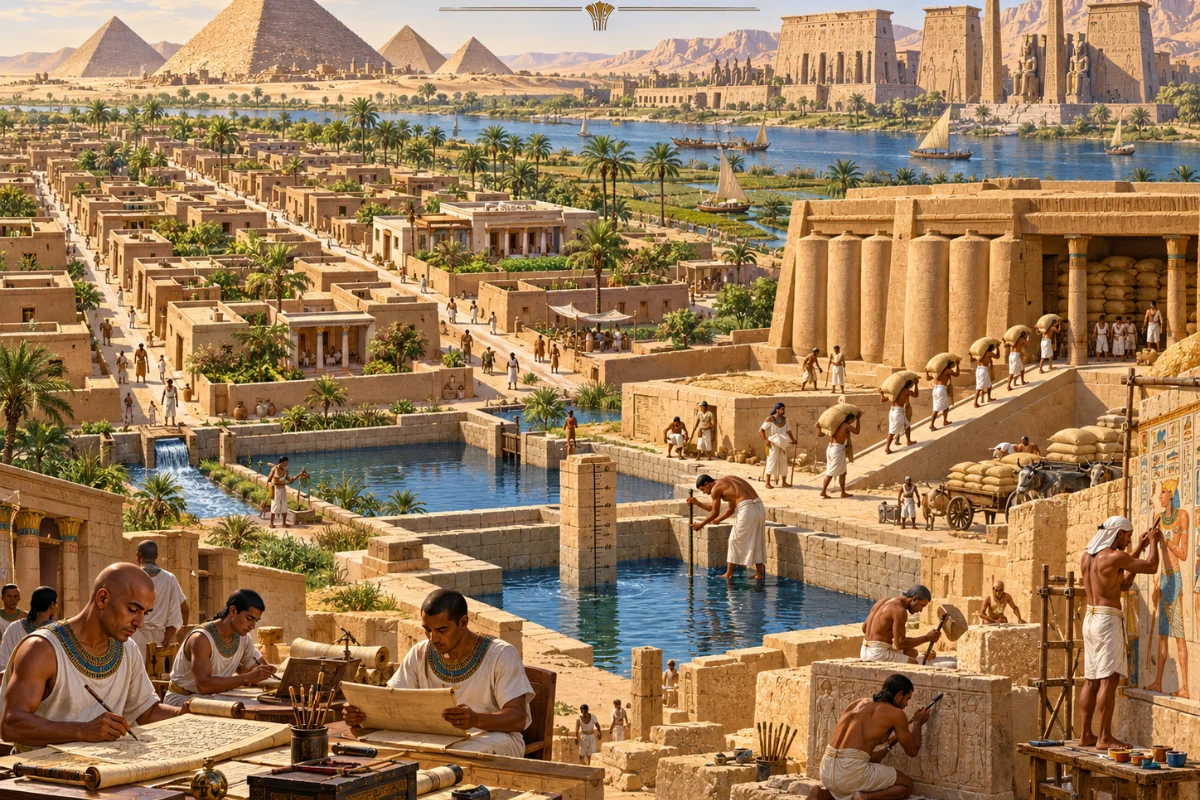
For their time, the cities of ancient Egypt were remarkably well organized. They depended on a strong central government, skilled scribes and a calendar tied to the yearly Nile flood.
Several features made them advanced:
-
Planned streets: the pyramid town of Kahun, built around 1890 BC for the workers on King Senusret II's pyramid, was laid out on a grid, with large villas and rows of smaller houses.
-
Granaries and taxes: grain was collected as tax and stored in state granaries, which fed workers and helped cities survive poor harvests.
-
Water management: canals, basins and wells carried Nile water to fields and houses, while nilometers measured the height of the flood.
-
Writing and records: scribes recorded taxes, rations and legal cases on papyrus, so cities could be managed through written administration.
-
Skilled workers: villages such as Deir el-Medina housed artists and builders who were paid in grain, beer and oil, and who organized one of the earliest recorded strikes under Ramesses III.
These systems let Egyptian cities support huge projects, from the Great Pyramid of Giza to the temples of Thebes. They were not the largest cities of the ancient world, but they were among the longest-lived.
Capitals of Ancient Egypt Through Time
Egypt's capital moved many times over 3,000 years of ancient Egyptian civilization, following the rise and fall of different royal families.
|
Period |
Approximate Dates |
Main Capital |
|
Early Dynastic Period and Old Kingdom |
About 3100 to 2181 BC |
Memphis |
|
First Intermediate Period |
About 2181 to 2055 BC |
Herakleopolis in the north, Thebes in the south |
|
Middle Kingdom |
About 2055 to 1650 BC |
Thebes, then Itjtawy near Lisht |
|
Second Intermediate Period |
About 1650 to 1550 BC |
Avaris (Hyksos) and Thebes |
|
New Kingdom |
About 1550 to 1069 BC |
Thebes, Amarna, Memphis and Pi-Ramesses |
|
Third Intermediate Period |
About 1069 to 664 BC |
Tanis |
|
Late Period |
664 to 332 BC |
Sais and Memphis |
|
Ptolemaic and Roman Egypt |
332 BC to AD 641 |
Alexandria |
Most Famous Ancient Egyptian Cities
These cities were among the most important in the ancient world. For each one, you will find where it stood, when it flourished, why it mattered and what survives today.
1. Memphis (Founded About 3100 BC)
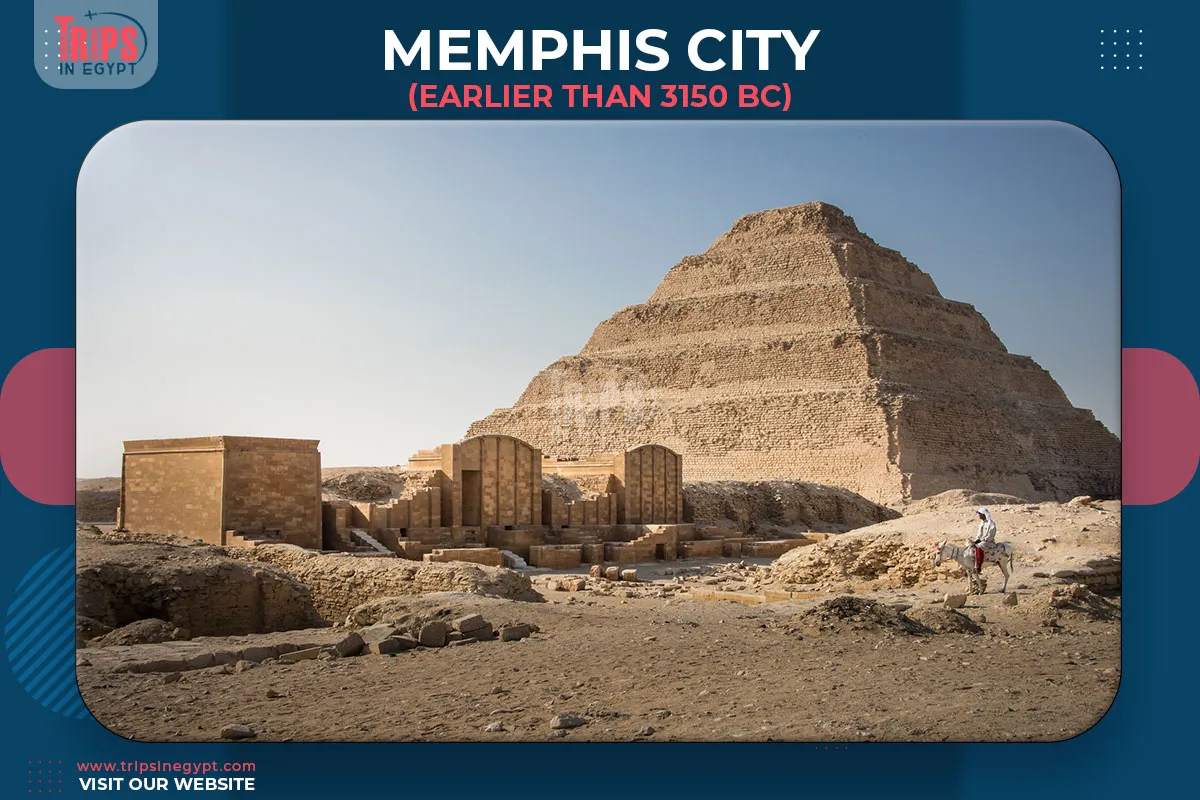
Memphis was the first capital of a united Egypt. Tradition says it was founded around 3100 BC by King Menes, the ruler who joined Upper and Lower Egypt. It stood on the west bank of the Nile about 20 kilometers south of modern Cairo, where the two lands meet.
The city served as the royal capital through the Early Dynastic Period and the whole of the Old Kingdom of Egypt, and it remained a major administrative center for much of Egyptian history. Its great temple belonged to Ptah, the creator god of craftsmen. The Greek name Memphis comes from Men-nefer, the name of the nearby pyramid of King Pepi I.
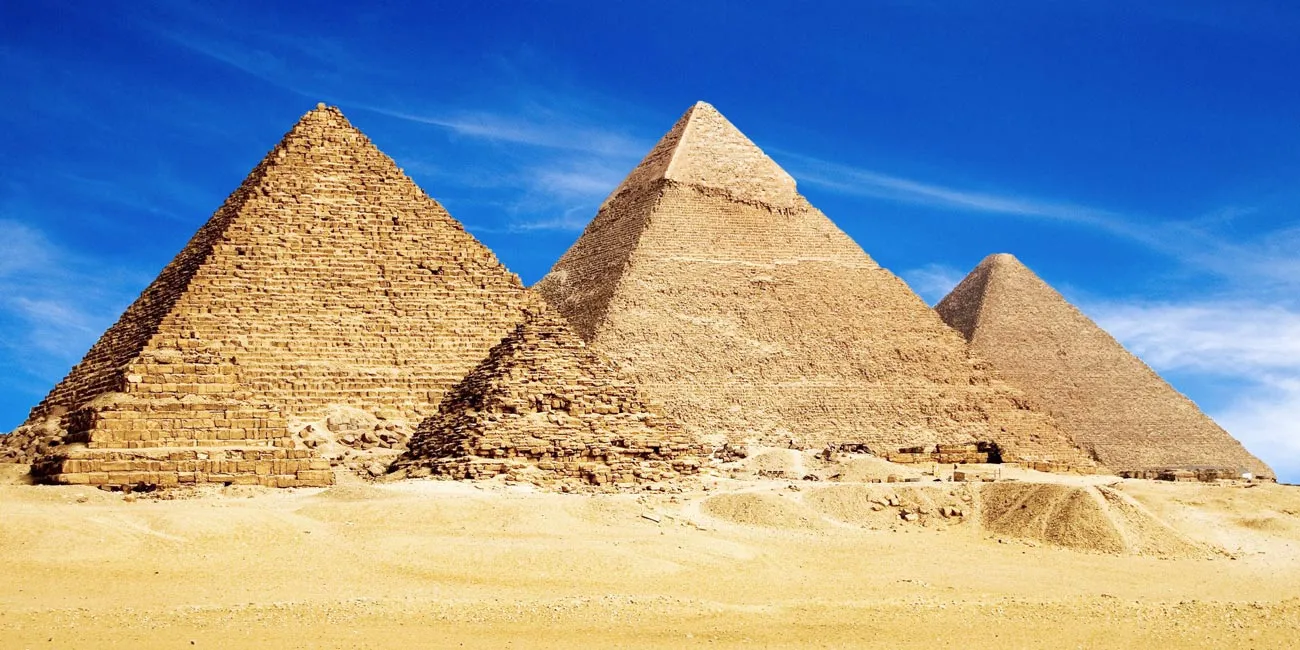
The kings of Memphis were buried in desert cemeteries to the west, from Saqqara to the Giza Pyramids Complex. In 1979, Memphis and its necropolis, from Giza to Dahshur, were listed together as a UNESCO World Heritage Site.
Today the site lies around the village of Mit Rahina. Its open-air museum displays a colossal limestone statue of Ramesses II and an alabaster sphinx. Read the full story of Memphis city in our dedicated guide.
2. Thebes (Capital From About 2055 BC)
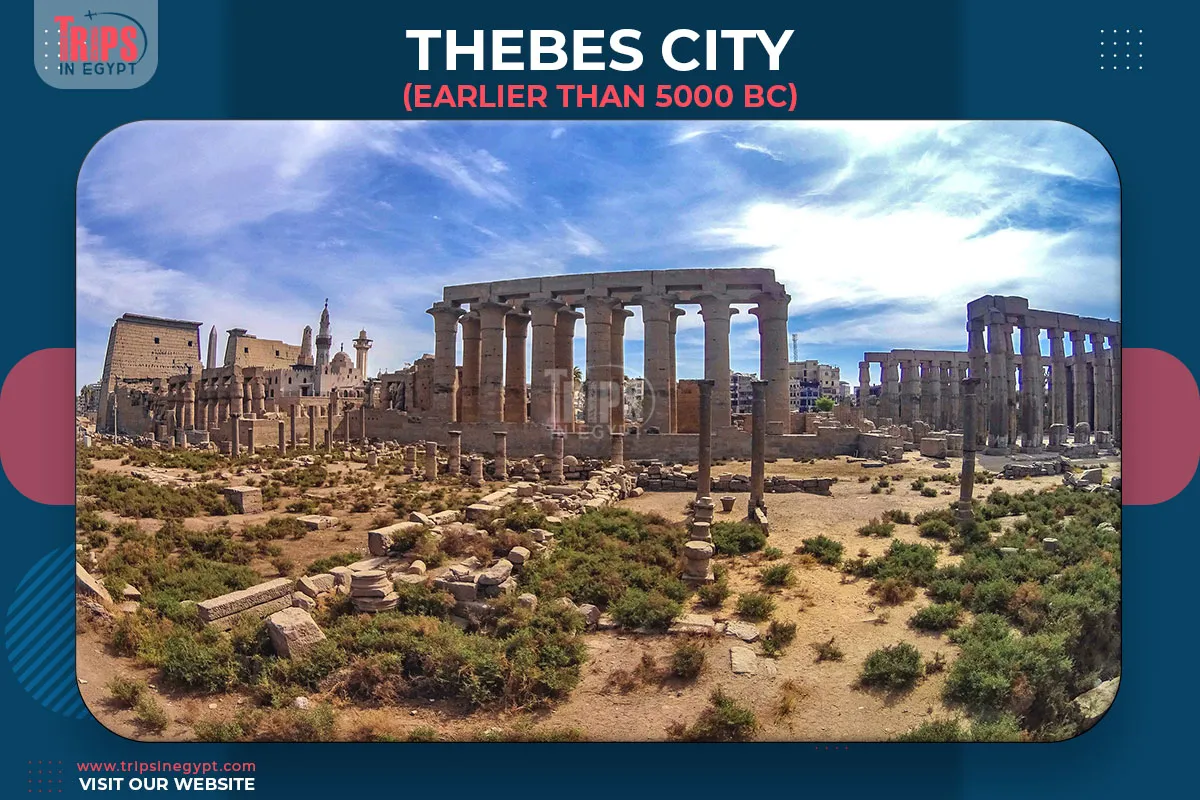
Thebes, called Waset by the Egyptians, lay about 500 kilometers south of Memphis, in the heart of Upper Egypt. It first became a national capital when Mentuhotep II reunited Egypt around 2055 BC, and it reached its peak in the New Kingdom, from about 1550 BC.
The city of the living stood on the east bank, around the great temples of Karnak and Luxor, dedicated to the god Amun. The city of the dead lay on the west bank, with the Valley of the Kings, the Valley of the Queens and dozens of mortuary temples. The Greek poet Homer called it "hundred-gated Thebes."
Thebes grew rich from gold, tribute and trade along routes to Nubia, the Red Sea and the Near East. The modern city of Luxor now stands on the site, and its temples and tombs were listed by UNESCO in 1979.
Thebes was the stage for many of Egypt's greatest kings, from Hatshepsut to Ramesses II. You can learn more in our guide to the city of Thebes.
3. Abydos (Before 3000 BC)
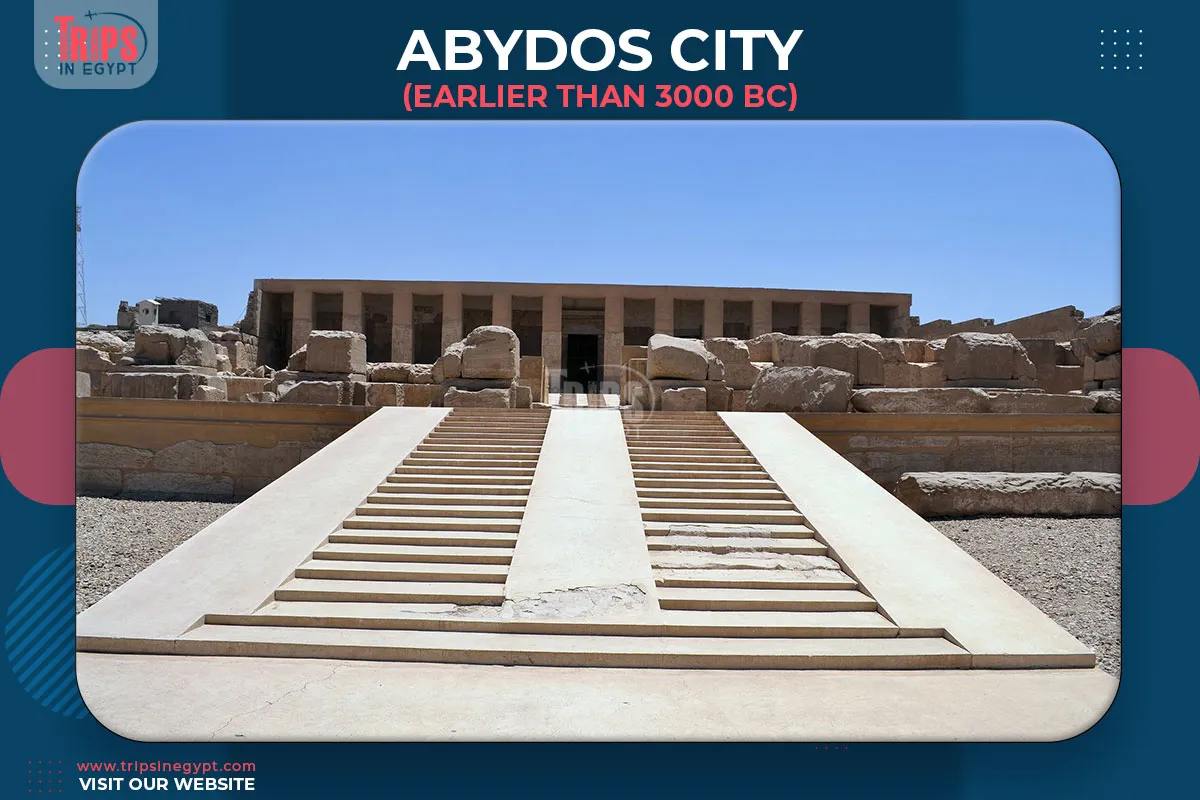
Abydos, or Abdju, lies about 11 kilometers west of the Nile, near the town of El-Balyana in Sohag. It is one of the oldest and holiest cities in Egypt. The first kings of Egypt, and the rulers just before them, were buried in its royal cemetery at Umm el-Qa'ab.
From the Middle Kingdom onward, Abydos was the main cult center of Osiris, god of the dead, and was believed to hold his tomb. Pilgrims came from all over Egypt for his yearly festival, and many people set up memorial stelae there to share in his rebirth.
The best-preserved monument is the Temple of Seti I at Abydos, built around 1290 BC. It holds the Abydos King List, which names 76 earlier kings and remains one of the key sources for Egyptian history. Behind it lies the mysterious Osireion, a stone hall built as a symbolic tomb of Osiris.
4. Alexandria (Founded 331 BC)
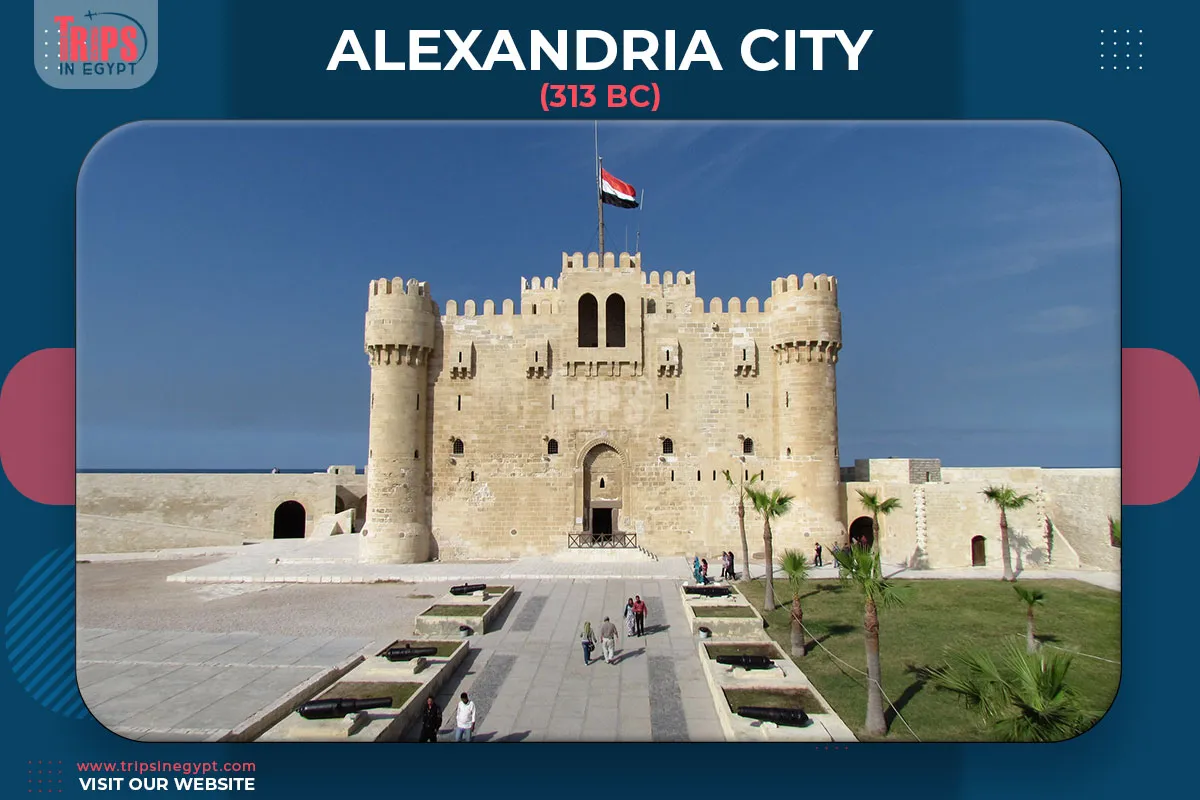
Alexandria was founded in 331 BC by Alexander the Great on the site of a small Egyptian village called Rhakotis. After his death, the Ptolemaic kings made it the capital of Egypt, and it remained the capital under Roman and Byzantine rule until the Arab conquest in AD 641.
Ptolemaic Alexandria was one of the largest and richest cities of the Mediterranean, with a population that probably reached several hundred thousand. Its Pharos lighthouse, finished around 280 BC, was one of the Seven Wonders of the Ancient World. Its great library made the city a center of science and learning.
Scholars such as Euclid and Eratosthenes worked there, and Eratosthenes measured the size of the Earth with surprising accuracy. That spirit of learning lives on in the modern Library of Alexandria, opened in 2002.
Today Alexandria is Egypt's second-largest city, about 220 kilometers northwest of Cairo by road. Visitors can explore the catacombs of Kom El Shoqafa, Pompey's Pillar and the Roman theater at Kom el-Dikka.
The modern city keeps its ancient seafront, its fortress on the site of the lighthouse and its lively harbor. For travel tips, see our guide to Alexandria city.
5. Crocodilopolis (Shedet)
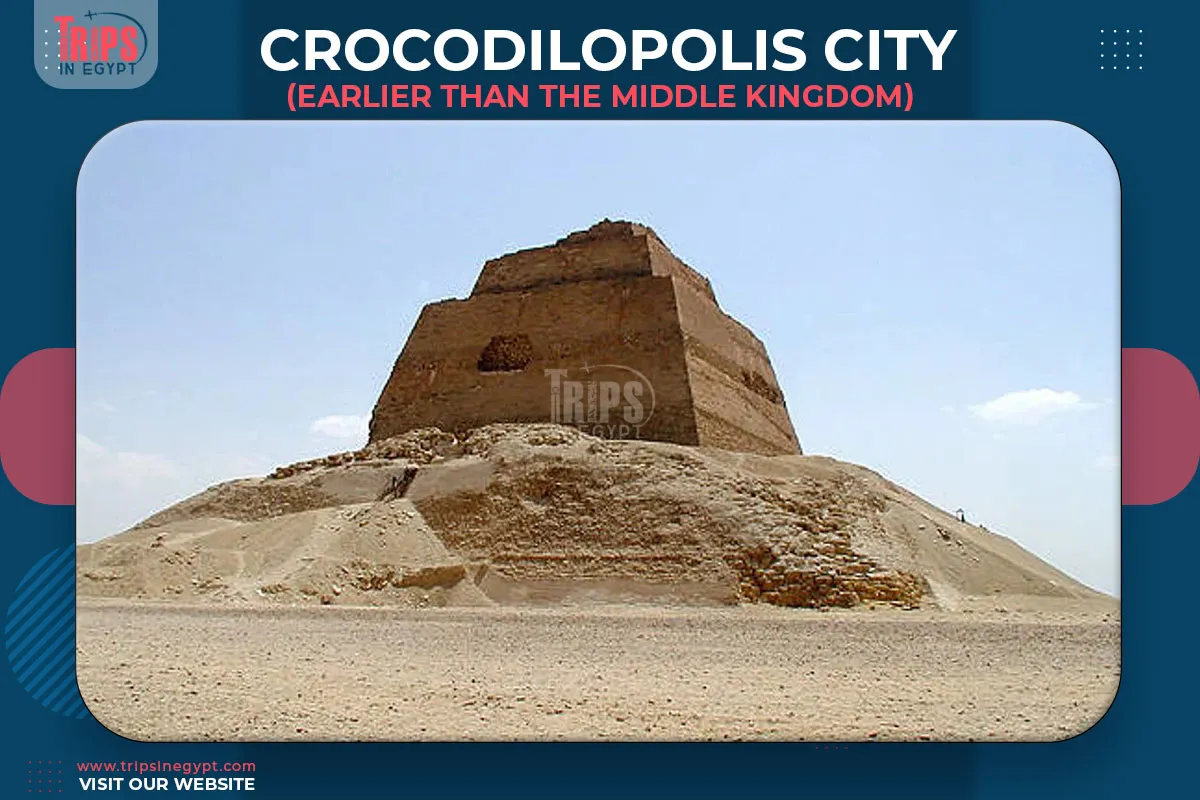
Crocodilopolis, known to the Egyptians as Shedet, stood in the Fayoum, about 100 kilometers southwest of Cairo. It was the cult center of Sobek, the crocodile god, which is why the Greeks called it the "City of Crocodiles." Later, King Ptolemy II renamed it Arsinoe after his sister and wife.
The city grew in the Middle Kingdom, when kings of the Twelfth Dynasty drained and farmed the Fayoum. Amenemhat III built his pyramid and a famous temple complex, later called the Labyrinth, at nearby Hawara. The Greek writer Strabo described a sacred crocodile kept in a lake at Shedet and fed with bread, meat and wine by visitors.
Its ruins, called Kiman Faris, lie under and beside the modern city of Medinet el-Fayoum. You can explore the wider region in our guide to the Faiyum Oasis.
6. Elephantine (Before 3000 BC)
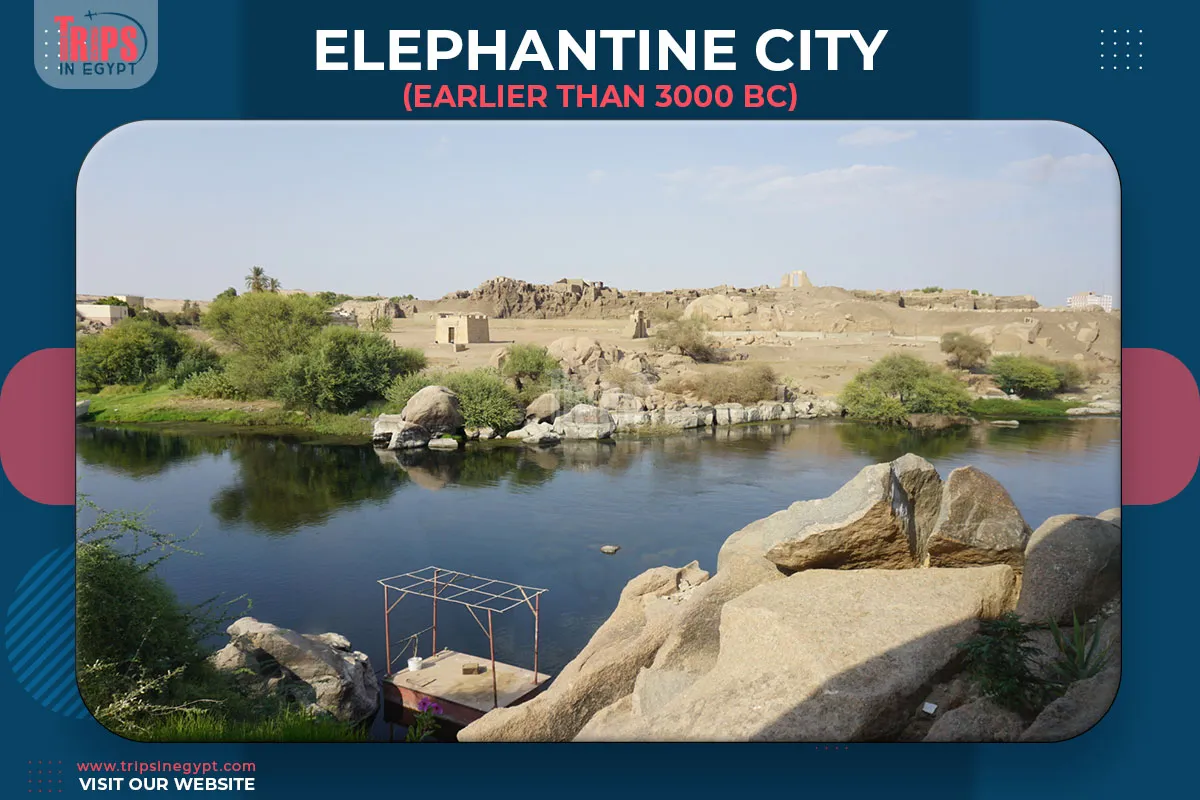
Elephantine is an island in the Nile at Aswan, just below the First Cataract. The Egyptians called it Abu, a word meaning both "elephant" and "ivory," probably because it was a major market for ivory from the south. The island is about 1,200 meters long and 400 meters wide.
For most of Egyptian history it marked the southern border with Nubia. It controlled river trade in gold, ivory and ebony, and nearby quarries supplied the red granite used for obelisks and statues across Egypt.
Its first shrine, to the goddess Satet, dates to around 3000 BC, and a later temple honored Khnum, the ram god believed to guard the source of the Nile. The island also has one of Egypt's best-known nilometers. The modern city of Aswan grew up on the riverbank opposite.
7. Amarna (Founded About 1346 BC)
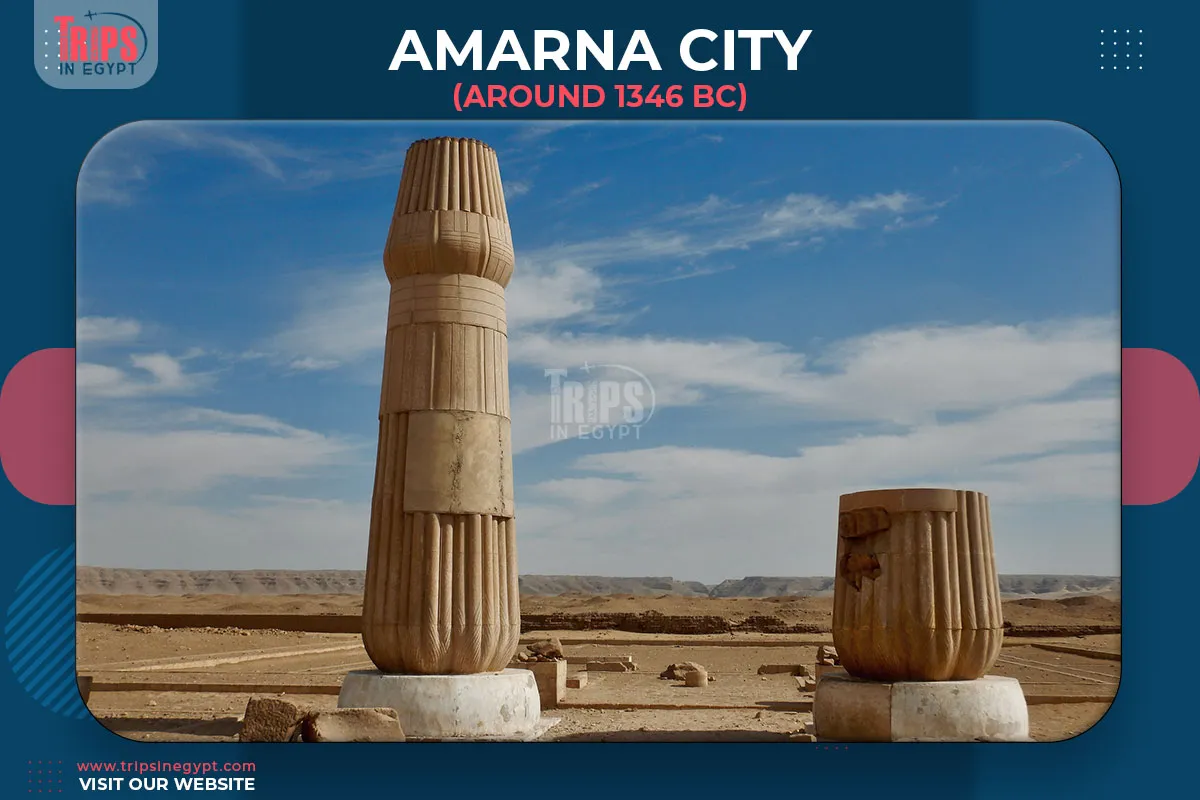
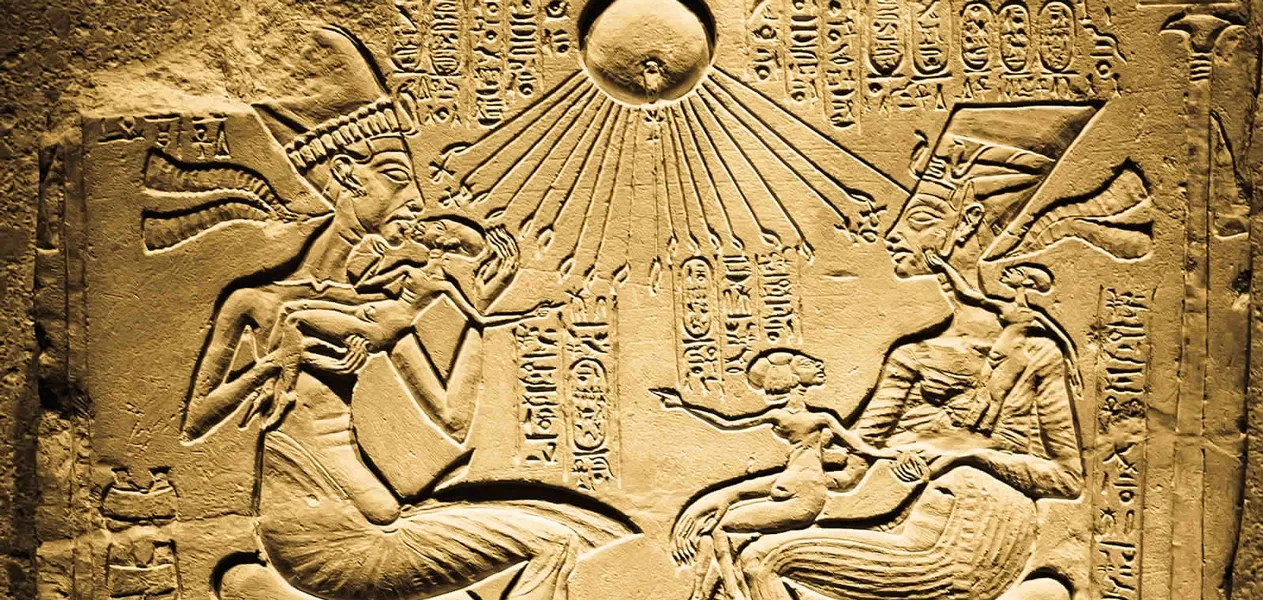
Amarna, called Akhetaten, "Horizon of the Aten," was built by King Akhenaten around 1346 BC. He moved the capital there from Thebes to worship one god, the Aten, or sun disk. The city stood on the east bank of the Nile, about 300 kilometers south of Cairo, in today's Minya governorate.
It was planned quickly, with temples open to the sun, palaces, a royal road, houses for officials and a workers' village. Fourteen to sixteen boundary stelae marked its limits. Archaeologists also found the Amarna Letters, about 380 clay tablets of royal correspondence, and in 1912 the famous painted bust of Queen Nefertiti.
The city lasted less than 20 years. Soon after Akhenaten's death, Tutankhamun restored the worship of Amun, and the court left Amarna. Because it was abandoned so quickly and never rebuilt, Amarna gives us one of the clearest pictures of a complete ancient Egyptian city.
8. Heliopolis (Iunu)
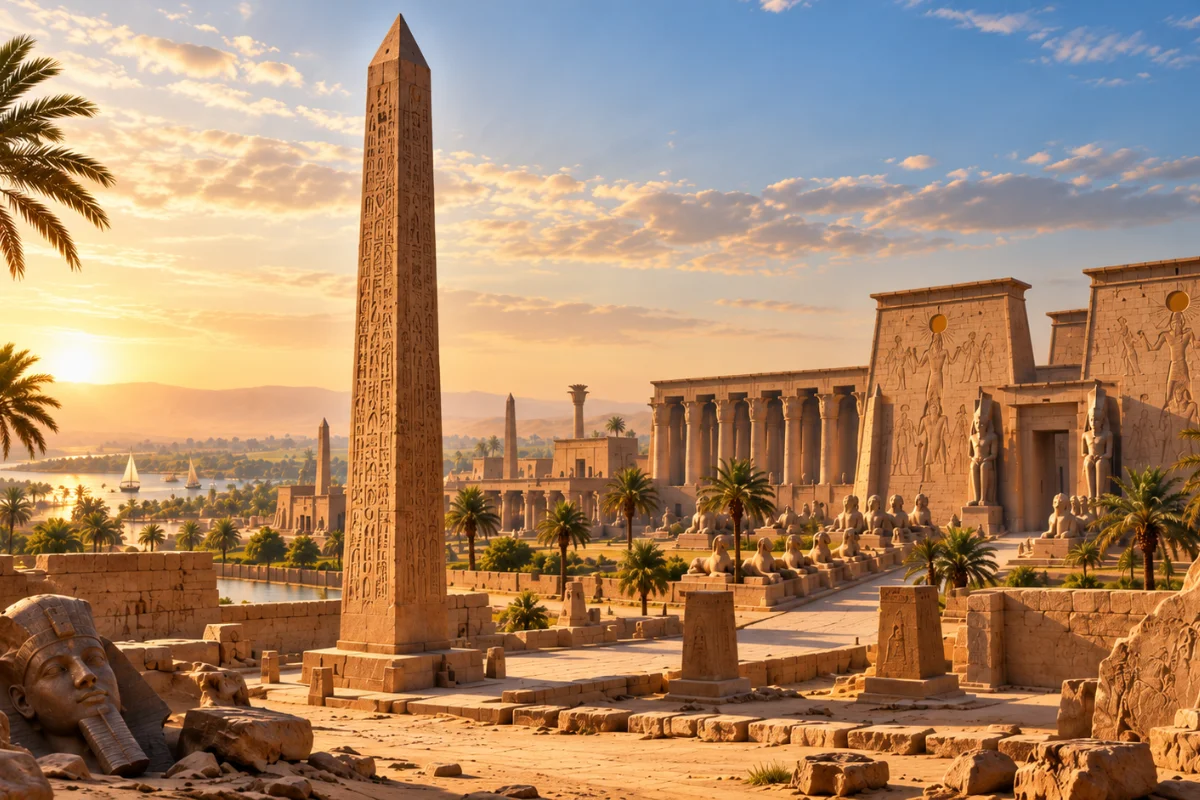
Heliopolis, the Greek "City of the Sun," was called Iunu, "City of Pillars," by the Egyptians. It was the main cult center of the sun god Ra and of Atum, and its priests developed the creation story of the Ennead, the nine gods. You can meet these deities in our guide to ancient Egyptian gods and goddesses.
Little of the city survives, because its stone was reused to build medieval Cairo. Its most striking survivor is the obelisk of Senusret I at Matariya, about 20 meters tall and the oldest obelisk still standing in its original place. In 2017 archaeologists found a colossal statue there, later identified as King Psamtik I.
9. Hermopolis (Khmun)
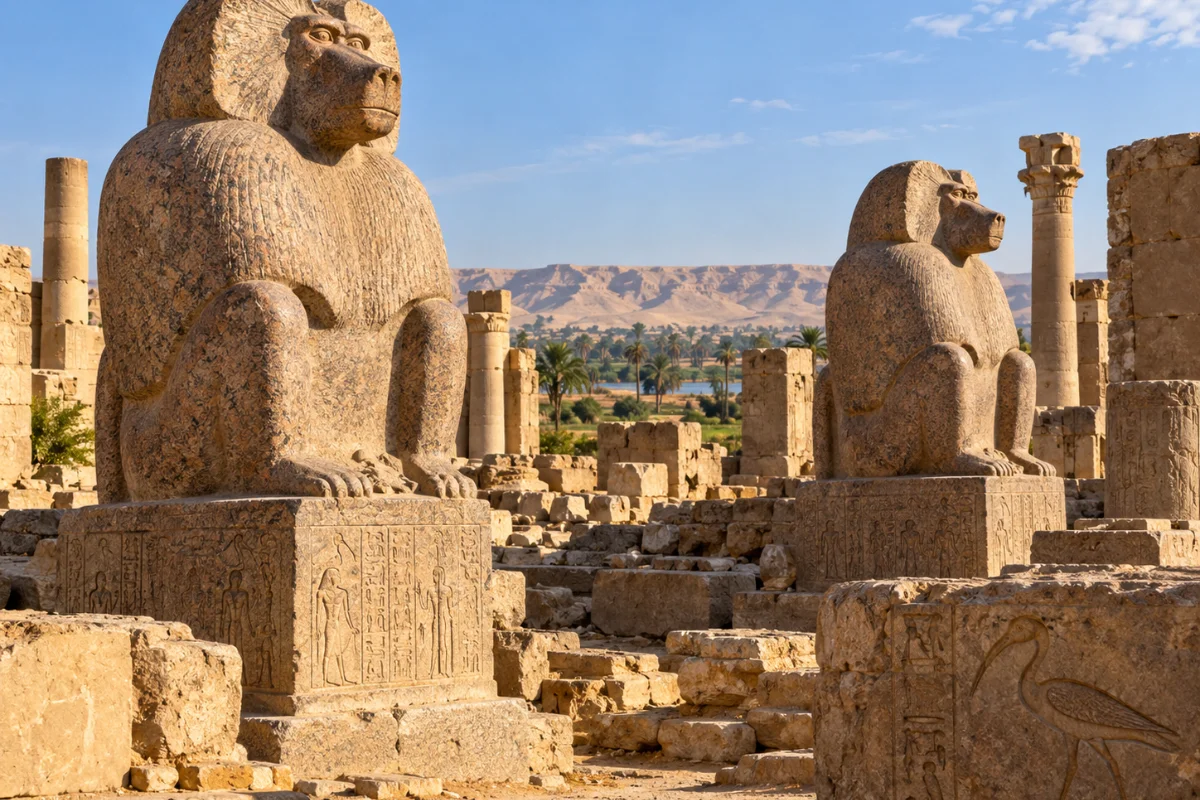
Hermopolis, called Khmun or "Eight-Town," was the city of Thoth, god of writing and wisdom. Its name refers to the Ogdoad, eight primeval gods who were believed to have created the world there. The Greeks linked Thoth with their god Hermes, which gave the city its Greek name.
Its ruins lie at El-Ashmunein in Minya. Two colossal quartzite baboons of Amenhotep III, each about 4.5 meters tall, still stand on the site, and its cemetery at Tuna el-Gebel holds thousands of mummified ibises and baboons sacred to Thoth.
10. Hierakonpolis (Nekhen)
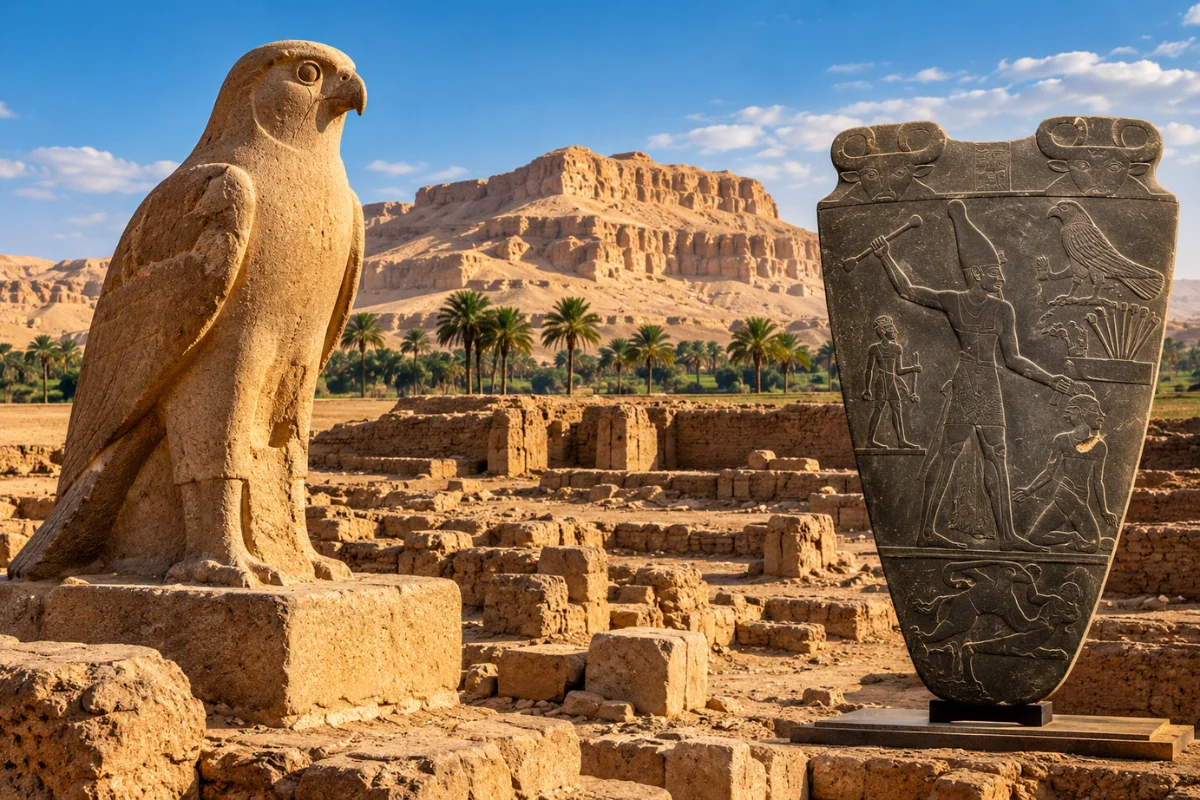
Hierakonpolis, the "City of the Falcon," was known as Nekhen. Around 3500 BC it was one of the largest towns in the Nile Valley and an early center of royal power, dedicated to the falcon god Horus.
Excavations there between 1897 and 1899 uncovered the Narmer Palette, a carved stone slab that shows a king wearing the crowns of both Upper and Lower Egypt. It is often seen as a record of Egypt's unification and is now in the Egyptian Museum in Cairo.
11. Pi-Ramesses and Avaris
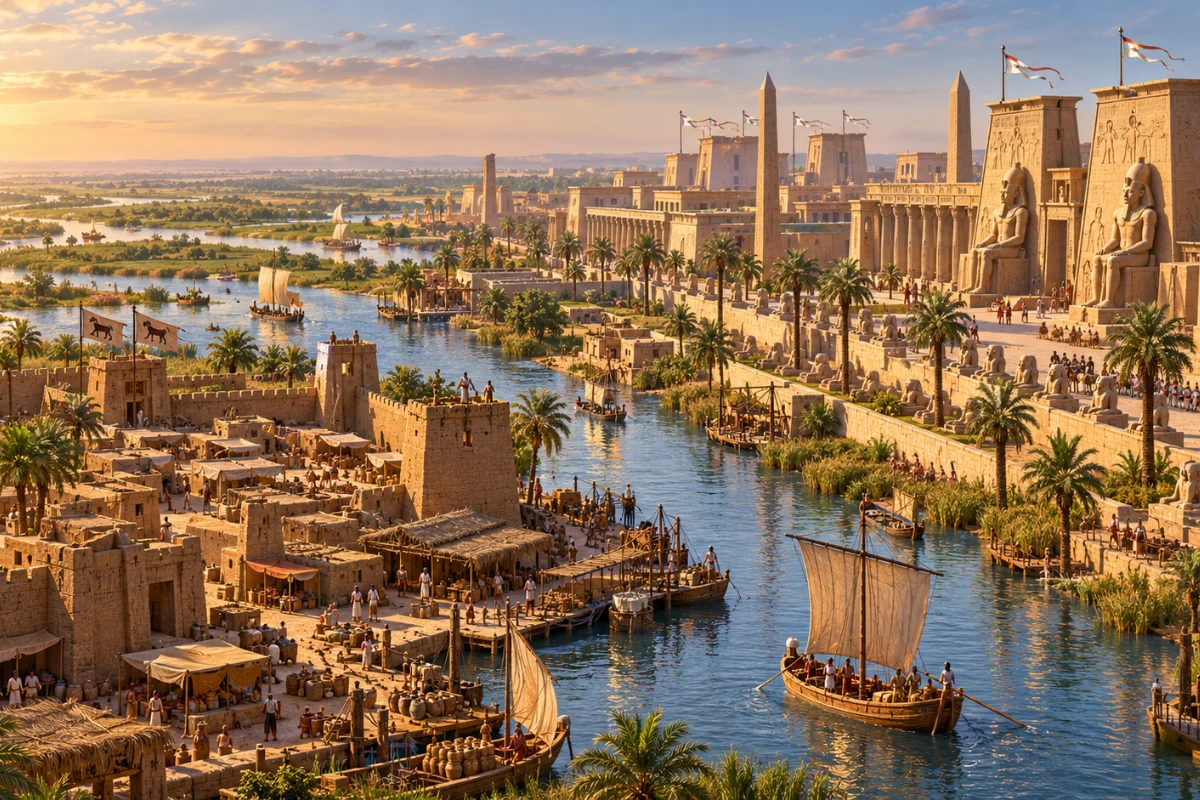
Avaris, at today's Tell el-Dab'a in the eastern Delta, became the capital of the Hyksos rulers who controlled northern Egypt from about 1650 to 1550 BC. The Theban king Ahmose I captured it and drove them out.
Nearly three centuries later, Ramesses II built his new capital, Pi-Ramesses, "House of Ramesses," right next to it at Qantir. Its position close to the eastern border helped the army march into Canaan and Syria. When the Nile branch beside it silted up, its statues and blocks were moved to Tanis.
12. Tanis (Djanet)
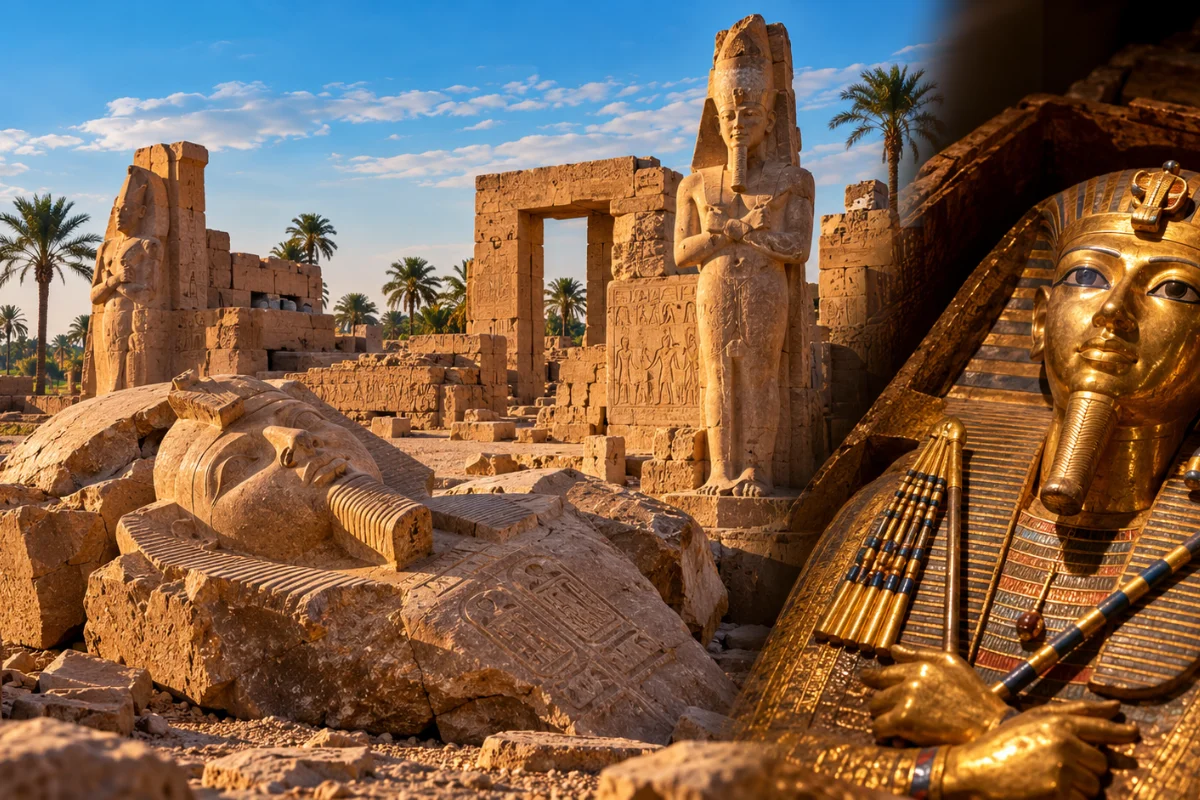
Tanis, or Djanet, at San el-Hagar in the northeastern Delta, was the capital of the Twenty-first and Twenty-second Dynasties. Its temples were built largely from monuments carried from Pi-Ramesses, which is why the name of Ramesses II appears all over the site.
In 1939 and 1940, the French archaeologist Pierre Montet found royal tombs there that had escaped robbers. They held the silver coffin and gold mask of King Psusennes I, now among the treasures of the Egyptian Museum in Cairo.
What Was the Biggest Ancient Egyptian City?
The biggest ancient Egyptian city depends on the period. In the Old Kingdom, Memphis was the largest, and some historians estimate it was among the most populous cities in the world for several centuries. In the New Kingdom, Thebes rivaled or overtook it as the greatest city of Egypt.
Under the Ptolemies, Alexandria became the largest of all. With a population that probably reached several hundred thousand, it was one of the biggest cities of the ancient Mediterranean, second only to Rome by the time of the Roman Empire.
All these figures are estimates, as no full census survives. Still, it is clear that Memphis, Thebes and Alexandria were among the largest urban centers in Egyptian history.
How Many Ancient Egyptian Cities Were There?
No one knows the exact number. Ancient Egypt was divided into about 42 provinces, called nomes: 22 in Upper Egypt and 20 in Lower Egypt. Each nome had its own capital town with a temple to its local god, and there were hundreds of smaller towns and villages besides.
The Greek historian Herodotus claimed there were 20,000 inhabited cities in Egypt under King Amasis in the 6th century BC. Modern historians see this as a great exaggeration, but it shows how densely settled the Nile Valley appeared to foreign visitors.
Facts About Ancient Egyptian Cities
-
Memphis was the first capital of united Egypt, founded around 3100 BC.
-
Thebes first became the capital around 2055 BC under Mentuhotep II.
-
Most houses, and even royal palaces, were built of mudbrick, while temples and tombs were built of stone.
-
Many cities were dedicated to a main god, such as Ptah at Memphis, Amun at Thebes, Ra at Heliopolis and Thoth at Hermopolis.
-
Elephantine's ancient name, Abu, means "elephant" or "ivory."
-
Amarna was the capital for less than 20 years and was abandoned soon after Akhenaten's death.
-
The temple complex of Karnak at Thebes has three main walled precincts, dedicated to Amun, Mut and Montu.
-
Alexandria's lighthouse was one of the Seven Wonders of the Ancient World.
-
The Greek names many cities are known by today, such as Memphis, Thebes and Heliopolis, were given long after they were founded.
-
Egypt's capital moved at least eight times, from Memphis to Alexandria, over about 3,000 years.
Where to Visit Ancient Egyptian Cities Today
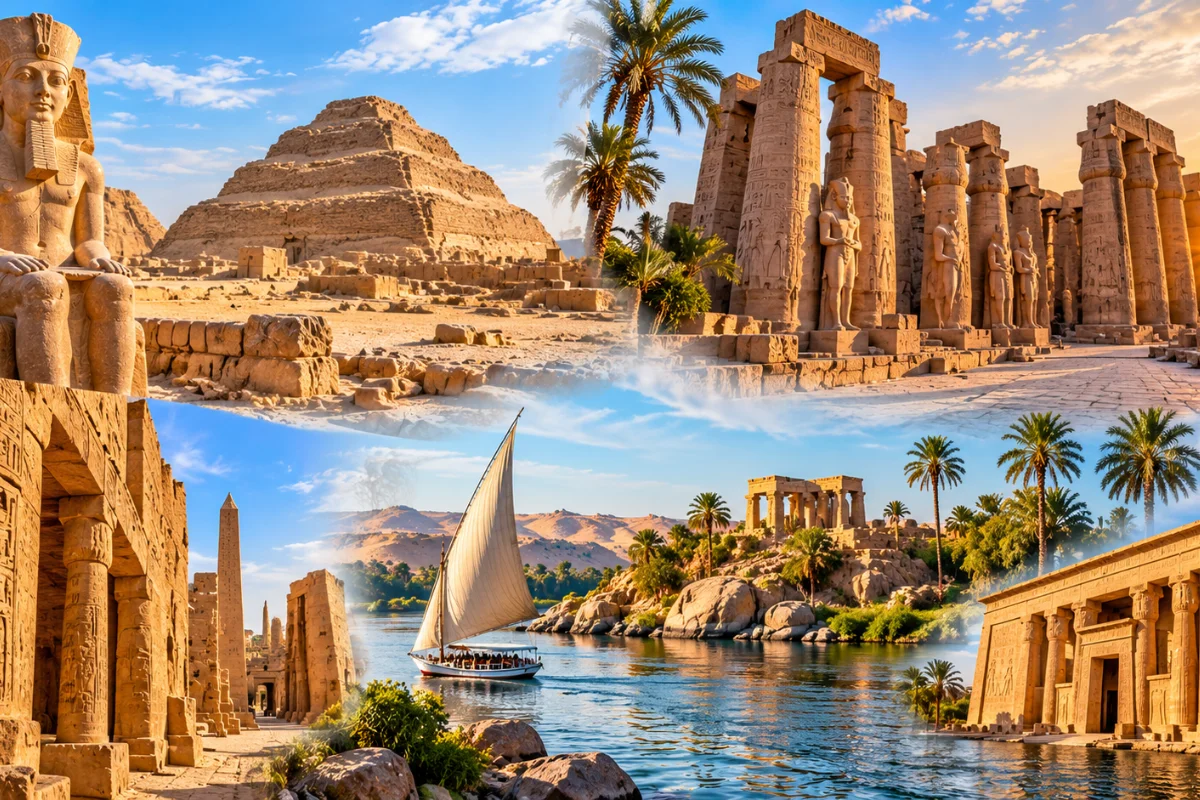
Several ancient cities can still be explored on a day trip. From Cairo, the Half-Day Tour to Memphis, Saqqara & Dahshur from Cairo, From $100, visits the ruins of Memphis and its colossal statue of Ramesses II.
In Luxor, the temples of ancient Thebes are the main attraction. Start with the great Karnak Temple, then cross to the west bank for the royal tombs.
From Luxor, you can also reach the holy city of Abydos. The Tour to Dendera and Abydos from Luxor visits the Temple of Seti I and the Temple of Hathor at Dendera in one day.
In Aswan, a short boat ride takes you to the ruins of ancient Abu. The Day Tour to Elephantine Island & Aga Khan Mausoleum, From $40, explores the island's ancient temple remains.
Best Times to Visit Egypt
The cooler months from October to April are the most popular time to visit Egypt, with peak crowds from December to January. Daytime temperatures in Cairo usually range from about 14°C to 24°C in winter, which suits long days at ancient sites. Read more about the good times to visit Egypt before you plan.
Summer, from June to August, is very hot in Upper Egypt, often above 40°C in Luxor and Aswan. It is a better season for the Red Sea beaches of Hurghada, where sea breezes ease the heat.
The Sinai coast offers another warm-weather escape. Resorts such as Sharm El-Sheikh are known for coral reefs and diving.
Spring and autumn are good in-between seasons. Winter is also the classic time for a Nile River cruise between Luxor and Aswan, which links the temples of Thebes, Edfu, Kom Ombo and Elephantine in a few days.
Explore the Ancient Cities of Egypt
The cities of the pharaohs are still waiting to be discovered, from the pyramid fields of Memphis to the island of Elephantine. Our tours to Egypt combine Cairo, Luxor, Aswan and Alexandria with expert Egyptologist guides.
Conclusion
Ancient Egyptian cities were far more than ruins along the river. Memphis united the country, Thebes honored Amun, Abydos welcomed pilgrims of Osiris and Alexandria opened Egypt to the Mediterranean world. Their temples, tombs and city mounds still show how advanced their planning, building and government were. Visit them today, and you follow a path that pharaohs, priests and traders walked thousands of years ago, through a timeless river kingdom.

5 Days Cairo And Hurghada Trip
Amazing 4 Nights Cairo and Hurghada Trip Itinerary 5 Days Cairo and Hurghada trip wil...
- Duration 5 Days / 4 Nights
- Location Cairo & Hurghada
- Type Historical & Recreational Tour
From$690/per person
View Tour
6 Days Cairo, Alexandria & Faiyum Tour
Unforgettable Cairo, Alexandria & Faiyum Adventure in Six Days 6 Days Cairo, Alex...
- Duration 6 Days / 5 Nights
- Location Cairo - Alexandria - Fayum
- Type Historical Tour
From$720/per person
View Tour
10 Days Cairo, Faiyum & Nile Cruise Holiday
Breathtaking 10 Days Journey of A Lifetime in Egypt 10 Days Cairo, Faiyum & Nile...
- Duration 10 Days / 9 Nights
- Location Cairo, Luxor, Aswan & Faiyum
- Type Classic Tour
From$1350/per person
View Tour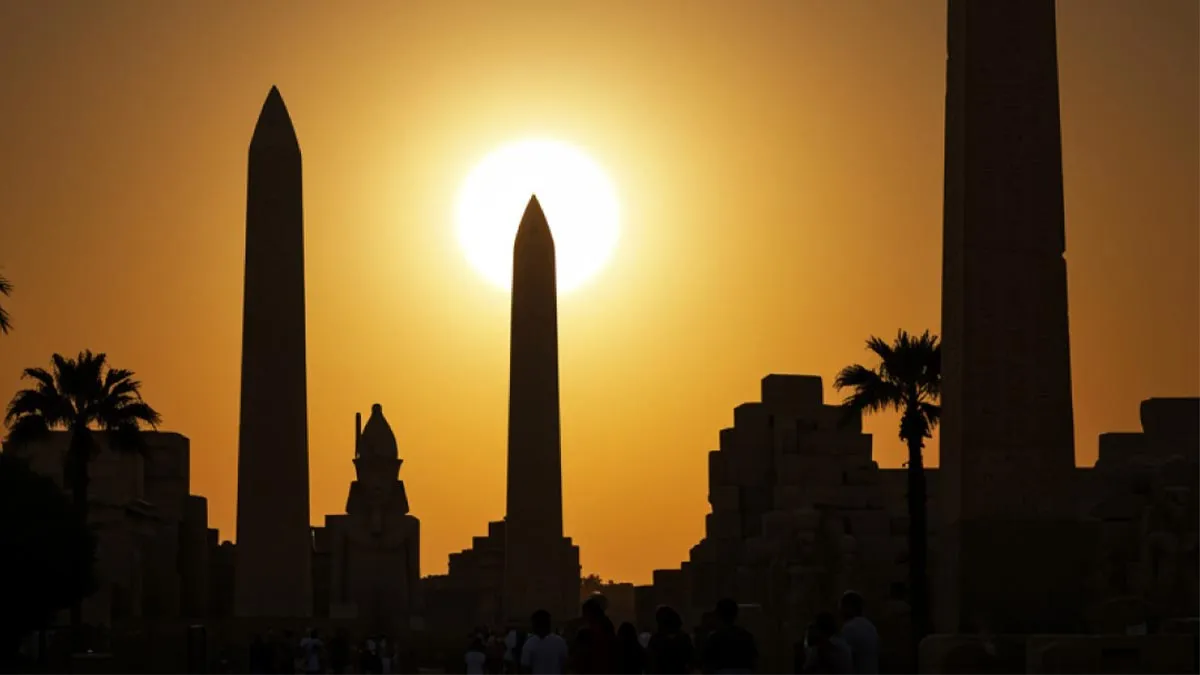 SOLD OUT
Ultimate 7-Day Egypt Solar Eclipse Experience with Hurghada 2027
Enjoy a 7-Day Egypt Solar Eclipse Tour with Hurghada 2027 6 Nights Egypt Solar Ecli...
- Duration 7 Days / 6 Nights
- Location Cairo / Giza / Luxor / Hurghada
- Type Astronomical Tour
Sold Out
View Details