



Long before sugar reached the Nile Valley, honey was the sweetest thing an Egyptian could taste. It filled the cakes of festivals, the offering tables of temples, the jars of physicians and the storerooms of tombs. For a people who believed that bees were born from the tears of the sun god, every drop of honey was a small piece of heaven on earth.
This article follows honey through ancient Egyptian civilization: its sacred origins, the world's oldest beekeeping scenes, the many ways it was used, its place in ancient Egyptian tombs and the truth behind the famous story of 3,000-year-old honey that was still edible. Here are all things you need to know about honey in ancient Egypt and ancient Egyptian tombs:

The Tears of Ra: Why Honey Was Sacred in Ancient Egypt
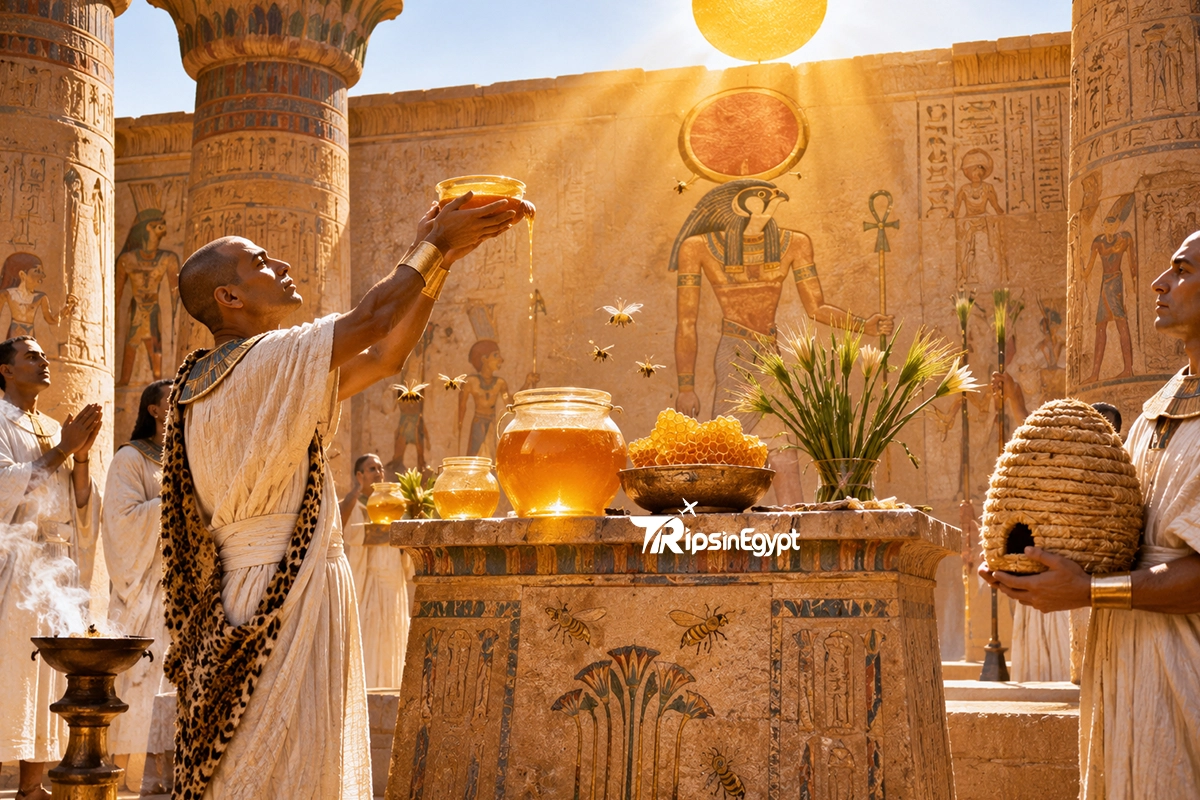
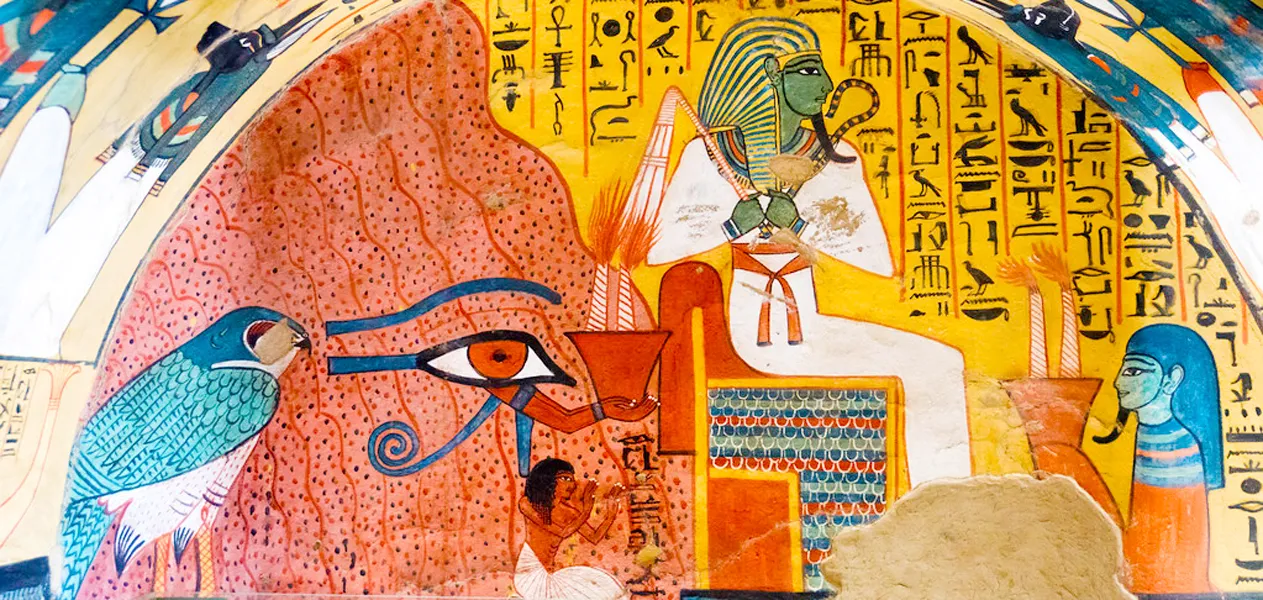
Egyptian myth gave honey a divine birth. One text tells that when Ra, the sun god, wept, his tears fell to the ground and turned into bees, which then made honey and wax. Honey was therefore more than food. It was a gift from the creator, and it belonged naturally on the altars of the ancient Egyptian gods and goddesses.
The bee also stood at the heart of kingship. The oldest bee hieroglyph dates to shortly before 3000 BC, and from the earliest dynasties the king carried the title nesu-bity, "He of the Sedge and the Bee." The sedge stood for Upper Egypt and the bee for Lower Egypt, so every one of the Egyptian pharaohs ruled, in part, under the sign of the bee.
Some temples had a special link with honey. Min, the god of fertility, received honey offerings, and the temple of Neith at Sais in the Delta was known as the "House of the Bee." Honey was also tied to ideas of rebirth, which explains why it appears again and again in rituals for the dead.
Ancient Egyptian Beekeeping: The World's First Apiaries
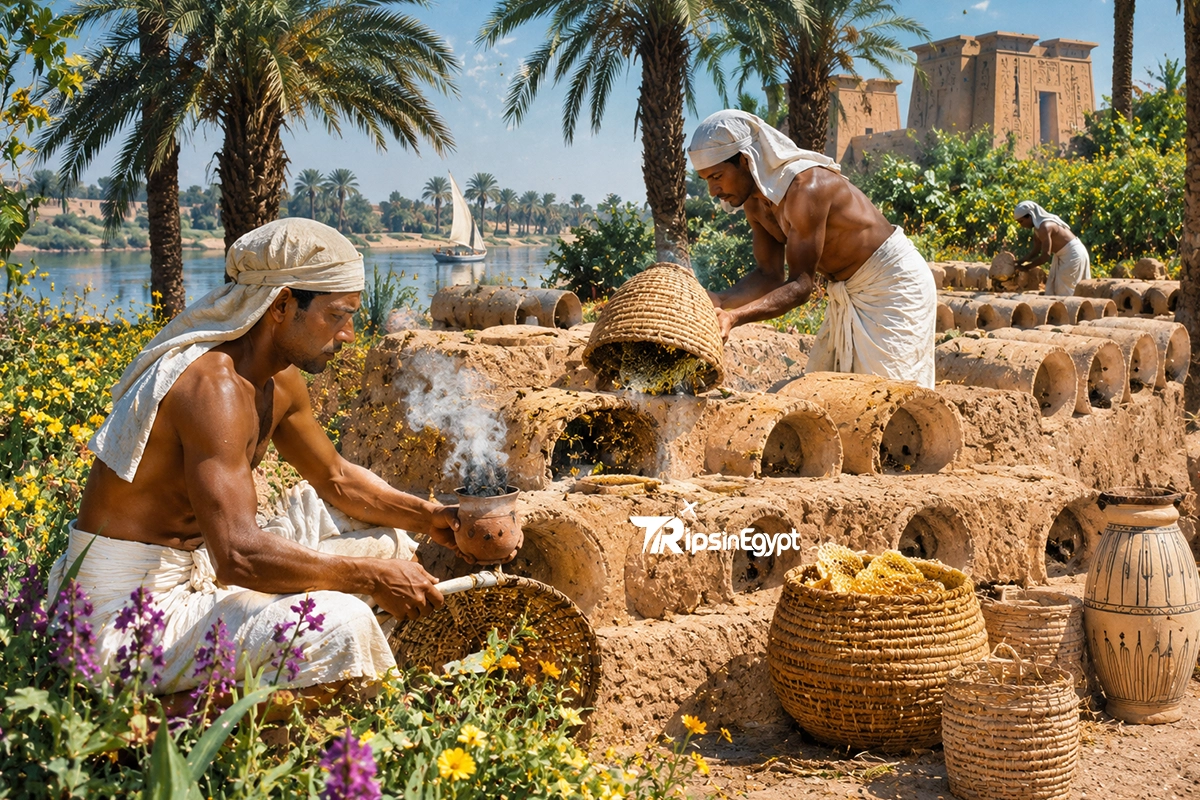
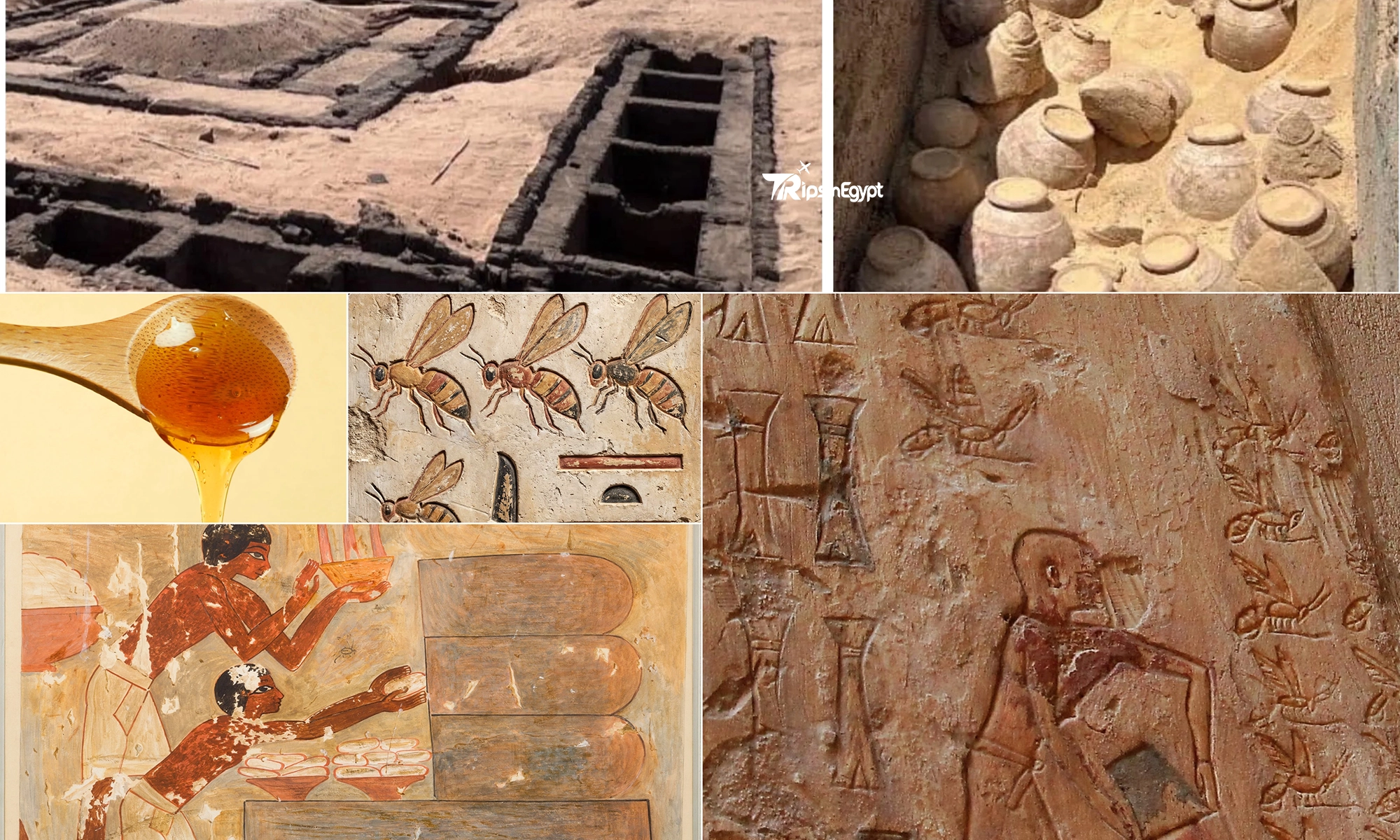
Egypt gives us the oldest known pictures of people keeping bees rather than robbing wild nests. The earliest comes from the sun temple of Niuserre at Abu Gurob, near the Abusir pyramids, built in the 5th Dynasty around 2400 BC. Its fragmentary relief shows workers at a stack of hives, honey being poured and stored, and the jars being sealed.
The hives themselves were long horizontal tubes of dried mud or unbaked clay, stacked one on top of another to form a wall. Beekeepers blew smoke into one end to calm the bees, then pulled the combs out from the back. This "pipe hive" design is so practical that Egyptian farmers still build similar clay hives in parts of Upper Egypt today.
About a thousand years later, the same work appears in vivid color in the tomb of Rekhmire (TT100), vizier to Thutmose III, around 1450 BC. The scene, a highlight of ancient Egyptian art in the Valley of the Nobles on Luxor's West Bank, shows a man smoking the hives while others crush combs and pack the honey into large jars. A much later relief, in the tomb of Pabasa (TT279) from the 26th Dynasty, shows a beekeeper kneeling beside his hives with bees buzzing around him.
Beekeeping became big business. Papyri from the Ptolemaic period record one landlord who owned 1,000 hives and leased them out, and another list that opens with 5,000 beehives. Beekeepers paid taxes in honey, wax or coin, and one petition asks for donkeys to move hives before the Nile flood reached them. The popular story that hives were floated down the Nile on rafts is often repeated, but no direct ancient evidence supports it.
How Ancient Egyptians Used Honey: Food, Medicine and Magic
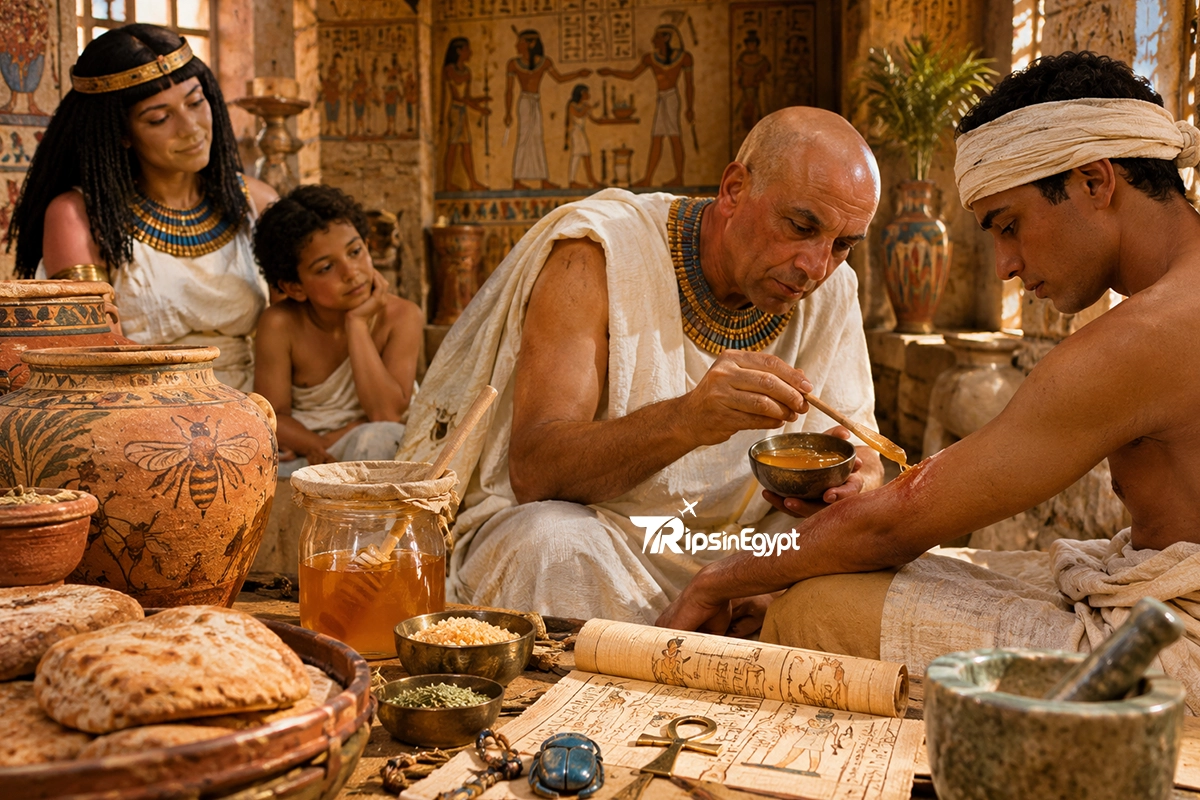
Honey was expensive, so its use tells us a lot about status. Wealthy households enjoyed it daily, while ordinary families sweetened their food mainly with dates and carob, as described in our guide to daily life in ancient Egypt.
In the kitchen. Honey sweetened bread, cakes and fruit dishes, and cakes for ancient Egyptian festivals were often soaked in it. It also flavored drinks, and honey may have been added to some wines and beers.
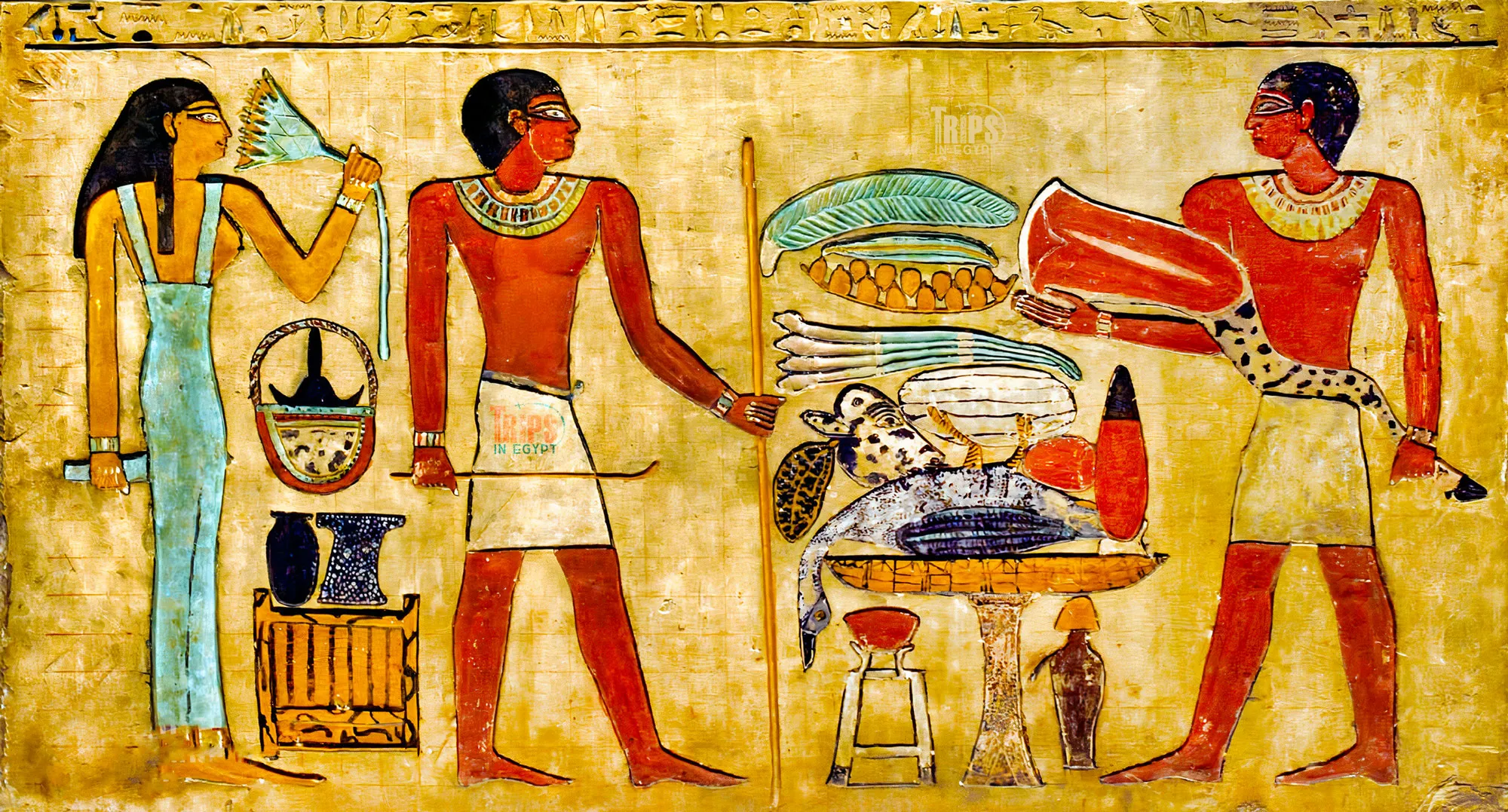
In the temples. Honey was one of the most precious gifts a king could make to the gods. The Great Harris Papyrus, which records the donations of Ramesses III to the temples, lists honey by the thousands of jars, alongside grain, oil, wine and incense. Honey cakes were placed on the offering table in front of statues of gods and the dead.
In medicine. Honey was one of the most used ingredients in Egyptian medicine. The Edwin Smith Papyrus recommends treating fresh wounds with honey, grease and lint, while the Ebers Papyrus, written around 1550 BC, uses honey in a long list of remedies for eyes, skin, burns, coughs and stomach complaints. Modern research confirms that honey can help clean wounds.
In magic and women's health. The Kahun Papyrus, written around 1850 to 1750 BC near the Faiyum Oasis, is one of the oldest medical texts on women's health. One damaged prescription calls for a measure of honey prepared with natron and placed in the body to prevent pregnancy, which is one of the oldest known recipes for contraception.
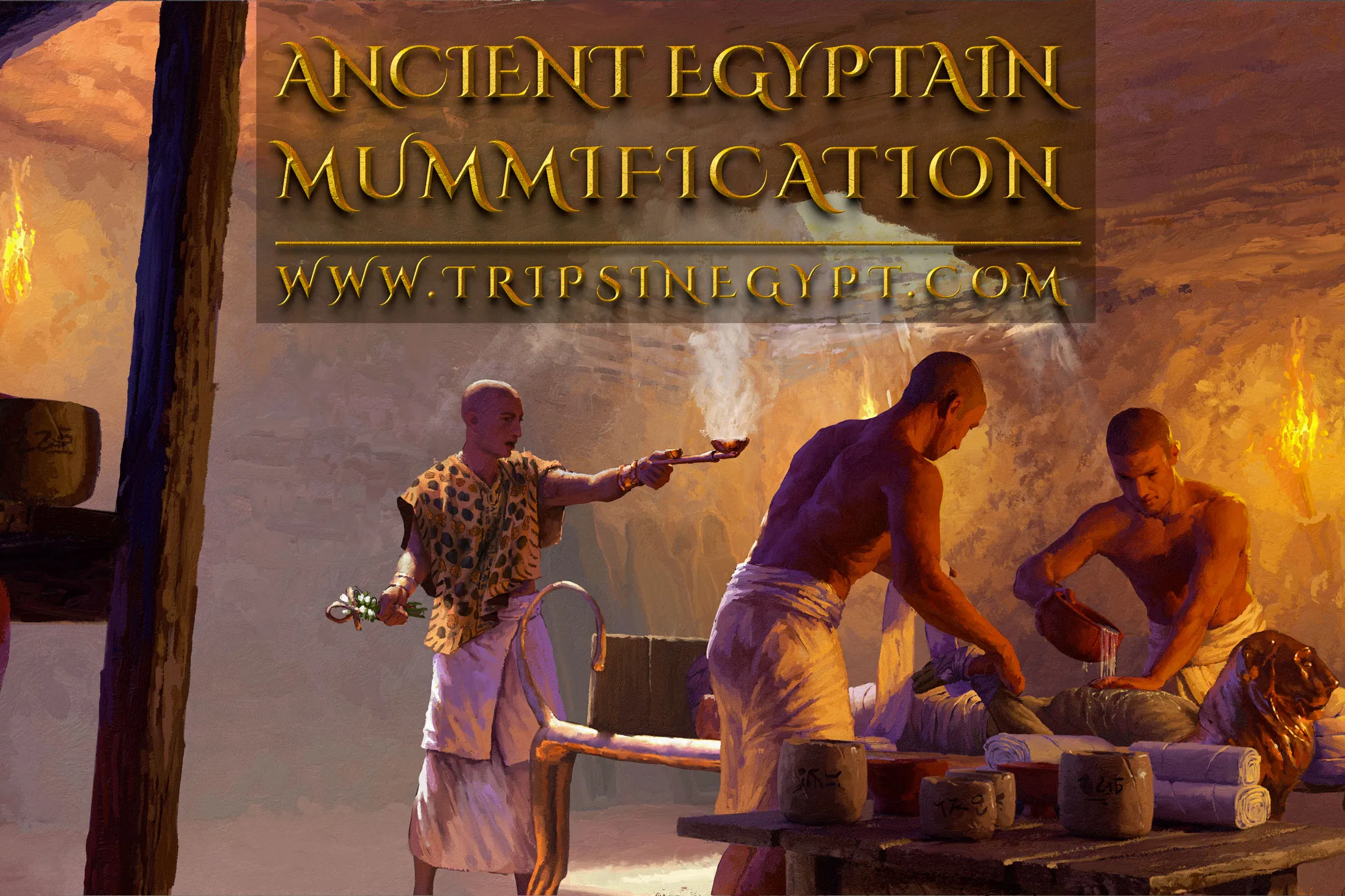
Honey may also have played a role in the ancient Egyptian mummification process, but the evidence here is weak. Resins, oils and natron did most of the work, and claims that bodies were preserved in honey come mainly from later Greek legends about Alexander the Great.
Honey in Ancient Egyptian Tombs
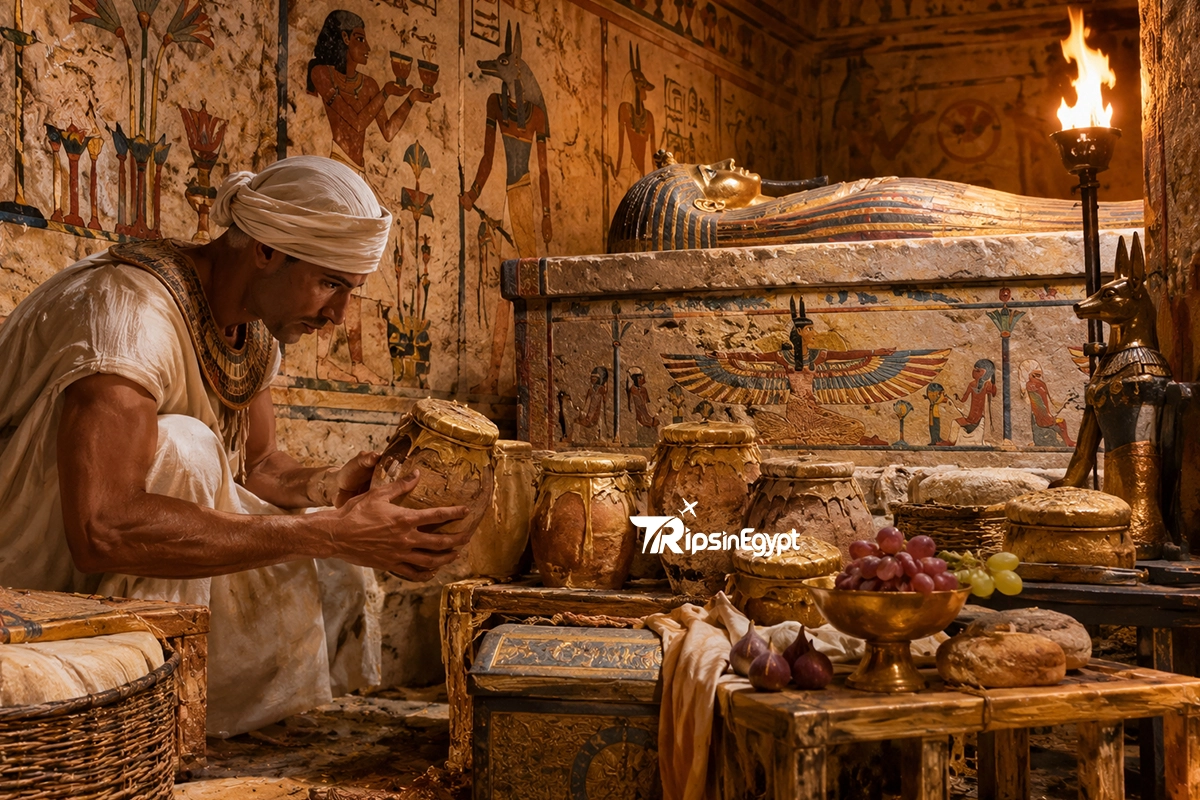
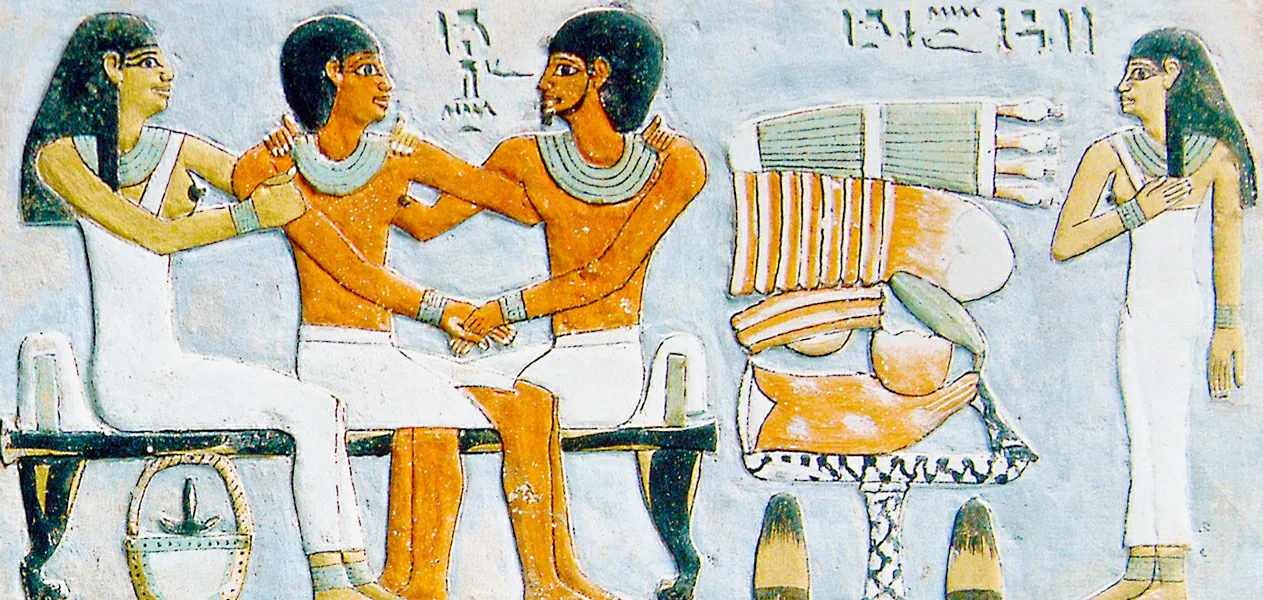
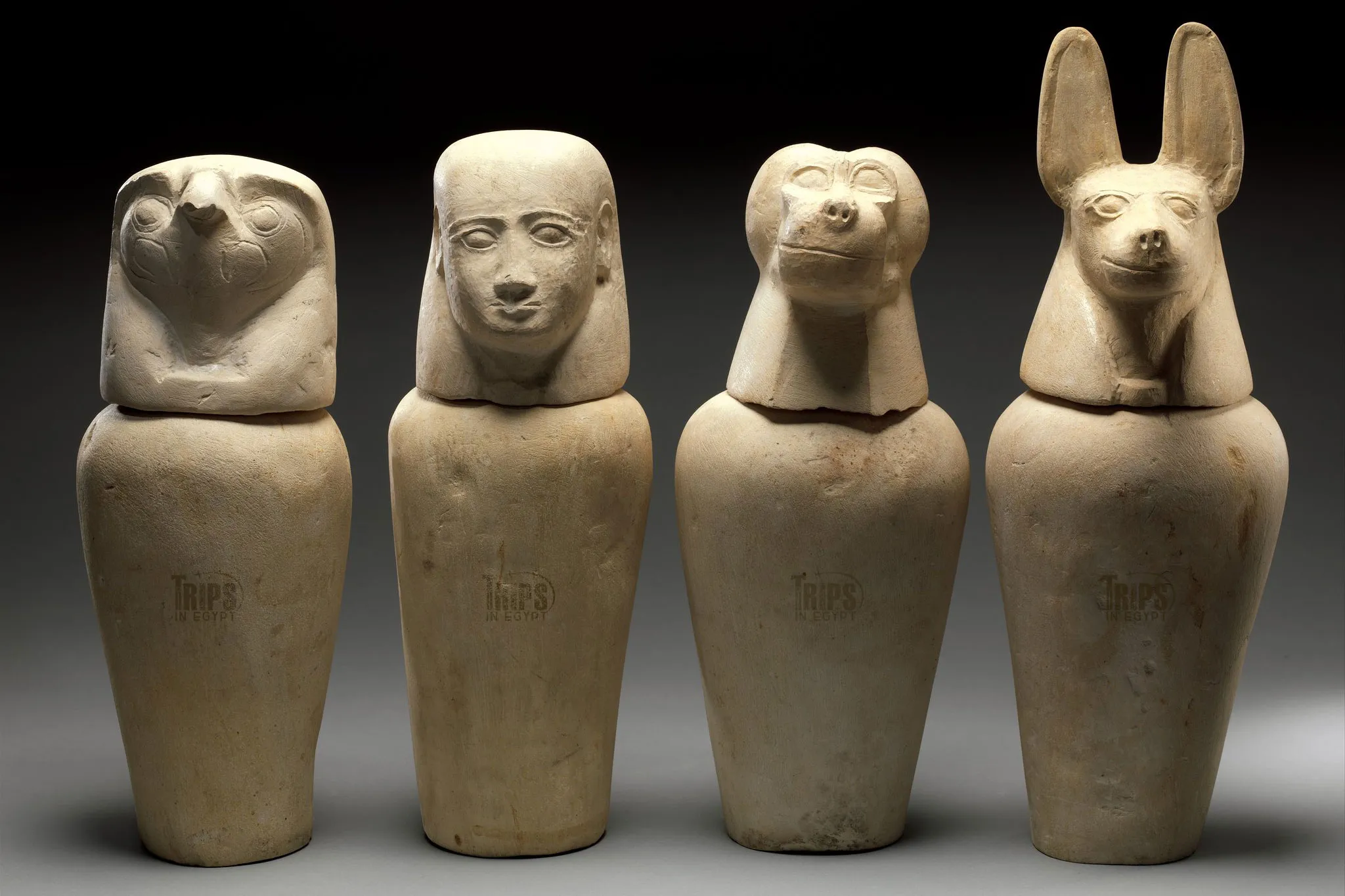
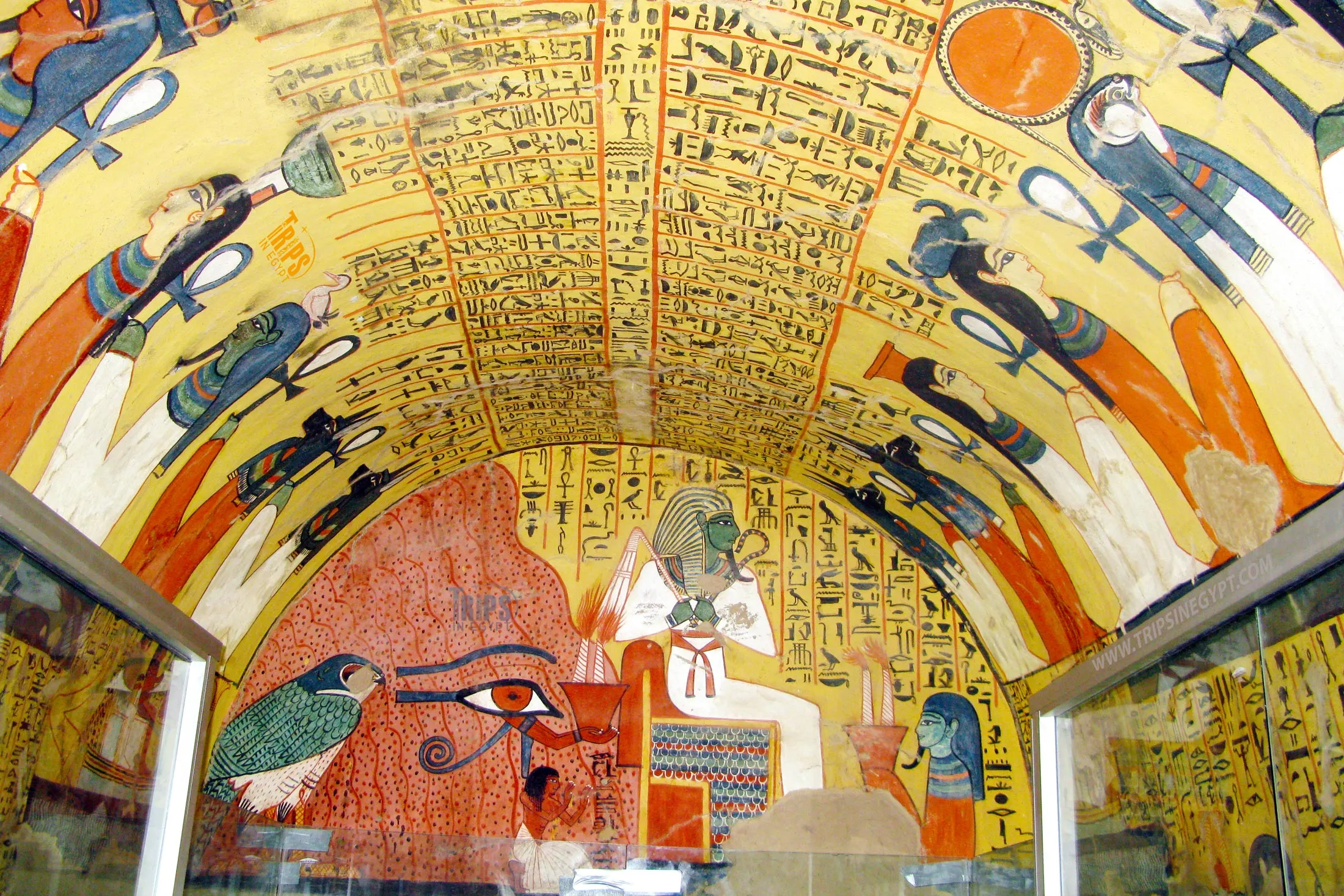
Honey belonged in ancient Egyptian tombs for the same reason it belonged on the table. The Egyptians believed the dead needed food and drink in the next world, as our guide to ancient Egyptian afterlife beliefs explains. Wealthy burials were stocked with bread, meat, fruit, wine, oils and sealed jars of honey, all meant to feed the spirit forever.
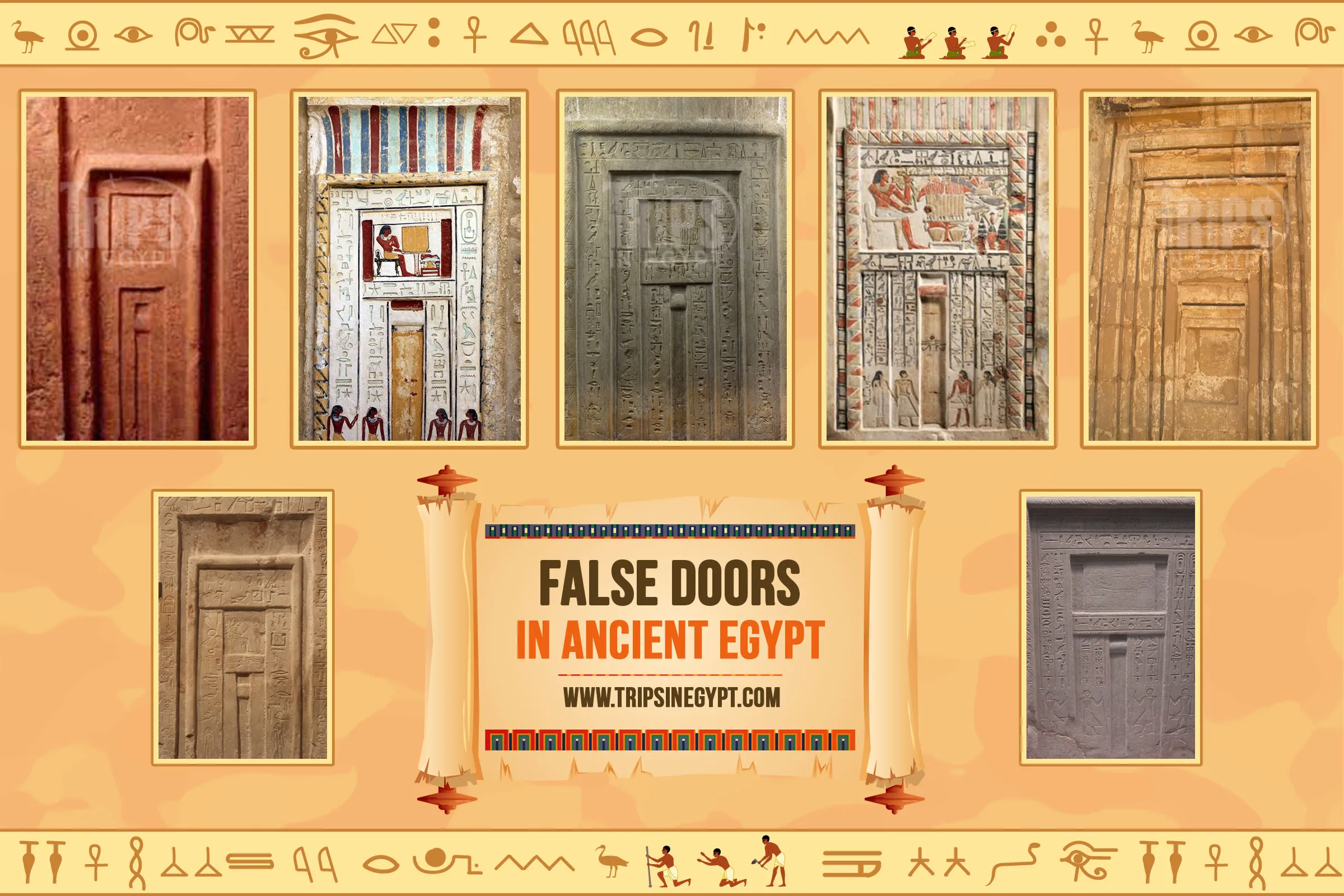
Offering lists painted on tomb walls name honey among the gifts the dead should receive, and the false door was the place where the living left such food for the spirit. If the real jars ran out, the painted lists were believed to keep the supply going by magic.
The most famous case is the tomb of Tutankhamun, opened by Howard Carter in 1922 in the Valley of the Kings. The tomb held boxes of food, jars of wine and other provisions for the young king. The chemist Alfred Lucas, who analyzed materials for Carter's team, left notes that support food offerings and possible honey residues, and those notes are kept in the archives of the Griffith Institute in Oxford. The full story of the find is told in our article on the Tutankhamun tomb discovery.
Was 3,000-Year-Old Honey From Egyptian Tombs Still Edible?
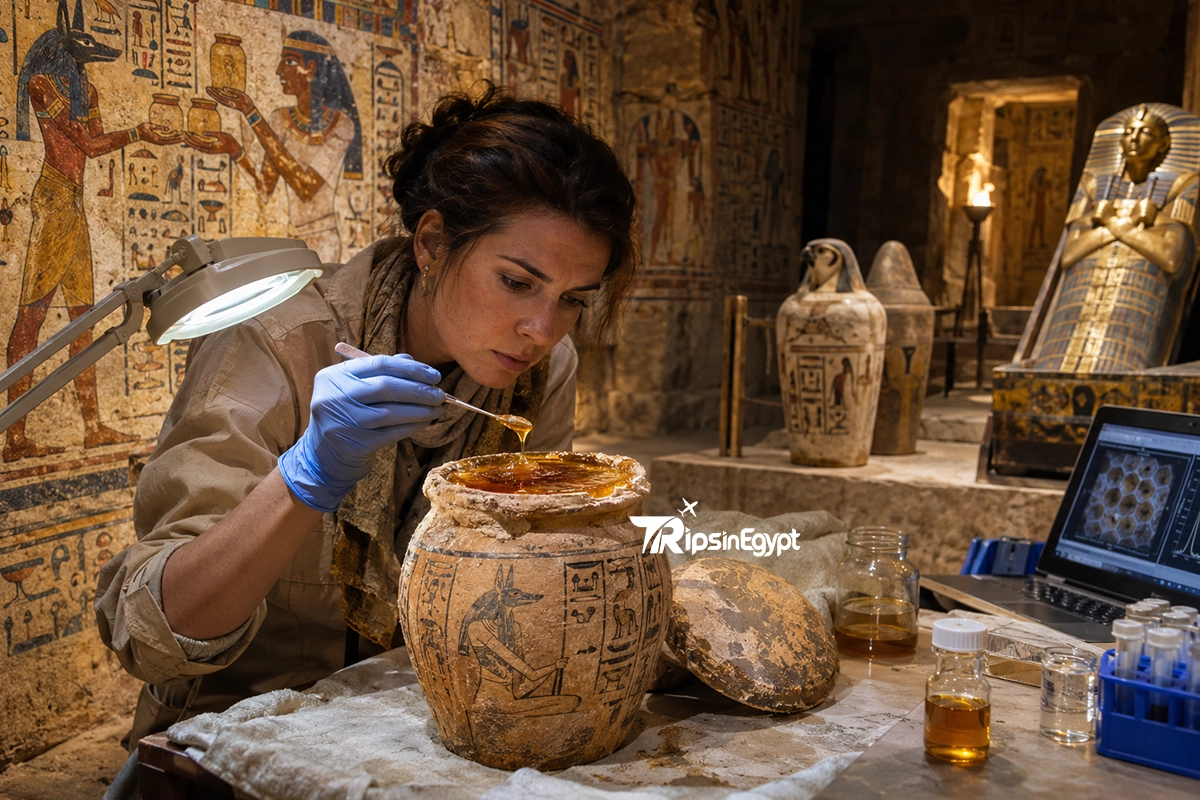
Search for honey in ancient Egyptian tombs and you will find the same claim everywhere: archaeologists opened a sealed jar, found 3,000-year-old honey and ate it, and it was perfectly good. The story is charming, but no one has ever produced a primary source for it.
Beekeeper and writer Ron Miksha tried to trace the story and found only retellings of retellings, with no named archaeologist, no named tomb and no record of anyone tasting the honey. The samples of ancient honey that scientists have actually examined are usually a dark, hard, tar-like residue. Laboratories can still identify them as honey from their sugars and pollen, but they are not something anyone would spread on bread.
The oldest honey ever found does not come from Egypt at all. In 2003, workers building a pipeline in Georgia, in the Caucasus, found ceramic pots in a woman's tomb near the village of Sakire. Pollen analysis showed honey from linden and meadow flowers, about 5,500 years old. Even there, what survived was a residue on the inner walls of the pots, not a jar of liquid honey.
So the honest answer is that honey was certainly placed in ancient Egyptian tombs, and honey can last for an extraordinarily long time, but the famous tasting is a modern legend.
The Science Behind Honey's Long Life
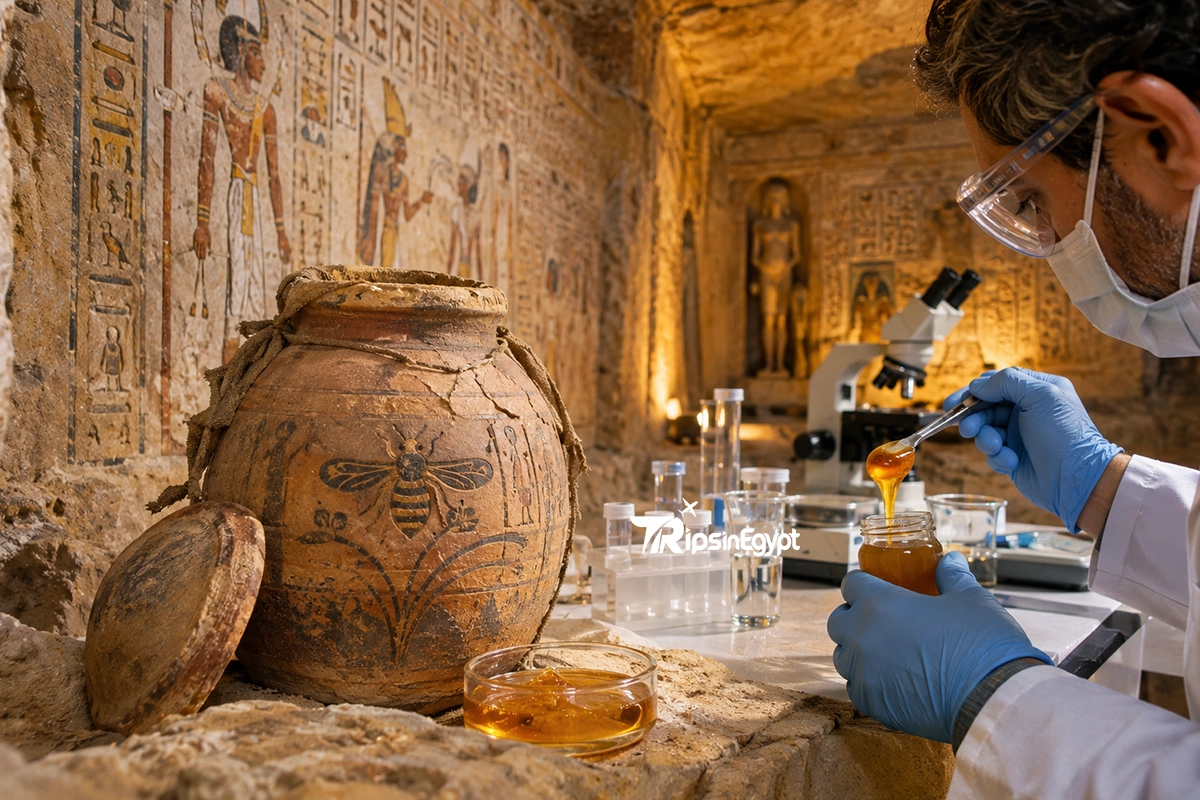
The legend lasts because the chemistry behind it is real. Ripe honey is about 80% sugar and only about 17% water, and that water is tightly bound to the sugar. Bacteria and molds need free water to grow, so they simply cannot survive in it.
Honey is also acidic, with a pH between about 3.4 and 4.5, mainly because of gluconic acid. That acid comes from an enzyme called glucose oxidase, which bees add to nectar as they turn it into honey. When honey is diluted, for example on a moist wound, the same enzyme releases small amounts of hydrogen peroxide, which helps explain why Egyptian doctors had such success with honey dressings.
None of this means honey stays exactly the same forever. Over the centuries it darkens, crystallizes, loses its aroma and slowly changes its chemistry. Moisture is its only real enemy, because honey that absorbs water can ferment. In a well-sealed jar, though, it can last far longer than almost any other food, which is exactly what the Egyptians wanted for their dead.
Where to See Honey and Beekeeping in Egypt Today
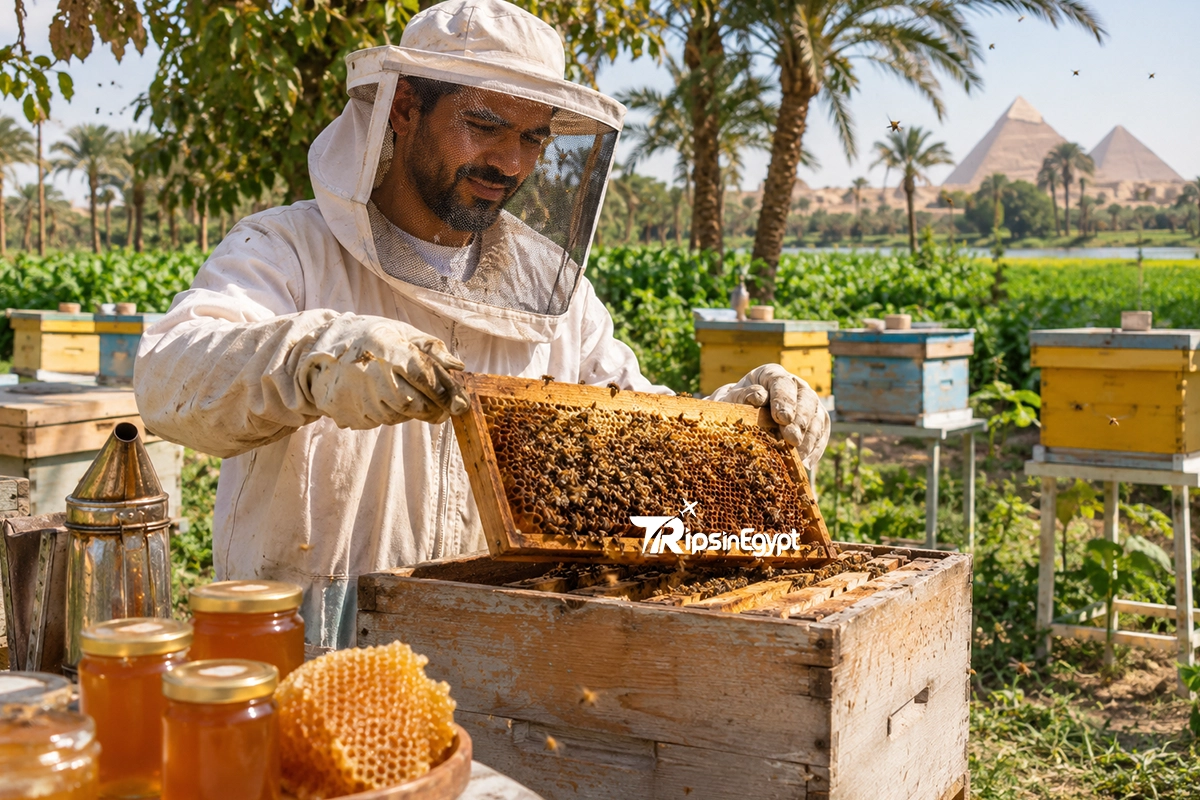
The story of honey in ancient Egypt still lives on in the country's monuments. In Luxor, the tomb of Rekhmire in the Valley of the Nobles keeps its famous beekeeping scene, and our Luxor West Bank day tour can include it alongside the royal tombs. The tomb of Pabasa lies nearby in the Asasif area, though it is not always open to visitors.
For the food and offerings of the dead, head to the museums of Cairo. The treasures of Tutankhamun are now displayed at the Grand Egyptian Museum, while the Egyptian Museum in Tahrir Square holds offering tables, model granaries and food containers from many periods. The Mummification Museum in Luxor, part of our Luxor Museum and Mummification Museum tour, shows the materials used to prepare the dead.
Honey is still part of modern Egyptian food, too. Look for feteer meshaltet, a flaky layered pastry often eaten with honey, and for local honeys from clover and citrus, sold in markets across the country.
Taste the Sweet Story of Ancient Egypt With Trips In Egypt
From the tears of Ra to the painted hives of Rekhmire, honey tells a quieter story of ancient Egypt than gold and pyramids, but no less a golden one. We can take you to the tombs, temples and museums where that story is still written on the walls, with an Egyptologist guide to read it for you. Book one of our Egypt travel packages, sail between the temples on our Nile river cruises or design your own route with our tailor-made tours.

5 Days Cairo And Hurghada Trip
Amazing 4 Nights Cairo and Hurghada Trip Itinerary 5 Days Cairo and Hurghada trip wil...
- Duration 5 Days / 4 Nights
- Location Cairo & Hurghada
- Type Historical & Recreational Tour
From$690/per person
View Tour
6 Days Cairo, Alexandria & Faiyum Tour
Unforgettable Cairo, Alexandria & Faiyum Adventure in Six Days 6 Days Cairo, Alex...
- Duration 6 Days / 5 Nights
- Location Cairo - Alexandria - Fayum
- Type Historical Tour
From$720/per person
View Tour
10 Days Cairo, Faiyum & Nile Cruise Holiday
Breathtaking 10 Days Journey of A Lifetime in Egypt 10 Days Cairo, Faiyum & Nile...
- Duration 10 Days / 9 Nights
- Location Cairo, Luxor, Aswan & Faiyum
- Type Classic Tour
From$1350/per person
View Tour SOLD OUT
Ultimate 7-Day Egypt Solar Eclipse Experience with Hurghada 2027
Enjoy a 7-Day Egypt Solar Eclipse Tour with Hurghada 2027 6 Nights Egypt Solar Ecli...
- Duration 7 Days / 6 Nights
- Location Cairo / Giza / Luxor / Hurghada
- Type Astronomical Tour
Sold Out
View Details