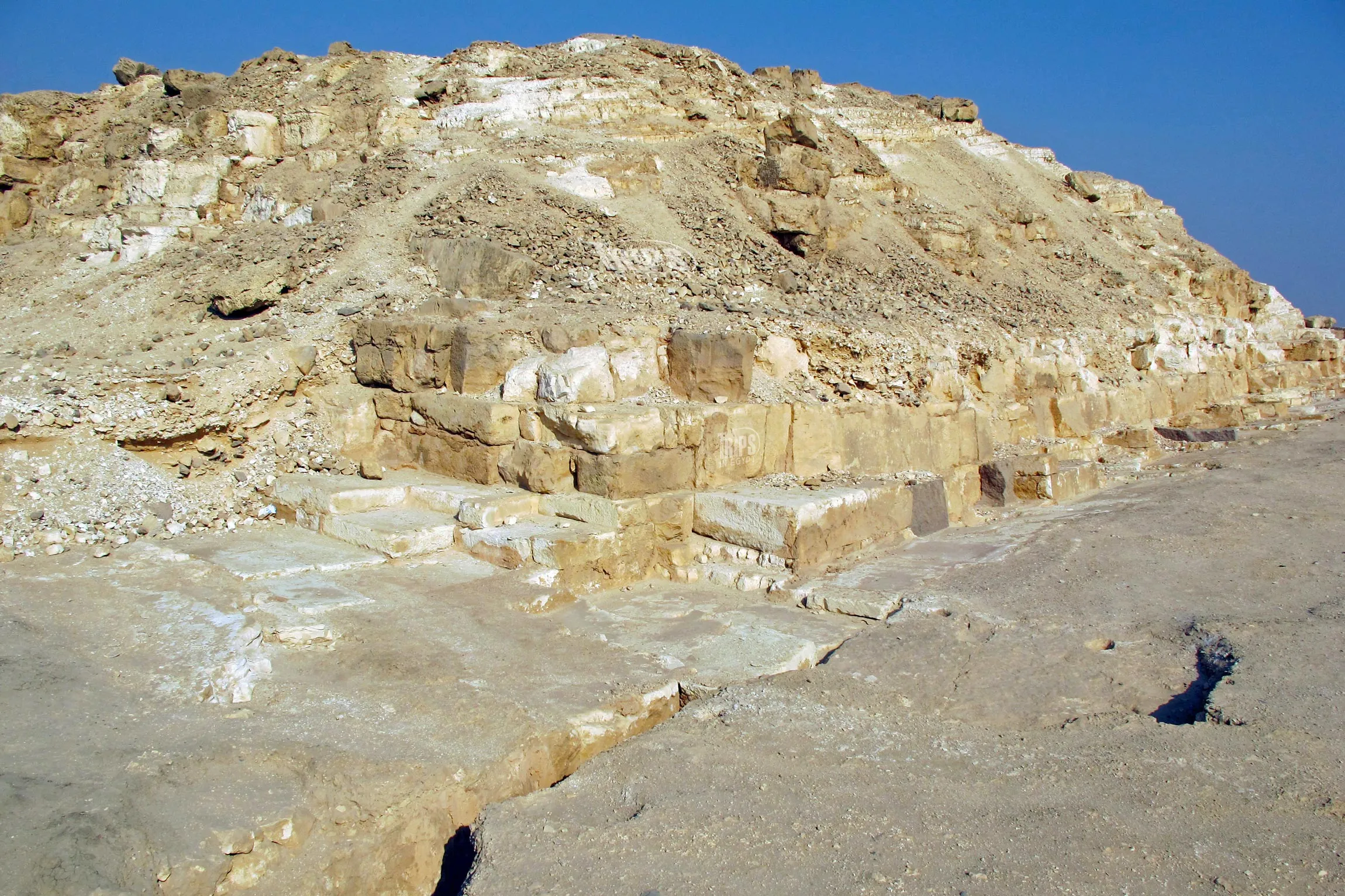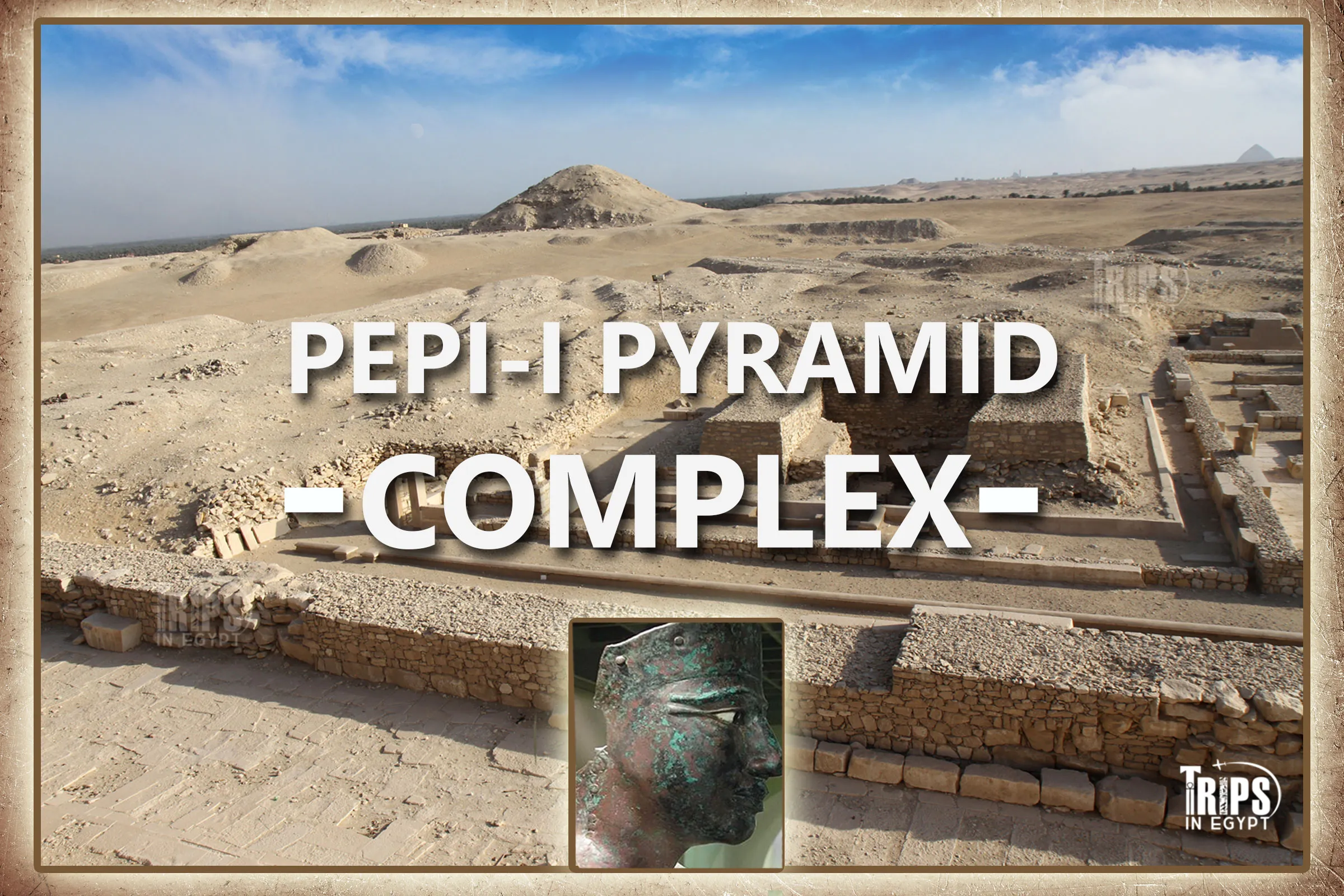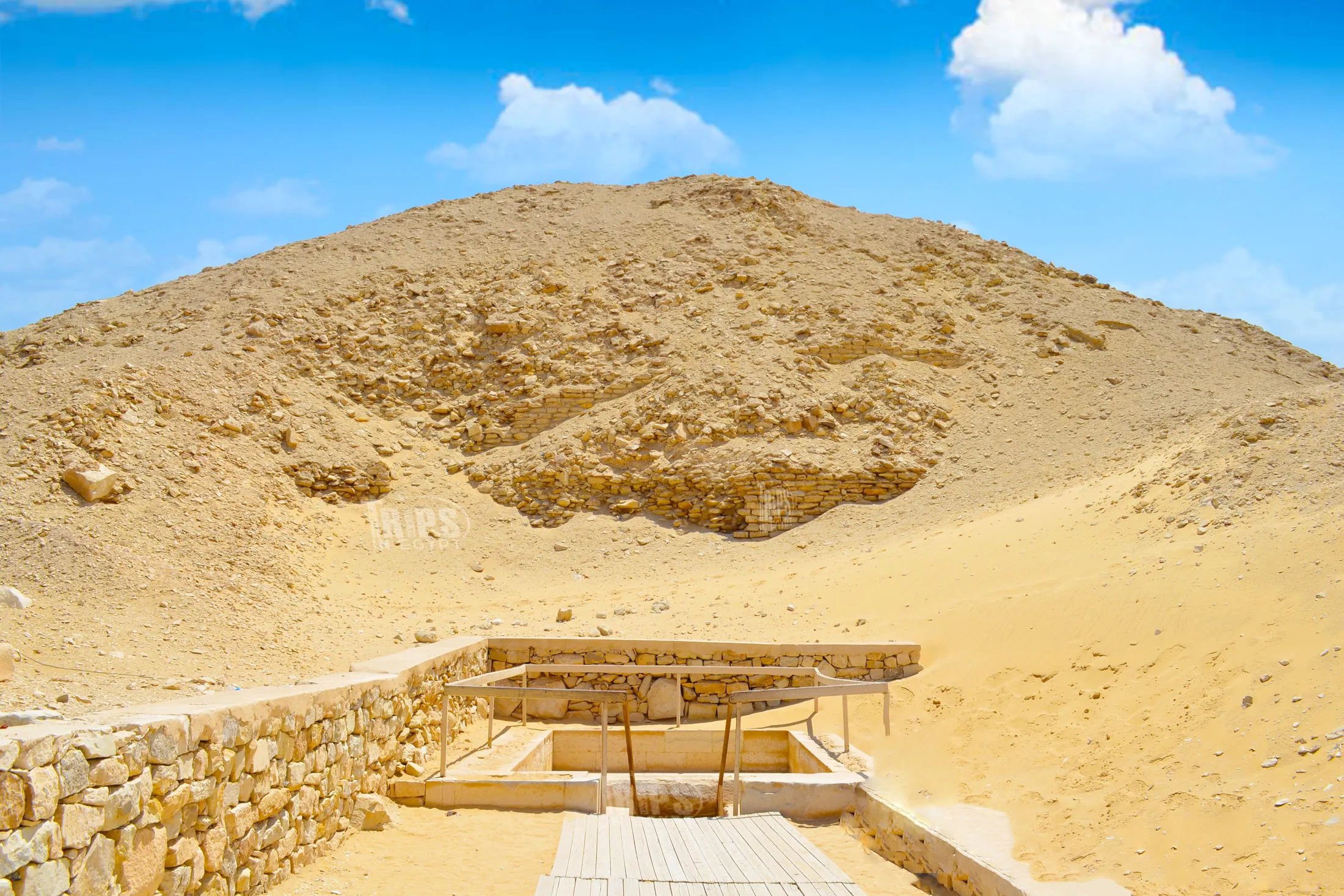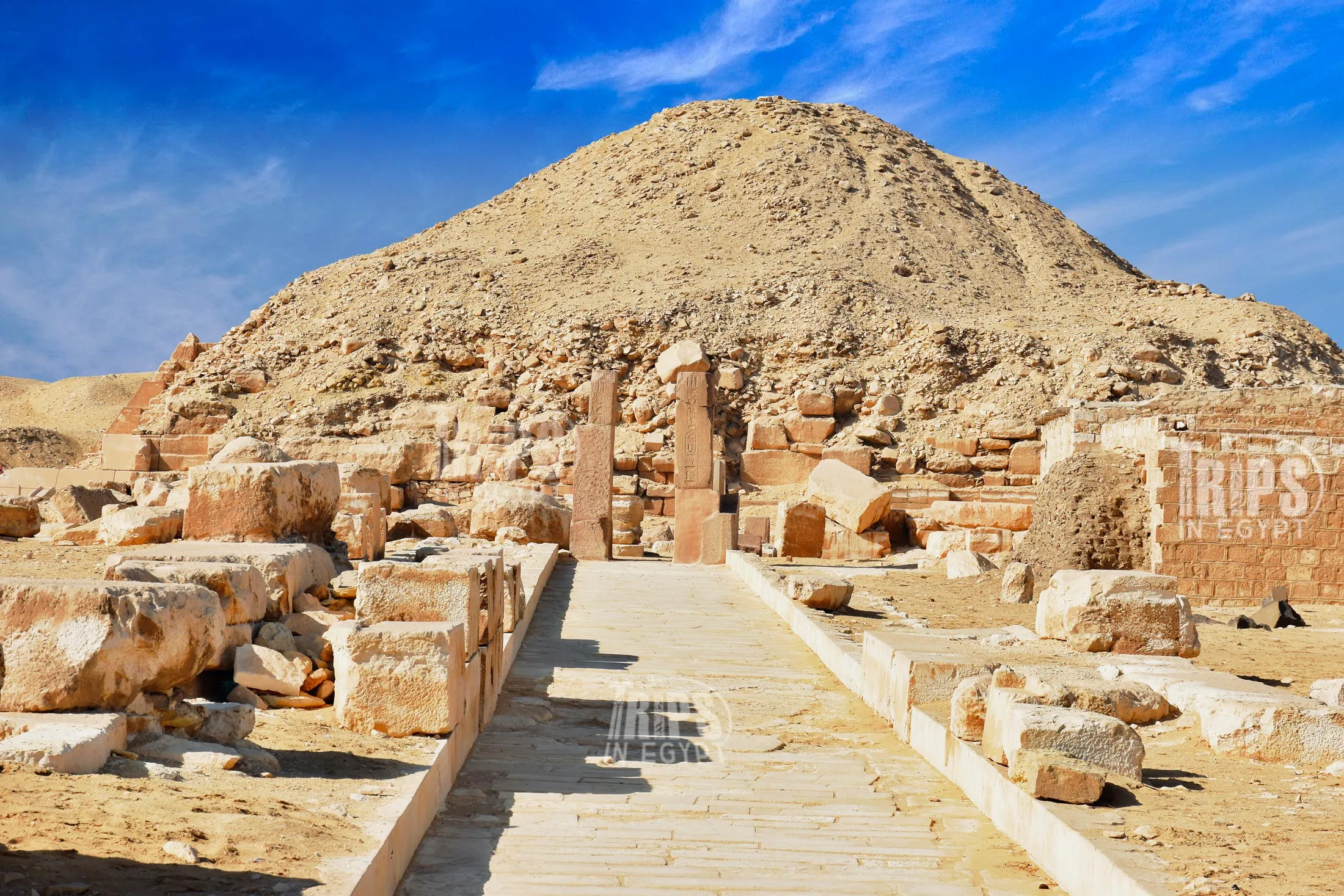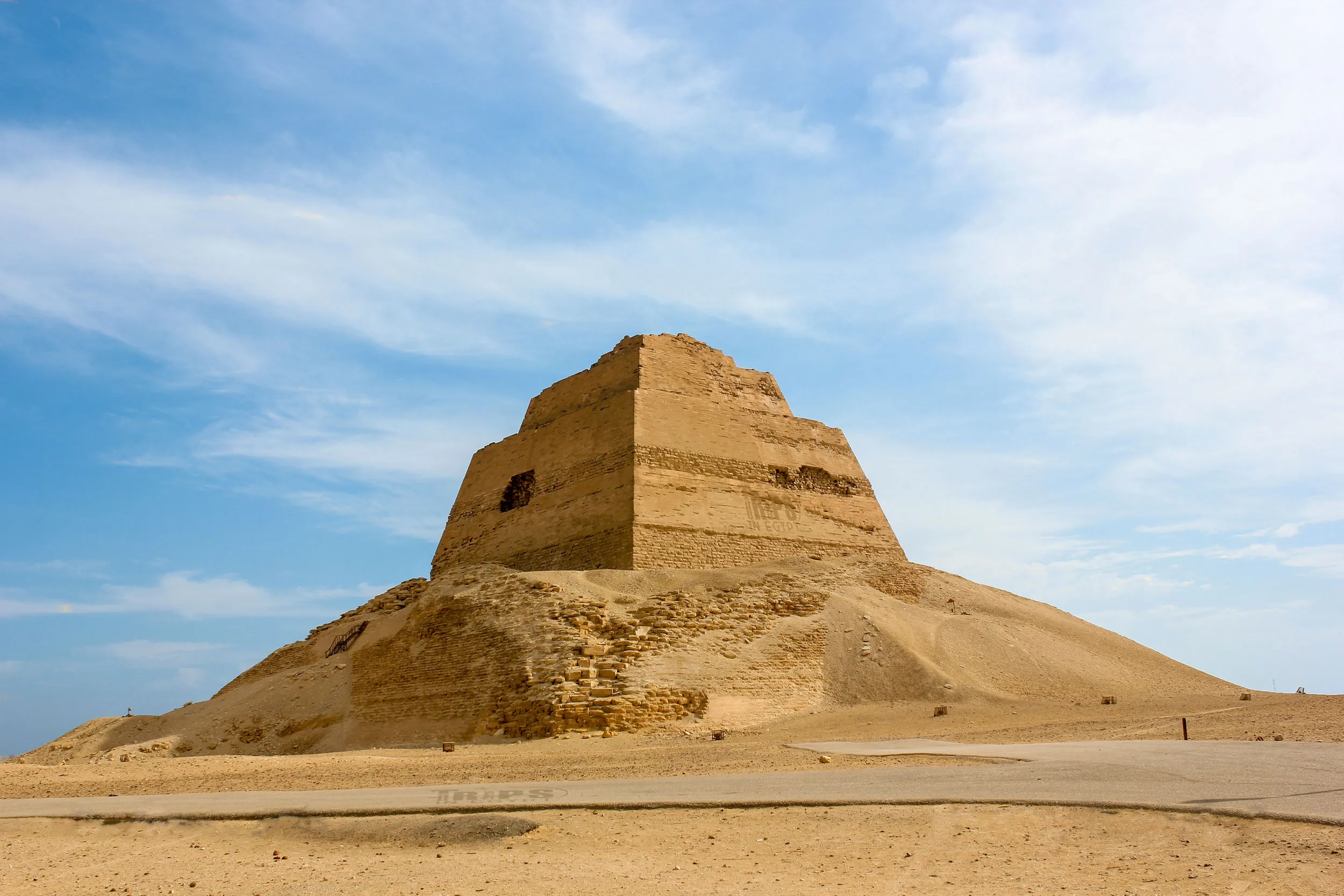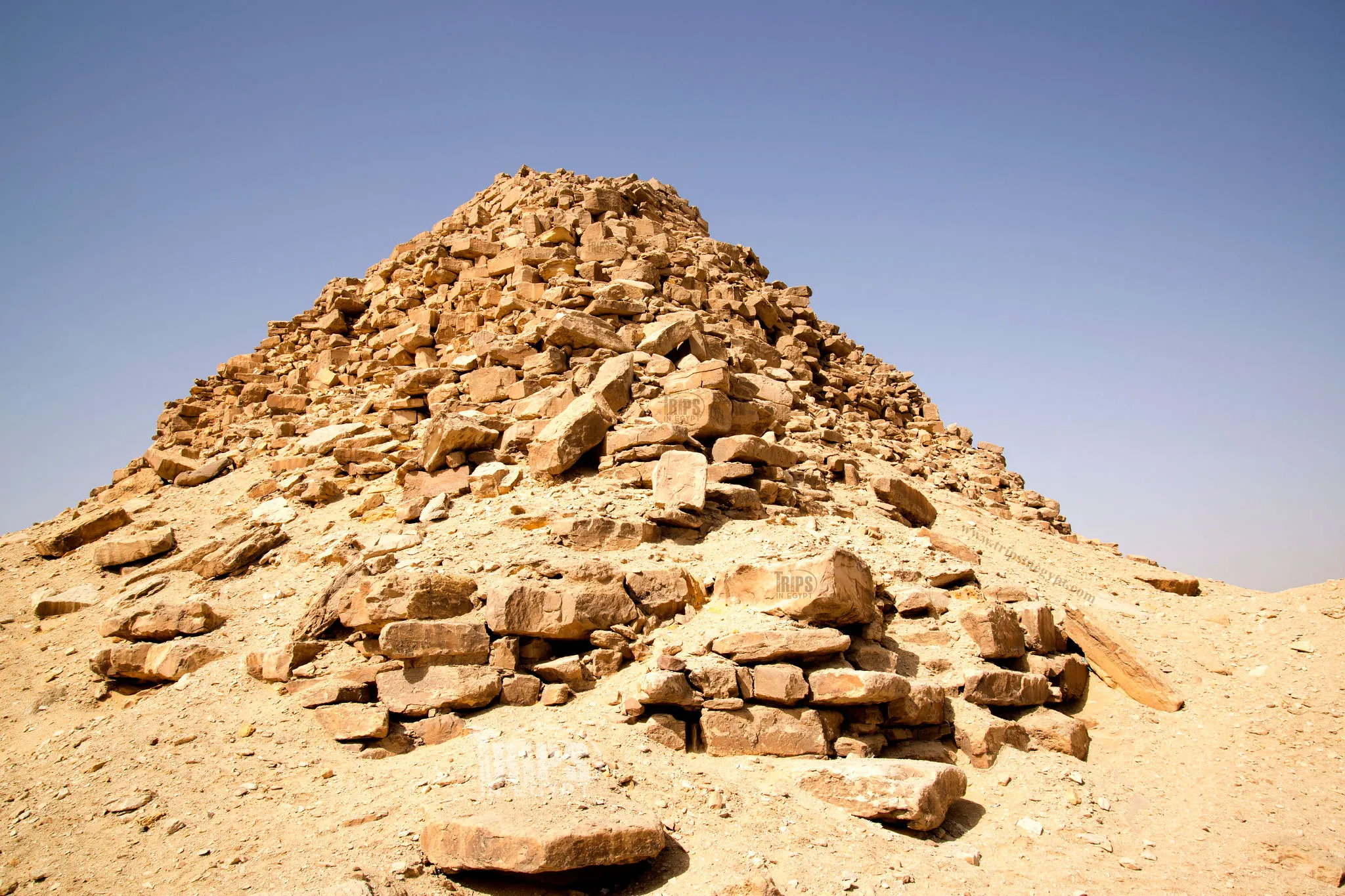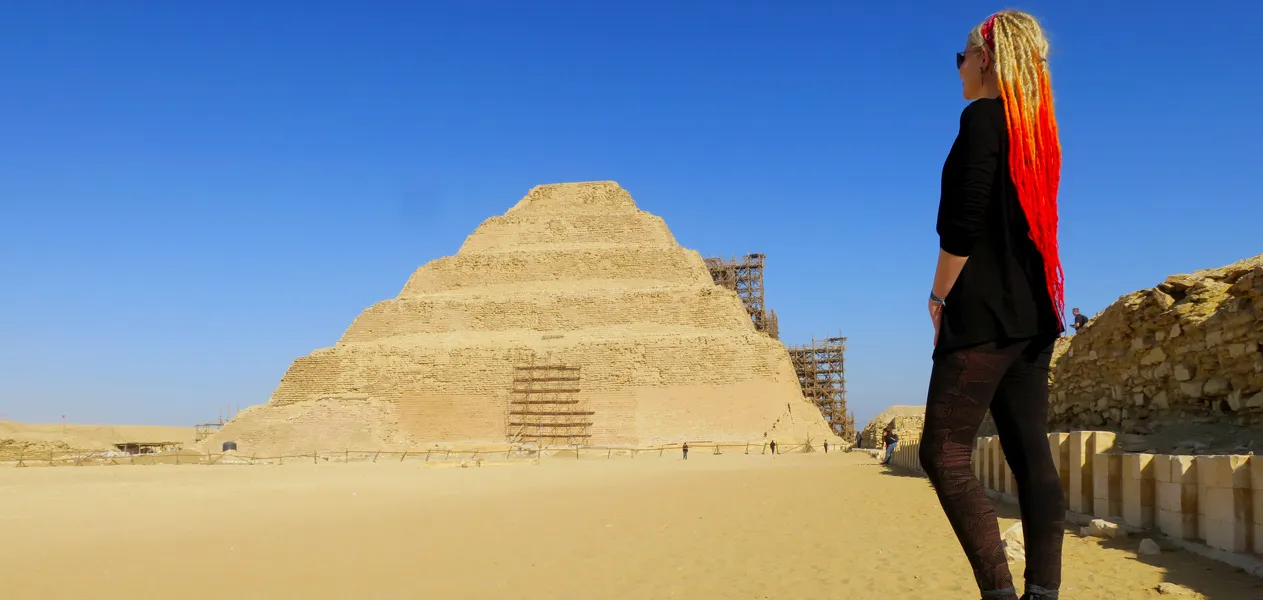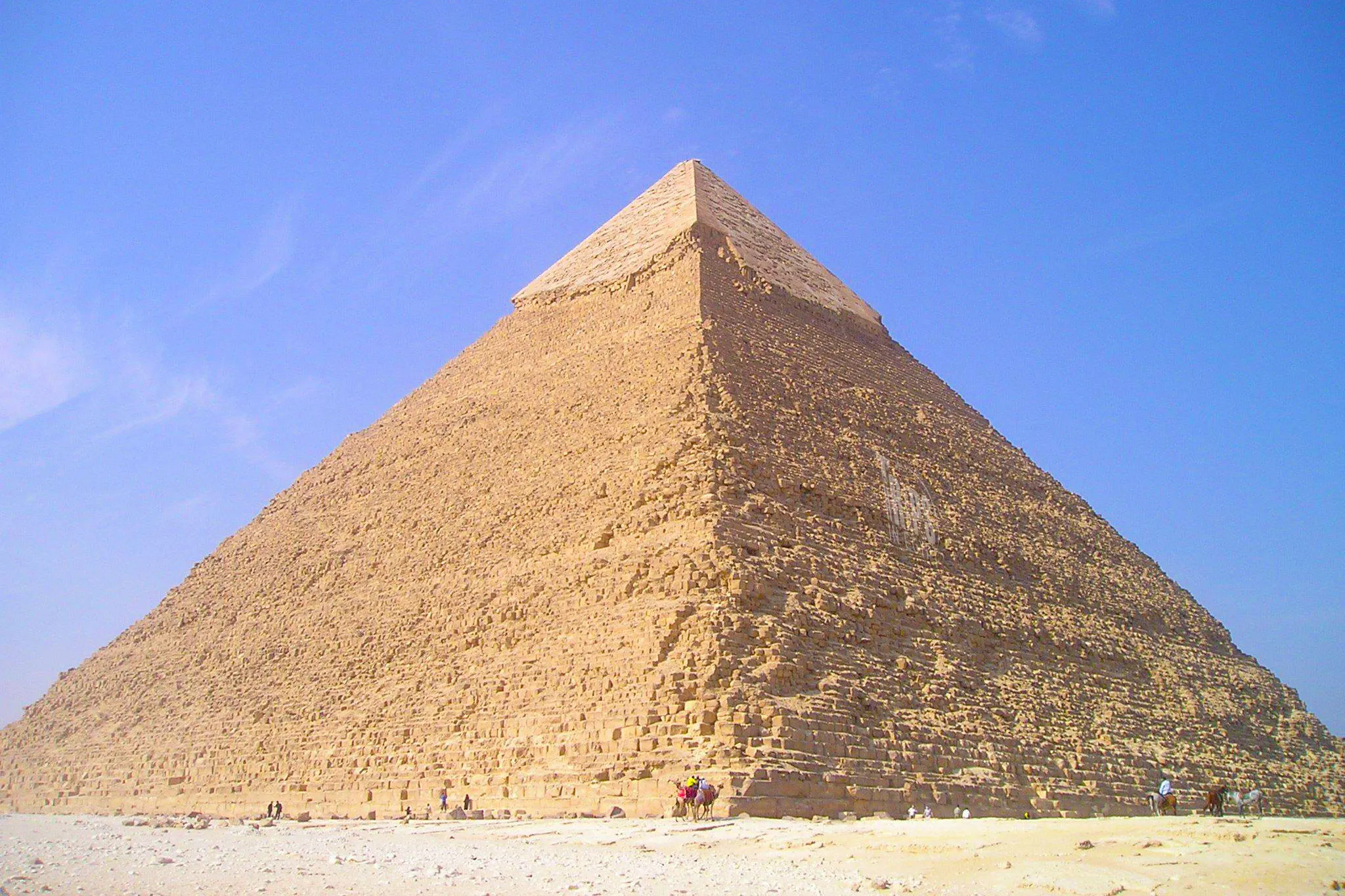




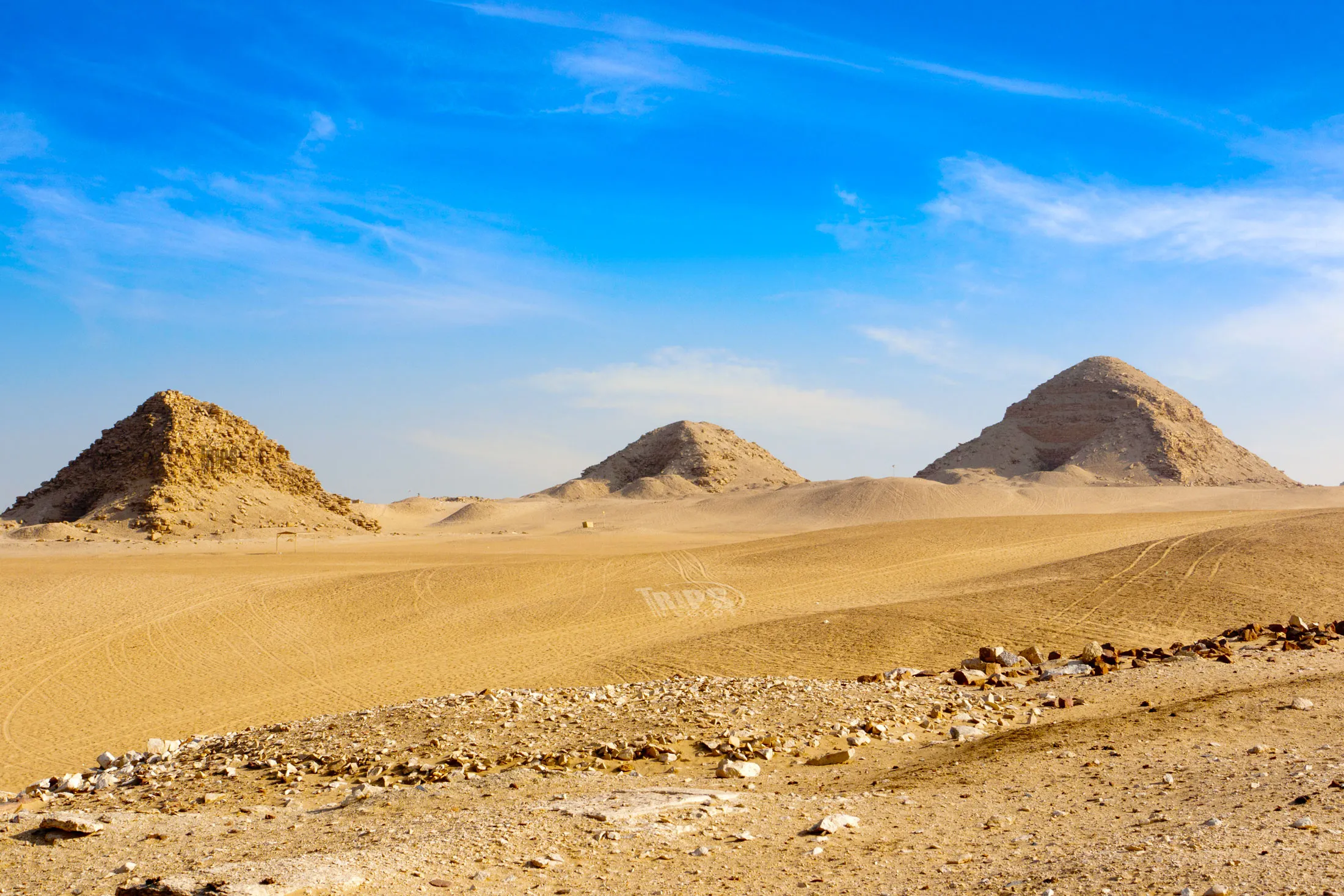
Abusir Necropolis is one of the most mythical and magnificent archaeological attractions ever made across the golden blessed lands of lower Egypt that dated back more than 4500 years. This hidden archaeological area is home to the ruins of a number of pyramids that act as a part of the pyramids fields of Memphis and its Necropolis which was labeled by the UNESCO World Heritage Site. This miraculous area is a very vivid piece of art filled with lost gems and wonders.
The informational wealth and incredible beauty of this spectacular attraction will show the dedication, royal power, and religious faith of ancient Egyptian Pharaohs who wished to honor the gods and themselves by creating colossal wonders that attempted to stand the test of time. In this incredible article, everyone will learn some extraordinary facts and glory about this magnificent landscape of Abusir Necropolis.
Abusir Complex History
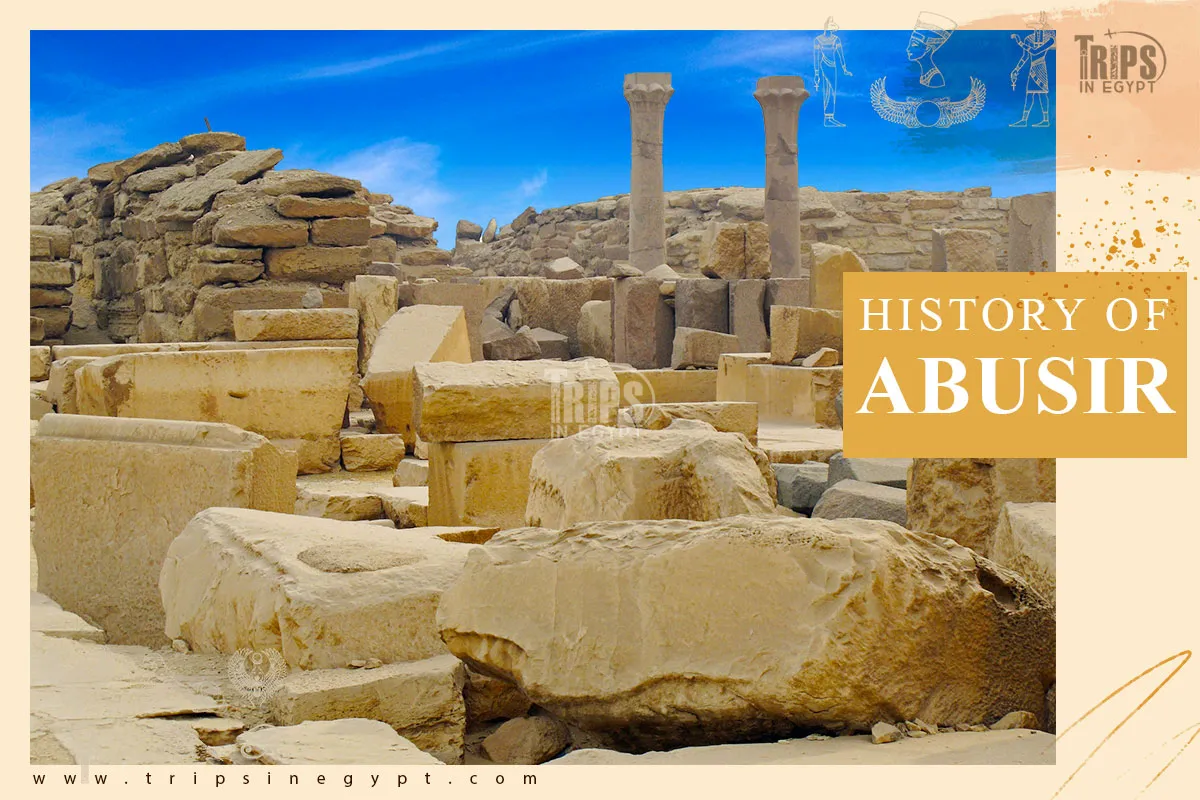
Abusir pyramids were known as the house of Osiris which refers to the Greek town of Busiris which was located close to its necropolis. Abusir is an incredible pyramids complex which is made of 14 pyramids that date to the old kingdom of Egypt (2700 – 2200 BC) where it served as a prestigious burial site that was near the golden capital city of Memphis. It served as an elite necropolis and a cemetery for the residents of the city of Memphis. It was renowned for creating a number of marvelous pyramids and monuments that dates to the 4th Dynasty (2613 - 2494 BC) and the 5th Dynasty (2494-2345 BC) pharaohs who wished to be buried in a different site.
Absuir means the place of worship of the god Osiris who was the ruler of the land of the dead in the underworld. A number of great rulers such as Serkaf (2513- 2506 BCE) built the sun temple Nekhen-Re plus their successors Neferirkare, Ran Eferef, Sahura, and Nyuserra. Abusir became a cemetery for the common people. A number of tombs belonging to chancellors of Persian kings were located across the entire area.
Location & How to Get to Abusir Necropolis
Abusir is found in the Giza governorate in Al Badrashen, just a few km north of the Saqqara area. It acted as an elite and prestigious cemetery for the immortal capital city of Memphis. The entire pyramids complex was named after the village of Abusir, in the county of Badrashin in the Giza area.
The entire Abusir pyramids complex can be found on the plateau of the western desert across the edge of a marvelous cultivated plain. The Saqqara area is found across the south while the Giza pyramids are found on the north. 25 km (15 mi) southwest of Cairo
Famous Abusir Pyramids Complex
The golden Abusir area has 14 pyramids which were known as the primary royal necropolis of the 5th dynasty. The quality of the 5th pyramids is very inferior to the pyramids of the 4th dynasty which is due to an unstable economy and a decrease in royal authority which would explain why they have a smaller size compared to their predecessors. All the pyramids have the design of a step pyramid and the biggest one of them is the Pyramid of Neferirkare.
Pharaoh Userkaf was the first ruler of the 5th dynasty to construct a pyramid that acted as the first-ever model of a solar temple and many more were followed by his successors. The pyramid of Userkaf was located across the enclosure wall of the golden Step Pyramid of Djoser at the immortal Saqqara. The royal pharaohs moved one to create pyramids in Dashur. The place has a number of Unfinished pyramids all over the area.
1. Sahura Pyramid
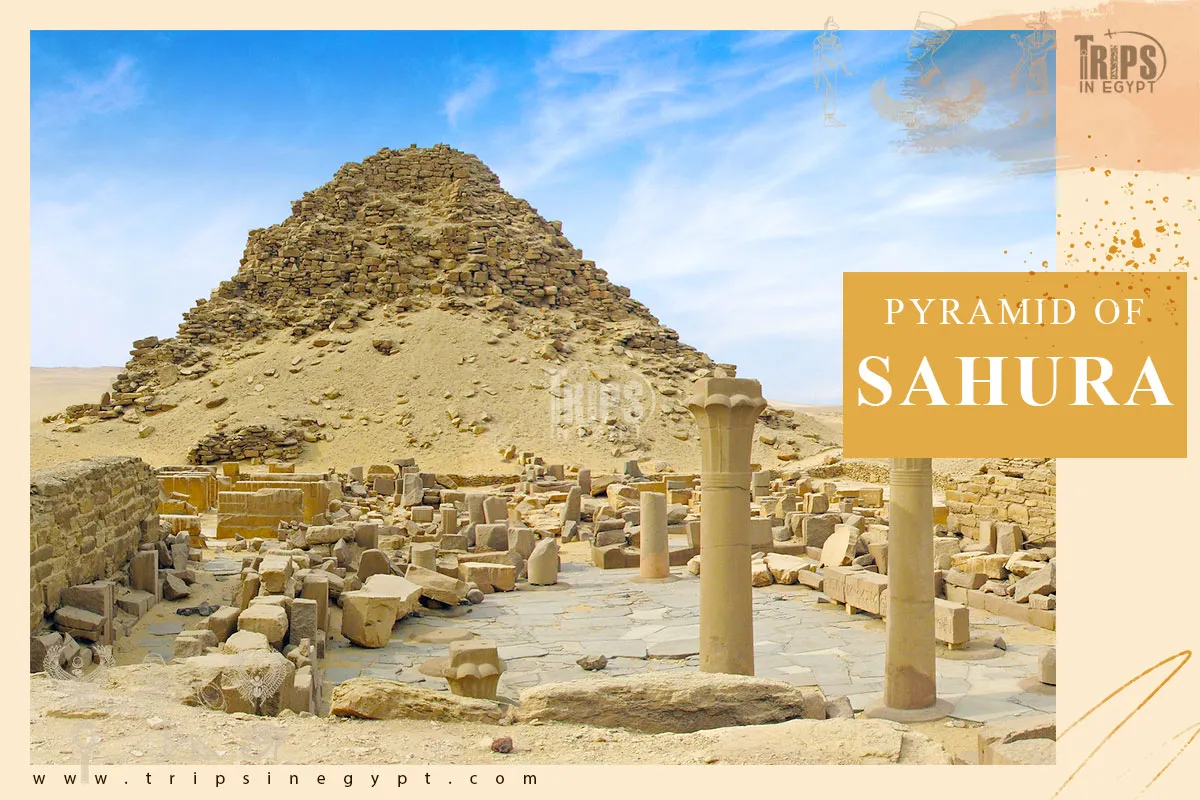
Sahura was an ancient Egyptian pharaoh who ruled during the Fifth Dynasty. He was the son of Pharaoh Userkaf and is believed to have ruled for about 12 years from 2487 to 2475 BC. The pyramid at the necropolis of Abusir was originally about 68 meters (223 feet) high and was built of limestone blocks. The pyramid contains a base length of 52.5 meters (172 feet) which was originally covered with white Tura limestone casing which was later stripped away to create more construction projects.
The pyramid complex included a valley temple that was used for the purification of the pharaoh's body prior to its entombment in the pyramid. The pyramid has six or seven steps and a mortuary temple at its base. The mortuary temple was connected to the pyramid by a causeway. The interior of the pyramid was divided into several chambers which are a subterranean chamber, an antechamber, and a burial chamber. The burial chamber contains the pharaoh's sarcophagus which was made of red granite.
There are a number of remains which is found in the bode museum in berlin and the Egyptian museum in Cairo. Across the pyramid are a number of mythical scenes of ships and hunting scenes. The pyramid has several passages and passages that were designed to confuse potential tomb robbers. The pyramid of Sahura is in ruins which provides important information about the architectural and engineering skills of the ancient Egyptians.
2. Neferirkare Pyramid
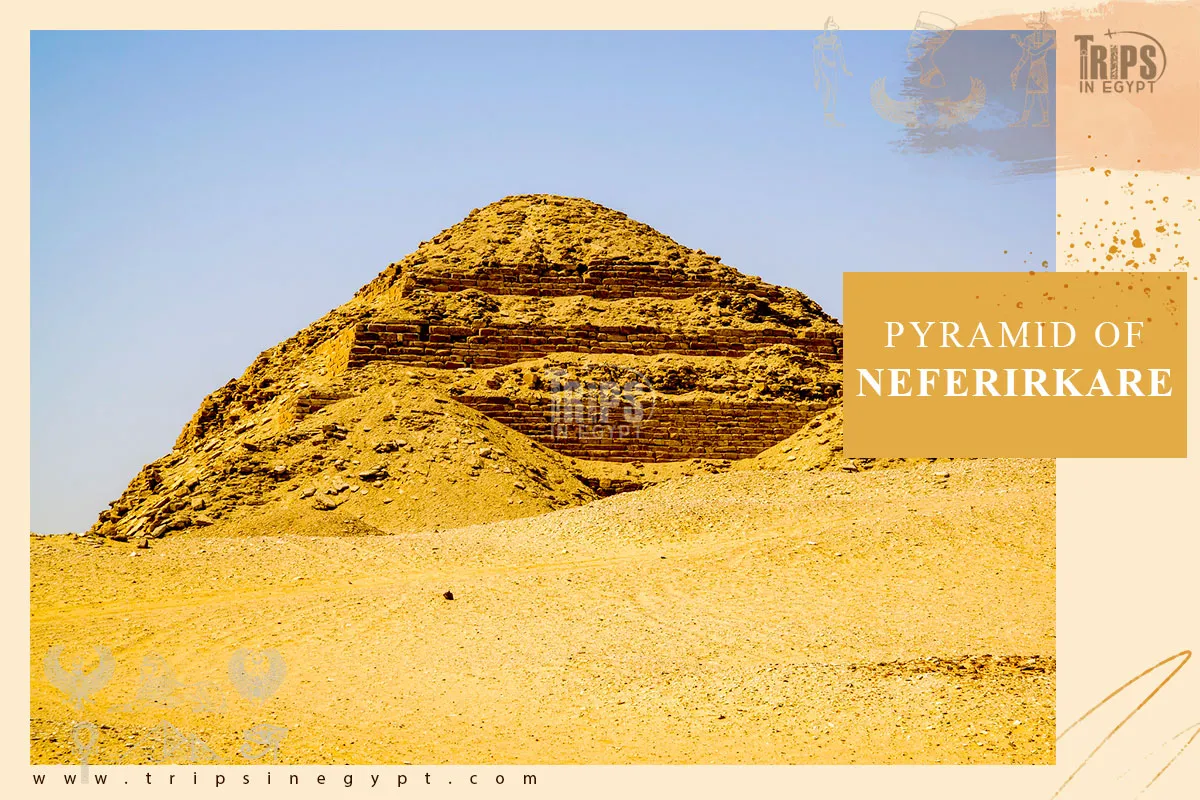
The Neferirkare Pyramid was built for the ancient Egyptian Pharaoh Neferirkare Kakai, who ruled during the Fifth Dynasty, around 2450 BC. The pyramid was located at the necropolis of Abusir in Lower Egypt. It provides important information about the architectural and artistic skills of the ancient Egyptians. The Neferirkare Pyramid was originally about 70 meters (230 feet) tall and was constructed of limestone blocks. The pyramid had a base length of about 53 meters (174 feet) and was covered with white Tura limestone casing. A discovery was made within the pyramid which is made of papyrus which dates to the reign of Pepi II plus some cult objects and letters.
The pyramid was constructed across many stages and was surrounded by a large complex that included a valley temple, a mortuary temple, and a causeway that connected the two temples. The marvelous interior of the pyramid consisted of several chambers which are a subterranean chamber, an antechamber, plus a burial chamber. The burial chamber contained the pharaoh's sarcophagus which is made of red granite. The pyramid holds a number of passages and chambers that were designed to confuse any tomb robbers.
3. Nyuserre Pyramid
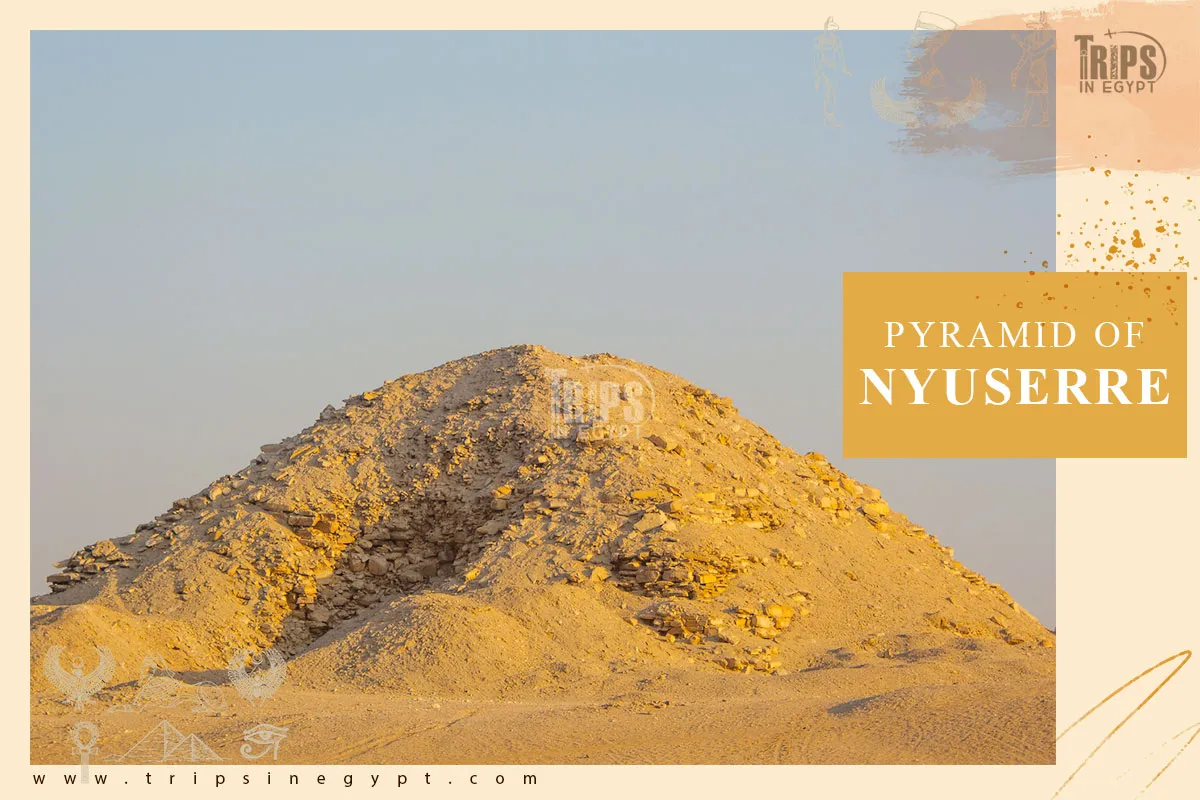
The pyramid of Niuserre is an ancient Egyptian pyramid located in the necropolis of Abusir in Lower Egypt. Niuserre was a Pharaoh of the Fifth Dynasty who ruled around 2445–2421 BC. The pyramid of Niuserre was originally about 70 meters (230 feet) tall and was constructed of limestone blocks. The pyramid had a base length of about 53 meters (174 feet) and was originally covered with white Tura limestone casing. The pyramid was surrounded by a complex that included a mortuary temple, a valley temple, and a causeway connecting the two temples. This open courtyard has a number of Papyrus-form columns of red granite.
The interior of the pyramid consisted of several chambers, including a subterranean chamber, an antechamber, and a burial chamber that contains the pharaoh's sarcophagus, which was made of red granite. The pyramid also had several passages and chambers designed to confuse tomb robbers. The pyramid of Niuserre is in ruins, and the remains provide important information about the architectural and engineering skills of the ancient Egyptians.
4. The Smaller Pyramids
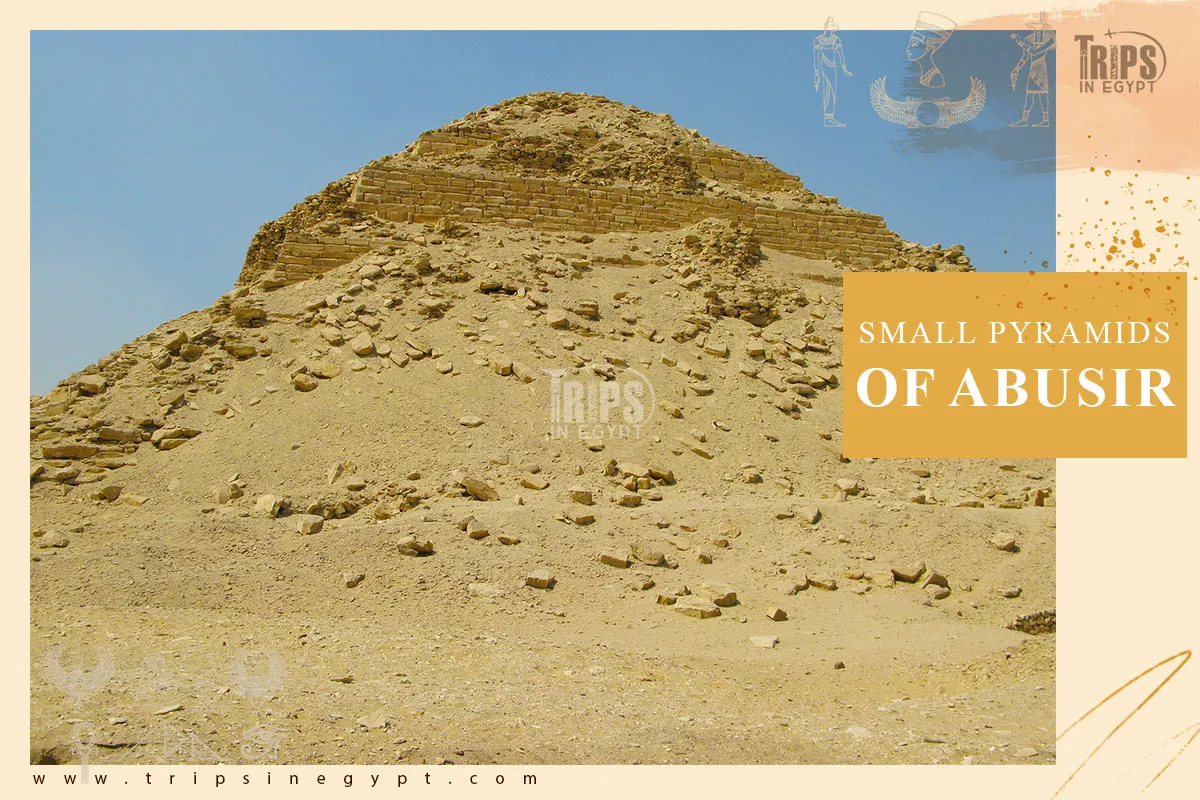
There are a number of small pyramids which is located all over the area which are:
- The pyramid of Queen Khentkawes II was the mother of king Neferefre & Niuserre and the wife of Neferirkare.
- Lepsius Pyramid which belonged to a queen plus the name of the vizier Ptahshepses is located among the builders' marks, which dates the pyramid to the reign of Pharaoh Nyuserre. Lepsius Pyramid is known to be the queen’s pyramid from the Fifth Dynasty.
- The incomplete pyramid of Shepseskare.
- The Unfinished Pyramid of Neferefre was built during the 5th dynasty (around 2450 BC) for the Pharaoh Neferefre. The pyramid was unfinished at the time of Neferefre's death and was subsequently completed as a smaller mastaba-style tomb. The exact size and design of the original pyramid are still being determined, as the monument has been heavily damaged and only fragments remain.
Mastabas of Courtiers at Abusir
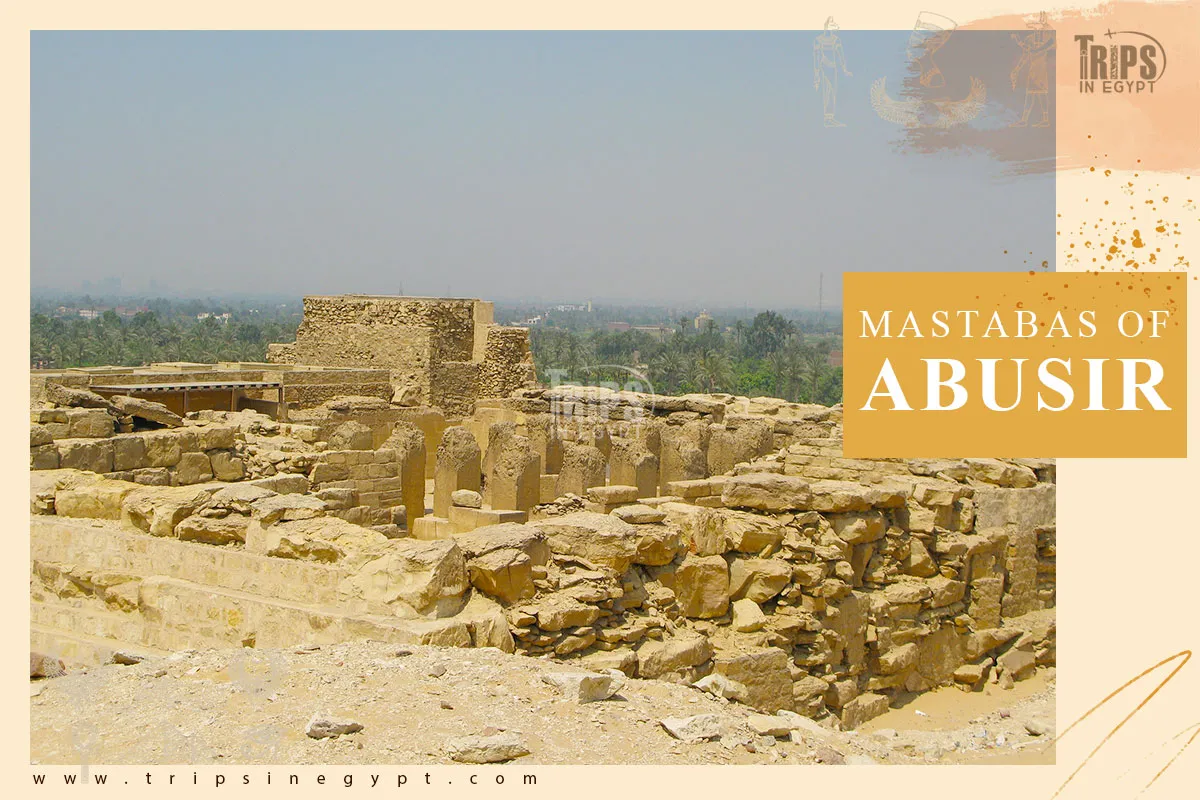
The tombs have a number of high officials and family members located at the open court of the king’s pyramid:
- The mastaba of Prince Nakhtkare who is the son of Raneferef or Nyuserre.
- The mastaba of Ptahshepses who acted as a vizier under Pharaoh Nyuserre.
Abusir-South Tombs
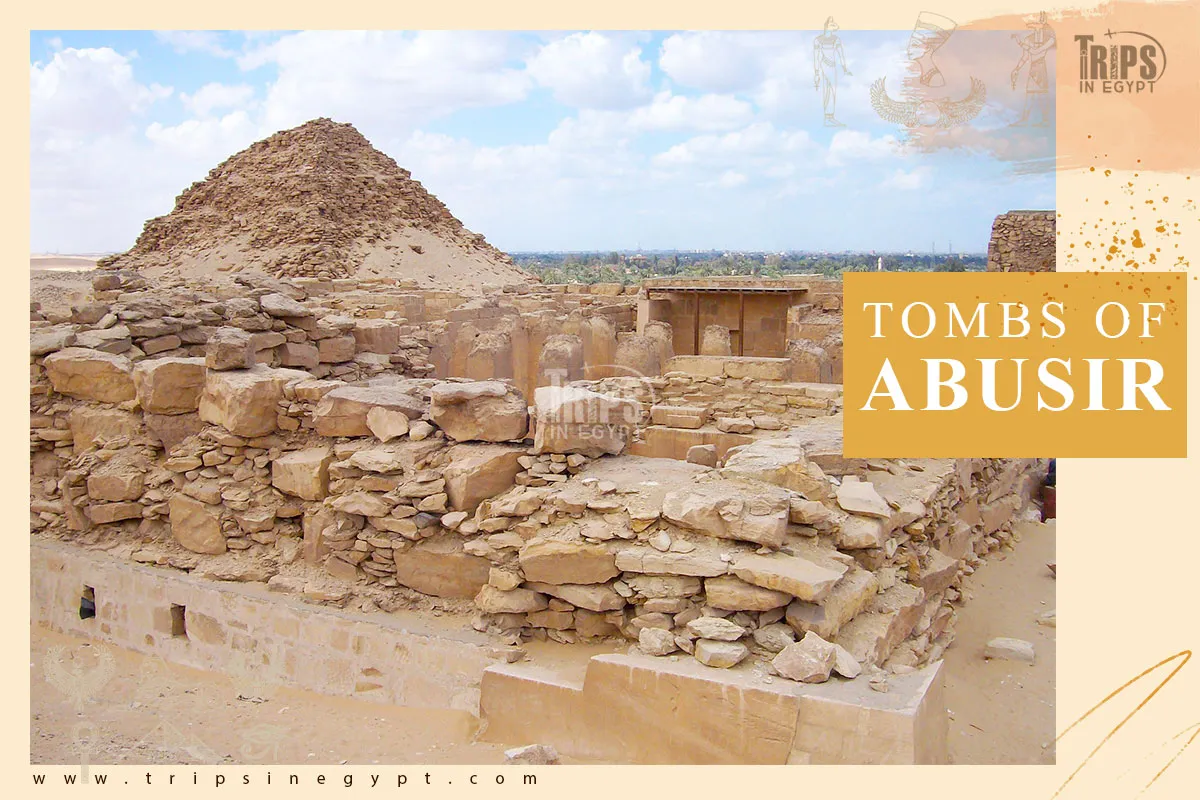
Located just north of Saqqara is a number of marvelous cemetery and tombs belonging to lower-ranking elite & officials dating to the Old Kingdom which are:
- Tomb of Fetekti was a priest in the final days of the Fifth Dynasty.
- Tomb of Hetepi was the priest at the start of the Third Dynasty.
- Tomb of Qar who was a vizier of the Sixth Dynasty.
- Tomb of Ity which belongs to the Third Dynasty.
- Tomb of Rahotep was a priest during the final days of the Fifth Dynasty.
- Tomb of Kaaper was an architect and priest during the Fourth Dynasty.
- The rock-cut tomb of Nakhtmin.
- Saite-Persian cemetery.
On the majestic small hill which is found on the southern part of the pyramid of Neferefre are a number of majestic cemetery collections of tombs made in the Saite period that include:
- Tomb of Udjahorresnet
- Tomb of Padihor
- Tomb of Menekhibneko
- Tomb of Iufaa
- Tomb R3
Abusir Papyri
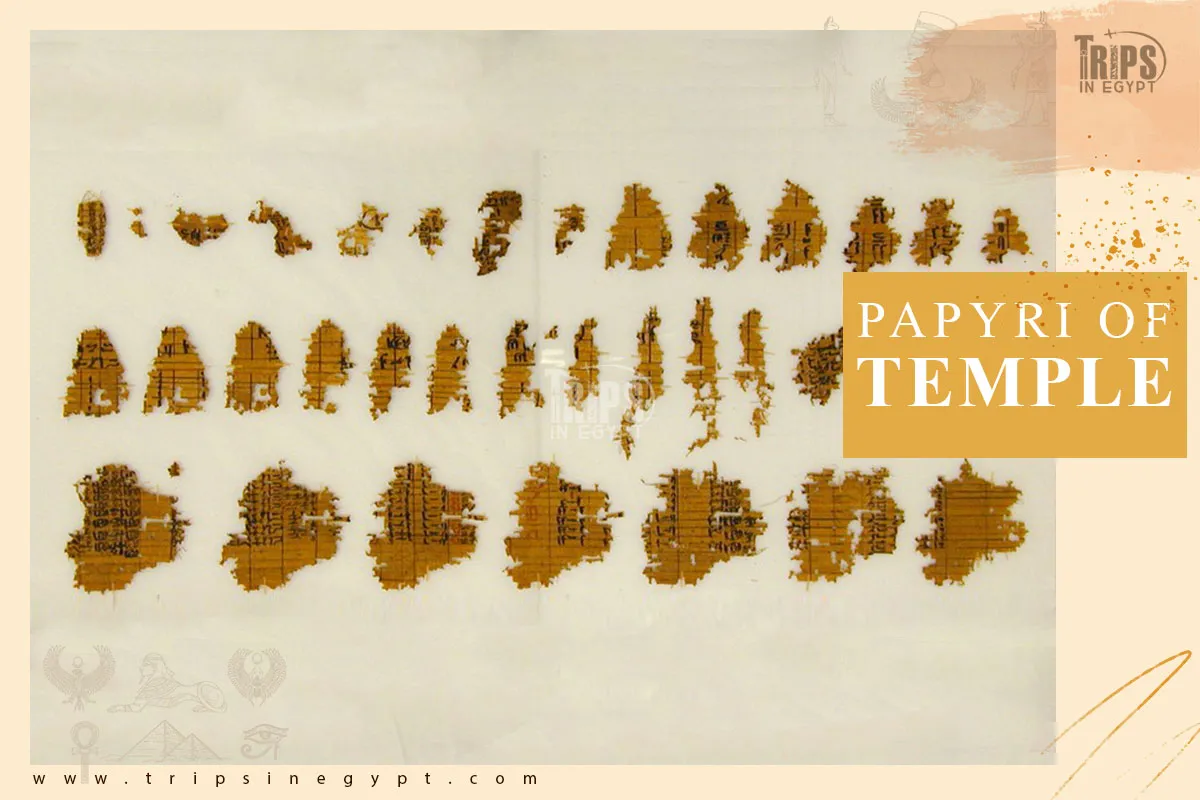
Abusir is famous for a number of reasons, one of which include the finding of the “Abusir Papyri” which is the largest find of ancient papyri that date to the old kingdom that belong to Absuir funerary cult which belong to king Neferirkare Kakai.
This discovery was made by the Czech Institute of Egyptology of the Faculty of Arts, Charles University in Prague which has been conducting excavations since 1976. The place even holds catacombs in the town of Busiris that belong to king Pliny (24 – 79 AD).
Ramesses II Temple At Abusir
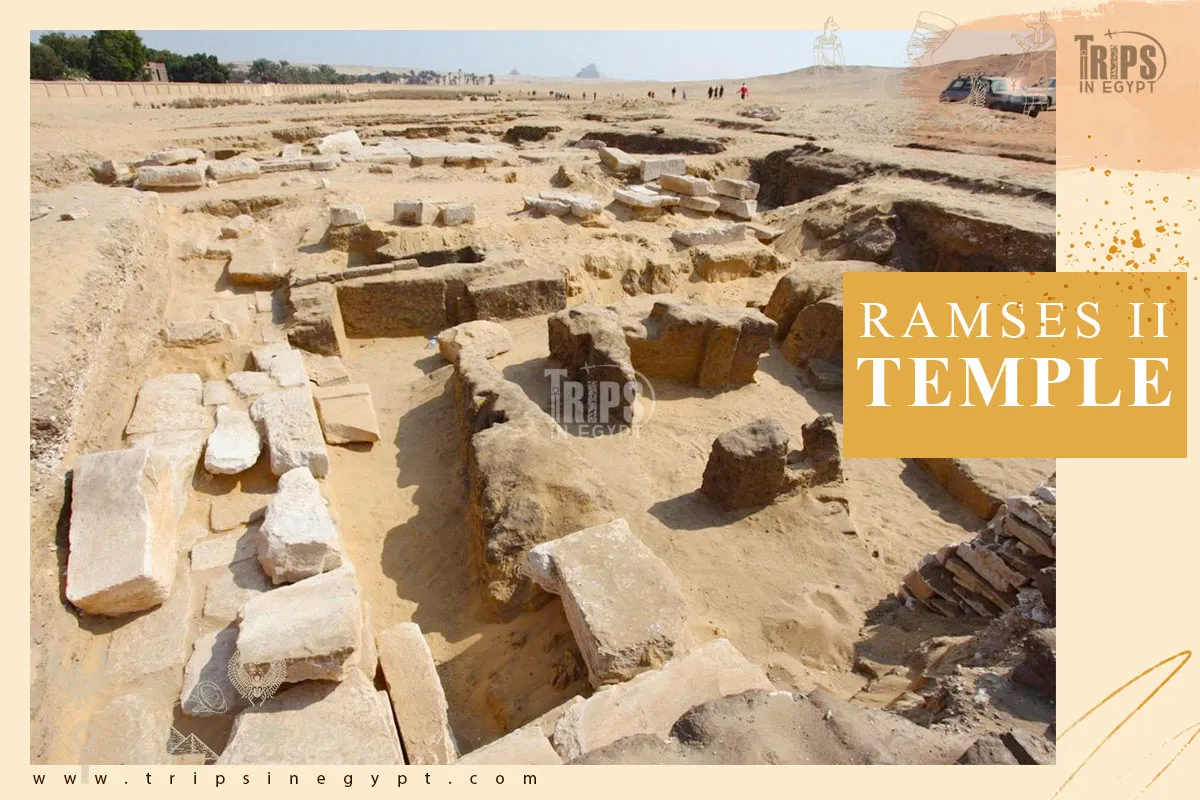
Ramesses the Great temple is a magnificent archaeological wonder which is found 500 m southeast of the pyramids near a cultivated desert. Limestone was used to create this golden temple which was three cellars, a small hall that had 4 columns, and a great courtyard that has mudbrick walls that possess 10 limestone columns.
Within this limestone, the temple is a massive archaeological creation filled with mud bricks with a pylon and a number of magazines. This temple is made for the solar cult which is dedicated to Amun, Ra, and Nekhbet. Some of the remains of the pyramid hold some titles which relate to Ramses II.
Conclusion
Abusir Necropolis is a magnificent archaeological gem that was established to achieve immortality. Through our Egypt tours and Nile cruises, everyone will have the most magnificent adventure across the blessed boundaries of time.

5 Days Cairo And Hurghada Trip
Amazing 4 Nights Cairo and Hurghada Trip Itinerary 5 Days Cairo and Hurghada trip wil...
- Duration 5 Days / 4 Nights
- Location Cairo & Hurghada
- Type Historical & Recreational Tour
From$690/per person
View Tour
6 Days Cairo, Alexandria & Faiyum Tour
Unforgettable Cairo, Alexandria & Faiyum Adventure in Six Days 6 Days Cairo, Alex...
- Duration 6 Days / 5 Nights
- Location Cairo - Alexandria - Fayum
- Type Historical Tour
From$720/per person
View Tour
10 Days Cairo, Faiyum & Nile Cruise Holiday
Breathtaking 10 Days Journey of A Lifetime in Egypt 10 Days Cairo, Faiyum & Nile...
- Duration 10 Days / 9 Nights
- Location Cairo, Luxor, Aswan & Faiyum
- Type Classic Tour
From$1350/per person
View Tour SOLD OUT
Ultimate 7-Day Egypt Solar Eclipse Experience with Hurghada 2027
Enjoy a 7-Day Egypt Solar Eclipse Tour with Hurghada 2027 6 Nights Egypt Solar Ecli...
- Duration 7 Days / 6 Nights
- Location Cairo / Giza / Luxor / Hurghada
- Type Astronomical Tour
Sold Out
View Details