




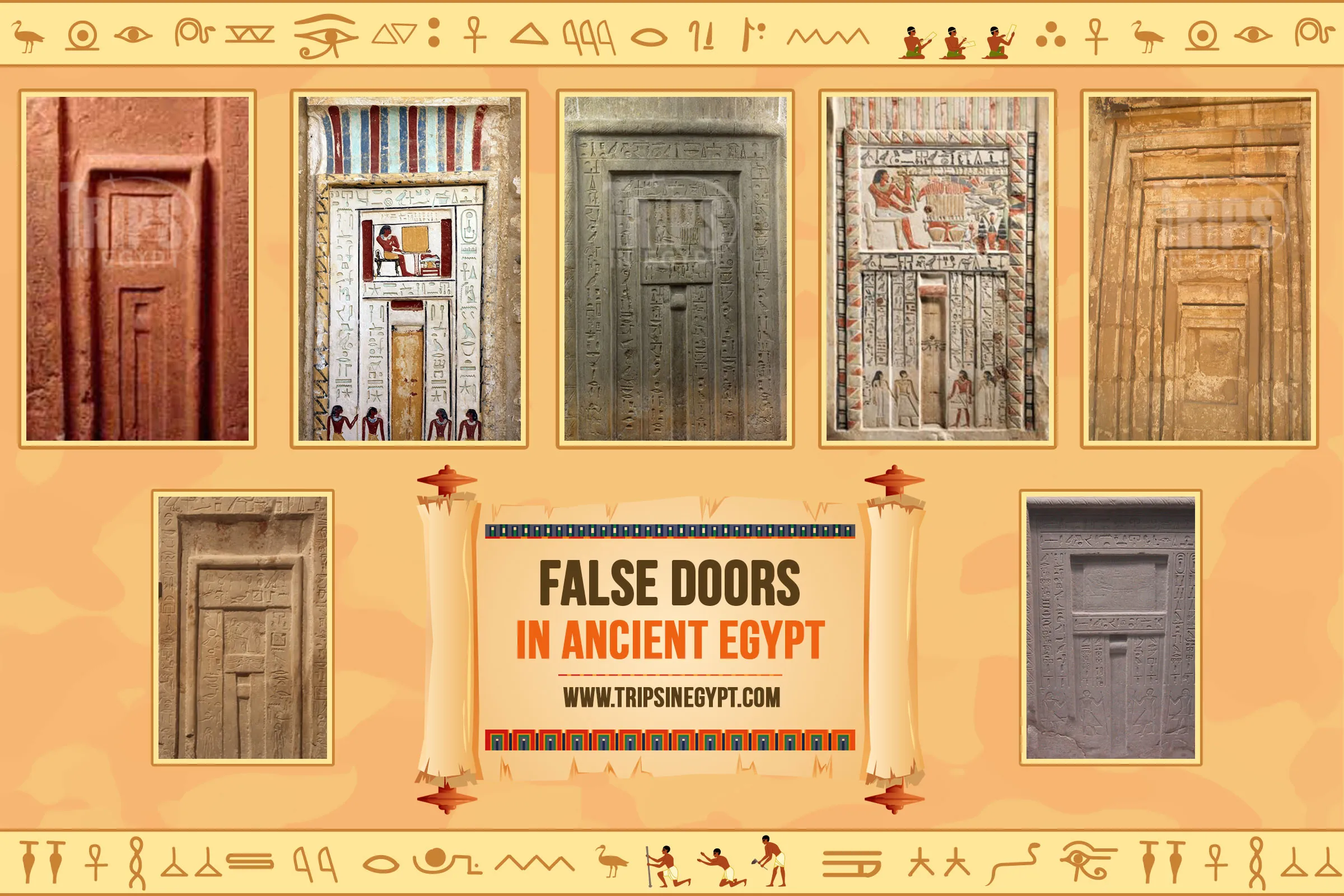
False doors in ancient Egypt were the embodiment of the rich imagination and the religious beliefs of the ancient Egyptians come to life in a combination of the most captivating and enchanting creations of divine art. The Ancient Egyptians believed that life is infinite and these gates were the key to passing your spiritual essence & soul into the world of the dead. These gateways to the Egyptian Underworld become a common element in all the tombs and mortuary temples across the lands of Egypt.
The false doors in ancient Egypt were the barrier between the mortal world and the realm of the soul where everyone will live in their true astral form and be one with the universe, embraced in total bliss and warmth. The false doors are known to be a magical work of art that carry a lot of meaning and facts about the funerary ways and way of life. In this article, we will discuss all the information and details concerning these epic false doors.
What Is the Purpose of A False Door in Ancient Egypt?
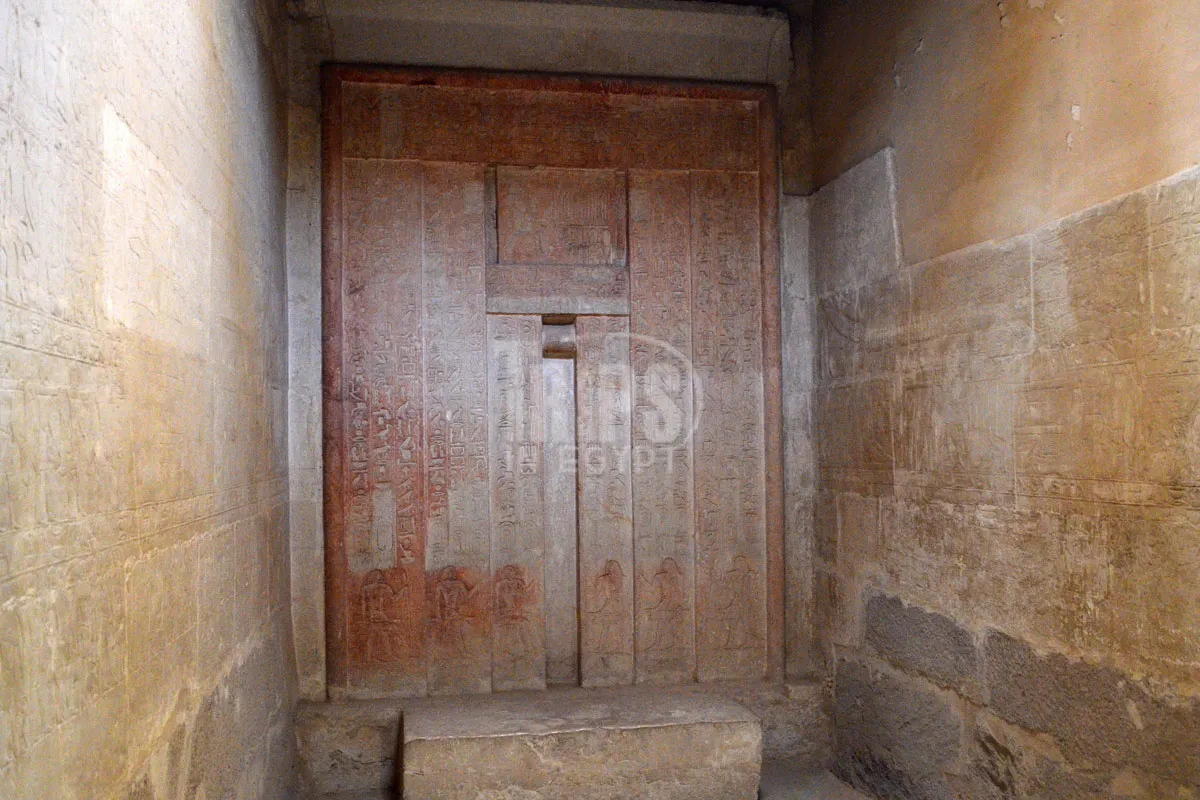
The false doors in ancient Egypt were a marvelous architectural element located across the ancient Egyptian mortuary temples and tombs across the New Kingdom of Egypt (1570 – 1050 BC). The false doors were known as "The Doors of Ka" as Ka means "Soul". This recessed niche was an incredible artistic representation of an imaginary door that held a number of marvelous images and inscriptions.
The false door is a majestic gateway that connects both the dead and living worlds where everyone can cross to the underworld and the deities and spirits of ancient Egypt can travel between the two worlds. One of the purposes of the false doors was to make offerings for the dead on a marvelous offering slab located in front of the door.
The location of the false doors was found on the western wall of the offering chamber and the funerary chapel as the ancient Egyptians have always associated the land of the dead with the direction of the west. During the New Kingdom (1570 – 1050 BC), the false doors were found in a chapel within the temple known as "The Hearing Ear" which enables everyone to communicate with their god and goddess. Every single member of the deceased had their own false door.
The deceased and the ancient Egyptian deities could make an interaction by receiving offerings and passings through the door. It was very common to find false doors located across the coffin sides and the cabinets of "Ushabti" or "Shawabti" who were magical servants.
The History of the False Doors in Ancient Egypt
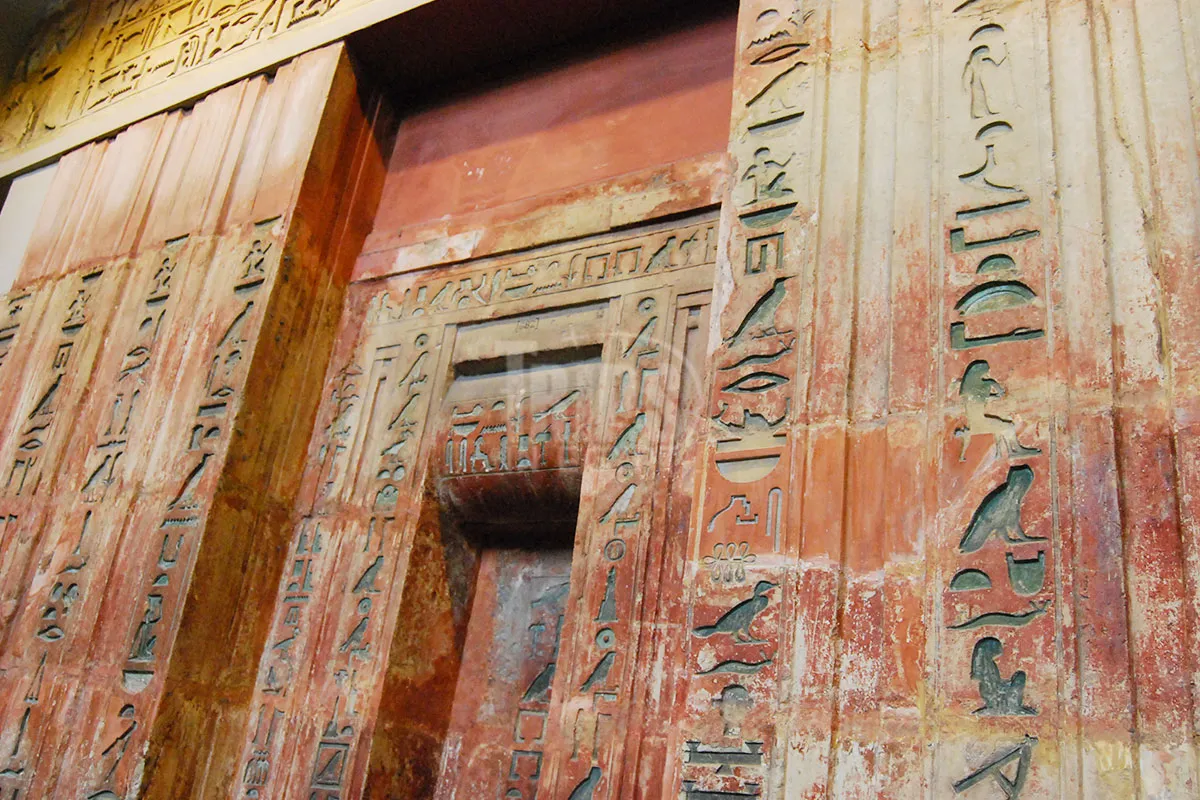
Many believe that the evaluation of false doors came from the "Palace Façade" which is an external architectural motif of the golden Mastaba tombs that became common with the tombs of the high elite officials during the Early Dynastic period (3100 - 2156 BC) as seen across the outer wall of Djoser’s step pyramid.
The first official use of the false door was during the 3rd dynasty of the Old Kingdom (2700 BC –2200 BC) as seen across sean Khui Ptah in the Teti cemetery at Saqqara. The use of false doors became very common across the universal tombs of the 4th, 5th, and 6th dynasties. During the 150 years reign of the 6th dynasty pharaohs of Pepi I, Merenre, and Pepi II, the false door underwent several changes across the panel's layout which enabled historians to date the tombs and the temples based on the different artistic styles of the false door.
Between 2181 BC and 2055 BC, the false doors diminished in popularity, and then it was replaced by stelae which became the main surfaces for carving funerary inscriptions. A number of false doors made their way on the coffins of the middle kingdom (2040 BC - 1782 BC) such as the Coffin of Nakhtkhnum which dates to the late Dynasty (1850–1750 BCE). The extensive artwork and inscriptions found across the coffins helped in the movement of the deceased's spirit across the world of the living and the afterlife.
Due to the Egypt-Mesopotamia cultural and economic relations of the 4th millennium BCE, Egyptian architecture was influenced by and even adopted some elements from the Mesopotamian Temples and the civic architecture of this time period. Some of these are the recessed niches found across the Mastaba tombs designed during the period of Naqada III around 3000 BC. It is unclear if the artistic transference between the ancient Egyptians and Mesopotamians was due to Mesopotamian workmen or imported Mesopotamian seals which inspired a number of Egyptian architects.
The artistic style of the false doors was found outside Egypt in the shape of painted doors across the interior of Roman Villas such as the villa of Julius Polybius in Pompeii. The design of the false doors spread all over the world as it was known as the gate of the gods in the Hayu Marca mountain region of Peru. The Tomb of the Charontes at Tarquinia in Italy and the tomb of the Augurs are other evidence of the expansion of the false doors designs beyond the borders of Egypt. A false door was discovered in 2018 inside a Hellenistic cemetery at the Al-Abd archaeological site in Alexandria which only shows the influence of the false door concept on foreign civilizations and cultures.
The Structure of the False Doors in Ancient Egypt
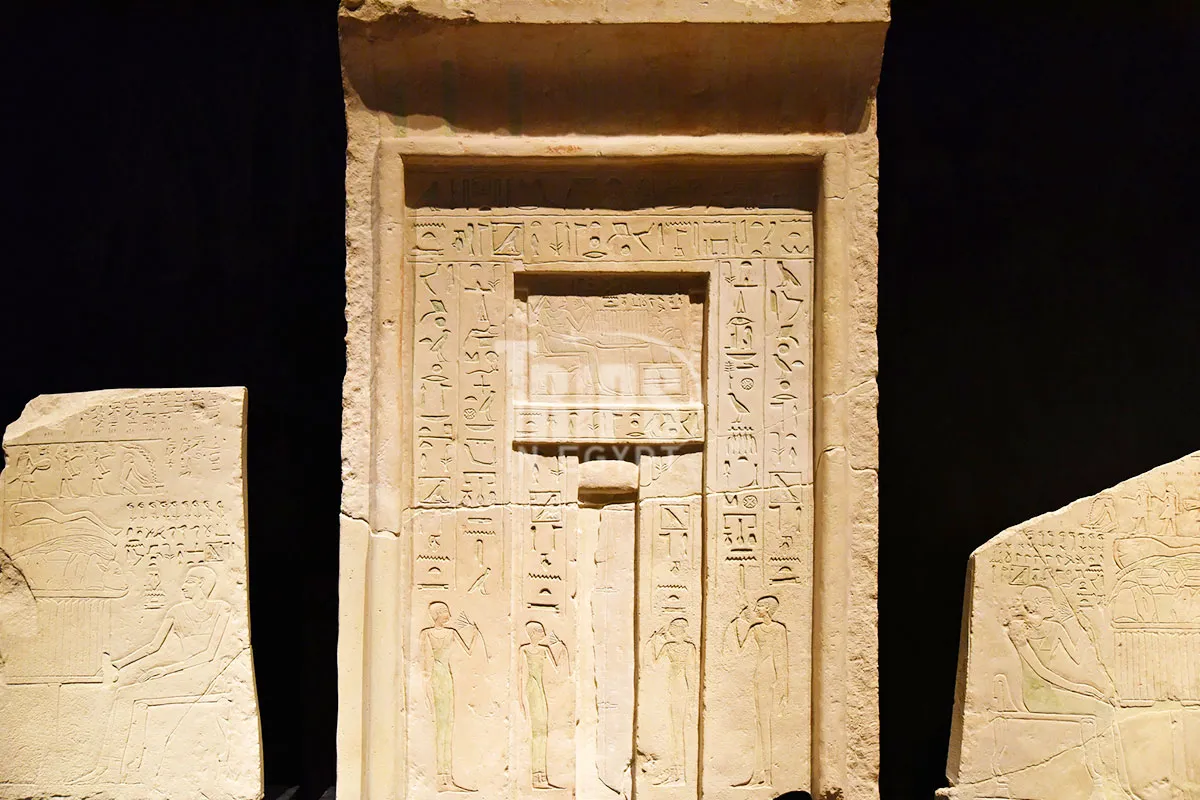
The structure of the false door is known to be carved from a single plank of wood or a stone block which was designed to function as a mythical door and not like any ordinary door. There is a flat panel or a niche found in the center of the false door plus there are a number of arranged door jambs that exhibit an illusion of depth plus a series of frames, a passageway, or a foyer.
There is a semi-cylindrical drum that is carved on top of the central panel directly to represent a reed-mat which was made to shut the rear doors. The false door was made to have a combination of lintels and moldings which offers a magical scene displaying an offering that shows the dead located in front of the offering table which was carved on top of the door’s center. They took the shape of a "Hotep" hieroglyph which represents a loaf on a mat and the offering formula was usually inscribed on the deceased.
The offering tables were created of stone and held a number of depictions and decorations of a number of offerings which include beer, bread, fowl, and ox plus depressions were added to receive gifts. The owners of the tomb even carved statues in their own images located within the false door’s central niche.
Inscriptions of the False Doors in Ancient Egypt
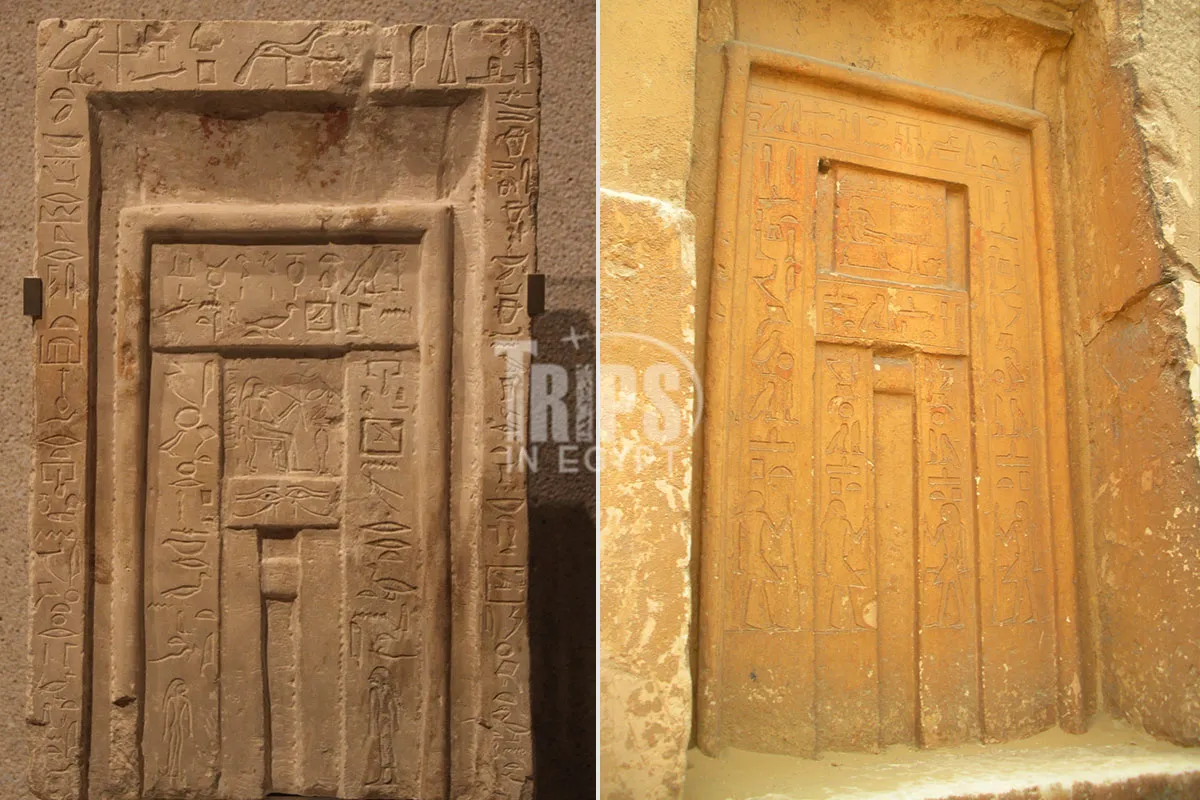
The false doors held a number of false doors which were covered with a number of inscriptions that belonged to the deceased which included his name and titles plus the typical Offering formulas. The instructions would immortalize the deceased virtues and express happy wishes for the afterlife.
The inscriptions also included a curse that will harm anyone who would try to harm the deceased plus fortune and bliss will be bestowed on those who made offerings. Found on the tomb of Redi-ness at Giza are texts that read the following”
“Never did (I) do any evil thing against people. (As for) those who will do something against this, it shall be protected from them”.. (I) have constructed this my (tomb) with my own means. It is the god who will judge (my) case along with him who does anything against it.”
Another example is the false door of Ankhires which reads:
The scribe of the house of the god's documents, the stolist of Anubis, follower of the great one, follower of Tjentet, Ankhires.
The lintel reads:
His eldest son it was, the lector priest Medunefer, who made this for him.
The left and right outer jambs read:
An offering which the king and which Anubis,
who dwells in the divine tent-shrine, give for burial in the west,
having grown old most perfectly.
His eldest son it was, the lector priest Medunefer,
who acted on his behalf when he was buried in the necropolis.
The scribe of the house of the god's documents, Ankhires.
Conclusion
The false doors are another gem of divine art that stood the test of time to shed light on the cultural and religious innovation of the ancient Egyptian civilization. All our Egypt private tours and Nile cruises will offer direct access to these magical wonders that will provide a clear vision of bliss and wonder.

5 Days Cairo And Hurghada Trip
Amazing 4 Nights Cairo and Hurghada Trip Itinerary 5 Days Cairo and Hurghada trip wil...
- Duration 5 Days / 4 Nights
- Location Cairo & Hurghada
- Type Historical & Recreational Tour
From$690/per person
View Tour
6 Days Cairo, Alexandria & Faiyum Tour
Unforgettable Cairo, Alexandria & Faiyum Adventure in Six Days 6 Days Cairo, Alex...
- Duration 6 Days / 5 Nights
- Location Cairo - Alexandria - Fayum
- Type Historical Tour
From$720/per person
View Tour
10 Days Cairo, Faiyum & Nile Cruise Holiday
Breathtaking 10 Days Journey of A Lifetime in Egypt 10 Days Cairo, Faiyum & Nile...
- Duration 10 Days / 9 Nights
- Location Cairo, Luxor, Aswan & Faiyum
- Type Classic Tour
From$1350/per person
View Tour SOLD OUT
Ultimate 7-Day Egypt Solar Eclipse Experience with Hurghada 2027
Enjoy a 7-Day Egypt Solar Eclipse Tour with Hurghada 2027 6 Nights Egypt Solar Ecli...
- Duration 7 Days / 6 Nights
- Location Cairo / Giza / Luxor / Hurghada
- Type Astronomical Tour
Sold Out
View Details