



The Great Hymn to the Aten is a poem in praise of the sun disk, written in the mid-14th century BC during the reign of Akhenaten. Carved on the wall of a tomb at Amarna, it celebrates the Aten as the creator of all life, every land and every people. This guide explains what the hymn is, who wrote it, what it means, and how it compares with Psalm 104.

What Is the Great Hymn to the Aten?
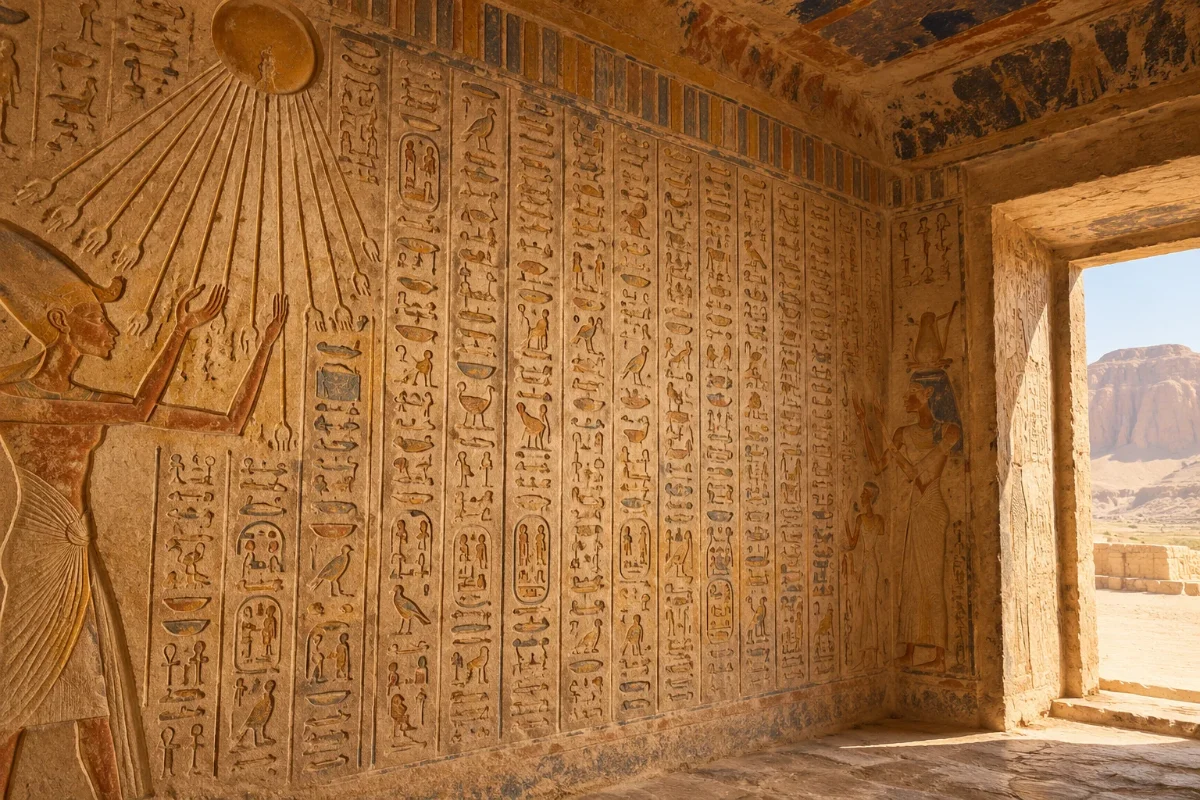
The Great Hymn to the Aten is the longest and best-known of the hymns composed for the Aten, the sun disk that Akhenaten made the center of Egyptian religion. It was written around 1350 BC, in the 18th Dynasty of the Egypt New Kingdom, and it is one of the finest works of ancient Egyptian poetry. In about 13 columns of hieroglyphs, the hymn describes the sun rising over Egypt, the dangers of the night, the birth of children and animals, the many peoples of the world and the Nile that waters the land, all as the work of one creator.
Who Wrote the Hymn to the Aten?
The Great Hymn to the Aten is traditionally credited to Akhenaten himself, and many scholars believe the king composed it or closely guided its writing. The text never names an author, however. It is carved in the tomb of the official Ay, who presents it as words spoken in praise of the Aten and of the king, so it may also have been the work of royal priests or scribes. What is certain is that it expresses the king's theology, because the hymn presents Akhenaten as the person who uniquely knows the god. Ay himself later became pharaoh, ruling after Tutankhamun.
Where Was the Great Hymn Found?
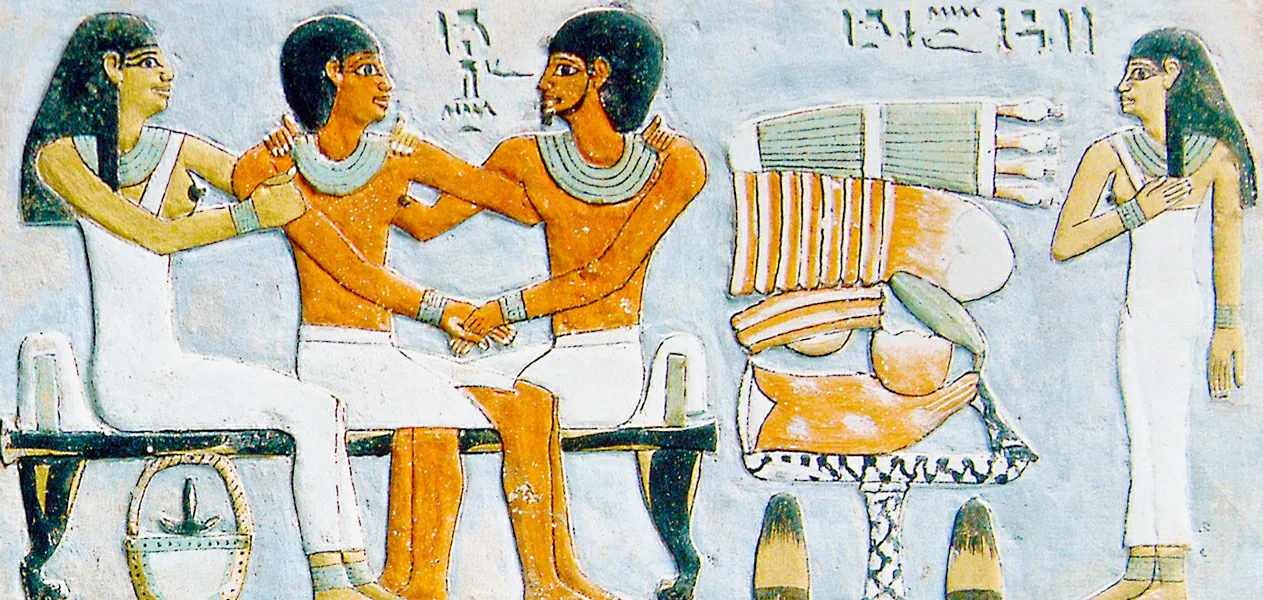
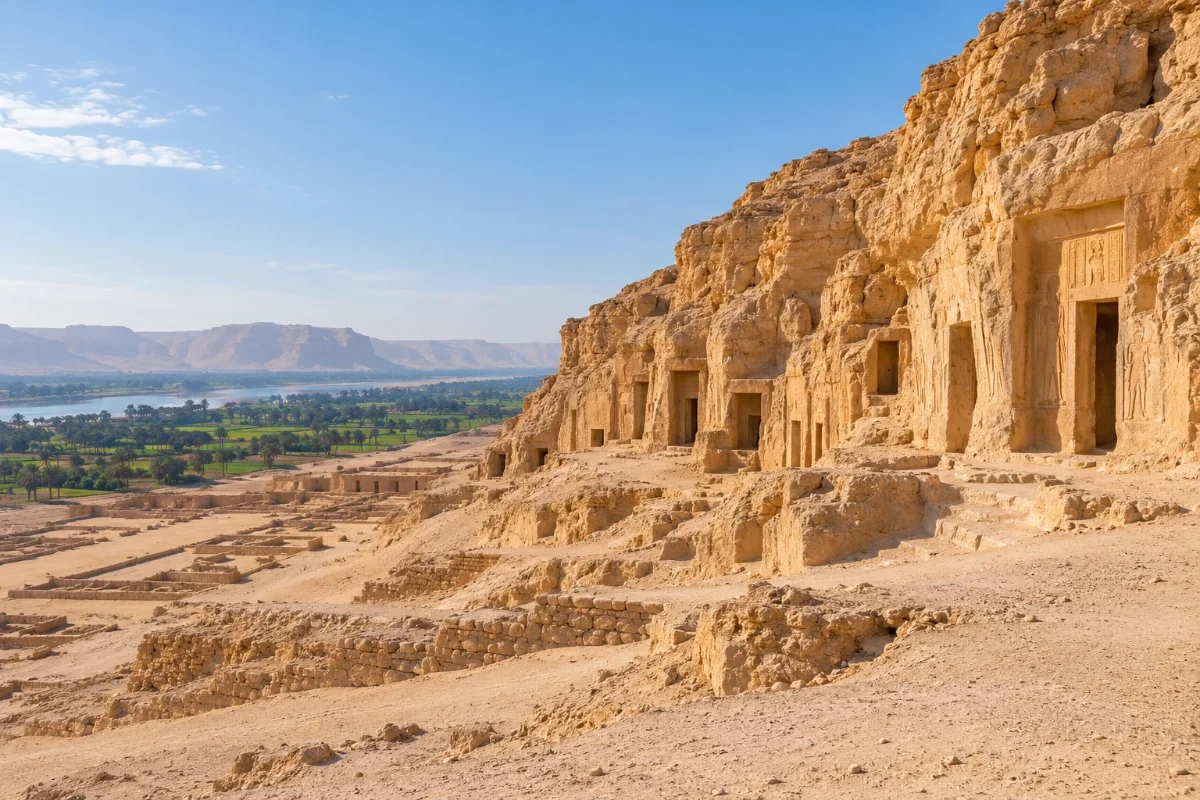
The only full copy of the Great Hymn was found in the rock-cut tomb prepared for Ay in the southern group of tombs at Tell el-Amarna, the site of Akhenaten's capital, Akhetaten. It is carved near the tomb's entrance, beside images of Ay and his wife Tiy worshipping the sun. Ay was never buried there. When he became king, he was buried in a royal tomb in the western branch of the Valley of the Kings at Thebes. Shorter versions of the hymn appear in several other tombs of Amarna officials, so readers often call the longer text the Great Hymn to set it apart.
The Great Hymn to the Aten in Hieroglyphics
The hymn was carved in hieroglyphs in vertical columns, read from top to bottom, with the names of the Aten, the king and the queen enclosed in cartouches. The French scholar Urbain Bouriant copied the text in the 1880s, and the British Egyptologist Norman de Garis Davies published it in his survey of the Amarna tombs in 1908. Part of the wall was later damaged, so modern editions of some lower lines rely partly on these early copies. The original inscription remains in the tomb at Amarna.
Akhenaten and the Worship of the Aten
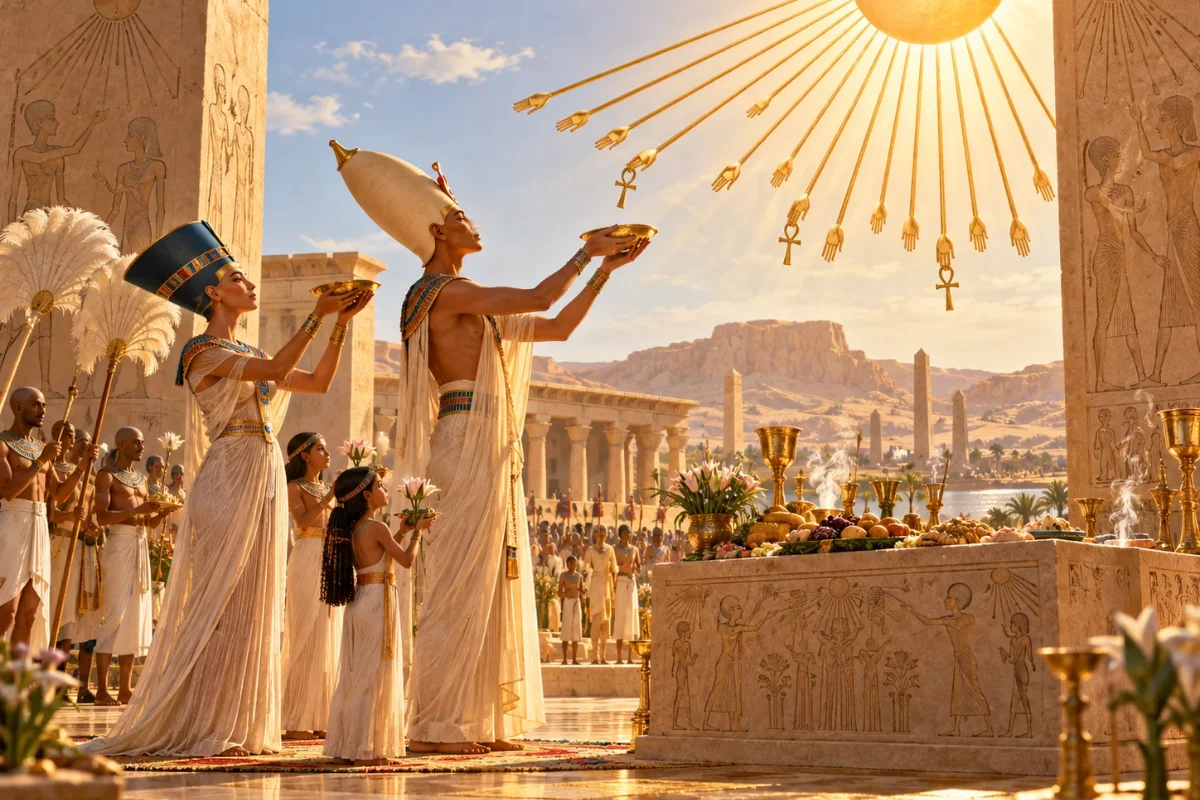
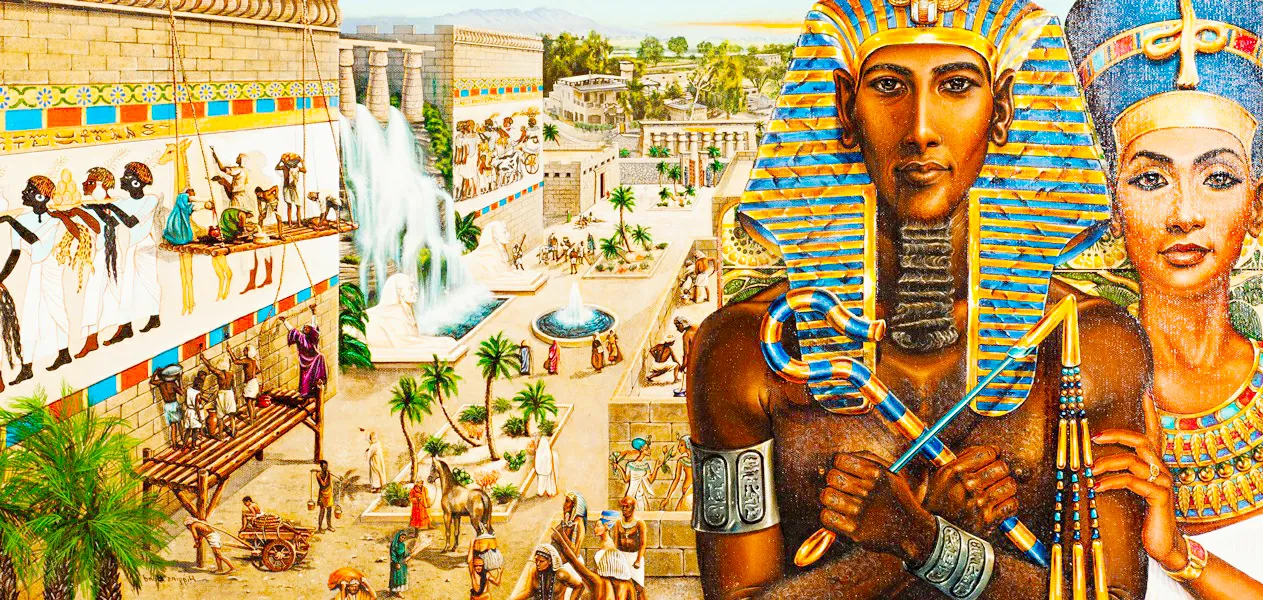
To understand the hymn, you need to understand the king who inspired it. King Amenhotep IV came to the throne around 1353 BC as the son of Amenhotep III and Queen Tiye. Within a few years he changed Egypt's religion more deeply than any pharaoh before him, raising the sun disk above the traditional gods and eventually focusing royal worship almost exclusively on the Aten. He ruled for about 17 years, until about 1336 BC, and the Great Hymn is one of the clearest surviving statements of the theology he created.
Did Akhenaten Worship Aten?
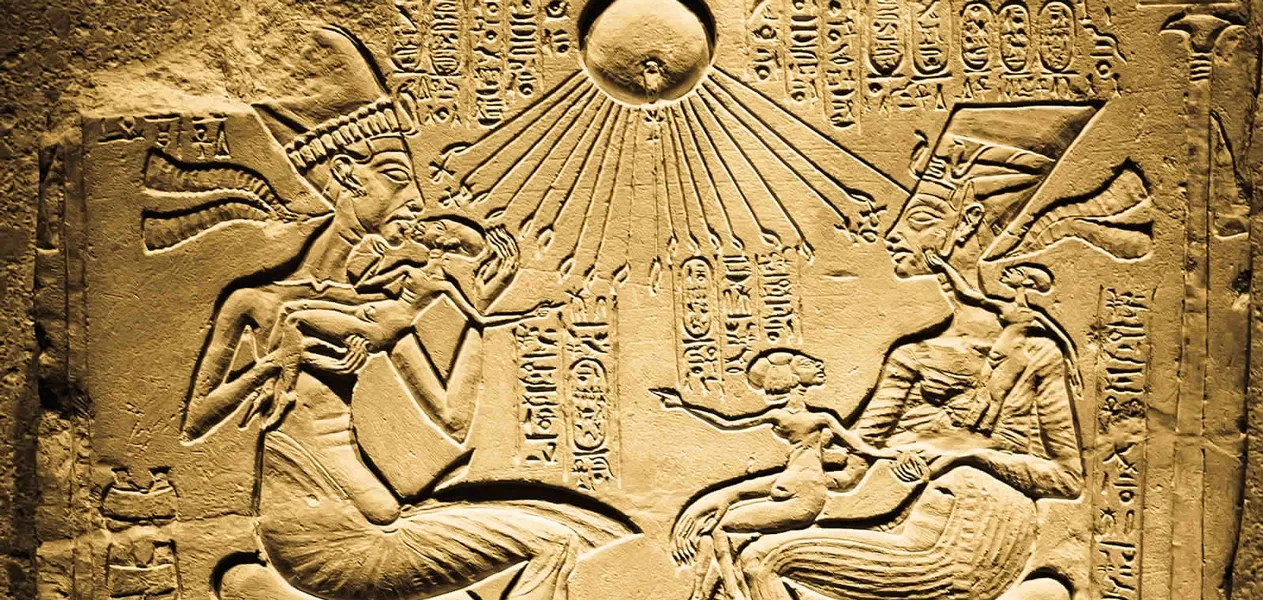
Yes. Akhenaten made the Aten the supreme and eventually near-exclusive focus of royal state worship, and he changed his own name from Amenhotep, "Amun is satisfied", to Akhenaten, commonly interpreted as "effective for the Aten", in the fifth year of his reign. The Aten was shown as a sun disk whose rays end in human hands, some holding the ankh, the sign of life, toward the king and queen. Temples to the Aten were open to the sky, so worship took place directly beneath sunlight.
Akhenaten also attacked the prominence of Amun, the old state god of Thebes, whose great home was Karnak Temple, and had Amun's name removed from many monuments.
Was Akhenaten's Religion Monotheism?
Akhenaten is often called the first monotheist in history, but scholars still debate how far his religion really went. The Great Hymn describes the Aten as the sole creator, and in time Akhenaten rejected or suppressed much of the traditional state cult. Yet the Aten was approached through the royal family rather than directly by ordinary people, while archaeological finds from Amarna show that some households continued using objects associated with traditional deities.
For these reasons, scholars variously describe Atenism as monotheism, monolatry, henotheism or a uniquely exclusive form of royal solar theology. What is certain is that Akhenaten transformed Egyptian state religion more radically than any known pharaoh before him.
Amarna and the End of the Aten
In his fifth year, Akhenaten founded Akhetaten, "Horizon of the Aten", on largely undeveloped land on the east bank of the Nile in Middle Egypt, at the site now called Tell el-Amarna. The tomb of Ay and other private tombs were cut into the cliffs behind the city. After Akhenaten's death, King Tutankhamun, probably his son, restored the worship of Amun and moved the royal court away.
The city was eventually abandoned. Later kings, especially Horemheb, dismantled many Aten temples and reused their blocks, while Akhenaten was omitted from later official king lists.
Hymn to the Aten
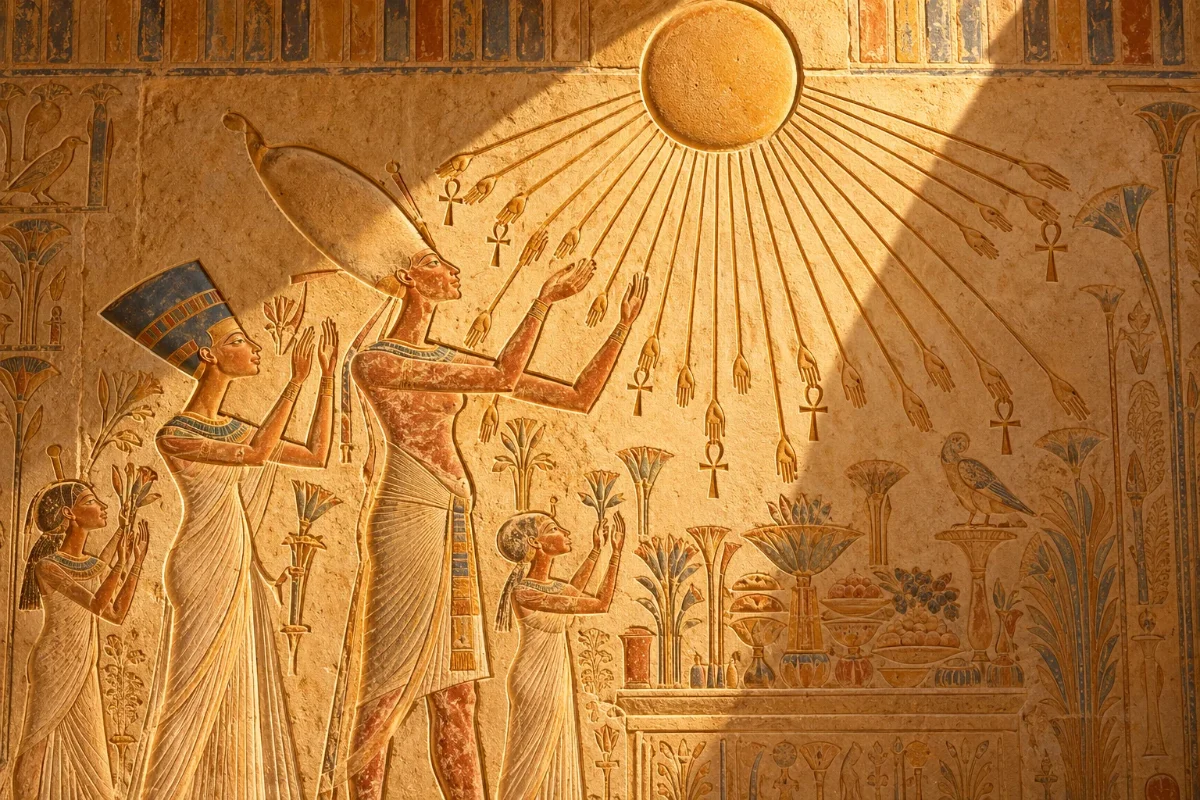
Below is the full Great Hymn to the Aten in a new, plain-English version prepared for Trips in Egypt. It follows the hieroglyphic text in the tomb of Ay, as published by Norman de Garis Davies in 1908, and the order and meaning of standard modern translations, with the 13 columns grouped into 10 stanzas for easier reading. Words in brackets explain a name or supply wording implied by the Egyptian. The hymn opens with a formal heading naming the Aten, the king and Queen Nefertiti.
The heading: Adoration of Ra-Horakhty, who rejoices in the horizon, in his name of Shu who is in the Aten, living forever and ever; the great living Aten who is in jubilee, lord of all that the Aten encircles, lord of heaven, lord of earth, lord of the House of the Aten in Akhetaten. And adoration of the King of Upper and Lower Egypt, who lives by Maat, Lord of the Two Lands, Neferkheperure Waenre; the Son of Ra, who lives by Maat, Lord of Crowns, Akhenaten, great in his lifetime; and of the Great Royal Wife, whom he loves, Lady of the Two Lands, Neferneferuaten Nefertiti, may she live in health and youth forever and ever. Spoken by the Fan-Bearer on the Right Hand of the King, the God's Father, Ay.
He Says:
1. Sunrise. You rise in beauty on the horizon of the sky, O living Aten, who began life. When you dawn in the eastern horizon, you fill every land with your beauty. You are lovely, great and shining, high above every land, and your rays embrace the lands to the very edge of all you have made. As Ra, you reach to their limits and bind them for your beloved son. You are far away, yet your rays are on the earth. You are in people's sight, yet your going is unseen.
2. Night. When you set in the western horizon, the land lies in darkness, as if in death. People sleep in their rooms with their heads covered, and no eye can see another. Their goods could be taken from under their heads, and they would not know it. Every lion comes out of its den, and every serpent bites. Darkness is a blanket and the earth is silent, for the one who made it rests in his horizon.
3. Dawn and the waking world. At daybreak you rise in the horizon and shine as the Aten of the day. You drive away the darkness and give your rays, and the Two Lands are in festival. People wake and stand on their feet, for you have raised them up. They wash their bodies and put on their clothes, and their arms are lifted in praise at your rising. Then the whole land goes about its work.
4. Animals, birds, ships and fish. All the cattle rest in their pastures, and the trees and plants grow green. Birds fly up from their nests, their wings spread in praise of your spirit. All the flocks leap on their feet, and everything that flies and settles lives when you rise for them. Ships sail north and south, for every road is open when you appear. The fish in the river dart before your face, and your rays reach into the depths of the sea.
5. Birth. You make the seed grow in women and make fluid into a human being. You keep the son alive in his mother's womb and soothe him so that he does not cry, a nurse even in the womb. You give breath to bring to life all that you have made. When he comes out of the womb to breathe on the day of his birth, you open his mouth and give him all he needs.
6. The chick in the egg. When the chick in the egg chirps inside its shell, you give it breath within to keep it alive. You set the time for it to break the shell, and it comes out of the egg at its time, calling out and walking on its own legs as soon as it leaves.
7. The creator of all peoples. How many are your works, though they are hidden from sight, O sole god, beside whom there is no other! You made the earth as you wished, when you were alone: people, cattle and every flock, everything on earth that walks on legs and everything on high that flies with wings. The lands of Syria and Nubia, and the land of Egypt, you set every person in their place and supply their needs. Each one has food, and each one's lifetime is counted. Their tongues differ in speech, and so do their natures. Their skins are different, for you made the peoples different.
8. The two Niles. You made the Nile in the underworld and bring it forth as you wish, to keep the people alive, just as you made them for yourself. You are lord of them all, who labors for them, lord of every land, who rises for them, the Aten of the day, great in majesty. For all distant lands you also make life. You have set a Nile in the sky that comes down for them, making waves on the mountains like the sea and watering their fields. How excellent are your plans, O lord of eternity! The Nile in the sky is for foreign peoples and for every creature that walks on legs, while the Nile from the underworld is for Egypt.
9. Seasons and forms. Your rays nurse every field, and when you shine they live and grow for you. You made the seasons to raise all that you made, the winter to cool them and the heat so that they may taste you. You made the far-off sky to shine in it and see everything you made, you alone, shining in your form as the living Aten, rising, gleaming, far away and near. You make millions of forms from yourself alone: cities, towns and fields, the road and the river. Every eye sees you before it, for you are the Aten of the day over the earth.
10. The king and queen. You are in my heart, and there is no other who knows you except your son, Neferkheperure Waenre, for you have taught him your ways and your power. The world came into being by your hand, as you made it. When you rise, people live; when you set, they die. You are lifetime itself, and people live through you. Eyes look upon your beauty until you set, and all work stops when you set in the west. When you rise again, you make everything grow for the king, and every leg has been moving since you founded the earth. You raise them up for your son, who came from your body, the King who lives by Maat, Lord of the Two Lands, Neferkheperure Waenre, the Son of Ra who lives by Maat, Lord of Crowns, Akhenaten, great in his lifetime, and the Great Royal Wife, whom he loves, Lady of the Two Lands, Neferneferuaten Nefertiti, living and young forever and ever.
How the Hymn Sounds in Egyptian
The hymn was written to be heard, not only read. Its opening line reads roughly khaek neferu em akhet en pet, Iten ankh, shaa ankh, meaning approximately, "You rise in beauty on the horizon of the sky, O living Aten, who began life." Ancient Egyptian writing did not record vowels in the way modern alphabets do, so Egyptologists supply many of them by convention and the exact pronunciation remains uncertain.
Even so, the reconstructed reading suggests short, balanced phrases and repeated patterns that give the text a chant-like rhythm. Each stanza repeatedly moves from the action of the Aten to the world's response, a structure that may reflect the poem's performance within the religious environment of Akhetaten.
The Great Hymn to the Aten Summary
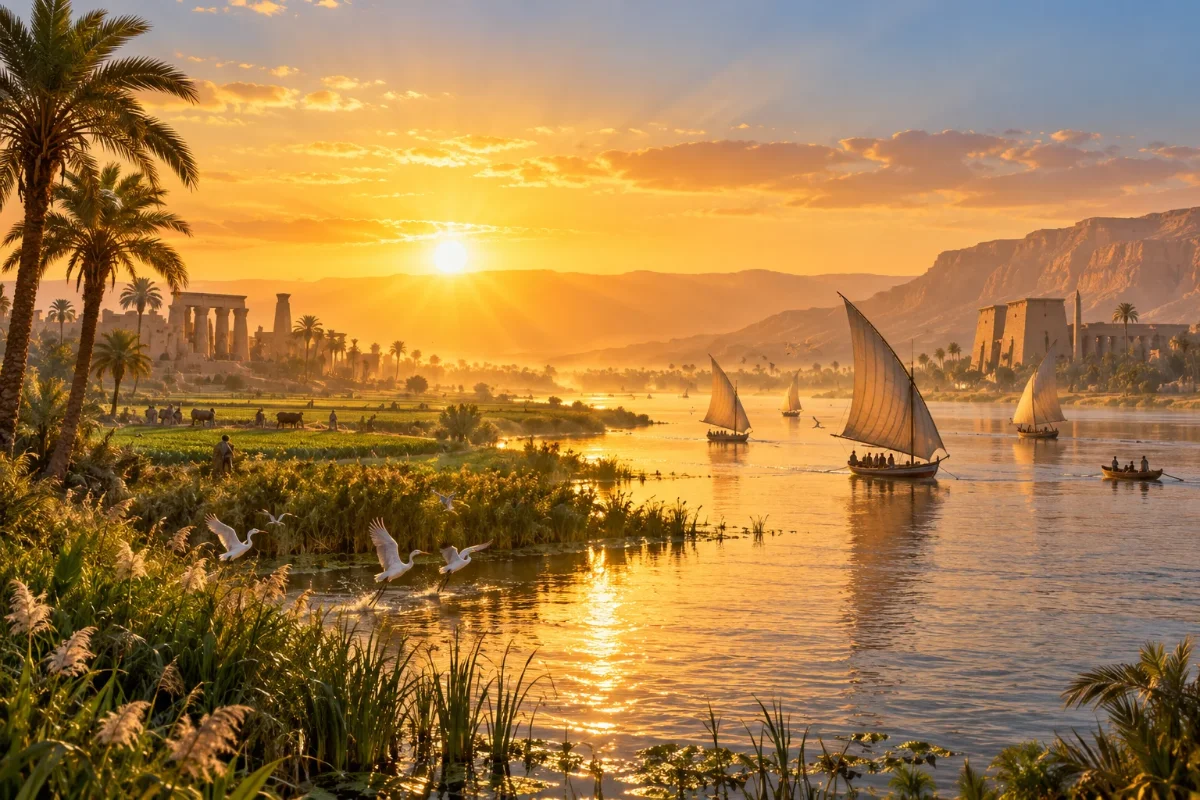
The Great Hymn to the Aten moves through the day and through creation, praising the sun at every stage. It begins at dawn and ends with the king and queen, and each part shows the Aten giving life to a different aspect of the world. The following summary traces the poem in order, making it easier to understand how sunrise, darkness, birth, foreign lands, the Nile and kingship combine into a single religious vision.
Sunrise and the Gift of Life
The hymn opens as the Aten rises on the eastern horizon and fills every land with beauty. Its rays embrace the world, and although the sun is far away, its light reaches the earth. When it appears, people wake, wash and dress, cattle move into their pastures, plants grow, birds leave their nests and fish move through the river. Ships can sail and roads become usable again.
The message is simple but powerful: sunlight is not merely illumination. In the poem, it is the force that awakens the created world and makes every form of daily life possible.
Night and the Dangers of Darkness
When the Aten sets in the west, the world falls into darkness described as being "as if in death." People sleep with covered heads, possessions can be taken unnoticed and dangerous animals emerge. Lions leave their dens and snakes move through the night. The absence of light becomes a period of fear, silence and vulnerability.
Unlike many earlier Egyptian solar texts, the Great Hymn says little about the sun god's supernatural journey through the underworld. Its focus is instead on an observable reality: when the sun disappears, ordinary life stops; when it returns, the world becomes active again.
Creation of All Peoples and Creatures
The central portion of the hymn expands beyond the rhythm of one day and celebrates the Aten as the creator of living things. The god creates children in the womb, gives them breath and enables chicks to emerge from their eggs. Humans, animals and plants all depend on the same source of life.
The poem then extends this creative power beyond Egypt. Syria, Nubia and Egypt all belong to the same created world, while different languages, appearances and ways of life are presented as part of the creator's design. This universal dimension is one of the hymn's most distinctive ideas.
The Nile and the Seasons
For Egypt, the Aten provides the Nile, whose waters sustain agriculture and life. For distant lands that do not receive the Nile flood, the creator provides a "Nile in the sky" through rain. The poem therefore explains different environments as different expressions of the same divine care.
The Aten also creates the seasons, including periods of cool and heat needed for life to flourish. Natural forces that traditional Egyptian religion could connect with several gods are drawn together under a single solar creator who sustains different lands in different ways.
Akhenaten, the Son of the Aten
The hymn ends by turning from creation toward the king. Akhenaten claims a uniquely intimate knowledge of the Aten, declaring that the god is in his heart and that no one else understands the divine plan in the same way. The king is therefore not simply one worshipper among many; he becomes the essential intermediary between the Aten and humanity.
Queen Nefertiti also appears in the final royal praise. This ending reveals the political dimension of the hymn: the Aten may create all peoples, but access to the god's truth is centered on Akhenaten and his royal family.
What Is the Meaning of the Great Hymn to the Aten?
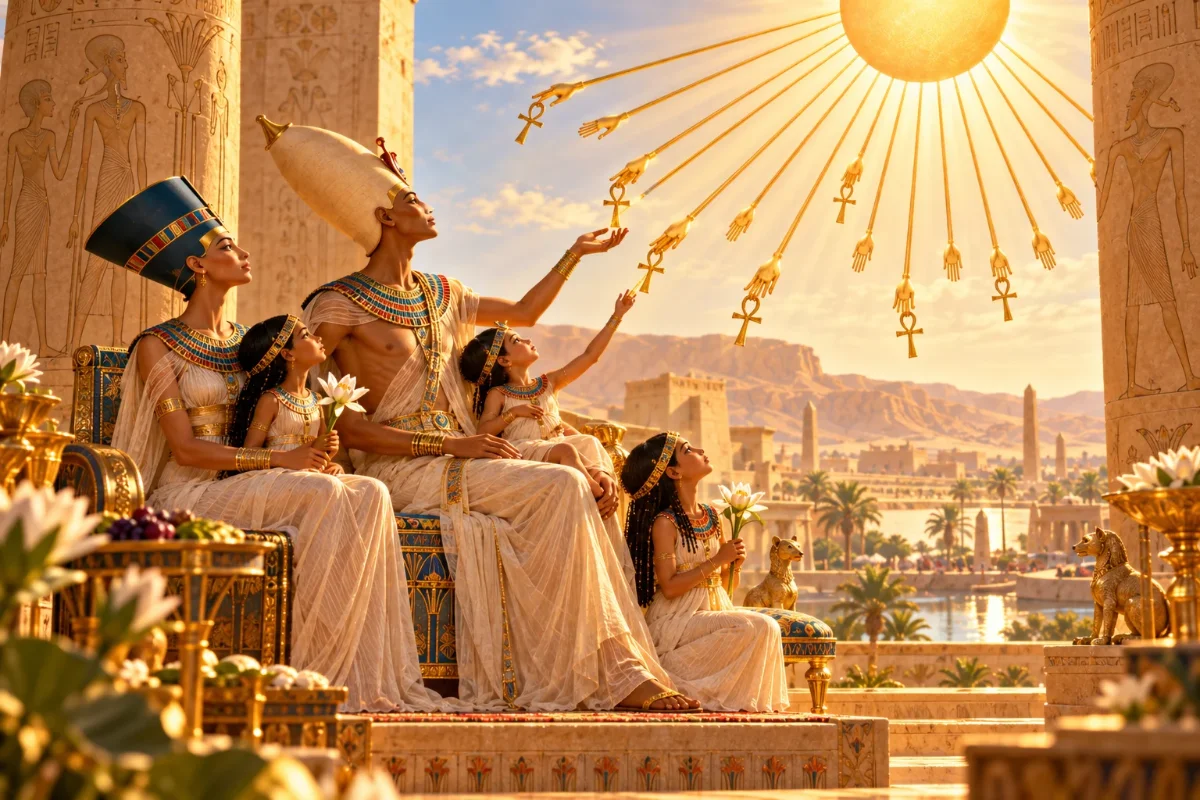
The meaning of the Great Hymn to the Aten is that the light of the sun creates and sustains life throughout the world. The Aten produces people and animals, nourishes vegetation, provides water and establishes the seasons while caring for lands far beyond Egypt. At the same time, the poem makes a political claim: Akhenaten possesses unique knowledge of this creator. The hymn therefore combines observations of nature with royal ideology, placing the king and his family between humanity and the divine source of life.
A God for All Peoples
Earlier Egyptian hymns also praised solar gods such as Ra and Amun-Ra as creators and sources of life, so many of the Great Hymn's themes developed from older Egyptian religious traditions. What changed under Akhenaten was the extraordinary concentration of state worship on the Aten and the reduction of the traditional pantheon from official royal religion.
The treatment of foreign peoples is particularly striking. Syrians, Nubians and Egyptians are all presented as creations of the same god. Their languages, appearances and lands differ, but those differences themselves belong to creation. This universal perspective is one reason the hymn continues to attract historians of religion.
Akhenaten and Nefertiti in the Hymn
No securely identified love poem written by Akhenaten specifically to Queen Nefertiti is known. The association probably comes from Nefertiti's exceptional prominence in Amarna art and religion. The Great Hymn ends by naming and praising her beside the king, while countless reliefs show the royal couple beneath the life-giving rays of the Aten.
Amarna art also depicts unusually intimate royal family scenes, with Akhenaten and Nefertiti touching or holding their daughters beneath the sun disk. Together with the hymn's closing praise, these images help explain why modern readers sometimes search for an "Akhenaten poem to Nefertiti."
The Great Hymn to the Aten and Psalm 104
Since Egyptologist James Henry Breasted drew attention to the comparison in the early twentieth century, scholars have noted striking similarities between the Great Hymn and Psalm 104. Both describe wild animals moving through darkness, people beginning their labor after sunrise, ships moving across the water and living creatures depending on a creator's care.
These parallels are important, but they do not prove direct copying. The compositions are separated by centuries, and comparable imagery existed throughout the ancient Near East. Scholars therefore continue to debate whether the similarity reflects direct influence, indirect cultural transmission or related poetic traditions about creation and the sun.
|
Theme |
Great Hymn to the Aten |
Psalm 104 (KJV) |
|
Night and wild beasts |
"Every lion comes out of its den, and every serpent bites" (stanza 2) |
"Thou makest darkness, and it is night... The young lions roar after their prey" (verses 20–21) |
|
Morning work |
"They wash their bodies... Then the whole land goes about its work" (stanza 3) |
"The sun ariseth... Man goeth forth unto his work" (verses 22–23) |
|
Countless works |
"How many are your works, though they are hidden from sight" (stanza 7) |
"O Lord, how manifold are thy works!" (verse 24) |
|
Ships and the sea |
"Ships sail north and south..." (stanza 4) |
"There go the ships" (verses 25–26) |
|
Water on mountains |
"A Nile in the sky... on the mountains" (stanza 8) |
"He watereth the hills from his chambers" (verse 13) |
|
Life and death |
"When you rise, people live; when you set, they die" (stanza 10) |
"Thou takest away their breath, they die..." (verses 29–30) |
The Shorter Hymn and Other Egyptian Hymns
The Great Hymn was not the only Egyptian hymn dedicated to the sun. A Shorter Hymn to the Aten appears in several private tombs at Amarna and repeats many of the same ideas in a more compact form. Its survival is important because the Great Hymn should not be presented as the only literary expression of Akhenaten's religion.
Egypt already possessed a long tradition of solar poetry. Texts associated with Suti and Hor during the reign of Amenhotep III use language that anticipates aspects of Aten theology, while older hymns praised Ra, Amun and other deities. After the Amarna Period, traditional solar hymns continued using some comparable imagery.
The Hymn's Legacy in Modern Culture
The Great Hymn has influenced modern discussions far beyond Egyptology. In Moses and Monotheism (1939), Sigmund Freud argued that the religion of Moses had connections with Akhenaten's religious revolution. Few historians accept his theory in its original form, but the book helped introduce Atenism to a much wider audience.
In 1983, composer Philip Glass made Akhenaten the subject of his opera Akhnaten, incorporating material inspired by the hymn and Amarna texts. The work continues to be performed internationally. The Great Hymn also appears regularly in histories of world literature and religion because of its unusual combination of solar imagery, universal creation and royal theology.
Translations and Where to See Akhenaten's Legacy
The Great Hymn to the Aten has been translated many times since scholars began recording the Amarna inscriptions. The version on this page uses plain modern English, while many older translations employ forms such as "thou" and "thy." Miriam Lichtheim published a widely used translation in Ancient Egyptian Literature, Volume II in 1976, and William Murnane included another important version in his collection of Amarna texts in 1995. Comparing translations is useful because different scholars may render Egyptian grammar, damaged passages and poetic imagery in slightly different ways.
Where to See Akhenaten's Legacy in Egypt
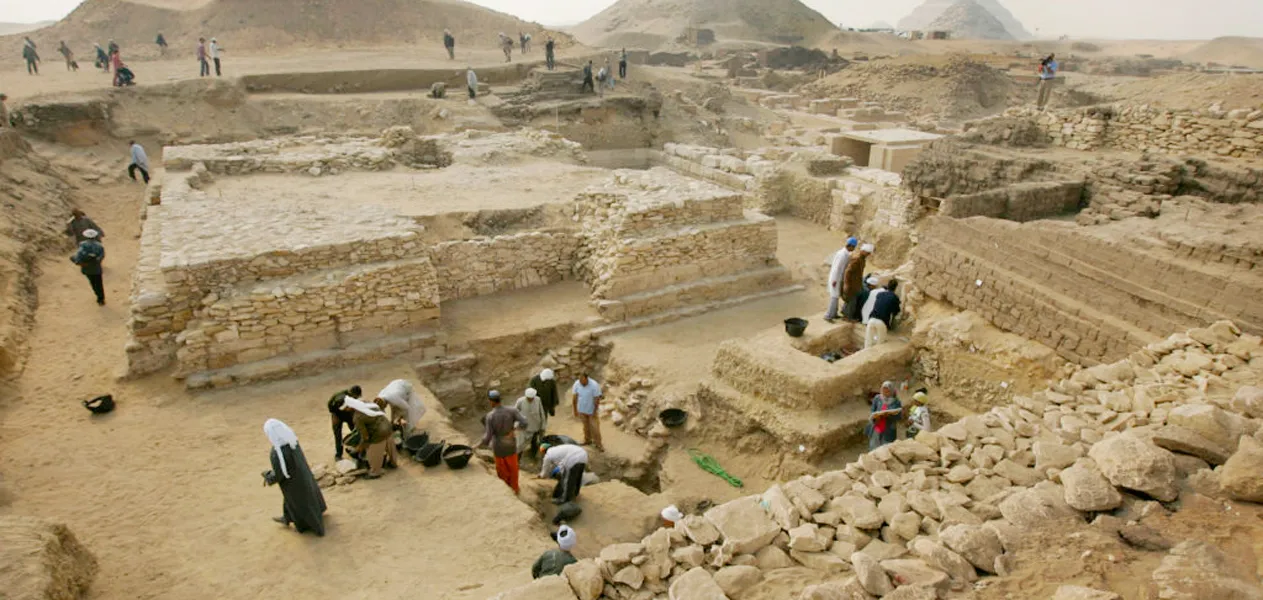
The tomb of Ay and other cliff tombs at Tell el-Amarna in Minya Governorate preserve inscriptions and scenes connected with Akhenaten's court. The wider archaeological site still contains the remains of the capital Akhetaten, including traces of temples, palaces, houses and boundary monuments.
In Cairo, the Egyptian Museum preserves important sculptures and reliefs of Akhenaten and his royal family. The Luxor Museum also contains a reconstructed wall made from talatat blocks originating in Akhenaten's dismantled temples at Karnak, providing another vivid look at Amarna religious imagery and art.
Tours to Amarna and Luxor
Tel Amarna & Tuna el Gebel Tour from Cairo: Explore Akhenaten's capital at Tell el-Amarna and the archaeological site of Tuna el-Gebel with an Egyptologist guide. From $85.
Full Day Tour to Luxor West Bank: Discover the Valley of the Kings, Hatshepsut's Temple and the Colossi of Memnon while exploring the royal world surrounding the Amarna Period. From $60.
You can also combine Amarna, Cairo, Luxor and the Nile Valley through one of our Egypt tour packages and tailor the itinerary around Egyptian history, archaeology and specific pharaohs.
The Great Hymn to the Aten is a song of light from one of ancient Egypt's most extraordinary reigns. Written more than 3,300 years ago, it presents the sun as the source of life for people, animals and distant lands while placing Akhenaten at the center of that divine order. Its imagery still fascinates readers today, from the cliffs of Amarna to the continuing debate over its remarkable parallels with Psalm 104.