




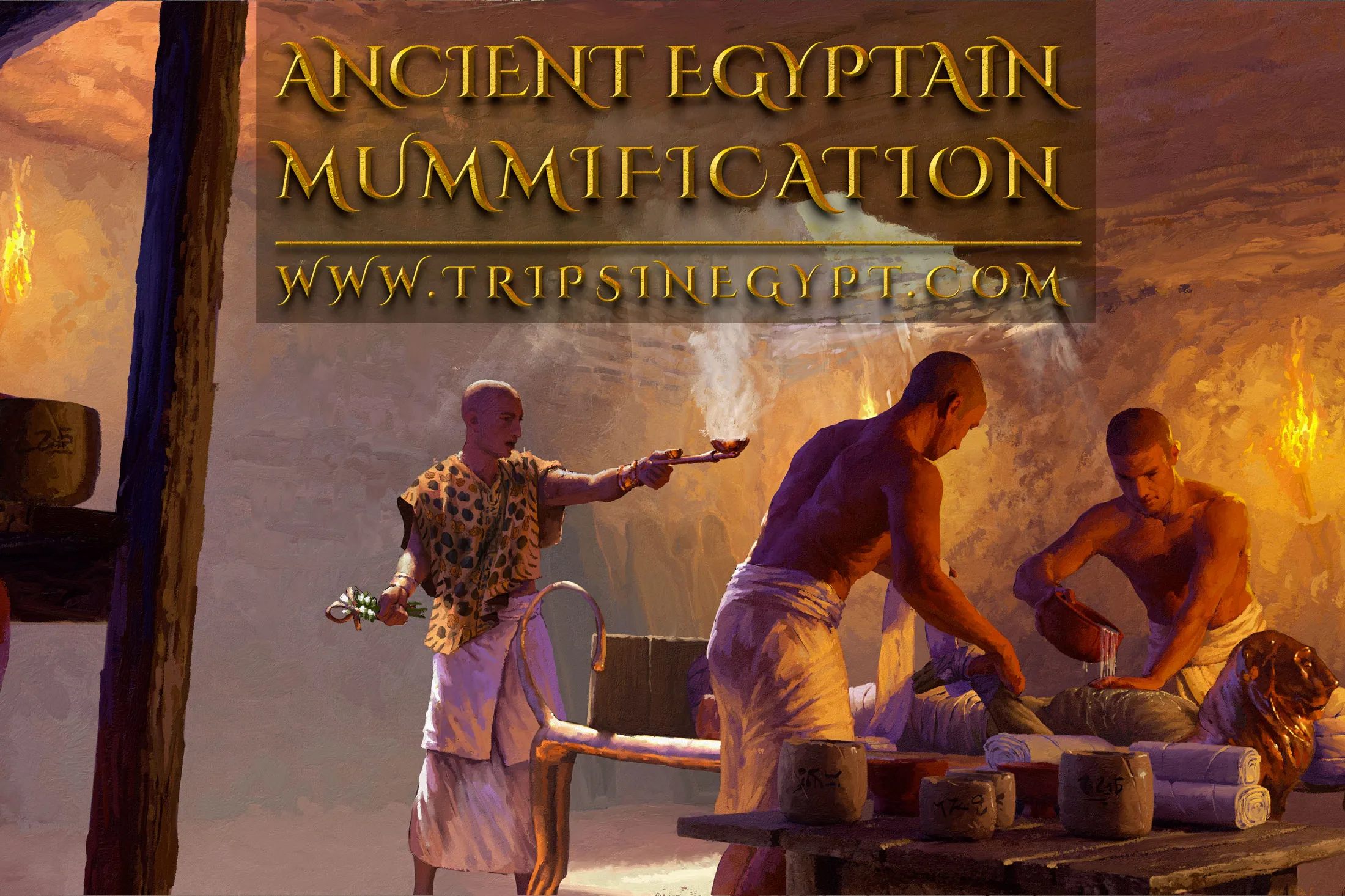
Ancient Egyptian mummification is one of the most incredible and mysterious practices in human history. For more than three thousand years, the Ancient Egyptians developed a complex and intricate process of preserving the bodies to ensure their successful journey into the afterlife as they truly believed that the soul will return to the body once again for judgment if the body was recognized.
This unbelievable process involved a series of rituals and techniques that special priests had this great mission, from the removal of vital organs of the body to the wrapping of the body in linen strips up to thirty-five lyres. The ancient Egyptian mummification process actually has captivated scholars, historians, and even laypeople alike for thousands of centuries.
The art of ancient Egyptian mummification not only reveals much about the beliefs, religious thoughts, Ancient Egyptian, customs, and Ancient Egyptian culture but also provides a glimpse into the remarkable ancient Egyptian technological innovations of the time and how great and unbelievable the Ancient Egyptians were! We will take you on an amazing journey through this article, as we will explore together the miracle of ancient Egyptian mummification, this complicated process, and the secrets underlying this incredible accomplishment of Ancient Egyptian ingenuity.
The History of Ancient Egyptian Mummification
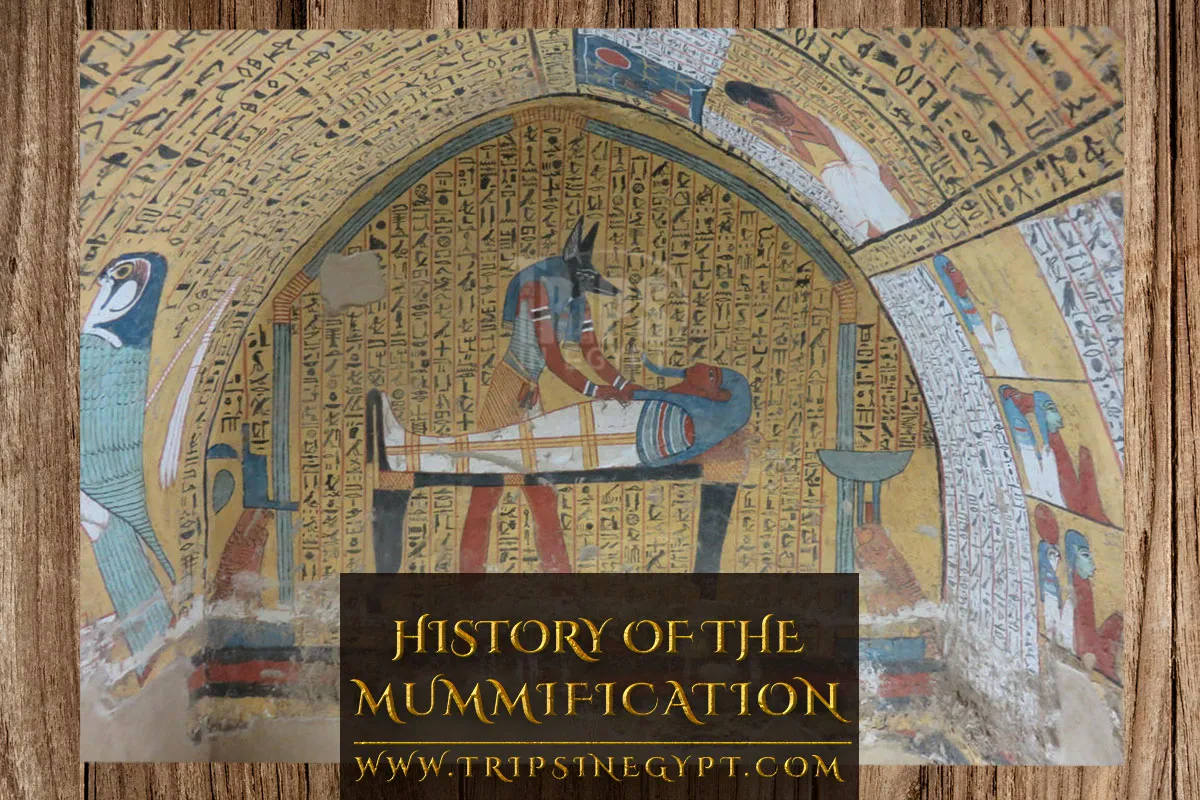
The history of ancient Egyptian mummification dates back to Pre-history around 2600 BC during the fourth and fifth dynasties, then this process was developed to the Roman period (30-364 BC). At that time, the Ancient Egyptians believed in the afterlife and believed that the body had to be well-preserved for the soul to successfully transition into the next world. Initially, the process of mummification was easy and simple, involving the drying of the body in the hot desert sand. However, as the belief in the afterlife became more complex and regarding many Gods and Goddesses, the process of Mummification became more complicated.
By the time of the Old Kingdom in Ancient Egypt (2686-2181 BC), ancient Egyptian mummification has evolved into a more refined, specialized, and sophisticated procedure. The vital organs were removed from the body of the deceased and were placed in "Canopic Jars" to preserve them from decomposition, while the body was carefully cleaned and preserved with various materials, including natron, onion, Nile mud, linen pads, beeswax, and resin. The body was then wrapped in many layers of linen bandages, with amulets and charms placed within the folds to protect the deceased from evil and monsters through his or her journey to the afterlife. The best Mummies are from the new kingdom of ancient Egypt (1570-1075BC) during the eighteenth Dynasty including the Mummy of the famous pharaoh "Tutankhamun". A team of professional priests performed the ancient Egyptian mummification process.
The Ancient Egyptian Mummification Process
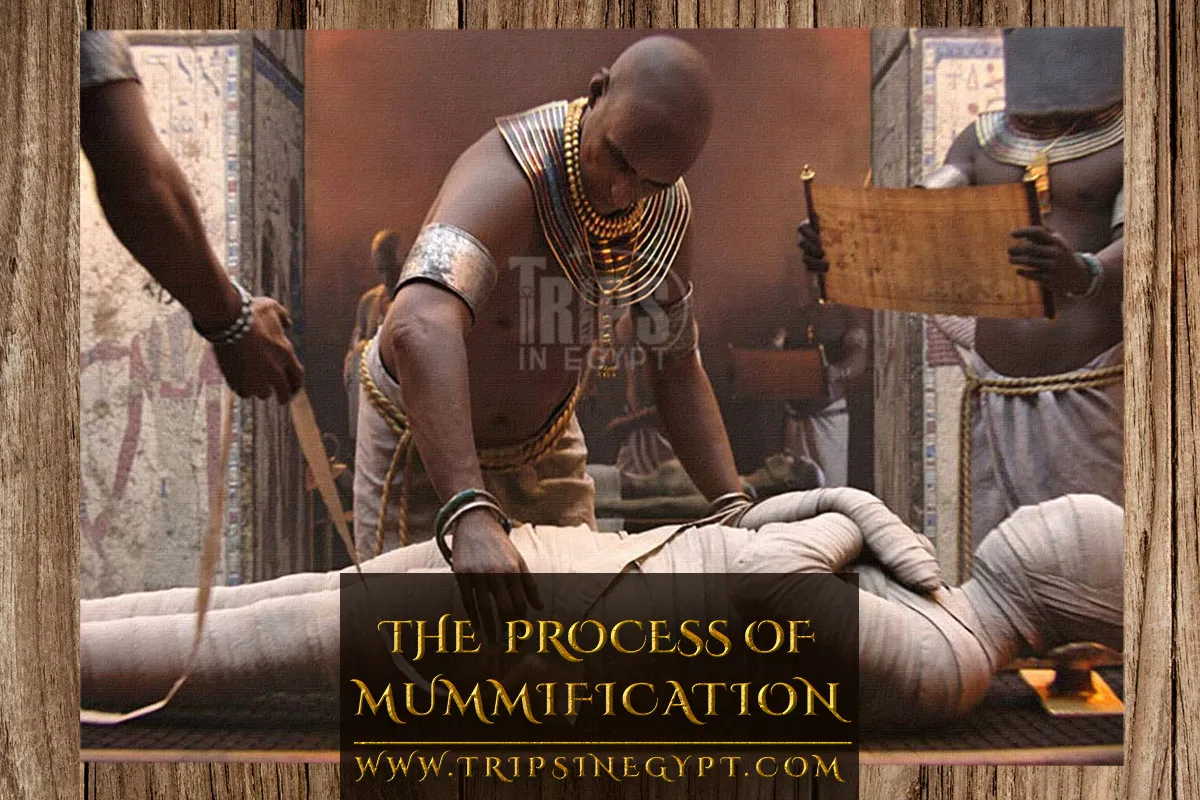
The ancient Egyptian mummification process is a complex process that involves many steps:
1- The first step is the removal of all internal parts that might decay rapidly.
2- They use special hooked equipment up through the nose to extract fragments of the brain. This step is a sensitive procedure that can easily disfigure the whole face.
3- Make an incision near the belly on the left side of the body of the deceased.
4- Remove the vital organs lungs, liver, intestines, and stomach.
5- Let the vital organs dry.
6- Bring the heart back inside the body.
7- Rinse the interior of your body with wine and spices.
8- Clean the body from the inside with wine and spices.
9- They get rid of all the moisture and the body is left for about forty days to dry out completely
10- A special Egyptian salt called natron is used to cover up the body from the inside.
11- The body is then wrapped up in fine linen bandages.
12- Cover the body with natron for seventy days.
13- The lungs, stomach, liver, and intestines are separately embalmed and placed into Canopic jars.
14- Lastly, they put the corpse in the coffin.
If the deceased is a Pharaoh, then they put him in a chamber full of treasures.
Why Did They Keep the Organs Inside Canopic Jars?
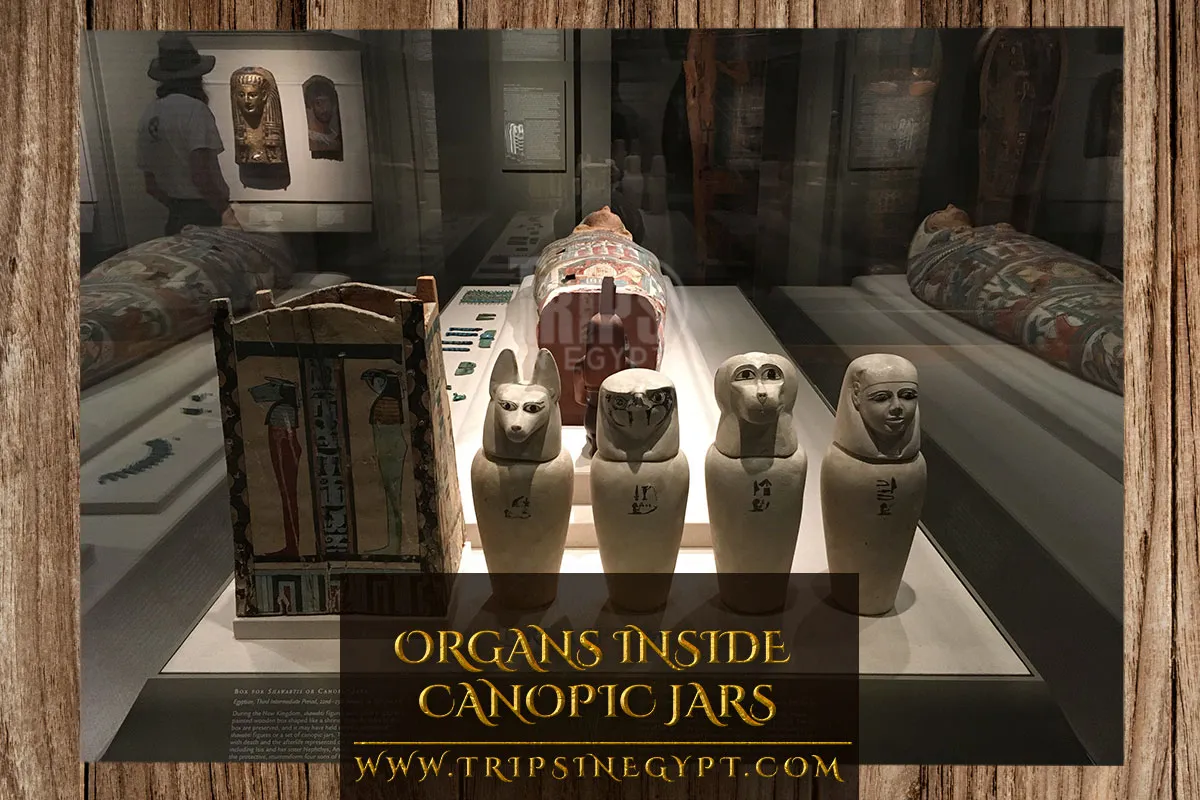
Canopic jars were an important element of the mummification process in Ancient Egypt. Canopic jars included four main organs of the deceased which are "The liver, stomach, lungs, and intestines" except the heart, these jars were made of mud, alabaster, stone, wood, or even gold according to the wealth of the deceased.
These four jars symbolize the four sons of God "Horus" the God of the sky and war, Ancient Egyptians believed that they will protect the organs, as every son is responsible for protecting one organ. This process happened to ensure the full protection of these organs as they believed it is important and will be required in the afterlife, thus the organs must be preserved.
Why Was the Heart Left Inside the Mummy?
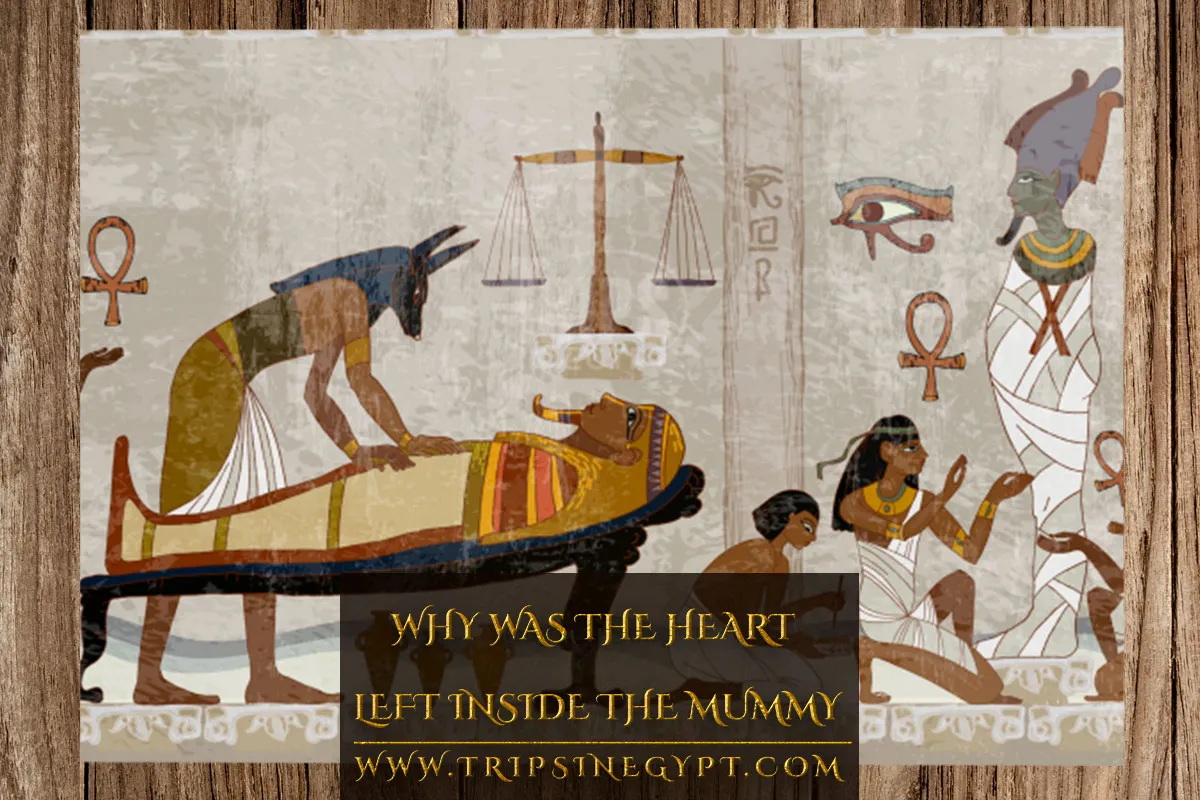
The heart; the most essential organ in the whole, was not preserved by the Ancient Egyptians in the Canopic jars. The heart was the main source of the deeds and also the center of knowledge. The weight of the heart was one of the most important steps in the process of judgment by Goddess "Maat" the Ancient Egyptian Goddess of law, balance, and justice.
During this important process which determines heaven or torturing, if the weight of the heart is lighter than the feather of Goddess "Maat", then they know the deceased is a good person and live in the "The Field of Reeds" where are the paradise, joy, and goodness with whom he loves. If the weight of the heart is heavier than the feather of the Goddess "Maat", then the deceased had bad deeds, then they decide to be eaten by Goddess "Ammut" and will be doomed to oblivion forever.
Facts About the Feather of "Maat"
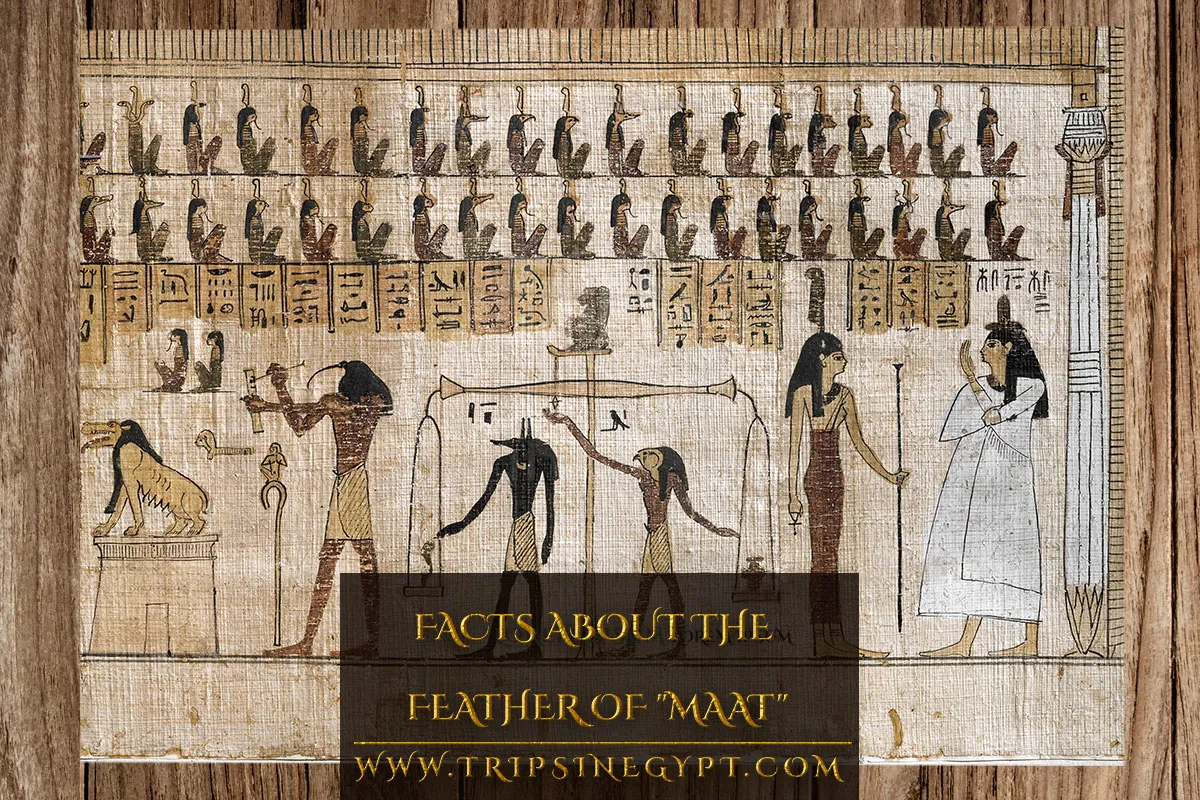
- The Ancient Egyptians desired to commit good deeds to not be eaten and to avoid oblivion forever.
- The God "Anubis" is in charge of transporting the deceased who did something terrible to the underworld to be devoured.
- The heart is the most important part of the body of the deceased.
- If the heart is lighter than the Feather, then the deceased will go to heaven.
- If the heart is heavier than the Feather, then the deceased will be eaten and will be doomed to oblivion.
- The mission of monitoring the Judgment was by God "Osiris".
- After passing the process of Judgment successfully, then the deceased will go to heaven, the Field of Reeds or "Aaru".
- Goddess "Maat" was the ancient Egyptian Goddess of balance, law, order, and justice.
- Goddess "Ammut" was responsible for eating the deceased who committed bad deeds.
- The Ancient Egyptians did not want to injure someone, deceive, lie, or do something bad to not disappear in the afterlife.
Funeral Rites in Ancient Egypt
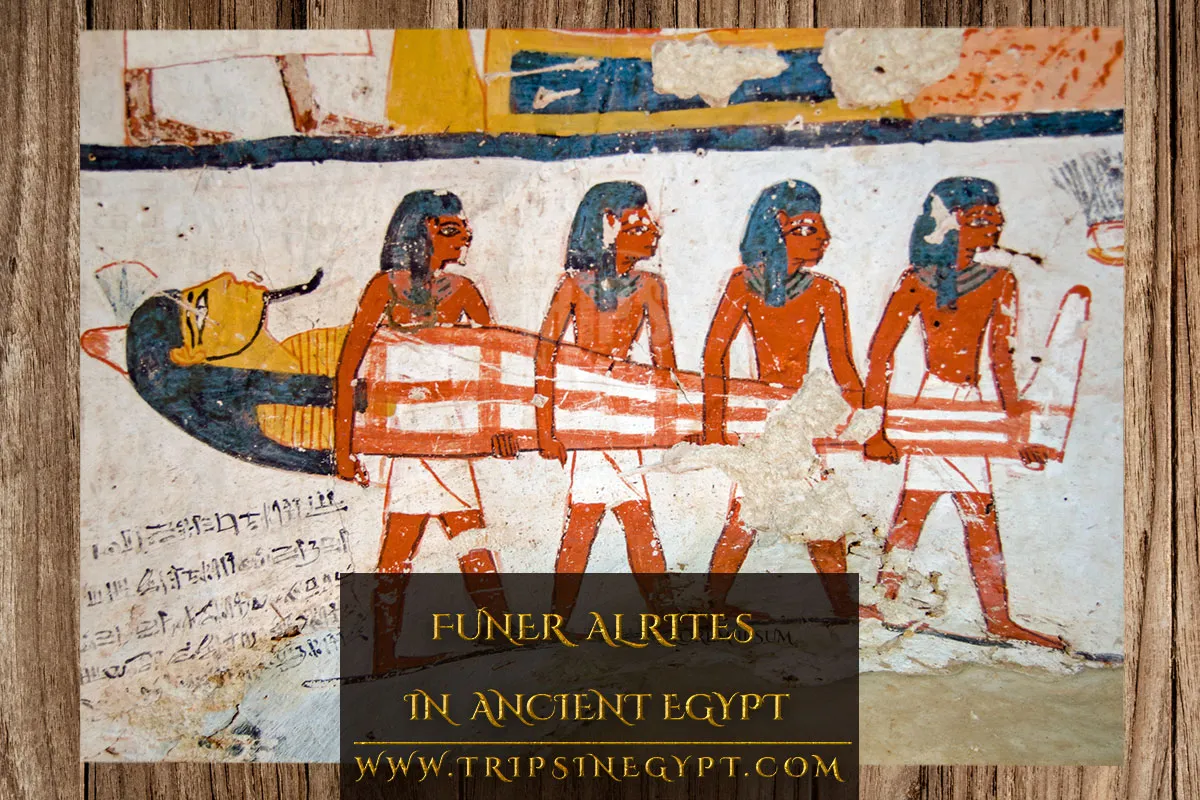
The corpse was wrapped in linen after the organs had been removed and the body had been cleansed, then they put it in a simple coffin or sarcophagus. Egyptian women were hired as "Kites of Nephthys" to encourage the crowds to express their sadness through their cries, how death suddenly came, and the process of weighing the heart. Beside the coffin, the deceased would be buried with other items such as food, drinks, jewelry, beer, bread, and statues, all of these items would be back to life with the soul in the afterlife and might be used by the deceased.
Parts of the Soul
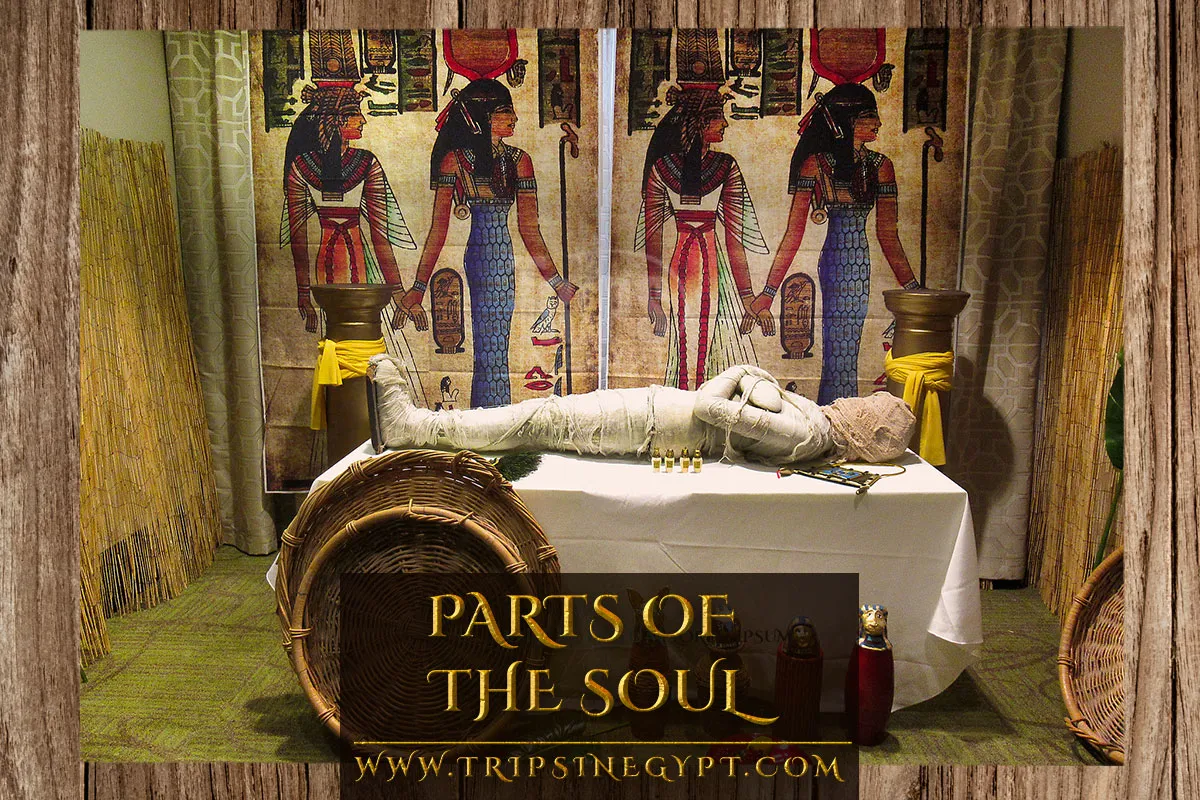
Ancient Egyptian people thought that the soul of the person consents of nine parts which are:
1- The "Akhat" was the physical body.
2- The "Ka" is the astral self.
3- The "Ba" was a human bird.
4- The "Shuyet" was the shadow self.
5- The "Akh" was the self after death.
6- The "Sahu" was an aspect of the "Akh".
7- The "Sechem" was an aspect of the "Akh"
8- The "Ab" was the heart.
9- The "Ren" was the secret name of the person.
The "Khat" has to exist for the "Ka" and "Ba" to acknowledge it after the death. All this information was exerted from "The Book of the Dead".
Instructions for the Deceased: Truthful Swearing to Prepare for Judgment
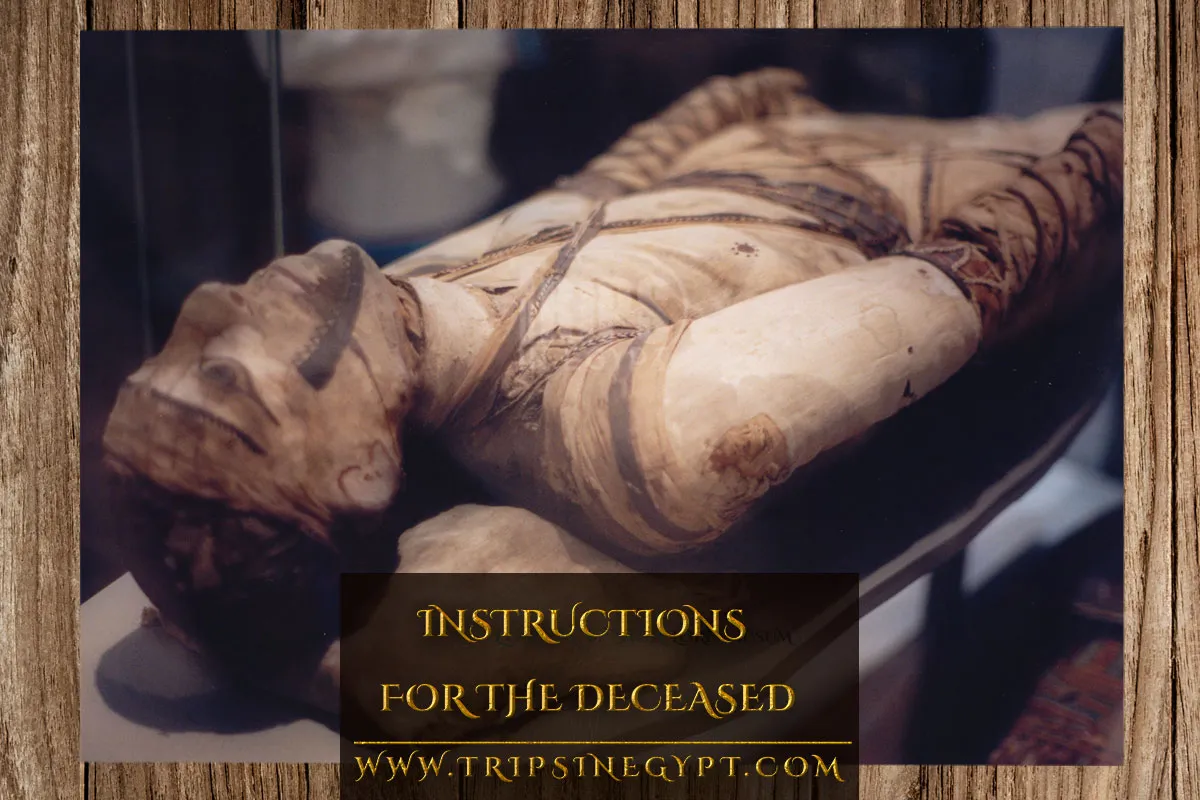
Some instructions that the deceased should do before passing the process of judgment. The deceased should say the truth and swear that he did not commit such behaviors:
- I have not stolen.
- I have not been violent.
- I have not done wrong.
- I have not destroyed the food offerings.
- I have not told lies.
- I have not reduced the measures.
- I have not stolen the property of the Gods.
- I have not discussed secrets.
- I have not had intercourse with a married woman.
- I have not disputed the King.
- I have not caused (anyone) to weep.
- I have not robbed a parcel of land.
- I have not transgressed the Law.
- I have not struck terror.
- I have not waded in the water.
The Significance of the Ancient Egyptian Mummification
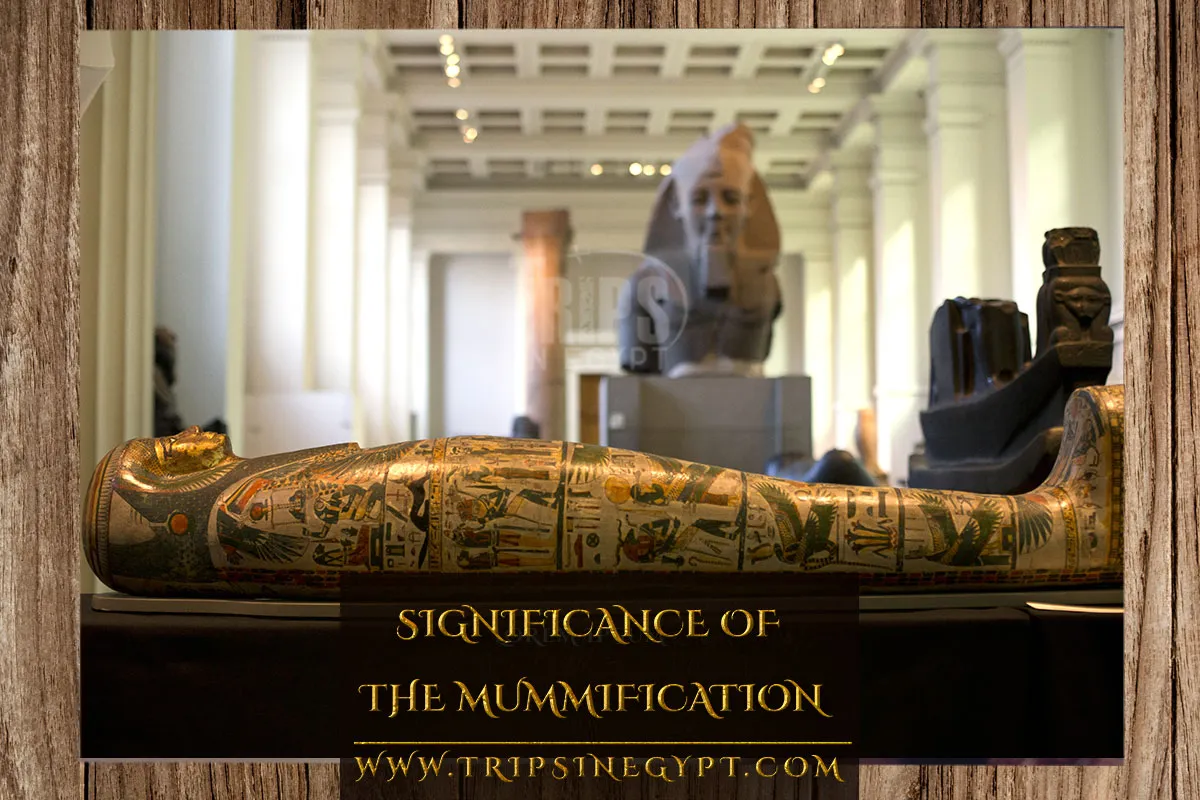
Mummification was an important part of Ancient Egyptian culture and religion as a whole. To the Ancient Egyptian, death was not the end of life, but it was preparation for the afterlife. Mummification was a method of preserving the body from decomposition, allowing the spirit to identify and recognize the body of the deceased so that continues its journey in the afterlife.
Mummification entailed removing internal organs and covering the body with natural preservatives such as natron. By following these steps, the body was wrapped in linen bandages and put in a coffin and a tomb.
Mummification was practiced not just by pharaohs and the Royal Kings of Ancient Egypt, but also by the common Egyptians. Mummification was viewed as a technique to guarantee a successful journey into the afterlife, where the soul would be judged by the God "Osiris".
The importance of mummification can be seen in the elaborate tombs and burial practices of the Egyptians. The tombs of pharaohs like Tutankhamun and Ramses II were filled with treasures and offerings for the afterlife. The Book of the Dead, spells, and Hymns, were buried with the deceased’s to help them through their journey to the afterlife.
In general, ancient Egyptian mummification was an important aspect of Ancient Egyptian culture and religion, and it played an important role in their belief in the afterlife.
Ultimately, Mummification was an important part of Ancient Egyptian culture, as Ancient Egyptians believed that it would help the deceased to reach the afterlife safely. Mummification was also a way to honor the deceased, as the body was preserved and treated with respect and a sensitive way, and also seen as a way to ensure the deceased's immortality, as the body was preserved for eternity, you can see it in its original way today which reflects the ingenuity of the Ancient Egyptians.
Video about: Dr. Zahi Hawass explains Ancient Egyptian Mummy Recipe
This video is sourced heritagekeymedia
Conclusion
The process of mummification was also seen as a way to protect the body from decay and to ensure that the body of the deceased would remain intact for the afterlife without decomposing.
Additionally, mummification was a way to connect the deceased with the Gods and Goddesses through the process of judgment. Trips in Egypt have various tour packages to Egypt which include witnessing the greatness of the Ancient Egyptian in the museums. Contact our operation department now so you can arrange your dream trip together, do not hesitate to call us anytime and make sure that Ancient monuments will captivate and inspire you even it's your tenth time to see them.

5 Days Cairo And Hurghada Trip
Amazing 4 Nights Cairo and Hurghada Trip Itinerary 5 Days Cairo and Hurghada trip wil...
- Duration 5 Days / 4 Nights
- Location Cairo & Hurghada
- Type Historical & Recreational Tour
From$690/per person
View Tour
6 Days Cairo, Alexandria & Faiyum Tour
Unforgettable Cairo, Alexandria & Faiyum Adventure in Six Days 6 Days Cairo, Alex...
- Duration 6 Days / 5 Nights
- Location Cairo - Alexandria - Fayum
- Type Historical Tour
From$720/per person
View Tour
10 Days Cairo, Faiyum & Nile Cruise Holiday
Breathtaking 10 Days Journey of A Lifetime in Egypt 10 Days Cairo, Faiyum & Nile...
- Duration 10 Days / 9 Nights
- Location Cairo, Luxor, Aswan & Faiyum
- Type Classic Tour
From$1350/per person
View Tour SOLD OUT
Ultimate 7-Day Egypt Solar Eclipse Experience with Hurghada 2027
Enjoy a 7-Day Egypt Solar Eclipse Tour with Hurghada 2027 6 Nights Egypt Solar Ecli...
- Duration 7 Days / 6 Nights
- Location Cairo / Giza / Luxor / Hurghada
- Type Astronomical Tour
Sold Out
View Details