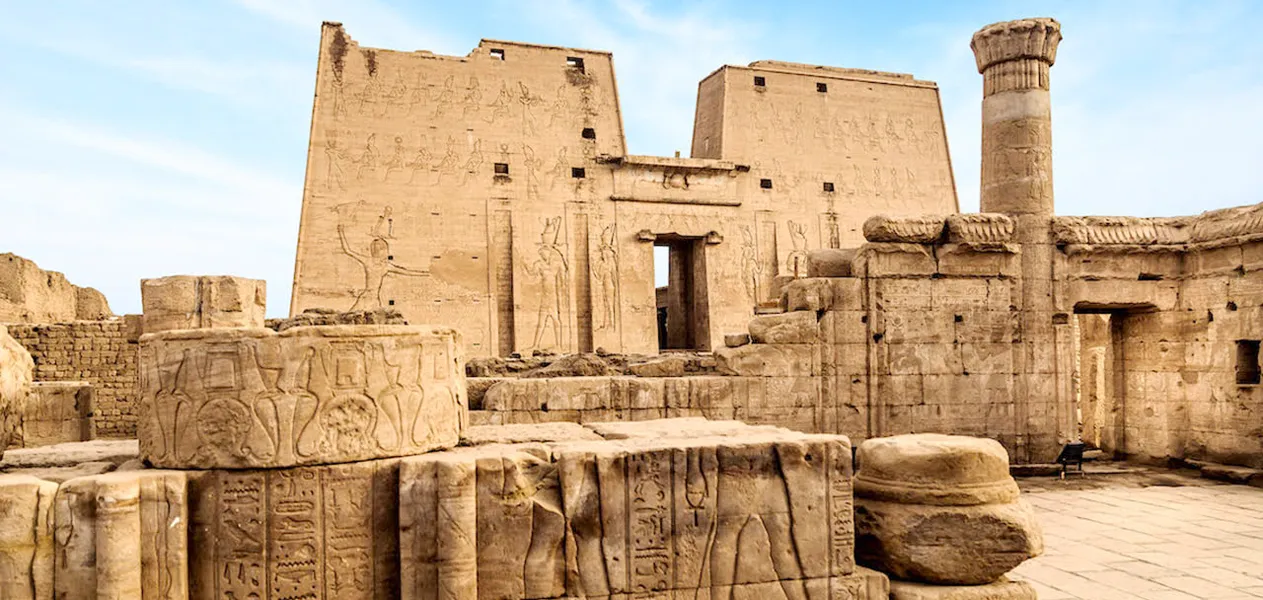




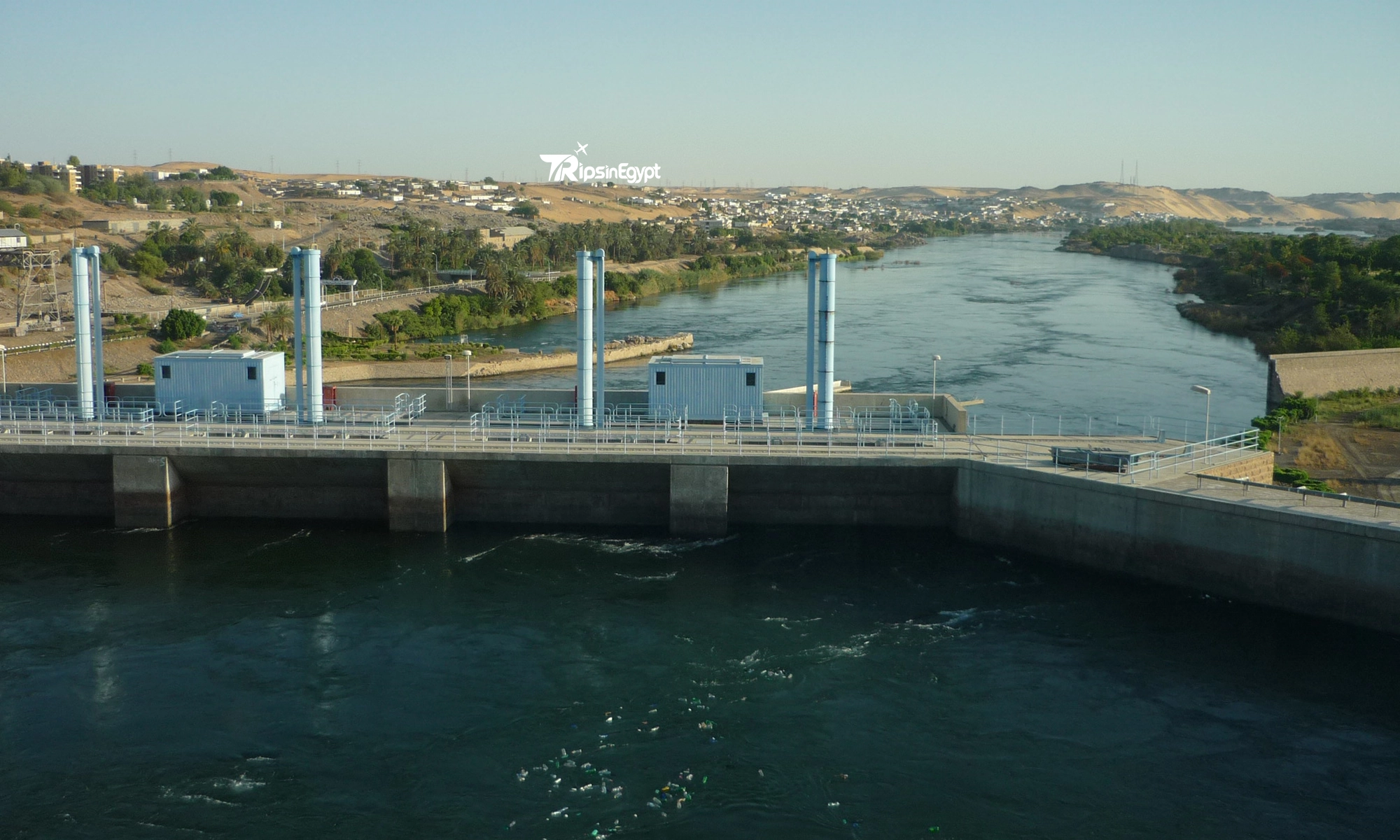
For thousands of years, the life of Egypt rose and fell with the Nile flood. In a good year it brought water and black silt to every field, and in a bad one it brought famine or disaster. The Aswan Low Dam, finished in 1902, was the first serious attempt to tame that rhythm, a long wall of pink granite stretched across the rocks of the First Cataract, built by the same quarries that once gave the pharaohs their obelisks.
Today, most visitors cross it without noticing, on the way to Philae or the High Dam, often on day trips from Luxor or the first morning of a cruise. Yet it changed the economy of Egypt, drowned one of its most beautiful temples for half a century and opened the road to the High Dam. This article covers why the dam was built, how it was constructed, how it grew, what it cost the land and people of Nubia and what it still does today. Here are all things you need to know about the Aswan Low Dam:

Discover What Exactly the Aswan Low Dam Is
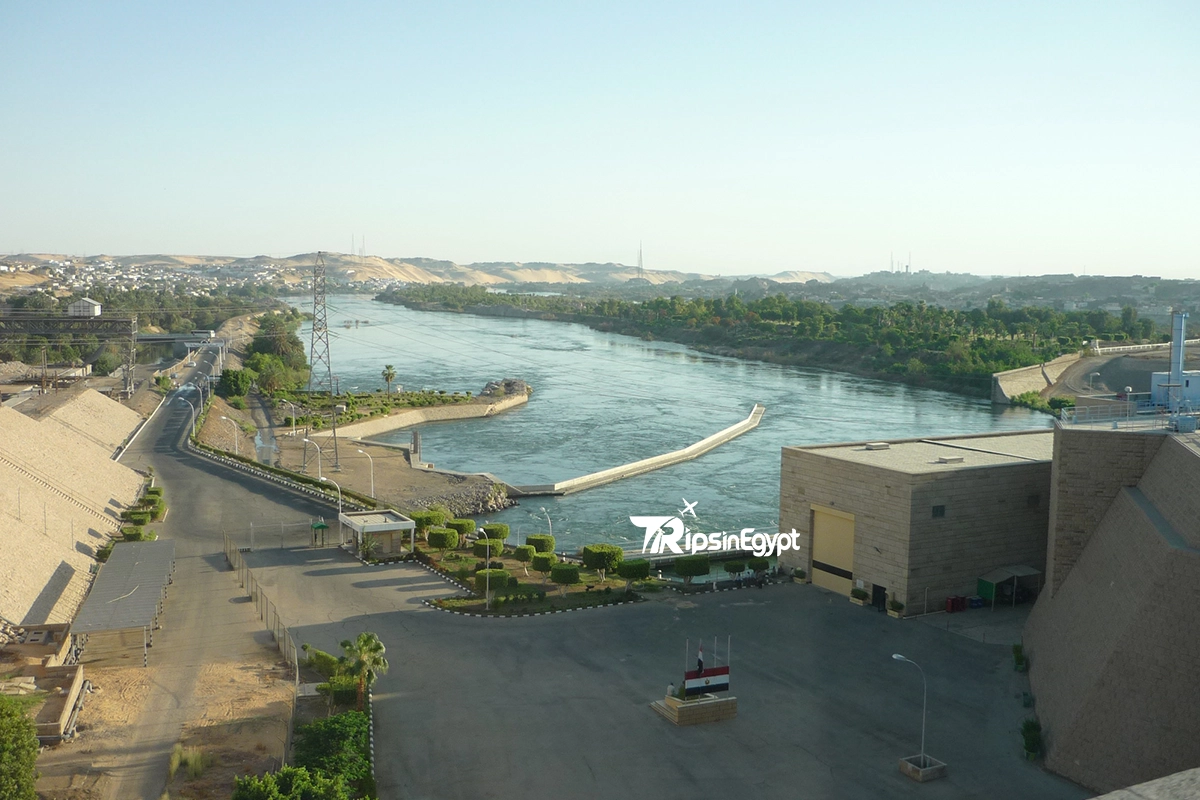
The Aswan Low Dam, also known as the Old Aswan Dam, is a granite masonry dam across the Nile at Aswan, about 6 km downstream from the Aswan High Dam. It stands at the First Cataract, the rocky stretch of river that marked the ancient border between Egypt and Nubia.
| Fact | Detail |
|---|---|
| Other names | Old Aswan Dam, Aswan Reservoir Dam |
| Built | 1898 to 1902 |
| Opened | 10 December 1902 |
| Designer | Sir William Willcocks |
| Main contractor | John Aird & Co. |
| Length | About 1,950 m |
| Height | About 36 m above the original riverbed, after two heightenings |
| Sluices | 180 |
| Storage capacity | About 5 billion cubic meters after the final heightening |
| Hydroelectric plants | Aswan I (280 MW) and Aswan II (270 MW) |
Some sources give a length of about 2,140 m, which includes the approaches at each end. Whichever figure you use, the dam was the largest masonry dam in the world when it opened.
Why Egypt Needed a Dam: The Nile Before 1902
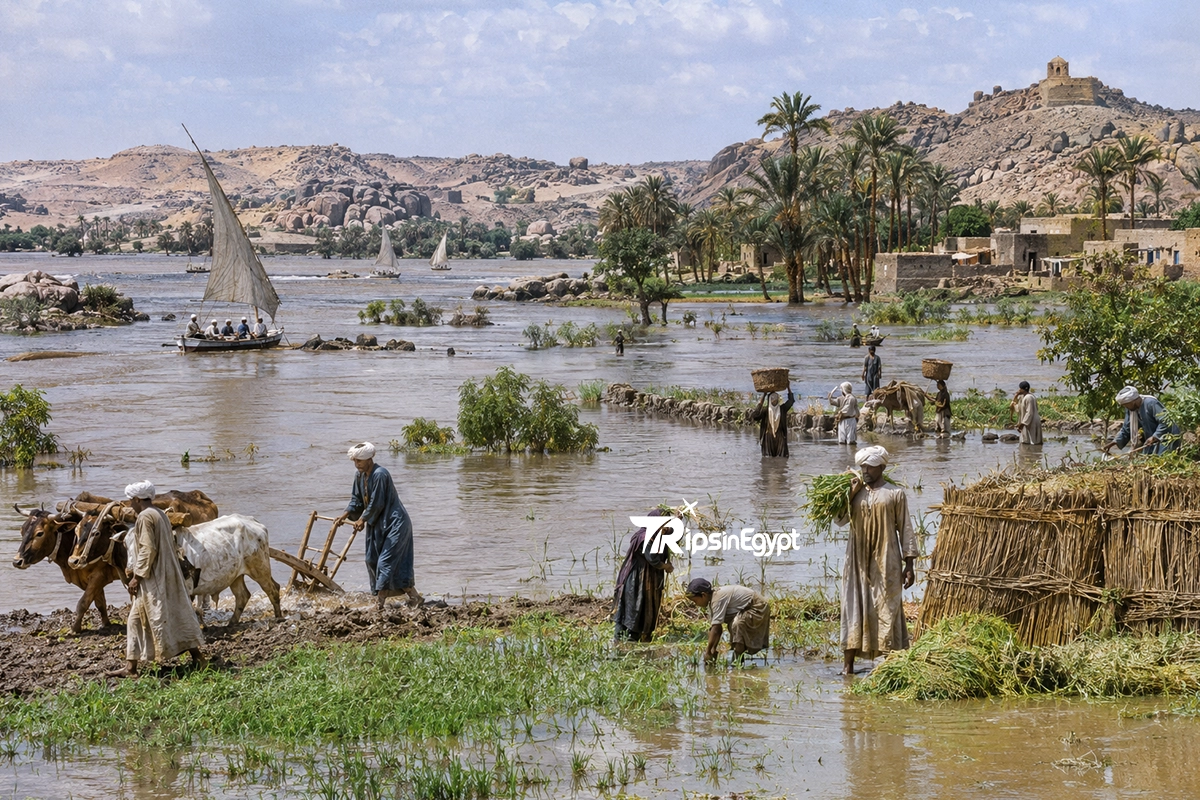
Before the dams, Egyptian farming followed a cycle the pharaohs would have recognized. The Nile rose each summer with rain from the Ethiopian highlands, covered the fields from roughly August to October and then fell, leaving rich silt behind. Farmers planted one crop in the cool season and waited for the next flood. Our article on the Nile River history explains how this rhythm shaped ancient Egyptian civilization.
The idea of controlling the river at Aswan is old. According to tradition, in the 11th century the Fatimid caliph al-Hakim invited the scholar Ibn al-Haytham to Egypt to regulate the Nile flood. After studying the cataract, he concluded that the task was impossible with the means of his time.
By the late 19th century, the need was urgent. After the British occupation of Egypt in 1882, cotton became the country's most valuable export, and cotton needs water in summer, when the Nile is at its lowest. A dam at Aswan could store the tail of the flood in autumn and release it during the dry months, allowing farmers to grow two or even three crops a year.
Building the Aswan Low Dam: Engineers, Granite and 180 Sluices
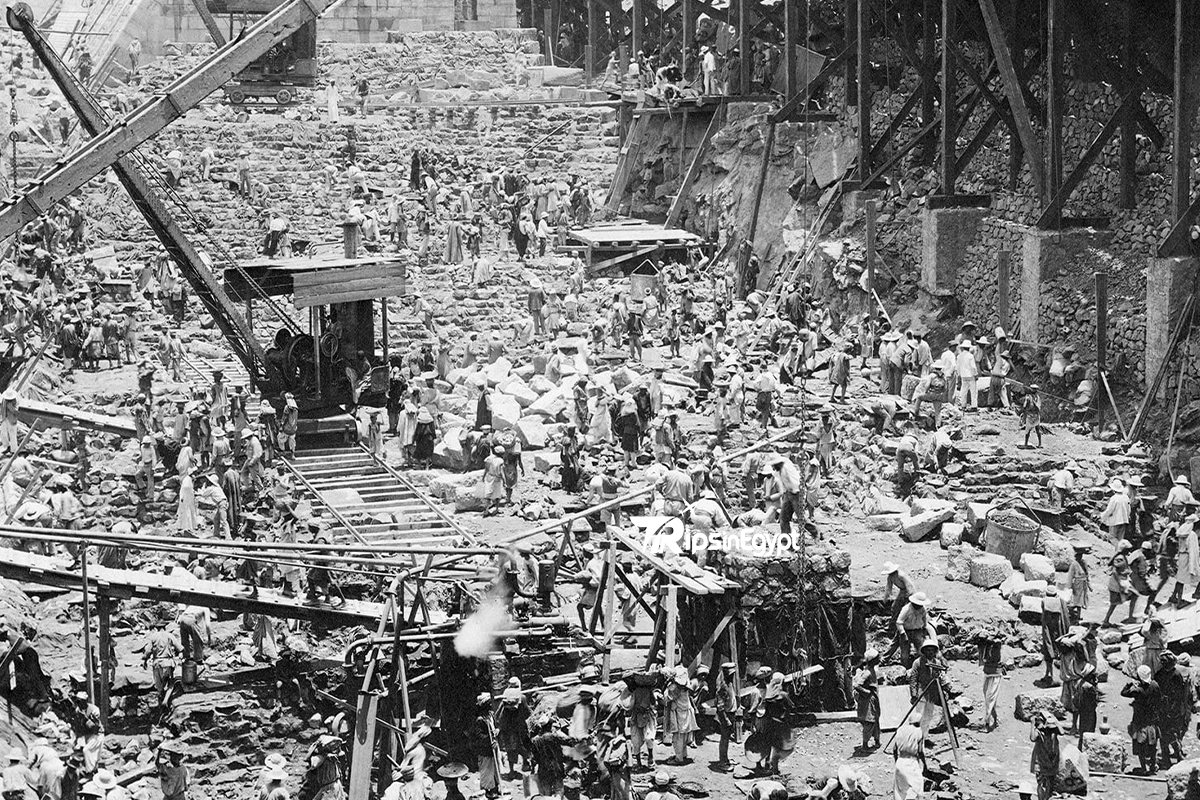
The project was designed by Sir William Willcocks, an engineer of the Egyptian Public Works Department. Sir Benjamin Baker, famous for the Forth Bridge in Scotland, served as consulting engineer, and the British firm John Aird & Co. won the contract. The financier Sir Ernest Cassel raised the capital.
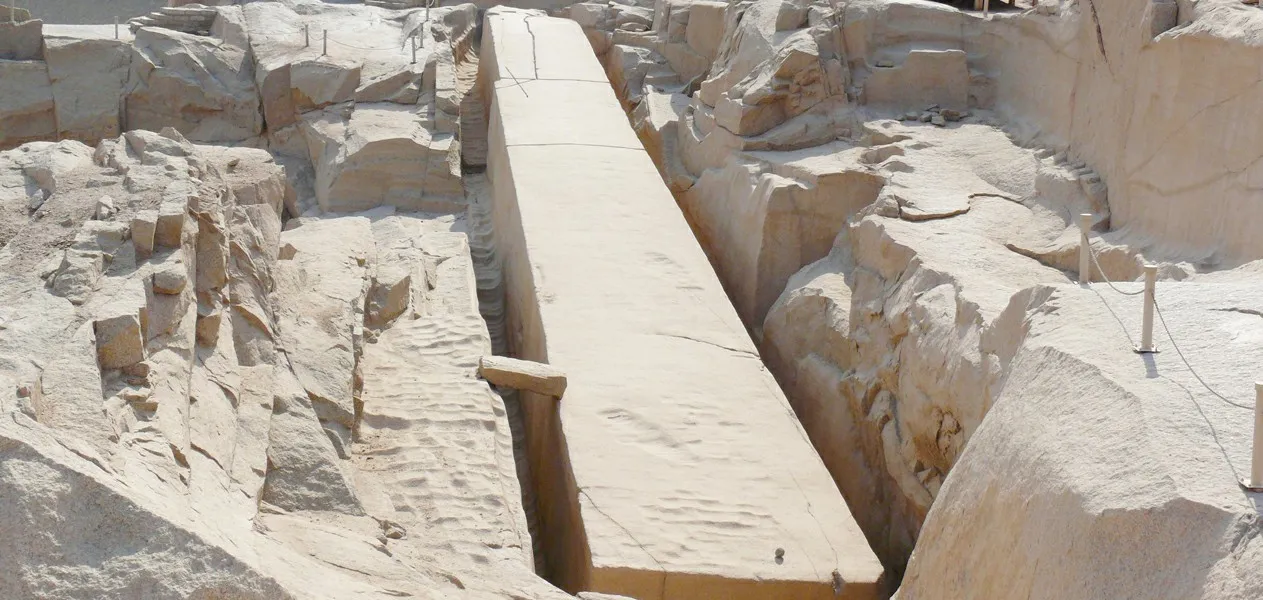
Work began in 1898. Thousands of Egyptian workers and British engineers worked in heavy heat to build cofferdams, divert the river channel by channel and lay the foundations on the cataract's bedrock. The core was built of rubble masonry, faced with blocks of red granite cut from the same quarries as the Unfinished Obelisk. Cement, machinery and ironwork came up the Nile from Alexandria, and granite moved to the site by rail.
The dam was designed to let the flood pass rather than block it completely. It had 180 sluices, openings that could be closed with gates. During the flood, all the sluices stood open, allowing the muddy, silt-rich water to pass downstream to the fields. As the flood ended, the gates were closed one by one to fill the reservoir with clearer water for the dry season.
A navigation lock on the western side allowed boats to pass the cataract for the first time without being dragged overland. The dam was opened on 10 December 1902 by Prince Arthur, Duke of Connaught, the son of Queen Victoria, and the completed reservoir stretched about 225 km upstream into Nubia.
Raising the Dam: The Heightenings of 1912 and 1933
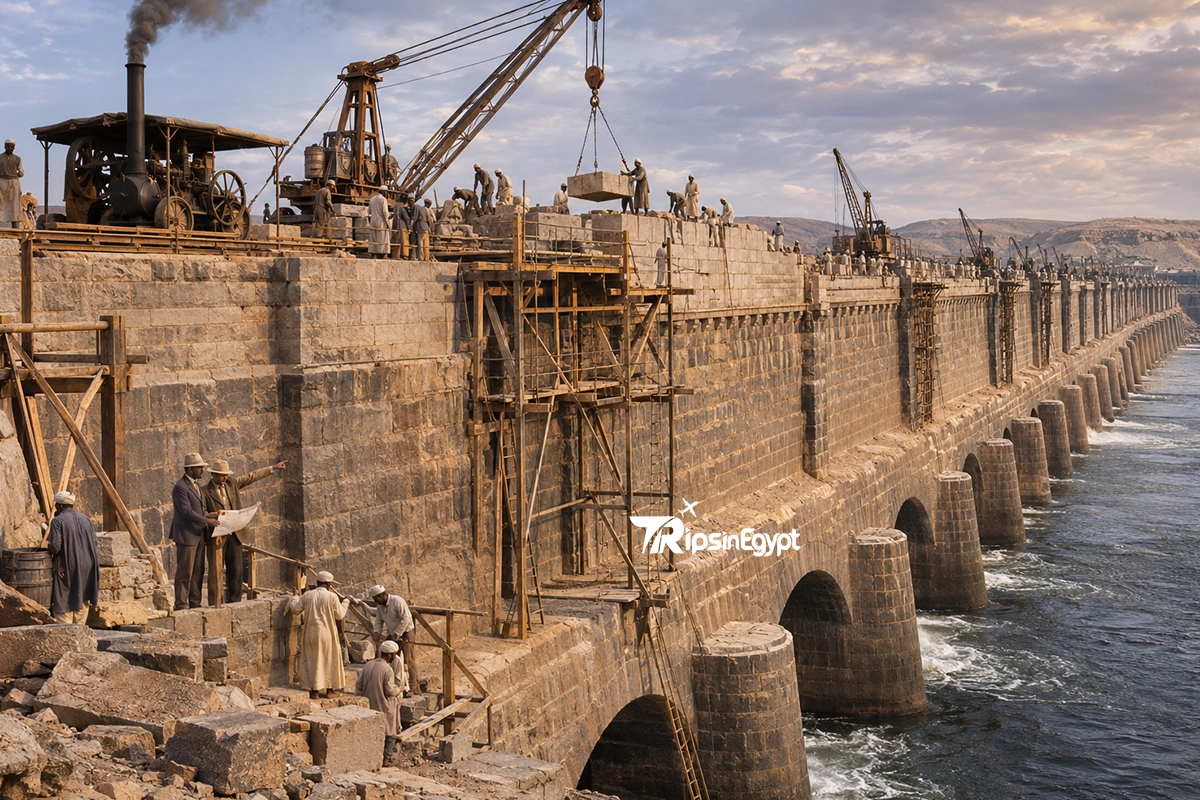
The dam worked, but demand for water grew faster than anyone had expected. Within a few years, Egypt needed more stored water, and the engineers chose to raise the existing wall rather than build a new one.
The first heightening, from 1907 to 1912, added about 5 m to the dam. Benjamin Baker supervised the work, with much of the detailed design carried out by Murdoch MacDonald.
The second heightening, from 1929 to 1933, added about 9 m more, designed and supervised by the firm of Sir M. MacDonald & Partners. The dam now stood about 36 m above the riverbed, and its reservoir held about 5 billion cubic meters of water.
Even this was not enough. Egypt's population was growing fast, and the dam could store only part of one year's flood, not reserves for a run of dry years. In 1946, during a very high flood, the water nearly spilled over the top of the dam. The engineers decided that a third heightening would be too risky, and Egypt began to plan a far larger dam upstream. That project became the High Dam, built between 1960 and 1970.
| Aswan Low Dam | Aswan High Dam | |
|---|---|---|
| Built | 1898 to 1902 | 1960 to 1970 |
| Builder | British engineers and contractors | Egypt with Soviet support |
| Material | Granite masonry | Rock and clay fill |
| Length | About 1,950 m | About 3,800 m |
| Height | About 36 m | About 111 m |
| Reservoir | About 5 billion cubic meters | Lake Nasser, about 130 billion cubic meters |
The Low Dam and the Drowning of Philae
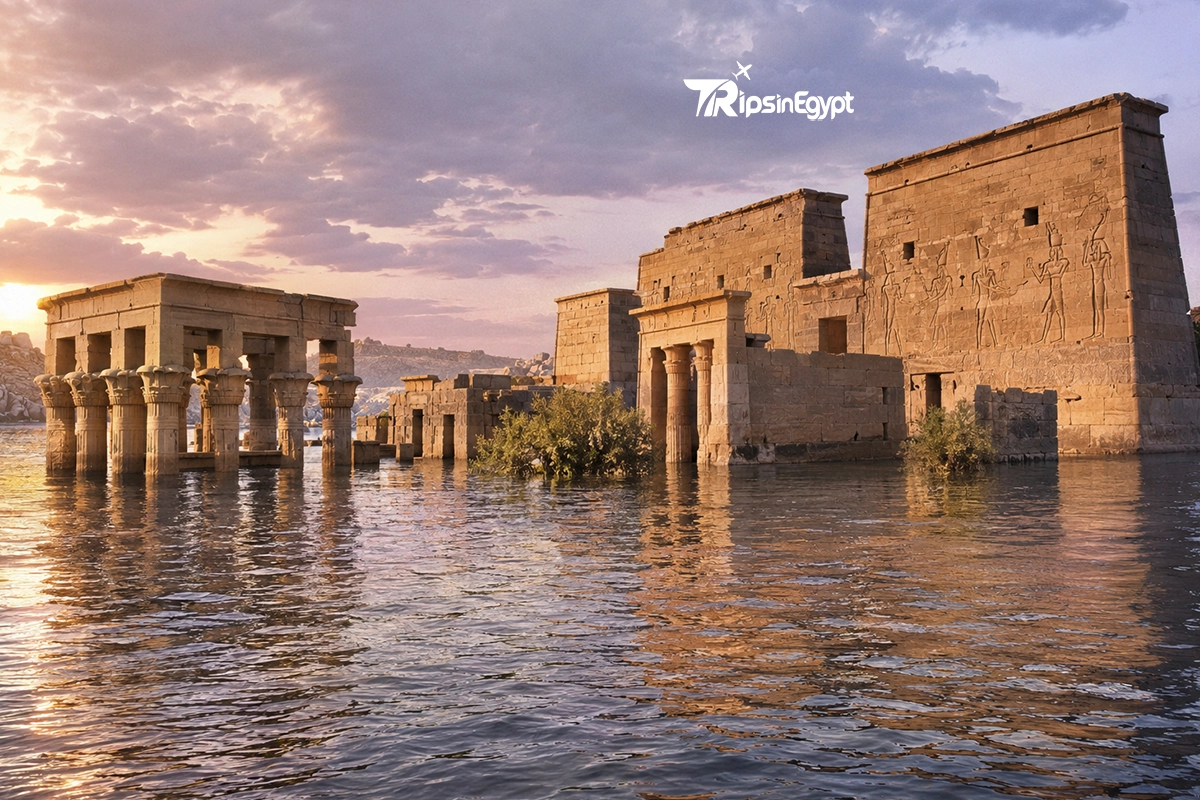
The greatest controversy surrounding the dam concerned the island of Philae, a few kilometers upstream. Its temple of Isis, one of the most graceful in Egypt, stood right in the path of the new reservoir.
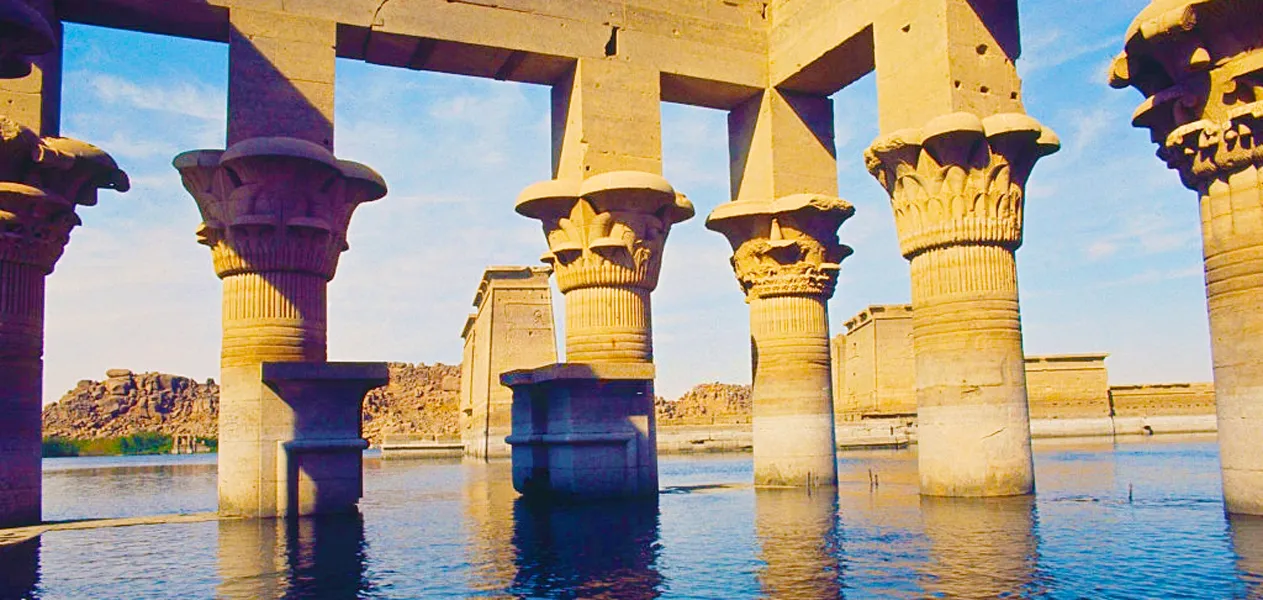
When the plans were published in the 1890s, archaeologists and writers in Europe protested. Concern for Philae was one of the main reasons the dam's first height was kept limited. Engineers strengthened the temple foundations, but once the reservoir began to fill, the island was flooded for much of each year. Visitors rowed among the columns in small boats, and in the summer months, when the sluices were opened and the water fell, the temple emerged again, its walls stained by the river.
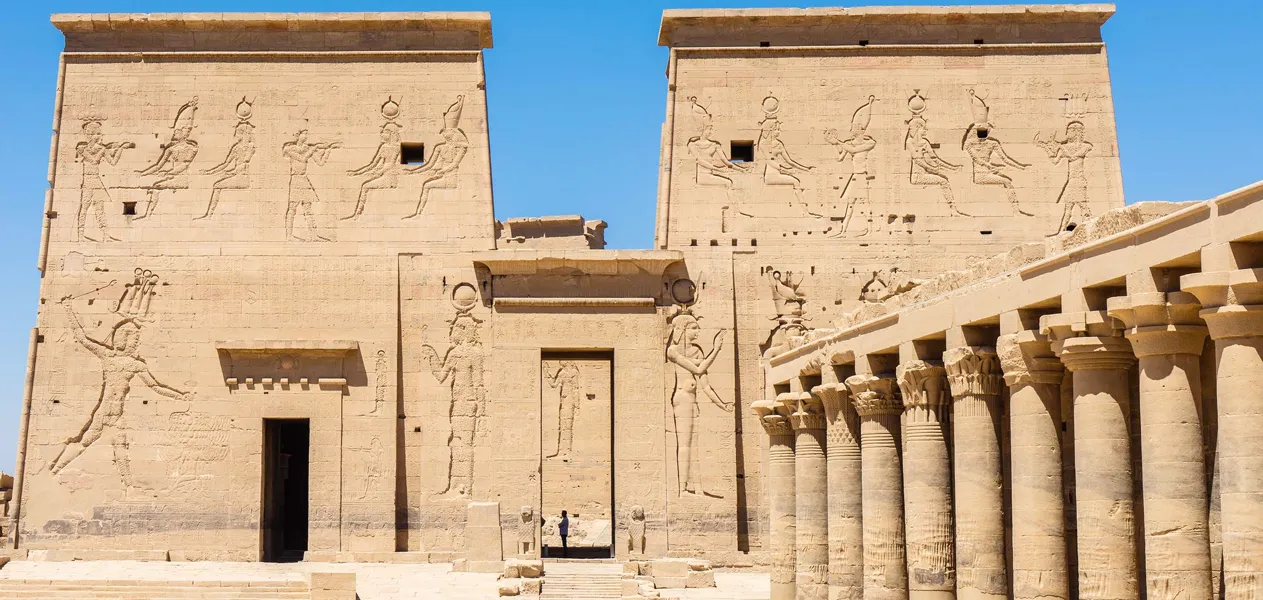
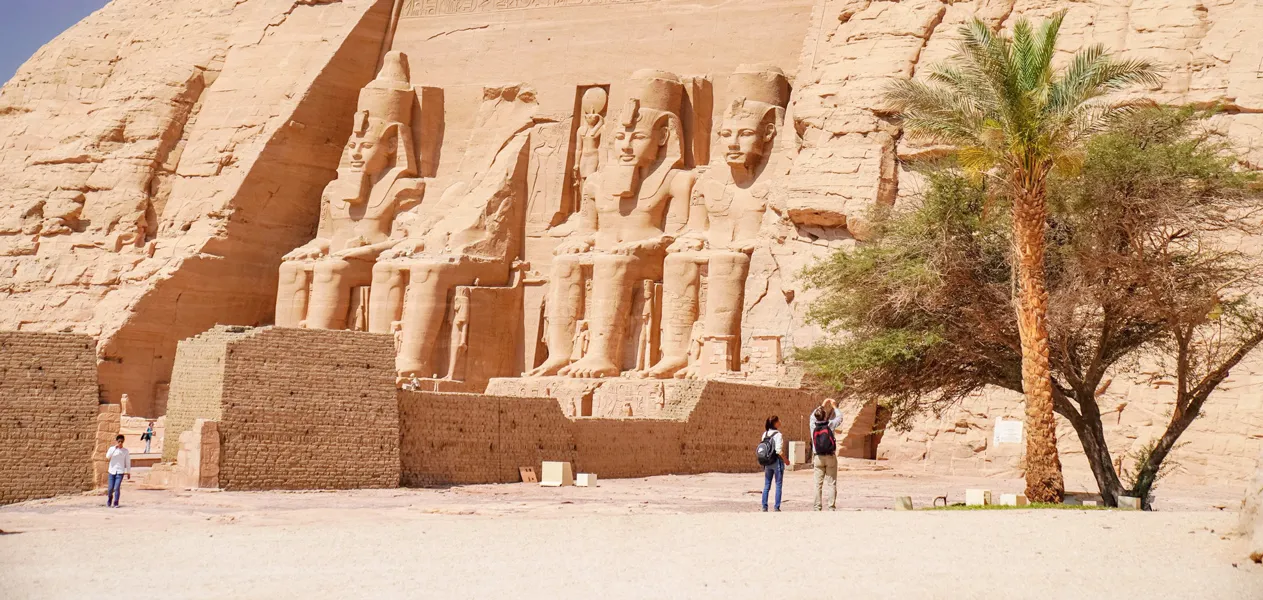
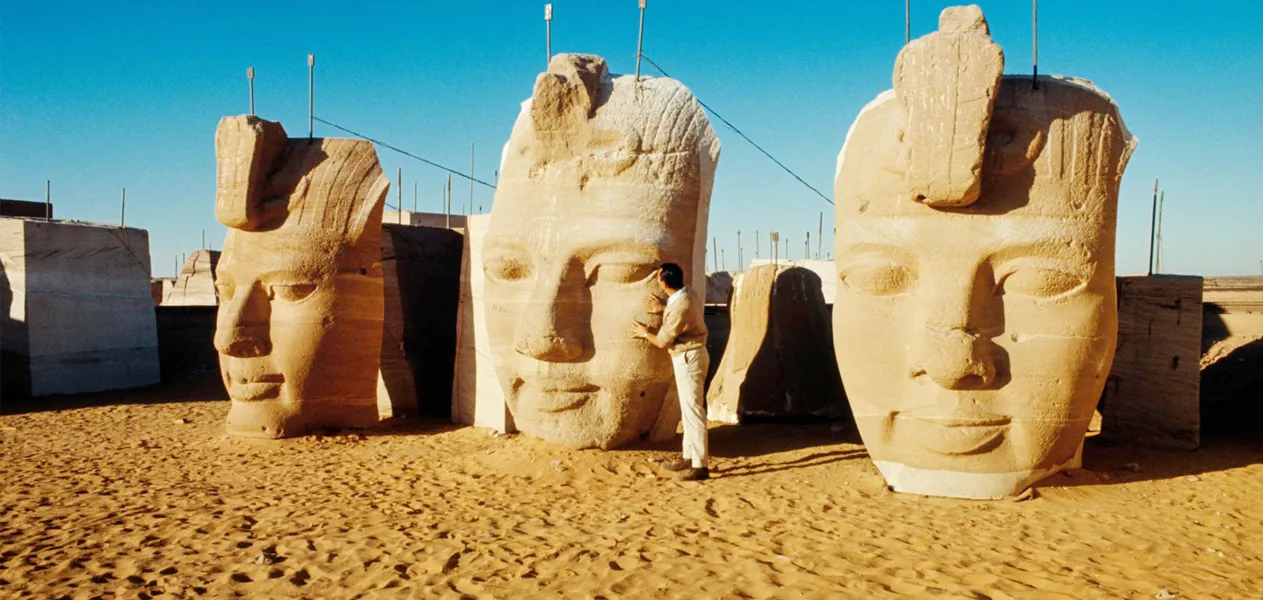
Each heightening made the flooding worse. By the 1930s, Philae Temple spent most of the year underwater, and the painted colors on its walls faded. It survived like this for decades, until the construction of the High Dam threatened to drown it for good. Between 1972 and 1980, UNESCO dismantled the temple and rebuilt it on nearby Agilkia Island, as told in our article on the Philae Temple relocation. The same campaign saved the two temples of Abu Simbel, whose relocation is even more famous. Today the temple glows again each evening during the Philae sound and light show.
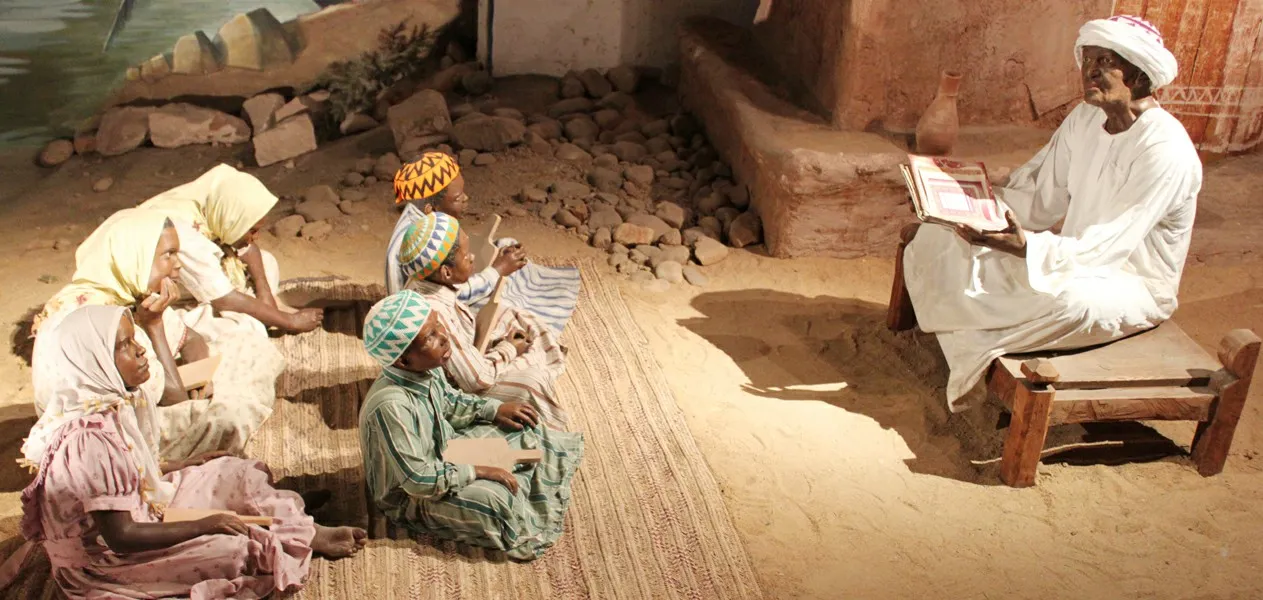
The dam also changed life in Nubia. Its reservoir flooded villages and palm groves along the river, and with each heightening, more Nubian families moved to higher ground, rebuilding the colorful Nubian villages that still define Nubian culture. That story continued on a far larger scale with the High Dam, and the Nubian Museum tells it in detail.
The Aswan Low Dam Today: Power, Roads and Visiting
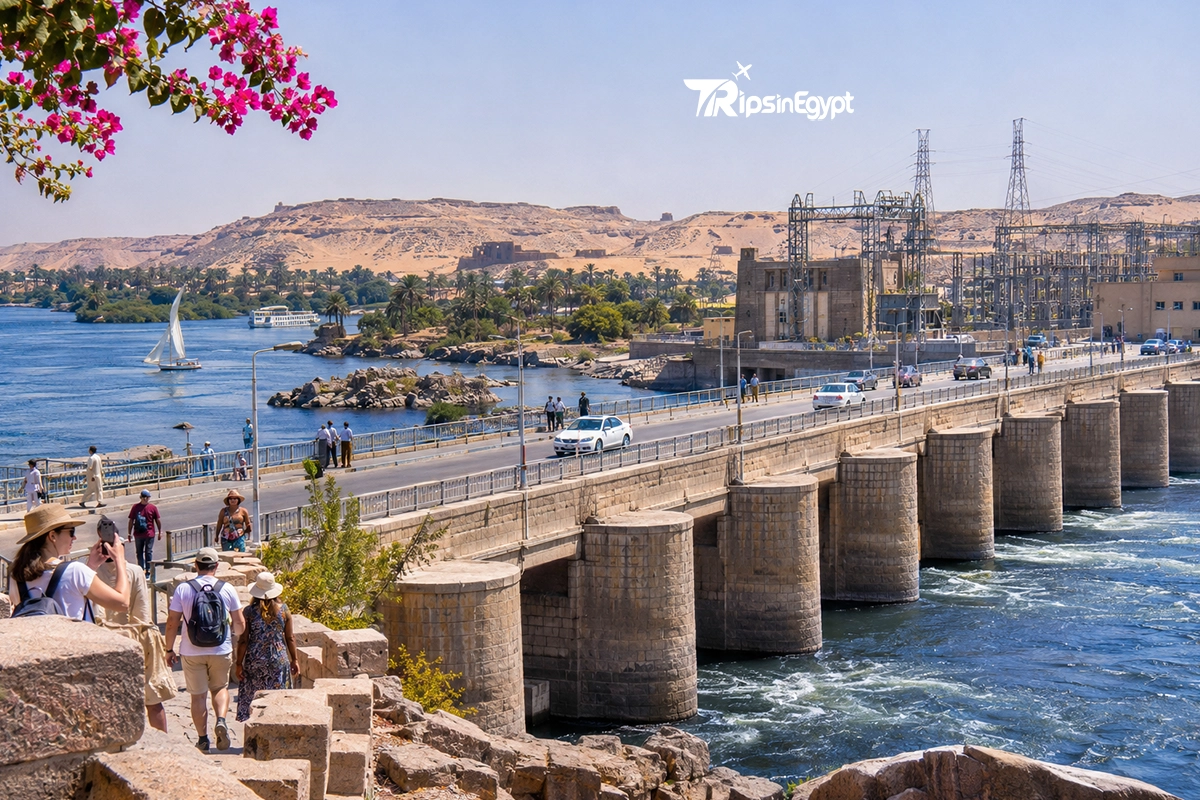
After the High Dam was completed in 1970, the old dam lost its main job. It no longer needed to pass the flood or store water for the dry season, and its navigation lock fell out of use. Its reservoir level was lowered, and today it mainly regulates the water released by the High Dam.
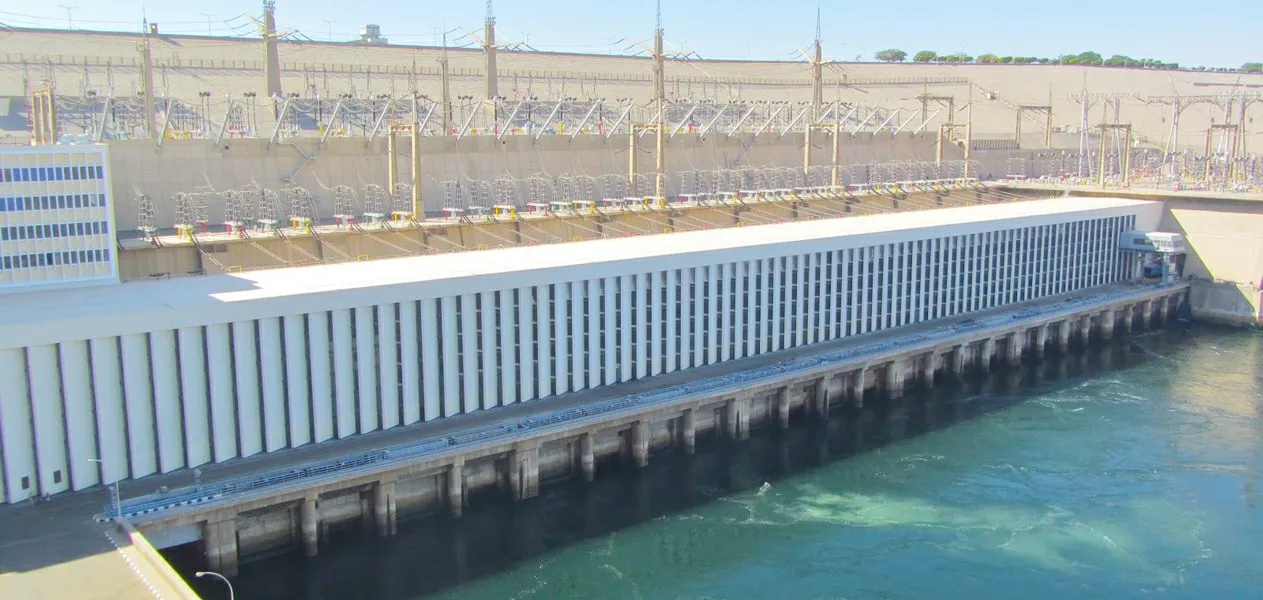
The dam found a second life as a power station. Aswan I, opened in 1960 on the west side of the dam, has seven generators with a combined capacity of 280 MW. Aswan II, built in the 1980s at the foot of the dam, adds four more generators with 270 MW. Together they make the old dam one of Egypt's significant sources of hydroelectric power, alongside the High Dam.
In the early 1980s, engineers carried out a detailed study of the old masonry. They found original construction flaws, such as cavities and open water channels, that had made the masonry slightly permeable from the start, and that decades of river water had slowly enlarged. Laboratory tests showed that the stone was still in relatively good condition, and repairs have kept the dam in service.
Visiting the Aswan Low Dam. The dam carries the main road between Aswan and its airport, so most travelers cross it by car on the way to the High Dam or to the boat landing for Philae. There is no ticket and no visitor center, but the drive across offers wide views of the granite rocks of the cataract and the river below. Photography of the dam and power stations may be restricted, so follow your guide's advice. It is easy to combine the crossing with the High Dam, Philae and the Kalabsha Temple and Nubian Museum tour in a single half-day.
For more ideas, see our guides to places to visit in Aswan, hidden attractions in Aswan, the Aswan tourist attractions and things to do in Aswan, and our advice on the best time to visit Aswan. Beyond the High Dam, Lake Nasser cruises sail south across the water that replaced the old reservoir.
Discover Aswan's Engineering and Ancient Wonders With Trips In Egypt
From the pharaohs' granite quarries to the great dams of the modern age, Aswan tells the story of a people who have always lived by the Nile, and the golden light on the cataract rocks still reminds every traveler why the river was called the giver of life. We can show you both sides of that story, from Philae and the High Dam to the Nubian villages, with a licensed Egyptologist guide. Cast your eyes on our Aswan day tours and excursions, sail north on a Nile cruise from Aswan to Luxor, and book one of our Egypt tour packages or design your own route with our tailor-made tours.

5 Days Cairo And Hurghada Trip
Amazing 4 Nights Cairo and Hurghada Trip Itinerary 5 Days Cairo and Hurghada trip wil...
- Duration 5 Days / 4 Nights
- Location Cairo & Hurghada
- Type Historical & Recreational Tour
From$690/per person
View Tour
6 Days Cairo, Alexandria & Faiyum Tour
Unforgettable Cairo, Alexandria & Faiyum Adventure in Six Days 6 Days Cairo, Alex...
- Duration 6 Days / 5 Nights
- Location Cairo - Alexandria - Fayum
- Type Historical Tour
From$720/per person
View Tour
10 Days Cairo, Faiyum & Nile Cruise Holiday
Breathtaking 10 Days Journey of A Lifetime in Egypt 10 Days Cairo, Faiyum & Nile...
- Duration 10 Days / 9 Nights
- Location Cairo, Luxor, Aswan & Faiyum
- Type Classic Tour
From$1350/per person
View Tour SOLD OUT
Ultimate 7-Day Egypt Solar Eclipse Experience with Hurghada 2027
Enjoy a 7-Day Egypt Solar Eclipse Tour with Hurghada 2027 6 Nights Egypt Solar Ecli...
- Duration 7 Days / 6 Nights
- Location Cairo / Giza / Luxor / Hurghada
- Type Astronomical Tour
Sold Out
View Details