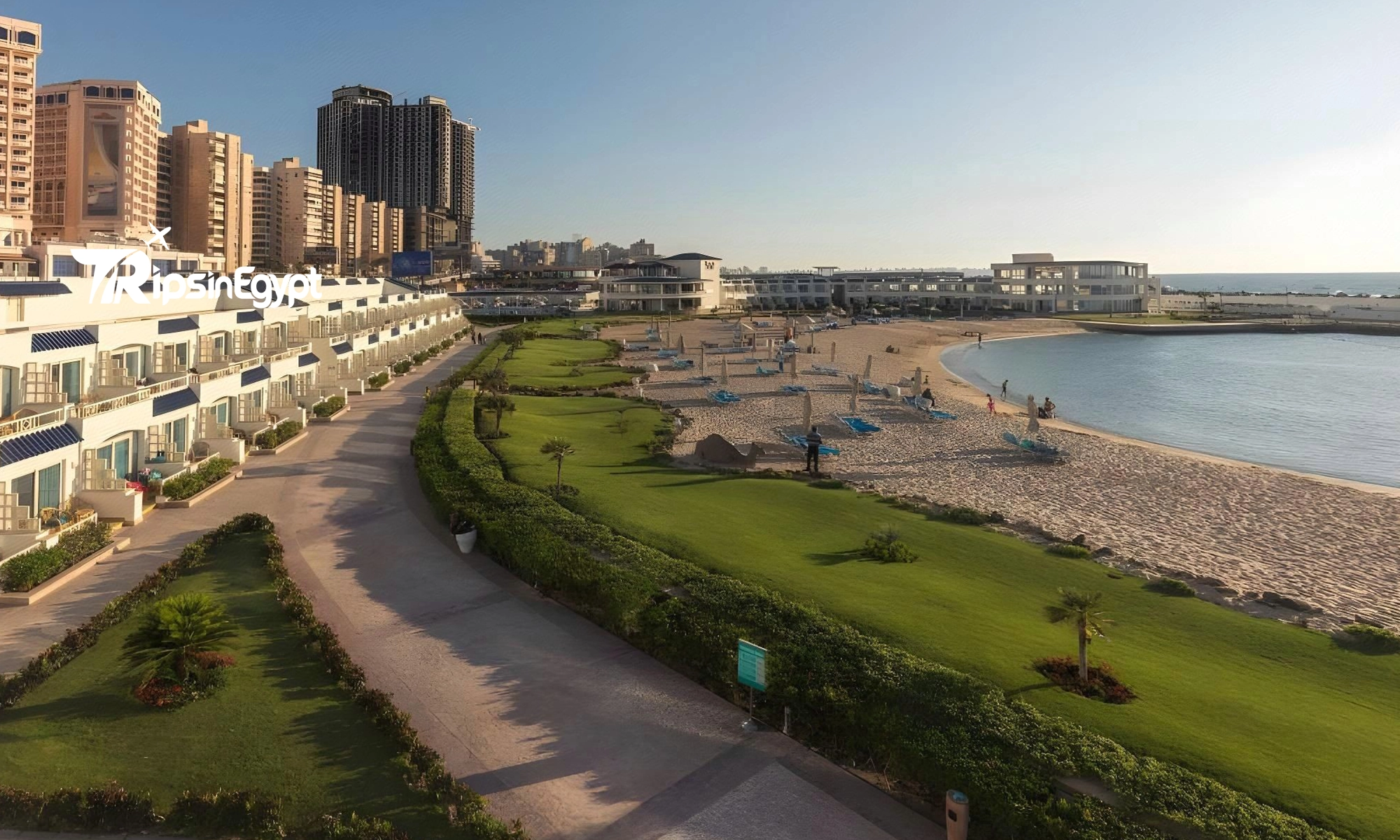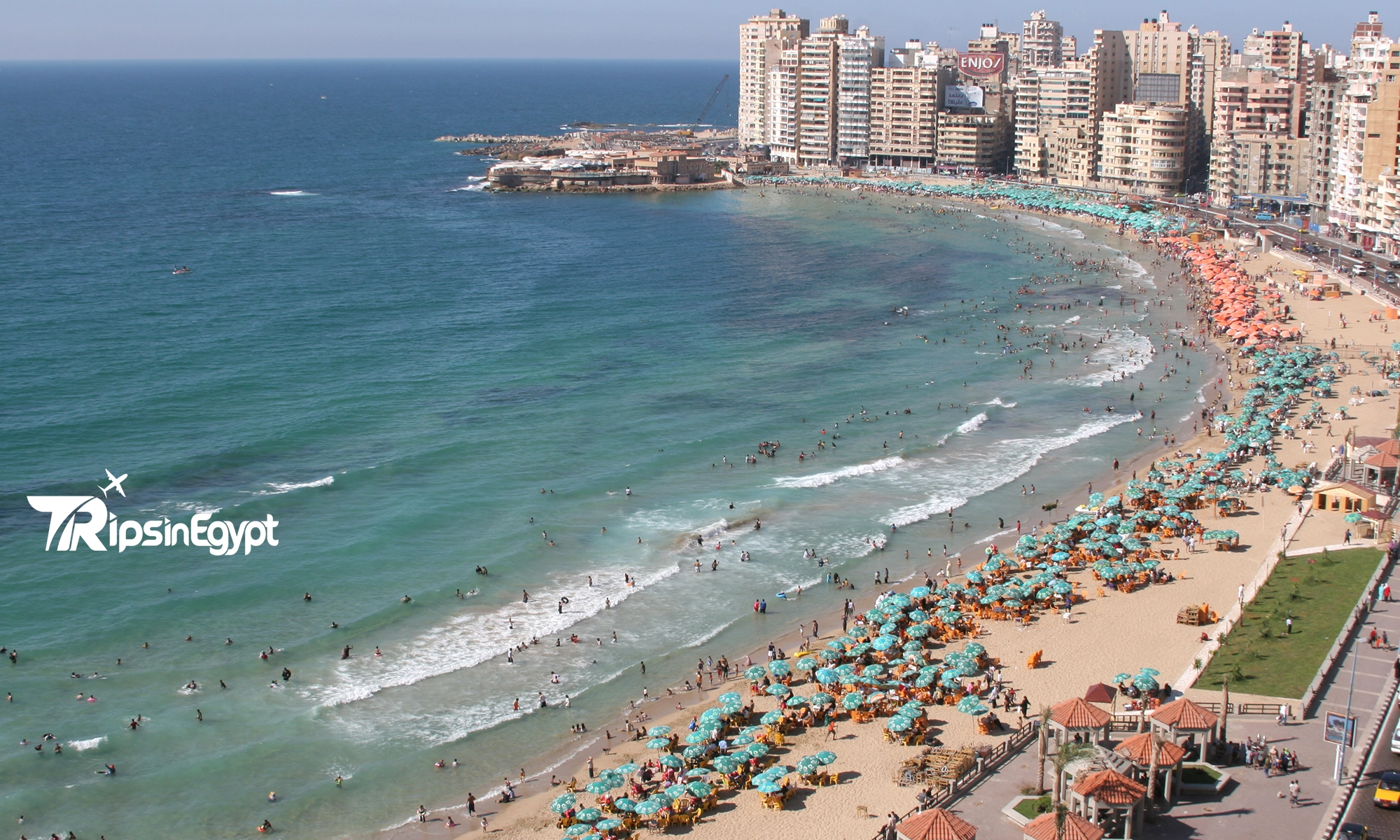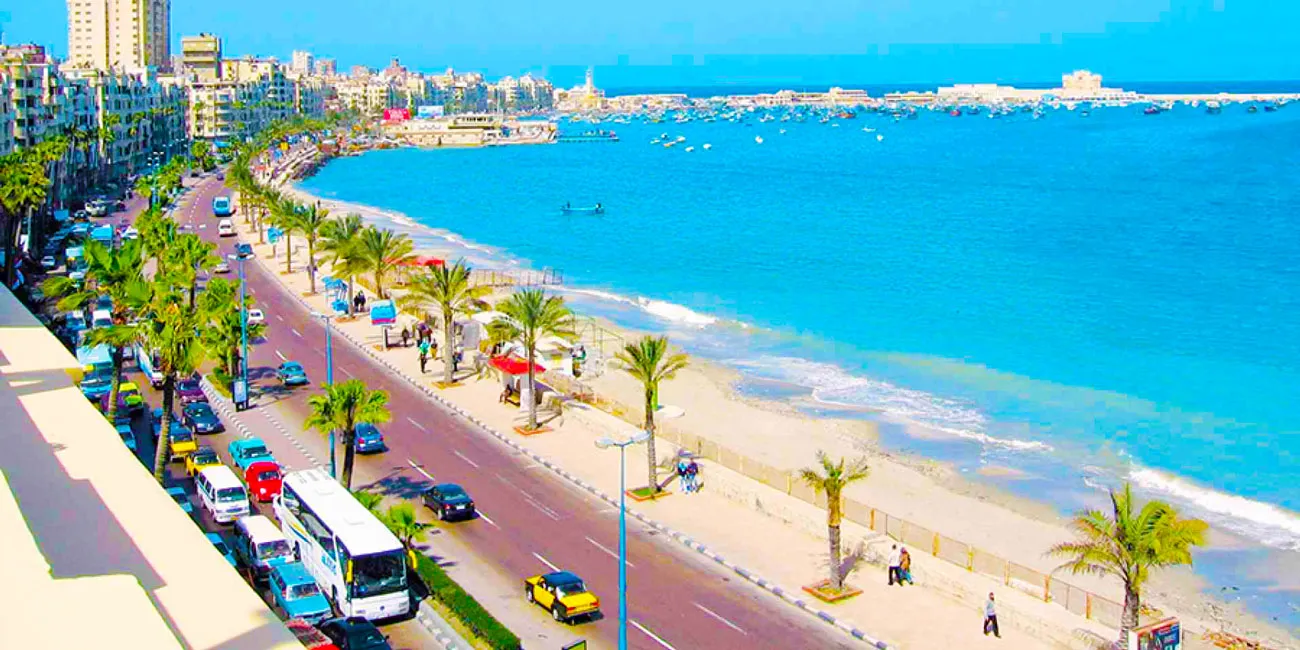




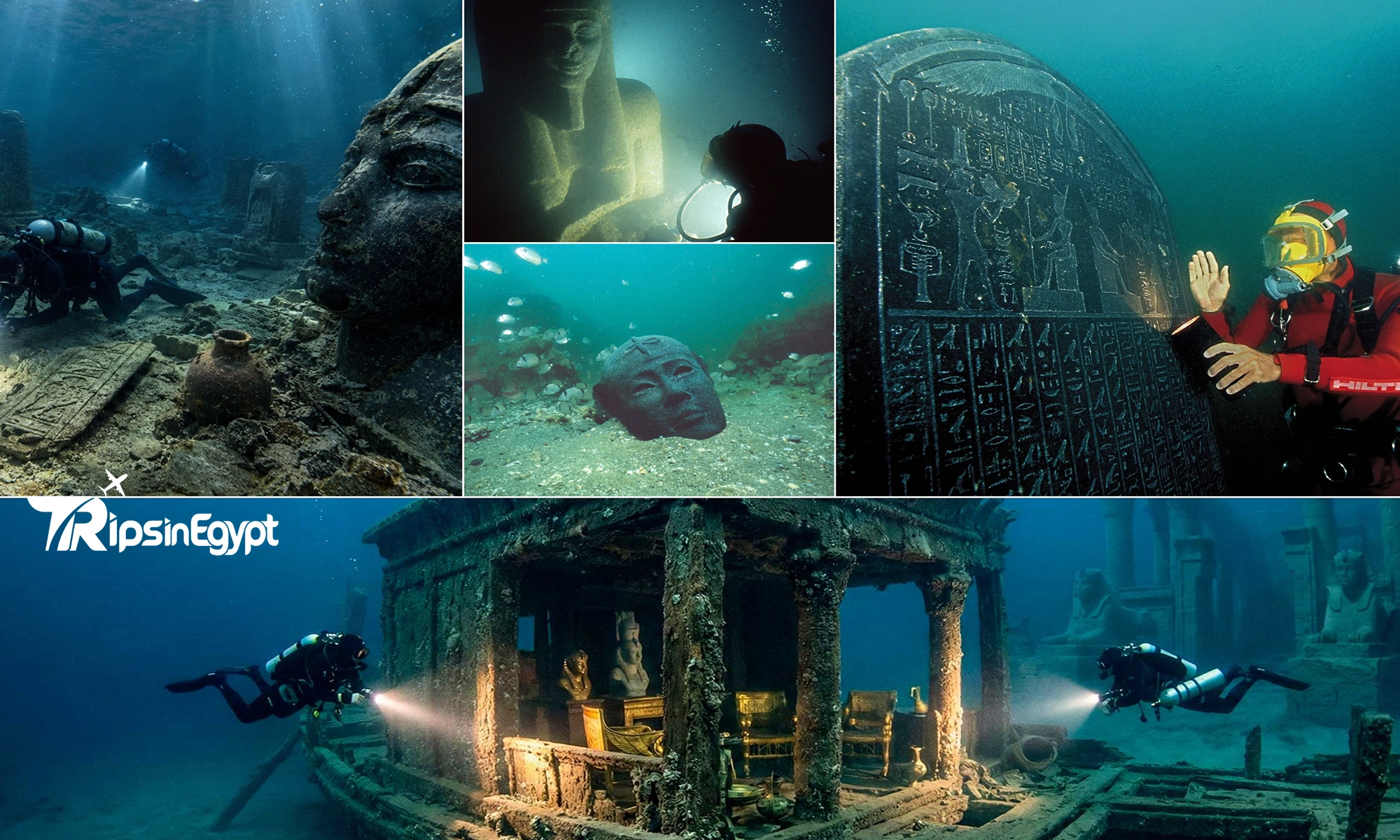
The underwater ruins of Alexandria are among the most extraordinary archaeological sites in the Mediterranean. Just a few meters below the waves of the harbor lie the fallen stones of the Pharos, the palaces where Cleopatra lived, temples of Isis and whole streets of cities that vanished more than a thousand years ago. Floating above a granite sphinx in the green half-light of the harbor, with the noise of the modern city just a few hundred meters away, is one of the strangest and most moving experiences in Egypt.
This guide explains why so much of ancient Alexandria lies underwater, who found it, what lies in each of the three main underwater zones, and how you can dive the ruins or see their treasures on land. Here are all things you need to know about the underwater ruins of Alexandria:

Why Ancient Alexandria Sank Beneath the Sea
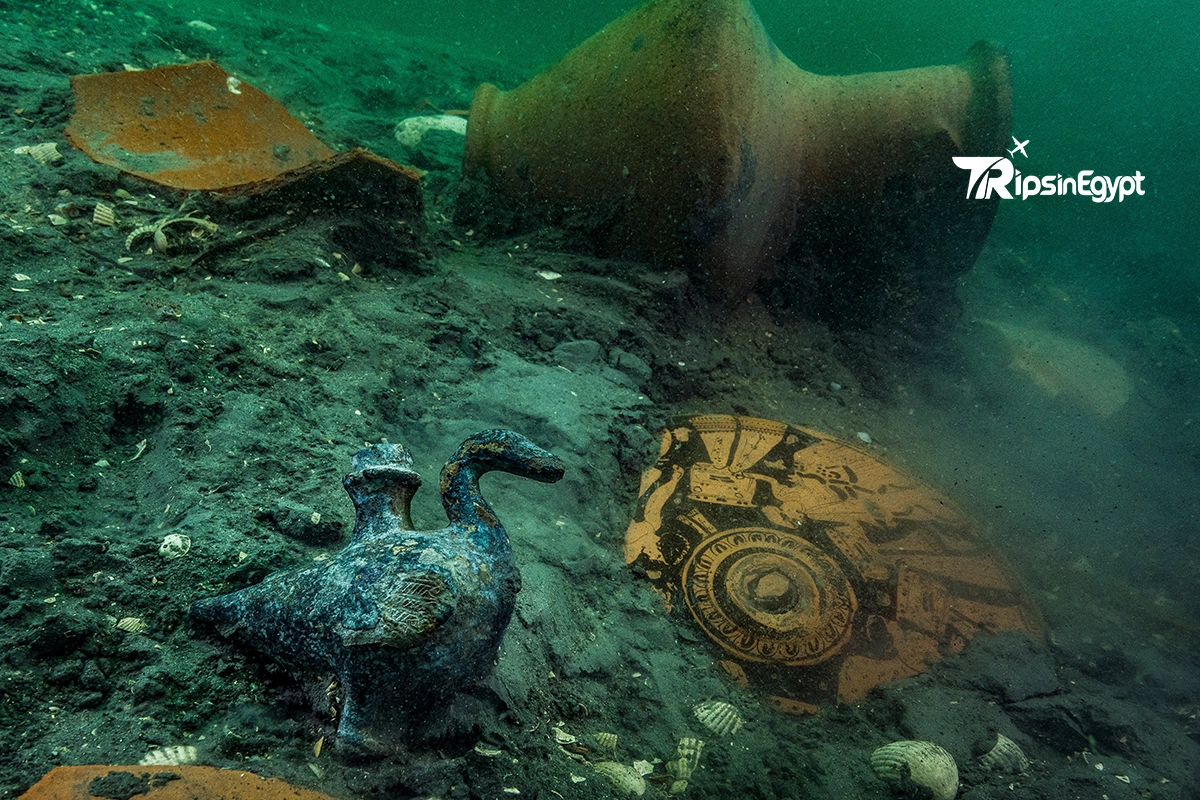
When Alexander the Great founded Alexandria in 332 BC, the coastline looked very different. The harbors were sheltered by islands and peninsulas, and the land stood several meters higher than it does today compared with the sea.
Three forces pulled the ancient city under the water. The first was earthquakes: the eastern Mediterranean lies on an active fault zone, and strong quakes repeatedly struck the city. The most destructive was the great Crete earthquake of AD 365, which caused a tsunami that swept over the coast of the Nile Delta. Ancient writers describe ships carried inland and thousands of people drowned in Alexandria.
The second was subsidence. Much of the city was built on soft sediment from the Nile, which slowly compacts and sinks under the weight of heavy stone buildings. The third was liquefaction, when waterlogged ground turns almost to liquid during an earthquake, causing buildings and even entire islands to slide into the sea.
The process has never stopped. Today, parts of Alexandria are sinking by more than 3 mm a year, while the sea level rises, which makes the city one of the most threatened by climate change in the Mediterranean.
The Rediscovery of the Underwater Ruins
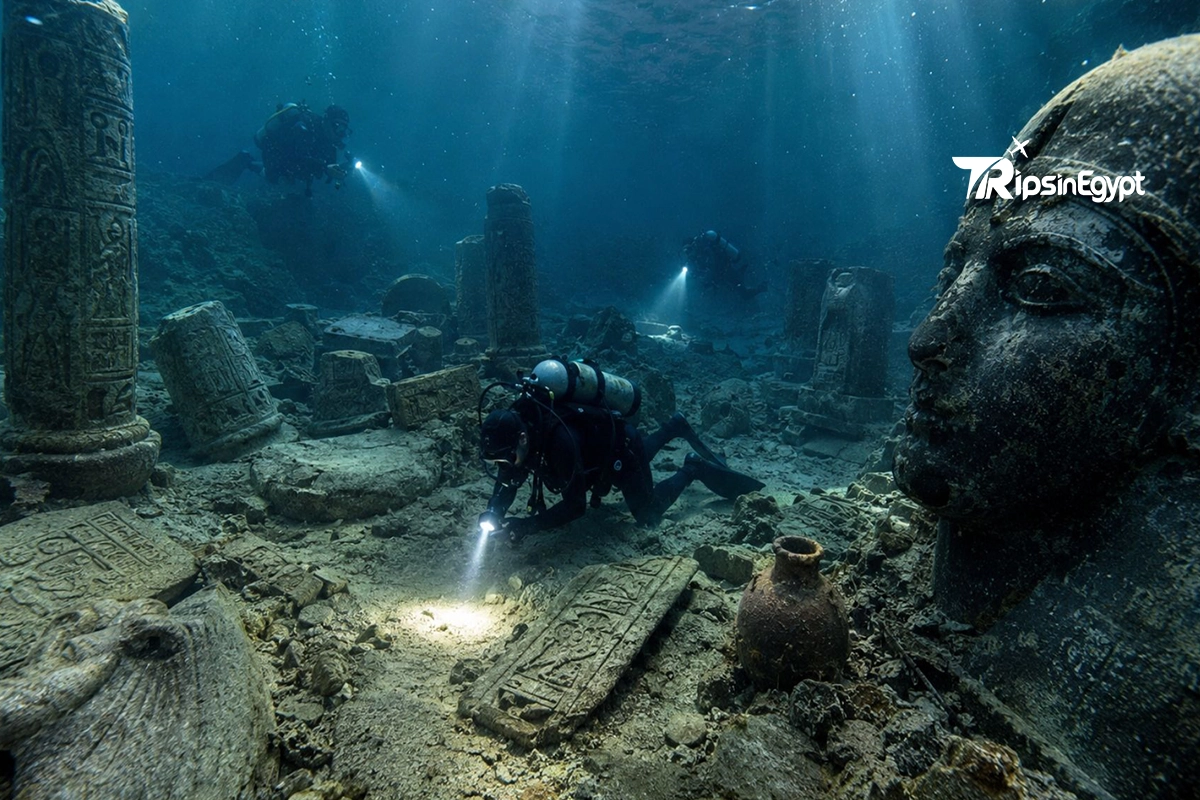
For centuries, fishermen in the harbor knew there were stones and statues beneath their boats. Serious study began only in the 20th century.
In the early 1900s, the French engineer Gaston Jondet mapped submerged harbor works off the western side of the city. In the 1960s, the Egyptian diver Kamel Abu el-Saadat explored the Eastern Harbour and reported statues and blocks near Qaitbay, and in 1968 a UNESCO-sponsored mission led by the British archaeologist Honor Frost confirmed the ruins of the Pharos.
The great breakthrough came in the 1990s. In 1994, the French archaeologist Jean-Yves Empereur and his team from the Centre d'Études Alexandrines began a full survey of the seabed next to the Citadel of Qaitbay. From 1992, the French underwater archaeologist Franck Goddio and his European Institute for Underwater Archaeology mapped the Eastern Harbour and later Abu Qir Bay, where in 2000 he announced the discovery of the lost city of Thonis-Heracleion.
Since then, Egyptian and international teams have continued to explore all three zones, using sonar, magnetometers and divers to map thousands of objects.
The Lost Pharos: Ruins off the Citadel of Qaitbay
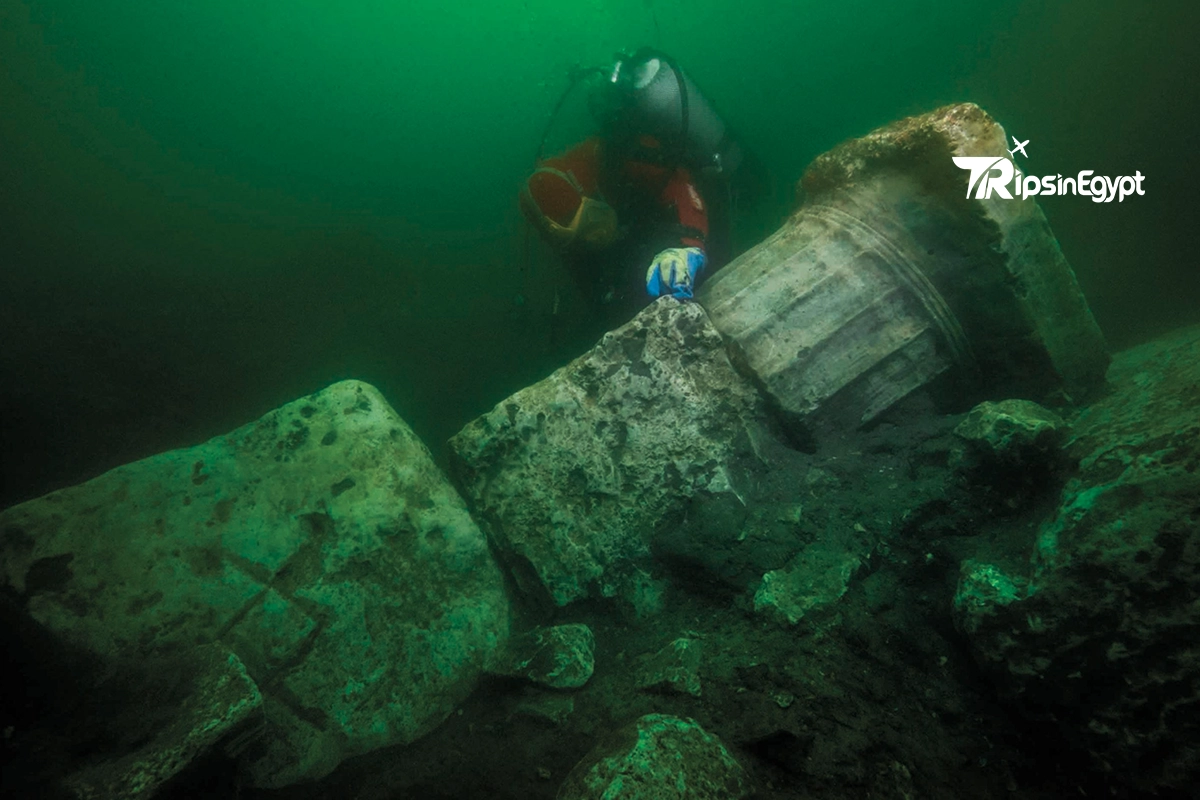
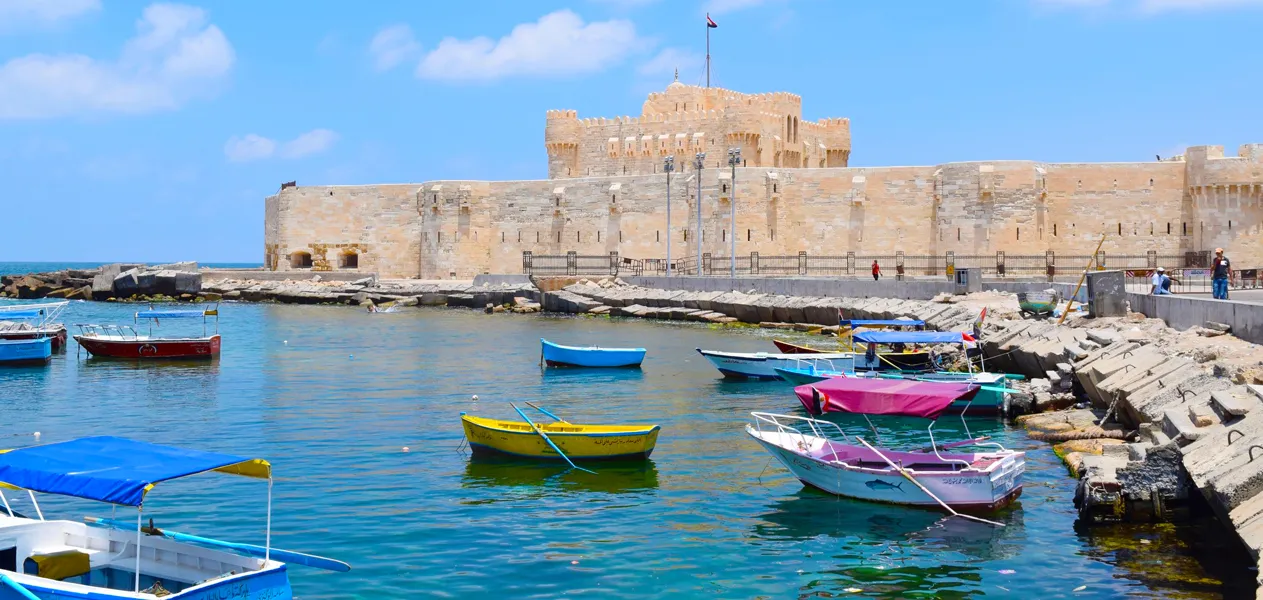
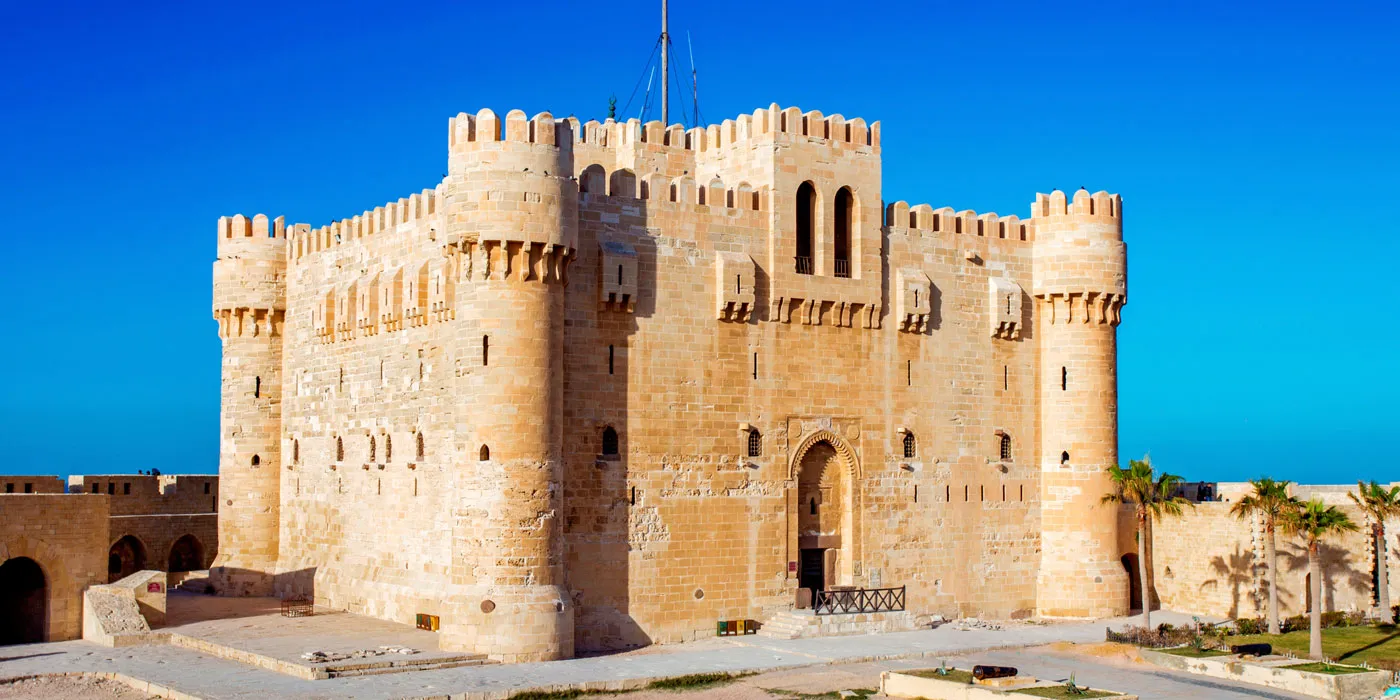
The most famous underwater site in Alexandria lies off the eastern tip of the old island of Pharos, beside the Citadel of Qaitbay. It was here that the Lighthouse of Alexandria, one of the Seven Wonders of the Ancient World, stood for about 1,600 years until earthquakes brought it down in the 14th century.
On the seabed, divers find a vast field of fallen stones spread over about 2 hectares. Empereur's team catalogued more than 3,300 pieces by the end of 1995. They include huge granite blocks weighing 49 to 60 tonnes, many of them broken as if they had fallen from a great height, and probably from the lighthouse itself.
Among them lie about 30 sphinxes, 5 obelisks and columns carved with the names of earlier pharaohs, such as Ramesses II and Seti I. These pieces were brought to Alexandria from older cities such as Heliopolis by the Ptolemies, who used them to decorate their new capital. Colossal statues of a Ptolemaic king and queen dressed as pharaoh and Isis were also raised from this site, and are thought to have stood at the foot of the lighthouse.
About 36 restored pieces from the Pharos site are now displayed in Alexandria's museums and gardens, while the rest remain in place as part of a protected underwater site.
The Sunken Royal Quarter and the Island of Antirhodos
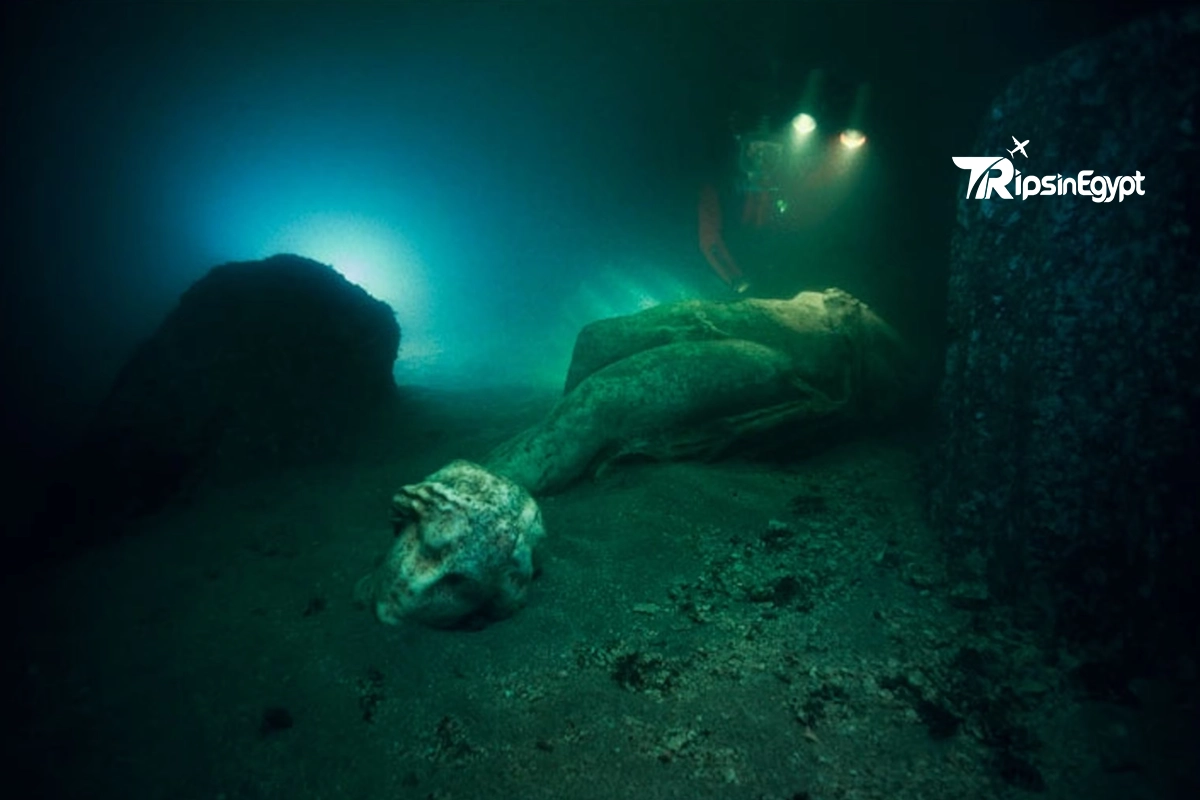
East of Qaitbay, the curve of the Eastern Harbour hides the royal quarter of the Ptolemies, the district of palaces, temples and gardens where Queen Cleopatra and her ancestors lived.
At its heart lay Antirhodos, a small island about 300 m long, prepared for building around 250 BC and described by the Greek geographer Strabo as the site of a royal residence. Goddio's team located it in 1996, now lying about 5 m below the surface. On it stood a palace about 90 by 30 m with marble floors, dating from the 3rd century BC and believed to have been one of Cleopatra's royal residences.
The island also held a temple of Isis. From it came one of the most famous underwater finds: a life-size granite statue of a shaven-headed priest of Isis carrying a vase topped with the head of Osiris, a sacred vessel linked to the god of the dead and similar in idea to the canopic jars of earlier times. Beside it lay two granite sphinxes, one with the face of Ptolemy XII, Cleopatra's father.
Nearby, archaeologists found 60 red granite columns, each about 7 m long, a 30 m Roman shipwreck, and, opposite the island, the Timonium, the retreat built by Mark Antony after his defeat at Actium. A colossal head believed to show Caesarion, the son of Cleopatra and Julius Caesar, was also raised from the harbor. In 2025, Goddio's team announced the discovery of the timbers of a Ptolemaic pleasure barge in the island's port.
Heracleion and Canopus: The Lost Cities of Abu Qir Bay
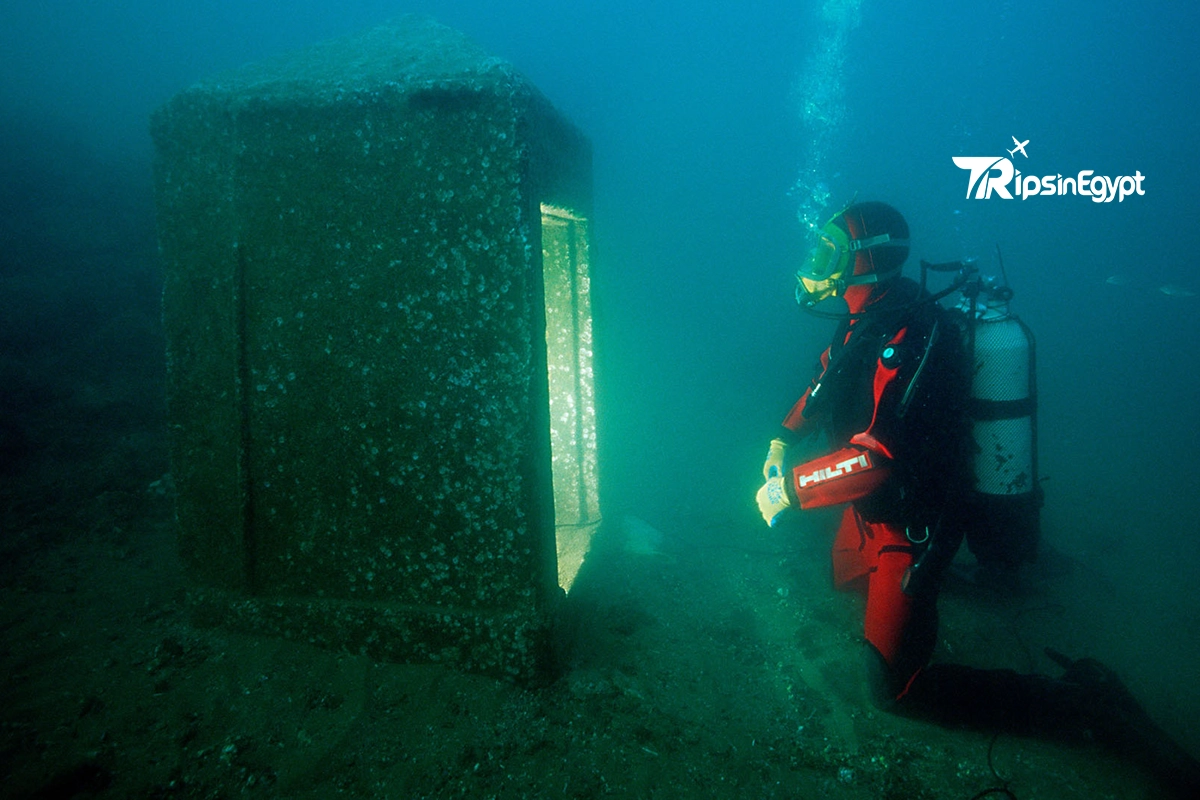
About 20 to 25 km east of Alexandria, the wide bay of Abu Qir hides two cities that were famous long before the rise of Alexandria.
Thonis-Heracleion was Egypt's main port on the Mediterranean before Alexandria was founded, the gateway through which Greek ships entered the country. Today it lies about 6.5 km offshore, at depths of around 10 m. Divers have found temple foundations, toppled columns, canals, dozens of shipwrecks and hundreds of anchors. The most spectacular finds include a colossal red granite statue of Hapi, god of the Nile flood, more than 5 m tall, and a granite stela of King Nectanebo I, inscribed with a royal decree on taxes.
Canopus, closer to the shore, was a city of pilgrims and pleasure, famous for its temple of Serapis and its festivals. In August 2025, Egypt's Ministry of Tourism and Antiquities revealed new finds in Abu Qir Bay that may belong to an extension of Canopus. They included limestone buildings used for worship, homes and workshops, rock-cut ponds for fish, a 125 m dock with stone anchors and a harbor crane, and statues of royal figures. One sphinx carries the cartouche of Ramesses II, and other pieces include a headless Ptolemaic statue and part of a marble statue of a Roman nobleman.
The same bay saw the Battle of the Nile in 1798, when Nelson's fleet destroyed Napoleon's ships, and some of their wrecks lie among the ruins of the ancient cities. More about the region's lost cities appears in our guide to ancient Egyptian cities and the myths behind their temples in the story of Osiris and Isis.
How to Dive or See the Underwater Ruins of Alexandria
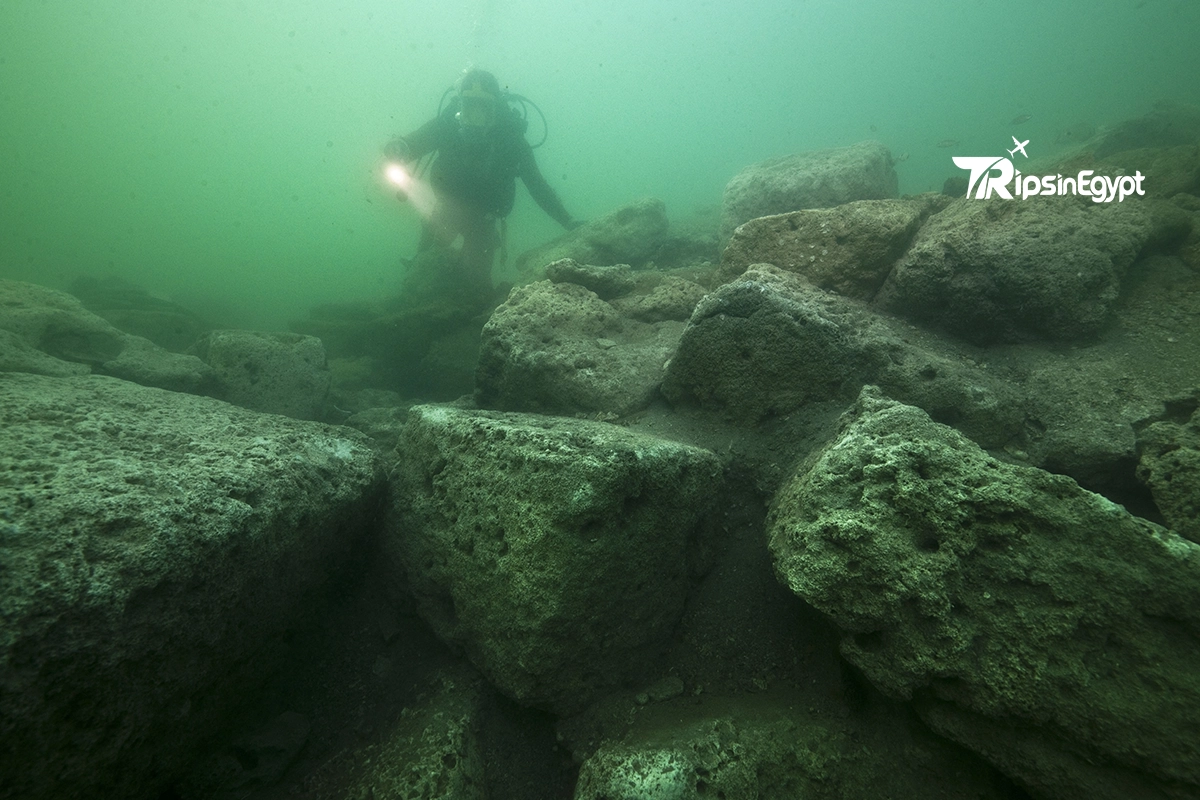
Diving the sites. Local dive centers in Alexandria run trips to the Pharos site near Qaitbay and to parts of the Eastern Harbour. Most dives are shallow, between 5 and 15 m, which makes them suitable for certified divers with basic experience. The sites are protected, so you must dive with an approved local operator that holds the necessary permits, and nothing may be touched or taken.
Visibility and season. Because of sediment from the Nile and the busy harbor, visibility is limited, from a few meters to about 10 m on a good day. The calmest conditions are usually from late spring to early autumn, when the sea reaches about 26 to 28°C. In winter, the water drops to about 16 to 20°C and storms can stop diving for days. Our guide to the best time to visit Alexandria covers the weather month by month.
Is it worth it? This is a dive for history lovers rather than for coral and marine life. If you want colorful reefs, the Red Sea is a better choice, with famous sites described in our guide to the best Hurghada diving sites. Beginners can also try our discover scuba diving in Hurghada trip before diving the ruins.
Seeing the finds on land. Many of the finds are on display in Alexandria. The Alexandria National Museum and the Graeco-Roman Museum show statues and objects raised from the Pharos site and the Eastern Harbour, including sphinxes, coins and jewelry. The Hapi statue and other Heracleion treasures have toured major exhibitions abroad. For more, see our guide to the museums of Egypt.
The future. Egypt has long planned an underwater museum in the Eastern Harbour, which would let visitors see the ruins through glass without diving. The project has not yet been built, but it remains one of the most ambitious ideas for the city.
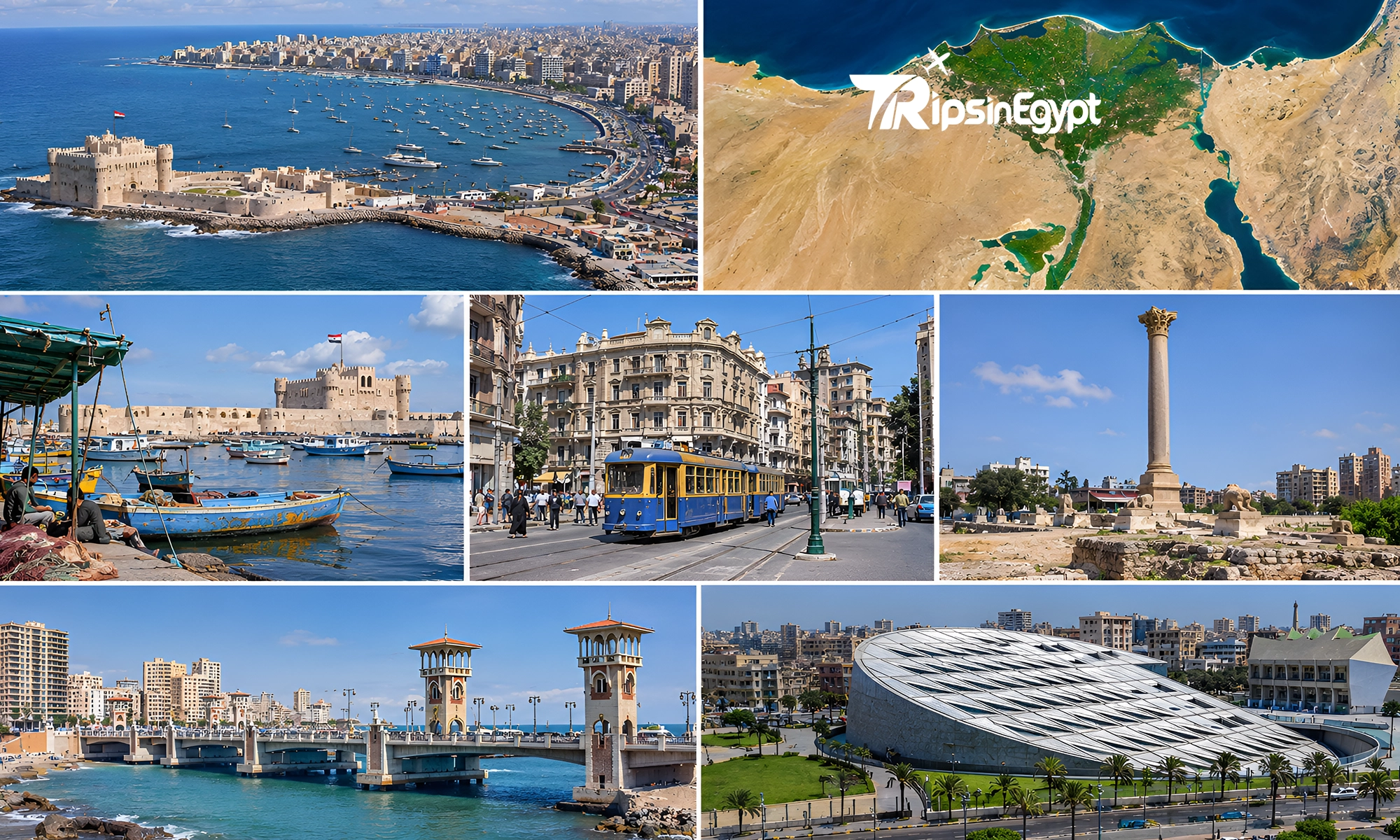
Combine your visit with the Bibliotheca Alexandrina, the Mosque of Abu al-Abbas al-Mursi and our list of Alexandria tourist attractions, or plan your stay with our Alexandria travel guide.
Discover Alexandria's Sunken History With Trips In Egypt
Somewhere beneath the gentle waves of the harbor, the golden city of the Ptolemies still waits, its sphinxes watching the shadows of passing boats. We help you explore its story above and below the water, from the walls of Qaitbay to the museums that keep its treasures. Join our day tour to Alexandria from Cairo, our Alexandria city tour from Alexandria Port or another of our Alexandria port shore excursions, browse our Egypt trip packages and choose your favorite or design your own route with our tailor-made tours.
5 Days Cairo And Hurghada Trip
Amazing 4 Nights Cairo and Hurghada Trip Itinerary 5 Days Cairo and Hurghada trip wil...
- Duration 5 Days / 4 Nights
- Location Cairo & Hurghada
- Type Historical & Recreational Tour
From$690/per person
View Tour
6 Days Cairo, Alexandria & Faiyum Tour
Unforgettable Cairo, Alexandria & Faiyum Adventure in Six Days 6 Days Cairo, Alex...
- Duration 6 Days / 5 Nights
- Location Cairo - Alexandria - Fayum
- Type Historical Tour
From$720/per person
View Tour
10 Days Cairo, Faiyum & Nile Cruise Holiday
Breathtaking 10 Days Journey of A Lifetime in Egypt 10 Days Cairo, Faiyum & Nile...
- Duration 10 Days / 9 Nights
- Location Cairo, Luxor, Aswan & Faiyum
- Type Classic Tour
From$1350/per person
View Tour SOLD OUT
Ultimate 7-Day Egypt Solar Eclipse Experience with Hurghada 2027
Enjoy a 7-Day Egypt Solar Eclipse Tour with Hurghada 2027 6 Nights Egypt Solar Ecli...
- Duration 7 Days / 6 Nights
- Location Cairo / Giza / Luxor / Hurghada
- Type Astronomical Tour
Sold Out
View Details