




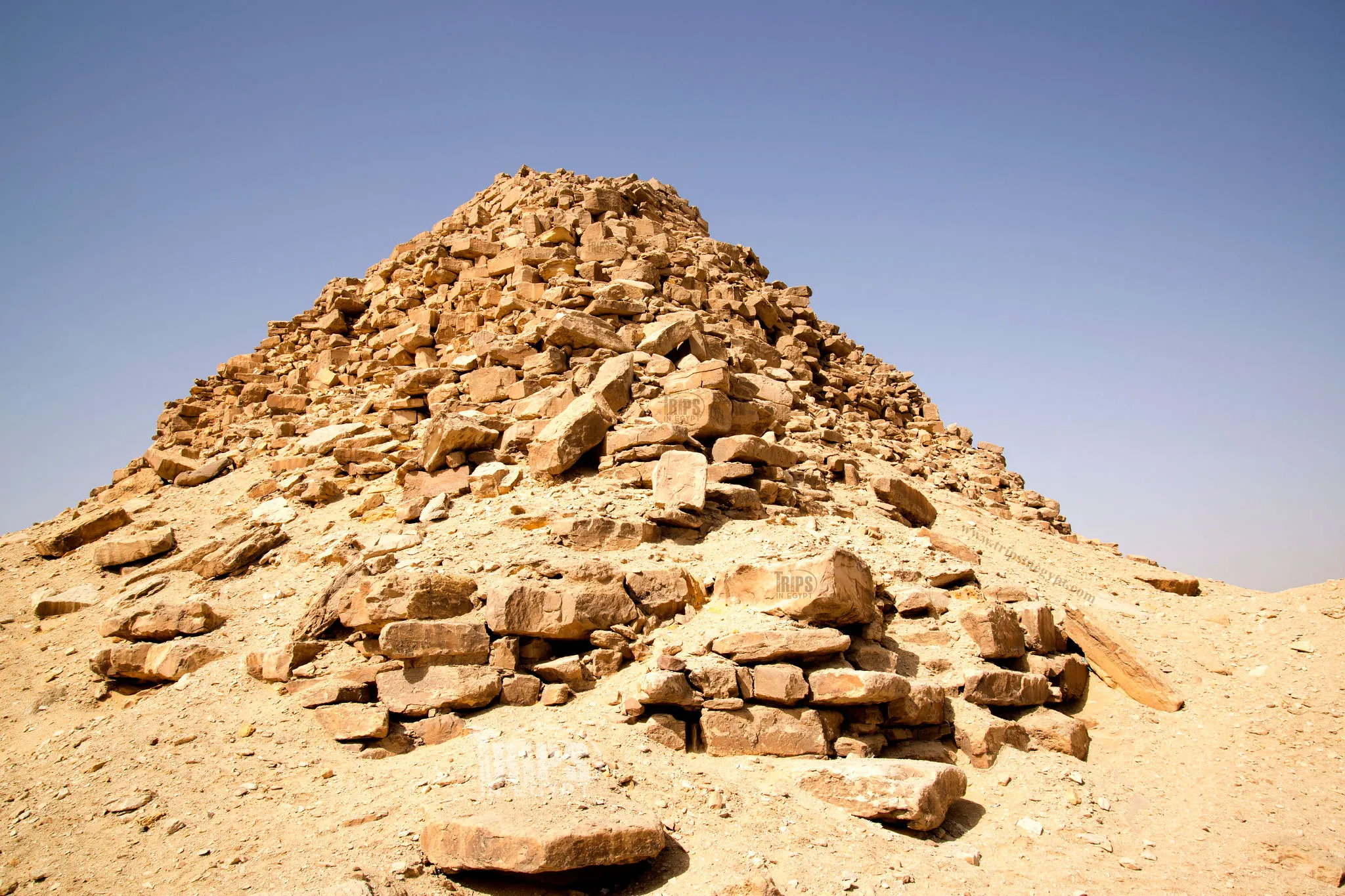
The Pyramid of Sahure is a golden creation of brilliance that stood the test of time to be a rich piece of wealth and knowledge which able to convey a number of incredible facts about the architectural development and innovation of the ancient Egyptian builders. The pyramid was the key to resurrection where all the royal kings were able to make their way to the heavens and join the ancient Egyptian gods. The area is able to shed light on the magnificent land of Abusir where a number of pyramids dating to the 5th Dynasty (2465-2323) are found.
The pyramid is by far the smallest of all the pyramids constructed during the early days of the 4th dynasty put famous for having magical decorations, especially on the mortuary temple. The pyramid is able to shed light on the decline of quality of the ancient Egyptian royal builders across the final days of the old kingdom of ancient Egypt. In this article, we will discover all the facts and details concerning this marvelous monument that convey many priceless facts about the history and artistic architecture of the ancient Egyptian civilization.
Location & How to Get to the Pyramid of Sahure
Sahure is located in the golden area of Abusir which was the first pyramid to be made there after the creation of the dun temple of king Userkaf. It was home to the cult of Ra where the temple of Ra in the city of Heliopolis can be seen from there. Choosing this site to house the pyramid inspired the creation of many pyramids in this area such as Neferirkare and Neferefre.
Pyramid of Sahure History
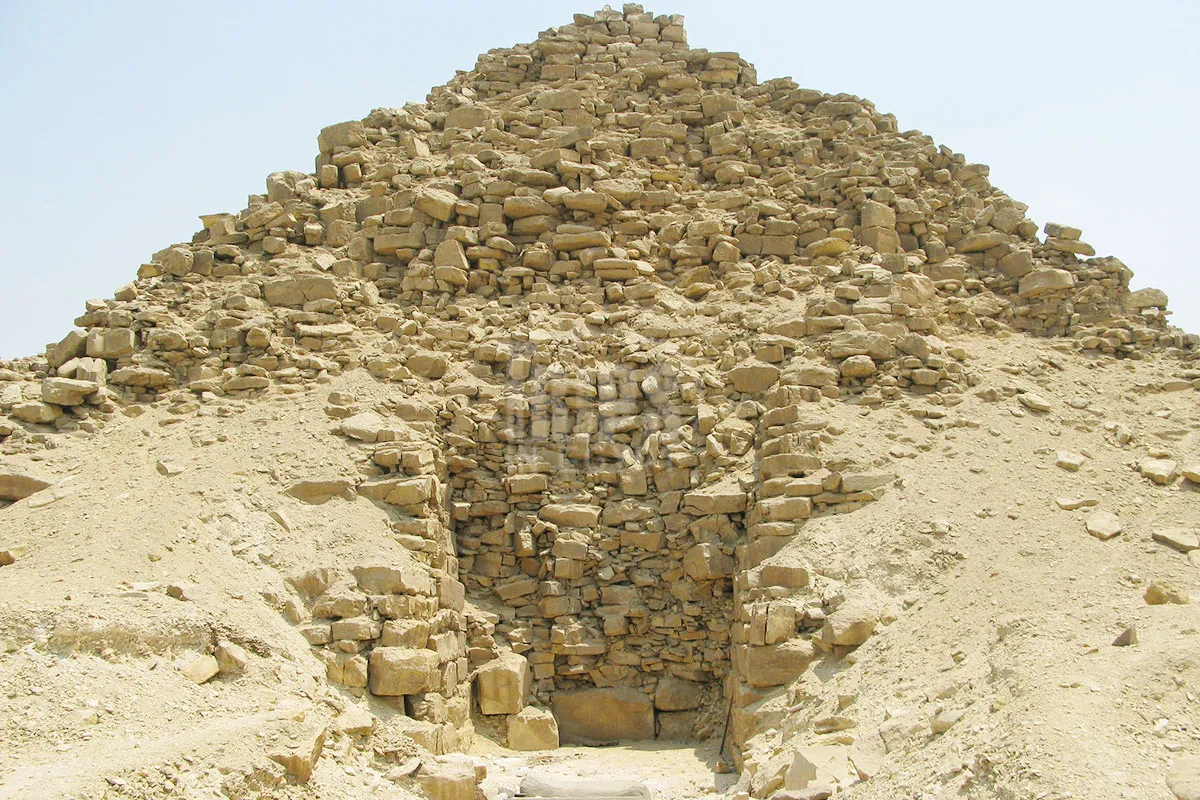
The pyramid was built by King Sahure of the 5th dynasty in the early days of the 25th century around 2480 BC. The pyramid was able to launch a wave of pyramid building after Userkaf after he made his sun temple leading to the creation of the entire area of Abusir. The pyramid is known by the name of "Khai-ba Sahura" which is translated into "The Rising of the Ba Spirit of Sahure" and "The Ba of Sahure Appears" or "Sahure's Soul Shines".
The entire pyramid complex was excavated between 1907 and 1908 by Ludwig Borchardt. The design of the pyramid was adopted by a number of ancient Egyptian kings in the 5th and 6th dynasties which shows innovation in the design of the complex construction despite the poor quality and the reduced construction methods which lead to the entire pyramid falling to pieces. The place was subject to a number of excavations across the modern era as the Egyptian Supreme Council of Antiquities in 1994 made the necropolis of Abusir open for tourism.
Who is Sahure & Why Built the Pyramid
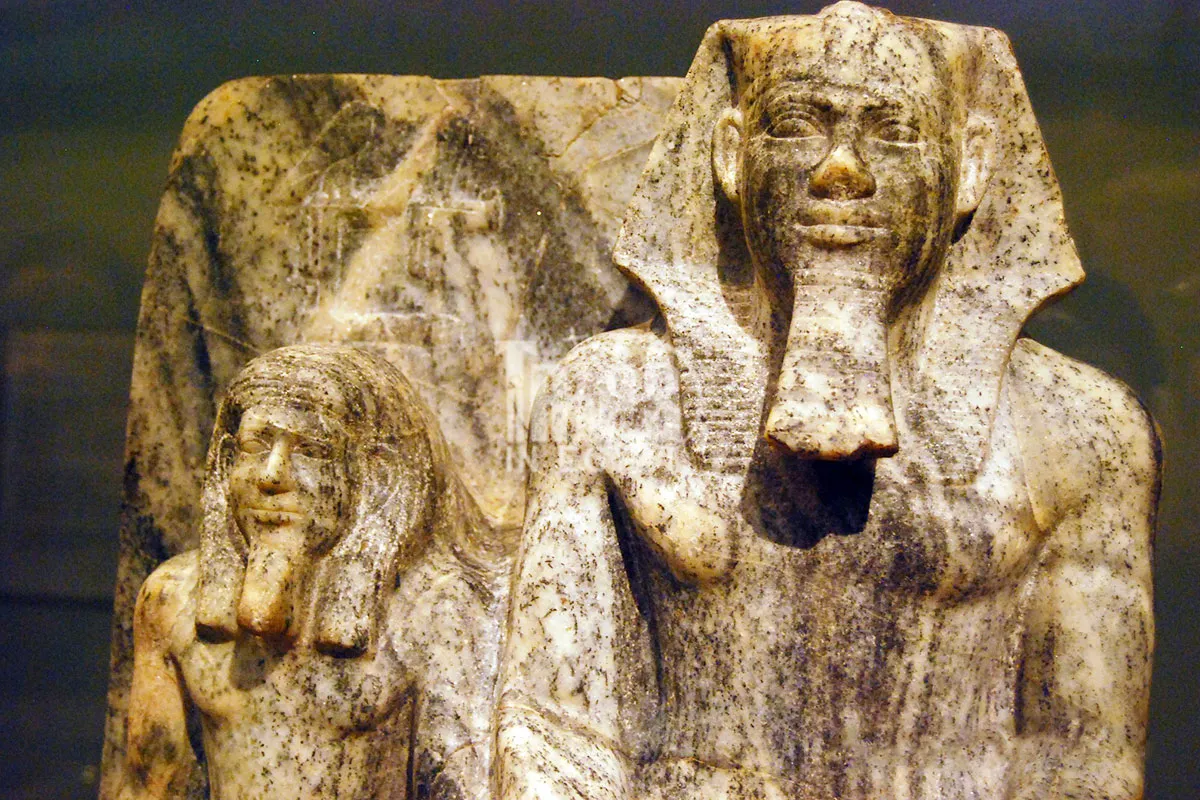
Pharaoh Sahure a.k.a Sahura or Raneferef was the second ruler of the Fifth Dynasty of ancient Egypt. His name means "He is Close to Re" and is the son of Pharaoh Userkaf and Queen Neferhetepes II. He ascended to the throne in 2487 BC and ruled for about 12 years until his death in 2475 BC. King Sahure is considered one of the most important pharaohs of the Old Kingdom period due to his many military campaigns, many building projects, and important contributions to the cultural and artistic development of ancient Egypt.
During his reign, Sahure led expeditions to Nubia, Sinai, the land of Punt, and Libya, extending Egypt's influence and control over these regions. He also commissioned several notable building projects, including his pyramid complex at Abusir, which included a mortuary temple, a causeway, and a valley temple. Sahure is credited with commissioning several important works of art, including the "Palermo Stone" a significant historical document that records the early history of ancient Egypt. He also commissioned several impressive sculptures, such as the "Sahure and a Nome God" statue, which depicts the pharaoh standing next to a protective deity. He made the pyramid itself to have an unusual internal design, including a unique subterranean chamber that may have been used for religious rituals plus serve as his final resting place.
Sahure Complex Architecture
The complex of the pyramid sets on an area of 10,000 m2 (110,000 sq ft) and is made of a main pyramid, a valley temple, a high temple, a causeway, and a cult pyramid plus a number of enclosure walls and so many artistic sculptures. The complex holds a number of incredible carved reliefs and decorations showcasing the finest examples of ancient Egyptian art that expand to 370 running meters (1,214 running feet) such as a number of hunting scenes. The entire complex is made of various numbers of materials such as granite, limestone, alabaster, and basalt. The main elements of the entire complex include:
Main Pyramid of Sahure
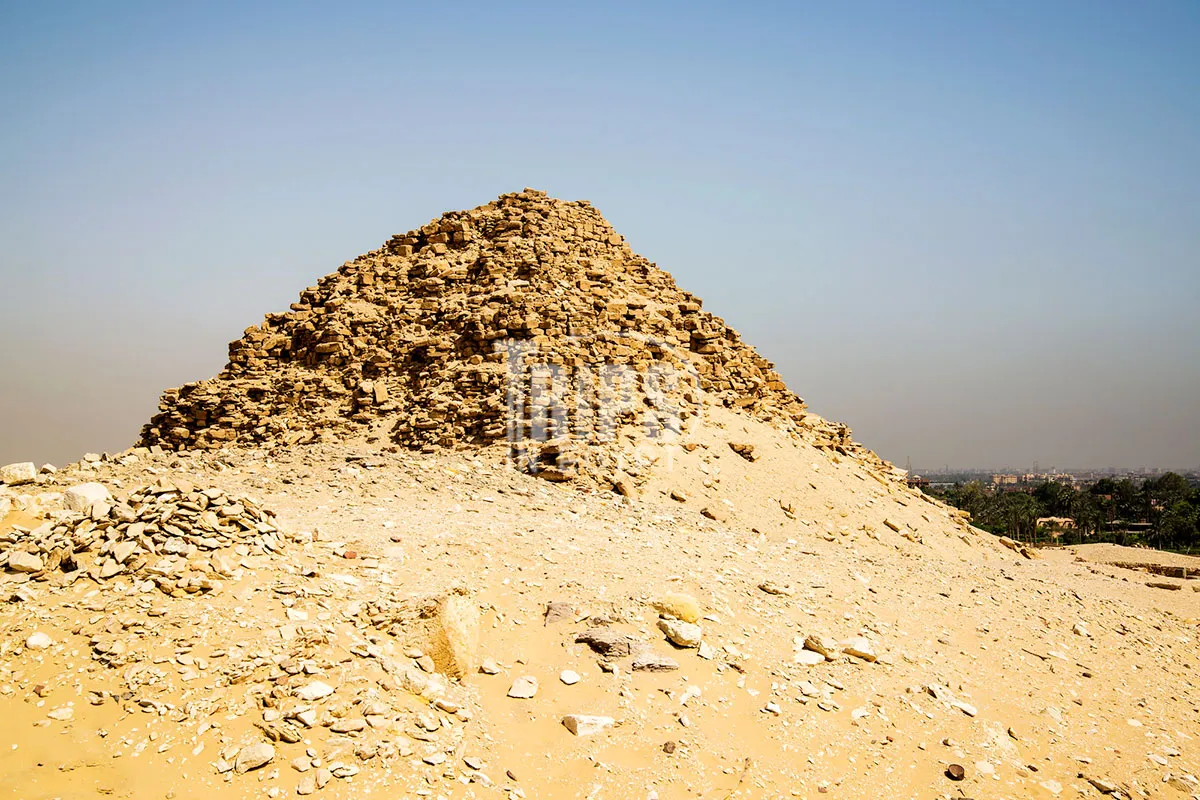
The true pyramid was made in the 5th dynasty in the shape of a true pyramid made of limestone which has the Height of 47 m (154.2 ft) to 48 m (157.5 ft), the Base of 78.5 m (257.5 ft) to 78.75 m (258.4 ft), the Volume of 96,542 m3 (126,272 cu yd), and the Slope of 50°11′40″ or 50°30′. The main pyramid is made of a combination of limestone blocks, red granite, mud mortar, and white Tura limestone. The pyramid was looted of its stones over the years.
The pyramid is arranged in 6 horizontal tiers of limestones which were held together by mortar and its entrance is found in the north. The dimensions of the pyramid are known to be uneven due to the lack of architectural planning which lead to its downfall. The pyramid is surrounded by a courtyard paved with limestone. The burial chamber which is completely ruined contains some fragments of the basalt sarcophagus of the king.
Mortuary Temple of Sahure
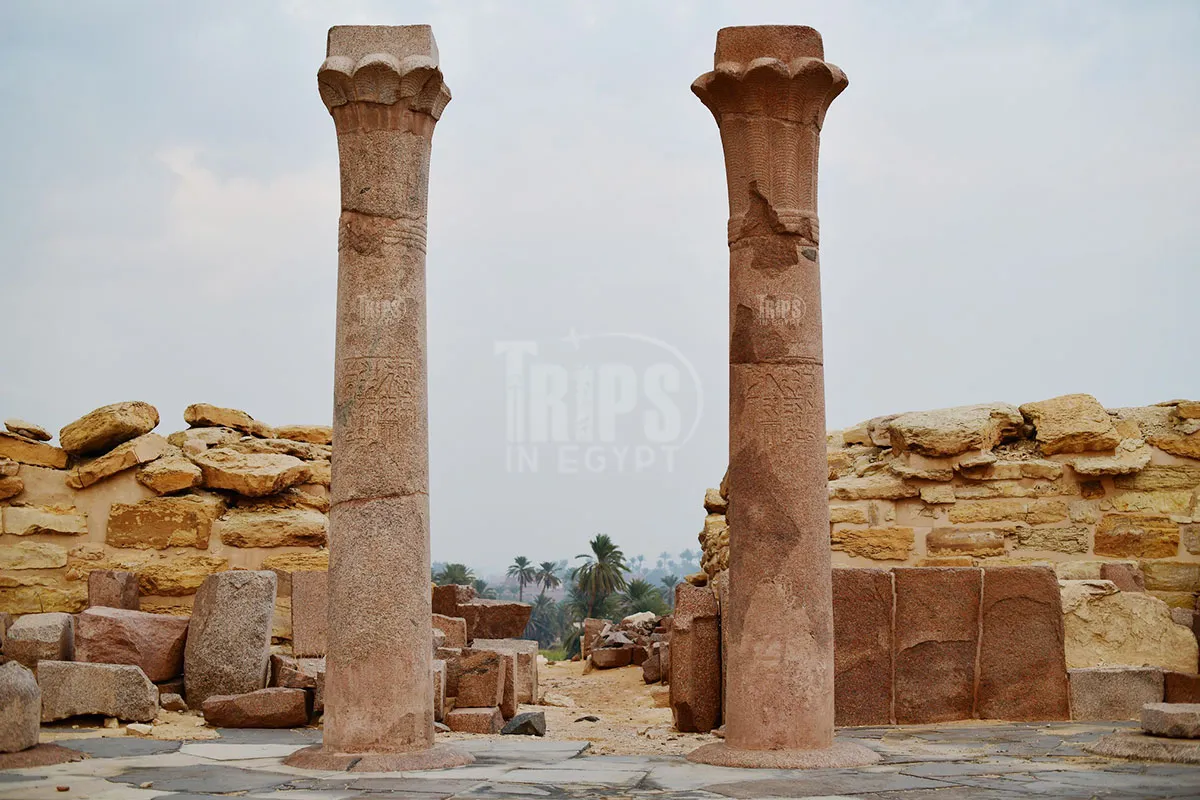
The mortuary temple of the pyramid was an important part of the complex and was used for religious and funeral rituals. The mortuary temple of the Pyramid of Sahure was located on the eastern side of the pyramid, near the entrance to the causeway that led to the valley temple. The temple was a large, rectangular structure with an open court surrounded by columns. It is made of an open courtyard, an entrance hall, an offering hall, a five-niche statue chapel, and storerooms. There are also several smaller structures located near the mortuary temple, including a cult pyramid, a sun court, and a subsidiary pyramid. It holds a number of pillars in the court which have a palm-leaf-shaped capital plus their shafts display the king's name.
Around the 18th dynasty of the old kingdom, the mortuary temple was the center for the Cult of Sekhmet which remained active all the way to the Ptolemaic era in 30 BC. The name of kings like Horemheb, Amenhotep III, Seti I, and Ramesses II are found written are found inscribed across the temple wall. Many roman and optic shrines were found in the temple.
There is the large statue of the pharaoh that stood at the entrance to the temple which was made of red granite and depicted the pharaoh as the god Horus, standing tall and proud with his arms crossed over his chest which is a symbol of the pharaoh's power and his connection to the gods. Inside the mortuary temple, there were several rooms that served different purposes. The offering room was where offerings were made to the pharaoh's ka, while the storerooms were used to store the offerings and other items needed for the temple's rituals. The offering room has many reliefs on the walls which showcases the victories and his voyages. The sanctuary was a small, inner room that housed the pharaoh's statue and was used for more intimate and sacred ceremonies. These structures served different purposes and were used in various religious and funeral rituals.
Substructure of Sahure Pyramid
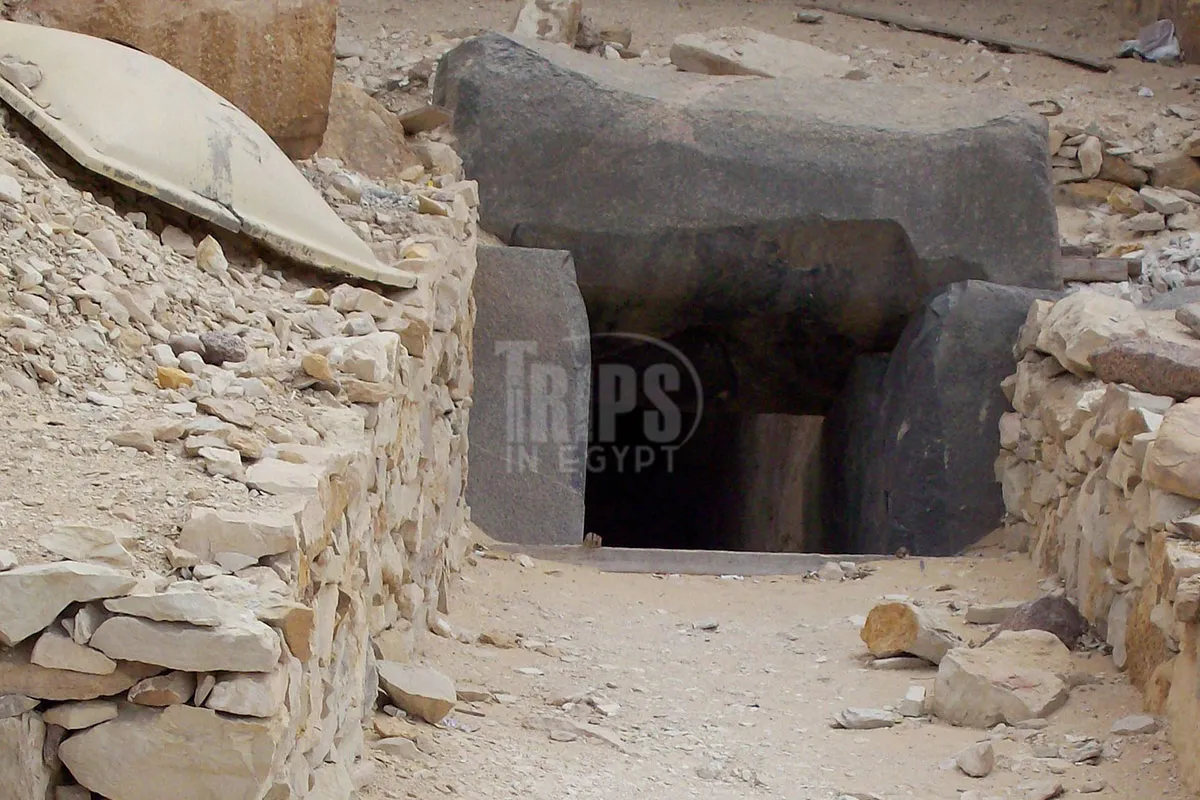
The substructure of the Pyramid of Sahure is composed of a subterranean chamber, a pit, and several tunnels and passages. On the northern face of the pyramid above ground is the entrance to the substructure part of the pyramid. The subterranean chamber is located beneath the pyramid and was intended as the final resting place for the pharaoh's mummy. The chamber is rectangular in shape and has a corbelled roof. The pit is located near the entrance to the subterranean chamber and was used to access the chamber. The substructure of the Pyramid of Sahure also includes a causeway, which led from the pyramid to the valley temple.
Several passages and tunnels lead from the pit to the subterranean chamber. These passages and tunnels were used by the ancient Egyptians to place offerings and other burial goods in the chamber. The passages and tunnels were also used by the workers who built the pyramid to move materials and tools in and out of the chamber.
Valley Temple of Sahure
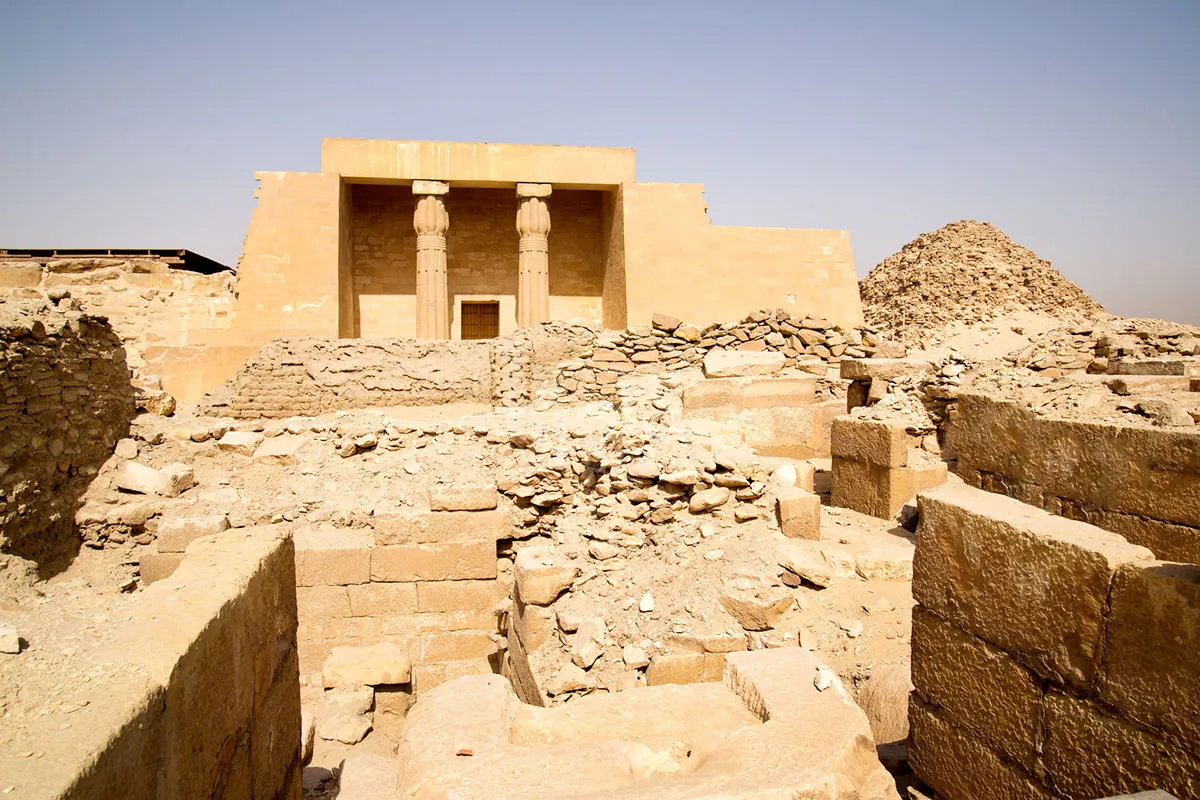
The valley temple is found at the edge of the beautiful lake of Abusir which possess about two landing ramps that face both east and south. The eastern ramp leads all the way up to a marvelous columned portico which possesses a magical roof that is decorated with an epic ceiling of golden stars across a majestic dark blue background. The valley temple contains 8 massive pillars that possess the same design of palm-leaf-shaped capitals which are also found within the mortuary temple.
Causeway to Sahure Pyramid
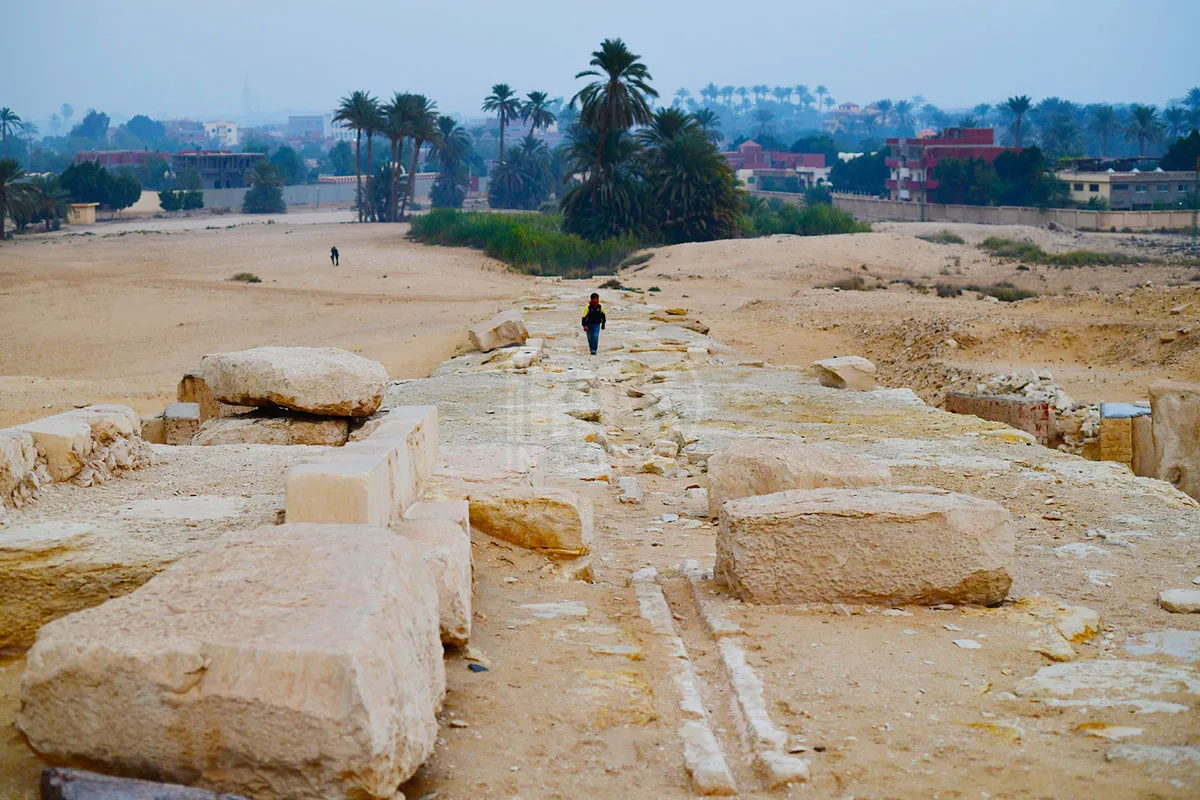
The magical Causeway is a magnificent work of architecture that lead to 235 m and is made of magical limestone decorated with majestic paintings of pure art. It connects the valley temple to the mortuary temple. The limestone slab found in the causeway is able to showcase king Sahure plating a myrrh tree in the garden of his royal palace. The slab is covered and decorated with marvelous scenes across its illuminated walls such as the king in the image of a great sphinx punishing the enemies of Egypt under his power paw plus a number of offering scenes.
Cult Pyramid at Sahure Complex
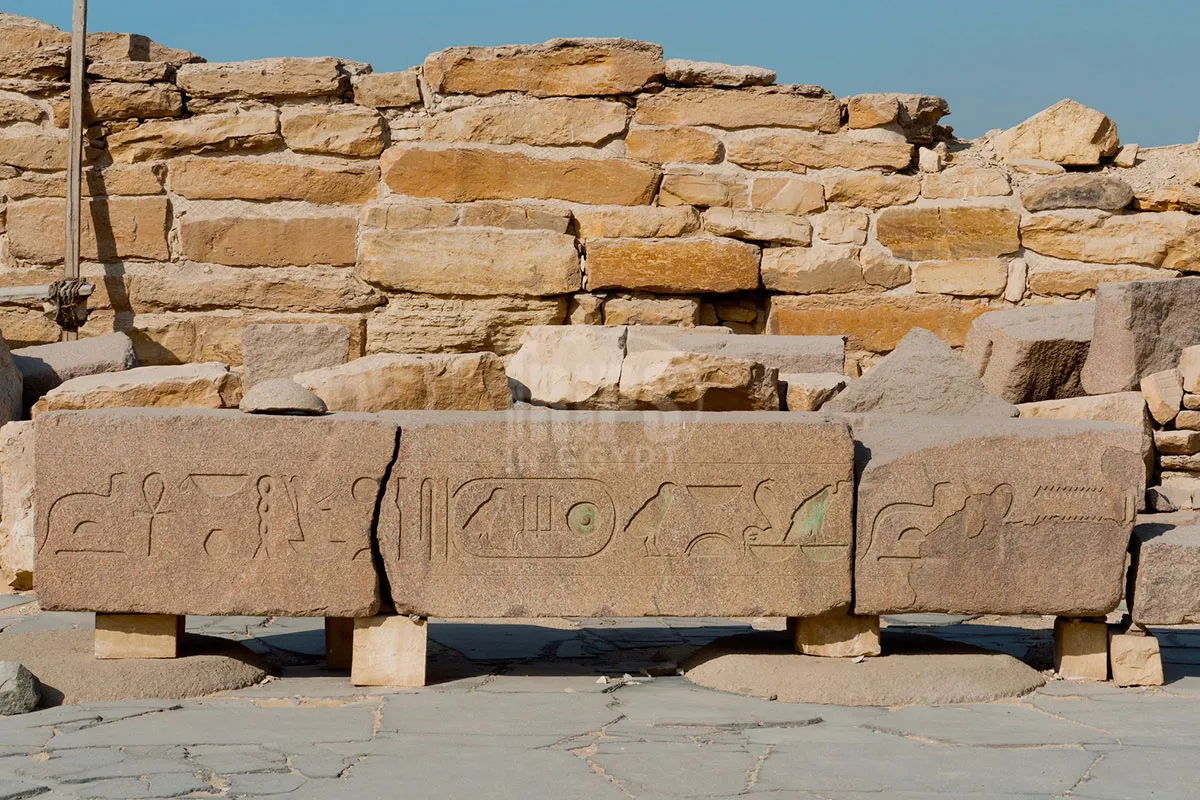
The cult pyramid of the complex is located across the southeast corner of the main pyramid which is completely ruined and used to have a small entrance across the north leading all the way down to the burial chamber. It is a totally symbolic architectural wonder which is made to store the spirit “ ka” of the king and hold all the burial rituals and prepare for the resurrection of the Ka spirit at the time of the festival of Sed.
Conclusion
All our Egypt tour packages and Egypt Nile cruises provide a magical portal leading to the famous and hidden wonders of Egypt that explore all the facts and elements which led to the rise of this golden civilization that stood its ground for over 4500 years.

5 Days Cairo And Hurghada Trip
Amazing 4 Nights Cairo and Hurghada Trip Itinerary 5 Days Cairo and Hurghada trip wil...
- Duration 5 Days / 4 Nights
- Location Cairo & Hurghada
- Type Historical & Recreational Tour
From$690/per person
View Tour
6 Days Cairo, Alexandria & Faiyum Tour
Unforgettable Cairo, Alexandria & Faiyum Adventure in Six Days 6 Days Cairo, Alex...
- Duration 6 Days / 5 Nights
- Location Cairo - Alexandria - Fayum
- Type Historical Tour
From$720/per person
View Tour
10 Days Cairo, Faiyum & Nile Cruise Holiday
Breathtaking 10 Days Journey of A Lifetime in Egypt 10 Days Cairo, Faiyum & Nile...
- Duration 10 Days / 9 Nights
- Location Cairo, Luxor, Aswan & Faiyum
- Type Classic Tour
From$1350/per person
View Tour SOLD OUT
Ultimate 7-Day Egypt Solar Eclipse Experience with Hurghada 2027
Enjoy a 7-Day Egypt Solar Eclipse Tour with Hurghada 2027 6 Nights Egypt Solar Ecli...
- Duration 7 Days / 6 Nights
- Location Cairo / Giza / Luxor / Hurghada
- Type Astronomical Tour
Sold Out
View Details