




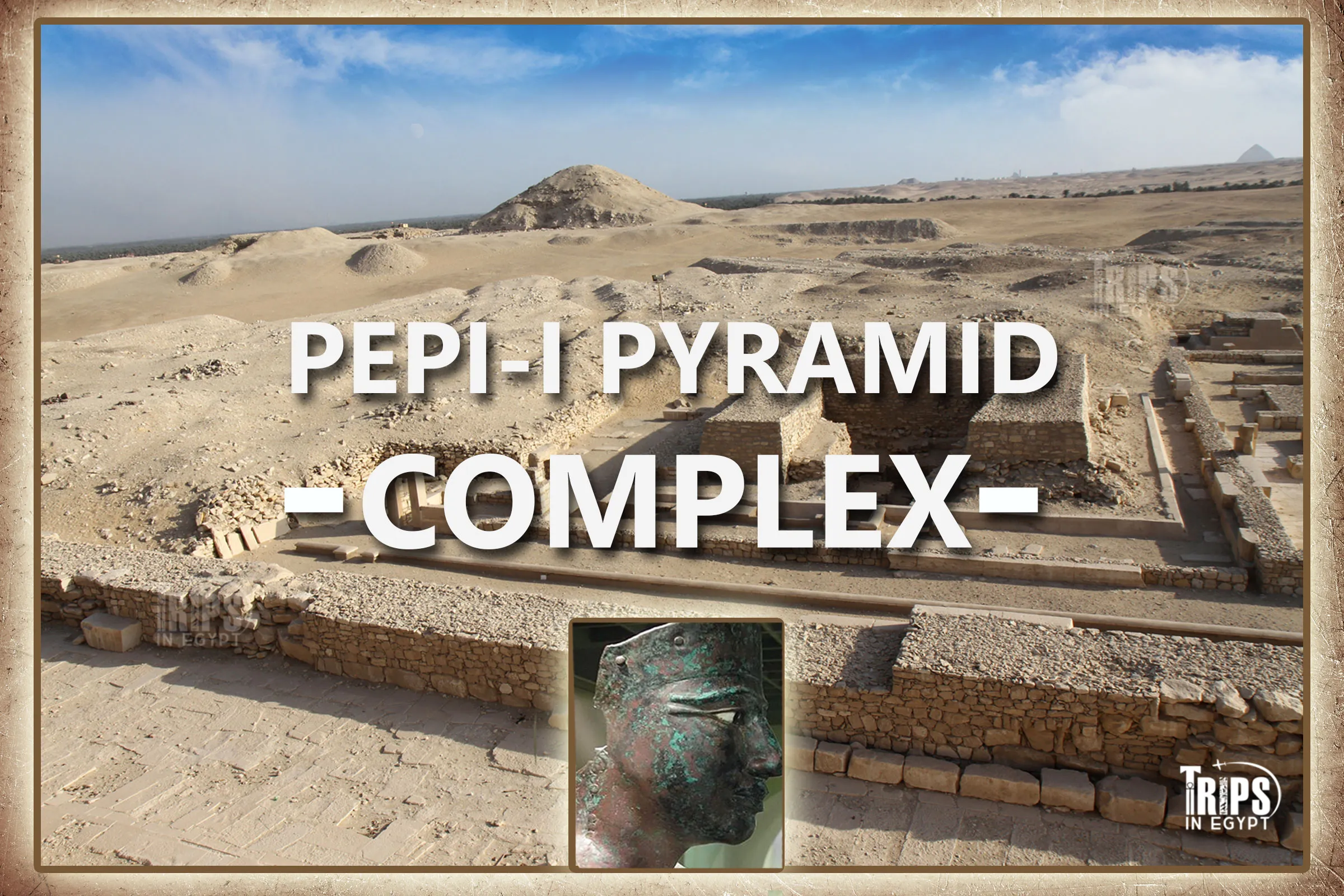
Pepi I Pyramid is the most profound and enriching archaeological findings in all of Egypt as it coveys a plethora and infinite facts which have the force to shed light on one of the most ancient and mysterious time periods. The pyramid of Pepi I is a vital and significant example of the architectural innovations and developments of the Old Kingdom period in ancient Egyptian history. The pyramid is a marvelous piece of artistic architecture that belongs to one of the longest-reigning pharaohs in the history of the ancient Egyptian civilization.
It was filled with a number of priceless monuments and artifacts and more importantly the heavenly pyramids texts. The Pepi I pyramid complex is a true house of riches filled with the greatest examples of architecture and art that reveal the most amazing historical facts. In this article, everyone will explore:
Location & How to Get to the Pepi I Pyramid Complex
This pyramid is dedicated to the first-ever ruler of the 6th dynasty where this pyramid complex was found in southern Saqqara 2.4 km (1.5 mi) north of Djedkare’s pyramid. Pepi I moved his royal palace to the south away from Memphis city. The current location of the pyramid in southern Saqqara is that Teti created his pyramid there as there could have been no space in the small, squalor, and noisy area of central and northern Saqqara. It is 2 hr 6 min just (129.4 km) away from Cairo.
History of Pepi I Pyramid Complex
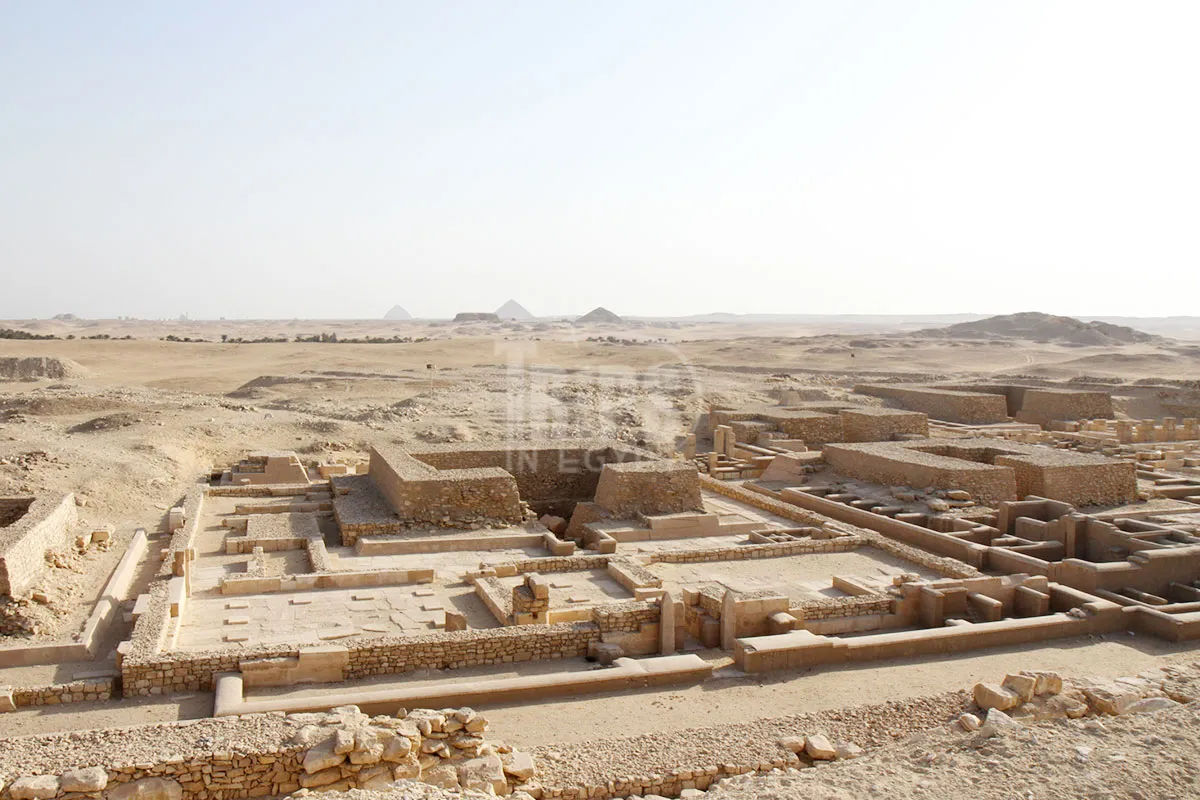
The true limestone pyramid complex of Pepi I held the ancient name of "Men-nefer-Pepi" which is known as "Pepi's splendor is enduring" and "The perfection of Pepi is established". The main architect of the pyramid is his vizier Inenek-Inti who constructed the complex in the Sixth Dynasty between the 24th and 23rd centuries BC.
The pyramids complex of Pepi I is known to have been given the name of Memphis the capital city of Egypt. In 1880, the vertical columns within the complex were discovered by Gaston Maspero which are covered by a number of hieroglyphic texts which is known as the pyramid texts which is made of 2,263 columns and lines of hieroglyphs dating to the old kingdom (2700–2200 BC) plus a similar version was found within the pyramid of Unas.
The Substructure of Pepi I Pyramid Complex
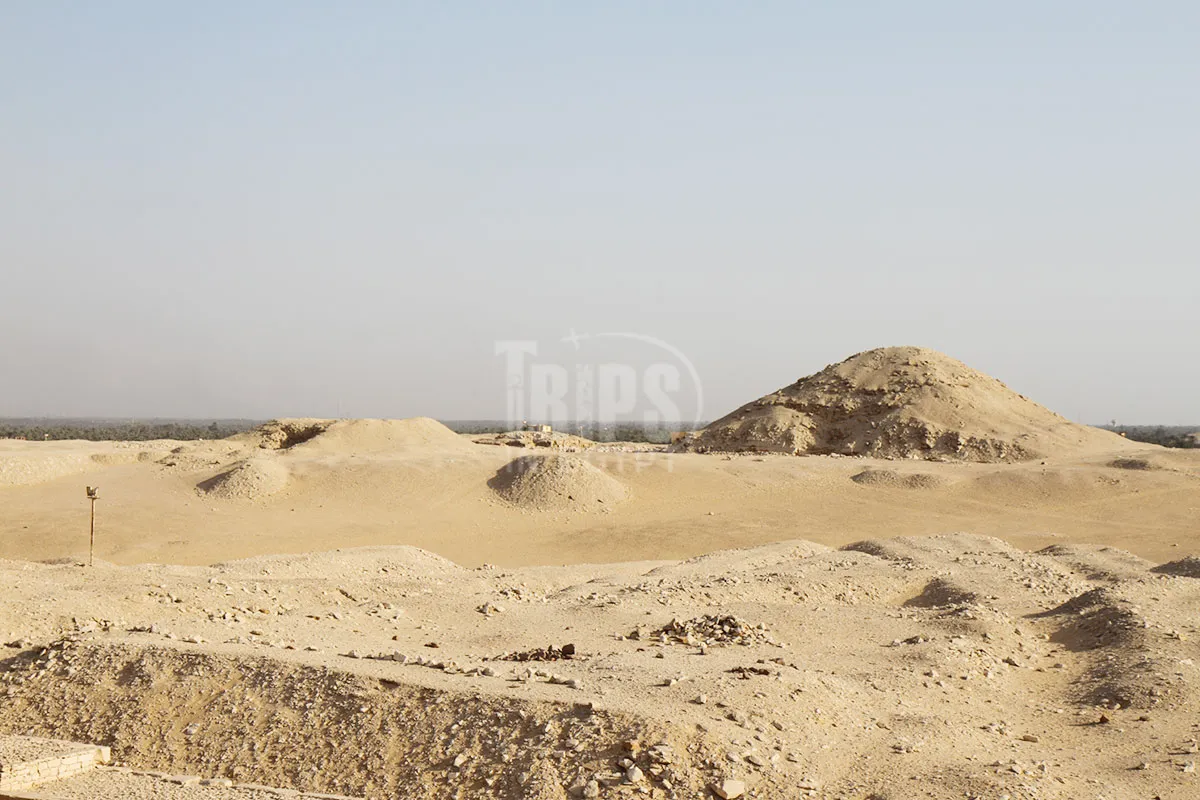
The pyramid of Pepi I was part of a larger complex that included a mortuary temple, a valley temple, and several smaller pyramids for Pepi's queens. The complex was located in the city of Saqqara, near the golden capital city of Cairo which was a major center of the Egyptian cult of the dead and a site of numerous pyramids and other religious monuments.
The majestic Construction of the Pyramid of Pepi I was a significant architectural feat of its time and reflected the political and economic power of the pharaoh plus inspired the creation of the golden age of pyramids construction. The pyramid was built using traditional techniques, including the use of mud brick and limestone. Its original height was likely around 60 meters, making it one of the largest pyramids of its time.
The substructure of the Pyramid of Pepi I was designed to be a complex maze of chambers, passages, and stairways, meant to deter tomb robbers and ensure the pharaoh's burial goods remained secure.
The Pyramid of Pepi I began with a subterranean chamber that was carved into the rock beneath the pyramid. This chamber was likely used for the storage of the pharaoh's sarcophagus and other burial goods. From the underground chamber, a vertical shaft led to the burial chamber, which was located above ground. The burial chamber was lined with fine white limestone and was likely the final resting place of the pharaoh's mummy.
An ascending passage led from the subterranean chamber to the burial chamber and was likely used by the pharaoh's soul to reach the afterlife. The walls of the substructure's chambers and passages were decorated with scenes from Egyptian mythology and inscriptions honoring the pharaoh, reflecting the belief that the afterlife was a continuation of life on earth. Despite its elaborate design, the substructure of the Pyramid of Pepi I was vulnerable to tomb robbers, and many of the pharaoh's burial goods were likely looted in ancient times.
Pyramid Texts of Pepi I
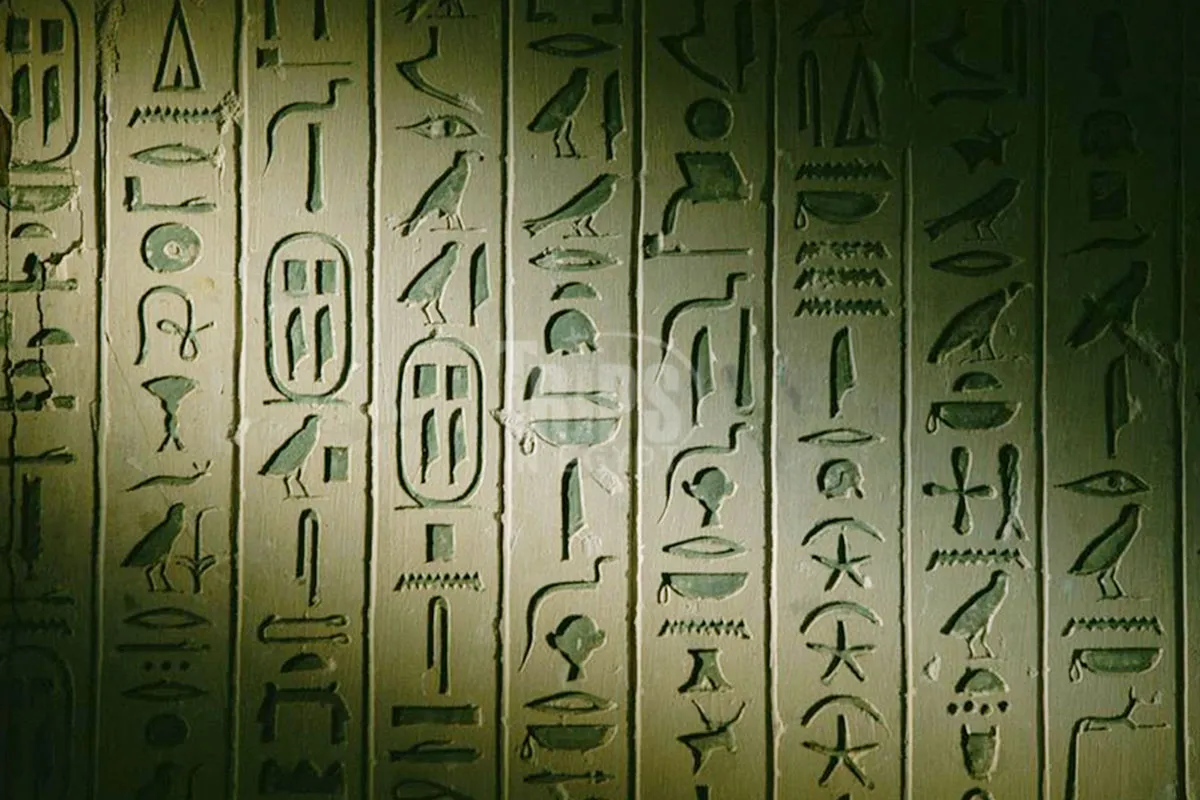
The pyramid's texts were the keys to ultimate protection and the way to the afterlife. These traditional symbols were very popular in the old kingdom and used by kings and queens from the 6th to the 8th dynasty. the pyramid texts are made of 2,263 incredible columns filled with texts and lines of hieroglyphs dating to the old kingdom (2700–2200 BC). The pyramid texts were made according to an ancient Egyptian belief which states that everyone is made of three elemental parts which are the body, the ba, and the ka. They believed that the soul was divided into two parts "The Ka and Ba" and when a person dies, the ka return to the ka while the ba stays within the body.
When the body is transformed into a mummy and placed into a chamber room then the ba is awakened from the body and then begins its quest to a new place in the sky where the sun rises, a place of resurrection known as "The Horizon Akhet" which is found between the boundaries between the earth, the sky, and the underworld "Duat". In the Akhet, the soul is transformed into the Akh which is known as an "Effective Being" which was resurrected from the mummy through ritual performance and individual action. This astral funerary literature was able to provide eternal life with the golden gods of Egypt. Within the burial chamber is a number of texts dedicated to the ancient Egyptian gods & goddesses Horus, Osiris, Nut, Isis, and Nephthys. The burial chamber is made of Insignia and the Offering Rituals plus a resurrection ritual.
Across the passageway between the antechamber and the burial chamber are several inscribed four spells across the south and north walls. In the antechamber are the images of inscriptions dedicated to the transition process from a mortal human into a celestial realm and on its east wall are spells that offer protection to the king. The morning ritual is inscribed into the passage of the serdab. there is a protective spell made especially for his tomb. In the horizontal corridor are three sections of texts which narrate the king’s ascending to the sky to unite with Re.
The Content of Pepi I Pyramid Complex
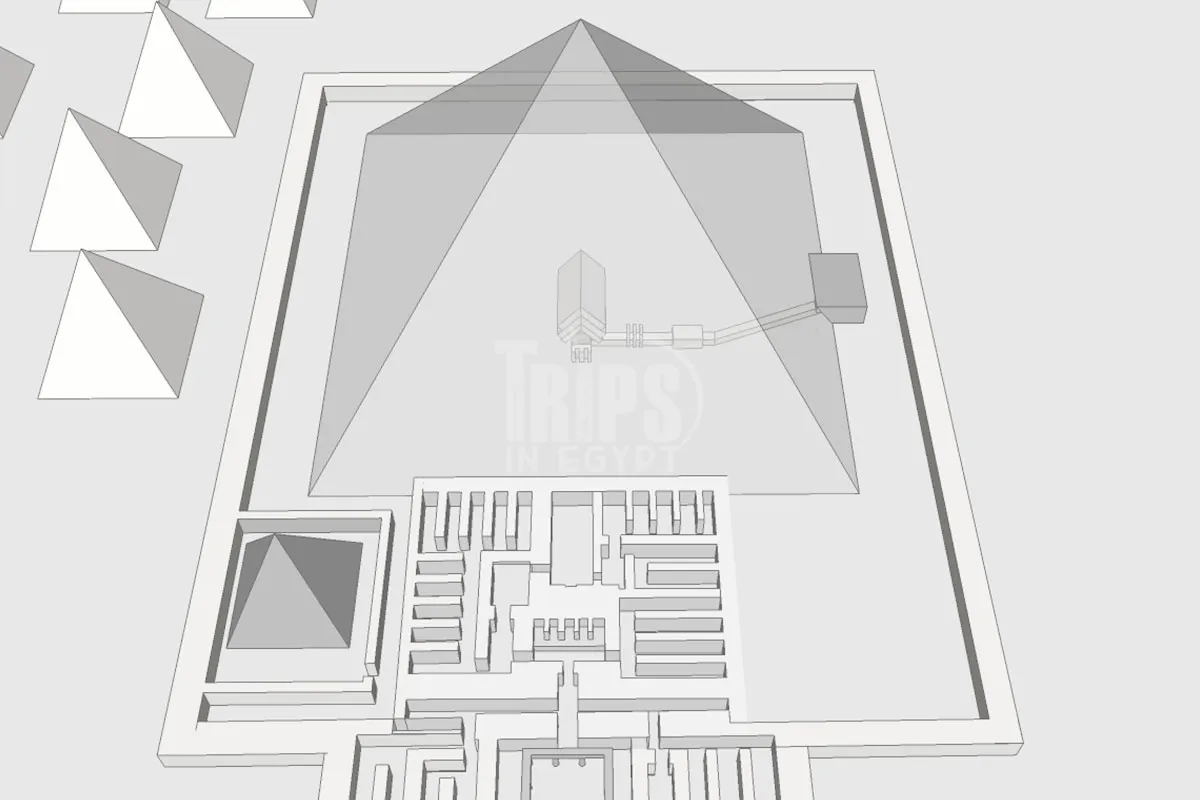
The complex of the Pyramid remains somewhat preserved offering a chance to extract a number of important facts and admire the creativity behind ancient Egyptian architecture. Here are the main components of the Pepi I pyramid complex:
Valley & Mortuary Temples
The marvelous valley temple, causeway, and pyramid town are just a few meters away located very close to the mortuary temple which has not been excavated until today.
The Magnificat mortuary temple of Pepi I pyramid complex was damaged who took off the limestone blocks in order to construct a number of other archaeological marvels. The temple was located near the Pyramid of Pepi I, which was part of the larger necropolis of Saqqara, located in the suburbs of Memphis, Egypt.
The exact location of Pepi I's mortuary temple is not known, but it was likely built near the base of the pyramid and served as a place for the pharaoh to be worshipped and for religious rituals to be performed. The temple has a majestic entrance hall leading to a marvelous open columned courtyard and within it is a chapel featuring five statues. Within the mortuary temple are an offering hall and many incredible chambers.
Cult Pyramid
The cult pyramid is by far the most preserved archaeological creation which holds a number of ruins of stelae, statues, and offering tables used in the Middle Kingdom (2030 - 1650 B.C). The cult pyramid was completely ruined in the new kingdom (1570 – 1050 BC). It held a burial chamber which held a symbolic value as it held the Ka of the Pharaoh. The cult pyramid was used to perform a number of ritual performances which were used to resurrect the ka spirit’s burial and for the king’s resurrection at the time of the Sed Festival.
Queens' Pyramids and Other Significant Structures
In 2017, a number of 9 pyramids were found on the southwest of Pepi I’s complex which belongs to a number of queens which belong to Inenek-Inti, Nebuunet, Ankhesenpepi II, Meritites IV, Ankhesenpepi III, Pyramid of Mehaa and Hornetjerikhet’s tomb, Reherishefnakht, Behenu, and a nameless pyramid. The queens’ pyramids of Pepi I are known to be the most significant creations within the complex which are:
The Pyramid of Nebuunet
The Pyramid of Nebuunet was a pyramid built in ancient Egypt for the burial chamber of Nebuunet the wife of Pepi I who lived during the 5th Dynasty (2498-2345 BCE). The pyramid is not well known and has not been extensively studied, but it is believed to have been a relatively small, limestone structure with a simple design. It has a base length of 20.96 m (68.8 ft; 40.00 cu) and 21 m (69 ft; 40 cu) of total height.
The sarcophagus is made of pink granite and located in the substructure plus within the burial chamber are ruins of funerary equipment which include a wooden ostrich feather that looks like the feather of Maat and the cylindrical wooden weight. The complex of the pyramid has a number of decorations as seen across the entrance limestone door which faces Pepi I’s pyramid that leads into an open courtyard. Her name is engraved across the complex.
Pyramid of Behenu
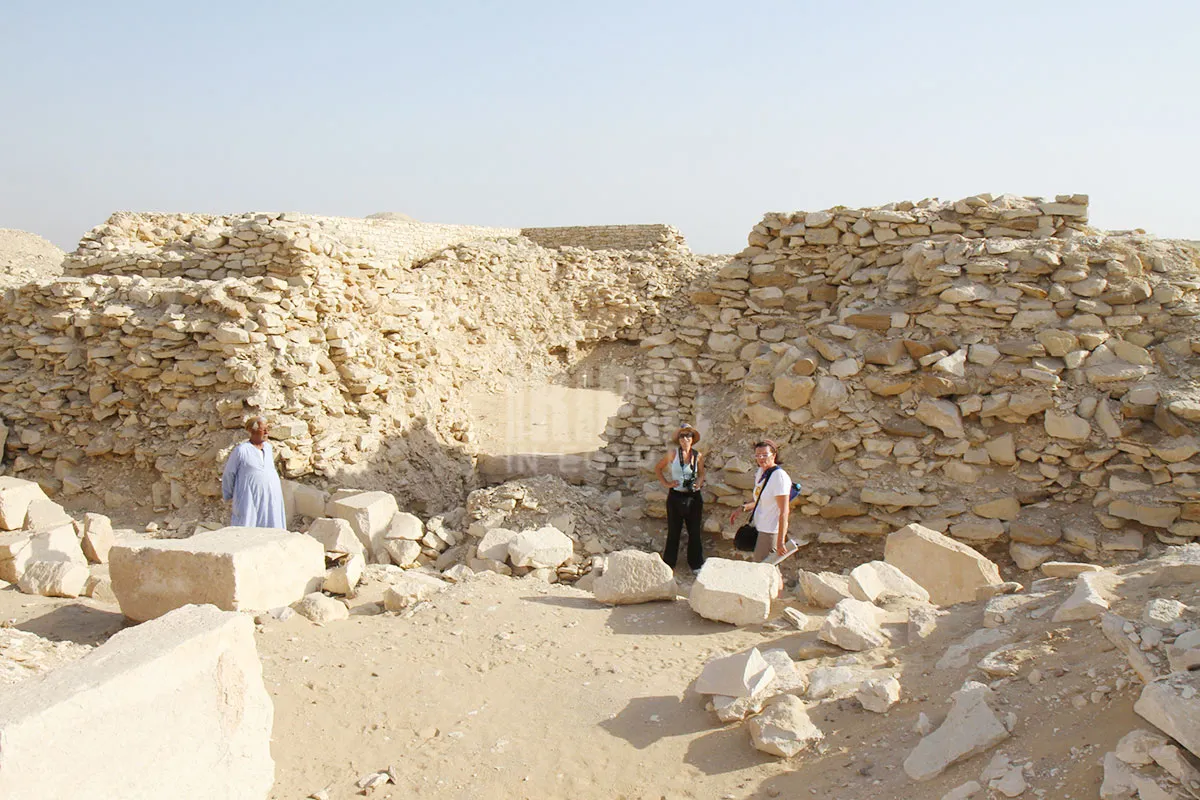
Behenu was the wife of Pepi I which is known to be the second-largest Queens’ pyramid in the necropolis after the pyramid of Ankhesenpepy II. Many decorations are found across the burial chamber and the sarcophagus which holds red and black painted renditions of the royal palace façade with some inscriptions.
There is a courtyard with two entrances and a number of rooms such as the statue chapel and the offering hall. The courtyard holds the cult pyramid which has a base length of 5.5 m (18 ft; 10.5 cu). There are a number of statues that shows her wearing a wig and with in-laid eyes plus an offering table.
Pyramid of Inenek-Inti
Inenek-Inti was a wife and main vizier of Pepi I which has a base length of 21 m (69 ft; 40 cu) of base length with 21 m (69 ft; 40 cu) of total height. There is a greywacke sarcophagus located on the west side of the burial chamber. It is filled with a number of ruins and funerary equipment like stone hardware which comes in different colors. Her name and titles are engraved across the mortuary temple and across the pillars. There are also a number of statues located within the offering room and the courtyard.
The Western Pyramid
The western pyramid belongs to the eldest daughter of the king which holds 20 m (66 ft; 38 cu) of base length. Within the burial chamber are the remains of funerary equipment which include wooden weights, copper fish hooks, ostrich feathers, and fired-clay vessels. There are a number of relief ruins found across the pyramid complex.
Pyramid of Meritites IV
Meritites IV was a wife of Pepi I and is found south of the "Western Pyramid" which is 21 m (69 ft; 40 cu) in base length. The titles, identities, and images of the queen are decorated all over the substructure of the chamber walls. Her complex pyramid is found across the pyramids of Ankhesenpepi II to the west, the Western pyramid to the north, and Inenek-Inti to the east.
Pyramid of Ankhesenpepi II
Ankhesenpepi II was a wife of Pepi I and mother to Pepi II and her pyramid has a base length of 31.4 m (103 ft; 59.9 cu) which is the second largest pyramid behind the pyramid of Pepi I. Within the burial chamber is a massive dressed basalt sarcophagus. Her name is found on the sides of the sarcophagus and lid which identify her as the mother of the king and daughter of Geb and Nut. She was identified as the wife of Merenre I after the death of her husband Pepi I.
Pyramid of Reherichefnakht
Pyramid of Reherichefnakht dates to the 11th dynasty and is by far the oldest pyramid made for nonroyal members on a base length of 13.12 m (43.0 ft; 25.04 cu) which is made of limestone blocks taken from nearby monuments. The remains of stelae, door stop offering tables, lintel, and many of which hold names which were located in the heart of the pyramid. Within the pyramid are a number of Pyramid Texts and Coffin Texts which date back and exhibit the link between the Old Kingdom and the Middle Kingdom of ancient Egypt.
Pyramid of Ankhesenpepi III
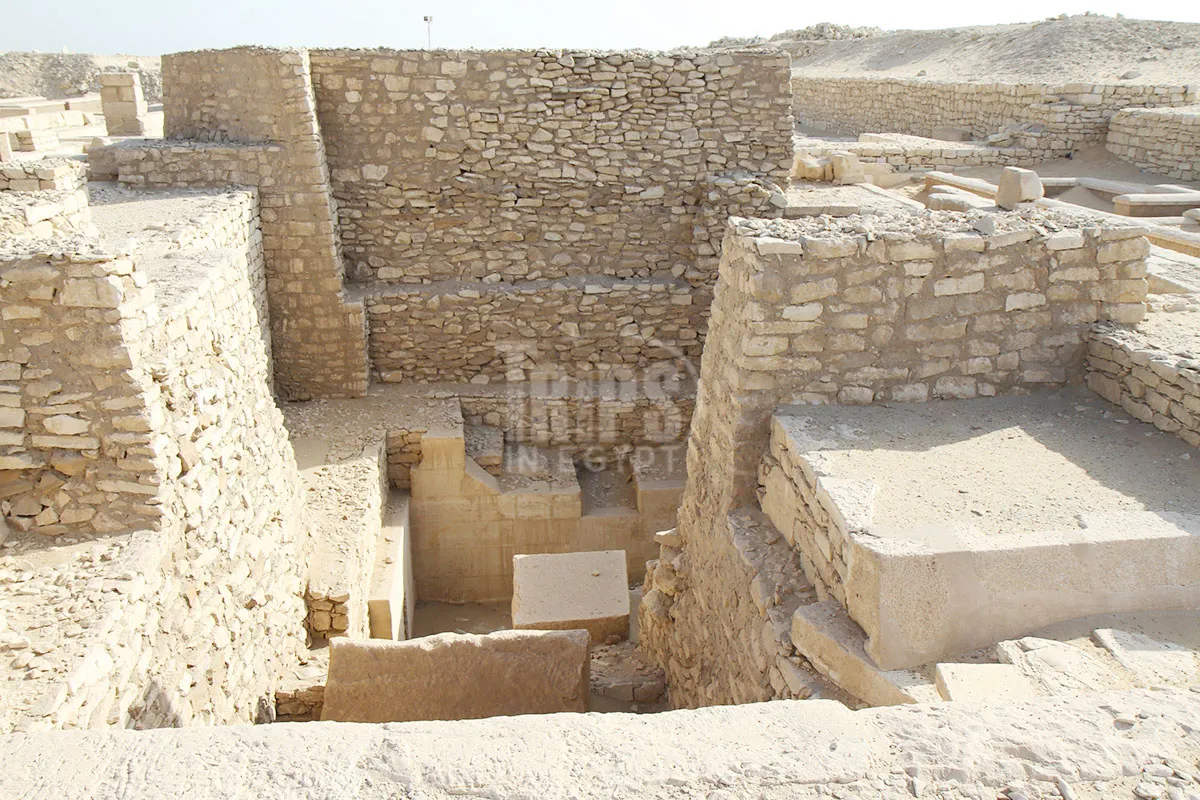
Ankhesenpepi III was a daughter of Merenre I Nemtyemsaf and a wife of Pepi II is found north of Ankhesenpepi II’s pyramid. It is the smallest of the Pepi I pyramid’s complex which has a base length of 15.72 m (51.6 ft; 30.00 cu). The badly damaged burial chamber has a painted sandstone sarcophagus with a lid granite which resembles a royal palace façade plus it holds her titles and name. There is a burial chamber at the western side of the funerary complex that belongs to Ankhnes the owner of the burial who used to be a priestess of Hathor of Ankhesenpepi III.
Pyramid of Mehaa and Hornetjerikhet’s Tomb
Mehaa was the wife of Pepi I who was buried in this epic pyramid which is found at the "Queen’s street" end. The pyramid holds the image and titles of the son of Pepi I Prince Hornetjerikhet.
Conclusion
Our Egypt trip packages and Nile River cruises will provide the magical chance to live the adventure of dreams and cast your eyes on the magnificent wonders of Egypt that stood the test of time for over 4000 years which will shed light on the rise and fall of one of ancient Egypt’s greatest Pharaohs.

5 Days Cairo And Hurghada Trip
Amazing 4 Nights Cairo and Hurghada Trip Itinerary 5 Days Cairo and Hurghada trip wil...
- Duration 5 Days / 4 Nights
- Location Cairo & Hurghada
- Type Historical & Recreational Tour
From$690/per person
View Tour
6 Days Cairo, Alexandria & Faiyum Tour
Unforgettable Cairo, Alexandria & Faiyum Adventure in Six Days 6 Days Cairo, Alex...
- Duration 6 Days / 5 Nights
- Location Cairo - Alexandria - Fayum
- Type Historical Tour
From$720/per person
View Tour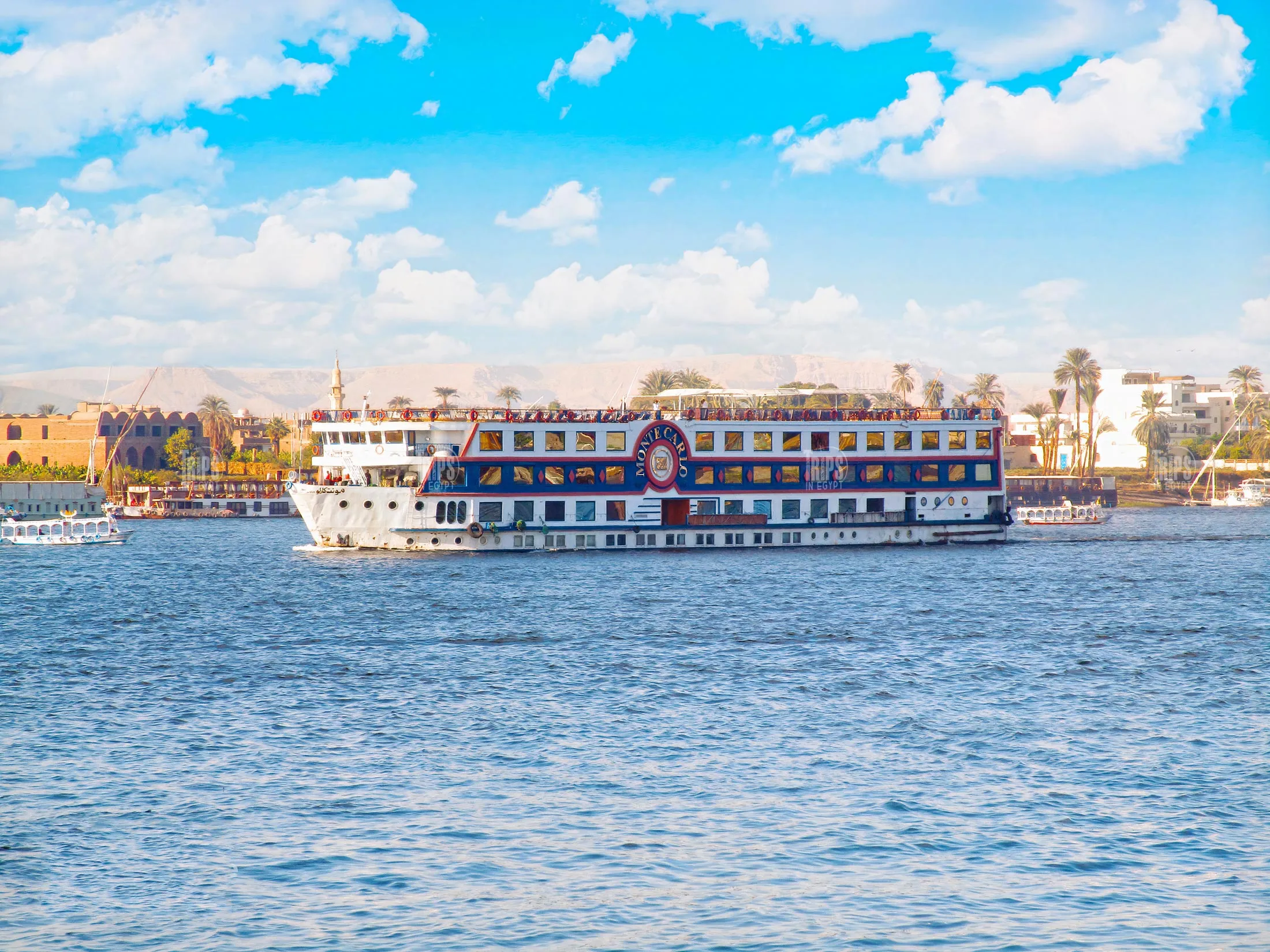
10 Days Cairo, Faiyum & Nile Cruise Holiday
Breathtaking 10 Days Journey of A Lifetime in Egypt 10 Days Cairo, Faiyum & Nile...
- Duration 10 Days / 9 Nights
- Location Cairo, Luxor, Aswan & Faiyum
- Type Classic Tour
From$1350/per person
View Tour SOLD OUT
Ultimate 7-Day Egypt Solar Eclipse Experience with Hurghada 2027
Enjoy a 7-Day Egypt Solar Eclipse Tour with Hurghada 2027 6 Nights Egypt Solar Ecli...
- Duration 7 Days / 6 Nights
- Location Cairo / Giza / Luxor / Hurghada
- Type Astronomical Tour
Sold Out
View Details