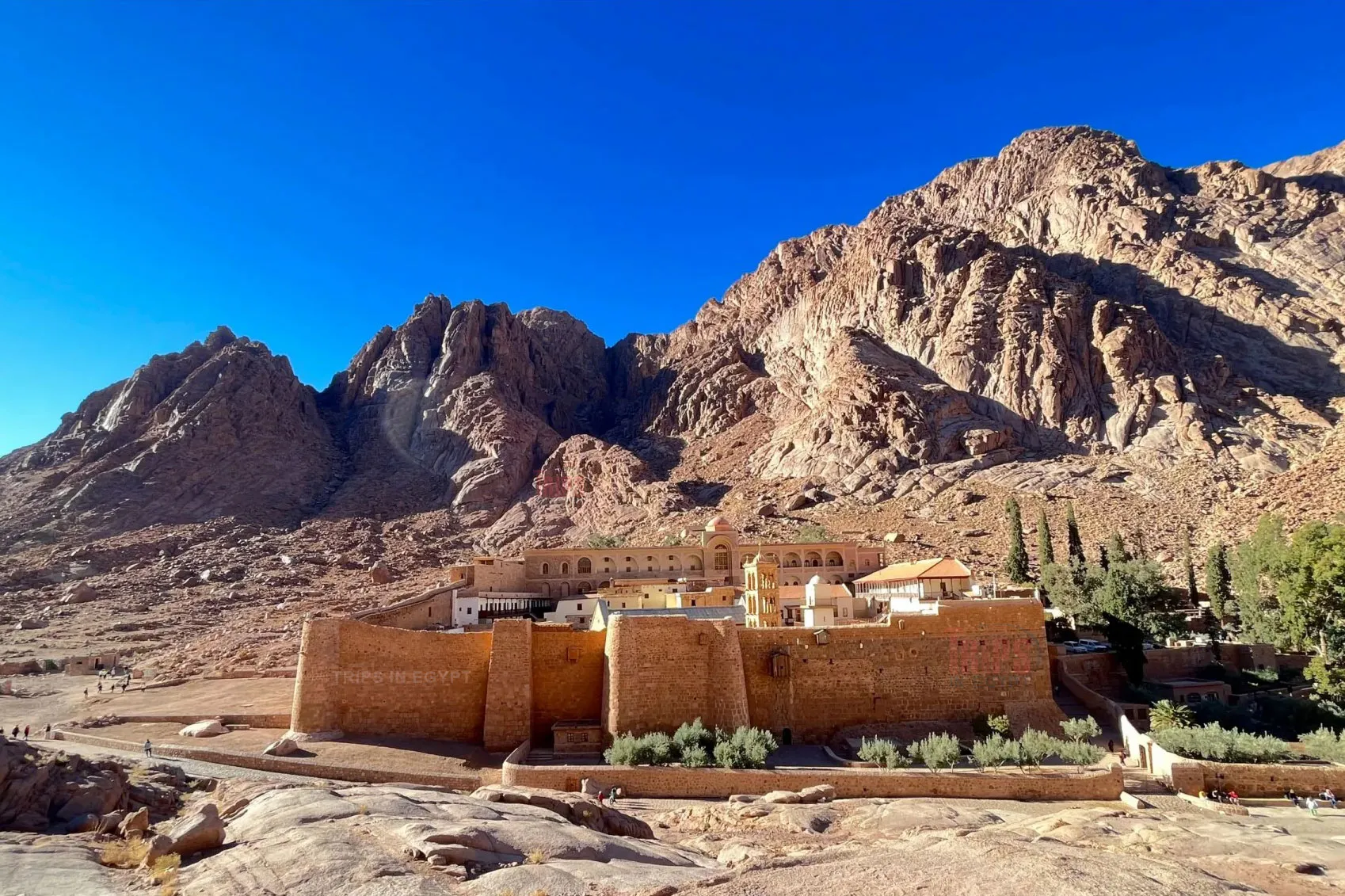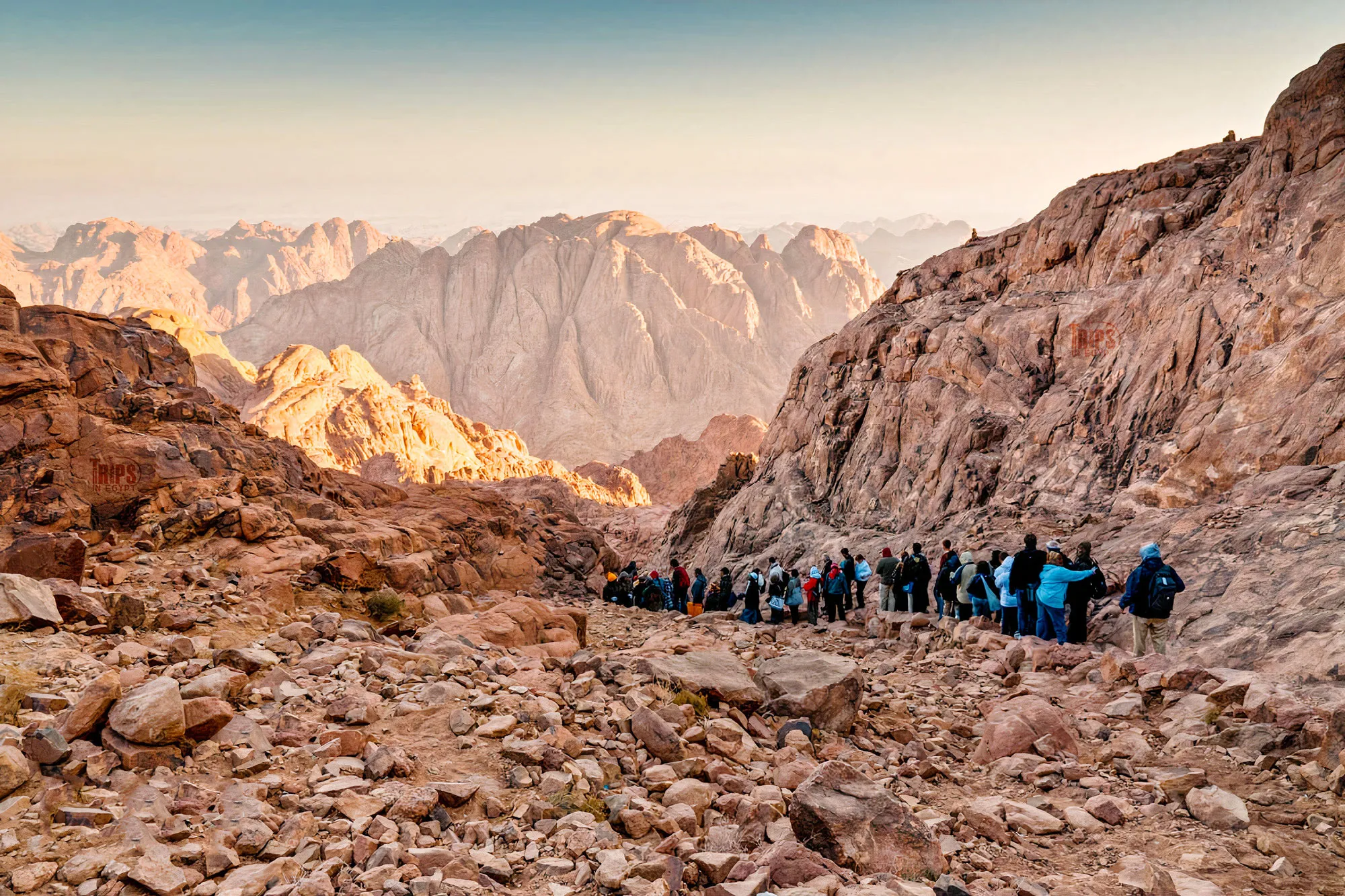




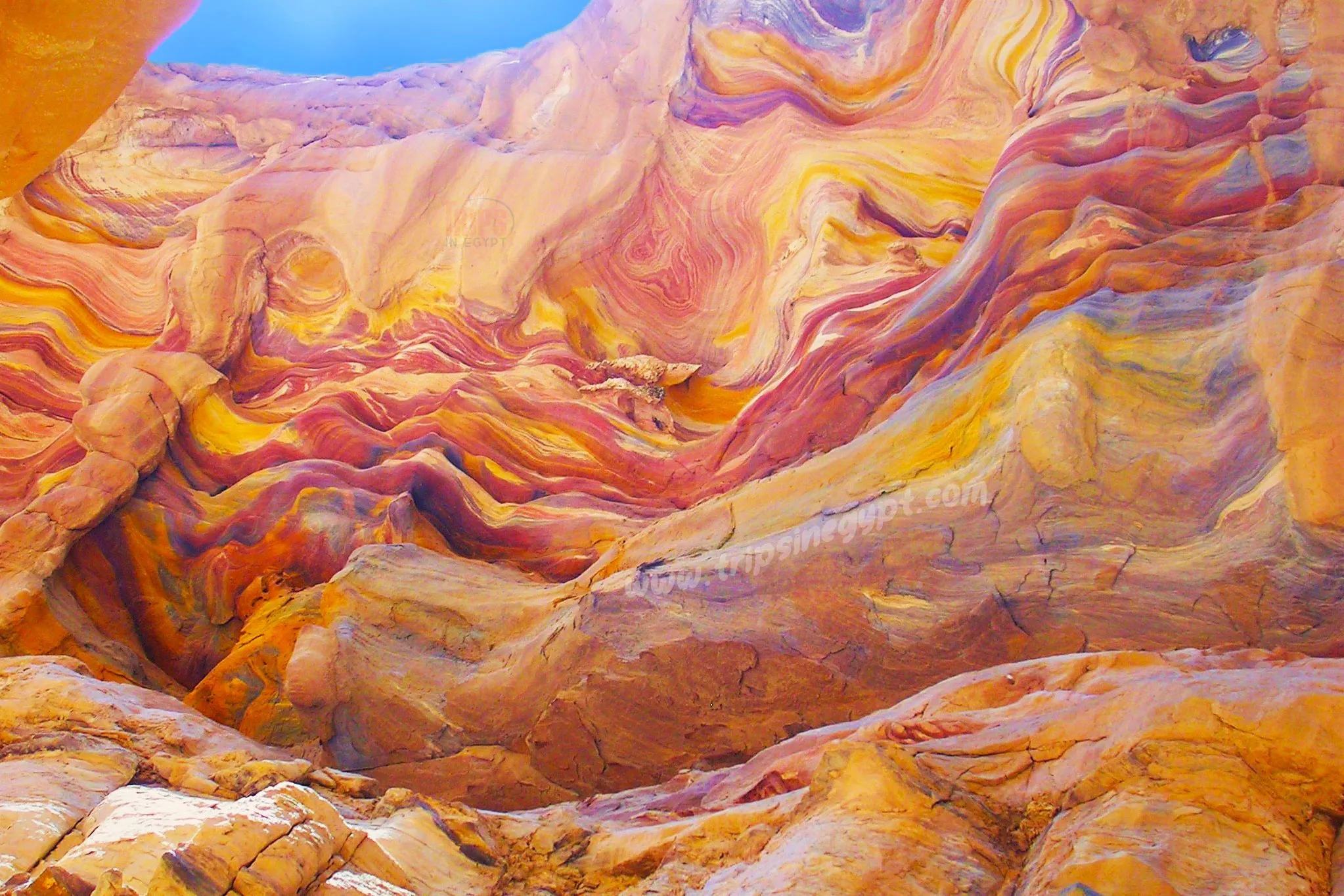
Walls of red, gold and violet rock close in until you can touch both sides: this is the Colored Canyon in Egypt. Hidden in the mountains of South Sinai near Nuweiba, the canyon is about 800 meters long, with walls up to 40 meters. This guide explains where it is, how it formed, how to get there from Dahab, Nuweiba or Sharm El Sheikh, and how to enjoy the hike.

Location of the Colored Canyon in Egypt
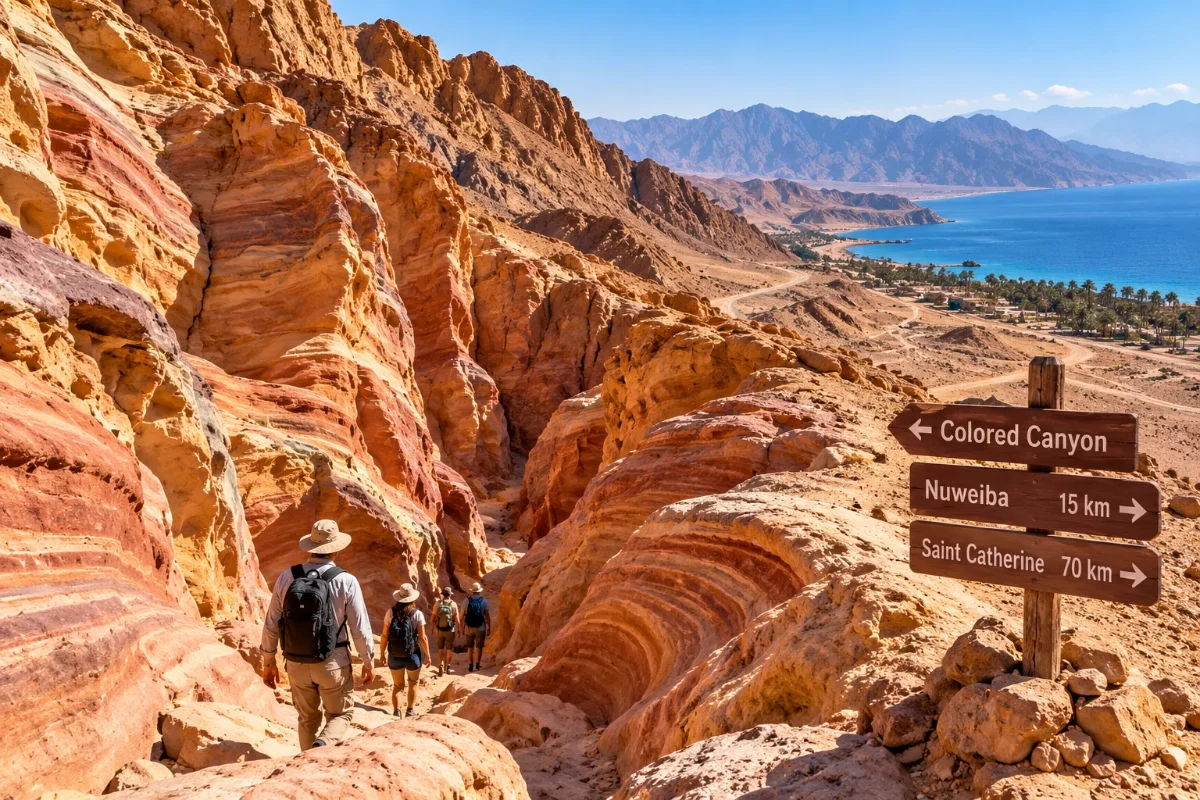
The Colored Canyon lies in the South Sinai Governorate, in the east of the Sinai Peninsula. It sits inland from the Gulf of Aqaba coast, between the towns of Nuweiba and Saint Catherine.
Is There a Colored Canyon in Sinai?
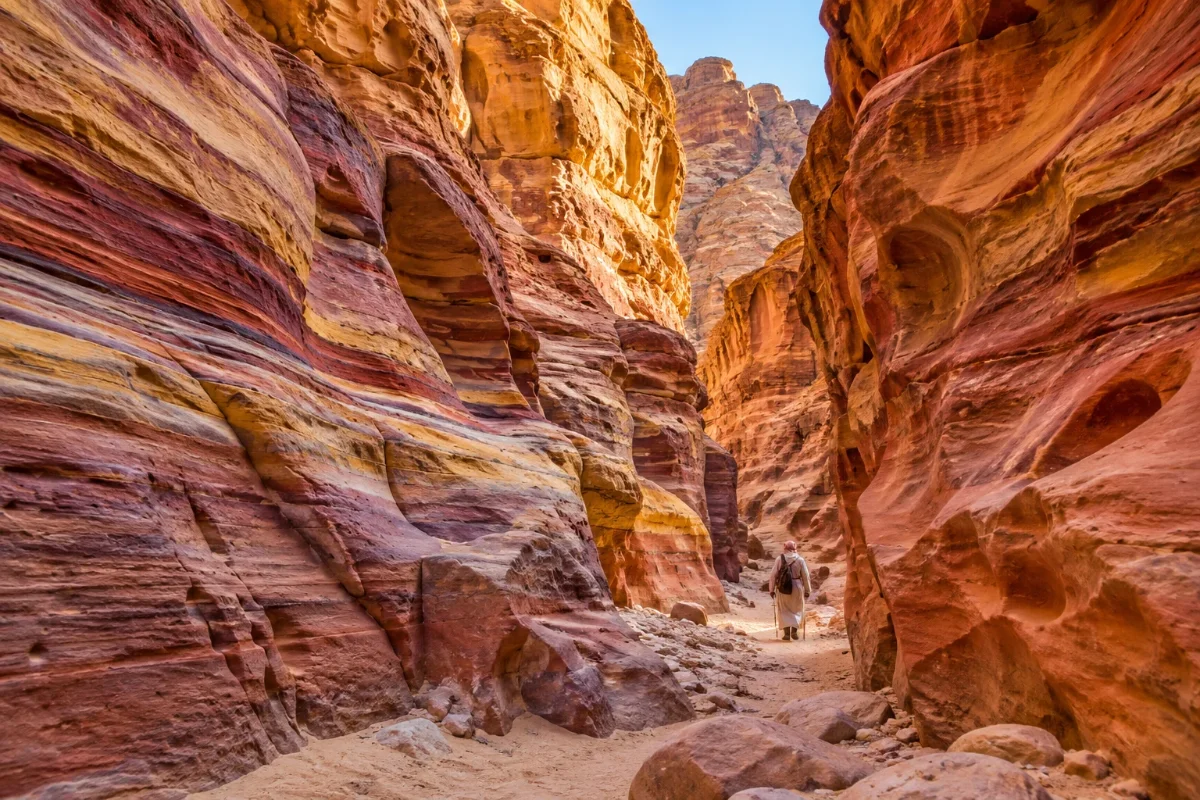
Yes. The Colored Canyon is one of the best-known natural sights of Sinai. It is a narrow gorge cut into sandstone, where layers of red, orange, yellow, purple and white rock twist along the walls like brushstrokes.
It is often compared to Petra in Jordan, but no one carved it. Everything you see was shaped by wind and water. Some travelers call it the "Grand Canyon of Egypt", although it is far smaller and much narrower.
What Does the Word Canyon Mean?
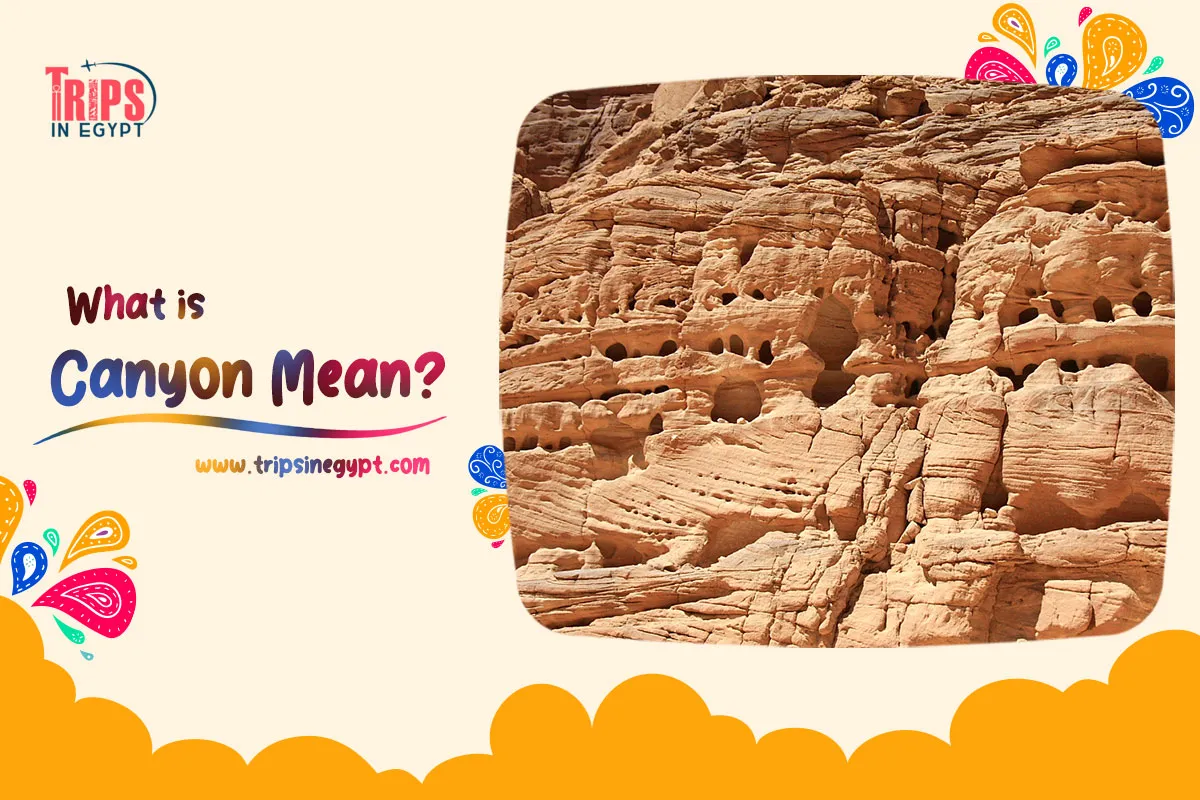
A canyon is a deep, narrow valley with steep sides, usually cut by a river or by floodwater over a very long time. The word comes from the Spanish cañón, which means "tube" or "pipe".
The canyon was cut along a wadi, the Arabic word for a dry riverbed that fills with water only after rare rains.
Colored Canyon in Egypt Facts
|
Fact |
Detail |
|
Location |
South Sinai, inland from Nuweiba |
|
Length |
About 800 meters |
|
Height of the walls |
Up to about 40 meters |
|
Narrowest point |
Less than 1 meter in places |
|
Rock |
Mainly sandstone, colored by iron and manganese minerals |
|
Walking time |
About 1 to 2 hours |
|
Best season |
October to April |
|
Best time of day |
Morning |
Colored Canyon in Egypt Map and Distances
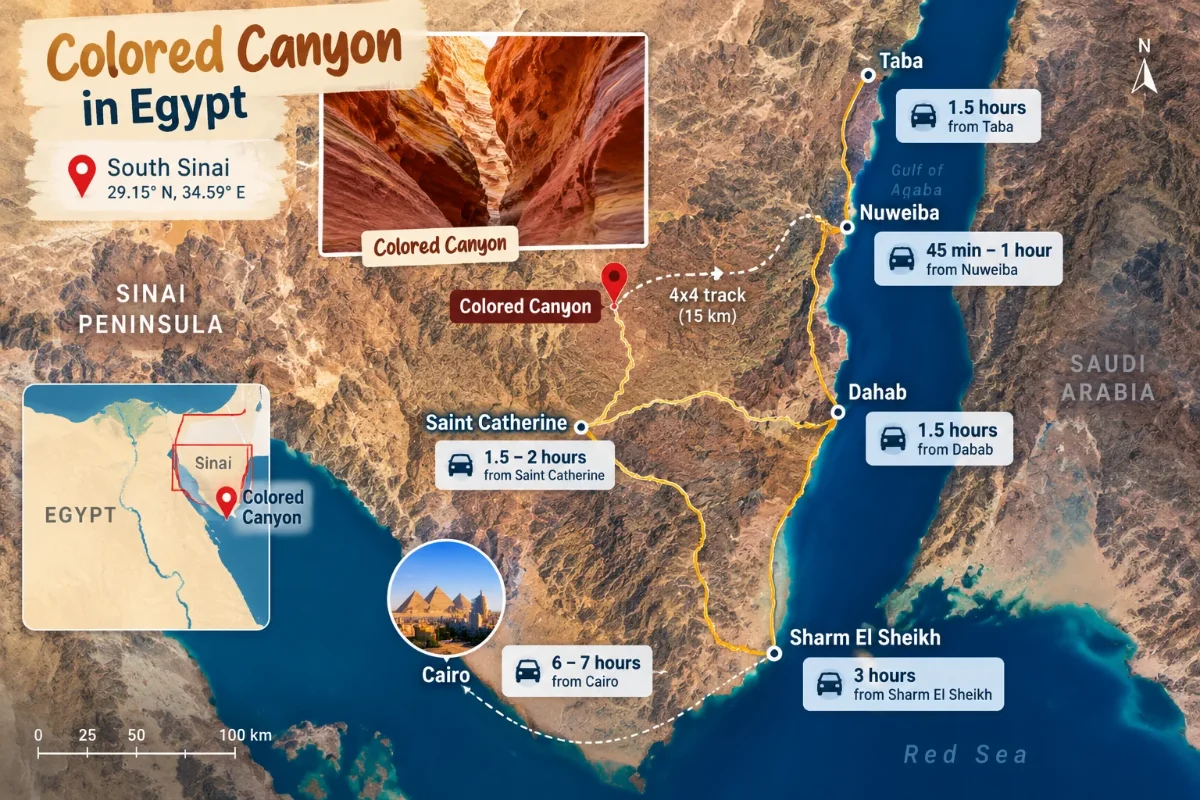
On a map, the Colored Canyon sits at about 29.15° N, 34.59° E, roughly 15 kilometers west of Nuweiba in a straight line. The last part of the route is a rough desert track, so the final approach is by 4x4.
The map below shows the canyon's location:
|
Starting Point |
Approximate Drive Time |
|
Nuweiba |
45 minutes to 1 hour |
|
Dahab |
About 1.5 hours |
|
Taba |
About 1.5 hours |
|
Saint Catherine |
About 1.5 to 2 hours |
|
Sharm El Sheikh |
About 3 hours |
|
Cairo |
About 6 to 7 hours |
Drive times are rough and depend on checkpoints, the road and the 4x4 track.
History and Geology of the Colored Canyon
The story of the Colored Canyon began millions of years before people arrived. Its rocks record ancient seas, rivers and deserts, and its passages have long been known to the Bedouin.
History of the Colored Canyon
For centuries, the canyon was known mainly to the Bedouin of South Sinai, whose tribes, including the Tarabin and Muzeina, have lived in these mountains for generations. They used the wadis of the area as routes for travel, grazing and trade.
The canyon stayed relatively unknown to outsiders until adventure travelers and tour guides began bringing visitors in recent decades. Today, Bedouin guides from nearby camps lead most visits, and the canyon is an important source of income for local families.
The Bedouin Legend of the Canyon
Local folklore tells of two giant rocks that once fought each other, with one hurling stones at the other until the land split open. The story is a legend, not history, but it shows how deeply the canyon is woven into Bedouin culture.
Geology of the Colored Canyon
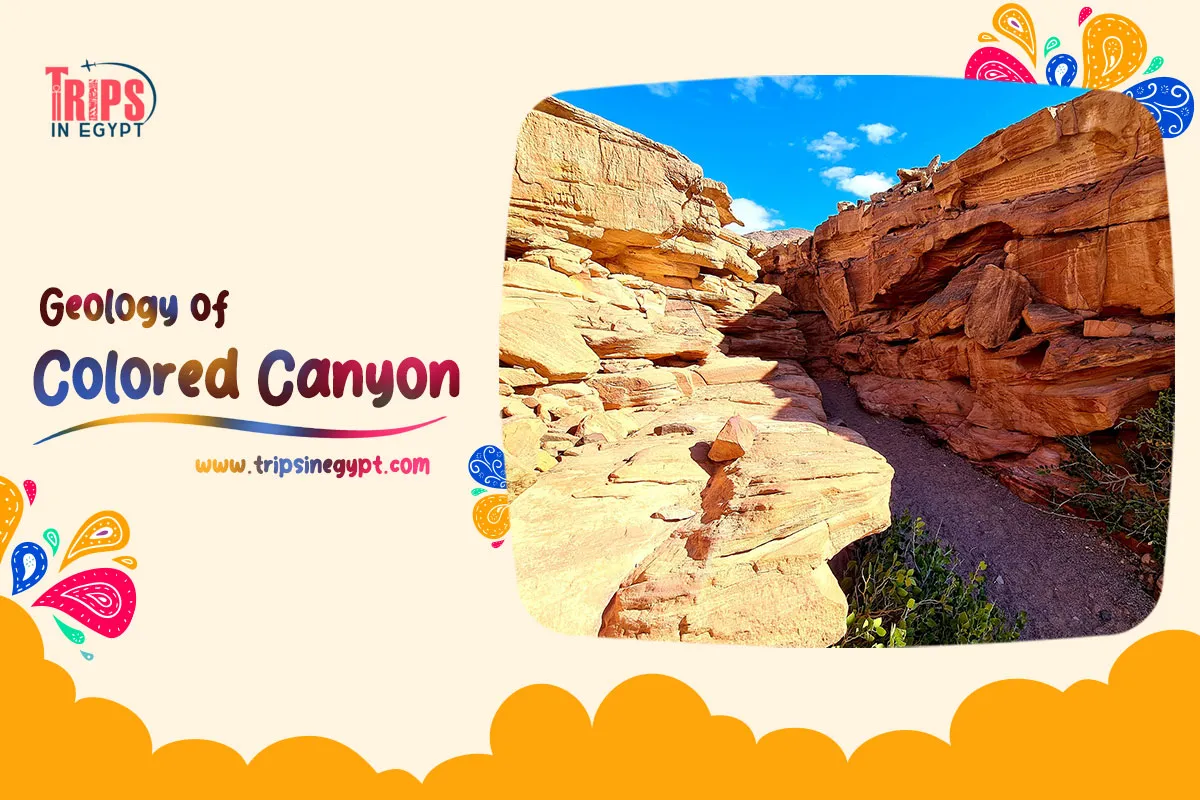
The rocks of the Colored Canyon are mainly sandstone, laid down as sand in ancient rivers, shallow seas and deserts over many millions of years. Parts of Sinai were covered by the sea at different times, and layers of sediment slowly hardened into rock.
Over a very long time, flash floods carved the canyon into these layers. Water rushing through cracks in the rock cut deeper and deeper, while wind smoothed the walls into curves, ledges and arches.
Why the Rocks Have So Many Colors
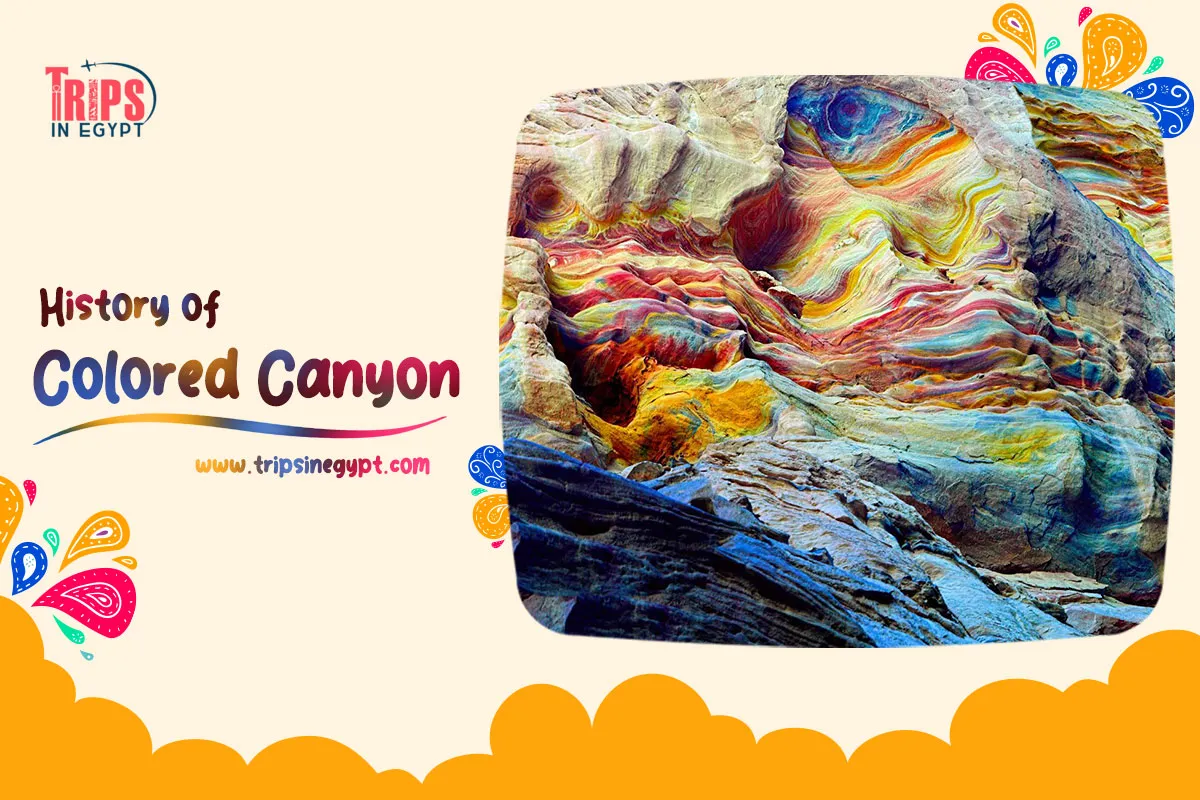
The colors come from minerals in the sandstone. Iron oxides give the red, orange and yellow shades, while manganese adds purple and dark bands. Pale, white layers have fewer of these minerals.
Because each layer was deposited at a different time and in different conditions, the bands vary in density and color. This is why the walls look striped and marbled when the light touches them.
How to Get to the Colored Canyon
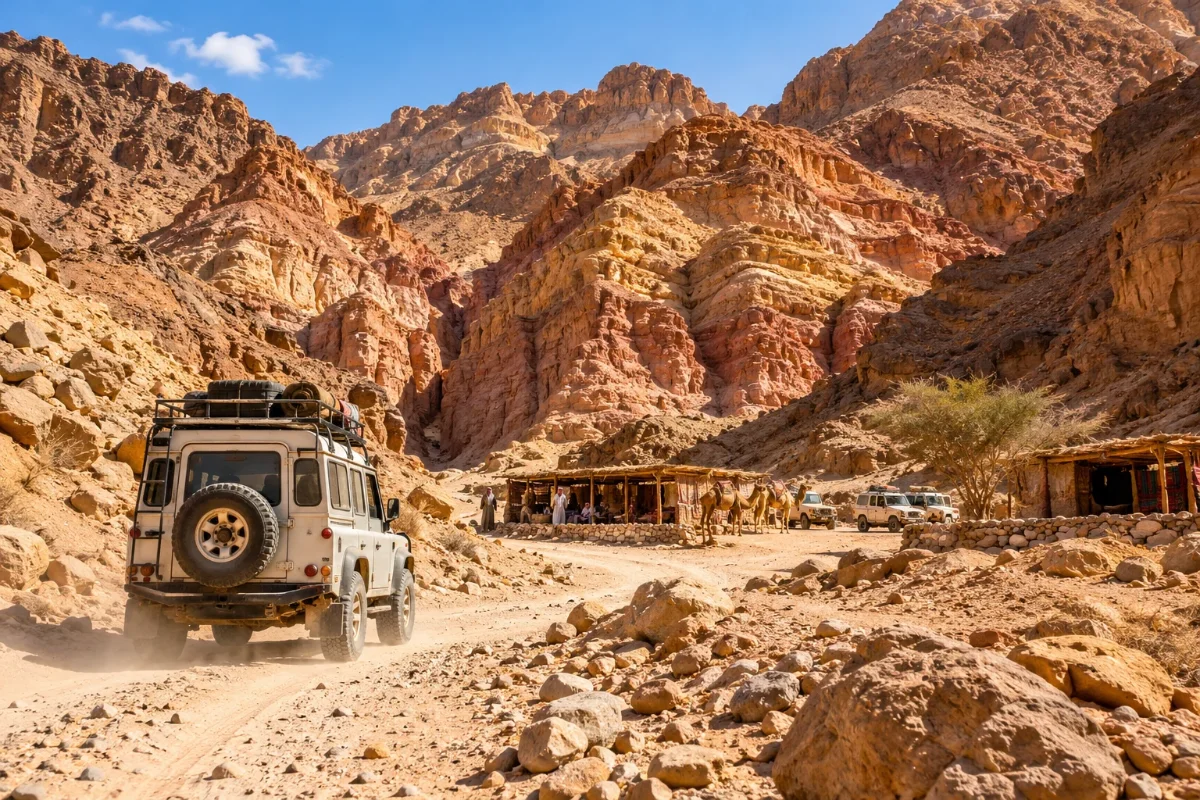
There is no public transport to the Colored Canyon. Visitors arrive by organized tour or private car to a Bedouin camp, then take a 4x4 along the desert track to the trailhead.
Colored Canyon from Dahab
Most visitors reach the canyon from Dahab. The drive takes about 1.5 hours, and day trips often leave early in the morning to reach the canyon before the midday heat.
Many tours from Dahab combine the Colored Canyon with the White Canyon and the palm oasis of Ain Khudra, returning in the late afternoon.
Colored Canyon Nuweiba
Nuweiba, a small town on the Gulf of Aqaba, is the closest base, which is why many people search for the "Nuweiba canyon". The drive from Nuweiba takes about 45 minutes to an hour, and local Bedouin camps here arrange 4x4 transfers and guides.
Colored Canyon Sharm El Sheikh
From Sharm El Sheikh, the canyon is a full-day trip, with about three hours of driving each way. Tours usually leave very early, around 5 or 6 a.m., and return in the evening. Some tours combine the canyon with Dahab on the way back.
If you are staying longer, our guide to things to do in Sharm El Sheikh lists more ideas for your free days.
From Taba and Cairo
From Taba, near the Israeli border, the drive to the canyon takes about 1.5 hours along the coast road through Nuweiba.
From Cairo, the canyon is about 6 to 7 hours away by road through the Ahmed Hamdi Tunnel under the Suez Canal. Most travelers coming from Cairo fly or drive to Sharm El Sheikh or Dahab first, then visit the canyon on a separate day.
Entry, Bedouin Guides and the 4x4 Ride
Visitors usually pay a small entry fee to the Bedouin who manage the site, and a local guide is strongly recommended. The 4x4 ride from the main road to the trailhead is part of the adventure.
Carry your passport, because there are police and military checkpoints on Sinai roads. It is also wise to check your government's latest travel advice for Sinai before you go.
Hiking Tour at the Colored Canyon
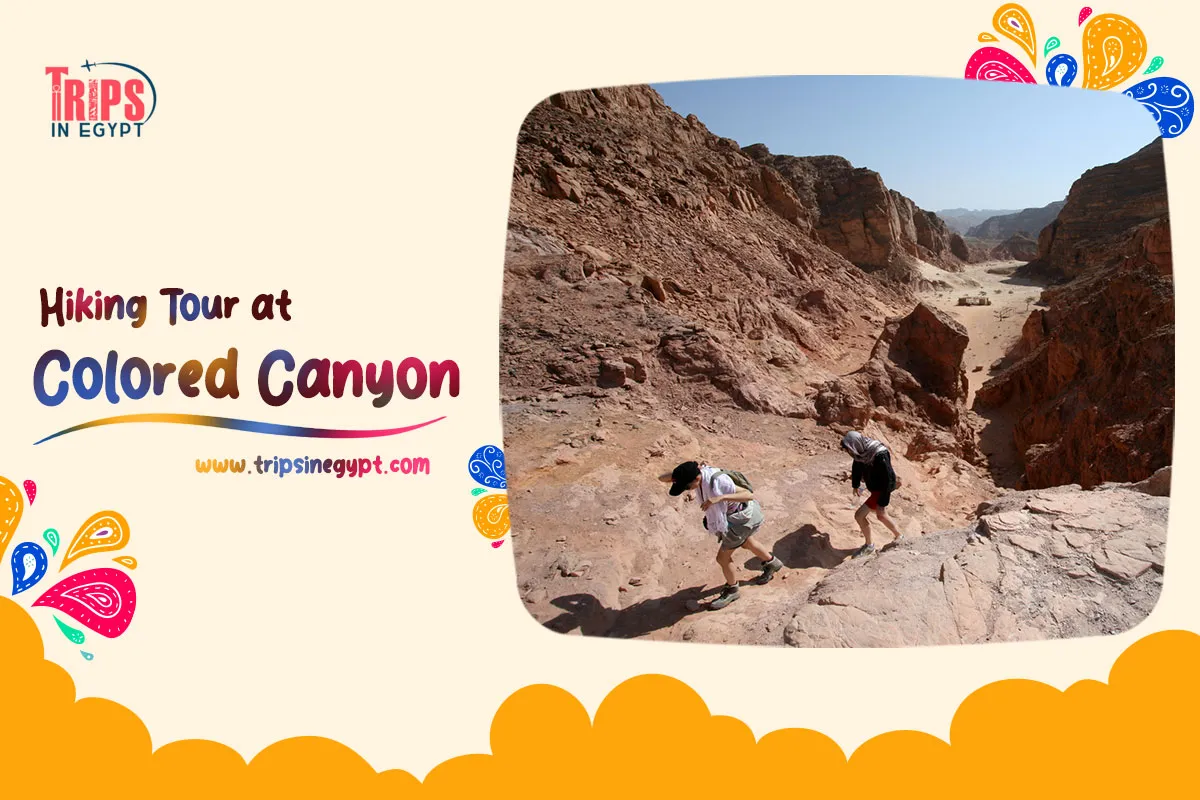
The hike through the Colored Canyon is short, but it is one of the most memorable walks in Egypt. You squeeze through narrow passages, climb over boulders and look up at rock walls that glow in the sun.
The Colored Canyon Trail Step by Step
The walk begins with a short descent from the plateau into the canyon. Inside, the trail follows the dry wadi floor through a series of passages, some wide and sunny, others so narrow that you must turn sideways.
At a few points, you climb down small rock steps or scramble over boulders. The route ends with a climb back up to the desert surface, where the 4x4 waits to take you back to camp.
How Hard Is the Colored Canyon Hike?
The trail is moderate. It is challenging in places but manageable for most hikers with average fitness, including older children with adult help.
It is not suitable for wheelchairs, very young children or anyone with serious knee or back problems. People who dislike tight spaces may find the narrowest passages uncomfortable.
What to Bring
-
At least 1.5 liters of water per person.
-
Closed hiking shoes or trainers with good grip.
-
A hat, sunglasses and sunscreen.
-
A small backpack, so your hands stay free.
-
A light jacket in winter mornings.
-
Your passport for the checkpoints.
Best Time to Visit the Colored Canyon
The best season is from October to April, when daytime temperatures are pleasant. In summer, from June to August, temperatures can pass 35°C, so tours start at dawn.
The best time of day is the morning. The air is cooler, and the sun begins to reach the canyon floor and light up the walls.
Safety in the Colored Canyon
Never enter the canyon after heavy rain or when storms are forecast. Flash floods are rare but very dangerous in narrow wadis, and they are what shaped the canyon in the first place.
Stay with your guide, do not climb the walls, and carry enough water. Taking a break from your phone is part of the experience, but keep it charged in case you need it.
Photography and Wildlife at the Colored Canyon
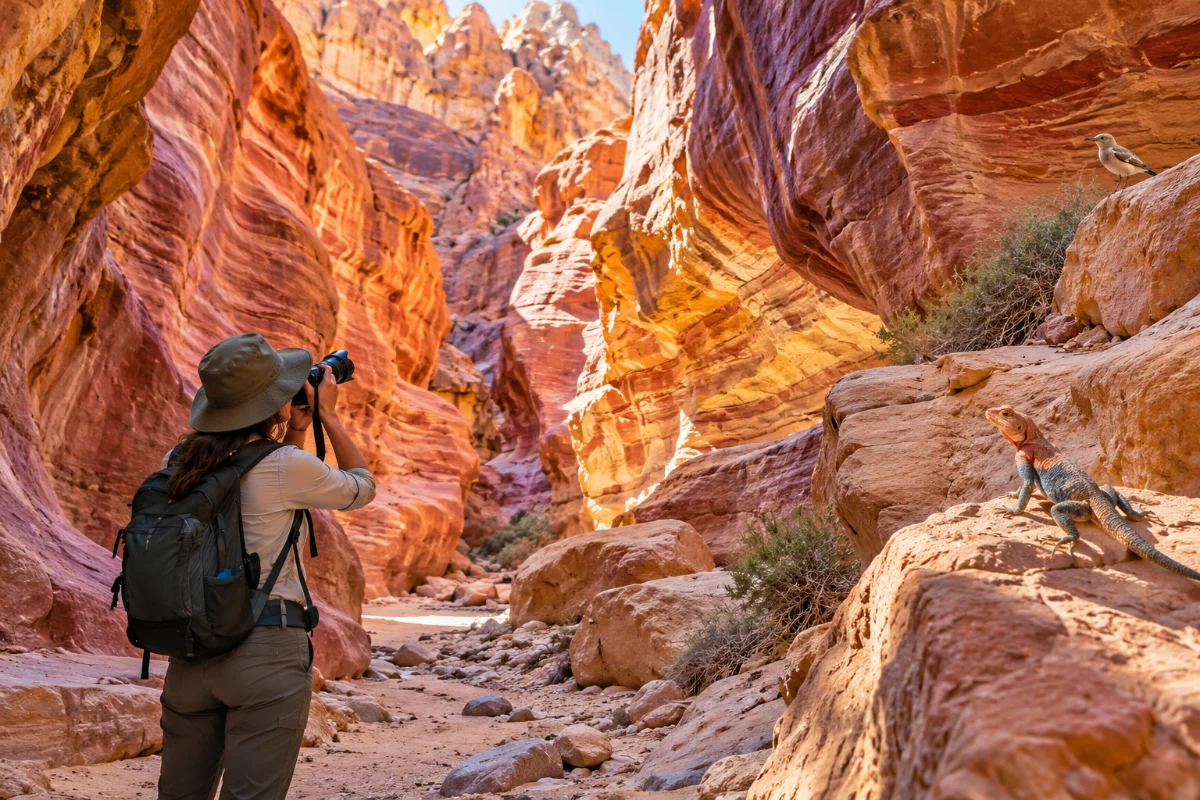
The Colored Canyon is a dream for photographers, and it holds more life than you might expect. Both reward a slow walk with your eyes open.
Photography at the Colored Canyon
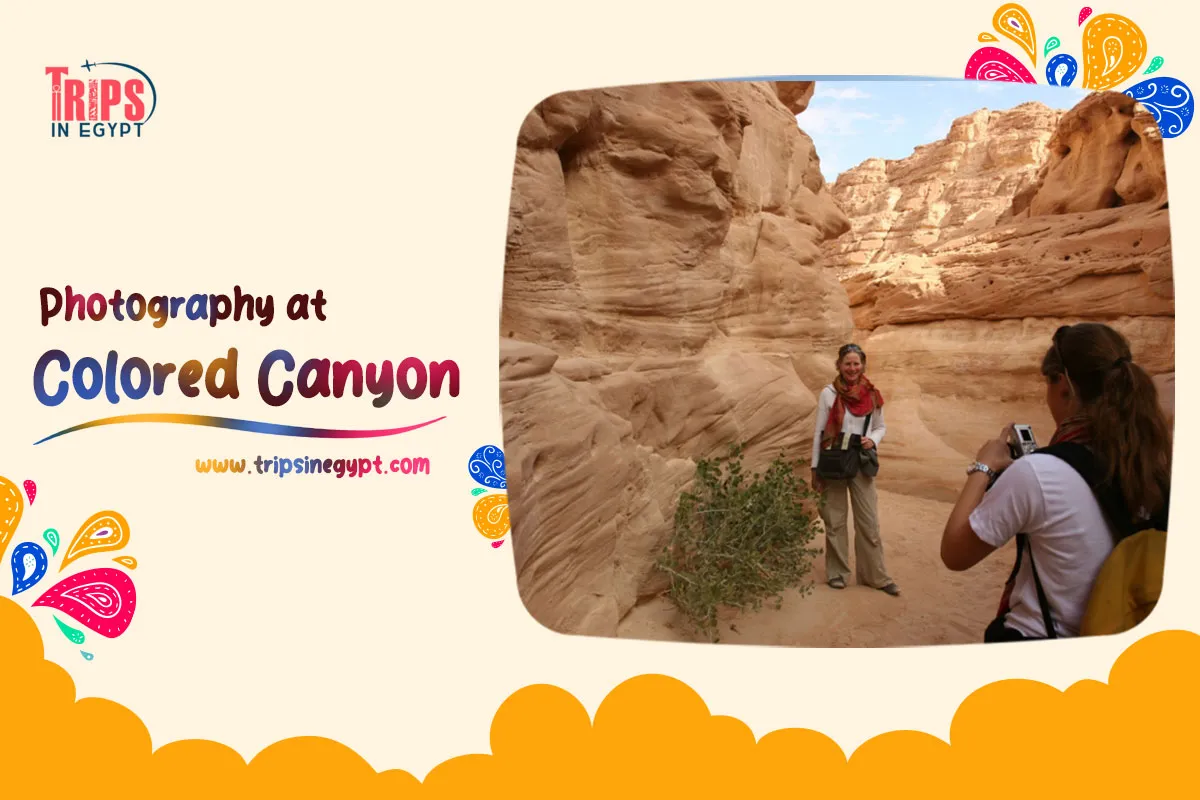
Sinai is known for its beaches and water sports in Nuweiba, Sharm El Sheikh and Dahab, but the Colored Canyon is one of its most underrated sights. The rocks show orange, magenta, purple, red, yellow and gold tones, winding through a maze of sandstone.
The most striking photos come from the narrow passages, where bands of color curve over your head. Wide sections show the scale of the canyon, especially with a person in the frame.
Tips for Coloured Canyon Photos
-
Visit in the morning, when sunlight reflects off the walls and makes the colors glow.
-
Use a wide-angle lens or your phone's wide mode for the narrow passages.
-
Look up: the best patterns are often above your head.
-
Include a friend in the frame to show how tall the walls are.
-
Keep your camera in a bag while scrambling, so your hands stay free.
-
Avoid using a flash, which flattens the natural colors of the rock.
What Wildlife Awaits You in the Colored Canyon?
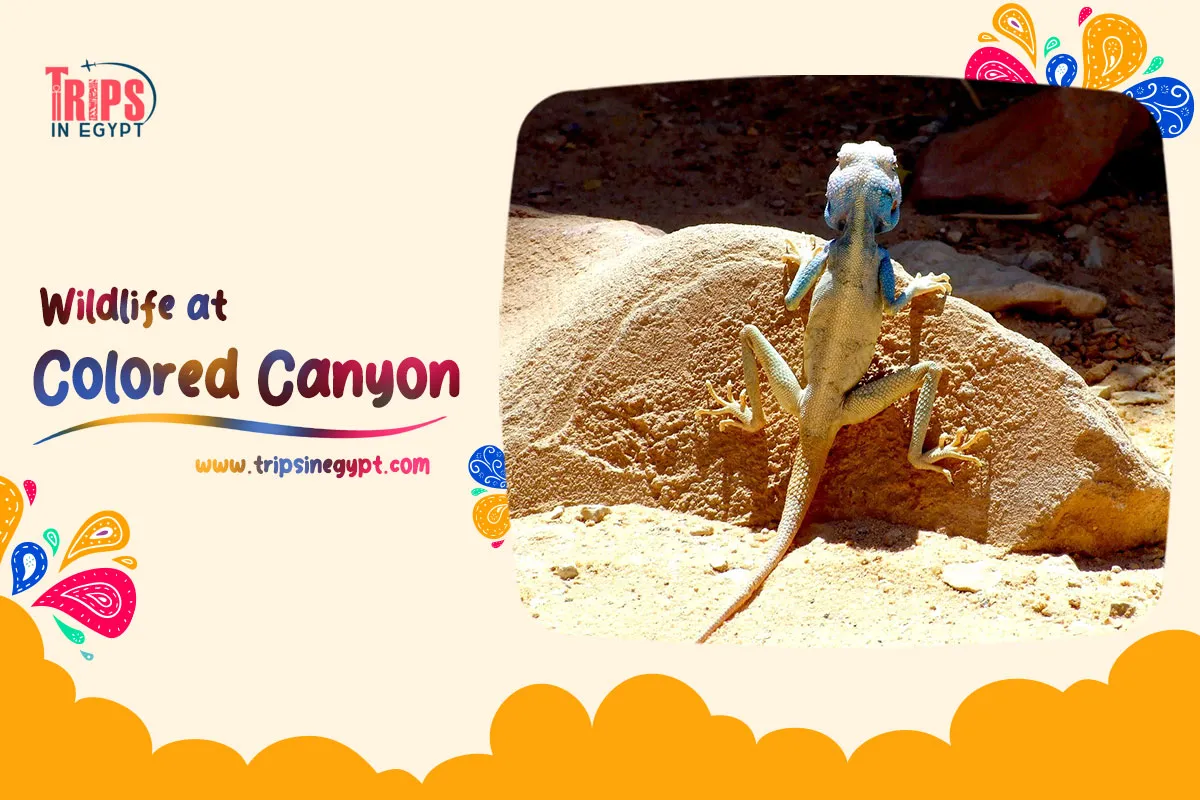
The canyon and the surrounding mountains are home to desert wildlife adapted to heat and little water. You may see Sinai agama lizards sunning on the rocks, with the males turning bright blue in the breeding season.
Birds include ravens, desert larks, wheatears and Tristram's starlings, known for their orange wing flashes. In the mountains of South Sinai, there are also Nubian ibex, rock hyraxes, desert foxes and bats, though these are rarely seen during a short visit.
Plants are sparse but hardy, such as acacia trees and small desert shrubs in the wadis. Your Bedouin guide can name the animals and plants you meet, and many Bedouin still use local herbs for tea and medicine.
When Is the Best Time to See the Wildlife in the Colored Canyon?
The best time to see wildlife is early in the morning, at dawn, or at dusk, when the air is cooler and there are fewer people. Lizards are most active in the warm hours of the morning, while foxes and bats come out after dark.
Tourism in the Colored Canyon
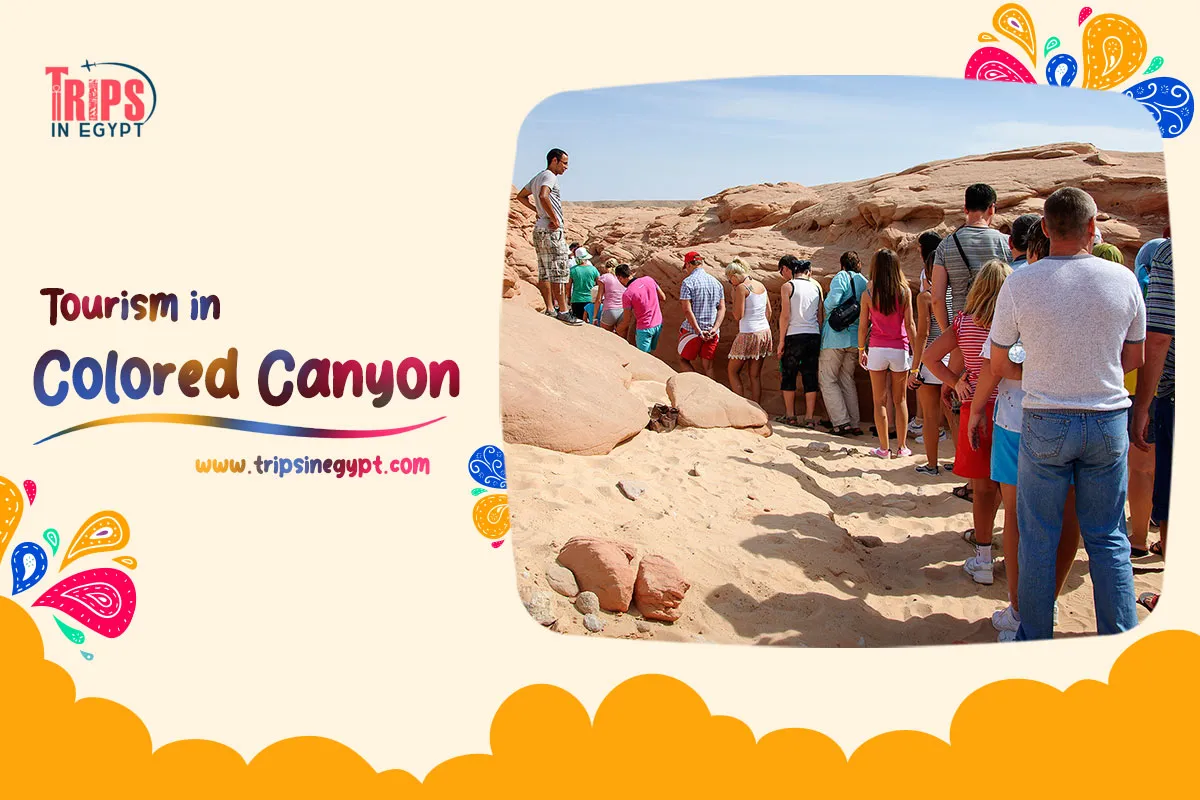
The Colored Canyon draws travelers from around the world, and tourism has become an important source of income for the Bedouin families who guide visitors and run the nearby camps. A visit here supports the local community directly.
Colored Canyon in Egypt Tours
Most visitors join a day tour from Dahab, Nuweiba or Sharm El Sheikh, which includes transport, the 4x4 ride, a Bedouin guide and often lunch at a camp. Private tours can start earlier and move at your own pace.
If you are planning a beach holiday, the 6 Days Cairo and Sharm El Sheikh Luxury Holiday, From $850, combines the sights of Cairo with free days in Sharm El Sheikh, when a Colored Canyon trip can be arranged.
Nearby: The White Canyon and Ain Khudra
The White Canyon is a smaller gorge of pale rock not far from the Colored Canyon, and it makes a good second hike. The nearby oasis of Ain Khudra has palm trees, a small spring and Bedouin gardens, and some identify it with Hazeroth, a stop of the Exodus in the Bible.
Can Tourists Visit Mount Sinai?
Yes. Tourists can climb Mount Sinai, about 2,285 meters high, usually overnight to watch the sunrise from the summit. The climb takes about 2 to 3 hours by the camel path, or you can climb the 3,750 Steps of Repentance.
At the foot of the mountain stands the Monastery of Saint Catherine, founded in the sixth century under the emperor Justinian. The Saint Catherine area was listed as a UNESCO World Heritage Site in 2002.
Plan Your Sinai Trip
The Colored Canyon is only one of many Sinai tourist attractions, from mountains and monasteries to coral reefs.
Our guide to the best places to visit from Sharm El Sheikh covers more day trips by land and sea.
For snorkeling and diving after the hike, the coral reefs of the Red Sea are only an hour away.
Many travelers begin their journey in Cairo city and then fly to Sinai.
To plan the whole journey, you can browse our Egypt tour packages and contact our team, available 24/7, to plan a safe and smooth trip.
The Colored Canyon in Egypt is a short walk through millions of years of history, painted in red, gold and violet. It suits beginners and experienced hikers alike, and it is easy to reach from Dahab, Nuweiba or Sharm El Sheikh with a Bedouin guide. Go early and look up often. In the silence between its glowing walls, Sinai shows a magnificent side that few visitors ever expect to find.

5 Days Cairo And Hurghada Trip
Amazing 4 Nights Cairo and Hurghada Trip Itinerary 5 Days Cairo and Hurghada trip wil...
- Duration 5 Days / 4 Nights
- Location Cairo & Hurghada
- Type Historical & Recreational Tour
From$690/per person
View Tour
6 Days Cairo, Alexandria & Faiyum Tour
Unforgettable Cairo, Alexandria & Faiyum Adventure in Six Days 6 Days Cairo, Alex...
- Duration 6 Days / 5 Nights
- Location Cairo - Alexandria - Fayum
- Type Historical Tour
From$720/per person
View Tour
10 Days Cairo, Faiyum & Nile Cruise Holiday
Breathtaking 10 Days Journey of A Lifetime in Egypt 10 Days Cairo, Faiyum & Nile...
- Duration 10 Days / 9 Nights
- Location Cairo, Luxor, Aswan & Faiyum
- Type Classic Tour
From$1350/per person
View Tour SOLD OUT
Ultimate 7-Day Egypt Solar Eclipse Experience with Hurghada 2027
Enjoy a 7-Day Egypt Solar Eclipse Tour with Hurghada 2027 6 Nights Egypt Solar Ecli...
- Duration 7 Days / 6 Nights
- Location Cairo / Giza / Luxor / Hurghada
- Type Astronomical Tour
Sold Out
View Details