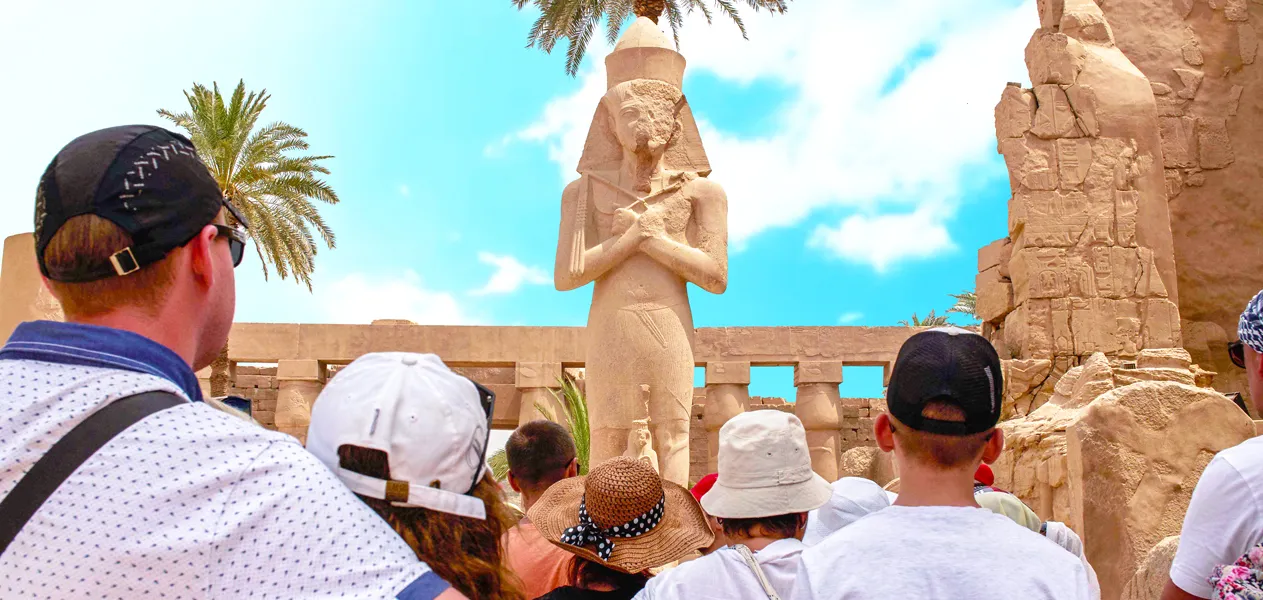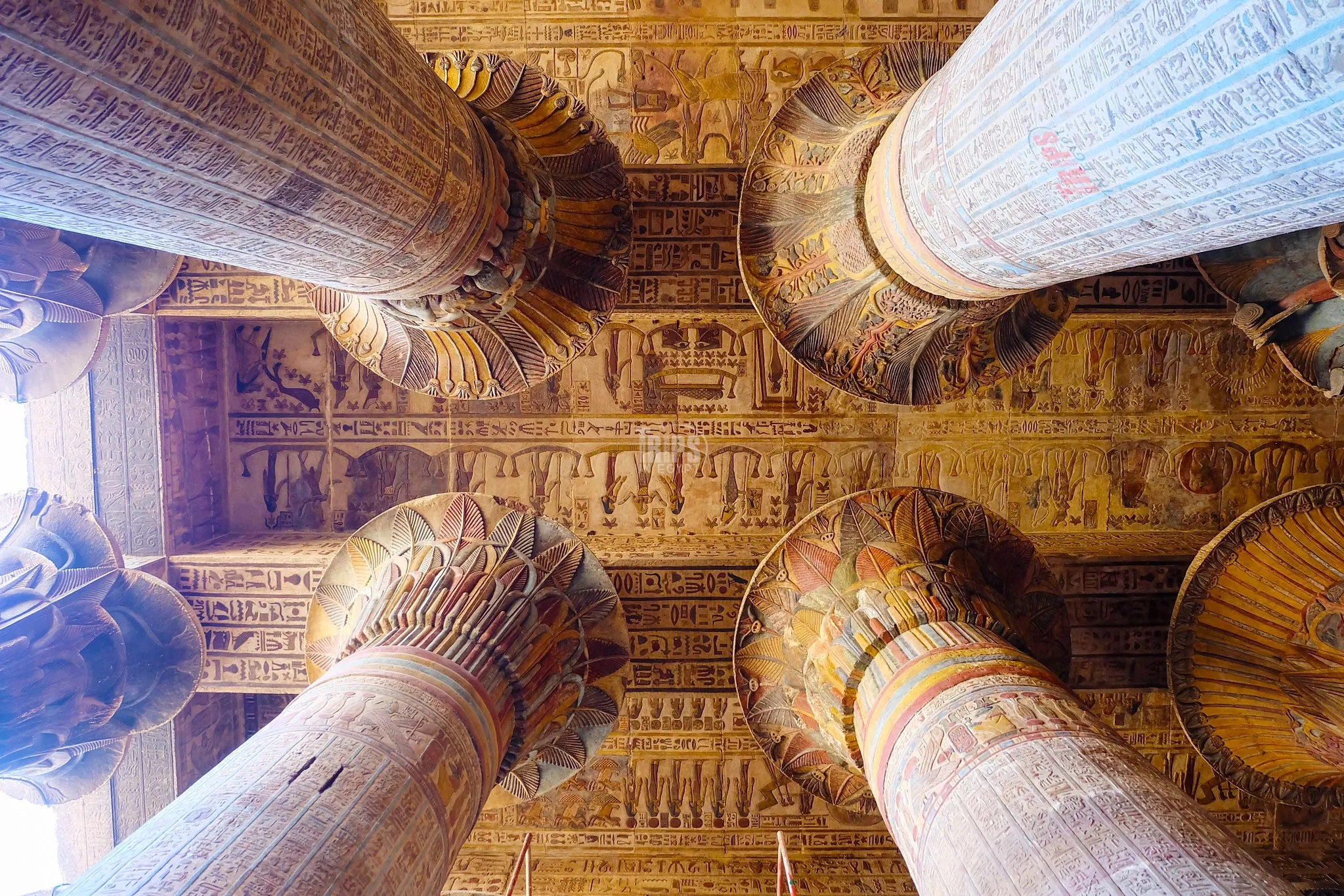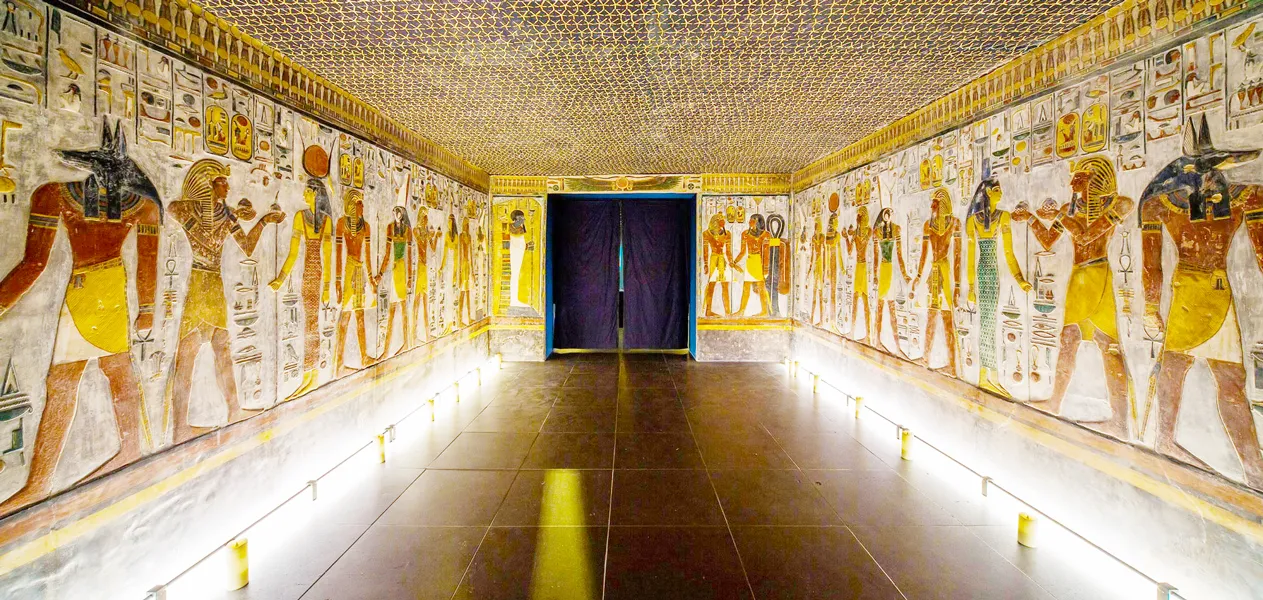




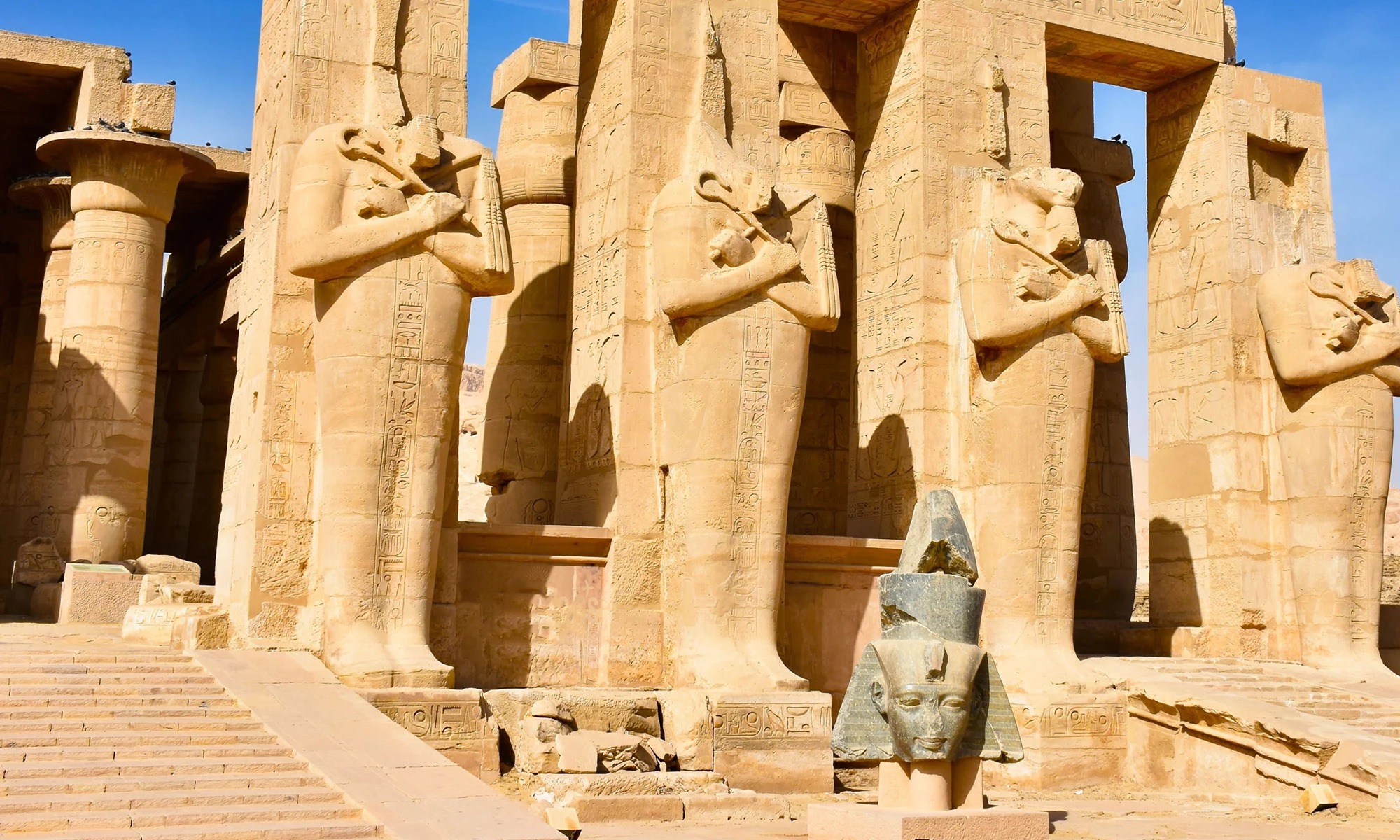
Ask a guide in Luxor who built Karnak Temple, and you will usually get a smile before the answer. The honest reply is "almost everyone." Karnak was never finished by one king and handed over complete. It grew for about 2,000 years, one gate, one obelisk, and one hall at a time, as roughly thirty Egyptian pharaohs tried to outdo the ones before them in honor of Amun-Re, king of the ancient Egyptian gods. Walking through it today is like reading a family history written in stone, where each generation added a chapter.
In this article, we follow those builders era by era, meet the architects and workers behind them, and then cross 3 km south to answer a question that belongs right next to this one: who built Luxor Temple, and when were the two temples rising at the same time? Here are all the things you need to know about who built Karnak Temple:

Explore the Answer to Who Built Karnak Temple?
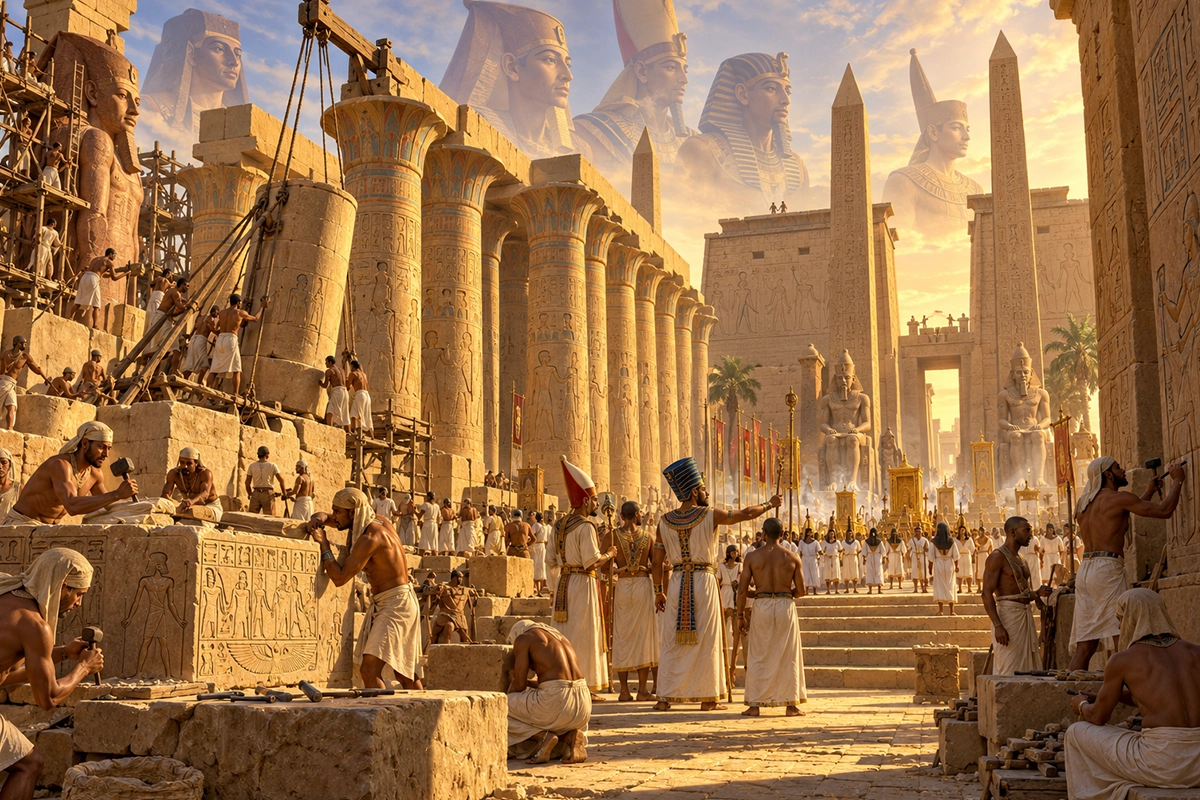
The short answer: Karnak Temple was begun by Senusret I around 1971 BC and enlarged by most of the important pharaohs who ruled Egypt after him, especially during the New Kingdom (about 1550 to 1070 BC). The last major additions came under Nectanebo I and the Ptolemies, more than 1,500 years later.
Why so many builders? Because Thebes, today's Luxor, was the home of Amun, and from the New Kingdom onward, Amun was the god who gave kings their victories and their right to rule. A pharaoh who built for Amun at Karnak was making two statements at once: that he was pious, and that he was powerful. Most kings also simply could not resist putting their names on the most famous temple in the land.
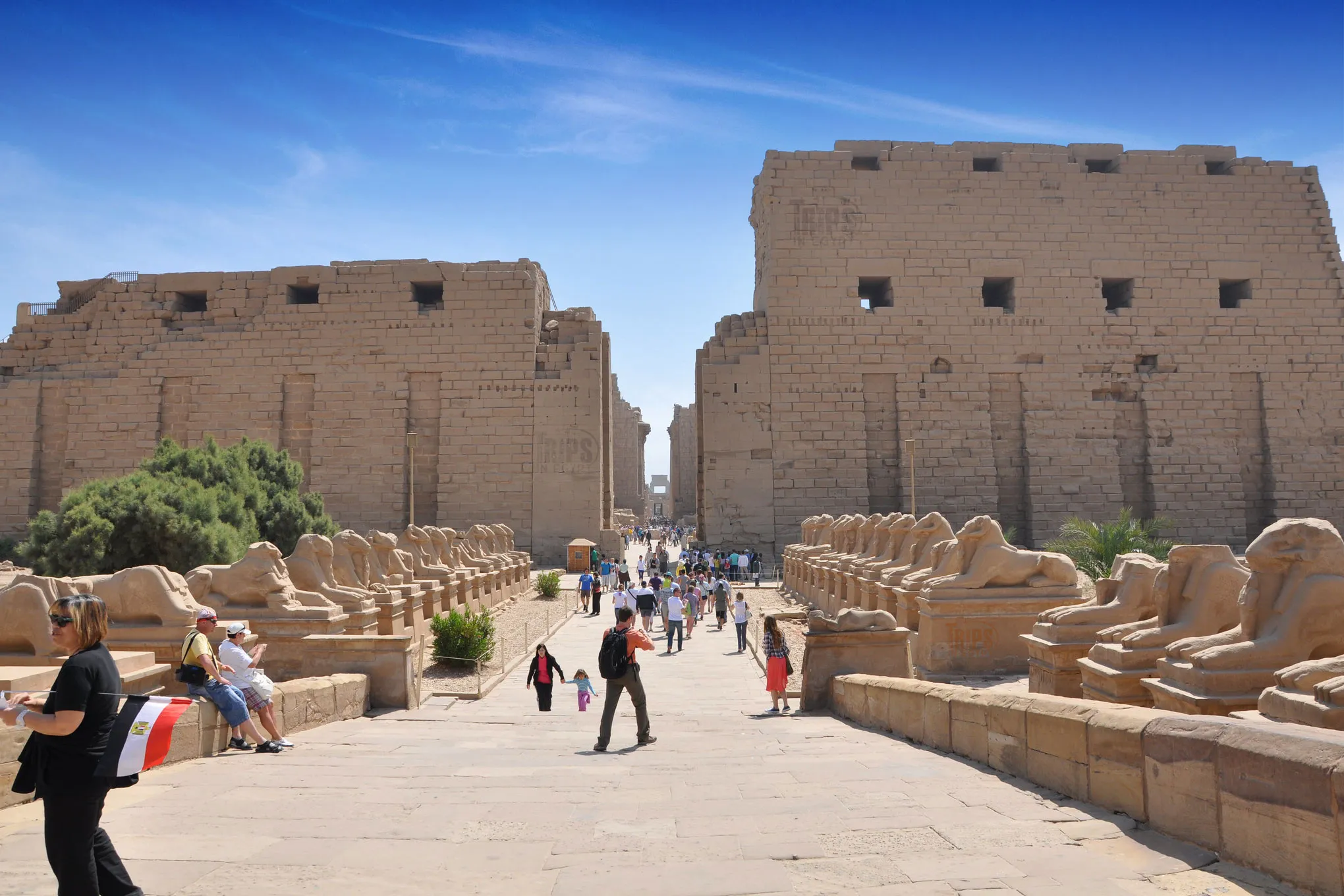
There is a practical reason too. Ancient Egyptian temples were never thought of as "finished." Each king could add a new pylon in front, a new hall, a new chapel or a new pair of obelisks, and over the centuries Karnak stretched outward along two axes, one running east to west and the other north to south, with ten pylons in all. Our main Karnak Temple guide covers the site itself, and our article on the Temple of Amun walks through each part of the precinct.
The Builders of Karnak Temple, Era by Era
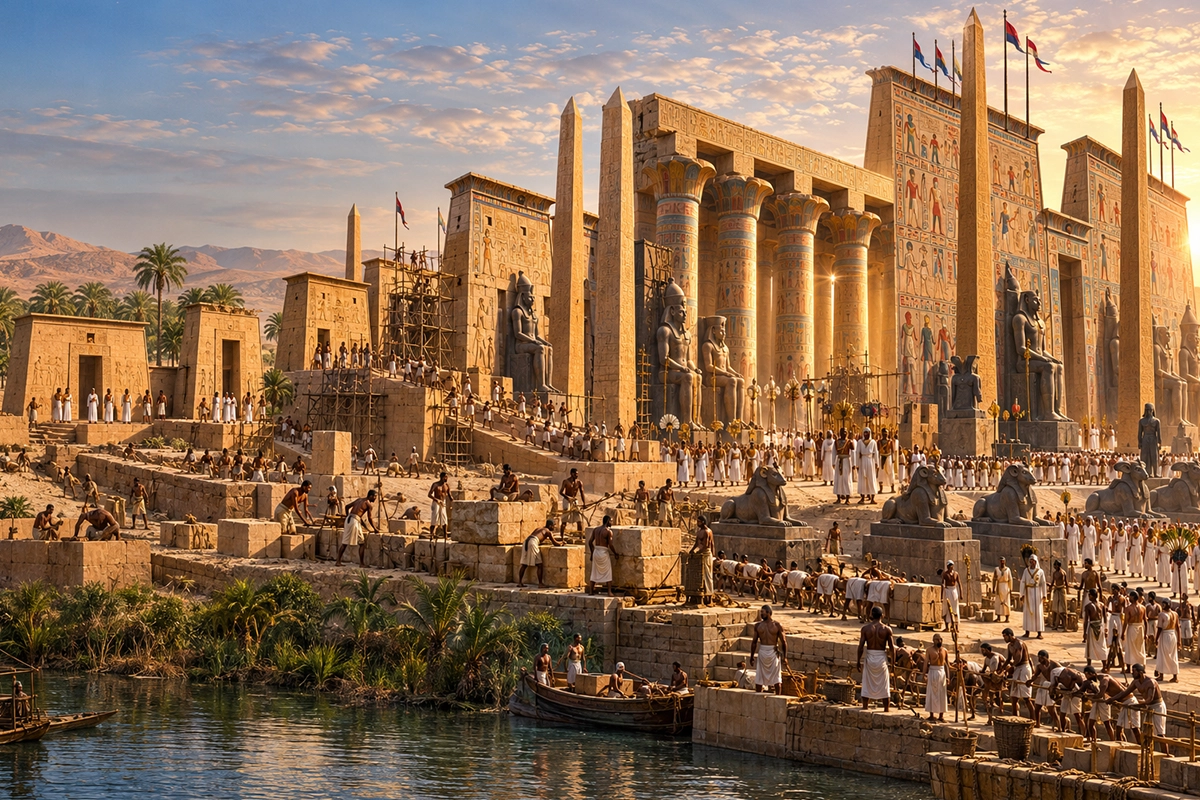
The Beginning: A Middle Kingdom Shrine
The oldest royal piece found at Karnak is a fragment of an eight-sided column naming Amun-Re, from the reign of Intef II of the 11th Dynasty. Real building began with Senusret I of the 12th Dynasty, who raised a limestone temple to Amun where the central court now stands. His small, beautiful White Chapel, built for his jubilee, survived only because a later king used its blocks as filling inside the Third Pylon. They were found in 1927 and rebuilt in the Karnak Open Air Museum, where you can still see them.
The Thutmosid Kings and Hatshepsut
The 18th Dynasty turned a respectable temple into a national monument. Thutmose I built the Fourth and Fifth Pylons and a hall of columns between them, and set up obelisks in front. His works were overseen by the architect Ineni, who proudly recorded them in his tomb.
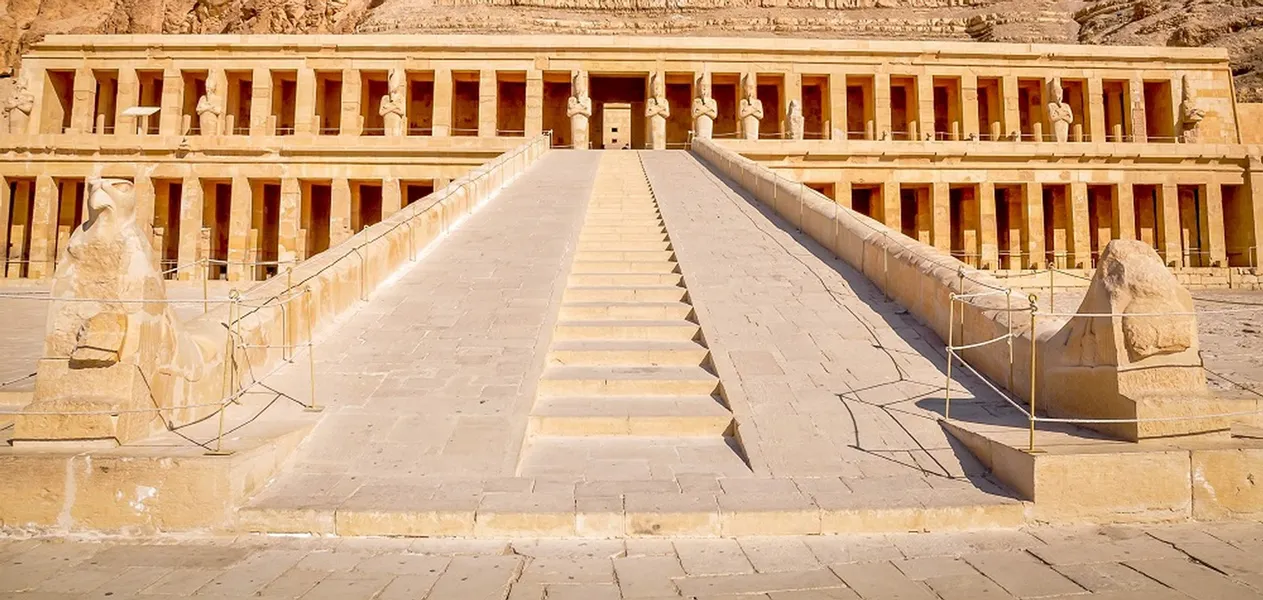
His daughter, Queen Hatshepsut, added two great obelisks of Aswan granite, one of which still stands almost 30 meters high, as well as the Red Chapel and the Eighth Pylon on the southern axis. Her obelisks came from the same quarries where the Unfinished Obelisk still lies today.
Thutmose III, who reigned alongside her and then alone, built the Sixth and Seventh Pylons and the Akh-menu, his Festival Hall at the eastern end, with columns shaped like tent poles and a room of carved foreign plants nicknamed the "Botanical Garden." He also walled up Hatshepsut's obelisks, which, ironically, protected them.
Amenhotep III and Akhenaten
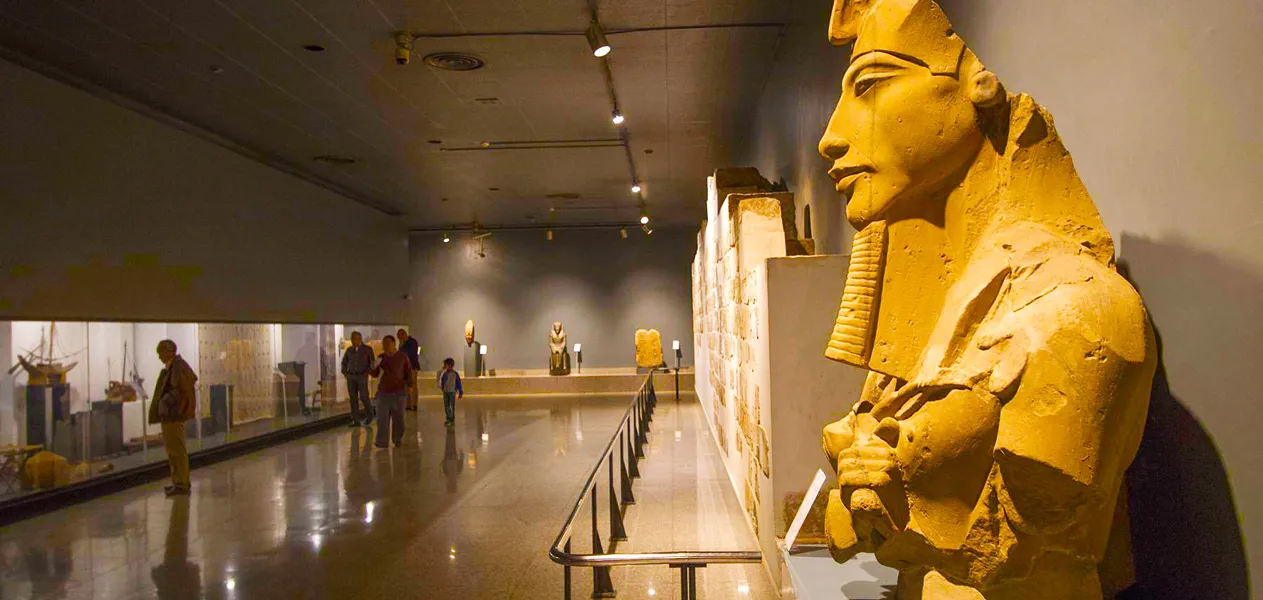
Amenhotep III built the Third Pylon, the one that swallowed Senusret's chapel, and greatly enlarged the Temple of Mut to the south. His son Akhenaten went the other way: he built temples to the sun disc Aten just east of Karnak, using small standard blocks called talatat, then turned his back on Amun altogether and left Thebes.
Restoration and the Ramesside Giants
After Akhenaten, the old gods returned. Tutankhamun set up his Restoration Stela at Karnak, promising to repair the neglected temples. Horemheb built the Second, Ninth and Tenth Pylons, filling them with thousands of Akhenaten's talatat, which were rediscovered in modern times.
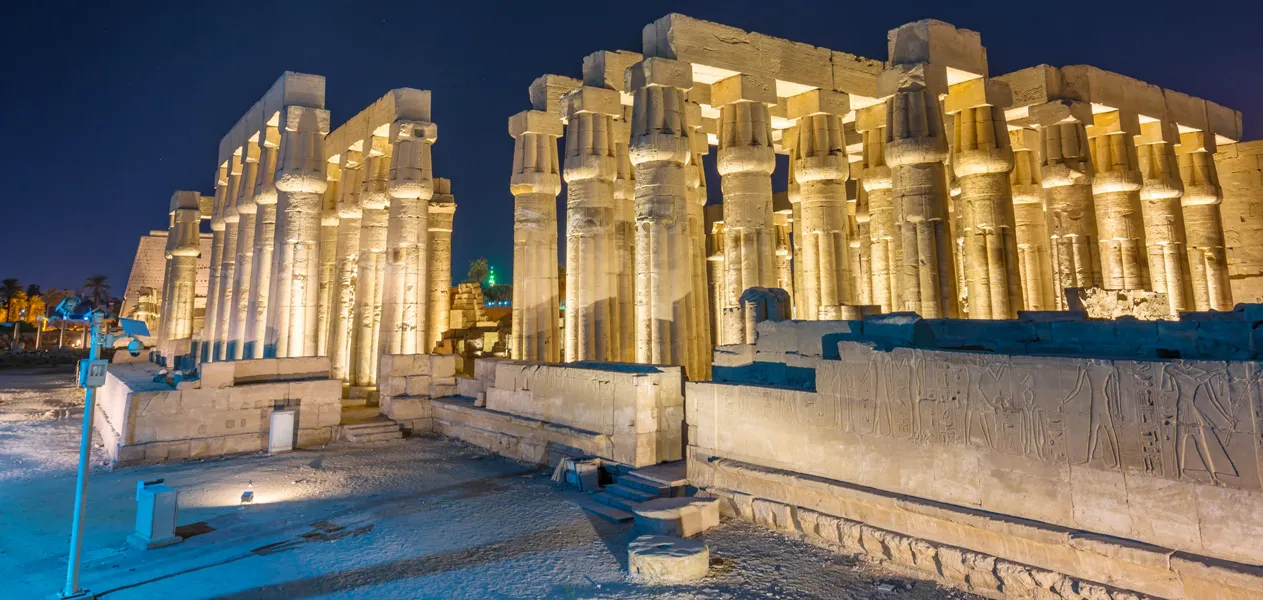
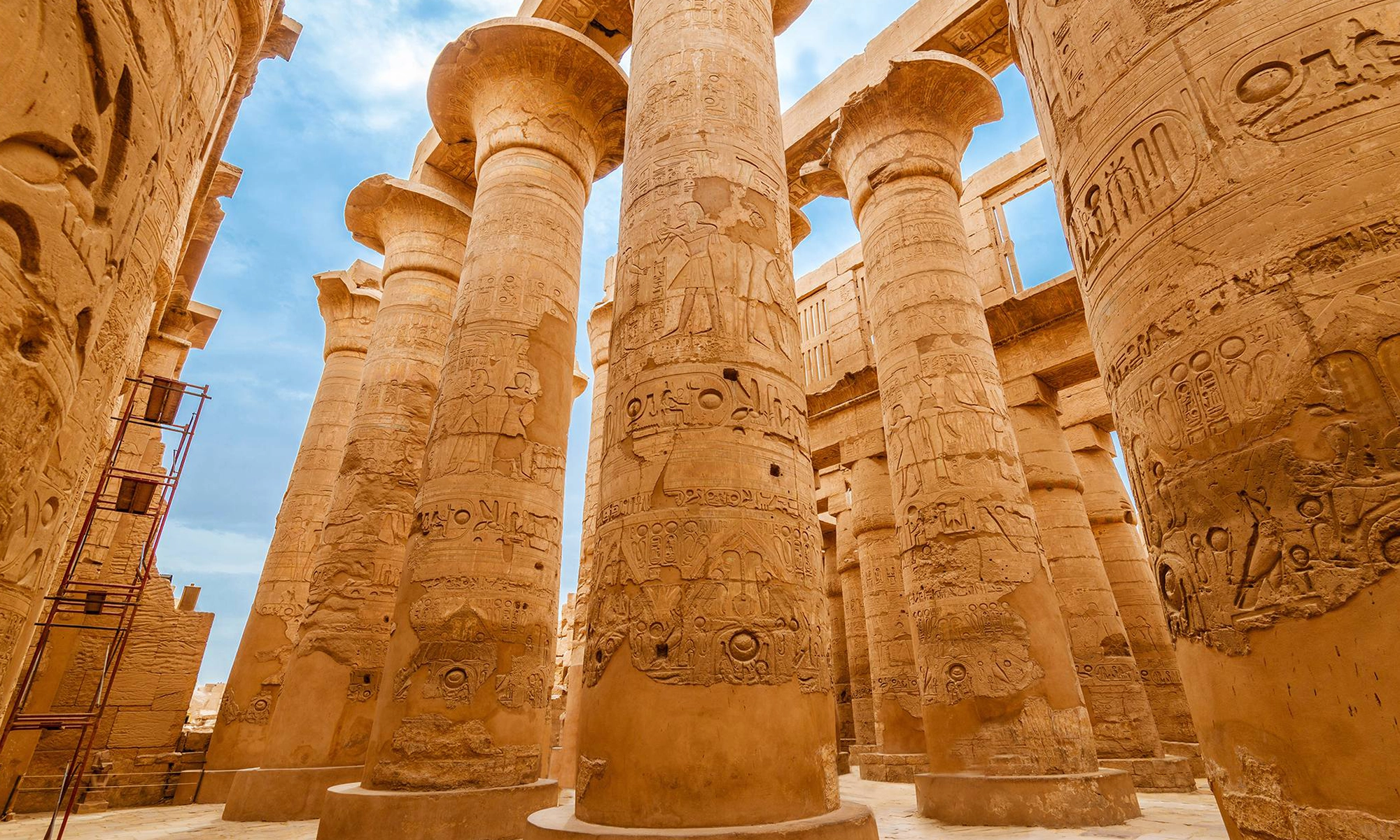
Then came the 19th Dynasty and the most famous building at Karnak. Seti I raised the Great Hypostyle Hall, a forest of 134 columns covering about 5,000 square meters, and his son Ramses II finished its decoration and carved his name almost everywhere. Read the full story in our article on the Great Hypostyle Hall columns. Ramses III added a complete small temple in the Great Court and began the Temple of Khonsu, the moon god and son of Amun and Mut.
Late Kings, Ptolemies and Romans
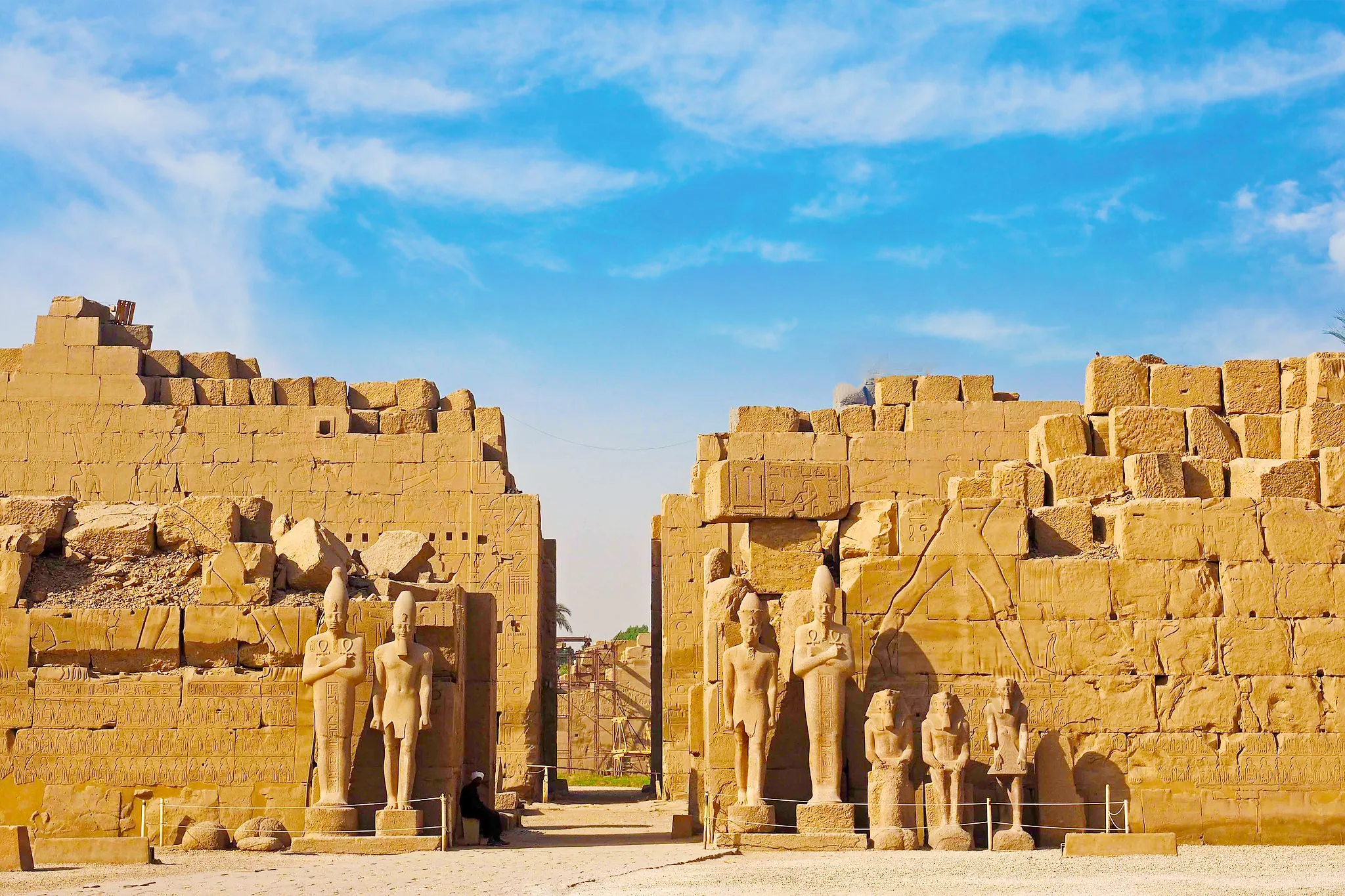
Even when Egypt was weaker, kings kept building at Karnak. Shoshenq I of the 22nd Dynasty recorded his campaigns on the Bubastite Portal. The Kushite king Taharqa raised a great kiosk in the First Court, of which one column still stands. Nectanebo I of the 30th Dynasty, the last native dynasty, began the huge First Pylon that greets you today, never finished, and the massive mud-brick enclosure walls.
The Greek kings who followed also played their part. Philip Arrhidaeus, half-brother of Alexander the Great, rebuilt the granite sanctuary of Amun's sacred boat, and Ptolemy III added the tall gateway in front of the Temple of Khonsu. Later, early Christians painted saints on the columns of the Akh-menu, the last chapter of Karnak's long life as a sacred place.
Who Did the Actual Building?
The kings paid for Karnak and took the credit, and hundreds of their statues turned up in 1903 in the Karnak Cachette. The temple itself, though, was built by people whose names we mostly do not know. A few architects are remembered: Ineni for Thutmose I, Senenmut for Hatshepsut, and Amenhotep son of Hapu, the brilliant official who ran Amenhotep III's building works and was later honored as a god of wisdom.
Below them worked stonemasons, sculptors, painters and scribes, many from professional workshops attached to the temple, together with farmers called up for seasonal labor during the Nile flood, when the fields were under water. They were not slaves in the way old films suggest. Sandstone came by boat from Gebel el-Silsila, about 150 km south, and granite from Aswan. Blocks were raised on mud-brick ramps, and the remains of one can still be seen behind the First Pylon.
Who Built Luxor Temple?
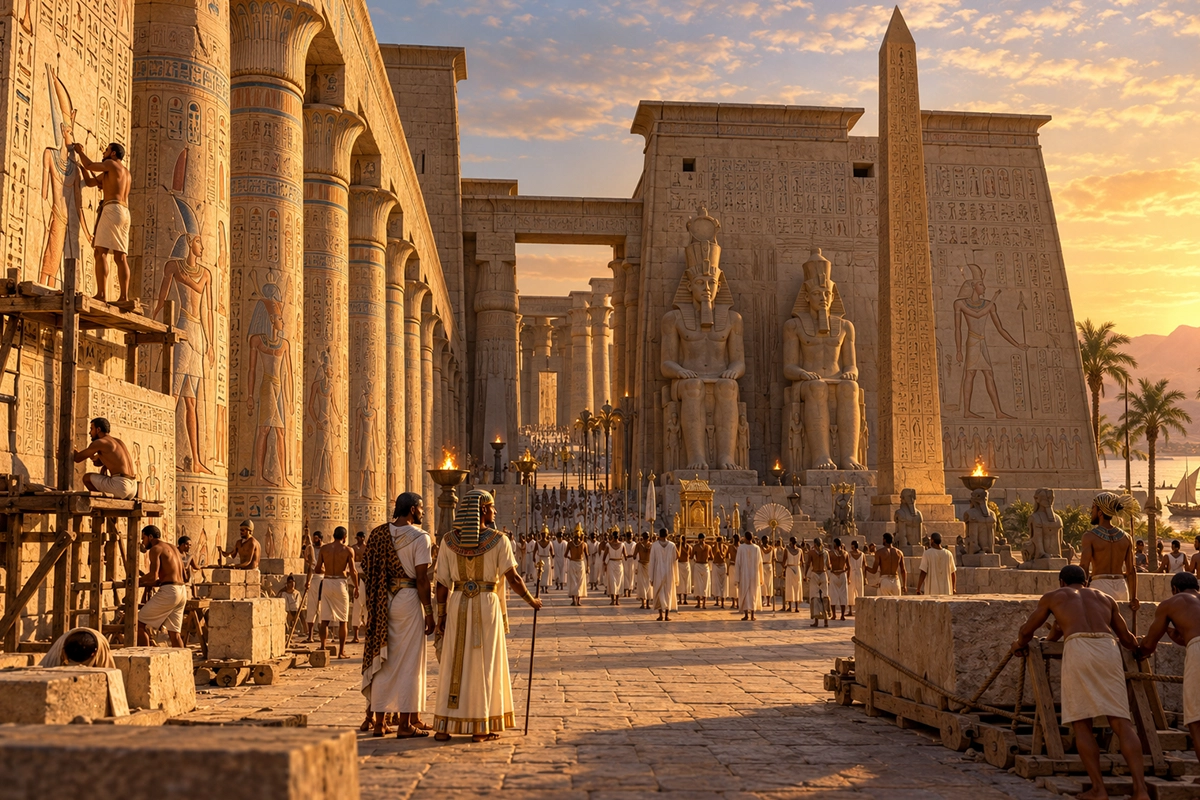
Luxor Temple has a much shorter and clearer story. It was built mainly by Amenhotep III around 1390 to 1352 BC, with Amenhotep son of Hapu very likely in charge of the work. He built the sanctuary, the hall of columns and the elegant Sun Court, and began the great colonnade of 14 papyrus columns.
His successors finished it. Tutankhamun and then Horemheb decorated the colonnade walls with scenes of the Opet Festival, and Horemheb later carved his own name over Tutankhamun's. Ramses II added the front of the temple: the great pylon, a new court, six colossal statues and two obelisks. One of those obelisks still stands at the entrance; the other has stood in the Place de la Concorde in Paris since 1836.
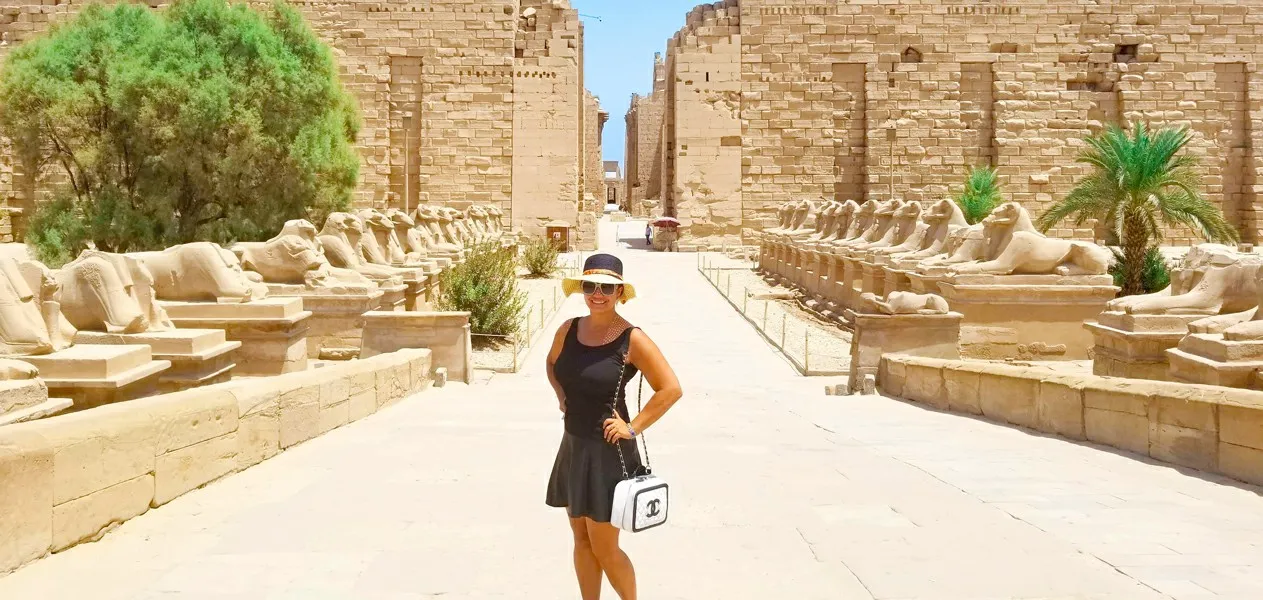
Later additions came from familiar names. Nectanebo I lined the road to Karnak with human-headed sphinxes. Alexander the Great had a granite shrine built inside the temple, with himself shown as pharaoh. The Romans turned the temple into a military camp, and in the Middle Ages the Abu Haggag Mosque was built on top of the ruins, where it still stands. Our Luxor Temple guide covers it in detail.
Karnak and Luxor Temple: Built Side by Side
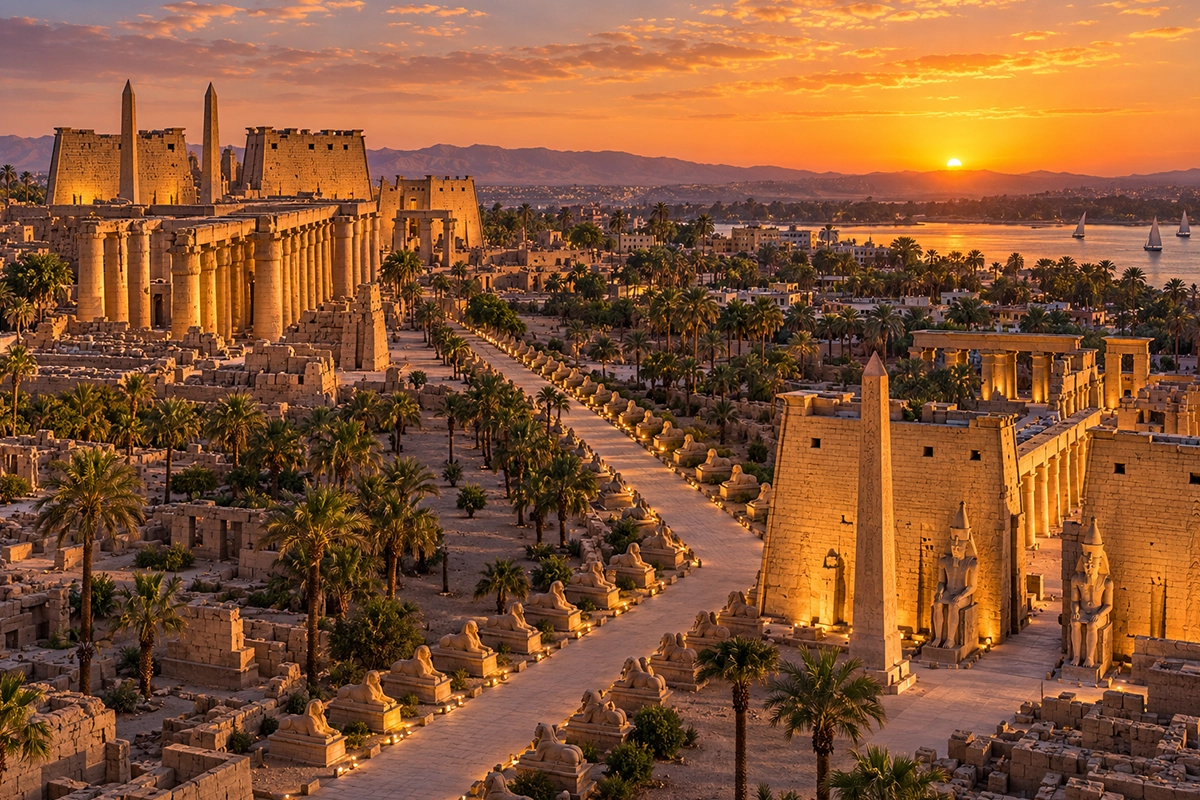
The two temples were never rivals. They were two ends of one sacred story. Every year, during the Opet Festival, the statue of Amun traveled from Karnak to Luxor Temple, about 2.7 km to the south, to renew the king's divine power. So when a king built at one, he very often built at the other.
| King | Period | At Karnak | At Luxor Temple |
|---|---|---|---|
| Hatshepsut | c. 1479 to 1458 BC | Obelisks, Red Chapel, Eighth Pylon | Way stations for Amun's boat along the route |
| Amenhotep III | c. 1390 to 1352 BC | Third Pylon, Temple of Mut | Built most of the temple |
| Tutankhamun | c. 1332 to 1323 BC | Restoration Stela | Opet scenes in the colonnade |
| Horemheb | c. 1319 to 1292 BC | Second, Ninth and Tenth Pylons | Completed the colonnade decoration |
| Ramses II | c. 1279 to 1213 BC | Decoration of the Hypostyle Hall | Pylon, court, colossi and obelisks |
| Nectanebo I | c. 379 to 361 BC | First Pylon and enclosure walls | Avenue of Sphinxes |
| Alexander and Philip Arrhidaeus | c. 332 to 317 BC | Philip's sanctuary for Amun's boat | Alexander's shrine |
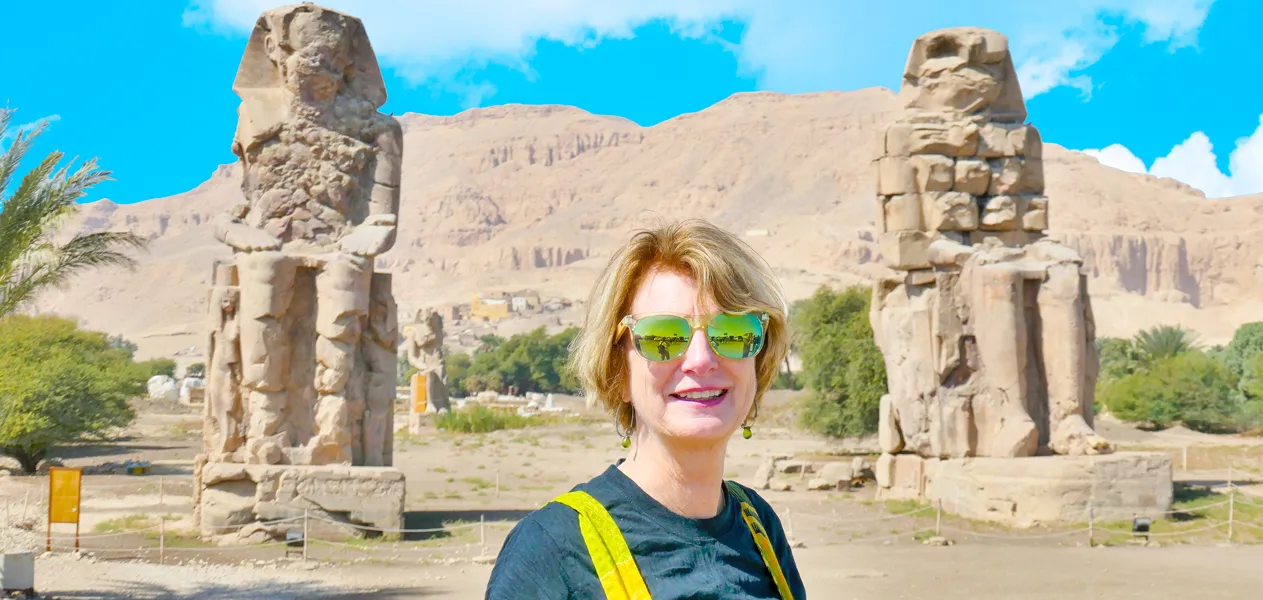
The most striking overlap is Amenhotep III. While his workers were raising the Third Pylon at Karnak, other teams were building Luxor Temple from scratch, and across the river his huge mortuary temple, of which only the Colossi of Memnon survive, was going up as well. A thousand years later, Nectanebo I closed the circle by joining the two temples with the Avenue of Sphinxes, which you can walk again today.
See the Work of Thirty Pharaohs With Trips In Egypt
Two thousand years of kings, and every one of them is still there in stone, waiting for someone to read their names. The best way to meet them is with a guide who can. Our Day Trip to Luxor East Bank covers both Karnak and Luxor Temple with a professional Egyptologist guide.
Before you go, read how to visit Karnak Temple and the latest Karnak Temple ticket price and official hours. You can also see the West Bank's Temple of Hatshepsut on one of our Luxor day tours, browse our Egypt tour packages, or plan your own route with our tailor-made tours.