



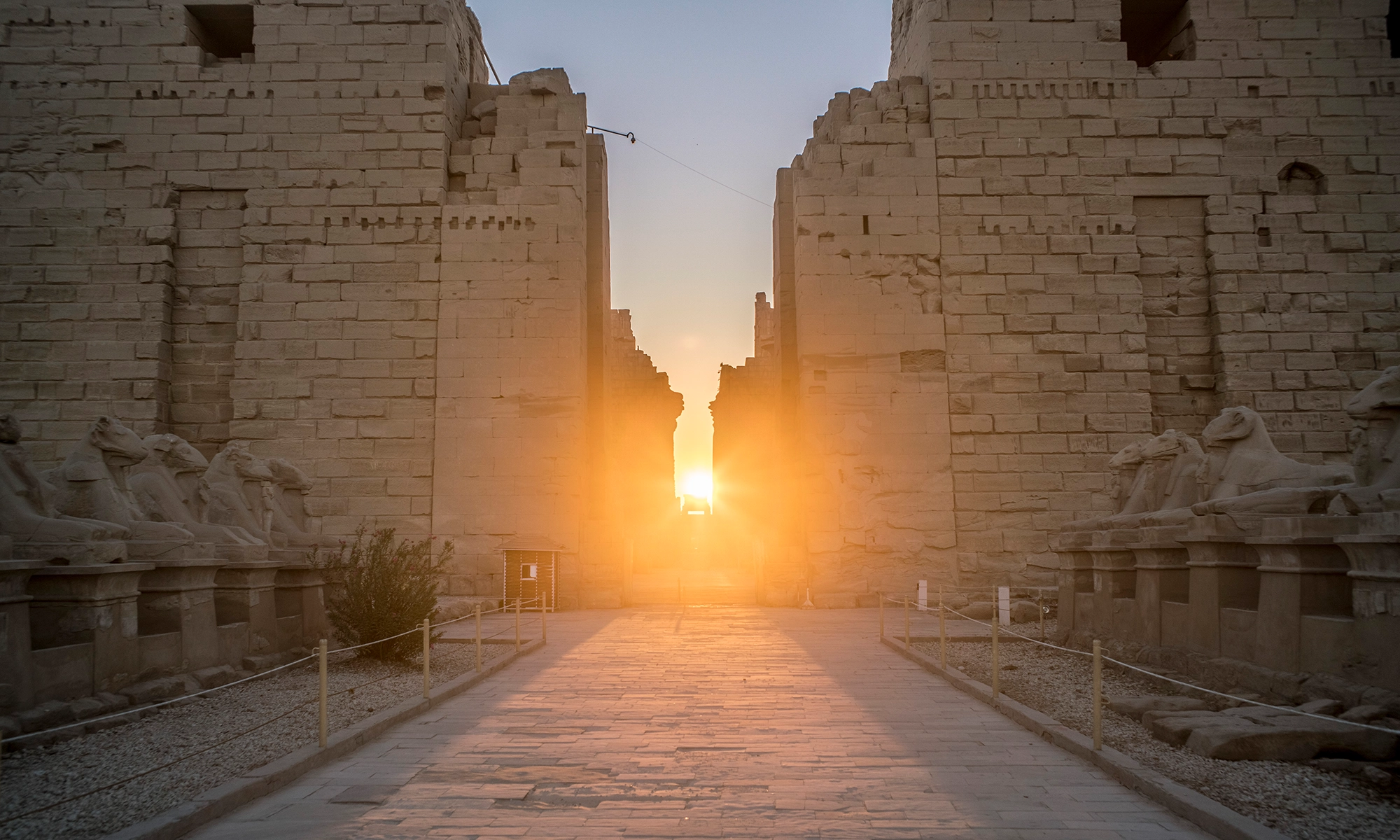
Once a year, on the shortest day, the sun comes up over the eastern desert, finds the old gateways of Karnak Temple lined up in front of it and sends its first light straight down the middle of the building. For a few minutes, the god's house fills with gold from the back door to the front. People have been gathering in the dark to see it for a very long time, and they still do. The ancient Egypt gods send their sign for the start of a new recurring stage in life, the time of planting.
The winter solstice at Karnak is short, easy to miss and a little misunderstood. In this article, we explain what you actually see, why the temple was built to face that sunrise, what the moment meant to the ancient Egyptians, how it compares with Egypt's other sun alignments, and how to plan your own solstice morning in Luxor. Here are all things you need to know about the Karnak Temple winter solstice:

What Happens at Karnak Temple on the Winter Solstice?
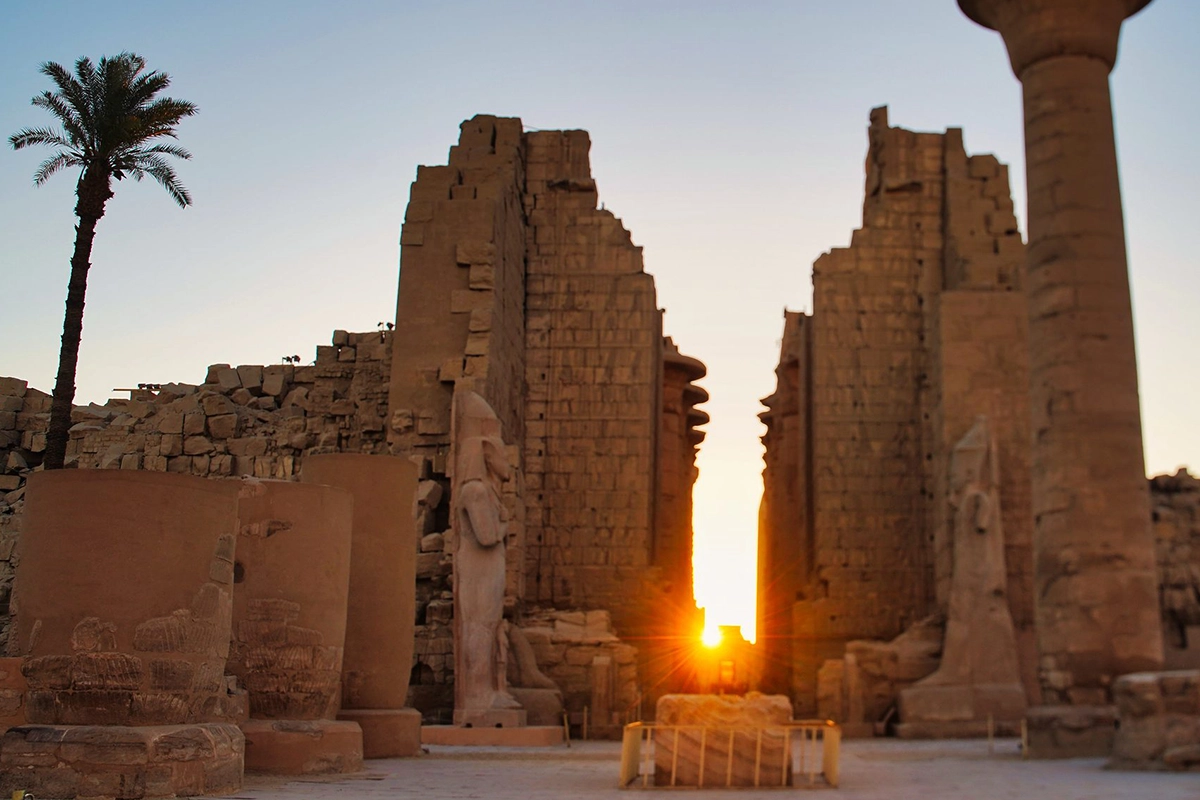
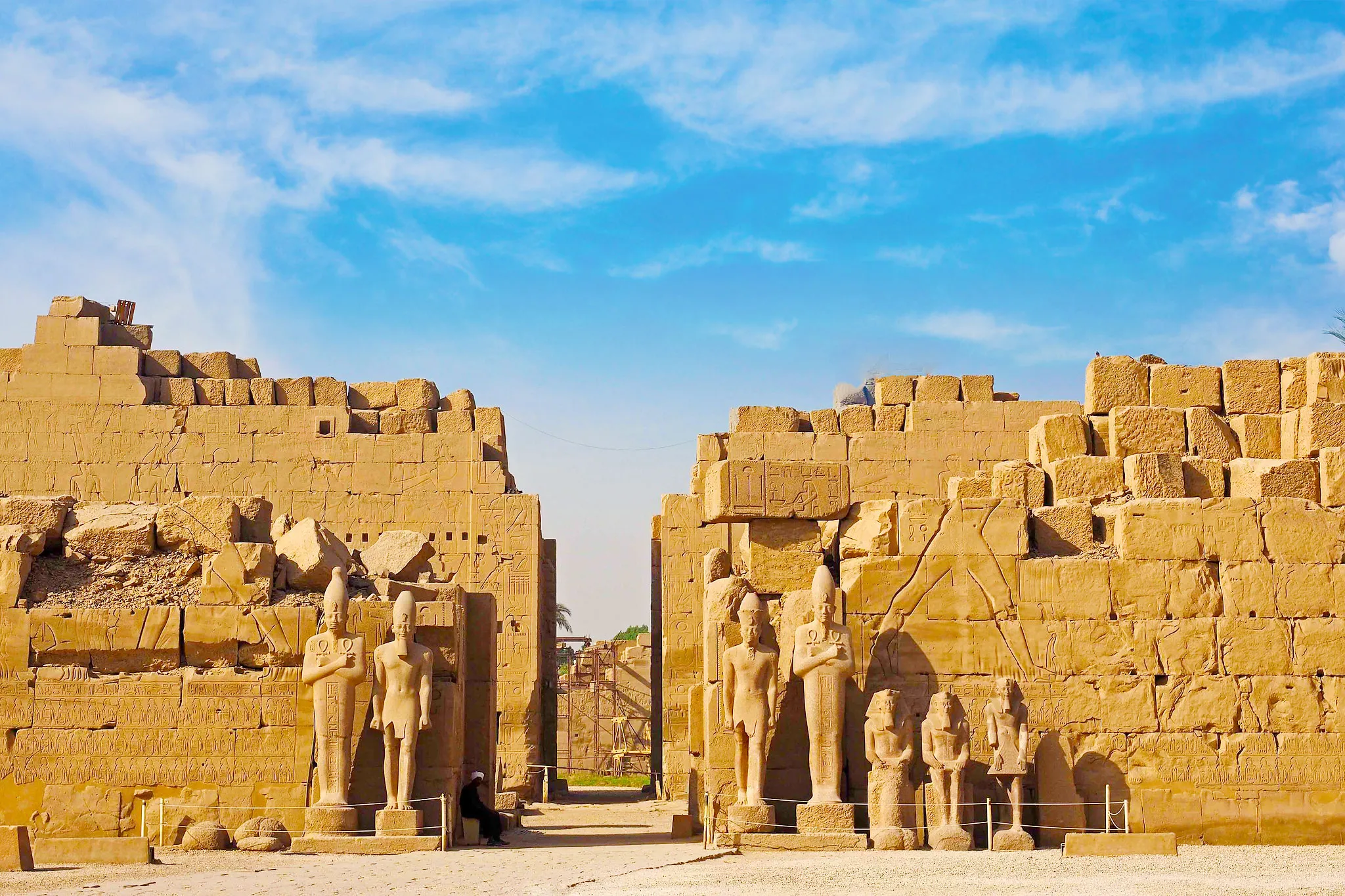
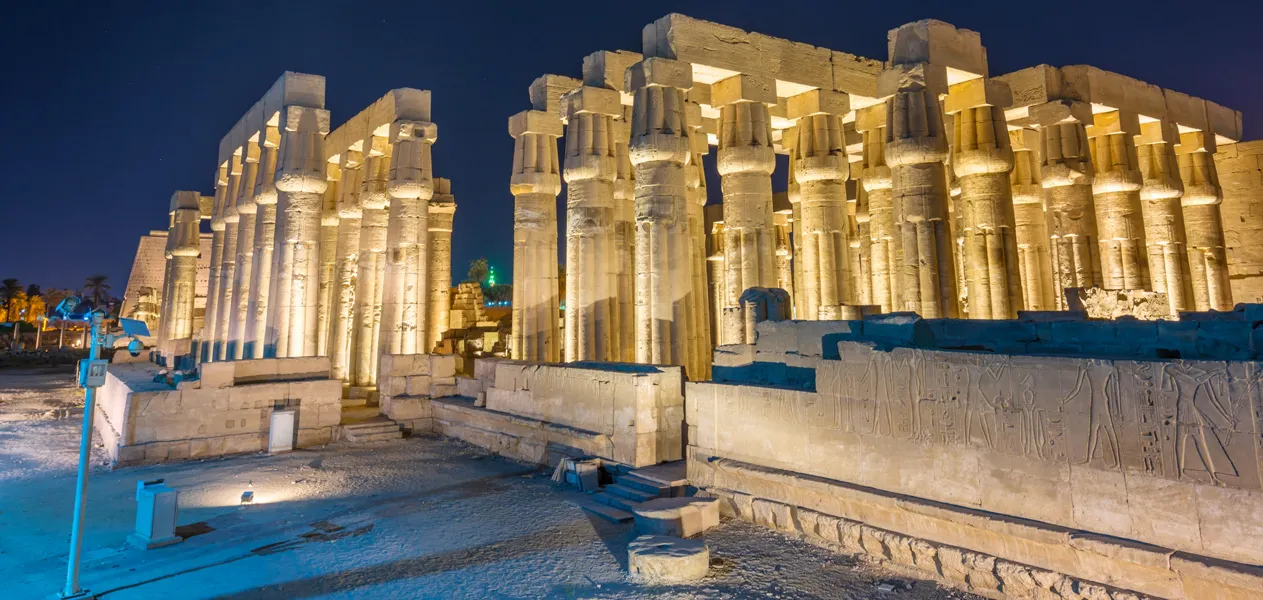
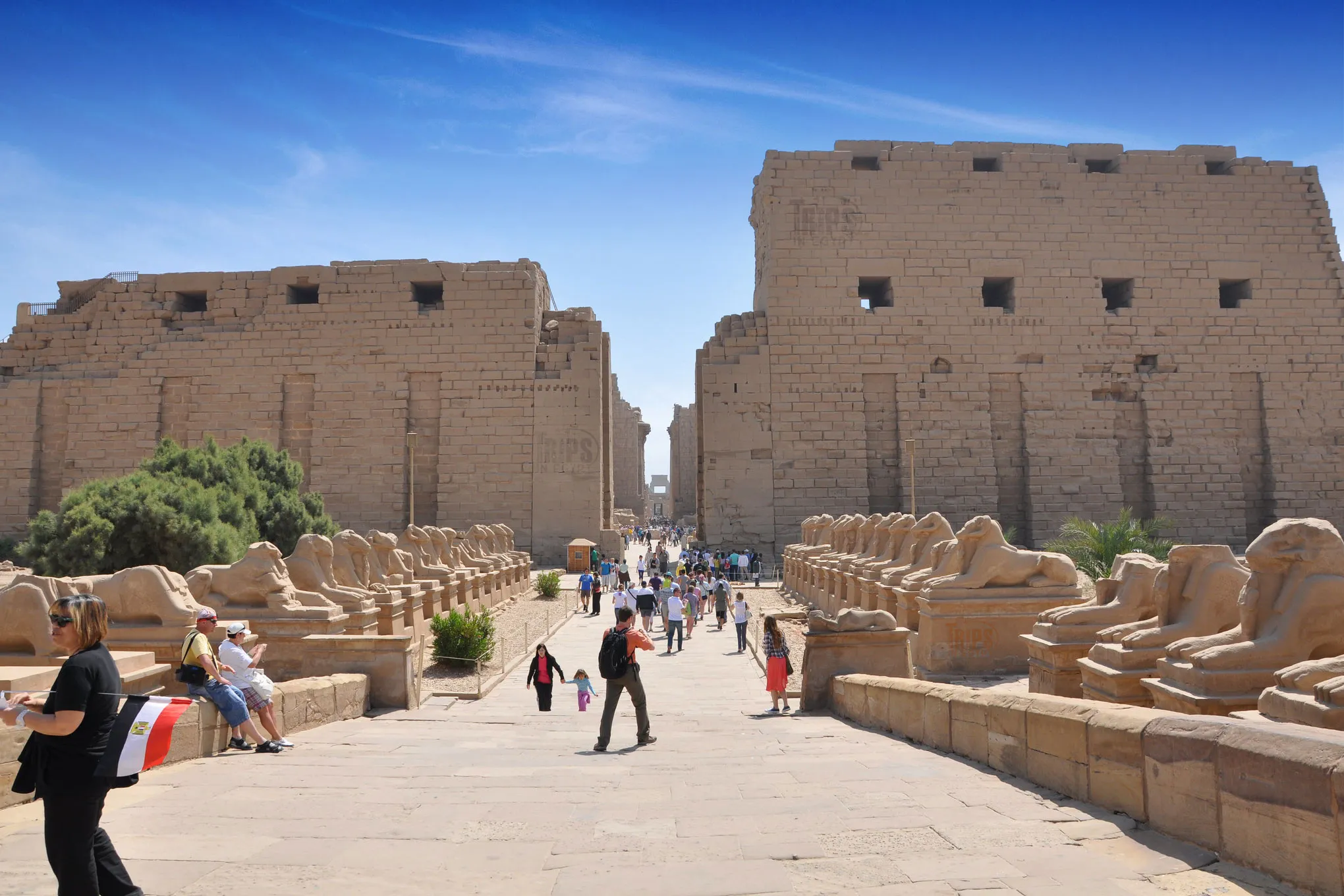
The winter solstice falls on 21 December in most years, sometimes on 22 December. On that morning, the sun rises in the southeast at the exact point where the main axis of Karnak Temple meets the horizon. Its first rays pass through the eastern gates of the Temple of Amun-Re, run along the central line of the temple and light up the area of the barque shrine, the granite room that held the sacred boat of Amun-Re, king of the ancient Egyptian gods.
Sunrise in Luxor on the solstice is at about 6:30 am. Because of the low hills on the eastern horizon, the disk usually appears a few minutes after that, and the best part of the show, when the sun sits framed in the doorways, lasts only a few minutes. After that, the sun climbs out of line and the light spreads across the courts in the normal way.
You do not need to be there on the exact day. The sun's rising point barely moves for about a week on either side of the solstice, so mornings from around 15 to 28 December give almost the same view, with far fewer people. That is how many photographers get their clean shots.
What You Actually See
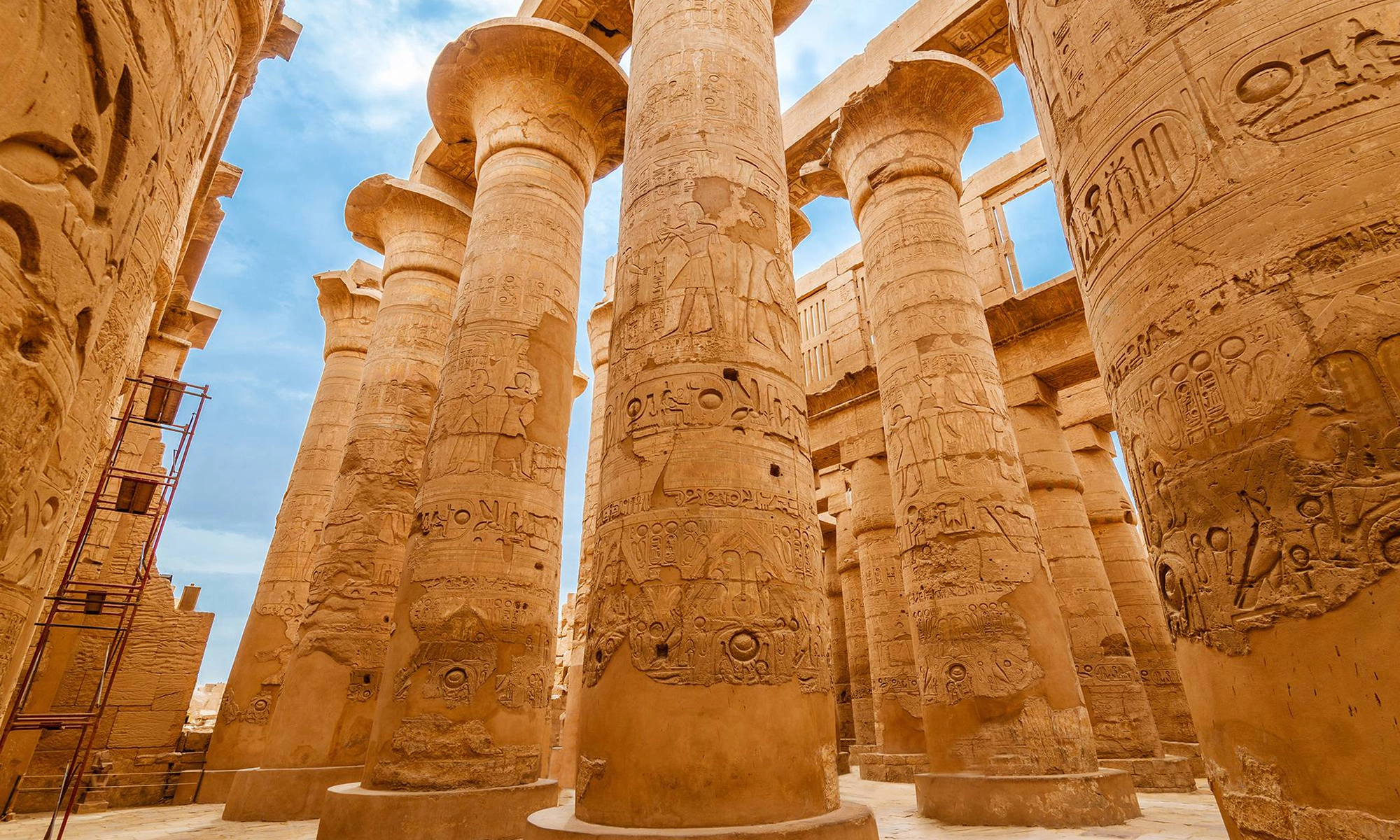
Most visitors stand on the central axis, inside the Great Hypostyle Hall or in the court in front of the Third Pylon, and look east. At first there is only a pale glow behind the far gateways. Then a bright point appears inside the frame of the doors, grows into a half disk and lifts slowly through the opening, while a strip of light runs back along the stone floor toward you.
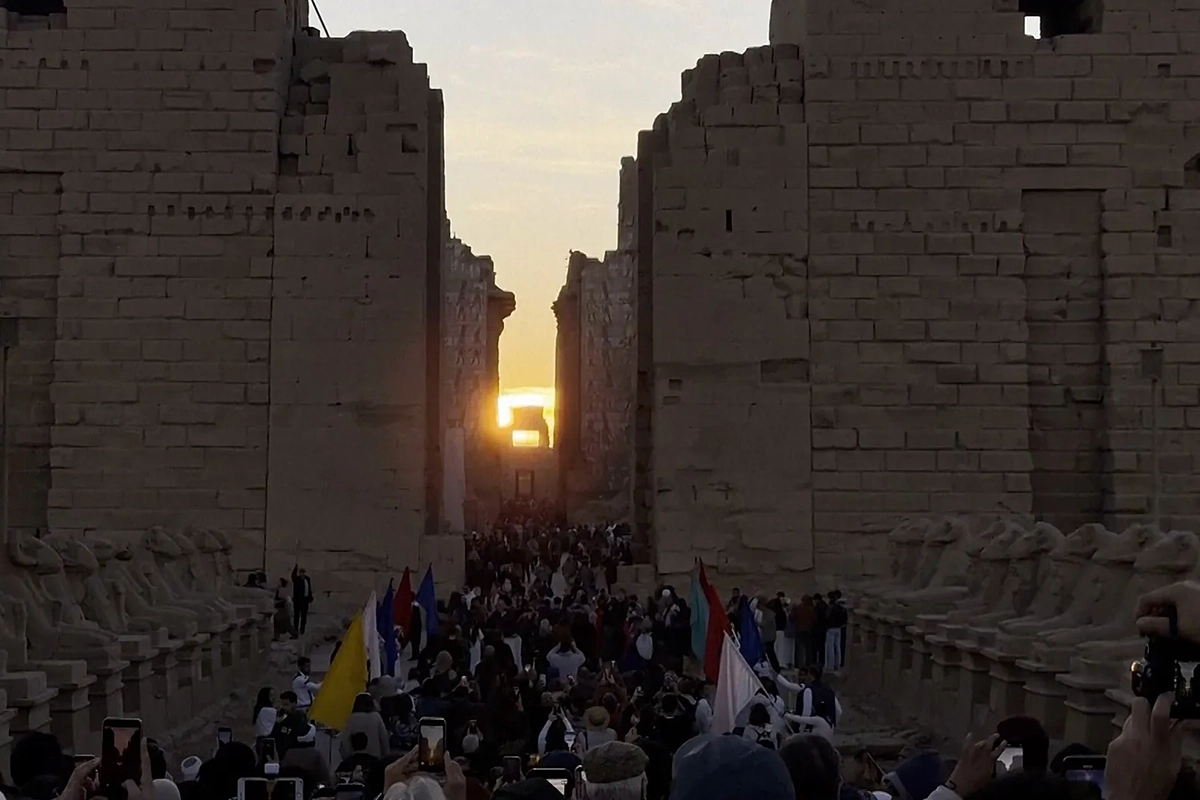
It is quiet, even in a crowd. Many local families come too, and in recent years the Luxor governorate has marked the morning with music and an official gathering inside the temple.
Why Karnak Faces the Midwinter Sunrise
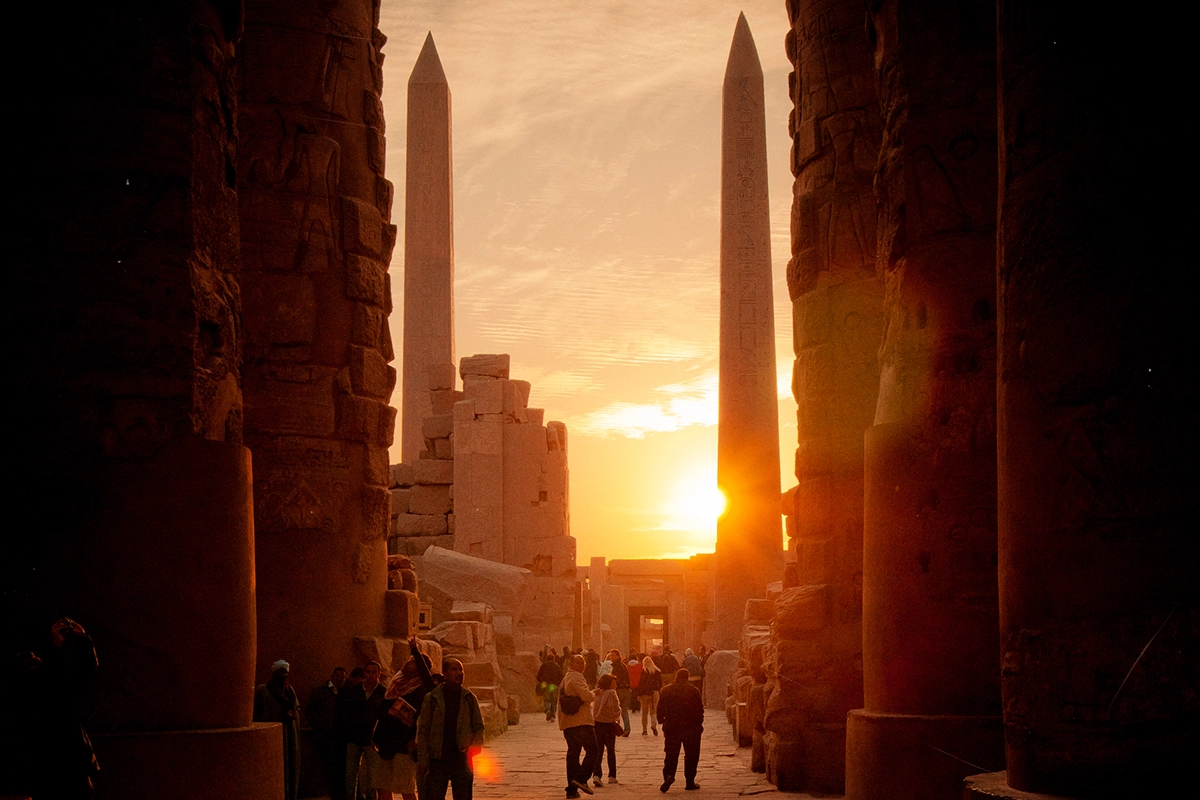
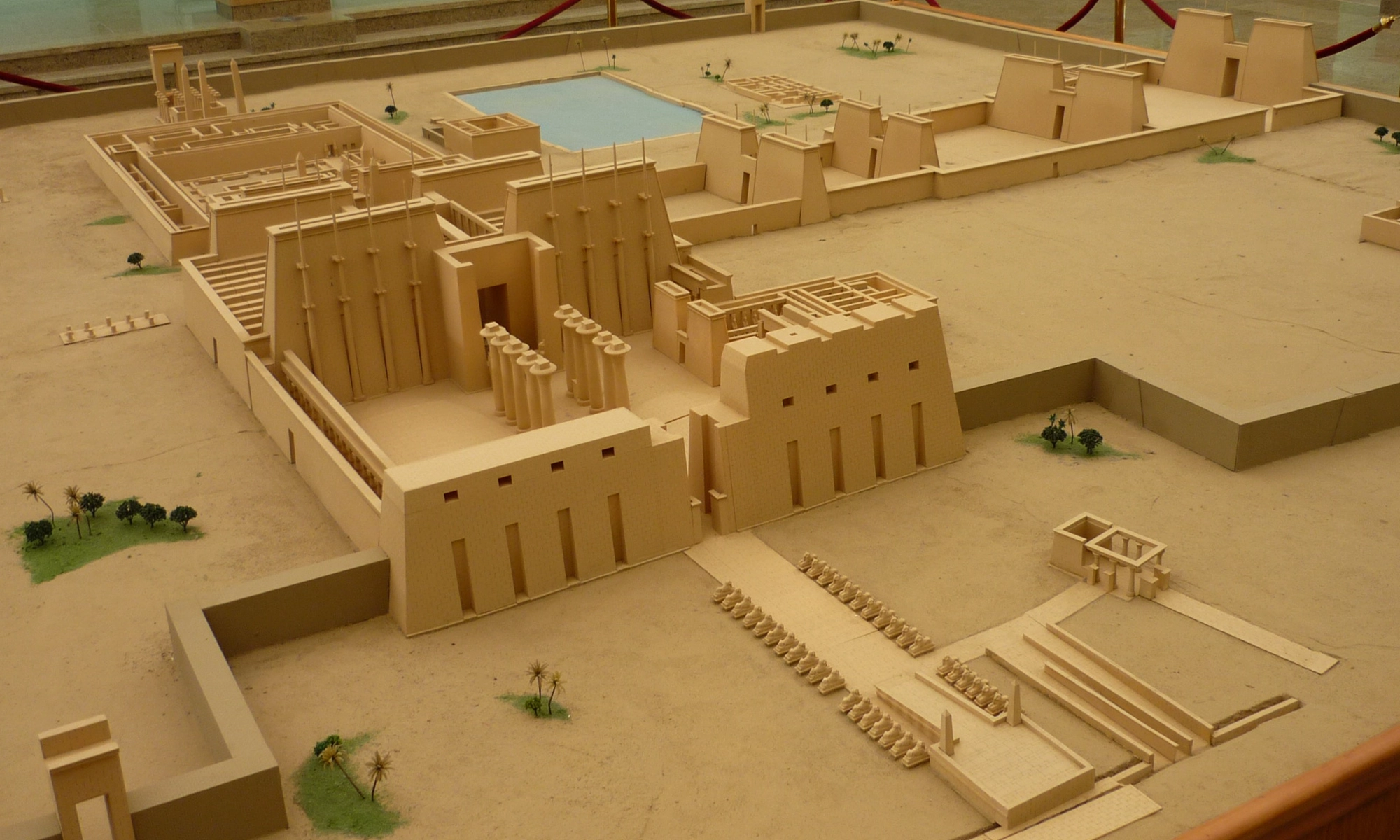
The main axis of Karnak runs at about 116 degrees from north, roughly 26 degrees south of due east. At Luxor's latitude, that is exactly where the sun rises on the winter solstice. Read the same line in the other direction, toward the West Bank, and it points to where the sun sets on the summer solstice in June.
That double reading started a long debate. In the 1890s, the British astronomer Sir Norman Lockyer argued that Karnak was aligned to the midsummer sunset. Later research by archaeoastronomers such as Juan Antonio Belmonte and Mosalam Shaltout, who measured hundreds of Egyptian temples, has favored the winter sunrise. The light really does travel east to west, from the back of the temple toward its front, and several of the great temples of Thebes share the same direction.
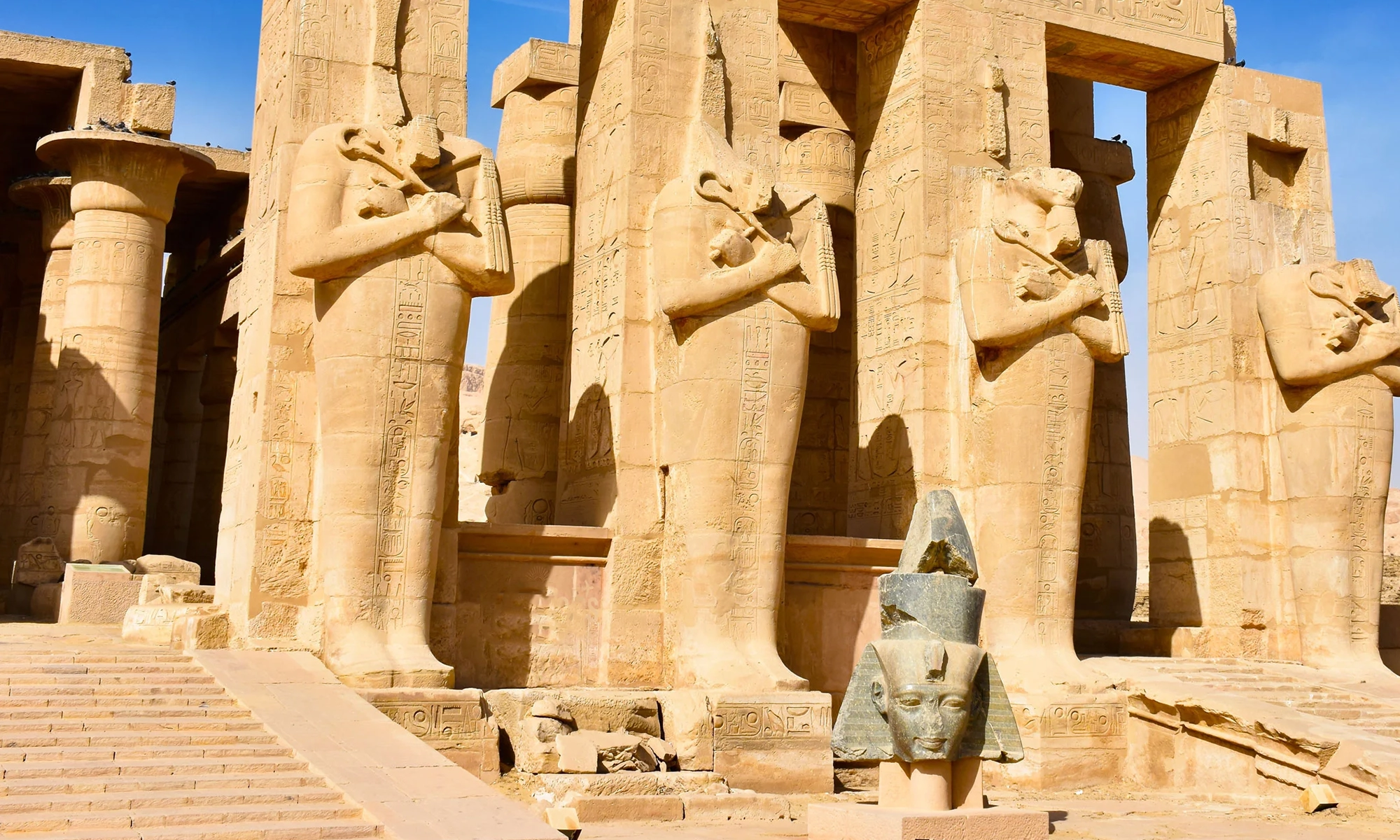
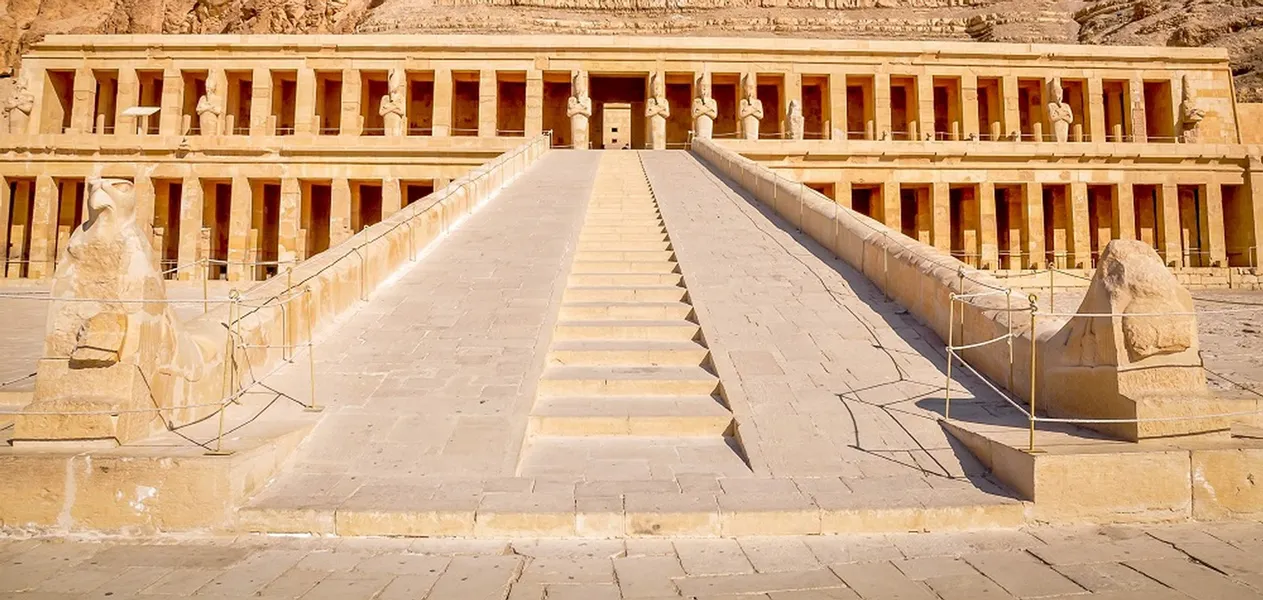
The best example sits right across the Nile. The Temple of Hatshepsut at Deir el-Bahari lies on almost the same 116-degree line, and on winter solstice mornings the rising sun reaches deep into its rock-cut sanctuary of Amun. The two temples effectively face each other across the river, joined by the line of the midwinter sun.
There is one twist. As later kings added buildings at Karnak's eastern end, including Thutmose III's Akh-menu festival hall, the view of the horizon from the old core of the temple was partly blocked. Thutmose III gave the sun its own place instead: a raised open-air chapel in the Akh-menu, reached by a stairway and often called the High Room of the Sun, dedicated to Ra-Horakhty.
Today, with many of those eastern walls ruined, the light reaches the center of the temple more freely than it probably did in late antiquity. Our guide to the Temple of Amun explains how these parts fit together.
What the Winter Solstice Meant to the Ancient Egyptians
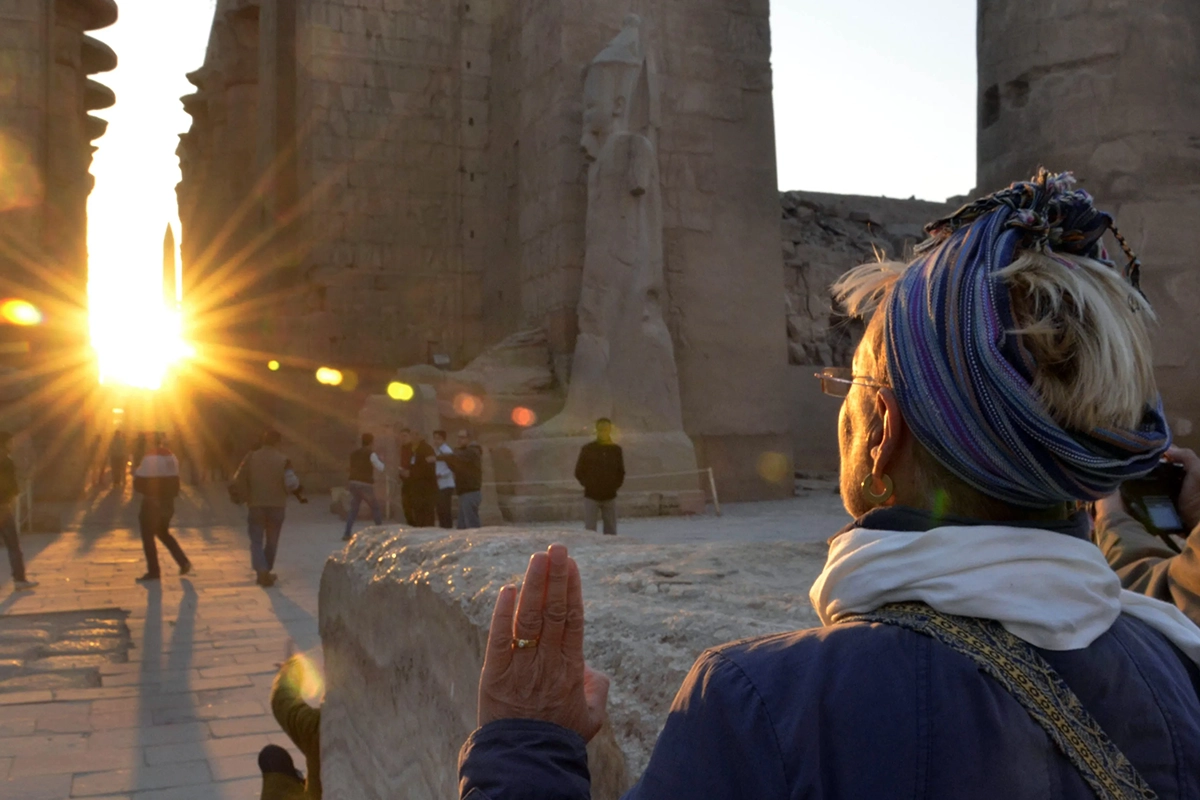
For the Egyptians, the sun was born every morning and died every evening. Each night it sailed through the underworld, and each dawn it rose again as Khepri, the scarab beetle that rolls the sun over the horizon. The winter solstice was that daily story on a yearly scale: the sun at its weakest and lowest, turning back toward strength.
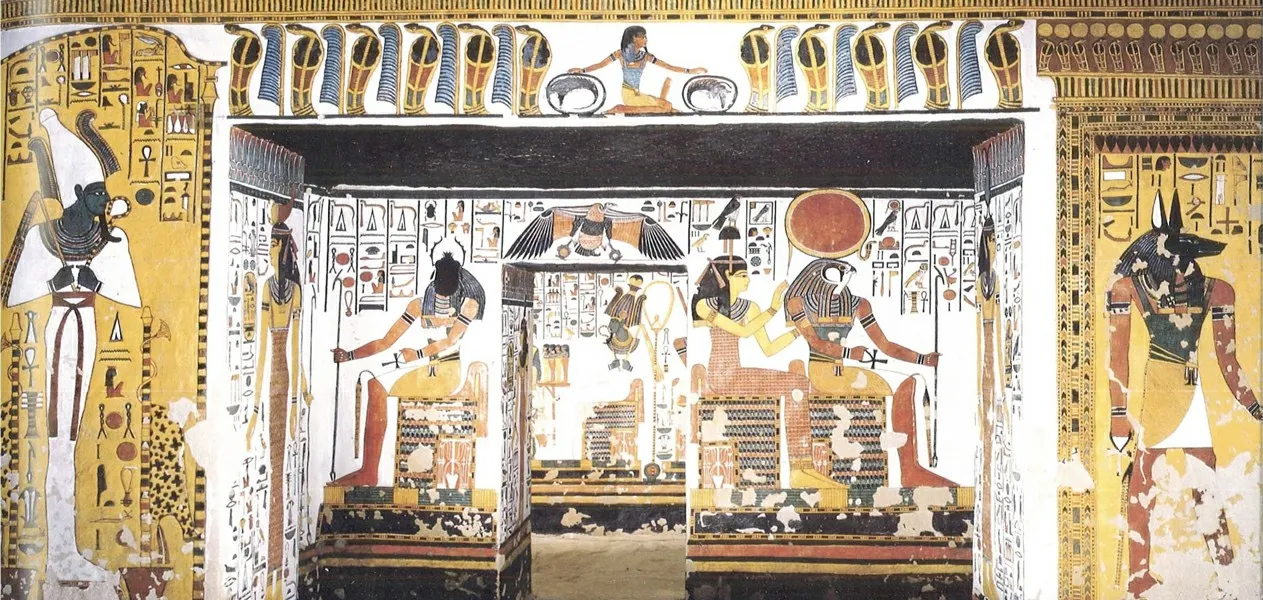
Karnak was the home of Amun, "the hidden one," who by the New Kingdom had merged with the sun god Ra as Amun-Re. A temple whose axis caught the reborn sun of midwinter suited that god perfectly. Egyptian temples were built as models of creation, and the first light of the year's new sun entering the house of the creator god was a statement in stone.
There was a farming side too. The solstice fell in Peret, the season of "emergence," when the flood had drained back, and seeds were sown in the fresh silt along the Nile. Egyptian officials still describe the morning as the beginning of the ancient planting season. You can read more about the yearly cycle in our guides to ancient Egyptian mythology and ancient Egyptian festivals.
Egypt's Other Sun Alignments
Karnak is not alone. Ancient Egyptian temples were often set out by the sun or the stars, and a few alignments still draw crowds every year:
| Place | Date | What happens |
|---|---|---|
| Karnak Temple, Luxor | Around 21 December | Winter sunrise runs along the main axis |
| Temple of Hatshepsut, Luxor | Around 21 December | Sunrise reaches the sanctuary of Amun |
| Qasr Qarun, Faiyum | Around 21 December | Sunlight enters the inner sanctuary of the temple of Sobek |
| Abu Simbel, Aswan | 22 February and 22 October | Sun lights the statues in the inner sanctuary |
The best known is the Abu Simbel Sun Festival, when the sun reaches three of the four statues at the back of Ramses II's temple. Qasr Qarun is one of the less visited Faiyum attractions, but it has its own winter solstice crowd.
How to Watch the Karnak Temple Winter Solstice Sunrise
A solstice morning at Karnak is easy to plan if you know a few local details. Here is what we tell our own guests.
Tickets. No special ticket is needed. You pay the normal entry, EGP 600 for foreign adults and EGP 300 for students, and the Luxor Pass is accepted. Check the latest Karnak Temple ticket price and official hours before you go.
Arrival. Karnak normally opens at 6 am, and on 21 December the gates are sometimes opened a little earlier for the event. Aim to be at the ticket office by 5:45 am, so you are inside and in position by 6:15. A taxi from most East Bank hotels takes 10 to 15 minutes. Our article on how to visit Karnak Temple covers every way of getting there.
Where to stand. Walk straight down the central aisle. The classic view is from the middle of the Hypostyle Hall, looking east through the Third Pylon. If it is crowded, the First Court gives a longer, wider view of the same line. Stay on the axis, because a meter to the side and you lose the frame.
The cold. December dawns in Luxor are chilly, often 6 to 10°C, even though afternoons reach the low 20s. Bring a warm layer, and see our guide to the weather in Luxor for the rest of the month.
Crowds. On 21 December itself, expect hundreds of people, plus officials, music and cameras. If you want a quieter experience, go a day or two before or after. Our article on the best time to visit Karnak Temple explains the rest of the season.
Photography. The light is low and fast. Set your exposure for the sun, not the shadows, and shoot a few frames as it moves through the doorway. Tripods may be refused when the temple is busy, so lean on a column instead.
After sunrise. Stay on. The low morning sun lights the columns from the side for the next hour, the best light of the day, and you can see most of the temple in two to three hours. Later, cross to the West Bank to see Hatshepsut's temple, the other end of the solstice line, on our Luxor West Bank day tour. If you would rather see the sunrise from above the next day, try a Luxor hot air balloon ride.
Welcome the Midwinter Sun at Karnak With Trips In Egypt
The ancient Egyptians waited for this sunrise for more than three thousand years. You only need to set an alarm. Our Day Trip to Luxor East Bank can start early for the solstice, with a professional Egyptologist guide who will get you on the axis in time and walk you through Karnak and Luxor Temple afterward.
You can also combine it with one of our Egypt Christmas tours or a Luxor to Aswan trip on our Nile river cruises, join one of our Luxor day tours, browse our Egypt tour packages, or build your own December trip with our tailor-made tours.